Beavis and Butthead Play Two

Note: A couple of months ago, I wrote my first play about the love of my life, Elodie. It is called Wayfarer. Today, I’m pleased to publish my first TV script.

The script is, of course, a Beavis and Butt-Head episode.

I’ve wanted to do one of these for the longest time, simply because Beavis and Butt-Head are completely fucking hysterical. I know the show is a bit old at this point, and one could argue that the humor is sophomoric. Probably so. But that’s the point.

For anyone who somehow missed them, Beavis and Butt-Head are Mike Judge’s two magnificently stupid teenage metal heads, unleashed on MTV in the early 1990s to watch music videos, insult everything and everything they encountered, misunderstand nearly everything happening around them, and occasionally stumble into something resembling wisdom. They are idiots, but they are very particular idiots. There is a strange precision to their stupidity, and after all these years their friendship remains weirdly endearing.

I love the Beavis and Butt-Head universe, and I plan to write several more of these. Stay tuned.

This first one sends the boys to Chicago for a Cubs doubleheader. There is a girl. There is a box of love letters. There is a Chevy Suburban outfitted for bass fishing. There is George Brett.

Naturally.

Epigraphs:

It’s a great day for a ball game; let’s play two!
— Ernie Banks

Change it Butthead.
— Beavis

Shut the fuck Beavis.
— Butthead

I: Beavis’ Birthday

PING-PONG.

Butt-Head looks toward the front door.

“No.”

“Beavis.”

“Beavis. Someone’s at the door. Go get it.”

“You get it, Butt-Head.”

“Okay, Beavis. Let’s go together.”

The boys get off the couch and approach the door.

Stuart is standing outside in his Winger T-shirt.

“Hey, guys. I heard it was Beavis’s birthday. You guys wanna hang out?”

“No,” Butt-Head says.

He begins to close the door.

“Wait a minute,” Beavis says.

Butt-Head stops.

“What?”

“He does have a point.”

“Really?”

“Yeah. It is my birthday, Butt-Head.”

“Yeah, dumbass. I know.”

Butt-Head pauses.

“But yeah. Happy birthday, Beavis.”

“Thanks, buddy.”

“Now shut up Beavis.”

Stuart is still standing outside.

“So you guys wanna hang out or what?”

“No,” Butt-Head says. “We have important stuff to do.”

“Yeah,” Beavis says. “Important birthday stuff.”

“We’re going to Chicago, Stuart.”

“Really?”

“Yeah. We’re going to see the Cubs tomorrow.”

“It’s a doubleheader,” Beavis says.

Stuart smiles.

“That sounds pretty cool.”

“Shut up, Stuart,” Butt-Head says.

He begins to close the door again.

“Wait,” Beavis says.

“What?”

“You forgot to tell him.”

“Tell him what?”

Beavis lowers his voice.

“Amanda.”

“Oh yeah.”

Stuart looks from Beavis to Butt-Head.

“Who’s Amanda?”

Beavis’s face changes.

“Amanda,” he says reverently.

“She’s a ball girl for the Cubs,” Butt-Head says.

“She’s hot,” Beavis says. “She wants me.”

“Shut the fuck up, Beavis. She doesn’t want you. She wants me.”

“No dude. She wants me. But whatever. Why do you think Butt-head that she wants you.”

“I saw her on TV.”

“You were on TV Butthead?”

“She was on TV, dumbass.”

“Oh yeah. I forget”

Stuart looks confused.

“What”s going on?” said Stewart “What’s a ball girl?”

The boys stare at him.

Butt-Head closes the door.

“Stuart, you need to leave.”


II: Uncle Ken

A Chevy Suburban rolls up outside the house.

It belongs to Beavis’ Uncle Ken, a Chevy dealer from greater Kansas City. The Suburban is outfitted for bass fishing and elk hunting. One of Ken’s major clients is George Brett, the former star of the Kansas City Royals.

Ken parks and gets out.

Beavis and Butt-Head are sitting shirtless in lawn chairs, drinking forties.

Improbably, the boys have found an extension cord and snaked it outside. A small black-and-white television sits between them, playing music videos.

Ken lights a Camel.

“You boys ready for your first ball game?”

“Yeah, Ken,” Butt-Head says. “I guess.”

“Thanks, Uncle Ken,” Beavis says. “You rule.”

“Ok. Let’s go.”

A few drops of rain begin to fall. Beavis picks up the television and puts it under the awning to protect it.

The boys leave the lawn chairs where they are. They climb into the Suburban, still shirtless.

They both sit in the back.

Ken passes them a bag containing sandwiches, chips, oranges and iced tea. Beavis looks inside.

“Thanks, Uncle Ken. You rule.”

Butt-Head lowers his voice.

“Beavis, your uncle may rule, but he also needs to shut the fuck up.”

“Why?”

“There’s not enough food to get us to Chicago.”

“Dumbass. We can stop on the way.”

“Oh yeah.”

Ken butts his cigarette in the front ashtray. The boys throw theirs out the window.

A few minutes later, Butt-Head leans forward.

“Hey, Ken.”

“Yeah?”

“Was this really George Brett’s Suburban?”

“Yeah, Butt-Head. It sure was.”

“Whoa.”

Beavis looks around the interior.

“George Brett played baseball.”

“Yeah, Beavis. Everybody knows that.”

“Oh yeah.”

Butt-Head leans farther toward the front seat.

“Hey, Ken.”

“What?”

His voice drops.

“But did George Brett score in here?”

Ken looks at him in the rearview mirror.

“I don’t know. Probably.”

The boys look at each other.

“Whoa dude”


III: The Motel 6

The rest of the drive passes without incident.

Around seven, Ken pulls into a roadside Motel 6. Beavis looks through the window at the motel.

“Butt-Head.”

“What?”

“It’s a motel.”

“Yeah.”

“We’re gonna score.”

“Oh yeah, Beavis. We’re gonna score all right.”

Ken overhears them from the front seat.

“Boys, if you’re really serious about scoring tonight, there’s a truck stop right over there.”

The boys look over.

“I don’t know for sure,” Ken continues, “but I’ve heard there are a lot of lot lizards around there at night.”

Beavis looks at Butt-Head.

“What the fuck is a lot lizard?”

“Shut up, Beavis. A lot lizard is just another word for a lady of the night.”

“Oh yeah.”

They eat chicken-fried steak at a diner beside the motel. By ten-thirty, Uncle Ken is asleep.

Beavis and Butt-Head are not.

They stand outside their motel room drinking two of Uncle Ken’s beers.

“Beavis.”

“Yeah?”

“You wanna go find those lizards?”

“Yeah. Heh heh.”

They walk across the parking lot toward the truck stop.

There are no lot lizards. There are, however, approximately forty trucks.

Beavis stops beside one.

“Butt-Head.”

“What?”

“Do you think George Brett ever drove a truck?”

“No, dumbass. George Brett played baseball.”

“Oh yeah.”

They continue walking.

After a moment Butt-Head stops.

“Although he did have a Suburban.”

“Yeah.”

They both consider this.

“Maybe he drove a truck.”

“Yeah, dude. Maybe.”

The boys return to the motel around eleven. Ken has his own room. Beavis and Butt-Head share a twin room.

Beavis sits on his bed.

“Butt-Head.”

“What?”

“We got the big game tomorrow.”

“Yeah.”

“Is tonight the night we finally cuddle?”

“Shut up, Beavis. I’m not gonna cuddle with you.”

“Why not?”

“Because you smell, Beavis.”

“Oh yeah.”

Butt-Head points to the bed by the wall.

“I’m sleeping on this one.”

“Fine, Butt-Head.”

“Good night, Beavis.”

“Good night, Butt-Head.”

Beavis turns out his light and prepares to go to sleep. Butt-Head leaves his light on.

He takes out a small box. Inside are twenty Xeroxed letters.

Beavis raises his head.

“What are you doing, Butt-Head?”

“I’m reading my letters to Amanda, dumbass.”

“Oh yeah. I guess you do that every night, huh, Butt-Head?”

“Yeah.”

“Why do you do that, Butt-Head?”

“Come off it, dude. I’m in love with her. What do you think?”

“Oh yeah.”


IV: The Cubs Game

The next morning, the three eat breakfast and continue to Chicago. By noon they are outside Wrigley Field. The boys are wearing their shirts again.

A man is standing over a barbecue grill surrounded by about a dozen people. This is George Brett.

“Ken.”

“George.”

They shake hands.

George looks at Beavis and Butt-Head.

“These the boys?”

“Yep.”

Butt-Head looks at George.

“Hey, George.”

“Hey.”

Beavis looks at the grill.

“Are those hamburgers?”

“Yeah.”

“Can I have one?”

“Sure.”

“Thanks, George. You rule.”

George hands him a hamburger.

Butt-head says “Hey, George.”

“Yeah?”

“Was that really your Suburban?”

“Yeah.”

“Sweet.”

Pause.

“I mean, did you ever score in it?”

George looks at him.

“Probably.”

The boys look at each other.

“Whoa.”


They have box seats on the first base line. Before entering the park, the boys put four beers from the Suburban into their pants. Improbably, this works.

The game starts, and Butt-Head immediately begins looking for Amanda.

“Beavis.”

“What?”

“There she is.”

“Where?”

“Down there, dumbass.”

Butt-Head points toward the field. Amanda is working along the first-base line.

Beavis stares at her.

“Whoa.”

“Yeah.”

“She’s hot.”

“Shut up, Beavis.”

“But she is.”

“I know. That’s why I’m in love with her.”

“Oh yeah.”

The game begins.

For most of the first three innings, neither boy watches it.

Every time Amanda moves, Butt-Head points her out.

“There she is.”

“I know, Butt-Head.”

“There she is again.”

“I know.”

“Dude. She just picked up a ball.”

“Whoa.”

“She rules.”

“Yeah.”

A foul ball comes toward their section.

Both boys stand.

“Whoa!”

The ball lands approximately twenty rows away.

They sit down.

“Baseball sucks,” Butt-Head says.

“Yeah, it does.”

During the seventh-inning stretch, George Brett leans toward Butt-Head.

“Hey, Butt-Head.”

“Yeah, George?”

“If you’re really serious about this Amanda chick, I can get you down there after the game.”

Butt-Head stares at him.

“No way.”

“Sure. I know some people. I can get you into the clubhouse.”

Beavis leans across Butt-Head.

“That would be awesome, George. You rule.”

“I know.”

Butt-Head looks back toward Amanda.

Just before the ninth inning, Beavis leans over and whispers in Butt-Head’s ear.

“Butt-Head.”

“What?”

“I gotta tell you something.”

“What?”

“Well, the thing is, I’ve been watching Amanda all game.”

“Yeah.”

“And I think I’m in love with her too.”

Butt-Head slowly turns toward him.

“Shut the fuck up, Beavis.”

“I’m serious.”

“You can’t be in love with Amanda. I’m in love with Amanda.”

“Yeah, but I’m in love with her too.”

“No, you’re not.”

“Yes, I am.”

“No, Beavis. You just think she’s hot.”

Beavis considers this.

“Yeah.”

A beat.

“But I also love her.”

“Dumbass. She’s mine.”

A few minutes later, Amanda looks toward their section.

“Dude,” Beavis says. “She looked up here.”

“She looked at me, Beavis.”

“She looked kind of to the left.”

“I’m to the left, dumbass.”

“No, I’m to your left.”

Butt-Head looks around.

“Oh yeah.”


V: Meeting Amanda

After the game, George takes Ken and the boys into a small lounge adjoining the clubhouse. Butt-Head is clutching his box of letters.

Beavis, improbably, has gone to the bathroom and washed his face. He is trying to look his best for Amanda.

Amanda enters the lounge. A couple of tables have been set up with drinks and snacks.

“Amanda,” George says. “This is Beavis and Butt-Head.”

“Hi, guys. Thanks for coming to the game today. Did you have a good time?”

Beavis speaks up.

“We had a great time, Amanda. And the best part was seeing you.”

“Shut up, Beavis.”

Butt-Head looks at Amanda.

“But yeah. He’s right. You’re super hot.”

Amanda blushes slightly.

“Why, thank you, guys.”

“Anytime,” Butt-Head says.

They sit down.

George, Ken and the boys crack beers. Amanda has a lime spritzer.

Beavis takes out his cigarettes.

“Butt-Head.”

“What?”

“Can we smoke in here?”

“No, dumbass.”

“Why not?”

Butt-Head looks around.

“I have no idea.”

“Oh yeah.”

Beavis puts his cigarettes away. After a while, George stands.

“Well, I guess it’s time for me to say goodbye.”

“George, do you really have to go?” Ken asks.

“Yeah, Ken. Busy day tomorrow.”

“Well, George, it was great seeing you.”

“Good seeing you too.”

Beavis looks at him.

“Yeah, George. It was great to meet you. You rule.”

Butt-Head nods.

“Yeah, George. You rule.”

“Thanks, guys.”

George Brett leaves. Ken and the boys crack another beer. Amanda is still working on her lime spritzer.

Butt-Head looks at her.

“Hey, Amanda.”

“Yeah?”

“Did you ever get my letters?”

“Yeah, Butt-Head. I saw one or two.”

Beavis leans forward.

“Well, he only wrote like a thousand.”

“Shut up, Beavis. I wrote twenty. I counted.”

Beavis looks at him.

“Butt-Head, you can count?”

“Shut up, Beavis. Yes, I can.”

“I’m just saying.”

Amanda smiles.

“I thought the letters were sweet.”

Butt-Head looks at Beavis.

“See, dumbass.”

He opens the box.

“I brought them.”

Amanda looks inside.

“All twenty?”

“Yeah.”

“Why?”

Butt-Head pauses.

“In case you forgot.”

“Oh.”

Beavis is getting impatient to speak to Amanda.

“Hey, Amanda.”

“Yeah?”

“I washed my face.”

“Nice.”

“Yeah.”

A beat.

“I did that for you.”

“Oh.”

“Yeah.”

Butt-Head looks at him.

“Dumbass.”

Amanda finishes her lime spritzer. She stands and stretches.

“Well, guys, I should probably get going.”

Butt-Head stands immediately.

“Yeah. Me too.”

Beavis stands.

“Yeah. Me too.”

“You guys have a good trip home.”

“Thanks, Amanda,” Beavis says.

“Yeah,” Butt-Head says. “Thanks.”

Amanda waves.

“Bye, guys.”

“Bye, Amanda.”

She leaves.

The boys remain standing. Beavis looks at Butt-Head.

“Did you score?”

“No.”

“Me neither.”

Another beat.

“Damn.”

“Yeah.”

Ken finishes his beer.

“You boys ready?”

“Yeah.”


VI

The cab pulls up outside the Hyatt.

Ken pays the driver. Beavis and Butt-Head climb out.

They walk toward the entrance.

“Hey, Butt-Head.”

“What?”

“I think we came pretty close.”

“No, we didn’t, Beavis.”

“Oh yeah.”

They enter the hotel.

Later, Ken says good night and retires to his room.

Beavis and Butt-Head return to theirs.

Butt-Head points to the bed by the wall.

“Beavis. That’s mine.”

“Yeah, Butt-Head. I know.”

The boys are tired from their long day. They crawl into bed and turn out the lights.

The television remains on.

“Hey, Butt-Head.”

“Yeah, Beavis?”

“We tried our best.”

“Shut up, Beavis.”

A beat.

“But yeah. I guess we did.”

They watch television.

“1979” by the Smashing Pumpkins is playing.

“Beavis.”

“Yeah?”

“Turn it down a little.”

Beavis turns it down a little.

“This song sucks.”

“Yeah.”

Beavis changes the channel.

Peter Gabriel’s “Red Rain” is playing.

Butt-Head looks at the television.

“Beavis.”

“Yeah?”

“Isn’t this that song from the movie?”

“What movie?”

“Say Anything, dumbass. With John Cusack.”

“Oh yeah. He sucks.”

“Of course he sucks, Beavis. But he also rules a little bit.”

Beavis considers this.

“Yeah. Maybe.”

They watch a little longer.

“This song is lame,” Butt-Head says.

“I don’t know. I think it’s kinda sweet.”

Butt-Head turns toward him.

“Shut up, Beavis. This song sucks.”

FIN

For Elodie, My Baby: A Love Poem

Note: I spent about a week with Elodie eight years ago. I fell madly, historically in love. Obviously. She is absolutely stunning and took my breath away. I was beyond gaga and remain so to this day.

She is my one and only baby. Naturally. My darling, my sweetheart, my lover, my queen. My baby. I will never forget anything from that week. I remember the yellow she wore when we met. I remember Pret in the morning, wine before dinner, cigarettes, the park, the bridge, the chapel, the airport, the songs we sent each other, and a great many things that I could just as easily have forgotten.

As if I could ever forget.

Since the years since I met her I have written six essays and a play about her. I know dude, it’s a lot, So what? I am crazy in love with her and always will be. I will soon turn all of my Elodie material into a book. It will be good and I hope you like it. I know I will.

So in anticipation of that about I wrote her a love poem. Here it is:

Epigraphs:

“I didn’t know what I was in for when I set out for that run.”
— Better Oblivion Community Center

“Two suns in the sunset/ Didn’t know my race was run.”
— Pink Floyd, “Two Suns in the Sunset”

“Don’t stand so close to me.”
— The Police

Elodie, baby, I’m massively in love with you
I always have been, and I always will be.

I arrived on a Sunday. We met on Monday
You were wearing yellow, I recall
You touched my arm and said, “I’m an Aries moon too”
And that began my fall.

We walked lightly to the next session
I had no idea what I was in for
We compared charts and we matched
And I knew I was a goner before we even reached the door.

We sat side by side at the table
Elbows and hands touching tight
When your fingers clasped mine, I almost passed out
You were absolutely stunning, a total knockout.

At dusk we went to dinner
It was inside the main hall
There was turkey, there was gravy,
There was cranberry and all.

Before dinner, we drank wine
Red and white as you please
I bought a bottle with some money
I probably pulled out of my sleeve.

You may have been impressed that I had money
But you probably didn’t care
All I could think was, oh my god, this girl—
Look at her hair.

It was colored chestnut brown
And stretched halfway down her back
It was right about this moment
That I had a heart attack.

After dinner you broke out cigarettes
I’d had a dozen in sixteen years
I caved immediately, of course
I was the victim of all fears.

I feared a future without you
That was something I could not stand
When I got back to my room
I knew I’d have to take matters in my hand.

I played “Mistakes Were Made” by the Mendoza Line
I had to call a spade a spade
The title sounded like some kind of sign
I wanted desperately to wank
There, I said it. Bank.

At the time I had only one thought
Running around my brain
I’m massively in love with this girl
And I cannot stop this train.

I wanted to move to London
Would I? We would see
It probably wasn’t the best idea
But baby, you know me.

Tuesday morning we went to Pret
It was just a ten-minute walk
On the way there all we did
Was talk and talk and talk.

We split the cost of Pret
And walked back to the quad
We sat down in the back garden
I was feeling rather odd.

You had a hearty breakfast
You was at her eating peak
After that you mostly stopped
And I became a little worried
You were looking rather weak.

We never went to another session.

I’d been thinking about muses
And I cast you in the role
When you went along with this
I knew I was in a hole.

She talked about her career
She was a photographer, you see
You was good at what you did
But weren’t making enough green.

You’d had a gig in Italy
With some famous movie stars
But your career was on the downslide
You weren’t getting very far.

You had a job photographing hands
You didn’t like it much at all
You had to do it for the money
Through it all my girl stood tall.

Before dinner you said something
That changed the course of the week
“You’re super charming like my father.”
I knew then I was in deep.

I couldn’t have sex with her. Why?
I just couldn’t say
It had to do with what she’d said about her dad
I didn’t fully understand it; I just knew it was bad.

You told me your dark secret
I had one of my own
As I child I’d been abused
Now one helped; I was alone

As a result of my abuse
As a teen I thought I might be gay
But I didn’t really think so
Things turned out another way.

I was crazy about women
Madly in love with girls
But your story changed the conversation
We were in a whole new world.

Four years earlier I’d written an essay for my blog
Called “Reflections: On Coming Through”
Its epigraph came from Dylan
“This one goes out to someone watching out there tonight.
She knows who she is.”

I wanted something like that with you
I wanted you to be my twin
As it happens, I’m a Gemini.
I was ready to put a little skin

In the game
And see what might take place.

I didn’t know where things were going
I just knew I wanted to run the race
To come in first, to break the tape
To be the champion, set the pace.

I turned on back to Elodie
Tried to think of something to say.

I wanted to say, “Baby, let’s get married”
But there was very little chance
So I put the thought to bed
And kept it in my pants.

After dinner we talked like before
Very, very close
After dinner we had wine
Like every night before.

I got a little drunk
So I counted up the score
I thought I was down on the card
By just a point or two.

It was kind of hard to tell.
Everything was just brand new.

I was head over heels for my baby
And when she said she’d leave her guy
My heart went through the ceiling
And flew on way up high.

Friday came without announcement
We walked on back to Pret
After that we went to a park
It was real nice, I bet.

We’d fallen into a pattern
I was not I
She was not she

We were a we.

There was a little bridge in the park
And she walked up to the top
She said, “Baby, this is my bridge”
I said, “Baby, you’re the boss.”

Then she started crying
Just sitting in the sun
I got a little worried
I said, “Babe, what’s up, hon?”

She said, “I’m so confused
I don’t know what to do
I love my fiancé
And I love you too.”

I said, “Yeah, I guess that’s true.”

Then I said, “Look, honey, here’s the deal
I live a million miles away
I want to be with you forever
That’s all I’m gonna say.”

“But darling I live in Japan and you are here
Maybe go back to your fiancé
And see how things go, my dear.”

She said, “Well, yeah, I’ll think about it.
I’ll stay in a hotel tonight.”

I said, “Where?”

She said, “London.”

I said, “That sounds about right.”

And then she said a line
I’ve never forgotten to this day:

“Baby, don’t sit so close to me.”

I said, “Just how far away?”

She said, “Just about an inch.”

I said, “Babes, that’s not too far.”

She said, “Well, that’s all I can handle.
I need you where you are.”

Then she fell into my arms.

The ambulances were blaring
Like a city under attack
I was getting pretty tired
And I half carried her back.

We walked back to the campus
She said she had to talk to Claire Martin
One of the tutors on the course.

I went down to the bookstore
There was a dude there, of course.

I browsed around and played Dylan on my phone,
“Red River Shore”
We sat there all alone.

He did a moment chart
Which I thought was pretty funny.

Melanie Reinhart was sitting nearby
I went and sat beside her
I’m not really sure why.

I picked up a book on musical astrology
It was about famous musicians’ charts
I thought it looked pretty cool.

She said, “Don’t buy that one, baby.
Don’t be a silly fool.”

So I bought another book
And then we both stood up.

Melanie had to move out
So we went up to her room
She had a couple heavy suitcases
So dragged them out of there soon

Then I went to say goodbye to Elodie
And we walked into the chapel
I told her I wanted to know her
When she was an old woman.

She said I was sweet
This made me smile.

I said, “Baby, you can’t be beat.”

And we sat there for a while.

Then we kissed goodbye
And I stepped out of the gate
I had to get some lunch
I was running rather late.

As I walked to my hotel
I was feeling pretty weird
I only had a little stubble
But I had to itch my beard.

At the restaurant I got bouillabaisse
And a lovely beer as well.
I texted Elodie Jason Molina’s “Leave the City.”

And she cried.

I said, “Baby, what the hell
Are we gonna do about our relationship?
Who are we gonna be?”

She said, “Baby, I have no idea
We’ll just have to wait and see.”

I said, “Yeah, I guess that’s right
There’s nothing we can do
I’ll see you when I see you, baby
I love you. I do.”

She said, “I love you too.”

I sent a couple more songs
And I’m happy to report
That after the conference
We still got along.

After lunch I was super tired
So I went to get some sleep
I knew once my head hit the pillow
I would sleep real deep.

I woke up the next morning
Around four-thirty or so
My wife had to catch a bus
England isn’t the safest, you know.

So we stood there on the corner
And she climbed onto the bus
In a different kind of way
I didn’t know what we’d do about us.

Then I hugged her quickly
And we said our goodbyes
I took the short walk home
Under the English sky.

I jumped into the shower
I was glad I was alone
I had a cab coming at eight
Pretty soon I’d be going home.

I packed up my things
I didn’t know what the day might bring
In the cab the driver played the radio
I could barely hear a thing.

There was a story about the poor
And how there was very little housing
But I couldn’t really dwell on it
That was somebody else’s deal.

I had to get to the airport
To make my final appeal.

On the plane I played Pink Floyd’s
“Two Suns in the Sunset”
And then I cried a bit.

I thought about my son, of course
I swallowed
Took the hit.

I read Anthony Powell on my Kindle
And he kind of messed me up.
So I asked for peanuts and some wine
In a little paper cup.

I had the wine and then another.
And I started to relax.
I understood then for sure
That I’d have to pay a heavy tax.

I knew my marriage was over
And my career probably as well
It was only a matter of time
Time will always tell.

I landed in Osaka
Got a room across the street
It was too far to Kyoto
Sometimes nearness can’t be beat.

I texted Elodie from the hotel, of course
It was just around nine her time
She said she was working in the park
On someone else’s dime.

I said, “Baby, that sounds awesome.
I wish I was there with you.”

She said, “Me too, baby,
But there’s nothing we can do.”

For the next few weeks
We texted, and called most every day
Then she had a dream and talked to her therapist
And she mostly went away.

The dream took place in the woods
There was a fire of some kind
She said that I was there with her
I began to fall behind.

She said “My therapist says I can’t talk to you.”
I said “Baby don’t say it’s true”
She said “Yeah, I don’t yet know”
I said “Babe it’s up to you.”

After that we sent some letters
And some texts just to chat
I wrote her in March 2019
And that was pretty much that.

I was the last one to write
That was about seven years ago
I figured the door was still open
So I emailed her three weeks ago.

And whether or not she’s read it,
So far it hasn’t been a no.

Email doesn’t have read receipts,
So I don’t know if she saw it.
I’m betting that she did.
So I’ll just have to wait a bit.

She’ll answer or she won’t.
It’s pretty much all the same to me.
Our relationship was years ago.
It’s all history, you see.

But I know I’ll always love her.
That’ll always be a fact.
And I still think sometimes
About going back.

Going back to London
Trying to find her one fine day.
And if I actually found her,
I don’t know what I would say.

I guess I’d say, “Hey, baby,
Do you wanna get some pancakes,
Some coffee,
And hang out?”

She’d say yes or she’d say no.
At least I would find out.

Then I’d go back to Kyoto,
Or maybe Thailand just for kicks.
Maybe move on down to Thailand,
Hit the beach, seek some bliss.

Thinking about Elodie
Has brought up old memories,
And I really need to chill.

Smoke some weed and drink some rum
Or I’m gonna get a little ill.

And sure, I’m ill
I’ve been lovesick for Elodie
Since the first day I ran saw her
In a seminar room on Monday.

I spent about a week with her
And I’ll never forget a thing
That we said or did together
I still want her to wear my ring.

I know that’s kinda doubtful,
But a guy can dream a dream,
And God knows that I have to,
After all the things I’ve seen.

Elodie, baby, give me a call.
Honey, baby, don’t forget me.

I’ll never forget you at all.

Dedication:

For Elodie, my baby. I cannot describe how much I love you, baby. I miss you so much. Baby.

Did My Grandfather Tom Thomas Kill a Man in Japan in 1941?

Note: This essay is based on a story my grandfather told me when I was thirteen years old, my surviving memories of that story thirty-eight years later, and the limited historical context I have so far been able to establish. Throughout, I have tried to distinguish between what I know, what I remember, what I merely suspect, and what may simply have become family legend.

That distinction matters. Earlier today I acquired Tom’s complete Naval records, which have filled in a number of gaps in the chronology.

In addition, when I called my mother she said that she thought the biology of TomThomas that I wrote in 1988 was still in a box somewhere. The original cassette tapes are almost certainly gone.

If the biography does surface, we will know more and I will update this piece.

Epigraphs:

“The past is a foreign country: they do things differently there.”
—L. P. Hartley, The Go-Between

It’s been a long time, mama, since I heard you call my name
Ah, been a long time since I heard you call my name
I got to see my Colorado girl again
—Townes Van Zandt, “Colorado Girl”

I. Introduction

My grandfather Tom Thomas once told me that he killed a man in Japan just before World War II.

I was thirteen years old when he told me this. I believed him. Thirty-eight years later, I am no longer entirely sure. I have been wanting to write this story for many years. The story has remained lodged somewhere between family history, childhood memory, and legend: an extraordinary story told to a boy by his grandfather and preserved, imperfectly, across nearly four decades.

Today I would like to know what actually happened.

II. The Family Autobiography

In the spring of 1988, when I was in eighth grade at St. George’s School outside Spokane, Washington, my social studies teacher, Laura Pierce, assigned us a family autobiography project.

Laura was a nice woman and a good social studies teacher. I was friends with her son Ben, who was a year or two older than I was. The Pierces lived in a modest suburban home about twelve minutes north of St. George’s. My parents, my brothers, and I lived a little farther north in Wayside, Washington, which in those days was far out in the country.

When my brothers and I were younger, we sometimes went to the Pierces’ neighborhood for Halloween. This was in the early to mid 1980s, and it was the era of panic about tainted candy on Halloween. My feeling today is that this panic was largely, if not entirely, overblown. Nevertheless, we checked our candy haul for razors carefully. We never found any.

Wayside was not much good for trick-or-treating unless you were prepared to hike half a mile between houses. The Pierces had neighbors.

These are some memories of my time. I mention them here because I am trying to establish what I know, what I remember, and what I merely think I remember.

I believe Laura assigned the autobiography project sometime around March 1988. I cannot today establish this date with any degree of certainty. The project took some time, and we finished eighth grade in early June. Four years later, twenty-eight of us graduated from St. George’s together, so I guess my eighth-grade class would have been roughly the same size.

For my project, I chose to interview my paternal grandfather, Tom Thomas. I sent him a list of questions, and he kindly sent back about half a dozen tapes. On the tapes he talked about his whole life, with a focus on his time in World War II. Tom was a career Navy man who also served in the Korean War. I believe he served valiantly, and he told me that he shot in the leg on one of the islands off of Guam; I believe in 1944. He leg healed and he went on to a successful real estate career in Healdsberg CA, just outside of Napa Valley. I believe that he did quite well for himself, and by the time I was little he was already retired. Gin was a lifelong housewife. I was born in 1974, so my first memories of him and his wife Virginia (Gin) would have been around 1977.

My parents Ross and Claudia and my younger brother Mike visited Tom and Gin almost every summer until the late 1980s. We called them Moo Grandpa and Moo Nana because they owned cows. My mother’s parents Bill and Barbara were Regular Grandpa and Regular Nana as they lived in the city of Santa Clara.

We would usually start just three or four days with Tom and Gin, and often a week or two with Bill and Barbara. At this remove, I am not exactly sure why this was, however it may have been the fact that Tom was not, at least of the time, the nicest man. Tom died in 2001 and Gin in 1996, so RIP to two real ones. There is no avoiding the fact, however, that Tom had a bit of a mean streak.

Looking back today, I fully understand why this was. He grew up in rural Colorado in the early part of the 20th century. He was born in 1916 to a homesteader family, and he told me for the biography that his own father was a drinker and had a mean streak too. I believed this and still do. Tom and Gin liked to drink too, and I remember every evening at 5 PM sharp that would make martinis in what I then saw as a pretty swank cocktail set.

Tom would have maybe two martinis before dinner as I recall, while Gin would usually have just one. He probably had a few more drinks with dinner. I don’t ever remember him drinking beer or wine, so my guess is he stuck with martinis. I myself have inherited a taste for alcohol, and today I would describe myself as a managed drinker. I have also had periods of my life where I drank more, however that is a subject for another day.

In addition to having a bit of a mean streak, Tom could also be very generous. My parents bought a house in the country somewhere north of Spokane, WA in I believe 1980 or 1981 and it turned out to be a bit of a con job as the house had no water. This was a problem because everyone needs water, and also because my parents had zero money at the time. My dad was just starting his teacher career at St. George’s School in Spokane, one of the two most prestigious private school in the city. Prestigious though it may have been, it did not pay well/ Spokane only had about a quarter of million people at that time. It probably has more today, but I am note sure as I have not been back for 25 years. I never really cared for Spokane, however I do have fond memories overall of growing up there.

In any case, my folks needed to get out of the house with no water pronto and Tom kindly paid the entire down payment on a new house, in Wayside. Wayside was also north of Spokane, however it was much closer to school, just about a 17 minute drive. I can state this with certainly because we made the drive every school day for the 13 years I attended St. George’s.

III. The Yokohama Incident

As mentioned above, Tom Thomas served in the United States Navy for about 20 years. At one point in the late 1930s, he said, he was a military policeman. At this juncture I am not going to convert rather vague memories into historical fact just to make the story cohere. What follows is the story as I remember Tom telling it to me.

He told me that he was stationed in Japan sometime in the very 1930’s and perhaps into the early 1940’s. As I will go into in more detail below, when I ran this story by my good friend Sergio Mandiola a few weeks ago he said a US Navy man would absolutely not have been stationed in Japan in 1941 at all. I in addition he said that it was also quite unlikely to have happened in 1940. He went on to say that if indeed such a took place, it may have occurred in 1938 or 1939 when US Japan relations were still at least on reasonably good terms.

My present recollection places him in Yokohama, although I do not want to claim more precision than the available evidence permits. For many years I have remembered the incident as occurring in 1941—more specifically around October 1941.

This date may be wrong. It is almost certainly is.

The location may be wrong, although I am confident that Tom did tell me that he stationed in Yokohama at some point.

In any case, Tom told me was that he was off duty one night and drinking in a bar with some of his fellow servicemen somewhere in Yokohama. A Japanese man came into the establishment extremely drunk and began causing trouble.

Tom intervened, and the man left the bar, only to come back several hours later with a knife. By this point, Tom said, it was very late, and we can assume that everybody had been drinking. As Tom exited the bar, the man came at him with the knife and Tom defended himself. Tom was not a tall man, however he was quite well built. Things went his way, and he tossed the man off a small cliff his death.

Again, I want to be careful here. I don’t remember whether Tom said that his position as a military policeman formally obligated him to intervene, whether he simply felt some responsibility for maintaining order, or whether he was a young sailor who decided that somebody needed to throw a drunk out of a bar and that somebody was going to be him.

I want to make this distinction clear because thirty-eight years is a long time and memory has a habit of polishing its own edges.

I do not merely remember Tom inferring that the man died. I remember my he telling me that he did.

IV. Aftermath

According to Tom, this was not the end of the matter.

He told me that the killing caused some degree of difficulty between the United States and Japan. This is understandable, as the two countries were, at the time, on anything but good terms. My recollection is that he said the whole thing became a minor diplomatic incident.

I also remember Tom telling me that he was imprisoned afterward, and my recollection was that he spent several months in a Navy prison or brig in Japan.

That is one of the details I now strongly suspect to be wrong.

Perhaps Tom said he was imprisoned somewhere else. Perhaps thirteen-year-old me misunderstood. Perhaps I have unconsciously moved the prison back to Japan in order to make the story narratively tidy.

And this is where my friend Mandiola enters the story.

V. Mandiola Objects

As mentioned above, when I told Mandiola the story some he told me “dude no way.”

He didn’t buy the date.

Mandiola is one of the smartest people I know and knows more history than anyone I have ever met. When I told him that my recollection placed Tom in Yokohama in October 1941, his reaction was immediate.

No way in hell.

Mandiola did not necessarily doubt that some version of the incident could have happened. His objection was to my chronology and to some of the surrounding circumstances. He thought an earlier date—perhaps 1938 or 1939—was considerably more plausible.

I agreed.

After all, it would be foolish of me to regard a date remembered from a recording in 1988 as incontrovertible evidence. But I also don’t want to correct the record before I have investigated it fully. For now, therefore, I am leaving 1941 on the board.

VI. Why the Date Matters

The relationship between the United States and Japan changed significantly during the years immediately preceding the Pacific War.

Japan seized Manchuria in 1931 and established the puppet state of Manchukuo the following year. Full-scale war between Japan and China erupted in 1937. The United States and other Western powers increasingly objected to Japanese expansion in China, and Washington gradually moved from diplomatic opposition toward economic pressure.

The confrontation intensified considerably in 1940 and 1941.

Japan joined Germany and Italy in the Tripartite Pact in September 1940. The United States began to restrict exports of strategically important materials to Japan while increasing support for China. Japanese expansion into French Indochina further worsened relations. In July 1941, after Japan moved into southern French Indochina, the Roosevelt administration froze Japanese assets in the United States. In practice, the resulting restrictions threatened Japan’s access to the imported oil upon which both its economy and military depended. Japan consequently faced a severe strategic problem.

However it would be misleading to reduce the road to Pearl Harbor to a simple story in which the United States surrounded an innocent Japan and cut off its oil, leaving Japan no alternative but war. The economic pressure did not emerge from nowhere. It developed in response to years of Japanese military expansion in Asia. Japanese leaders nevertheless increasingly perceived themselves as being strategically contained and economically strangled.

Negotiations between Washington and Tokyo continued through 1941 even as both sides prepared for the possibility of war.

Then, on December 7, 1941, Japan bombed Pearl Harbor.

This is why the date in my grandfather’s story matters so much.

1938 is not 1941. Neither is 1939.

An altercation involving an American serviceman and a Japanese civilian would have existed within a substantially different political environment depending on in which year it occurred. so the question becomes:

Was Tom Thomas actually in Japan when he said this happened?

This ought to be knowable.

VII. Opening the Case

Mandiola suggested that if I really wanted to investigate the story, I should look for American records from the time.

He mentioned the U.S. Chamber of Commerce. Having looked into the matter further, I suspect the National Archives and military records will be more useful.

This is where the story stops being merely a family anecdote and becomes an investigation. First, I would to get my hands on Tom’s Navy service record.

I want to know when he enlisted, where he was stationed, his rank in the Navy, the ships or shore posts to which he was assigned, and—most importantly—where he was during the years immediately before Pearl Harbor.

If Tom was sitting in San Diego throughout 1938, 1939, 1940, and 1941, we then have a problem.

If, on the other hand, he appears in naval records connected to Japan or Yokohama during this period, we have something considerably more interesting.

Then there is the alleged imprisonment.

If in fact Tom killed a Japanese civilian, was arrested or detained, and spent some time in military confinement, I would expect at least the possibility of a documentary trail. There may be disciplinary records. There may be court-martial material. There may be official correspondence of some kind. And with luck I may be able to track it down.

And then there are the Japanese records.

I have a distinct recollection that Tom told me the incident made the Japanese papers. I am less certain of this memory than I am of the killing itself. However if a Japanese newspaper did report the death of a Japanese man following an altercation with an American sailor, this would, at a minimum, have been news.

It is even possible that the still exists to be diplomatic correspondence if Tom is right that the affair caused some degree of friction between the two countries.

Or there could be no records of any kind.

This would tell us something too.

VIII. Memory Is Not an Archive

Here are the facts that I want to establish:

i) What actually happened in Japan nearly ninety years ago?

ii) How accurate is Tom’s version of events?

iii) In turn, how accurate are my own recollections of what he told in 1988?

Memory does not operate like a filing cabinet. We lose things. We combine them. We unconsciously embellish chronology. Details that once carried periods eventually acquire question marks.

Sometimes families do this collectively. An event becomes an anecdote. An anecdote becomes a story. The story gets told often enough that eventually nobody remembers which pieces belonged to the event and which pieces belonged to the telling.

Maybe Tom killed a man. Maybe he fought a man who survived and the story grew in telling over the years. Maybe the basic event happened but I have misremembered some of the facts. Maybe my grandfather was bullshitting his grandson with a magnificent sailor’s yarn.

At thirteen, none of these possibilities occurred to me. My grandfather told me something. I wrote it down.

At fifty-two, I simply want more evidence.

IX. Why Now?

This raises the question: Why am I doing this now?

I originally went to graduate school to study history. In January 1999, I enrolled at Northern Arizona University (NAU) intending to complete a master’s degree in Asian history within two years.

I almost made it.

I wrote approximately twenty-five pages of the first chapter of my thesis, which I still have in print form, and accumulated perhaps another hundred pages of notes in various stages of usefulness. For somewhat complex reasons that I have discussed elsewhere, I never finished the thesis.

I left NAU in August of 2001.

Within two months, I was back in my wife’s hometown of Kumamoto, Japan, teaching English to preschoolers. Not long afterward I joined Ritsumeikan Uji Senior High School in South Kyoto. I have now worked there for twenty-four years.

Teaching is a good profession. It has been my profession for a very long time however, and I am past ready to do something else.

I have written blogs with varying degrees of regularity since 2008, and now write almost daily for my current blog the Kyoto Kibbitzer. I think I am a good writer. At a minimum, I have considerable range. And I am trying, with more seriousness than before, to professionalize my writing.

Writing is, unfortunately, a challenging way to make a living.

J.K. Rowling and Dan Brown have made fortunes from it. Although I consider myself a better writer than both of these people, I have zero expectation of reaching anything remotely resembling their fame or fortune.

I would settle for quite a bit less.

If I can patch together a modest living through writing, online tutoring, and perhaps another job or two here and there, I can imagine selling my house and moving somewhere cheaper. Perhaps downtown Kyoto. Perhaps Osaka.

Increasingly, however, I find myself thinking about Thailand.

Bangkok is too large, crowded, and noisy for me. Pattaya, on the other hand, attracts me, and I am hoping to visit there soon if my financial circumstances cooperate. If I do manage to get there this summer, I will assess its suitability as a place to live.

All of this may seem some ways away from a Japanese bar in the years just prior to World War II.

To me it isn’t.

I am trying to decide what kind of writer I want to be during the next part of my life. I write about music. I write fiction. I am working on my memoirs. I write about education, sex, dreams, politics, bars, cities, relationships, and whatever else happens to interest me on a particular day.

I would also like to return to history, at to least modest extent.

And if I am serious about becoming a little of an historian again, then I owe this story more than the version I have been carrying around since I was thirteen.

I owe Tom more than that too.

X. The Open Case

I am going to try to find out what happened in 1941, or whenever it happened, if anything happened at all.

This mother I asked my mother if she still has the family biography. She said she thought in was a box somewhere, and she would try to find it soon.

Then, when I have the time, I will send an email to the National Archives.

If I can establish Tom’s military assignments, I can establish whether his story is even plausible. If I can establish this, I can begin narrowing down the dates. If I can pin point the date and location with reasonably accuracy, I may be able to consult Japanese newspaper archives from the time. If Tom really was imprisoned in Japan, which I now regard as unlikely, there may also a disciplinary record somewhere.

And perhaps, somewhere deep in an archive in Japan or the United States, there is another man’s name.

This possibility changes the story.

For nearly forty years the man Tom said he killed that night in Yokohama has existed in my mind only a legend

If he existed, he was more than that.

He had a name. He probably had a family. He had a life that began long before he allegedly walked into a bar drunk one night and encountered a young American sailor named Tom Thomas.

I would like to know who he was.

Maybe the records will vindicate my grandfather’s story.

Maybe they won’t.

My suspicion is that the truth will be more interesting. That perhaps somewhere beneath eighty-five years of history, forty years of storytelling, and thirty-eight years of my own imperfect memory, there is an actual event that gradually became the story I know of today.

But that’s only my suspicion.

For now, all I have is a deceased grandfather, an eighth-grade autobiography for 1988 that I hope to acquire soon, and an imperfect memory. And in any case, I have one hell of a family story.

That is enough to begin with.

Nearly ninety years after whatever happened happened, I am now determined to get to the bottom of it.

Stay tuned.

Dedication:

For my grandfather, Tom Thomas. Although we had our ups and downs over the years, I still love you very much grandpa.

My Craig Finn Inspired Song “Problematic to the Max”

Note: Craig Finn is my favorite songwriter, and this song is directly inspired by him. This is my first time to write a Finn style song and I have done my best. I am not trying to imitate Finn exactly, or pretend that I can write exactly as he does. What I have tried to borrow from him is something more essential: his attention to people on the edges of the night, his gift for compressed narrative, his affection for damaged characters, his understanding that bars and diners contain entire moral universes, and above all his ability to make a song feel simultaneously funny, sad, dangerous, and deeply humane. If this song is any good it is because of Mr. Finn.

She came stepping out the club in her heels
She was problematic to the max
She had someone else’s cigarettes
And someone else’s jacket on her back
She said, “Don’t start asking questions
You ain’t gonna like the facts”
Then she laughed and checked her lipstick
In the window of a Cadillac

There were boys outside the pizza place
Trying hard to look relaxed
There were girls discussing exes
And all the ways they’d get them back
There was someone crying by the cash machine
Someone calling for a cab
She said, “Everyone wants forgiveness
No one wants to give it back”

And I said:

Baby, we can leave right now
Let’s just stop playing games
There’s a place that pours till morning
And the barkeep knows my name

We’ll stumble out at sunrise
See the bums shaking their cans
With the smoke still in our eyes
And the popo in their vans

She said she’d recently been seeing
A guy who worked in stocks
At first it felt quite freeing
But she was looking at the clock
He kept talking ’bout the markets
While she stared into her drink
She said, “A man can make a million
And still not know a fuckin’ thing”

We walked east along the river
Past the churches and the cranes
She said everybody loves you
Til they learn your middle name
Then she took my hand and said
Like she’d suddenly recalled
Though we were very good in bed
We weren’t having fun at all

And she said:

Honey, don’t get sentimental
That’s how everyone gets hurt
First you say you understand me
Then you start discussing worth

I’ve been good and I’ve been awful
Mostly somewhere in between
And I’m sick of getting judged
By the folks behind their screens

At four we found a diner
With the chairs turned upside down
The waitress poured us coffee
While I tried not to check her out
She said, “You two look exhausted”
We said, “That’s probably correct”
Then my friend began explaining
Why exhaustion gets respect

She said:


No one trusts in happy people
They assume they’ve missed a trick
Everything was going fine
Til she said “baby you’re a prick”

So I keep a couple bruises
And some stories in the back
Just in case somebody doubts me
When I say it’s been like that

The morning started leaking
Through the alleys by the tracks
She had kicked away her heels
And slipped into her slingbacks
There were punters there were pigeons
There were handbills in the street
There were people dreading Sunday
There were people starting weeks

At the corner she got quiet
Then she kissed me on the cheek
Said, “Don’t make this into something
When it’s barely been a week”
Then she climbed into a taxi
And she never once looked back

She came stepping out the club in her heels.
She was problematic to the max

The Days and Nights of My 50s, Part V. 7/27/25-8/3/25. Eight Transition Days: Money, Women, My House Fails To Sell, and I Wave My Dick All Around Japan, Apparently.

Epigraphs:

Baka. You are waving your dick all around Japan. What am I going to do with you?

Litz

I wanna know girls, don’t wanna know men.

Superchunk

Roll another number for the road/ I feel able to get under any road.

Neil Young

Something’s going to happen. Something always does.

Billions

Author’s Note:

I recently fell eight days behind on this series and briefly considered abandoning the missing week altogether. Reconstructing every hour would have been impossible, and pretending otherwise would have produced eight dutiful but lifeless entries. So I have produced something different: one long, thematic account of the money, marriage, women, music, writing, travel plans, ordinary routines, and general weirdness that comes with it all.

What surprised me during the edit was that the piece had a story after all. Much of the week was spent trying to persuade banks, apps, lenders, and machines that I existed. They rejected my address, my identification, my telephone number, and at one memorable point the year 1974 altogether. Elsewhere the people who matter most came through. Sachie called me by my old name. Zach understood the central point of my marriage essay. Readers found an eight-year-old piece buried in the archive. And my son stayed on the telephone with me for nearly two hours and called me Papa. I cried The chronology fell apart. Life did not.

===== =====

I fell behind.

There is no good explanation for this. I did not deliberately fracture chronology in order to interrogate the instability of memory. I was not experimenting with form. I simply stopped keeping up. My last completed diary entry was July 26, and by the time I looked up again it was August 3. Eight days had passed, the material had multiplied, and reconstructing every morning, afternoon, evening, cigarette, loan application, woman, walk, song, meal, nap, argument, and minor technological catastrophe in order would have required another eight days.

So this is the compressed version.

Eight days. Several dozen financial institutions. More women than I can count. One marriage at its end, one house waiting to be sold, one son suddenly talking to me for nearly two hours, four packs of Camels briefly representing unimaginable wealth, and a song essay from eight years ago inexplicably climbing above Wikipedia on Google.

Chronology can take the week off.

I. Money

Money has dominated my days of late.

There are plenty of other stories—love, marriage, sex, music, family, writing—but every one of them existed beneath the same low-pressure front. Could I get downtown? Could I get back? Could I buy cigarettes? Could I put money on an my ICOCA card? Could I book a hotel, board a train, eat something other than eggs and pasta, or convert one of the many theoretical financial instruments surrounding me into actual currency?

The strange thing was that money always seemed to be coming.

A card was coming. A transfer was coming. A lender was reviewing. A bank was processing. An email was imminent. A cheque was in transit. A customer-information update had been accepted. A human being somewhere was allegedly examining at my file.

Money was everywhere except in my pocket.

I applied to ACOM, AIFUL, Seven Bank, Promise, Mobit, Resona, Sony, PayPay, Prestia, Rakuten, SBI, and enough regional banks to constitute a tour of Japan. Chiba. Fukuoka. Nagoya. Kyoto. Every fucking prefecture appeared to have a bank and every bank appeared to have designed its website specifically not to work

The applications followed a familiar pattern. First came the promise of speed.

Approval today.

Simple online procedure.

Borrow whenever you need it.

Then came the reality.

Photograph your residence card. No, not like that. Turn it slightly. Move closer. Dude move farther away. Fuck you and fuck your face.

Use better lighting. Take a selfie. Turn your head. Hold up a handwritten note. Hold up the ID beside your face. Enter the address in full-width katakana. Enter the address in half-width numbers, whatever that means. Enter your employer’s telephone number. Not that telephone number. Another. Your birthday is invalid. 1974 does not exist. Yeah right. 1974 existed because I had personally was there. Fuck you again my friend. Fuck your face while you are at it.

Yeah. OK.

At ACOM I eventually reached a human being, which seemed promising until she informed me, with a little apologetic shrug, that the AI had said no. She could not explain why. The AI had spoken. The oracle had issued its judgment. Go home. Take a shower. God knows at this point I needed one

Lake allowed me to progress through the most Byzantine application of all time before deciding I was apparently the wrong category of foreign resident. Whatever. PayPay refused to read my ID card. Rakuten could not process Ritsumeikan’s address and telephone number despite twenty attempts. JCB rejected my birthday. Really dude? Yeah really. Kyoto Bank briefly sent me into a branch-selection circle in which code 142 somehow transformed into code 566. And back. And back again. I entered 142 again. The system contemplated this information and returned me to the beginning. Fuck.

The great Acropolis of Japanese consumer finance has many staircases and no entrance. It’s like the Winchester House of something.

The worst moment came with a lender that appeared near the top of the Google search results claimed that 1 million yen already been deposited into my online wallet. 1 million yen. The wallet showed a magnificent balance. Cold hard digital cash. All I had to do was transfer it to Kyoto Bank. Great. Fucking finally.

Then came the request. Pay ten percent of the loan first. There it was.

The scam unveiled itself with all the elegance of a man opening his raincoat on a subway platform. They had invented the loan, invented the wallet, invented the balance, and now wanted real money to release the imaginary money. I closed the window. There would be no ten percent. There would be no transfer. The million yen would continue its rich fictional life without me.

Meanwhile, actual life became an exercise in microscopic accounting.

A handful of coins. A few hundred yen on one card. Perhaps twenty or thirty dollars on another.

Enough for one round trip downtown, maybe. Four packs of Camel Blues. A dozen eggs and coffee. For a few hours I was rich.

Then I was broke again.

I. My House

Behind the immediate cash crisis sat the larger financial fact of my house.

My wide and I bought it in 2007 for roughly $380,000 after she negotiated it down from about $400,000. Good work by her. The house is around 110 years old, in Sakyo Ward, two minutes from the beautiful Kamogawa river, near houses worth millions, supermarkets, restaurants, a mall, a police station, and all the ordinary conveniences that make a neighborhood viable.

It also shares a structural exterior wall with the neighboring house. This is the problem.

The wall is concrete, substantial, and old. The two houses appear to have been constructed together, and the neighbor is in his mid-nineties, assuming he is still alive. I have not seen him or his wife in years. His adult son, who once came regularly with groceries and dealt with the practical business of keeping two elderly people alive in an old house, has also disappeared from view.

The neighboring garden had gone wild. Ours is hardly Versailles, but theirs looks as though nature had filed a successful adverse-possession claim.

Could a developer demolish our house without demolishing theirs? Probably. Kyoto carpenters have dealt with harder problems than an attached wall. Would the wall reduce the number of buyers? Almost certainly. Would it make the property impossible to sell? I don’t think so. The location is good. The land is desirable. Experienced builders know how to solve structural problems when the numbers make sense.

Still, the wall remains, silent, forbidding, concrete, holding up both houses and complicating our futures.

I began to do the math.

Sell for $380,000. Lose perhaps $60,000 to commissions, taxes, and associated costs. Net $320,000. Split evenly: $160,000 each.

Except it is not that simple.

I have paid the entire mortgage since 2007. I have paid the utilities, the internet, three cell-phone bills over twenty years, appliances, most of the groceries, much of Daisy’s food, and well over $400,000 for Hugh’s education from kindergarten through university. The house is in my name.

I could build a case in my head. I did build a case. I built it for hours.

But marriage is not a civil trial conducted by a man lying naked in bed with green tea, four packs of Camels, and a calculator.

A few weeks, after thinking about it for a while, I told Sachie I would give her half. She said she wanted nothing. I suggested $50,000, and she agreed.

This was the last conversation on the matter, about three weeks ago.

The ethical question is not whether I can prove that I have paid more. I have. The question is what I want the final act of a twenty-seven year marriage to look like.

For now, the answer is simple: honor our most recent agreement. Figure out what the house is actually worth. Sell the house. Divide whatever money comes in money.

There will be time enough to decide when the wall, the buyer, the agent, the taxes, and the actual sale price stop being theoretical and finally become real.

II. Sachie, Marriage, and the End of an Era

The financial accounting and the emotional accounting were different books.

This became clear while I was writing On Meeting My Wife Sachie, the first piece of a planned longer series about the marriage and divorce. I wanted to begin at the beginning because the end may be overshadow everything that came before it. Sachie is not merely the woman leaving our house, refusing the proceeds from the sale, arguing over our garden, or moving back toward her parents.

She was once a young woman whom I loved. I was once a young man she loved. The line Zach later singled out was: This essay belongs to two young people on the cusp of life. That is the heart of it.

And now she is my ex-wife, a fact I find both funny and sad in equal measure.

Before resentment, accounting, separation, and twenty-five years of accumulated evidence for the prosecution, there were two people at the beginning of something. I want to give those people their due.

During these last eight days, we argued. We negotiated. She gave me ¥3,000, then another ¥3,000. She bought coffee filters but not bread or butter. She handled a cheque in a way I initially found incomprehensibly complex. I cursed, breathed in, calmed down. I listened to her explanation, and realized she was not intentionally trying to be difficult. She is just outta control.

Sachie is preparing to leave for Kumamoto in two weeks. Boxes accumulate. The house begins to feel less like a home than a staging area. We discuss bills, the garden, Daisy, our son, money owed, money promised, and who would keep which possessions.

There are moments of old intimacy in the language. I recently started calling her Sachan again. She calls me Machan. For just a minute we are back in 1997. It feels great. But it will not last.

Last week there was another earthquake in Kumamoto where my wife’s parents live. They were safe after the earthquake, and when I heard I felt a rush of relief. Her father Tetsuo is ninety-one and her mother Kazuko is ninety. I have known them for decades. Whatever has happened between Sachie and me, Kazuko still loves me. I love her too.

And I will probably never see her again. This is sad. Divorce does not merely separate two people. It closes a a whole chapter.

There are roads you no longer travel, houses you no longer own, nicknames you no longer use, relatives who become former relatives. Sometimes nothing dramatic happens. A door closes quietly, and one day you realize the entire geography of your life is now somewhere else

Still, Sachie and I talk. We make practical arrangements. We lend each other small amounts of money. We love the same child and the same dog. We can, at the best of times anyway, remind ourselves that neither of us is the villain of the piece.

The villain is time. As usual.

III. Hugh

Yesterday Hugh called. We spoke for an hour and fifty-three minutes.

This was almost certainly the longest telephone conversation we had ever had, and perhaps the longest uninterrupted conversation of its kind in years. Usually Hugh has ten minutes, twenty if I am lucky. He juggles work, plans, friends, screens, trains, a life. I am busy too. This time he had nearly two hours because he had just quit his soccer influencer job

On the phone he told me that was done.

He still likes football. He just does not want to spend sixteen hours a day editing football videos anymore. He had reached the same point with editing that I have reached with teaching: not dislike exactly, more like completion. That chapter has delivered everything it was going to deliver. It is now closed.

He had been doing most of the work while someone else took took a higher percentage. He agreed to this. Tolerated it for a while. But no more.

I told him I understood. And I did.

He is already freelancing, DJing trip-hop and electronic music, building something that is actually his. He is planning to move to Tokyo and eventually to buy a house. He casually told me he has saved about $50,000.

Fifty thousand dollars. At twenty-two. I have spent the last week trying to extract enough money from the Japanese banking system to buy a few packs of cigarettes and get downtown. My son had quietly assembled a down payment. I am so damn proud of him.

He told me he would come home tomorrow to pick up Daisy and keep her for a month or so while Sachie gets settled in Kumamoto. Later he told me he couldn’t come after all.

Typical. Hugh is a wonderful young man but he cannot keep a schedule for the life of him. Oh well. That’s just Hugh I guess.

Before that he said something that broke me open. He said in the next month he would bring Daisy back by a few times.

Just a day trip. A small kindness. An adult son anticipating the emotional needs of his father without being asked.

“You’re the man,” I told him.

“I love you, Papa,” he said.

“I love you too.”

There it was. The emotional center of the week.

Not the loans. Not Pattaya. Not the women, the house, Google, or the endless packs of cigarettes.

A son on the phone. One call. Two hours. My only son. Fuck.

We talked about Wise. I have an account somewhere but can not remember the password, naturally. He said he would refer me, earn a small bonus, and help me set up another path for my money.

We talked as two adults. Feels great.

I remember the boy, of course. Fathers always do. But the person on the phone is not a boy. He is a young a man, making decisions, leaving a job he no longer wants to do, moving to Tokyo, saving money, taking responsibility for Daisy, making time for me, building a life. What a deal..

IV. Women, Dating, and Sex

These last days there have been many women. Many many women. I find this pretty remarkable.

This is not a boast so much as a statement of fact. The apps multiply: Sugo, Tinder, Tapple, Thai Friendly, OkMeet, French sites with competent translation, text-only sex sites, and others whose names I forget. Free sites, cheap sites, sites that cost an arm and a leg. I started to develop lists. The Thailand list alone has maybe sixty names. More women than I could possibly meet. Tokyo has another half dozen. I began scheduling women the way a conference organizer schedules panels, except the conference was in Pattaya and the keynote address was sex.

At the center of all this chaos remains Litz.

Litz is real in the way the some of the others are not. Although no longer a couple, Litz and I still talk several times a day and text all the time. She knows my jokes, the invented women, her fake rivals Cindy and Julie. I tell her that Cindy is in bed with me and Julie is waiting her turn. She responds as though this ridiculous betrayal required serious adjudication. She says “baka you are waving your dick all over Japan. What am I going to do with you?” She is super funny. She is also, as many women are, totally outta control. Many men, myself included, are outta control too, however it is my experience that women are just that little bit extra outta control. For some reason.

Then there was Yua who I met online about a week ago. She has spent most of the last week, several hours a day, attempting to obtain a ¥5,000 Apple gift card, later negotiating it down to ¥3,000 so she could supposedly keep her “siblings” occupied with video games while she comes over for sex. She is 28. How young could her siblings be? I do not believe they exist at all, and are in fact just an elaborate cover for this increasing bizarre and tendential scheme of hers to fleece me for 50 bucks. For a solid week. Outta control.

Her commitment to the bit is almost admirable. Day after day she returns to the same small objective with the determination of a director of an intelligence service. Five thousand yen. Three thousand yen. Whatever I can afford. Baby what?

I began to admire the sheer disproportion between effort and reward. Either she liked me on some level, or she is perpetrating the least efficient scam in history. No rational person works six days for a ¥3,000 gift card. Yua, therefore, is not rational.

I thought of the Poison song Every Rose Has Its Thorn. Over time I have found this to be true. In this case, I reflected, every Yua has its thorn. And she is a thorny one that’s for sure. And yet I still talk to her. Go figure. I guess I am just weak this way.

Clara said she would come over from Osaka She got dressed. Maybe. She prepared. Perhaps. She vanished. Maybe she is real. Maybe she is not. Maybe she is a ghost. Maybe somewhere in Kyoto a beautiful woman is wandering around looking for me. God speed baby.

The two Lisas occupy separate jurisdictions.

One is the Yubari melon chick from Tokyo, beautiful enough that I continue to entertain her somewhat extravagant request for two extraordinarily expensive melons. I find this almost respectable compared with Yua’s ridiculous Apple gift cards. She is also extremely cute with her melons and all. At least Yubari melon exist.

Two melons for love. There are worse dowries.

The other Lisa lives in Amsterdam and floats somewhere in the broader international cloud of flirtation and scheduling.

Masha is my little Turkish bird. She communicates in stickers, goddesses, magic, feathers, and strange little fantasies. She asked for relatively small digital gifts and remains charming enough that I kept allowing for her many eccentricities. She is, of course, totally outta control. She could be an AI, a woman using AI, a woman pretending to be a bird, or an actual bird with excellent English. She could be anything really.

Then there are the many “UN nurses” imporbably stationed in combat zones. Three in five days. Donbas. Yemen. The Ukraine. Refugees. Humanitarian missions. Canadian surgeons wearing scrubs. Major Aaron. Whatever baby. You are a scammer and I don’t believe a single word you say. Oh well. Just one of the hazards of modern online dating I guess. Seen it all before. Bin.

Meanwhile Good Old Mr. Wank (oh yeah baby you know exactly who I mean) has remained the most dependable member of the cast.

He requires no gift cards, no airfare, no melons, no hotels, no flirtation, and never fails to appear when summoned. Mr. Wank rules.

Underneath this baroque carnival lies deep loneliness. I sometimes feel that sex is barely the point anymore. All I really want is to lie beside a woman, kiss her goodnight, and hold her until she falls asleep. Eventually I will sleep. If I’m lucky. That’s just the way things go as a lifelong night owl.

I love women.

V. My Writing

My writing this last week has been interesting.

My new daily series has begun to find readers. The first entry remains the leader among the new pieces. The essays on Litz and Sachie are about tied. My bisexuality piece is trailing a bit, which surprises me. Can’t always predict these things I guess.

Then my Dylan Thomas essay exploded.

The essay is eight years old, and I had redated and reposted it in 2024. For years the reliable traffic leaders at Kyoto Kibbitzer have been my Kris Kristofferson essay, Trump Gemini Dream, and my Razzlekhan essay.

Then, about six weeks earlier, On the Song “Dylan Thomas” and Comments on Rhyme began climbing. And climbing.

No campaign on my part. No new angle. No obvious news hook. It simply rose beyond all expectations.

In thirty days it received hundreds of views, blowing past every other piece on my site. I searched the eassy title and found it above Genius.com, radio stations, videos, and—amazingly—Wikipedia. Amazing. Dude what is going on? Something.

The piece still holds up. It examins the song’s clever AABCCB rhyme scheme, its near-rhymes, and its general alternation between political anxiety and private hedonism. “Corset” and “Corvette.” The general and the king. Dylan Thomas dying on the barroom floor. A shower at the Bates Motel. The world collapsing while the narrators search for another drink. It is a great song and I am happy the essay is doing so well.

The success of Dylan Thomas sent me back into the archive. I reposted My Brother Mike’s Bad Book, the Mariners story in which Mike, drunk and rowdy but morally precise, heard someone defending a man shouting gay slurs and replied with four perfect words:

“That’s a bad book.”

I fuckin’ love my brother Mike.

The Razzlekhan essay disappeared from Word Press recently. I have no idea why. Something. I found a copy on Medium where I used to cross-post many of my pieces. I copied it into Word Press and republished it. Thank god.

Zach sent me a thoughtful note about my essay about meeting my wife. He understood piece immediately, especially the line about two young people on the cusp of life. He invited me to English Mass and told me he had begun a new essay called A Summer Day. I would be traveling, so I declined the Mass, but I am glad he is writing again. He is an excellent writer,

The archive was not dead. It had merely been in hibernation.

VI. Summer

Summer currently exists in the future tense.

Tokyo. Bangkok Pattaya. Hydra. Athens. The Czech Republic. Busan. New York, briefly, before its hotel prices restored sanity. Yeah right. I wish.

Every destination seems possible. None are booked.

I will go to Bangkok, Pattaya, and Hydra as soon as my money kicks in.

Get high as blazes. drink Pina Coladas on the beach, wear my sunnies, try to avoid a sunburn, rail women for days, spend too much money, get laid. Thank god. What a life man. What a life.

Pattaya is going to be outta control. Lovely Harmony for three nights. Matteneee for another. Jenny on my last night in town. Jenny and Matteneee are both escorts. I asked them both if we could have anal sex and if they were on birth control so I could cum inside them. They both said yes. Condoms are a necessarily evil but do suck. Hard.

Bar girls, freelancers, the beach, weed, fruity drinks with umbrellas, swimming pools. All the metier of a recently divorced middle aged man going through a soft mid-life crisis. I make absolutely no apologies for any of this. It is what it is. Life goes on.

VII. Music

Music did not sit beneath the week. It carried it.

The Grateful Dead on my long walk into town: Catfish John, Must Have Been the Roses, and Black Muddy River. Jerry rules like no other. God does he rule.

Neil Young arrived.

Unknown Legend, Crime in the City, Cortez the Killer, Thrasher, Albuquerque with the great Mark Kozelek cover, Roll Another Number for the road. Songs became routes through the day, places to stand while everything else moved.

David Lowery’s Fathers, Sons and Brothers showed up and kicked ass, predictably. He rules too. He rules beyond all things. God I love David.

Then came the Drive-By Truckers/ Jason Isbell Patterson Hood song draft with my friend chat. I love to draft with chat, although he is and remains a big fat nabber. Oh well. It is still great fun.

We left Cover Me Up off the board, which was either courageous or simply malpractice.

Our list included “Dress Blues,” “Relatively Easy,” “Outfit,” “Birthday Boy,” “Speed Trap Town,” “The Day John Henry Died,” “Goddamn Lonely Love,” “Elephant,” “Carl Perkins’ Cadillac,” “The Righteous Path,” “Buford Stick,” “Decoration Day,” “Children of Children,” “Alabama Pines,” “Codeine,” and “Super 8.”

“Super 8” nearly broke the whole draft open:

Don’t wanna die in a Super 8 motel/ just because somebody’s evening didn’t go so well.

COME ON dude. Jesus Jason. Easy buddy.

Their combined catalog is not merely Southern rock. It is a curriculum in adulthood: fathers, sons, dead friends, drinking, divorce, work, small towns, the left behind, bad decisions, dignity, memory, hope, and the impossible notion of getting another chance after you have already used several.

Patterson Hood writes the people history forgets. Jason Isbell writes the ones who survive themselves. Mike Cooley walks in every third song, drops a perfect line, and checks out to hit the bar. The band simply rules. They all do.

I reflected on minor musical questions. Is Lucinda Willaims’ cover of Tom Petty’s Southern Accents better than the original. It’s tough but I think so. I listened several times to The Pixies absolutely shredding on Jesus and Mary Chain’s “Head On.” I put on Phosphorescent’s glorious cover of Corpus Christi Bay. Seam covering Breaking Circus’ Driving the Dynamite Truck. Nobody remembers Breaking Circus today. Nobody. Their version of Dynamite is marred by typical crappy 80s production which the Seam version cleans up. Whoever happened to these guys? No one knows. They are simply lost to the sounds of time, as we all will be one day.

The Mountain Goats have a new album coming out in just two days. Ryan Adams has a new one too that I am getting into.

Music is the best, and the world remained blessedly worth living in because of it.

VIII. Ordinary Days

Between the financial drama, romantic sub plots, and musical drafts, and my increasingly outta control mother my days slid by as usual.

Coffee. Green tea. Cigarettes on the balcony. Lying naked in bed half the day my PC propped up on my knees, writing. My buggy AC. Two fans on high. Porn. Phone calls. Existential angst. Sleep.

The second floor landing off the stairs remains a death trap. I toss laundry and dishes there and don’t dare step on the wooden boards lest I fall to my death. I am not remotely joking. From an actuarial perspective, the landing remains the most likely way for me to meet my final demise. I should take out insurance.

The area beside the bed improved. I removed most of the chocolate wrappers, cigarette packs, bottles, and general archaeological evidence of recent life. Beneath this material my residence card remained missing. Fuck.

A dozen voice-recording apps failed in different ways. I rely on text-to-speech apps for my writing and most of them suck. Of course. I finally found one that works well enough. They want $11.99 per year. No brainer.

I sleep in short blocks: an hour, two, four max. I woke, drank water, urinate off the balcony, smoke and do it all over again. It is, as the Feelies say, only life after all.

My body complains. Knees. Back. Ribs. Balls. My eyeballs burn from the cigarette smoke.

Sunburn across my stomach and shoulders after my five-mile walk beside the river in the sun. I look like a lobster. Oh well. It will pass,

I take several painkillers a day, trying to stay on dose, Why? No reason really. Just everything fucking hurts. I’m 52. What are you gonna do?

I’ve been slowly sipping a bottle of Napoleon Brandy for two weeks. It is too warm and I keep forgetting to get ice for it. Of course. I am just out it these days I guess.

My bicycle still scares me a little half a year after my winter crash. The roads are dry now, the heat intense, no ice to be seen, but my body remembered the crash. I remain skittish.

IX. Comedy

Life, among other things. is invariably funny.

Rainbolt, the GeoGuessr madman, who sees one sepia utility pole for half aa second along wth a patch of Polish grass, and calmly and corrently announces that we are twenty-two and a half miles west of Kraków. Make it make sense.You cannot. Rainbolt is just outta control. He’s some kind of savant I guess.

I want to re-watch the Joan Rivers documentary “Piece of Work” but I keep putting it off. Joan is hysterical. RIP to a real one.

Randy Quaid remains generally Randy Quaid. Obviously. He is insane. He just is. Dude the CIA gets up to some shit sure, but they are not in fact bugging your mind from an implant somehow magically implanted in your tooth.This is not a thing my friend. It is just not. Get a life. You’re outta control.

I remember Will Smith fucking slapping the shit outta Chris Rock at the Oscars over a totally tame G.I. Jane joke and then returning to his seat as though live global television had briefly become his living room. What a bizarre more. Will what are you doing my friend? Unbelievable.

Christian Dreyer sent a minimalist cartoon of two people in a car approaching an enormous fork lying across the road.

“It’s lunchtime!”

Totally bizarre. Dreyer is weird. No notes.

My mind drifted for some reason to the 70’s. TV shows like The Newlywed Game, The Love Boat, and The Dating Game, where an actual serial killer once appeared as a contestant, won the date, and was rejected afterward because the woman found him creepy. I was too young to watch these shows, however I am aware of them through the zeitgeist. Outta control.

The JonBenét Ramsey ransom note remains one of the strangest documents in American criminal history. The parents ate guilt as sin. They just are. It is a fact.

The alleged Trump Moscow hotel pee tape on the other hand remains unproven, although a remarkably well put together fake video circulated a few years ago because someone, somewhere, for some unknown reason, invested real time and effort into manufacturing the world’s most notorious and probably nonexistent pee video. Why? Reasons of their own. We will never know.

I began an essay called Was Donald Trump Peed On in Moscow? The likely conclusion: I do not know. Neither do you. That is the point, This does not prevent anyone from having absolute confidence one way or the other. Whatever dude. It was years ago. It’s just a little pee. So what? Let’s move on.

===== =====

Overall it has been a funny week. Then there was the Japanese loan interface informing me that 1974 never existed. Yeah right guy. Get a grip.

Then the three “UN nurses” purportedly in combat zones. Come on lady. You are a big fat clip-jointer. You know it. I know it. Everybody knows it. Get over yourself. Get.a real job lady. Sit this one out.

Yua’s six-day campaign for ¥3,000.

The price of two Yubari melons standing between me and love.

The phrase “crap on a cross,” followed by the reasonable question of how the crap actually got up there.

This was life, basically.

Outta control.

X. Eight Transition Days

This last week did not really resolve. That is the fact.

No big loan arrived. The house did not sell. Sachie had not yet moved out. Thailand is somewhere down the line. Greece too. I cannot wait to hit the road again. I love to travel. I just do.

But something has shifted.

The archive woke up. The Sachie and Litz essays are doing well. The dailies are off to a good start. My son called. It is too hot. My AC doesn’t work. Damn.

That was the week.

Everything else—the lenders, women, cards, trains, cigarettes, apps, travel sites, melons, war-zone nurses, Greek islands, shared walls, Google rankings, impossible birthdays, all the rest—spin around this fact.

Something’s gonna happen.

It always does.

Dedication:

For Litz. You can take this D anytime you like baby.
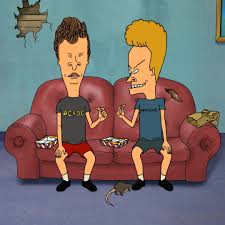
The Days and Nights of the 50s, 7/25/26. He Gets on Base.

Epigraphs:

So you wanna get out?
Let me draw a map

–Superchunk

Good sex it never makes you feel hollow
Good sex it never makes you clean

–Kevin Drew

I watched your face die backwards
Little baby in my memory
You told me victory’s sweet
Even deep in the cheap seats

–Conor Obrest

I. Morning

I slept better than I have in a long time. As best as I can recall, I went to bed around 12:40 AM. and woke up around 6:40 AM. Six hours is not necessarily a full night’s sleep, but lately it has felt like a luxury. I woke up clear-headed, made coffee in my room, and headed down to the Lawson around the corner for another one. I picked up some potato chips while I was there, wandered back to the hotel, and settled into the morning.

The first order of business was practical. I checked my messages, replied to my son Hugh, and told him I’d be happy to swing by home on Monday as long as he let me know what time he expected to be home. “Love, Papa,” as always. I checked in on Elliott as well. Nothing had changed. As of this writing, we’re still meeting at 6:30 this evening at a beer bar in southern Osaka, and I am looking forward to it.

Once these logistics were out of the way, my mind drifted, as it sometimes does, toward movies and television.

I started thinking about The Sopranos. I’ve watched this show all the way through twice, and I’ve revisited a number of episodes over the years. I think James Gandolfini and Michael Imperioli both give remarkable performances, and there are many individual scenes I genuinely love. Even so, I’ve gradually realised that David Chase’s aesthetic simply isn’t mine. Whether the repetition is intentional or not—and I suspect it is—I find both the storytelling and the character arcs to be cyclical.

The performances remain compelling, but the show continually circles back over the same emotional territory. I understand why so many people consider it one of the greatest television dramas ever made. I don’t. I like it and I’m glad I watched it, but I don’t imagine I’ll ever watch the series again.

Thinking about The Sopranos naturally led me to the dialogue that has stayed with me over the years. Not necessarily the greatest lines ever written, but the ones I find myself returning to.

Roger Wade, in The Long Goodbye, pours two glasses of anisette and says to Philip Marlowe, “Take that goddamn J. C. Penney tie off.”

Marlowe calmly replies, “I’m happy to drink with you, but I’m not taking my tie off.”

I don’t know why I love that exchange so much, but I always have.

Another favorite comes from Godfather II. Michael Corleone’s sister comes to him with her new boyfriend Merle to ask Michael for money.

“Connie, I don’t know this Merle. I don’t know what he does. I don’t know what he lives on. Tell him you’re never going to see him again, and come and live with me in Tahoe.” She does of course. It’s funny, oddly romantic, a little menacing, and super funny.

Then there’s The Wire. Bodie has always been my favourite character, and one of my favourite exchanges comes in Seasons 3 shortly after Cutty gets out of prison.

“I’m surprised Avon lets y’all get your heads up.”

Bodie shrugs.

“Sometimes you got to.”

Four words. An entire philosophy.

Seinfeld contributes one as well. Kramer proudly shows Jerry his silk boxer shorts and encourages him to buy a pair. Jerry politely declines.

“No thank you. They’re just a little too delectable for me.”

Perfect.

Finally, there’s Michael Clayton. Arthur Edens has come apart at the seams strips off in the deposition room. Michael flies to Wisconsin to rescue him, and after a brief argument simply says,

“Let’s get out of Milwaukee and we’ll talk about it.”

Sometimes a single sentence can contain an entire friendship.

As I thought about these great quotes, I realized something that hadn’t quite crystallized before. I don’t dislike slow films. I dislike static ones. I love Tarkovsky, but I don’t love all of Tarkovsky equally. Mirror and Stalker feel alive to me. Nostalghia does not. Likewise, I don’t need constant action, but I do need movement—emotional, philosophical, psychological, narrative. I want to feel that a story is becoming something different from where it began.

That, I think, is the aesthetic I’m really chasing. After that my thoughts wandered to Craig Finn, the singer-songwriter who heads the Hold Steady.

The first Hold Steady song I ever heard was “Sequestered in Memphis.” At the time I misunderstood the entire premise. I thought the narrator was giving an interview to a journalist rather than being questioned by the police. Looking back, it seems obvious, but it never occurred to me then.

What always stayed with me, though, was a single line:

In barlight she looked alright. In daylight she looked desperate.

I’ve know exactly what Craig means here. I’ve been there too.

By then the morning had slipped away from me. As of this writing, I’m still working on my essay, Am I Bisexual? It should probably have been published two days ago. It’s one of the more complicated pieces I’ve written in a while, and I’d rather finish the edit properly than rush it out simply to keep the daily streak alive.

The plan from here is straightforward. I’m going upstairs to keep editing for another hour or two. I’ll get organised, probably grab a short nap later this afternoon, and then head down to southern Osaka in plenty of time to meet Elliott at 6:30.

Everything else can wait.

II. Afternoon

By nine I’d finally stopped putzing about I was about to start. I rearranged the room one more time, put on Neil Halstead instead of Ryan Adams, then Ryan Adams instead of Neil Halstead, opened three browser tabs, closed two of them, looked at hotel dates, thought about escorts for exactly as long as I had promised myself I wouldn’t, and somehow convinced myself this counted as preparation.

It did, in a way. Every writer has their rituals. Mine mostly involve avoiding the sentence I’m about to write.

I remembered a much loved Superchunk lyric:

“So you wanna get out / well I’ll draw you a map.”

This turned out to be the whole morning. Dude if this place sucks so bad just jet. I’ll buy you and Amtrak ticket. Seriously bro. Hit the brinks.^

The next few days existed only as pencil marks: maybe Osaka until Monday, maybe longer, maybe Pattaya, maybe Litz, maybe Hugh, maybe Mio. None of it fixed. Just possible roads branching away from the same hotel room.

The night before, Litz had mentioned how much she loved the ending of piece I wrote about her. I had already mostly forgotten this part, so I took another look. It went like this:

The challenges in our relationship are the product of two imperfect people, each bringing old habits, old fears, old hopes, and old wounds into something new. This is not failure. It is simply the complicated business of being human.

I made it halfway through before I started crying. Not dramatic crying. Just enough that I had to stop reading. Sometimes a paragraph waits until you’re ready to understand what you wrote.

III. Early Evening:

Around 6:30 this evening, after working for about an hour and a half on the edit of yesterday’s journal, I walked a few minutes from my new hotel to a nearby convenience store to get something to drink.

Several hours earlier, I had texted my friend Elliott to ask whether he wanted to grab a drink tomorrow night. As I walked to the store, he replied that he was up for it and suggested a beer bar in southern Osaka. I told him I would meet him there.

Thinking about Elliott, I reflected on how much I admire his intelligence. I am a high school teacher, and Elliott used to be one of my colleagues. He left the school years ago and now tutors economics online and manages various investments. He also used to teach mathematics.

I am a social studies teacher. Over the years, I have taught a wide variety of classes, and I feel that I could adequately instruct students in almost any area of social studies. Elliott’s mathematical intelligence, however, has always struck me as remarkable.

In fact, I sometimes envy the mathematics teachers I have known, because mathematics is simply not one of my strengths. I was a decent math student for a time, but I hit the wall with calculus during my junior year of high school and never took another math class. Today, I almost never use mathematics except for the calculator on my phone and a little basic financial housekeeping.

This does not mean that Elliott is smarter than I am. I consider myself highly intelligent. Nonetheless, several times over the years, I have wondered whether he might indeed be smarter than me.

Thinking about it today, I realized that this is probably because his intelligence expresses itself very differently from mine. If I absolutely had to, I could probably relearn enough mathematics to teach middle school. That would be about my limit. Elliott is whip-smart and could probably teach most of the social studies classes I have taught without too much difficulty.

I often reflect on how strongly my intelligence expresses itself in certain areas of life, while in others I am essentially incompetent. I have a solid understanding of subjects such as history, politics, philosophy, psychology, religion, and metaphysics. However, I could not change a tire to save my life.

Although I am not exactly made of money, I almost always call a professional to handle household tasks such as fixing a faucet or clearing a drain. I find these jobs to be a tremendous hassle. In fact, they piss me off. I am happy to pay someone a few dollars to come and sort them out.

As I entered the convenience store, my thoughts turned to the screenwriter Aaron Sorkin. Sorkin is one of the greatest television and film writers of all time. I love The West Wing and The Social Network, and I have enjoyed much of his other work. For reasons of his own, however, Sorkin insists on directing some of his films.

He wrote and directed Molly’s Game. Molly’s Game sucks ass. The script is incomprehensible and all over the place. It is, without question, the worst piece of writing he has ever produced. The direction is equally terrible. The characterization is weak, the emotional beats are overdone, and the entire film is syrupy and sappy. I cannot stand it.

A second film of interest here is The Trial of the Chicago 7, which Sorkin also wrote and directed. The script is actually quite good, and the acting is strong. Once again, however, Sorkin’s direction is awful.

The film concerns the protests surrounding the 1968 Democratic National Convention in Chicago. I was not alive at the time, but my understanding is that thousands of protesters gathered in the city, largely in opposition to the Vietnam War and to the Democratic Party’s handling of it. The police responded with tear gas, clubs, arrests, and widespread violence. Some protesters fought back, and things became extremely ugly.

There are only a few major action sequences in the movie. Sorkin’s handling of them is pure trash. He has no idea how to direct physical chaos. The cameras are always in the wrong place. It is difficult to tell where anyone is or what is happening. The entire thing feels out of control, and not in an intentional way.

Molly’s Game is a bad movie, and I do not care. The Trial of the Chicago 7 could have been a good movie with competent direction. Sorkin was simply not the man for the job.

As I walked back to my hotel, I began thinking about how strange it is that otherwise intelligent people, for reasons of ego, ambition, or simple misjudgment, sometimes insist on doing things at which they are obviously bad.

Then I thought: Well, I have probably done this too.

There have certainly been times when I believed I could handle something and ended up over my skis. I suspect this is true of everyone. We all have strengths and weaknesses, and intelligence manifests itself in different ways.

Over time, I have tried to learn how to pick my spots and stay in my lane. I do not always succeed. However, I hope I do a better job of it than Aaron Sorkin.

IV: Evening Back at My Hotel

As I walked to the train station to go meet Elliot I called Annie. Annie has always been completely outta control, and she absolutely loves it. Within five minutes she’d decided to crash her ex-husband’s wedding in a tent, seduce one of the guests, reminisced about working at Spokane’s Mars Casino, told me stories involving cocaine, dresses, gambling, and an older gay man who’d taught her “everything about sex,” invited me to her hypothetical future wedding, and, after I jokingly suggested we skip straight to sex ourselves, said she’d think about it. Talking to Annie has always been like standing beside a fire hose. The stories don’t really have beginnings or endings. They simply arrive.

The morning passed quietly. I answered a message from my brother Hugh, who was planning to stop by the house in Kyoto sometime during the coming week, and sent a few encouraging replies to several women I’d been chatting with online. One woman in the Philippines was hoping to find work overseas in Singapore or Malaysia. Another, somewhere in Thailand, simply wanted to know how my morning was going. Others had drifted into that peculiar limbo occupied by most dating-app conversations: friendly enough to continue, but unlikely ever to become anything more.

After a while I found myself scrolling through far more conversations than I probably should have. Dating apps create the illusion that your social world is constantly expanding, when in reality most interactions simply fade away after a few messages. Every now and then somebody surprises you, but most conversations end not with an argument or rejection, but with simple inertia. Nobody does anything wrong. Life just moves on.

Perhaps that’s why I no longer find the process frustrating. Years ago I probably would have chased every lead, replied to every message immediately, and wondered why nothing seemed to develop. These days I treat it more like browsing a bookstore than shopping for groceries. If something genuinely interesting appears, wonderful. If not, I’ll probably enjoy my coffee just as much.

My musical companion for the morning was Craig Finn. I first discovered him through “Sequestered in Memphis,” and, like many first-time listeners, completely misunderstood the song. I thought the narrator was speaking to a journalist after a reckless night in Memphis. Only later did I realize he was being questioned by the police. Somehow that misunderstanding didn’t lessen the song; if anything, it made me appreciate Finn’s writing even more. His characters are so vividly drawn that they feel real even when you’ve misunderstood the plot.

One line has always stayed with me: “In bar light she looked alright. In daylight she looked desperate.” Finn is ostensibly describing someone else, but the brilliance of the lyric is that it cuts both ways. By dawn, they’re both desperate. We’ve all had moments where the previous night’s confidence evaporates with the morning light. Finn simply found the perfect sentence to describe it.

V: On the Way to See Elliot

After finally giving up on the day’s editing, I showered, threw on a clean shirt, and hurried toward Taishō, where I was meeting Elliott at a craft beer pub called TNT. I was running a few minutes behind schedule—as usual—but Elliott has never struck me as the sort of person who minds waiting over a pint. I figured I’d make up the time somewhere between the hotel and the station, although experience suggested otherwise.

The train ride became one of those familiar periods of suspended possibility. While checking directions and changing lines, I also found myself checking dating apps, replying to messages, and idly wondering what the rest of the evening might bring. If everything went perfectly, I’d spend a few hours drinking good beer with Elliott, head back toward my hotel, and perhaps finish the night with a date. It wasn’t exactly a plan so much as several loosely connected possibilities competing for my attention.

Somewhere between stations my thoughts drifted to Tomoyo, one of my former students whom I’d seen again at the book launch. We’d nearly gone out together once before, years after she’d graduated, but circumstances had gotten in the way. Twenty years have now passed since I first taught her, which removes any ethical hesitation I might once have felt. I found myself wondering whether I should simply ask her out the next time I am in Tokyo. Sometimes life becomes unnecessarily complicated because we spend too much time calculating the odds instead of asking straightforward questions.

That seemed to be the theme of the journey. I checked my bank balance, priced a few possibilities for later that evening, briefly reconsidered future trips to Thailand and even South Korea, nearly walked the wrong way through a station, and at one point came within a few feet of being clipped by a taxi while jaywalking. None of it mattered very much. My mind was simply ricocheting from one possibility to another while my body steadily carried me toward a beer with a friend.

By the time I emerged from Taishō Station, the mental static had largely disappeared. Elliott was waiting, the pub was less than a minute away, and for the next few hours the only decision I intended to make was which beer to order first.

=====

The Osaka Loop Line has a hypnotic quality after a while. Every minute or two another calm recorded voice announces the next station, another transfer, another reminder to mind the gap. After ten or fifteen minutes the words stop meaning anything. They become part of the rhythm of the journey, almost musical, drifting in and out beneath whatever happens to be occupying your thoughts.

Mine, for reasons I still can’t explain, wandered toward negative igloos.

I have absolutely no idea what a negative igloo is. I have never knowingly encountered one before or since. It arrived fully formed, demanded my attention for perhaps fifteen seconds, and then disappeared forever, leaving me no wiser than before. If someone were to ask me today what a negative igloo might actually be, I honestly couldn’t begin to answer. Nonetheless, somewhere between Kitahama and Taishō, negative igloos briefly became the most important concept in my universe.

The rest of my brain was scarcely more coherent. Ryan Adams was singing Drank Like a River, and I found myself thinking about the tiny crack in his voice—that moment where it sounds less like he’s performing a song than remembering something he’d rather forget. Some singers sound polished. Ryan often sounds wounded. There’s a difference, and it’s one of the reasons I keep returning to his records.

Then, just as suddenly, I realized I had absolutely no idea where I was.

I’d somehow missed my stop, wandered out the wrong exit, and was now standing in a station that looked vaguely familiar while possessing almost no useful geographical knowledge whatsoever. Google Maps insisted I was only two minutes away from Elliott. My instincts insisted otherwise. My instincts, it should be noted, have an unfortunate habit of arguing with Google.

For a few minutes I experienced what I can only describe as a minor travel panic. Not real panic—nothing so dramatic—but that familiar sensation every traveller knows, where every street begins to resemble every other street and every directional arrow seems specifically designed to send you somewhere else. I walked one way, doubled back, checked Google again, ignored Google, trusted Google, ignored it again, and somehow managed to end up exactly where I’d started.

Meanwhile my thoughts continued their usual pinball routine. Was the Sony credit card finally on its way? Should I spend part of August in South Korea instead of Bali? Would Yo still be available later that evening? Why hadn’t Jennifer replied? Why did Meinster have time to send me promotional emails but apparently not royalty statements? None of these questions had anything whatsoever to do with finding a pub in Taishō, but my mind saw no reason to separate one subject from another.

Eventually I admitted defeat and messaged Elliott. Dude I am totally lost. His reply arrived almost immediately.

Where are you?

It was the perfect question because I genuinely didn’t know.

Google claimed I was standing practically on top of TNT Craft Beer Pub. My own eyes suggested I was standing outside an Irish bar that definitely wasn’t TNT. For a brief moment I began to wonder whether the pub existed only as a cartographical rumour.

I texted him back and said I was looking at Taisho Station. He said he would be right there. One minute later I saw him across the street and crossed to meet him.

When Elliott finally rescued me from my navigational incompetence, TNT turned out to be exactly where Google had insisted it was all along. The fault, as usual, lay somewhere between the phone and the human operating it.

“You’re hopeless,” he said.

“I prefer ‘geographically imaginative.'”

He laughed. “Come on.”

One minute later we were golden.

VI: TNT Craft Beer with Elliot

The pub was everything I hoped it would be: a long wooden bar, a dozen taps of rotating local craft beers, a cheerful bartender in a baseball cap who somehow managed to keep everybody’s glass full without ever looking hurried. When one of the kegs kicked halfway through pouring my pint, she apologized and handed me the remainder for free.

“Sorry” she said.

“No worries,” I said. “I’ll always take half a beer for free.”

She laughed.

“I like your hat,” I said.

“I get that a lot,” she said.

I turned to Elliot and asked if he wanted to hear a joke.

“A shepherd is in bed with his girlfriend for the first time. She asks him, ‘How experienced are you?’ He closes his eyes…starts counting…and falls asleep.”

The bartender laughed.

Elliott buried his face in his hands.

“Please,” he said, “never change.”

“I make no promises” I said.

By the time the quizmaster welcomed everyone, we’d accumulated enough empty glasses to suggest we were taking the evening seriously while simultaneously possessing almost no confidence in our ability to answer questions about anything.

“What’s are name?” Elliot asked me.

“How about the Glorious Mofos?”

“Of course.”

“Ladies and gentlemen,” the quizmaster announced, “welcome!”

“He seems enthusiastic,” I whispered.

“He’s paid to be.”

We were spectacularly mediocre.

Spain had won something. Bananas were radioactive. Kobe Bryant was apparently named after Japanese beef. Beyond that we entered a sort of intellectual free fall.

“What do you think?”

“No idea.”

“You?”

“Less than no idea.”

“Write banana.”

“I already did.”

“Excellent.”

Our strategy rapidly evolved into letting Elliott answer the questions that sounded plausible while I concentrated on drinking beer, admiring the bartender, and periodically checking whether Yo had confirmed our appointment.

At one point Elliott looked over my shoulder.

“You’re really going after this?”

“I think so.”

“You ever think about…you know…not?”

I considered that.

“For about three seconds.”

He laughed.

“I thought so.”

That was one of the things I’d always appreciated about Elliott. He never judges. He asked questions. Usually he agrees with me. Other times now. Occasionally he looks at me as though I’ve completely lost my mind. But whatever I do he never tries to become my conscience. Old friendships eventually settle into that rhythm. You stop trying to improve each other and simply learn to enjoy each other’s company.

The conversation drifted from Japan to Canada, from the weather to my girlfriends, from travel plans to parents. I vented a little about my mother bitching about my writing. Elliott listened more than he spoke, occasionally nodding, occasionally smiling in that understated Canadian way that somehow communicated, I don’t entirely agree, but I understand why you’re upset.

By the time the second round ended, I’d glanced at my watch three or four times.

“You’ve got somewhere to be,” Elliott said.

“I might.”

“You definitely do.”

“Indeed I do.”

He grinned.

“Go lose your T-card.”

I laughed so hard I nearly spilled my beer.

“I’ll report back.”

“You’d better.”

We settled the bill, shook hands outside TNT, and headed in opposite directions. Elliott toward another ordinary Saturday night. Me toward Umeda, where Yo-chan was waiting.

VII: On the Way to See Yo Chan

As I entered Taisho Station the JR announcements began their familiar chant once again.

The next stop is…

Somewhere between stations my mind wandered back to negative igloos. I still have absolutely no idea what one is.

The JR announcer continued serenely informing us that the next stop was Kyobashi, or Osaka Castle Park, or somewhere that probably existed. In my head it became:

“Please enjoy negative igloos. Transfer here for the glorious nonsense line. Please exit on the right.”

“Yeah, yeah,” I muttered. “I got it.”

I did not, in fact, have it.

Somewhere between the craft beer and the heat, I’d managed to convince myself I’d fallen asleep on the train. Maybe I had. Maybe I hadn’t. Either way, I suddenly had absolutely no idea where I was.

Oh, shit.

I checked Google Maps again. Every time I opened it, it confidently gave me a different answer.

“Seventeen minutes.”

I calculated that I would get to the shop about five minutes early. This turned out to be off. The announcer cheerfully reminded us to mind the gap.

“I’m trying to mind all the gaps.”

I got off the train and looked around. Then decided getting off had been exactly the right decision. I checked the train map on the station board. I was also seventeen minutes past Umeda. Oh great. Back we go.

I thought to myself: I need cash. Then a taxi. Then a cigarette. Possibly in that order. First I had to get back to Umeda.

The train came and I rode the short distance back. The instant I stepped onto the street, I lit a cigarette and hailed a cab. I had just a fee drags when a cab pulled up and I had to toss the cig.

The taxi driver nodded when I said, “Umeda.” Progress. Seven minutes, Google claimed. For once, we agreed. As the cab rolled through the humid Osaka evening, I realized I was no longer worried about getting lost. I was worried cause I was a little late.

I’d spent the entire afternoon imagining meeting Yo chan, and now my grand entrance was shaping up to be me arriving slightly sweaty, smelling faintly of cigarettes and carrying too little cash.

Great first impression I thought.

The driver dropped me exactly where Google said he would. Google immediately betrayed me again.

Fourth floor. I found the fourth floor. Everything was locked. No people. No reception. No Yo-chan. No nothing.

Just an eerily quiet hallway that felt like the set of a film where everyone had disappeared moments before I arrived.

I called the shop.

“I’m here.”

A reply came back almost instantly.

“First floor. It’s hard to find.”

No shit.

A guy walked over and picked me up. We walked five minutes to where the shop really was, no where near where Google said it was. Typical. This guy knows nothing. Apparently.

Five minutes later I found the place.

VIII: Yo Chan

The shop staff took me up in the elevator to the 7th and opened the door to room 701. For some reason I found this number to be fitting. There was a shower but no sink. I took my own clothes and began to rinse off. Yo chan soon entered the room. She looked like her picture, but not quite. The agency website said she 24, a fact she confirmed in person. She looked about 28 to me, and I supposed her life was perhaps not the easiest.

I found her attractive, and knew I would be able to cum. She joined me in the shower, soaped up, and began to stroke my dick. In general, I prefer to handle my equipment. It is a sensitive area, and I just know it best. I turned my back to her, and then a minute later I stepped out and toweled off. She followed shortly thereafter.

As we stepped out of the shower, she assessed my naked body. She said, “You look like Boris Johnson.” I laughed away and didn’t reply. I decided then that there were some conversations not worth extending.

We climbed onto to bed. I was already erect, and she was at half mast. She unwrapped a condom and slid it on my dick. I had never sucked anyone’s dick before, and I was both exited and just a little nervous.

We began kissing. I like a bit of tongue during kissing, however, her tongue was a little aggressive. Oh well I thought, kissing, at least tonight, would not the main event. I broke the kiss, and went down on her. She was semi-erect, however I was able to fit her full penis into my mouth. The first thing I noticed was her large foreskin. The second thing was, the act was neither pleasant nor unpleasant, and she tasted neither good nor bad. I was eager to make her cum.

After a bit, she motioned for me to come back up to the head of the bed. She climbed back on top of me, and slid my dick into her ass. She had applied lube to her asshole, and hard dick slid in easily. After a short amount of time, I asked her to turn around and entered her from the rear. She began to moan and pant, and I found this very sexy. I was about to cum, and then, as I usually, do, I pulled and finished on a towel while sitting on my knees.

I then collapsed back the bed. She also sat on her knees, and came on the towel. Some of her cum landed on my leg, which I found faintly amusing. After this, I needed a cigarette. There was no smoking in the room so I asked her if I could go downstairs. She said sure, just pick me up a Pocari Sweat and call reception to get back up. I told her I would be back in five minutes, however I knew this was a lie. The fact was I would smoke three of four cigarettes and decompress for a while. This was about an hour into our date, and I had paid for ninety minutes. I did not want to re-engage in sex, so smoking and thinking quietly seemed like a good plan.

When I stepped back onto the street, the wind had gone out of my sails. Not in a bad way. Just…gone. For most of the day I’d been propelled by anticipation. Catch the train. Find Elliott. Don’t get lost. Meet Yo chan. Get the cash. Find the building. Try not to make an idiot of yourself. Then, just like that, there was nothing left to chase.

Osaka was still humming around me, but I’d become a spectator again. I checked the time on my phone. It was 12:30 AM. This immediately made me think of the Katheryn Bigalow film Zero Dark Thirty. I found myself thinking about Zero Dark Thirty. I’d never understood the criticism that it somehow endorsed torture. Showing something ugly isn’t the same as celebrating it. A film can portray violence honestly without recommending it, just as Goodfellas isn’t an argument for joining the Mafia. Sometimes a story simply trusts the audience to tell the difference.

I ducked into a nearby convenience store and bought two Pocaris, two beers, a burrito, and a pack of pack of cigarettes. I smoke another heater and drank one of the beers on the street. Then I called up to reception. There was no security, and I did not see any other customers the whole time I was there, however, at least time, I did what I was told.

Back in bed with Yo, we both undressed again and she fell asleep. I found our legs entwined. He body was very comfortable, and I can honestly say this was the sweetest part of the evening.

She woke up and pointed at the clock. It was time to go. We dressed and walked to the elevator. I leaned to give her a goodnight kiss, and she kissed me back, lightly. This was goodbye.

=====

It was after last train, so I got a taxi back my hotel near Yodoyabashi Station. The taxi rolled silently through the warm Osaka night I leaned my head against the window and watched the city slide by. Tomorrow I’d probably throw myself into another impossible plan, another train, another woman, another glorious and bizarre day. I was, by this point, quite tired.

A few hours earlier I’d been arguing with Google Maps, inventing negative igloos, convincing myself I’d missed stations that probably never existed, and experiencing a full-blown case of what I can only describe as travel boggle. Now all that urgency seemed faintly ridiculous. The date had happened. It had gone OK. I lost my T-card. I’d survived.

Travel does that. What feels catastrophic at eight o’clock becomes a mildly amusing anecdote by twelve-thirty.

But for the moment, there was nowhere I needed to be.

IX: Late Night Hotel and Bed

Back in my room I took off my shirt, washed up, and prepared for bed. For reasons I can’t entirely explain, my thoughts eventually wandered toward football. I’ve always enjoyed the sport, even if basketball remains my first love, and one of my earliest football memories comes from a Washington State game against Stanford. My mother, Claudia—CL to longtime readers—was friendly with Janet Elway, John’s mother, and at one point Janet served as something of a mentor to her. Through that connection, we ended up at the game while John Elway was still Stanford’s quarterback.

Before kickoff, Elway apparently told my mother that if he threw a touchdown, he would point toward us in the stands. Naturally, he did throw one. He was John Elway, after all. And after the score, he looked up and pointed in our direction while we yelled ourselves hoarse. I was still rooting for Washington State, which complicated the moment slightly, but even then I understood that we were watching somebody exceptional.

Elway went on to become one of the defining quarterbacks of his generation, first at Stanford and then during a long NFL career with Denver. What stays with me, though, isn’t the statistics or the championships. It’s the strange intimacy of that afternoon: my mother’s connection to his family, the promise made before the game, and the tiny gesture toward the stands after the touchdown. Sports are full of enormous public moments, but the memories that survive are often the small private ones folded inside them.

I claimed into bed, and indulged in one final reflection for the day. I thought about how funny it was that one minute you are deep in the throes of passion, moaning and panting your partner’s name, and the next you are smoking a cigarette, drinking a beer, and thinking about Zero Dark Thirty on the street. Sex, which feels so wonderful and necessary at the time, does tend to recede pretty quickly. However, the power of good sex, as Kevin Drew says in out epigraph, cannot be beat.

Dedication:

For Yo chan. Thank you for taking my T card baby. Godspeed. You rule.

On Bobby Fischer, the Greatest Chess Player of All Time

Epigraph:

Why not see a legend while it’s still being made?

The Silver Jews

Introduction:

This essay looks at the life and career of the greatest chess player of all time, Bobby Fischer.

This one is especially meaningful to me because my dad, Ross Thomas, taught me to play chess when I was a little kid. Neither of us has ever been a great player, but we both love the game. Ross still enjoys playing today as do I, and although I don’t follow competitive chess as closely as I once did, I’ve never lost my fascination with its history—or with the remarkable personalities who have shaped it.

Few personalities have ever been as brilliant, complicated, or tragic as Bobby Fischer.

In this essay I explore Fischer’s astonishing rise from Brooklyn prodigy to World Champion, the unforgettable 1972 Match of the Century against Boris Spassky, his extraordinary genius over the board, and the painful decline that followed. Like many towering figures, Fischer left behind a legacy that is impossible to separate from his contradictions.

Whether you’re a lifelong chess player or simply interested in remarkable lives, I hope you’ll enjoy the journey. As always, thank you for reading, commenting, sharing, and making these conversations possible.

I. Brooklyn

There are bogglers, and then there is Bobby Fischer.

History is littered with men who threw away fortunes, marriages, careers, and reputations. Every generation seems to produce a few gifted souls who wake up one morning, look at a perfectly good life, and decide to drive it into a ditch at seventy miles an hour. Howard Hughes belongs in that conversation. John McAfee as well. A handful of Roman emperors deserve honorable mention. But if I had to pick a patron saint of the truly bewildering decision, the gold medal still goes to Bobby Fischer.

Which makes the whole thing even stranger, because Bobby began as almost the opposite of a boggler. He was a skinny kid from Brooklyn who found a chessboard before he found the rest of the world and went on in short order to change the game forever.

I never saw Bobby Fischer play. By the time I was old enough to understand chess, he long gone. The World Championship in Reykjavík belonged to another era, and Bobby himself had already begun drifting into legend. I didn’t discover him through television or newspaper headlines. I discovered him through my father, who loved chess and spoke of Bobby the way baseball fans talk about Willie Mays or boxing fans talk about Muhammad Ali. Bobby wasn’t simply another grandmaster. Bobby was Bobby.

Even if you know almost nothing about chess, you’ve probably heard the name. That’s rare.

Most world champions become famous inside their sport. Bobby transcended the board entirely. For a brief moment in 1972, during the height of the Cold War, a chess player became one of the most recognizable people on the planet. He wasn’t just trying to beat Boris Spassky. Millions of people saw him as the lone American challenging decades of Soviet dominance in the game’s intellectual heartland.

He won.

And then… Well. This is where the boggling really begins.

II. Brooklyn & Chess

Every legend has to begin somewhere. Abraham Lincoln had the log cabin. Muhammad Ali had Louisville. Bob Dylan had Hibbing. Bobby Fischer had a small apartment in Brooklyn, a single mother, and a chessboard.

Not exactly the ingredients from which you would expect history to emerge.

Bobby wasn’t born into wealth or privilege. There was no grandmaster father waiting to pass down generations of chess wisdom. There was no Soviet state pouring unlimited resources into his development. There was just a skinny, bright kid who discovered a game that somehow made more sense to him than almost everything else around him.

The game never let him go.

Neither, apparently, did he ever let go of it.

I never saw Bobby Fischer play.

By the time I was old enough to understand what a chessboard even was, Bobby had already disappeared from competitive chess. I was born in 1974, just two years after Reykjavík, so I missed the whole thing. My Bobby wasn’t the Bobby of television broadcasts and newspaper headlines. My Bobby came secondhand through my father.

Dad loved chess.

He wasn’t a master by any stretch, but he loved the history, the personalities, and above all Bobby Fischer. Long before YouTube breakdowns, Twitch streams, and chess engines stronger than every human being who has ever lived, my father told me stories about this kid from Brooklyn who walked into a game the Soviet Union practically owned and somehow beat them anyway.

To a little kid, that sounded impossible.

And maybe that’s why Bobby has fascinated me ever since.

Not because I became a serious chess player—I didn’t. Not because I memorized openings or dreamed of becoming a grandmaster. I didn’t do that either. Bobby fascinated me because even before I knew the details, he already felt larger than life. Some people become famous. Others become myths. Bobby somehow managed to become both before he was thirty.

There’s another thing I like about Bobby. He wasn’t polished. He wasn’t exactly charming. He wasn’t selling anything.

He didn’t seem remotely interested in being a celebrity. If anything, fame looked like something that had happened to him against his will. He wanted to play chess. The rest of the world insisted on turning him into a symbol.

That’s a dangerous bargain. Especially for someone who already viewed the world with suspicion.

The irony, of course, is that the qualities that made Bobby great at chess were probably the same qualities that made ordinary life so difficult. Absolute concentration. Endless preparation. Refusing to accept conventional wisdom. Seeing threats and possibilities invisible to everyone else. Across sixty-four squares those qualities made him nearly unbeatable. Outside the chessboard, they often made life bewilderingly complicated.

The boy from Brooklyn had found the one place in the world where everything made perfect sense. The trouble began when he had to leave the board.

III. Bobby’s Rise

The funny thing about genius is that it rarely announces itself politely. It doesn’t knock on the door. It kicks the damn thing in.

By the time Bobby Fischer was in his early teens, the whispers had already begun. Chess players who had spent decades studying the game found themselves losing to a kid who wasn’t even old enough to drive. Adults who expected to teach him lessons instead received one themselves. Tournament after tournament, Bobby kept climbing until people slowly stopped asking whether he was unusually talented and began asking a much stranger question:

How good can one human being actually become?

That question haunted the chess world for the next decade.

Remember, this wasn’t today’s chess. There was no internet. No YouTube lectures. No databases containing millions of games. No engines instantly pointing out every mistake with the emotional warmth of a tax auditor. If you wanted to improve, you studied books until they fell apart. You replayed famous games by hand. You stared at positions for hours. Chess was slower, lonelier, and in many ways far more mysterious.

Bobby loved every minute of it.

Or perhaps “loved” isn’t the right word. He consumed it. The game became less a hobby than an ecosystem. Everything else seemed secondary. School. Friends. Ordinary teenage life. Those things existed somewhere off to the side while Bobby disappeared deeper into sixty-four squares.

That kind of obsession usually scares people. Sometimes it should. But every now and then history rewards it.

By the late 1960s Bobby wasn’t merely America’s best player. He had become the only serious obstacle standing between the Soviet Union and permanent ownership of the World Championship. For decades the Soviets had treated chess almost as a national project. They produced champion after champion with an efficiency that bordered on the industrial. To beat one Soviet grandmaster was impressive.

To beat all of them? That sounded ridiculous. Bobby apparently didn’t’ received the memo. What amazes me isn’t simply that he won. It’s how he won. He didn’t scrape through on lucky breaks. He didn’t sneak across the finish line. He flattened people.

Strong grandmasters—men who had dedicated their lives to becoming the best in the world—found themselves losing in ways that almost never happened at that level. His Candidates matches became the stuff of legend. The scores looked less like contests between equals than demonstrations of what happened when somebody operating on a different frequency sat down at the board.

There are athletes who win. There are athletes who dominate. Then there are the rare few who make everyone watching wonder whether the rules somehow stopped applying.

Babe Ruth. Wayne Gretzky. Michael Jordan. Michael Phelps. Usain Bolt. Bobby Fischer belongs in that conversation.

That’s the point people often miss. Bobby’s greatness wasn’t confined to chess enthusiasts. His rise had the unmistakable feeling of witnessing something unprecedented. You didn’t need to understand the Sicilian Defense or the King’s Indian to recognize that this skinny kid from Brooklyn was forcing an entire establishment to panic.

And somewhere along the way, Bobby stopped being just another chess player. He became a symbol. Americans wanted him to humble the Soviets. Journalists wanted a story. Television wanted a star. Sponsors wanted a celebrity. Everyone wanted a piece of Bobby Fischer. I’m not sure Bobby wanted any of them.

Looking back now, that’s the first place I can see the seeds of The Greatest Boggler beginning to sprout. Before the paranoia, before the disappearances, before the bizarre interviews and the years wandering from country to country, there was already a young man who seemed profoundly uncomfortable with everything that came attached to success except the game itself.

He wanted chess. The world insisted on giving him everything else. And history has a habit of charging interest on bargains like that.

IV. The Wooden Click

By the summer of 1972, Bobby Fischer had become something no chess player had ever really become before. A global celebrity. That sentence still sounds strange.

Golf has Tiger. Basketball has Jordan. Boxing has Ali. Baseball has Ruth. Tennis has Federer. Even if you’ve never watched them play, you know their names.

Chess? Chess wasn’t supposed to work that way.

Yet for a few extraordinary weeks in Reykjavík, Iceland, it did.

The Cold War had turned sixty-four squares into a battlefield. Bobby Fischer wasn’t simply challenging Boris Spassky for the World Championship. Fairly or unfairly, millions of people saw him as one American standing against an entire Soviet chess machine that had dominated the game for decades.

Every move became news. Every expression became news. Every delay became news. The entire world seemed to be watching a board covered in little carved pieces of wood. Most people would have loved every second of it. Bobby Fischer looked like he wanted to crawl under the table.

Here’s where “The Greatest Boggler” first begins to make sense. Most celebrities worry about bad reviews. Most athletes worry about losing.

Bobby worried about everything. The lights. The cameras. The spectators. The photographers. The chairs. The draft. The conditions. If there was a distraction available, Bobby could find it.

Reading about Reykjavík today, I can’t help but laugh at one recurring image. I picture Bobby sitting at the board convinced there were eyes in his soup. Not literally, of course, but psychologically. Somebody was always watching. Somebody was always listening. Somebody was always trying to gain an advantage.

The walls had ears. The soup had eyes. The room itself felt hostile. To the outside world, this looked ridiculous. To Bobby, I suspect, it felt completely real.

The most famous example has become almost comic. The noise. Specifically…

The little wooden click.

Imagine devoting your entire life to becoming the greatest chess player on Earth. You arrive for the biggest match in the history of the game. Billions of people—well, what feels like billions—are watching. Your opponent reaches for a knight. He places it on the board.

Click.

Bobby couldn’t stand it. Now, I admit, this is where my sympathy and my sense of humor collide. Part of me wants to put an arm around Bobby and say,

“Buddy… it’s a knight.”

“It’s made of wood.”

“It’s going to make a little wooden click.”

“It just is.”

“Have a cup of tea.”

“Take a breath.”

“Let’s play.”

Because the knight isn’t going to stop clicking. It just isn’t. The cameras aren’t going to disappear. The reporters aren’t going to go home. History has arrived. You’re Bobby Fischer. This is the price.

But another part of me wonders what that match must have felt like from inside Bobby’s own head.

Imagine carrying not only your own expectations but those of an entire country. Imagine believing every sound matters. Every movement matters. Every distraction matters. Imagine sitting across from the Soviet World Champion knowing that one lapse in concentration could cost you everything. Suddenly the little wooden click doesn’t seem quite so funny anymore.

It becomes symbolic. The click isn’t really about the knight. It’s about a mind that could never completely switch itself off. That’s Bobby.

The same obsessive concentration that allowed him to discover combinations invisible to everyone else also made ordinary imperfections almost unbearable. His gift and his burden may have been the very same thing. The remarkable thing is that none of it ultimately mattered.

Not the cameras. Not the click. Not the endless negotiations. Not the circus surrounding the match. Bobby won. Against all the noise, all the distractions, all the pressure, he became World Champion. For one shining moment, the kid from Brooklyn stood alone at the top of the chess world. It should have been the beginning of a long reign. Instead, astonishingly, it proved to be the beginning of something else entirely.

The greatest boggler had finally reached the summit. Now he was about to begin climbing back down.

V. The Walk Away

History loves a coronation. It has far less patience for an abdication.

If this were a Hollywood movie, Bobby Fischer wins the World Championship in Reykjavík, returns home a conquering hero, defends the title half a dozen times, writes a bestselling book, gives exhibitions around the world, settles into a comfortable house somewhere in California, and spends old age dispensing colorful stories to admiring grandchildren.

Instead… He walked away. Not immediately. Not dramatically. Just… steadily. Like a man fading into the California sun. That’s the image that stays with me. Not the young genius lifting the crown. The older Bobby, somewhere in Los Angeles, drifting farther and farther from the life everyone assumed he would lead.

People forget just how extraordinary this decision was. Imagine Michael Jordan retiring forever after his first NBA title. Imagine Tiger Woods winning the Masters once and never entering another major. Imagine Bob Dylan releasing Highway 61 Revisited and deciding he’d said everything he needed to say.

That’s the scale of Bobby’s disappearance. He simply stopped defending the thing he had spent his entire life trying to win.

Officially, there were disputes over match conditions, prize funds, and the rules proposed by FIDE. Bobby wanted changes. FIDE accepted some, rejected others, and when agreement couldn’t be reached, he refused to play. In 1975 the title passed to Anatoly Karpov by default.

No final game. No dramatic defeat. Just… Silence.

That, to me, is the first truly monumental boggle. Because Bobby had finally reached the summit. The hard part was over. History was his.

He could have defended the title once, twice, maybe five times. He could have become the elder statesman of American chess. He could have written books, taught children, appeared on television once a year, smiled for the cameras, and lived comfortably for the next forty years.

Instead he disappeared.

The farther Bobby drifted from chess, the farther he seemed to drift from almost everyone else. His relationship with his mother had always been complicated. She had encouraged his early interest in chess but also worried, understandably, that it was consuming his life.

As Bobby became more famous, the distance between them widened. Their relationship fractured, and by adulthood they were largely estranged. There is something deeply sad about that. The person who first helped place a chessboard in his life became someone increasingly absent from it.

Then came the paranoia. Now, I want to tread carefully here. It’s tempting to diagnose people after the fact. Every eccentric becomes “obviously” this or “clearly” that. Real life isn’t that tidy.

What we do know is that Bobby became increasingly distrustful of institutions, governments, journalists, organizers, and eventually whole groups of people. The suspicious streak that had surfaced during Reykjavík seemed to expand until almost nothing escaped it.

The cameras weren’t merely annoying. People weren’t merely mistaken. The soup still had eyes. Everywhere Bobby looked, somebody seemed to be watching. Somebody seemed to be cheating. Somebody seemed to be plotting.

And perhaps the saddest part is that the world kept giving him reasons to feel besieged. Fame invites attention. Attention attracts opportunists. The more Bobby withdrew, the more mysterious he became, and the more mysterious he became, the more people pursued him.

Round and round it went. By the 1980s, he had become almost a ghost.

There were periods when he was reportedly living with remarkably little money. Accounts differ on exactly how precarious his circumstances became, but there were stretches in Southern California when he moved from place to place, staying with acquaintances, in modest accommodations, sometimes even homeless, living a life almost unimaginable for the most famous chess player in the world.

That image boggles my mind. The undisputed World Champion. The man who had conquered the Soviet chess empire. A man without a stable home. How does that happen?

Then there is even a darker chapter. This is has to with Bobby’s antisemitic statements. There is no graceful way around them. They were ugly.

They became more frequent as he grew older, and they permanently damaged his reputation. The bitter irony, of course, is that Fischer had Jewish ancestry through his family background, making his rhetoric all the more bewildering. Whatever mixture of grievance, paranoia, anger, or ideology produced those statements, they caused real harm and deserve neither excuse nor romanticization.

This is where the essay stops being merely funny. Because up until now we’ve been laughing about wooden clicks. About photographers. About impossible demands. About eyes in his soup. Now we’re watching a genuine hero unravel in public. That’s different. It’s heartbreaking.

I keep coming back to the same question. What if Bobby had simply found peace?

Not perfection. Just peace. A little house. A morning walk. A cup of coffee. Chess club on Tuesdays. A few exhibitions every year. Maybe a family, maybe not. Just… enough.

Instead, the world champion kept walking. Farther from chess. Farther from home. Farther, it sometimes seemed, from himself.

And the California sun kept getting lower

VI. The Long Decline

There’s an old saying that every man dies twice. The first time is when his heart stops. The second is the last time someone says his name.

If that’s true, Bobby Fischer may never die.

Even people who couldn’t explain en passant or the Sicilian Defense know who Bobby Fischer was. The tragedy is that millions know him for the wrong reasons. The years after Reykjavík don’t unfold so much as scatter. He’s here. He’s there.

Budapest. The Philippines. Japan. Iceland. Anonymous apartments. Hotel rooms. Friends’ spare bedrooms. Long disappearances.

Then suddenly he’d surface again, as if he’d been underwater for years. The world would remember. Then he’d vanish once more. His life begins to feel almost impossible to narrate because it no longer has a center.

There’s no career. No family life to anchor the story. No steady work. No annual rhythm. Just movement. Always movement.

I’ve known people like that. Not world champions. Just drifters. Men who are always leaving. Always beginning again. Always convinced that the next city, the next apartment, the next job, the next relationship will finally outrun whatever has been chasing them.

It never does.

Because the thing following them is themselves. That’s Bobby’s sadness. No matter where he went, Bobby Fischer came too. There were occasional bursts of hope. Every few years somebody would announce that Bobby was coming back.

Maybe another match. Maybe another appearance. Maybe another interview. Maybe this time everything would settle down. It never quite happened.

Instead, Bobby became almost mythological. People told stories.

“I heard he’s living here…”

“I heard somebody saw him there…”

“I heard he’s working on this…”

Like Elvis or Howard Hughes, the man slowly disappeared while the legend continued multiplying.

The saddest thing about isolation is that eventually it becomes self-reinforcing. If you believe everyone is watching you you stop trusting people. When you stop trusting people you become lonely. Loneliness makes suspicion stronger. Suspicion creates more loneliness.

Round and round it goes. Eventually the circle becomes almost impossible to break. I don’t pretend to know exactly what was happening inside Bobby’s mind. None of us can. It’s easy—far too easy—to diagnose historical figures from the comfort of an armchair decades later.

Life isn’t a psychology textbook. Human beings rarely fit neatly into categories. What we can say is simpler.

Bobby became increasingly isolated. Increasingly angry. Increasingly suspicious. And increasingly difficult for the people who cared about him to reach.

Those are observations. They’re almost enough. The truly heartbreaking part is that flashes of the old Bobby never seemed to disappear. Whenever chess came up, the brilliance was still there. He could still see the board in ways almost nobody else could.

He advocated for Chess960, arguing that modern opening preparation had become too mechanical. Whether or not one agrees, it was another reminder that Bobby never stopped thinking deeply about the game itself. Even after decades away from the championship, his mind was still searching for new possibilities.

That fascinates me.

Because it suggests Bobby never really abandoned chess. He abandoned the world surrounding chess. Those are two very different things. People sometimes ask why geniuses so often end badly. I think that’s the wrong question.

Most geniuses don’t. Most extraordinarily gifted people build long, productive lives. The better question is why some geniuses seem unable to find a place to stand once the applause stops. For Bobby, victory solved the one problem he’d devoted his life to solving. After that…

What remains? You can spend twenty years climbing Everest. You can’t spend the next twenty standing on the summit. Eventually you have to come down. Most people descend into ordinary life. Bobby never really did.

He remained, psychologically, somewhere on that mountain. Still listening. Still watching. Still hearing the tiny wooden click. Still looking for eyes in his soup. And that’s why I keep resisting simple explanations. Was Bobby a hero?

Absolutely. Was he also capable of saying ugly, hateful, indefensible things? Absolutely. Both can be true. History isn’t obligated to give us clean characters. Some lives remain stubbornly contradictory. Perhaps that’s why Bobby still fascinates us more than fifty years after Reykjavík.

Not because he was perfect. Not because he was monstrous. Because he was profoundly, bewilderingly human. Gifted beyond measure. Flawed beyond measure. A man who could see twenty moves ahead on a chessboard and sometimes seemed unable to see the next move in his own life.

Then came one of my favorite Bobby stories.

For years, chess fans traded rumors that Bobby had quietly returned to the internet, anonymously playing blitz games against unsuspecting opponents. The greatest of those stories involved English grandmaster Nigel Short, who later said he believed he’d been playing Fischer himself.

Was it really Bobby? Nobody knows for certain. Maybe yes. Maybe no. That’s almost beside the point. The story sounds like Bobby, so I like to think that it is true.

The greatest chess player in history, hiding behind a screen name somewhere, refusing interviews, refusing publicity, refusing to tell anyone who he was, and simply playing chess because that was still the one language that made sense to him.

Whether it happened exactly that way almost doesn’t matter anymore. It has become mythology. And Bobby, by then, belonged as much to mythology as to history.

VII. Checkmate

Every story has to end somewhere. It’s fitting, I suppose, that Bobby Fischer’s ended in Iceland. Not New York. Not Brooklyn. Not Los Angeles. Not Moscow. Iceland.

The little island where, for one extraordinary summer in 1972, he became the most famous chess player who had ever lived. It was the only country that would still welcome him.

Life has a strange sense of symmetry. After years of drifting through countries and controversies, after the endless rumors, the disappearances, the interviews that shocked the world, the legal battles, the wandering, Iceland quietly opened its doors to him one last time.

In Iceland, at least, Bobby found something resembling peace. Not complete peace. I’m not sure Bobby Fischer was ever built for complete peace. But enough. Enough to walk. Enough to think. Enough to play a little chess. Enough, possibly, to grow old.

He did a couple of interviews just before his death and I have read one or two. In them he sounds, if not exactly becalmed, at least somewhere approaching peace. This is a good note to end on.

Bobby Fischer died in Reykjavik January 2008 at tixty-four years old. A chessboard has sixty-four squares. Just one of those funny coincidences I guess. It’s hard not to smile. The number somehow feels right. When Bobby died, the obituaries arrived almost immediately. Some celebrated the genius. Some dwelled on the paranoia. Some focused almost entirely on the antisemitism and the bitterness of his later years.

All of them were telling part of the truth. None of them were telling all of it.

That’s the difficulty with Bobby Fischer. He refuses to fit inside a headline. He wasn’t simply a genius. He wasn’t simply a crank. He wasn’t simply a hero. He wasn’t simply a tragic figure. He was all of those things. That’s what makes him so fascinating.

Earlier I called Bobby Fischer the greatest boggler who ever lived. I stand by it. Not because he was the strangest. History has produced stranger people.

Not because he was the cruelest. History has produced far crueler men.

But because no one ever stood so close to having everything and then walked away from so much of it.

That’s the boggle.

Not the wooden click. Not the cameras. Not the soup with eyes. Those were symptoms. The real mystery is simpler.

How does a boy from Brooklyn become the greatest chess player on Earth and never really find a place to live in the world outside the board?

I don’t know. I don’t think anyone does. Maybe that’s why we’re still talking about him. His chess itself is immortal. The combinations still sparkle. The games are still taught. The brilliancies are still breathtaking.

Young players who weren’t born until decades after Reykjavík still sit in quiet rooms and replay Bobby’s victories, shaking their heads at moves that seem impossible until suddenly they aren’t.

That’s one kind of immortality. The other is stranger. Some people leave behind answers. Bobby Fischer left behind questions.

Questions about genius. Questions about obsession. Questions about loneliness. Questions about the terrible price that brilliance sometimes demands.

Suppose Bobby Fischer were sitting across from us now. No cameras. No reporters. No photographers. No Soviet delegation. No championship. Just a quiet chess club on an ordinary Tuesday afternoon.

I’d like to think we’d set up the board. He’d reach for his knight. It would land with that tiny…

click.

I’d smile. He probably wouldn’t.

Then we’d play.

And for a little while at least, the world would make perfect sense again.

Dedication:

For Bobby. And for my dad, who taught me everything I know about chess. Dad you are my hero and I love you.

On Why My Friend Litz and I Are No Longer Boyfriend and Girlfriend—for Now

Epigraph:

Some people claim there’s a woman to blame but I know it’s my own damn fault.
—Jimmy Buffett, “Margaritaville”

I. Meeting Litz Online

I met Litz on Tinder right around the end of April 2026, just about two and a half months ago today. Relationships often begin before either person realizes that anything has begun. Two strangers exchange a few messages, one of them sends a photograph or a joke, and suddenly an event that seemed inconsequential at the time becomes the first scene in a story.

Within a few days, Tinder suspended my account after yet another unsuccessful attempt to satisfy its increasingly byzantine photographic-identification system. I had failed this test many times before. The platform’s technology remained unable to determine that the large, slightly tired-looking man holding the phone was the same large, slightly tired-looking man depicted in the photographs directly beneath him. I found this highly frustrating, although by then it hardly mattered. Litz and I had already begun speaking elsewhere.

The first thing she sent me was a voice message. It lasted only a few seconds. I believe she simply introduced herself. What I remember best is her voice: low, warm, and unexpectedly musical. Litz had once been a professional singer. In her early twenties, she had received a recording contract in South Korea despite speaking little or no Korean at the time. I still do not entirely understand how that arrangement came about, but after hearing her speak I understood why someone might have wanted to record her.

Her voice reminded me slightly of Margo Timmins of Cowboy Junkies—not because they sounded identical, but because both possessed a quality that is difficult to manufacture: intimacy without effort and deeply sensual. To be frank, her voice turned me on immediately, and almost as quickly she did too. Litz could make a routine greeting sound private. Even when she was discussing work, groceries, family obligations, or the weather in Kochi City, I sometimes had the feeling that she was singing under her breath.

I told her how much I loved her voice. She later told me that she had fallen for me almost immediately. I cannot honestly say that I proceeded with greater caution.

Over the next six weeks, we talked almost every day, usually several times a day. Some calls lasted twenty minutes. Others lasted an hour, two hours, or longer. There were mornings when we spoke shortly after waking, afternoons when one of us called while walking somewhere, and nights when we continued talking long after both of us had run out of any practical reason to remain awake. By the time we met in person, we had accumulated hundreds of hours of conversation.

We discussed our families, our marriages, our children, our work, our financial worries, our health, our failures, and our hopes for whatever remained of the future. I have one adult son; she has two adult children. We spoke about the different paths that had carried us into our early fifties and about the lives we might still construct from there. We talked about music, food, travel, friendship, jealousy, loneliness, and sex. We also talked about nothing at all, which may be the greater test of intimacy. It is relatively easy to tell another person the dramatic events of one’s life. It is harder to remain interested while that person describes a difficult customer, a delayed train, an irritating piece of paperwork, or what she intends to eat for dinner.

With Litz, those ordinary conversations rarely felt ordinary.

At the time, I was emerging from a marriage that had lasted twenty-nine years. My wife and I had mutually decided to divorce earlier that spring, although the practical and emotional consequences of that decision were still unfolding. I had not lived as a single man since my early twenties. I had almost no recent experience of dating and even less understanding of how quickly two people could create a private world through their phones.

My mother and several other people cautioned me that Litz and I might be moving too fast. They were not hostile to her, nor were they trying to discourage me from beginning a new life. They had simply lived long enough to recognize acceleration when they saw it.

In retrospect, they were right.

At the time, however, the speed felt less like recklessness than recognition. After so many years inside one relationship, I mistook the intensity of discovery for certainty. Litz and I had not yet confronted the thousand small realities that distinguish knowing someone from imagining that one knows her. We knew one another’s histories, preferences, fears, and fantasies. We knew how to make each other laugh. We knew when the other person sounded tired or distracted. We knew which subjects produced excitement and which could quietly darken the mood.

That felt like knowledge. Some of it was. Some of it was projection. We also became virtually intimate before meeting in person. We had phone sex only twice, although the number is less important than what the experiences represented. Both of us had been lonely, and the intimacy provided a necessary outlet and a sense of closeness across a considerable distance.

At other times, when her work schedule or my obligations made a longer encounter impossible, we exchanged photographs or allowed each other brief intimate glimpses through the phone.

I do not include this information to be provocative. It matters because the relationship did not begin as a cautious friendship that slowly became romantic after a series of conventional dates. Emotionally and sexually, we had already moved far beyond introduction before we occupied the same room. By the time I traveled to Kochi, we had created expectations that neither of us fully understood.

For most of those six weeks, we had almost no disagreements. Litz sometimes expressed concern about whether I brushed my teeth frequently enough, an impressive question given that she was hundreds or thousands of kilometers away and had never stood close enough to inspect them. I assured her that I did. She remained unconvinced. This should perhaps have told us something.

Mostly, though, we were happy. We called each other baby. We spoke openly about becoming engaged and, eventually, getting married. We discussed travel plans and imagined a shared domestic future with the confidence available only to people who have not yet attempted to share a bathroom, a schedule, a kitchen, or a narrow futon.

I knew we were rushing. I rushed anyway.

I returned to Japan on June 12, two days before my fifty-second birthday. Almost immediately, I began arranging the trip to Kochi. Traveling there from Kyoto or Osaka is neither impossible nor particularly convenient. The round trip cost roughly ¥25,000, and the journey consumed much of a day. At fifty-two, a man should perhaps think carefully before spending that amount of time and money to meet someone he knows primarily as a voice emerging from a small electronic device. I went nonetheless.

By the time I reached Kochi Station, it was close to eleven at night. The late arrival eliminated any possibility of a proper birthday dinner. We bought snacks and wine instead and carried them back to a hotel near the station, where we did our best to turn convenience-store provisions into a meal.

There was an unavoidable strangeness in seeing her at full human scale. For six weeks she had existed inside photographs and rectangles, her face appearing or disappearing according to the strength of the connection. Now she was standing beside me, very small and entirely real. Litz is only four feet eleven inches tall. I am six feet three. The physical contrast between us was nearly comic, although neither of us seemed troubled by it.

We talked, drank wine, ate our improvised dinner, and gradually adjusted to the fact that the person we had imagined was now close enough to touch. The transition was easier than it might have been. Her voice was the same voice. Her humor survived the journey out of the phone. The affection between us did not vanish under the brighter and less forgiving light of an actual room.

We slept together that night and again the following morning. The sex was very good, but what mattered more was the sense of confirmation surrounding it. Whatever else we had misunderstood, the attraction was real. We were comfortable enough to laugh, to pause, and to begin again. Nothing felt forced. The night seemed to promise that the emotional and virtual intimacy of the previous six weeks could become an ordinary physical life.

Had the visit ended the following morning, I might have returned home convinced that we had been right about everything.

But eight hours together seemed inadequate after six weeks of anticipation and a ¥25,000 journey. Litz had an apartment in Kochi City, and I asked whether I might stay with her for a few days. She kindly agreed and began rearranging her work schedule so that we could spend more time together. I was, and remain, deeply grateful for that generosity. Inviting someone into a small home is an act of trust. Inviting a new boyfriend who is more than a foot taller than you and has arrived carrying the accumulated habits of twenty-nine years of marriage may be an act of courage.

I expected to remain for several days.

I stayed for ten.

For the first time, Litz and I would no longer be two people describing our daily lives from a distance. We would have a daily life together. We would wake in the same room, eat the same food, negotiate the same space, and discover whether the ease of our conversations could survive the pressures of proximity.

For the first few days, it did.

II. On Learning Someone in Person

By the end of my stay, I had remained in Kochi for about ten days.

Those ten days contained enough happiness to convince me that our relationship had real promise. They also contained enough friction to suggest that promise alone would not be enough.

Very quickly we settled into something resembling a small domestic partnership. Litz would go to work, though she had generously arranged her schedule so we could spend much more time together than originally planned. I cooked when I could, helped with the laundry, cleaned the apartment, ran errands, and generally tried to make myself useful. In the evenings we wandered around Kochi, stopped for drinks, browsed little shops, cooked simple meals together, and continued discovering one another in the quiet rhythm of ordinary life.

Those ordinary moments are, after all, where real relationships actually live. The first few days were wonderful. Then, almost imperceptibly, small tensions began to appear. The first involved something so minor that I still find it difficult to believe it became an issue at all.

I am a smoker. Rather than smoke inside Litz’s apartment, I stepped onto her small balcony several times a day. While smoking I would occasionally call my family or a close friend back in Kyoto. I was speaking quietly, during the daytime, on private property. To me it seemed entirely unremarkable.

Apparently one of Litz’s elderly neighbors felt otherwise.

The neighbor contacted the building management company and complained that the foreign guest next door was smoking and talking on the balcony. The management company called Litz and politely asked if her guest could simply take phone calls inside the apartment instead. That was all.

There was no threat of eviction. There was no confrontation. Nobody came to the apartment. No police appeared. No lease violations were mentioned. It was, from everything I could tell, a routine request that could have been solved in approximately thirty seconds.

I would gladly have stopped taking calls on the balcony. Instead, something else happened. Litz panicked.

When she told me about the call she was visibly shaken. She was close to tears. She repeatedly told me she might lose the apartment she had worked so hard to obtain. She imagined herself forced to leave. She imagined financial disaster. She imagined the worst possible outcome almost immediately.

I asked her a simple question.

“Baby, did the management company actually say you were going to be evicted?”

“No.”

“What did they say?”

“They asked that you talk on the phone inside.”

“I can absolutely do that.”

For me, the problem was already solved. For her, it had barely begun.

Looking back now, I understand that this was not really about balconies, cigarettes, or phone calls. It was anxiety. Real anxiety.Not theatrical anxiety. Not attention-seeking anxiety. Genuine anxiety that transformed relatively ordinary inconveniences into looming catastrophes.

I had not fully understood the depth of that tendency while we were talking online because online relationships naturally allow each person to present a calmer, more edited version of themselves. Daily life removes that luxury.

Unfortunately, her anxiety had an unfortunate side effect. It triggered my own. There are many unpleasant emotions in life, but few I dislike more than chronic stress. I can handle sadness. I can handle disappointment. I can even handle uncertainty reasonably well. Constant anxiety, however, is simply not good for me.

As Litz became more anxious, I found myself becoming more anxious in return. Neither of us wanted that. Neither of us knew quite what to do about it.

Other small disagreements gradually appeared. From my perspective they were simply the kinds of adjustments every new couple eventually faces. From her perspective they often carried greater emotional weight than I expected.

For example, she became increasingly interested in my daily routines.

How many times was I brushing my teeth? Why had I skipped shaving that morning? Was I taking proper care of myself?

These were perfectly reasonable questions in another context. Had we been married for twenty years, they might have seemed almost affectionate. But we were not married. We were not engaged. We had only recently met in person after knowing one another online.

I was fifty-two years old. She was in her fifties as well. I thought that certain decisions about my grooming, my appearance, and my daily habits still belonged primarily to me. I tried to explain this as gently as I could, just as she tried to explain why these matters genuinely concerned her.

Neither of us was entirely wrong. We were simply beginning to discover the practical differences between two people who had fallen in love through conversation and two people attempting to share everyday life. The gap continued to grow.

Reflecting on our first six weeks together, I am increasingly struck by something that I already knew to some extent. There is, in fact, a tremendous difference between getting to know somebody online and getting to know them in person. This may seem obvious. However, my time with Litz underscored that truth in ways I genuinely did not expect.

By the time I finally left Kochi, we were still together. We were still affectionate. We were still physically intimate. We still considered ourselves boyfriend and girlfriend. But beneath the surface, the first fault lines had begun to appear.


III. One Day at a Time

When people hear that a relationship has ended, they almost always want a simple explanation. Someone must have been the villain. Someone must have made the cheated. Someone must have loved less, cared less, tried less, or failed more spectacularly than the other. Real life rarely works that way in my experience.

Litz is one of the kindest people I have ever met. She is generous with her time, devoted to her children, remarkably hardworking, and capable of great tenderness. She also struggles with anxiety in ways that sometimes make ordinary life much harder than it needs to be. I, meanwhile, have my own collection of flaws. I rush into things. I value independence almost to a fault. I can be stubborn, dismissive of worries that seem obvious to others, and too quick to believe that every problem has a quick solution. These qualities have served me well in some areas of my life. In this relationship they sometimes made matters worse.

Neither of us was trying to hurt the other. We were simply carrying different histories into the same room. And perhaps that is what every relationship really is: two biographies attempting to occupy the same present tense. Sometimes they fit together naturally. Sometimes they require patience neither person yet possesses. Sometimes they arrive at exactly the wrong moment, even when the feelings themselves are genuine.

I do not regret meeting Litz. I do not regret falling in love with her. I certainly do not regret the laughter, the conversations that lasted until sunrise, the train rides, her little apartment in Kochi, or the quiet mornings when, for a little while at least, building a future together felt entirely possible. Those moments were real. They remain real.

Today, Litz and I are no longer boyfriend and girlfriend. We are, however, still good friends. We continue to care about one another and talk on the phone, and we both hope that time will provide perspective where emotion sometimes could not. We are discussing the possibility of traveling abroad together later this year. If this happens it happens and if it does not it does not. In either case, we will travel as friends, not as a couple.

The challenges in our relationship were the product of two imperfect people, each bringing old habits, old fears, old hopes, and old wounds into something new. That is not failure. It is simply the complicated business of being human.

So I will keep trying. To become a better man. A better friend. And, if circumstances ever allow, a better boyfriend. I hope Litz finds the same peace she has always wished for me.

Some people claim that there’s a woman to blame. But I know it’s my own damn fault. Perhaps.

Dedication:

For my friend Litz. Let’s just take things one day at a time, baby.

Note: Interested readers may also wish to read the love poem I wrote for Litz during the early part of our relationship. This poem is linked below.

On Meeting My Wife Sachie

Epigraph

Lisa says on a night like this it’d be so nice if you gave me a kiss.

—The Velvet Underground

Author’s Note: This essay is the first of several essays on the theme of my 27 year marriage to and recent divorce from my wife Sachie. As noted below, I met her in the summer of 1997 in Kumamoto Japan, her home town. I had just accepted a job with NOVA Corporation in that same city. This essay traces the first few months of our relationship.

The dates in this essay are reconstructed from memory nearly thirty years later. While I have tried to be as accurate as possible, the chronology is necessarily approximate.

Introduction:

In January of 1997, a few months before I departed for Japan, my grandfather Bill Kolb handed me an envelope.

Inside was $1,700 in cash.

Even now this sentence doesn’t sound quite real.

My mother still can’t believe it. Truth be told, neither can I. Bill wasn’t a wealthy man handing me money because he had too much of it. He simply believed in me. I don’t know exactly why. I was twenty-two years old, fresh out of college, without much of a plan beyond teaching English for a year somewhere on the other side of the world.

“Go with God,” he said. “Good luck in Japan.”

Nearly thirty years later, I still believe it was one of the greatest gifts anyone has ever given me.

Kumamoto and NOVA:

I left for Japan in April with two duffel bags, a stack of CDs, a handful of books, several pack of cigarettes, and the sort of confidence that belongs almost exclusively to young people. I wasn’t fearless. I was simply too young to appreciate all the things that could go wrong.

Before arriving in Kumamoto, NOVA sent me to Osaka for about a week of training. Most of the details have faded into that blur reserved for airports, orientation sessions, and hotel conference rooms, but I do remember how Japan felt.

Little things amazed. The stations. The food. The language. Even the convenience stores. I’d never been anywhere remotely like it.

Then I took the train south to Kumamoto.

People who have never been to Japan often imagine Tokyo whenever they hear the word “Japan.” Kumamoto is not Tokyo. It moves at its own pace. The downtown area is was built around a long covered shopping street—the Shotengai—that functioned as the city’s living room. People shopped there, met friends there, drank there, wandered there, and, if you stayed long enough, discovered that everybody seemed to know everybody else.

I arrived without knowing a soul. That didn’t last very long.

NOVA occupied a building at the north end of the Shotengai. At the time it was an enormous company, hiring English teachers from Britain, Australia, New Zealand, Canada and the United States. It has since gone downhill. The classrooms had glass walls. Lessons ran almost continuously. Teachers appeared, disappeared, smiled, taught, smiled again, and hurried off to the next class. It all worked surprisingly well.

It also felt a little like living inside an aquarium.

Things became even more interesting when I learned I’d be sharing an apartment with one of my supervisors.

Her name was Sam. She was from Wales, probably in her mid-thirties, and had an almost supernatural awareness of everybody else’s business. She wasn’t mean about it. She simply seemed constitutionally incapable of not knowing who was dating whom, who had called in sick, who had stayed out too late, and who might be about to break one of NOVA’s many unofficial rules.

My other roommate was a fellow teacher named Heather. The arrangement wasn’t terrible. It just wasn’t private.

Most afternoons I’d finish teaching, wander through the Shotengai interested me more and more with each passing day. I was also hoping to meet someone.

Not because I had arrived in Japan determined to find a wife. I had come looking for adventure, work, and maybe a little direction. If romance happened somewhere along the way, that would simply be a bonus.

Then one afternoon, sometime around late May, the classroom door opened and in walked Sachie Asahi.

The first thing I noticed was her haircut. It was incredibly short—shorter than mine—and on almost anyone else it probably wouldn’t have worked. On her it looked perfect.

The second thing I noticed was her T-shirt. Across the front was Andy Warhol’s Campbell’s Soup Can. Now at twenty-two I saw connections everywhere.

My first thought wasn’t, She’s wearing Warhol.

It was, She might actually know the Velvet Underground.

As soon as class ended, curiosity got the better of me.

“Miss Asahi,” I said, “can I ask you something?”

“Sure.”

“Do you know the Velvet Underground?”

She smiled.

“Yes I do. They are one of my favorite bands.”

Mine too.

That certainly got my attention. Looking back, that conversation probably lasted less than a minute. In memory it lasts forever.

Our First Two Dates:

A few days later I found myself lingering outside NOVA around lunchtime, pretending I wasn’t waiting for anyone in particular. I was waiting for her.

The door opened. Out walked Sachie.

“Are you heading home?” I asked.

“Yes.”

“Would you like to get some lunch?”

She thought about it briefly and said “I know a nice coffee shop.”

We walked over together. The owner was an older gentleman who made coffee the traditional Japanese way, pouring hot water slowly through paper filters with the concentration of a surgeon. We ordered sandwiches, lit cigarettes, and settled into conversation as though we’d been doing it for years.

At one point I looked at her cigarette and smiled.

“You know,” I said, “nurses probably shouldn’t smoke.”

Without missing a beat she smiled back.

“Teachers probably shouldn’t either.”

Touché.

It was such a small exchange. I’ve remembered it for twenty-nine years.

I wish I could tell you I played it cool after that first lunch. I did not.

Whenever our schedules lined up, I would find myself outside NOVA around lunchtime. Sometimes I really was heading out for lunch. Sometimes I was just hoping the door would open and Sachie would walk through it.

Sometimes it did.

As we were finishing our first lunch together I asked if I could call her. She said yes.

I called her the next morning around eleven, thinking this was an appropriate time. When she answered she laughed.

“Why didn’t you call earlier?”

“I didn’t want to seem too eager.”

“Eager would have been good.”

This was encouraging.

Our first proper date was a screening of Hal Hartley’s Amateur. I remember the movie mostly because I remember the evening. Hartley has always struck me as one of those directors I admire more than I love. I’m glad I’ve seen his films, but they never quite found a permanent place in my heart.

Near the end of the film she leaned toward me. Not to kiss me. Not yet.

She brought her lips close enough that I could feel her breath against my ear and whispered, in English,

“What is this music?”

I didn’t know but it didn’t matter. What mattered was that one moment of intimacy.

She was close enough that my entire body lit up. We didn’t kiss in the theatre. I think we held hands on the walk back to the car, but that’s about all. It was wonderfully innocent in the way that only the beginning of a relationship can be.

Kumamoto is not a very big city, and we quickly settled into a rhythm. We’d grab coffee, wander through the nearby Shotengai, or simply drive around with nowhere in particular to go. Looking back, it strikes me that we spent an awful lot of time in her little Mitsubishi. We couldn’t exactly go to my apartment—I lived with my boss, after all—and bringing a young American teacher home to meet your very traditional Japanese father wasn’t something either of us was ready for after a week or two.

So the car became our living room.

We’d park by the river or find a quiet place to talk, windows cracked just enough for the cigarette smoke to drift outside. We would make out in her parked car. I would finger her and she would return the favor. It never felt dramatic. It just felt…comfortable. We were both twenty-two, trying to figure each other out one car ride at a time.

I Join Washington Language School:

Around the same time another opportunity came along.

Washington English School offered better hours, more independence, and what sounded like a healthier working environment than NOVA. I handed in my month’s notice and, sometime around the middle of July, packed my two duffel bags yet again.

Leaving NOVA turned out to be one of the easiest decisions I’ve ever made. Fortunately, Washington was only a short distance away. The boss gave me the use of a cheap apartment, which was a bonus. For the first time since arriving in Japan I had a place of my own.

It wasn’t much. A small furnished apartment on the second floor of a walk-up, two tatami rooms, sliding doors, a tiny kitchen, an even tinier bathroom, a loft that was far too hot to sleep in during the summer, and just enough room for one young teacher who didn’t own very much.

I unpacked my books, stacked my CDs beside a little stereo, purchased groceries I barely knew how to cook, and slowly began settling into something that resembled ordinary life.

When I wasn’t teaching, I was usually doing one of two things. I was either with Sachie or working on a baseball simulation game.

That probably sounds stranger now than it did then. My uncle Steve had inspired me to try designing a tabletop baseball game based on real statistics, and I became completely absorbed by it. Most evenings found me surrounded by notebooks, pencils and baseball encyclopedias, trying to solve statistical puzzles. For weeks one pitcher, Lefty Grove, refused to cooperate. His adjusted ERA simply would not behave the way I wanted it to.

By August we were seeing each other almost every day.

One evening another young woman came on to me at a bar. I was briefly tempted. She was perfectly nice, and yet while talking with her I realized, almost in the middle of the conversation, that I didn’t want to be talking to anyone else except for Sachie.

The next day I told Sachie what had happened. She listened quietly and then she smiled. I said I would like to become exclusive. She agreed. Sometimes the most important decisions in life announce themselves quietly. This was one of those cases.

A few weeks later we decided to spend a weekend together in Tokyo.

Like so many romantic plans made by young people, ours was perfect in theory. Reality had other plans.

Our weekend in Tokyo was supposed to be the moment. We agreed we would have sex in our hotel room. By then we had been dating for a couple of months. We were crazy about each other, and it was time for the real intimacy to begin.

For dinner we had fish and soup and a few glasses of wine. Sachie was never much of a drinker, especially in those days. A few glasses of wine were enough to leave her happily, gloriously intoxicated. By the time we got back to the room she was laughing, stumbling a little, and having a wonderful time.

Then she collapsed across the bed. She was too drunk. Sex was off the table. We went to sleep

Somehow that failed evening made me like her even more. Real relationships, I was beginning to discover, aren’t built on perfect moments. They’re built on imperfect ones that two people survive together.

A week or two later back in Kumamoto life intervened in a somewhat dramatic way.

During the afternoon of August 31, 1997, I was walking home from work when someone stopped me on the street.

“Princess Diana died in a car accident.”

For a second I thought I’d misheard. I was shocked.

News traveled differently then. There were no smartphones and no social media. One stranger told another stranger, and for a few moments the whole world seemed strangely quiet. Such was the case here.

I walked the rest of the way home thinking about Diana, about Paris, about how somebody so famous could simply disappear in the middle of an ordinary night.

History has a curious habit of attaching itself to our private memories. I can’t think about Princess Diana without thinking about that afternoon.

Sachie came over later that afternoon. The mood was quieter than usual. We talked for a while, made coffee, listened to music, and eventually stopped talking altogether.

This time there was no hotel. No elaborate plans. No expectations. Just the two of us in my tiny apartment.

It happened naturally. We fell into bed together. We became lovers.

The sex was good; however I had nothing to compare it to. I was a virgin at 23. She had had some limited experience. I wore a condom for perhaps the first and last time. After that we weren’t trying to make a baby necessarily. If it happened it happened.

Outside, late-summer Kumamoto carried on exactly as it always had. Cars passed. Somebody’s television drifted through an open window. Somewhere in the distance a train moved through the evening.

The world hadn’t changed.

Mine had.

Looking back now, it’s tempting to search those first months for signs of what was coming.

Were there clues? Warnings? Promises?

Possibly.

There was simply a young American teacher who had wandered halfway around the world with two duffel bags, too many cigarettes, a head full of music, and absolutely no expectation of meeting the person he would build his adult life with.

And there was a young Japanese English student who happened to walk into one of his English classes wearing an Andy Warhol T-shirt.

The rest, as they say, is history.

Conclusion:

Sachie and I stayed together for twenty-nine years. We were married for twenty-seven of these.

Our marriage eventually came to an end just this spring, as many marriages do. Time changes people. Interests diverge. Careers pull in different directions. Habits change. Sex stops. Sometimes two people simply grow into different versions of themselves.

We tried our best. In the end our best was not good enough but we had fun along the way,

This essay belongs to two young people on the cusp of life. It belongs to coffee and cigarettes. To our long walks on the Shotengai. To Kumamoto. To our friends who were also young and looking to make a little life of their own.

To a little Mitsubishi with the windows cracked on warm evenings and making out passionately in the front seat.

To the Velvet Underground and an old man carefully pouring coffee.

To a whispered question in a dark movie theatre.

And to a grandfather who slipped an envelope into his grandson’s hand and said, “Go with God.”

Dedication:

For my wife, Sachie. And for my grandfather Bill Kolb, my hero. I love you Grandpa.

The Great Roast of Bill Simmons, The Podcasting GOAT

Note: Bill Simmons has many gifts, but none more enduring than his ability to take a perfectly good idea and turn it into a totalizing worldview. Chief among these is his obsession with “who gets the keys,” a concept that began as a useful shorthand for late-game NBA hierarchy and has since metastasized into a governing principle for all human activity. In Simmons’ hands, the question is no longer who closes Game 7, but who closes anything: marriages, movies, bands, revolutions, and possibly even the Enlightenment. It is a framework so elastic that it explains everything and therefore, in a quiet and almost admirable way, explains nothing. Yet Simmons returns to it again and again, like a man who has discovered fire and insists on using it to cook every meal. The result is less analysis than ritual: a familiar incantation that reassures both host and listener that control exists, that someone always has it, and that identifying that person is the highest form of understanding. Whether this is insight or compulsion is an open question, but in the meantime, Simmons has the keys—and he’s not giving them back.

I. The Obsessive With the Keys

Bill Simmons is a strange and singular figure in American media, a man whose greatest innovation may have been to take the interior monologue of a slightly obsessive sports fan and publish it wholesale, unfiltered, and then slowly convince an entire industry that this was not only acceptable but essential. He is not quite a journalist, not quite a commentator, and not quite a comedian, but rather a hybrid form: a “Sportish Guy,” as Cousin Sal once put it, who treats every game, every movie, and every stray anecdote as part of a single, ongoing argument about how the world works. Central to that argument is his enduring fixation on control, on agency, on the question he returns to again and again with the devotion of a man checking the locks before bed: who gets the keys?

It is tempting to dismiss this as a bit, and in some sense it is, but like all of Simmons’ best bits, it has metastasized into something larger and more revealing. What began as a useful shorthand for late-game NBA hierarchy—who has the ball, who takes the shot—has expanded into a general theory of human behavior. Quarterbacks have the keys. Movie characters have the keys. Entire bands, dynasties, and historical figures are evaluated based on whether they had, lost, or never quite secured the keys. That Mark Sanchez could, for a brief and inexplicable moment, be discussed in these terms tells you less about Sanchez than it does about Simmons’ commitment to the framework. He does not particularly care if the fit is perfect. The system must be applied.

This is what makes Simmons both compelling and faintly ridiculous. He is, at heart, a “who’s on my team” guy, a loyalist who rewards proximity, familiarity, and shared history, sometimes to a fault. Former colleagues have occasionally noted that he can cool on people once they leave his orbit, a tendency that reads less as malice than as a kind of emotional sorting mechanism: you are either in the ecosystem or you are not. Some, like Kevin O’Connor, speak warmly of early generosity—gifted shirts, guidance, a foothold in Los Angeles when money was tight. Others have been less charitable, and the occasional critique, including a much-circulated piece in The New York Times, has tried to frame Simmons’ blind spots, particularly around race, as more systemic. These critiques are not wholly without merit, but they often feel slightly overdetermined, flattening a personality that is better understood as idiosyncratic rather than ideological. Simmons himself tends to respond not with grand rebuttals but with motion—hiring voices like Van Lathan, insisting, plausibly, that such moves were already in progress, and continuing on as if the conversation will resolve itself over time.

There is also, undeniably, an ego in play. Simmons has built an empire—Grantland, then The Ringer—largely on the strength of his own voice, and he is not shy about asserting it. Stories persist, as they do in any media ecosystem, including the long-running rumor that he played a role in Magic Johnson’s exit from NBA Countdown, a claim Simmons has repeatedly and emphatically denied. More verifiable is the moment that effectively ended his ESPN tenure: a live broadcast of NBA Countdown in which, after a colleague spoke at length, Simmons leaned in with heavy, unmistakable sarcasm—“Oh, is it my turn to talk now?”—a line that was funny, revealing, and, in the context of corporate television, fatal. It was the voice of the columnist breaking through the format, the irrepressible instinct to comment on the comment, to seize the keys even when the structure said otherwise.

What makes Simmons unique, and worth writing about at all, is that these contradictions—generous and insular, insightful and reductive, earnest and performative—are not bugs but features. He is a weird obsessive who has turned his obsessions into a career, and in doing so has given us a language that is at once clarifying and absurd. He loves the game, he loves the conversation around the game, and above all he loves the feeling that somewhere, in any given moment, someone has the keys.

II: The Bits That Ate the Brain

If the keys are the theory, the bits are the practice. Simmons has always understood that repetition is power: say something often enough, with just enough conviction, and it graduates from joke to canon. Thus “greatest stickman,” a phrase that should have died in a driveway, becomes a legitimate category, and suddenly Burgess Meredith is being floated as an all-timer. “Sal, Sal, BM was the greatest stickman of all time. Every lady wanted a ride.” It is ridiculous, obviously, but also irresistible. The specificity disarms you. The confidence sells it. The framework expands.

This is the Simmons trick: take a private-language riff and run it until it becomes a public one. It does not matter that no one else has ever considered ranking “stickmen.” What matters is that Simmons has, and that he will return to it, again and again, until you find yourself half-convinced that you, too, should have an opinion. It is analysis as inside joke, inside joke as analysis.

III. The Ecosystem

No system survives without a supporting cast, and Simmons has assembled one of the most durable in podcasting.

There is Cousin Sal, the indispensable counterweight, quicker and often funnier, whose primary function is to puncture Simmons at exactly the right moment. The Vegas trips are their shared masterpiece: two grown men insisting, year after year, that this time they will behave differently, and then not. Simmons, improbably, claims that he only smokes in Vegas. No one believes this. The morning-after pod is the payoff—hungover, frayed, the truth leaking out in fragments. “I only had three cigarettes last night,” Simmons offers. Sal, without missing a beat goes: “Yeah, more like three lighters.” It is the kind of line that ends the discussion because it cannot be improved.

There is Joe House, lawyer by day, chaos agent by night, who turns every appearance into a small act of self-destruction. “House Eats” remains a high-water mark: an adult man consuming Chinese food until he vomits, captured and distributed as legitimate sports media content. It should not work. It works perfectly. Drunk House—slurring, swearing, denouncing Daniel Snyder with operatic intensity—is not a bug but a feature. Simmons does not rein him in; he amplifies him. The ecosystem thrives on this permissiveness.

And then there is Nephew Kyle, the quietly essential, publicly baffling producer whose qualifications are, at best, opaque. The nepotism is acknowledged, even embraced. Simmons does not pretend otherwise. He does not have to. The show goes on. The levels are sometimes off. The energy is always on.

IV. The Interviews: High Risk, High Variance

Simmons as interviewer is a study in range. At his best, he is disarming, patient, and genuinely curious, capable of extracting moments that feel both candid and consequential. His conversation with Al Michaels is a case in point: Michaels, relaxed, recounts the day of the O.J. chase, including the now-legendary call-in where a supposed eyewitness punctuates his tip with “Baba Booey.” The co-host takes it seriously. Michaels does not. “It’s a joke, dude,” he essentially says, and in that moment you see the difference between professionals. Simmons knows enough to step back and let the story land. It is radio as it should be: a master talking, a host listening.

The interview with John Skipper is another apex moment. Post-ESPN, Skipper speaks with a level of openness that borders on the shocking—cocaine use, morning routines, the normalization of behavior that would end most careers. Simmons guides rather than pushes, and the result is a “huge get,” the kind of conversation that justifies the entire enterprise.

At the other end of the spectrum sits the Denzel Washington interview, a minor classic of mismatch. Washington arrives as if for one kind of conversation; Simmons is clearly expecting another. The opening is awkward, the rhythms off. To his credit, Simmons does not retreat. He leans in, tries to find common ground, and eventually does, or at least something like it. It is not a triumph, but it is revealing: the limits of the format, the limits of the host, the persistence of the effort.

V. Homerism as Method

Simmons’ greatest cultural contribution may be the legitimization of homerism. Before him, fandom was something to be managed, disclosed, occasionally apologized for. With him, it becomes the point. He is, unapologetically, a Boston guy: the Boston Celtics are not just a team but a lineage, a narrative, a near-mythological entity anchored by figures like Larry Bird, whose legend grows incrementally with each retelling. The takes are, at times, outta control. They are also, in their way, coherent. Simmons is not pretending to objectivity. He is offering a perspective, and trusting that the audience will meet him there.

This approach extends beyond basketball. Baseball, once a central obsession—AL keeper leagues, granular analysis—fades over time, dismissed as too long, too slow, no longer aligned with the rhythms of his life or his listeners’. Basketball remains the core competency, the area where his knowledge is both deep and defensible. Everything else orbits around it.

VI. Family and Formation

The personal mythology is never far from the surface. Simmons’ father, a longtime Celtics season-ticket holder, is both character and audience, the origin point of the fandom that would become a career. The pride is evident, even when unspoken. The access—courtside seats in the 1970s—becomes part of the narrative, a credential as meaningful as any byline.

His mother, less present on the pod but frequently referenced, provides another axis: a love of movies, a different kind of cultural literacy that feeds into Simmons’ broader interests. The recurring mention of being a child of divorce functions as a kind of grounding note, a reminder that the voice, however confident, has origins in something more fragile. He seems, by most measures, to have come out fine.

VII. Drift and Discipline

As the empire grows—Grantland, then The Ringer, now under the umbrella of Spotify—Simmons changes in ways both subtle and obvious. He fades certain voices who no longer fit the evolving brand: Adam Carolla, once a regular presence, becomes less so; Michael Rapaport, similarly, drifts out of the rotation. The official reasons are varied—tone, fit, the simple passage of time—but the underlying dynamic is familiar. Simmons is, at heart, a “who’s on my team” operator. The team changes. The roster turns over.

And yet, it is hard to shake the sense that the affection remains. These are not clean breaks so much as quiet reassignments, the byproduct of a system that requires a certain level of control. Spotify money, corporate expectations, the need to maintain a particular tone—these exert their own pressure. The outta-control energy that defined earlier iterations of the pod is still there, but it is managed, channeled, occasionally held back.

VIII. The Countdown Moment

If there is a single scene that captures Simmons in miniature, it is the one that ends his ESPN tenure. On NBA Countdown, a colleague speaks at length. Simmons waits. And waits. And then, with a level of sarcasm that is both unmistakable and, in context, disastrous, he interjects: “Oh, is it my turn to talk now?” It is funny. It is honest. It is, within the rigid structure of live television, unacceptable.

He is removed not long after.

The moment endures because it reveals the core tension: Simmons the columnist versus Simmons the employee, the impulse to comment versus the requirement to conform. He cannot quite suppress the former, even when the latter demands it. He reaches for the keys, even when they are not his to take.


VIII. Conclusion

Bill Simmons is the GOAT podcaster, full stop, and it’s worth saying that clearly at the outset because we only roast the ones we love. Bill Simmons has given us an entire language—keys, stickman, Vegas nights, Sal lines, Drunk House—and if you’ve been along for the ride, those bits don’t wear out, they compound. They get funnier with time, richer with context, a kind of private shorthand that becomes, almost accidentally, a shared culture. You either hear “three lighters” and laugh immediately or you don’t, and if you don’t, there’s not much point explaining it.

This is part of what makes Simmons both beloved and, in certain circles, a little contentious. He has clearly made enemies—inside ESPN, across the broader media landscape, and occasionally among former employees—and while it’s easy to chalk this up to ego or looseness, the better read is that the looseness is largely performative. Underneath the hangout vibe, the teasing, the Nephew Kyle chaos and the Drunk House indulgence, there is a very real set of standards, and Simmons enforces them. He is, at heart, a “who’s on my team” operator, and the team matters. People drift out. Some of that isn’t pretty. Most of it, however, is consistent with how he’s always operated: loyal, selective, and ultimately in control of the room.

At the same time, there is a sense now that Simmons is, if not slowing down, then at least rounding off the sharper edges. He talks openly about retirement in a way he didn’t a decade ago, and you get the feeling that he is aware, at some level, of the limits of the bit. Will he be seventy-five, still ranking stickmen and assigning keys? It’s hard to see it. He’s a boss now, a central figure inside Spotify, with responsibilities that extend well beyond the pod. The insurgent has become the institution, and while the voice is still there, it’s necessarily more managed than it once was.

There’s also the simple fact that Simmons is no longer a writer in the way he once was, and he knows it. The old columns—the mailbags, the trade value pieces, the obsessive digressions—have given way to the pod, to conversation, to rhythm. He jokes that his fingers don’t work anymore, and like most of his best lines, it’s funny because it’s partly true. The Book of Basketball stands as the monument to that earlier phase: long, ambitious, slightly out of control in the best way, complete with the famous pyramid (Jordan at the top, Magic above Bird, a decision that still tells you everything you need to know about him). But the shift from writing to talking isn’t a decline so much as an evolution. Simmons was always more voice than text anyway. The medium finally caught up to the man.

If and when he does step back, what we lose is not just a podcast or a brand but something rarer: a genuinely original voice that bent an entire corner of the media world toward itself. Plenty of people analyze sports. Plenty of people talk about culture. Almost no one has managed to fuse the two into a single, durable, endlessly riffable system the way Simmons has. The keys, for all their absurdity, are real in that sense. He found them early, used them often, and built something that will outlast the bit itself.

And if he eventually decides to set them down, or even just hold them a little more loosely, it will mark the end of a run that, for all its contradictions, was unmistakably his.