The Days and Nights of My 50s I: 7/20/26, the Unwritten Libretto.

Author’s Note:

Five days ago, I made what may prove to be the most important professional decision of my life.

For months—years really—I had been thinking about giving up my teaching career and becoming a full-time writer. I have talked to many of my family and friends about this and taken several small steps in this direction. I recently published a novel, have written and published hundreds of essays, and written almost every day for eighteen years. I have hundreds of pages of dream records, journals and letters, some sent and some only in draft form. I am hard at work on the sequel to my first novel, and am currently working on five books with many more in the making.

Over this time I have also become very good at making excuses. School is too busy. Life is complicated. The timing isn’t quite right. Next month. Next term. Next year. One day. It was all true, and yet it barely matters. A few days ago, I finally admitted what had been staring me in the face for a long time: if I wanted to call myself a writer, I had to stop waiting for someone else to make that decision for me. Whether I eventually succeed or fail is almost beside the point. The decision itself changed something in me. I stopped thinking about the life I wished I had and started taking responsibility for the one I actually have.

Today wasn’t the happiest day of my life, nor the saddest. It wasn’t the day I got married, the day my son was born, the day I published my first book, or the day I realized my marriage was ending. Objectively speaking, it was an ordinary Monday in Osaka. I listened to music. I wandered the city. I shared dinner and my bed with a woman whose path happened to cross mine for a couple of hours before diverging forever. By tomorrow morning she would be somewhere else, and so would I. Yet somewhere between checking into a modest hotel, thinking about my future, and sitting alone quietly after she left, something finally clicked. My teaching career is rapidly coming to a close. The marriage that defined most of my adult life is over. The books I dream about haven’t been written yet. The cities I may someday call home are still only possibilities. The people who will matter most over the next twenty years are, at this moment, complete strangers.

For the first time since I was a young man, there is no obvious script. That realization is exhilarating. It is also terrifying. Most of all, it is deeply liberating.

So this seems as good a place as any to begin this series.

Epigraph:

Yesterday is history. Tomorrow is a mystery.

Anonymous

Anything could happen.

Bash and Pop

I: My General Situation As of Today

For the better part of thirty years, my life had possessed a remarkable amount of structure. I graduated from college. I moved to Japan. I found a teaching career almost by accident and stuck with it for a quarter of a century. I got married, and my wife and I bought a house together in Kyoto. We raised a wonderful son together who we both love more than words can say. We have paid bills, argued over groceries, worried about our dear dog Daisy, taken vacations when we could afford to, and slowly accumulated the ordinary rituals that eventually become a life. There were wonderful years and there were difficult ones, but there was almost always a next step waiting patiently in front of me. Whether I liked the script or not, there was a some kind of a script.

Then, almost imperceptibly at first, it disappeared.

My marriage ended not with a single dramatic explosion but with the gradual realization that two decent people could simply reach the end of the road together. My teaching career, once the defining feature of my adult identity, began to quietly recede into the background. Friends scattered across countries and continents. My parents grew older. I turned fifty-two without feeling especially old, but with the unmistakable sense that I had entered the second half of whatever story remained.

It is a peculiar thing to discover that freedom and uncertainty are twins. For years I imagined freedom as something uncomplicated. Finish work. Write books. Travel. Meet interesting people. Drink coffee in strange cities. Listen to music until two in the morning. Wake up whenever I pleased. Answer to no one.

There is truth in that fantasy. There is another truth as well.

Freedom also means that no one hands you tomorrow. No institution is waiting to promote you. No family obligation automatically determines your next decision. No invisible current carries you downstream. Every meaningful choice becomes your responsibility. Every success belongs to you. Every failure belongs to you too.

That realization can feel less like opening a door than standing on the edge of a cliff. You can step forward. Or you can spend the rest of your life admiring the view. Five days before the evening you’re about to read about, I decided I was done standing still.

I wasn’t retiring, not yet anyway. I wasn’t exactly reinventing myself. I wasn’t chasing some impossible dream. I was simply acknowledging something that had probably been true for twenty years. I am a writer. I feel like I was born to be one. Whether anyone else eventually agrees is, in many ways, beside the point. The work itself has become the destination. Everything else—the cities, the books, the women, the music, the bars, the victories, the humiliations, the friendships, the failures—is simply material for my work.

This series is an attempt to pay attention to the contours of my daily life, in whatever form the may take. And, perhaps for the first time in my life, to trust that the story doesn’t need an outline before it begins.

II: Osaka

Osaka has always felt different to me than Kyoto.

Kyoto is the city where I built my adult life. It is where I have worked, and lived for more than twenty years with my life and son. It is where the mortgage was paid and our dog was walked, where ordinary afternoons quietly accumulated slowly into decades. I know its rhythms inside and out. I know which coffee shops open early, which bridges are worth crossing at sunset, and where to stand beside the Kamogawa when I need to remember that almost everything eventually passes.

Osaka has always been to me something else entirely.

It has never asked me to be responsible. When I come here, I feel somehow lighter. Less like a teacher. Less like a husband. Less like the man who spent twenty-four years inside the same corporate institution. Osaka has always given me permission to become, if only for a day or two, a slightly different version of myself. Not a better man or a worse one. Just someone with fewer expectations resting on his shoulders.

Perhaps every city we visit has a role to play in our lives. Kyoto has been my home. Tokyo has often been a dream. Singapore has long been my favorite escape. Osaka, though, has become my intermission. A place where I can step off the stage for a little while before the next act begins. A place to just get away.

This Monday afternoon I checked into a small APA Hotel not far from Shinsaibashi Station, which I affectionally call Mr. Shin. Like most APA hotels, it is clean, efficient, and just a little too compact. The room isn’t exactly designed for lingering. It is designed for sleeping, showering, and moving on. My suitcase for neatly against one wall. The desk is barely large enough for my laptop and a cup of coffee. The large television in front of my bed I will barely use. It suits my current mood perfectly.

I took a taxi to the hotel from Shin-Osaka Station and arrived around 7:30 PM. I dropped my overnight bag on the floor, drew the curtains apart, and looked out over another slice of Osaka. Nothing spectacular. Just traffic, apartment buildings, and the quiet machinery of a city getting on with its day.

I remember thinking how strange it felt to have absolutely nowhere I needed to be. No lesson to prepare. No meeting to attend. No papers to grade. No one waiting for me at all.

That realization no longer frightened me the way it once might have. It felt… spacious. There are moments in life when freedom announces itself with fireworks. This wasn’t one of them. It arrived almost silently. Like an empty afternoon. Like a city that has never asked me to explain myself. My hotel room is simple. It is what I can afford.

Outside, Osaka continued exactly as it always had. Inside, almost without me realizing it, the next stage of my life had already begun.

III: Meeting Yuki

I should flash back briefly here to introduce my date for the evening. There are evenings that require months of planning. This was not one of them.

The plan, such as it was, consisted of very little. Conversation. Sex. Cigarettes. Dinner. That was enough. As I stepped out of the taxi, I saw her standing quietly on the street.

She was slightly built, dressed in a simple black skirt, and carried herself with the quiet confidence of someone accustomed to meeting complete strangers. There was no dramatic meeting, no cinematic slow motion, no instant thunderbolt. We smiled, introduced ourselves, and within a minute or two were walking side by side into the hotel through the warm Osaka evening as though we had agreed to meet as old friends rather than someone we had never laid eyes on before.

Her name was Yuki.

We went up to my room and made the sort of awkward conversation that strangers always make at first. Where are you from? Where do you live today? Had I been to Osaka often? Was I enjoying the summer?

Nothing remarkable. Which, in retrospect, was itself remarkable. There is something deeply comforting about ordinary conversation. For a little while, neither of us had to be anything more than two people just getting to know each other.

Eventually, because pretending otherwise would have been absurd, the reason we had met entered the conversation. She is thirty-six and works as an escort. I had hired her for the evening.

There is no point dressing those facts up in prettier language. They are neither the whole story nor something I feel any particular need to defend. They simply belong to it. Human lives are untidy. We make decisions for reasons that are sometimes noble, sometimes lonely, sometimes curious, and sometimes impossible even to explain to ourselves. This was one of mine.

I went into the bathroom to wash up, took my clothes off, and hung them neatly on the hangers on the wall. By the time I came out of the bathroom she was naked too. That was what we were there for. I put on one of my favorite bands Whiskeytown, lay back on the bed for a few minutes, listened hard, and let the sweet sweet sounds of Ryan Adams’ voice wash over me. I was, briefly, in heaven.

Then, inevitably, we began to kiss. She is a smoker and tasted like stale tobacco and faintly like green peas. I am a smoker too so I am sure I tasted the same. She unwrapped one of the condoms that I had bought earlier for occasions just like this and began to pleasure me with her mouth. While I do enjoy oral sex to some extent, it is far from my favorite sexual act and I have never been able to cum this way. Not for lack of trying, I simply find that the women who have performed the act on me can never sufficiently been able to get their teeth out of the way. It is not their fault at all, but it is just that simple.

Soon enough, I asked her to climb on top of me. My penis was already erect and she was slick as well, and I entered her cleanly and easily. After a little while, we flipped around and began to engage in the missionary position. I was on the urge of cumming when I pulled out, turned over on my back, and finished my self off with two hands. Nine times out of ten I finish this way if I finish at all. After all, I know my own equipment better than else, so to speak. Before we began to have sex I put on some porn. I chose very quickly as we were on the clock. I selected some perfectly nun priest porn, totally chalk. Of course we both barely watched it as our eyes were mostly closed. The moment I came I toweled off, shut off the porn, and immediately pressed play on the Whiskeytown video I had paused before sex.

Then a funny thing happened. During sex she had repeatedly asked me to turn down the porn and to shush in general. She said we were at a business hotel and that we were bothering the other guests. Although I love to be babied. I do not like to mothered at all. It is just not my thing, and I have written about this at some length here. I already knew that I would not book Yuki again, and this moment helped crystalize my decision. She is sweet and cool, and I am glad I met her for one night, however she is just not my jam. And also, nobody shushes my boy.

Anyway, she asked me to turn my music down. I just laughed and cranked it. Then she laughed too and the mood lifted and passed. Neither of us was yet in the mood for a shower, mostly because we were on the clock and by this point only had about 40 minutes left in our appointment. I did not feel like a round two, so I suggested we head down to the street to smoke for a smoke and then get a little dinner. Although we had less than an hour left and the hotel restaurant was a little busy, she agreed to have dinner with me.

We finished our cigarette and entered the first floor hotel restaurant. We sat down and briefly consulted the menu. The restaurant specializes in pasta, so I ordered tomato pasta with eggplant and she ordered the zucchini linguine. The food took a while to arrive, so halfway through the meal she asked for a doggie bag. I quickly finished my meal and we went upstairs so she could pack her bag.

The evening had never pretended to be anything it wasn’t. Neither of us confused it with romance. Neither of us imagined it was the beginning of some extraordinary love story. It was simply two lives crossing for a few hours before continuing in different directions. There is something quietly beautiful about that too.

Outside, Osaka was still very much alive. Trains rattled somewhere in the distance. Traffic rolled steadily beneath the hotel windows. Thousands of strangers were beginning nights that had nothing to do with ours. Ours, quietly and without complaint, was coming to an end.

I told her I was going to wash up for a minute. She said through the door that she had to leave. I said goodbye babes and she replied in the same fashion. When I came back out, she was already gone.

And I didn’t even kiss her goodbye.

IV: Coda

For most of my adult life, my future had always arrived with an outline. There was always another semester to teach. Another report to write. Another mortgage payment to make. Another family holiday to plan. Another school year waiting just over the horizon. Even when life became difficult, I almost always had a sense of what would come next. The details may change, but the broad shape of the story had already been sketched.

And now it hadn’t.

As I write this the marriage that defined nearly half my life has come to an end. My teaching career, after almost thirty years, is slowly coming to an end. My son is a grown man, trying his best making his own way in the world and earning his own money. My wife and I are immensely proud of him as well we should be. Our house of 19 years will soon belong to someone else. My life is rapidly becoming quite different and everything that had once seemed permanent has become part of the past.

This all may sound just a bit sad. Some of it may be, sure. It also happens to be exhilarating. Tomorrow I might wake up in Kyoto. Next month I might find myself in Singapore. A year from now I may be living in Osaka. Anything could happen.

Perhaps I’ll write ten more books. Perhaps no one will read them. Perhaps I’ll fall in love again. Perhaps I won’t. There will be close friends I haven’t made yet. There are cities I have not yet wandered. There are songs I haven’t fallen in love with, thank god.

There are mistakes waiting patiently for me. There are joys I cannot yet possibly imagine. For the first time since I was in my early twenties, the next chapter of my life has not yet been written.

As I stood there in that little Osaka hotel room, listening to Whiskeytown waft through the room, I finally understood what life had trying to tell me for days.

My life hadn’t fallen apart. It had, in fact, opened up. And somewhere beyond everything I thought I knew, waiting patiently for me, was the unfinished libretto.

Dedication:

For Yuki. Thanks for a lovely evening. I’ll never see you again, babe. Go with God.
On The X-Files: The Paranoid Style of 1990s Television

Note: This reflection comes out of a long-standing fascination with The X-Files, one of the most distinctive television shows of the 1990s. When it first aired, the series managed to occupy a strange and compelling middle ground between science fiction, horror, conspiracy culture, and something closer to philosophical inquiry. Week after week the show asked the same unsettling question from slightly different angles: what if the world is not quite as stable or intelligible as we assume?

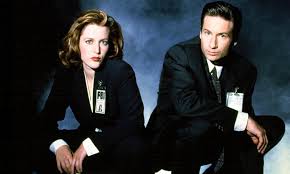
What made the series especially effective was the dynamic between Fox Mulder and Dana Scully. Mulder represented the pull of belief, intuition, and pattern-seeking; Scully stood for skepticism, evidence, and scientific restraint. The tension between those two orientations created a kind of philosophical engine that powered the show for many seasons.

The major episode discussed here is one of the early “mythology-adjacent” stories that sits near the boundary between the show’s monster-of-the-week format and its deeper conspiratorial arc. Watching it again years later, what stands out is not only the eerie storytelling but also the way the series captured a particular cultural mood of the 1990s — a time when technology was expanding rapidly, institutions were increasingly distrusted, and the possibility of hidden systems operating beneath the surface of ordinary life felt strangely plausible.

In that sense, The X-Files was never just about aliens or government cover-ups. It was about uncertainty itself — the uneasy space between explanation and mystery.

Epigraph:

“Autorerotic asphyxiation is not a pleasant way to go, Mr. Mulder.”

Clyde Bruckman, The X-Files

The X-Files is my second favorite television show of all time, behind only The Wire, and it’s not close.

That may sound like a bold claim given the sheer amount of television produced over the past thirty years, but for those of us who came of age in the 1990s the show hit a nerve that very few cultural artifacts ever have. It wasn’t just entertaining. It was atmospheric. It was unsettling. It felt like it was plugged directly into the cultural nervous system of the time.

To understand why, you have to begin with a simple generational fact. I was born in 1974, just eleven short years after the assassination of John F. Kennedy. That event cast a shadow that lingered for decades. My parents’ generation and my grandparents’ generation were deeply scarred by it in ways that people my age never fully understood. Something in the national psyche broke that day. Trust in institutions never really recovered.

Historians later described this cultural mood as “The Paranoid Style of American Politics,” borrowing the famous phrase from the essay by Richard Hofstadter. Whether one agreed with Hofstadter or not, the phrase stuck because it captured a very real undercurrent in American life: the suspicion that unseen forces were operating behind the scenes.

The genius of The X-Files was that it leaned directly into that atmosphere. It didn’t treat paranoia as pathology. It treated it as narrative fuel.


Discovering the Show

I was an early adopter.

The show premiered in 1993, and by 1994 I was already watching it in the dorms at Hamilton College with a group of friends. If possible we’d get a little baked first, which in hindsight may have been perfect. The X-Files is a show that rewards slightly altered states of perception.

At first it was something of a cult discovery. A few people watched it religiously while others barely knew it existed. But by the time the second and third seasons rolled around it had become a communal ritual. Thursday nights meant Mulder and Scully.

The chemistry between the leads was immediately apparent.

David Duchovny and Gillian Anderson had what we would now call “shipping chemistry,” although that term didn’t really exist yet. We simply knew that something electric was happening on screen. The characters worked because they embodied opposing ways of understanding the world. Mulder believed everything. Scully was more skeptical. Between them the truth hovered in an unresolved middle ground.

The show was also disciplined enough to hold that tension for years. In an era before streaming algorithms and social-media speculation, viewers waited week to week to see how the relationship evolved.

Hovering over them was their boss, the enigmatic Walter Skinner. For several seasons it was impossible to tell whether Skinner was helping Mulder and Scully or quietly managing them on behalf of darker forces. That ambiguity was one of the show’s greatest pleasures.

In a delightful twist of pop-culture irony, the actor Mitch Pileggi was at one point named TV’s Sexiest Man by a glossy magazine. Which is hilarious when you remember that Skinner is essentially a bald FBI bureaucrat in a gray suit. Such was the cultural power of the show.


The Smoking Man

Then there was the figure lurking in the shadows.

The Cigarette Smoking Man is one of the great villains in television history. Played with eerie understatement by William B. Davis, he appeared whenever the conspiracy thickened.

He looks exactly like the kind of man who would be at the center of a decades-long government cover-up. Three packs a day. Cheap cologne. A lingering Jameson hangover. The sense that he spends most of his time in dim Washington parking garages and windowless offices and only emerges from his crypt when the conspiracy requires it.

It’s a performance so physical that you can almost smell the character through the screen.


Three Essential Episodes

Every long-running show has defining episodes, and The X-Files produced dozens. But three in particular illustrate what made the series so special.

The first is the pilot itself, which introduces Mulder investigating mysterious disappearances in the Oregon woods. A key moment occurs when the agents experience missing time on a dark forest road. The scene establishes the tone immediately: eerie, ambiguous, and faintly plausible.

The second is Fallen Angel, an early classic that introduces the lovable conspiracy obsessive Max Fenig. Max’s jittery paranoia captures the spirit of the show perfectly. When he remarks that “someone’s always watching, Mr. Mulder,” it feels less like dialogue than like a thesis statement.

The third is the masterpiece of dark humor, Clyde Bruckman’s Final Repose, written by the great Darius Morgan. In it, a weary insurance salesman named Clyde Bruckman discovers that he can foresee the exact circumstances of people’s deaths. Played beautifully by Peter Boyle, the character delivers a hilarious and oddly touching performance. It is Bruckman who also delivers the immortal line that also gives us our epigraph: “Autorerotic asphyxiation is not a pleasant way to go, Mr. Mulder.” Run roh. Take that belt off Fox baby.

What makes the episode remarkable is that it gently mocks the show’s own hero. Mulder spends the entire series searching for hidden meaning in the universe. Clyde Bruckman, by contrast, believes life is largely arbitrary and tragic.

His prediction of Mulder’s death—immortalized in the epigraph above—is both absurd and strangely profound. It’s also a sign that by Season Three the show had gained enough confidence to poke fun at itself.


When the Mythology Expanded

Like many successful serialized shows, The X-Files eventually struggled under the weight of its own mythology. One of the central narrative engines involved Mulder’s missing sister, Samantha Mulder. Early on, the mystery added emotional depth to Mulder’s obsession with the paranormal.

But as the seasons progressed the storyline became increasingly convoluted. Samantha might have been abducted by aliens, or replaced by a clone, or transformed into something else entirely. Meanwhile the conspiracy expanded to include frozen alien ships in Siberian ice, shadowy government syndicates, and the infamous black-oil virus that seemed capable of possessing human hosts.

At a certain point the mythology began to chase its own tail.

Then, as the final blow, David Duchovny left the show. Gillian Anderson remained excellent, but The X-Files was always fundamentally a two-hander. Without Mulder and Scully together the balance of the series shifted in ways it never fully recovered from.


Why It Still Matters

And yet, for all the narrative tangles of the later seasons, the early years of The X-Files remain extraordinary television.

The show captured a very particular moment in cultural history: the twilight of the pre-internet era, when conspiracy theories spread through late-night radio programs, photocopied newsletters, and whispered conversations rather than social media feeds.

It was a time when the idea that powerful institutions might be hiding enormous secrets still felt plausible rather than merely exhausting.

For a few seasons in the 1990s, Thursday nights belonged to the weirdest, smartest, most paranoid show on television.

The truth, as Mulder kept reminding us, was out there

Dedication

For Dana and Fox. You know we still want to know what went down in that motel room baby.

Note: If you enjoyed this essay you may also enjoy the two essays below, both of which, in different ways, take up themes of intrigue and mystery.

Are There Aliens In Our Oceans? An Objective Investigation

Note: This essay is written in the spirit of amused inquiry rather than firm conclusion. Human history is filled with reports of strange visions, unexplained lights, divine visitations, and unidentified aerial phenomena. The interpretation of such experiences has tended to shift with the cultural vocabulary of the time. Medieval Europeans often described encounters with saints or angels. In the twentieth century the language of extraterrestrials became available.

The psychologist Carl Jung famously suggested that UFO sightings may function partly as modern mythologies—symbolic attempts by societies to understand mysterious experiences in technological terms. Jung also observed, with characteristic dry humor, that UFOs often appear to be “somehow not photogenic.”

The present investigation was prompted by my brother Mike, who recently asserted via text message that extraterrestrials are currently residing in Earth’s oceans. His wife Coleen agreed. “They are everywhere,” she said. While this claim remains unverified, the oceans themselves are vast, poorly explored, and capable of sustaining a wide range of speculative hypotheses.

The purpose of the essay is therefore not to prove or disprove the existence of extraterrestrial life in the ocean. Rather, it is to examine why such ideas persist, how they resemble earlier historical visions—from medieval religious phenomena to modern UFO culture—and why the possibility continues to feel strangely plausible to otherwise reasonable adults.

Epigraph

There are aliens in our midst.

Wussy

The Jung Problem

At this point in the investigation one is reminded of a dry observation by the Swiss psychiatrist Carl Jung.

Jung noted that UFOs possess a curious property: they are “somehow not photogenic.” Sightings multiply, witnesses speak with conviction, yet the documentation remains just slightly blurry.

Jung’s larger argument was that such phenomena often behave like modern myths. They appear at moments when societies are under stress, technological change is accelerating, and people are searching for new symbolic explanations of the world.

In other words, the sky fills with things.


Medieval Precedents

This pattern is not entirely new.

During certain periods of medieval Europe, particularly when grain supplies were contaminated by the fungus ergot, communities reported vivid religious visions: glowing figures in the sky, saints appearing in fields, the Virgin Mary materializing in unexpected places.

Ergot poisoning, now understood scientifically, can produce powerful hallucinations. But to the people experiencing them the visions were not chemical side effects. They were divine manifestations.

Entire crowds could witness miraculous shapes in the heavens or detect holy images in the crust of bread. A modern observer might diagnose environmental intoxication or collective suggestion. The participants experienced revelation.

The important point is that the content of the vision reflected the cultural vocabulary available at the time.

Medieval Europe saw saints. Modern America sees aliens.

One can see this dynamic clearly in the case of Joan of Arc. Joan reported hearing voices and receiving instructions from heavenly figures whom she identified as saints.

Historians generally accept that Joan sincerely believed these visions were divine communications.

But it is difficult not to notice that saints were the most advanced category of non-human intelligence available in fifteenth-century France. The conceptual vocabulary for extraterrestrials would not be invented for several hundred years.

Had Joan lived in the late twentieth century, it is at least possible that the same experience might have been interpreted somewhat differently.

She might have reported a craft.


The Cold War Sky

By the late 1940s the heavens had acquired a new cast of characters.

The famous incident near Roswell occurred in 1947, just as the Cold War was beginning to reorganize the world’s imagination. Reports of flying saucers multiplied. The mysterious visitors were described with increasing consistency: small grey beings with large heads and enormous eyes.

The explanation most often offered by the authorities was considerably less glamorous.

Weather balloons.

Strange objects falling from the sky during the early Cold War often turned out to be classified surveillance equipment. Unfortunately, the phrase “weather balloon” never fully satisfied the public imagination.

Aliens, after all, are much more interesting than meteorology.


The Mulder Doctrine

By the 1990s the entire mythology had been carefully systematized by American television.

The X-Files:

In the series, FBI agent Fox Mulder dedicates his career to investigating extraterrestrial activity after his sister Samantha is abducted from their home during childhood.

The abduction occurs at night. A strange light fills the room. The sister disappears.

Mulder spends the rest of his life attempting to prove that what he witnessed was real.

His partner, Dana Scully, is assigned to bring scientific skepticism to the enterprise. Their relationship gradually becomes one of the most beloved partnerships in television history, built on the productive tension between belief and doubt.

Entire generations of viewers absorbed the idea that somewhere in the sky—or possibly beneath the ocean—extraterrestrial activity might be quietly unfolding.


A Modern Lens

Seen from a slightly greater distance, the pattern begins to look familiar.

Medieval villagers saw saints because saints were the explanatory language available to them. Cold War Americans saw aliens because aliens had become the new vocabulary of the unknown.

Both phenomena may reflect the same basic human impulse: when confronted with mysterious experiences, we populate the heavens with the most compelling figures our culture provides.

Which brings us back to Mike.


So Are There Aliens In Our Oceans?

It must be admitted that if an advanced civilization from another planet wished to observe humanity without attracting attention, the deep ocean would offer several practical advantages. The environment is dark, difficult to access, and rarely visited by surface-dwelling primates equipped with submarines that can only remain operational for limited periods of time.

From a strategic standpoint, it would be an excellent hiding place.

This possibility has occurred to more than one observer, including my friend Mason, who recently suggested that a technologically sophisticated off-world civilization might simply have decided that the bottom of the ocean was the most convenient place to avoid the rest of us.

Provisional Conclusions

My brother Mike believes there are aliens in the ocean.

Carl Jung might have suggested that mysterious phenomena often adopt the symbolic clothing of their era. The Middle Ages had saints. The twentieth century produced extraterrestrials.

Mike has simply moved the story offshore.

The oceans remain vast and poorly explored. The woods remain dark and occasionally unsettling at night. Both environments have the correct atmospheric conditions for unexpected encounters.

If extraterrestrials are present, they may well prefer the sea.

But it would be a mistake to rule out the woods.

In either case, it seems wise to remain polite.

Footnote: The Ocean Logic

It must be admitted that if extraterrestrials wished to establish a long-term observational presence on Earth, the ocean would offer several advantages. Humans rarely visit the deep sea, and when we do we tend to leave fairly quickly due to crushing pressure, darkness, and the general inconvenience of breathing water.

From the perspective of an advanced extraterrestrial civilization attempting to avoid unnecessary interaction with our species, the ocean may therefore represent the single most sensible real estate on the planet.

Mike may, in other words, be thinking strategically.

POSTSCRIPT: Supplemental Testimony

Shortly after the investigation began, the primary witness—my brother Mike—provided additional clarification regarding his position.

According to Mike, extraterrestrial life has not only visited Earth’s oceans but has been present there for a considerable period of time. The aliens, he explained, appear to prefer the environment and have constructed bases beneath the sea.

When asked for supporting evidence, Mike cited the well-known Navy pilot videos showing unidentified aerial objects performing unusual maneuvers.

These videos—often referred to as the “Tic Tac” incidents—have circulated widely in recent years and are frequently interpreted as evidence of advanced technology of unknown origin.

Mike considers them decisive.

A second observer, his wife Colleen, agreed with this general assessment while expanding the hypothesis somewhat.

In her view, extraterrestrials may not be confined to the ocean at all. Rather, they may be present around us at all times.

According to Colleen, it is entirely possible that aliens walk among us.

At this stage of the investigation, these claims remain under review.

Dedication: For my brother Mike. I love you bro, but I still thinks them shits are in the woods.

Note: If you liked this piece, you may also like the pieces below, which also discuss the famous psychologist Carl Jung.