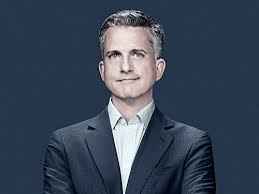
The Great Roast of Bill Simmons, The Podcasting GOAT

Note: Bill Simmons has many gifts, but none more enduring than his ability to take a perfectly good idea and turn it into a totalizing worldview. Chief among these is his obsession with “who gets the keys,” a concept that began as a useful shorthand for late-game NBA hierarchy and has since metastasized into a governing principle for all human activity. In Simmons’ hands, the question is no longer who closes Game 7, but who closes anything: marriages, movies, bands, revolutions, and possibly even the Enlightenment. It is a framework so elastic that it explains everything and therefore, in a quiet and almost admirable way, explains nothing. Yet Simmons returns to it again and again, like a man who has discovered fire and insists on using it to cook every meal. The result is less analysis than ritual: a familiar incantation that reassures both host and listener that control exists, that someone always has it, and that identifying that person is the highest form of understanding. Whether this is insight or compulsion is an open question, but in the meantime, Simmons has the keys—and he’s not giving them back.

I. The Obsessive With the Keys

Bill Simmons is a strange and singular figure in American media, a man whose greatest innovation may have been to take the interior monologue of a slightly obsessive sports fan and publish it wholesale, unfiltered, and then slowly convince an entire industry that this was not only acceptable but essential. He is not quite a journalist, not quite a commentator, and not quite a comedian, but rather a hybrid form: a “Sportish Guy,” as Cousin Sal once put it, who treats every game, every movie, and every stray anecdote as part of a single, ongoing argument about how the world works. Central to that argument is his enduring fixation on control, on agency, on the question he returns to again and again with the devotion of a man checking the locks before bed: who gets the keys?

It is tempting to dismiss this as a bit, and in some sense it is, but like all of Simmons’ best bits, it has metastasized into something larger and more revealing. What began as a useful shorthand for late-game NBA hierarchy—who has the ball, who takes the shot—has expanded into a general theory of human behavior. Quarterbacks have the keys. Movie characters have the keys. Entire bands, dynasties, and historical figures are evaluated based on whether they had, lost, or never quite secured the keys. That Mark Sanchez could, for a brief and inexplicable moment, be discussed in these terms tells you less about Sanchez than it does about Simmons’ commitment to the framework. He does not particularly care if the fit is perfect. The system must be applied.

This is what makes Simmons both compelling and faintly ridiculous. He is, at heart, a “who’s on my team” guy, a loyalist who rewards proximity, familiarity, and shared history, sometimes to a fault. Former colleagues have occasionally noted that he can cool on people once they leave his orbit, a tendency that reads less as malice than as a kind of emotional sorting mechanism: you are either in the ecosystem or you are not. Some, like Kevin O’Connor, speak warmly of early generosity—gifted shirts, guidance, a foothold in Los Angeles when money was tight. Others have been less charitable, and the occasional critique, including a much-circulated piece in The New York Times, has tried to frame Simmons’ blind spots, particularly around race, as more systemic. These critiques are not wholly without merit, but they often feel slightly overdetermined, flattening a personality that is better understood as idiosyncratic rather than ideological. Simmons himself tends to respond not with grand rebuttals but with motion—hiring voices like Van Lathan, insisting, plausibly, that such moves were already in progress, and continuing on as if the conversation will resolve itself over time.

There is also, undeniably, an ego in play. Simmons has built an empire—Grantland, then The Ringer—largely on the strength of his own voice, and he is not shy about asserting it. Stories persist, as they do in any media ecosystem, including the long-running rumor that he played a role in Magic Johnson’s exit from NBA Countdown, a claim Simmons has repeatedly and emphatically denied. More verifiable is the moment that effectively ended his ESPN tenure: a live broadcast of NBA Countdown in which, after a colleague spoke at length, Simmons leaned in with heavy, unmistakable sarcasm—“Oh, is it my turn to talk now?”—a line that was funny, revealing, and, in the context of corporate television, fatal. It was the voice of the columnist breaking through the format, the irrepressible instinct to comment on the comment, to seize the keys even when the structure said otherwise.

What makes Simmons unique, and worth writing about at all, is that these contradictions—generous and insular, insightful and reductive, earnest and performative—are not bugs but features. He is a weird obsessive who has turned his obsessions into a career, and in doing so has given us a language that is at once clarifying and absurd. He loves the game, he loves the conversation around the game, and above all he loves the feeling that somewhere, in any given moment, someone has the keys.

II: The Bits That Ate the Brain

If the keys are the theory, the bits are the practice. Simmons has always understood that repetition is power: say something often enough, with just enough conviction, and it graduates from joke to canon. Thus “greatest stickman,” a phrase that should have died in a driveway, becomes a legitimate category, and suddenly Burgess Meredith is being floated as an all-timer. “Sal, Sal, BM was the greatest stickman of all time. Every lady wanted a ride.” It is ridiculous, obviously, but also irresistible. The specificity disarms you. The confidence sells it. The framework expands.

This is the Simmons trick: take a private-language riff and run it until it becomes a public one. It does not matter that no one else has ever considered ranking “stickmen.” What matters is that Simmons has, and that he will return to it, again and again, until you find yourself half-convinced that you, too, should have an opinion. It is analysis as inside joke, inside joke as analysis.

III. The Ecosystem

No system survives without a supporting cast, and Simmons has assembled one of the most durable in podcasting.

There is Cousin Sal, the indispensable counterweight, quicker and often funnier, whose primary function is to puncture Simmons at exactly the right moment. The Vegas trips are their shared masterpiece: two grown men insisting, year after year, that this time they will behave differently, and then not. Simmons, improbably, claims that he only smokes in Vegas. No one believes this. The morning-after pod is the payoff—hungover, frayed, the truth leaking out in fragments. “I only had three cigarettes last night,” Simmons offers. Sal, without missing a beat goes: “Yeah, more like three lighters.” It is the kind of line that ends the discussion because it cannot be improved.

There is Joe House, lawyer by day, chaos agent by night, who turns every appearance into a small act of self-destruction. “House Eats” remains a high-water mark: an adult man consuming Chinese food until he vomits, captured and distributed as legitimate sports media content. It should not work. It works perfectly. Drunk House—slurring, swearing, denouncing Daniel Snyder with operatic intensity—is not a bug but a feature. Simmons does not rein him in; he amplifies him. The ecosystem thrives on this permissiveness.

And then there is Nephew Kyle, the quietly essential, publicly baffling producer whose qualifications are, at best, opaque. The nepotism is acknowledged, even embraced. Simmons does not pretend otherwise. He does not have to. The show goes on. The levels are sometimes off. The energy is always on.

IV. The Interviews: High Risk, High Variance

Simmons as interviewer is a study in range. At his best, he is disarming, patient, and genuinely curious, capable of extracting moments that feel both candid and consequential. His conversation with Al Michaels is a case in point: Michaels, relaxed, recounts the day of the O.J. chase, including the now-legendary call-in where a supposed eyewitness punctuates his tip with “Baba Booey.” The co-host takes it seriously. Michaels does not. “It’s a joke, dude,” he essentially says, and in that moment you see the difference between professionals. Simmons knows enough to step back and let the story land. It is radio as it should be: a master talking, a host listening.

The interview with John Skipper is another apex moment. Post-ESPN, Skipper speaks with a level of openness that borders on the shocking—cocaine use, morning routines, the normalization of behavior that would end most careers. Simmons guides rather than pushes, and the result is a “huge get,” the kind of conversation that justifies the entire enterprise.

At the other end of the spectrum sits the Denzel Washington interview, a minor classic of mismatch. Washington arrives as if for one kind of conversation; Simmons is clearly expecting another. The opening is awkward, the rhythms off. To his credit, Simmons does not retreat. He leans in, tries to find common ground, and eventually does, or at least something like it. It is not a triumph, but it is revealing: the limits of the format, the limits of the host, the persistence of the effort.

V. Homerism as Method

Simmons’ greatest cultural contribution may be the legitimization of homerism. Before him, fandom was something to be managed, disclosed, occasionally apologized for. With him, it becomes the point. He is, unapologetically, a Boston guy: the Boston Celtics are not just a team but a lineage, a narrative, a near-mythological entity anchored by figures like Larry Bird, whose legend grows incrementally with each retelling. The takes are, at times, outta control. They are also, in their way, coherent. Simmons is not pretending to objectivity. He is offering a perspective, and trusting that the audience will meet him there.

This approach extends beyond basketball. Baseball, once a central obsession—AL keeper leagues, granular analysis—fades over time, dismissed as too long, too slow, no longer aligned with the rhythms of his life or his listeners’. Basketball remains the core competency, the area where his knowledge is both deep and defensible. Everything else orbits around it.

VI. Family and Formation

The personal mythology is never far from the surface. Simmons’ father, a longtime Celtics season-ticket holder, is both character and audience, the origin point of the fandom that would become a career. The pride is evident, even when unspoken. The access—courtside seats in the 1970s—becomes part of the narrative, a credential as meaningful as any byline.

His mother, less present on the pod but frequently referenced, provides another axis: a love of movies, a different kind of cultural literacy that feeds into Simmons’ broader interests. The recurring mention of being a child of divorce functions as a kind of grounding note, a reminder that the voice, however confident, has origins in something more fragile. He seems, by most measures, to have come out fine.

VII. Drift and Discipline

As the empire grows—Grantland, then The Ringer, now under the umbrella of Spotify—Simmons changes in ways both subtle and obvious. He fades certain voices who no longer fit the evolving brand: Adam Carolla, once a regular presence, becomes less so; Michael Rapaport, similarly, drifts out of the rotation. The official reasons are varied—tone, fit, the simple passage of time—but the underlying dynamic is familiar. Simmons is, at heart, a “who’s on my team” operator. The team changes. The roster turns over.

And yet, it is hard to shake the sense that the affection remains. These are not clean breaks so much as quiet reassignments, the byproduct of a system that requires a certain level of control. Spotify money, corporate expectations, the need to maintain a particular tone—these exert their own pressure. The outta-control energy that defined earlier iterations of the pod is still there, but it is managed, channeled, occasionally held back.

VIII. The Countdown Moment

If there is a single scene that captures Simmons in miniature, it is the one that ends his ESPN tenure. On NBA Countdown, a colleague speaks at length. Simmons waits. And waits. And then, with a level of sarcasm that is both unmistakable and, in context, disastrous, he interjects: “Oh, is it my turn to talk now?” It is funny. It is honest. It is, within the rigid structure of live television, unacceptable.

He is removed not long after.

The moment endures because it reveals the core tension: Simmons the columnist versus Simmons the employee, the impulse to comment versus the requirement to conform. He cannot quite suppress the former, even when the latter demands it. He reaches for the keys, even when they are not his to take.


VIII. Conclusion

Bill Simmons is the GOAT podcaster, full stop, and it’s worth saying that clearly at the outset because we only roast the ones we love. Bill Simmons has given us an entire language—keys, stickman, Vegas nights, Sal lines, Drunk House—and if you’ve been along for the ride, those bits don’t wear out, they compound. They get funnier with time, richer with context, a kind of private shorthand that becomes, almost accidentally, a shared culture. You either hear “three lighters” and laugh immediately or you don’t, and if you don’t, there’s not much point explaining it.

This is part of what makes Simmons both beloved and, in certain circles, a little contentious. He has clearly made enemies—inside ESPN, across the broader media landscape, and occasionally among former employees—and while it’s easy to chalk this up to ego or looseness, the better read is that the looseness is largely performative. Underneath the hangout vibe, the teasing, the Nephew Kyle chaos and the Drunk House indulgence, there is a very real set of standards, and Simmons enforces them. He is, at heart, a “who’s on my team” operator, and the team matters. People drift out. Some of that isn’t pretty. Most of it, however, is consistent with how he’s always operated: loyal, selective, and ultimately in control of the room.

At the same time, there is a sense now that Simmons is, if not slowing down, then at least rounding off the sharper edges. He talks openly about retirement in a way he didn’t a decade ago, and you get the feeling that he is aware, at some level, of the limits of the bit. Will he be seventy-five, still ranking stickmen and assigning keys? It’s hard to see it. He’s a boss now, a central figure inside Spotify, with responsibilities that extend well beyond the pod. The insurgent has become the institution, and while the voice is still there, it’s necessarily more managed than it once was.

There’s also the simple fact that Simmons is no longer a writer in the way he once was, and he knows it. The old columns—the mailbags, the trade value pieces, the obsessive digressions—have given way to the pod, to conversation, to rhythm. He jokes that his fingers don’t work anymore, and like most of his best lines, it’s funny because it’s partly true. The Book of Basketball stands as the monument to that earlier phase: long, ambitious, slightly out of control in the best way, complete with the famous pyramid (Jordan at the top, Magic above Bird, a decision that still tells you everything you need to know about him). But the shift from writing to talking isn’t a decline so much as an evolution. Simmons was always more voice than text anyway. The medium finally caught up to the man.

If and when he does step back, what we lose is not just a podcast or a brand but something rarer: a genuinely original voice that bent an entire corner of the media world toward itself. Plenty of people analyze sports. Plenty of people talk about culture. Almost no one has managed to fuse the two into a single, durable, endlessly riffable system the way Simmons has. The keys, for all their absurdity, are real in that sense. He found them early, used them often, and built something that will outlast the bit itself.

And if he eventually decides to set them down, or even just hold them a little more loosely, it will mark the end of a run that, for all its contradictions, was unmistakably his.


On the Top Five Male Athletes of All Time

Note: Today I am releasing the first of four pieces in a long-gestating project on the greatest athletes of all time. Like all lists, I am fully aware that this will engender disagreement, and that’s part of the point. My criteria include sporting accomplishments — championships, MVPs, world records — as well as off-the-field impact and historical significance. Some figures, like Michael Jordan, have a mixed legacy; others, like Pelé, have an almost unblemished one. I would love to hear your thoughts, so please do consider dropping a comment whether you agree or disagree. This piece will be followed by numbers six through ten for the men, and then a separate top ten for women.


1. Babe Ruth

Babe Ruth remains the number one choice. He completely changed the game of baseball with his power hitting and his two-way play. America’s game would never be the same. From humble beginnings in Baltimore, he became the highest-paid and most visible athlete in the world. His larger-than-life personality — the booze, the women, the cigars — all contribute to his myth.

The 1927 Yankees remain shorthand for the greatest team ever assembled, and Ruth’s pairing with Lou Gehrig gave baseball one of its most iconic duos. The relatively early deaths of both men add a certain pathos to the story. Ruth won seven World Series titles, hit 714 home runs in an era when power was rare, and essentially invented the modern slugger. He even has an iconic candy bar named after him. Unassailable.


2. Muhammad Ali

Next to Ruth, Ali is 1A. You could argue Jordan for pure dominance and brand success, but Ali was not only great in the ring — he intersects with 20th-century history in ways that put him over the top.

From his origins as Olympic gold medalist Cassius Clay to his name change, his foregrounding of Muslim identity, his refusal to fight in the Vietnam War, and his connections to the Black Power movement and Malcolm X, Ali became far more than a boxer. He later paid a tragic physical price for fighting too long, and his public battle with Parkinson’s disease only deepened his stature.

Ali talked better than anyone before or since, floated like a butterfly, stung like a bee, and was a three-time heavyweight champion of the world. He looms large not just in sport, but in global cultural memory. A clear number two.


3. Michael Jordan

Jordan comes in at number three — though among younger generations he is arguably better remembered than Ruth or Ali, which suggests that his status may continue to rise.

From his famous early cut from his high school varsity team, to the game-winning shot as a freshman at North Carolina in 1982, to his early playoff frustrations against Boston and Detroit, Jordan’s arc is mythically clean. Once he broke through, the dominance was total: six NBA championships, five MVPs, ten scoring titles, and an undefeated Finals record.

Off the court, Jordan became the most successful sports marketer in history. His shoe deals and advertising footprint dwarfed anything that came before. His legacy is not without complications — gambling rumors, the David Stern suspension theories, a rocky tenure as owner of the Charlotte Hornets, and an ongoing public feud with Scottie Pippen — but none of that erases what he was on the court. An undeniable number three.


4. Pelé

Pelé belongs at number four because he remains the single greatest icon in what is almost certainly the world’s most popular sport. I grew up on basketball, baseball, and football, yet even I knew who Pelé was by the age of six.

For people like my son — a soccer fan and influencer — Pelé is bigger than Ruth or Ali. Other players, Messi included, may rival or surpass him on pure technical grounds, and Maradona has a competing mythos, but Pelé’s status as a hero from the global south remains unmatched.

He won three World Cups with Brazil, scored over 1,000 career goals depending on how one counts, and became the first truly global sports celebrity. By all accounts, he was also a gracious and generous human being. There is little that detracts from his legacy. A natural number four.


5. Jackie Robinson

Jackie Robinson belongs on this list for his brave and immensely graceful breaking of baseball’s color barrier — and by extension, professional team sports in America.

Credit is due to Branch Rickey for taking the risk, but it was Robinson who carried the weight. Through his base stealing, his hitting, his defense, and above all his composure, Robinson became a model of quiet strength and dignity under pressure. He won the inaugural Rookie of the Year award, an MVP, a World Series title, and was a perennial All-Star.

One may admire Jordan without loving him, but Robinson is universally — and rightly — beloved. He helped reshape not just baseball, but American race relations more broadly. A fitting number five.


Dedication:

For Steve Treader, the greatest sportswriter I know.

On the Safe Space (aka Corner Girl)

Epigraph:

Heather, remind me how this ends

Dolorean

I’ve been trying, lately, to understand the early spaces in my life where safety and memory intersect — the brief rooms in time that opened something in me before I even had language for it. Some moments don’t turn into stories, but they still leave a shape. This is one of those moments.

The Christmas Dance wasn’t held in the high school that year at all. It was downtown, in one of those Spokane venues that tried to look older than the city around it — chandeliers, carpeted floors, bathrooms with real mirrors. We had been dancing all night, the kind of teenage drifting where everyone is shy and bold by turns. And then it was over, and people were peeling away, breaking into rides and carpools and winter air.

She and I ended up in the hallway.

We were already wrapped into each other — that soft, accidental teenage cuddle that feels both unplanned and absolutely right. The near-near kiss wasn’t something either of us aimed for. It was just the way our faces happened to be turned, the warmth, the pause, the sense that one more inch would have turned the moment into something else entirely. Instead it stayed suspended, held in the exact shape it needed to take.

Her name was Blythe.

I used to say I wrote poems “for girls who told me they were pearls,” but that was just self-mythology. In truth, I only ever wrote for one girl. And she never asked for anything.

Most of the real fun we had wasn’t during dances at all. It was in the gym at Saint George’s in Spokane. For high school games, boys and girls, the gym would be packed, and during the boys games she would sit in the front-row, and every single time I did anything even vaguely ok — a decent pass, a shot that actually went in, a little rebound — I’d look over mid-play and smile, and she’d already be smiling. She was in my corner before I understood what that meant. She didn’t push. She didn’t need to. She just stayed.

There was a suspended electricity in those years — innocent, unclaimed, lightly glowing. We never really dated. We never made a move beyond the moment that almost happened and didn’t. But she calibrated me. She was my corner girl. And that mattered.

The ending came the way some endings do when you’re young — clean as scissors. She graduated. Life tilted. The season shifted. Nothing dramatic, nothing painful. Just a quiet snap. A door that didn’t slam but simply shut.

I miss what we could have been, but I don’t regret a thing.
Some connections aren’t meant to become stories.
They’re meant to become orientation.

I don’t go back to that time for longing. I go back because that was the first time safety arrived before desire — and because that pattern stayed with me. It’s how I know when something is real.

I don’t need anyone to remind me how it ends.
A hallway, a graduation, a clean break.
What I keep going back for isn’t the ending anyway.
It’s the part before — the girl in my corner,
the room that opened in front of me,
the feeling I carried forward.


Dedication


For Blythe, who stood in my corner before I even understood what that meant.

Note: If you enjoyed this piece, you might also enjoy the ones below which take up somewhat similar themes.

https://thekyotokibbitzer.com/2026/02/10/simona/

Scenes from St. George’s, Part II: Scorekeeping, the Sandhills, and a Would Be Yearbook Heart

Note: This is the second installment of scenes from St. George’s. The first installment contains a little more context about this series. Joan Dideon says that a writer is always selling somebody out. I’m not sure I agree with this exactly, but I have taken the liberty of using some real names and some realish initials. These scenes are written with love more or less, however if I do seem to be selling anyone out I guess I feel like the statute of limitations has pretty much expired.

Gary Leinhart and My Father Forget How to Count

Gary Leinhart was another one of our middle school teachers and he also coached boys basketball for a time. He was no Mr. Dreyer, however he was a decent teacher and pretty well liked. He was not a great basketball coach, but he did like to play a little himself. I guess Gary was in his early to mid-thirties around this time but I’m not really sure.

A few miscellaneous things about Gary:

i) he was minus a finger, I think a pinky, from an accident with a saw one time, but you never really noticed it. I guess you don’t really need your pinkies all that much.

ii) he once made a citizens arrest with his friend who was also a teacher at Saint George’s.

iii) After Saint George’s I believe he moved to Alaska.

Now when Gary first came to the school he and my father (who I think was still teaching in the middle school at that time) seemed to get along fine. In fact, my father and I played in Gary’s fantasy baseball league where I was assigned to be the commissioner. Fantasy baseball is impossible at the best of times, and pre-internet it was super impossible, so the league was short-lived. Nonetheless, things were fine there for a while.

As I mentioned above, Gary was the high school boys basketball coach, and my father coached the girls. At some point there must have been some issues, because Gary and my father started to seriously dislike each other. I don’t know what was going on actually, but I’m guessing it was basketball related. Like I said, Gary was a good, if easy-going, teacher, maybe just a bit lazy. My classmate L.W. recently reminded me of some story involving Gary, an air raid siren, and J.T., but I don’t really remember this. The point is, Gary seemed to me be a pretty good guy, except on the basketball floor where he became hyper-competitive.

Around this time I was the lead scorekeeper for the high school basketball games. This involved running the game clock and the shot clocks and keeping the game score correct on the score board. It was a pretty involved job, and I loved it. I threw myself into being every day and in every way the best scorekeeper I could be, and it was a pretty big responsibility for a young fellow. J.T. was my assistant; I think he did the shot clocks. Our school played in a league with schools from all over Eastern Washington, and there were a few schools up near the Canadian border that were a bit rough. Their fans, parents of players mostly and some others, would drive down. There was a visitor section and a home section, as with most gyms. One day some dude from up north must have come to the game a little lit, or a lot lit, and after the game (which SGS won at the last second) he came charging over to the scorers’ table from the visitor’s section. He started accusing me of cheating by giving the home team extra seconds at the end of the game (e.g. not starting the clock when the ball was inbounded). I had done no such thing; and he was drunk, which I helpfully pointed out to him. I think he wanted to punch my lights out, and probably some adults had to intervene.

In any case, I was a good scorekeeper and one day my father and Gary Leinhart were playing basketball against each other with mixed teams of other teachers and students. They had chosen teams I guess and the teams were pretty balanced. My father has never been a great basketball player, but once upon a time he could play a little, and Gary was also decent. The students were all on the basketball team so the game should have been close. And it was. I should know because I was keeping score. However for what was essentially an intramural game we were not using the scoreboard, and I think I was just using a piece of paper or keeping score in my head. The game began, and both teams started scoring. As I recall, the score was 14-12 in favor of my father’s team when the trouble started. Gary’s team scored a basket and he took it on himself to try and usurp my position.

“12-0 us,” he called.

Now this was completely ridiculous because it was a two point lead for my father’s team, not a 12 point lead for Gary Leinhart’s. Before I could correct the score, my father yelled back:

“It’s not 12-0. It’s 15-2 us!”

This was equally ridiculous. As I have made clear, the score was 14-12. As any pick-up basketball player will know, it’s totally possible to lose track of the score of a game as you are playing and miss a basket here and there. This is why, as a matter of fact, there are scorekeepers to begin with. So I did my best:

“Hey guys,” I called, “the score is 14-12 red team.”

“There’s no way they have 14,” said Gary.

“There’s no way we are only up by two,” said my father.

“Yeah, the score is 14-12.”

But unfortunately my efforts to settle the matter were for naught. Gary and my father started screaming at each other and fighting about the score like little children. This was awkward and after a bit people just sort of checked out of the game space and the game ground to a halt, never to be re-started. I guess there was no way to bridge the collective 25 point gap in score perception.

Looking back at this incident, it still boggles my mind. I’ve played quite a bit of pick-up, and I’ve never seen anything quite like this. I wonder what the core issue was.

The Sandhill and Points West

Back in the day Saint George’s had something called “the Sandhill.” There were actually two Sandhills, which were predictably called “the Little Sandhill” and “the Big Sandhill.” These were conjoint, and located behind the baseball field at the back end of the school property.

The Sandhills, especially the big one, were super tough to climb, but they were both great for jumping off. With a running start, one could fly twenty or thirty feet in the air off the Little Sandhill and land safely near the bottom. When I was first at the school the Big Sandhill actually had a rope swing attached to a tree at the top, and you could run, grab the rope swing, and fly way out in the air. This was a much larger fall than jumping off the Little Sandhill, but it was basically safe. It was also a blast.

In addition to the Sandhill swing, the school had another swing which swung over the Little Spokane river. This is the river that the fabulist John Innes claims I used to throw people in. In any case, the river swing survived longer than the Sandhill swing, because a few years after I first got there the school took the Sandhill swing down. Too dangerous. This was basically a terrible decision and was probably made by someone who had never been on a swing in their life. School bureaucracy sucks sometimes.

So although many of my future classmates at the school never got to experience the glories of the Sandhill swing, there was plenty more to explore back in the woods up behind the Sandhill to the west. Several hundred meters back there was a set of rocks which had little climbing routes naturally built into them. These were not hardcore rock climbs by any means, but they were sufficiently testing for us students and generally pretty good action. Our school had a cross-country team, and the cross-country course turned around just before these rocks. One day a female student who was a few years my senior was running the course by herself and came across a guy on a bicycle completely nude just chilling by the rocks. She came back and reported the situation. What did you do, she was asked? I just turned around and kept running, she replied. Smart move.

There was all kinds of action, both good and bad, up in those hills. My friend J.T. and others whom I will not name would go up into the hills and start fires. Now I understand that young boys like to start fires—it’s an age old pastime—but I was not that into fires. First, they seemed dangerous, and second, and more importantly, they just seemed unnecessary. I was in the minority on this point though; fires were set.

One day I went climbing on the rocks with my friend Kelly and his half-brother who was a few years older. Kelly’s father is Art Rudd, and he had had two children with his first wife over in Seattle or something before moving out and coming to Spokane. Kelly’s older brother was interesting and I got the feeling like he had already seen a lot in his life. Art Rudd was a dentist, and was in fact my dentist. Art Rudd was a garrulous individual and also tried to talk to you when you were in the dentist chair as if you could just chat right back. Overall, Art Rudd was an OK dentist I guess, but I also think he was running a scam. And this scam is not, I think, unique to Art Rudd. I think this scam is widespread, insidious, and bad.

I didn’t have serious dental issues, but I did seem to go to the dentist a lot, which may have been its own scam, however when I was twelve or thirteen Art Rudd suddenly started talking my mother into the concept of me getting braces. Now braces may be important for some certain people with teeth that are like seriously out of alignment, I don’t know, but that was not the case with me. My teeth were totally fine. Nonetheless, the braces conversation was initiated, and kept up, until my mother caved and I was referred to an “orthodontist” friend of Art Rudd’s. “Orthodontists,” I believe, are all basically scammers, and I am totally sure that Art Rudd was getting kick backs there from this “orthodontist.”

I went to see the “orthodontist,” who was a portly and cheerful fellow (he ought to be with all his braces money), and he said sure enough looks like you need some braces. Now I was attuned enough to BS even then to know that this dude was full of it. But I was stuck on a train I couldn’t get off of. I ended up getting braces, which did nothing, and then they came off. Scam, all the way.

Anyway, that’s beside the point. The point is, the Sandhills were awesome and whoever took down that swing is an asshole.

I Fail to Draw a Heart in R.s Yearbook

I wrote in the second scene of this series about drawing a solid sun for N.C. when I was in the lower school. What I didn’t mention is that there were actually two lower schools—the one up on the hill for Grades 1-3 and another one down by the river for Grades 4-6. When I was attending the second lower school a new girl joined our class. She was called R. Now I didn’t have a crush on R. of anything like the intensity of my crush on N.C., however I did kind of like her, and at the end of 6th grade when students were writing in each other’s yearbooks, I resolved to make my big move. I would sign her yearbook, I thought, and draw a nice little heart as well. My successful sun drawing was in the books and everything, and I thought the heart would be easy.

Sure enough, R. asked me to write something in her yearbook, so I wrote something anodyne, and then went in for the heart move. I had practiced this in my head several times, because when you get nervous sometimes you mess stuff up and I didn’t want to choke and draw a bad heart. So I took a deep breath, and went for it. And I couldn’t get close. What came out looked nothing like a heart, nothing like a sun, it looked in fact like some kind of undefinable blob. This was bad, and I had precious little time to salvage the situation. In fact, I had no time, because R. must have seen the heart coming, and she asked “what’s that?” in a fake innocent voice that made it clear to me that she knew exactly what was going on.

“Nothing,” I replied. “Just drawing something.”

I tried to improve the heart to no avail, and then scratched it out and tried again. No luck. If anything the second heart was worse than the first. I had no idea how to draw a heart, had no idea at all what one was even supposed to look like. Suddenly, I was the Steve Sax of heart rendering.

“Never mind,” I said finally. “Just read my message.” My message was not the point though—it was the heart that tied the whole presentation together. And I had blown it, badly.

Thinking back on it, it was probably inevitable that I would choke on the heart for R. I mean, this was the last day of lower school and here I was attempting a heart for a girl other than N.C. I was a faithless individual, a turncoat, and the heart was never going to materialize as my own heart was still back up on the hill with N.C. in Science class. And, come to think of it, it still is.

to be continued…