On Being Early to Shows

Note: Getting to shows early, I realized, isn’t really about beating the crowd but about entering the space before it hardens into an event—when the room is still provisional, the bartender relaxed, the band half-mythical figures moving casually through soundcheck, and the whole night feels less like a performance and more like something forming in real time; you notice the lighting before it matters, the empty floor that will later surge, the stray conversations, the merch table still untouched, and sometimes—if you’re lucky—the musicians themselves, unguarded and human, which subtly rewires the experience so that when the set finally begins you’re not just watching a show but inhabiting a continuum that started hours earlier, a private prelude that rewards patience, sharpens memory, and turns what could have been just another concert into a small, self-contained narrative of anticipation, proximity, and the quiet pleasure of being there before everything becomes official.

Epigraph
“There’s a thin line between a guy with a backstage pass /
and a guy walking around with his gut hanging out like a jackass.”

— Sun Kil Moon, “Ben’s My Friend”

I’ve always been fascinated by the green room. First of all, why green? They can’t all be green. Second, there’s the whole rider situation. The rider is where things get really interesting. I think it was Van Halen who had in their rider that all the brown M&Ms had to be removed from a bowl. This sounds totally bizarre, but the point was attention to detail. If the venue screws up the M&Ms, they might screw up something much more important, like stage rigging or pyrotechnics. The M&Ms were just a test.

Other riders go in different directions. Iggy Pop reportedly asked for things like a Bob Hope impersonator and other surreal odds and ends, more like performance art than hospitality. Meanwhile Beyoncé is famous for highly controlled riders: temperature, lighting, water, environment, everything calibrated. One approach is chaos, the other total control. Both happen in the green room, which most of us never see.

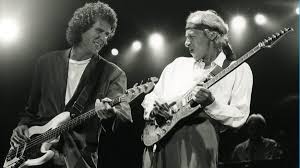
My first concert was Dire Straits in Pullman, Washington, in a big arena. I was nowhere near the green room, of course. Most of us aren’t. So the real question becomes: what happens before the show, if you’re not backstage?

One answer came when I saw They Might Be Giants in Spokane with my friend Kelly Rudd. Kelly told me his cousin was in the opening band. They got paid twenty bucks for the show. The whole band. Twenty dollars. Totally unbelievable. Outta fucking control. TMBG were already a pretty big indie band, “Birdhouse in Your Soul” had been a hit, and I liked “Istanbul (Not Constantinople)” quite a bit. But after hearing that story I never quite looked at them the same way. The green room fantasy took a hit. Backstage wasn’t glamorous. It was twenty bucks and a handshake.

Another time I went to see Cat Power at the old Club Quattro in Osaka. I got there early, of course, and there was an opener dressed like a fairy with fuzzy, messed-up hair who sat down at the piano and proceeded to play dirge after dirge for what felt like an hour. Solo piano can be great, but this was brutal. I honestly thought I might have to cap myself. At some point I checked my ticket just to make sure this wasn’t actually Chan Marshall. It wasn’t. Thank god.

Then Chan came on and instead of playing from the stage like other artists do, she wandered through the crowd with a wireless mic, half-rapping, half-singing, talking, improvising. It wasn’t really a concert. It was more like some kind of performance art happening. Totally outta control. If I’d come late I would have missed the whole bizarre prelude. Being early meant enduring the dirges but also getting the full weirdness of the night.

Another early-arriver adventure came when I saw Deerhunter at the Hostess Club Weekender. These shows started early and stacked openers all day long. I once saw Mogwai at one of these and had to leave after fifteen minutes because I was hungry, tired, faded, and they were boring the living shit out of me. It happens.

The Deerhunter show in Osaka was even more outta control. The headliner was scheduled for 7 PM, but there were something like six openers. One of them was Ivo Watts-Russell of 4AD, a legendary figure, but he droned on so long that by the time Deerhunter came on they only had about forty minutes. Bradford Cox introduced him with dripping sarcasm, emphasizing “LABEL BOSS,” clearly taking the piss because the band’s time had been cut. I ended up having to see them again months later in Nagoya to get the full set. That’s the risk of being early: sometimes the openers eat the show.

The flip side came when I saw The Hold Steady at the Brooklyn Bowl in December 2018. I arrived two hours early, ate a hamburger, and smoked up outside. That’s where I met Austin, a total Steadyhead. He knew everything: lineups, labels, deep cuts, all of it. We talked music, smoked, and waited. When doors opened we grabbed territory near the stage with the other early-arrivers, a semi-cliquey group of diehards.

Later, when Austin wanted to get back to the front for the encore, he told me to follow him. He moved through the crowd at a half jog and the people parted in front of him like he was Barry Sanders hitting holes. Seconds later we were hugging the stage. I knew then I was in the presence of greatness. I also knew he was my friend. I didn’t get the VIP meet and greet, but getting there early gave me something better.

My one true VIP experience came when I saw The Afghan Whigs in Amsterdam in 2017 at the Paradiso Amsterdam, a beautiful converted church. I arrived three hours early, met Greg Dulli and the band, took photos, bought merch, and watched soundcheck with maybe fifteen people. They played “Going to Town” acoustically, which was a revelation. Later they crushed the full electric set, ending with “Faded.” I paid fifty bucks for that meet and greet and it was completely worth it. Being early paid off directly.

Getting to shows early, then, is not really about the green room at all. The green room is a kind of fantasy—green walls, bowls of M&Ms, riders with impossible demands. Most of us never see it, and even when we do, it turns out to be smaller and more ordinary than imagined. And probably not even green. The real action happens in that strange in-between space before the show: the smoking area, the empty floor, the long wait while the openers drift on and off.

If you arrive early, you get all of it. You get the terrible fairy-piano dirges and the label boss who drones on too long. You get the moment of doubt when you check your ticket and wonder if this could possibly be the headliner. You get the rail territory battles and the cliquey early crew. You get the conversations with strangers who turn into temporary friends, like Austin, who parts the crowd like a halfback and gets you back to the stage in seconds. You get the soundcheck if you’re lucky, the acoustic revelation, the quiet before the storm.

Most of all, you get time. And time at a show is a funny thing. Once the lights go down, everything compresses. The band plays, the songs blur together, and before you know it the encore hits and everyone spills out into the night. But if you were there early, the show feels bigger. It has a beginning, a middle, and an end. You saw the room empty and then full. You watched the night assemble itself.

So while some people drift in late, grab a drink, and wait for the headliner, I’ve always preferred the long route. Get there early. Kill time. Smoke a cigarette. Talk to whoever’s around. Endure the openers, good or bad. Maybe you meet someone. Maybe you don’t. Maybe the band walks through the room. Maybe nothing happens at all. But every once in a while, if you’re lucky, something does. And that, in the end, is why I like to be early to shows.

Dedication:

For music lovers everywhere. You are my tribe baby.
On Living Paycheck to Paycheck

Note: This essay gathers together several different periods of my life when money was tight and the margin for error was thin. Some of these moments go back many years, including a year abroad in Dunedin, New Zealand, at the University of Otago when a bureaucratic oversight left me without a meal plan for most of the academic year and forced me into a very basic daily routine of trail mix, apricot bars, and coffee. Others come from later phases of adulthood: early teaching years in Kumamoto, young family life in Kyoto’s Mukaijima district, the strange suspended months of COVID, and the present day.

I include these episodes not as a complaint but as a recognition of how common this experience actually is. Living paycheck to paycheck is often imagined as the result of bad choices or personal irresponsibility, yet in reality it is frequently the ordinary condition of people who are working hard, raising families, paying tuition bills, navigating institutional decisions, and simply trying to keep their lives moving forward.

The story of my friend Sergio Mandiola, included here with his blessing, illustrates another version of the same pattern. A long career in education, a series of institutional shifts, and one administrative decision were enough to push a once-stable life into years of financial improvisation before things slowly stabilized again.

What these experiences have taught me is less about money than about perspective. Hunger sharpens the mind, small kindnesses matter enormously, and the distance between stability and struggle is often much smaller than we imagine. For that reason, the real lesson of living paycheck to paycheck is not resentment but compassion.

Epigraph

Money won’t save your soul.
— Tim Burgess


A lot of people talk about living paycheck to paycheck as if it were a kind of personal failure. A budgeting problem. A lack of discipline. A mistake someone somewhere made.

In reality it is something far more ordinary than that. It is simply the condition in which millions of people live their lives. Often quietly, often competently, and often without anyone around them quite realizing how narrow the margin really is.

I first learned that margin in Dunedin.

I was on exchange at the University of Otago and through a small bureaucratic mix-up I was not on the meal plan. I had no work visa and no savings. My parents sent twenty dollars here and there, but it took months before anyone realized the full situation.

So for nearly the entire academic year I developed a system.

Breakfast and dinner came from a large white bucket in my room: trail mix, carob chips, raisins, peanuts. Lunch every day was the same: one yoghurt-covered apricot bar and one black coffee at the campus canteen. NZ $3.50.

Day after day after day.

My roommates didn’t know. They just thought I hated the mutton they cooked every night. And to be fair, I did hate the mutton.

Every once in a while a friend named Maren would buy me a Snickers and a Coke at the student club and we would sit there watching the O.J. Simpson chase and the trial coverage on television. Those snacks felt like luxury.

After Dunedin, life improved but the margins never entirely disappeared.

In Kumamoto in 1997 I was earning about ¥250,000 a month teaching English at NOVA. It wasn’t a fortune but it was enough. I could go to the izakaya, drink Asahi, play pool, and date the woman who would later become my wife. It wasn’t abundance, but it was livable.

A few years later, from 2002 to 2004, my wife and I were living in a subsidized apartment in Mukaijima on the Kintetsu Line outside Kyoto. I was working part-time as a social studies teacher and earning roughly the same ¥230,000–250,000 a month. Our rent was only ¥40,000 thanks to her hospital job in Uji, Kyoto. The apartment had three large rooms, a kitchen, a genkan, and it was surprisingly well insulated.

Our son Hugh had just been born and wasn’t yet in daycare. My wife worked night shifts and often made more money than I did. We weren’t rich, but we made it work. And we were happy.

Then years later came another version of the same story. During COVID I took leave from work and drifted into a strange suspended routine. I spent most of my time in my room playing chess online, watching chess streamers, and talking on the phone. My peak rating reached about 1200, which I was absurdly proud of.

My expenses were minimal because my life had contracted. I only went out drinking with a friend named Philip maybe three times a month, usually to places like Takimiya’s, Stones, or Rub-a-Dub.

Things were precarious, but manageable. Barely. And then there is the present.

In January of 2024 I had roughly $60,000 in savings and no debt. My wife and I also had about $20,000 in gold and platinum and a couple of retirement plans. It looked, on paper at least, like stability.

But the final years of my son’s schooling at the University of Auckland slowly drained those savings. As I write this in March of 2026, at age fifty-one going on fifty-two, I have about $3,000 in the bank and another $3,000 on a Kyoto Bank credit card. My ANA card covers most day-to-day expenses, but that line of credit has been cut before and could disappear again at any time.

I am a professional educator with thirty-five years of experience. I am gainfully employed and reasonably skilled at what I do.

And yet the margin remains thin. But my story is hardly unique.

My friend Mandiola is sixty-three years old and has spent most of his life in Los Angeles. He knows that city better than almost anyone I have ever met. His first job after high school was delivering maps for a map store, which meant driving all over the city and learning it street by street. Later he earned a degree from a University of California campus and became a high school teacher in the Beverly Hills public school system.

For a while things were stable. Then life intervened. Divorces, relocations, graduate school that never finished, and years of improvisation eventually brought him back to Los Angeles where he landed what he considered a dream job in an independent study program. He taught the children of show-business families and even got to know people like Larry King through the students he worked with.

He loved the work. He was his own boss and taught every subject except music. After school he played board games with the kids. He was, in his words, in hog heaven. Then a new administration arrived. He calls them the Chicago mafia. They decided he was too expensive and too independent. He was replaced, after years of conflict and legal battles, by what he describes as three bureaucratic drones. A $60,000 settlement kept him afloat for a while, but the money vanished quickly.

When I visited him in Los Angeles in March of 2024 he was essentially broke. He struggled to cover his mortgage, his association fees, his car insurance, and groceries at Trader Joe’s. He borrowed money from friends, from his mother, from anyone willing to help.

Eventually he pieced together work again through substitute teaching and tutoring. Today he earns about $4,100 a month and is just months away from retirement eligibility. Even now he occasionally borrows money. Not because he is irresponsible, but because life sometimes simply runs that way.

And that, in the end, is the point. Living paycheck to paycheck is not a moral failure. It is a structural reality for a huge portion of the population. Careers falter. Administrators make decisions. Tuition bills arrive. Children grow up. Systems fail. Life shifts. Hard times can strike almost anyone.

What those years taught me — from Dunedin to Kumamoto to Mukaijima to the strange suspended months of COVID and the present day — is how little we actually need to survive, how hunger sharpens the mind, and how enormously small acts of kindness can matter.

But most of all they taught me how close to the edge so many people really are. Which is why compassion is not optional. It is necessary. Now more than ever.

Dedication

For the middle and lower classes.
For now and eternity.

On Some Meetings and Close Encounters with Musicians II

Note: This is the second piece in our series “On Some Meetings and Close Encounters with Musicians.” You can find the first installment here.

The encounters described here span more than thirty years and several cities — from a first arena concert in Pullman, Washington in 1991 to small club shows in Cambridge, Osaka, and Kyoto over the decades that followed. As with many memories of live music, the exact setlists and dates blur, but the rooms themselves — the sounds, the atmosphere, the strange and fleeting meetings between artists and audiences — remain vivid. These sketches attempt to capture a few of those moments as they were experienced at the time.

Epigraph

No fears alone at night she’s sailing through the crowd

In her ears the phones are tight and the music’s playing loud

— Dire Straits, “Skateaway”

Live music produces strange meetings. Sometimes you meet the musicians themselves. More often you meet a moment — a room, a sound, a feeling that sticks with you for decades while entire years of ordinary life quietly disappear.

Here are a few such encounters.


I. Initiation

My first real concert was the On Every Street tour in 1991.

The band was Dire Straits, the venue was Pullman, Washington, and the company was the usual Spokane crew: Seth, Innes, Kelly.

I was the biggest fan in the car by far. The others liked the band well enough but I was the one who had studied the records, who knew the guitar parts, who was ready for the moment when the lights dropped and the first notes hit the arena. This was the On Every Street tour, which turned out to be their final record.

They played everything: Money for Nothing, Walk of Life, Sultans of Swing. It was a great show, and one of their last before retirement, though at the time I had no real way to judge such things. It was simply enormous — lights, volume, spectacle. I bought the black and blue tour shirt and wore it for five years.

At the time I thought concerts were supposed to be like that: huge, polished, and far away.

I would later learn otherwise.


II. Revelation

Several years later, during the Hamilton years, I saw Red House Painters at the Middle East in Cambridge.

I went with Ian. The room was small, maybe a few hundred people at most. Nothing about it resembled the arena in Pullman. And then, near the end of the set, Mark Kozelek began playing “Little Drummer Boy.” It lasted nine minutes. You could hear a pin drop in the room.

No spectacle. No lights. Just absolute concentration from everyone present. When the final notes faded the silence lingered for a moment before the applause came.

Afterward Ian and I drove back toward New York through the cold night with the windows cracked open, heaters flying out into the darkness, and Hell’s Ditch blasting through the car stereo to keep us awake.

That was the night I realized concerts could be something else entirely.


III. Chaos

Not every show produces reverence.

I once saw The Fall with Ian as well. The band’s leader, Mark E. Smith, seemed to be operating in his traditional mode of total hostility. The set was short — twenty-eight minutes by my estimate. Ian later checked the official record and insisted it was forty-three. Either way it felt brief and volatile. Smith barked into the microphone, glared at the band, and treated the entire enterprise with the air of someone barely tolerating the existence of the audience.

Which, to be fair, was exactly what many people had come to see.


IV. Theatre

The strangest performance I ever witnessed may have been Cat Power at Club Quattro in Osaka.

The evening began badly. An opening act — a woman in what appeared to be a fairy costume — sat at the piano and played for what felt like an eternity. Forty-five minutes at least. Perhaps longer. By the end of it the audience was openly confused.

Then Cat Power appeared.

Or rather she refused to appear in the conventional sense. Instead of remaining on the stage she wandered through the venue with a handheld microphone, singing and rapping while walking amongst the crowd, occasionally placing an arm around a patron or leaning against the bar.

At one point she came right up to where I was standing near the back rail and sang a line or two before drifting off again into the room.

The entire show felt less like a concert than a piece of improvised theatre.


V. Ritual

A few years later I saw Damo Suzuki at Club Metro in Kyoto. Damo had once fronted the legendary German band CAN, but this night bore no resemblance to those recordings. Nothing recognizable from the catalog appeared. And here he stood, just a few feet away from the audience with long black-and-grey hair flowing, bellowing and chanting over a constantly shifting improvisational band.

It was less a performance than a ritual.

Damo passed away not long ago. RIP and prayers up. I’m grateful I saw him when I did.


VI. Canada Night

Not all memorable shows are mystical.

Sometimes they’re simply loud.

One such evening occurred at Club Quattro in Osaka when Broken Social Scene and Death From Above 1979 came through town.

The Canadian ambassador was present and delivered a brief speech before the set explaining that Death From Above 1979 represented a fine example of Canadian enterprise because they were “only two men making so much noise.”

The room was packed with Canadian expats and the atmosphere was celebratory chaos. The ambassador was probably correct.


VII. Breakdown

Not every concert goes well.

I once saw Bonnie ‘Prince’ Billy at the small Kyoto venue Taku Taku. Something had clearly gone wrong with the lineup. The guitarist appeared to be brand new and could barely navigate the chords.

Will Oldham tried to push through but quickly grew frustrated and began openly calling the guitarist out from the stage. It was uncomfortable for everyone involved.

The show never recovered.


VIII. Redemption

Fortunately the story has a better ending.

Some years later I saw Bonnie “Prince” Billy again, this time at the beautiful Kyoto venue Urbanguild and everything worked great. Low benches and tables filled the room, Heartland beer bottles glowed green under the lights, and the band played a relaxed, confident set drawn mostly from the Bonnie “Prince” Billy catalog with a few Palace songs mixed in.

Opening the evening was an instrumental group called Bitchin Bajas whose sound reminded me faintly of early Phosphorescent if Phosphorescent had chosen to make instrumental records. After the show I found myself talking with three members of the band while they drank beer and ate fries. They were humble, friendly, and slightly surprised that anyone in Kyoto knew who they were. We talked for a while about touring and the constant challenge of trying to make a living as working musicians. Eventually the conversation drifted off and the room began to empty.

The music was over. The musicians were just people again, finishing their drinks and preparing to move on to the next city. And that, in the end, may be the most interesting encounter of all

Dedication

For live music fans everywhere. My true people. I love you baby.


Note: If you enjoyed this essay, you may also enjoy the essay below on the four time I met Yo La Tengo. Happy reading!