
The Great Roast of Bill Simmons, The Podcasting GOAT

Note: Bill Simmons has many gifts, but none more enduring than his ability to take a perfectly good idea and turn it into a totalizing worldview. Chief among these is his obsession with “who gets the keys,” a concept that began as a useful shorthand for late-game NBA hierarchy and has since metastasized into a governing principle for all human activity. In Simmons’ hands, the question is no longer who closes Game 7, but who closes anything: marriages, movies, bands, revolutions, and possibly even the Enlightenment. It is a framework so elastic that it explains everything and therefore, in a quiet and almost admirable way, explains nothing. Yet Simmons returns to it again and again, like a man who has discovered fire and insists on using it to cook every meal. The result is less analysis than ritual: a familiar incantation that reassures both host and listener that control exists, that someone always has it, and that identifying that person is the highest form of understanding. Whether this is insight or compulsion is an open question, but in the meantime, Simmons has the keys—and he’s not giving them back.

I. The Obsessive With the Keys

Bill Simmons is a strange and singular figure in American media, a man whose greatest innovation may have been to take the interior monologue of a slightly obsessive sports fan and publish it wholesale, unfiltered, and then slowly convince an entire industry that this was not only acceptable but essential. He is not quite a journalist, not quite a commentator, and not quite a comedian, but rather a hybrid form: a “Sportish Guy,” as Cousin Sal once put it, who treats every game, every movie, and every stray anecdote as part of a single, ongoing argument about how the world works. Central to that argument is his enduring fixation on control, on agency, on the question he returns to again and again with the devotion of a man checking the locks before bed: who gets the keys?

It is tempting to dismiss this as a bit, and in some sense it is, but like all of Simmons’ best bits, it has metastasized into something larger and more revealing. What began as a useful shorthand for late-game NBA hierarchy—who has the ball, who takes the shot—has expanded into a general theory of human behavior. Quarterbacks have the keys. Movie characters have the keys. Entire bands, dynasties, and historical figures are evaluated based on whether they had, lost, or never quite secured the keys. That Mark Sanchez could, for a brief and inexplicable moment, be discussed in these terms tells you less about Sanchez than it does about Simmons’ commitment to the framework. He does not particularly care if the fit is perfect. The system must be applied.

This is what makes Simmons both compelling and faintly ridiculous. He is, at heart, a “who’s on my team” guy, a loyalist who rewards proximity, familiarity, and shared history, sometimes to a fault. Former colleagues have occasionally noted that he can cool on people once they leave his orbit, a tendency that reads less as malice than as a kind of emotional sorting mechanism: you are either in the ecosystem or you are not. Some, like Kevin O’Connor, speak warmly of early generosity—gifted shirts, guidance, a foothold in Los Angeles when money was tight. Others have been less charitable, and the occasional critique, including a much-circulated piece in The New York Times, has tried to frame Simmons’ blind spots, particularly around race, as more systemic. These critiques are not wholly without merit, but they often feel slightly overdetermined, flattening a personality that is better understood as idiosyncratic rather than ideological. Simmons himself tends to respond not with grand rebuttals but with motion—hiring voices like Van Lathan, insisting, plausibly, that such moves were already in progress, and continuing on as if the conversation will resolve itself over time.

There is also, undeniably, an ego in play. Simmons has built an empire—Grantland, then The Ringer—largely on the strength of his own voice, and he is not shy about asserting it. Stories persist, as they do in any media ecosystem, including the long-running rumor that he played a role in Magic Johnson’s exit from NBA Countdown, a claim Simmons has repeatedly and emphatically denied. More verifiable is the moment that effectively ended his ESPN tenure: a live broadcast of NBA Countdown in which, after a colleague spoke at length, Simmons leaned in with heavy, unmistakable sarcasm—“Oh, is it my turn to talk now?”—a line that was funny, revealing, and, in the context of corporate television, fatal. It was the voice of the columnist breaking through the format, the irrepressible instinct to comment on the comment, to seize the keys even when the structure said otherwise.

What makes Simmons unique, and worth writing about at all, is that these contradictions—generous and insular, insightful and reductive, earnest and performative—are not bugs but features. He is a weird obsessive who has turned his obsessions into a career, and in doing so has given us a language that is at once clarifying and absurd. He loves the game, he loves the conversation around the game, and above all he loves the feeling that somewhere, in any given moment, someone has the keys.

II: The Bits That Ate the Brain

If the keys are the theory, the bits are the practice. Simmons has always understood that repetition is power: say something often enough, with just enough conviction, and it graduates from joke to canon. Thus “greatest stickman,” a phrase that should have died in a driveway, becomes a legitimate category, and suddenly Burgess Meredith is being floated as an all-timer. “Sal, Sal, BM was the greatest stickman of all time. Every lady wanted a ride.” It is ridiculous, obviously, but also irresistible. The specificity disarms you. The confidence sells it. The framework expands.

This is the Simmons trick: take a private-language riff and run it until it becomes a public one. It does not matter that no one else has ever considered ranking “stickmen.” What matters is that Simmons has, and that he will return to it, again and again, until you find yourself half-convinced that you, too, should have an opinion. It is analysis as inside joke, inside joke as analysis.

III. The Ecosystem

No system survives without a supporting cast, and Simmons has assembled one of the most durable in podcasting.

There is Cousin Sal, the indispensable counterweight, quicker and often funnier, whose primary function is to puncture Simmons at exactly the right moment. The Vegas trips are their shared masterpiece: two grown men insisting, year after year, that this time they will behave differently, and then not. Simmons, improbably, claims that he only smokes in Vegas. No one believes this. The morning-after pod is the payoff—hungover, frayed, the truth leaking out in fragments. “I only had three cigarettes last night,” Simmons offers. Sal, without missing a beat goes: “Yeah, more like three lighters.” It is the kind of line that ends the discussion because it cannot be improved.

There is Joe House, lawyer by day, chaos agent by night, who turns every appearance into a small act of self-destruction. “House Eats” remains a high-water mark: an adult man consuming Chinese food until he vomits, captured and distributed as legitimate sports media content. It should not work. It works perfectly. Drunk House—slurring, swearing, denouncing Daniel Snyder with operatic intensity—is not a bug but a feature. Simmons does not rein him in; he amplifies him. The ecosystem thrives on this permissiveness.

And then there is Nephew Kyle, the quietly essential, publicly baffling producer whose qualifications are, at best, opaque. The nepotism is acknowledged, even embraced. Simmons does not pretend otherwise. He does not have to. The show goes on. The levels are sometimes off. The energy is always on.

IV. The Interviews: High Risk, High Variance

Simmons as interviewer is a study in range. At his best, he is disarming, patient, and genuinely curious, capable of extracting moments that feel both candid and consequential. His conversation with Al Michaels is a case in point: Michaels, relaxed, recounts the day of the O.J. chase, including the now-legendary call-in where a supposed eyewitness punctuates his tip with “Baba Booey.” The co-host takes it seriously. Michaels does not. “It’s a joke, dude,” he essentially says, and in that moment you see the difference between professionals. Simmons knows enough to step back and let the story land. It is radio as it should be: a master talking, a host listening.

The interview with John Skipper is another apex moment. Post-ESPN, Skipper speaks with a level of openness that borders on the shocking—cocaine use, morning routines, the normalization of behavior that would end most careers. Simmons guides rather than pushes, and the result is a “huge get,” the kind of conversation that justifies the entire enterprise.

At the other end of the spectrum sits the Denzel Washington interview, a minor classic of mismatch. Washington arrives as if for one kind of conversation; Simmons is clearly expecting another. The opening is awkward, the rhythms off. To his credit, Simmons does not retreat. He leans in, tries to find common ground, and eventually does, or at least something like it. It is not a triumph, but it is revealing: the limits of the format, the limits of the host, the persistence of the effort.

V. Homerism as Method

Simmons’ greatest cultural contribution may be the legitimization of homerism. Before him, fandom was something to be managed, disclosed, occasionally apologized for. With him, it becomes the point. He is, unapologetically, a Boston guy: the Boston Celtics are not just a team but a lineage, a narrative, a near-mythological entity anchored by figures like Larry Bird, whose legend grows incrementally with each retelling. The takes are, at times, outta control. They are also, in their way, coherent. Simmons is not pretending to objectivity. He is offering a perspective, and trusting that the audience will meet him there.

This approach extends beyond basketball. Baseball, once a central obsession—AL keeper leagues, granular analysis—fades over time, dismissed as too long, too slow, no longer aligned with the rhythms of his life or his listeners’. Basketball remains the core competency, the area where his knowledge is both deep and defensible. Everything else orbits around it.

VI. Family and Formation

The personal mythology is never far from the surface. Simmons’ father, a longtime Celtics season-ticket holder, is both character and audience, the origin point of the fandom that would become a career. The pride is evident, even when unspoken. The access—courtside seats in the 1970s—becomes part of the narrative, a credential as meaningful as any byline.

His mother, less present on the pod but frequently referenced, provides another axis: a love of movies, a different kind of cultural literacy that feeds into Simmons’ broader interests. The recurring mention of being a child of divorce functions as a kind of grounding note, a reminder that the voice, however confident, has origins in something more fragile. He seems, by most measures, to have come out fine.

VII. Drift and Discipline

As the empire grows—Grantland, then The Ringer, now under the umbrella of Spotify—Simmons changes in ways both subtle and obvious. He fades certain voices who no longer fit the evolving brand: Adam Carolla, once a regular presence, becomes less so; Michael Rapaport, similarly, drifts out of the rotation. The official reasons are varied—tone, fit, the simple passage of time—but the underlying dynamic is familiar. Simmons is, at heart, a “who’s on my team” operator. The team changes. The roster turns over.

And yet, it is hard to shake the sense that the affection remains. These are not clean breaks so much as quiet reassignments, the byproduct of a system that requires a certain level of control. Spotify money, corporate expectations, the need to maintain a particular tone—these exert their own pressure. The outta-control energy that defined earlier iterations of the pod is still there, but it is managed, channeled, occasionally held back.

VIII. The Countdown Moment

If there is a single scene that captures Simmons in miniature, it is the one that ends his ESPN tenure. On NBA Countdown, a colleague speaks at length. Simmons waits. And waits. And then, with a level of sarcasm that is both unmistakable and, in context, disastrous, he interjects: “Oh, is it my turn to talk now?” It is funny. It is honest. It is, within the rigid structure of live television, unacceptable.

He is removed not long after.

The moment endures because it reveals the core tension: Simmons the columnist versus Simmons the employee, the impulse to comment versus the requirement to conform. He cannot quite suppress the former, even when the latter demands it. He reaches for the keys, even when they are not his to take.


VIII. Conclusion

Bill Simmons is the GOAT podcaster, full stop, and it’s worth saying that clearly at the outset because we only roast the ones we love. Bill Simmons has given us an entire language—keys, stickman, Vegas nights, Sal lines, Drunk House—and if you’ve been along for the ride, those bits don’t wear out, they compound. They get funnier with time, richer with context, a kind of private shorthand that becomes, almost accidentally, a shared culture. You either hear “three lighters” and laugh immediately or you don’t, and if you don’t, there’s not much point explaining it.

This is part of what makes Simmons both beloved and, in certain circles, a little contentious. He has clearly made enemies—inside ESPN, across the broader media landscape, and occasionally among former employees—and while it’s easy to chalk this up to ego or looseness, the better read is that the looseness is largely performative. Underneath the hangout vibe, the teasing, the Nephew Kyle chaos and the Drunk House indulgence, there is a very real set of standards, and Simmons enforces them. He is, at heart, a “who’s on my team” operator, and the team matters. People drift out. Some of that isn’t pretty. Most of it, however, is consistent with how he’s always operated: loyal, selective, and ultimately in control of the room.

At the same time, there is a sense now that Simmons is, if not slowing down, then at least rounding off the sharper edges. He talks openly about retirement in a way he didn’t a decade ago, and you get the feeling that he is aware, at some level, of the limits of the bit. Will he be seventy-five, still ranking stickmen and assigning keys? It’s hard to see it. He’s a boss now, a central figure inside Spotify, with responsibilities that extend well beyond the pod. The insurgent has become the institution, and while the voice is still there, it’s necessarily more managed than it once was.

There’s also the simple fact that Simmons is no longer a writer in the way he once was, and he knows it. The old columns—the mailbags, the trade value pieces, the obsessive digressions—have given way to the pod, to conversation, to rhythm. He jokes that his fingers don’t work anymore, and like most of his best lines, it’s funny because it’s partly true. The Book of Basketball stands as the monument to that earlier phase: long, ambitious, slightly out of control in the best way, complete with the famous pyramid (Jordan at the top, Magic above Bird, a decision that still tells you everything you need to know about him). But the shift from writing to talking isn’t a decline so much as an evolution. Simmons was always more voice than text anyway. The medium finally caught up to the man.

If and when he does step back, what we lose is not just a podcast or a brand but something rarer: a genuinely original voice that bent an entire corner of the media world toward itself. Plenty of people analyze sports. Plenty of people talk about culture. Almost no one has managed to fuse the two into a single, durable, endlessly riffable system the way Simmons has. The keys, for all their absurdity, are real in that sense. He found them early, used them often, and built something that will outlast the bit itself.

And if he eventually decides to set them down, or even just hold them a little more loosely, it will mark the end of a run that, for all its contradictions, was unmistakably his.
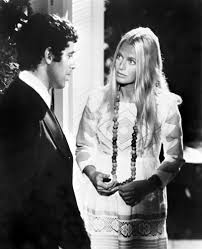
On Nina Van Pallandt: Muse, Witness, Residual Character, and Her Own Woman

Note: Nina Van Pallandt moves through this piece as a kind of drifting hinge figure between art and biography, cinema and scandal, half-real and half-mythologised: from her striking, uncanny presence in Robert Altman’s The Long Goodbye—where she plays the abused, luminous spouse of Roger Wade and becomes, briefly, a kind of muse/anima figure for Philip Marlowe—to her earlier life in the Danish pop duo The Baronets, through her entanglement with Clifford Irving and the great Howard Hughes hoax that later reverberates through Orson Welles’ F for Fake, and onward into the quieter aftermath of fame, reinvention, and partial retreat. The essay follows her not as a stable “character” but as a site where male-authored narratives—Hollywood noir, literary fraud, journalistic myth-making—keep trying (and failing) to fix her meaning, while she keeps slipping free in ways that are at once accidental and oddly deliberate. In the end she becomes something like a case study in cinematic and cultural afterlives: a woman repeatedly written by others, occasionally complicit, sometimes resistant, and finally legible only as a residue of performance, gossip, and unfinished stories that refuse to settle.

I first became aware of Nina Van Pallandt the way most people probably do: not through biography, but through atmosphere—specifically Robert Altman’s The Long Goodbye (1973, The Long Goodbye), a film that feels less like a narrative than a slow collapse of narrative reliability itself. It is a film in which people drift through scenes as if they have forgotten whether they are supposed to be characters or witnesses, and Nina arrives inside it already slightly misfiled, already too composed for the emotional weather she is asked to endure.

She plays Roger Wade’s wife, but “plays” is almost the wrong verb. Altman’s casting logic is not psychological realism in the classical sense; it is something closer to behavioral residue. People are dropped into the frame and asked not to perform identity but to inhabit proximity—to money, to violence, to desire, to failure. Nina’s presence has that peculiar Altman quality: she does not dominate the scene, but she stabilizes it just enough to make everything else look unstable.

Roger Wade (the blocked writer, the alcoholic genius-in-decline) is already collapsing before the plot admits it. Nina is the counterweight that never quite becomes balance. She is care without resolution, intimacy without clarity, the kind of emotional presence that suggests there is a story somewhere but refuses to confirm what it is. And then there is Marlowe, Elliott Gould’s version of Marlowe—half-stoned, half-wandering, permanently a few seconds behind the moral implications of what he is witnessing.

The film keeps staging small ruptures in epistemology. One of the most famous arrives early and feels almost accidental in its perfection: Terry Lennox appearing at 4 AM, asking for a ride to Tijuana. There is a moment—“Tijuana now?”—where Gould’s Marlowe is briefly jolted out of his procedural fog into genuine surprise, as if even he cannot believe how far the plot is willing to drift from explanation. That tonal instability is the world Nina inhabits as well, except she does not get Marlowe’s ironic distance. She gets consequence.

There is a domestic sequence—one of the film’s most disarming—that feels almost out of register with the noir frame: Nina cooking, the soft logic of food and attention, a candlelit dinner shared with Marlowe, where violence and absence are temporarily suspended by something as ordinary as butter and chicken. It is precisely the kind of scene that should resolve emotional ambiguity, but in Altman it does the opposite: it deepens it. Intimacy here is not revelation; it is another form of deferral.

What the film keeps doing, quietly and persistently, is refusing to assign stable moral weight to anyone. Roger Wade is both victim and self-destroyer. Marlowe is both agent and sleepwalker. Nina is both witness and participant, but never allowed the comfort of explanation. Even her suffering—when it arrives—is not narratively sanctified; it is simply another event in a world where events do not accumulate into meaning.

And this is where Nina becomes interesting beyond the film itself. Because she does not resolve into a character arc, she persists as something else: a figure who has been “used” by multiple narrative systems without ever fully belonging to them. In a conventional noir, she would be femme fatale or redemption object or tragic spouse. In Altman, she is none of these cleanly. She is what remains when genre stops enforcing coherence.

What begins to emerge, if one steps back slightly from her, is that she belongs to a broader category of women who are not simply “in” cultural narratives but are written into them by proximity to men who are doing the narrating. The pattern is subtle but persistent: women become legible to the public through the structural gravity of male projects—films, scandals, bands, memoirs—while simultaneously attempting, with varying degrees of success, to assert an interior life that resists that formatting.

It is difficult not to think here of Marianne Faithfull, who occupies a parallel register in the British version of the same phenomenon. Marianne Faithfull is initially rendered publicly intelligible through association—romantic, cultural, chemical—with the Rolling Stones orbit, and specifically through a media ecosystem eager to translate her into a kind of emblem: muse, fallen angel, tragic accessory to male genius. But what is striking about her trajectory is not the initial inscription but the long, stubborn insistence on rewriting it from within.

In both cases—Faithfull and Van Pallandt—the question is not simply “agency” in the abstract liberal sense, but something more structurally constrained: how does a person reassert authorship of self once they have already been written as a function in someone else’s story? Faithfull does this through survival, reinvention, and the eventual authority of her own voice as an artist. Nina does it more quietly, less performatively, by simply not continuing to cooperate with the demand that her life be endlessly narrativized into legible arcs.

And this is where Nina stops being just a cinematic presence and becomes entangled with a second, more volatile narrative system: the world of Clifford Irving and manufactured truth. I remain, in a slightly persistent way, puzzled by Clifford Irving—not in the sense that his actions are obscure, but in the sense that the scale of the gamble still feels oddly disproportionate to the era in which it occurred. Clifford Irving occupies that 1970s threshold where narrative fraud still had room to breathe: before the internet, before instantaneous archival correction, before every claim arrived already cross-checked by a thousand invisible clerks. The rope, in other words, was longer. Not infinitely elastic—but long enough that someone could plausibly believe they might walk it all the way across.

What he did, of course, was fabricate the authorized autobiography of Howard Hughes and briefly convince a publishing system that this fiction was fact. And one cannot quite shake the sense that this sits in a parallel register to Orson Welles’ late-career meditation on forgery and authorship, F for Fake, where the art forger is not simply a criminal but a kind of metaphysical irritant—someone who reveals how fragile the category of “authenticity” already is, even before it is attacked. In Welles’ world, the faker is almost honest about the fact that everyone is faking something. In Irving’s world, the system briefly forgets to notice.

The irony, of course, is that Irving’s fraud depended on a very pre-digital faith in paper trails, intermediaries, and the general slowness of institutional verification. Today it feels almost quaintly physical: forged documents, publishing contracts, phone calls that had to be believed in real time. One can imagine the same scheme now collapsing within hours, not because people are more moral, but because the feedback loops are instantaneous.

And then there is prison. Irving did time—real time, not narrative time—and emerged into a world that had already moved on to other, faster deceptions. Yeah, I mean what did you expect, dude. The arc compresses there in a way that feels almost unsatisfying: scandal, exposure, incarceration, partial reinvention. One wants something more operatic, but what you get is the bureaucratic version of consequence.

The interesting part is not that he was punished, but that for a brief historical window the system was even buildable enough that his plan could function as a kind of temporary reality. That is the shared atmosphere he has with Nina Van Pallandt: not guilt, not innocence, but proximity to narrative systems that were still slow enough to be fooled by their own assumptions.

In later life, Nina becomes harder to place in any of the familiar compartments that earlier decades tried to assign her. The cinematic afterglow fades into cult memory, and the Irving episode recedes into archival texture. What remains is a quietness that feels deliberate rather than accidental—not disappearance, but refusal of continued amplification. She does not convert notoriety into permanent self-mythology in the way later media ecosystems would almost require. Instead, she settles into a lower frequency of visibility: remembered, cited, intermittently revived, but no longer authored by the same pressures that once pulled her forward.

And here the comparison widens again, because what she resembles is not a “sidekick” at all—that word is too structurally comic, too dependent on hierarchy—but something closer to an attendant presence: a figure whose job, in other people’s stories, is to make emotional or moral instability legible without ever fully resolving it.

There is a related category, more neutral and slightly more precise: the faithful interlocutor. Not in the devotional sense, but in the structural one—the person who remains close enough to the main character’s instability to render it speakable, without ever becoming fully absorbed into its explanatory system. Nina performs this function in The Long Goodbyewithout being granted interpretive authority over it.

And there is another: the witness who does not testify cleanly. Not unreliable, but resistant to conversion into stable narrative fact.

We all make mistakes; that much is banal. The more interesting question is what kind of cultural weather those mistakes occur in, and how much agency is genuinely available inside it. Nina Van Pallandt seems, in retrospect, to have lived inside a period when men were still doing a great deal of the writing—of scripts, scandals, explanations—and women were often expected to appear inside those scripts as if they had authored them themselves. Her resistance to that framing is not always loud or declarative. Sometimes it is simply a matter of stepping out of the demand to be continuously interpretable.

And in that sense, what she ultimately carved out is not a grand public myth but something more modest and, arguably, more durable: a minor legacy, lightly held, slightly resistant to over-definition. Not central, not erased, not simplified—just there, in a way that feels unexpectedly intact.

I really like Nina Van Pallandt. In The Long Goodbye, and in the shadow of the Clifford Irving story, it is impossible not to root for her—not because she is resolved, but because she is never fully reducible. She drifts through systems built by men who are busy writing meaning onto the world, and she does not quite consent to being finalized inside any of them. We all make mistakes. She was written into a few. She was also, quietly, a drifter inside Hollywood’s narrative machinery, and what she ultimately leaves behind is a minor but distinct and instinctively cool legacy: not the center of anyone’s story, but one of the few figures who never fully became owned by it.

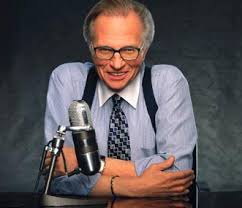
On Larry King, the Radio GOAT

Epigraph:

“I listened to the radio / I waited all night long…”
— Radio Radio, Elvis Costello

Note: This piece reflects my personal memories of listening to Larry King’s overnight radio show in the late 1980s and early 1990s, along with later impressions from television appearances, interviews, and conversations with people who knew him. It is written in the spirit of appreciation and nostalgia rather than media criticism, and emphasizes the uniquely loose, humane, and unpredictable quality of King’s radio work, which for me remains the defining core of his legacy.

I grew up listening to Larry King’s overnight radio show between roughly 1988 and 1992, and in my opinion — which happens to be correct — the radio show was much better than the television version that later made him famous. The TV show was good, even great at times, but radio was longer, looser, freer, and far more unpredictable. It had weird guests, weirder callers, and the feeling that anything might happen at two in the morning. That’s where Larry really lived.

I would listen in my bedroom at my parents’ house in Spokane, Washington, the volume turned low, the house quiet, insomnia hovering. The Spokane AM station — KGA 1510 — carried the show from around 9 PM Pacific time, and then, wonderfully, they would run it again. So I’d listen from nine to midnight, fade, wake at two or three, and hear the same segment again in a half-dream. The effect was surreal. Didn’t I just hear that caller? Didn’t Larry just say that? It created a strange loop of late-night déjà vu that only made the whole thing more atmospheric. The show felt less like programming and more like a continuous nocturnal conversation.

My friend Kelly Rudd loved Larry too. When we were in high school we were both big fans of the radio show, and we talked about it constantly. There were a couple of things that we especially liked. The first was that Larry famously did no preparation. He knew a huge amount about the world, of course, but he didn’t read guests’ books ahead of time. He wanted to come in cold. If his guest was a firefighter, he’d ask, “So what’s it like to be a firefighter?” It sounds lazy, but it was brilliant. By staying open and getting out of the way, he let the conversation go anywhere. This way the show became eventful.

Another thing we loved was what happened after the guest left. Larry would open the lines and take questions about absolutely anything. Most of the time he was generous and patient, but when callers went off the rails he had a signature phrase. He’d cut them off gently: “Cold compress, ma’am,” or “Cold compress, sir.” Basically: lie down, ice your head, regroup. It was hysterical, especially because he used it sparingly. When “cold compress” dropped, you knew things had gotten weird.

Anyway, Kelly and I loved Larry so much that when the station suddenly dropped the show, Kelly proposed we drive to the radio station and protest. So we skipped school, drove across town, and rang the intercom demanding to speak to someone about the cancellation. The station manager eventually came down and heard us out. We knew we weren’t changing anything, but it felt right to try. Larry never came back to Spokane radio, and the show faded not long after, but the whole episode captured what the show meant to us. It wasn’t just background noise. It felt alive.

Larry’s on-air style was the key. He was unbelievably relaxed. By the late ’80s you could tell he had done thousands of hours. Nothing fazed him. Weird guests, drunk callers, eccentrics — all the same to Larry. He absorbed everything. He had pet phrases — “cold compress” chief among them — and he deployed them like a veteran reliever, only when needed. He famously did no prep, and he leaned into naïve questions. He’d ask something simple and let the guest do the work. The effect was disarming. People opened up. He also had real humanity. He listened. He didn’t mock callers. He didn’t rush them. There was compassion there, and I think that’s what I loved most.

And the show could get wonderfully out of control. In one story Larry told from his old Miami days, an adult actress he was interviewing suggested they just have sex during the commercial break. Larry, amused, asked the producers to clear out — but there wasn’t enough time. That kind of anecdote captures the looseness of late-night radio. It wasn’t polished. It was alive.

Larry left the overnight Mutual Radio show in 1994 to focus on television. By then I had already drifted away, but I still caught Larry King Live on CNN over the years. I remember watching during the O. J. Simpson trial while at Otago University in New Zealand, when the show became part of the nightly noise. Later there were the Vladimir Putin interviews — classic Larry, conversational and oddly disarming. And of course there were the great comic moments, like the interview with Jerry Seinfeld where Larry suggested the show had been canceled and Seinfeld snapped back in disbelief, and the Norm Macdonald appearance where Norm kept repeating, “I’m a deeply closeted homosexual,” and Larry tried earnestly to parse it. “So that means you’re gay?” “No, Larry,” Norm replied, “it means I’m deeply closeted.” Pure Larry: sincere confusion meeting absurdist comedy.

Larry’s personal life was famously complicated. He married eight times, had several children — including sons Chance and Cannon later in life — and lived in a kind of perpetual romantic improvisation. The marriages came and went. The last ended painfully and publicly. He once joked he’d never leave his wife unless Angie Dickinson came along — and when she did, he married her. That was Larry: impulsive, affectionate, slightly chaotic. Despite decades of success, he didn’t leave the kind of massive fortune people assumed. The money came and went, as did the marriages. It was a life lived in motion.

My friend Sergio Mandiola actually knew Larry in his later years in Los Angeles. Sergio was running an independent studies program at Beverly Hills High School, and Larry’s sons Cannon and Chance, and he taught his sons for three years. Larry would come by for open nights or just to chat.

Sergio Mandiola: “Larry would come in from time to time and we would talk. He was lovely and open. He talked about his family and his career. One time he told me, ‘Sergio, you should totally have a radio show!’ I was flattered. One thing about Larry is his politics were more to the left than he let on on air. He had strong views and wasn’t afraid to share them in person. Larry was a true mensch and I’m glad I got to spend time with him. I miss him.”

In the end, I’ll say it plainly: for me, Larry King is the radio GOAT. There was no one like him, and there probably never will be. It wasn’t just longevity. It was the curiosity, the looseness, the humanity, the love of people, politics, baseball, and life. He trusted the conversation. He let the night unfold.

And then there was that absurd, wonderful USA Today column, which read like a diary gone completely outta control. Mets lose 6–4…Rain in Baltimore…Clinton flies to Ireland…You’d read it and think, Larry, baby, WTF is this? And also, Mr. USA Today, WTAF are you doing paying for this? But somehow it worked. It was pure Larry — fragmentary, observational, intimate.

And that’s how I remember him most clearly: late nights in high school, the radio turned low, insomnia hanging in the room, Spokane quiet outside.. Sometimes I’d listen from nine to midnight, fade, then wake again to the rerun, half-dreaming, half-aware, caught in that strange déjà vu — didn’t I just hear this? — while Larry kept talking, calm as ever, taking calls from truckers and insomniacs and eccentrics. My listening years were brief, but they stuck. And when I think of Larry now, that’s where I go back to: the low hum of AM radio, the half-fade, and the sweet sounds of his voice in my ear.

Dedication:

For the one and only GOAT, Larry Motherfucking King. RIP baby.

On Living Paycheck to Paycheck

Note: This essay gathers together several different periods of my life when money was tight and the margin for error was thin. Some of these moments go back many years, including a year abroad in Dunedin, New Zealand, at the University of Otago when a bureaucratic oversight left me without a meal plan for most of the academic year and forced me into a very basic daily routine of trail mix, apricot bars, and coffee. Others come from later phases of adulthood: early teaching years in Kumamoto, young family life in Kyoto’s Mukaijima district, the strange suspended months of COVID, and the present day.

I include these episodes not as a complaint but as a recognition of how common this experience actually is. Living paycheck to paycheck is often imagined as the result of bad choices or personal irresponsibility, yet in reality it is frequently the ordinary condition of people who are working hard, raising families, paying tuition bills, navigating institutional decisions, and simply trying to keep their lives moving forward.

The story of my friend Sergio Mandiola, included here with his blessing, illustrates another version of the same pattern. A long career in education, a series of institutional shifts, and one administrative decision were enough to push a once-stable life into years of financial improvisation before things slowly stabilized again.

What these experiences have taught me is less about money than about perspective. Hunger sharpens the mind, small kindnesses matter enormously, and the distance between stability and struggle is often much smaller than we imagine. For that reason, the real lesson of living paycheck to paycheck is not resentment but compassion.

Epigraph

Money won’t save your soul.
— Tim Burgess


A lot of people talk about living paycheck to paycheck as if it were a kind of personal failure. A budgeting problem. A lack of discipline. A mistake someone somewhere made.

In reality it is something far more ordinary than that. It is simply the condition in which millions of people live their lives. Often quietly, often competently, and often without anyone around them quite realizing how narrow the margin really is.

I first learned that margin in Dunedin.

I was on exchange at the University of Otago and through a small bureaucratic mix-up I was not on the meal plan. I had no work visa and no savings. My parents sent twenty dollars here and there, but it took months before anyone realized the full situation.

So for nearly the entire academic year I developed a system.

Breakfast and dinner came from a large white bucket in my room: trail mix, carob chips, raisins, peanuts. Lunch every day was the same: one yoghurt-covered apricot bar and one black coffee at the campus canteen. NZ $3.50.

Day after day after day.

My roommates didn’t know. They just thought I hated the mutton they cooked every night. And to be fair, I did hate the mutton.

Every once in a while a friend named Maren would buy me a Snickers and a Coke at the student club and we would sit there watching the O.J. Simpson chase and the trial coverage on television. Those snacks felt like luxury.

After Dunedin, life improved but the margins never entirely disappeared.

In Kumamoto in 1997 I was earning about ¥250,000 a month teaching English at NOVA. It wasn’t a fortune but it was enough. I could go to the izakaya, drink Asahi, play pool, and date the woman who would later become my wife. It wasn’t abundance, but it was livable.

A few years later, from 2002 to 2004, my wife and I were living in a subsidized apartment in Mukaijima on the Kintetsu Line outside Kyoto. I was working part-time as a social studies teacher and earning roughly the same ¥230,000–250,000 a month. Our rent was only ¥40,000 thanks to her hospital job in Uji, Kyoto. The apartment had three large rooms, a kitchen, a genkan, and it was surprisingly well insulated.

Our son Hugh had just been born and wasn’t yet in daycare. My wife worked night shifts and often made more money than I did. We weren’t rich, but we made it work. And we were happy.

Then years later came another version of the same story. During COVID I took leave from work and drifted into a strange suspended routine. I spent most of my time in my room playing chess online, watching chess streamers, and talking on the phone. My peak rating reached about 1200, which I was absurdly proud of.

My expenses were minimal because my life had contracted. I only went out drinking with a friend named Philip maybe three times a month, usually to places like Takimiya’s, Stones, or Rub-a-Dub.

Things were precarious, but manageable. Barely. And then there is the present.

In January of 2024 I had roughly $60,000 in savings and no debt. My wife and I also had about $20,000 in gold and platinum and a couple of retirement plans. It looked, on paper at least, like stability.

But the final years of my son’s schooling at the University of Auckland slowly drained those savings. As I write this in March of 2026, at age fifty-one going on fifty-two, I have about $3,000 in the bank and another $3,000 on a Kyoto Bank credit card. My ANA card covers most day-to-day expenses, but that line of credit has been cut before and could disappear again at any time.

I am a professional educator with thirty-five years of experience. I am gainfully employed and reasonably skilled at what I do.

And yet the margin remains thin. But my story is hardly unique.

My friend Mandiola is sixty-three years old and has spent most of his life in Los Angeles. He knows that city better than almost anyone I have ever met. His first job after high school was delivering maps for a map store, which meant driving all over the city and learning it street by street. Later he earned a degree from a University of California campus and became a high school teacher in the Beverly Hills public school system.

For a while things were stable. Then life intervened. Divorces, relocations, graduate school that never finished, and years of improvisation eventually brought him back to Los Angeles where he landed what he considered a dream job in an independent study program. He taught the children of show-business families and even got to know people like Larry King through the students he worked with.

He loved the work. He was his own boss and taught every subject except music. After school he played board games with the kids. He was, in his words, in hog heaven. Then a new administration arrived. He calls them the Chicago mafia. They decided he was too expensive and too independent. He was replaced, after years of conflict and legal battles, by what he describes as three bureaucratic drones. A $60,000 settlement kept him afloat for a while, but the money vanished quickly.

When I visited him in Los Angeles in March of 2024 he was essentially broke. He struggled to cover his mortgage, his association fees, his car insurance, and groceries at Trader Joe’s. He borrowed money from friends, from his mother, from anyone willing to help.

Eventually he pieced together work again through substitute teaching and tutoring. Today he earns about $4,100 a month and is just months away from retirement eligibility. Even now he occasionally borrows money. Not because he is irresponsible, but because life sometimes simply runs that way.

And that, in the end, is the point. Living paycheck to paycheck is not a moral failure. It is a structural reality for a huge portion of the population. Careers falter. Administrators make decisions. Tuition bills arrive. Children grow up. Systems fail. Life shifts. Hard times can strike almost anyone.

What those years taught me — from Dunedin to Kumamoto to Mukaijima to the strange suspended months of COVID and the present day — is how little we actually need to survive, how hunger sharpens the mind, and how enormously small acts of kindness can matter.

But most of all they taught me how close to the edge so many people really are. Which is why compassion is not optional. It is necessary. Now more than ever.

Dedication

For the middle and lower classes.
For now and eternity.

In Defense of Ryan Adams

Note: This essay is not an attempt to defend Ryan Adams the person. It’s an attempt to defend the continued seriousness of the music. The distinction matters, even if our cultural conversations sometimes pretend it doesn’t. Also, I fucking love Ryan Adams. He is the motherfucking man.

Epigraph:

“When the stars go blue.”
— Ryan Adams

For several years now it has been socially safer to treat Ryan Adams as a closed case: talented songwriter, personal flaws, cultural exile. The outline is familiar enough that most people no longer bother to revisit the work itself. But the strange thing about Adams is that the songs refuse to cooperate with the narrative. They remain stubbornly alive — hundreds of them scattered across albums, demos, and late-night recordings — carrying the same bruised intelligence that first made people pay attention twenty-five years ago. At some point the question stops being whether Ryan Adams is an admirable person. The real question becomes harder and less comfortable: what do we do with an artist whose flaws are obvious but whose music continues to tell the truth in ways very few writers can manage?

Part of the problem is that Ryan Adams belongs to an older model of songwriting — the kind where the emotional life of the artist is inseparable from the work. The songs are confessional without being literal, personal without being autobiographical in any simple way. From the early Whiskeytown albums, to his solo debut Heartbreaker, on to today, Adams has always written like someone sitting in the wreckage of his own choices and trying to understand what just happened. That voice — raw, impulsive, often heartbroken, sometimes self-pitying, often painfully perceptive — was never tidy. It wasn’t supposed to be. The appeal of Adams at his best has always been that the songs arrive before the moral cleanup crew.

When the accusations against him surfaced in 2019, the cultural machinery moved quickly. Adams’s shows were cancelled for a while, he was dropped from projects, and reclassified overnight as an artist whose work had become morally contaminated. Some listeners stopped listening immediately. Others quietly kept listening but stopped talking about it in public. The silence that followed was oddly complete. In a culture that usually thrives on argument, the Ryan Adams conversation simply evaporated.

That disappearance is revealing. It suggests that many people were less interested in wrestling with the complexity of the situation than in resolving it as quickly as possible. Once the story had a clear villain, the cultural instinct was to move on.

But the songs remain.

Listen again to Come Pick Me Up, and you hear a man cataloguing his own emotional incompetence with surgical clarity. Oh My Sweet Carolina still carries that strange mixture of homesickness and resignation that only a handful of songwriters ever capture. Later work — Ashes & FirePrisoner, Chris, the better moments of the sprawling archive that followed — continues the same project: the slow documentation of a person trying, often unsuccessfully, to live with himself.

None of this absolves Adams of anything. It doesn’t erase the accounts of people who describe him as manipulative, volatile, or worse. If anything, the songs themselves suggest that those accounts are not entirely surprising. Adams has been writing about his own volatility for decades. The records are full of it — jealousy, insecurity, emotional chaos, the constant sense of someone struggling to regulate the intensity of his own personality.

What the songs also reveal, though, is a rare level of self-awareness about his own condition. Adams’ best work doesn’t present him as a romantic hero. It presents him as part of the problem.

And that distinction matters.

One of the stranger habits of contemporary cultural criticism is the belief that the value of a work of art should track the moral cleanliness of the person who made it. This is a comforting idea, but it collapses under the slightest historical pressure. Much of the art people still revere emerged from personalities that were messy, selfish, unstable, or worse. Songwriters, perhaps more than most artists, tend to write directly from the fault lines of their own lives.

If we demanded perfect character from every songwriter whose music we admire, the history of popular music would shrink dramatically.

The more interesting question is not whether Ryan Adams deserves redemption. That is not something critics or listeners are qualified to grant. The question is whether the songs themselves still carry meaning once the mythology surrounding the artist has been stripped away.

In Adams’ case, the answer seems to be yes.

The songs are still precise. The emotional details still land. Lines that once felt like romantic exaggeration now sound more like documentation — the sound of a man who understands, perhaps too late, the patterns that keep repeating in his life.

There is something oddly honest about that.

The best Ryan Adams songs have always sounded like dispatches from someone who knows he is partly responsible for the wreckage he is describing. They are not pleas for sympathy so much as attempts at recognition — moments where the singer steps outside himself long enough to see the pattern clearly.

That is why the music persists even when the cultural narrative surrounding it has hardened.

The songs were never about innocence. They were about self-knowledge.

And self-knowledge, even when it comes from flawed people, is still one of the things art is uniquely good at revealing.


Dedication

For Ryan, one of the five greatest songwriters ever and the motherfucking man. I love you baby.

Note: If you like this essay, you may like these others in the same “In Defense Of” series.