What Ever Happened to the ACLU?

Note: This essay reflects a personal memory of what the American civil libertarian tradition once represented to many people who came of age politically in the late twentieth century. Organizations evolve, and the American Civil Liberties Unionhas played an important role in many areas of constitutional law and civil rights over the past century.

The purpose of the piece is not to dismiss that legacy but to reflect on a perceived cultural shift in how civil liberties—particularly free speech—are understood within contemporary progressive politics. The older civil libertarian framework emphasized neutral principles that applied equally to all speakers, even those whose views were widely considered offensive or dangerous.

Whether that framework still holds the same cultural authority today is an open question. This essay is simply one observer’s reflection on how that shift has felt from the inside.

Epigraph:

F the CC

Steve Earle

When I was younger, the American Civil Liberties Union had a certain reputation among politically attentive Americans.

They had balls.

The ACLU was the organization that defended people nobody liked. Neo-Nazis marching in small Midwestern towns. Communists during the Cold War. Religious cranks, fringe activists, offensive speakers. The principle was simple and bracing: civil liberties matter most when they protect speech we find offensive.

I admired that. Many people did.

In the 1990s the ACLU seemed to embody a kind of austere civil libertarianism. The idea was that the Constitution protected everyone equally, and that civil liberties meant very little if they only applied to people we already agreed with.

And there were plenty of examples that made the point vividly.

The most famous was the controversy over whether a small group of neo-Nazis had the right to march in the Chicago suburb of Skokie in the late 1970s.

National Socialist Party of America v. Village of Skokie

Skokie was home to many Holocaust survivors, which made the proposed march especially painful and inflammatory. But the ACLU nevertheless defended the Nazis’ right to demonstrate, arguing that the First Amendment could not be applied selectively. Free speech, if it existed at all, had to apply even to people whose ideas were repellent.

That case became a kind of civic legend among civil libertarians.

There were many others.

During the Cold War the ACLU repeatedly defended the rights of individuals accused of Communist sympathies, arguing that political belief alone could not be grounds for government punishment. In later decades the organization defended the speech rights of controversial artists, religious minorities, and political extremists across the ideological spectrum.

Every once in a while a case would appear that tested the principle in uncomfortable ways. I remember reading about things like the aftermath of Ruby Ridge and the legal questions surrounding the government’s conduct toward Randy Weaver. Weaver himself was hardly a sympathetic figure to most Americans, but the civil liberties questions raised by the incident were serious enough that organizations committed to constitutional rights had to pay attention.

That, at least in my memory, was the ACLU’s zone of operation: defending civil liberties even when the individual involved was politically or culturally radioactive.

For a long time that seemed like the organization’s defining characteristic.

Then something began to feel different.

My moment of realization came around 2017 at a conference at Case Western Reserve University. The event was filled with what felt like an entire arena of fucking international liberals—academics, activists, policy types, the whole familiar ecosystem.

At one point a speaker took the stage and launched into a full-throated denunciation of Donald Trump.

Now, criticizing a president is of course perfectly legitimate speech. But as I sat there listening, something about the moment felt off.

The energy in the room was not about civil liberties. It was about political opposition. The speech had the tone of a campaign rally rather than a lecture about constitutional rights.

And I remember thinking very clearly: this is not the ACLU I admired in the 1990s.

Something about the mission had shifted.

To be fair, institutions rarely change because they suddenly become foolish. They change because the culture around them changes first.

The older civil libertarian tradition that shaped organizations like the ACLU grew out of a very specific intellectual climate. It emphasized neutral principles, distrust of government power, and a willingness to defend speech even when that speech was deeply unpopular.

The logic was austere but powerful: the moment we begin deciding which speech deserves protection, the principle itself begins to erode.

But the dominant strain of progressive politics today often approaches these questions differently. Instead of asking whether a principle applies equally to everyone, the question increasingly becomes whether a particular form of speech contributes to harm, inequality, or social injustice.

That shift in moral emphasis naturally changes how civil liberties are understood.

Speech that once would have been defended in the name of neutral principle may now be evaluated in terms of its social consequences. And organizations that operate inside a particular political culture tend to absorb the assumptions of that culture over time.

The ACLU did not necessarily set out to abandon its older civil libertarian posture. It may simply have followed the broader ideological current of the progressive world in which it operates.

Still, for those of us who grew up admiring the older model, the change can feel disorienting.

The ACLU once stood for the uncomfortable proposition that freedom of speech requires defending people whose views we might find offensive, foolish, or even dangerous.

It is not entirely clear whether the culture that once sustained that belief still exists.

On Comebacks and Failed Comebacks V: Rod Blagojevich

Note: This essay concludes the small series “On Comebacks and Failed Comebacks.” The earlier pieces explored several very different kinds of returns: the moral vindication of Kofi Annan, the sly tactical persistence of Joe Nash of the Seattle Seahawks, the tragic artistic authenticity of Amy Winehouse, and the mythic public legend surrounding Muhammad Ali.


The story of Rod Blagojevich introduces a different category altogether: the shameless comeback.

Unlike the other figures in the series, Blagojevich’s return to public life does not depend on moral vindication, heroic persistence, or cultural myth. Instead it illustrates something more peculiar about contemporary politics and media. In an age of fragmented audiences and constant attention cycles, a disgraced figure may sometimes reappear simply by refusing to leave the stage.

Whether one sees Blagojevich’s re-emergence as comic, absurd, or oddly instructive, it provides a fitting final example for the series. Not every comeback is admirable, but each one reveals something about the strange ways public life allows stories to continue.

Not all comebacks are noble.

Some are heroic, like the moral vindication of Kofi Annan. Some are tactical, like the sly fourth-quarter returns engineered by Joe Nash of the Seattle Seahawks. Some exist somewhere between tragedy and authenticity, like the brief blazing career of Amy Winehouse. And some, like the legend of Muhammad Ali, grow into something close to myth.

But there is another type of comeback altogether.

The shameless comeback.

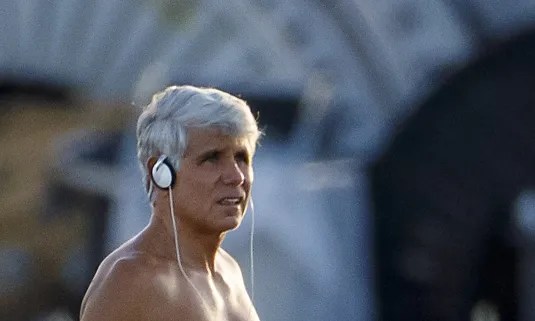
For that, it is difficult to find a more perfect case than Rod Blagojevich, the former governor of Illinois whose political career once appeared to have ended in spectacular disgrace.

The original scandal is by now familiar. In 2008 federal investigators revealed that Blagojevich had been recorded on FBI wiretaps discussing how he might profit from appointing a replacement to the U.S. Senate seat vacated by President-elect Barack Obama. The recordings were devastating. In one of the most memorable lines in modern American political scandal, Blagojevich described the Senate seat as something valuable that he was reluctant to give away for nothing.

The fallout was swift. Blagojevich was impeached and removed from office by the Illinois legislature. Later he was convicted on multiple corruption charges and sentenced to federal prison. For most politicians, this sequence would represent the end of the story.

Disgrace. Prison. Silence.

But American public life has always contained another possibility: the comeback powered not by redemption but by spectacle.

Even before his imprisonment, Blagojevich seemed instinctively drawn toward the theatrical dimension of his situation. He appeared on television talk shows, launched media interviews, and treated the unfolding scandal almost as if it were a strange kind of reality program in which he remained the central character.

His appearance on The Celebrity Apprentice, hosted by Donald Trump, felt less like an attempt to restore dignity than a recognition that modern politics and entertainment had already merged.

Then came the commutation.

In 2020 Trump commuted Blagojevich’s prison sentence, releasing him after several years behind bars. The decision itself was controversial, but the effect was unmistakable: the stage was suddenly open again.

And Blagojevich, to his credit—or perhaps to his creditlessness—walked right back onto it.

The most striking feature of his post-prison public life has been the absence of embarrassment. Many disgraced politicians attempt some form of contrition when they re-enter the public conversation. Apologies are issued. Lessons are discussed. A tone of humility is adopted.

Blagojevich chose a different path.

Instead he embraced a kind of shameless persistence, appearing in conservative media outlets, repositioning himself politically, and speaking about his case with the tone of someone who believes the whole episode was misunderstood or exaggerated. The ideological shift from Democrat to Republican was particularly striking, not because party changes are unheard of but because in Blagojevich’s case it seemed less like a conversion than a strategic recalibration.

It was, in other words, a comeback powered by the modern media ecosystem.

In an earlier era, a corruption scandal of this magnitude might have consigned a politician to permanent obscurity. But the fragmented media landscape of the twenty-first century offers a different possibility. There is always another audience somewhere, another platform, another narrative waiting to be constructed.

Blagojevich appears to understand this instinctively.

Which is why his story belongs in a series about comebacks, even if the comeback itself is of a peculiar variety. Unlike the moral return of Annan or the mythic return of Ali, Blagojevich’s version depends less on redemption than on endurance.

The secret of the shameless comeback is simple.

You refuse to leave the stage.

You keep talking. You keep appearing. You keep telling your version of the story until, slowly but inevitably, the scandal itself begins to blur into just another chapter in the larger spectacle of American politics.

In that sense Rod Blagojevich may represent a distinctly modern form of comeback: not heroic, not tragic, but theatrical.

And in the strange carnival of contemporary public life, theatrical persistence can sometimes be enough.

On Comebacks and Failed Comebacks IV: Muhammad Ali

Note: This essay is the third entry in the series “On Comebacks and Failed Comebacks.” The earlier pieces looked at very different kinds of returns: the moral vindication of Kofi Annan and the small, tactical in-game comebacks engineered by Joe Nash of the Seattle Seahawks.


The story of Muhammad Ali operates on a much larger stage. Ali’s exile from boxing after refusing the Vietnam draft and his eventual return to the championship ranks is one of the most famous comebacks in sports history. But the episode described here—the Los Angeles suicide rescue in 1981—is a smaller and stranger moment.


The event appears to have genuinely occurred, yet it also carries the faint aura of legend that often surrounds Ali’s public life. The champion arrives, speaks to a desperate man at a window, and the crisis resolves itself. It is almost too perfectly aligned with the myth of Muhammad Ali not to raise a few questions about performance, storytelling, and the way public figures sometimes inhabit the roles the world expects them to play.


In that sense the episode captures something essential about Ali’s comeback. By the time his boxing career entered its final chapters, he had become more than an athlete. He had become a figure whose life continually generated stories that felt larger than ordinary events.


Whether one treats the Los Angeles episode as simple heroism, public theater, or some mixture of the two, it remains a fascinating illustration of how Ali’s legend continued to grow long after the great fights were over.

Some comebacks are measured in championships.

Others are measured in stories.

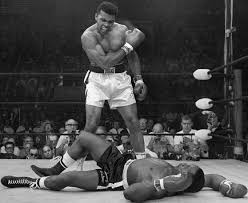
The career of Muhammad Ali contains both. His return to boxing after the long exile of the late 1960s is one of the great sporting comebacks of the twentieth century. Stripped of his title for refusing induction into the Vietnam War, banned from the ring during what should have been his athletic prime, Ali eventually returned to reclaim the heavyweight championship and cement his place as the most famous boxer on earth.

But the Ali comeback is not just about boxing.

Long before the exile and the triumphant return, the story had already begun to take on mythic dimensions. In 1964 a young fighter from Louisville named Cassius Clay stunned the world by defeating Sonny Liston for the heavyweight title. Soon afterward he announced that Cassius Clay was a “slave name” and that he would henceforth be known as Muhammad Ali.

The change was shocking to much of the American public at the time. Ali aligned himself with the Nation of Islam, spoke openly about race and politics, and quickly became one of the most controversial athletes in the country.

Then came the draft.

In 1967 Ali refused induction into the U.S. Army during the Vietnam War. The consequences were immediate and severe. He was stripped of his heavyweight title, banned from boxing, and faced the possibility of prison. For several years the greatest fighter in the world was not allowed to step into the ring.

The exile transformed him.

When Ali eventually returned to boxing in the early 1970s, he was no longer merely a talented heavyweight with a flair for poetry and bravado. He had become something larger: a political figure, a symbol of resistance, a man whose name carried moral and cultural weight far beyond the sport.

The comeback fights that followed helped cement that transformation. In 1974 Ali traveled to Zaire to face George Foreman in the legendary The Rumble in the Jungle. Foreman was younger, stronger, and widely expected to win easily.

Instead Ali introduced the world to the “rope-a-dope,” leaning back against the ropes and absorbing Foreman’s punches until the younger champion exhausted himself. In the eighth round Ali knocked him out.

It was one of the great theatrical moments in sports history: the exiled champion returning to reclaim the crown.

But somewhere along the way Ali’s comeback had begun to operate on another level entirely.

He had become something more than a boxer. Part athlete, part moral figure, part living myth. And like all myths, the Ali story eventually began to generate episodes that feel almost too perfectly suited to the character.

One of the strangest of these occurred in Los Angeles in 1981.

A man was threatening to jump from the ledge of a ninth-floor building. Police had been negotiating for hours. Crowds gathered below, watching the terrible drama unfold at a distance.

Then Muhammad Ali arrived.

Accounts differ slightly in the details, but the basic outline is consistent. Ali spoke to the man from a nearby window, urging him not to jump. Eventually the man climbed back inside the building with Ali beside him. Photographs exist of the moment, and police officers later confirmed the story.

By all reasonable accounts, Ali helped save the man’s life.

And yet the story carries a faint aura of improbability.

Not because it didn’t happen—it clearly did—but because it feels so perfectly aligned with the Ali persona that one can’t help wondering about the role of performance in the moment.

Ali had always understood something most athletes do not: that being Muhammad Ali was itself a kind of public art.

From the beginning he blurred the line between competition and theater. The rhymes, the predictions, the playful insults directed at opponents—all of it was part of a larger performance. Ali didn’t simply fight boxers. He performed the role of the greatest boxer in the world.

By the early 1980s that role had evolved even further. Ali was no longer just the heavyweight champion. He had become a global cultural figure, a symbol of resilience after exile, a man whose public presence carried moral weight.

So when the story of the suicide rescue circulated, it seemed less like an unexpected episode and more like the natural continuation of the legend.

Of course Muhammad Ali would appear at the window.

Of course Muhammad Ali would talk the man down.

Of course the cameras would be there.

None of this means the moment was insincere. Ali may well have acted from genuine compassion. But it is also possible—one suspects just slightly—that he understood something about the scene as it unfolded: that the story would become another chapter in the larger narrative of Muhammad Ali.

If so, it was a brilliant instinct.

Because the image of the champion talking a desperate man back from the ledge captures something essential about the Ali comeback. After the long years of controversy and exile, Ali returned not merely as a boxer but as a figure people wanted to believe in.

The story may be small compared with the great fights—the Rumble in the Jungle, the Thrilla in Manila. Yet in its own strange way it may be just as revealing.

A champion reclaiming his title is impressive.

A champion stepping to a window and becoming, for a moment, exactly the hero the world expects him to be—that is something else entirely.

And Muhammad Ali, more than anyone, always understood the power of the moment.

On Comebacks and Failed Comebacks III: Amy Winehouse

Note: This short piece reflects on the strange artistic tension that defined the career of Amy Winehouse: the way her extraordinary authenticity as a singer seemed inseparable from the personal instability that surrounded her life.

Winehouse’s music—especially the songs on Back to Black—felt at once timeless and painfully immediate. The sound drew deeply from earlier traditions of soul and rhythm and blues, yet the emotional directness of the lyrics was unmistakably modern. Few artists have managed to sound so rooted in musical history while simultaneously feeling so exposed to the present moment.

The song Rehab stands as the clearest example of this tension. Its humor, defiance, and vulnerability all exist in the same breath, making it one of the most distinctive pop recordings of the twenty-first century.

Like many listeners, I remember the late-2000s period—particularly around the Glastonbury era—when Winehouse was both an enormous star and visibly struggling. Watching those performances could feel uneasy, yet the brilliance of the voice was undeniable. The same intensity that made the music so compelling also made her career difficult to sustain.

This piece is simply an attempt to think about that paradox: how authenticity and self-destruction can sometimes become intertwined in the lives of great artists.

There are many great singers, but very few voices that feel instantly definitional—voices that seem to arrive already carrying an entire world inside them.

Amy Winehouse was one of those voices.

By the time her second album, Back to Black, exploded in the mid-2000s, it already felt as though she had stepped fully formed out of some earlier musical era. The sound was unmistakably rooted in Motown and 1960s soul, yet the lyrics were brutally modern—messy, confessional, sometimes almost painfully direct.

Winehouse didn’t just sing about heartbreak and addiction. She sang about them as if the audience had wandered into the middle of a private argument she was having with herself.

That tension—between authentic confession and visible self-destruction—became the defining element of her career.

You could hear it most clearly in Rehab, which remains one of the most distinctive pop songs of the twenty-first century. The song is catchy, almost playful on the surface, driven by a swinging brass section that feels lifted from a lost Stax session.

But the lyrics are something else entirely.

They tried to make me go to rehab / I said no, no, no.

It’s funny. It’s defiant. It’s also deeply unsettling, because the listener quickly realizes that the singer is not playing a character. The refusal at the center of the song is real.

In that sense “Rehab” became more than a hit single. It became a kind of thesis statement for the strange artistic space Winehouse occupied. The same vulnerability that gave her music its emotional power also exposed the raw nerves of her life to public view.

You could feel that tension during the years when she was both at the height of her fame and visibly unraveling.

The Glastonbury era captured this perfectly. Winehouse had become a massive international star, yet her stage presence could swing wildly from moment to moment. One minute she would be commanding the crowd with that huge, smoky voice; the next she might appear distracted, fragile, or physically unsteady.

Watching those performances could be oddly uncomfortable. The audience was witnessing genuine brilliance, but it often felt as though the brilliance was emerging from a life that was spinning out of control.

And yet the authenticity of the music was inseparable from that volatility.

Winehouse sang as if every lyric had been torn directly out of lived experience. There was no polite distance between the artist and the material. When she sang about jealousy, addiction, or heartbreak, it sounded less like performance and more like confession.

That quality made her music electrifying. It also made her career precarious.

Pop music has always had a complicated relationship with self-destructive artists. Audiences are drawn to performers who seem emotionally transparent, but the same intensity that produces great art can also be difficult to sustain under the glare of fame.

Winehouse lived inside that contradiction.

The tabloids followed her relentlessly. Every public misstep, every argument, every sign of physical decline became part of a growing media narrative. The spectacle sometimes threatened to overwhelm the music itself.

Yet when she stepped to the microphone and began to sing, the spectacle vanished.

What remained was that extraordinary voice: raw, soulful, and oddly timeless, as if it had traveled forward from another musical generation. In a pop landscape often dominated by carefully engineered personas, Winehouse sounded startlingly real.

That authenticity is why her work still resonates long after her death in 2011.

Many talented singers release successful albums. Only a handful manage to create songs that feel permanently etched into the culture. “Rehab” is one of those songs. The moment those opening horns start, the listener knows exactly what world they are entering.

It is the world of Amy Winehouse: funny, defiant, wounded, brilliant.

A place where honesty and self-destruction were never quite separable—and where the truth of the music was powerful enough to survive them both.

Note:

On Comebacks and Failed Comebacks I: Kofi Annan

Note: This piece begins a small series I’m calling “On Comebacks and Failed Comebacks.” Political and public life are full of attempted returns. Leaders lose elections, wars, or moral arguments and then try to reclaim the stage. Most of these efforts fail. The moment has passed, the audience has moved on, and what once felt urgent has dissolved into what might be called moral fatigue. Yet every so often a different pattern appears. Occasionally someone loses the immediate battle but remains present long enough for history itself to shift. When that happens, what first looked like defeat begins to resemble something closer to a delayed victory. Kofi Annan provides a particularly interesting case. His opposition to the Iraq War did not stop the invasion, and at the time it appeared that the argument had been decisively lost. Yet as the years passed and the consequences of the war became clearer, the moral judgment he articulated gained increasing weight.
In that sense, the story of Annan’s career suggests a useful distinction: some comebacks succeed not because the player reclaims the moment, but because the argument itself eventually catches up with history. Future pieces in this series will look at other figures—some who managed remarkable returns, and others whose comebacks never quite arrived.

Political life especially produces them in abundance. A leader loses a battle—an election, a war, a moral argument—and disappears into the quiet margins where yesterday’s figures slowly fade. The public moves on. The moral urgency of the moment dissolves into what might be called moral fatigue. Outrage that once seemed unstoppable becomes background noise. A new crisis appears, and the world’s attention shifts.

Once this fatigue sets in, comebacks are difficult. The audience that once cared has already drifted elsewhere. The stage has changed. Most players who attempt to return find that the moment that once belonged to them has passed.

Yet every so often a different pattern appears.

Occasionally a figure loses the immediate battle but remains present long enough for the moral tide itself to turn. When that happens, what looked like defeat begins to resemble something else entirely.

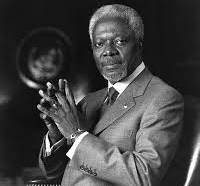
Kofi Annan offers one of the most intriguing examples of this phenomenon.

In 2003 the United States and the United Kingdom invaded Iraq. The invasion was justified by a mixture of strategic arguments, intelligence claims, and moral rhetoric about tyranny and liberation. In Washington and London the momentum of the moment was overwhelming. The war was framed as both necessary and inevitable.

The United Nations, by contrast, found itself sidelined. Annan, then serving as Secretary-General, watched as the institution he led was bypassed by the coalition preparing for war. The moment belonged to the advocates of intervention—particularly the group of American policy thinkers who had spent years arguing for the removal of Saddam Hussein.

At the time, it was not at all clear who would ultimately win the argument. What was clear was that the United Nations had lost the immediate struggle for influence. The invasion proceeded without explicit UN authorization, and the diplomatic machinery that Annan represented appeared powerless to prevent it.

The moral emergency that had animated the debate quickly hardened into geopolitical reality.

Then, in September 2004, Annan said something remarkable. In a BBC interview he stated plainly that the invasion of Iraq was illegal under international law.

It was an extraordinary declaration. Rarely does a sitting Secretary-General of the United Nations describe the actions of the world’s most powerful government in such blunt terms. Yet the statement did not produce the dramatic reversal one might imagine. The war continued. Washington and London dismissed the criticism. The machinery of global politics moved forward largely unchanged.

In the short term, Annan had lost the battle.

And the personal toll of that moment appears to have been considerable. In his biography there is a striking image from this period: Annan alone in his darkened living room, unable for a time to rise from the floor. The room itself reportedly kept in near darkness. It was not exactly depression, at least not in the clinical sense, but something close to exhaustion after a prolonged moral struggle that had failed to alter events.

It is a haunting scene. One of the most powerful diplomats in the world sitting on the floor of a dark room, confronting the limits of his influence.

At that moment, the story of Kofi Annan could easily have ended as the story of a failed comeback. A leader who tried to reassert the moral authority of international law and found that the world had already moved on.

But history has a way of rearranging the meaning of certain moments.

As the years passed, the Iraq War came to be widely regarded as a profound strategic and humanitarian mistake. The claims that had justified the invasion collapsed. The war itself destabilized the region and reshaped global politics in ways that few of its original advocates had anticipated.

Gradually, the moral argument that Annan had made—quietly but firmly—became the prevailing historical judgment.

After leaving the United Nations, Annan did not retreat entirely from public life. Instead he reappeared in a different role as a member of The Elders, a group of former statesmen attempting to exert moral influence outside formal political structures.

It was a curious transformation. No longer the head of the UN, Annan had less formal power than he once possessed. Yet his voice now carried a different kind of authority—the authority of someone who had remained in the arena long enough for events to vindicate his judgment.

By the end of his life, the moral verdict on the Iraq War had shifted decisively. Few serious observers still defended the intervention with the confidence that characterized the early years of the conflict. The consensus had moved, slowly but unmistakably, toward the position Annan had articulated when it mattered least.

In this sense, his career offers an unusual example in the history of comebacks.

He lost the battle.
But he may have won the argument.

That distinction matters.

Most political figures attempt comebacks by trying to reclaim the exact moment they once dominated. They want the same stage, the same audience, the same authority. When the moment has passed, the comeback fails.

Annan’s story suggests a different possibility. Sometimes the moral argument itself continues moving through history long after the political battle appears settled. If a leader remains present long enough, the tide may eventually turn.

Which leads to a simple but revealing observation about great players in any arena.

A truly great player is never entirely out of the game.

The moment may pass. The audience may drift away. But if the underlying argument proves sound, history itself has a way of reopening the field.

And when it does, the comeback is already underway.

On the Song “Encounter at 3 AM”

Note: This piece sits at the intersection of music, memory, and atmosphere rather than narrative disclosure. It reflects on a late-night encounter whose emotional resonance exceeded its visible duration, while respecting the privacy of the people involved and the ambiguity that gives such moments their meaning.

The essay is less about what happened than about how certain hours alter perception — the thin, liminal spaces where experience feels lightly refracted and ordinary interaction carries unexpected depth. References to artists like Franz Wright, Clem Snide, and Steve Earle, function as interpretive companions rather than explanatory frameworks, illustrating how art often provides language for encounters that resist direct narration.

If the piece feels intentionally incomplete, that is by design. Some experiences are best preserved as atmospheres rather than stories — moments acknowledged without being fully claimed, interpreted without being resolved.

In that sense, this essay is not an account but a calibration: a quiet recognition that certain hours open briefly, rearrange something internal, and then close without explanation.

And that noticing, in itself, is enough.

A brief reflection on songs, hauntings, and the thin hour of the night

Epigraph
“All I wanted was a little money / All I needed was a week or two…”
— Steve Earle, What’s a Simple Man to Do? (2002)

I first learned the shape of this feeling not through Steve Earle, but through Clem Snide’s cover of Franz Wright — an artistic relay in which one voice carries another’s encounter across distance and time, transforming the original into something that feels simultaneously intimate and secondhand. That is often how hauntings arrive for me: sidelong, refracted, mediated by art before experience recognizes itself inside the echo.

A borrowed door into an original room.

And that is where the hour begins.

There exists a space late at night — or early in the morning, depending on temperament and life stage — when cognition thins and the world grows slightly porous. The clock reads 3 AM, but the number matters less than the condition: the hour when ordinary structures loosen their grip, when language quiets, when identity becomes less declarative and more receptive.

At that hour, the city changes character.

Sound carries differently.
Light softens into suggestion.
Distance feels compressed.
Time feels elastic.

Even familiar rooms acquire the faint strangeness of places visited in dreams. Furniture appears slightly displaced from its daytime certainty. Street sounds arrive as fragments rather than narratives. The mind, deprived of external reinforcement, becomes a receptive surface for impressions that would dissolve immediately under daylight scrutiny.

It is not mystical.
Not dangerous.
Not even especially dramatic.

Just thin.

I have had moments there — most of us have — when the boundary between witnessing and participating becomes ambiguous. One moment in particular remains lodged in memory like a quiet shoulder tap. There were real people involved, real conversation, real movement through space. And yet layered within the literal event was something harder to categorize: a presence that did not claim metaphysical authority but nonetheless altered the emotional pressure of the moment.

I cannot narrate specifics. Confidentiality holds the center, and the encounter was not fully mine to claim. But proximity alone can leave residue. Sometimes you do not own the story, yet the story alters you.

Earle’s character inhabits a world of visible stakes — border desperation, economic precarity, the sudden rearrangement of circumstance that forces moral improvisation. His question, What’s a simple man to do?, is less rhetorical than existential. It captures the sound of a human recognizing that the script he believed himself to be following has dissolved without warning.

Franz Wright’s terrain is quieter but no less destabilizing. His encounters are interior, structured around visitations that resist empirical verification yet exert undeniable psychological gravity. Wright’s presence is not law enforcement but the invisible: the sudden sense that one’s life has drifted subtly from its intended trajectory, that something unsummoned has stepped forward and is waiting for acknowledgment.

My hour lived somewhere between those poles.

Not danger.
Not mysticism.
A pressure change.

A moment when the ordinary surface of experience felt slightly displaced by depth — as if an unseen observer had entered the room and paused long enough for recognition without introduction. The encounter unfolded within the grammar of everyday interaction, yet its emotional register belonged to a different frequency.

Here is the calibration, because honesty matters more than narrative ownership:

I turned.

And what I saw was both literal and not literal at all. A person whose presence carried echoes beyond biography. A crossing of emotional currents that felt disproportionate to duration. A moment whose significance resided less in content than in atmosphere.

These encounters are rarely sustained. They appear, register, and dissolve before interpretation can fully assemble. But dissolution does not negate impact. Some experiences operate as quiet rearrangements — subtle shifts in perception that reveal themselves only through later reflection.

You do not leave with answers.
You leave with altered attention.

Music offers a framework for understanding this phenomenon. Covers, reinterpretations, and artistic relays mirror the structure of thin-hour encounters: one experience passing through another consciousness, reshaped without losing origin. Clem Snide’s refracted Wright, Wright’s visitation, Earle’s desperation — each functions as a mediated echo, a reminder that human experience rarely arrives unfiltered.

The encounter at 3 AM belongs to this lineage of mediation. It was not an event demanding explanation but an atmosphere demanding acknowledgment.

Afterward, the memory settles differently from ordinary recollection. It does not assert itself loudly or demand retelling. Instead, it persists as a quiet calibration tool — a reference point that subtly informs later perception. You find yourself recognizing similar atmospheric shifts more quickly, attuned to moments when reality thins and emotional depth approaches the surface.

Such experiences resist mythologizing not because they lack significance but because their significance depends on restraint. To narrate them too fully would distort their nature. They exist precisely in the space between explanation and silence.

You live with them quietly.

Without overclaiming.
Without dramatizing.
Without converting them into personal mythology.
Without pretending you earned, summoned, or deserved their arrival.

They came because certain hours open.

Most do not.

You do not chase these moments. Pursuit transforms them into performance. Instead, you cultivate a form of attention that allows recognition without grasping. When the next thin hour arrives — and it will, though unpredictably — the task is simply to remain receptive enough to notice.

The encounter does not require interpretation.
It requires witness.

And perhaps that is the deeper resonance linking Earle, Wright, and the thin-hour experience itself: each represents a moment when life’s ordinary narrative pauses just long enough to reveal underlying possibility. A reminder that identity is less fixed than assumed, that meaning often arrives indirectly, and that some of the most consequential experiences unfold without external spectacle.

They do not change your life in visible ways.
They change the way your life feels from within.

You return to ordinary routines — morning coffee, daylight conversations, the practicalities of schedule and obligation — carrying an unspoken awareness that certain hours remain portals rather than merely timestamps. The world resumes its solidity, but the memory of porosity lingers.

And so the encounter remains:

not a story,
not a revelation,
not a lesson,
but a quiet rearrangement.

A reminder that sometimes the world steps slightly closer without explanation, offering a glimpse of emotional depth that cannot be captured but can be carried.

You do not chase it.
You do not interpret it.
You do not claim it.

You simply remain awake enough to notice when the hour opens again.


Dedication
For the hour that opened.

On the Cultural Field Around St.Georges School and Spokane, WA


Epigraph:

“…yeah I got out,
but it’s still a cage.”
—after Ryan Adams, “Still a Cage”


I. — Launch vs. Escape

I didn’t understand Spokane’s sexual landscape until years after I left it, and by then it was already too late to pretend it had ever been the clean, conservative city adults insisted it was. The truth was simpler and messier: it was secretly wild and not so secretly wild, a place where desire slipped between the cracks of churches, cul-de-sacs, river pullouts, and private-school parking lots, and everyone knew more than they admitted. St. George’s launched me academically, but it did nothing to contain the currents running just outside its gates—the coded parties, the silent scandals, the hookups that lived like rumors, the older stories whispered by kids who shouldn’t have known them. What I didn’t realize then was that I wasn’t leaving Spokane away from anything. I was leaving toward other things—Japan, NAU, a life that moved. Only later did I understand I wasn’t going back.


II. — The Erotic City

What I didn’t see as a kid—but can’t unsee now—is that Spokane’s real wildness wasn’t teenage at all. It was adult. It was erotic energy humming under a conservative façade, the kind that starts as a pulse under the collar and ends in the kind of self-destruction people call “mistakes” years later. The city pretended to be a grid of churches, schools, tidy neighborhoods, and Rotary breakfasts, but the truth lived in back booths, river pullouts, dim bars off Division, and the long shadows of marriages that weren’t working. People were hungry. Not for sin—Spokane isn’t interesting enough for that—but for escape, for intensity, for feeling anything sharper than the soft monotony the town served as a diet. And because the city couldn’t admit that hunger, it acted it out sideways: affairs disguised as mentorships, private shame masked as judgment, the moral guardians always the ones who ran the hottest at night. And threaded through that landscape was Brookie, the wild boundary cat who drifted into our yard for weeks and then vanished for weeks, living with the kind of unashamed freedom the rest of Spokane pretended not to want. As a kid I only caught the edges of it, like smoke under a door. As an adult investigator returning later, it became obvious: the cage wasn’t made of rules, it was made of denial. And denial is the most erotic fuel a city can generate.


III. — SGS (Light Touch) and the Return

St. George’s sat just outside all that, or at least it pretended to. The river, the quiet paths, the small classes—SGS was the aesthetic of order laid gently over a city that hummed with contradiction. It launched me because it was designed to: college essays, seminar rooms, teachers who pushed hard without ever naming the ecosystem we were all standing in. It was a runway, not a refuge. I didn’t learn about Spokane from St. George’s; I learned about leaving from St. George’s. The city taught the rest. And when I go back now—if I do—it isn’t to recover anything. It’s as an investigator walking his old beat. I drive past the river, the schools, the neighborhoods that used to feel like separate worlds, and I can see the seams of the place with adult clarity: who lived double lives, who never left, who couldn’t leave, who escaped and reinvented themselves entirely. The old stories fall apart under scrutiny, but the architecture remains. The church parking lots. The dim bars. The hills where people walked off their secrets. Spokane didn’t change so much as reveal itself the moment I had enough distance to investigate it. And once you see the truth of a place, you can’t unsee the way it shaped you—even after you’ve run as far as you can from the cage you didn’t know you were inside.


IV. — Palo Alto

When I think of California, it’s never the big, cinematic pieces people imagine. It’s the little house we lived in in Palo Alto and the Whole Foods with the organic cookies — the kind of small domestic details that register as safety when you’re young and don’t yet have a name for that feeling. California wasn’t a fantasy; it was texture. Light off the sidewalk. Air that felt like it was already holding you up. And those drives with my dad to Foothills — Foothills Nature Preserve now, but back then it was still just Foothill Park — the private reserve only Palo Alto residents could enter. That’s the part that gets me now: how effortlessly belonging felt there. You didn’t have to explain yourself, or hide anything, or decode a system of silences. You just drove up into the hills and the world opened without consequence. Spokane had its wildness, but California had a kind of spaciousness that felt like permission. Even now, I miss it with an ache that catches me off guard. It’s not that I necessarily want to move back — it’s that a part of me never really left. California became the template for what openness feels like, the first geography that suggested freedom wasn’t an escape but a way of being.


V. — Cameo (Ian)

Sometimes, when I need a reminder of who I was before I understood any of this, I think of a photo from just after college — me and Ian and Matt Thornton in New York, staying way uptown in a borrowed flat, ordering pizza three times a day, probably getting high, taking the train like we were immortal. I grabbed the prime sleeping spot and held onto it, a small personal victory in an era when I rarely asserted myself. In the picture, Ian’s in front, already carrying that air of someone who had strong, fully-formed opinions about every band on earth. I’m behind him in my dark brown leather cap, looking like someone still half-becoming himself. That version of me had no understanding of cages. He just assumed the world was big.


VI. — Still a Cage

Maybe that’s why the Ryan Adams line hits the way it does. “Yeah, I got out, but it’s still a cage.” I didn’t hear it as confession the first time — I heard it as geography. That’s Spokane for me: a place I ran from without realizing I was running, a system I slipped out of long before I understood the bars. It wasn’t trauma; it wasn’t exile. It was something quieter and stranger — a recognition that the place that formed me was also the place I could never fully inhabit. California taught me what openness felt like. Japan gave me the life I wanted. But Spokane shaped the part of me that investigates, the part that reads cities like case files, the part that knows desire and denial can live under the same roof for decades without ever breaking stride. When I hear “Still a Cage,” it’s not about being trapped. It’s about understanding, finally, the architecture of the place you outgrew — and how long it takes to see it clearly. You can leave early, leave clean, leave without resentment. But the line only lands when you come back years later, driving those old streets like an investigator, realizing the cage was never the city itself. It was the silence. And the moment you see the silence for what it was, the lock falls open, and you know for sure you’re never going back.

Epigraph

“…yeah I got out,
but it’s still a cage.”
—after Ryan Adams, Still a Cage


I.

I didn’t understand Spokane’s emotional landscape until years after I left it, and by then it was already too late to pretend it had ever been the clean, conservative city adults insisted it was. The truth was simpler and messier: it was a place where desire moved quietly through the cracks of churches, cul-de-sacs, river pullouts, and private-school parking lots, and where people knew more than they said aloud.

St. George’s launched me academically, but it did nothing to contain the currents running just outside its gates—the coded parties, the silent scandals, the hookups that lived like rumors, the older stories whispered by kids who shouldn’t have known them. What I didn’t realize then was that I wasn’t leaving Spokane away from anything. I was leaving towardother things—Japan, NAU, a life that moved. Only later did I understand I wasn’t going back.


II. — The Erotic City

What I didn’t see as a kid—but can’t unsee now—is that Spokane’s wildness wasn’t teenage at all. It was adult. Not theatrical or decadent, but quiet and unresolved, an erotic energy humming beneath a conservative façade. The city presented itself as orderly: churches, schools, tidy neighborhoods, Rotary breakfasts. But the real emotional life lived in the margins—in dim bars off Division, in river pullouts, in the long shadows of marriages that had settled into routine.

People weren’t hungry for scandal. Spokane isn’t interesting enough for that. They were hungry for intensity, for escape, for moments that felt sharper than the soft monotony the town served as a daily diet. And because that hunger couldn’t be named directly, it surfaced sideways: affairs disguised as mentorships, judgment masking private confusion, moral certainty coexisting with private longing.

Threaded through that landscape was Brookie, the wild boundary cat who drifted into our yard for weeks and vanished for weeks, living with a freedom the rest of Spokane pretended not to want. As a kid I caught only the edges of it, like smoke under a door. As an adult returning later, the pattern became clearer: the cage wasn’t made of rules. It was made of denial. And denial, more than rebellion, is what gives a place its quiet erotic charge.


III. — SGS (Light Touch) and the Return

St. George’s sat just outside all that, or at least it seemed to. The river, the quiet paths, the small classes—SGS was the aesthetic of order laid gently over a city that hummed with contradiction. It launched me because it was designed to: college essays, seminar rooms, teachers who pushed hard without ever naming the broader ecosystem we were all standing in. It was a runway, not a refuge.

I didn’t learn Spokane from St. George’s; I learned leaving from St. George’s. The school offered direction without interpretation, preparation without excavation. The city supplied the rest.

And when I go back now—if I do—it isn’t to recover anything. It’s as an investigator walking his old beat. I drive past the river, the schools, the neighborhoods that once felt like separate worlds, and the seams of the place become visible with adult clarity: who lived double lives, who never left, who couldn’t leave, who escaped and reinvented themselves entirely. The stories shift, but the architecture remains. Spokane didn’t change so much as reveal itself the moment I had enough distance to see it.


IV. — Palo Alto

When I think of California, it’s never the cinematic version people imagine. It’s the small house we lived in in Palo Alto and the Whole Foods with the organic cookies—the quiet domestic textures that register as safety when you’re young and don’t yet have a name for that feeling. California wasn’t fantasy; it was atmosphere. Light off the sidewalk. Air that felt like it was already holding you up.

And those drives with my dad to Foothills—Foothills Nature Preserve now, but back then simply Foothill Park—the private reserve only Palo Alto residents could enter. That detail lands differently now: belonging there felt effortless. You didn’t have to decode silences or manage contradictions. You simply moved through the hills and the world opened without consequence.

Spokane had its wildness, but California offered spaciousness, a geography that suggested freedom didn’t need to be disguised. Even now, I miss it with an ache that catches me off guard. Not because I want to return permanently, but because a part of me never fully left. California became the first place that suggested openness wasn’t escape but orientation.


V. — Cameo (Ian)

Sometimes, when I need a reminder of who I was before I understood any of this, I think of a photo from just after college—me and Ian and Matt Thornton in New York, staying way uptown in a borrowed flat, ordering pizza three times a day, probably getting high, riding the train like we were immortal. I grabbed the prime sleeping spot and held onto it, a small personal victory in an era when I rarely asserted myself.

In the picture, Ian stands in front, already carrying that air of someone with strong, fully formed opinions about every band on earth. I’m behind him in my dark brown leather cap, looking like someone still half becoming himself. That version of me had no concept of cages. He simply assumed the world was big.


VI. — Still a Cage

Maybe that’s why the Ryan Adams line lands the way it does. “Yeah, I got out, but it’s still a cage.” I didn’t hear it as confession the first time. I heard it as geography.

That’s Spokane for me: a place I left without fully understanding why, a system I slipped out of long before I could see its contours. It wasn’t trauma or exile. It was something quieter—the recognition that the place that formed me was also the place I could never fully inhabit.

California taught me openness. Japan gave me the life I wanted. Spokane shaped the investigator—the part of me that reads cities like case files, that sees how desire and denial can coexist for decades without ever openly colliding.

When I hear “Still a Cage,” it isn’t about entrapment. It’s about understanding the architecture of a place you outgrew and how long it takes to see it clearly. You can leave early, leave clean, leave without resentment. But clarity arrives only later, when distance converts memory into interpretation.

The cage was never the city itself. It was the silence. And the moment you recognize the silence for what it was, the lock falls open. Not with anger or triumph, but with quiet certainty. You understand that leaving was less an escape than a translation—and that some places shape you most profoundly precisely because you cannot return to them.


Dedication

For Brookie

On the Sarah Lawrence Kids: My Take

Contextual Note

This reflection is inspired by reporting on the case of Lawrence “Larry” Ray, whose actions at Sarah Lawrence College became the subject of extensive journalism and later criminal prosecution. Ray, the father of a student, embedded himself within a group of students and, over a period of years, exerted psychological and material control that culminated in multiple federal charges. In 2022, he was convicted in U.S. federal court on counts including racketeering conspiracy, extortion, forced labor, and sex trafficking, following testimony detailing patterns of manipulation, coercion, and abuse.

The essay above is not intended as investigative reporting or a comprehensive account of the case. Rather, it uses widely documented elements of the Sarah Lawrence story as a lens for examining broader dynamics of influence, consent, authority, and psychological boundary erosion. Readers interested in detailed factual accounts are encouraged to consult court records and major journalistic coverage of the case.

Epigraph
“I can’t force myself to say something
More than I can think of a thing to do
Any more than you can pull yourself out of nothing
When there is nothing forcing you to.”

— Bedhead, Extramundane

This isn’t really a story about sex, crime, or even a “cult” in the way headlines tend to frame it. It’s a story about how consent can be quietly eroded — not through force or spectacle, but through a gradual shift in tempo. An adult inserts himself into a group of bright, searching young people and begins, almost imperceptibly, to reorganize how they interpret their own experience. Nothing dramatic happens at first. There is conversation, attention, fluency in the language of care. The early moves feel supportive, even mentorship-like. And that is precisely why they work. By the time anything overtly troubling emerges, the conditions for real choice have already thinned out. The ground tilts before anyone recognizes that it’s moving.

The students drawn in aren’t naïve caricatures or damaged stereotypes. They’re thoughtful, introspective, and accustomed to treating their interior lives as material for reflection. That habit, usually a strength, becomes a vulnerability in the presence of someone adept at narrating other people’s feelings back to them. The dynamic isn’t driven primarily by charisma or intellectual brilliance. It’s driven by tempo. Boundaries aren’t crossed so much as softened. A late-night conversation becomes a pattern. A pattern becomes a shared framework. A framework becomes dependency. And when harm finally appears, it doesn’t feel like a clear rupture between “yes” and “no.” It feels like a choice being made inside a structure already built.

There is often a moment when the room shifts, but it rarely looks like a turning point. Someone says they’re exhausted, and exhaustion is reframed as a signal with hidden meaning. Confusion becomes resistance. Ordinary hesitation becomes evidence of deeper moral or psychological blockage. Each reframing lands with the texture of insight rather than coercion. Over time, reactions are no longer treated as self-authorizing; they become data awaiting interpretation by the person occupying the role of guide. The students aren’t agreeing with an authority figure so much as agreeing with a version of themselves that figure has begun to narrate. When narrative voice drifts outward like that, autonomy doesn’t vanish dramatically. It diffuses.

The difficulty in describing situations like this lies in the absence of clear theatrical markers. There is no singular moment of surrender, no obvious villain/victim tableau. The participants often experience themselves not as surrendering but as collaborating. They believe they are doing the work, gaining insight, moving toward growth. Particularly for intellectually curious students, the promise of self-understanding is compelling. When directives are framed as pathways to clarity, resistance can feel like failure rather than protection. The structure tightens without ever announcing itself as such.

What emerges from observing cases like this is less outrage than a kind of double vision. On one level, the mechanics appear familiar: authority built through interpretive fluency, dependence fostered through narrative control, legitimacy derived from proximity to vulnerability. On another level, the situation remains unsettling precisely because the openings are so ordinary. The dynamic does not depend on extraordinary charisma or theatrical manipulation. It depends on recognizable human needs: attention, guidance, belonging, the desire to make sense of one’s own experience. Intelligence does not necessarily protect against these forces; in certain contexts, it can deepen engagement with them.

That recognition invites a measure of humility. The distance between observer and participant is not always as large as hindsight suggests. What protects one person in a given moment may be temperament, timing, or simple circumstance rather than superior discernment. The impulse to locate safety in personal invulnerability can obscure the broader lesson: susceptibility is situational, and the pathways into these dynamics are rarely marked by obvious warning signs. Often they look like ordinary conversations extended just a little too far.

If the Bedhead lyric offers a frame, it is through its quiet attention to inertia. The line does not describe dramatic coercion but a subtler erosion of agency — the sensation of trying to act from a place that has already been partially displaced. “You can’t pull yourself out of nothing when there is nothing forcing you to” captures the paradox at the center of this story: the absence of overt pressure can itself become constraining. Consent may appear intact even as its underlying architecture shifts. The drift is gradual, almost ambient, and therefore difficult to name in real time.

Perhaps the most unsettling aspect is the ordinariness of the openings. The story is not about an extraordinary manipulator but about how easily authority can be constructed within familiar relational spaces, and how collaboration can feel indistinguishable from growth until perspective changes. The lesson, if there is one, is less about condemnation than awareness — a recognition of how narrative authority operates, how tempo shapes consent, and how autonomy can narrow without any single decisive moment marking its loss.

Dedication
For those who walked.
And for those who couldn’t.

Note: If you enjoyed this piece, you may also enjoy my other piece on educational institutions. You can read it here.

On My Seven Years Under Dr. Charles Fox

Give me weed, whites, and wine

— Little Feat


I. Arrival, Trust, and First Cracks (2012–2013)

Our former principal Shiozaki sensei retired at the end of the 2011–2012 school year. He left on time, at sixty, having overseen just one International School Festival (ISF), in February 2012, and then stepping away. His departure was orderly, expected, and clean.

Not long after, my colleague Tomoko Wano and I were called into the small room next to the IB office by Mr. Higashitani, who was my direct supervisor at the time. I was still DPC then, not yet formally on the administration, though much of my work already extended beyond that role.

Higashitani told us the next principal would be Charles Fox, a literature professor from Ritsumeikan University. Then, almost casually, he added that Fox would be taking the first two weeks of the April term off to travel to the Ogasawara Islands to help his son with a documentary film.

Higashitani paused. “Is this going to work with this guy?” he asked.

It was not really a question. The decision had already been made. Fox was close to the Chancellor, and with the IB programme growing, it had been decided that it was time for a foreign principal. The appointment carried symbolic weight.

Fox arrived in April 2012.

That first year, I saw him several times a week. I went to his office regularly with issues, proposals, and requests. He came less often to the IB office, but he was visible, present, and accessible. Compared to later years, he felt engaged.

We were still very much in a building phase. Questions were fundamental rather than cosmetic: whether to bring Economics online as an IB subject, how to structure growth, how to manage staffing, how to align IB operations with a larger Japanese institution that had not fully internalized what the IB actually demanded.

Fox was generally supportive. When I raised ideas, he rarely opposed them outright. But he almost always deferred decisions upward. In practice, that meant deferring to Higashitani occasionally, but increasingly to Vice Principal Nishikawa, who was locked in a long, escalating struggle with Higashitani for control of the soul of the school. That battle would define the institution for years.

Two small things I noticed early on.

The first was small but persistent. When Fox felt pressed, uncertain, or cornered, he would drop into a performative Texas drawl: “I’m just a good old boy…I don’t know…I’m new here…” Week one, maybe. Month one, even. But it went on for months. It began to feel less like humility and more like evasion.

The second was subtler. When Fox gave speeches—opening ceremonies, graduations, addresses to the IB community—he often began by explaining that he would speak in both English and Japanese, and why. “Today I will speak in both English and Japanese. There is a reason for that. The reason is that we are a bilingual school.” He would frame bilingualism as a principle rather than simply inhabiting it.

This bothered me in a way I couldn’t quite fully articulate. Later, I would understand it clearly: real bi-cultural schools don’t justify bilingualism. They operationalize it. They have bilingual admissions, bilingual HR support, bilingual communications, bilingual crisis protocols. We had none of those things. Bilingualism existed largely at the level of speech, not structure.

The first real test came with the February 2012 ISF.

Shiozaki had spearheaded the 2011 ISF, and it had been a success. Fox was enthusiastic about repeating it, but he largely stepped back and allowed me and my team to run it. The school green-lit the budget again, and I decided to push hard—to expand, improve, and professionalize the event.

We housed everyone at Ritsumeikan BKC: our students, overseas students, overseas chaperones, Tomoko, Hashizume from our office, and myself—around 150 people in total. Some seniors had smaller rooms, but most students were housed in large shared dorm rooms: one for boys, one for girls.

It was a mistake. An obvious one, in retrospect.

Alcohol made its way in. Boundaries failed. Tomoko and I were housed in another wing entirely, and we had effectively left the students unchaperoned overnight.

The next morning, seniors came to us immediately with a full report. We called Scott, the seniors’ homeroom teacher, at six in the morning. He drove to BKC right away.

We triaged. Scott and Tomoko lectured the seniors while I ran the open mic. We separated students where we had to, called the relevant parents. Tomoko warned me that if the school heard too much too fast, they might shut the entire event down. That felt impossible to me, so we managed carefully. We called Higashitani and Fox at school around nine. Higashitani came immediately. Fox did not. He came only for the opening and closing ceremonies.

The incident was handled. There was a discipline process. Several students were suspended at the very end of term. Fox signed off on the outcome.

But I was underwhelmed. The failure had been predictable, and leadership was thin where it mattered.

By the end of 2012, the IB programme moved from an effectively open budget to a fixed annual one. I was writing policy constantly, with Tomoko translating. Documents were often finalized hours before steering meetings. Higashitani scrambled to understand them and asked for revisions between noon and four every week.

It was exhausting for everyone.

In 2013, mostly to help Higashitani, I was promoted to shukan, the junior most position on the senior administration. That year, I had two dreams—one about a train line I couldn’t quite navigate, another about being pinned inside a roller coaster that led not to thrill but to scrutiny. At the time, I read them as anxiety dreams. Later, I would recognize them as early diagnostics.

II. Competence Without Authority (2014–2015)

2014

By 2014, the rhythms of my work were established.

OD was fully in place as DPC. I traveled extensively for IBEN and with Higashitani and Fox. We were deep in negotiations with KIS over a range of matters that required patience, translation, and careful calibration. Much of the work took place in airports, hotel lobbies, and conference rooms where decisions were floated, withdrawn, and reshaped.

The pace was familiar now. Demanding, but no longer novel.

That year, Fox, Tim Chanecka, and I traveled together to OACAC in Tampa. It was a routine professional trip in the way such things often are: panels, receptions, conversations that blurred together by the second evening. The work itself wasn’t remarkable. What stayed with me happened in transit.

On the flight from Tampa to Washington, D.C., a situation developed that required de-escalation. A man—angry, agitated, and self-certain—was fixated on another passenger he described as a “long-haired liberal.” The grievance was incoherent but intense. It carried the unmistakable energy of someone looking for permission to act.

I intervened.

Not dramatically. Not heroically. I spoke to him, listened long enough to drain the pressure, redirected the conversation, and kept things moving. The moment passed. The flight landed. Nothing happened.

I’ve written about that encounter elsewhere, in Good and Great Talkers, because it captures something I’ve learned over time: that institutions, like planes, often rely on informal actors to maintain order when formal authority is either absent or ill-suited to the moment.

That was 2014.

The work continued. The travel continued. The system functioned. And once again, responsibility lived in the spaces between roles, titles, and official scripts.

2015

From the outside, 2015 looked like continuity.

OD announced in July that he would be leaving, though his departure would stretch on quietly into the following year. In the meantime, the work continued much as before. I remained shukan. Meetings accumulated. Travel continued. IBEN assignments filled gaps in the calendar. We were still deep in negotiations with KIS and other external partners. Nothing felt broken.

At the same time, a new part-time role was added to support a sensitive function. The intent was reasonable. The arrangement informal. Oversight was assumed rather than specified. No one believed this was risky. There was no sense of urgency around it, no raised voices, no formal concern. It entered the system quietly and was treated as such.

That year, David Stubbs was promoted internally to DPC. At the time, it seemed like a good move. I supported it and gave my blessing. Continuity mattered, and internal promotions suggested stability. OD’s long exit thinned leadership gradually rather than dramatically, but again, nothing yet appeared out of order.

The IBEN work continued to provide a counterpoint. Most engagements went as expected. One did not.

It was a pre-authorization engagement with Eton House in China—one of those schools grafted onto an English name without a substantive institutional connection to it. From the beginning, the situation was fragile. The designated DPC, Georgina, was out of her depth. She tried, but early Skype calls revealed fundamental gaps in understanding. The Principal micro-managed aggressively while showing little grasp of IB philosophy or process. A capable Vice Principal carried most of the operational load.

On one scheduled Skype call, I arrived ten minutes late. It was my fault. By the time I logged on, they had already left. A complaint followed. I apologized.

Shortly afterward, Georgina took the unusual step of traveling to Kyoto to seek my guidance in person. We met at a restaurant. She explained that her situation was impossible. Money was tight. Every expenditure required approval from a board chair who was rarely present. I sympathized. I gave her everything I could—practical advice, institutional context, and clarity.

The process continued. I raised concerns about funding and received pushback, but the school agreed to give Georgina limited autonomy over small expenditures. Then a more serious issue surfaced: there was no class schedule. The school had an idea of offerings but no timetable. I told them plainly that this would result in a Matter to Be Addressed—the strongest possible language in a pre-authorization report.

The Principal and Georgina said producing a schedule was impossible. The Vice Principal stopped the conversation and said he could do it overnight. He did.

With a schedule in place, the authorization eventually went through. Georgina left, likely before teaching began. Later, the school complained about me to the IB. I heard about it unofficially and acknowledged that it had been a difficult assignment. The system absorbed the friction. Life moved on.

That summer, my psyche was working as hard as I was.

On August 15, 2015, I had a dream:

I am in college (probably) or at least in a position to have a dorm room. This room is shared and I have a second room which is mine alone and in another building. Whether or not I really should have the second room is not clear, and perhaps because of this I cherish the private room. I have had this kind of set up in dreams before. The private room is well apportioned and clean. I go in and out a few times, and then one time I enter the room next door by accident. My key opens the door and immediately I realize this is not my room. The room is sparse. I leave and enter my room.

There is a new bed in the room and some of my things have been moved around. There are at first two people, an African guy maybe in his early twenties and another guy. The second guy explains that the African has been assigned to this room and that he is a refugee from the genocide in Ghana. There doesn’t seem to be a lot I can say to this so I suggest some changes to the room layout that they had set up and we make the changes. I am not happy about having a roommate however realize that this feeling is selfish in the situation and resolve to make the best of it and welcome the newcomer.

However, when I turn around deeper in the room there are two more people, Americans, a guy and a girl, on the floor eating. They are beginning to generate some garbage which they are throwing on the floor. I bend down to pick up the garbage, smiling an apology that I like to keep things neat. I do not want them to be there and don’t know where they came from.

Back toward the door the African is sitting next to a man from Albania who is shooting heroin. He may be a Roma, which for some reason I know will make stopping him more difficult. Over and over, slowly and competently. This is not good and I start strategizing how to move him out of my room. He is talking and is charismatic, however I am anxious about what will happen if he keeps taking the drug and also anxious that my African roommate will become influenced by him and start using. The whole situation seems to be verging out of my control. I consider the alternative of just ditching the room.

I didn’t analyze the dream at the time. I didn’t need to. I kept working.

Nothing yet appeared out of order.

III. Peak Without Leadership (2016–Mid-2017)

2016

In 2016, the school appeared to be thriving.

The part-time counselor was fully embedded and doing the job as defined. There were no formal complaints, no escalations, no indications that anything was wrong. Looking back, there were clues—but they were faint, contextual, and easily explained away at the time. Nothing rose to the level of alarm.

For me, the year was defined by expansion elsewhere.

My IBEN work intensified significantly. By this point I was working closely with Gill Pressland, who had become the IBEN manager for Asia-Pacific and had effectively taken over my portfolio from Avi Nanda. Avi worked in a different section of the IB organization; Gill was IBEN proper. Around this time, the IB underwent a global restructuring, and IBEN—by extension Gill—emerged with considerably more influence.

Gill was a force. Decisive, demanding, and deeply competent.

Within three years of joining IBEN, I was promoted to Lead Educator for the International Baccalaureate, one of only a handful in the region. I worked frequently with Duan Yorke, and together we handled a large volume of Diploma Programme assignments. Through this work I came to know—directly or indirectly—hundreds of IB educators. My professional network widened rapidly, and my authority in those spaces was clear and functional.

The contrast with home was increasingly stark.

Back at Ritsumeikan Uji, the long-running struggle between Nishikawa and Higashitani finally resolved. Nishikawa won. Power consolidated decisively. From that point on, the school ran flat out, with virtually every decision flowing through him.

Nishikawa was a strong leader. He worked relentlessly. He also had too much to do, and some decisions became personalized by necessity rather than design. The system no longer absorbed pressure; it transmitted it downward.

By then, Fox had become largely ceremonial. Even his speeches were written elsewhere. He attended functions, delivered remarks, and fulfilled representational duties, but operational authority no longer resided with him in any meaningful way. He felt, increasingly, like an afterthought.

We held our final International School Festival in February 2016, closing out the prior academic cycle. After that, there was no budget for me to develop or run future iterations. The festival ended not with conflict, but with quiet disappearance.

Outside the school, my life continued to widen.

I was active in the global Enneagram community and attended at least one conference that year. I was also involved with the International Mental Health Professionals of Japan, and despite not being a trained counselor, I became vice-president of the organization—another example of being entrusted with responsibility in spaces where clarity and judgment mattered more than formal credentialing.

That year, my son entered Ritsumeikan Uji as a seventh grader.

This changed my vantage point. I became more attuned to the junior high school and the International Preparatory Stream. My son did well academically, but his cohort experienced social and behavioral turbulence. I stayed lightly involved, careful to avoid even the appearance of a conflict of interest. I watched more than I intervened.

The year ended smoothly. We graduated one of our largest IB cohorts to date. The programme was booming. Outcomes were strong. On paper, the institution was succeeding.

And yet, by the end of 2016, something essential had shifted.

2017 (Before the Break)

From the outside, 2017 looked like a peak year.

The programme was doing exceptionally well. Both the high school and junior high school streams were booming. Applications outpaced available spaces. We had decisively outperformed our nearest competitor, DISK — not marginally, but structurally — in outcomes, coherence, and momentum. Internally, this was understood. I had written about it. The data supported it.

There was no sense of institutional fragility. If anything, the opposite.

By this point, Fox had receded almost entirely into the background. He continued to fulfill ceremonial duties — speeches, appearances, the visible rhythms of a principal — and he looked the part. But operationally, he was absent. He took long lunches with the other vice principal (not Nishikawa), read the paper, and watched Texas Rangers games at work. From my vantage point, he had checked out.

What struck me was not his disengagement, but its invisibility. No one else seemed to register it. The institution continued to function smoothly enough that absence did not yet register as absence.

In practice, Nishikawa ran the school outright. Every meaningful decision flowed through him. This had been the case for some time, and by 2017 I had fully adapted to it. I took issues to him directly. He decided. The system was centralized, efficient, and under constant load.

I continued to travel extensively for the IB, working closely with Gill Pressland and handling a heavy slate of IBEN assignments. It would not have been inaccurate to say that I was holding two full-time roles simultaneously: one inside the school, one across the region. Both demanded attention. Both relied on judgment rather than formal authority.

And still, nothing appeared wrong.

The counselor role functioned as designed. There were no complaints, no escalations, no formal concerns. In hindsight, there were clues — small irregularities, moments that now read differently — but at the time they did not cohere. They were explainable. They were ignorable. They did not trigger alarms.

The system was succeeding. Leadership was diffuse but intact. Results were strong.

Which is precisely why what came next was so destabilizing.

IV. Rupture, Silence, Exit (Late 2017–2018)

The break arrived as confusion first.

Late one night in October 2017, I received a panicked call that made no sense. The next days revealed something far worse than anything we had imagined. Documentation removed ambiguity. The counselor was dismissed immediately and barred from further contact.

I issued the announcement myself—an error I recognize now.

In December, I learned she was still contacting students. Fox had promised to intervene directly if that happened. He did not. Partial measures followed.

January–April 2018 (V)

By January, our options were limited.

We hired a new university counselor, Nina, who had been working at an IB school in Nagoya. She eased into the role gradually. Tomoko and I did what we could to mentor her. She managed the relational aspects of the job reasonably well, but struggled with formal written communication in both English and Japanese. As a result, I remained deeply involved in university counseling.

The work continued.

When the new school year began in April, the pressure shifted.

A group of parents complained — not about outcomes, but about process. They argued that we had failed to protect the former counselor from what they described as an unreasonable parent, and questioned what was being done about university counseling more broadly.

I told Fox that we had already held a comprehensive meeting in January. All deadlines and procedures had been reviewed. There was no scheduled group meeting for April because nothing new needed to be communicated.

Fox said the parents needed reassurance and asked that we meet them anyway.

We did.

Fox and I drafted a set of twenty talking points together. They reiterated what had already been said in January. They clarified that families were free to work with external counselors, with one explicit exception. They also stated that the former counselor had agreed, as a condition of her departure, not to meet with students.

I read the talking points word for word.

The parents recorded the meeting. The recording was sent to the compliance department of the Ritsumeikan Trust, along with a request that Tomoko and I be dismissed.

At that point, the asymmetry was complete. I was constrained by institutional responsibility and confidentiality. The former counselor was not. Her version of events circulated freely. Mine could not.

I was formally notified of the complaint by Fox.

I was upset — not by the existence of a complaint, which I understood as an occupational risk — but by what it represented. I told him plainly that we had drafted the talking points together, that I had followed them exactly, and that I had repeatedly been placed on the front line at his request while he remained absent.

I told him that it was time for him to speak up for me.

He said there was nothing he could do. That the matter was now in the hands of compliance. That we would have to wait and see what happened.

That was the moment our relationship ended.

Not because of disagreement, but because of abdication.

What remained after that was procedural. Whatever trust had existed between us did not recover.

In late July, I served as lead trainer at a major IBEN engagement in Bali. It went extremely well. Whatever insecurity I had had about the IBEN role dissolved.

In August I went to John Innes’ wedding in the United States and after that I went to the Faculty of Astrological Studies (FAS) Summer School at Exeter College in Oxford. While there I met Isobel and everything just cracked open. Everything I had been carrying surfaced at once.

I returned to Japan and submitted a resignation letter to Fox stating plainly that I could not work under leadership that did not prioritize child safety. He buried it.

I stepped down in practice. I moved my desk. I stopped attending meetings. I began writing. This blog was born.

In October, early decision chaos erupted again. Fox ordered another teacher to verify deadlines already confirmed. I lost my temper—twice. It was the lowest point of my professional life.

After early admissions, I stopped counseling. In November, I stopped teaching. In December, I traveled to the U.S. and breathed again.

In February, I accepted a position at Ritsumeikan Suzaku. It wasn’t a teaching position, and I was not happy there, a story I’ll tell later.

The Fox era, for me, was over.


Coda and Reflection

Here’s the thing. I wanted to respect Dr. Fox. I really did.

He was my senpai—the one who came before. Like me, he arrived in Japan young and built a life here. I don’t know his full context. What was possible? What was unsayable? Those questions remain.

I don’t doubt that he cared or worked hard at times. But by 2016 at the latest, he was a man out of time. His mental map no longer matched the territory, and he did not do the work to update it.

Schools are living systems. Leadership requires vigilance, reflection, and relentless self-critique. Willingness is not readiness.

My hope—my prayer—is that when my own time comes, I do better than my senpai. That I reflect. That I adjust. That I remember the map is not the territory. And if I can’t, that I step aside.

That is the standard I now hold myself to.


Dedication: For all those who came before.

Note: If you enjoyed this piece you may also enjoy my piece on my former Principal, Dr. Fox. It touches on some of the same themes of institutional malpractice. You can read it here.

The Splinter Fraction: On Trans Issues, A Working Position

Note: This is the fifth position of the Trans-Pacific Political Partnership known as The Splinter Fraction. Our first position is about the Age of Consent in the U.S. Our second position is about privileged access for Medecins Sans Frontieres to all war zones and protection from the powers that be for their operations. Our third position is to spread karaoke as widely as possible. Our fourth position is about what we consider the inequitable banning of clove cigarettes by President Obama in 2009.

I. Starting Point — Dignity, Not Debate

Trans people exist. This is not a trend or a modern invention. Gender variance appears across cultures and across history, long before the vocabulary we use today existed. Whatever complexities emerge in policy, youth development, or medicine, one thing is foundational:

Trans people are owed human dignity.
No conditions, no asterisks. Just dignity.

Everything else follows from that moral floor.


II. Adults — Full Citizenship and Recognition

For adults, the ethical picture is straightforward. Trans adults should be able to live, work, love, and move through the world without harassment or discrimination. This includes:

  • The ability to legally transition through a fair, transparent process
  • Access to transition-related healthcare under informed consent
  • Workplace and housing protections that include gender identity and expression
  • Access to military service and civil participation under the same standards as any other adult

At the adult level, the question is not whether trans people exist or deserve rights — they do. The challenge is implementation, not justification.


III. Youth — Compassion and Caution, Not Panic

Young people need something slightly different from adults. They need care, patience. Youth — Listening First, Care Without Panic

Young people do not need slogans or pressure; they need adults who are willing to listen carefully and stay present over time. Before policy, before pathways, before decisions, there is a more basic responsibility: to take a young person’s experience seriously, without rushing to explain it away or lock it in.

For some youth, feelings about gender are clear, persistent, and deeply rooted. For others, gender exploration may be tentative, fluid, or intertwined with anxiety, trauma, neurodivergence, social stress, or the ordinary turbulence of adolescence. These possibilities are not mutually exclusive, and none of them invalidate a young person’s distress or self-understanding.

A healthy response begins with attentive listening — not as a procedural step, but as an ethical practice in its own right. Children and adolescents deserve to be heard in their own words, at their own pace, without the expectation that every question must immediately produce an answer. Parents and caregivers are allowed to say, honestly and without shame, “I don’t know yet.” Uncertainty, when paired with care, is not neglect; it is often wisdom.

Exploration itself is not harm. Questioning gender assumptions, trying out names or pronouns, or experimenting with presentation can be a way for young people to understand themselves more clearly. When such exploration reduces distress and helps a young person feel safer or more coherent, it should not be treated as dangerous or pathological.

At the same time, adults have a responsibility to protect young people from both kinds of harm: the harm of being dismissed or unheard, and the harm of being rushed into irreversible decisions before they are ready. A balanced, compassionate approach includes:

  • Making space for reversible forms of social exploration when they ease distress
  • Offering non-judgmental counseling that supports understanding rather than steering toward predetermined outcomes
  • Thoughtful screening for co-occurring factors — such as anxiety, depression, trauma, or neurodivergence — without stigma or presumption
  • Treating medical interventions for minors as decisions that require time, persistence of dysphoria, multidisciplinary evaluation, and informed consent

The goal is harm reduction in both directions: reducing the risk of long-term, untreated dysphoria while also minimizing regret from irreversible interventions made too early. Compassion and caution are not opposites; they are partners.

Most importantly, young people should never feel that they must perform certainty in order to be taken seriously. Listening does not require immediate resolution. Care does not require panic. What children need most is the assurance that the adults around them are paying attention, taking them seriously, and willing to walk with them — even when the destination is not yet clear.


IV. Language and Pronouns — Respect Without Fear

Using someone’s chosen name and pronouns is simply respect — no different from honoring a nickname or a married name. It is not complicated on a human level.

Our stance:

  • Respect is the default
  • Mistakes are human and correctable without punishment
  • Deliberate misgendering is disrespect, but ordinary errors are not crimes
  • Institutions should model inclusive language, not create environments where people feel terrified to speak

Respect should enlarge conversation, not freeze it.


V. Sports — Inclusion and Fairness, Context by Context

Sports are not a single system — they exist on a spectrum with different purposes and stakes at each level. Because of that, one rule for everything doesn’t work.

At the youth or school level, sport is primarily about identity formation, belonging, and joy. Stakes are low, development is ongoing. In these settings, inclusion should be maximized and kids should generally be able to play on the teams aligned with their gender identity.

In adult amateur or recreational sport, flexibility should continue. Local leagues and organizations can experiment with mixed teams, open categories, or self-organizing solutions based on context and community. These spaces are more about health and community than lifetime opportunity.

However, college athletics, scholarship competition, and pathways into professional sport introduce real material consequences — scholarships, visibility, and career access. In these spaces, fairness and inclusion must be balanced, and physiological advantage has to be considered. Trans participation is possible within a framework that takes development, hormone levels, and evidence seriously.

At the professional, elite, and Olympic level, physiology cannot be ignored. These competitions involve prize money, legacy, and national representation. Rules here should be science-informed and sport-specific. In some cases that may mean time-based hormone requirements; in some cases, open categories or structural alternatives might emerge. The goal is not exclusion — the goal is competitive integrity that respects all athletes.

In summary:
In everyday sport, inclusion is the natural priority.
In elite sport, fairness and physiology matter more strongly.
Different contexts call for different solutions.


VI. Women’s Spaces (Prisons, Shelters, Spas, Bathrooms) —

A Category We Are Listening To

Not every issue in the trans conversation is equally simple. Spaces involving privacy, trauma history, and safety — such as domestic-violence shelters, prisons, changing facilities, and spas — require deeper listening and care. Women’s vulnerability and trans women’s vulnerability both matter, and overlapping fears cannot be solved by declaration alone.

Rather than issue a premature stance, we hold this position:

We are listening.
We are learning.
We are not ready to speak in absolutes.

Refusing to claim certainty where uncertainty exists is not weakness — it is honesty.


VII. Our Tone Moving Forward

We choose nuance rather than slogan, discussion rather than trench warfare. We reject cruelty toward trans people and we also reject moral panic. We value evidence where policy is needed, care where identity is forming, and the courage to say “we’re not sure yet” where complexity remains.

In short:

Trans people deserve dignity.
Where rights are clear, we affirm them.
Where questions are hard, we move with care.