The Great Roast of Bill Simmons, The Podcasting GOAT

Note: Bill Simmons has many gifts, but none more enduring than his ability to take a perfectly good idea and turn it into a totalizing worldview. Chief among these is his obsession with “who gets the keys,” a concept that began as a useful shorthand for late-game NBA hierarchy and has since metastasized into a governing principle for all human activity. In Simmons’ hands, the question is no longer who closes Game 7, but who closes anything: marriages, movies, bands, revolutions, and possibly even the Enlightenment. It is a framework so elastic that it explains everything and therefore, in a quiet and almost admirable way, explains nothing. Yet Simmons returns to it again and again, like a man who has discovered fire and insists on using it to cook every meal. The result is less analysis than ritual: a familiar incantation that reassures both host and listener that control exists, that someone always has it, and that identifying that person is the highest form of understanding. Whether this is insight or compulsion is an open question, but in the meantime, Simmons has the keys—and he’s not giving them back.

I. The Obsessive With the Keys

Bill Simmons is a strange and singular figure in American media, a man whose greatest innovation may have been to take the interior monologue of a slightly obsessive sports fan and publish it wholesale, unfiltered, and then slowly convince an entire industry that this was not only acceptable but essential. He is not quite a journalist, not quite a commentator, and not quite a comedian, but rather a hybrid form: a “Sportish Guy,” as Cousin Sal once put it, who treats every game, every movie, and every stray anecdote as part of a single, ongoing argument about how the world works. Central to that argument is his enduring fixation on control, on agency, on the question he returns to again and again with the devotion of a man checking the locks before bed: who gets the keys?

It is tempting to dismiss this as a bit, and in some sense it is, but like all of Simmons’ best bits, it has metastasized into something larger and more revealing. What began as a useful shorthand for late-game NBA hierarchy—who has the ball, who takes the shot—has expanded into a general theory of human behavior. Quarterbacks have the keys. Movie characters have the keys. Entire bands, dynasties, and historical figures are evaluated based on whether they had, lost, or never quite secured the keys. That Mark Sanchez could, for a brief and inexplicable moment, be discussed in these terms tells you less about Sanchez than it does about Simmons’ commitment to the framework. He does not particularly care if the fit is perfect. The system must be applied.

This is what makes Simmons both compelling and faintly ridiculous. He is, at heart, a “who’s on my team” guy, a loyalist who rewards proximity, familiarity, and shared history, sometimes to a fault. Former colleagues have occasionally noted that he can cool on people once they leave his orbit, a tendency that reads less as malice than as a kind of emotional sorting mechanism: you are either in the ecosystem or you are not. Some, like Kevin O’Connor, speak warmly of early generosity—gifted shirts, guidance, a foothold in Los Angeles when money was tight. Others have been less charitable, and the occasional critique, including a much-circulated piece in The New York Times, has tried to frame Simmons’ blind spots, particularly around race, as more systemic. These critiques are not wholly without merit, but they often feel slightly overdetermined, flattening a personality that is better understood as idiosyncratic rather than ideological. Simmons himself tends to respond not with grand rebuttals but with motion—hiring voices like Van Lathan, insisting, plausibly, that such moves were already in progress, and continuing on as if the conversation will resolve itself over time.

There is also, undeniably, an ego in play. Simmons has built an empire—Grantland, then The Ringer—largely on the strength of his own voice, and he is not shy about asserting it. Stories persist, as they do in any media ecosystem, including the long-running rumor that he played a role in Magic Johnson’s exit from NBA Countdown, a claim Simmons has repeatedly and emphatically denied. More verifiable is the moment that effectively ended his ESPN tenure: a live broadcast of NBA Countdown in which, after a colleague spoke at length, Simmons leaned in with heavy, unmistakable sarcasm—“Oh, is it my turn to talk now?”—a line that was funny, revealing, and, in the context of corporate television, fatal. It was the voice of the columnist breaking through the format, the irrepressible instinct to comment on the comment, to seize the keys even when the structure said otherwise.

What makes Simmons unique, and worth writing about at all, is that these contradictions—generous and insular, insightful and reductive, earnest and performative—are not bugs but features. He is a weird obsessive who has turned his obsessions into a career, and in doing so has given us a language that is at once clarifying and absurd. He loves the game, he loves the conversation around the game, and above all he loves the feeling that somewhere, in any given moment, someone has the keys.

II: The Bits That Ate the Brain

If the keys are the theory, the bits are the practice. Simmons has always understood that repetition is power: say something often enough, with just enough conviction, and it graduates from joke to canon. Thus “greatest stickman,” a phrase that should have died in a driveway, becomes a legitimate category, and suddenly Burgess Meredith is being floated as an all-timer. “Sal, Sal, BM was the greatest stickman of all time. Every lady wanted a ride.” It is ridiculous, obviously, but also irresistible. The specificity disarms you. The confidence sells it. The framework expands.

This is the Simmons trick: take a private-language riff and run it until it becomes a public one. It does not matter that no one else has ever considered ranking “stickmen.” What matters is that Simmons has, and that he will return to it, again and again, until you find yourself half-convinced that you, too, should have an opinion. It is analysis as inside joke, inside joke as analysis.

III. The Ecosystem

No system survives without a supporting cast, and Simmons has assembled one of the most durable in podcasting.

There is Cousin Sal, the indispensable counterweight, quicker and often funnier, whose primary function is to puncture Simmons at exactly the right moment. The Vegas trips are their shared masterpiece: two grown men insisting, year after year, that this time they will behave differently, and then not. Simmons, improbably, claims that he only smokes in Vegas. No one believes this. The morning-after pod is the payoff—hungover, frayed, the truth leaking out in fragments. “I only had three cigarettes last night,” Simmons offers. Sal, without missing a beat goes: “Yeah, more like three lighters.” It is the kind of line that ends the discussion because it cannot be improved.

There is Joe House, lawyer by day, chaos agent by night, who turns every appearance into a small act of self-destruction. “House Eats” remains a high-water mark: an adult man consuming Chinese food until he vomits, captured and distributed as legitimate sports media content. It should not work. It works perfectly. Drunk House—slurring, swearing, denouncing Daniel Snyder with operatic intensity—is not a bug but a feature. Simmons does not rein him in; he amplifies him. The ecosystem thrives on this permissiveness.

And then there is Nephew Kyle, the quietly essential, publicly baffling producer whose qualifications are, at best, opaque. The nepotism is acknowledged, even embraced. Simmons does not pretend otherwise. He does not have to. The show goes on. The levels are sometimes off. The energy is always on.

IV. The Interviews: High Risk, High Variance

Simmons as interviewer is a study in range. At his best, he is disarming, patient, and genuinely curious, capable of extracting moments that feel both candid and consequential. His conversation with Al Michaels is a case in point: Michaels, relaxed, recounts the day of the O.J. chase, including the now-legendary call-in where a supposed eyewitness punctuates his tip with “Baba Booey.” The co-host takes it seriously. Michaels does not. “It’s a joke, dude,” he essentially says, and in that moment you see the difference between professionals. Simmons knows enough to step back and let the story land. It is radio as it should be: a master talking, a host listening.

The interview with John Skipper is another apex moment. Post-ESPN, Skipper speaks with a level of openness that borders on the shocking—cocaine use, morning routines, the normalization of behavior that would end most careers. Simmons guides rather than pushes, and the result is a “huge get,” the kind of conversation that justifies the entire enterprise.

At the other end of the spectrum sits the Denzel Washington interview, a minor classic of mismatch. Washington arrives as if for one kind of conversation; Simmons is clearly expecting another. The opening is awkward, the rhythms off. To his credit, Simmons does not retreat. He leans in, tries to find common ground, and eventually does, or at least something like it. It is not a triumph, but it is revealing: the limits of the format, the limits of the host, the persistence of the effort.

V. Homerism as Method

Simmons’ greatest cultural contribution may be the legitimization of homerism. Before him, fandom was something to be managed, disclosed, occasionally apologized for. With him, it becomes the point. He is, unapologetically, a Boston guy: the Boston Celtics are not just a team but a lineage, a narrative, a near-mythological entity anchored by figures like Larry Bird, whose legend grows incrementally with each retelling. The takes are, at times, outta control. They are also, in their way, coherent. Simmons is not pretending to objectivity. He is offering a perspective, and trusting that the audience will meet him there.

This approach extends beyond basketball. Baseball, once a central obsession—AL keeper leagues, granular analysis—fades over time, dismissed as too long, too slow, no longer aligned with the rhythms of his life or his listeners’. Basketball remains the core competency, the area where his knowledge is both deep and defensible. Everything else orbits around it.

VI. Family and Formation

The personal mythology is never far from the surface. Simmons’ father, a longtime Celtics season-ticket holder, is both character and audience, the origin point of the fandom that would become a career. The pride is evident, even when unspoken. The access—courtside seats in the 1970s—becomes part of the narrative, a credential as meaningful as any byline.

His mother, less present on the pod but frequently referenced, provides another axis: a love of movies, a different kind of cultural literacy that feeds into Simmons’ broader interests. The recurring mention of being a child of divorce functions as a kind of grounding note, a reminder that the voice, however confident, has origins in something more fragile. He seems, by most measures, to have come out fine.

VII. Drift and Discipline

As the empire grows—Grantland, then The Ringer, now under the umbrella of Spotify—Simmons changes in ways both subtle and obvious. He fades certain voices who no longer fit the evolving brand: Adam Carolla, once a regular presence, becomes less so; Michael Rapaport, similarly, drifts out of the rotation. The official reasons are varied—tone, fit, the simple passage of time—but the underlying dynamic is familiar. Simmons is, at heart, a “who’s on my team” operator. The team changes. The roster turns over.

And yet, it is hard to shake the sense that the affection remains. These are not clean breaks so much as quiet reassignments, the byproduct of a system that requires a certain level of control. Spotify money, corporate expectations, the need to maintain a particular tone—these exert their own pressure. The outta-control energy that defined earlier iterations of the pod is still there, but it is managed, channeled, occasionally held back.

VIII. The Countdown Moment

If there is a single scene that captures Simmons in miniature, it is the one that ends his ESPN tenure. On NBA Countdown, a colleague speaks at length. Simmons waits. And waits. And then, with a level of sarcasm that is both unmistakable and, in context, disastrous, he interjects: “Oh, is it my turn to talk now?” It is funny. It is honest. It is, within the rigid structure of live television, unacceptable.

He is removed not long after.

The moment endures because it reveals the core tension: Simmons the columnist versus Simmons the employee, the impulse to comment versus the requirement to conform. He cannot quite suppress the former, even when the latter demands it. He reaches for the keys, even when they are not his to take.


VIII. Conclusion

Bill Simmons is the GOAT podcaster, full stop, and it’s worth saying that clearly at the outset because we only roast the ones we love. Bill Simmons has given us an entire language—keys, stickman, Vegas nights, Sal lines, Drunk House—and if you’ve been along for the ride, those bits don’t wear out, they compound. They get funnier with time, richer with context, a kind of private shorthand that becomes, almost accidentally, a shared culture. You either hear “three lighters” and laugh immediately or you don’t, and if you don’t, there’s not much point explaining it.

This is part of what makes Simmons both beloved and, in certain circles, a little contentious. He has clearly made enemies—inside ESPN, across the broader media landscape, and occasionally among former employees—and while it’s easy to chalk this up to ego or looseness, the better read is that the looseness is largely performative. Underneath the hangout vibe, the teasing, the Nephew Kyle chaos and the Drunk House indulgence, there is a very real set of standards, and Simmons enforces them. He is, at heart, a “who’s on my team” operator, and the team matters. People drift out. Some of that isn’t pretty. Most of it, however, is consistent with how he’s always operated: loyal, selective, and ultimately in control of the room.

At the same time, there is a sense now that Simmons is, if not slowing down, then at least rounding off the sharper edges. He talks openly about retirement in a way he didn’t a decade ago, and you get the feeling that he is aware, at some level, of the limits of the bit. Will he be seventy-five, still ranking stickmen and assigning keys? It’s hard to see it. He’s a boss now, a central figure inside Spotify, with responsibilities that extend well beyond the pod. The insurgent has become the institution, and while the voice is still there, it’s necessarily more managed than it once was.

There’s also the simple fact that Simmons is no longer a writer in the way he once was, and he knows it. The old columns—the mailbags, the trade value pieces, the obsessive digressions—have given way to the pod, to conversation, to rhythm. He jokes that his fingers don’t work anymore, and like most of his best lines, it’s funny because it’s partly true. The Book of Basketball stands as the monument to that earlier phase: long, ambitious, slightly out of control in the best way, complete with the famous pyramid (Jordan at the top, Magic above Bird, a decision that still tells you everything you need to know about him). But the shift from writing to talking isn’t a decline so much as an evolution. Simmons was always more voice than text anyway. The medium finally caught up to the man.

If and when he does step back, what we lose is not just a podcast or a brand but something rarer: a genuinely original voice that bent an entire corner of the media world toward itself. Plenty of people analyze sports. Plenty of people talk about culture. Almost no one has managed to fuse the two into a single, durable, endlessly riffable system the way Simmons has. The keys, for all their absurdity, are real in that sense. He found them early, used them often, and built something that will outlast the bit itself.

And if he eventually decides to set them down, or even just hold them a little more loosely, it will mark the end of a run that, for all its contradictions, was unmistakably his.

The Adventures of the Thin Man and Andrea II: The Thin Man’s Son. CHAPTER 1: The Thin Man in Tokyo

TOKYO — 1:13 PM, late January

He wakes up without remembering the descent. Not the drinking. Not the last message. Not the shape of the night leaving his body. Just the slow return of weight.

The house is rented, not lived in. A clean, architectural expanse in western Tokyo—glass, pale wood, too much air between objects. The kind of space that does not ask questions because it assumes nothing will answer.

He sits up once, then stops. 1:13 PM. The afternoon has already begun without him. He lies back for a moment and listens to the silence of money maintaining itself. There is a bottle on the floor beside the bed. Half-finished. Warm now. He doesn’t look at it again.

He stands, showers without thinking, dresses in the order that muscle memory dictates: black shirt, trousers, jacket. No tie. Never a tie unless someone insists.

His phone is already lit when he returns. Two messages. One from Tomoyo.

“Weekend still okay?”

One from Mina.

“Bar As One. Late.”

He reads them without responding yet. Then another notification appears. A different rhythm. Alejandro.

No name attached. Just the letter cluster, like something filed incorrectly in a system that never bothered to correct itself.

“Need you in Akasaka. KBS situation. Quiet, but messy.”

He stares at it longer than he should. Then:

“Corporate accounting discrepancy. Possibly internal extraction.”

That word—extraction—is always a translation problem. It never means only one thing. He exhales, once.

And for the first time that day, he is fully awake.

KYOTO — That Same Day

I am in my classroom when I see the notification. I’m not during anything important. Just one of those pauses between things where students are pretending to work and I am pretending not to notice they aren’t.

The phone is face down. I flip it. It’s Signal. I don’t even check the sender first anymore; I know it’s from the Thin Man.

“Akasaka. KBS. Quiet job.”

That’s it. No greeting. No explanation. No punctuation beyond necessity.

I look up at the room. The students are writing essays on narrative voice, ironically enough. I tell them to keep going and step into the hallway.

Outside, the corridor smells like floor wax and winter coats that never fully dry. I write back:

“You’re back?”

A pause.

Then:

“Always.”

I sit down on the stairs and realize I’ve been waiting for this message more than I admitted to myself. Not because I want the job. Because when he appears, the world becomes legible again.

Even if it shouldn’t.

TOKYO — 5:57 PM That Same Day

Akasaka in daylight is almost offensive in its normality. Glass buildings pretending they are neutral. People moving like they have somewhere else to be even when they don’t. He enters KBS through a side entrance.

Not invited. Not uninvited. Just expected. The problem is explained in fragments.

A mid-level finance manager has flagged irregular payments in a production budget. Someone else has flagged the flag. A third layer has erased the second.

Now everyone is quietly pretending nothing happened while insisting something must be done. He listens. He does not take notes. He asks three questions.

The answers contradict each other in useful ways.

By 4:02 PM, he knows what happened. By 4:07 PM, he knows who benefited. By 5:12 PM, he knows why no one will say it out loud.

He leaves without announcing that anything is resolved. This is the job. 

On the street outside, he finally replies to Tomoyo who he has beeb seeing for about two moths now:

“Saturday still okay.”

Then Mina:

“Later.”

Then Alejandro:

“Done.”

No embellishment. No summary. Just closure.

KYOTO — 10:02 PM That Same Day 

I am in a shisha place near Sanjo when he updates me. Not the kind of shisha place you imagine. Cleaner. Quieter. Students pretending to be older than they are. A place where time slows down but doesn’t stop.

I have a draft open on my laptop. A text arrives. It is about him. It is always about him these days.

“KBS resolved.”

That’s all. No story. No detail.

I type:

“What was it?”

Three dots appear. Disappear. Return.

“Accounting.”

That word again. He uses it the way other people use weather reports. I lean back.

Outside, Kyoto is doing its careful thing—bicycles, soft neon, the sense that nothing ever fully arrives here.

I realize I’ve stopped writing fiction and started writing evidence. 

TOKYO — 11:35 PM That Same Night

Bar As One is half-lit, as always. Mina is behind the counter like she has been there longer than the building. She does not ask what happened in Akasaka. She never asks anything that can be answered incorrectly.

He sits and orders a whisky ginger. They talk about nothing that matters. Tomoyo arrives later. She wears corporate black like it is a second job. She kisses him once, briefly, like a scheduled interruption. He notices everything about her that is real and nothing about her that is performance. That is what he likes about her.

At some point, his phone vibrates again. A new Signal message. It’s from Matt.

KYOTO — 11:26 PM. That Same Night.

I’m still at Shisha, still thinking about the Thin Man, I shouldn’t be doing this in public. But I am.

Me:

“I think I understand what you do in Tokyo.”

A reply comes faster than expected.

“You don’t.”

I almost smile. Then I don’t. I type:

“I’m going to Costa Rica.”

This time there is a long pause.  Then:

“Why.”

I look at the ceiling of the shisha place. Smoke moves like it has intention.

“Luciana.”

The name sits there on my screen like it has weight. I don’t know if he will respond. 

But I know I’ve crossed a line.

TOKYO — 12:14 AM The Next Morning

He reads the name once. Then again. Luciana.

Not spoken in years. Not held in any current system. Not part of any job file. He steps outside for a smoke. 

Akasaka is quieter at night, but not safer. Just less honest about itself. He does not ask Matt not to go. That would be meaningless.

Instead he writes:

“Don’t dig wrong.”

Then, after a pause:

“If you’re going, be precise.”

He puts the phone away. Tomoyo is still inside, laughing at something someone said that is not funny. Mina is polishing glasses that are already clean.

He thinks, briefly, of leaving Tokyo again. Not because something is wrong. Because something has started.

And that is usually enough.

KYOTO — 12:44 AM The Next Morning

I read his message twice.

Be precise.

As if precision is the problem. As if I have ever been anything else. 

I close my laptop. Outside, Kyoto continues as if nothing has happened. But I know it has.

I have a name now. And names are how you begin to lose your distance from things.

Don’t Pump Me Man!

Note: Spokane, early 1983: minor league baseball, cheap seats, and kids living in the gaps between innings. This piece recalls Spokane Indians games, chasing balls during batting practice, and a strange collision of childhood mischief and adult volatility at the edge of the outfield fence. Sandy Alomar Jr.—then a local catcher on his way to a long MLB career—signs a baseball in handwriting so precise it feels like a signature on a future already underway, while a moment of chaos involving thrown persimmons and a furious adult named Mike Trowbridge becomes the kind of story that sticks far longer than the season itself.


Epigraph:

Do you know who you’re fucking with?/ You’re fucking with a stallion mange.

Ween

It was 1983 in Spokane, the kind of summer that felt permanently suspended in late light and dry heat, where the air at night still carried the dust of the day like it had nowhere else to go. We played Little League baseball in uniforms that never quite fit right, and then on weekends we graduated to something bigger and looser and more important: Spokane Indians games at the old stadium, Single A ball, where the dreams were real and still close enough to touch.

The Spokane Indians were a kind of civic promise back then. It was a small town, and in the early 1980s there wasn’t always a lot going on. The Indians were not quite big league, but not quite nothing. Just enough baseball to make you believe that something important was always one bus ride away. The seats were cheap, the beer cheaper, and the fences closer than they should have been. The whole place had that slightly improvised feel—like the city had built it thinking, this will do for now.

We didn’t go to games like spectators. We went like we belonged.

Behind the outfield wall during batting practice, kids gathered like scavengers. We chased homers, argued over balls, sprinted through patches of grass worn down by repetition. Sometimes we were the only ones back there. Sometimes there were older kids, or dads, or random locals who knew the angles better than we did. It was a loose territory. Not quite policed. Not quite ours. Something in between.

That summer, the Indians had a catcher everyone knew. Local kid. Quiet confidence. Clean mechanics. The kind of player adults already talked about like he had a future attached to him.

Sandy Alomar Jr. was that guy even then—before the long MLB career, before the All-Star years, before anyone outside Spokane would know the name properly. He was already different. You could see it in the way he stood when he wasn’t moving, like he was always half a second ahead of the next pitch.

I got his autograph once. It wasn’t dramatic. Just a moment after BP, when he signed a ball for a cluster of kids leaning too far over a rail. His handwriting was unexpectedly beautiful—controlled, deliberate, almost elegant in a way that didn’t match the dirt and sweat of the field. I remember thinking even then: this is what someone looks like when they’re going somewhere.

I kept that ball for years.

Because baseball wasn’t just baseball. It was a hierarchy you could see. You had the guys who were going to make it, the guys who might make it, and the rest of us orbiting the idea that proximity alone might transfer something.

Most of them wouldn’t go anywhere. That was obvious even then, though nobody said it out loud. But that day, none of that mattered yet. What mattered was the fence.

Our party was up high in the stands on the first base side, just beyond where the stadium fence met a thin strip of wild space. A tree had grown there—some kind of fruit tree, nobody was ever fully sure what it was. Persimmons, maybe. Something orange-red and heavy-looking, the kind of fruit that doesn’t look like it should be thrown but absolutely is.

Some kids started throwing them. Just kids, just fucking around. But they didn’t know who they were fucking with. Fuck with me and I’ll fuck with you.

The fruit flew. Not carefully. Not aimlessly either. More like experimentation. Testing distance. Testing reactions. Some of them were aiming at fans, others just launching them over the fence because it felt like something you could do if no one stopped you.

It was mildly funny at first. Then mildly annoying. Then mildly dangerous in a way that nobody fully acknowledged.

Because persimmons, if that’s what they were, aren’t soft. They hit like small decisions.

I remember one bouncing near a row of seats and rolling under a foot. Someone laughed. Someone else shouted. But nobody moved with urgency yet. It was still in the category of “kids being kids.”

Until Mike Trowbridge noticed.

Mike T was there with his kids—David Trowbridge and his sister Dawn. David had been a teammate of mine in Little League, a few years younger, outfield guy, quiet in the way younger kids sometimes are when they’re still deciding how loud they’re allowed to be. Dawn was just there in the background of everything, observing.

Their dad, Mike, was not background.

He was one of those adults you noticed before you understood why. Volatile energy. Tight posture. Goatee, black tank top, gold chains around his neck. A bit of a greaser; drove a Harley. Always slightly too close to losing his temper. He wasn’t a bad guy exactly—he could laugh, he could talk—but you always felt like there was a second version of him sitting just under the surface.

He saw the fruit being thrown. And something in him snapped into motion. He walked straight to the fence line, fast enough that it changed the temperature of the moment.

“Knock that shit off right now,” he yelled.

The kids paused. Not because they were scared exactly, but because the voice had weight.

Then one of them—small kid, maybe ten, sunburned confidence, the kind of kid who doesn’t fully understand consequences yet—looked up and said:

“Don’t pump me, man.”

It was such a strange sentence. Too casual for the situation. Too confident for the speaker. Like he had borrowed it from somewhere older and wasn’t sure how it fit yet.

There was a beat of silence where the entire stadium noise seemed to pull back slightly.

Mike T looked at him.

“Don’t pump me?” he said.

Then his voice shifted.

“You want me to pump you? I’ll pump you.”

And in that moment—this is the part that still feels unreal even now—he climbed the fence. Not slowly. Not theatrically. Just decisively. Like the boundary wasn’t a boundary at all.

Everything changed at once.

Me, David, Dawn—everyone nearby—we all froze in that wide-eyed way kids do when they realize the rules might not hold. It wasn’t comedy anymore. It wasn’t baseball anymore.

It was just: Mikey baby don’t kill that kid.

That’s what it felt like in my head. Not words were spoken, just panic translated into something almost verbal.

The kids scattered instantly. Full sprint. No hesitation. The fruit stopped mid-air and dropped forgotten. The stadium behind us suddenly felt far away, like it belonged to a different scene entirely.

Mike T took a step forward, still inside the fenced edge of this improvised battlefield, breathing hard, still locked in that strange overlap between anger and disbelief.

And then—somehow—it was over. No actual violence. No contact. Just the threat of it, large enough to erase the mischief that had caused it.

The kids were gone. The fruit stopped flying. The tree stood there like nothing had happened. Afterwards, the stadium noise came back slowly, like a system rebooting.

My dad, Ross, had seen the whole thing. He was laughing, hard. Not the kind of polite laugh adults do when they think they’re supposed to. This was involuntary. Almost helpless. The kind of laugh that tries to stay respectful but can’t quite hold the line.

Because it was funny. In that terrible, chaotic way childhood sometimes is when it brushes up against adult intensity and survives without breaking.

Ross would tell that story for years after. The kid. The fence. The persimmons. The line: don’t pump me man. He never stopped laughing at that part.

Neither did I.

But at the time, I just stood there thinking about Sandy Alomar Jr. somewhere on that field, already on his way to something else entirely, signing baseballs in beautiful handwriting, while right behind the stadium wall the rest of us were learning the difference between games and consequences in real time.

Most of us wouldn’t make it to the Bigs. But for one afternoon in 1983, it all felt like it might matter just the same.was 1983 in Spokane, the kind of summer that felt permanently suspended in late light and dry heat, where the air at night still carried the dust of the day like it had nowhere else to go.

But for one afternoon in 1983, it all felt like it might matter just the same.

Dedication:

For Mike T. And for the kid. You got balls young man, I’ll say that.

On the Film “My Dinner with Andre” Part I: Wally in New York

Note: Opening a multi-part early series from my first blog Classical Sympathies back in 2009, this piece takes up the beginning of Wallace Shawn’s walk through New York en route to his meeting with André Gregory in My Dinner with Andre, using Wally’s voice-over as a lens on artistic precarity, everyday survival, and the comic disproportion between existential weight and mundane errands. The note situates the film’s opening movement as both narrative setup and philosophical framing: a winter city of post offices, xerox shops, and unanswered calls becomes the psychological prelude to a conversation that will later expand into memory, performance, and self-mythology. This installment follows Wally up to his arrival at the restaurant for the pre-dinner drink, where the film’s central encounter is still suspended in anticipation, and meaning is generated less by action than by the act of getting there.

My Dinner with Andre is the famous, or infamous, 1981 film of a dinner conversation between Wallace Shawn, the actor and playwright, and Andre Gregory, the theater director. If I were to make a twofold claim for the film: i) that it is one of the most action packed films ever made, and ii) that it effectively encapsulates the thematics of the entire 20th century, I do not think this would be overstatement. My intent here, however, is not to establish either of these postulates, but rather to simply “blog” the script in the hopes that what needs to be said works its way to the surface. Fair warning: the undertaking will require several posts.

Money crops up on two of the first three pages of the script, and because money, and the lack of it, is a theme that runs beneath the entire script: Andre has money, has the freedom to travel and to spend several years trying to “find himself”; Wally does not. Still, “having money” is, as ever, a relative concept. At the opening of the film, Wally is seen walking through the streets of New York, heading for the restaurant where he is to meet Andre. It appears to be winter, maybe February. In the opening voice-over, Wally ruminates on the life of the artist: The life of a playwright is tough. It’s not easy, as some people seem to think. You work hard writing plays, and nobody puts them on. You take up other lines of work to try to make a living–acting, in my case–and people don’t hire you. So you spend your days crossing the city back and forth doing the errands of your trade. Today wasn’t any easier than any other day. I’d had to be up by ten to make some important phone calls, then I’d gone to the stationary store to buy envelopes, and then to the xerox shop. There were dozens of things to do. By five o’clock I’d finally made it to the post office and mailed off several copies of my plays, meanwhile checking constantly with my answering service to see if my agent had called with any acting work. In the morning, the mailbox had been stuffed with bills. What was I supposed to do? How was I supposed to pay them? After all, I was doing my best (17).

One of the marvelous things about the film is the tongue-in-cheek humor that is rarely, if ever, directly alluded to. A deeply serious film, Andre is also a comedy, a fact which we can recognize because we see that the writers are having fun with the characters who are in turn themselves. That is, Wally and Andre are playing versions of themselves–we assume that most of the experiences that Andre recounts in the film are based on real experiences, and that Wally’s account of his home life is more or less true to life–but exaggerated versions. As Shawn says in the preface to the script, “I knew immediately that {…} I’d have to distort us both slightly–our conflicts would have to become sharpened–we’d have to become–well–characters {…} It would be an enormously elaborate piece of construction” (14). In this initial passage, the humor lies in Wally’s conception of a difficult life: “I’d had to be up by ten to make some important phone calls.”

Wally’s sense of pressure is, from the outset, deliberately out of proportion to the scale of his circumstances. The tone is one of genuine complaint, but the complaint itself is almost comically domestic: the architecture of a “hard day” is built out of errands, envelopes, xerox shops, and an answering service that may or may not contain salvation in the form of an acting job. What Shawn achieves here, and what the film quietly sustains, is a recalibration of seriousness—where existential weight is not attached to grand events but to the texture of administrative survival. Wally’s New York is not a place of romance or revelation, but of circulation: between post office, mailbox, and telephone, as though modern artistic life has been reduced to a loop of deferred contact with recognition.

At the same time, the humor is never fully separable from sincerity. Wally is not merely being mocked; he is also articulating a recognisable condition of artistic precarity, one that the film refuses to glamorize. The genius of the opening monologue lies in this double register: we are invited to laugh at the disproportion between emotional tone and material fact, but we are also made to recognise how easily that disproportion becomes a lived reality. The “dozens of things to do” are not nothing; they are just insufficiently legible as crisis, which is precisely what makes them feel like crisis.

By the time Wally finally moves through the city toward the restaurant, the structure of the film has already been quietly established: this is a world in which meaning is not delivered through events but through the way events are narrated to oneself while walking between obligations. New York, in this sense, is not a backdrop but a medium of self-composition—an environment in which thought is constantly being assembled under mild pressure, as though consciousness itself were an errand.

He checks the time again, as he has been doing throughout the afternoon, and adjusts his route slightly, not out of urgency so much as orientation. The meeting with André already exists in his mind as something slightly unreal, a fixed appointment that has not yet been granted substance by arrival. He crosses another block, passes into the thinning evening light, and begins to approach the restaurant where, for the first time that day, the structure of waiting will shift from solitary to shared.

to be continued…

Scenes from Hamilton College VI: Junior Year in New Zealand

Note: This is Part VI of the Hamilton series. Part I, Part II, Part III, and Part IV and Part V are available.

Epigraph:

They all come and peep through a hole in the wall
Keep the bastards guessing
He likes to take the long way home,
It’s another fine decision

Peter Jefferies

I spent a full academic year, the second semester of my junior year and the first of my senior year, at The University of Otago in Dunedin, New Zealand. Otago is a pretty good university, but Dunedin is pretty small and kind of country. Overall, it was a good experience, but I was flat broke and not on a meal plan due to an oversight by I guess myself and my parents. More on that later.

After I landed, I spent one night at a hotel and bought a bottle of wine, for the first time in my life. I was of legal drinking age in New Zealand. I drank about three-quarters of it and was a little hungover the next day. At Hamilton people did not drink wine.

The first few days I was on a homestay in the country with a sheep farming family. The father spent the day watching cricket, and then would rouse and take the sheep out and move them around, with sheepdogs and all. I remember going to a local pub with two of his sons and their friends and we had five or six beers and they drove home. On the drive home they tried to run over rabbits on the road, and roared with delight when they got close. That was a scene.

Then, I went back to Dunedin, and met my roommates who were all in graduate school studying to be teachers. These were Tim, Ho (who was of Maori descent), Sharlene, and Donna. Tim was a musician and there was a large piano in his room. The roommates were good folks, however I think I disappointed them a little because they asked for an American roommate and were apparently expecting someone really flamboyant and loud. I was not that, and kept to myself much of the year. One time though that I lived up to their expectations was when Tim once again said “you’re from Washington D.C.” and I said “I’m not from fucking Washington D.C., I told you before I’m from Washington State!” Tim said to the roommates, “I told you rooming with an American would be fun.”

There were a number of other exchange students from the U.S. there and I got to know some of them a bit at first, but for some reason I was a little standoffish, and we didn’t hang out much after the first week or so. I was back into running, not smoking and barely drinking, although I did go out once with Ho and his Maori friends and got blasted. I would run 8-10 miles a day, sometimes more, and was in training for a marathon.

As I mentioned, my food situation was bad. We had neglected to put me on a meal plan, and I think my parents didn’t even know this, and at first I chipped in what I could to the communal roommate shopping. However, they ate very poor quality mutton all the time and I just couldn’t hack it. Mutton is pretty bad at the best of times, and cheap mutton is awful. So I went off the roommate plan and ate mostly trail mix for dinner. Trail mix, it turns out, is among the best value for money food around. I would buy raisins, peanuts, and carob chips and that’s what I ate at the flat. For lunch I would eat one apricot yoghurt bar and a cup of coffee, costing around $3.50 NZD. I would eat super slowly, taking about 45 minutes to finish the apricot bar and somehow this made me feel like I’d had a meal. I was living on about $7 NZD a day and was hungry all the time. With this and the running, I was also super thin.

At Otago I studied some more literature, and also a lot of Indian History, with a focus on Ghandi. I learned a great deal about Gandhi this year, and found him interesting. One incident I recall was in one class on Buddhism the professor assigned a paper on Zen. I had the bright idea to turn in an empty paper, which I thought would be symbolic, but the professor was a step ahead of me. “Don’t try and turn in an empty paper for this,” he said, “I’ve seen that move before.”

One more interesting thing that happened was when I was invited to the faculty club for drinks by my Australian literature professor. He was in his 60’s and was an Otago lifer. At first I was kind of flattered to be invited, however on arrival it was clear he had other motives. He started hitting on me in a most egregious manner, and it was obvious he had done this many, many times. I had two drinks and politely removed myself. To his credit this had no impact on how he treated me in class, and things went on as normal. I guess it was all par for the course.

The Otago campus was on the north side of town, and the south side was said to be pretty rough. “Don’t go down there,” I was told more than once, “it’s dangerous.” But I thought it couldn’t be that dangerous, so one day I walked down there by myself to check it out. There were a lot of industrial areas and such, and it was a little run-down, but I got home safe just fine. I suspected that “dangerous” in a New Zealand context might mean something a little different than in a U.S. context.

My roommate Sharlene had a friend who just had a breakup and Sharlene wanted us to get together. She invited us both to a party, and sure enough we started making out, under a table as I recall. It just lasted that one night, but Sharlene thought it was hilarious. “They were pashing,” she cried, “pashing away.” Pashing is apparently Kiwi slang for kissing, or maybe it was a Sharlene original.

Sharlene had a stepfather and I visited his house once. He had a nice car and complained on and on about how many tickets he would get from traffic cameras. Traffic cameras were on the scene in 1995. This appeared to be his only topic. He should have driven more carefully.

After the pashing incident, there was another girl who was interested in me. I forget her name, but it started with an M. M. was really into me, maybe because I read a lot and so did she. There was a kind of club place for students with TVs (I remember watching the O.J. Simpson car chase there), and I would hang out there. M. would come in and lob a snickers bar from over my shoulder for me and buy me a coke. This was really nice and super helpful because I needed all the calories I could get. M. wanted to get together, but I wasn’t into it. We did spend a fair amount of time together, at the club and going to the bookstore with another friend of hers.

As I mentioned, I was in good running shape this year and actually went out for a marathon. I was doing great through the first half, but started to fade really bad around the 20 mile mark. I had terrible blisters and pulled my groin and couldn’t imagine doing another 6 miles, so I pulled up. I asked a couple with a car for a ride to the finish line where there were buses, and they gave it to me but made it clear they were not impressed with me packing it in. I wasn’t impressed with myself either, but marathons hurt like hell.

In addition to running, and starving, I also went out for Aikido. Aikido is a Japanese martial art, and I was already well on my way to my Asian Studies minor and was getting into all things Asian. Aikido was taught by a white couple, and this was their life. They were ok teachers, but the atmosphere was just a little culty. Despite my father’s fears, I have never been amenable to cults-like scenes. I stuck with it for a number of months however, and managed to get my first belt.

I don’t remember listening to a lot of music that year because I don’t think I had a stereo in my room, however, one day on the radio I did hear a song I immediately fell in love with. This was “The Fate of the Human Carbine,” by a Dunedin artist called Peter Jefferies. It was spooky and weird and totally captivating. Cat Power would later cover it, and lines from this song serve as the epigraph for this piece.

One more thing that happened this year was that Jenny from Hamilton visited. I don’t think she came specifically to see me, but I’m not sure. I was traveling, with god knows what money, in the New Zealand Alps which are on the South Island there and are really lovely. Jenny and I stayed at a hostel, and hung out which was really cool. That’s the same trip when I went for a walk in deep snow and almost died when the snow suddenly came up to my neck. Deep snow is almost as dangerous as the ocean, it turns out.

Those are my memories of New Zealand. Despite being so broke I had to eat a 45 minute apricot bar, it was a good year and I got really good grades. My academic focus would fall off, however, when I got back to Hamilton, but that’s a story for the next post.

Dedication:

For apricot bars and trail mix. You literally saved my life.

Scenes from Hamilton College II: Freshman Year Continued (with cameos from Honey, the Print Shop, and Billy Bragg)

Note: In Part I of this series I wrote about my freshman year at Hamilton, focusing on two friends, Ian and Jake. Part II will branch out and cover a fairly wide, and somewhat random, set of memories.

Epigraph:

I had an uncle who once played for Red Star Belgrade
He said some things are really best left unspoken
But I prefer it all to be out in the open

Billy Bragg

I have already written quite a bit about the characters who lived in the North Dorm freshman year at Hamilton, however there are a few more to cover. First were the first floor stoners. Basmo was a stoner, and he lived on my side of the dorm, but on the other side of the first floor lived the hardcore stoners. This consisted of a quad of guys whose names I don’t totally recall, but one was Peter Kimber, and who got baked at all waking hours and played Roger Waters’ Amused to Death solo on repeat. Next to them, in a double I believe, lived Keys. Keys’ actual name was Caleb, but everyone called him Keys because of the six to eight keys he had dangling from around his neck at all times. What on earth did he need all those keys for? One for the dorm, maybe one for a car (although he should not have been driving at all because he was the single biggest stoner in the dorm and perhaps on campus), what else? I can’t imagine.

Keys and I were not that close, but I did see a lot of him because we had the same job, which was in the school print shop. I don’t know if print shops still exist in the same form in this digital age, but back then the print shop was busy as. We held the campus down. There were two slightly older women who worked at the print shop full-time and three of us students helping out. The full-timers were Sally and Deb. Deb was the boss, and she was kind of motherly and kind to the students. Sally was nice too, but she could be tough. She would bark at us when we made mistakes, which was often because we were running large machines that would glitch pretty frequently. Sally was both the little sister to Deb and also the enforcer. I liked them both, even though Deb ended up firing me, which I’ll get to later.

So Keys would come in lit every day and sort of fumble through his work, which consisted mostly of stapling and collating. I was trusted more than Keys, with good reason, so I ran the machines, but I also did stapling and collating. We printed things for professors, menus for the dining halls, the school newsletter, and a bunch of other stuff. The third student was a girl whose name I don’t recall, and she was a super-hardcore feminist. Everything in the world that was wrong was men’s fault, and it was her only topic. She didn’t seem to dislike me so much as just want to lecture Keys and I all through work, which usually lasted two to three hours in the afternoon, about the ills of men. I was, and am, up for a little feminist theory but Keys was no help and I don’t even think he noticed her, so it was kind of just me and her. Serious feminism and collating are, perhaps, not best paired.

I didn’t originally want the print shop job. I needed work, and there was kind of an intake for all working students where you put your first choice. I put library, but didn’t get the gig. John Innes put audio/video and he got it, which meant he often had to get up early to set up videos for professor’s classes. I would not have been good at that. The print shop was more my speed, but eventually it got really repetitive and I started skipping work more and more. I would go walk in the woods behind campus, or just drink coffee with about a half cup of honey and hang around after class. I also improved as a student through the year, and took my English classes pretty seriously so I was spending more time in the library, although still not sleeping much.

My money situation was tight, although not as bad as it would later be during my junior year abroad in New Zealand where it was super tight. I had a little income from the print shop and my parents sent a small allowance once in a while, but I usually didn’t have more than about 15 bucks in my pocket at any one time. What money I did have went mostly to CDs, as many as I could afford. I had a dining hall pass, but the dining hall food was not really my style so I mostly lived on toast and coffee with honey. Then at night people would order pizza from a local shop, but that was too expensive for me so I would get “friend dough.” Fried dough is just what it sounds like–deep friend pizza dough with powdered sugar, and it cost about $1.50 for a big box. Not the best diet, but it was what I could afford.

One time the father of one of my classmates from high school visited for some reason; he must have been in the area. We met for lunch, and when he left he handed me $100 bucks. This was a serious windfall, and I immediately blew it on CDs, perhaps Neil Young’s Harvest Moon and others. My CD collection, although no rival to Ian’s was slowly increasing and I liked it.

Back in the dorm, in addition to the guys I have discussed, there were also girls, who lived on the second and fourth floor. I got to know the girls directly above us on the second floor pretty well, although not many of the others in the dorm. Among these was Rochelle, who was the girl I was closest to. Rochelle was, I think, from New York, and when she arrived on campus she made a big deal about having a boyfriend. This didn’t last long however, and although I didn’t want her to be my girlfriend I did like hanging out with her. She kind of mothered me a bit though, which I wasn’t so into, because I was going to do what I was going to do. I still have her contact, and I believe she might even read this piece! I think I also met Marie Bishko freshman year, and Marie is someone I thought was really cool.

I don’t really remember any us North guys hooking up with the second floor girls, but it must of happened. Another incident which occurred around this time had to do with my roommate B. and his girlfriend from high school. Like Rochelle, and even more so, he made a big deal of his girlfriend and told us all kind of semi-salacious details. Then one day he told us she was coming to visit and he wanted the three of us in the quad to go to a hotel for a night. I told him sure, if you pay, but he said no. He was dead serious but we told him to forget it, so sure enough she arrived and they hooked up while we all pretended to sleep. That only happened once, thankfully, and it still strikes me as pretty odd. He later broke up with her and fell in love with a Jewish girl, but that didn’t last either because he wasn’t Jewish.

I mentioned in Part I that Jake pledged the fraternity Sig. Ian and John Slack also pledged, Chi Psi (I had to Google the spelling). I spent some time at Chi Psi as well as, where I was alleged to sit on the steps in my trench coat, but I preferred Sig. There was another frat called Deke, and that was where the wildest, and the worst parties were. At Deke there was copious amounts of Milwaukee’s Best (the fabled Beast) and jungle juice. The parties were terrible, but there was a pool table which was a bonus. I didn’t drink much at college, mostly because I had no money, but I did drink some at Deke, with exactly the results you would imagine. I believe it was at Deke where Marc Campbell pulled off his famous pacification move. I didn’t pledge a frat, and I was and remain glad I didn’t. Greek life wasn’t for me.

One guy who I believe lived in North was called Gabe. Gabe was super popular at first in freshman year, and he played guitar on the grass outside the dorm. He was pretty good and he would play “Sexuality” by Billy Bragg which was surprisingly popular in 1992. People, including girls, would flock around him, but over time something seemed to happen to Gabe. He ran for class president and lost to a guy called Kerry who was African American. Kerry lived down the hill in a different part of campus, and he ran really hard for the job. I think Gabe’s ran mostly on a music ticket, and although he got a lot of votes I think he came in second. He may have taken this hard, because he kind of faded into the background, or maybe he just changed up his action. I think I voted, but may have voted for Kerry.

As I mentioned, Jake and I saw less of one another once he started pledging, however we still saw each other in English class and in the English building. We overlapped professors, although he knew some I did not. The two best professors in the English department were George Balkhe and Fred Wagner. Balkhe was still in his prime, maybe late 50’s, whereas Wagner was older and I believe in a semi-emeritus role. I wasn’t even sure I ever took a class from Wagner, but it’s been confirmed that I did, Modern British and American Drama, which makes sense. I didn’t much like 20th century American plays, as plays are mostly blueprints anyway. In any case, Mr. Wagner knew me early in the year because Balkhe praised my reading knowledge to him. Jake and I would go to Wagner’s house, also down the hill toward the town of Clinton (the closest town to Hamilton, about a 15 minute walk), and I recall once we played him the song “Marlene Dietrich’s Favorite Poem” by Peter Murphy, formerly of Bauhaus, with Peter Murphy murmuring “sad-eyed pearl and drop lips…”

Peter Murphy is super underrated by the way, and Wagner liked the song, which just showed how cool he was.

I took a few classes with Balkhe, and we studied poems, and novels–typical choices mostly. I enjoyed these and read most of them, even Faulkner who is really dense. For the ones I didn’t I just faked it. Like I said, Balkhe thought I was amazing because on the first day of class he asked for a list of books we had read and I listed like 200. These were mostly Agatha Christie and John LeCarre and such, but I guess it was good enough. Balhke liked the singer Donovan and the song “Mellow Yellow.”

Electrical banana
Is gonna be a sudden craze

(I later saw Donovan at a new age convention in Boston when I was visiting Ian after college, which I will recount later).

Wagner and Balkhe are both passed away now, so rest in peace to two great English teachers and mentors.

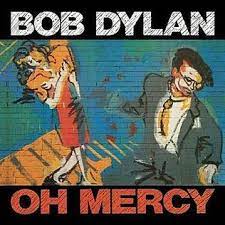
That’s about all I have on freshman year. The last thing is about the featured image for this post, which is the album cover for Bob Dylan’s Oh Mercy. I have written about The Pogues quite a bit, but the album I listened to most freshman year was Oh Mercy. After geology class had a break before lunch and would go back and semi-sleep to Oh Mercy. The quad was always empty at that time of day, and this was the best rest I would get. The album still makes me sleepy to this day, and features excellent production from the famed producer Daniel Lanois. So thank you Bob and Daniel.

Dedication: For Fred. And for George–I hope you are enjoying a little electrical banana up there in heaven.

to be continued…

The Adventures of the Thin Man and Andrea Available Now!

Well everyone, today is the day. My first novel, The Adventures of the Thin Man and Andrea is now available on Amazon and wherever books are sold.

This one took a while—written in fits and starts, in bars and hotel lobbies here in Kyoto—but it finally found its shape. More than anything, today I just want to thank all the readers of The Kyoto Kibbitzer, wherever you hail from; I’ve always thought of this as an ongoing conversation, and a lot of this book grew out of that exchange.

If you do pick it up, I hope you enjoy the ride—and if it lands for you, a quick review on Amazon would mean a great deal. Thank you, as always, for reading.

Matt

On the Pre-Game (aka A Response to Neil Strauss’ The Game)

Note: This piece overlaps my three essays on my week with Isobel series (I–III), though it approaches that week from a different direction. Where those pieces follow the arc, this one lingers on the moment before it resolves—the pre-game, as I’ve come to understand it. It is also a direct response to the book The Game, by Neil Strauss. In what follows I don’t intend to rebut Strauss so much as correct what I see as a fundamental weakness in the subculture he dissects. The reader will judge whether I succeed.

Epigraph

“No one else could play that tune, you know it was up to me.”

— Bob Dylan, Up to Me


Part I: Ippei

I’m at Zaza, the club on Kiyamachi in Kyoto. It’s around 11 PM and just getting going. Zaza is a late night place. It doesn’t peak until well past midnight, and at this hour it’s still stretching, still finding its rhythm.

I’m there by myself, drinking a White Russian.

A Japanese guy comes up to me. He’s about fifty-five. No preamble, no easing into it. He introduces himself—let’s call him Ippei—and within seconds it’s on.

“See those two ladies over by the window,” he says. “Wanna help me pick them up?”

I’m intrigued. Not because I’m especially interested in the outcome, but because I’m a curious guy and I want to see what he’s doing.

“Ok,” I say. “What’s the play?”

He doesn’t hesitate.

“You’re my old friend from California. I haven’t seen you in twenty years. I just ran into you by chance here. Take it from there.”

That’s it. That’s the entire setup. Handed to me fully formed.

I ask him, just to check, “Is this going to work?”

He smiles, completely unbothered.

“Yeah,” he says. “I do this every night. Had a threesome last night.”

Well alright then.

We walk over. He starts talking immediately, in Japanese, smooth, fast, confident. “This is Matt, my best friend from California. Would you believe I just found him here?”

I met him five minutes ago.

It doesn’t matter.

In no time the two women are completely engaged. Smiling, leaning in, laughing. The story has landed. The reality has been accepted. They’re not being approached. They’ve been included.

And I’m there, but I’m not really there. I’m not trying to win anything. I’m not trying to escalate. I’m watching. Taking it in. The nightlife anthropologist, just observing the field.

After a while I step out to the balcony to smoke.

Twenty minutes pass.

When I come back down, he’s still there. Still going strong. Still inside the same story.

That’s when it clicks.

He didn’t need me.

He needed the role I filled.

He needed a premise.


Part II: Neil Strauss

Neil Strauss’ The game

That night at Zaza stuck with me, not because of what happened, but because of what it revealed.

There is a whole body of writing—call it a subculture, call it a system—that attempts to explain and formalize moments like that. The most famous version of it is The Game, by Neil Strauss, which I’ve read twice.

I want to be clear about something before I go any further.

I’m not anti–Neil Strauss. In fact, I respect him. He’s an elite investigator of subcultures, and I love subcultures. He embedded himself in a world, learned its language, mapped its hierarchies, and reported it out with real precision. That’s not easy to do. It’s a serious piece of work.

What follows is not a dismissal of Strauss.

It’s a response to what the game represents.

Because once you move from observing a system to adopting it, something changes.

At its core, the game assumes that attraction can be engineered. That with the right language, the right sequence, the right calibrated signals, you can break down a woman’s resistance and get to the desired outcome, which is of course bed.

It’s a kind of a linguistic technology and NLP at its worst. A system designed to move someone from one state to another.

And for me, that’s where I part ways.

For me The Game is a massive turnoff, because it flattens everything and kills any chance at romance.

It scripts what should be alive. It reduces seduction to a manual and turns something unpredictable into something repeatable. And in doing so, it drains it of the very thing that makes it worth pursuing in the first place.

There’s no space for real connection. No space for the unexpected. No space for the moment where something happens that neither person could have predicted. No space for the kind of encounter that might actually change your life.

And beyond that, it produces a life that I don’t want.

The guys in The Game end up living together in this kind of shared house—Mystery, Strauss, Courtney Love—surrounded by other guys, talking about women, thinking about women, analyzing women. It’s a sausage fest. And it’s not cool.

The Gamers think they’re players. I prefer to think of them as incel-adjacent. They’ve optimized the system, but they’ve lost the thing itself. They’ve mastered the game and stepped outside of life.


Part III: On Action

I’ve had a handful of sexual partners that I’ve gone all the way with. The precise number is under an NDA. I’ve made out with more. But I haven’t been especially active, at least not in the way the game would define it.

What I have done is, flirt with, connect with, and have crushes on dozens of women.

And the truth is, I enjoy it.

I actively enjoy the pre-game.

I enjoy getting close. The moment before something becomes something else. The tension. The ambiguity. The recognition that something might be there, and neither of you has named it yet.

The thrill of newness and the possibility of a spark. If it burns, great. If it flickers, that’s also good. For most men, the pre-game is a means to an end. For me, it’s the end.

And that’s the difference.


This doesn’t mean I’m not interested in action. I am. Very much so. In fact, I’m something of an action junkie. But I’m a highly specific kind of action junkie. Like Wittgenstein, who was said to have manufactured his own oxygen, I manufacture my own action.

I don’t chase it blindly. I don’t optimize for it. I don’t try to force it into existence through systems or scripts. I generate it. Selectively. Intentionally. And in moments where it actually means something.


Part III: Luna

I’m at Umineko with a friend—call him Mr. Editor. It’s early, maybe six in the evening. We’re mid-bar, having a beer, when I notice a woman sitting off to the side.

She’s stunning. And I HAVE to go talk to her. Not because I expect anything to happen. Not because I’ve calculated the odds. But because the moment demands it.

I tell Mr. Editor what I’m about to do. He nods. “Go for it,” he says. “I’ll watch.” I walk over and ask her name. She smiles. “Call me Luna.”

We speak in Japanese. The conversation flows. I bring everything I have to the moment—attention, presence, curiosity—and it lands. There’s a spark. Not forced. Not engineered. Just there.

We talk for a while. Long enough for the room to shift slightly around us. Eventually I ask for her Instagram. She gives it to me. I walk back to the bar and sit down next to Mr. Editor. I’m on Cloud 9. The next day, in the late afternoon, carefully timed, I send her a message but she doesn’t reply.

Failure? Not for the pre-gamer. Because the pre-gamer already got what he came for. The moment. The spark. The approach. The brief, electric possibility that something might happen. That was the action. That was the point. For the Strauss guys, the night ends when the text goes unanswered. For me, the night ended at the bar.


Up to this point, the pre-game is contained. Safe, even. A space where things can happen or not happen without consequence.

But sometimes it doesn’t stay that way.


Isobel Revisited:

I have written about my week with Isobel extensively elsewhere, however part of that story is relevant to what we are discussing here. I met her at the Faculty of Astrological Studies, held at Exter College, Oxford, in late August 2018. We spent the week together and I fell in love. But I didn’t sleep with her. My choice. What follows is a light re-write from my essay “On My Week with Isobel: Part II”:

Wednesday.

I wake up early and we have breakfast together in the dining hall. By this point, people are noticing us. Comments here and there, snickers, sideways smiles.

Morning and lunch blur into one long conversation—the garden, the bench, a little grass, nothing hidden. We’re finishing each other’s thoughts. I’m in deeper than I’ve ever been.

We don’t attend much of anything.

In the afternoon break she goes to change. I go back to my room and put on The Mendoza Line with the full weight of obsession. She comes back after and tells me, without shame, that she had pleasured herself during the break. Just fucking states it.

This is a complication.

That night she changes again. A red dress. Short, but not careless. Stunning. We sit at dinner whispering, touching lightly, laughing against each other. Everyone knows by now.

After dinner there’s wine again, talking with the tutors, the long courtyard. I meet Darby Costello in person for the first time. She’s fully alive, drinking wine, holding the room effortlessly. I’m so happy she’s my astrologer. But I’m elsewhere.

We stay late. Clear the courtyard. Around two in the morning we part. Cheeks touched. No bedroom. No act. No close. Back in my room, lights low, Mendoza Line still in my ears, I lie on the narrow bed and I know exactly where I am standing.

I will keep going. I will see where this leads. But I will not sleep with her. I can’t.

It’s not that I don’t want to. I do. Totally and much more. But I can see it. The complications. For her, for me. The chain of events that would follow. I’m old enough to see it coming. And I know, standing there in the courtyard, with the last of the wine and a cigarette burning down, that it’s on me.

I have to be the one to say no. That’s the shape. That’s the decision.

=====

Up to this point, the pre-game has been something I could enter and exit at will. A space I could step into, generate action, feel the spark, and leave intact.

With Ippei, the action was scripted. With Strauss, it was systematized. With Luna, it was self-contained.

But there’s another version of the pre-game, and it’s the one that matters most. The one where the moment doesn’t stay light. The one where it deepens. Where the spark doesn’t just flicker—it starts to take shape. And at that point, something shifts. Because now it’s not just about whether something will happen. It’s about whether it should.

This is where the line from Dylan starts to carry real weight. No one else could play that tune. There’s no system here. No script. No borrowed language. No Ippei handing you a premise. There is only the moment as it actually exists, and your ability to see it clearly.

And then the second part. It was up to me. Not to escalate. Not to optimize. But to decide. The game ends when something happens. The pre-game ends when you decide it should.

Dedication

For pre-gamers everywhere. May you get a little action tonight baby.

Note: If you liked this piece, you may also like the following pieces that also take up the themes of romance and seduction.

On Coming Through

New Note: This essay sits roughly in the middle of my writing life online. By the time it was written I had already spent several years experimenting with ideas and forms in earlier blogs—first Classical Sympathies, which was more academic and literary in tone, and later Jungian Intimations, which tried to bring Jungian psychology, symbolism, and dream material into a more personal register. Both projects were attempts to understand the terrain of the mind and the pressures placed on a thinking person trying to live inside modern institutions.

“On Coming Through” belongs to that same line of inquiry, but it also marks a turning point. At the time I felt strongly that one phase of life—what might loosely be called early adulthood—was coming to a close. The essay reflects an effort to make sense of that closing: the roles I had played, the ambitions that had driven me, and the ways in which those ambitions both clarified and constrained the direction of my life.

The language of Jung, Hollis, and Rudhyar appears throughout the piece because those writers were the tools I was using at the time to think about cycles of development, identity, and what Jung famously called individuation. Looking back now, some of the terminology feels a little grand, but the underlying questions remain ones I still care about: how a person develops a provisional identity in youth, how that identity eventually exhausts itself, and how one finds the courage to begin again.

In hindsight this essay also foreshadows something that had not yet fully taken shape for me: the idea that writing itself might become the primary vehicle through which I would explore those questions. The project I mention near the end—“Where I’m Coming From: A Straight Answer to the Smart Kids”—was never completed in the form imagined here. But in another sense it never really went away either. Many of the later essays I would write over the following decade, including those that eventually appeared on The Kyoto Kibbitzer, are variations on that same impulse: to record honestly what it feels like to move through the world as a reflective person trying to make sense of culture, relationships, and the shifting terrain of the self.

For that reason I have left the essay largely as it was originally written. It captures a particular moment in the middle of the journey—after the early experiments of Classical Sympathies and Jungian Intimations, but before the more narrative, outward-facing voice that would later emerge. Seen from that vantage point, it reads less like a conclusion and more like a bridge between phases of thought and writing.

Original Note: This little piece is a lightly structured meditation on aspects of the past and clarification of intentions concerning the future.  It appends my previous statement of intent from four years ago (posted below).  Although there is some continuity of concern, specifically around the nature of the demands that playing a role or roles in society places on the individual actor, and some continuity of theory through the continued influence of Peter Berger and Thomas Luckmann, hopefully there is some new material and new thinking as well.  I should acknowledge a debt to several writers whom I have read intensively over the past four years: most especially this piece bears the fingerprints of Carl Jung, James Hollis, and Dane Rudhyar, and many of the ideas here would not exist, or at least not be as fully articulated, without their assistance.  I should also acknowledge that I have been experimenting with different means of writing, different approaches to producing a text, and to the extent that anything herein bears traces of the spirit I can claim no credit.

Epigraph:

“I wanna dedicate this to someone out there watching tonight, I know she knows who she is.”

Bob Dylan, spoken introduction to “Oh Sister.”  From the bootleg record “Songs for Patty Valentine.”

Today I feel as if I stand at the edge of a new world.  The journey through early adulthood has drawn itself to a close, in stages, over the past several years, and I am alive to the fact that a new journey must now be set out upon.  In order to face any new journey properly, with intelligence and intention, we are called upon first to recognize the altered nature of the landscape we will make our way across in the new phase.

The longer I live, the more I understand the words of Ecclesiastes, “to every thing there is a season, and a time to every purpose under the heavens.”  Each era of our lives, each season, sometime even each week or set of weeks, seems to take on a certain coloring and certain characteristics that differentiate it from what came before, just as each zone of time seems to require different things of us.  The strength of our intention and will, as well as the quality and effectiveness of our reactions and decision making, are forever put to the test in small ways, and large ones, and we are forced to define, if only to ourselves, the nature of our relationship to our surroundings, our community, our dharma, our fate.

When we are young, time seems to stretch on almost indefinitely.  The summer of my eighth year, for example, was experienced as a vast expanse of almost undifferentiated time; two or three weeks would pass in a barely conscious haze of biking around my parent’s property, hiking and collecting stones from quarries in the area, or sitting on the roof in the sun, a child in the flow of nature, without “problems” of his own.  Looking back on such a period today, it indeed has a coloring of a kind, and this coloring is so loaded with low-grade nostalgia and barely remembered circumstances that my memories exist not so much in the form of events, rather in the form of a “feel.”  I have a sense of what it felt like to be eight, a sense of the patterns into which life energy fell or was collected, pooled, also a sense of my budding interests, which would in time round into what we are pleased to call “personality.”  There was nothing specific that I was “up to,” and I never had the need to think more than a day or so in advance.  The expression of my energy was essentially aligned with the desires of my heart as much as at that age we can know these at all–or perhaps that is just the point, in a state of primitive unknowingness we are naturally and effortlessly aligned with the desires of our heart, and only when we begin to have to analyze or ask after these do we begin to lose connection with them.

As we grow, the process of socialization begins to crowd in on us, and no person, no personality, is wholly free from the pressures of socialization, of collective expectation, of the reactive categorizations and projections of the always slightly behind-the-curve zeitgeist.  Depending on our own type and manner of apprehending the world as it appears to us, we react and position ourselves in some relation to, at some angle toward, the categories and projections that surround us.  Indeed, both the conformist and the rebel define themselves in relation to and reaction to “the system,” and in many ways their respective positioning is far more similar than otherwise.  Dane Rudyhar makes this point clearly, as do, in more elliptical and elaborated terms, Berger and Luckmann.  Even those (myself for example) who purport or imagine to be able to live outside of collective expectations, to create their own life and write their own script, yet define themselves primarily through the categories that the zeitgeist makes available–it takes work, huge, lasting work, to even begin to transcend one’s era and circumstance in even the smallest part.

The first part of life is necessarily a struggle to find one’s footing in the swim of society, to demonstrate value, usefulness, and the ability to check whichever boxes one is asked to check.  Occasionally, we meet someone who in significant ways seems to have wrenched herself free of some of this static at an earlier age, but even such persons habitually define themselves in terms of existing categories and remain to some extent still a prisoner of them.  For most of us, the child turned young adult, buffeted by external events and demands, adjusts herself over a period of years by applying her core characteristics, tendencies, and abilities to the game as it seems to present itself, and in the process slowly relinquishes immediate touch with that inner voice that provided direction to the child of nature who knew instinctively what was and wasn’t good for her, what was and wasn’t desirable.

At the same time, the goals that one identifies for oneself in youth are not to be lightly dismissed.  They do often provide a symbol sufficient, to borrow Jung’s phrase, to drive libido up a gradient steeper than nature; one learns to accomplish “work,” and to appreciate both the material and ego-related satisfactions that comes from this accomplishment.  Jung says as much when he tells us that it is essentially heathy and necessary when a young person becomes “entangled with fate” which “(involves) him in life’s necessities and the consequent sacrifices and efforts through which his character is developed and his experience matured.”  This dance with fate leads us into a variety of positions and stances, some of which we may carry out with grace and ease, others of which require contortions which we preform without a clear sense of the relationship between the presented or required form and our ability to functionally engage with that form.

Under the pressure to make something of ourselves, to build a career, a business, an image, a body of work, to make more of time by trying to subdue it, we may come to feel that we have found the game, we are on the fast track, we are properly situated under the stage lights, playing the part as it is supposed to be played.  A little light, a little attention, these things classically and nearly inevitably lead to a degree of what Jung calls “inflation,” the expansion of ego-consciousness and the over-identification with the product of one’s work in the world as the summum bonum.  The small still voice of the spirit recedes, or expresses itself through fantasy and other forms of idle ideational free association–fantasies of setting out to sea, of starting over with a new name in an unknown land, of being orphaned and having to fend for oneself, intriguing as these dreams may be they most often serve to cement through counterpoint the existence we actually live out and the style, or lack thereof, in which we do so.

My favorite singer, Matthew Houck from Phosphorescent has a song called Los Angeles where he describes the deeply ambivalent relationship one can have toward one’s accomplishments in the world.  He sings:

The road is alive/ And everybody’s all here/ I’m closing my eyes/ Till the colours appear/ Oh me oh my/ Ain’t it funny up here/ To stand in the light/ Said I ain’t come to Los Angeles just to die

They told me my eyes/ Would never be clearer/ To hold on to mine/ Make good money out here/ They told me those lies/ Just a grinning from ear to ear/ They said ‘here is our offer, ain’t it fine’

Are you getting a lot of attention now/ Are you bleeding in every direction now/ Are they covering you up with affection now/ Are they giving you a lot of attention now…Said I ain’t came here to Los Angeles, baby, just to die

I know, in exquisite and painful detail, exactly what Houck means (or I know exactly what he means to me, which is all the audience can ever really claim to know).  He means that when you bring your interior goods, your art, your vision, your beauty and light, out into the public eye and when some part of that is seen as having value or serving the purposes of established interests, an offer is made whereby your specific value, your original genius and spark, is rewarded at the same time as it is strangled, rewarded through exposure and compensation, and strangled as established interests nearly always (but perhaps not absolutely always) want and need to tie you to a set of projections and definitions that have already taken external form and are recognized as valid, and therefore commodifiable, categories.

At the same time, the singer in this equation is not without culpability in the narrowing of his own genius.  He knows that the kind of attention he is getting is dangerous for him, that it threatens to bring out his worst tendencies, his tendency toward excess, and to distance him from the source of his own art, but he is getting a little addicted to the attention, to the light.  The paradox, or trap, turns out to be that it is very, very difficult for a younger person in the first flush of ego-development to stand in the stage lights for too long without beginning to mistake this external light for the light inside.  Although the singer is trapped, he recognizes the trap, recognizes that he is dying out there, and the song remains hopeful, hopeful that the singer will be able to relocate the reasons for coming to Los Angeles in the first place.  After all, if he didn’t come all the way to Los Angles just to die, he came for some other purpose.

However, what the singer maybe does not recognize is that sometimes a death is necessary in order for life to begin anew.  Most ancient cultures, perhaps all, practiced sacrifice, and the idea at the heart of sacrifice is precisely this–new life follows inexorably from the exhaustion of the old.  The ancients, being literal minded and without the ability to metaphorize as fully as humanity has since learned to, could only see this sacrifice as taking physical form–thus human and animal sacrifice entailed actual bloodletting.  The story of Issac in the Bible, as well as the story of Job, are in fact kind of metaphors for a psychological hinge point in the development of consciousness among the people of the ancient Eastern Mediterranean, a development which eventually led, among other things, to the dwindling of the use of such literal forms of religious sacrifice, but the core idea remains in our present culture in all sorts of places.  (Indeed, much of the Old Testament deals with the development of what we call “consciousness” and the alterations in the character of the Old Testament god mirror alterations in the fundamental psychological character and mentality of the swim of generations over a period of several hundred or a thousand years leading up to to the birth of Christ.)  That is kind of another story, so let us just say that all nature seems to be structured around cyclicality, not so much linearity.  From the ashes of the old comes the living spark of the new.  

The above outline of the first flush of adulthood and its inevitable compromises is not original to me, and those who have looked honestly and hard at the development of the human life have set out this process much more precisely.  James Hollis puts it this way: “What I have called the middle passage arises from the collision of the provisional personality–that group of behaviors, attitudes toward self and other, and reflexive responses which the child is obliged to assemble and manage its relationship with an all powerful environment–with the insurgency of the natural, instinctual Self (…) The passage is experienced as an enervation of the former way of seeing oneself or of one’s functioning in the world (…) The exhaustion of the old is the occasion for the advent of the new, though we are seldom pleased to suffer that death which is necessary for older values to be supplanted.  In fact, one may wander, alone and afraid, for a very long time in the great In-Between before a new psychic image will arise to direct libido into the required development channel.”  Enervation means weakening, loss of vigor, and what Hollis points to in his description of mid-life is a kind of inflection point that I think actually occurs periodically through life, a juncture where one is obliged to examine that agglomeration of the “provisional personality” and the diminishing returns it may be receiving.  Once again, constructing an effective set of behaviors and approaches to the work of life turns out not to be a fully linear process, rather it seems to be cyclical and to necessitate periods of emptiness and exhaustion as well as periods of zenith and culmination.

The last three years of my own life have been but stages toward the exhaustion of this provisional personality.  A character from the television show “The Wire,” explaining to another character that when he says he is ready he means it, says something to the effect of: “you have no idea what I had to do to get to where I am today.”  To the extent that I have embodied and carried out my statement of intent from 2010, I can with some justification say the same.  Being in a position to say this is not necessarily the most pleasant place to be, and I cannot really recommend my process and progress through the proverbial belly of the whale to anyone, certainly not to anyone with a faint heart.  However, along the way I have been blessed, there is no better word, to have met extraordinary people who have given me essential clues as to from where and in which direction my second journey would launch.  I have also been fortunate beyond all measure and worthiness to have received several “big dreams,” and if this indeed characteristic of the stellium in my astrological ninth house (Rudhyar writes that a ninth house person will be drawn to “whatever expands a person’s field of activity or the scope of his mind–long journeys, close contacts with other cultures and with foreigners in general, and (…) ‘great dreams'”) I will take it.  Finally, through periods of intense work and strain which have combined, sometimes combustibly and unpredictably with both great people and great dreams, my consciousness has pulsed or rippled open a fraction, in the process integrating to some extent my inferior functions, first feeling, and then, more challengingly, sensing.

Coming to terms with one’s inferior functions is an essential part of coming to terms with one’s limitations, as these are much the same thing.  However, in some mysterious way that I can barely begin to name, I feel as if I am carrying, and trying to pay off, a larger karmic debt of some kind.  To be honest, I don’t even know how to begin to write about this.  Two years ago, in the autumn, I consulted a humanistic astrologer based in the United Kingdom.  Very well known in her field, she turned out, over Skype, to be deeply learned as well as deeply open and generous.  Her reading was strong, interesting in every respect, but still it was a reading–she has a professional method which she applied with ease and confidence.  Except in one respect–twice during the reading she stumbled, paused, lot her train of thought and said that she couldn’t put her finger on something.  The first time was when she said that I was on the verge of leaving behind an ancestral inheritance 500 years in the making.  She didn’t know what this was, but said it was in my bloodline.  Thirty minutes later or so she cycled back to it, saying she couldn’t make it out but that I was poised to see something or break out of a way of reacting or thinking that had held back my ancestors for generations.  Her reading took place a few months after my inheritance dream, which occurred in the summer of 2011.  Here is the dream:

My father is due to receive an inheritance, and his acceptance of it somehow enables others (his extended family) to also share in the inheritance.  My mother is telling me this in a darkened bedroom with my father outside the door.  She doesn’t want him to hear that she is telling me this, and keeps lowering her voice.  I get the impression that my father’s portion of the inheritance is relatively small, but somehow his taking of it is key to everyone’s access.  While at first I think that it is only a medium sized inheritance, suddenly the television comes on and begins to give more backstory.  It turns out, according to the program, that my father is attached, in a roundabout way, to one of the largest fortunes in the world, and one that is intimately connected to shadowy political power in some unnamed European countries (perhaps Germany, Austria, but spilling westward as well).  The program is a fairly typical expose of networks and hidden hands behind the throne, but nonetheless absolutely riveting.  There is a single male figure at the center of this network, shown briefly in the dream standing behind a spokesman who is speaking into a microphone.  This takes place on a lawn in front of a large and well-to-do house, but both the male figure and the house appear relatively normal and not obviously terrifying or malevolent.  My father’s reluctance to take up his inheritance thus represents a reluctance to involve himself in the political power networks, but the program makes clear through implication that failure to take up the inheritance poses a danger both to himself, and perhaps to my mother and myself.  Much or all of the action in the dream takes place indirectly–through implication or (literally) through a screen.

Humankind being a pattern seeking animal, of course I immediately connected the two data points with a third, the moment in which Ruth Van Reken, the author of “Third Culture Kids” and basically co-founder of this field of study, told me in a hotel lounge in Singapore in March of that same year that god had a mission for me, and a fourth, a quiet but persistent inner voice telling me I had a gift that was not being fully given to others, a gift I was holding inside, that I had another gear, that perhaps I hadn’t come to Los Angeles just to die.

What, in hindsight, I was dealing with and trying to make sense of was in fact Hollis’ insurgent self, a self which was seeking a new psychic image, a new core myth around which a fresh tapestry of charged energy could be woven.  I was living Jung’s individuation, or it was living through me.  This quest was apparent as the subtext to the inheritance dream, and many others of that period.  After writing down the inheritance dream I commented as follows:

There is a lot of context for the dream, best summarized as a fluid and somewhat wild/ chaotic/ noisy social night scene.  This kind of backdrop is quite common in my dreams, so much so I am inclined to refer to my ‘long night dreams’.  These usually take place over several ‘hours’ and spill late into the night or early morning.  They generally build through escalating events/ imagery and crystalize in a single memorable and stirring image.  The dream about an inheritance is in this larger category, but the specific incident in question feels broken out of its immediate context and stands alone in the dreamspace.

Another memorable long night dream from a slightly earlier period culminated in a scene where I came upon a group of revelers around a bonfire, deep in the forest, swinging in hammocks or dancing unrestrainedly some hours after midnight–maybe two in the morning.  Although I was not, knew I was not, of them, I longed to join in their joyous communal frenzy.  This image of a revelry around a bonfire possessed an energetic charge that animated all that came into contact with it, in other words this image, the image of the inheritance, and other images buried late in these long night dreams, were presenting themselves as possible material for my personal myth.  I can imagine a life founded on the idea of an enormous inheritance or a communal dance just as the grail image has, as Robert Johnson convincingly argues, served as the founding myth for western masculinity for a thousand years.

Standing back a little, and thinking about how it is that I have the courage to face a new journey, certain steps, some fairly conventional, others rather more esoteric and specific, have been necessary for me to face the future with confidence and with nerve, to lay the past to rest, to open a new channel to life.  Life, sounds, smells, textures, colors, spill into me and swirl around as never before, and a multi-year process has certainly reached exhaustion, and cleared the way for a realized rebirth.  Rudhyar writes revealingly about the ending of a cycle: “Any person who has had to improvise a speech after a dinner party knows how difficult it is to bring his talk to a convincing and significant end.  When coming to the close of their speech many speakers fumble, repeat themselves, go from climax to anticlimax, and perhaps let their words die out wearily and inconclusively (…) The composer of music, the dramatist, and the novelist often find the same difficulty when confronted with the obvious necessity of bringing their works to a conclusion.”  He goes on: “the natural end of everything is exhaustion–one gets exhausted and so do the people around you.  The speech or the individual himself, dies rather meaninglessly of old age.  Unless the self, the spiritual being, takes control and, binding up all the loose strings of the great lifelong effort, gathers the most essential elements into an impressive and revealing conclusion, there is danger that the great moment will become obscured by the settling dust of the struggle.”

Here, Rudhyar seems to be talking about the end of life, but a little later it becomes clear that he is actually talking about all acts, all events: “The art of bringing every experience to a creative end is the greatest of all arts (…) What this art demands first of all is the courage to repudiate the ‘ghosts’ of the past.  It is this repudiation that is also called severance (…) One must have the courage to dismiss the things unsaid, the gestures unloved, the love unexperienced, and to make a compelling end on the basis of what has been done.”  In other words, a graceful ending acknowledges that there is a great deal more that could have been done, and nonetheless strives to encapsulate and put into perspective that which was done.

With exhaustion of the old comes, as we have seen, the first breath of the new.  In what areas, to what purpose, and up which gradient ought I to apply my newfound energies and intent?  I suspect that the paying off of whatever karmic debt I am holding is a necessary feature of taking up whatever inheritance is to be assumed.  Once again, Rudhyar gives us a hint when he writes of crossing the threshold of rebirth: if the individual “has absorbed and assimilated the darkness represented by the ‘Guardian of the Threshold’–the memories and complexes of the personal and collective Unconscious–then the Tone of the new cycle can ring out clearly.  The individual, conscious of his true Identity, is able to use for his purpose of destiny whatever conditions have been inherited from his past and the past of his race, from his parents and from humanity” (italics in the original).

I love this phrase, “the Tone of the new cycle,” capitalized Tone, (by which we could also understand to mean “style”).  If indeed I am saddled with some sort of baggage from centuries past, an idea which I do not advance lightly in the least, then clearly it is my duty as a future directed individual who simultaneously “believes” in cyclicality as a basic principle of human and natural operations, to transform the elements of this baggage, this ragged tune, into a new tone which can ring clear to anyone who might benefit in some way from hearing it.  My listeners, my audience, are those smart kids who, blessed and cursed with preciosity, struggle to make sense of the terrain of their own mind which, in the immortal words of Gerard Manly Hopkins has mountains, O the mind, mind has mountains.

In order to reach authentically another I need then to perform in my own style.  Arriving at an original style is the first great challenge for any artist; in the arts formally this generally entails assimilating the style of others with one’s own insurgent urge toward expression such that the resulting product is recognizably your own and resonates with your inner sense of what you are about.  The effort to live one’s life with style, to make of one’s life a work of art, is harder still, for instead of working toward a finished product, a song, a novel, poem, or canvas, we are instead seeking to infuse each moment, each encounter, each event pocket, with creative intent and energy.  This effort requires attention as well as imagination, and here attention and imagination exist in a delicate and precise balance. Without attention the mind quickly loses itself in projection, in maya, the mist of illusion and fantasy.  However, without imagination attention may be overly focussed in the immediately apparent and explicable.  Hollis quotes Gaston Bachelard: “Psychically, we are created by our reverie–created and limited by our reverie–for it is the reverie which delineates the furthest limits of our mind.”  The courage to imagine, to wander, and to bring back to and integrate into diurnal consciousness the imprints and impressions of our furthest wanderings, this is the courage we may need in order to live at the highest levels of creativity.

This essay is beginning to feel the pressure to make a compelling end.  The other evening, I ran into an acquaintance from an earlier incarnation and we started talking event theory.  He summarized his own view of events in five words: “an event should be eventful.”  The eventfulness of an event depends on both the arrangement and combination of space, time and energy to create an event arc with pockets of luminosity and on the willingness of the participant to experience eventfulness, to happen.  Oddly, happenings are neither entirely willed and created nor entirely received.  Instead, happenings and events transpire in the liminal band between will and fate, writer and muse, figure and ground.  Phosphorescent again: “See I was the wounded master/ oh then I was the slave/ my hands and my mouth, aw honey/ they would not behave/ See, I was the holy writer/ then I was the page/ I was the bleeding actor/ then I was the stage.”  Who are we in our journey through life, around, and back again?  Are we the maker, or the made?  The master, or the slave?  The writer, or the page?  The actor, or the stage?  The happening, or the happened to?  Are we in charge of our own destiny or awash and afloat in a current so much stronger than we are?  Are we all of these things simultaneously?  What is my mission on this new journey I am called to alight upon?  What is the mission of my young friends, a generation younger than I, who face the difficult transition to adulthood in the keening wind of the 21st century?

My deepest wish is simply this, that today’s smart kids may navigate the delicate relationship between their mind and their life during the first half of life in a more graceful and integrated manner than have I, that they receive, if only from a handful of people, compassionate help and understanding to this end, and that the experiences visited upon me may in some small way assist this integration, if necessary as a sort of sacrifice.  Perhaps in the end this makes me too an “established interest.”  However, I hope I have no specific requirements any more than I have specific requirements for myself, no program, no method, no dogma other than the welling hope that when they reach their own Los Angeles they are able to negotiate their own terms upon being asked to stand for a while in the light.

On the last page of Italo Calvino’s masterpiece Invisible Cities, the Great Khan and Marco Polo are concluding their conversation about Polo’s travels across the globe.

Already the Great Khan was leafing through his atlas, over the maps of the cities that menace in nightmares and maledictions: Enoch, Babylon, Yahooland, Butua, Brave New World.

He said: “It is all useless, if the last landing place can only be the infernal city, and it is there that, in ever-narrowing circles, the current is drawing us.”

And Polo said: “The inferno of the living is not something that will be; if there is one, it is what is already here, the inferno where we live every day, that we form by being together.  There are two ways to escape suffering it.  The first is easy for many: accept the inferno and become such a part of it that you can no longer see it.  The second is risky and demands constant vigilance and apprehension: seek and learn to recognize who and what, in the midst of the inferno, are not inferno, then make them endure, give them space.”

The philosopher Ludwig Wittgenstein, who worked at Cambridge, once advised a colleague to leave the university as there was “no oxygen” for him there.  Upon being asked why then he, Wittgenstein, stayed, the philosopher is said to have replied: “It doesn’t matter…I manufacture my own oxygen.”  While I am deeply grateful to those handful of people who have gone out of their way to give me space, in some ways I feel as if I have to too great a degree, had to manufacture my own oxygen.  Perhaps the atmosphere of the coming journey will consist of some other arrangement of elements such that oxygen, or whatever allows one to breath there, is made more freely available.  In the meantime, I intend to give the only gift that I have to whichever smart kids might take something away from it.  This gift is simply the truthful and open record of what it has been like for one relatively smart kid to navigate life, relationships, and his own psychology and mentality–a primer on the basic aspects of living the first half of life as a semi-ambitious introverted intuitive living between centuries and shuttling between east and west.

Before any new journey can be set out upon, passage must be secured–I know this because I have dreamt it.  Possessing no riches of my own, the price of the new journey will have to be paid by the brokering of an inscription, a text, of the old one.  This text will necessarily be partial, incomplete, subject to criticism for what it redacts, a map that barely begins to reflect the territory as was the dream text itself, as are all dream texts.  This has to be accepted at the outset; after all even the holy writer is perpetually bound by the constraints of form.  And even as we are writing the record of our coming through that earlier landscape, the greater work of embodying the living word such that the opulent and decorative higher floors of our co-constructed mansion are made manifest through our participation in reverie and revelry, of ascending the far-flung mountains of a new Aeon, will already have begun.

Dedication:

For all the smart kids.

Works Cited/ Referenced:

Peter Berger and Thomas Luckmann, The Social Construction of Reality.

Italo Calvino, Invisible Cities.

Ecclesiastes.

Gerard Manly Hopkins, “Mind Has Mountains (No Worst, There is None).”

James Hollis, Creating a Life: Finding Your Individual Path.

Julian Jaynes, The Origins of Consciousness in the Bicameral Mind.

Robert Johnson, He.

Carl Jung, On the Nature of the Psyche.

Van Morrison, “No Guru No Method, No Teacher.”

Phosphorescent, “Los Angeles,” from Here’s to Taking it Easy.

Phosphorescent, “Terror in the Canyons,” from Muchacho.

Dane Rudhyar, The Astrological Houses.

Andrei Tarkovsky, Stalker.

On The Dubious Anna Delvey

Note: This essay reflects on the curious cultural figure of Anna Delvey, whose rise and fall in the New York art and social scene became one of the stranger morality plays of the late 2010s. Delvey—born Anna Sorokin in Russia—gained notoriety for presenting herself as a wealthy European heiress while attempting to secure loans and social capital for an ambitious but largely imaginary cultural venture known as the Anna Delvey Foundation.

The events described here draw on widely reported elements of the case: Delvey’s years moving through luxury hotels in Manhattan, her efforts to obtain financing for a private art and social club, the unraveling of her financial claims, and the now-famous trip to Dubai in which a friend—later a magazine writer documenting the experience—was left responsible for an enormous hotel bill after promised funds failed to appear.

The piece does not attempt investigative reporting. Instead, it approaches the story in a spirit of cultural anthropology. Cities like New York have always attracted individuals engaged in various forms of self-invention. The line between ambition, performance, exaggeration, and outright fraud can sometimes appear only after events have run their course. Delvey’s story is compelling partly because it dramatizes this thin boundary in unusually vivid form.

If the tone here sometimes drifts toward sympathy rather than condemnation, that is intentional. Many urban cultural scenes—especially art worlds—operate on the energy of strivers who are, in one way or another, attempting to become something slightly larger than their present circumstances allow. Most of them eventually succeed or quietly disappear. A very small number, like Delvey, collapse in public.

Their stories reveal something not only about themselves, but about the environments that briefly believed in them.

Epigraph

“For all the crazy people who can never get it right.”
— Drugstore


I. The Entrance

There is a certain kind of person who arrives in a city not merely to live there but to declare themselves into existence. Cities like New York attract them the way bright lights attract moths. They arrive with luggage, ideas, clothes that signal belonging, and an almost reckless confidence that the future will eventually arrange itself around their intentions.

Anna Delvey was one of these people.

When she appeared in the New York art scene, she seemed to possess the basic ingredients required for entry into that peculiar ecosystem: style, confidence, and an air of European mystery. She wore expensive-looking dresses and shoes. She wore aa lot of make up and had her hair done at expensive salons. She seemed for a while to ooze money. She spoke casually about ambitious cultural projects. She moved through hotels and restaurants as if she had always belonged to that world. In New York, that is often enough.

The city runs on confidence performances. Every ambitious young person who arrives there is, in some sense, performing the life they intend to have. The art world especially is full of people who are not yet what they claim to be but are working very hard to become it.

Delvey fit into that theater perfectly.


II. The Vision

The striking thing about Delvey was that she didn’t simply want to attend the art scene. She wanted to build something inside it. Her idea was the Anna Delvey Foundation: a kind of private cultural club and exhibition space in downtown Manhattan. It would combine gallery spaces, social rooms, events, artists, patrons, and the atmosphere of a private cultural salon. A place where the city’s creative and wealthy classes might gather.

The plan was grand. But it also had a strange plausibility. New York is full of institutions that began with the ambition of a single person who simply decided that something should exist and then spent years convincing others to believe in it.

Delvey spoke about the project with total conviction. She behaved like someone who already possessed the financial backing required to make such a thing happen. And because she behaved that way, many people assumed the money must exist somewhere.

This is one of the basic mechanics of social confidence. If someone carries themselves like a person whose financial arrangements have already been verified by someone else, most people will not ask too many questions.


III. Hotels

Hotels played a central role in the Delvey story.

Luxury hotels are perfect environments for people living inside ambitious performances. They operate on the assumption that their guests are legitimate. The bill will eventually be settled. The credit line exists somewhere. The guest’s presence itself is treated as evidence of solvency.

Delvey floated through some of New York’s most expensive hotels as if she were simply another wealthy European visitor temporarily residing there while arranging various cultural affairs. The lobbies, the restaurants, the rooms—all of it provided a stage set that reinforced the story she was telling.

Hotels also create a particular social atmosphere. Everyone is temporarily suspended between identities. People are traveling, negotiating, arriving, leaving. It is a place where someone can exist slightly outside the ordinary structures of verification.

For a while, the performance worked.


IV. The Father

Like many figures who construct elaborate new identities, Delvey carried with her a somewhat murky origin story.

She spoke of family wealth. Of connections. Of a background that seemed to hover somewhere between Russia and Germany, between modest beginnings and more glamorous narratives.

Her real childhood was more ambiguous. Her father had worked as a truck driver and later operated a heating and cooling business. It was a respectable, ordinary life. But it did not contain the European aristocratic wealth that sometimes appeared in Delvey’s stories.

This kind of ambiguity is not unusual among people attempting radical self-invention. The past becomes something flexible, something that can be rearranged slightly in order to support the person one intends to become.

In cities like New York, such reinvention is practically a tradition.


V. Dubai

The most extraordinary episode in the Delvey saga took place far from Manhattan, on a trip to Dubai. Delvey traveled there with a friend—a magazine writer who was documenting the glamorous world that Delvey seemed to inhabit. The trip was meant to be luxurious: private villas, elaborate dinners, the kind of extravagant travel that confirms a person’s social status.

For a few days everything unfolded according to the script. And then the bill arrived. The charges for the trip reached roughly $60,000. Delvey’s payment arrangements suddenly failed. The promised wire transfers did not appear. The hotel demanded settlement.

And the friend—the magazine writer who had been invited along for the ride—found herself responsible for the enormous bill. So Delvey left her there. Super bad business Anna baby.

It was a moment that perfectly captured the strange mechanics of confidence artistry. The performance works right up until the moment when reality insists on payment.

Someone, eventually, must pay the bill.


VI. Collapse

Once the financial machinery began to fail, the unraveling accelerated. Banks wanted documentation. Hotels wanted payment. Institutions that had briefly entertained the idea of supporting Delvey’s foundation began to ask more detailed questions about the supposed trust fund that would finance it.

The answers did not exist. The performance collapsed. Delvey was eventually arrested, tried, and convicted of fraud.


VII. The Strange Sympathy

And yet the Delvey story produced a strangely sympathetic public response. Perhaps it was because she had not simply been extracting money for luxury purchases. She had been trying, in her own improbable way, to create something. A cultural institution. A social space. A downtown hub for art and ambition.

The plan was impossible, but the ambition was recognizable. Many people—especially those drawn to cities like New York—understand the impulse to reinvent oneself, to construct a future through sheer force of belief. Delvey simply pushed that impulse far beyond the point where the arithmetic could sustain it.


VIII. Coda

In the end, the most interesting thing about Anna Delvey may not be that she fooled people. New York has always been full of people attempting improbable social performances. The interesting thing is that, for a moment, she came very close to building the life she imagined. And perhaps that is why stories like hers continue to fascinate us. They remind us that the line between visionary and impostor is often visible only in hindsight.

Dedication: For Anna baby (you’re hot BTW) and all the beautiful strivers out there. May your world-curated art spaces someday come true.