On My Early Years in the IB, 2008–2010

Note: This piece belongs to a loose series of reflections on my years working with the International Baccalaureate at Ritsumeikan Uji.

Over the years I have written about various moments and characters from that period — the improbable dinner conversations, the bureaucratic skirmishes, the strange coalition of personalities that somehow managed to build something durable inside a large Japanese school system. Pieces such as On the Eventification of Pre-Identified Incidents, Dr. Fox, and On Good and Great Talkers circle around that same institutional landscape from different angles.

This essay goes further back than those. It describes the early years when the program existed mostly on paper, when the staff could still fit around a single table, and when the whole project balanced uneasily between optimism and administrative chaos.

Looking back now, what strikes me most is not the difficulty of the work itself but the sheer improbability of the outcome. Programs like this often fail quietly long before authorization. The fact that ours did not is largely due to a small group of people who were willing, for a time, to push far harder than their job descriptions required.

This piece is my attempt to record that moment before memory smooths it into something simpler than it really was.

Epigraph

It’s like a visit to the moon

or to that other star

I guess you’ll go for nothing

if you really want to go that far.

— Leonard Cohen, Death of a Ladies’ Man


I. The Call-Up

In February 2008 I was called down to the principal’s office at Ritsumeikan Uji.

At that point I had been at the school for several years already. I had started part-time in 2002–03, moved to full-time shortly after, and by 2007 had landed on what I later called “the man under the bridge contract.” The bridge in question was a middleman arrangement run through a broker named Masaki Yasumoto, a classic education-world intermediary. These figures flourish in private school systems: part fixer, part recruiter, part relationship broker.

Masaki was a funny guy. We were friendly in those days. He invited me to his Christmas parties—cheap hotel buffet affairs—and occasionally took me out for yakiniku. I later fell out with him, but that belongs to another story. At the time we were on good terms.

Through Masaki’s bridge contract the school kept me on staff while avoiding a full tenured appointment.

So in February 2008 I was teaching SEL under Mary Walters and a handful of social studies classes. Business Management was still in my future. That morning Principal Kitamura and Vice-Principal Terada called me in. We sat on the little sofa chairs in the office. They pitched me the role of IB Diploma Programme Coordinator. At the time I knew almost nothing about the International Baccalaureate.

My entire knowledge base consisted of one fact: a school called Katoh Gakuen near Numazu had introduced IB in 1999. That information had come secondhand from Mr. Ogawa, our Head of High School. That was it. No workshops. No training. No background. Just the idea.

When they asked if I would take the job, I said yes—on one condition. I needed a sennin appointment when the bridge contract ended. Kitamura said we could revisit the matter in a year. Good enough. I went home and discussed it with my wife. The next day I accepted. I was 34 years old and this felt like my big break.

I was determined to make the most of it.


II. The Principals

When I first arrived at Ritsumeikan Uji in 2002 the principal was Kawasaki. I barely knew him.

He made speeches at opening ceremonies and graduations but I never interacted with him personally. The gossip around the school was that he was a major power broker in the wider Ritsumeikan system. The other rumor—less flattering—was that he hired office staff based largely on the attractiveness of their legs. Whether true or not, the administrative office at the time did indeed contain several strikingly good-looking employees.

In 2008 Kawasaki left the school and moved to a senior role at Ritsumeikan Suzaku. Later he attempted to become Chancellor of the entire university system. That campaign became a minor drama inside the organization. My immediate boss at the time, Dr. Fox, supported him, as did another senior administrator, Higashitani.

At one point Kawasaki’s campaign team came to Uji to gather support. In the meeting room one of the Suzaku representatives looked at me—sitting there in a suit—and said:“Dr. Fox, we are so happy to have your support.” Fox was about 65 years old at the time. I was 39. But apparently one foreigner looked like another. It was harmless and genuinely funny.

Kawasaki ultimately lost the election by a handful of votes and eventually left the Ritsumeikan system.


III. The Placeholder

Kawasaki’s successor at Uji was Kitamura. This appointment shocked everyone. Kitamura had been Head of the Junior High School and had relatively little senior administrative experience. Overnight he jumped several levels and became principal.

Only later did I learn the reason. Kitamura was essentially a placeholder. The real plan was for Shiozaki, a senior administrator who had been on extended medical leave, to return once his health recovered. Shiozaki was nearing retirement age and the system wanted him back in charge before he finished his career. Kitamura’s job was simply to keep the seat warm. It was brutal, but that’s the old Keichimeikan way. And to his credit, he did exactly that. He also gave me my big break.

Years later I saw him again at the Kyoto girls’ Ekiden race on Christmas Eve. He was wearing a worn sweater and looked slightly down on his luck. I didn’t exactly admire him as a leader. But I always felt compassion for him.

After all, he took the bullet for the squad.


IV. Hashizume

Another key figure in the early IB story was Hashizume. Hashizume occupied a strange position. Officially he was an office administrator. In practice he was the number two power in the building. All major financial decisions flowed through him. Every yen connected to the IB project passed through his hands.

His real passion, however, was American football. He coached the boys’ football team and took the job extremely seriously. Years later he left Uji entirely after being recruited by a major university program in Tokyo.

Dr. Higashitani, who despised him, called the hiring university “idiots and imbeciles” when he heard the news.

Hashizume was also a prodigious drinker. We went out drinking together exactly once. It started at ING, the little rock bar in Kiyamachi. Then we moved to several other bars. Then it was 3 AM. Then Hashizume started calling friends who owned additional bars and asking them to stay open. They agreed. By the time I finally staggered home it was about 4:30 in the morning.

The next day I was violently hungover. Pocari Sweat. Miso soup. Saltines. Nothing stayed down. By noon I was in the hospital on an IV. Hashizume, meanwhile, seemed perfectly fine.


V. VP Terada

The most important administrator in the entire early IB story was Vice-Principal Terada. Terada had spent fifteen years in the school as a homeroom teacher and grade leader before moving into administration. When the IB project began he became my direct ally.

Every Tuesday afternoon the school held the Steering Committee meeting. This was the arena where every IB proposal had to be approved.

My memos would go to Terada first. He rewrote them in polished Ritsumeikan bureaucratic Japanese and presented them to the committee. I usually stayed silent while Terada handled the negotiations.

One day I noticed something interesting. Whenever someone opposed one of our proposals—especially Ms. Ono, my great nemesis—Terada would cover his mouth with his hand and say something like: “That is a very good point. We will have to think about that.”

At first I believed him. Then one day after a meeting I confronted him in a small side room. He laughed. “No,” he said. “We are not thinking about it at all.”

He was simply letting the opposition save face. That was when I realized I could trust him completely.


VI. Pre-Authorization

Our pre-authorization visit came in May 2009. The visiting team included Steve Keegan from the IB regional office and Peter MacKenzie, principal of Hiroshima International School.

At that point we barely had a staff. It was essentially just me and Tim Chanecka, who was helping temporarily until we could hire more teachers. I had written almost all of the program policies myself—language policy, assessment policy, academic honesty—working largely alone.

The visit went reasonably well. At one point Keegan left the room and accidentally left his notebook open. I glanced down. The only thing written on the page was: “Stress in the school.”

Fair enough.

We passed pre-authorization.


VII. The Staff

By the time the authorization visit in May 2010 arrived we had assembled an actual team.

The core group looked like this:

  • Me — DPC, CAS, TOK, Business Management, and History
  • Scott Sim — English A and future homeroom teacher
  • Mike Gurnick— Mathematics, assessment, and scheduling
  • Tomoko Wano — Japanese A and translation powerhouse
  • Nick Sutton — Physics (part-time)
  • Oliver Manlick — Chemistry curriculum design
  • Ayako Kurokawa — Visual Arts

Ms. Wano in particular was indispensable. She attended every senior meeting, translated every document, and essentially kept the program alive during its early phase.

Without her we would not have survived.


VIII. The Dinners

During the authorization visit we hosted the visiting team for two dinners. The first night I chose a small izakaya near Kyoto Station. Mary Walters had warned me that it was “kind of a greasy spoon.” But when we arrived Peter MacKenzie looked around happily and said: “This is great. People usually take us to the fanciest restaurant in town to try and impress us.”

Score one for the hokke and the frosty mugs of beer.

The second dinner took place at Suzaku. Five of us attended: Shiozaki, Keegan, MacKenzie, a sharply dressed Suzaku administrator with a goatee, and me. At one point MacKenzie’s wine glass ran empty. There was no waiter nearby. So I stood up, walked around the table, and refilled his glass. When I sat down the Suzaku administrator gave me a small approving nod.

Another quiet point scored.


IX. The August Scare

The visit ended. Then we waited. Weeks passed. By mid-August there was still no decision. At the time I was in Oregon, visiting my family with Sachie and Hugh. Instead of relaxing I spent the vacation checking email obsessively.

Finally I contacted Keegan. A few days later he replied. There was a problem. Several of our teachers—including me—did not possess formal teaching licenses in our home countries.

I reminded him that we had discussed this already during the visit. The Kyoto Board of Education did not require Western-style teaching licenses. They evaluated subject knowledge based on transcripts and TESL credentials.

Keegan agreed. But Peter MacKenzie was raising objections.

So I pushed back. Politely—but firmly. The IB operates in over 120 countries. Mandatory teaching licenses are not a universal requirement.

Then I gathered examples from elite IB schools in the United States whose hiring requirements explicitly did not require teaching licenses. After that the objection disappeared.

Two weeks later the decision arrived. Ritsumeikan Uji was officially granted IB World School status. The certificate—signed by IB Director General Jeffrey Beard—was hung in the principal’s office.

After months of uncertainty, we finally exhaled.


X. Exhaustion

In truth, by that point I was completely spent.

That summer I had also attended the OACAC conference at Babson College as the school’s overseas college counselor. I had traveled, networked, presented, and worked almost nonstop. By the time authorization finally arrived I felt less triumphant than drained.

Not depressed. Just cooked.

The exhaustion lasted until about November 2010. After that I rallied. Because the next great milestone was coming. In April 2011 we would begin our first actual IB teaching.

But that is another story.


Dedication

For the whole team that carried our little IB program through authorization.

A million thank-yous.

And especially for Vice-Principal Terada. You’re the motherfucking GOAT baby!

Note: If you liked this piece you may like the pieces below which also discuss my time with the IB.

On Comebacks and Failed Comebacks III: Amy Winehouse

Note: This short piece reflects on the strange artistic tension that defined the career of Amy Winehouse: the way her extraordinary authenticity as a singer seemed inseparable from the personal instability that surrounded her life.

Winehouse’s music—especially the songs on Back to Black—felt at once timeless and painfully immediate. The sound drew deeply from earlier traditions of soul and rhythm and blues, yet the emotional directness of the lyrics was unmistakably modern. Few artists have managed to sound so rooted in musical history while simultaneously feeling so exposed to the present moment.

The song Rehab stands as the clearest example of this tension. Its humor, defiance, and vulnerability all exist in the same breath, making it one of the most distinctive pop recordings of the twenty-first century.

Like many listeners, I remember the late-2000s period—particularly around the Glastonbury era—when Winehouse was both an enormous star and visibly struggling. Watching those performances could feel uneasy, yet the brilliance of the voice was undeniable. The same intensity that made the music so compelling also made her career difficult to sustain.

This piece is simply an attempt to think about that paradox: how authenticity and self-destruction can sometimes become intertwined in the lives of great artists.

There are many great singers, but very few voices that feel instantly definitional—voices that seem to arrive already carrying an entire world inside them.

Amy Winehouse was one of those voices.

By the time her second album, Back to Black, exploded in the mid-2000s, it already felt as though she had stepped fully formed out of some earlier musical era. The sound was unmistakably rooted in Motown and 1960s soul, yet the lyrics were brutally modern—messy, confessional, sometimes almost painfully direct.

Winehouse didn’t just sing about heartbreak and addiction. She sang about them as if the audience had wandered into the middle of a private argument she was having with herself.

That tension—between authentic confession and visible self-destruction—became the defining element of her career.

You could hear it most clearly in Rehab, which remains one of the most distinctive pop songs of the twenty-first century. The song is catchy, almost playful on the surface, driven by a swinging brass section that feels lifted from a lost Stax session.

But the lyrics are something else entirely.

They tried to make me go to rehab / I said no, no, no.

It’s funny. It’s defiant. It’s also deeply unsettling, because the listener quickly realizes that the singer is not playing a character. The refusal at the center of the song is real.

In that sense “Rehab” became more than a hit single. It became a kind of thesis statement for the strange artistic space Winehouse occupied. The same vulnerability that gave her music its emotional power also exposed the raw nerves of her life to public view.

You could feel that tension during the years when she was both at the height of her fame and visibly unraveling.

The Glastonbury era captured this perfectly. Winehouse had become a massive international star, yet her stage presence could swing wildly from moment to moment. One minute she would be commanding the crowd with that huge, smoky voice; the next she might appear distracted, fragile, or physically unsteady.

Watching those performances could be oddly uncomfortable. The audience was witnessing genuine brilliance, but it often felt as though the brilliance was emerging from a life that was spinning out of control.

And yet the authenticity of the music was inseparable from that volatility.

Winehouse sang as if every lyric had been torn directly out of lived experience. There was no polite distance between the artist and the material. When she sang about jealousy, addiction, or heartbreak, it sounded less like performance and more like confession.

That quality made her music electrifying. It also made her career precarious.

Pop music has always had a complicated relationship with self-destructive artists. Audiences are drawn to performers who seem emotionally transparent, but the same intensity that produces great art can also be difficult to sustain under the glare of fame.

Winehouse lived inside that contradiction.

The tabloids followed her relentlessly. Every public misstep, every argument, every sign of physical decline became part of a growing media narrative. The spectacle sometimes threatened to overwhelm the music itself.

Yet when she stepped to the microphone and began to sing, the spectacle vanished.

What remained was that extraordinary voice: raw, soulful, and oddly timeless, as if it had traveled forward from another musical generation. In a pop landscape often dominated by carefully engineered personas, Winehouse sounded startlingly real.

That authenticity is why her work still resonates long after her death in 2011.

Many talented singers release successful albums. Only a handful manage to create songs that feel permanently etched into the culture. “Rehab” is one of those songs. The moment those opening horns start, the listener knows exactly what world they are entering.

It is the world of Amy Winehouse: funny, defiant, wounded, brilliant.

A place where honesty and self-destruction were never quite separable—and where the truth of the music was powerful enough to survive them both.

Note:

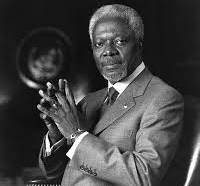
On Comebacks and Failed Comebacks I: Kofi Annan

Note: This piece begins a small series I’m calling “On Comebacks and Failed Comebacks.” Political and public life are full of attempted returns. Leaders lose elections, wars, or moral arguments and then try to reclaim the stage. Most of these efforts fail. The moment has passed, the audience has moved on, and what once felt urgent has dissolved into what might be called moral fatigue. Yet every so often a different pattern appears. Occasionally someone loses the immediate battle but remains present long enough for history itself to shift. When that happens, what first looked like defeat begins to resemble something closer to a delayed victory. Kofi Annan provides a particularly interesting case. His opposition to the Iraq War did not stop the invasion, and at the time it appeared that the argument had been decisively lost. Yet as the years passed and the consequences of the war became clearer, the moral judgment he articulated gained increasing weight.
In that sense, the story of Annan’s career suggests a useful distinction: some comebacks succeed not because the player reclaims the moment, but because the argument itself eventually catches up with history. Future pieces in this series will look at other figures—some who managed remarkable returns, and others whose comebacks never quite arrived.

Political life especially produces them in abundance. A leader loses a battle—an election, a war, a moral argument—and disappears into the quiet margins where yesterday’s figures slowly fade. The public moves on. The moral urgency of the moment dissolves into what might be called moral fatigue. Outrage that once seemed unstoppable becomes background noise. A new crisis appears, and the world’s attention shifts.

Once this fatigue sets in, comebacks are difficult. The audience that once cared has already drifted elsewhere. The stage has changed. Most players who attempt to return find that the moment that once belonged to them has passed.

Yet every so often a different pattern appears.

Occasionally a figure loses the immediate battle but remains present long enough for the moral tide itself to turn. When that happens, what looked like defeat begins to resemble something else entirely.

Kofi Annan offers one of the most intriguing examples of this phenomenon.

In 2003 the United States and the United Kingdom invaded Iraq. The invasion was justified by a mixture of strategic arguments, intelligence claims, and moral rhetoric about tyranny and liberation. In Washington and London the momentum of the moment was overwhelming. The war was framed as both necessary and inevitable.

The United Nations, by contrast, found itself sidelined. Annan, then serving as Secretary-General, watched as the institution he led was bypassed by the coalition preparing for war. The moment belonged to the advocates of intervention—particularly the group of American policy thinkers who had spent years arguing for the removal of Saddam Hussein.

At the time, it was not at all clear who would ultimately win the argument. What was clear was that the United Nations had lost the immediate struggle for influence. The invasion proceeded without explicit UN authorization, and the diplomatic machinery that Annan represented appeared powerless to prevent it.

The moral emergency that had animated the debate quickly hardened into geopolitical reality.

Then, in September 2004, Annan said something remarkable. In a BBC interview he stated plainly that the invasion of Iraq was illegal under international law.

It was an extraordinary declaration. Rarely does a sitting Secretary-General of the United Nations describe the actions of the world’s most powerful government in such blunt terms. Yet the statement did not produce the dramatic reversal one might imagine. The war continued. Washington and London dismissed the criticism. The machinery of global politics moved forward largely unchanged.

In the short term, Annan had lost the battle.

And the personal toll of that moment appears to have been considerable. In his biography there is a striking image from this period: Annan alone in his darkened living room, unable for a time to rise from the floor. The room itself reportedly kept in near darkness. It was not exactly depression, at least not in the clinical sense, but something close to exhaustion after a prolonged moral struggle that had failed to alter events.

It is a haunting scene. One of the most powerful diplomats in the world sitting on the floor of a dark room, confronting the limits of his influence.

At that moment, the story of Kofi Annan could easily have ended as the story of a failed comeback. A leader who tried to reassert the moral authority of international law and found that the world had already moved on.

But history has a way of rearranging the meaning of certain moments.

As the years passed, the Iraq War came to be widely regarded as a profound strategic and humanitarian mistake. The claims that had justified the invasion collapsed. The war itself destabilized the region and reshaped global politics in ways that few of its original advocates had anticipated.

Gradually, the moral argument that Annan had made—quietly but firmly—became the prevailing historical judgment.

After leaving the United Nations, Annan did not retreat entirely from public life. Instead he reappeared in a different role as a member of The Elders, a group of former statesmen attempting to exert moral influence outside formal political structures.

It was a curious transformation. No longer the head of the UN, Annan had less formal power than he once possessed. Yet his voice now carried a different kind of authority—the authority of someone who had remained in the arena long enough for events to vindicate his judgment.

By the end of his life, the moral verdict on the Iraq War had shifted decisively. Few serious observers still defended the intervention with the confidence that characterized the early years of the conflict. The consensus had moved, slowly but unmistakably, toward the position Annan had articulated when it mattered least.

In this sense, his career offers an unusual example in the history of comebacks.

He lost the battle.
But he may have won the argument.

That distinction matters.

Most political figures attempt comebacks by trying to reclaim the exact moment they once dominated. They want the same stage, the same audience, the same authority. When the moment has passed, the comeback fails.

Annan’s story suggests a different possibility. Sometimes the moral argument itself continues moving through history long after the political battle appears settled. If a leader remains present long enough, the tide may eventually turn.

Which leads to a simple but revealing observation about great players in any arena.

A truly great player is never entirely out of the game.

The moment may pass. The audience may drift away. But if the underlying argument proves sound, history itself has a way of reopening the field.

And when it does, the comeback is already underway.

On My Week with Isobel (aka London Girl) Part III: Aftermath

Note: This is the third of a three part series. Part I is here and Part II is here.

Oh my sentimental fool

Lloyd Cole

Was the risk I sent to you received?

Metric

SECTION I — Leaving Oxford / Returning to Japan

I walked the five minutes back to the hotel after the bus pulled away. My wife was going on to visit friends in Germany and I would have about five days alone in Kyoto after I got back to Japan. At the hotel I couldn’t get back to sleep, so I said a small prayer to the angels asking for grace to get through the day, showered, packed my things, and waited for the 8 AM car pickup.

The driver arrived on time and we drove not to Heathrow but to Luton. We made light conversation and listened to the radio. One segment was about the rising number of homeless families in the UK, and I remember thinking, not for the first time, how every country carries its own version of difficulty and imbalance.

At the airport I bought breakfast — fruit and coffee — and found a quiet place to sit. I downloaded volumes four through six of Anthony Powell’s A Dance to the Music of Time onto my Kindle. I wanted something emotionally steady for the flight, something with continuity and shape. Then I texted Isobel.

She wrote back immediately. We exchanged messages for twenty or thirty minutes. It felt natural and easy, as if the channel between us was already established and didn’t need warming up. I was happy to hear from her and, again, I had the feeling that our connection was somehow fated — not in a grand cosmic sense, but in the simpler way that some meetings feel unavoidable once they happen. The exchange grounded me. It made the idea of returning to Japan feel manageable.

On the plane I read some Powell and listened to music. I remember playing “Two Suns in the Sunset” by Pink Floyd and being unexpectedly moved by it. I was in an emotional state — not overwhelmed, but open and exposed — and the flight passed quietly. I landed at Kansai Airport in the afternoon.

I took the Haruka train back toward Kyoto. The wide seats and generous legroom made me feel welcomed back into my country of choice. Much as I had enjoyed England, I felt real relief in returning. There is a particular comfort in Japanese transit — the order, the space, the quiet efficiency — and my body recognized it immediately.

I arrived home and unpacked slowly. I was due at work the day after next for heat index monitoring duty, part of my administrative role during the summer. At that point everything still felt relatively normal. I was in contact with Isobel. I had several days to myself — my son was on a school trip to Australia — and I was mentally preparing to return to school.

I had no sense of impending crisis. No awareness that within three days I would walk into my principal’s office and offer my resignation

SECTION II — First Days Back

On my first full day back I did laundry and in the late afternoon went to Takumiya, a pub in north central Kyoto near Karasuma Oike. I don’t remember whether I texted or called Isobel that day, but I almost certainly did. At Takumiya I ordered sashimi and had a few craft beers from their rotating selection. I stayed longer than planned, talking lightly with whoever happened to be sitting nearby.

Later I walked to Before 9, a smaller beer and sake bar in the same area. There was a cat there. It came up to me and nuzzled my leg. The bartender put his arm around me briefly and gave me a small, friendly pat on the back. At the time it struck me that I was in an unusually open and fluid state. People — and even animals — seemed to register it instinctively. It felt as if they wanted to take care of me without knowing exactly why.

The next day was Tuesday and I went to work as scheduled. I checked the heat index readings as part of my summer administrative duties. Dr. Fox was on campus. Seeing him immediately shifted the emotional temperature of the day.

I have written elsewhere about my problems with Dr. Fox and I won’t revisit them in detail here. What matters for this story is that by that point I felt he had betrayed me and failed to show up when I most needed institutional support. Trust had already been damaged. Seeing him again after Oxford brought all of that to the surface at once.

We spoke briefly. Before I left, he asked me to come in the following day to help prepare a presentation he was scheduled to give to an alumni group. I had ghostwritten material for him many times before. Under normal circumstances I would have said yes without hesitation. This time I agreed anyway, even though I was already internally unstable and emotionally saturated.

It would not turn out well

Oh my sentimental fool…

Lloyd Cole

PART III — Return to Japan + The Actual Consequence

Saturday, after the bus pulled away, I walked back to the hotel alone. The distance was short — five minutes at most — but it felt longer, as if the space between departure and arrival had stretched in subtle ways that were difficult to measure. When I entered the room and closed the door behind me, the click sounded sharper than usual. It carried a faint sense of finality, though I couldn’t yet say what exactly had ended.

I did not rush. Packing became a deliberate act, almost ritualistic in its pacing. I folded shirts one at a time, placed my notebook carefully into my bag, slipped the Tintin postcard between pages so it would not bend. Sue Tompkins went in next, followed by the charger, the toothbrush, the small practical objects that restore a sense of order after emotional disturbance. The room itself was modest — functional, forgettable in most respects — yet it felt oddly expanded, as if some invisible event had occurred there despite the absence of anything outwardly dramatic. Something had shifted in me, and the room seemed to hold the echo of that shift.

At the desk, I laid everything out for a moment, not to organize but simply to gather myself. The Mendoza Line was no longer playing, but the music had already done its work. The emotional charge it helped ignite remained present, circulating quietly beneath the surface. There was nothing to heighten or prolong; the effect was already internalized.

Around eight, the hire car arrived. The driver was polite, efficient, the kind of professional whose calm competence creates a reassuring neutrality. He helped with my bag, and we exchanged small talk as we pulled into traffic — London housing costs, wages, the persistent difficulty young people face in trying to establish themselves. On the radio, a news segment discussed the rising number of homeless families and children across the UK. Normally, such stories register as troubling but abstract statistics. That morning, however, the report landed differently. I found myself thinking about untethered lives, about how fragile the structures that hold people together can be, and how sometimes the tether itself is the only thing preventing a deeper psychological unraveling.

Traffic was light, and we arrived at the airport mid-morning. Inside, I purchased a simple breakfast — fruit, yogurt, coffee — and found a seat removed from the main flow of travelers. Airports are environments of constant movement, but solitude can still be carved out within them if one chooses carefully. I opened my Kindle and downloaded volumes four through six of Anthony Powell’s A Dance to the Music of Time. It was not an act of escapism so much as orientation. I wanted narrative continuity, a long arc where identity unfolds gradually rather than collapsing under sudden pressure. Powell’s world offered lineage, structure, and a reassuring sense of temporal patience.

I texted Isobel. She responded almost immediately, and what followed was a long, bright thread of conversation carried across airport Wi-Fi. There was no sense of emotional comedown, no awkward reentry into ordinary distance — only continuation. The connection felt intact, natural, as if the meeting had established a channel that did not require reinforcement to remain open.

When boarding was called, the transition felt procedural rather than dramatic. The flight passed in a quiet blur of clouds, Molina songs, Powell’s prose, and intermittent thought. Beneath it all was a subtle ache under the ribs — not pain, not longing in any acute sense, but effect. A residual emotional state that did not demand resolution, only acknowledgment.

I landed in Japan first. My wife continued on to Germany to visit friends, and my son was in Australia on a school trip. The house, when I entered it, was silent in a way that felt tangible. I carried that silence with unusual care, as if it were made of glass and might shatter if handled abruptly. Solitude is often restorative, but this solitude had an amplifying quality, heightening rather than settling internal experience.

That evening, I went to Takumiya, a pub in north central Kyoto. I ordered food and three craft beers and spoke casually with whoever happened to be nearby. Conversations were light, unstructured, yet I sensed an unusual responsiveness from people around me — as though I possessed a slightly elevated emotional voltage that others could detect without understanding its source. Even animals seemed to register it. Cats approached me with a familiarity that felt less coincidental than intuitive, as if some form of static had gathered on the soul.

I returned to Takumiya each night that week. There was comfort in being present in public spaces while remaining largely anonymous. The balance allowed me to exist among others without the demands of deeper recognition. Meanwhile, at five in the evening Japan time — nine in the morning in London — Isobel and I spoke daily. The calls were not brief check-ins but sustained conversations lasting anywhere from thirty minutes to an hour and a half. Often she walked through a park while we spoke, and I imagined her surroundings as she described them, the geographical distance softened by conversational continuity.

During one of these calls, I told her that I wanted to write a book. Not about her specifically, but about the chain of experiences that led to meeting her and the clarity that encounter unexpectedly revealed. She understood immediately. More than that, she expressed a quiet appreciation for being part of that moment of ignition — not as subject matter but as catalyst.

At the same time, unresolved resentment toward Dr. Fox did not dissipate with distance. Instead, it sharpened. The baseball heatstroke issue lingered at the margins of thought, alongside a broader accumulation of professional frustrations: moments of perceived disrespect, ambiguous expectations, and a decade of service that increasingly felt like professionalism without true partnership. None of these tensions were new, but the emotional openness of the week amplified their weight. Background noise began to feel like pressure.

By Friday, when I walked into school, I was not consciously planning a decisive action, yet I sensed a degree of internal instability that made ordinary interactions feel precarious. When Dr. Fox called me into his office to request assistance with a presentation — a familiar pattern, a non-work day expectation framed as routine — the moment crystallized something that had been building long before Oxford. I resigned. The decision belonged to a larger narrative, but this story carries its immediate emotional context.

As the reality of resignation settled into my body, a quiet clarity followed. I knew I needed to speak with my wife. The conversation would not revolve around specifics — call durations, text counts, or the mechanics of connection — but around truth in its broader emotional sense.

She returned home Saturday night. With her presence, the house regained its weight: history, shared furniture, a past that possessed shape and gravity. We sat together without wine or any conversational buffer. The moment did not invite performance or gradual disclosure; it required directness.

“I quit,” I said. “And I met someone.”

She asked only one question.

“Did you sleep with her?”

“No.”

She nodded, her response quiet and measured.

“Okay. Have fun on the phone.”

Nothing fractured dramatically in that moment. There was no raised voice, no immediate emotional rupture. Yet something subtle shifted — an alteration not of structure but of atmosphere. The past remained intact, but the future carried a slightly different texture. Nothing broke, but nothing stayed exactly the same.

Saturday and Sunday:

Saturday and Sunday arrived with a quietness that felt disproportionate to the events of the preceding week. For the first time in months, there was no alarm set for early administrative duties, no email requiring immediate response, no expectation of presence within the institutional rhythms that had long structured my days. I was off work — not merely for the weekend, but in a more consequential sense that I could not yet fully absorb. I would not return until 2022. The long-term ramifications of what had unfolded were already in motion, though at that moment they existed more as a distant horizon than as a lived reality whose contours could be clearly seen.

The weekend therefore carried a strange dual quality. On the surface, it resembled any other stretch of unstructured time: coffee in the morning, small household tasks, the slow pacing of hours unburdened by schedules. Beneath that surface, however, ran a persistent awareness that something fundamental had shifted. The scaffolding of daily life — work expectations, professional identity, habitual responsibilities — had loosened, and with its absence came both relief and a faint, almost disorienting spaciousness.

At five o’clock sharp Japan time, which was nine in the morning in the UK, I called Isobel. The timing became instinctive, a daily point of orientation that anchored the day before it fully began. She answered as she was waking, her voice carrying that soft mixture of sleep and recognition that collapses distance instantly. We picked up exactly where we had left off, as if conversation were a continuous thread rather than a sequence of separate exchanges. We talked and laughed easily, moving between subjects without effort — music, muses, love, the nature of intimacy, and the broader textures of life that surface when two people feel unexpectedly understood.

The calls possessed a quality that felt, at the time, almost transcendent. I experienced a heightened emotional state that bordered on euphoria, a sense of expansion difficult to articulate without risking exaggeration. There was an unmistakable feeling of being lifted beyond ordinary emotional gravity, as if the connection existed in a space slightly removed from daily constraint. For brief stretches, I felt powerful in a way that had little to do with control and everything to do with aliveness — the psychological equivalent of standing in clear light after months of muted color.

Yet even within that intensity, I carried a quiet awareness that such states are rarely sustainable. The experience felt too vivid, too precise in its timing, to belong to permanence. I understood, somewhere beneath the exhilaration, that what we were inhabiting was a moment granted rather than guaranteed. For the time being, however, there was a mutual permission to exist within that space without prematurely interrogating its future. We allowed the conversations to unfold fully, accepting their immediacy without insisting on outcome.

The rest of the weekend unfolded around those calls like a soft frame. I moved through ordinary activities — brief walks, small household routines, moments of shared quiet with my wife — with an undercurrent of emotional intensity that did not demand expression but remained unmistakably present. Silence felt less empty than suspended, as though the days themselves were pausing before the arrival of consequences not yet visible.

What remained most striking about that weekend was not any single event but the emotional totality it carried. The combination of resignation, solitude, reconnection, and emerging uncertainty produced a state that was both exhilarating and fragile. I was aware, even then, of the paradox inherent in the experience: the joy of discovery intertwined with the inevitability of complication, the brightness of connection shadowed by the knowledge of its precariousness.

That was the weekend. In its quiet span, I found myself inhabiting an emotional condition that was at once expansive and difficult, sustaining and destabilizing. I was, deeply and undeniably, in love — not in a settled or declarative sense, but in the raw, immediate way that accompanies sudden recognition. The feeling carried power and tenderness in equal measure, along with a subtle ache that suggested awareness of its limits even as it unfolded.

The Rest of September:

The rest of September passed with a quality that is difficult to reconstruct in precise sequence. Days did not feel discrete or individually memorable; instead, they merged into a continuous emotional field in which time moved forward without the usual markers of routine. The absence of work removed one of the primary structures that normally segments experience, and without that scaffolding the month acquired a dreamlike texture. Moments were vivid while they occurred, yet quickly dissolved into the broader atmosphere of the period.

Isobel and I remained in frequent contact. We spoke most days and exchanged messages with a familiarity that no longer required initiation or explanation. The connection persisted, but the intensity that had defined the immediate aftermath of Oxford began, subtly, to dim. This was not a collapse or a dramatic withdrawal — rather, a gentle tapering, the natural adjustment that follows emotional peaks once they settle into the rhythm of distance and everyday life. The calls remained warm, often intimate, and still carried laughter and shared curiosity, but the sense of suspended transcendence that characterized the earlier weeks softened into something more ordinary.

My days were largely unstructured. Without professional obligations, I devoted time to my blog, experimenting with longer reflections and shorter fragments that attempted to capture the evolving emotional landscape. I also began broadcasting on Periscope, drawn to the immediacy of speaking into a space where audience and solitude coexist in curious balance. These activities did not replace work so much as fill the temporal vacuum it left behind, offering forms of expression that required presence without imposing rigid expectation.

Later in the month, I briefly reentered the professional sphere when I accompanied my senior students to a university fair at Canadian Academy. The experience felt almost surreal in its normalcy — a reminder of institutional rhythms that continued independently of my altered position within them. It was the only direct work engagement I undertook during that period, and its brevity reinforced the sense that September existed outside the usual professional narrative.

Toward the end of the month, I traveled for a significant assignment: serving as lead evaluator for the Diploma Programme at Western Academy of Beijing. The responsibility was substantial, and I approached it with an intention to perform at the level expected despite the internal shifts that characterized the preceding weeks. The visit, however, was complicated by dynamics within the evaluation team. The MYP leader’s preference for extended, often unfocused meetings created an atmosphere of fatigue, and Ashish, the Head from IB Singapore, lacked either the authority or inclination to redirect those discussions effectively. Evenings stretched late into the night. We ordered Indian food, reviewed documentation, and navigated the procedural demands of the evaluation with a professionalism that felt increasingly mechanical.

During one of those evenings, after the meetings had ended and the day’s formal responsibilities were complete, I called Isobel. We spoke at length, as had become our habit, but the conversation carried a different quality. She told me about a dream — one involving a fire and a cabin in the forest. In the dream, I was present. She mentioned that she had shared the dream with her therapist, a detail that suggested the experience held significance beyond casual narrative. Yet when I asked about it, she hesitated. She did not want to recount the dream in full. The partial disclosure introduced an ambiguity that I could not immediately interpret but nonetheless felt.

The moment did not register as conflict or withdrawal. There was no overt tension, no articulated concern. Yet something subtle shifted in the emotional atmosphere between us. The change was nearly imperceptible, detectable less through words than through absence — a slight alteration in tone, a new reticence where openness had previously been instinctive. It was not dramatic enough to prompt confrontation, but it carried the unmistakable sensation of movement beneath the surface.

As September drew to a close and October approached, our communication began to thin. Calls became less frequent, messages shorter, pauses between exchanges longer. The transition unfolded gradually, without a definitive turning point, but its trajectory felt clear. What had once been continuous conversation now required renewed initiation, and the ease that had defined our early exchanges gave way to a quieter, more tentative rhythm.

In retrospect, September stands as an interlude — a period suspended between ignition and resolution. The connection with Isobel remained meaningful and emotionally resonant, yet the conditions that had sustained its earlier intensity were shifting. October would bring both culmination and conclusion, the apex of the relationship’s emotional arc and, simultaneously, its quiet dissolution.

October:

October arrived without ceremony, yet the emotional atmosphere surrounding it was markedly different from the suspended haze of September. I was not working at all during that month, and the absence of professional structure began to feel less like pause and more like rupture. Relations with my Principal, Dr. Fox, had deteriorated to an all-time low, and what had once been a strained but functional working relationship now carried open hostility.

We had two phone calls that month about university counseling, both of them angry and vitriolic. The topic itself — university advising — should have been procedural, collaborative, even routine. Instead, it became a flashpoint that exposed a deeper accumulation of mistrust and frustration. From my perspective, he was mishandling critical processes and creating unnecessary stress for students and staff alike, and I felt a growing sense of professional indignation that was difficult to contain. I shouted at him on the phone twice: once while walking along the river, my voice carrying across the water in a way that felt disproportionate to the setting, and once from a hotel bar in Osaka, where the contained intimacy of the space made the confrontation feel even more exposed. The bartenders glanced at me with a mixture of curiosity and quiet concern, clearly aware that they were witnessing a private eruption in a public place. Still, they allowed the moment to pass without interference, serving drinks and processing the bill with the practiced discretion that characterizes hospitality in Japan.

In mid-October, I traveled to Singapore for another IB training. This assignment positioned me as lead trainer for the Diploma Programme, with Duan Yorke serving as my deputy. Duan was excellent — steady, competent, and easy to work alongside — providing a professional counterbalance to the internal instability I carried with me. Yet despite the outward success of the training’s first day, something felt off internally. The emotional residue of the previous weeks, combined with the unresolved professional tensions, manifested as a quiet but unmistakable dissonance. On the second day, I found myself unable to maintain the expected level of engagement and withdrew temporarily to visit an esoteric healer. The visit itself belongs to another narrative thread, one that requires its own context, but its occurrence reflected the broader sense that I was searching for equilibrium in unconventional ways.

I returned and completed the training successfully, fulfilling my responsibilities with the professionalism the role demanded. Afterward, I remained in Singapore for an additional three days, using the time to decompress in a city that had long felt both familiar and emotionally neutral. The extended stay provided space for quiet reflection, casual wandering, and the gradual release of accumulated tension. Professionally, my obligations were minimal. I completed a handful of recommendation letters for early decision applicants — necessary work, given that our new counselor was struggling with the process — but beyond that, my professional identity remained largely suspended.

During this period, Isobel and I spoke only once. The call carried an unmistakable clarity: whatever had sustained the connection through September was no longer present. Whether the shift stemmed from the dream she had mentioned earlier, the simple realities of distance, or the natural fading that accompanies emotionally intense encounters, the result was the same. The spark had dissipated. What struck me most was the absence of dramatic heartbreak. I did not feel shattered or undone. Instead, I experienced a dull void — a quiet ache occupying the space where my love for her had briefly lived. It was less a wound than an absence, the emotional equivalent of a room that had been furnished and then emptied.

Singapore became the final location in which we spoke. After that call, the connection ended without formal closure, dissolving into silence rather than conflict.

When I returned to Japan, I settled back into writing and Periscoping with a renewed sense of creative urgency. Singapore itself had already played a role in that shift. In a billiards bar there, I drafted the first installment of The Thin Man, capturing fragments of narrative that would later expand into a larger project. The act of writing felt less like discipline and more like necessity — a way of metabolizing the preceding months and translating emotional experience into narrative form. Back in Japan, I continued this process through a series of essays that month, each exploring different facets of the transitional period.

October also introduced another unexpected connection. That month I met Mela, a woman from New York City in her thirties who was on medical leave from her work as a props assistant in film production. She was housesitting at the time and occupied her days in ways that mirrored my own state of suspended routine: scrolling Tinder, investigating potential matches with a mixture of curiosity and humor, and broadcasting extensively on Periscope. We connected easily, moving from initial interaction to Instagram texts and eventually long phone calls. Neither of us had pressing daily commitments, and the absence of structure created space for conversations that extended for hours — sometimes entire afternoons — ranging across music, film, personal history, and the broader philosophical questions that surface when time is abundant and emotional stakes feel low.

Months later, in December, I would meet her in person during a museum visit in Queens. The day unfolded quietly: exploring exhibits, browsing the bookstore, and sharing soup in the café. At one point, descending a staircase, she leaned into me in a way that felt intentional — a brief physical gesture that carried a hint of performative vulnerability. She said, “you saved me,” a remark delivered with ambiguity that allowed interpretation without demanding it. The moment marked the closest we came to flirtation, and even that remained understated, more symbolic than consequential.

Yet the defining emotional endpoint of October remained tied to Isobel. Singapore had been the final setting of our conversation, and with its conclusion, that chapter closed without spectacle. The month that began with professional conflict and emotional residue ended in creative ignition, quiet acceptance, and the emergence of new but less charged connections. October stood as both apex and dissolution — the culmination of an emotional arc that had begun in Oxford and the gentle fading that followed its brief, luminous peak.

Conclusion:

Looking back on it now, the question that naturally arises is what, if anything, can be concluded from the experience. Memory has a way of smoothing edges while preserving emotional truths, and the passage of time introduces perspective without necessarily dissolving ambiguity. What remains is not a tidy narrative with a clear moral, but a series of impressions that continue to carry meaning long after the events themselves have receded.

Was I in love with Isobel? The answer, for me, is uncomplicated. Yes — absolutely. The feeling was immediate, powerful, and unmistakable in its emotional clarity. It was not rooted in fantasy or projection so much as in recognition: the sudden awareness that another person had seen and engaged parts of me that often remain peripheral or unarticulated. The connection possessed both intellectual and emotional intimacy, creating a sense of alignment that felt rare and therefore significant.

Whether she was in love with me is less certain. That question remains open, and perhaps necessarily so. Love does not always manifest symmetrically, nor does it require identical emotional timelines. What I do believe is that she was deeply drawn to me — enamored with qualities she named explicitly: my maturity, my openness, my willingness to explore symbolic and esoteric frameworks such as astrology, and what she described as my confirmed oddness. These were not superficial points of attraction but aspects of identity that shape how one moves through the world and forms connection. In response, she opened herself in ways that felt unprecedented in my experience with other women. The openness was emotional, conversational, and psychological, revealing vulnerabilities and reflections that suggested a level of trust both genuine and meaningful.

Yet that openness stopped short of the one dimension that often defines romantic relationships in conventional terms. Physical consummation never occurred. And still, I remain convinced that it might have — that the night of the red dress, that Wednesday evening suspended in quiet possibility, carried the potential for that final step had I not withdrawn. The decision to pull back was not rooted in lack of desire but in an instinctive recognition of complexity and consequence, a moment where restraint felt simultaneously protective and destabilizing.

At the beginning of this narrative, I wrote the line: “I did not sleep with her, so I had to quit my job.” On its surface, the statement reads as paradoxical or even absurd. Yet in a literal and emotional sense, it reflects the truth as I experienced it. Something that transpired between us disrupted my internal equilibrium in a way that extended far beyond the boundaries of romantic encounter. The experience did not create professional dissatisfaction where none existed; rather, it crystallized tensions that had long been present but insufficiently confronted. In the altered emotional state that followed Oxford, I could no longer compartmentalize or tolerate dynamics that had gradually eroded trust and professional fulfillment. The decision to resign emerged not as a reaction to Isobel but as a response made possible by the clarity her presence inadvertently catalyzed.

What, then, did Isobel have to do with that decision? It is a question without a definitive answer, and perhaps one that resists definitive resolution. Objectively, professional circumstances and romantic encounter belong to separate domains, each governed by distinct motivations and consequences. Yet subjective experience does not always honor such boundaries. In my mind and in my heart, the two remain inextricably linked. The emotional awakening precipitated by our connection illuminated aspects of my life that had grown untenable, accelerating a reckoning that might otherwise have unfolded more gradually.

In this sense, Isobel did not cause the decision but revealed the conditions that made it inevitable. The encounter functioned as catalyst rather than origin, exposing fractures already present and clarifying the need for change. The love I felt for her, whether reciprocated in equal measure or not, became intertwined with a broader transformation — one that encompassed identity, professional alignment, and creative direction.

Ultimately, the experience resists reduction to a singular meaning. It was neither tragedy nor triumph, neither mistake nor destiny. It was an encounter marked by intensity, ambiguity, and consequence, leaving behind a residue of insight rather than closure. If anything can be said with certainty, it is that the connection altered the trajectory of my life in subtle but enduring ways. The emotional truth of that alteration persists, even as the specifics of the relationship have receded into memory.

And perhaps that is the most accurate conclusion available: that some relationships are defined not by duration or outcome but by the clarity they introduce, the decisions they precipitate, and the self-recognition they make possible. In that sense, Isobel remains both part of my past and part of the internal landscape through which I continue to move — a presence whose significance lies less in what occurred than in what it revealed.

Coda:

What remains, after the noise has faded and the chronology has settled into memory, is not regret but recognition. Isobel was never meant to be a permanent figure in my life; she was a moment of ignition, a flare that illuminated terrain I had been walking blindly for years. Loving her did not undo me — it clarified me. It revealed fault lines in my professional life, deepened my awareness of emotional possibility, and reminded me that connection can arrive without warning and depart without resolution while still altering everything that follows. Some encounters are not chapters but catalysts, and their power lies precisely in their brevity. I did not leave Oxford with a lover, but I left with a truth that could no longer be ignored, and that truth reshaped the decisions that defined the months and years ahead.

So the story does not end with loss but with transformation. The quiet house in Kyoto, the late-night calls across time zones, the resignation spoken into an office heavy with history, the essays written in the wake of confusion and clarity — all of it forms a single arc whose meaning resides not in permanence but in awakening. Isobel remains a presence not because of what we became, but because of what her existence made visible: that love, even when fleeting, carries the capacity to reorder a life. And in that sense, the experience stands complete. Not a tragedy, not a triumph, but a moment of rare and incandescent alignment — a brief crossing of paths that left behind warmth, ache, and an enduring knowledge that sometimes the most consequential relationships are the ones that arrive, burn bright, and quietly pass into memory while continuing to shape the person who remembers them.

Note: If you linked this piece, you may also like my short story Simona. You can read it here.

On Why I Told the World to Fuck Off for 36 Hours

Subtitle: And Saved My Life in the Process

So I called you a cab and they called you a hearse,
and I knew what they were talking about.

— The Mendoza Line, “It’s a Long Line (But It Moves Quickly)”

Note: This piece pairs naturally with my recent essay On the Safe Space (aka Corner Girl). Both pieces are about the small moments that hold us together when we are breaking apart. You can read that piece here.

By 2012 I finally understood what I had been circling back in 2008 without fully naming: the business hotel wasn’t just a neutral space — it was a controlled dissociation chamber. A place where my mind could flatten without collapsing. A room where the world muted itself into CNN-colored soft focus, where time thinned out, where nothing asked anything of me. I didn’t know it then, but all those mid-range rooms — the bland art, the sealed windows, the gentle hum of an air conditioner tuned to the exact frequency of psychic anesthesia — were teaching me a skill I would need later: how to disappear just long enough to come back intact.

So when the pressure finally broke, when I had been working thirty straight thirteen-hour days and felt myself sliding toward the edge of something unnamed, I took the Shinkansen to Tokyo, checked into a business hotel, turned my phone off, and told the world — or most of it — to fuck off for thirty-six hours. And the shocking thing wasn’t that it worked. The shocking thing was realizing I had been preparing for it years earlier, in those identical rooms where the towels were always clean, the windows always closed, and 9-ball was always on.

So I ducked into the nearest konbini and bought a latte from the machine — the one small ritual that still made sense. The warm cup in my hand steadied me just enough to get through the turnstiles. Kyoto Station felt too bright, too full of intersecting lives and needs, the air full of other people’s urgency. I didn’t have the bandwidth to absorb anyone else’s story; I barely had enough for my own. All I knew was that the next Shinkansen to Tokyo was leaving in eleven minutes, and if I didn’t get on it, something in me would snap in a way I wouldn’t be able to walk back. The latte was cooling fast, my hands were shaking, and every part of my body was saying the same thing: Go. Now. Before you say yes to one more thing you don’t have the energy to carry.

Once the room was arranged — bag on the stand, shoes lined up by the door, Pocari Sweat sweating slightly on the desk next to the bottle of red — my whole system downshifted into something like relief. Not joy. Not peace. Just the quiet recognition that, for the next thirty-six hours, my time belonged to me and no one else. I didn’t have to speak. I didn’t have to answer. I didn’t have to hold anything together. All I needed to do was sit on the bed, take a long drink of Pocari, a short drink of wine, and let my body loosen by degrees. It wasn’t dramatic. It wasn’t cinematic. It was just freedom in the smallest, most essential sense: I get to be here, in this room, alone, and the world can wait.

After the first wave of relief, the question always arrived: Do I go out?

Tokyo was right there.

Akasaka-Mitsuke humming five floors beneath me, restaurants lit up like little stages, the crossing full of men in suits walking fast enough to convince you they knew exactly where they were going. I never did. So I’d sit on the bed and pull up the map — not to plan, but to orient. Izakaya here, ramen there, a bar tucked down some side street with red lanterns and a name I couldn’t pronounce. Nothing fancy. Nothing difficult. Just food, warmth, and maybe one drink that wasn’t red wine from a convenience store. I wasn’t looking for a night out. I was looking for simple movement, the kind that doesn’t require performance or decision-making. A walk, a meal, a seat at a counter. A single beer poured by someone who didn’t know my name and didn’t need to.
That was the whole question every time: stay in the bubble, or slip into the Tokyo night just long enough to remember I was a person.

Stepping out into Akasaka-Mitsuke wasn’t lonely — it was liberating. The air felt different the second the sliding doors breathed me out into the crosswalk light. I wasn’t hiding from anyone. I wasn’t avoiding anything. I was simply off the clock in a way that almost never happened in my real life. No one knew where I was, and for the first time in weeks, that fact didn’t carry a threat or a stain of guilt. It felt clean. It felt earned. I wasn’t missing; I was saving my own damn life by giving it a night without responsibility. The freedom wasn’t dramatic. It was simply this: I could walk in any direction, and every direction was allowed.

Out in the Akasaka night, I felt like the version of myself that gets buried under work and obligation — the real me, the one who just wants to wander and see who’s out, what’s open, what energy the city is holding. I wasn’t searching for anything dramatic. I wasn’t looking for revelation or escape. I was just checking things out — the izakaya with the red lantern, the alley with the quiet bar, the group of people laughing too loud on the corner. Dabbling. Moving lightly. Letting Tokyo show me whatever it wanted to show, without needing to make a night out of it. It was the simplest, purest freedom: explore until something feels right, and stop when it doesn’t.

I walked the Akasaka backstreets the way I always do when I’m in this mode — cutting down alleys, taking long cuts and shortcuts that don’t make geographic sense but feel right in my body. Tokyo is a city you navigate by instinct, not logic. You follow energy. You drift. You take the turn that looks interesting, then the one that feels safe, then the one that’s pulsing with life. Sometimes I’d follow the Google map to the place I thought I wanted to eat, only to walk past it and keep going. Other times I’d catch a glimpse of something through a noren curtain — warm light, the sound of laughter, a chef moving with the right kind of ease — and that would be the signal. It was never about the spot itself. It was about finding the right spot, the one that matched the night’s frequency. And over the course of the evening, I usually did both: follow the algorithm, then abandon it; trust the map, then trust myself.

Eventually I found the place — an oyster bar tucked behind one of those half-lit alleys where Akasaka feels a little European and a little dreamlike. Warm light, wood counter, the soft clatter of shells, and a chef who moved with the kind of quiet competence that settles you the moment you sit down. This was exactly my jam: an oyster platter arranged like a small geography, cold and briny and perfect, a bowl of clam chowder steaming in front of me, and a carafe of white wine that I poured slowly, deliberately, one glass at a time. Spendy, sure — but in this mode spendy isn’t excess. Spendy is permission. Spendy is dignity. Spendy is saying to yourself: I get to take my time with this. I get to have a meal that cares for me back. And in that moment, slurping an oyster with the city humming outside, I could feel the night open around me in the cleanest way.

The white wine hit me in that way good pairings do — not as a buzz, but as a reminder of how people take care of themselves when they’re not drowning. White wine and oysters belong together; everyone knows that, and sitting there I felt myself re-enter that understanding. The pairing wasn’t fancy. It was human. It was the kind of small, civilized pleasure most people allow themselves without thinking, and I’d been so buried under work and obligation that I’d forgotten what that felt like. The red I’d had earlier had already warmed me, softened the hard edges, and now the white layered over it, sharpening the night just enough to make everything shimmer. I was slightly buzzed and buzzing — not out of control, not hiding, just finally aligned with myself again.

I left the oyster bar with that warm, gentle buzz humming through me — the kind that makes Tokyo feel lit from within — and walked until I found the sort of place I always look for on these nights. A spendy cocktail bar: dim lights, bottles arranged like small works of art, a bartender in a crisp vest moving with that Japanese mix of precision and grace that makes you feel taken care of without being noticed. I took a high seat at the counter and ordered something I never drink in real life — a proper cocktail, layered, balanced, spendy. Spendy was the point. Spendy meant: I am worth slowing down for. Spendy meant: no one is waiting, no one is watching, no one needs anything from me. I sipped slowly, letting the night stretch out in front of me like a long exhale, feeling myself settle into the version of me that only Tokyo brings out — curious, quiet, open, free.

The bar I ended up in wasn’t some sleek Tokyo cocktail temple — it was better. Two bartenders from Nepal were working the counter, the kind of guys who’ve lived ten different lives before landing in Japan, commuting in from way out because Akasaka rent is a joke. We talked the way travelers talk when no one is trying to impress anyone — about where they were from, how far they lived, what Kathmandu feels like in winter. I wasn’t performing, just listening, rapping with them in that easy drift that happens when you’re slightly buzzed and buzzing in a foreign city. I ordered red wine — not more cocktails — because that was the right shape for the night, and when I finished my glass one of them poured me another, full to the brim, “for the gentleman.” It wasn’t flirtation. It wasn’t special treatment. It was the small grace of the night saying: You came to the right place. You came at the right time. And you’re not carrying anyone else’s weight right now.

When I stepped back out into the night after the second glass of wine, the whole neighborhood felt like it belonged to me. Not in a macho way, not in a performative way — just in that rare, private way where the city’s pace matches your own and you fall into step with its pulse. Akasaka was quiet but lit, humming but not crowded, and for five or six blocks I felt like I owned a slice of it. My slice. The alleys, the crosswalk glow, the last trains whispering underneath the city — all of it moved around me without touching me. I wasn’t hiding. I wasn’t disappearing. I was just walking back to my faded little hotel in a state of clean, earned sovereignty, knowing the world wasn’t tracking me for once. And for those fifteen minutes, Tokyo wasn’t a megacity. It was mine — exactly the size of the person I was in that moment.

Back in the room — my little faded Akasaka hideout five or six blocks from the bar — I didn’t overthink a thing. I drank more red wine, chased it with Pocari, stripped down to my boxers, and let my body fall exactly where it wanted to fall. There was nothing left to hold, nothing left to manage, nothing left to translate. I slept like a baby — a full, unbroken twelve hours, eleven to eleven — the kind of sleep that only arrives when you’ve been carrying too much for too long and finally set it all down in a room no one else can enter. No dreams, no interruptions, no alarms. Just the deep, uncomplicated sleep of someone who gave himself thirty-six hours of mercy and actually took them.

When I woke up around eleven, I felt clear-eyed and ready for more of exactly what the night had been—a continuation of me time. No urgency, no guilt, no one waiting on anything. Just hunger in my stomach and calm in my body. I didn’t rush. I stayed in the room for hours, drifting between the bed and the window, drinking instant coffee, sipping a little more Pocari, scrolling nothing, letting the quiet stretch. I could go out or stay in—either was fine. The whole point was that the day was mine to waste or spend however I wanted. After twelve hours of baby-level sleep, I wasn’t reborn—I was simply functional again. Hungry, steady, grounded, and free.

The next day I was set to return to Kyoto. When it’s time to go, it’s time to go — and the Thin Man cleans up quick. I showered, shaved, packed my bag with the same neat ritual I’d used the night before, and stepped back out into Akasaka like someone who had never been tired in the first place. Before heading to the station I picked up omiyage — the small gesture that makes the return feel seamless — something for the office, something for home. It wasn’t guilt; it was continuity. A way of saying: I left for a day and a half, and now I’m back in the world with all the edges smoothed. By the time I boarded the Shinkansen back to Kyoto, I was already shifting into IB mode — the coordinator, the problem-solver, the guy who keeps the whole thing moving. But now the engine was clean again. The reset had worked. Thirty-six hours alone in a faded Tokyo hotel, oysters, wine, a long sleep, a morning that belonged only to me — and suddenly I could re-enter at full tilt. Not as a martyr. Not as a runaway. Just as myself, restored enough to carry everything again.

Dedication:

For Akasaka — whoever designed that little slice of urban order also re-ordered my mind in the best possible way. Thanks there, baby.