Scenes from Hamilton College VI: Junior Year in New Zealand

Note: This is Part VI of the Hamilton series. Part I, Part II, Part III, and Part IV and Part V are available.

Epigraph:

They all come and peep through a hole in the wall
Keep the bastards guessing
He likes to take the long way home,
It’s another fine decision

Peter Jefferies

I spent a full academic year, the second semester of my junior year and the first of my senior year, at The University of Otago in Dunedin, New Zealand. Otago is a pretty good university, but Dunedin is pretty small and kind of country. Overall, it was a good experience, but I was flat broke and not on a meal plan due to an oversight by I guess myself and my parents. More on that later.

After I landed, I spent one night at a hotel and bought a bottle of wine, for the first time in my life. I was of legal drinking age in New Zealand. I drank about three-quarters of it and was a little hungover the next day. At Hamilton people did not drink wine.

The first few days I was on a homestay in the country with a sheep farming family. The father spent the day watching cricket, and then would rouse and take the sheep out and move them around, with sheepdogs and all. I remember going to a local pub with two of his sons and their friends and we had five or six beers and they drove home. On the drive home they tried to run over rabbits on the road, and roared with delight when they got close. That was a scene.

Then, I went back to Dunedin, and met my roommates who were all in graduate school studying to be teachers. These were Tim, Ho (who was of Maori descent), Sharlene, and Donna. Tim was a musician and there was a large piano in his room. The roommates were good folks, however I think I disappointed them a little because they asked for an American roommate and were apparently expecting someone really flamboyant and loud. I was not that, and kept to myself much of the year. One time though that I lived up to their expectations was when Tim once again said “you’re from Washington D.C.” and I said “I’m not from fucking Washington D.C., I told you before I’m from Washington State!” Tim said to the roommates, “I told you rooming with an American would be fun.”

There were a number of other exchange students from the U.S. there and I got to know some of them a bit at first, but for some reason I was a little standoffish, and we didn’t hang out much after the first week or so. I was back into running, not smoking and barely drinking, although I did go out once with Ho and his Maori friends and got blasted. I would run 8-10 miles a day, sometimes more, and was in training for a marathon.

As I mentioned, my food situation was bad. We had neglected to put me on a meal plan, and I think my parents didn’t even know this, and at first I chipped in what I could to the communal roommate shopping. However, they ate very poor quality mutton all the time and I just couldn’t hack it. Mutton is pretty bad at the best of times, and cheap mutton is awful. So I went off the roommate plan and ate mostly trail mix for dinner. Trail mix, it turns out, is among the best value for money food around. I would buy raisins, peanuts, and carob chips and that’s what I ate at the flat. For lunch I would eat one apricot yoghurt bar and a cup of coffee, costing around $3.50 NZD. I would eat super slowly, taking about 45 minutes to finish the apricot bar and somehow this made me feel like I’d had a meal. I was living on about $7 NZD a day and was hungry all the time. With this and the running, I was also super thin.

At Otago I studied some more literature, and also a lot of Indian History, with a focus on Ghandi. I learned a great deal about Gandhi this year, and found him interesting. One incident I recall was in one class on Buddhism the professor assigned a paper on Zen. I had the bright idea to turn in an empty paper, which I thought would be symbolic, but the professor was a step ahead of me. “Don’t try and turn in an empty paper for this,” he said, “I’ve seen that move before.”

One more interesting thing that happened was when I was invited to the faculty club for drinks by my Australian literature professor. He was in his 60’s and was an Otago lifer. At first I was kind of flattered to be invited, however on arrival it was clear he had other motives. He started hitting on me in a most egregious manner, and it was obvious he had done this many, many times. I had two drinks and politely removed myself. To his credit this had no impact on how he treated me in class, and things went on as normal. I guess it was all par for the course.

The Otago campus was on the north side of town, and the south side was said to be pretty rough. “Don’t go down there,” I was told more than once, “it’s dangerous.” But I thought it couldn’t be that dangerous, so one day I walked down there by myself to check it out. There were a lot of industrial areas and such, and it was a little run-down, but I got home safe just fine. I suspected that “dangerous” in a New Zealand context might mean something a little different than in a U.S. context.

My roommate Sharlene had a friend who just had a breakup and Sharlene wanted us to get together. She invited us both to a party, and sure enough we started making out, under a table as I recall. It just lasted that one night, but Sharlene thought it was hilarious. “They were pashing,” she cried, “pashing away.” Pashing is apparently Kiwi slang for kissing, or maybe it was a Sharlene original.

Sharlene had a stepfather and I visited his house once. He had a nice car and complained on and on about how many tickets he would get from traffic cameras. Traffic cameras were on the scene in 1995. This appeared to be his only topic. He should have driven more carefully.

After the pashing incident, there was another girl who was interested in me. I forget her name, but it started with an M. M. was really into me, maybe because I read a lot and so did she. There was a kind of club place for students with TVs (I remember watching the O.J. Simpson car chase there), and I would hang out there. M. would come in and lob a snickers bar from over my shoulder for me and buy me a coke. This was really nice and super helpful because I needed all the calories I could get. M. wanted to get together, but I wasn’t into it. We did spend a fair amount of time together, at the club and going to the bookstore with another friend of hers.

As I mentioned, I was in good running shape this year and actually went out for a marathon. I was doing great through the first half, but started to fade really bad around the 20 mile mark. I had terrible blisters and pulled my groin and couldn’t imagine doing another 6 miles, so I pulled up. I asked a couple with a car for a ride to the finish line where there were buses, and they gave it to me but made it clear they were not impressed with me packing it in. I wasn’t impressed with myself either, but marathons hurt like hell.

In addition to running, and starving, I also went out for Aikido. Aikido is a Japanese martial art, and I was already well on my way to my Asian Studies minor and was getting into all things Asian. Aikido was taught by a white couple, and this was their life. They were ok teachers, but the atmosphere was just a little culty. Despite my father’s fears, I have never been amenable to cults-like scenes. I stuck with it for a number of months however, and managed to get my first belt.

I don’t remember listening to a lot of music that year because I don’t think I had a stereo in my room, however, one day on the radio I did hear a song I immediately fell in love with. This was “The Fate of the Human Carbine,” by a Dunedin artist called Peter Jefferies. It was spooky and weird and totally captivating. Cat Power would later cover it, and lines from this song serve as the epigraph for this piece.

One more thing that happened this year was that Jenny from Hamilton visited. I don’t think she came specifically to see me, but I’m not sure. I was traveling, with god knows what money, in the New Zealand Alps which are on the South Island there and are really lovely. Jenny and I stayed at a hostel, and hung out which was really cool. That’s the same trip when I went for a walk in deep snow and almost died when the snow suddenly came up to my neck. Deep snow is almost as dangerous as the ocean, it turns out.

Those are my memories of New Zealand. Despite being so broke I had to eat a 45 minute apricot bar, it was a good year and I got really good grades. My academic focus would fall off, however, when I got back to Hamilton, but that’s a story for the next post.

Dedication:

For apricot bars and trail mix. You literally saved my life.

On the Pre-Game (aka A Response to Neil Strauss’ The Game)

Note: This piece overlaps my three essays on my week with Isobel series (I–III), though it approaches that week from a different direction. Where those pieces follow the arc, this one lingers on the moment before it resolves—the pre-game, as I’ve come to understand it. It is also a direct response to the book The Game, by Neil Strauss. In what follows I don’t intend to rebut Strauss so much as correct what I see as a fundamental weakness in the subculture he dissects. The reader will judge whether I succeed.

Epigraph

“No one else could play that tune, you know it was up to me.”

— Bob Dylan, Up to Me


Part I: Ippei

I’m at Zaza, the club on Kiyamachi in Kyoto. It’s around 11 PM and just getting going. Zaza is a late night place. It doesn’t peak until well past midnight, and at this hour it’s still stretching, still finding its rhythm.

I’m there by myself, drinking a White Russian.

A Japanese guy comes up to me. He’s about fifty-five. No preamble, no easing into it. He introduces himself—let’s call him Ippei—and within seconds it’s on.

“See those two ladies over by the window,” he says. “Wanna help me pick them up?”

I’m intrigued. Not because I’m especially interested in the outcome, but because I’m a curious guy and I want to see what he’s doing.

“Ok,” I say. “What’s the play?”

He doesn’t hesitate.

“You’re my old friend from California. I haven’t seen you in twenty years. I just ran into you by chance here. Take it from there.”

That’s it. That’s the entire setup. Handed to me fully formed.

I ask him, just to check, “Is this going to work?”

He smiles, completely unbothered.

“Yeah,” he says. “I do this every night. Had a threesome last night.”

Well alright then.

We walk over. He starts talking immediately, in Japanese, smooth, fast, confident. “This is Matt, my best friend from California. Would you believe I just found him here?”

I met him five minutes ago.

It doesn’t matter.

In no time the two women are completely engaged. Smiling, leaning in, laughing. The story has landed. The reality has been accepted. They’re not being approached. They’ve been included.

And I’m there, but I’m not really there. I’m not trying to win anything. I’m not trying to escalate. I’m watching. Taking it in. The nightlife anthropologist, just observing the field.

After a while I step out to the balcony to smoke.

Twenty minutes pass.

When I come back down, he’s still there. Still going strong. Still inside the same story.

That’s when it clicks.

He didn’t need me.

He needed the role I filled.

He needed a premise.


Part II: Neil Strauss

Neil Strauss’ The game

That night at Zaza stuck with me, not because of what happened, but because of what it revealed.

There is a whole body of writing—call it a subculture, call it a system—that attempts to explain and formalize moments like that. The most famous version of it is The Game, by Neil Strauss, which I’ve read twice.

I want to be clear about something before I go any further.

I’m not anti–Neil Strauss. In fact, I respect him. He’s an elite investigator of subcultures, and I love subcultures. He embedded himself in a world, learned its language, mapped its hierarchies, and reported it out with real precision. That’s not easy to do. It’s a serious piece of work.

What follows is not a dismissal of Strauss.

It’s a response to what the game represents.

Because once you move from observing a system to adopting it, something changes.

At its core, the game assumes that attraction can be engineered. That with the right language, the right sequence, the right calibrated signals, you can break down a woman’s resistance and get to the desired outcome, which is of course bed.

It’s a kind of a linguistic technology and NLP at its worst. A system designed to move someone from one state to another.

And for me, that’s where I part ways.

For me The Game is a massive turnoff, because it flattens everything and kills any chance at romance.

It scripts what should be alive. It reduces seduction to a manual and turns something unpredictable into something repeatable. And in doing so, it drains it of the very thing that makes it worth pursuing in the first place.

There’s no space for real connection. No space for the unexpected. No space for the moment where something happens that neither person could have predicted. No space for the kind of encounter that might actually change your life.

And beyond that, it produces a life that I don’t want.

The guys in The Game end up living together in this kind of shared house—Mystery, Strauss, Courtney Love—surrounded by other guys, talking about women, thinking about women, analyzing women. It’s a sausage fest. And it’s not cool.

The Gamers think they’re players. I prefer to think of them as incel-adjacent. They’ve optimized the system, but they’ve lost the thing itself. They’ve mastered the game and stepped outside of life.


Part III: On Action

I’ve had a handful of sexual partners that I’ve gone all the way with. The precise number is under an NDA. I’ve made out with more. But I haven’t been especially active, at least not in the way the game would define it.

What I have done is, flirt with, connect with, and have crushes on dozens of women.

And the truth is, I enjoy it.

I actively enjoy the pre-game.

I enjoy getting close. The moment before something becomes something else. The tension. The ambiguity. The recognition that something might be there, and neither of you has named it yet.

The thrill of newness and the possibility of a spark. If it burns, great. If it flickers, that’s also good. For most men, the pre-game is a means to an end. For me, it’s the end.

And that’s the difference.


This doesn’t mean I’m not interested in action. I am. Very much so. In fact, I’m something of an action junkie. But I’m a highly specific kind of action junkie. Like Wittgenstein, who was said to have manufactured his own oxygen, I manufacture my own action.

I don’t chase it blindly. I don’t optimize for it. I don’t try to force it into existence through systems or scripts. I generate it. Selectively. Intentionally. And in moments where it actually means something.


Part III: Luna

I’m at Umineko with a friend—call him Mr. Editor. It’s early, maybe six in the evening. We’re mid-bar, having a beer, when I notice a woman sitting off to the side.

She’s stunning. And I HAVE to go talk to her. Not because I expect anything to happen. Not because I’ve calculated the odds. But because the moment demands it.

I tell Mr. Editor what I’m about to do. He nods. “Go for it,” he says. “I’ll watch.” I walk over and ask her name. She smiles. “Call me Luna.”

We speak in Japanese. The conversation flows. I bring everything I have to the moment—attention, presence, curiosity—and it lands. There’s a spark. Not forced. Not engineered. Just there.

We talk for a while. Long enough for the room to shift slightly around us. Eventually I ask for her Instagram. She gives it to me. I walk back to the bar and sit down next to Mr. Editor. I’m on Cloud 9. The next day, in the late afternoon, carefully timed, I send her a message but she doesn’t reply.

Failure? Not for the pre-gamer. Because the pre-gamer already got what he came for. The moment. The spark. The approach. The brief, electric possibility that something might happen. That was the action. That was the point. For the Strauss guys, the night ends when the text goes unanswered. For me, the night ended at the bar.


Up to this point, the pre-game is contained. Safe, even. A space where things can happen or not happen without consequence.

But sometimes it doesn’t stay that way.


Isobel Revisited:

I have written about my week with Isobel extensively elsewhere, however part of that story is relevant to what we are discussing here. I met her at the Faculty of Astrological Studies, held at Exter College, Oxford, in late August 2018. We spent the week together and I fell in love. But I didn’t sleep with her. My choice. What follows is a light re-write from my essay “On My Week with Isobel: Part II”:

Wednesday.

I wake up early and we have breakfast together in the dining hall. By this point, people are noticing us. Comments here and there, snickers, sideways smiles.

Morning and lunch blur into one long conversation—the garden, the bench, a little grass, nothing hidden. We’re finishing each other’s thoughts. I’m in deeper than I’ve ever been.

We don’t attend much of anything.

In the afternoon break she goes to change. I go back to my room and put on The Mendoza Line with the full weight of obsession. She comes back after and tells me, without shame, that she had pleasured herself during the break. Just fucking states it.

This is a complication.

That night she changes again. A red dress. Short, but not careless. Stunning. We sit at dinner whispering, touching lightly, laughing against each other. Everyone knows by now.

After dinner there’s wine again, talking with the tutors, the long courtyard. I meet Darby Costello in person for the first time. She’s fully alive, drinking wine, holding the room effortlessly. I’m so happy she’s my astrologer. But I’m elsewhere.

We stay late. Clear the courtyard. Around two in the morning we part. Cheeks touched. No bedroom. No act. No close. Back in my room, lights low, Mendoza Line still in my ears, I lie on the narrow bed and I know exactly where I am standing.

I will keep going. I will see where this leads. But I will not sleep with her. I can’t.

It’s not that I don’t want to. I do. Totally and much more. But I can see it. The complications. For her, for me. The chain of events that would follow. I’m old enough to see it coming. And I know, standing there in the courtyard, with the last of the wine and a cigarette burning down, that it’s on me.

I have to be the one to say no. That’s the shape. That’s the decision.

=====

Up to this point, the pre-game has been something I could enter and exit at will. A space I could step into, generate action, feel the spark, and leave intact.

With Ippei, the action was scripted. With Strauss, it was systematized. With Luna, it was self-contained.

But there’s another version of the pre-game, and it’s the one that matters most. The one where the moment doesn’t stay light. The one where it deepens. Where the spark doesn’t just flicker—it starts to take shape. And at that point, something shifts. Because now it’s not just about whether something will happen. It’s about whether it should.

This is where the line from Dylan starts to carry real weight. No one else could play that tune. There’s no system here. No script. No borrowed language. No Ippei handing you a premise. There is only the moment as it actually exists, and your ability to see it clearly.

And then the second part. It was up to me. Not to escalate. Not to optimize. But to decide. The game ends when something happens. The pre-game ends when you decide it should.

Dedication

For pre-gamers everywhere. May you get a little action tonight baby.

Note: If you liked this piece, you may also like the following pieces that also take up the themes of romance and seduction.

On Why I Told the World to Fuck Off for 36 Hours

Subtitle: And Saved My Life in the Process

So I called you a cab and they called you a hearse,
and I knew what they were talking about.

— The Mendoza Line, “It’s a Long Line (But It Moves Quickly)”

Note: This piece pairs naturally with my recent essay On the Safe Space (aka Corner Girl). Both pieces are about the small moments that hold us together when we are breaking apart. You can read that piece here.

By 2012 I finally understood what I had been circling back in 2008 without fully naming: the business hotel wasn’t just a neutral space — it was a controlled dissociation chamber. A place where my mind could flatten without collapsing. A room where the world muted itself into CNN-colored soft focus, where time thinned out, where nothing asked anything of me. I didn’t know it then, but all those mid-range rooms — the bland art, the sealed windows, the gentle hum of an air conditioner tuned to the exact frequency of psychic anesthesia — were teaching me a skill I would need later: how to disappear just long enough to come back intact.

So when the pressure finally broke, when I had been working thirty straight thirteen-hour days and felt myself sliding toward the edge of something unnamed, I took the Shinkansen to Tokyo, checked into a business hotel, turned my phone off, and told the world — or most of it — to fuck off for thirty-six hours. And the shocking thing wasn’t that it worked. The shocking thing was realizing I had been preparing for it years earlier, in those identical rooms where the towels were always clean, the windows always closed, and 9-ball was always on.

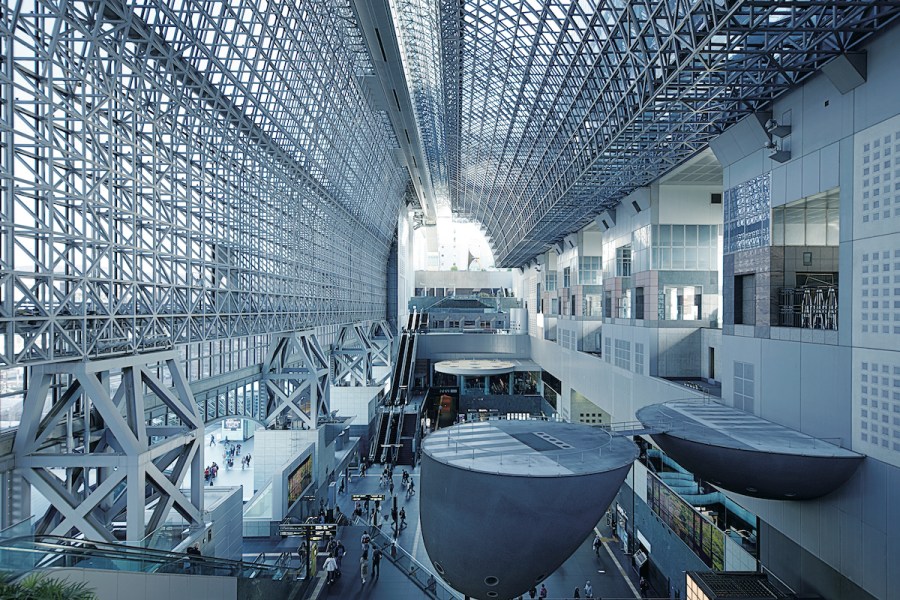
So I ducked into the nearest konbini and bought a latte from the machine — the one small ritual that still made sense. The warm cup in my hand steadied me just enough to get through the turnstiles. Kyoto Station felt too bright, too full of intersecting lives and needs, the air full of other people’s urgency. I didn’t have the bandwidth to absorb anyone else’s story; I barely had enough for my own. All I knew was that the next Shinkansen to Tokyo was leaving in eleven minutes, and if I didn’t get on it, something in me would snap in a way I wouldn’t be able to walk back. The latte was cooling fast, my hands were shaking, and every part of my body was saying the same thing: Go. Now. Before you say yes to one more thing you don’t have the energy to carry.

Once the room was arranged — bag on the stand, shoes lined up by the door, Pocari Sweat sweating slightly on the desk next to the bottle of red — my whole system downshifted into something like relief. Not joy. Not peace. Just the quiet recognition that, for the next thirty-six hours, my time belonged to me and no one else. I didn’t have to speak. I didn’t have to answer. I didn’t have to hold anything together. All I needed to do was sit on the bed, take a long drink of Pocari, a short drink of wine, and let my body loosen by degrees. It wasn’t dramatic. It wasn’t cinematic. It was just freedom in the smallest, most essential sense: I get to be here, in this room, alone, and the world can wait.

After the first wave of relief, the question always arrived: Do I go out?

Tokyo was right there.

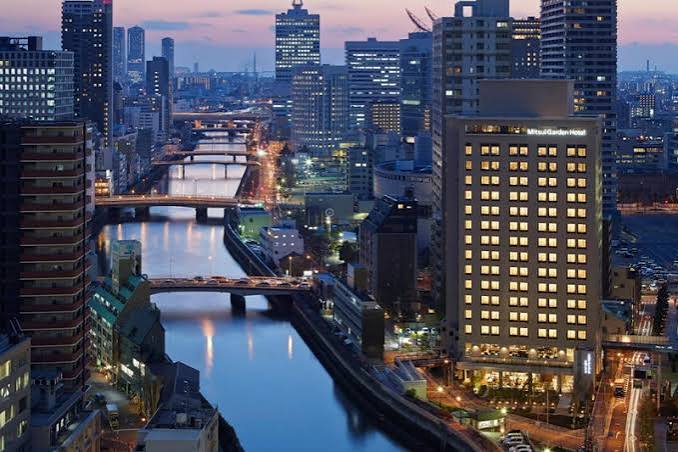
Akasaka-Mitsuke humming five floors beneath me, restaurants lit up like little stages, the crossing full of men in suits walking fast enough to convince you they knew exactly where they were going. I never did. So I’d sit on the bed and pull up the map — not to plan, but to orient. Izakaya here, ramen there, a bar tucked down some side street with red lanterns and a name I couldn’t pronounce. Nothing fancy. Nothing difficult. Just food, warmth, and maybe one drink that wasn’t red wine from a convenience store. I wasn’t looking for a night out. I was looking for simple movement, the kind that doesn’t require performance or decision-making. A walk, a meal, a seat at a counter. A single beer poured by someone who didn’t know my name and didn’t need to.
That was the whole question every time: stay in the bubble, or slip into the Tokyo night just long enough to remember I was a person.

Stepping out into Akasaka-Mitsuke wasn’t lonely — it was liberating. The air felt different the second the sliding doors breathed me out into the crosswalk light. I wasn’t hiding from anyone. I wasn’t avoiding anything. I was simply off the clock in a way that almost never happened in my real life. No one knew where I was, and for the first time in weeks, that fact didn’t carry a threat or a stain of guilt. It felt clean. It felt earned. I wasn’t missing; I was saving my own damn life by giving it a night without responsibility. The freedom wasn’t dramatic. It was simply this: I could walk in any direction, and every direction was allowed.

Out in the Akasaka night, I felt like the version of myself that gets buried under work and obligation — the real me, the one who just wants to wander and see who’s out, what’s open, what energy the city is holding. I wasn’t searching for anything dramatic. I wasn’t looking for revelation or escape. I was just checking things out — the izakaya with the red lantern, the alley with the quiet bar, the group of people laughing too loud on the corner. Dabbling. Moving lightly. Letting Tokyo show me whatever it wanted to show, without needing to make a night out of it. It was the simplest, purest freedom: explore until something feels right, and stop when it doesn’t.

I walked the Akasaka backstreets the way I always do when I’m in this mode — cutting down alleys, taking long cuts and shortcuts that don’t make geographic sense but feel right in my body. Tokyo is a city you navigate by instinct, not logic. You follow energy. You drift. You take the turn that looks interesting, then the one that feels safe, then the one that’s pulsing with life. Sometimes I’d follow the Google map to the place I thought I wanted to eat, only to walk past it and keep going. Other times I’d catch a glimpse of something through a noren curtain — warm light, the sound of laughter, a chef moving with the right kind of ease — and that would be the signal. It was never about the spot itself. It was about finding the right spot, the one that matched the night’s frequency. And over the course of the evening, I usually did both: follow the algorithm, then abandon it; trust the map, then trust myself.

Eventually I found the place — an oyster bar tucked behind one of those half-lit alleys where Akasaka feels a little European and a little dreamlike. Warm light, wood counter, the soft clatter of shells, and a chef who moved with the kind of quiet competence that settles you the moment you sit down. This was exactly my jam: an oyster platter arranged like a small geography, cold and briny and perfect, a bowl of clam chowder steaming in front of me, and a carafe of white wine that I poured slowly, deliberately, one glass at a time. Spendy, sure — but in this mode spendy isn’t excess. Spendy is permission. Spendy is dignity. Spendy is saying to yourself: I get to take my time with this. I get to have a meal that cares for me back. And in that moment, slurping an oyster with the city humming outside, I could feel the night open around me in the cleanest way.

The white wine hit me in that way good pairings do — not as a buzz, but as a reminder of how people take care of themselves when they’re not drowning. White wine and oysters belong together; everyone knows that, and sitting there I felt myself re-enter that understanding. The pairing wasn’t fancy. It was human. It was the kind of small, civilized pleasure most people allow themselves without thinking, and I’d been so buried under work and obligation that I’d forgotten what that felt like. The red I’d had earlier had already warmed me, softened the hard edges, and now the white layered over it, sharpening the night just enough to make everything shimmer. I was slightly buzzed and buzzing — not out of control, not hiding, just finally aligned with myself again.

I left the oyster bar with that warm, gentle buzz humming through me — the kind that makes Tokyo feel lit from within — and walked until I found the sort of place I always look for on these nights. A spendy cocktail bar: dim lights, bottles arranged like small works of art, a bartender in a crisp vest moving with that Japanese mix of precision and grace that makes you feel taken care of without being noticed. I took a high seat at the counter and ordered something I never drink in real life — a proper cocktail, layered, balanced, spendy. Spendy was the point. Spendy meant: I am worth slowing down for. Spendy meant: no one is waiting, no one is watching, no one needs anything from me. I sipped slowly, letting the night stretch out in front of me like a long exhale, feeling myself settle into the version of me that only Tokyo brings out — curious, quiet, open, free.

The bar I ended up in wasn’t some sleek Tokyo cocktail temple — it was better. Two bartenders from Nepal were working the counter, the kind of guys who’ve lived ten different lives before landing in Japan, commuting in from way out because Akasaka rent is a joke. We talked the way travelers talk when no one is trying to impress anyone — about where they were from, how far they lived, what Kathmandu feels like in winter. I wasn’t performing, just listening, rapping with them in that easy drift that happens when you’re slightly buzzed and buzzing in a foreign city. I ordered red wine — not more cocktails — because that was the right shape for the night, and when I finished my glass one of them poured me another, full to the brim, “for the gentleman.” It wasn’t flirtation. It wasn’t special treatment. It was the small grace of the night saying: You came to the right place. You came at the right time. And you’re not carrying anyone else’s weight right now.

When I stepped back out into the night after the second glass of wine, the whole neighborhood felt like it belonged to me. Not in a macho way, not in a performative way — just in that rare, private way where the city’s pace matches your own and you fall into step with its pulse. Akasaka was quiet but lit, humming but not crowded, and for five or six blocks I felt like I owned a slice of it. My slice. The alleys, the crosswalk glow, the last trains whispering underneath the city — all of it moved around me without touching me. I wasn’t hiding. I wasn’t disappearing. I was just walking back to my faded little hotel in a state of clean, earned sovereignty, knowing the world wasn’t tracking me for once. And for those fifteen minutes, Tokyo wasn’t a megacity. It was mine — exactly the size of the person I was in that moment.

Back in the room — my little faded Akasaka hideout five or six blocks from the bar — I didn’t overthink a thing. I drank more red wine, chased it with Pocari, stripped down to my boxers, and let my body fall exactly where it wanted to fall. There was nothing left to hold, nothing left to manage, nothing left to translate. I slept like a baby — a full, unbroken twelve hours, eleven to eleven — the kind of sleep that only arrives when you’ve been carrying too much for too long and finally set it all down in a room no one else can enter. No dreams, no interruptions, no alarms. Just the deep, uncomplicated sleep of someone who gave himself thirty-six hours of mercy and actually took them.

When I woke up around eleven, I felt clear-eyed and ready for more of exactly what the night had been—a continuation of me time. No urgency, no guilt, no one waiting on anything. Just hunger in my stomach and calm in my body. I didn’t rush. I stayed in the room for hours, drifting between the bed and the window, drinking instant coffee, sipping a little more Pocari, scrolling nothing, letting the quiet stretch. I could go out or stay in—either was fine. The whole point was that the day was mine to waste or spend however I wanted. After twelve hours of baby-level sleep, I wasn’t reborn—I was simply functional again. Hungry, steady, grounded, and free.

The next day I was set to return to Kyoto. When it’s time to go, it’s time to go — and the Thin Man cleans up quick. I showered, shaved, packed my bag with the same neat ritual I’d used the night before, and stepped back out into Akasaka like someone who had never been tired in the first place. Before heading to the station I picked up omiyage — the small gesture that makes the return feel seamless — something for the office, something for home. It wasn’t guilt; it was continuity. A way of saying: I left for a day and a half, and now I’m back in the world with all the edges smoothed. By the time I boarded the Shinkansen back to Kyoto, I was already shifting into IB mode — the coordinator, the problem-solver, the guy who keeps the whole thing moving. But now the engine was clean again. The reset had worked. Thirty-six hours alone in a faded Tokyo hotel, oysters, wine, a long sleep, a morning that belonged only to me — and suddenly I could re-enter at full tilt. Not as a martyr. Not as a runaway. Just as myself, restored enough to carry everything again.

Dedication:

For Akasaka — whoever designed that little slice of urban order also re-ordered my mind in the best possible way. Thanks there, baby.