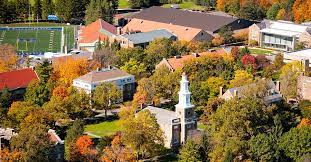
Scenes from Hamilton College VI: Junior Year in New Zealand

Note: This is Part VI of the Hamilton series. Part I, Part II, Part III, and Part IV and Part V are available.

Epigraph:

They all come and peep through a hole in the wall
Keep the bastards guessing
He likes to take the long way home,
It’s another fine decision

Peter Jefferies

I spent a full academic year, the second semester of my junior year and the first of my senior year, at The University of Otago in Dunedin, New Zealand. Otago is a pretty good university, but Dunedin is pretty small and kind of country. Overall, it was a good experience, but I was flat broke and not on a meal plan due to an oversight by I guess myself and my parents. More on that later.

After I landed, I spent one night at a hotel and bought a bottle of wine, for the first time in my life. I was of legal drinking age in New Zealand. I drank about three-quarters of it and was a little hungover the next day. At Hamilton people did not drink wine.

The first few days I was on a homestay in the country with a sheep farming family. The father spent the day watching cricket, and then would rouse and take the sheep out and move them around, with sheepdogs and all. I remember going to a local pub with two of his sons and their friends and we had five or six beers and they drove home. On the drive home they tried to run over rabbits on the road, and roared with delight when they got close. That was a scene.

Then, I went back to Dunedin, and met my roommates who were all in graduate school studying to be teachers. These were Tim, Ho (who was of Maori descent), Sharlene, and Donna. Tim was a musician and there was a large piano in his room. The roommates were good folks, however I think I disappointed them a little because they asked for an American roommate and were apparently expecting someone really flamboyant and loud. I was not that, and kept to myself much of the year. One time though that I lived up to their expectations was when Tim once again said “you’re from Washington D.C.” and I said “I’m not from fucking Washington D.C., I told you before I’m from Washington State!” Tim said to the roommates, “I told you rooming with an American would be fun.”

There were a number of other exchange students from the U.S. there and I got to know some of them a bit at first, but for some reason I was a little standoffish, and we didn’t hang out much after the first week or so. I was back into running, not smoking and barely drinking, although I did go out once with Ho and his Maori friends and got blasted. I would run 8-10 miles a day, sometimes more, and was in training for a marathon.

As I mentioned, my food situation was bad. We had neglected to put me on a meal plan, and I think my parents didn’t even know this, and at first I chipped in what I could to the communal roommate shopping. However, they ate very poor quality mutton all the time and I just couldn’t hack it. Mutton is pretty bad at the best of times, and cheap mutton is awful. So I went off the roommate plan and ate mostly trail mix for dinner. Trail mix, it turns out, is among the best value for money food around. I would buy raisins, peanuts, and carob chips and that’s what I ate at the flat. For lunch I would eat one apricot yoghurt bar and a cup of coffee, costing around $3.50 NZD. I would eat super slowly, taking about 45 minutes to finish the apricot bar and somehow this made me feel like I’d had a meal. I was living on about $7 NZD a day and was hungry all the time. With this and the running, I was also super thin.

At Otago I studied some more literature, and also a lot of Indian History, with a focus on Ghandi. I learned a great deal about Gandhi this year, and found him interesting. One incident I recall was in one class on Buddhism the professor assigned a paper on Zen. I had the bright idea to turn in an empty paper, which I thought would be symbolic, but the professor was a step ahead of me. “Don’t try and turn in an empty paper for this,” he said, “I’ve seen that move before.”

One more interesting thing that happened was when I was invited to the faculty club for drinks by my Australian literature professor. He was in his 60’s and was an Otago lifer. At first I was kind of flattered to be invited, however on arrival it was clear he had other motives. He started hitting on me in a most egregious manner, and it was obvious he had done this many, many times. I had two drinks and politely removed myself. To his credit this had no impact on how he treated me in class, and things went on as normal. I guess it was all par for the course.

The Otago campus was on the north side of town, and the south side was said to be pretty rough. “Don’t go down there,” I was told more than once, “it’s dangerous.” But I thought it couldn’t be that dangerous, so one day I walked down there by myself to check it out. There were a lot of industrial areas and such, and it was a little run-down, but I got home safe just fine. I suspected that “dangerous” in a New Zealand context might mean something a little different than in a U.S. context.

My roommate Sharlene had a friend who just had a breakup and Sharlene wanted us to get together. She invited us both to a party, and sure enough we started making out, under a table as I recall. It just lasted that one night, but Sharlene thought it was hilarious. “They were pashing,” she cried, “pashing away.” Pashing is apparently Kiwi slang for kissing, or maybe it was a Sharlene original.

Sharlene had a stepfather and I visited his house once. He had a nice car and complained on and on about how many tickets he would get from traffic cameras. Traffic cameras were on the scene in 1995. This appeared to be his only topic. He should have driven more carefully.

After the pashing incident, there was another girl who was interested in me. I forget her name, but it started with an M. M. was really into me, maybe because I read a lot and so did she. There was a kind of club place for students with TVs (I remember watching the O.J. Simpson car chase there), and I would hang out there. M. would come in and lob a snickers bar from over my shoulder for me and buy me a coke. This was really nice and super helpful because I needed all the calories I could get. M. wanted to get together, but I wasn’t into it. We did spend a fair amount of time together, at the club and going to the bookstore with another friend of hers.

As I mentioned, I was in good running shape this year and actually went out for a marathon. I was doing great through the first half, but started to fade really bad around the 20 mile mark. I had terrible blisters and pulled my groin and couldn’t imagine doing another 6 miles, so I pulled up. I asked a couple with a car for a ride to the finish line where there were buses, and they gave it to me but made it clear they were not impressed with me packing it in. I wasn’t impressed with myself either, but marathons hurt like hell.

In addition to running, and starving, I also went out for Aikido. Aikido is a Japanese martial art, and I was already well on my way to my Asian Studies minor and was getting into all things Asian. Aikido was taught by a white couple, and this was their life. They were ok teachers, but the atmosphere was just a little culty. Despite my father’s fears, I have never been amenable to cults-like scenes. I stuck with it for a number of months however, and managed to get my first belt.

I don’t remember listening to a lot of music that year because I don’t think I had a stereo in my room, however, one day on the radio I did hear a song I immediately fell in love with. This was “The Fate of the Human Carbine,” by a Dunedin artist called Peter Jefferies. It was spooky and weird and totally captivating. Cat Power would later cover it, and lines from this song serve as the epigraph for this piece.

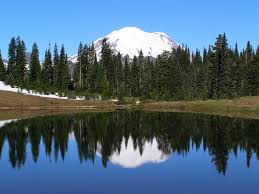
One more thing that happened this year was that Jenny from Hamilton visited. I don’t think she came specifically to see me, but I’m not sure. I was traveling, with god knows what money, in the New Zealand Alps which are on the South Island there and are really lovely. Jenny and I stayed at a hostel, and hung out which was really cool. That’s the same trip when I went for a walk in deep snow and almost died when the snow suddenly came up to my neck. Deep snow is almost as dangerous as the ocean, it turns out.

Those are my memories of New Zealand. Despite being so broke I had to eat a 45 minute apricot bar, it was a good year and I got really good grades. My academic focus would fall off, however, when I got back to Hamilton, but that’s a story for the next post.

Dedication:

For apricot bars and trail mix. You literally saved my life.

Scenes from Hamilton College I: Meeting Ian and Jake

New Note: It’s been a while since I last posted this piece, and I’m glad to bring it back here as a republication. “Hamilton I” remains one of my favorite entries on the Kyoto Kibbitzer—an early chapter built around friendship, music, and the strange, formative textures of freshman year, especially the central presence of my good friends Ian and Jake, who shaped so much of that time. It’s also one of the more widely read pieces on the site, which I appreciate. Re-reading it now, I’m struck by how much of what came later was already there in embryo: the scenes, the sounds, the late nights, and the people who mattered. As always, thanks for reading.

And I recall the moment
More distant than it seems
When five green queens
On a black bin bag
Meant all the world to me

The Pogues

I attended Hamilton College, and managed to graduate–possibly in linen. At Hamilton I was an English major, and intended to be from when I enrolled. This was a decent choice; however both Hamilton and English were kind of my father’s choices. I also managed to cobble together an Asian Studies minor through the good auspices of my advisor who checked out my credits and told me I could put that together. This was a good call on his part, and even though I kind of stumbled into it, The Asian Studies minor was my choice.

I was pretty unprepared for college. Before going I was asked to fill out a kind of questionnaire to help the college place me with roommates. One of the questions was, are you clean, messy, or in the middle. I chose in the middle, which was sort of a mistake because it turns out men are pigs, and I was cleaner than most. At the same time though it wasn’t a mistake because if I had selected clean I may not have met Ian and Jake. Jake was my roommate, and we lived in a quad. The other two roommates were Brian and Geoff, and although I had a relationship of a sort with both of them freshman year, we were not really on the same page. Jake and I were. Ian was our next door neighbor, and he roomed with Marc Campbell, and two other people. Ian, Jake, and Marc are still in my life.

My parents came with me to upstate New York, and before I moved into the dorm we stayed for a few days in a hotel near campus. I was kind of apprehensive, and spent the days listening to The Pogues and quietly stressing. But when I moved into the quad things were fine. This was mostly because of Jake.

Jake was a bit of a wild character. He was from either New York or Connecticut as I recall, and I think he came from decent money. When I visited his house later that year it was very patrician, for lack of a better word. His father seemed like a super old-school WASP patriarch, and his mother didn’t work I don’t believe. His younger brother held right-wing political views at the time, while Jake was a lefty. This was a point of serious disagreement between the brothers, but other than that the family seemed pretty solid. I believe that his brother has since switched his political views.

I didn’t meet Jake’s family until Thanksgiving however, and got to know him first in the context of the quad. We lived in a dorm called North, on the first floor right by the door. (My buddy John Innes, who joined me at Hamilton from our high school lived in the neighboring dorm Kirkland, and next to that was South.) The door to North would be locked at night, and other dorm folks would regularly misplace their key and crawl through our always open window. Jake and I rarely slept, and I got in the habit of staying up until about five AM. After that I would get a little sleep before first period English class. Then I would attend Geology class, which satisfied some kind of Science graduation credit. For English class I was alert and on top of it, although I was still hand-writing my papers, which changed once I got in the habit of using the computers in the library. English class was small, maybe 12-15 people, whereas Geology was huge and held in a lecture hall. I would go lay down in the back in the aisle and try and sleep. I ended up getting As in almost all my English classes, and a C- in Geology, which was deserved to an extent because of the sleeping. However, the main question on the final was brutal and pretty unfair, which was to draw a seismograph. Literally, draw one, which we had never studied and I did cram for the final. Brutal action. Somehow I still made the honor roll that year, and every year, because of my performance in the humanities.

Jake was an English major as well as far as I recall, I kind of forget, but he knew a lot of the teachers I knew. In any case, we did not bond primarily in the classroom, but in the dorm and then at “Sig,” the frat he was associated with and later pledged. Sig was the alternative frat. I hung out there a bit, but when pledge season started they kind of cracked down on non-pledges attending parties. For Halloween, Jake snuck me in early, and although that night I got a few looks I was good with Jake’s blessing. That night I wore all black with a turtleneck and a paper sign on my back saying “No future for you.” As in the Sex Pistols. I was talking with an older guy, an alum (there were always some alums that hung at the frat parties at Sig) at the party and he said something to the effect of “I like you, but I don’t like your shirt.” OK dude.

That was the same night I believe that inspired the following little ditty I later shared with Jake:

I pissed in the toilet

He pissed in the sink

He said I haven’t got a god above

I haven’t got a drink

Jake later took umbrage with the lines, not the sink part, which was and remains credible, but the god part. I think he is, or was, a believer. In any case, he’s my friend and won’t sue.

I appreciated Jake showing me the ropes at Sig and elsewhere. In the dorm we would play his music–he was into the classics, Beatles and Stones, Kinks, Bowie. We would sing “The Ballad of John and Yoko,” and “Come Together,” mostly the former over and over, no doubt to the annoyance of our roommates. Jake also liked The Pogues, and this made me think even more highly of him.

Jake smoked, Marlboro Reds, and I soon started smoking too, the same brand. This was not out of a desire to be a smoker, but rather as a way to keep my hands occupied and look busy at parties, where I had some difficulty mixing. I picked up, or invented, a little trick where I would fold up the flaps of a cigarette pack so they looked like a paper airplane, and then lob the cigs around the room, usually to any girl that wanted one. This got me some attention and some affection, and I kind of became known for the move. It didn’t get me laid, but at least it was something. Jake and I were fast friends, and hung out a lot in the early part of the year, before he began to branch out. Once he started pledging Sig though I saw less of him, naturally enough I guess.

By the time Jake started pledging, and even before, I was spending more time with Ian. Ian was from Boston and his father was a medical doctor. He lived in a nice house in the suburbs–both Jake and Ian had quite a bit more money than I, a common feature at Hamilton where pretty much everyone had money expect me. I was on a pretty decent scholarship, despite my not so impressive high school record, and could not have afforded the school without the scholarship. I visited Ian once or twice I believe in college, and then stayed with his family for a few months in the fall after college, but that’s a story for a future post.

Ian had a massive record collection in his quad, next door to mine as I have said. I liked Jake’s music, especially “Rebel Rebel,” “Come Dancing,” and The Stones, however his selection was somewhat limited. Ian’s was capacious. He was into bands like The Stone Roses, The Charlatans, Ride, and a bunch of other British bands I didn’t know at the time. But he was really into everything. I spent hours in Ian’s room soaking up his music, and my association with him kind of took over where Dyche Alsaker’s left off. I think it was Ian who also introduced me to Luna, who was coming up at the time and is still one of my favorite bands to this day. Later, in senior year I think, Ian and I had a radio show together and one night we got to play records all night long when a few other people canceled suddenly. I would play The Replacements and the Pogues, and Ian would play his music, but I was also getting deep into the 4AD label and bands like Big Star, This Mortal Coil, and a little known band called The Binsey Poplars (who I’m not sure were even on 4AD), named after a Hopkins poem. But my favorite around that time was Nick Drake, who was on Rykodisc.

Drake is now pretty well known, mostly on the back of his song “Pink Moon,” which was featured on a Volkswagen commercial, but back then he was not well known outside serious music circles. I loved his song “Rider on the Wheel,” and was an evangelist for him, telling all and sundry to listen. Most people didn’t, of course, but the whole move was just odd enough to get a little attention, which I was definitely seeking. (Another friend from that time John mentioned to me a few years ago that I would sit on the front steps of his frat in my trench coat and read a book. I don’t really remember this, but if it’s true it was for sure for attention.) I remember one evening Ian had a kind of band that was playing and I “opened” for them. My act was simply talking about Nick Drake, painting him as a forgotten genius, which he was, and pleading with the crowd to listen. It went over pretty well, like I said probably just because it was different.

Later on, mostly the next year I think, Ian and I went to a few shows in Boston, including The Red House Painters, The Fall, and Love Spit Love. Ian would drive, and blast The Pogues with the window down to stay awake on the way home. Before one of these shows we managed to source a little green, which was enjoyable. We would park, illegally, in some lot Ian knew. In the lot, there were rats.

Jake and I were sort of on the same level–both semi-degenerate English majors–but Ian I looked up to. He was definitely the leader in the friendship, although he must have seen something in me because we hung out a fair bit. Ian was also friends with Marc, but he was perhaps closer to another group of guys who lived in two adjacent quads on the third floor. This included John and a guy called Will. I would go up there too, and Will would ask “what Dead do you want to listen to?” I always went with Reckoning because I liked the country-folk sound and the song “It Must Have Been the Roses.” I liked the third floor guys too, especially John.

Next door to Jake and my quad was Adam and Basmo. Adam and Basmo (a nickname) were seniors who for some reason decided to stay in what was basically a freshman dorm. Adam was cool, but pretty grown up. Basmo was still a kid, and loved to get high. Loved to get high. Early on in the year he would come over and ask “anyone want to get stoned and session?” A session, it turned out, was you would smoke, put on The Beatles, and watch Bugs Bunny or something with the sound down. The idea was the music would synch up with the cartoon and it would be hysterical. It totally worked, although I just liked to listen to music and bullshit rather than session. Real heads will remember the session. (Jake told me that sadly Basmo later took his own life as a result of the worsening effects of ef. That was really too bad because Basmo was just a pure open-hearted soul.) So basically we would get stoned when we could, smoke Reds, and stay up all night and listen to music, which was a pretty decent life all in all. Jake and Ian took me in, and made the first part of freshman year so much better in all ways than it would have been if I hadn’t known them.

Dedication: For Ian and Jake, for seeing something in me, and helping make me a little somebody.

to be continued…

Note: If you liked this piece, you may other like the other pieces below in the Hamilton series.

On Being Early to Shows

Note: Getting to shows early, I realized, isn’t really about beating the crowd but about entering the space before it hardens into an event—when the room is still provisional, the bartender relaxed, the band half-mythical figures moving casually through soundcheck, and the whole night feels less like a performance and more like something forming in real time; you notice the lighting before it matters, the empty floor that will later surge, the stray conversations, the merch table still untouched, and sometimes—if you’re lucky—the musicians themselves, unguarded and human, which subtly rewires the experience so that when the set finally begins you’re not just watching a show but inhabiting a continuum that started hours earlier, a private prelude that rewards patience, sharpens memory, and turns what could have been just another concert into a small, self-contained narrative of anticipation, proximity, and the quiet pleasure of being there before everything becomes official.

Epigraph
“There’s a thin line between a guy with a backstage pass /
and a guy walking around with his gut hanging out like a jackass.”

— Sun Kil Moon, “Ben’s My Friend”

I’ve always been fascinated by the green room. First of all, why green? They can’t all be green. Second, there’s the whole rider situation. The rider is where things get really interesting. I think it was Van Halen who had in their rider that all the brown M&Ms had to be removed from a bowl. This sounds totally bizarre, but the point was attention to detail. If the venue screws up the M&Ms, they might screw up something much more important, like stage rigging or pyrotechnics. The M&Ms were just a test.

Other riders go in different directions. Iggy Pop reportedly asked for things like a Bob Hope impersonator and other surreal odds and ends, more like performance art than hospitality. Meanwhile Beyoncé is famous for highly controlled riders: temperature, lighting, water, environment, everything calibrated. One approach is chaos, the other total control. Both happen in the green room, which most of us never see.

My first concert was Dire Straits in Pullman, Washington, in a big arena. I was nowhere near the green room, of course. Most of us aren’t. So the real question becomes: what happens before the show, if you’re not backstage?

One answer came when I saw They Might Be Giants in Spokane with my friend Kelly Rudd. Kelly told me his cousin was in the opening band. They got paid twenty bucks for the show. The whole band. Twenty dollars. Totally unbelievable. Outta fucking control. TMBG were already a pretty big indie band, “Birdhouse in Your Soul” had been a hit, and I liked “Istanbul (Not Constantinople)” quite a bit. But after hearing that story I never quite looked at them the same way. The green room fantasy took a hit. Backstage wasn’t glamorous. It was twenty bucks and a handshake.

Another time I went to see Cat Power at the old Club Quattro in Osaka. I got there early, of course, and there was an opener dressed like a fairy with fuzzy, messed-up hair who sat down at the piano and proceeded to play dirge after dirge for what felt like an hour. Solo piano can be great, but this was brutal. I honestly thought I might have to cap myself. At some point I checked my ticket just to make sure this wasn’t actually Chan Marshall. It wasn’t. Thank god.

Then Chan came on and instead of playing from the stage like other artists do, she wandered through the crowd with a wireless mic, half-rapping, half-singing, talking, improvising. It wasn’t really a concert. It was more like some kind of performance art happening. Totally outta control. If I’d come late I would have missed the whole bizarre prelude. Being early meant enduring the dirges but also getting the full weirdness of the night.

Another early-arriver adventure came when I saw Deerhunter at the Hostess Club Weekender. These shows started early and stacked openers all day long. I once saw Mogwai at one of these and had to leave after fifteen minutes because I was hungry, tired, faded, and they were boring the living shit out of me. It happens.

The Deerhunter show in Osaka was even more outta control. The headliner was scheduled for 7 PM, but there were something like six openers. One of them was Ivo Watts-Russell of 4AD, a legendary figure, but he droned on so long that by the time Deerhunter came on they only had about forty minutes. Bradford Cox introduced him with dripping sarcasm, emphasizing “LABEL BOSS,” clearly taking the piss because the band’s time had been cut. I ended up having to see them again months later in Nagoya to get the full set. That’s the risk of being early: sometimes the openers eat the show.

The flip side came when I saw The Hold Steady at the Brooklyn Bowl in December 2018. I arrived two hours early, ate a hamburger, and smoked up outside. That’s where I met Austin, a total Steadyhead. He knew everything: lineups, labels, deep cuts, all of it. We talked music, smoked, and waited. When doors opened we grabbed territory near the stage with the other early-arrivers, a semi-cliquey group of diehards.

Later, when Austin wanted to get back to the front for the encore, he told me to follow him. He moved through the crowd at a half jog and the people parted in front of him like he was Barry Sanders hitting holes. Seconds later we were hugging the stage. I knew then I was in the presence of greatness. I also knew he was my friend. I didn’t get the VIP meet and greet, but getting there early gave me something better.

My one true VIP experience came when I saw The Afghan Whigs in Amsterdam in 2017 at the Paradiso Amsterdam, a beautiful converted church. I arrived three hours early, met Greg Dulli and the band, took photos, bought merch, and watched soundcheck with maybe fifteen people. They played “Going to Town” acoustically, which was a revelation. Later they crushed the full electric set, ending with “Faded.” I paid fifty bucks for that meet and greet and it was completely worth it. Being early paid off directly.

Getting to shows early, then, is not really about the green room at all. The green room is a kind of fantasy—green walls, bowls of M&Ms, riders with impossible demands. Most of us never see it, and even when we do, it turns out to be smaller and more ordinary than imagined. And probably not even green. The real action happens in that strange in-between space before the show: the smoking area, the empty floor, the long wait while the openers drift on and off.

If you arrive early, you get all of it. You get the terrible fairy-piano dirges and the label boss who drones on too long. You get the moment of doubt when you check your ticket and wonder if this could possibly be the headliner. You get the rail territory battles and the cliquey early crew. You get the conversations with strangers who turn into temporary friends, like Austin, who parts the crowd like a halfback and gets you back to the stage in seconds. You get the soundcheck if you’re lucky, the acoustic revelation, the quiet before the storm.

Most of all, you get time. And time at a show is a funny thing. Once the lights go down, everything compresses. The band plays, the songs blur together, and before you know it the encore hits and everyone spills out into the night. But if you were there early, the show feels bigger. It has a beginning, a middle, and an end. You saw the room empty and then full. You watched the night assemble itself.

So while some people drift in late, grab a drink, and wait for the headliner, I’ve always preferred the long route. Get there early. Kill time. Smoke a cigarette. Talk to whoever’s around. Endure the openers, good or bad. Maybe you meet someone. Maybe you don’t. Maybe the band walks through the room. Maybe nothing happens at all. But every once in a while, if you’re lucky, something does. And that, in the end, is why I like to be early to shows.

Dedication:

For music lovers everywhere. You are my tribe baby.

On My Dad’s Ridiculous Climbing Strategies

Note: This is a new piece about my dad, Ross Thomas (RO), and his truly unbelievable climbing strategies. The central episode took place in Stehekin, Washington, many years ago, when RO led my brothers and me on an attempt to reach Castle Rock that quickly devolved into heat, dense forest, no water, and general mayhem. There is also a later coda involving a climbing gym in Portland that is, in its own way, even more outta control. This piece is comic in nature, but also affectionate. My dad is a great man, a brave man, and a very game climber. He is just not, in this one specific domain, a planner.

Send lawyers, guns and money — the shit has hit the fan
— Warren Zevon, refracted

RO, is a great man and a terrible climbing strategist. He is brave, energetic, physically game, and in most areas of life basically well organized. He was a good high school English teacher, a very good administrator, and for many years an excellent and meticulous girls’ basketball coach. He is not, in other words, some kind of general life-space incompetent. Quite the opposite. Which is what makes his climbing strategies so difficult to understand.

They are ridiculous. They are unbelievable. They are officially, historically, and totally outta control.

I say this with love.

The central case study here took place in the mid-2000s, let’s say 2005, when our family was staying in Stehekin, Washington, out on Lake Chelan. If you have never been to Stehekin, it is a beautiful and slightly improbable place, the kind of place that already feels like the beginning of a story. Lake Chelan is huge, and you get out there by ferry, which means from the jump there is a sense that you are committing to something. People camp there or stay in cabins. We were in a cabin. My mom Claudia (CL), stayed behind. RO, meanwhile, had a plan.

The plan was that RO and his sons — Mike (MI), Pat (PA), and me — would hike up toward Castle Rock.

Now, one thing about family expeditions is that “the plan” is often not really a collective possession. It belongs to one person. The rest of the group is more or less there to follow along. In this case, the plan belonged entirely to RO. MI and PA and I were, broadly speaking, along for the ride.

As I remember it, we started from Stehekin and walked about three miles just to get to the trailhead, then hiked a few more hours uptrail to where we stopped and camped the first night. It was already a decent undertaking just to get there, but this was, in a sense, merely the prelude. The true RO strategy had not yet fully revealed itself.

At around dusk, after we got to camp and set up the tent and got ourselves sorted for dinner, RO decided he was going to scout the route for the next day. This seemed reasonable enough. It is in fact the sort of thing a prudent leader might do. Only instead of scouting further up the trail, or perhaps generally uphill toward the place we were trying to go, RO for some reason headed downriver.

Why did he do this? We did not know. It was back downhill. It seemed unrelated to the objective. Even at the time it had the feel of one of those decisions that makes perfect sense only to the person making it.

Ross Thomas: The trail kind of petered out eventually and didn’t really lead to Castle Rock anyway.

Fair enough. I want RO’s side of the record included here. But even granting this, and I do grant it, going downriver in the late evening did not strike the rest of us as a strong opening move.

Sure enough, RO fell in the river and got completely soaked.

This was the first of many mistakes he would make on the trip.

He came back to camp late and dripping wet, having apparently developed an immediate a bizarre attachment to that river. The water was cold. The evening was cool. He changed clothes, we had dinner, and we went to bed. At this point, there was still some chance that the next day might somehow become normal.

It did not.

The next morning we got up early, had breakfast, and prepared to head out. My assumption — based on reason, precedent, and the literal existence of trails — was that we would continue on the trail. Instead, RO decided that we were going to bushwhack straight uphill through an extremely dense forest in the blazing heat.

This struck me as a bad plan.

It was a bad plan.

The forest was thick enough that you could not really move with any rhythm. We were not hiking so much as negotiating, arguing, and physically contesting with the landscape. Every movement took extra energy. Progress was incredibly slow. The heat was serious. And the main problem, which quickly became the only problem, was that there was no water. Not a stream. Not a trickle. Not a suspicious puddle. Nothing.

Now, RO for reasons that remain mysterious to me is not a big water drinker. He prefers beer and tea. Under ordinary conditions this is merely a personality trait. On a hot uphill bushwhack through dense forest it becomes a strategic liability.

Naturally, we asked where the water was.

Ross Thomas: I had read in a Fred Beckey book that there was a way to get up to Castle Rock, although I think Beckey had only heard about it and never actually done it himself.

This is, in its way, a perfect Ross Thomas detail. Fred Beckey, the legendary climber, had perhaps heard there was some route, though he had not personally taken it. This was enough for RO. A rumor in a book by a famous climber became an operating plan.

As for the water situation, RO told us — and I remember this vividly — that there might be some in about five miles.

Five miles!!!

We were already fighting for our lives up there, and this crazy man was calmly informing us that in only another five miles there might, possibly, perhaps, be water.

He’s totally outta control.

At some point, after what I recall as roughly three miles of this lunacy, we basically mutinied. Or perhaps mutiny is too strong; let’s call it collective realism. We told RO the obvious, which was that this was not going to work. The route was no good. The heat was too much. There was no water. We had to turn back.

And so we did.

Now the descent was interesting because it brought out our distinct styles. RO, MI, and PA were making their way down carefully, gingerly, responsibly. I, on the other hand, was absolutely flying. Swinging from tree to tree like some kind of deranged monkey, just ripping downhill through the forest. This part RO loves to tell to this day, and I admit it was one of my better athletic showings. I was not going to die of thirst in that forest and I was not going to descend politely either.

Eventually we made it back to camp. Or rather, most of us made it back to camp together. RO, in one of those small but meaningful complications that tend to gather around him in climbing situations, got separated from us and somehow ended up down by the river again.

And yes, he fell in again.

He really must have loved that river.

So now here he comes back to camp once more, drenched, and by this point we are all in total agreement that the trip is over. We are done. It is time to 86 the hell out of there.

So we break camp and head down toward the lake shore. But this presents a new problem. We still have a significant walk to get home — something like another two miles down to the shore and then, as I remember it, another three miles around the lake. And by now it is dusk. So this is not really viable either. We are hot, tired, and in no mood for an elegant final act.

At this point RO does what he often does in these situations, which is simply assume that reality will provide.

He found a guy with a motorboat and asked if he would take us back to Stehekin.

The guy said sure. Fifty bucks.

RO then informed him that he did not actually have fifty dollars on him, but could get it from his wife once we got back to the cabin.

Somehow, by what can only be described as grace, audacity, or a temporary breakdown in the boatman’s judgment, this worked. We got in the boat, got home safely, and made it back in time for dinner.

That was Stehekin.

CODA

You might think the lesson here would have been: bring water, stick to trails, do not base wilderness plans on rumor, avoid rivers if possible, and maybe do not lead your sons into dense forests in the hot sun in search of a semi-mythical route described secondhand by Fred Beckey.

You would be mistaken.

Many years later, when RO was Principal of Valley Catholic High School, he got really into climbing at a gym in Portland. It is a cool place, run by a father and son, and it has beginner, intermediate, and advanced climbs. He took me and MI and PA there, and later my son Hugh as well. Hugh loved it. He scampered up the walls like he had been waiting for exactly this sort of thing his whole life. I like climbing too, though my arms get tired pretty quickly and I tend to fade. MI and PA are both good climbers. RO, to his credit, also has strong stamina.

So one day my wife and Hugh and I were there with him. We’d been climbing for a few hours. I was on the mats, faded, taking a break. Hugh was still going. RO was showing him some moves. Then RO started up one of the big walls — one of the long climbs, the kind where you need the harness.

Only he had forgotten to put the harness on.

Hugh saw this before anyone else did and yelled out:

RO, get down now!

And RO did.

For the next year, RO loved telling the story of how Hugh had saved his life. Quite right too. It is a great story. My son saved my dad from one of my dad’s own ridiculous climbing strategies. The circle was complete.

But then, about a year later, shortly before RO retired from the principal job in 2018, he was back at the gym by himself. This time the only other people there were the owner and his son. And somehow — incredibly, impossibly, yet also in a way entirely consistently with the established Ross Thomas climbing tradition — he forgot the harness again, started up the big wall, and fell.

He crashed all the way down onto the mat.

The mat saved his life, no question. But his feet and knees and legs got absolutely busted up. He was in a wheelchair for months. It was so bad that he had to move temporarily out of the country house in the woods where he lives with CL and into a little bungalow on the Valley Catholic campus owned by the nuns that founded and still run the school. He could barely work. To this day his feet remain a total mess. He has trouble driving and has to drive with his shoes off and wearing some sort of thick sock or something.

At one point we wondered whether he might sue the gym owner for negligence. But RO wanted no part of that. He said it was his own fault, not the owner’s.

Fair enough.

And then, after many months, he mostly recovered. Which means this story has, if not exactly a happy ending, at least a decent one. Better still, as soon as he was recovered he went right back to the gym and started climbing again!

This is what I mean.

His climbing strategies are ridiculous. They are unbelievable. They are officially, historically, and totally outta control. He does not plan for basic things such as the route, the water, or how exactly one might avoid miles of dense forest. He does not always remember the harness. He seems, in climbing situations, to operate according to a distinct internal logic unavailable to the rest of us.

And yet outside of climbing, this makes almost no sense. He is, as I said, a basically well-organized guy. He planned lessons. He coached meticulously. He ran a school. In most areas of life he is not slapdash at all. Which makes the climbing thing not just reckless but anomalous. It is a localized mystery. A glitch in an otherwise coherent system. I do not understand it and at this point I do not expect to.

What I do know is this: to this day I avoid climbing with him because in this one particular area I do not trust his judgment at all.

I love the man. But when it comes to climbing, he is not to be trusted.

Dedication:

For my dad. I love you baby but you are totally outta control.

On it, Pete

Note: Some stories get better in the telling. This one doesn’t need to. It arrives fully formed—one line, perfectly placed—and has stayed that way ever since. I’ve told it for years and it still lands exactly the same. No embellishment required.

It’s September, 1989.

Two new teachers had just arrived at St. George’s School in Spokane, WA. These are Paul Hogan and Pete Aiken. Paul would go on to have a long and distinguished career, eventually becoming Principal of Jesuit High School in Portland—a major job, the kind that makes a life. I have no idea where Pete is today.

That night, my dad Ross invited them over to the house for dinner. It was one of those late-summer evenings that still carried a little warmth but hinted at the coming turn. Ross was out back at the grill, working over the barbecue with a beer in hand. The adults clustered nearby, talking, drinking, getting to know the new arrivals. There was that particular tone of adult conversation—half-professional, half-social, everyone just slightly aware of roles and impressions.

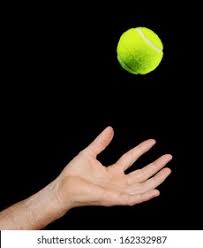
Out in the yard, it was just the three of us: Pat, Mike, and me. We were playing catch with a tennis ball. Nothing serious. Just throwing it around, loose, casual, the way kids do when the game isn’t really the point. At some point, either Mike or I made a bad throw. It sailed wide of Pat—too far, too high—and rolled past him.

A completely ordinary moment. The kind of thing that happens a hundred times in a backyard, in a summer, in a childhood.

Pat was six. He didn’t chase the ball. He didn’t complain. He didn’t turn to us. Instead, he turned—calmly, deliberately—and looked over at Pete Aiken, one of the brand-new teachers, a guest in our home, a man he had just met. And in a tone of quiet assurance, as if assigning responsibility in a meeting, he just said:

“On it, Pete.”

That was it. No smile. No wink. No awareness of what had just happened. The ball was recovered. The game went on. The adults kept talking. The evening continued. But something had shifted, just slightly, just enough.

Because in that moment, a six-year-old child had somehow crossed the boundary between worlds—between kids and adults, between play and work—and issued a line that did not belong to him, but fit him perfectly.

I don’t remember what happened next. I only remember that line. And I remember that we have been laughing about it ever since.


The On It Pete Blues (Pete’s POV)

I was new to the city, new shirt, new street,

Standing in a backyard trying hard to be discreet,

Ross on the grill and the talk running deep,

Just another first night—then I heard, “On it, Pete.”

I hadn’t been briefed, hadn’t learned the terrain,

Didn’t know the house or the shape of the game,

Just a beer in my hand, trying not to overreach,

Then a six-year-old turned and delegated to Pete.

Now I’ve worked in schools, I’ve handled my share,

Rooms full of noise, moments needing repair,

But nothing quite like that clean little feat—

Being calmly assigned by a kid in bare feet.

No panic, no pause, no doubt in his beat,

Just a glance and a nod—“On it, Pete.”

And the ball got found, and the night rolled on,

But I knew right then something strange had gone on—

In a yard full of voices, one line cut through the heat:

I wasn’t just visiting.

I was on it.

Pete.

Dedication:

For my brother Pat. And for Pete. Just get on it already baby.

Note: If you liked this story you may also like the stories below, which also cover my time at St. George’s High School.

On the Safe Space (aka Corner Girl)

Epigraph:

Heather, remind me how this ends

Dolorean

I’ve been trying, lately, to understand the early spaces in my life where safety and memory intersect — the brief rooms in time that opened something in me before I even had language for it. Some moments don’t turn into stories, but they still leave a shape. This is one of those moments.

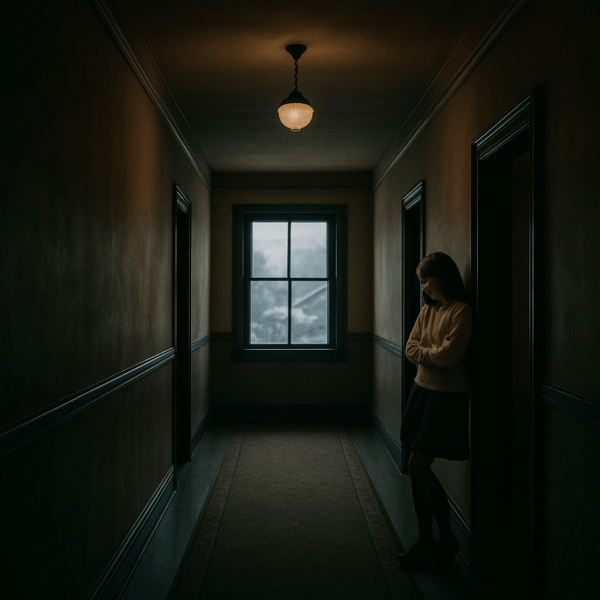
The Christmas Dance wasn’t held in the high school that year at all. It was downtown, in one of those Spokane venues that tried to look older than the city around it — chandeliers, carpeted floors, bathrooms with real mirrors. We had been dancing all night, the kind of teenage drifting where everyone is shy and bold by turns. And then it was over, and people were peeling away, breaking into rides and carpools and winter air.

She and I ended up in the hallway.

We were already wrapped into each other — that soft, accidental teenage cuddle that feels both unplanned and absolutely right. The near-near kiss wasn’t something either of us aimed for. It was just the way our faces happened to be turned, the warmth, the pause, the sense that one more inch would have turned the moment into something else entirely. Instead it stayed suspended, held in the exact shape it needed to take.

Her name was Blythe.

I used to say I wrote poems “for girls who told me they were pearls,” but that was just self-mythology. In truth, I only ever wrote for one girl. And she never asked for anything.

Most of the real fun we had wasn’t during dances at all. It was in the gym at Saint George’s in Spokane. For high school games, boys and girls, the gym would be packed, and during the boys games she would sit in the front-row, and every single time I did anything even vaguely ok — a decent pass, a shot that actually went in, a little rebound — I’d look over mid-play and smile, and she’d already be smiling. She was in my corner before I understood what that meant. She didn’t push. She didn’t need to. She just stayed.

There was a suspended electricity in those years — innocent, unclaimed, lightly glowing. We never really dated. We never made a move beyond the moment that almost happened and didn’t. But she calibrated me. She was my corner girl. And that mattered.

The ending came the way some endings do when you’re young — clean as scissors. She graduated. Life tilted. The season shifted. Nothing dramatic, nothing painful. Just a quiet snap. A door that didn’t slam but simply shut.

I miss what we could have been, but I don’t regret a thing.
Some connections aren’t meant to become stories.
They’re meant to become orientation.

I don’t go back to that time for longing. I go back because that was the first time safety arrived before desire — and because that pattern stayed with me. It’s how I know when something is real.

I don’t need anyone to remind me how it ends.
A hallway, a graduation, a clean break.
What I keep going back for isn’t the ending anyway.
It’s the part before — the girl in my corner,
the room that opened in front of me,
the feeling I carried forward.


Dedication


For Blythe, who stood in my corner before I even understood what that meant.

Note: If you enjoyed this piece, you might also enjoy the ones below which take up somewhat similar themes.

https://thekyotokibbitzer.com/2026/02/10/simona/