Note: Getting to shows early, I realized, isn’t really about beating the crowd but about entering the space before it hardens into an event—when the room is still provisional, the bartender relaxed, the band half-mythical figures moving casually through soundcheck, and the whole night feels less like a performance and more like something forming in real time; you notice the lighting before it matters, the empty floor that will later surge, the stray conversations, the merch table still untouched, and sometimes—if you’re lucky—the musicians themselves, unguarded and human, which subtly rewires the experience so that when the set finally begins you’re not just watching a show but inhabiting a continuum that started hours earlier, a private prelude that rewards patience, sharpens memory, and turns what could have been just another concert into a small, self-contained narrative of anticipation, proximity, and the quiet pleasure of being there before everything becomes official.
Epigraph
“There’s a thin line between a guy with a backstage pass /
and a guy walking around with his gut hanging out like a jackass.”
— Sun Kil Moon, “Ben’s My Friend”
I’ve always been fascinated by the green room. First of all, why green? They can’t all be green. Second, there’s the whole rider situation. The rider is where things get really interesting. I think it was Van Halen who had in their rider that all the brown M&Ms had to be removed from a bowl. This sounds totally bizarre, but the point was attention to detail. If the venue screws up the M&Ms, they might screw up something much more important, like stage rigging or pyrotechnics. The M&Ms were just a test.
Other riders go in different directions. Iggy Pop reportedly asked for things like a Bob Hope impersonator and other surreal odds and ends, more like performance art than hospitality. Meanwhile Beyoncé is famous for highly controlled riders: temperature, lighting, water, environment, everything calibrated. One approach is chaos, the other total control. Both happen in the green room, which most of us never see.
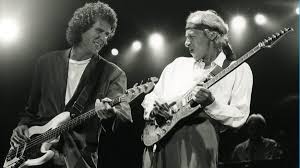
My first concert was Dire Straits in Pullman, Washington, in a big arena. I was nowhere near the green room, of course. Most of us aren’t. So the real question becomes: what happens before the show, if you’re not backstage?
One answer came when I saw They Might Be Giants in Spokane with my friend Kelly Rudd. Kelly told me his cousin was in the opening band. They got paid twenty bucks for the show. The whole band. Twenty dollars. Totally unbelievable. Outta fucking control. TMBG were already a pretty big indie band, “Birdhouse in Your Soul” had been a hit, and I liked “Istanbul (Not Constantinople)” quite a bit. But after hearing that story I never quite looked at them the same way. The green room fantasy took a hit. Backstage wasn’t glamorous. It was twenty bucks and a handshake.
Another time I went to see Cat Power at the old Club Quattro in Osaka. I got there early, of course, and there was an opener dressed like a fairy with fuzzy, messed-up hair who sat down at the piano and proceeded to play dirge after dirge for what felt like an hour. Solo piano can be great, but this was brutal. I honestly thought I might have to cap myself. At some point I checked my ticket just to make sure this wasn’t actually Chan Marshall. It wasn’t. Thank god.
Then Chan came on and instead of playing from the stage like other artists do, she wandered through the crowd with a wireless mic, half-rapping, half-singing, talking, improvising. It wasn’t really a concert. It was more like some kind of performance art happening. Totally outta control. If I’d come late I would have missed the whole bizarre prelude. Being early meant enduring the dirges but also getting the full weirdness of the night.
Another early-arriver adventure came when I saw Deerhunter at the Hostess Club Weekender. These shows started early and stacked openers all day long. I once saw Mogwai at one of these and had to leave after fifteen minutes because I was hungry, tired, faded, and they were boring the living shit out of me. It happens.
The Deerhunter show in Osaka was even more outta control. The headliner was scheduled for 7 PM, but there were something like six openers. One of them was Ivo Watts-Russell of 4AD, a legendary figure, but he droned on so long that by the time Deerhunter came on they only had about forty minutes. Bradford Cox introduced him with dripping sarcasm, emphasizing “LABEL BOSS,” clearly taking the piss because the band’s time had been cut. I ended up having to see them again months later in Nagoya to get the full set. That’s the risk of being early: sometimes the openers eat the show.
The flip side came when I saw The Hold Steady at the Brooklyn Bowl in December 2018. I arrived two hours early, ate a hamburger, and smoked up outside. That’s where I met Austin, a total Steadyhead. He knew everything: lineups, labels, deep cuts, all of it. We talked music, smoked, and waited. When doors opened we grabbed territory near the stage with the other early-arrivers, a semi-cliquey group of diehards.
Later, when Austin wanted to get back to the front for the encore, he told me to follow him. He moved through the crowd at a half jog and the people parted in front of him like he was Barry Sanders hitting holes. Seconds later we were hugging the stage. I knew then I was in the presence of greatness. I also knew he was my friend. I didn’t get the VIP meet and greet, but getting there early gave me something better.
My one true VIP experience came when I saw The Afghan Whigs in Amsterdam in 2017 at the Paradiso Amsterdam, a beautiful converted church. I arrived three hours early, met Greg Dulli and the band, took photos, bought merch, and watched soundcheck with maybe fifteen people. They played “Going to Town” acoustically, which was a revelation. Later they crushed the full electric set, ending with “Faded.” I paid fifty bucks for that meet and greet and it was completely worth it. Being early paid off directly.
Getting to shows early, then, is not really about the green room at all. The green room is a kind of fantasy—green walls, bowls of M&Ms, riders with impossible demands. Most of us never see it, and even when we do, it turns out to be smaller and more ordinary than imagined. And probably not even green. The real action happens in that strange in-between space before the show: the smoking area, the empty floor, the long wait while the openers drift on and off.
If you arrive early, you get all of it. You get the terrible fairy-piano dirges and the label boss who drones on too long. You get the moment of doubt when you check your ticket and wonder if this could possibly be the headliner. You get the rail territory battles and the cliquey early crew. You get the conversations with strangers who turn into temporary friends, like Austin, who parts the crowd like a halfback and gets you back to the stage in seconds. You get the soundcheck if you’re lucky, the acoustic revelation, the quiet before the storm.
Most of all, you get time. And time at a show is a funny thing. Once the lights go down, everything compresses. The band plays, the songs blur together, and before you know it the encore hits and everyone spills out into the night. But if you were there early, the show feels bigger. It has a beginning, a middle, and an end. You saw the room empty and then full. You watched the night assemble itself.
So while some people drift in late, grab a drink, and wait for the headliner, I’ve always preferred the long route. Get there early. Kill time. Smoke a cigarette. Talk to whoever’s around. Endure the openers, good or bad. Maybe you meet someone. Maybe you don’t. Maybe the band walks through the room. Maybe nothing happens at all. But every once in a while, if you’re lucky, something does. And that, in the end, is why I like to be early to shows.
Dedication:
For music lovers everywhere. You are my tribe baby.