The Adventures of the Thin Man and Andrea II: The Thin Man’s Son. CHAPTER 1: The Thin Man in Tokyo

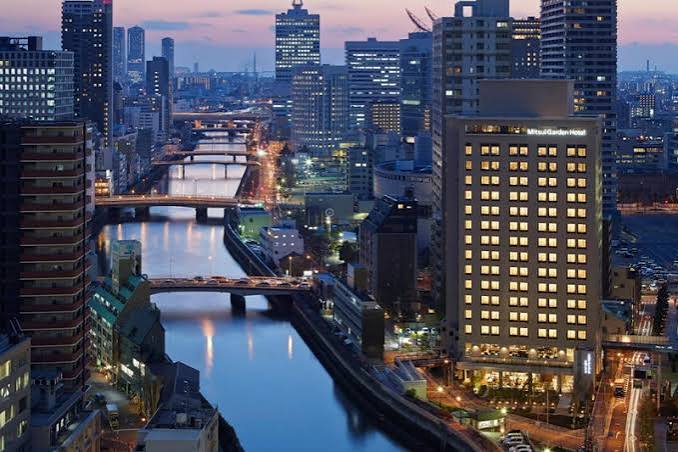
TOKYO — 1:13 PM, late January

He wakes up without remembering the descent. Not the drinking. Not the last message. Not the shape of the night leaving his body. Just the slow return of weight.

The house is rented, not lived in. A clean, architectural expanse in western Tokyo—glass, pale wood, too much air between objects. The kind of space that does not ask questions because it assumes nothing will answer.

He sits up once, then stops. 1:13 PM. The afternoon has already begun without him. He lies back for a moment and listens to the silence of money maintaining itself. There is a bottle on the floor beside the bed. Half-finished. Warm now. He doesn’t look at it again.

He stands, showers without thinking, dresses in the order that muscle memory dictates: black shirt, trousers, jacket. No tie. Never a tie unless someone insists.

His phone is already lit when he returns. Two messages. One from Tomoyo.

“Weekend still okay?”

One from Mina.

“Bar As One. Late.”

He reads them without responding yet. Then another notification appears. A different rhythm. Alejandro.

No name attached. Just the letter cluster, like something filed incorrectly in a system that never bothered to correct itself.

“Need you in Akasaka. KBS situation. Quiet, but messy.”

He stares at it longer than he should. Then:

“Corporate accounting discrepancy. Possibly internal extraction.”

That word—extraction—is always a translation problem. It never means only one thing. He exhales, once.

And for the first time that day, he is fully awake.

KYOTO — That Same Day

I am in my classroom when I see the notification. I’m not during anything important. Just one of those pauses between things where students are pretending to work and I am pretending not to notice they aren’t.

The phone is face down. I flip it. It’s Signal. I don’t even check the sender first anymore; I know it’s from the Thin Man.

“Akasaka. KBS. Quiet job.”

That’s it. No greeting. No explanation. No punctuation beyond necessity.

I look up at the room. The students are writing essays on narrative voice, ironically enough. I tell them to keep going and step into the hallway.

Outside, the corridor smells like floor wax and winter coats that never fully dry. I write back:

“You’re back?”

A pause.

Then:

“Always.”

I sit down on the stairs and realize I’ve been waiting for this message more than I admitted to myself. Not because I want the job. Because when he appears, the world becomes legible again.

Even if it shouldn’t.

TOKYO — 5:57 PM That Same Day

Akasaka in daylight is almost offensive in its normality. Glass buildings pretending they are neutral. People moving like they have somewhere else to be even when they don’t. He enters KBS through a side entrance.

Not invited. Not uninvited. Just expected. The problem is explained in fragments.

A mid-level finance manager has flagged irregular payments in a production budget. Someone else has flagged the flag. A third layer has erased the second.

Now everyone is quietly pretending nothing happened while insisting something must be done. He listens. He does not take notes. He asks three questions.

The answers contradict each other in useful ways.

By 4:02 PM, he knows what happened. By 4:07 PM, he knows who benefited. By 5:12 PM, he knows why no one will say it out loud.

He leaves without announcing that anything is resolved. This is the job. 

On the street outside, he finally replies to Tomoyo who he has beeb seeing for about two moths now:

“Saturday still okay.”

Then Mina:

“Later.”

Then Alejandro:

“Done.”

No embellishment. No summary. Just closure.

KYOTO — 10:02 PM That Same Day 

I am in a shisha place near Sanjo when he updates me. Not the kind of shisha place you imagine. Cleaner. Quieter. Students pretending to be older than they are. A place where time slows down but doesn’t stop.

I have a draft open on my laptop. A text arrives. It is about him. It is always about him these days.

“KBS resolved.”

That’s all. No story. No detail.

I type:

“What was it?”

Three dots appear. Disappear. Return.

“Accounting.”

That word again. He uses it the way other people use weather reports. I lean back.

Outside, Kyoto is doing its careful thing—bicycles, soft neon, the sense that nothing ever fully arrives here.

I realize I’ve stopped writing fiction and started writing evidence. 

TOKYO — 11:35 PM That Same Night

Bar As One is half-lit, as always. Mina is behind the counter like she has been there longer than the building. She does not ask what happened in Akasaka. She never asks anything that can be answered incorrectly.

He sits and orders a whisky ginger. They talk about nothing that matters. Tomoyo arrives later. She wears corporate black like it is a second job. She kisses him once, briefly, like a scheduled interruption. He notices everything about her that is real and nothing about her that is performance. That is what he likes about her.

At some point, his phone vibrates again. A new Signal message. It’s from Matt.

KYOTO — 11:26 PM. That Same Night.

I’m still at Shisha, still thinking about the Thin Man, I shouldn’t be doing this in public. But I am.

Me:

“I think I understand what you do in Tokyo.”

A reply comes faster than expected.

“You don’t.”

I almost smile. Then I don’t. I type:

“I’m going to Costa Rica.”

This time there is a long pause.  Then:

“Why.”

I look at the ceiling of the shisha place. Smoke moves like it has intention.

“Luciana.”

The name sits there on my screen like it has weight. I don’t know if he will respond. 

But I know I’ve crossed a line.

TOKYO — 12:14 AM The Next Morning

He reads the name once. Then again. Luciana.

Not spoken in years. Not held in any current system. Not part of any job file. He steps outside for a smoke. 

Akasaka is quieter at night, but not safer. Just less honest about itself. He does not ask Matt not to go. That would be meaningless.

Instead he writes:

“Don’t dig wrong.”

Then, after a pause:

“If you’re going, be precise.”

He puts the phone away. Tomoyo is still inside, laughing at something someone said that is not funny. Mina is polishing glasses that are already clean.

He thinks, briefly, of leaving Tokyo again. Not because something is wrong. Because something has started.

And that is usually enough.

KYOTO — 12:44 AM The Next Morning

I read his message twice.

Be precise.

As if precision is the problem. As if I have ever been anything else. 

I close my laptop. Outside, Kyoto continues as if nothing has happened. But I know it has.

I have a name now. And names are how you begin to lose your distance from things.

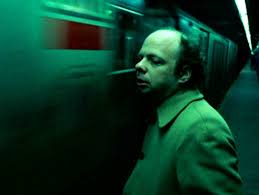
On the Film “My Dinner with Andre” Part I: Wally in New York

Note: Opening a multi-part early series from my first blog Classical Sympathies back in 2009, this piece takes up the beginning of Wallace Shawn’s walk through New York en route to his meeting with André Gregory in My Dinner with Andre, using Wally’s voice-over as a lens on artistic precarity, everyday survival, and the comic disproportion between existential weight and mundane errands. The note situates the film’s opening movement as both narrative setup and philosophical framing: a winter city of post offices, xerox shops, and unanswered calls becomes the psychological prelude to a conversation that will later expand into memory, performance, and self-mythology. This installment follows Wally up to his arrival at the restaurant for the pre-dinner drink, where the film’s central encounter is still suspended in anticipation, and meaning is generated less by action than by the act of getting there.

My Dinner with Andre is the famous, or infamous, 1981 film of a dinner conversation between Wallace Shawn, the actor and playwright, and Andre Gregory, the theater director. If I were to make a twofold claim for the film: i) that it is one of the most action packed films ever made, and ii) that it effectively encapsulates the thematics of the entire 20th century, I do not think this would be overstatement. My intent here, however, is not to establish either of these postulates, but rather to simply “blog” the script in the hopes that what needs to be said works its way to the surface. Fair warning: the undertaking will require several posts.

Money crops up on two of the first three pages of the script, and because money, and the lack of it, is a theme that runs beneath the entire script: Andre has money, has the freedom to travel and to spend several years trying to “find himself”; Wally does not. Still, “having money” is, as ever, a relative concept. At the opening of the film, Wally is seen walking through the streets of New York, heading for the restaurant where he is to meet Andre. It appears to be winter, maybe February. In the opening voice-over, Wally ruminates on the life of the artist: The life of a playwright is tough. It’s not easy, as some people seem to think. You work hard writing plays, and nobody puts them on. You take up other lines of work to try to make a living–acting, in my case–and people don’t hire you. So you spend your days crossing the city back and forth doing the errands of your trade. Today wasn’t any easier than any other day. I’d had to be up by ten to make some important phone calls, then I’d gone to the stationary store to buy envelopes, and then to the xerox shop. There were dozens of things to do. By five o’clock I’d finally made it to the post office and mailed off several copies of my plays, meanwhile checking constantly with my answering service to see if my agent had called with any acting work. In the morning, the mailbox had been stuffed with bills. What was I supposed to do? How was I supposed to pay them? After all, I was doing my best (17).

One of the marvelous things about the film is the tongue-in-cheek humor that is rarely, if ever, directly alluded to. A deeply serious film, Andre is also a comedy, a fact which we can recognize because we see that the writers are having fun with the characters who are in turn themselves. That is, Wally and Andre are playing versions of themselves–we assume that most of the experiences that Andre recounts in the film are based on real experiences, and that Wally’s account of his home life is more or less true to life–but exaggerated versions. As Shawn says in the preface to the script, “I knew immediately that {…} I’d have to distort us both slightly–our conflicts would have to become sharpened–we’d have to become–well–characters {…} It would be an enormously elaborate piece of construction” (14). In this initial passage, the humor lies in Wally’s conception of a difficult life: “I’d had to be up by ten to make some important phone calls.”

Wally’s sense of pressure is, from the outset, deliberately out of proportion to the scale of his circumstances. The tone is one of genuine complaint, but the complaint itself is almost comically domestic: the architecture of a “hard day” is built out of errands, envelopes, xerox shops, and an answering service that may or may not contain salvation in the form of an acting job. What Shawn achieves here, and what the film quietly sustains, is a recalibration of seriousness—where existential weight is not attached to grand events but to the texture of administrative survival. Wally’s New York is not a place of romance or revelation, but of circulation: between post office, mailbox, and telephone, as though modern artistic life has been reduced to a loop of deferred contact with recognition.

At the same time, the humor is never fully separable from sincerity. Wally is not merely being mocked; he is also articulating a recognisable condition of artistic precarity, one that the film refuses to glamorize. The genius of the opening monologue lies in this double register: we are invited to laugh at the disproportion between emotional tone and material fact, but we are also made to recognise how easily that disproportion becomes a lived reality. The “dozens of things to do” are not nothing; they are just insufficiently legible as crisis, which is precisely what makes them feel like crisis.

By the time Wally finally moves through the city toward the restaurant, the structure of the film has already been quietly established: this is a world in which meaning is not delivered through events but through the way events are narrated to oneself while walking between obligations. New York, in this sense, is not a backdrop but a medium of self-composition—an environment in which thought is constantly being assembled under mild pressure, as though consciousness itself were an errand.

He checks the time again, as he has been doing throughout the afternoon, and adjusts his route slightly, not out of urgency so much as orientation. The meeting with André already exists in his mind as something slightly unreal, a fixed appointment that has not yet been granted substance by arrival. He crosses another block, passes into the thinning evening light, and begins to approach the restaurant where, for the first time that day, the structure of waiting will shift from solitary to shared.

to be continued…

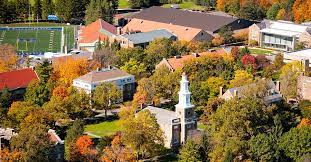
Scenes from Hamilton College III: Sophomore Year I (with cameos from Sonic the Hedgehog, Ani DiFranco, and Candle Time)

Note: In Part I and Part II of this series I wrote about my freshman year at Hamilton. Part III will take up sophomore year where I lived down the hill in Bundy Dorm.

All you ladies and gentlemen
Who made this all so probable

Big Star

After freshman year I returned back to Washington State for the summer. I have written glancingly about this period, suffice it to say I was not up to much. Still broke, I did have a short lived girlfriend but she dumped me mid-summer. I spent a few days moping around playing nerf golf at my parents’ house, then got over it. I don’t remember much else from that summer except that I got back in good running shape, and when I got back to campus in the fall I turned out, once again, for the running team.

One thing I neglected to mention in my pieces on freshman year is that I actually competed on the JV running team at Hamilton for a time and ran a few races. I was not in great shape that year, and JV was not that exciting. As I have written, I had other pursuits. Sophomore year, however, I was in better shape and had a shot at making the top five. The only other runner I recall was called Harry. I thought Harry lived in Sig, but Jake tells me he was in a frat called THX, about which I remember nothing. In any case, Jake knew him. Harry was a hardcore runner and scolded me about my lifestyle, wanting me to devote myself to the team. I was not going to do this, but I was able to run with Harry and the first team for a number of practices. In the long run though it didn’t work out–they ran mornings and afternoons, and my summer shape wasn’t going to carry me through a hyper-competitive season. I was a good runner, but I just didn’t have the drive. Sooner or later I left the team, this time for good. I look back fondly on Harry however–he was right; I was lazy and needed a kick in the rear.

As a sophomore I roomed in a double with John Innes (there were two John’s in my friend group, John Innes and John Slack), in a dorm halfway down the hill to Clinton called Bundy. Marc Campbell was also on our floor. Ian was living in his frat, but spent a lot of time in Bundy as he was dating Ann, someone who I became close with over the year as well. Jake was over at Sig and I didn’t see much of him, mostly for geographic reasons.

Bundy was a way different story than North. First, I spent a lot more time in my dorm room with John Innes. Innes would watch the soap opera Days of Our Lives and insist I watched it too. I could have cared less, but watched it to be a good friend. We also played Sega, almost exclusively Sonic the Hedgehog and Sega Hockey, at which John usually beat me (however not in the biggest matches, as I’ll get to later). Innes liked rap music and had a pretty good collection. I could get into some of the rap; I liked Public Enemy, KRS One, De La Soul, and a minor band called Basehead which wasn’t really rap. However I was by then deep into what would today be described as alternative or indie music, so Innes’ taste and mine mostly diverged. We were both good about sharing airtime though, so he got to know my music and I his.

The record I listened to the most, by far, that year was Big Star Third: Sister Lovers from the then mostly forgotten American band Big Star. I loved this record (which was on Rykodisc), and played it endlessly while trying to advance in Sonic the Hedgehog. I stuck my mattress in the closet and hung a tapestry over the door area so I had a little cubby to sleep in. Overall, the whole scene was much more domestic than the pretty chaotic North.

Other than Marc and John Innes, I don’t remember exactly who the other guys who were on our floor, but I’ve been reminded that John Slack was one of them. Ian and Jake were living in frats, and over the year I got to know a new crew of people, including several girls. These included firstly Jenny and Jen, who lived in the female area on our same floor (maybe the second floor? Innes will remember). Innes and I became very close to Jenny and Jen, and spent almost every evening hanging out in their room doing something called “Candle Time.” Candle Time was pretty much exactly what it sounds like–we would turn down the lights, light candles (which was probably against school rules) and talk for hours. We would talk about our days, people and goings on in the dorm, and just life in general. It was really wholesome and again, a major change from North.

Candle Time lasted, in my recollection, for a number of months, but not all through the year. Despite spending so much time together, there was no romantic involvement, although I believe Innes and Jen did get together later, and briefly; I’m not really sure. I think it was supposed by some that I myself had a crush on Jen; however although I liked her a lot this was not the case. I did have a little bit of a crush on Jenny, but she had other people who were interested in her and we all hung out so nothing ever happened. That was fine–it was actually really nice to just have close female friends with no expectations.

Jenny and Jen were both from the upstate New York area, broader Rochester as I recall. My guess is they came from relatively less money than many of our classmates, who came from preppier areas, and schools. I actually visited Jenny’s house once or twice, and I think a bunch of us slept over once and watched the film Glengarry Glen Ross. These included Amy Holland, who was one of the coolest chicks around. She was called “Red,” on account of her red hair, and was totally my speed. Everyone else fell asleep during the movie except Amy and I and as I recall she loved what is, to be fair, a pretty stereotypically male film.

Jenny’s house was nice, but seemed pretty middle-class and maybe that’s part of why we all bonded–the richer kids, although I obviously hung around with them a lot, had their own life ways to some extent. I remember one evening Jenny and I went to see the band The New Dylans on campus. I thought they were a good band, and had found their cassette at the campus radio station where John Innes and I had a sports talk show. Their record has a song I liked called “The Prodigal Son Returns Today.” They sounded kind of like a minor league Big Head Todd and the Monsters or something, and are kind of dated today if I’m honest, but I was excited for the show. At first it was pretty full, but people left little by little and by the end it was just me and Jenny. The band played their hearts out for the two of us, including encores! After the show, I joined them for a cigarette outside and chatted. I told them that I really liked the show and they said thanks and all with no mention of the fact that the venue was totally empty. That’s professionalism, I thought, and I imagined that as a band trying to break through playing small colleges and sending cassettes to radio stations they’d had their share of ups and downs. I doubt they are still around, but if so I’m rooting for you guys!

A bigger star that played Hamilton was Ani DiFranco. I saw Ani several times, both on campus and off, as she was pretty huge in New York State at the time. She had not yet released Dilate,” which came in 1996 and was her mainstream breakthrough to the extent she ever had one, but she was a star on campus, mostly with the women but with a lot of the guys too. Ani put on a great show, and I totally got the appeal. She was kind of the Jeff Rosenstock of the day I suppose.

Shawn Colvin also came, and I knew some of the people who were assigned to take care of her backstage. They reported that she was a total asshole, asked for coke, and generally threw her weight around big time. Shawn Colvin was OK, but no so great that she could act like a diva I don’t think. Full on divas are acceptable-like Joni Mitchell might be a diva and what are you going to do–but minor league divas pretty much suck.

Anyway, like I say over the year although we still saw each other, I saw less of Jenny and Jen, and more of other people like Ann, Amy, and Matt Thornton. I’m not sure where Matt lived, maybe Bundy and maybe not, and I don’t recall either how or when I met him, but we soon became fast friends. Matt was full speed ahead, and argumentative, but I can handle my own in an argument, and I really liked him. Matt ran with an interesting group of friends, including several Asian-Americans who I believe lived on the Kirkland side of campus. Hamilton used to be a guys’ school and Kirkland was the attached girls’ school. Then at some point they merged, but the Kirkland side and the old Hamilton side always felt distinct to me and were separated by a bridge.

One time we were talking about going to New York and Matt told me about some clubs for Asians that he was interested in. Matt’s friends told him that he (or I) could not go to these clubs because we would get the shit kicked out of us. Had to be at least half-Asian apparently. But I think Matt went to these kinds of clubs anyway and did not get beat up, because he just sort of rolled that way.

Matt and I and Ian did go to New York eventually, and spent a few days uptown at some person’s apartment where I commandeered a prime sleeping space and we ordered pizza three times a day. I believe this was actually after graduation, as Matt transferred before graduating from Hamilton.

As I mentioned in an earlier piece, this was also the year Ian and I went to Boston to see music shows. We went with a fellow called Cale who was a freshman. Cale was cool, and also we liked him because of his name, reminiscent of John Cale, violist for the Velvet Underground who Ian and I were both fans of. With Ian and Cale I felt like I was in good company–we were all very simpatico.

My academic performance sophomore year was just OK. I took more English classes, and also started to take some History classes including some Asian History with Tom Wilson. Tom Wilson was a good professor, but I think he was one of those guys who really saw himself at U. Chicago or Yale or something. A lot of academics are like that. Nevertheless, Tom was good–tough but fair–and pushed me to really deepen my research abilities. Outside of Tom’s class, my effort was a little mixed, and during the dead of winter I skipped some morning classes because the climb up the hill was just too tough. The winters in upstate New York are pretty brutal, and I preferred to stay local down in Bundy a lot of the time.

One more thing I remember from this year is starting, and then dropping, photography class. I had an old camera that barely worked, and was interested in learning how to develop film in a darkroom. However, photography class was really expensive because we had to regularly buy these huge rolls of film which cost like $50 at the school store. A classmate I’ll call C. to protect his identity told me, “just tuck your pants into your socks and drop the film down your pants and walk out. That’s what I do.” But I wasn’t going to steal film all year and there was no way I could pay the outrageous costs. On top of that, I wasn’t all that good–certainly my classmates outclassed me, crappy camera or not. So I dropped it after six weeks or so; however now that I think about it I may well have met Matt Thornton in that exact class. It’s a possibility.

Note: That will do it for Part III. In Part IV I’ll write more about my friendship with Ann as well as the Sports Talk Show we did on the Hamilton radio station.

Dedication: For the whole Bundy dorm, actually. It was a pretty chill year.

to be continued…

Scenes from Hamilton College II: Freshman Year Continued (with cameos from Honey, the Print Shop, and Billy Bragg)

Note: In Part I of this series I wrote about my freshman year at Hamilton, focusing on two friends, Ian and Jake. Part II will branch out and cover a fairly wide, and somewhat random, set of memories.

Epigraph:

I had an uncle who once played for Red Star Belgrade
He said some things are really best left unspoken
But I prefer it all to be out in the open

Billy Bragg

I have already written quite a bit about the characters who lived in the North Dorm freshman year at Hamilton, however there are a few more to cover. First were the first floor stoners. Basmo was a stoner, and he lived on my side of the dorm, but on the other side of the first floor lived the hardcore stoners. This consisted of a quad of guys whose names I don’t totally recall, but one was Peter Kimber, and who got baked at all waking hours and played Roger Waters’ Amused to Death solo on repeat. Next to them, in a double I believe, lived Keys. Keys’ actual name was Caleb, but everyone called him Keys because of the six to eight keys he had dangling from around his neck at all times. What on earth did he need all those keys for? One for the dorm, maybe one for a car (although he should not have been driving at all because he was the single biggest stoner in the dorm and perhaps on campus), what else? I can’t imagine.

Keys and I were not that close, but I did see a lot of him because we had the same job, which was in the school print shop. I don’t know if print shops still exist in the same form in this digital age, but back then the print shop was busy as. We held the campus down. There were two slightly older women who worked at the print shop full-time and three of us students helping out. The full-timers were Sally and Deb. Deb was the boss, and she was kind of motherly and kind to the students. Sally was nice too, but she could be tough. She would bark at us when we made mistakes, which was often because we were running large machines that would glitch pretty frequently. Sally was both the little sister to Deb and also the enforcer. I liked them both, even though Deb ended up firing me, which I’ll get to later.

So Keys would come in lit every day and sort of fumble through his work, which consisted mostly of stapling and collating. I was trusted more than Keys, with good reason, so I ran the machines, but I also did stapling and collating. We printed things for professors, menus for the dining halls, the school newsletter, and a bunch of other stuff. The third student was a girl whose name I don’t recall, and she was a super-hardcore feminist. Everything in the world that was wrong was men’s fault, and it was her only topic. She didn’t seem to dislike me so much as just want to lecture Keys and I all through work, which usually lasted two to three hours in the afternoon, about the ills of men. I was, and am, up for a little feminist theory but Keys was no help and I don’t even think he noticed her, so it was kind of just me and her. Serious feminism and collating are, perhaps, not best paired.

I didn’t originally want the print shop job. I needed work, and there was kind of an intake for all working students where you put your first choice. I put library, but didn’t get the gig. John Innes put audio/video and he got it, which meant he often had to get up early to set up videos for professor’s classes. I would not have been good at that. The print shop was more my speed, but eventually it got really repetitive and I started skipping work more and more. I would go walk in the woods behind campus, or just drink coffee with about a half cup of honey and hang around after class. I also improved as a student through the year, and took my English classes pretty seriously so I was spending more time in the library, although still not sleeping much.

My money situation was tight, although not as bad as it would later be during my junior year abroad in New Zealand where it was super tight. I had a little income from the print shop and my parents sent a small allowance once in a while, but I usually didn’t have more than about 15 bucks in my pocket at any one time. What money I did have went mostly to CDs, as many as I could afford. I had a dining hall pass, but the dining hall food was not really my style so I mostly lived on toast and coffee with honey. Then at night people would order pizza from a local shop, but that was too expensive for me so I would get “friend dough.” Fried dough is just what it sounds like–deep friend pizza dough with powdered sugar, and it cost about $1.50 for a big box. Not the best diet, but it was what I could afford.

One time the father of one of my classmates from high school visited for some reason; he must have been in the area. We met for lunch, and when he left he handed me $100 bucks. This was a serious windfall, and I immediately blew it on CDs, perhaps Neil Young’s Harvest Moon and others. My CD collection, although no rival to Ian’s was slowly increasing and I liked it.

Back in the dorm, in addition to the guys I have discussed, there were also girls, who lived on the second and fourth floor. I got to know the girls directly above us on the second floor pretty well, although not many of the others in the dorm. Among these was Rochelle, who was the girl I was closest to. Rochelle was, I think, from New York, and when she arrived on campus she made a big deal about having a boyfriend. This didn’t last long however, and although I didn’t want her to be my girlfriend I did like hanging out with her. She kind of mothered me a bit though, which I wasn’t so into, because I was going to do what I was going to do. I still have her contact, and I believe she might even read this piece! I think I also met Marie Bishko freshman year, and Marie is someone I thought was really cool.

I don’t really remember any us North guys hooking up with the second floor girls, but it must of happened. Another incident which occurred around this time had to do with my roommate B. and his girlfriend from high school. Like Rochelle, and even more so, he made a big deal of his girlfriend and told us all kind of semi-salacious details. Then one day he told us she was coming to visit and he wanted the three of us in the quad to go to a hotel for a night. I told him sure, if you pay, but he said no. He was dead serious but we told him to forget it, so sure enough she arrived and they hooked up while we all pretended to sleep. That only happened once, thankfully, and it still strikes me as pretty odd. He later broke up with her and fell in love with a Jewish girl, but that didn’t last either because he wasn’t Jewish.

I mentioned in Part I that Jake pledged the fraternity Sig. Ian and John Slack also pledged, Chi Psi (I had to Google the spelling). I spent some time at Chi Psi as well as, where I was alleged to sit on the steps in my trench coat, but I preferred Sig. There was another frat called Deke, and that was where the wildest, and the worst parties were. At Deke there was copious amounts of Milwaukee’s Best (the fabled Beast) and jungle juice. The parties were terrible, but there was a pool table which was a bonus. I didn’t drink much at college, mostly because I had no money, but I did drink some at Deke, with exactly the results you would imagine. I believe it was at Deke where Marc Campbell pulled off his famous pacification move. I didn’t pledge a frat, and I was and remain glad I didn’t. Greek life wasn’t for me.

One guy who I believe lived in North was called Gabe. Gabe was super popular at first in freshman year, and he played guitar on the grass outside the dorm. He was pretty good and he would play “Sexuality” by Billy Bragg which was surprisingly popular in 1992. People, including girls, would flock around him, but over time something seemed to happen to Gabe. He ran for class president and lost to a guy called Kerry who was African American. Kerry lived down the hill in a different part of campus, and he ran really hard for the job. I think Gabe’s ran mostly on a music ticket, and although he got a lot of votes I think he came in second. He may have taken this hard, because he kind of faded into the background, or maybe he just changed up his action. I think I voted, but may have voted for Kerry.

As I mentioned, Jake and I saw less of one another once he started pledging, however we still saw each other in English class and in the English building. We overlapped professors, although he knew some I did not. The two best professors in the English department were George Balkhe and Fred Wagner. Balkhe was still in his prime, maybe late 50’s, whereas Wagner was older and I believe in a semi-emeritus role. I wasn’t even sure I ever took a class from Wagner, but it’s been confirmed that I did, Modern British and American Drama, which makes sense. I didn’t much like 20th century American plays, as plays are mostly blueprints anyway. In any case, Mr. Wagner knew me early in the year because Balkhe praised my reading knowledge to him. Jake and I would go to Wagner’s house, also down the hill toward the town of Clinton (the closest town to Hamilton, about a 15 minute walk), and I recall once we played him the song “Marlene Dietrich’s Favorite Poem” by Peter Murphy, formerly of Bauhaus, with Peter Murphy murmuring “sad-eyed pearl and drop lips…”

Peter Murphy is super underrated by the way, and Wagner liked the song, which just showed how cool he was.

I took a few classes with Balkhe, and we studied poems, and novels–typical choices mostly. I enjoyed these and read most of them, even Faulkner who is really dense. For the ones I didn’t I just faked it. Like I said, Balkhe thought I was amazing because on the first day of class he asked for a list of books we had read and I listed like 200. These were mostly Agatha Christie and John LeCarre and such, but I guess it was good enough. Balhke liked the singer Donovan and the song “Mellow Yellow.”

Electrical banana
Is gonna be a sudden craze

(I later saw Donovan at a new age convention in Boston when I was visiting Ian after college, which I will recount later).

Wagner and Balkhe are both passed away now, so rest in peace to two great English teachers and mentors.

That’s about all I have on freshman year. The last thing is about the featured image for this post, which is the album cover for Bob Dylan’s Oh Mercy. I have written about The Pogues quite a bit, but the album I listened to most freshman year was Oh Mercy. After geology class had a break before lunch and would go back and semi-sleep to Oh Mercy. The quad was always empty at that time of day, and this was the best rest I would get. The album still makes me sleepy to this day, and features excellent production from the famed producer Daniel Lanois. So thank you Bob and Daniel.

Dedication: For Fred. And for George–I hope you are enjoying a little electrical banana up there in heaven.

to be continued…

Scenes from Hamilton College I: Meeting Ian and Jake

New Note: It’s been a while since I last posted this piece, and I’m glad to bring it back here as a republication. “Hamilton I” remains one of my favorite entries on the Kyoto Kibbitzer—an early chapter built around friendship, music, and the strange, formative textures of freshman year, especially the central presence of my good friends Ian and Jake, who shaped so much of that time. It’s also one of the more widely read pieces on the site, which I appreciate. Re-reading it now, I’m struck by how much of what came later was already there in embryo: the scenes, the sounds, the late nights, and the people who mattered. As always, thanks for reading.

And I recall the moment
More distant than it seems
When five green queens
On a black bin bag
Meant all the world to me

The Pogues

I attended Hamilton College, and managed to graduate–possibly in linen. At Hamilton I was an English major, and intended to be from when I enrolled. This was a decent choice; however both Hamilton and English were kind of my father’s choices. I also managed to cobble together an Asian Studies minor through the good auspices of my advisor who checked out my credits and told me I could put that together. This was a good call on his part, and even though I kind of stumbled into it, The Asian Studies minor was my choice.

I was pretty unprepared for college. Before going I was asked to fill out a kind of questionnaire to help the college place me with roommates. One of the questions was, are you clean, messy, or in the middle. I chose in the middle, which was sort of a mistake because it turns out men are pigs, and I was cleaner than most. At the same time though it wasn’t a mistake because if I had selected clean I may not have met Ian and Jake. Jake was my roommate, and we lived in a quad. The other two roommates were Brian and Geoff, and although I had a relationship of a sort with both of them freshman year, we were not really on the same page. Jake and I were. Ian was our next door neighbor, and he roomed with Marc Campbell, and two other people. Ian, Jake, and Marc are still in my life.

My parents came with me to upstate New York, and before I moved into the dorm we stayed for a few days in a hotel near campus. I was kind of apprehensive, and spent the days listening to The Pogues and quietly stressing. But when I moved into the quad things were fine. This was mostly because of Jake.

Jake was a bit of a wild character. He was from either New York or Connecticut as I recall, and I think he came from decent money. When I visited his house later that year it was very patrician, for lack of a better word. His father seemed like a super old-school WASP patriarch, and his mother didn’t work I don’t believe. His younger brother held right-wing political views at the time, while Jake was a lefty. This was a point of serious disagreement between the brothers, but other than that the family seemed pretty solid. I believe that his brother has since switched his political views.

I didn’t meet Jake’s family until Thanksgiving however, and got to know him first in the context of the quad. We lived in a dorm called North, on the first floor right by the door. (My buddy John Innes, who joined me at Hamilton from our high school lived in the neighboring dorm Kirkland, and next to that was South.) The door to North would be locked at night, and other dorm folks would regularly misplace their key and crawl through our always open window. Jake and I rarely slept, and I got in the habit of staying up until about five AM. After that I would get a little sleep before first period English class. Then I would attend Geology class, which satisfied some kind of Science graduation credit. For English class I was alert and on top of it, although I was still hand-writing my papers, which changed once I got in the habit of using the computers in the library. English class was small, maybe 12-15 people, whereas Geology was huge and held in a lecture hall. I would go lay down in the back in the aisle and try and sleep. I ended up getting As in almost all my English classes, and a C- in Geology, which was deserved to an extent because of the sleeping. However, the main question on the final was brutal and pretty unfair, which was to draw a seismograph. Literally, draw one, which we had never studied and I did cram for the final. Brutal action. Somehow I still made the honor roll that year, and every year, because of my performance in the humanities.

Jake was an English major as well as far as I recall, I kind of forget, but he knew a lot of the teachers I knew. In any case, we did not bond primarily in the classroom, but in the dorm and then at “Sig,” the frat he was associated with and later pledged. Sig was the alternative frat. I hung out there a bit, but when pledge season started they kind of cracked down on non-pledges attending parties. For Halloween, Jake snuck me in early, and although that night I got a few looks I was good with Jake’s blessing. That night I wore all black with a turtleneck and a paper sign on my back saying “No future for you.” As in the Sex Pistols. I was talking with an older guy, an alum (there were always some alums that hung at the frat parties at Sig) at the party and he said something to the effect of “I like you, but I don’t like your shirt.” OK dude.

That was the same night I believe that inspired the following little ditty I later shared with Jake:

I pissed in the toilet

He pissed in the sink

He said I haven’t got a god above

I haven’t got a drink

Jake later took umbrage with the lines, not the sink part, which was and remains credible, but the god part. I think he is, or was, a believer. In any case, he’s my friend and won’t sue.

I appreciated Jake showing me the ropes at Sig and elsewhere. In the dorm we would play his music–he was into the classics, Beatles and Stones, Kinks, Bowie. We would sing “The Ballad of John and Yoko,” and “Come Together,” mostly the former over and over, no doubt to the annoyance of our roommates. Jake also liked The Pogues, and this made me think even more highly of him.

Jake smoked, Marlboro Reds, and I soon started smoking too, the same brand. This was not out of a desire to be a smoker, but rather as a way to keep my hands occupied and look busy at parties, where I had some difficulty mixing. I picked up, or invented, a little trick where I would fold up the flaps of a cigarette pack so they looked like a paper airplane, and then lob the cigs around the room, usually to any girl that wanted one. This got me some attention and some affection, and I kind of became known for the move. It didn’t get me laid, but at least it was something. Jake and I were fast friends, and hung out a lot in the early part of the year, before he began to branch out. Once he started pledging Sig though I saw less of him, naturally enough I guess.

By the time Jake started pledging, and even before, I was spending more time with Ian. Ian was from Boston and his father was a medical doctor. He lived in a nice house in the suburbs–both Jake and Ian had quite a bit more money than I, a common feature at Hamilton where pretty much everyone had money expect me. I was on a pretty decent scholarship, despite my not so impressive high school record, and could not have afforded the school without the scholarship. I visited Ian once or twice I believe in college, and then stayed with his family for a few months in the fall after college, but that’s a story for a future post.

Ian had a massive record collection in his quad, next door to mine as I have said. I liked Jake’s music, especially “Rebel Rebel,” “Come Dancing,” and The Stones, however his selection was somewhat limited. Ian’s was capacious. He was into bands like The Stone Roses, The Charlatans, Ride, and a bunch of other British bands I didn’t know at the time. But he was really into everything. I spent hours in Ian’s room soaking up his music, and my association with him kind of took over where Dyche Alsaker’s left off. I think it was Ian who also introduced me to Luna, who was coming up at the time and is still one of my favorite bands to this day. Later, in senior year I think, Ian and I had a radio show together and one night we got to play records all night long when a few other people canceled suddenly. I would play The Replacements and the Pogues, and Ian would play his music, but I was also getting deep into the 4AD label and bands like Big Star, This Mortal Coil, and a little known band called The Binsey Poplars (who I’m not sure were even on 4AD), named after a Hopkins poem. But my favorite around that time was Nick Drake, who was on Rykodisc.

Drake is now pretty well known, mostly on the back of his song “Pink Moon,” which was featured on a Volkswagen commercial, but back then he was not well known outside serious music circles. I loved his song “Rider on the Wheel,” and was an evangelist for him, telling all and sundry to listen. Most people didn’t, of course, but the whole move was just odd enough to get a little attention, which I was definitely seeking. (Another friend from that time John mentioned to me a few years ago that I would sit on the front steps of his frat in my trench coat and read a book. I don’t really remember this, but if it’s true it was for sure for attention.) I remember one evening Ian had a kind of band that was playing and I “opened” for them. My act was simply talking about Nick Drake, painting him as a forgotten genius, which he was, and pleading with the crowd to listen. It went over pretty well, like I said probably just because it was different.

Later on, mostly the next year I think, Ian and I went to a few shows in Boston, including The Red House Painters, The Fall, and Love Spit Love. Ian would drive, and blast The Pogues with the window down to stay awake on the way home. Before one of these shows we managed to source a little green, which was enjoyable. We would park, illegally, in some lot Ian knew. In the lot, there were rats.

Jake and I were sort of on the same level–both semi-degenerate English majors–but Ian I looked up to. He was definitely the leader in the friendship, although he must have seen something in me because we hung out a fair bit. Ian was also friends with Marc, but he was perhaps closer to another group of guys who lived in two adjacent quads on the third floor. This included John and a guy called Will. I would go up there too, and Will would ask “what Dead do you want to listen to?” I always went with Reckoning because I liked the country-folk sound and the song “It Must Have Been the Roses.” I liked the third floor guys too, especially John.

Next door to Jake and my quad was Adam and Basmo. Adam and Basmo (a nickname) were seniors who for some reason decided to stay in what was basically a freshman dorm. Adam was cool, but pretty grown up. Basmo was still a kid, and loved to get high. Loved to get high. Early on in the year he would come over and ask “anyone want to get stoned and session?” A session, it turned out, was you would smoke, put on The Beatles, and watch Bugs Bunny or something with the sound down. The idea was the music would synch up with the cartoon and it would be hysterical. It totally worked, although I just liked to listen to music and bullshit rather than session. Real heads will remember the session. (Jake told me that sadly Basmo later took his own life as a result of the worsening effects of ef. That was really too bad because Basmo was just a pure open-hearted soul.) So basically we would get stoned when we could, smoke Reds, and stay up all night and listen to music, which was a pretty decent life all in all. Jake and Ian took me in, and made the first part of freshman year so much better in all ways than it would have been if I hadn’t known them.

Dedication: For Ian and Jake, for seeing something in me, and helping make me a little somebody.

to be continued…

Note: If you liked this piece, you may other like the other pieces below in the Hamilton series.

On it, Pete

Note: Some stories get better in the telling. This one doesn’t need to. It arrives fully formed—one line, perfectly placed—and has stayed that way ever since. I’ve told it for years and it still lands exactly the same. No embellishment required.

It’s September, 1989.

Two new teachers had just arrived at St. George’s School in Spokane, WA. These are Paul Hogan and Pete Aiken. Paul would go on to have a long and distinguished career, eventually becoming Principal of Jesuit High School in Portland—a major job, the kind that makes a life. I have no idea where Pete is today.

That night, my dad Ross invited them over to the house for dinner. It was one of those late-summer evenings that still carried a little warmth but hinted at the coming turn. Ross was out back at the grill, working over the barbecue with a beer in hand. The adults clustered nearby, talking, drinking, getting to know the new arrivals. There was that particular tone of adult conversation—half-professional, half-social, everyone just slightly aware of roles and impressions.

Out in the yard, it was just the three of us: Pat, Mike, and me. We were playing catch with a tennis ball. Nothing serious. Just throwing it around, loose, casual, the way kids do when the game isn’t really the point. At some point, either Mike or I made a bad throw. It sailed wide of Pat—too far, too high—and rolled past him.

A completely ordinary moment. The kind of thing that happens a hundred times in a backyard, in a summer, in a childhood.

Pat was six. He didn’t chase the ball. He didn’t complain. He didn’t turn to us. Instead, he turned—calmly, deliberately—and looked over at Pete Aiken, one of the brand-new teachers, a guest in our home, a man he had just met. And in a tone of quiet assurance, as if assigning responsibility in a meeting, he just said:

“On it, Pete.”

That was it. No smile. No wink. No awareness of what had just happened. The ball was recovered. The game went on. The adults kept talking. The evening continued. But something had shifted, just slightly, just enough.

Because in that moment, a six-year-old child had somehow crossed the boundary between worlds—between kids and adults, between play and work—and issued a line that did not belong to him, but fit him perfectly.

I don’t remember what happened next. I only remember that line. And I remember that we have been laughing about it ever since.


The On It Pete Blues (Pete’s POV)

I was new to the city, new shirt, new street,

Standing in a backyard trying hard to be discreet,

Ross on the grill and the talk running deep,

Just another first night—then I heard, “On it, Pete.”

I hadn’t been briefed, hadn’t learned the terrain,

Didn’t know the house or the shape of the game,

Just a beer in my hand, trying not to overreach,

Then a six-year-old turned and delegated to Pete.

Now I’ve worked in schools, I’ve handled my share,

Rooms full of noise, moments needing repair,

But nothing quite like that clean little feat—

Being calmly assigned by a kid in bare feet.

No panic, no pause, no doubt in his beat,

Just a glance and a nod—“On it, Pete.”

And the ball got found, and the night rolled on,

But I knew right then something strange had gone on—

In a yard full of voices, one line cut through the heat:

I wasn’t just visiting.

I was on it.

Pete.

Dedication:

For my brother Pat. And for Pete. Just get on it already baby.

Note: If you liked this story you may also like the stories below, which also cover my time at St. George’s High School.

On My Early Years in the IB, 2008–2010

Note: This piece belongs to a loose series of reflections on my years working with the International Baccalaureate at Ritsumeikan Uji.

Over the years I have written about various moments and characters from that period — the improbable dinner conversations, the bureaucratic skirmishes, the strange coalition of personalities that somehow managed to build something durable inside a large Japanese school system. Pieces such as On the Eventification of Pre-Identified Incidents, Dr. Fox, and On Good and Great Talkers circle around that same institutional landscape from different angles.

This essay goes further back than those. It describes the early years when the program existed mostly on paper, when the staff could still fit around a single table, and when the whole project balanced uneasily between optimism and administrative chaos.

Looking back now, what strikes me most is not the difficulty of the work itself but the sheer improbability of the outcome. Programs like this often fail quietly long before authorization. The fact that ours did not is largely due to a small group of people who were willing, for a time, to push far harder than their job descriptions required.

This piece is my attempt to record that moment before memory smooths it into something simpler than it really was.

Epigraph

It’s like a visit to the moon

or to that other star

I guess you’ll go for nothing

if you really want to go that far.

— Leonard Cohen, Death of a Ladies’ Man


I. The Call-Up

In February 2008 I was called down to the principal’s office at Ritsumeikan Uji.

At that point I had been at the school for several years already. I had started part-time in 2002–03, moved to full-time shortly after, and by 2007 had landed on what I later called “the man under the bridge contract.” The bridge in question was a middleman arrangement run through a broker named Masaki Yasumoto, a classic education-world intermediary. These figures flourish in private school systems: part fixer, part recruiter, part relationship broker.

Masaki was a funny guy. We were friendly in those days. He invited me to his Christmas parties—cheap hotel buffet affairs—and occasionally took me out for yakiniku. I later fell out with him, but that belongs to another story. At the time we were on good terms.

Through Masaki’s bridge contract the school kept me on staff while avoiding a full tenured appointment.

So in February 2008 I was teaching SEL under Mary Walters and a handful of social studies classes. Business Management was still in my future. That morning Principal Kitamura and Vice-Principal Terada called me in. We sat on the little sofa chairs in the office. They pitched me the role of IB Diploma Programme Coordinator. At the time I knew almost nothing about the International Baccalaureate.

My entire knowledge base consisted of one fact: a school called Katoh Gakuen near Numazu had introduced IB in 1999. That information had come secondhand from Mr. Ogawa, our Head of High School. That was it. No workshops. No training. No background. Just the idea.

When they asked if I would take the job, I said yes—on one condition. I needed a sennin appointment when the bridge contract ended. Kitamura said we could revisit the matter in a year. Good enough. I went home and discussed it with my wife. The next day I accepted. I was 34 years old and this felt like my big break.

I was determined to make the most of it.


II. The Principals

When I first arrived at Ritsumeikan Uji in 2002 the principal was Kawasaki. I barely knew him.

He made speeches at opening ceremonies and graduations but I never interacted with him personally. The gossip around the school was that he was a major power broker in the wider Ritsumeikan system. The other rumor—less flattering—was that he hired office staff based largely on the attractiveness of their legs. Whether true or not, the administrative office at the time did indeed contain several strikingly good-looking employees.

In 2008 Kawasaki left the school and moved to a senior role at Ritsumeikan Suzaku. Later he attempted to become Chancellor of the entire university system. That campaign became a minor drama inside the organization. My immediate boss at the time, Dr. Fox, supported him, as did another senior administrator, Higashitani.

At one point Kawasaki’s campaign team came to Uji to gather support. In the meeting room one of the Suzaku representatives looked at me—sitting there in a suit—and said:“Dr. Fox, we are so happy to have your support.” Fox was about 65 years old at the time. I was 39. But apparently one foreigner looked like another. It was harmless and genuinely funny.

Kawasaki ultimately lost the election by a handful of votes and eventually left the Ritsumeikan system.


III. The Placeholder

Kawasaki’s successor at Uji was Kitamura. This appointment shocked everyone. Kitamura had been Head of the Junior High School and had relatively little senior administrative experience. Overnight he jumped several levels and became principal.

Only later did I learn the reason. Kitamura was essentially a placeholder. The real plan was for Shiozaki, a senior administrator who had been on extended medical leave, to return once his health recovered. Shiozaki was nearing retirement age and the system wanted him back in charge before he finished his career. Kitamura’s job was simply to keep the seat warm. It was brutal, but that’s the old Keichimeikan way. And to his credit, he did exactly that. He also gave me my big break.

Years later I saw him again at the Kyoto girls’ Ekiden race on Christmas Eve. He was wearing a worn sweater and looked slightly down on his luck. I didn’t exactly admire him as a leader. But I always felt compassion for him.

After all, he took the bullet for the squad.


IV. Hashizume

Another key figure in the early IB story was Hashizume. Hashizume occupied a strange position. Officially he was an office administrator. In practice he was the number two power in the building. All major financial decisions flowed through him. Every yen connected to the IB project passed through his hands.

His real passion, however, was American football. He coached the boys’ football team and took the job extremely seriously. Years later he left Uji entirely after being recruited by a major university program in Tokyo.

Dr. Higashitani, who despised him, called the hiring university “idiots and imbeciles” when he heard the news.

Hashizume was also a prodigious drinker. We went out drinking together exactly once. It started at ING, the little rock bar in Kiyamachi. Then we moved to several other bars. Then it was 3 AM. Then Hashizume started calling friends who owned additional bars and asking them to stay open. They agreed. By the time I finally staggered home it was about 4:30 in the morning.

The next day I was violently hungover. Pocari Sweat. Miso soup. Saltines. Nothing stayed down. By noon I was in the hospital on an IV. Hashizume, meanwhile, seemed perfectly fine.


V. VP Terada

The most important administrator in the entire early IB story was Vice-Principal Terada. Terada had spent fifteen years in the school as a homeroom teacher and grade leader before moving into administration. When the IB project began he became my direct ally.

Every Tuesday afternoon the school held the Steering Committee meeting. This was the arena where every IB proposal had to be approved.

My memos would go to Terada first. He rewrote them in polished Ritsumeikan bureaucratic Japanese and presented them to the committee. I usually stayed silent while Terada handled the negotiations.

One day I noticed something interesting. Whenever someone opposed one of our proposals—especially Ms. Ono, my great nemesis—Terada would cover his mouth with his hand and say something like: “That is a very good point. We will have to think about that.”

At first I believed him. Then one day after a meeting I confronted him in a small side room. He laughed. “No,” he said. “We are not thinking about it at all.”

He was simply letting the opposition save face. That was when I realized I could trust him completely.


VI. Pre-Authorization

Our pre-authorization visit came in May 2009. The visiting team included Steve Keegan from the IB regional office and Peter MacKenzie, principal of Hiroshima International School.

At that point we barely had a staff. It was essentially just me and Tim Chanecka, who was helping temporarily until we could hire more teachers. I had written almost all of the program policies myself—language policy, assessment policy, academic honesty—working largely alone.

The visit went reasonably well. At one point Keegan left the room and accidentally left his notebook open. I glanced down. The only thing written on the page was: “Stress in the school.”

Fair enough.

We passed pre-authorization.


VII. The Staff

By the time the authorization visit in May 2010 arrived we had assembled an actual team.

The core group looked like this:

  • Me — DPC, CAS, TOK, Business Management, and History
  • Scott Sim — English A and future homeroom teacher
  • Mike Gurnick— Mathematics, assessment, and scheduling
  • Tomoko Wano — Japanese A and translation powerhouse
  • Nick Sutton — Physics (part-time)
  • Oliver Manlick — Chemistry curriculum design
  • Ayako Kurokawa — Visual Arts

Ms. Wano in particular was indispensable. She attended every senior meeting, translated every document, and essentially kept the program alive during its early phase.

Without her we would not have survived.


VIII. The Dinners

During the authorization visit we hosted the visiting team for two dinners. The first night I chose a small izakaya near Kyoto Station. Mary Walters had warned me that it was “kind of a greasy spoon.” But when we arrived Peter MacKenzie looked around happily and said: “This is great. People usually take us to the fanciest restaurant in town to try and impress us.”

Score one for the hokke and the frosty mugs of beer.

The second dinner took place at Suzaku. Five of us attended: Shiozaki, Keegan, MacKenzie, a sharply dressed Suzaku administrator with a goatee, and me. At one point MacKenzie’s wine glass ran empty. There was no waiter nearby. So I stood up, walked around the table, and refilled his glass. When I sat down the Suzaku administrator gave me a small approving nod.

Another quiet point scored.


IX. The August Scare

The visit ended. Then we waited. Weeks passed. By mid-August there was still no decision. At the time I was in Oregon, visiting my family with Sachie and Hugh. Instead of relaxing I spent the vacation checking email obsessively.

Finally I contacted Keegan. A few days later he replied. There was a problem. Several of our teachers—including me—did not possess formal teaching licenses in our home countries.

I reminded him that we had discussed this already during the visit. The Kyoto Board of Education did not require Western-style teaching licenses. They evaluated subject knowledge based on transcripts and TESL credentials.

Keegan agreed. But Peter MacKenzie was raising objections.

So I pushed back. Politely—but firmly. The IB operates in over 120 countries. Mandatory teaching licenses are not a universal requirement.

Then I gathered examples from elite IB schools in the United States whose hiring requirements explicitly did not require teaching licenses. After that the objection disappeared.

Two weeks later the decision arrived. Ritsumeikan Uji was officially granted IB World School status. The certificate—signed by IB Director General Jeffrey Beard—was hung in the principal’s office.

After months of uncertainty, we finally exhaled.


X. Exhaustion

In truth, by that point I was completely spent.

That summer I had also attended the OACAC conference at Babson College as the school’s overseas college counselor. I had traveled, networked, presented, and worked almost nonstop. By the time authorization finally arrived I felt less triumphant than drained.

Not depressed. Just cooked.

The exhaustion lasted until about November 2010. After that I rallied. Because the next great milestone was coming. In April 2011 we would begin our first actual IB teaching.

But that is another story.


Dedication

For the whole team that carried our little IB program through authorization.

A million thank-yous.

And especially for Vice-Principal Terada. You’re the motherfucking GOAT baby!

Note: If you liked this piece you may like the pieces below which also discuss my time with the IB.

On the Long Cut: The COVID Years (2019–2022)

Note: This essay forms part of a longer series recounting my professional life in and around the International Baccalaureate program at Ritsumeikan Uji. It follows earlier pieces concerning the Dr. Fox years and the gradual evolution of the IB program there, and covers the period roughly from late 2018 through the early months of 2022.

The years described here coincided with the global COVID-19 pandemic, which disrupted institutions and routines in ways both large and small. The narrative therefore moves between several overlapping threads: my temporary assignment at the Suzaku campus, a prolonged period of leave and personal drift, the strange half-life of Kyoto’s bar culture during the pandemic years, and finally my gradual return to teaching and the IB program at Uji.

As with other pieces in this series, some names and identifying details have been adjusted or omitted where appropriate. The goal of the essay is not to settle institutional scores but to record the texture of a particular stretch of life—its confusions, absurdities, and small recoveries of purpose.

Readers encountering this piece independently may wish to consult earlier essays in the series, including those on the Dr. Fox period and related institutional episodes, for additional context.

Epigraph

“If you wanna take the long cut / we’ll get there eventually.”
— Uncle Tupelo


I. Return

On December 20, 2018, I landed at Kansai International Airport after a twenty-two-day music trip along the American East Coast. I had seen bands in New York, Boston, and Philadelphia, spent too much money, and generally had the time of my life. That journey has been written about elsewhere, so I won’t linger on it here. What matters for this story is simply that I came back to Japan exhilarated and somewhat unmoored.

The first thing I did upon landing was send an email to Dr. Fox. I told him that although I still carried some anger about how things had ended at Ritsumeikan Uji, I appreciated his help securing a temporary role for me at Suzaku beginning in March. Both statements were true. What I did not yet know was how miserable that position would become.

I had two months before the job began. They were among the freest weeks I had experienced in years.

I wrote constantly. I worked on the early sections of Thin Man: Singapore and drafted essays that would later become EventificationHelmet Laws, and On Zone Defense. I was about to begin the St. George’s School series. Periscope had faded from my life, partly because the platform had run its course and partly because a particular person who had made it interesting to me was no longer there.

I spent some time with Philip, though he was busy with his own life and his relationship with his wife seemed temporarily on the mend. Mostly I wandered between Tokyo and Kyoto, writing and drinking coffee and enjoying the strange luxury of being at loose ends.

In the third week of January I attended a Drunk Poets open mic in a small bar near Shibuya. I arrived absurdly early because I didn’t know the neighborhood. While waiting in the stairwell I met a woman who introduced herself using her poetry name. We talked for nearly an hour before the reading began. She was a veteran of the open-mic circuit and showed me how the evening worked. I read first after the break; she followed me.

It was a pleasant night. I had no idea at the time that the conversation we began that evening would extend, mostly by phone, for more than two years.


II. Suzaku

My assignment at Suzaku began on March 1, 2019.

There were no students.

Technically the building housed graduate programs, but they lived on lower floors and we might as well have been ships passing in the night. My office was on the fifth floor, a large open room filled with perhaps forty people: a mix of temporary teachers like myself and permanent administrative staff.

It was, in a word, dreary.

I commuted each morning to Karasuma Oike, walked down to the Suzaku campus, sat at my desk, and tried to look busy until five o’clock. Sometimes a consultant whose job seemed to consist mainly of visiting other campuses would take me on excursions to places like OIC or the original Ritsumeikan High School. These trips were well-intentioned but clarified nothing. No one quite knew why I was there, least of all me.

Within days I began to feel something I had never really experienced before: the creeping onset of depression. The problem was not that the work was difficult. It was that there was no work at all.

By April I had started leaving the office early. By May I was appearing only sporadically. The remarkable thing was that no one seemed to notice.


III. Drift

If I was not at Suzaku, where was I?

Mostly at home.

During the day I played chess online, usually on Chess.com or Lichess. I climbed to around 1250 on the former and somewhat higher on the latter, though the Lichess ratings were clearly inflated. My openings were solid, my middlegame acceptable, and my endgame play atrocious. I squandered many promising positions by failing to convert them.

I watched instructional streams from Levy Rozman and occasionally from Hikaru Nakamura, though Levy was the better teacher. His explanations were clear and energetic, and I learned a great deal.

When I wasn’t playing chess I listened to podcasts. The rotation included nearly every program produced by Bill Simmons and the broader Ringer network, followed by an increasingly large catalog of true-crime shows. What fascinated me most were disappearance cases—stories in which someone simply vanished and left investigators grasping for explanations.

Meanwhile the phone conversations that had begun in the stairwell in Shibuya continued. They were long conversations—sometimes five hours a day—covering everything from literature to relationships to increasingly elaborate stories about future plans and imagined fortunes. At first the exchanges were exciting; over time they became exhausting, though we kept talking.

In the evenings I left the apartment and walked to the bars near Karasuma Oike. Takumiya and its sister bar Takanoya became regular stops. Eventually I found myself most often at a tiny machiya bar called Before 9.


IV. Before 9

Before 9 was small even by Kyoto standards. Downstairs there was room for perhaps five or six people around the bar; upstairs another half dozen could sit beneath the original wooden beams of the converted house. Jazz or ambient music played quietly while large black-and-white films—Seven SamuraiCasablanca—were projected silently on the wall.

The bartender most nights was Miyuki.

Philip and I nicknamed her “the Ice Queen,” though not to her face. She could be sharp-tongued and intimidating, yet occasionally revealed flashes of warmth that suggested a softer personality underneath. Regulars were greeted with a curt “What do you want?” delivered with theatrical indifference.

She wore black almost exclusively and carried herself with the confidence of someone who knew exactly how striking she looked. I developed a mild crush on her, though it was clear from the beginning that the feeling would remain entirely one-sided.

During the pandemic the bar officially closed at eight in the evening, though the rule was treated with some creativity. One night two inspectors arrived precisely at closing time. Miyuki announced “last call” in an exaggerated voice, served them a beer they never drank, watched them leave, pulled down the shutters, and then reopened the bar for the regulars.

That was the culture for several years.


V. Leave

In October 2019 the situation at Suzaku was finally addressed. A supervisor called me in and gently suggested that it might be best if I took leave. I agreed immediately. Beginning in November I was officially on leave—a status that would last until October 2021.

Oddly, I felt relieved.


VI. The World Changes

Early in 2020 I read a brief news report about a virus outbreak in Wuhan. At first the story seemed distant and provisional. Within weeks it dominated every headline in the world.

The pandemic years blurred together. Bars closed early, then reopened, then closed again. Conversations moved onto phones and screens. Life contracted into smaller and smaller spaces.

Yet the routines I had developed continued: chess, podcasts, the evening walk to Oike, the occasional drink with Philip or Mackenzie.


VII. Return

In October 2021 an unexpected opportunity appeared.

Andy Meichtry needed to take extended leave after a family emergency. His timetable included several sections of a class called Academic Research in the International Program. VP Nishikawa, who had always been supportive of my return to IB, suggested that I fill the gap.

So I put the uniform back on and returned to Ritsumeikan Uji.

The first challenge was that no one could tell me what the Academic Research course actually entailed. The teacher who normally handled it was on extended medical leave, and the only materials available were a handful of PowerPoint slides sent without explanation.

In the spirit of William Ian Miller, I decided to fake it until I made it.

The students—seniors working on research projects related to the Sustainable Development Goals—were relaxed, good-natured, and only months from graduation. We muddled through together, and somehow two months passed quickly.


VIII. Administrative Comedy

During this period a new principal, Dr. Joseph Hicks, made an impression.

The IB morning briefing was designed to last three minutes and cover the day’s essential information. Dr. Hicks instead preferred to open with extended digressions on topics such as the reproductive habits of moles. After a week I suggested that perhaps the zoology lectures could be postponed. To his credit, he stopped immediately.

Later, during my annual teacher meeting—normally a brief conversation about contracts and responsibilities—he spent most of the time explaining the virtues of traditional Polish music.

I left better informed about Eastern European folk traditions but none the wiser about my job.


IX. Reinstatement

Administrative reshuffling followed later that year, and by January 2022 I was formally reinstated in the International Baccalaureate program.

My roles included IB1 head, CAS coordinator, and student council advisor, along with a single section of Higher Level Business Management.

After the drifting years, stepping back into a classroom felt like a jolt of electricity.

The students were lively and engaged, but one in particular stood out: Karin Sayama, whose enthusiasm for the course reminded me why I had chosen this profession in the first place. Watching her and her classmates rediscover the subject gave me a renewed sense of purpose.

For the first time in years I felt genuinely happy to be at work.

The long cut had taken its time.

But eventually it brought me home.


Dedication

For Karin.
With deep appreciation.

Note:

On the Cultural Field Around St.Georges School and Spokane, WA


Epigraph:

“…yeah I got out,
but it’s still a cage.”
—after Ryan Adams, “Still a Cage”


I. — Launch vs. Escape

I didn’t understand Spokane’s sexual landscape until years after I left it, and by then it was already too late to pretend it had ever been the clean, conservative city adults insisted it was. The truth was simpler and messier: it was secretly wild and not so secretly wild, a place where desire slipped between the cracks of churches, cul-de-sacs, river pullouts, and private-school parking lots, and everyone knew more than they admitted. St. George’s launched me academically, but it did nothing to contain the currents running just outside its gates—the coded parties, the silent scandals, the hookups that lived like rumors, the older stories whispered by kids who shouldn’t have known them. What I didn’t realize then was that I wasn’t leaving Spokane away from anything. I was leaving toward other things—Japan, NAU, a life that moved. Only later did I understand I wasn’t going back.


II. — The Erotic City

What I didn’t see as a kid—but can’t unsee now—is that Spokane’s real wildness wasn’t teenage at all. It was adult. It was erotic energy humming under a conservative façade, the kind that starts as a pulse under the collar and ends in the kind of self-destruction people call “mistakes” years later. The city pretended to be a grid of churches, schools, tidy neighborhoods, and Rotary breakfasts, but the truth lived in back booths, river pullouts, dim bars off Division, and the long shadows of marriages that weren’t working. People were hungry. Not for sin—Spokane isn’t interesting enough for that—but for escape, for intensity, for feeling anything sharper than the soft monotony the town served as a diet. And because the city couldn’t admit that hunger, it acted it out sideways: affairs disguised as mentorships, private shame masked as judgment, the moral guardians always the ones who ran the hottest at night. And threaded through that landscape was Brookie, the wild boundary cat who drifted into our yard for weeks and then vanished for weeks, living with the kind of unashamed freedom the rest of Spokane pretended not to want. As a kid I only caught the edges of it, like smoke under a door. As an adult investigator returning later, it became obvious: the cage wasn’t made of rules, it was made of denial. And denial is the most erotic fuel a city can generate.


III. — SGS (Light Touch) and the Return

St. George’s sat just outside all that, or at least it pretended to. The river, the quiet paths, the small classes—SGS was the aesthetic of order laid gently over a city that hummed with contradiction. It launched me because it was designed to: college essays, seminar rooms, teachers who pushed hard without ever naming the ecosystem we were all standing in. It was a runway, not a refuge. I didn’t learn about Spokane from St. George’s; I learned about leaving from St. George’s. The city taught the rest. And when I go back now—if I do—it isn’t to recover anything. It’s as an investigator walking his old beat. I drive past the river, the schools, the neighborhoods that used to feel like separate worlds, and I can see the seams of the place with adult clarity: who lived double lives, who never left, who couldn’t leave, who escaped and reinvented themselves entirely. The old stories fall apart under scrutiny, but the architecture remains. The church parking lots. The dim bars. The hills where people walked off their secrets. Spokane didn’t change so much as reveal itself the moment I had enough distance to investigate it. And once you see the truth of a place, you can’t unsee the way it shaped you—even after you’ve run as far as you can from the cage you didn’t know you were inside.


IV. — Palo Alto

When I think of California, it’s never the big, cinematic pieces people imagine. It’s the little house we lived in in Palo Alto and the Whole Foods with the organic cookies — the kind of small domestic details that register as safety when you’re young and don’t yet have a name for that feeling. California wasn’t a fantasy; it was texture. Light off the sidewalk. Air that felt like it was already holding you up. And those drives with my dad to Foothills — Foothills Nature Preserve now, but back then it was still just Foothill Park — the private reserve only Palo Alto residents could enter. That’s the part that gets me now: how effortlessly belonging felt there. You didn’t have to explain yourself, or hide anything, or decode a system of silences. You just drove up into the hills and the world opened without consequence. Spokane had its wildness, but California had a kind of spaciousness that felt like permission. Even now, I miss it with an ache that catches me off guard. It’s not that I necessarily want to move back — it’s that a part of me never really left. California became the template for what openness feels like, the first geography that suggested freedom wasn’t an escape but a way of being.


V. — Cameo (Ian)

Sometimes, when I need a reminder of who I was before I understood any of this, I think of a photo from just after college — me and Ian and Matt Thornton in New York, staying way uptown in a borrowed flat, ordering pizza three times a day, probably getting high, taking the train like we were immortal. I grabbed the prime sleeping spot and held onto it, a small personal victory in an era when I rarely asserted myself. In the picture, Ian’s in front, already carrying that air of someone who had strong, fully-formed opinions about every band on earth. I’m behind him in my dark brown leather cap, looking like someone still half-becoming himself. That version of me had no understanding of cages. He just assumed the world was big.


VI. — Still a Cage

Maybe that’s why the Ryan Adams line hits the way it does. “Yeah, I got out, but it’s still a cage.” I didn’t hear it as confession the first time — I heard it as geography. That’s Spokane for me: a place I ran from without realizing I was running, a system I slipped out of long before I understood the bars. It wasn’t trauma; it wasn’t exile. It was something quieter and stranger — a recognition that the place that formed me was also the place I could never fully inhabit. California taught me what openness felt like. Japan gave me the life I wanted. But Spokane shaped the part of me that investigates, the part that reads cities like case files, the part that knows desire and denial can live under the same roof for decades without ever breaking stride. When I hear “Still a Cage,” it’s not about being trapped. It’s about understanding, finally, the architecture of the place you outgrew — and how long it takes to see it clearly. You can leave early, leave clean, leave without resentment. But the line only lands when you come back years later, driving those old streets like an investigator, realizing the cage was never the city itself. It was the silence. And the moment you see the silence for what it was, the lock falls open, and you know for sure you’re never going back.

Epigraph

“…yeah I got out,
but it’s still a cage.”
—after Ryan Adams, Still a Cage


I.

I didn’t understand Spokane’s emotional landscape until years after I left it, and by then it was already too late to pretend it had ever been the clean, conservative city adults insisted it was. The truth was simpler and messier: it was a place where desire moved quietly through the cracks of churches, cul-de-sacs, river pullouts, and private-school parking lots, and where people knew more than they said aloud.

St. George’s launched me academically, but it did nothing to contain the currents running just outside its gates—the coded parties, the silent scandals, the hookups that lived like rumors, the older stories whispered by kids who shouldn’t have known them. What I didn’t realize then was that I wasn’t leaving Spokane away from anything. I was leaving towardother things—Japan, NAU, a life that moved. Only later did I understand I wasn’t going back.


II. — The Erotic City

What I didn’t see as a kid—but can’t unsee now—is that Spokane’s wildness wasn’t teenage at all. It was adult. Not theatrical or decadent, but quiet and unresolved, an erotic energy humming beneath a conservative façade. The city presented itself as orderly: churches, schools, tidy neighborhoods, Rotary breakfasts. But the real emotional life lived in the margins—in dim bars off Division, in river pullouts, in the long shadows of marriages that had settled into routine.

People weren’t hungry for scandal. Spokane isn’t interesting enough for that. They were hungry for intensity, for escape, for moments that felt sharper than the soft monotony the town served as a daily diet. And because that hunger couldn’t be named directly, it surfaced sideways: affairs disguised as mentorships, judgment masking private confusion, moral certainty coexisting with private longing.

Threaded through that landscape was Brookie, the wild boundary cat who drifted into our yard for weeks and vanished for weeks, living with a freedom the rest of Spokane pretended not to want. As a kid I caught only the edges of it, like smoke under a door. As an adult returning later, the pattern became clearer: the cage wasn’t made of rules. It was made of denial. And denial, more than rebellion, is what gives a place its quiet erotic charge.


III. — SGS (Light Touch) and the Return

St. George’s sat just outside all that, or at least it seemed to. The river, the quiet paths, the small classes—SGS was the aesthetic of order laid gently over a city that hummed with contradiction. It launched me because it was designed to: college essays, seminar rooms, teachers who pushed hard without ever naming the broader ecosystem we were all standing in. It was a runway, not a refuge.

I didn’t learn Spokane from St. George’s; I learned leaving from St. George’s. The school offered direction without interpretation, preparation without excavation. The city supplied the rest.

And when I go back now—if I do—it isn’t to recover anything. It’s as an investigator walking his old beat. I drive past the river, the schools, the neighborhoods that once felt like separate worlds, and the seams of the place become visible with adult clarity: who lived double lives, who never left, who couldn’t leave, who escaped and reinvented themselves entirely. The stories shift, but the architecture remains. Spokane didn’t change so much as reveal itself the moment I had enough distance to see it.


IV. — Palo Alto

When I think of California, it’s never the cinematic version people imagine. It’s the small house we lived in in Palo Alto and the Whole Foods with the organic cookies—the quiet domestic textures that register as safety when you’re young and don’t yet have a name for that feeling. California wasn’t fantasy; it was atmosphere. Light off the sidewalk. Air that felt like it was already holding you up.

And those drives with my dad to Foothills—Foothills Nature Preserve now, but back then simply Foothill Park—the private reserve only Palo Alto residents could enter. That detail lands differently now: belonging there felt effortless. You didn’t have to decode silences or manage contradictions. You simply moved through the hills and the world opened without consequence.

Spokane had its wildness, but California offered spaciousness, a geography that suggested freedom didn’t need to be disguised. Even now, I miss it with an ache that catches me off guard. Not because I want to return permanently, but because a part of me never fully left. California became the first place that suggested openness wasn’t escape but orientation.


V. — Cameo (Ian)

Sometimes, when I need a reminder of who I was before I understood any of this, I think of a photo from just after college—me and Ian and Matt Thornton in New York, staying way uptown in a borrowed flat, ordering pizza three times a day, probably getting high, riding the train like we were immortal. I grabbed the prime sleeping spot and held onto it, a small personal victory in an era when I rarely asserted myself.

In the picture, Ian stands in front, already carrying that air of someone with strong, fully formed opinions about every band on earth. I’m behind him in my dark brown leather cap, looking like someone still half becoming himself. That version of me had no concept of cages. He simply assumed the world was big.


VI. — Still a Cage

Maybe that’s why the Ryan Adams line lands the way it does. “Yeah, I got out, but it’s still a cage.” I didn’t hear it as confession the first time. I heard it as geography.

That’s Spokane for me: a place I left without fully understanding why, a system I slipped out of long before I could see its contours. It wasn’t trauma or exile. It was something quieter—the recognition that the place that formed me was also the place I could never fully inhabit.

California taught me openness. Japan gave me the life I wanted. Spokane shaped the investigator—the part of me that reads cities like case files, that sees how desire and denial can coexist for decades without ever openly colliding.

When I hear “Still a Cage,” it isn’t about entrapment. It’s about understanding the architecture of a place you outgrew and how long it takes to see it clearly. You can leave early, leave clean, leave without resentment. But clarity arrives only later, when distance converts memory into interpretation.

The cage was never the city itself. It was the silence. And the moment you recognize the silence for what it was, the lock falls open. Not with anger or triumph, but with quiet certainty. You understand that leaving was less an escape than a translation—and that some places shape you most profoundly precisely because you cannot return to them.


Dedication

For Brookie

On My Seven Years Under Dr. Charles Fox

Give me weed, whites, and wine

— Little Feat


I. Arrival, Trust, and First Cracks (2012–2013)

Our former principal Shiozaki sensei retired at the end of the 2011–2012 school year. He left on time, at sixty, having overseen just one International School Festival (ISF), in February 2012, and then stepping away. His departure was orderly, expected, and clean.

Not long after, my colleague Tomoko Wano and I were called into the small room next to the IB office by Mr. Higashitani, who was my direct supervisor at the time. I was still DPC then, not yet formally on the administration, though much of my work already extended beyond that role.

Higashitani told us the next principal would be Charles Fox, a literature professor from Ritsumeikan University. Then, almost casually, he added that Fox would be taking the first two weeks of the April term off to travel to the Ogasawara Islands to help his son with a documentary film.

Higashitani paused. “Is this going to work with this guy?” he asked.

It was not really a question. The decision had already been made. Fox was close to the Chancellor, and with the IB programme growing, it had been decided that it was time for a foreign principal. The appointment carried symbolic weight.

Fox arrived in April 2012.

That first year, I saw him several times a week. I went to his office regularly with issues, proposals, and requests. He came less often to the IB office, but he was visible, present, and accessible. Compared to later years, he felt engaged.

We were still very much in a building phase. Questions were fundamental rather than cosmetic: whether to bring Economics online as an IB subject, how to structure growth, how to manage staffing, how to align IB operations with a larger Japanese institution that had not fully internalized what the IB actually demanded.

Fox was generally supportive. When I raised ideas, he rarely opposed them outright. But he almost always deferred decisions upward. In practice, that meant deferring to Higashitani occasionally, but increasingly to Vice Principal Nishikawa, who was locked in a long, escalating struggle with Higashitani for control of the soul of the school. That battle would define the institution for years.

Two small things I noticed early on.

The first was small but persistent. When Fox felt pressed, uncertain, or cornered, he would drop into a performative Texas drawl: “I’m just a good old boy…I don’t know…I’m new here…” Week one, maybe. Month one, even. But it went on for months. It began to feel less like humility and more like evasion.

The second was subtler. When Fox gave speeches—opening ceremonies, graduations, addresses to the IB community—he often began by explaining that he would speak in both English and Japanese, and why. “Today I will speak in both English and Japanese. There is a reason for that. The reason is that we are a bilingual school.” He would frame bilingualism as a principle rather than simply inhabiting it.

This bothered me in a way I couldn’t quite fully articulate. Later, I would understand it clearly: real bi-cultural schools don’t justify bilingualism. They operationalize it. They have bilingual admissions, bilingual HR support, bilingual communications, bilingual crisis protocols. We had none of those things. Bilingualism existed largely at the level of speech, not structure.

The first real test came with the February 2012 ISF.

Shiozaki had spearheaded the 2011 ISF, and it had been a success. Fox was enthusiastic about repeating it, but he largely stepped back and allowed me and my team to run it. The school green-lit the budget again, and I decided to push hard—to expand, improve, and professionalize the event.

We housed everyone at Ritsumeikan BKC: our students, overseas students, overseas chaperones, Tomoko, Hashizume from our office, and myself—around 150 people in total. Some seniors had smaller rooms, but most students were housed in large shared dorm rooms: one for boys, one for girls.

It was a mistake. An obvious one, in retrospect.

Alcohol made its way in. Boundaries failed. Tomoko and I were housed in another wing entirely, and we had effectively left the students unchaperoned overnight.

The next morning, seniors came to us immediately with a full report. We called Scott, the seniors’ homeroom teacher, at six in the morning. He drove to BKC right away.

We triaged. Scott and Tomoko lectured the seniors while I ran the open mic. We separated students where we had to, called the relevant parents. Tomoko warned me that if the school heard too much too fast, they might shut the entire event down. That felt impossible to me, so we managed carefully. We called Higashitani and Fox at school around nine. Higashitani came immediately. Fox did not. He came only for the opening and closing ceremonies.

The incident was handled. There was a discipline process. Several students were suspended at the very end of term. Fox signed off on the outcome.

But I was underwhelmed. The failure had been predictable, and leadership was thin where it mattered.

By the end of 2012, the IB programme moved from an effectively open budget to a fixed annual one. I was writing policy constantly, with Tomoko translating. Documents were often finalized hours before steering meetings. Higashitani scrambled to understand them and asked for revisions between noon and four every week.

It was exhausting for everyone.

In 2013, mostly to help Higashitani, I was promoted to shukan, the junior most position on the senior administration. That year, I had two dreams—one about a train line I couldn’t quite navigate, another about being pinned inside a roller coaster that led not to thrill but to scrutiny. At the time, I read them as anxiety dreams. Later, I would recognize them as early diagnostics.

II. Competence Without Authority (2014–2015)

2014

By 2014, the rhythms of my work were established.

OD was fully in place as DPC. I traveled extensively for IBEN and with Higashitani and Fox. We were deep in negotiations with KIS over a range of matters that required patience, translation, and careful calibration. Much of the work took place in airports, hotel lobbies, and conference rooms where decisions were floated, withdrawn, and reshaped.

The pace was familiar now. Demanding, but no longer novel.

That year, Fox, Tim Chanecka, and I traveled together to OACAC in Tampa. It was a routine professional trip in the way such things often are: panels, receptions, conversations that blurred together by the second evening. The work itself wasn’t remarkable. What stayed with me happened in transit.

On the flight from Tampa to Washington, D.C., a situation developed that required de-escalation. A man—angry, agitated, and self-certain—was fixated on another passenger he described as a “long-haired liberal.” The grievance was incoherent but intense. It carried the unmistakable energy of someone looking for permission to act.

I intervened.

Not dramatically. Not heroically. I spoke to him, listened long enough to drain the pressure, redirected the conversation, and kept things moving. The moment passed. The flight landed. Nothing happened.

I’ve written about that encounter elsewhere, in Good and Great Talkers, because it captures something I’ve learned over time: that institutions, like planes, often rely on informal actors to maintain order when formal authority is either absent or ill-suited to the moment.

That was 2014.

The work continued. The travel continued. The system functioned. And once again, responsibility lived in the spaces between roles, titles, and official scripts.

2015

From the outside, 2015 looked like continuity.

OD announced in July that he would be leaving, though his departure would stretch on quietly into the following year. In the meantime, the work continued much as before. I remained shukan. Meetings accumulated. Travel continued. IBEN assignments filled gaps in the calendar. We were still deep in negotiations with KIS and other external partners. Nothing felt broken.

At the same time, a new part-time role was added to support a sensitive function. The intent was reasonable. The arrangement informal. Oversight was assumed rather than specified. No one believed this was risky. There was no sense of urgency around it, no raised voices, no formal concern. It entered the system quietly and was treated as such.

That year, David Stubbs was promoted internally to DPC. At the time, it seemed like a good move. I supported it and gave my blessing. Continuity mattered, and internal promotions suggested stability. OD’s long exit thinned leadership gradually rather than dramatically, but again, nothing yet appeared out of order.

The IBEN work continued to provide a counterpoint. Most engagements went as expected. One did not.

It was a pre-authorization engagement with Eton House in China—one of those schools grafted onto an English name without a substantive institutional connection to it. From the beginning, the situation was fragile. The designated DPC, Georgina, was out of her depth. She tried, but early Skype calls revealed fundamental gaps in understanding. The Principal micro-managed aggressively while showing little grasp of IB philosophy or process. A capable Vice Principal carried most of the operational load.

On one scheduled Skype call, I arrived ten minutes late. It was my fault. By the time I logged on, they had already left. A complaint followed. I apologized.

Shortly afterward, Georgina took the unusual step of traveling to Kyoto to seek my guidance in person. We met at a restaurant. She explained that her situation was impossible. Money was tight. Every expenditure required approval from a board chair who was rarely present. I sympathized. I gave her everything I could—practical advice, institutional context, and clarity.

The process continued. I raised concerns about funding and received pushback, but the school agreed to give Georgina limited autonomy over small expenditures. Then a more serious issue surfaced: there was no class schedule. The school had an idea of offerings but no timetable. I told them plainly that this would result in a Matter to Be Addressed—the strongest possible language in a pre-authorization report.

The Principal and Georgina said producing a schedule was impossible. The Vice Principal stopped the conversation and said he could do it overnight. He did.

With a schedule in place, the authorization eventually went through. Georgina left, likely before teaching began. Later, the school complained about me to the IB. I heard about it unofficially and acknowledged that it had been a difficult assignment. The system absorbed the friction. Life moved on.

That summer, my psyche was working as hard as I was.

On August 15, 2015, I had a dream:

I am in college (probably) or at least in a position to have a dorm room. This room is shared and I have a second room which is mine alone and in another building. Whether or not I really should have the second room is not clear, and perhaps because of this I cherish the private room. I have had this kind of set up in dreams before. The private room is well apportioned and clean. I go in and out a few times, and then one time I enter the room next door by accident. My key opens the door and immediately I realize this is not my room. The room is sparse. I leave and enter my room.

There is a new bed in the room and some of my things have been moved around. There are at first two people, an African guy maybe in his early twenties and another guy. The second guy explains that the African has been assigned to this room and that he is a refugee from the genocide in Ghana. There doesn’t seem to be a lot I can say to this so I suggest some changes to the room layout that they had set up and we make the changes. I am not happy about having a roommate however realize that this feeling is selfish in the situation and resolve to make the best of it and welcome the newcomer.

However, when I turn around deeper in the room there are two more people, Americans, a guy and a girl, on the floor eating. They are beginning to generate some garbage which they are throwing on the floor. I bend down to pick up the garbage, smiling an apology that I like to keep things neat. I do not want them to be there and don’t know where they came from.

Back toward the door the African is sitting next to a man from Albania who is shooting heroin. He may be a Roma, which for some reason I know will make stopping him more difficult. Over and over, slowly and competently. This is not good and I start strategizing how to move him out of my room. He is talking and is charismatic, however I am anxious about what will happen if he keeps taking the drug and also anxious that my African roommate will become influenced by him and start using. The whole situation seems to be verging out of my control. I consider the alternative of just ditching the room.

I didn’t analyze the dream at the time. I didn’t need to. I kept working.

Nothing yet appeared out of order.

III. Peak Without Leadership (2016–Mid-2017)

2016

In 2016, the school appeared to be thriving.

The part-time counselor was fully embedded and doing the job as defined. There were no formal complaints, no escalations, no indications that anything was wrong. Looking back, there were clues—but they were faint, contextual, and easily explained away at the time. Nothing rose to the level of alarm.

For me, the year was defined by expansion elsewhere.

My IBEN work intensified significantly. By this point I was working closely with Gill Pressland, who had become the IBEN manager for Asia-Pacific and had effectively taken over my portfolio from Avi Nanda. Avi worked in a different section of the IB organization; Gill was IBEN proper. Around this time, the IB underwent a global restructuring, and IBEN—by extension Gill—emerged with considerably more influence.

Gill was a force. Decisive, demanding, and deeply competent.

Within three years of joining IBEN, I was promoted to Lead Educator for the International Baccalaureate, one of only a handful in the region. I worked frequently with Duan Yorke, and together we handled a large volume of Diploma Programme assignments. Through this work I came to know—directly or indirectly—hundreds of IB educators. My professional network widened rapidly, and my authority in those spaces was clear and functional.

The contrast with home was increasingly stark.

Back at Ritsumeikan Uji, the long-running struggle between Nishikawa and Higashitani finally resolved. Nishikawa won. Power consolidated decisively. From that point on, the school ran flat out, with virtually every decision flowing through him.

Nishikawa was a strong leader. He worked relentlessly. He also had too much to do, and some decisions became personalized by necessity rather than design. The system no longer absorbed pressure; it transmitted it downward.

By then, Fox had become largely ceremonial. Even his speeches were written elsewhere. He attended functions, delivered remarks, and fulfilled representational duties, but operational authority no longer resided with him in any meaningful way. He felt, increasingly, like an afterthought.

We held our final International School Festival in February 2016, closing out the prior academic cycle. After that, there was no budget for me to develop or run future iterations. The festival ended not with conflict, but with quiet disappearance.

Outside the school, my life continued to widen.

I was active in the global Enneagram community and attended at least one conference that year. I was also involved with the International Mental Health Professionals of Japan, and despite not being a trained counselor, I became vice-president of the organization—another example of being entrusted with responsibility in spaces where clarity and judgment mattered more than formal credentialing.

That year, my son entered Ritsumeikan Uji as a seventh grader.

This changed my vantage point. I became more attuned to the junior high school and the International Preparatory Stream. My son did well academically, but his cohort experienced social and behavioral turbulence. I stayed lightly involved, careful to avoid even the appearance of a conflict of interest. I watched more than I intervened.

The year ended smoothly. We graduated one of our largest IB cohorts to date. The programme was booming. Outcomes were strong. On paper, the institution was succeeding.

And yet, by the end of 2016, something essential had shifted.

2017 (Before the Break)

From the outside, 2017 looked like a peak year.

The programme was doing exceptionally well. Both the high school and junior high school streams were booming. Applications outpaced available spaces. We had decisively outperformed our nearest competitor, DISK — not marginally, but structurally — in outcomes, coherence, and momentum. Internally, this was understood. I had written about it. The data supported it.

There was no sense of institutional fragility. If anything, the opposite.

By this point, Fox had receded almost entirely into the background. He continued to fulfill ceremonial duties — speeches, appearances, the visible rhythms of a principal — and he looked the part. But operationally, he was absent. He took long lunches with the other vice principal (not Nishikawa), read the paper, and watched Texas Rangers games at work. From my vantage point, he had checked out.

What struck me was not his disengagement, but its invisibility. No one else seemed to register it. The institution continued to function smoothly enough that absence did not yet register as absence.

In practice, Nishikawa ran the school outright. Every meaningful decision flowed through him. This had been the case for some time, and by 2017 I had fully adapted to it. I took issues to him directly. He decided. The system was centralized, efficient, and under constant load.

I continued to travel extensively for the IB, working closely with Gill Pressland and handling a heavy slate of IBEN assignments. It would not have been inaccurate to say that I was holding two full-time roles simultaneously: one inside the school, one across the region. Both demanded attention. Both relied on judgment rather than formal authority.

And still, nothing appeared wrong.

The counselor role functioned as designed. There were no complaints, no escalations, no formal concerns. In hindsight, there were clues — small irregularities, moments that now read differently — but at the time they did not cohere. They were explainable. They were ignorable. They did not trigger alarms.

The system was succeeding. Leadership was diffuse but intact. Results were strong.

Which is precisely why what came next was so destabilizing.

IV. Rupture, Silence, Exit (Late 2017–2018)

The break arrived as confusion first.

Late one night in October 2017, I received a panicked call that made no sense. The next days revealed something far worse than anything we had imagined. Documentation removed ambiguity. The counselor was dismissed immediately and barred from further contact.

I issued the announcement myself—an error I recognize now.

In December, I learned she was still contacting students. Fox had promised to intervene directly if that happened. He did not. Partial measures followed.

January–April 2018 (V)

By January, our options were limited.

We hired a new university counselor, Nina, who had been working at an IB school in Nagoya. She eased into the role gradually. Tomoko and I did what we could to mentor her. She managed the relational aspects of the job reasonably well, but struggled with formal written communication in both English and Japanese. As a result, I remained deeply involved in university counseling.

The work continued.

When the new school year began in April, the pressure shifted.

A group of parents complained — not about outcomes, but about process. They argued that we had failed to protect the former counselor from what they described as an unreasonable parent, and questioned what was being done about university counseling more broadly.

I told Fox that we had already held a comprehensive meeting in January. All deadlines and procedures had been reviewed. There was no scheduled group meeting for April because nothing new needed to be communicated.

Fox said the parents needed reassurance and asked that we meet them anyway.

We did.

Fox and I drafted a set of twenty talking points together. They reiterated what had already been said in January. They clarified that families were free to work with external counselors, with one explicit exception. They also stated that the former counselor had agreed, as a condition of her departure, not to meet with students.

I read the talking points word for word.

The parents recorded the meeting. The recording was sent to the compliance department of the Ritsumeikan Trust, along with a request that Tomoko and I be dismissed.

At that point, the asymmetry was complete. I was constrained by institutional responsibility and confidentiality. The former counselor was not. Her version of events circulated freely. Mine could not.

I was formally notified of the complaint by Fox.

I was upset — not by the existence of a complaint, which I understood as an occupational risk — but by what it represented. I told him plainly that we had drafted the talking points together, that I had followed them exactly, and that I had repeatedly been placed on the front line at his request while he remained absent.

I told him that it was time for him to speak up for me.

He said there was nothing he could do. That the matter was now in the hands of compliance. That we would have to wait and see what happened.

That was the moment our relationship ended.

Not because of disagreement, but because of abdication.

What remained after that was procedural. Whatever trust had existed between us did not recover.

In late July, I served as lead trainer at a major IBEN engagement in Bali. It went extremely well. Whatever insecurity I had had about the IBEN role dissolved.

In August I went to John Innes’ wedding in the United States and after that I went to the Faculty of Astrological Studies (FAS) Summer School at Exeter College in Oxford. While there I met Isobel and everything just cracked open. Everything I had been carrying surfaced at once.

I returned to Japan and submitted a resignation letter to Fox stating plainly that I could not work under leadership that did not prioritize child safety. He buried it.

I stepped down in practice. I moved my desk. I stopped attending meetings. I began writing. This blog was born.

In October, early decision chaos erupted again. Fox ordered another teacher to verify deadlines already confirmed. I lost my temper—twice. It was the lowest point of my professional life.

After early admissions, I stopped counseling. In November, I stopped teaching. In December, I traveled to the U.S. and breathed again.

In February, I accepted a position at Ritsumeikan Suzaku. It wasn’t a teaching position, and I was not happy there, a story I’ll tell later.

The Fox era, for me, was over.


Coda and Reflection

Here’s the thing. I wanted to respect Dr. Fox. I really did.

He was my senpai—the one who came before. Like me, he arrived in Japan young and built a life here. I don’t know his full context. What was possible? What was unsayable? Those questions remain.

I don’t doubt that he cared or worked hard at times. But by 2016 at the latest, he was a man out of time. His mental map no longer matched the territory, and he did not do the work to update it.

Schools are living systems. Leadership requires vigilance, reflection, and relentless self-critique. Willingness is not readiness.

My hope—my prayer—is that when my own time comes, I do better than my senpai. That I reflect. That I adjust. That I remember the map is not the territory. And if I can’t, that I step aside.

That is the standard I now hold myself to.


Dedication: For all those who came before.

Note: If you enjoyed this piece you may also enjoy my piece on my former Principal, Dr. Fox. It touches on some of the same themes of institutional malpractice. You can read it here.