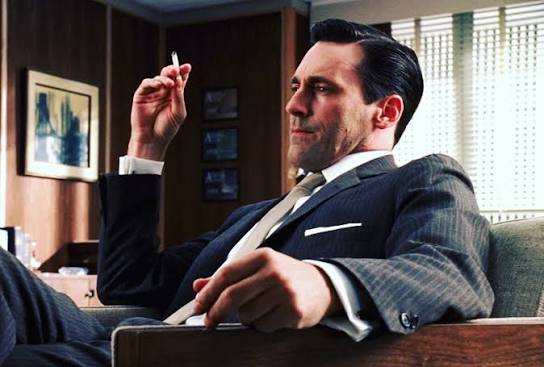
On The Death of the Second Life

Subtitle: Why Nobody Can Disappear Anymore

There’s a one in a billion chance we’re in base reality.

—Elon Musk

You’re a quick study, aren’t you?

—Freddie Miles, The Talented Mr. Ripley

I fought the law and the law won.

—Sonny Curtis

On Disappearing

It used to be possible to disappear. Not easy, exactly, and rarely clean. You needed nerve, mobility, a little money, a plausible story, perhaps a talent for accents, and the good sense not to return to the same bar every Thursday. You needed to understand that most identity was local. A man was the person his neighbors recognized, his employer paid, his landlord tolerated and the woman across the street remembered seeing come home. If he crossed an ocean, a mountain range or sometimes merely a state line, he passed through an interval in which nobody knew him well enough to contradict him. That interval was the birthplace of the second life.

The interval has nearly closed. A person may still abandon a marriage, occupation, city or circle of friends. He may stop answering the telephone and go silent on social media. The difficulty begins when he wants an apartment, salary, bank account, prescription, airline ticket or hotel room. The machinery that enables ordinary existence is now the machinery that identifies us. Every convenience asks the same question in a different form: are you still the person you were yesterday? The modern fugitive may escape a room, but eventually he needs an ATM.

This is not merely a criminal fantasy for me. Years ago I invented the Thin Man, the central figure in The Thin Man and Andrea, as an alter ego and doppelgänger. He is Niko, although the first book withholds even that. He carries an ambiguous face and an American-seeming education acquired elsewhere. He moves through the world of corporate espionage, which is partly a MacGuffin and partly an excuse to put him aboard a cruise ship, in hotel bars, and within striking distance of Andrea, Jessica, Maya, Desiree and women who sense that his absence of a past is also a kind of invitation. The submarine in the earliest version became a cruise ship because a cruise ship can plausibly contain a temporary world: flags, ports, false intimacies, a cabin to abandon and another country waiting in the morning.

The Thin Man was never fundamentally an alien or a figure composed of negative space, although traces of those early ideas remain. The governing fantasy was simpler. He was me without social, professional or familial responsibility. He could love somebody without joining her calendar. He could enter a city without owing the city an explanation. The plot offered him passports, handlers and invented business, but his real superpower was exemption. He lived without the claims that make an ordinary person locatable.

I now possess fewer of those claims than I once did. My professional responsibilities have diminished. My marriage has ended. My son is grown. In some respects I am living the Thin Man dream, although with less espionage and considerably more concern about hotel credits. The discovery is predictable but still worth making: relief from responsibility does not make a man somebody else. It simply leaves him alone with a clearer version of the same man.

Daniel Defoe understood the mechanical version of the fantasy three centuries ago. When I was fifteen, several friends and I discussed burning or drowning Moll Flanders. We meant the physical book, naturally, not Moll herself. The novel seemed interminable. Moll acquired another name, husband, lover, crime, punishment, jurisdiction and source of money; then the process began again. At fifteen this felt less like structure than clerical error. At fifty-two I can see that the repetition is the structure. “Moll Flanders” announces that the name is not her own. Her identity consists of whatever biography can survive the next room.

Moll is born in Newgate Prison, passes through households and marriages, becomes a thief, evades execution through transportation, returns to Virginia and eventually obtains prosperity and something resembling repentance. She can repeatedly become another woman because identity in her world is portable. It is held in clothing, speech, manners, money and the testimony of the few people nearby. A past can be defeated by distance.

John McAfee tried to perform the same operation in a world that already made it ridiculous. Wanted for questioning in Belize after the 2012 murder of his neighbor Gregory Faull, McAfee hid, fled and simultaneously turned his flight into a media production. He claimed that he buried himself in sand for hours with a cardboard box over his head. He dyed his hair repeatedly and stuffed chewing gum beneath his upper lip as a disguise. The founder of an antivirus company attempted to defeat recognition by making his mouth slightly lumpier.

McAfee possessed money, technical knowledge, mobility, paranoia and an almost supernatural resistance to embarrassment. He nevertheless contacted journalists, issued updates and supplied the public with a running commentary on his disappearance. A photograph posted by the Vice reporters accompanying him contained location metadata pointing toward Guatemala. McAfee wanted to vanish and receive credit for vanishing. That contradiction will return. For now it is enough to say that Moll Flanders could escape because nobody in Virginia had read the London file. McAfee carried the file with him, broadcasting all the way.

The Portable Self

The literature of disappearance flourished before the administrative state completed its map. Luigi Pirandello’s The Late Mattia Pascal, published in 1904, supplies the cleanest philosophical version. Mattia, trapped in an unhappy life, discovers that a corpse has been mistaken for his own. The world has accidentally released him. He takes another name and attempts to enjoy the freedom of a man officially dead.

But a man without a past possesses no enforceable future. Mattia’s second identity cannot securely marry, own, complain to the police or participate in the institutions through which personality becomes social fact. He has escaped the first life without acquiring the legal substance required for a second. Pirandello arrives at the modern paradox before biometrics: identity is a burden until one needs its protection.

Jean Valjean and Edmond Dantès offer opposing French solutions. Valjean becomes Monsieur Madeleine through moral action. He builds an industry, employs a town, practices generosity and becomes mayor. He changes so completely that the humane judgment is to regard him as a different man. Javert refuses. For Javert, the file is the man, and goodness performed under an alias is merely a fugitive’s more sophisticated disguise. Les Misérables places grace in conflict with administrative continuity.

Dantès, in The Count of Monte Cristo, builds identity through theater and money. Wealth buys clothes, servants, property, introductions, silence and the assumption of prior importance. Nobody asks the Count for a childhood photograph because aristocratic confidence authenticates itself. Dantès does not erase his first life so much as return with a second one powerful enough to prosecute it.

James Gatz performs the American variation. He becomes Jay Gatsby not primarily to evade the law but to escape poverty, embarrassment and the intolerable smallness of his assigned place. Gatsby manufactures manner, history and spectacle. His tragedy is not that the new identity convinces nobody. It convinces almost everybody. Daisy remains dangerous because she knew him before the costume was complete. The person who remembers the original name possesses veto power over the second life.

These stories depend upon a portable self: an identity capable of crossing a boundary and being accepted on the strength of performance. Sometimes the transformation is moral, sometimes theatrical and sometimes criminal. Each assumes that a society contains blank spaces. The traveler enters one and begins supplying information before contradictory information arrives.

You’re a Quick Study, Aren’t You?

Tom Ripley is the great student of the portable self. In Patricia Highsmith’s novel and Anthony Minghella’s 1999 film, Tom begins as a watcher. He studies wealth before he attempts to inhabit it. He studies jazz, handwriting, clothes, gestures, voices and the particular freedom enjoyed by people whose money causes strangers to complete their stories for them. Dickie Greenleaf possesses everything Tom lacks: beauty, ease, inheritance and the right to become bored with other people.

Tom’s desire is not reducible to robbery. He wants proximity to Dickie, then recognition from Dickie, then the life of Dickie. When those desires become incompatible, murder provides the transition. Tom can imitate Dickie because he has watched with the concentration of the excluded. The peeping is apprenticeship.

Freddie Miles recognizes the dangerous speed of Tom’s education. Visiting Dickie’s Roman apartment, he notices that Tom suddenly understands the geography, furnishings and habits of a life in which he supposedly remains a guest. “You’re a quick study, aren’t you?” Freddie asks. It is a brilliant accusation because it identifies the one part of imitation that cannot be disguised: the curve of improvement. Yesterday Tom did not know where anything was. Today he gives directions.

Seconds later, Tom kills him with the stone head of Hadrian. A Roman emperor becomes the instrument by which the social climber removes a witness. The joke is almost too exact. Freddie does not possess fingerprints or facial-recognition software. He possesses memory, class instinct and contempt. He knows what Tom looked like before Tom learned the role.

Tom’s impersonation is fraudulent, but it is also emotionally sincere. Being Dickie feels more authentic to him than remaining Tom. That is why Ripley endures beyond the machinery of the thriller. He embodies the suspicion that our socially verified identity may be less true than the person we could convincingly perform if nobody interrupted us. He also demonstrates the price. Each new witness becomes a threat because the second life demands the permanent editing of the first.

The criminal achievement eventually becomes less impressive than the psychological imprisonment. Tom escapes particular investigations, but he cannot stop monitoring the room. He must hear every hesitation in his adopted name and see every glance toward the piano, ring or signature. A successful second life is not freedom. It is a part one can never stop playing.

Dick Whitman and Don Draper

Dick Whitman performs the most durable modern transformation in American television. During the Korean War, an explosion kills Lieutenant Donald Draper beside him. Dick exchanges identification tags with the dead officer, survives under Draper’s name and returns to the United States inside a clerical conclusion. War supplies the confusion, body and paperwork. The dead man exits; the living man acquires his place.

Unlike Ripley, Don does not live permanently at the edge of exposure. The new identity accumulates institutional weight. Don works, pays taxes, marries, buys property, fathers children and builds a career. Time itself begins authenticating him. After enough years, the invented man possesses more documentary substance than the abandoned one.

Advertising is the ideal profession because Don’s labor reproduces his own transformation. He takes an ordinary product, suppresses its manufacturing history and gives it a story people prefer. He does the same with himself. The handsome executive, suburban husband and creative genius are not wholly false. They are real accomplishments attached to stolen paperwork.

Yet Mad Men understands that the administrative victory cannot settle the psychological case. Dick is not chiefly afraid that a camera will recognize him. He is afraid that intimacy will. Every person who approaches Don closely eventually reaches the locked room containing Dick Whitman: his poverty, family, desertion, shame and the knowledge that another man’s death financed his ascent.

The Thin Man fantasy and the Don Draper fantasy meet here. Remove the obligations, choose the wardrobe, enter the next room with a name nobody questions. What remains is the person who performed the removal. The Eagles’ old line is unavoidable: “You can check out any time you like, but you can never leave.” One may leave a home, spouse, profession and nation. The ghosts keep the original booking.

The Missing and the Dead

Ambrose Bierce entered Mexico in 1913 and disappeared. That is nearly everything we know about this paritcular case. He may have joined Pancho Villa’s forces, reached Chihuahua and died quickly. He may have been executed, killed himself, succumbed to illness or continued traveling. The absence of evidence has generated a century of endings because disappearance makes authors of the people left behind.

Bierce had already written one of literature’s cruelest imaginary escapes. In “An Occurrence at Owl Creek Bridge,” Peyton Farquhar falls from a bridge with a rope around his neck, escapes into the water, runs home and approaches his wife—only for the narrative to reveal that the journey occurred inside the final instant before his broken body swings beneath the bridge. The mind creates a second life because the body has no exit. Bierce’s own disappearance feels uncannily like an extension of the story, although we should resist converting formal elegance into evidence. He probably did not begin again. He probably died where the map became uncertain.

John List demonstrates how recently a complete second life remained possible. After murdering his wife, mother and three children in New Jersey in 1971, he traveled west and became Robert Peter Clark. He found accounting work, joined a Lutheran church, remarried and lived within ordinary society for nearly eighteen years. List was not sleeping in a cave. He was commuting, filing returns and participating in carpools. The jurisdictions containing John List and Robert Clark did not effectively speak to one another.

Television finally forced the conversation. America’s Most Wantedaired the case in 1989 using an age-progressed sculpture whose resemblance to List was extraordinary. A former neighbor recognized him. Fingerprints from his military records completed the identification. List stands at the border between eras: he constructed the second life through disconnected paper systems and lost it when mass media connected a face to the buried name.

John Darwin attempted the comic British variation in 2002. He paddled into the North Sea, staged his death and allowed his wife to collect insurance and pension payments while he secretly lived nearby. The plan expanded toward Panama. It collapsed when an online photograph showed the supposedly dead man beside his wife. A basic image search linked John, Anne and Panama. The second life had appeared on the first page of the internet.

Robert Hoagland achieved something quieter. He vanished from Connecticut in 2013 and lived in New York as Richard King until his death in 2022. The new life appears to have been modest rather than operatic. That may be the surviving modern model: abandon grandeur, remain geographically ordinary, ask institutions for as little as possible and hope nobody searches the correct connection. His identity was established after death.

Ryan Borgwardt showed in 2024 how poorly the romantic disappearance now survives contact with the contemporary record. He staged a kayaking death in Wisconsin and left the country. Investigators found evidence of preparation, travel and financial activity, contacted him abroad and persuaded him to return. In 2025 a judge sentenced him to eighty-nine days in jail, matching the period during which he had actively misled authorities, and ordered restitution toward the costly search. The symmetry of the sentence was better than the plan.

These cases are morally different. Bierce may simply have died. Hoagland appears to have abandoned a family without committing the crimes of List or Darwin. List was a murderer. The point is not to place them in one ethical category. It is to watch the available space contract. List could build an ordinary life for eighteen years. Borgwardt’s itinerary began becoming evidence before his family had finished grieving.

You Could Call It the End of the World

Money is the most practical border. A person can sleep outdoors without identification. The moment he wants a hotel, apartment, salary, international ticket or functioning bank account, somebody asks for the name behind the money. A friend of mine treats $9,999 as the largest sum one may carry into the United States. The actual rule is subtler: more than $10,000 may be transported legally, but it must be declared. Japan similarly requires declaration above one million yen. The threshold is not a wall. It is a checkpoint at which money becomes narrative. Where did it come from? Why are you carrying it? Who are you?

The old fugitive relied on fragmentation. A birth certificate sat in one office, fingerprints in another, employment history in a filing cabinet, border entries in ledgers and newspaper photographs in local archives. None of these systems was necessarily weak. They simply did not consult one another quickly. The fugitive’s skill lay in remaining inside the delay.

The decisive modern development is linkage. Passports became machine-readable and biometric. Banking systems identify customers and flag patterns. Phones create location and relationship histories. Cameras no longer merely preserve images; increasingly, software compares faces. Search engines connect photographs with names and places. DNA can identify a person who never submitted a sample because a distant relative did. Public records, commercial databases and social media supply continuity from childhood to the present.

Every system contains errors. Facial recognition misidentifies people. Records conflict. Databases leak. Names are misspelled. The second life does not die because any single machine knows everything. It dies because machines ask one another. The old fugitive needed to prevent one sheriff from telephoning another. The modern fugitive must prevent every machine from recognizing every other machine.

Josef Rusnak’s largely forgotten 1999 science-fiction film The Thirteenth Floor supplies the finest image of this condition. Douglas Hall, a computer scientist in Los Angeles, discovers that the simulated version of 1937 Los Angeles created by his company contains conscious inhabitants. More disturbingly, he learns that his own Los Angeles is another simulation. Following instructions left by his murdered mentor, Hall drives toward Tucson, ignores the road signs and barricades, and eventually reaches the boundary of his universe. The desert stops. The mountains dissolve. Beyond them stands an unfinished green wireframe—the scaffolding of a world nobody expected its inhabitants to inspect. Hall has not merely failed to escape Los Angeles. He has reached the place where Los Angeles runs out.

“You could call it the end of the world,” he says. The line is quiet because terror has already done the shouting. Moll Flanders could leave one town and supply the next with another name. Valjean could cross into another jurisdiction. Dick Whitman could exchange identification tags with a dead officer. Hall cannot accomplish even the preliminary act of departure because the road, desert and destination belong to the same system.

There is no countryside beyond surveillance and no unindexed territory in which to begin again; there is only the end of the program. Our world has not yet become Hall’s wireframe desert, but it increasingly resembles it. Every road leads toward another camera, account, border record or machine asking the traveler to confirm that he remains the person who departed.

The inhabitants of the film’s simulated 1937 discover that their world was created for users elsewhere. Hall then discovers that his apparently real 1999 is also one among thousands of simulations. “You weren’t supposed to find out,” he is told. The sentence might serve as the motto of every identity system. The structure works best when the contained person mistakes its limitations for the natural shape of reality.

Elon Musk’s claim that there is only a one-in-billions chance of our inhabiting “base reality” is not a scientific calculation. It is a swaggering compression of the simulation argument: if advanced civilizations produce enormous numbers of conscious simulated worlds, a randomly situated observer is more likely to occupy one of those than the single original reality beneath them. Whether or not Musk is right, The Thirteenth Floor understands the emotional consequence. The final disappearance is not concealment within the map. It is the impossible search for a place outside it.

The Last Fugitive

John McAfee deserves the title because he possessed nearly every advantage. He had money, international mobility, technical knowledge, familiarity with surveillance, political connections, access to boats and aircraft, and the willingness to behave in ways a normal investigator might not predict. He also possessed a cardboard box.

I have long suspected that McAfee knew more about Gregory Faull’s murder than he admitted, perhaps much more. That is an opinion, not a proven fact. Belizean authorities sought McAfee for questioning, but he was not convicted or charged in connection with the killing. Suspicion does not become evidence merely because its subject is spectacularly strange.

I nevertheless wanted McAfee to remain in circulation. I wanted him alive, ranting online, threatening to parachute into Fukuoka, appearing without warning at a Kyoto bar and ordering a strip steak while explaining that income tax was metaphysically invalid. This is not a defense of anything he may have done. It is an admission that fugitives provide a form of entertainment respectable citizens cannot. McAfee turned the ordinary police question—where is this man?—into theater.

His technical competence makes the comedy sharper. He knew that networks retain traces. He warned endlessly about surveillance. He promoted cryptocurrency and privacy as routes around state control. Yet his own need for audience continually defeated his wish for concealment. He contacted reporters while hiding, traveled with a film crew, cultivated disguises elaborate enough to become stories and generated the publicity through which strangers could follow him.

The Vice metadata incident is almost too perfect. A technology journalist accompanying the antivirus pioneer posted a photograph containing geographical information. The machine did not need to recognize McAfee’s altered face or chewing-gum lip. It merely reported where the photograph had been made. McAfee’s legend and location traveled inside the same file.

This is why he is the last fugitive rather than the greatest one. A true second life requires anonymity. McAfee could tolerate danger, accusation, ridicule and legal jeopardy. He could not tolerate being unknown. He wanted to disappear and narrate the disappearance, to escape the state while retaining the crowd. The modern fugitive may finally be defeated less by the camera than by his inability to live without looking into it.

That appetite is not confined to eccentrics. We announce departures, document privacy, turn reinvention into a new profile and carry our old audiences toward the new life. The desire to become somebody else competes with the desire to have everyone recognize the transformation. Moll Flanders supplies the next town with a story. McAfee supplies the whole planet with updates.

Coda

Is the death of the second life good or bad? Neither. It is a historical development with benefits, cruelties and unforeseen emotional costs. Connected systems catch murderers, fraudsters and people attempting to abandon obligations. They also make escape more difficult for abused spouses, political dissidents, debtors, refugees and ordinary human beings whose worst mistake has become permanently searchable. Accountability and mercy do not rise together automatically.

There remains an important distinction between disappearance and reinvention. An adult can legally change a name, move, choose another occupation, close public accounts and refuse contact. The state does not require everyone to preserve the social life into which he happened to arrive. But legal reinvention preserves continuity. Debts, convictions, parenthood and court orders belong to the person through the change. The first life is not erased. It is amended.

The Thin Man occupies the fantasy beyond amendment. He moves without the drag of continuity. He may enter Andrea’s life, Jessica’s cabin or another city under circumstances that do not require him to explain the previous scene. I invented him because I wanted the freedom of a man nobody could summon. Yet even he carries Niko beneath the working identity. Georgia remains inside him. Education, language, childhood, loss and desire cross every border without documentation.

That is the final limitation, older than passports and more reliable than facial recognition. You cannot outrun your ghosts. A person may defeat the file and still remain the person described by everything the file omitted. Tom Ripley acquires Dickie’s signatures but retains Tom’s hunger. Don Draper obtains Don’s career but brings Dick’s shame into every marriage. McAfee crosses borders with the cardboard box and John McAfee climbs out from beneath it.

At fifteen, I thought Moll Flanders was shapeless because Moll repeatedly acquired another husband, name, occupation, crime, punishment and jurisdiction. Now the repetition looks like the record of a vanished human possibility. Moll continually finds another exit. We inhabit a world of fewer exits, better records and longer memories.

Perhaps this is why stories of disappearance retain their force. They promise that one life need not be final. Somewhere beyond the jurisdiction, ocean, desert or wireframe mountain waits a place where nobody knows what we have done and no machine asks us to confirm it. We know better. The map follows us, and even if it did not, we would arrive carrying ourselves.

Moll Flanders could become another woman. We can only become ourselves somewhere else.

Sources

Daniel Defoe, Moll Flanders (1722), and Encyclopedia Virginia’s account of the novel’s transportation plot.

Luigi Pirandello, The Late Mattia Pascal (1904).

Victor Hugo, Les Misérables; Alexandre Dumas, The Count of Monte Cristo; F. Scott Fitzgerald, The Great Gatsby.

Patricia Highsmith, The Talented Mr. Ripley, and Anthony Minghella’s screenplay for the 1999 film.

AMC, Mad Men: the Dick Whitman/Don Draper identity narrative.

Project Gutenberg and the Ambrose Bierce Project, “An Occurrence at Owl Creek Bridge” and biographical materials.

FBI historical materials on John List and the America’s Most Wanted identification.

Contemporary reporting on John Darwin, Robert Hoagland and Ryan Borgwardt.

U.S. Customs and Border Protection and Japan Customs guidance on cross-border currency declarations.

U.S. Department of Homeland Security, biometric identification materials.

Josef Rusnak, The Thirteenth Floor (1999), adapted from Daniel F. Galouye’s Simulacron-3.

Code Conference 2016, Elon Musk’s discussion of simulation and “base reality.”

Contemporary Wired, Guardian and Vice reporting on John McAfee’s flight from Belize.

The Splinter Fraction: Male Circumcision Should Be Outlawed — 1 Million Percent

Note: This piece argues that male circumcision should be strictly outlawed for non-consenting minors. It approaches the topic from a strict bodily autonomy framework regarding non-consensual, non-therapeutic interventions on minors, and treats irreversible bodily alteration without consent as the central ethical issue. It is not addressing medically necessary or emergency procedures, nor situations where an intervention is required to prevent serious immediate harm, which are outside its scope. The argument also focuses on principle rather than comparative cultural practice, and is intended as a normative claim about legal consistency in liberal systems rather than a commentary on individual intent, belief, or identity.

Epigraph:

Jesus don’t touch my baby.

Ryan Adams

Male Circumcision Should Be Outlawed — 1 Million Percent

Male circumcision of non-consenting minors should be outlawed globally, with legal penalties applied to those who perform or facilitate it, and civil penalties imposed on parents who authorise it. I was circumcised in infancy in a Catholic family in 1974. The issue is not medical ambiguity or cultural discomfort but a basic question of bodily autonomy: whether irreversible, non-therapeutic alteration of a child’s body can ever be justified without consent. In a liberal legal system that claims to prioritise individual rights, the answer should be consistent and categorical. Anything less relies on inherited exemptions—religious, medical, or cultural—that do not withstand ethical scrutiny once the principle is stated plainly.

The core objection is simple: irreversible bodily modification without consent is impermissible when it is not medically necessary. A child cannot consent, and parental authority is not unlimited; it is a delegated responsibility bounded by the child’s future autonomy. Circumcision is not an emergency intervention. It is not a life-saving procedure in the vast majority of cases. It is the removal of healthy tissue from an individual who will live the entirety of their life with that alteration imposed before they had any capacity to participate in the decision.

This is where liberal societies already reveal a partial but incomplete consistency. We accept that consent is not static across childhood. We do not allow children to make binding decisions about sexual activity, because we recognise developmental thresholds of agency and understanding. That is why age of consent laws exist at all, and why they sit at or near adulthood in most jurisdictions. But the same logic applies more fundamentally to irreversible bodily alteration. If we accept that certain domains require maturity before consent is meaningful, then permanent physical modification must fall under the same principle. The difference is not moral category; it is legal lag.

The counter-case is not weak in structure, even if it fails ethically. It rests on four main claims: parental rights, medical justification, religious freedom, and social normalisation. Parents are routinely empowered to make medical decisions on behalf of children under a “best interests” standard. Circumcision is often placed within this framework as a preventive health measure. Some studies are cited to suggest reduced risks of urinary tract infections or sexually transmitted infections later in life, and complication rates in clinical settings are presented as low. On this basis, it is framed not as cosmetic alteration but as permissible preventive medicine.

Religion provides a second pillar. In Judaism, circumcision is a covenantal rite central to religious identity. In Islam, it is widely practiced as a tradition of purification and belonging. Liberal states are deeply reluctant to interfere with such practices, treating them as protected expressions of religious freedom. On this view, banning circumcision would represent not neutrality but intrusion into foundational religious life.

The third pillar is cultural and social integration. In societies where circumcision is widespread, particularly where it is near-universal within certain populations, deviation can create stigma or perceived abnormality. The argument follows that enforcing prohibition could impose social harm on children by marking them as different within their communities. Finally, legal systems distinguish male circumcision from female genital cutting on the basis of severity, medical context, and institutionalisation within healthcare systems, arguing that harm is not equivalent and therefore regulation need not be symmetrical.

Taken together, these arguments form a sort of a defense of permissibility under existing liberal frameworks: parental discretion within medical norms, protected religious practice, and harm-based legal classification.

But each of these pillars collapses under a stricter application of bodily autonomy.

Parental authority is real, but it is not sovereign. It exists only insofar as it serves the future autonomy and welfare of the child. It does not extend to irreversible, non-therapeutic bodily alteration where no immediate necessity exists. The “best interests of the child” standard is not a blank cheque; it is a constraint. We already recognise this in other domains where the state intervenes against parental choice when irreversible harm or violation of fundamental rights is at stake. The question is whether we apply that constraint consistently.

Medical justification also fails the threshold test when examined carefully. Even if certain population-level benefits exist, they are statistical, not essential. They can be achieved through far less invasive means—hygiene, education, barrier protection—without permanently altering the body of an individual who has not consented. Preventive possibility is not sufficient justification for irreversible intervention. Medicine does not normally operate on the principle that minor statistical risk reduction permits non-consensual surgery on healthy individuals.

Religious justification is where liberal systems most visibly reveal their tension. Freedom of religion is a foundational principle, but it is not absolute. It has never been interpreted as permitting unlimited parental action upon a child’s body. The critical distinction is between belief and irreversible physical imposition. Religious freedom protects the right to believe, to practice, and to transmit culture—but it cannot logically extend to authorising permanent bodily modification of an individual who has not consented to participate in that covenant. A child is born into a tradition, not owned by it.

The social integration argument similarly confuses descriptive normativity with ethical justification. That a practice is common within a group does not mean deviation is harmful in a way that justifies irreversible intervention. Social discomfort is not equivalent to bodily violation. Otherwise, any culturally dominant practice could immunise itself from ethical scrutiny simply by achieving prevalence.

The legal distinction between male circumcision and female genital cutting is often defended on the basis of harm severity and medical framing. But this distinction, while operationally convenient, becomes unstable when the underlying principle is examined. If the governing value is bodily integrity and consent, then sex-based differences do not determine permissibility. The relevant question is not comparative severity alone, but whether irreversible non-consensual alteration is being authorised at all. Harm thresholds may differ in degree, but the structural violation—altering a child’s body without consent—remains.

Once these counter-arguments are reduced to their core, what remains is not a justification but a set of accommodations: to tradition, to institutional history, to religious continuity, and to cultural inertia. None of these constitute a moral defence of the act itself; they constitute reasons why it persists.

This is why enforcement matters. A principle without enforcement is not a principle in practice. If bodily autonomy is to mean anything in a liberal legal system, it must be protected even when the practice is culturally embedded or religiously significant. That requires prohibition of the act itself, accountability for those who perform it in violation of the rule, and civil liability for those who authorise it on behalf of non-consenting minors. The aim is not punishment for its own sake, but alignment of law with the ethical principle it already claims to uphold in other domains of bodily autonomy.

What makes this issue more than historical critique is that it persists into the present as a live inconsistency. It is 2026. Liberal legal systems already recognise that bodily autonomy is foundational in adulthood. They already recognise that consent has developmental thresholds. They already prohibit non-consensual genital alteration in other contexts. The remaining question is whether they are prepared to apply the same principle consistently when tradition, religion, and medical normalisation converge.

A system that protects bodily autonomy only after adulthood has not resolved the ethical question; it has merely deferred it. The principle either applies universally to the body of the individual, or it does not. If it does, then non-therapeutic circumcision of minors cannot stand as an exception. 1 million percent.

Note: This piece is part of the Splinter Fraction series of political positions that the two-person Trans-Pacific political party has taken. You can find some of the others below.

Levels of Lucidity in Dreams: A Close Reading

Illustrations presented with thanks by Riko Kusahara

Note: This piece was written for the Psiber Dreaming Conference offered by IASD in September 2018, under a strict word limit that forced a level of compression I don’t always allow myself. It draws on a series of lucid dreaming experiences to explore how we determine whether we are dreaming or awake, and why those determinations so often fail under pressure. Looking back, I’m less interested in the specific techniques of lucidity than in the broader question the paper circles: what happens when our usual markers of reality—stability, plausibility, even self-awareness—prove unreliable? The result is less a theory of dreaming than a compact record of trying to think clearly inside a system that continually revises its own ground.

Epigraph I:

The difference between most people and myself is that for me the “dividing walls” are transparent.  That is my peculiarity.

—Carl Jung

Epigraph II:

The conventional scientific sentiment has become that—while we don’t totally understand why dreaming happens—the dreams themselves are meaningless. They’re images and sounds we unconsciously collect, almost at random {…} Which seems like a potentially massive misjudgement.

—Chuck Klosterman

Dream I: I awake in a warehouse.  The bed is against one wall–on the other is a thirty-foot mountain of cantaloupes.  I realize I am dreaming.  I get up and run my hands over the cantaloupes.  They feel absolutely real—as tangible as in life.  I remember that tangibility is not a viable reality test—I’ve made that mistake before.  Now fully lucid, I decide to levitate.  The room dissolves, and I float suspended somewhere in dense, colourless space.  Eventually, I feel the need to come back to earth but cannot locate it.  I feel something beneath me.  This is my bed, and I awake back in the warehouse, relieved yet exhilarated.  The cantaloupes are still there, however I don’t question them.  I just happen to live in a room full of fruit.  Moments later I awake again, this time in diurnal “reality.”

The most common dream experience is of waking from a dream we take to be real, only to understand that it was “just a dream.”  However, a subset of dreamers, probably more than we generally imagine, have experienced lucid dreams, dreams in which, to some degree, they are aware they are dreaming.  Lucid dreamers may also experience “false awakenings”[1]— the sensation of waking progressively through dream “levels.”  False awakenings can be disorienting (Robert Waggoner writes that after seven successive false awakenings he “would accept {…} any reality {…} as long as it stayed put[2]), or sought after (Daniel Love and Keith Hearne have independently developed techniques to induce false awakenings[3]).  Regardless of the desirability of the experience, the existence of dream levels, far from a simple oddity, provides a potential window into massive metaphysical questions.   

First, we need to understand how dreamers use evidence to establish whether they are dreaming or awake.  

II: I am in a dreaming contest with another dreamer.  The contest begins and slimy amphibians begin to appear.  Some resemble frogs; others are in shapes that dont exist in nature.  Their size varies from that of a pinky to that of a fist and they are very colourful.  I am not trying to dream them, rather they are spilling everywhere around my feet.  I sense this is a dream and check on the other dreamer.  He is standing to my right in empty space.  He looks just like me and hasnt begun his dream. 

This dream is non-lucid at first and becomes lucid because of the bright color and absurd number of the amphibians.  An awareness beyond the dream senses a non-natural situation.  

III: I am picking out fruit at a fruit stand.  There are some huge avocados, almost too good looking.  I wonder if I am in a dream, and touch an avocado to check.  The one I choose is ripe and soft—I squeeze it a little.  There is no doubt that I am having a tactile experience, and I conclude I am not dreaming.  Of course, I am. 

Two dreams, two types of evidence.  In Dream II, I correctly identify the amphibians as anomalous, and become lucid.  In Dream III, my attempt to test the lifelikeness of the avocado as an indicator fails.  Simply put, realistic sensation is not sufficiently indicative of reality.  Love agrees: “we are not looking for a qualitative difference in how realistic the experience feels {…} we are {…} on the lookout for issues with stability and plausibility.”[4]  In Dream I, at first the huge pile of melons in my bedroom appears implausible and triggers lucidity; after moving up a dream level, my mind overrides the implausibility by “justifying”[5] the anomaly.  

Because we awake from sleep and dreams every morning, we are very familiar with the experience of awakening.  It is therefore unsurprising that when we wake inside a dream we accept the new reality as the waking world, even if it contains anomalous elements.  

IV: I am in a huge house where a large group of families on motorcycles arrive.  The families are making noise all night.  I realize I am dreaming and levitate over to the families.  Later I decide to wake up.  I ease myself out of bed, bumping my nose into an ironing board.  The room looks and feels exactly like my room.  I dont recall the ironing board being there, but whatever.  Moments later I awake again—the situation is identical, only, the ironing board is gone.  I feel a pit in my stomach, wondering what is ultimately real.

Dream IV is a good example of how dream levels can become increasingly realistic as we move through them.  An ironing board in front of the bed is (for me) more plausible than a house full of bikers.  Dreams such as this beg the question of how we can ever be sure we are awake.  I have dreamt of getting up, walking to the front door, opening it, and emerging into the sunshine in my neighbourhood.  At every point, this dream felt entirely realistic with no anomalies.  After experiences like this, is it wholly unrealistic that we could dream an entire morning?  An entire day?

There are different ways to approach this kind of question.  The first is to use rigorous reality tests.[6]  Using reality tests after each fresh awakening can help us filter anomalies in what may be an increasingly realistic dream state. The second is to open ourselves to a wider set of questions.  Although space limitations make full exploration of these questions impossible, modern dreamers would do well to recall that throughout recorded history people have speculated on the meaning of the dream state and what it can tell us about space, time, life after death, and the nature of reality. 

As dreamers, we know that dreamtime behaves very differently than waking time.  Robert Moss distinguishes between Chronos (“linear time”) and Kairos (the “spacious now.”)  He writes that when Kairos operates in waking life, “ordinary time is {…} suspended or elastic,” and that the world can “quiver or shimmer.”[7]  Moss’ Kairos time sounds a great deal like dreamtime.  Jung in his memoir writes “our concepts of space and time have only approximate validity,”[8]  and “there are indications that at least a part of the psyche is not subject to the laws of space and time.”[9]  Jung makes multiple connections between dreams and life after death, suggesting that our waking world,

in which we are “conscious,” may in fact be a projection of a more “real” and permanent, even timeless, unconscious.[10] 

In the Tibetan tradition of dream yoga, the yogi prepares for death through dreams and meditation, entering death consciously by releasing the bodily energy in such a way that the body partially or entirely dissolves into pure light.  This “rainbow body” is well-documented in Tibet and China, and cases of this phenomenon have been reported across multiple religious traditions.[11]  Finally, Moss connects dreams with the much discussed Many Worlds theory, as does, in popular culture, Richard Linklater. [12]

V:  I am among a large group of people on the top floor of a building.  We lie down on our backs and form bundles.  The molecular structure of these bundles begins to dissolve, we become lighter, then totally empty.  This process is dictated by a power outside of us which doesnt speak.  Once empty, we have the choice to become anything we want.  I choose to become white light.  Suddenly I am transported through space in a burst of pure white light, my old body left entirely behind.  This is the most peaceful and thrilling feeling in the world.  Then, I am back into a new bundle, trying again to become empty.  I make progress, but it is hard and I am over-concentrating.  Progress ceases; I wake up. 

Although I have thought at length about dreams, I am a normal person with a normal job, dreaming anonymously night after night.  I don’t belong to a spiritual tradition, am not a yogi or a meditating hermit.  As a lucid dreamer, like many of us, I am self-taught.  While we anonymous dreamers are wise to suspend judgement about the particularities of a theory as mind-boggling as dreams as an interface to infinite parallel universes, it is perhaps not by chance that my dreams of ascending to a state of pure white light bear close resemblance to innumerable near-death experiences or the reported manifestations of a lifetime of dream yoga.  Although admittedly outside of our normal rational mode of apprehension, the experience of journeying through multiple dream levels, and the energy and amazement which often accompany these experiences, may point the way toward worlds far above, below, or beyond our own.  

Who are we in our trek through life?  Are we the maker, or the made?  The writer, or the page?  The actor, or the stage?  The happening, or the happened to?  Perhaps, our ability to exercise agency in the vastness of forever depends in part on learning to navigate levels of “reality,” however we encounter them.  Or, perhaps, journeying to the far side of the dream can bring us face to face with that which is actually dreaming us.

Bibliography

Jung, Carl. Memories, Dreams, Reflections. Vintage Books, 1989.

Linklater, Richard, director. Slacker. Orion Classics, 1990.

Love, Daniel. Are you Dreaming? Enchanted Loom Publishing, 2013.

Moss, Robert. Sidewalk Oracles. New World Library, 2015.

Rinpoche, Gyalwai Nyugu.  “About Rainbow Body.” http://www.gyalwai-nyugu.com/about-rainbow-body/.  Accessed 24 July 2018.

Rinpoche, Tenzin Wangyal. The Tibetan Yogas of Dream and Sleep. Snow Lion Publications, 1998.

Thomas, Matthew.  “On Coming Through”: A New Meditation on Intention. https://craftfollowsconcept.com/2013/05/13/on-coming-through-statement-of-intent-on-the-approach-of-my-39th-birthday/#more-11. Accessed 24 July 2018.

Waggoner, Robert. Lucid Dreaming. Moment Point Press, 2009.


[1] Waggoner, 61

[2] ibid., 63

[3] Love, 131

[4] Love, 71

[5] Love cites “poor reasoning skills” as one common reason for failing to recognize dream signs and achieve lucidity.  Love, 73.

[6] Love, 78-79; Waggoner, 259.  (Wagonner uses the term “reality check” instead of “reality test.”)

[7] Moss, 49

[8] Jung, 300

[9] ibid., 304

[10] ibid., 324

[11] Tenzin Wangyal Rinpoche, 314; Gyalwai Nyugu Rinpoche

[12] Moss, 74-74; Linklater

Why It Is So Hard to Get Breakfast in Japan (with a dream cameo from the Gemini Donald Trump)

New Note (2025): Since this piece was first published, Japanese Breakfast the band has gotten even bigger, Michelle Zauner wrote another book, and the cultural universe has shifted enough times that some aspects of this essay may be outdated. I’ve kept the original text intact because the dream-logic and breakfast-logic still stand.

I live in Kyoto, Japan, and after many years here I’ve traveled pretty widely—especially in the greater Tokyo area. Traveling in Japan is pretty easy as long as you can manage a little spoken Japanese and read a train map. The trains are famously efficient and connect most of the country, including every major city.

I haven’t driven a car here in more than fifteen years and don’t miss it at all. Trains and taxis get the job done just fine. Overall, I love traveling in Japan and I love exploring Tokyo, a city that contains worlds within worlds. I have almost no complaints about Japanese travel.

Except for one.

It is nearly impossible to get a good breakfast—or really any breakfast—when you’re on the road.

Now, it’s not that Japanese people don’t eat breakfast. They do. The archetypal morning meal—rice, miso soup, maybe a little fish—is as recognizable in its way as the “full English” of sausages and beans. But the Japanese breakfast is overwhelmingly a home operation. Once you’re traveling, the options narrow to two—two and a half, if we’re being generous.

I. The Hotel Breakfast

Mid-price and nicer hotels usually offer a breakfast buffet with “Japanese” (rice, miso, maybe grilled fish) and “Western” (toast, jam, and some ambivalent eggs) selections. Except at the truly top-tier hotels, these buffets manage to be both overpriced and bad. A traveler is lucky to escape for ¥1,500–¥1,800 (about fifteen dollars before the yen weakened), and more commonly pays north of ¥2,000 for a pretty uninspired spread.

Budget hotels often don’t offer breakfast at all.

In my experience, Japanese hotel breakfasts are among the weakest anywhere in the world. I take this as symptomatic of a broader truth: Japanese people simply don’t care about breakfast when they’re on the road—and maybe not all that much at home either.

II. The Convenience Store (“Combini”) Breakfast

When I have raised the issue of the lack of decent breakfast in Japan, Japanese people usually point me to the convenience store. And it’s true: you can purchase food and coffee at any of the ubiquitous combinis—Family Mart, 7/11, Daily, Lawson, and the rest. They’re open 24 hours, and they stock a range of items that theoretically qualify as breakfast. Hard-boiled eggs, yogurt, rice balls, steamed buns, fried chicken, sometimes bananas, and of course hot and cold coffee.

I’ve certainly been in situations where I had no choice but to fall back on the combini for breakfast while traveling. And this is…fine, to an extent. But most combinis have nowhere to actually sit and eat, and in any case you can’t really call a combini breakfast nice.

Most Japanese folks seem to regard a combini breakfast as perfectly acceptable—desirable even. And while one can admire the low expectations, or the cultural pragmatism behind them, it’s possible to admire those qualities and still wish for more.

III. Starbucks or a Local Coffee Shop

Starbucks are fairly common in major cities and usually open at 7 a.m. (if you’re lucky) or, more commonly, 8 a.m. They should really open at 6. The food offerings are overpriced, and Starbucks has never truly figured out its food—which remains baffling. Still, one can grab a few combini items and smuggle them in, or settle for a four-dollar fragment of quiche with your Americano. I would not classify Starbucks as having breakfast, per se, but they are pleasant enough to sit in, and one can create a simulacrum of breakfast there.

Then there are the local coffee shops. These, fortunately, often open at 7 a.m. or even earlier, and serve strong coffee—often brewed by hand at the counter with a drip filter—and a breakfast that nearly always consists of a single piece of white toast and an egg. White toast, egg, and handmade coffee with old guys reading the paper around you is, I admit, at least an approximation of breakfast, and I have certainly relied on this setup while on the road.

But it’s still not quite what we are looking for if we want a hearty, balanced breakfast. There is no French toast, no fruit bowl, no omelette, and only very occasionally a strip of bacon. None of the staples one might reasonably expect from a decent, full breakfast.

And that’s more or less the list. You can also find 24-hour beef-bowl restaurants, but they are cheap as and not exactly the sort of thing you look forward to when greeting the day. Beyond that, most restaurants simply don’t open until 11:00 or 11:30 for lunch. The concept of brunch—dicey even under ideal circumstances—barely exists outside the swankiest of upmarket hotels.

It is, put bluntly, really hard to find a proper breakfast in Japan unless you make it yourself. And that fact continues to puzzle me. I understand that most people here eat rice and miso at home, or grab something at the convenience store. Fine. But metropolitan Tokyo has roughly 30 million people. None of these 30 million want a real breakfast at 7:00 or 7:30 a.m.? Not even a few hundred thousand?

It seems incomprehensible. And yet, incomprehensible or not, this is simply the reality. There is no broad Japanese market for breakfast. I mean, I’m in the market—but apparently one man does not a demographic make.

Go figure.

Now, I’ve covered the issue of Japanese breakfast—its scarcity, its odd cultural positioning—to the best of my ability. But before we move on, I want to add a few details that may seem unrelated. Let’s see if we can get them to connect.

Because the truth is, I dream about getting breakfast in Japan. And in a surprising number of these dreams, the Trumpster shows up.

More precisely: the dreams focus on the fact that the Trumpster and I share a birthday (June 14th), which makes us both late Geminis. Late Geminis, I have good reason to believe, are uniquely dangerous and slippery. But in my dreams the Trumpster isn’t dangerous at all. He shows up as basically an empty suit.

Trump/ Breakfast Dream I:

I am at a breakfast buffet in Japan. This is at a hotel that I am not staying at, and I may indeed be attempting to crash the buffet while masquerading as a hotel guest. Trump is there with an entourage, and he sees me staking out the buffet. I make a comment to him that we are both late Gemini, and he nods, curtly but with some minimal consideration. He sees me trying to steal the breakfast, does not care, and would probably provide cover if it came to that. He and I are not aligned, but nor are we enemies.

Trump/ Breakfast Dream II:

I am outside in the morning, standing on a dock or something of that nature. I am looking for breakfast, and not finding it. There is a commotion above me to the east, and I realize that Trump is being rolled out, literally on like coaster wheels, for a speech. He is on some kind of sliding seat and when this seat hits the balcony he stands up and postures about like Mussolini. I am watching and he sees me watching, but continues with his Mussolini act. I realize quickly that this is a total act and that he doesn’t even want to be there. He is not dangerous in this moment or in this speech, just faintly ridiculous. Still, no breakfast.

=====

What do Trump and breakfast have to do with one another? I’m not sure yet. But I do know that Trump, although maligned by nearly everyone I know (I know a bunch of liberals), and apart from being an egotistical, mafia-adjacent, easily flattered, shape-shifting sociopath, is also pretty funny. Before I lose half of my readership, I’ll just nod to the comedian Shane Gillis, who made this point several months after Trump left office.

Has enough time passed that we can admit Trump was funny? Can we finally admit that he was funny? (…) He was funny (…) I saw it. I’d show my friends I’d say look at that. They’d be like “what?”

“It’s funny.”

“There’s nothing funny about Donald Trump.”

I don’t know, during Hurricane Dorian he was like “maybe we should nuke it” (…) Like that was a real suggestion from the President (…) “Hey we got a big storm coming, you want me to blow it up?”

They were like “no, what the fuck are you talking about?”

“I don’t know, I fuck around dude. It’s what I do.”

“I fuck around, it’s what I do,” is a great summary of Trump’s whole approach to governing. Now, is there anything funny about his terrible immigration policies, his attempted pressure of the Georgia secretary of state to “find” 1800 votes, his total disregard of democratic norms? No, not really. But is there anything funny about his speculation that maybe a little light and a little bleach could cure COVID? Why yes, there is. Is there anything funny about his noting that Frederick Douglas is getting bigger and bigger these days? Yes indeed. Is the way he pronounces “huge” funny? It’s funny to me anyway. And in my dreams, the two above being part of a series of about four or five total Trump breakfast dreams, he always shows up as semi-defanged, basically neutered, and non-dangerous. I think this is because, as a fellow late Gemini, I kind of have Trump’s number. It takes a late Gemini to know one, and I know this guy. In fact, I see right through him, to the extent that I know he’s not even there.

One other salient piece of data, there is an indie rock band called Japanese Breakfast that is getting bigger and bigger these days (they tell me “sir, this Japanese Breakfast is getting bigger and bigger these days, and I say look at that, wow, this Japanese Breakfast is really getting huge”). I don’t know them that well, but they sound like the kind of band I would like. I do wonder though if their name is not an ironic nod to the fact that Japanese breakfast is not a thing. Is the band name self-effacing, or even self-erasing? Does Japanese Breakfast the band exist at all? Does Trump? There is a way in which the Trump presidential term has come to feel like a fever dream or collective delusion, a set of events that cannot really have occurred as we recall them. In this sense, the Trump presidency may in the future be subject to Phantom Time Hypothesis speculation. And he and his handlers have already played right into this speculation what with their first lady doubles, the totally unhinged press conferences with the ubiquitous helicopter waiting in the wings, and the classic Trumpism, “we’ll see what happens.”

Here is what I think. Japanese Breakfast as a band exists. The Trumpster exists, but his wife spent most of her time in the White House being doubled. Trump and I are dream doubles, and I have his number. Japanese people don’t care about breakfast. And I am always starving at around 9 AM when on the road in Japan. Someone should look into the matter. I hear the Trumpster is free these days, maybe he’s the guy for the job.

Note: If you enjoyed this piece, you may also like the pieces below which also deal with American politics, albeit from a slightly different angle.

https://thekyotokibbitzer.wordpress.com/2025/11/25/on-the-federal-age-of-consent-a-reply-to-alan-dershowitz/