Well everyone, today is the day. My first novel, The Adventures of the Thin Man and Andrea is now available on Amazon and wherever books are sold.
This one took a while—written in fits and starts, in bars and hotel lobbies here in Kyoto—but it finally found its shape. More than anything, today I just want to thank all the readers of The Kyoto Kibbitzer, wherever you hail from; I’ve always thought of this as an ongoing conversation, and a lot of this book grew out of that exchange.
If you do pick it up, I hope you enjoy the ride—and if it lands for you, a quick review on Amazon would mean a great deal. Thank you, as always, for reading.
Note: This essay reflects on the curious cultural figure of Anna Delvey, whose rise and fall in the New York art and social scene became one of the stranger morality plays of the late 2010s. Delvey—born Anna Sorokin in Russia—gained notoriety for presenting herself as a wealthy European heiress while attempting to secure loans and social capital for an ambitious but largely imaginary cultural venture known as the Anna Delvey Foundation.
The events described here draw on widely reported elements of the case: Delvey’s years moving through luxury hotels in Manhattan, her efforts to obtain financing for a private art and social club, the unraveling of her financial claims, and the now-famous trip to Dubai in which a friend—later a magazine writer documenting the experience—was left responsible for an enormous hotel bill after promised funds failed to appear.
The piece does not attempt investigative reporting. Instead, it approaches the story in a spirit of cultural anthropology. Cities like New York have always attracted individuals engaged in various forms of self-invention. The line between ambition, performance, exaggeration, and outright fraud can sometimes appear only after events have run their course. Delvey’s story is compelling partly because it dramatizes this thin boundary in unusually vivid form.
If the tone here sometimes drifts toward sympathy rather than condemnation, that is intentional. Many urban cultural scenes—especially art worlds—operate on the energy of strivers who are, in one way or another, attempting to become something slightly larger than their present circumstances allow. Most of them eventually succeed or quietly disappear. A very small number, like Delvey, collapse in public.
Their stories reveal something not only about themselves, but about the environments that briefly believed in them.
Epigraph
“For all the crazy people who can never get it right.” — Drugstore
I. The Entrance
There is a certain kind of person who arrives in a city not merely to live there but to declare themselves into existence. Cities like New York attract them the way bright lights attract moths. They arrive with luggage, ideas, clothes that signal belonging, and an almost reckless confidence that the future will eventually arrange itself around their intentions.
Anna Delvey was one of these people.
When she appeared in the New York art scene, she seemed to possess the basic ingredients required for entry into that peculiar ecosystem: style, confidence, and an air of European mystery. She wore expensive-looking dresses and shoes. She wore aa lot of make up and had her hair done at expensive salons. She seemed for a while to ooze money. She spoke casually about ambitious cultural projects. She moved through hotels and restaurants as if she had always belonged to that world. In New York, that is often enough.
The city runs on confidence performances. Every ambitious young person who arrives there is, in some sense, performing the life they intend to have. The art world especially is full of people who are not yet what they claim to be but are working very hard to become it.
Delvey fit into that theater perfectly.
II. The Vision
The striking thing about Delvey was that she didn’t simply want to attend the art scene. She wanted to build something inside it. Her idea was the Anna Delvey Foundation: a kind of private cultural club and exhibition space in downtown Manhattan. It would combine gallery spaces, social rooms, events, artists, patrons, and the atmosphere of a private cultural salon. A place where the city’s creative and wealthy classes might gather.
The plan was grand. But it also had a strange plausibility. New York is full of institutions that began with the ambition of a single person who simply decided that something should exist and then spent years convincing others to believe in it.
Delvey spoke about the project with total conviction. She behaved like someone who already possessed the financial backing required to make such a thing happen. And because she behaved that way, many people assumed the money must exist somewhere.
This is one of the basic mechanics of social confidence. If someone carries themselves like a person whose financial arrangements have already been verified by someone else, most people will not ask too many questions.
III. Hotels
Hotels played a central role in the Delvey story.
Luxury hotels are perfect environments for people living inside ambitious performances. They operate on the assumption that their guests are legitimate. The bill will eventually be settled. The credit line exists somewhere. The guest’s presence itself is treated as evidence of solvency.
Delvey floated through some of New York’s most expensive hotels as if she were simply another wealthy European visitor temporarily residing there while arranging various cultural affairs. The lobbies, the restaurants, the rooms—all of it provided a stage set that reinforced the story she was telling.
Hotels also create a particular social atmosphere. Everyone is temporarily suspended between identities. People are traveling, negotiating, arriving, leaving. It is a place where someone can exist slightly outside the ordinary structures of verification.
For a while, the performance worked.
IV. The Father
Like many figures who construct elaborate new identities, Delvey carried with her a somewhat murky origin story.
She spoke of family wealth. Of connections. Of a background that seemed to hover somewhere between Russia and Germany, between modest beginnings and more glamorous narratives.
Her real childhood was more ambiguous. Her father had worked as a truck driver and later operated a heating and cooling business. It was a respectable, ordinary life. But it did not contain the European aristocratic wealth that sometimes appeared in Delvey’s stories.
This kind of ambiguity is not unusual among people attempting radical self-invention. The past becomes something flexible, something that can be rearranged slightly in order to support the person one intends to become.
In cities like New York, such reinvention is practically a tradition.
V. Dubai
The most extraordinary episode in the Delvey saga took place far from Manhattan, on a trip to Dubai. Delvey traveled there with a friend—a magazine writer who was documenting the glamorous world that Delvey seemed to inhabit. The trip was meant to be luxurious: private villas, elaborate dinners, the kind of extravagant travel that confirms a person’s social status.
For a few days everything unfolded according to the script. And then the bill arrived. The charges for the trip reached roughly $60,000. Delvey’s payment arrangements suddenly failed. The promised wire transfers did not appear. The hotel demanded settlement.
And the friend—the magazine writer who had been invited along for the ride—found herself responsible for the enormous bill. So Delvey left her there. Super bad business Anna baby.
It was a moment that perfectly captured the strange mechanics of confidence artistry. The performance works right up until the moment when reality insists on payment.
Someone, eventually, must pay the bill.
VI. Collapse
Once the financial machinery began to fail, the unraveling accelerated. Banks wanted documentation. Hotels wanted payment. Institutions that had briefly entertained the idea of supporting Delvey’s foundation began to ask more detailed questions about the supposed trust fund that would finance it.
The answers did not exist. The performance collapsed. Delvey was eventually arrested, tried, and convicted of fraud.
VII. The Strange Sympathy
And yet the Delvey story produced a strangely sympathetic public response. Perhaps it was because she had not simply been extracting money for luxury purchases. She had been trying, in her own improbable way, to create something. A cultural institution. A social space. A downtown hub for art and ambition.
The plan was impossible, but the ambition was recognizable. Many people—especially those drawn to cities like New York—understand the impulse to reinvent oneself, to construct a future through sheer force of belief. Delvey simply pushed that impulse far beyond the point where the arithmetic could sustain it.
VIII. Coda
In the end, the most interesting thing about Anna Delvey may not be that she fooled people. New York has always been full of people attempting improbable social performances. The interesting thing is that, for a moment, she came very close to building the life she imagined. And perhaps that is why stories like hers continue to fascinate us. They remind us that the line between visionary and impostor is often visible only in hindsight.
Dedication: For Anna baby (you’re hot BTW) and all the beautiful strivers out there. May your world-curated art spaces someday come true.
Note: This piece uses the figure of George Santos as a kind of cultural parable. The story of Santos—his improbable congressional run on Long Island, the famous unraveling of his résumé (including the legendary and totally outta control Baruch volleyball claim), the rapid collapse of political support from fellow New York Republicans, his eventual expulsion from Congress, and his strange second act as a Cameo celebrity—forms one of the more surreal public morality plays of recent American politics.
The apartment story that frames the essay is not meant as a literal equivalence. Kitara is not Santos, and roommates are not members of Congress. The comparison operates at the level of archetype: the charismatic figure who arrives full of sunshine, quickly becomes central to a small social world, and then—through one small but revealing detail—forces everyone around them to confront the uneasy coexistence of charm and opportunism.
The name “Kitara,” Santos’ drag name from back in Brazil where he if from (Santos is gay of course) is used here in the spirit of narrative shorthand rather than biography. Anyone who has lived with roommates long enough will recognize the basic situation. Shared apartments are small republics built on trust, improvisation, and the quiet hope that everyone involved is playing roughly the same game. Most of the time that hope is justified. Occasionally it is not.
If the tone of the piece drifts toward amusement, and even affection, rather than outrage, that is deliberate. Characters like Santos—and the occasional fabulous roommate—have a peculiar ability to provoke both exasperation and reluctant admiration. The performance can be infuriating. But it can also be oddly entertaining.
Such people rarely disappear completely. They simply move on to the next stage.Sometimes that stage is Congress. Sometimes it is Cameo (get that scratch Georgie baby!). And sometimes it is just the memory of a roommate who once seemed almost too good to be true.
Epigraph
“People seldom do what they believe in. They just do what is convenient, then repent.” — Bob Dylan
I. The Fabulous Roommate
Every apartment has its mythology.
The quiet one who never emerges from his room except to microwave things at strange hours. The earnest one who tries to establish chore charts that everyone pretends to follow for about ten days. The one who adopts pets with a confidence that suggests the rest of the household has already agreed to care for them.
And then, once in a while, there is the fabulous roommate. Kitara was that roommate.
She arrived with the sort of personality that immediately rearranges the emotional furniture of a place. Cheerful without being cloying. Social without being exhausting. Organized without being smug about it. She seemed to understand, instinctively, the delicate social contract of shared living: when to chat, when to disappear, when to clean something quietly so no one felt guilty.
Visitors loved her. Friends who came by would inevitably say some version of the same thing: “Your roommate is amazing.”
And she was. At least at first.
She was the sort of person who made the apartment feel like a small, cheerful republic. There were occasional dinners, occasional drinks, occasional pets that appeared temporarily in the orbit of the household. Nothing dramatic. Just the easy, slightly improvised domestic life that happens when a handful of semi-adults share a roof and try to keep the machinery of living running smoothly.
There are people who move through life like that—people who bring lightness with them. People who make small environments work better simply by being present. You think, when you meet someone like this: what a lucky break.
II. The Sunshine Personality
There is another category of person, however, that resembles the fabulous roommate from a distance. These people also arrive with sunshine. They are charming. They are energetic. They seem to know how to move through rooms with effortless confidence. They shake hands warmly. They remember names. They tell stories. They radiate the sort of friendliness that makes everyone feel briefly like a co-conspirator in something cheerful.
The difference is subtle, and it often takes time to notice. These are not merely charming people.
These are the performers. And, one of the most remarkable recent examples of this type in American public life was George Santos.
Santos appeared, seemingly out of nowhere, in the political ecosystem of Long Island. His run for Congress was, at least initially, improbable in the way that many modern political stories can be. The district had long been competitive, but his rise through the local Republican apparatus was unusually smooth. There was little serious opposition within the party. The campaign itself unfolded with the sort of confident momentum that often accompanies candidates who seem, at least on paper, to possess a compelling life story.
And what a life story it was.
Santos presented himself as the son of immigrants who had risen through the financial world, a man with an impressive résumé and a philanthropic sensibility. He spoke of professional success, cultural fluency, and various achievements that painted a portrait of upward mobility and cosmopolitan competence.
The voters of Long Island sent him to Congress. And then, almost immediately, the details began to unravel.
III. The Volleyball Player
The first cracks appeared through the ordinary mechanism of local journalism. Reporters from Long Island newspapers began to do what reporters traditionally do: verify things.
The résumé turned out to be an imaginative document. The professional history did not quite match reality. The educational claims were questionable. Various details that had seemed impressive during the campaign began to dissolve under scrutiny.
One of the most memorable revelations involved an oddly specific athletic claim. Santos had described himself as a standout volleyball player during his time at Baruch College. Not merely a participant, but something close to a star—someone whose record-setting performance had been part of his biography.
There was just one problem. Baruch College had no record of him playing volleyball. None at all. Outta control. The story collapsed on that small detail. It is often the small details that do that.
A résumé can contain many large claims, and those claims can hover in a kind of vague plausibility for a surprisingly long time. But one precise, checkable fact—the volleyball team roster, the game statistics, the athletic department archives—can puncture an entire narrative.
The reporters pulled the thread and the sweater unraveled.
IV. The Grifter Archetype
Once the unraveling began, it accelerated. Claims about employment at major financial firms proved dubious. Educational credentials evaporated. Personal history mutated in various directions depending on which previous statement one examined.
Soon the story had migrated from the political pages into the broader theater of American spectacle. Late-night comedians noticed. Cable news panels convened. Social media filled with the strange, almost baroque details of the saga. Members of his own party began to distance themselves.
Several Republican members of the New York congressional delegation—figures who had initially welcomed a new colleague—publicly called for him to resign as the scope of the fabrications became clear. The situation became untenable. The House of Representatives eventually voted to expel him, a rare and historically notable step.
It was a dramatic fall.
And yet even during the collapse, Santos retained something remarkable.
Charm.
He gave interviews. He sparred with reporters. He adopted, at times, an almost mischievous tone about the entire affair. There was a faint air of theatricality to the proceedings, as though the story had become a kind of performance art about the boundaries of credibility.
The grifter archetype has a peculiar resilience. Even when the illusion collapses, the performer often remains oddly entertaining.
V. The Apartment
Watching the Santos saga unfold, I found myself thinking more about Kitara.
Because the thing about grifters is not simply that they deceive.
It is that they charm.
They charm their way into rooms, into institutions, into social networks. They radiate warmth. They build small communities of goodwill around themselves. And for quite a while, everything feels perfectly normal.
Until one day something small happens. Something missing.
In the apartment it was GM’s silver. Not a vast treasure. Not an heirloom of historic significance. Just a small, familiar object that lived in a particular drawer and had always lived there.
One morning it was gone. The initial reaction in situations like this is always practical. Maybe you moved it. Maybe it fell behind something. Maybe someone borrowed it.
The mind runs through a series of benign explanations, each one slightly less convincing than the last.
And then a thought appears.
Quietly.
Oh shit.
VI. The Knowledge You Don’t Want
Roommate life operates on a fragile form of trust.
You share space. You share kitchens. Sometimes you share pets, groceries, furniture, phone bills, music, stories. The arrangement functions because everyone tacitly agrees not to test the boundaries of that trust too aggressively.
When something disappears, the entire structure trembles.
But there is another complication.
Sometimes you realize what probably happened. And you also realize that confirming it would destroy the social equilibrium of the apartment.
So you do a strange psychological maneuver.
You know. But you decide not to know.
Life continues.
The dishes are washed. Conversations occur. The roommate remains charming. The apartment continues to function as a small republic of semi-functional adults.
But a hairline crack now runs through the arrangement.
VII. The Fall
For Santos the crack widened into a canyon.
The congressional investigation intensified. Ethical questions multiplied. Party support evaporated. Eventually the House voted to expel him, ending one of the most surreal political tenures in recent memory.
Yet even after the fall, Santos demonstrated a familiar trait of the charismatic grifter.
He adapted. He appeared on podcasts. He commented on political scandals involving others. He expressed a certain moral indignation about the ethical lapses of fellow politicians—including members of his own party—sometimes with a tone that was almost hilariously sanctimonious given the circumstances.
The performer remained on stage. And then came the truly modern twist.
Santos joined Cameo. And he’s fucking great on it!
For a fee, he would record personalized video messages: birthday greetings, congratulations, small performances of his peculiar brand of post-scandal celebrity.
The internet, as it often does, embraced the absurdity.
VIII. The Cameo
At some point I watched a few of his videos.
There he was, smiling warmly into the camera, delivering a cheerful greeting to a stranger somewhere in America. The tone was friendly, relaxed, slightly mischievous.
And I laughed.
Because the performance was genuinely funny. The charm, infuriatingly, still worked. It reminded me of the old fable about the scorpion and the frog.
The scorpion asks for a ride across the river. The frog hesitates, noting that scorpions have a reputation for stinging frogs. The scorpion assures him that such a thing would be irrational; if he stung the frog mid-crossing, both of them would drown.
The frog agrees.
Halfway across the river the scorpion stings him.
“Why?” the frog asks as they sink.
“I can’t help it,” the scorpion replies. “It’s my nature.”
The scorpion cannot help himself.
But every now and then the scorpion also sends someone a birthday message on Cameo, smiling warmly and wishing them a fantastic year ahead.
And you find yourself laughing anyway.
The truth about characters like Santos—and perhaps about certain roommates—is that their charm is not an illusion.
It’s real.
The trouble is that it coexists quite comfortably with everything else.
Dedication:
For Kitara. May you make a fucking mint on Cameo and look totally gorgeous while doing it.
Note: If you enjoyed this story, you might also enjoy these other pieces about American grifters.
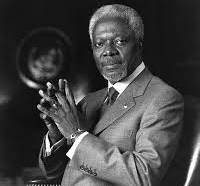
Note: This essay concludes the small series “On Comebacks and Failed Comebacks.” The earlier pieces explored several very different kinds of returns: the moral vindication of Kofi Annan, the sly tactical persistence of Joe Nash of the Seattle Seahawks, the tragic artistic authenticity of Amy Winehouse, and the mythic public legend surrounding Muhammad Ali.
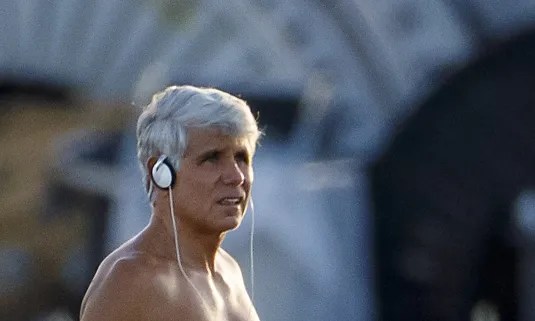
The story of Rod Blagojevich introduces a different category altogether: the shameless comeback.
Unlike the other figures in the series, Blagojevich’s return to public life does not depend on moral vindication, heroic persistence, or cultural myth. Instead it illustrates something more peculiar about contemporary politics and media. In an age of fragmented audiences and constant attention cycles, a disgraced figure may sometimes reappear simply by refusing to leave the stage.
Whether one sees Blagojevich’s re-emergence as comic, absurd, or oddly instructive, it provides a fitting final example for the series. Not every comeback is admirable, but each one reveals something about the strange ways public life allows stories to continue.
Not all comebacks are noble.
Some are heroic, like the moral vindication of Kofi Annan. Some are tactical, like the sly fourth-quarter returns engineered by Joe Nash of the Seattle Seahawks. Some exist somewhere between tragedy and authenticity, like the brief blazing career of Amy Winehouse. And some, like the legend of Muhammad Ali, grow into something close to myth.
But there is another type of comeback altogether.
The shameless comeback.
For that, it is difficult to find a more perfect case than Rod Blagojevich, the former governor of Illinois whose political career once appeared to have ended in spectacular disgrace.
The original scandal is by now familiar. In 2008 federal investigators revealed that Blagojevich had been recorded on FBI wiretaps discussing how he might profit from appointing a replacement to the U.S. Senate seat vacated by President-elect Barack Obama. The recordings were devastating. In one of the most memorable lines in modern American political scandal, Blagojevich described the Senate seat as something valuable that he was reluctant to give away for nothing.
The fallout was swift. Blagojevich was impeached and removed from office by the Illinois legislature. Later he was convicted on multiple corruption charges and sentenced to federal prison. For most politicians, this sequence would represent the end of the story.
Disgrace. Prison. Silence.
But American public life has always contained another possibility: the comeback powered not by redemption but by spectacle.
Even before his imprisonment, Blagojevich seemed instinctively drawn toward the theatrical dimension of his situation. He appeared on television talk shows, launched media interviews, and treated the unfolding scandal almost as if it were a strange kind of reality program in which he remained the central character.
His appearance on The Celebrity Apprentice, hosted by Donald Trump, felt less like an attempt to restore dignity than a recognition that modern politics and entertainment had already merged.
Then came the commutation.
In 2020 Trump commuted Blagojevich’s prison sentence, releasing him after several years behind bars. The decision itself was controversial, but the effect was unmistakable: the stage was suddenly open again.
And Blagojevich, to his credit—or perhaps to his creditlessness—walked right back onto it.
The most striking feature of his post-prison public life has been the absence of embarrassment. Many disgraced politicians attempt some form of contrition when they re-enter the public conversation. Apologies are issued. Lessons are discussed. A tone of humility is adopted.
Blagojevich chose a different path.
Instead he embraced a kind of shameless persistence, appearing in conservative media outlets, repositioning himself politically, and speaking about his case with the tone of someone who believes the whole episode was misunderstood or exaggerated. The ideological shift from Democrat to Republican was particularly striking, not because party changes are unheard of but because in Blagojevich’s case it seemed less like a conversion than a strategic recalibration.
It was, in other words, a comeback powered by the modern media ecosystem.
In an earlier era, a corruption scandal of this magnitude might have consigned a politician to permanent obscurity. But the fragmented media landscape of the twenty-first century offers a different possibility. There is always another audience somewhere, another platform, another narrative waiting to be constructed.
Blagojevich appears to understand this instinctively.
Which is why his story belongs in a series about comebacks, even if the comeback itself is of a peculiar variety. Unlike the moral return of Annan or the mythic return of Ali, Blagojevich’s version depends less on redemption than on endurance.
The secret of the shameless comeback is simple.
You refuse to leave the stage.
You keep talking. You keep appearing. You keep telling your version of the story until, slowly but inevitably, the scandal itself begins to blur into just another chapter in the larger spectacle of American politics.
In that sense Rod Blagojevich may represent a distinctly modern form of comeback: not heroic, not tragic, but theatrical.
And in the strange carnival of contemporary public life, theatrical persistence can sometimes be enough.
Note: This piece begins a small series I’m calling “On Comebacks and Failed Comebacks.” Political and public life are full of attempted returns. Leaders lose elections, wars, or moral arguments and then try to reclaim the stage. Most of these efforts fail. The moment has passed, the audience has moved on, and what once felt urgent has dissolved into what might be called moral fatigue. Yet every so often a different pattern appears. Occasionally someone loses the immediate battle but remains present long enough for history itself to shift. When that happens, what first looked like defeat begins to resemble something closer to a delayed victory. Kofi Annan provides a particularly interesting case. His opposition to the Iraq War did not stop the invasion, and at the time it appeared that the argument had been decisively lost. Yet as the years passed and the consequences of the war became clearer, the moral judgment he articulated gained increasing weight. In that sense, the story of Annan’s career suggests a useful distinction: some comebacks succeed not because the player reclaims the moment, but because the argument itself eventually catches up with history. Future pieces in this series will look at other figures—some who managed remarkable returns, and others whose comebacks never quite arrived.
Political life especially produces them in abundance. A leader loses a battle—an election, a war, a moral argument—and disappears into the quiet margins where yesterday’s figures slowly fade. The public moves on. The moral urgency of the moment dissolves into what might be called moral fatigue. Outrage that once seemed unstoppable becomes background noise. A new crisis appears, and the world’s attention shifts.
Once this fatigue sets in, comebacks are difficult. The audience that once cared has already drifted elsewhere. The stage has changed. Most players who attempt to return find that the moment that once belonged to them has passed.
Yet every so often a different pattern appears.
Occasionally a figure loses the immediate battle but remains present long enough for the moral tide itself to turn. When that happens, what looked like defeat begins to resemble something else entirely.
Kofi Annan offers one of the most intriguing examples of this phenomenon.
In 2003 the United States and the United Kingdom invaded Iraq. The invasion was justified by a mixture of strategic arguments, intelligence claims, and moral rhetoric about tyranny and liberation. In Washington and London the momentum of the moment was overwhelming. The war was framed as both necessary and inevitable.
The United Nations, by contrast, found itself sidelined. Annan, then serving as Secretary-General, watched as the institution he led was bypassed by the coalition preparing for war. The moment belonged to the advocates of intervention—particularly the group of American policy thinkers who had spent years arguing for the removal of Saddam Hussein.
At the time, it was not at all clear who would ultimately win the argument. What was clear was that the United Nations had lost the immediate struggle for influence. The invasion proceeded without explicit UN authorization, and the diplomatic machinery that Annan represented appeared powerless to prevent it.
The moral emergency that had animated the debate quickly hardened into geopolitical reality.
Then, in September 2004, Annan said something remarkable. In a BBC interview he stated plainly that the invasion of Iraq was illegal under international law.
It was an extraordinary declaration. Rarely does a sitting Secretary-General of the United Nations describe the actions of the world’s most powerful government in such blunt terms. Yet the statement did not produce the dramatic reversal one might imagine. The war continued. Washington and London dismissed the criticism. The machinery of global politics moved forward largely unchanged.
In the short term, Annan had lost the battle.
And the personal toll of that moment appears to have been considerable. In his biography there is a striking image from this period: Annan alone in his darkened living room, unable for a time to rise from the floor. The room itself reportedly kept in near darkness. It was not exactly depression, at least not in the clinical sense, but something close to exhaustion after a prolonged moral struggle that had failed to alter events.
It is a haunting scene. One of the most powerful diplomats in the world sitting on the floor of a dark room, confronting the limits of his influence.
At that moment, the story of Kofi Annan could easily have ended as the story of a failed comeback. A leader who tried to reassert the moral authority of international law and found that the world had already moved on.
But history has a way of rearranging the meaning of certain moments.
As the years passed, the Iraq War came to be widely regarded as a profound strategic and humanitarian mistake. The claims that had justified the invasion collapsed. The war itself destabilized the region and reshaped global politics in ways that few of its original advocates had anticipated.
Gradually, the moral argument that Annan had made—quietly but firmly—became the prevailing historical judgment.
After leaving the United Nations, Annan did not retreat entirely from public life. Instead he reappeared in a different role as a member of The Elders, a group of former statesmen attempting to exert moral influence outside formal political structures.
It was a curious transformation. No longer the head of the UN, Annan had less formal power than he once possessed. Yet his voice now carried a different kind of authority—the authority of someone who had remained in the arena long enough for events to vindicate his judgment.
By the end of his life, the moral verdict on the Iraq War had shifted decisively. Few serious observers still defended the intervention with the confidence that characterized the early years of the conflict. The consensus had moved, slowly but unmistakably, toward the position Annan had articulated when it mattered least.
In this sense, his career offers an unusual example in the history of comebacks.
He lost the battle. But he may have won the argument.
That distinction matters.
Most political figures attempt comebacks by trying to reclaim the exact moment they once dominated. They want the same stage, the same audience, the same authority. When the moment has passed, the comeback fails.
Annan’s story suggests a different possibility. Sometimes the moral argument itself continues moving through history long after the political battle appears settled. If a leader remains present long enough, the tide may eventually turn.
Which leads to a simple but revealing observation about great players in any arena.
A truly great player is never entirely out of the game.
The moment may pass. The audience may drift away. But if the underlying argument proves sound, history itself has a way of reopening the field.
And when it does, the comeback is already underway.
The night of December 31, 2012: Long dream about climbing Mt. Everest. This third Everest dream was very different from the first two. First, I was at a school and then climbed up a small opening, kind of a snowy slit barely big enough to fit through. There were some basketball games going on and I planned to be back in 20 minutes or so. Therefore, the school was probably my high school. At first, the slit was just itself, but then Everest loomed up over me to my left. I entered the frame, from the left. Everest was enormous, black, and composed of huge blocks of ice-like mini-mountains such that it was difficult to discern where the actual peak was, or the possible way up.
I was all alone and it seemed to be dawn, then two figures sleeping on the ice in orange suits started to stir. They arose and then there were 20-30 more, mostly kids led my two overweight men. We all spilled down to a kind of small clearing that may also have been a breakfast space. The men explained that they could take the group only to 11’000 feet, no higher. There was some disappointment, not much. Everyone looked very well outfitted, except the speaker who was plump and wearing a kind of jersey.
This group went away and there were other climbers, one or two of whom I spoke to. It all started to take a rather long time and I knew I would be late getting back. I started to head back up to the ridge that would lead back to the slit, but realized that I had forgotten a shoe in the clearing. Eventually I got back to the ridge with the shoe, looked up, and saw what was probably Everest’s peak. It was rounded and covered in black ice. It looked very far away, although at one point in the dream, perhaps before, I had analyzed what looked like a viable path toward the top. Back at the snowy slit, I ran back down it at full speed, cheerfully.
First Interpretations: The Everest dream is the third in a series. The first Everest dream I climbed Everest overnight. It took about 12 hours. Everest was covered in asphalt and climbing it was a breeze. The second one I was with my son. We did not get to the top, and the mountain was somewhat more realistic, craggly with ravines. There were shops alongside the ravine we were climbing made of wood and we ate there and also climbed around through the shops that were all connected and made up a kind of maze.
There was no pressure to get to the top, lots of climbers on the mountain. In this most recent one, Everest was at its most interesting and symbolic. It was massive and loomed above me with presence. It was to be revered, feared, awed. The access is interesting as well–the slit almost like a birth canal, covered back over itself and very narrow. Then, it opened unto another world entirely.
Impressions: The birth canal to a spiritual world. Most people, even well equipped, cannot go above 11’000 feet (you can do this in a day hike). Also, 11 could signal the 11th house, with the 12 house of mystery being difficult to access. I could make out the top, but didn’t have the time and wasn’t equipped just now. Still, it was an honor to have been there, and I came back exhilarated.
Note: If you enjoyed this piece, you may also enjoy “Border Dream.” Available below.
This piece takes a look at Kris Kristofferson’s “To Beat the Devil.” The song appears on Kristofferson’s self-titled debut album from 1970 on Monument, which is, by any standard, an astonishingly good record. The album features “Me and Bobby McGee,” “Sunday Morning Coming Down,” and “Just the Other Side of Nowhere,” along with the ol’ Devil. That’s four absolute classics right there for ya.
Sunday Morning features an opening quatrain that most other songwriters would trade their career for:
Well I woke up Sunday morning/ with no way to hold my head that didn’t hurt/ and the beer I had for breakfast wasn’t bad/ so I had one more for dessert
(I could play this game all day—Jason Isbell’s Southeastern features another couple life-work worthy couplets:
The first two lines of “Super 8”:
Don’t wanna die in a super 8 motel/ just because somebody’s evening didn’t go so well
And from “Different Days”:
Time went by and I left and I left again/ Jesus loves a sinner but the highway loves a sin.
If I’d written lines that great I’d call it a career and sip martinis on the house for the duration.)
Sunday Morning and Bobby are probably objectively better songs than To Beat the Devil, yet what I like about this one is that Kristofferson states very clearly a kind of founding intention for his life in song and art, right out of the gate. The only parallel I can think of is Craig Finn’s The Hold Steady, whose first album Almost Killed Me kicks off with “A Positive Jam.”
(Here’s Finn telling it like it is:
I got bored when I didn’t have a band/ so I started a band/ we’re gonna start it with a positive jam/ hold steady.
Rock on Craig baby.)
Anyway, let’s get to the focus of this piece. Kristofferson opens with a spoken intro.:
A couple of years back I come across a great and wasted friend of mine in the hallway of a recording studio. And while he was reciting some poetry to me that he had written, I saw that he was about a step away from dying, and I couldn’t help but wonder why. And the lines of this song occurred to me.
Here the singer is looking up at his idol who is both “great and wasted.” I wasn’t around quite yet in 1970, yet I can easily imagine Ginsberg’s “best minds” line hanging over talented folks across a lot of zones. Klosterman wasn’t quite there either (June 5, 1972–a mid Gemini of course), but he was close, and to indulge not for the last time in a little Klostermania, the zeitgeist seemed to be making people thirsty.
The singer receives some scraps of poetry, shards of shattered inspiration, and a song “occurs” to him. He doesn’t state it directly, however we imagine the song arrives fully formed, like “Pancho and Lefty,” or “Kubla Khan.” Thus, To Beat the Devil is also both an answer and an offer of redemption to his idol, who here is John(ny) Cash.
I’m happy to say he’s no longer wasted, and he’s got him a good woman. And I’d like to dedicate this to John and June, who helped showed me how to beat the devil.
The singer takes up the mantle of the master, and in so doing opens a possibility window onto redemption for his senior. This is no exaggeration—Cash also recorded To Beat the Devil in 1970 and we are basically stipulating that Kristofferson’s genius, descended from Cash while also original to himself, helped rescue Cash from addiction and the whole deal there. We won’t be deep diving into the archive on this one—as we said we’re just keeping it local and breaking it down, so you’ll have to take my word on it or search it up your own self.
Here’s the first verse; the words speak for themselves:
It was wintertime in Nashville/ down on Music City Row/ and I was looking for a place/ and to get myself out of the cold/ to warm the frozen feeling that was eating at my soul/ keep the chilly wind off my guitar
A classic down and out in the big city piece of scene-setting. The singer is physiologically and psychologically frozen, a cold wind gusts across his art. The man needs a break.
My thirsty wanted whiskey/ my hungry needed beans/ but it had been a month of paydays/ since I’d heard that eagle scream/ so with a stomach full of empty/ and a pocket full of dreams/ I left my pride and stepped inside a bar
You might think that the operative nouns here would be “thirst” and “hunger,” but no. This is not a man with a thirst; this is a thirsty man. We also hear an echo of a now-ancient American past where a man with an empty stomach would go in search of, of all things, “beans.”
Anyway, he’s got no money, can’t really bring himself to care. So, a singer walks into a bar.
Actually I’d guess you’d call it a tavern/ cigarette smoke to the ceiling
and sawdust on the floor/ friendly shadows/ I saw that there was just one old man sitting at the bar/ and in the mirror I could see him checking me and my guitar/ and he turned and said/ come up here, boy, and show us what you are/ I said I’m dry, and he bought me a beer
The man in the mirror, the devil himself. The singer comes face to face with the man who checks him out and summons him over. Kristofferson then enters into a bargain–offers up the terms of an encounter: a beer on the old man’s tab. Score one for the thirsty man. The singer faces the old man; it’s to be a showdown. He doesn’t have much, but he’s got some “friendly shadows,” traces of an older map perhaps, an older memory.
I can’t help here but engage in a bit of presumption. When I play the song in my head, I want to hear “in the mirror I saw him casing me and my guitar,” (listen to the way he pronounces “guitar” on the track. Kristofferson was born in Brownsville, Texas in ‘36 and behind the laid back folksinger you can here some roots here baby).
If I could make one edit to the song, it would be to replace “checking me,” with “casing me.” What a great verb “to case” is.
Lexical Interlude: “To case the joint”
1. slang To observe a place in order to familiarize oneself with its workings in preparation for some criminal activity (often robbery). Judging from the security footage, those men cased the joint hours before robbing it.
2. slang By extension, to thoroughly examine a place. In this usage, no devious motive is implied. As soon as my kids walking into the hotel room, they started casing the joint, exclaiming about everything from the TV to the mini-fridge.
The seminal use of this verb phrase comes from Bill Callahan, formerly of Smog. Callahan is an odd duck—he is so artificial, so obviously self-created as an entertainer, that he has become almost post-authentic. Callahan contains multitudes.
My favorite Smog album, well in the top two, is Red Apple Falls, which features “Ex-Con,” on which Callahan sings:
Jean jacket and tie/ feel like such a lie/ when I go to your house/ I feel like I’m/ casing the joint
Devious motive implied.
=====
He nodded at my guitar and said/ it’s a tough life, ain’t it?/ I just looked at him/ he said “you ain’t making any money, are you?“/ I said, you been reading my mail/ he just smiled and said, let me see that guitar/ I got something you ought to hear/ and then he laid it on me
The devil has a bead on the singer, and he’s not far off. Yes he’s broke. Yes he’s down and out. Whaddaya want?
=====
Filmic Interlude I: The Long Goodbye
In Robert Altman The Long Goodbye, written by Leigh Brackett, the main character Philip Marlowe gets out of jail somewhere in the first act and heads to a all-purpose pit stop restaurant who’s owner apparently collects Marlowe’s mail. The dialogue is exquisite.
Marlowe: You got any messages for me?
Owner: Believe we’ve got a few over there. As a matter of fact, you’ll find my phone bill in there too.
Marlowe: I wouldn’t worry about that.
When you ain’t got nothing you got nothing to lose. Kristofferson’s got nothing to hide in his mail. Those bills go straight to the wastebasket.
=====
If you waste your time a talkin’ / to the people who don’t listen/ to the things that you are saying/ who do you thinks gonna hear?/ and if you should die explaining how/ the things that they complain about/ are things they could be changing/ who do you thinks gonna care?
there were other lonely singers/ in a world turned deaf and blind/ who were crucified for what they tried to show/ and their voices have been scattered by the swirling winds of time/ ‘cause the truth remains that no one wants to know
The devil’s words speak for themselves. The path of the troubadour is a dead end. The world has not ears to hear nor eyes to see. Truth tellers meet a bad end. Whiners gonna whine. It’s a strong opening bet, made, we presume, with his red right hand.
Well the old man was a stranger/ but I’d heard his song before/ back when failure had me locked out/ on the wrong side of the door/ when no one stood behind me/ but my shadow on the floor/ and lonesome was more than a state of mind
The singer is on familiar territory; he’s has been tempted by this cynical incantation, he’s not immune to tuning out his calling when out in the cold. Who is?
You see, the devil haunts a hungry man/ if you don’t want to join him/ you gotta beat him/ I ain’t saying I beat the devil/ but I drank his beer for nothing/ then I stole his song
This is the key verse in our little tale. You see, when we tango with the devil the devil usually gets to lead. That’s just the way it goes. But the thing about the devil is, his game is a bit of a bluff. A couple of low pairs, maybe. You just gotta call.
and you still can hear me singing/ to the people who don’t listen/ to the things that I am saying/ praying someone’s gonna hear/ and I guess I’ll die explaining how/ the things that they complain about/ are things they could be changing/ hoping someone’s gonna care
I was born a lonely singer/ and I’m bound to die the same/ but I’ve gotta feed the hunger in my soul/ and if I never have a nickel/ I won’t ever die ashamed/ ‘cause I don’t believe that no one wants to know
Kristoffeson flips it right around. The devil’s got a point; the singer may die dead broke, that’s fine. Songs are borne on the wind in any case. The thing is to have faith in your audience. To believe someone is out there, heart in their hands and ear to the wind. And to hold this faith as a mantra. That’ll keep ‘em guessing, cause then you’re not playing their game, you’re playing your own.
Overall, To Beat the Devil is a young man’s song. It’s got a confidence, a swagger, even a hubris. So, after drafting most of this piece I wanted to find a recent live version, see how it’s aged. I stumbled on a version from a live set with Lou Reed released in 2017. The set is part of The Bottom Line Archive, and it finds Kristofferson in a Waitsian stage of life. The voice is richer than ever, but he’s not exactly singing. Then again, that’s what they said about Dylan and it’s B.S. The voice is the voice; singing is just a category.
The set is interspersed with short interviews of the two songwriters. Here is Kristofferson’s spoken introduction that precedes To Beat the Devil. It is instructive.
Interviewer: The devil figures in some of your songs, you know there’s that silver tongued devil and he pops up from time to time. Who’s the devil? What’s the devil for you? What are your demons?
K.K.: Well, I, I’ll do that song then. Ahhh…
Interviewer: Is that a metaphor or is that something real for you?
K.K.: Well here’s a song called To Beat the Devil. Maybe it’ll explain it. I can’t.