The Most Insane People of All Time (aka You’re Outta Control!): #2 John McAfee

Note: This second installment in The Most Insane People of All Time (aka You’re Outta Control) looks at John McAfee, tracing his evolution from software pioneer to global fugitive, crypto evangelist, and online cult figure. The piece emphasizes the improvisational chaos of his later life and contrasts it with more conventional tech figures like Elon Musk and Bill Gates, arguing that McAfee’s volatility places him in a category of his own. The tone is impressionistic, comparative, and intentionally informal.

Epigraph: 

“I fought the law and the law won…”

— I Fought the Law, The Clash

John McAfee starts in relatively conventional fashion: brilliant programmer, eccentric personality, builds the first widely adopted consumer antivirus software in the late 1980s, and becomes extremely wealthy when McAfee Associates takes off. But even in the early years there’s instability, and a foreshadowing of things to come — drug use, paranoia, erratic business decisions, and a growing anti-authority streak. He sells his stake, drifts through various ventures, and by the late 2000s relocates to Central America, eventually settling in Belize. There he buys beachfront property, hires armed guards, collects dogs, experiments with quasi-scientific projects, and begins acting like a semi-autonomous local strongman. It’s the first fully “outta control” phase: money, isolation, guns, and a man already well inclined toward paranoia.

Then comes the neighbor incident. In 2012, McAfee’s American neighbor, Gregory Faull, is found murdered. McAfee is named a person of interest — never charged — and instead of lying low, he goes fully theatrical. He claims the authorities are targeting him, allegedly evades police by hiding, disguising himself, and moving between safe houses, all while giving interviews and live-tweeting the saga. With girlfriend (later wife) Janice McAfee and various associates in tow, he flees Belize, surfaces in Guatemala, is detained, then ultimately allowed back to the United States. The whole episode is surreal: a tech millionaire allegedly on the run for murder, narrating the chase in real time on social media. It’s not just outta control — it’s performance art.

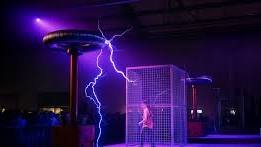
Back in the U.S., McAfee briefly lands in Florida but quickly re-enters chaos. He promotes cryptocurrencies, launches bizarre tokens, courts publicity, and cultivates a global cult following. He posts paranoid threads about surveillance, claims he lives inside Faraday cages, talks about government plots, and offers wild schemes — including promises to evade arrest by sea, air, or even paragliding into New Mexico to meet with fans! He pops up in unexpected places, from Caribbean boats to European cities, always accompanied by Janice and a rotating cast of loyalists. At one point he tattoos crypto branding onto himself, predicts conspiracies, and positions himself as both fugitive and prophet. The line between performance and belief dissolves completely.

Eventually, legal trouble catches up. U.S. authorities charge him with tax evasion and crypto-related fraud, and he’s arrested in Spain in 2020. From prison he continues tweeting through intermediaries, hinting at conspiracies and insisting he’ll never kill himself. In June 2021, shortly after a Spanish court approves extradition to the United States, McAfee is found dead in his cell — ruled a suicide. His supporters, including Janice, immediately dispute the finding, pointing to earlier posts and tattoos as supposed foreshadowing. The ending is as chaotic as the life: software pioneer turned fugitive, Twitter antihero, crypto evangelist, paranoid showman, and finally a death that only deepened the mythology. Outta control doesn’t even begin to cover it.

Compared to John McAfee, figures like Elon Musk and Bill Gates still look almost conventional — even when they drift into odd territory. Musk’s public persona is chaotic in a very modern way: late-night posting, impulsive announcements, awkward humor, and personal-life theatrics. The relationship with Grimes, the bizarre naming of children, and the infamous weekend when Azealia Banks claimed she was stranded at Musk’s house amid talk of LSD and general weirdness all add to the sense of volatility. Then there are the dad-joke moments — hauling a sink into Twitter headquarters and posting “let that sink in,” which is either performance art or just terrible humor. It’s eccentric, sometimes cringe, occasionally outta control — but the companies still run, rockets still launch, and the chaos never fully escapes the bounds of reality.

Gates, by contrast, is a more old-school eccentric. Bill Gates has the reputation of a hyper-competitive young executive who mellowed into a philanthropic technocrat, but the quirks linger. The awkward dancing, the slightly rumpled appearance, the perennial jokes about dandruff — he has always projected a kind of brilliant-but-uncool energy. The later-life turbulence — divorce from Melinda after decades, scrutiny over his contacts with Jeffrey Epstein, and the general aura of a private billionaire navigating public controversy — adds complexity but not chaos. Gates remains structured, Musk volatile, but both operate within functioning systems. McAfee, meanwhile, is something else entirely: not just eccentric but improvisationally unstable, a man who turned paranoia, fugitivity, and spectacle into a lifestyle. Musk may be chaotic, Gates may be awkward, but McAfee is outta control in a different register altogether.

In the end, John McAfee feels more outta control than Keith Raniere, Elon Musk, or Bill Gates — and that’s saying something. Raniere was creepy and manipulative but small; Musk is chaotic but still tethered to real-world outcomes; Gates is eccentric but fundamentally structured. McAfee, by contrast, seemed to live entirely outside normal constraints. Guns, boats, dogs, girlfriends, crypto tokens, Faraday cages, live-tweeting alleged manhunts, promising wild escapes, drifting between countries — the whole thing reads less like a biography and more like a fever dream. He wasn’t just eccentric; he appeared to improvise his life day by day, escalating the spectacle each time. That kind of volatility is rare. It’s also why he became a cult hero: he embodied a fantasy of total freedom, however reckless, however unsustainable.

Years after his death, the mythology hasn’t faded. Supporters still debate the circumstances, quote his tweets, and treat him as a kind of outlaw technologist who refused to play by the rules. Whether you see him as mad genius, performance artist, or cautionary tale, the scale of the chaos is undeniable. There may have been more dangerous figures, more powerful figures, even more tragic figures — but few as consistently, flamboyantly outta control. That’s what makes McAfee a legend. Not admirable, not necessarily likable, but unforgettable. And like all true originals, there probably won’t be another. So RIP, prayers up, and pour one out for a real one, John Motherfucking McAfee.

Note: If you liked this piece, you may also like the other ones in out “You’re Outta Control” series.
On Larry King, the Radio GOAT

Epigraph:

“I listened to the radio / I waited all night long…”
— Radio Radio, Elvis Costello

Note: This piece reflects my personal memories of listening to Larry King’s overnight radio show in the late 1980s and early 1990s, along with later impressions from television appearances, interviews, and conversations with people who knew him. It is written in the spirit of appreciation and nostalgia rather than media criticism, and emphasizes the uniquely loose, humane, and unpredictable quality of King’s radio work, which for me remains the defining core of his legacy.

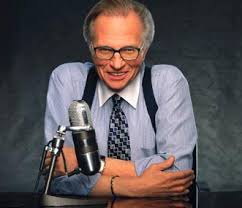
I grew up listening to Larry King’s overnight radio show between roughly 1988 and 1992, and in my opinion — which happens to be correct — the radio show was much better than the television version that later made him famous. The TV show was good, even great at times, but radio was longer, looser, freer, and far more unpredictable. It had weird guests, weirder callers, and the feeling that anything might happen at two in the morning. That’s where Larry really lived.

I would listen in my bedroom at my parents’ house in Spokane, Washington, the volume turned low, the house quiet, insomnia hovering. The Spokane AM station — KGA 1510 — carried the show from around 9 PM Pacific time, and then, wonderfully, they would run it again. So I’d listen from nine to midnight, fade, wake at two or three, and hear the same segment again in a half-dream. The effect was surreal. Didn’t I just hear that caller? Didn’t Larry just say that? It created a strange loop of late-night déjà vu that only made the whole thing more atmospheric. The show felt less like programming and more like a continuous nocturnal conversation.

My friend Kelly Rudd loved Larry too. When we were in high school we were both big fans of the radio show, and we talked about it constantly. There were a couple of things that we especially liked. The first was that Larry famously did no preparation. He knew a huge amount about the world, of course, but he didn’t read guests’ books ahead of time. He wanted to come in cold. If his guest was a firefighter, he’d ask, “So what’s it like to be a firefighter?” It sounds lazy, but it was brilliant. By staying open and getting out of the way, he let the conversation go anywhere. This way the show became eventful.

Another thing we loved was what happened after the guest left. Larry would open the lines and take questions about absolutely anything. Most of the time he was generous and patient, but when callers went off the rails he had a signature phrase. He’d cut them off gently: “Cold compress, ma’am,” or “Cold compress, sir.” Basically: lie down, ice your head, regroup. It was hysterical, especially because he used it sparingly. When “cold compress” dropped, you knew things had gotten weird.

Anyway, Kelly and I loved Larry so much that when the station suddenly dropped the show, Kelly proposed we drive to the radio station and protest. So we skipped school, drove across town, and rang the intercom demanding to speak to someone about the cancellation. The station manager eventually came down and heard us out. We knew we weren’t changing anything, but it felt right to try. Larry never came back to Spokane radio, and the show faded not long after, but the whole episode captured what the show meant to us. It wasn’t just background noise. It felt alive.

Larry’s on-air style was the key. He was unbelievably relaxed. By the late ’80s you could tell he had done thousands of hours. Nothing fazed him. Weird guests, drunk callers, eccentrics — all the same to Larry. He absorbed everything. He had pet phrases — “cold compress” chief among them — and he deployed them like a veteran reliever, only when needed. He famously did no prep, and he leaned into naïve questions. He’d ask something simple and let the guest do the work. The effect was disarming. People opened up. He also had real humanity. He listened. He didn’t mock callers. He didn’t rush them. There was compassion there, and I think that’s what I loved most.

And the show could get wonderfully out of control. In one story Larry told from his old Miami days, an adult actress he was interviewing suggested they just have sex during the commercial break. Larry, amused, asked the producers to clear out — but there wasn’t enough time. That kind of anecdote captures the looseness of late-night radio. It wasn’t polished. It was alive.

Larry left the overnight Mutual Radio show in 1994 to focus on television. By then I had already drifted away, but I still caught Larry King Live on CNN over the years. I remember watching during the O. J. Simpson trial while at Otago University in New Zealand, when the show became part of the nightly noise. Later there were the Vladimir Putin interviews — classic Larry, conversational and oddly disarming. And of course there were the great comic moments, like the interview with Jerry Seinfeld where Larry suggested the show had been canceled and Seinfeld snapped back in disbelief, and the Norm Macdonald appearance where Norm kept repeating, “I’m a deeply closeted homosexual,” and Larry tried earnestly to parse it. “So that means you’re gay?” “No, Larry,” Norm replied, “it means I’m deeply closeted.” Pure Larry: sincere confusion meeting absurdist comedy.

Larry’s personal life was famously complicated. He married eight times, had several children — including sons Chance and Cannon later in life — and lived in a kind of perpetual romantic improvisation. The marriages came and went. The last ended painfully and publicly. He once joked he’d never leave his wife unless Angie Dickinson came along — and when she did, he married her. That was Larry: impulsive, affectionate, slightly chaotic. Despite decades of success, he didn’t leave the kind of massive fortune people assumed. The money came and went, as did the marriages. It was a life lived in motion.

My friend Sergio Mandiola actually knew Larry in his later years in Los Angeles. Sergio was running an independent studies program at Beverly Hills High School, and Larry’s sons Cannon and Chance, and he taught his sons for three years. Larry would come by for open nights or just to chat.

Sergio Mandiola: “Larry would come in from time to time and we would talk. He was lovely and open. He talked about his family and his career. One time he told me, ‘Sergio, you should totally have a radio show!’ I was flattered. One thing about Larry is his politics were more to the left than he let on on air. He had strong views and wasn’t afraid to share them in person. Larry was a true mensch and I’m glad I got to spend time with him. I miss him.”

In the end, I’ll say it plainly: for me, Larry King is the radio GOAT. There was no one like him, and there probably never will be. It wasn’t just longevity. It was the curiosity, the looseness, the humanity, the love of people, politics, baseball, and life. He trusted the conversation. He let the night unfold.

And then there was that absurd, wonderful USA Today column, which read like a diary gone completely outta control. Mets lose 6–4…Rain in Baltimore…Clinton flies to Ireland…You’d read it and think, Larry, baby, WTF is this? And also, Mr. USA Today, WTAF are you doing paying for this? But somehow it worked. It was pure Larry — fragmentary, observational, intimate.

And that’s how I remember him most clearly: late nights in high school, the radio turned low, insomnia hanging in the room, Spokane quiet outside.. Sometimes I’d listen from nine to midnight, fade, then wake again to the rerun, half-dreaming, half-aware, caught in that strange déjà vu — didn’t I just hear this? — while Larry kept talking, calm as ever, taking calls from truckers and insomniacs and eccentrics. My listening years were brief, but they stuck. And when I think of Larry now, that’s where I go back to: the low hum of AM radio, the half-fade, and the sweet sounds of his voice in my ear.

Dedication:

For the one and only GOAT, Larry Motherfucking King. RIP baby.

On Some Meetings and Close Encounters with Musicians II

Note: This is the second piece in our series “On Some Meetings and Close Encounters with Musicians.” You can find the first installment here.

The encounters described here span more than thirty years and several cities — from a first arena concert in Pullman, Washington in 1991 to small club shows in Cambridge, Osaka, and Kyoto over the decades that followed. As with many memories of live music, the exact setlists and dates blur, but the rooms themselves — the sounds, the atmosphere, the strange and fleeting meetings between artists and audiences — remain vivid. These sketches attempt to capture a few of those moments as they were experienced at the time.

Epigraph

No fears alone at night she’s sailing through the crowd

In her ears the phones are tight and the music’s playing loud

— Dire Straits, “Skateaway”

Live music produces strange meetings. Sometimes you meet the musicians themselves. More often you meet a moment — a room, a sound, a feeling that sticks with you for decades while entire years of ordinary life quietly disappear.

Here are a few such encounters.


I. Initiation

My first real concert was the On Every Street tour in 1991.

The band was Dire Straits, the venue was Pullman, Washington, and the company was the usual Spokane crew: Seth, Innes, Kelly.

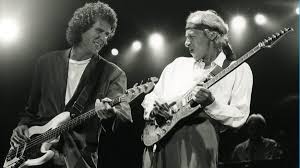
I was the biggest fan in the car by far. The others liked the band well enough but I was the one who had studied the records, who knew the guitar parts, who was ready for the moment when the lights dropped and the first notes hit the arena. This was the On Every Street tour, which turned out to be their final record.

They played everything: Money for Nothing, Walk of Life, Sultans of Swing. It was a great show, and one of their last before retirement, though at the time I had no real way to judge such things. It was simply enormous — lights, volume, spectacle. I bought the black and blue tour shirt and wore it for five years.

At the time I thought concerts were supposed to be like that: huge, polished, and far away.

I would later learn otherwise.


II. Revelation

Several years later, during the Hamilton years, I saw Red House Painters at the Middle East in Cambridge.

I went with Ian. The room was small, maybe a few hundred people at most. Nothing about it resembled the arena in Pullman. And then, near the end of the set, Mark Kozelek began playing “Little Drummer Boy.” It lasted nine minutes. You could hear a pin drop in the room.

No spectacle. No lights. Just absolute concentration from everyone present. When the final notes faded the silence lingered for a moment before the applause came.

Afterward Ian and I drove back toward New York through the cold night with the windows cracked open, heaters flying out into the darkness, and Hell’s Ditch blasting through the car stereo to keep us awake.

That was the night I realized concerts could be something else entirely.


III. Chaos

Not every show produces reverence.

I once saw The Fall with Ian as well. The band’s leader, Mark E. Smith, seemed to be operating in his traditional mode of total hostility. The set was short — twenty-eight minutes by my estimate. Ian later checked the official record and insisted it was forty-three. Either way it felt brief and volatile. Smith barked into the microphone, glared at the band, and treated the entire enterprise with the air of someone barely tolerating the existence of the audience.

Which, to be fair, was exactly what many people had come to see.


IV. Theatre

The strangest performance I ever witnessed may have been Cat Power at Club Quattro in Osaka.

The evening began badly. An opening act — a woman in what appeared to be a fairy costume — sat at the piano and played for what felt like an eternity. Forty-five minutes at least. Perhaps longer. By the end of it the audience was openly confused.

Then Cat Power appeared.

Or rather she refused to appear in the conventional sense. Instead of remaining on the stage she wandered through the venue with a handheld microphone, singing and rapping while walking amongst the crowd, occasionally placing an arm around a patron or leaning against the bar.

At one point she came right up to where I was standing near the back rail and sang a line or two before drifting off again into the room.

The entire show felt less like a concert than a piece of improvised theatre.


V. Ritual

A few years later I saw Damo Suzuki at Club Metro in Kyoto. Damo had once fronted the legendary German band CAN, but this night bore no resemblance to those recordings. Nothing recognizable from the catalog appeared. And here he stood, just a few feet away from the audience with long black-and-grey hair flowing, bellowing and chanting over a constantly shifting improvisational band.

It was less a performance than a ritual.

Damo passed away not long ago. RIP and prayers up. I’m grateful I saw him when I did.


VI. Canada Night

Not all memorable shows are mystical.

Sometimes they’re simply loud.

One such evening occurred at Club Quattro in Osaka when Broken Social Scene and Death From Above 1979 came through town.

The Canadian ambassador was present and delivered a brief speech before the set explaining that Death From Above 1979 represented a fine example of Canadian enterprise because they were “only two men making so much noise.”

The room was packed with Canadian expats and the atmosphere was celebratory chaos. The ambassador was probably correct.


VII. Breakdown

Not every concert goes well.

I once saw Bonnie ‘Prince’ Billy at the small Kyoto venue Taku Taku. Something had clearly gone wrong with the lineup. The guitarist appeared to be brand new and could barely navigate the chords.

Will Oldham tried to push through but quickly grew frustrated and began openly calling the guitarist out from the stage. It was uncomfortable for everyone involved.

The show never recovered.


VIII. Redemption

Fortunately the story has a better ending.

Some years later I saw Bonnie “Prince” Billy again, this time at the beautiful Kyoto venue Urbanguild and everything worked great. Low benches and tables filled the room, Heartland beer bottles glowed green under the lights, and the band played a relaxed, confident set drawn mostly from the Bonnie “Prince” Billy catalog with a few Palace songs mixed in.

Opening the evening was an instrumental group called Bitchin Bajas whose sound reminded me faintly of early Phosphorescent if Phosphorescent had chosen to make instrumental records. After the show I found myself talking with three members of the band while they drank beer and ate fries. They were humble, friendly, and slightly surprised that anyone in Kyoto knew who they were. We talked for a while about touring and the constant challenge of trying to make a living as working musicians. Eventually the conversation drifted off and the room began to empty.

The music was over. The musicians were just people again, finishing their drinks and preparing to move on to the next city. And that, in the end, may be the most interesting encounter of all

Dedication

For live music fans everywhere. My true people. I love you baby.


Note: If you enjoyed this essay, you may also enjoy the essay below on the four time I met Yo La Tengo. Happy reading!