The Days and Nights of the 50s, 7/25/26. He Gets on Base.

Epigraphs:

So you wanna get out?
Let me draw a map

–Superchunk

Good sex it never makes you feel hollow
Good sex it never makes you clean

–Kevin Drew

I watched your face die backwards
Little baby in my memory
You told me victory’s sweet
Even deep in the cheap seats

–Conor Obrest

I. Morning

I slept better than I have in a long time. As best as I can recall, I went to bed around 12:40 AM. and woke up around 6:40 AM. Six hours is not necessarily a full night’s sleep, but lately it has felt like a luxury. I woke up clear-headed, made coffee in my room, and headed down to the Lawson around the corner for another one. I picked up some potato chips while I was there, wandered back to the hotel, and settled into the morning.

The first order of business was practical. I checked my messages, replied to my son Hugh, and told him I’d be happy to swing by home on Monday as long as he let me know what time he expected to be home. “Love, Papa,” as always. I checked in on Elliott as well. Nothing had changed. As of this writing, we’re still meeting at 6:30 this evening at a beer bar in southern Osaka, and I am looking forward to it.

Once these logistics were out of the way, my mind drifted, as it sometimes does, toward movies and television.

I started thinking about The Sopranos. I’ve watched this show all the way through twice, and I’ve revisited a number of episodes over the years. I think James Gandolfini and Michael Imperioli both give remarkable performances, and there are many individual scenes I genuinely love. Even so, I’ve gradually realised that David Chase’s aesthetic simply isn’t mine. Whether the repetition is intentional or not—and I suspect it is—I find both the storytelling and the character arcs to be cyclical.

The performances remain compelling, but the show continually circles back over the same emotional territory. I understand why so many people consider it one of the greatest television dramas ever made. I don’t. I like it and I’m glad I watched it, but I don’t imagine I’ll ever watch the series again.

Thinking about The Sopranos naturally led me to the dialogue that has stayed with me over the years. Not necessarily the greatest lines ever written, but the ones I find myself returning to.

Roger Wade, in The Long Goodbye, pours two glasses of anisette and says to Philip Marlowe, “Take that goddamn J. C. Penney tie off.”

Marlowe calmly replies, “I’m happy to drink with you, but I’m not taking my tie off.”

I don’t know why I love that exchange so much, but I always have.

Another favorite comes from Godfather II. Michael Corleone’s sister comes to him with her new boyfriend Merle to ask Michael for money.

“Connie, I don’t know this Merle. I don’t know what he does. I don’t know what he lives on. Tell him you’re never going to see him again, and come and live with me in Tahoe.” She does of course. It’s funny, oddly romantic, a little menacing, and super funny.

Then there’s The Wire. Bodie has always been my favourite character, and one of my favourite exchanges comes in Seasons 3 shortly after Cutty gets out of prison.

“I’m surprised Avon lets y’all get your heads up.”

Bodie shrugs.

“Sometimes you got to.”

Four words. An entire philosophy.

Seinfeld contributes one as well. Kramer proudly shows Jerry his silk boxer shorts and encourages him to buy a pair. Jerry politely declines.

“No thank you. They’re just a little too delectable for me.”

Perfect.

Finally, there’s Michael Clayton. Arthur Edens has come apart at the seams strips off in the deposition room. Michael flies to Wisconsin to rescue him, and after a brief argument simply says,

“Let’s get out of Milwaukee and we’ll talk about it.”

Sometimes a single sentence can contain an entire friendship.

As I thought about these great quotes, I realized something that hadn’t quite crystallized before. I don’t dislike slow films. I dislike static ones. I love Tarkovsky, but I don’t love all of Tarkovsky equally. Mirror and Stalker feel alive to me. Nostalghia does not. Likewise, I don’t need constant action, but I do need movement—emotional, philosophical, psychological, narrative. I want to feel that a story is becoming something different from where it began.

That, I think, is the aesthetic I’m really chasing. After that my thoughts wandered to Craig Finn, the singer-songwriter who heads the Hold Steady.

The first Hold Steady song I ever heard was “Sequestered in Memphis.” At the time I misunderstood the entire premise. I thought the narrator was giving an interview to a journalist rather than being questioned by the police. Looking back, it seems obvious, but it never occurred to me then.

What always stayed with me, though, was a single line:

In barlight she looked alright. In daylight she looked desperate.

I’ve know exactly what Craig means here. I’ve been there too.

By then the morning had slipped away from me. As of this writing, I’m still working on my essay, Am I Bisexual? It should probably have been published two days ago. It’s one of the more complicated pieces I’ve written in a while, and I’d rather finish the edit properly than rush it out simply to keep the daily streak alive.

The plan from here is straightforward. I’m going upstairs to keep editing for another hour or two. I’ll get organised, probably grab a short nap later this afternoon, and then head down to southern Osaka in plenty of time to meet Elliott at 6:30.

Everything else can wait.

II. Afternoon

By nine I’d finally stopped putzing about I was about to start. I rearranged the room one more time, put on Neil Halstead instead of Ryan Adams, then Ryan Adams instead of Neil Halstead, opened three browser tabs, closed two of them, looked at hotel dates, thought about escorts for exactly as long as I had promised myself I wouldn’t, and somehow convinced myself this counted as preparation.

It did, in a way. Every writer has their rituals. Mine mostly involve avoiding the sentence I’m about to write.

I remembered a much loved Superchunk lyric:

“So you wanna get out / well I’ll draw you a map.”

This turned out to be the whole morning. Dude if this place sucks so bad just jet. I’ll buy you and Amtrak ticket. Seriously bro. Hit the brinks.^

The next few days existed only as pencil marks: maybe Osaka until Monday, maybe longer, maybe Pattaya, maybe Litz, maybe Hugh, maybe Mio. None of it fixed. Just possible roads branching away from the same hotel room.

The night before, Litz had mentioned how much she loved the ending of piece I wrote about her. I had already mostly forgotten this part, so I took another look. It went like this:

The challenges in our relationship are the product of two imperfect people, each bringing old habits, old fears, old hopes, and old wounds into something new. This is not failure. It is simply the complicated business of being human.

I made it halfway through before I started crying. Not dramatic crying. Just enough that I had to stop reading. Sometimes a paragraph waits until you’re ready to understand what you wrote.

III. Early Evening:

Around 6:30 this evening, after working for about an hour and a half on the edit of yesterday’s journal, I walked a few minutes from my new hotel to a nearby convenience store to get something to drink.

Several hours earlier, I had texted my friend Elliott to ask whether he wanted to grab a drink tomorrow night. As I walked to the store, he replied that he was up for it and suggested a beer bar in southern Osaka. I told him I would meet him there.

Thinking about Elliott, I reflected on how much I admire his intelligence. I am a high school teacher, and Elliott used to be one of my colleagues. He left the school years ago and now tutors economics online and manages various investments. He also used to teach mathematics.

I am a social studies teacher. Over the years, I have taught a wide variety of classes, and I feel that I could adequately instruct students in almost any area of social studies. Elliott’s mathematical intelligence, however, has always struck me as remarkable.

In fact, I sometimes envy the mathematics teachers I have known, because mathematics is simply not one of my strengths. I was a decent math student for a time, but I hit the wall with calculus during my junior year of high school and never took another math class. Today, I almost never use mathematics except for the calculator on my phone and a little basic financial housekeeping.

This does not mean that Elliott is smarter than I am. I consider myself highly intelligent. Nonetheless, several times over the years, I have wondered whether he might indeed be smarter than me.

Thinking about it today, I realized that this is probably because his intelligence expresses itself very differently from mine. If I absolutely had to, I could probably relearn enough mathematics to teach middle school. That would be about my limit. Elliott is whip-smart and could probably teach most of the social studies classes I have taught without too much difficulty.

I often reflect on how strongly my intelligence expresses itself in certain areas of life, while in others I am essentially incompetent. I have a solid understanding of subjects such as history, politics, philosophy, psychology, religion, and metaphysics. However, I could not change a tire to save my life.

Although I am not exactly made of money, I almost always call a professional to handle household tasks such as fixing a faucet or clearing a drain. I find these jobs to be a tremendous hassle. In fact, they piss me off. I am happy to pay someone a few dollars to come and sort them out.

As I entered the convenience store, my thoughts turned to the screenwriter Aaron Sorkin. Sorkin is one of the greatest television and film writers of all time. I love The West Wing and The Social Network, and I have enjoyed much of his other work. For reasons of his own, however, Sorkin insists on directing some of his films.

He wrote and directed Molly’s GameMolly’s Game sucks ass. The script is incomprehensible and all over the place. It is, without question, the worst piece of writing he has ever produced. The direction is equally terrible. The characterization is weak, the emotional beats are overdone, and the entire film is syrupy and sappy. I cannot stand it.

A second film of interest here is The Trial of the Chicago 7, which Sorkin also wrote and directed. The script is actually quite good, and the acting is strong. Once again, however, Sorkin’s direction is awful.

The film concerns the protests surrounding the 1968 Democratic National Convention in Chicago. I was not alive at the time, but my understanding is that thousands of protesters gathered in the city, largely in opposition to the Vietnam War and to the Democratic Party’s handling of it. The police responded with tear gas, clubs, arrests, and widespread violence. Some protesters fought back, and things became extremely ugly.

There are only a few major action sequences in the movie. Sorkin’s handling of them is pure trash. He has no idea how to direct physical chaos. The cameras are always in the wrong place. It is difficult to tell where anyone is or what is happening. The entire thing feels out of control, and not in an intentional way.

Molly’s Game is a bad movie, and I do not care. The Trial of the Chicago 7 could have been a good movie with competent direction. Sorkin was simply not the man for the job.

As I walked back to my hotel, I began thinking about how strange it is that otherwise intelligent people, for reasons of ego, ambition, or simple misjudgment, sometimes insist on doing things at which they are obviously bad.

Then I thought: Well, I have probably done this too.

There have certainly been times when I believed I could handle something and ended up over my skis. I suspect this is true of everyone. We all have strengths and weaknesses, and intelligence manifests itself in different ways.

Over time, I have tried to learn how to pick my spots and stay in my lane. I do not always succeed. However, I hope I do a better job of it than Aaron Sorkin.

IV: Evening Back at My Hotel

As I walked to the train station to go meet Elliot I called Annie. Annie has always been completely outta control, and she absolutely loves it. Within five minutes she’d decided to crash her ex-husband’s wedding in a tent, seduce one of the guests, reminisced about working at Spokane’s Mars Casino, told me stories involving cocaine, dresses, gambling, and an older gay man who’d taught her “everything about sex,” invited me to her hypothetical future wedding, and, after I jokingly suggested we skip straight to sex ourselves, said she’d think about it. Talking to Annie has always been like standing beside a fire hose. The stories don’t really have beginnings or endings. They simply arrive.

The morning passed quietly. I answered a message from my brother Hugh, who was planning to stop by the house in Kyoto sometime during the coming week, and sent a few encouraging replies to several women I’d been chatting with online. One woman in the Philippines was hoping to find work overseas in Singapore or Malaysia. Another, somewhere in Thailand, simply wanted to know how my morning was going. Others had drifted into that peculiar limbo occupied by most dating-app conversations: friendly enough to continue, but unlikely ever to become anything more.

After a while I found myself scrolling through far more conversations than I probably should have. Dating apps create the illusion that your social world is constantly expanding, when in reality most interactions simply fade away after a few messages. Every now and then somebody surprises you, but most conversations end not with an argument or rejection, but with simple inertia. Nobody does anything wrong. Life just moves on.

Perhaps that’s why I no longer find the process frustrating. Years ago I probably would have chased every lead, replied to every message immediately, and wondered why nothing seemed to develop. These days I treat it more like browsing a bookstore than shopping for groceries. If something genuinely interesting appears, wonderful. If not, I’ll probably enjoy my coffee just as much.

My musical companion for the morning was Craig Finn. I first discovered him through “Sequestered in Memphis,” and, like many first-time listeners, completely misunderstood the song. I thought the narrator was speaking to a journalist after a reckless night in Memphis. Only later did I realize he was being questioned by the police. Somehow that misunderstanding didn’t lessen the song; if anything, it made me appreciate Finn’s writing even more. His characters are so vividly drawn that they feel real even when you’ve misunderstood the plot.

One line has always stayed with me: “In bar light she looked alright. In daylight she looked desperate.” Finn is ostensibly describing someone else, but the brilliance of the lyric is that it cuts both ways. By dawn, they’re both desperate. We’ve all had moments where the previous night’s confidence evaporates with the morning light. Finn simply found the perfect sentence to describe it.

V: On the Way to See Elliot

After finally giving up on the day’s editing, I showered, threw on a clean shirt, and hurried toward Taishō, where I was meeting Elliott at a craft beer pub called TNT. I was running a few minutes behind schedule—as usual—but Elliott has never struck me as the sort of person who minds waiting over a pint. I figured I’d make up the time somewhere between the hotel and the station, although experience suggested otherwise.

The train ride became one of those familiar periods of suspended possibility. While checking directions and changing lines, I also found myself checking dating apps, replying to messages, and idly wondering what the rest of the evening might bring. If everything went perfectly, I’d spend a few hours drinking good beer with Elliott, head back toward my hotel, and perhaps finish the night with a date. It wasn’t exactly a plan so much as several loosely connected possibilities competing for my attention.

Somewhere between stations my thoughts drifted to Tomoyo, one of my former students whom I’d seen again at the book launch. We’d nearly gone out together once before, years after she’d graduated, but circumstances had gotten in the way. Twenty years have now passed since I first taught her, which removes any ethical hesitation I might once have felt. I found myself wondering whether I should simply ask her out the next time I am in Tokyo. Sometimes life becomes unnecessarily complicated because we spend too much time calculating the odds instead of asking straightforward questions.

That seemed to be the theme of the journey. I checked my bank balance, priced a few possibilities for later that evening, briefly reconsidered future trips to Thailand and even South Korea, nearly walked the wrong way through a station, and at one point came within a few feet of being clipped by a taxi while jaywalking. None of it mattered very much. My mind was simply ricocheting from one possibility to another while my body steadily carried me toward a beer with a friend.

By the time I emerged from Taishō Station, the mental static had largely disappeared. Elliott was waiting, the pub was less than a minute away, and for the next few hours the only decision I intended to make was which beer to order first.

=====

The Osaka Loop Line has a hypnotic quality after a while. Every minute or two another calm recorded voice announces the next station, another transfer, another reminder to mind the gap. After ten or fifteen minutes the words stop meaning anything. They become part of the rhythm of the journey, almost musical, drifting in and out beneath whatever happens to be occupying your thoughts.

Mine, for reasons I still can’t explain, wandered toward negative igloos.

I have absolutely no idea what a negative igloo is. I have never knowingly encountered one before or since. It arrived fully formed, demanded my attention for perhaps fifteen seconds, and then disappeared forever, leaving me no wiser than before. If someone were to ask me today what a negative igloo might actually be, I honestly couldn’t begin to answer. Nonetheless, somewhere between Kitahama and Taishō, negative igloos briefly became the most important concept in my universe.

The rest of my brain was scarcely more coherent. Ryan Adams was singing Drank Like a River, and I found myself thinking about the tiny crack in his voice—that moment where it sounds less like he’s performing a song than remembering something he’d rather forget. Some singers sound polished. Ryan often sounds wounded. There’s a difference, and it’s one of the reasons I keep returning to his records.

Then, just as suddenly, I realized I had absolutely no idea where I was.

I’d somehow missed my stop, wandered out the wrong exit, and was now standing in a station that looked vaguely familiar while possessing almost no useful geographical knowledge whatsoever. Google Maps insisted I was only two minutes away from Elliott. My instincts insisted otherwise. My instincts, it should be noted, have an unfortunate habit of arguing with Google.

For a few minutes I experienced what I can only describe as a minor travel panic. Not real panic—nothing so dramatic—but that familiar sensation every traveller knows, where every street begins to resemble every other street and every directional arrow seems specifically designed to send you somewhere else. I walked one way, doubled back, checked Google again, ignored Google, trusted Google, ignored it again, and somehow managed to end up exactly where I’d started.

Meanwhile my thoughts continued their usual pinball routine. Was the Sony credit card finally on its way? Should I spend part of August in South Korea instead of Bali? Would Yo still be available later that evening? Why hadn’t Jennifer replied? Why did Meinster have time to send me promotional emails but apparently not royalty statements? None of these questions had anything whatsoever to do with finding a pub in Taishō, but my mind saw no reason to separate one subject from another.

Eventually I admitted defeat and messaged Elliott. Dude I am totally lost. His reply arrived almost immediately.

Where are you?

It was the perfect question because I genuinely didn’t know.

Google claimed I was standing practically on top of TNT Craft Beer Pub. My own eyes suggested I was standing outside an Irish bar that definitely wasn’t TNT. For a brief moment I began to wonder whether the pub existed only as a cartographical rumour.

I texted him back and said I was looking at Taisho Station. He said he would be right there. One minute later I saw him across the street and crossed to meet him.

When Elliott finally rescued me from my navigational incompetence, TNT turned out to be exactly where Google had insisted it was all along. The fault, as usual, lay somewhere between the phone and the human operating it.

“You’re hopeless,” he said.

“I prefer ‘geographically imaginative.'”

He laughed. “Come on.”

One minute later we were golden.

VI: TNT Craft Beer with Elliot

The pub was everything I hoped it would be: a long wooden bar, a dozen taps of rotating local craft beers, a cheerful bartender in a baseball cap who somehow managed to keep everybody’s glass full without ever looking hurried. When one of the kegs kicked halfway through pouring my pint, she apologized and handed me the remainder for free.

“Sorry” she said.

“No worries,” I said. “I’ll always take half a beer for free.”

She laughed.

“I like your hat,” I said.

“I get that a lot,” she said.

I turned to Elliot and asked if he wanted to hear a joke.

“A shepherd is in bed with his girlfriend for the first time. She asks him, ‘How experienced are you?’ He closes his eyes…starts counting…and falls asleep.”

The bartender laughed.

Elliott buried his face in his hands.

“Please,” he said, “never change.”

“I make no promises” I said.

By the time the quizmaster welcomed everyone, we’d accumulated enough empty glasses to suggest we were taking the evening seriously while simultaneously possessing almost no confidence in our ability to answer questions about anything.

“What’s are name?” Elliot asked me.

“How about the Glorious Mofos?”

“Of course.”

“Ladies and gentlemen,” the quizmaster announced, “welcome!”

“He seems enthusiastic,” I whispered.

“He’s paid to be.”

We were spectacularly mediocre.

Spain had won something. Bananas were radioactive. Kobe Bryant was apparently named after Japanese beef. Beyond that we entered a sort of intellectual free fall.

“What do you think?”

“No idea.”

“You?”

“Less than no idea.”

“Write banana.”

“I already did.”

“Excellent.”

Our strategy rapidly evolved into letting Elliott answer the questions that sounded plausible while I concentrated on drinking beer, admiring the bartender, and periodically checking whether Yo had confirmed our appointment.

At one point Elliott looked over my shoulder.

“You’re really going after this?”

“I think so.”

“You ever think about…you know…not?”

I considered that.

“For about three seconds.”

He laughed.

“I thought so.”

That was one of the things I’d always appreciated about Elliott. He never judges. He asked questions. Usually he agrees with me. Other times now. Occasionally he looks at me as though I’ve completely lost my mind. But whatever I do he never tries to become my conscience. Old friendships eventually settle into that rhythm. You stop trying to improve each other and simply learn to enjoy each other’s company.

The conversation drifted from Japan to Canada, from the weather to my girlfriends, from travel plans to parents. I vented a little about my mother bitching about my writing. Elliott listened more than he spoke, occasionally nodding, occasionally smiling in that understated Canadian way that somehow communicated, I don’t entirely agree, but I understand why you’re upset.

By the time the second round ended, I’d glanced at my watch three or four times.

“You’ve got somewhere to be,” Elliott said.

“I might.”

“You definitely do.”

“Indeed I do.”

He grinned.

“Go lose your T-card.”

I laughed so hard I nearly spilled my beer.

“I’ll report back.”

“You’d better.”

We settled the bill, shook hands outside TNT, and headed in opposite directions. Elliott toward another ordinary Saturday night. Me toward Umeda, where Yo-chan was waiting.

VII: On the Way to See Yo Chan

As I entered Taisho Station the JR announcements began their familiar chant once again.

The next stop is…

Somewhere between stations my mind wandered back to negative igloos. I still have absolutely no idea what one is.

The JR announcer continued serenely informing us that the next stop was Kyobashi, or Osaka Castle Park, or somewhere that probably existed. In my head it became:

“Please enjoy negative igloos. Transfer here for the glorious nonsense line. Please exit on the right.”

“Yeah, yeah,” I muttered. “I got it.”

I did not, in fact, have it.

Somewhere between the craft beer and the heat, I’d managed to convince myself I’d fallen asleep on the train. Maybe I had. Maybe I hadn’t. Either way, I suddenly had absolutely no idea where I was.

Oh, shit.

I checked Google Maps again. Every time I opened it, it confidently gave me a different answer.

“Seventeen minutes.”

I calculated that I would get to the shop about five minutes early. This turned out to be off. The announcer cheerfully reminded us to mind the gap.

“I’m trying to mind all the gaps.”

I got off the train and looked around. Then decided getting off had been exactly the right decision. I checked the train map on the station board. I was also seventeen minutes past Umeda. Oh great. Back we go.

I thought to myself: I need cash. Then a taxi. Then a cigarette. Possibly in that order. First I had to get back to Umeda.

The train came and I rode the short distance back. The instant I stepped onto the street, I lit a cigarette and hailed a cab. I had just a fee drags when a cab pulled up and I had to toss the cig.

The taxi driver nodded when I said, “Umeda.” Progress. Seven minutes, Google claimed. For once, we agreed. As the cab rolled through the humid Osaka evening, I realized I was no longer worried about getting lost. I was worried cause I was a little late.

I’d spent the entire afternoon imagining meeting Yo chan, and now my grand entrance was shaping up to be me arriving slightly sweaty, smelling faintly of cigarettes and carrying too little cash.

Great first impression I thought.

The driver dropped me exactly where Google said he would. Google immediately betrayed me again.

Fourth floor. I found the fourth floor. Everything was locked. No people. No reception. No Yo-chan. No nothing.

Just an eerily quiet hallway that felt like the set of a film where everyone had disappeared moments before I arrived.

I called the shop.

“I’m here.”

A reply came back almost instantly.

“First floor. It’s hard to find.”

No shit.

A guy walked over and picked me up. We walked five minutes to where the shop really was, no where near where Google said it was. Typical. This guy knows nothing. Apparently.

Five minutes later I found the place.

VIII: Yo Chan

The shop staff took me up in the elevator to the 7th and opened the door to room 701. For some reason I found this number to be fitting. There was a shower but no sink. I took my own clothes and began to rinse off. Yo chan soon entered the room. She looked like her picture, but not quite. The agency website said she 24, a fact she confirmed in person. She looked about 28 to me, and I supposed her life was perhaps not the easiest.

I found her attractive, and knew I would be able to cum. She joined me in the shower, soaped up, and began to stroke my dick. In general, I prefer to handle my equipment. It is a sensitive area, and I just know it best. I turned my back to her, and then a minute later I stepped out and toweled off. She followed shortly thereafter.

As we stepped out of the shower, she assessed my naked body. She said, “You look like Boris Johnson.” I laughed away and didn’t reply. I decided then that there were some conversations not worth extending.

We climbed onto to bed. I was already erect, and she was at half mast. She unwrapped a condom and slid it on my dick. I had never sucked anyone’s dick before, and I was both exited and just a little nervous.

We began kissing. I like a bit of tongue during kissing, however, her tongue was a little aggressive. Oh well I thought, kissing, at least tonight, would not the main event. I broke the kiss, and went down on her. She was semi-erect, however I was able to fit her full penis into my mouth. The first thing I noticed was her large foreskin. The second thing was, the act was neither pleasant nor unpleasant, and she tasted neither good nor bad. I was eager to make her cum.

After a bit, she motioned for me to come back up to the head of the bed. She climbed back on top of me, and slid my dick into her ass. She had applied lube to her asshole, and hard dick slid in easily. After a short amount of time, I asked her to turn around and entered her from the rear. She began to moan and pant, and I found this very sexy. I was about to cum, and then, as I usually, do, I pulled and finished on a towel while sitting on my knees.

I then collapsed back the bed. She also sat on her knees, and came on the towel. Some of her cum landed on my leg, which I found faintly amusing. After this, I needed a cigarette. There was no smoking in the room so I asked her if I could go downstairs. She said sure, just pick me up a Pocari Sweat and call reception to get back up. I told her I would be back in five minutes, however I knew this was a lie. The fact was I would smoke three of four cigarettes and decompress for a while. This was about an hour into our date, and I had paid for ninety minutes. I did not want to re-engage in sex, so smoking and thinking quietly seemed like a good plan.

When I stepped back onto the street, the wind had gone out of my sails. Not in a bad way. Just…gone. For most of the day I’d been propelled by anticipation. Catch the train. Find Elliott. Don’t get lost. Meet Yo chan. Get the cash. Find the building. Try not to make an idiot of yourself. Then, just like that, there was nothing left to chase.

Osaka was still humming around me, but I’d become a spectator again. I checked the time on my phone. It was 12:30 AM. This immediately made me think of the Katheryn Bigalow film Zero Dark Thirty. I found myself thinking about Zero Dark Thirty. I’d never understood the criticism that it somehow endorsed torture. Showing something ugly isn’t the same as celebrating it. A film can portray violence honestly without recommending it, just as Goodfellas isn’t an argument for joining the Mafia. Sometimes a story simply trusts the audience to tell the difference.

I ducked into a nearby convenience store and bought two Pocaris, two beers, a burrito, and a pack of pack of cigarettes. I smoke another heater and drank one of the beers on the street. Then I called up to reception. There was no security, and I did not see any other customers the whole time I was there, however, at least time, I did what I was told.

Back in bed with Yo, we both undressed again and she fell asleep. I found our legs entwined. He body was very comfortable, and I can honestly say this was the sweetest part of the evening.

She woke up and pointed at the clock. It was time to go. We dressed and walked to the elevator. I leaned to give her a goodnight kiss, and she kissed me back, lightly. This was goodbye.

=====

It was after last train, so I got a taxi back my hotel near Yodoyabashi Station. The taxi rolled silently through the warm Osaka night I leaned my head against the window and watched the city slide by. Tomorrow I’d probably throw myself into another impossible plan, another train, another woman, another glorious and bizarre day. I was, by this point, quite tired.

A few hours earlier I’d been arguing with Google Maps, inventing negative igloos, convincing myself I’d missed stations that probably never existed, and experiencing a full-blown case of what I can only describe as travel boggle. Now all that urgency seemed faintly ridiculous. The date had happened. It had gone OK. I lost my T-card. I’d survived.

Travel does that. What feels catastrophic at eight o’clock becomes a mildly amusing anecdote by twelve-thirty.

But for the moment, there was nowhere I needed to be.

IX: Late Night Hotel and Bed

Back in my room I took off my shirt, washed up, and prepared for bed. For reasons I can’t entirely explain, my thoughts eventually wandered toward football. I’ve always enjoyed the sport, even if basketball remains my first love, and one of my earliest football memories comes from a Washington State game against Stanford. My mother, Claudia—CL to longtime readers—was friendly with Janet Elway, John’s mother, and at one point Janet served as something of a mentor to her. Through that connection, we ended up at the game while John Elway was still Stanford’s quarterback.

Before kickoff, Elway apparently told my mother that if he threw a touchdown, he would point toward us in the stands. Naturally, he did throw one. He was John Elway, after all. And after the score, he looked up and pointed in our direction while we yelled ourselves hoarse. I was still rooting for Washington State, which complicated the moment slightly, but even then I understood that we were watching somebody exceptional.

Elway went on to become one of the defining quarterbacks of his generation, first at Stanford and then during a long NFL career with Denver. What stays with me, though, isn’t the statistics or the championships. It’s the strange intimacy of that afternoon: my mother’s connection to his family, the promise made before the game, and the tiny gesture toward the stands after the touchdown. Sports are full of enormous public moments, but the memories that survive are often the small private ones folded inside them.

I claimed into bed, and indulged in one final reflection for the day. I thought about how funny it was that one minute you are deep in the throes of passion, moaning and panting your partner’s name, and the next you are smoking a cigarette, drinking a beer, and thinking about Zero Dark Thirty on the street. Sex, which feels so wonderful and necessary at the time, does tend to recede pretty quickly. However, the power of good sex, as Kevin Drew says in out epigraph, cannot be beat.

Dedication:

For Yo chan. Thank you for taking my T card baby. Godspeed. You rule.
The Days and Nights of My 50s I: 7/20/26, the Unwritten Libretto.

Author’s Note:

Five days ago, I made what may prove to be the most important professional decision of my life.

For months—years really—I had been thinking about giving up my teaching career and becoming a full-time writer. I have talked to many of my family and friends about this and taken several small steps in this direction. I recently published a novel, have written and published hundreds of essays, and written almost every day for eighteen years. I have hundreds of pages of dream records, journals and letters, some sent and some only in draft form. I am hard at work on the sequel to my first novel, and am currently working on five books with many more in the making.

Over this time I have also become very good at making excuses. School is too busy. Life is complicated. The timing isn’t quite right. Next month. Next term. Next year. One day. It was all true, and yet it barely matters. A few days ago, I finally admitted what had been staring me in the face for a long time: if I wanted to call myself a writer, I had to stop waiting for someone else to make that decision for me. Whether I eventually succeed or fail is almost beside the point. The decision itself changed something in me. I stopped thinking about the life I wished I had and started taking responsibility for the one I actually have.

Today wasn’t the happiest day of my life, nor the saddest. It wasn’t the day I got married, the day my son was born, the day I published my first book, or the day I realized my marriage was ending. Objectively speaking, it was an ordinary Monday in Osaka. I listened to music. I wandered the city. I shared dinner and my bed with a woman whose path happened to cross mine for a couple of hours before diverging forever. By tomorrow morning she would be somewhere else, and so would I. Yet somewhere between checking into a modest hotel, thinking about my future, and sitting alone quietly after she left, something finally clicked. My teaching career is rapidly coming to a close. The marriage that defined most of my adult life is over. The books I dream about haven’t been written yet. The cities I may someday call home are still only possibilities. The people who will matter most over the next twenty years are, at this moment, complete strangers.

For the first time since I was a young man, there is no obvious script. That realization is exhilarating. It is also terrifying. Most of all, it is deeply liberating.

So this seems as good a place as any to begin this series.

Epigraph:

Yesterday is history. Tomorrow is a mystery.

Anonymous

Anything could happen.

Bash and Pop

I: My General Situation As of Today

For the better part of thirty years, my life had possessed a remarkable amount of structure. I graduated from college. I moved to Japan. I found a teaching career almost by accident and stuck with it for a quarter of a century. I got married, and my wife and I bought a house together in Kyoto. We raised a wonderful son together who we both love more than words can say. We have paid bills, argued over groceries, worried about our dear dog Daisy, taken vacations when we could afford to, and slowly accumulated the ordinary rituals that eventually become a life. There were wonderful years and there were difficult ones, but there was almost always a next step waiting patiently in front of me. Whether I liked the script or not, there was a some kind of a script.

Then, almost imperceptibly at first, it disappeared.

My marriage ended not with a single dramatic explosion but with the gradual realization that two decent people could simply reach the end of the road together. My teaching career, once the defining feature of my adult identity, began to quietly recede into the background. Friends scattered across countries and continents. My parents grew older. I turned fifty-two without feeling especially old, but with the unmistakable sense that I had entered the second half of whatever story remained.

It is a peculiar thing to discover that freedom and uncertainty are twins. For years I imagined freedom as something uncomplicated. Finish work. Write books. Travel. Meet interesting people. Drink coffee in strange cities. Listen to music until two in the morning. Wake up whenever I pleased. Answer to no one.

There is truth in that fantasy. There is another truth as well.

Freedom also means that no one hands you tomorrow. No institution is waiting to promote you. No family obligation automatically determines your next decision. No invisible current carries you downstream. Every meaningful choice becomes your responsibility. Every success belongs to you. Every failure belongs to you too.

That realization can feel less like opening a door than standing on the edge of a cliff. You can step forward. Or you can spend the rest of your life admiring the view. Five days before the evening you’re about to read about, I decided I was done standing still.

I wasn’t retiring, not yet anyway. I wasn’t exactly reinventing myself. I wasn’t chasing some impossible dream. I was simply acknowledging something that had probably been true for twenty years. I am a writer. I feel like I was born to be one. Whether anyone else eventually agrees is, in many ways, beside the point. The work itself has become the destination. Everything else—the cities, the books, the women, the music, the bars, the victories, the humiliations, the friendships, the failures—is simply material for my work.

This series is an attempt to pay attention to the contours of my daily life, in whatever form the may take. And, perhaps for the first time in my life, to trust that the story doesn’t need an outline before it begins.

II: Osaka

Osaka has always felt different to me than Kyoto.

Kyoto is the city where I built my adult life. It is where I have worked, and lived for more than twenty years with my life and son. It is where the mortgage was paid and our dog was walked, where ordinary afternoons quietly accumulated slowly into decades. I know its rhythms inside and out. I know which coffee shops open early, which bridges are worth crossing at sunset, and where to stand beside the Kamogawa when I need to remember that almost everything eventually passes.

Osaka has always been to me something else entirely.

It has never asked me to be responsible. When I come here, I feel somehow lighter. Less like a teacher. Less like a husband. Less like the man who spent twenty-four years inside the same corporate institution. Osaka has always given me permission to become, if only for a day or two, a slightly different version of myself. Not a better man or a worse one. Just someone with fewer expectations resting on his shoulders.

Perhaps every city we visit has a role to play in our lives. Kyoto has been my home. Tokyo has often been a dream. Singapore has long been my favorite escape. Osaka, though, has become my intermission. A place where I can step off the stage for a little while before the next act begins. A place to just get away.

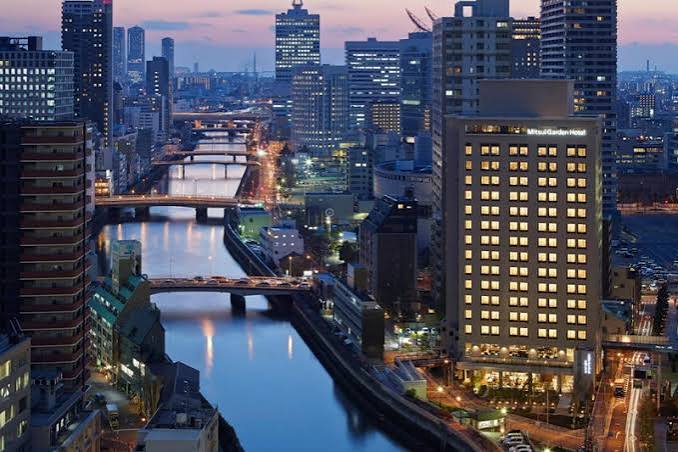
This Monday afternoon I checked into a small APA Hotel not far from Shinsaibashi Station, which I affectionally call Mr. Shin. Like most APA hotels, it is clean, efficient, and just a little too compact. The room isn’t exactly designed for lingering. It is designed for sleeping, showering, and moving on. My suitcase for neatly against one wall. The desk is barely large enough for my laptop and a cup of coffee. The large television in front of my bed I will barely use. It suits my current mood perfectly.

I took a taxi to the hotel from Shin-Osaka Station and arrived around 7:30 PM. I dropped my overnight bag on the floor, drew the curtains apart, and looked out over another slice of Osaka. Nothing spectacular. Just traffic, apartment buildings, and the quiet machinery of a city getting on with its day.

I remember thinking how strange it felt to have absolutely nowhere I needed to be. No lesson to prepare. No meeting to attend. No papers to grade. No one waiting for me at all.

That realization no longer frightened me the way it once might have. It felt… spacious. There are moments in life when freedom announces itself with fireworks. This wasn’t one of them. It arrived almost silently. Like an empty afternoon. Like a city that has never asked me to explain myself. My hotel room is simple. It is what I can afford.

Outside, Osaka continued exactly as it always had. Inside, almost without me realizing it, the next stage of my life had already begun.

III: Meeting Yuki

I should flash back briefly here to introduce my date for the evening. There are evenings that require months of planning. This was not one of them.

The plan, such as it was, consisted of very little. Conversation. Sex. Cigarettes. Dinner. That was enough. As I stepped out of the taxi, I saw her standing quietly on the street.

She was slightly built, dressed in a simple black skirt, and carried herself with the quiet confidence of someone accustomed to meeting complete strangers. There was no dramatic meeting, no cinematic slow motion, no instant thunderbolt. We smiled, introduced ourselves, and within a minute or two were walking side by side into the hotel through the warm Osaka evening as though we had agreed to meet as old friends rather than someone we had never laid eyes on before.

Her name was Yuki.

We went up to my room and made the sort of awkward conversation that strangers always make at first. Where are you from? Where do you live today? Had I been to Osaka often? Was I enjoying the summer?

Nothing remarkable. Which, in retrospect, was itself remarkable. There is something deeply comforting about ordinary conversation. For a little while, neither of us had to be anything more than two people just getting to know each other.

Eventually, because pretending otherwise would have been absurd, the reason we had met entered the conversation. She is thirty-six and works as an escort. I had hired her for the evening.

There is no point dressing those facts up in prettier language. They are neither the whole story nor something I feel any particular need to defend. They simply belong to it. Human lives are untidy. We make decisions for reasons that are sometimes noble, sometimes lonely, sometimes curious, and sometimes impossible even to explain to ourselves. This was one of mine.

I went into the bathroom to wash up, took my clothes off, and hung them neatly on the hangers on the wall. By the time I came out of the bathroom she was naked too. That was what we were there for. I put on one of my favorite bands Whiskeytown, lay back on the bed for a few minutes, listened hard, and let the sweet sweet sounds of Ryan Adams’ voice wash over me. I was, briefly, in heaven.

Then, inevitably, we began to kiss. She is a smoker and tasted like stale tobacco and faintly like green peas. I am a smoker too so I am sure I tasted the same. She unwrapped one of the condoms that I had bought earlier for occasions just like this and began to pleasure me with her mouth. While I do enjoy oral sex to some extent, it is far from my favorite sexual act and I have never been able to cum this way. Not for lack of trying, I simply find that the women who have performed the act on me can never sufficiently been able to get their teeth out of the way. It is not their fault at all, but it is just that simple.

Soon enough, I asked her to climb on top of me. My penis was already erect and she was slick as well, and I entered her cleanly and easily. After a little while, we flipped around and began to engage in the missionary position. I was on the urge of cumming when I pulled out, turned over on my back, and finished my self off with two hands. Nine times out of ten I finish this way if I finish at all. After all, I know my own equipment better than else, so to speak. Before we began to have sex I put on some porn. I chose very quickly as we were on the clock. I selected some perfectly nun priest porn, totally chalk. Of course we both barely watched it as our eyes were mostly closed. The moment I came I toweled off, shut off the porn, and immediately pressed play on the Whiskeytown video I had paused before sex.

Then a funny thing happened. During sex she had repeatedly asked me to turn down the porn and to shush in general. She said we were at a business hotel and that we were bothering the other guests. Although I love to be babied. I do not like to mothered at all. It is just not my thing, and I have written about this at some length here. I already knew that I would not book Yuki again, and this moment helped crystalize my decision. She is sweet and cool, and I am glad I met her for one night, however she is just not my jam. And also, nobody shushes my boy.

Anyway, she asked me to turn my music down. I just laughed and cranked it. Then she laughed too and the mood lifted and passed. Neither of us was yet in the mood for a shower, mostly because we were on the clock and by this point only had about 40 minutes left in our appointment. I did not feel like a round two, so I suggested we head down to the street to smoke for a smoke and then get a little dinner. Although we had less than an hour left and the hotel restaurant was a little busy, she agreed to have dinner with me.

We finished our cigarette and entered the first floor hotel restaurant. We sat down and briefly consulted the menu. The restaurant specializes in pasta, so I ordered tomato pasta with eggplant and she ordered the zucchini linguine. The food took a while to arrive, so halfway through the meal she asked for a doggie bag. I quickly finished my meal and we went upstairs so she could pack her bag.

The evening had never pretended to be anything it wasn’t. Neither of us confused it with romance. Neither of us imagined it was the beginning of some extraordinary love story. It was simply two lives crossing for a few hours before continuing in different directions. There is something quietly beautiful about that too.

Outside, Osaka was still very much alive. Trains rattled somewhere in the distance. Traffic rolled steadily beneath the hotel windows. Thousands of strangers were beginning nights that had nothing to do with ours. Ours, quietly and without complaint, was coming to an end.

I told her I was going to wash up for a minute. She said through the door that she had to leave. I said goodbye babes and she replied in the same fashion. When I came back out, she was already gone.

And I didn’t even kiss her goodbye.

IV: Coda

For most of my adult life, my future had always arrived with an outline. There was always another semester to teach. Another report to write. Another mortgage payment to make. Another family holiday to plan. Another school year waiting just over the horizon. Even when life became difficult, I almost always had a sense of what would come next. The details may change, but the broad shape of the story had already been sketched.

And now it hadn’t.

As I write this the marriage that defined nearly half my life has come to an end. My teaching career, after almost thirty years, is slowly coming to an end. My son is a grown man, trying his best making his own way in the world and earning his own money. My wife and I are immensely proud of him as well we should be. Our house of 19 years will soon belong to someone else. My life is rapidly becoming quite different and everything that had once seemed permanent has become part of the past.

This all may sound just a bit sad. Some of it may be, sure. It also happens to be exhilarating. Tomorrow I might wake up in Kyoto. Next month I might find myself in Singapore. A year from now I may be living in Osaka. Anything could happen.

Perhaps I’ll write ten more books. Perhaps no one will read them. Perhaps I’ll fall in love again. Perhaps I won’t. There will be close friends I haven’t made yet. There are cities I have not yet wandered. There are songs I haven’t fallen in love with, thank god.

There are mistakes waiting patiently for me. There are joys I cannot yet possibly imagine. For the first time since I was in my early twenties, the next chapter of my life has not yet been written.

As I stood there in that little Osaka hotel room, listening to Whiskeytown waft through the room, I finally understood what life had trying to tell me for days.

My life hadn’t fallen apart. It had, in fact, opened up. And somewhere beyond everything I thought I knew, waiting patiently for me, was the unfinished libretto.

Dedication:

For Yuki. Thanks for a lovely evening. I’ll never see you again, babe. Go with God.

Scenes from Hamilton College VI: Junior Year in New Zealand

Note: This is Part VI of the Hamilton series. Part I, Part II, Part III, and Part IV and Part V are available.

Epigraph:

They all come and peep through a hole in the wall
Keep the bastards guessing
He likes to take the long way home,
It’s another fine decision

Peter Jefferies

I spent a full academic year, the second semester of my junior year and the first of my senior year, at The University of Otago in Dunedin, New Zealand. Otago is a pretty good university, but Dunedin is pretty small and kind of country. Overall, it was a good experience, but I was flat broke and not on a meal plan due to an oversight by I guess myself and my parents. More on that later.

After I landed, I spent one night at a hotel and bought a bottle of wine, for the first time in my life. I was of legal drinking age in New Zealand. I drank about three-quarters of it and was a little hungover the next day. At Hamilton people did not drink wine.

The first few days I was on a homestay in the country with a sheep farming family. The father spent the day watching cricket, and then would rouse and take the sheep out and move them around, with sheepdogs and all. I remember going to a local pub with two of his sons and their friends and we had five or six beers and they drove home. On the drive home they tried to run over rabbits on the road, and roared with delight when they got close. That was a scene.

Then, I went back to Dunedin, and met my roommates who were all in graduate school studying to be teachers. These were Tim, Ho (who was of Maori descent), Sharlene, and Donna. Tim was a musician and there was a large piano in his room. The roommates were good folks, however I think I disappointed them a little because they asked for an American roommate and were apparently expecting someone really flamboyant and loud. I was not that, and kept to myself much of the year. One time though that I lived up to their expectations was when Tim once again said “you’re from Washington D.C.” and I said “I’m not from fucking Washington D.C., I told you before I’m from Washington State!” Tim said to the roommates, “I told you rooming with an American would be fun.”

There were a number of other exchange students from the U.S. there and I got to know some of them a bit at first, but for some reason I was a little standoffish, and we didn’t hang out much after the first week or so. I was back into running, not smoking and barely drinking, although I did go out once with Ho and his Maori friends and got blasted. I would run 8-10 miles a day, sometimes more, and was in training for a marathon.

As I mentioned, my food situation was bad. We had neglected to put me on a meal plan, and I think my parents didn’t even know this, and at first I chipped in what I could to the communal roommate shopping. However, they ate very poor quality mutton all the time and I just couldn’t hack it. Mutton is pretty bad at the best of times, and cheap mutton is awful. So I went off the roommate plan and ate mostly trail mix for dinner. Trail mix, it turns out, is among the best value for money food around. I would buy raisins, peanuts, and carob chips and that’s what I ate at the flat. For lunch I would eat one apricot yoghurt bar and a cup of coffee, costing around $3.50 NZD. I would eat super slowly, taking about 45 minutes to finish the apricot bar and somehow this made me feel like I’d had a meal. I was living on about $7 NZD a day and was hungry all the time. With this and the running, I was also super thin.

At Otago I studied some more literature, and also a lot of Indian History, with a focus on Ghandi. I learned a great deal about Gandhi this year, and found him interesting. One incident I recall was in one class on Buddhism the professor assigned a paper on Zen. I had the bright idea to turn in an empty paper, which I thought would be symbolic, but the professor was a step ahead of me. “Don’t try and turn in an empty paper for this,” he said, “I’ve seen that move before.”

One more interesting thing that happened was when I was invited to the faculty club for drinks by my Australian literature professor. He was in his 60’s and was an Otago lifer. At first I was kind of flattered to be invited, however on arrival it was clear he had other motives. He started hitting on me in a most egregious manner, and it was obvious he had done this many, many times. I had two drinks and politely removed myself. To his credit this had no impact on how he treated me in class, and things went on as normal. I guess it was all par for the course.

The Otago campus was on the north side of town, and the south side was said to be pretty rough. “Don’t go down there,” I was told more than once, “it’s dangerous.” But I thought it couldn’t be that dangerous, so one day I walked down there by myself to check it out. There were a lot of industrial areas and such, and it was a little run-down, but I got home safe just fine. I suspected that “dangerous” in a New Zealand context might mean something a little different than in a U.S. context.

My roommate Sharlene had a friend who just had a breakup and Sharlene wanted us to get together. She invited us both to a party, and sure enough we started making out, under a table as I recall. It just lasted that one night, but Sharlene thought it was hilarious. “They were pashing,” she cried, “pashing away.” Pashing is apparently Kiwi slang for kissing, or maybe it was a Sharlene original.

Sharlene had a stepfather and I visited his house once. He had a nice car and complained on and on about how many tickets he would get from traffic cameras. Traffic cameras were on the scene in 1995. This appeared to be his only topic. He should have driven more carefully.

After the pashing incident, there was another girl who was interested in me. I forget her name, but it started with an M. M. was really into me, maybe because I read a lot and so did she. There was a kind of club place for students with TVs (I remember watching the O.J. Simpson car chase there), and I would hang out there. M. would come in and lob a snickers bar from over my shoulder for me and buy me a coke. This was really nice and super helpful because I needed all the calories I could get. M. wanted to get together, but I wasn’t into it. We did spend a fair amount of time together, at the club and going to the bookstore with another friend of hers.

As I mentioned, I was in good running shape this year and actually went out for a marathon. I was doing great through the first half, but started to fade really bad around the 20 mile mark. I had terrible blisters and pulled my groin and couldn’t imagine doing another 6 miles, so I pulled up. I asked a couple with a car for a ride to the finish line where there were buses, and they gave it to me but made it clear they were not impressed with me packing it in. I wasn’t impressed with myself either, but marathons hurt like hell.

In addition to running, and starving, I also went out for Aikido. Aikido is a Japanese martial art, and I was already well on my way to my Asian Studies minor and was getting into all things Asian. Aikido was taught by a white couple, and this was their life. They were ok teachers, but the atmosphere was just a little culty. Despite my father’s fears, I have never been amenable to cults-like scenes. I stuck with it for a number of months however, and managed to get my first belt.

I don’t remember listening to a lot of music that year because I don’t think I had a stereo in my room, however, one day on the radio I did hear a song I immediately fell in love with. This was “The Fate of the Human Carbine,” by a Dunedin artist called Peter Jefferies. It was spooky and weird and totally captivating. Cat Power would later cover it, and lines from this song serve as the epigraph for this piece.

One more thing that happened this year was that Jenny from Hamilton visited. I don’t think she came specifically to see me, but I’m not sure. I was traveling, with god knows what money, in the New Zealand Alps which are on the South Island there and are really lovely. Jenny and I stayed at a hostel, and hung out which was really cool. That’s the same trip when I went for a walk in deep snow and almost died when the snow suddenly came up to my neck. Deep snow is almost as dangerous as the ocean, it turns out.

Those are my memories of New Zealand. Despite being so broke I had to eat a 45 minute apricot bar, it was a good year and I got really good grades. My academic focus would fall off, however, when I got back to Hamilton, but that’s a story for the next post.

Dedication:

For apricot bars and trail mix. You literally saved my life.

On My Curious Relationship with the Enneagram

Note: This piece reflects a personal journey with the Enneagram between 2013 and 2018, including conferences, workshops, and informal conversations. The impressions here are subjective and based on lived experience rather than formal study. I remain intrigued by the Enneagram as a reflective tool, even as I view aspects of the professional community with some skepticism. As always, this is written in a spirit of curiosity, appreciation, and lightness rather than critique for its own sake.

Epigraph
“We’ll take the Skyway / high above that busy little one way”
— Skyway, The Replacements


I first heard of the Enneagram in 2013 at a six-day beginner NLP training in Singapore run by a company called Mind Transformations. The training was led by Barney Wee, a tightly wound but candid guy who shared a lot about his life — past struggles with party drugs, his mentally challenged son, his strict vegetarianism — all delivered with a kind of intense openness that set the tone for the week. His right-hand woman, Angus Lau, was the mother and the emotional center of the operation. Warm, encouraging, and deeply comfortable in what she herself called “woo-woo,” she talked about Sedona hot springs, New Age energies, and personal transformation with complete sincerity. I hit it off with her immediately. She praised my small contributions, which felt good, and we bonded quickly.

There was also Bae, Barney’s younger assistant, mid-twenties, cheerful, cute as a button, and she did props and logistics. The first night in the hotel lobby she broke out a strange psychology-themed board game and we played for a while, and somewhere in the middle of that conversation she mentioned the Enneagram. It was the first time I’d ever heard of it. I was intrigued. On the way back to Japan I stopped for one night in Singapore, wandered into Kinokuniya at Takashimaya on Orchard Road, bought a few introductory books, and started reading them on the plane home. That was the beginning of what I later came to think of as my curious apprenticeship.

For a few years, it was just reading. I typed myself as a 5w4 with a strong 8 lean, which felt roughly right, and I found the system evocative — not scientific exactly, but suggestive, like personality poetry. It seemed to capture tones and tendencies rather than fixed truths, and I liked that. I read more, thought more, and gradually became curious about the actual community.

My first conference came in August 2016 in Minneapolis. I stayed at the hotel hosting the event, down in a quiet basement space, and we were the only people in the area. It was close to the arena where the Minnesota Timberwolves play, and you could walk there through the Skyway, which made me think of the Replacements song which provides the epigraph, and gave the whole weekend a slightly Midwestern, slightly melancholy frame.

I arrived early the first morning — nervous, excited, and very aware that I had done a fair amount of reading but had almost no real-world experience. I grabbed coffee and sat with a pleasant older couple from the Midwest, and before long I was talking about peak experiences and epiphanies and probably talking too much. I was jittery, caffeinated, and eager. They were kind and listened. Later, when I checked the program, I realized the woman was one of the main presenters and a big deal in the community. Run roh. But it was fine. That, in retrospect, was my first brush with the gentle hierarchy of the field.

I also met Jessica Dibb from her Shift Network podcast, which I had been listening to a fair bit and paying far too much for. She was warm, generous, and exactly as open in person as she sounded online. I liked her immediately, and I still think she was providing a real service to the community. But she also seemed, in a way I would come to recognize more clearly later, very much inside the tent. On the podcast, she rarely pushed back, even when guests — including Russ Hudson — leaned on origin stories involving the so-called Desert Fathers that were total bullshit. I knew they were bullshit, and what was worse, he knew it too. And yet there he was, repeating them ad nauseam. The more I heard those claims, the less convincing they sounded. There’s no clear historical transmission, no diagram, no nine-type personality system — just thematic similarities retroactively elevated into lineage. At a certain point, it stops sounding like history and starts sounding like branding. Sorry, but it’s just a bunch of bull. And yet no one inside the community seemed eager to challenge it. The culture, I began to suspect, rewarded agreement.

The rest of Minneapolis was a mix of seriousness and absurdity. I skipped a packed session by Jean Houston — a decision I later half regretted — and instead attended a tiny aromatherapy session run by two Southern women in matching green shirts who were clearly there to sell oils. They were GENKI as hell and the whole thing was unintentionally hilarious. Each day ended with a drum circle led by a ponytailed New Age facilitator, and I found myself unexpectedly moved, tired and open after long days of conversation.

I met a towering gay guy named Ron selling singing bowl CDs, and eventually I met Jean herself. She was drinking white wine, I was drinking red, and she was as warm as could be. We talked about Japan, about why I’d come, and then we danced together for twenty minutes. She killed it. That moment — generous, playful, human — felt like the community at its best.

Two years later I went to the European conference in Amsterdam. By then I felt like I knew a fair amount about the Enneagram. I had been reading deeply in Beatrice Chestnut and related subtype material, and I arrived in what I can only describe as a somewhat provocative mood. I stayed at the Apollo Hotel on the canal and walked to the conference each morning. The first person I met was Lynn, a total riot — from San Francisco originally, recently divorced, now running a Kundalini Yoga studio in Athens. She knew everyone and all the back-channel dynamics, who was sleeping with whom, and we bonded instantly. She quickly became my co-conspirator.

The opening talk by Hudson repeated familiar material, including the Desert Fathers, and I came close to challenging him publicly but somehow held back. I do have a big mouth at times. Big dick energy. Then I heard Tom Condon, tall, white-haired, grounded, integrating NLP and Ericksonian ideas into a practical approach. He is the quiet hero of the piece.

The rest of Amsterdam was lively and strange. A movement-based types exercise nearly ended in an accidental kiss. Lunch ran long, as conference lunches always do, and I met people from all over the world. The closing session paired Chestnut’s academic framing with experiential work, including a moment where a participant broke down emotionally on the floor. The atmosphere oscillated between meaningful and chaotic.

At the end, Lynn urged me to ask a provocative question. I did, politely: which aspect of the Enneagram might not be around in thirty years? Chestnut answered cautiously but clearly: tritype — too complicated, not especially helpful. It was a small ripple, but it felt like testing the edges.

That fall, I brought Condon to Tokyo. I was a member of the International Mental Health Professionals Japan (IMPJ), and when I saw he would be in town I arranged a small talk at TELL the night before the conference. About thirty people came. He gave a clear, practical overview. People loved it. Afterward some of us went to the pub; he declined, needing rest for the next day. He was ripping heaters with me outside, though. Legend.

In the end, my curious apprenticeship with the Enneagram left me with more affection than skepticism, even if the skepticism is real. I learned a lot from the system. I still find the types evocative, even poetic, and I still catch myself using them as a loose lens on people and situations. And I genuinely liked the people. The Enneagram world attracts seekers, therapists, wanderers, and enthusiastic amateurs, and I have a real soft spot for that whole vibe — the openness, the fast intimacy, the willingness to experiment. At its best, the community is warm, generous, and human.

But the professional side of the field also felt small, and because it is small, sometimes insular. Limited conferences, limited airtime, gentle pressure toward agreement. Origin stories harden. Pushback is rare. None of this invalidates the system, but it shapes the culture.

By contrast, the astrology world — much larger, more diffuse — feels more pluralistic. Multiple branches coexist. Disagreement is normal. No single group controls the conversation. The atmosphere, in my experience, is looser, less competitive, more comfortable with divergence.

So where does that leave me? Somewhere in the middle, which is probably where I started. The Enneagram, for me, remains personality poetry — suggestive, useful, occasionally illuminating, but not doctrine. My apprenticeship may have been unusual — Singapore hotel lobbies, Minneapolis skyways, Amsterdam provocations, Tokyo workshops, and smoke breaks with Tom — but I wouldn’t trade it. I learned, I laughed, I met memorable people, and I came away with a tool I still sometimes use, lightly. That’s enough.

Dedication:

For Lynn and Tom.