On My Dad’s Ridiculous Climbing Strategies

Note: This is a new piece about my dad, Ross Thomas (RO), and his truly unbelievable climbing strategies. The central episode took place in Stehekin, Washington, many years ago, when RO led my brothers and me on an attempt to reach Castle Rock that quickly devolved into heat, dense forest, no water, and general mayhem. There is also a later coda involving a climbing gym in Portland that is, in its own way, even more outta control. This piece is comic in nature, but also affectionate. My dad is a great man, a brave man, and a very game climber. He is just not, in this one specific domain, a planner.

Send lawyers, guns and money — the shit has hit the fan
— Warren Zevon, refracted

RO, is a great man and a terrible climbing strategist. He is brave, energetic, physically game, and in most areas of life basically well organized. He was a good high school English teacher, a very good administrator, and for many years an excellent and meticulous girls’ basketball coach. He is not, in other words, some kind of general life-space incompetent. Quite the opposite. Which is what makes his climbing strategies so difficult to understand.

They are ridiculous. They are unbelievable. They are officially, historically, and totally outta control.

I say this with love.

The central case study here took place in the mid-2000s, let’s say 2005, when our family was staying in Stehekin, Washington, out on Lake Chelan. If you have never been to Stehekin, it is a beautiful and slightly improbable place, the kind of place that already feels like the beginning of a story. Lake Chelan is huge, and you get out there by ferry, which means from the jump there is a sense that you are committing to something. People camp there or stay in cabins. We were in a cabin. My mom Claudia (CL), stayed behind. RO, meanwhile, had a plan.

The plan was that RO and his sons — Mike (MI), Pat (PA), and me — would hike up toward Castle Rock.

Now, one thing about family expeditions is that “the plan” is often not really a collective possession. It belongs to one person. The rest of the group is more or less there to follow along. In this case, the plan belonged entirely to RO. MI and PA and I were, broadly speaking, along for the ride.

As I remember it, we started from Stehekin and walked about three miles just to get to the trailhead, then hiked a few more hours uptrail to where we stopped and camped the first night. It was already a decent undertaking just to get there, but this was, in a sense, merely the prelude. The true RO strategy had not yet fully revealed itself.

At around dusk, after we got to camp and set up the tent and got ourselves sorted for dinner, RO decided he was going to scout the route for the next day. This seemed reasonable enough. It is in fact the sort of thing a prudent leader might do. Only instead of scouting further up the trail, or perhaps generally uphill toward the place we were trying to go, RO for some reason headed downriver.

Why did he do this? We did not know. It was back downhill. It seemed unrelated to the objective. Even at the time it had the feel of one of those decisions that makes perfect sense only to the person making it.

Ross Thomas: The trail kind of petered out eventually and didn’t really lead to Castle Rock anyway.

Fair enough. I want RO’s side of the record included here. But even granting this, and I do grant it, going downriver in the late evening did not strike the rest of us as a strong opening move.

Sure enough, RO fell in the river and got completely soaked.

This was the first of many mistakes he would make on the trip.

He came back to camp late and dripping wet, having apparently developed an immediate a bizarre attachment to that river. The water was cold. The evening was cool. He changed clothes, we had dinner, and we went to bed. At this point, there was still some chance that the next day might somehow become normal.

It did not.

The next morning we got up early, had breakfast, and prepared to head out. My assumption — based on reason, precedent, and the literal existence of trails — was that we would continue on the trail. Instead, RO decided that we were going to bushwhack straight uphill through an extremely dense forest in the blazing heat.

This struck me as a bad plan.

It was a bad plan.

The forest was thick enough that you could not really move with any rhythm. We were not hiking so much as negotiating, arguing, and physically contesting with the landscape. Every movement took extra energy. Progress was incredibly slow. The heat was serious. And the main problem, which quickly became the only problem, was that there was no water. Not a stream. Not a trickle. Not a suspicious puddle. Nothing.

Now, RO for reasons that remain mysterious to me is not a big water drinker. He prefers beer and tea. Under ordinary conditions this is merely a personality trait. On a hot uphill bushwhack through dense forest it becomes a strategic liability.

Naturally, we asked where the water was.

Ross Thomas: I had read in a Fred Beckey book that there was a way to get up to Castle Rock, although I think Beckey had only heard about it and never actually done it himself.

This is, in its way, a perfect Ross Thomas detail. Fred Beckey, the legendary climber, had perhaps heard there was some route, though he had not personally taken it. This was enough for RO. A rumor in a book by a famous climber became an operating plan.

As for the water situation, RO told us — and I remember this vividly — that there might be some in about five miles.

Five miles!!!

We were already fighting for our lives up there, and this crazy man was calmly informing us that in only another five miles there might, possibly, perhaps, be water.

He’s totally outta control.

At some point, after what I recall as roughly three miles of this lunacy, we basically mutinied. Or perhaps mutiny is too strong; let’s call it collective realism. We told RO the obvious, which was that this was not going to work. The route was no good. The heat was too much. There was no water. We had to turn back.

And so we did.

Now the descent was interesting because it brought out our distinct styles. RO, MI, and PA were making their way down carefully, gingerly, responsibly. I, on the other hand, was absolutely flying. Swinging from tree to tree like some kind of deranged monkey, just ripping downhill through the forest. This part RO loves to tell to this day, and I admit it was one of my better athletic showings. I was not going to die of thirst in that forest and I was not going to descend politely either.

Eventually we made it back to camp. Or rather, most of us made it back to camp together. RO, in one of those small but meaningful complications that tend to gather around him in climbing situations, got separated from us and somehow ended up down by the river again.

And yes, he fell in again.

He really must have loved that river.

So now here he comes back to camp once more, drenched, and by this point we are all in total agreement that the trip is over. We are done. It is time to 86 the hell out of there.

So we break camp and head down toward the lake shore. But this presents a new problem. We still have a significant walk to get home — something like another two miles down to the shore and then, as I remember it, another three miles around the lake. And by now it is dusk. So this is not really viable either. We are hot, tired, and in no mood for an elegant final act.

At this point RO does what he often does in these situations, which is simply assume that reality will provide.

He found a guy with a motorboat and asked if he would take us back to Stehekin.

The guy said sure. Fifty bucks.

RO then informed him that he did not actually have fifty dollars on him, but could get it from his wife once we got back to the cabin.

Somehow, by what can only be described as grace, audacity, or a temporary breakdown in the boatman’s judgment, this worked. We got in the boat, got home safely, and made it back in time for dinner.

That was Stehekin.

CODA

You might think the lesson here would have been: bring water, stick to trails, do not base wilderness plans on rumor, avoid rivers if possible, and maybe do not lead your sons into dense forests in the hot sun in search of a semi-mythical route described secondhand by Fred Beckey.

You would be mistaken.

Many years later, when RO was Principal of Valley Catholic High School, he got really into climbing at a gym in Portland. It is a cool place, run by a father and son, and it has beginner, intermediate, and advanced climbs. He took me and MI and PA there, and later my son Hugh as well. Hugh loved it. He scampered up the walls like he had been waiting for exactly this sort of thing his whole life. I like climbing too, though my arms get tired pretty quickly and I tend to fade. MI and PA are both good climbers. RO, to his credit, also has strong stamina.

So one day my wife and Hugh and I were there with him. We’d been climbing for a few hours. I was on the mats, faded, taking a break. Hugh was still going. RO was showing him some moves. Then RO started up one of the big walls — one of the long climbs, the kind where you need the harness.

Only he had forgotten to put the harness on.

Hugh saw this before anyone else did and yelled out:

RO, get down now!

And RO did.

For the next year, RO loved telling the story of how Hugh had saved his life. Quite right too. It is a great story. My son saved my dad from one of my dad’s own ridiculous climbing strategies. The circle was complete.

But then, about a year later, shortly before RO retired from the principal job in 2018, he was back at the gym by himself. This time the only other people there were the owner and his son. And somehow — incredibly, impossibly, yet also in a way entirely consistently with the established Ross Thomas climbing tradition — he forgot the harness again, started up the big wall, and fell.

He crashed all the way down onto the mat.

The mat saved his life, no question. But his feet and knees and legs got absolutely busted up. He was in a wheelchair for months. It was so bad that he had to move temporarily out of the country house in the woods where he lives with CL and into a little bungalow on the Valley Catholic campus owned by the nuns that founded and still run the school. He could barely work. To this day his feet remain a total mess. He has trouble driving and has to drive with his shoes off and wearing some sort of thick sock or something.

At one point we wondered whether he might sue the gym owner for negligence. But RO wanted no part of that. He said it was his own fault, not the owner’s.

Fair enough.

And then, after many months, he mostly recovered. Which means this story has, if not exactly a happy ending, at least a decent one. Better still, as soon as he was recovered he went right back to the gym and started climbing again!

This is what I mean.

His climbing strategies are ridiculous. They are unbelievable. They are officially, historically, and totally outta control. He does not plan for basic things such as the route, the water, or how exactly one might avoid miles of dense forest. He does not always remember the harness. He seems, in climbing situations, to operate according to a distinct internal logic unavailable to the rest of us.

And yet outside of climbing, this makes almost no sense. He is, as I said, a basically well-organized guy. He planned lessons. He coached meticulously. He ran a school. In most areas of life he is not slapdash at all. Which makes the climbing thing not just reckless but anomalous. It is a localized mystery. A glitch in an otherwise coherent system. I do not understand it and at this point I do not expect to.

What I do know is this: to this day I avoid climbing with him because in this one particular area I do not trust his judgment at all.

I love the man. But when it comes to climbing, he is not to be trusted.

Dedication:

For my dad. I love you baby but you are totally outta control.

On the Long Cut: The COVID Years (2019–2022)

Note: This essay forms part of a longer series recounting my professional life in and around the International Baccalaureate program at Ritsumeikan Uji. It follows earlier pieces concerning the Dr. Fox years and the gradual evolution of the IB program there, and covers the period roughly from late 2018 through the early months of 2022.

The years described here coincided with the global COVID-19 pandemic, which disrupted institutions and routines in ways both large and small. The narrative therefore moves between several overlapping threads: my temporary assignment at the Suzaku campus, a prolonged period of leave and personal drift, the strange half-life of Kyoto’s bar culture during the pandemic years, and finally my gradual return to teaching and the IB program at Uji.

As with other pieces in this series, some names and identifying details have been adjusted or omitted where appropriate. The goal of the essay is not to settle institutional scores but to record the texture of a particular stretch of life—its confusions, absurdities, and small recoveries of purpose.

Readers encountering this piece independently may wish to consult earlier essays in the series, including those on the Dr. Fox period and related institutional episodes, for additional context.

Epigraph

“If you wanna take the long cut / we’ll get there eventually.”
— Uncle Tupelo


I. Return

On December 20, 2018, I landed at Kansai International Airport after a twenty-two-day music trip along the American East Coast. I had seen bands in New York, Boston, and Philadelphia, spent too much money, and generally had the time of my life. That journey has been written about elsewhere, so I won’t linger on it here. What matters for this story is simply that I came back to Japan exhilarated and somewhat unmoored.

The first thing I did upon landing was send an email to Dr. Fox. I told him that although I still carried some anger about how things had ended at Ritsumeikan Uji, I appreciated his help securing a temporary role for me at Suzaku beginning in March. Both statements were true. What I did not yet know was how miserable that position would become.

I had two months before the job began. They were among the freest weeks I had experienced in years.

I wrote constantly. I worked on the early sections of Thin Man: Singapore and drafted essays that would later become EventificationHelmet Laws, and On Zone Defense. I was about to begin the St. George’s School series. Periscope had faded from my life, partly because the platform had run its course and partly because a particular person who had made it interesting to me was no longer there.

I spent some time with Philip, though he was busy with his own life and his relationship with his wife seemed temporarily on the mend. Mostly I wandered between Tokyo and Kyoto, writing and drinking coffee and enjoying the strange luxury of being at loose ends.

In the third week of January I attended a Drunk Poets open mic in a small bar near Shibuya. I arrived absurdly early because I didn’t know the neighborhood. While waiting in the stairwell I met a woman who introduced herself using her poetry name. We talked for nearly an hour before the reading began. She was a veteran of the open-mic circuit and showed me how the evening worked. I read first after the break; she followed me.

It was a pleasant night. I had no idea at the time that the conversation we began that evening would extend, mostly by phone, for more than two years.


II. Suzaku

My assignment at Suzaku began on March 1, 2019.

There were no students.

Technically the building housed graduate programs, but they lived on lower floors and we might as well have been ships passing in the night. My office was on the fifth floor, a large open room filled with perhaps forty people: a mix of temporary teachers like myself and permanent administrative staff.

It was, in a word, dreary.

I commuted each morning to Karasuma Oike, walked down to the Suzaku campus, sat at my desk, and tried to look busy until five o’clock. Sometimes a consultant whose job seemed to consist mainly of visiting other campuses would take me on excursions to places like OIC or the original Ritsumeikan High School. These trips were well-intentioned but clarified nothing. No one quite knew why I was there, least of all me.

Within days I began to feel something I had never really experienced before: the creeping onset of depression. The problem was not that the work was difficult. It was that there was no work at all.

By April I had started leaving the office early. By May I was appearing only sporadically. The remarkable thing was that no one seemed to notice.


III. Drift

If I was not at Suzaku, where was I?

Mostly at home.

During the day I played chess online, usually on Chess.com or Lichess. I climbed to around 1250 on the former and somewhat higher on the latter, though the Lichess ratings were clearly inflated. My openings were solid, my middlegame acceptable, and my endgame play atrocious. I squandered many promising positions by failing to convert them.

I watched instructional streams from Levy Rozman and occasionally from Hikaru Nakamura, though Levy was the better teacher. His explanations were clear and energetic, and I learned a great deal.

When I wasn’t playing chess I listened to podcasts. The rotation included nearly every program produced by Bill Simmons and the broader Ringer network, followed by an increasingly large catalog of true-crime shows. What fascinated me most were disappearance cases—stories in which someone simply vanished and left investigators grasping for explanations.

Meanwhile the phone conversations that had begun in the stairwell in Shibuya continued. They were long conversations—sometimes five hours a day—covering everything from literature to relationships to increasingly elaborate stories about future plans and imagined fortunes. At first the exchanges were exciting; over time they became exhausting, though we kept talking.

In the evenings I left the apartment and walked to the bars near Karasuma Oike. Takumiya and its sister bar Takanoya became regular stops. Eventually I found myself most often at a tiny machiya bar called Before 9.


IV. Before 9

Before 9 was small even by Kyoto standards. Downstairs there was room for perhaps five or six people around the bar; upstairs another half dozen could sit beneath the original wooden beams of the converted house. Jazz or ambient music played quietly while large black-and-white films—Seven SamuraiCasablanca—were projected silently on the wall.

The bartender most nights was Miyuki.

Philip and I nicknamed her “the Ice Queen,” though not to her face. She could be sharp-tongued and intimidating, yet occasionally revealed flashes of warmth that suggested a softer personality underneath. Regulars were greeted with a curt “What do you want?” delivered with theatrical indifference.

She wore black almost exclusively and carried herself with the confidence of someone who knew exactly how striking she looked. I developed a mild crush on her, though it was clear from the beginning that the feeling would remain entirely one-sided.

During the pandemic the bar officially closed at eight in the evening, though the rule was treated with some creativity. One night two inspectors arrived precisely at closing time. Miyuki announced “last call” in an exaggerated voice, served them a beer they never drank, watched them leave, pulled down the shutters, and then reopened the bar for the regulars.

That was the culture for several years.


V. Leave

In October 2019 the situation at Suzaku was finally addressed. A supervisor called me in and gently suggested that it might be best if I took leave. I agreed immediately. Beginning in November I was officially on leave—a status that would last until October 2021.

Oddly, I felt relieved.


VI. The World Changes

Early in 2020 I read a brief news report about a virus outbreak in Wuhan. At first the story seemed distant and provisional. Within weeks it dominated every headline in the world.

The pandemic years blurred together. Bars closed early, then reopened, then closed again. Conversations moved onto phones and screens. Life contracted into smaller and smaller spaces.

Yet the routines I had developed continued: chess, podcasts, the evening walk to Oike, the occasional drink with Philip or Mackenzie.


VII. Return

In October 2021 an unexpected opportunity appeared.

Andy Meichtry needed to take extended leave after a family emergency. His timetable included several sections of a class called Academic Research in the International Program. VP Nishikawa, who had always been supportive of my return to IB, suggested that I fill the gap.

So I put the uniform back on and returned to Ritsumeikan Uji.

The first challenge was that no one could tell me what the Academic Research course actually entailed. The teacher who normally handled it was on extended medical leave, and the only materials available were a handful of PowerPoint slides sent without explanation.

In the spirit of William Ian Miller, I decided to fake it until I made it.

The students—seniors working on research projects related to the Sustainable Development Goals—were relaxed, good-natured, and only months from graduation. We muddled through together, and somehow two months passed quickly.


VIII. Administrative Comedy

During this period a new principal, Dr. Joseph Hicks, made an impression.

The IB morning briefing was designed to last three minutes and cover the day’s essential information. Dr. Hicks instead preferred to open with extended digressions on topics such as the reproductive habits of moles. After a week I suggested that perhaps the zoology lectures could be postponed. To his credit, he stopped immediately.

Later, during my annual teacher meeting—normally a brief conversation about contracts and responsibilities—he spent most of the time explaining the virtues of traditional Polish music.

I left better informed about Eastern European folk traditions but none the wiser about my job.


IX. Reinstatement

Administrative reshuffling followed later that year, and by January 2022 I was formally reinstated in the International Baccalaureate program.

My roles included IB1 head, CAS coordinator, and student council advisor, along with a single section of Higher Level Business Management.

After the drifting years, stepping back into a classroom felt like a jolt of electricity.

The students were lively and engaged, but one in particular stood out: Karin Sayama, whose enthusiasm for the course reminded me why I had chosen this profession in the first place. Watching her and her classmates rediscover the subject gave me a renewed sense of purpose.

For the first time in years I felt genuinely happy to be at work.

The long cut had taken its time.

But eventually it brought me home.


Dedication

For Karin.
With deep appreciation.

Note:

On Comebacks and Failed Comebacks III: Amy Winehouse

Note: This short piece reflects on the strange artistic tension that defined the career of Amy Winehouse: the way her extraordinary authenticity as a singer seemed inseparable from the personal instability that surrounded her life.

Winehouse’s music—especially the songs on Back to Black—felt at once timeless and painfully immediate. The sound drew deeply from earlier traditions of soul and rhythm and blues, yet the emotional directness of the lyrics was unmistakably modern. Few artists have managed to sound so rooted in musical history while simultaneously feeling so exposed to the present moment.

The song Rehab stands as the clearest example of this tension. Its humor, defiance, and vulnerability all exist in the same breath, making it one of the most distinctive pop recordings of the twenty-first century.

Like many listeners, I remember the late-2000s period—particularly around the Glastonbury era—when Winehouse was both an enormous star and visibly struggling. Watching those performances could feel uneasy, yet the brilliance of the voice was undeniable. The same intensity that made the music so compelling also made her career difficult to sustain.

This piece is simply an attempt to think about that paradox: how authenticity and self-destruction can sometimes become intertwined in the lives of great artists.

There are many great singers, but very few voices that feel instantly definitional—voices that seem to arrive already carrying an entire world inside them.

Amy Winehouse was one of those voices.

By the time her second album, Back to Black, exploded in the mid-2000s, it already felt as though she had stepped fully formed out of some earlier musical era. The sound was unmistakably rooted in Motown and 1960s soul, yet the lyrics were brutally modern—messy, confessional, sometimes almost painfully direct.

Winehouse didn’t just sing about heartbreak and addiction. She sang about them as if the audience had wandered into the middle of a private argument she was having with herself.

That tension—between authentic confession and visible self-destruction—became the defining element of her career.

You could hear it most clearly in Rehab, which remains one of the most distinctive pop songs of the twenty-first century. The song is catchy, almost playful on the surface, driven by a swinging brass section that feels lifted from a lost Stax session.

But the lyrics are something else entirely.

They tried to make me go to rehab / I said no, no, no.

It’s funny. It’s defiant. It’s also deeply unsettling, because the listener quickly realizes that the singer is not playing a character. The refusal at the center of the song is real.

In that sense “Rehab” became more than a hit single. It became a kind of thesis statement for the strange artistic space Winehouse occupied. The same vulnerability that gave her music its emotional power also exposed the raw nerves of her life to public view.

You could feel that tension during the years when she was both at the height of her fame and visibly unraveling.

The Glastonbury era captured this perfectly. Winehouse had become a massive international star, yet her stage presence could swing wildly from moment to moment. One minute she would be commanding the crowd with that huge, smoky voice; the next she might appear distracted, fragile, or physically unsteady.

Watching those performances could be oddly uncomfortable. The audience was witnessing genuine brilliance, but it often felt as though the brilliance was emerging from a life that was spinning out of control.

And yet the authenticity of the music was inseparable from that volatility.

Winehouse sang as if every lyric had been torn directly out of lived experience. There was no polite distance between the artist and the material. When she sang about jealousy, addiction, or heartbreak, it sounded less like performance and more like confession.

That quality made her music electrifying. It also made her career precarious.

Pop music has always had a complicated relationship with self-destructive artists. Audiences are drawn to performers who seem emotionally transparent, but the same intensity that produces great art can also be difficult to sustain under the glare of fame.

Winehouse lived inside that contradiction.

The tabloids followed her relentlessly. Every public misstep, every argument, every sign of physical decline became part of a growing media narrative. The spectacle sometimes threatened to overwhelm the music itself.

Yet when she stepped to the microphone and began to sing, the spectacle vanished.

What remained was that extraordinary voice: raw, soulful, and oddly timeless, as if it had traveled forward from another musical generation. In a pop landscape often dominated by carefully engineered personas, Winehouse sounded startlingly real.

That authenticity is why her work still resonates long after her death in 2011.

Many talented singers release successful albums. Only a handful manage to create songs that feel permanently etched into the culture. “Rehab” is one of those songs. The moment those opening horns start, the listener knows exactly what world they are entering.

It is the world of Amy Winehouse: funny, defiant, wounded, brilliant.

A place where honesty and self-destruction were never quite separable—and where the truth of the music was powerful enough to survive them both.

Note:

On Comebacks and Failed Comebacks I: Kofi Annan

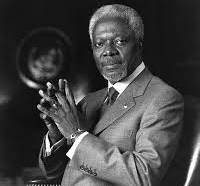
Note: This piece begins a small series I’m calling “On Comebacks and Failed Comebacks.” Political and public life are full of attempted returns. Leaders lose elections, wars, or moral arguments and then try to reclaim the stage. Most of these efforts fail. The moment has passed, the audience has moved on, and what once felt urgent has dissolved into what might be called moral fatigue. Yet every so often a different pattern appears. Occasionally someone loses the immediate battle but remains present long enough for history itself to shift. When that happens, what first looked like defeat begins to resemble something closer to a delayed victory. Kofi Annan provides a particularly interesting case. His opposition to the Iraq War did not stop the invasion, and at the time it appeared that the argument had been decisively lost. Yet as the years passed and the consequences of the war became clearer, the moral judgment he articulated gained increasing weight.
In that sense, the story of Annan’s career suggests a useful distinction: some comebacks succeed not because the player reclaims the moment, but because the argument itself eventually catches up with history. Future pieces in this series will look at other figures—some who managed remarkable returns, and others whose comebacks never quite arrived.

Political life especially produces them in abundance. A leader loses a battle—an election, a war, a moral argument—and disappears into the quiet margins where yesterday’s figures slowly fade. The public moves on. The moral urgency of the moment dissolves into what might be called moral fatigue. Outrage that once seemed unstoppable becomes background noise. A new crisis appears, and the world’s attention shifts.

Once this fatigue sets in, comebacks are difficult. The audience that once cared has already drifted elsewhere. The stage has changed. Most players who attempt to return find that the moment that once belonged to them has passed.

Yet every so often a different pattern appears.

Occasionally a figure loses the immediate battle but remains present long enough for the moral tide itself to turn. When that happens, what looked like defeat begins to resemble something else entirely.

Kofi Annan offers one of the most intriguing examples of this phenomenon.

In 2003 the United States and the United Kingdom invaded Iraq. The invasion was justified by a mixture of strategic arguments, intelligence claims, and moral rhetoric about tyranny and liberation. In Washington and London the momentum of the moment was overwhelming. The war was framed as both necessary and inevitable.

The United Nations, by contrast, found itself sidelined. Annan, then serving as Secretary-General, watched as the institution he led was bypassed by the coalition preparing for war. The moment belonged to the advocates of intervention—particularly the group of American policy thinkers who had spent years arguing for the removal of Saddam Hussein.

At the time, it was not at all clear who would ultimately win the argument. What was clear was that the United Nations had lost the immediate struggle for influence. The invasion proceeded without explicit UN authorization, and the diplomatic machinery that Annan represented appeared powerless to prevent it.

The moral emergency that had animated the debate quickly hardened into geopolitical reality.

Then, in September 2004, Annan said something remarkable. In a BBC interview he stated plainly that the invasion of Iraq was illegal under international law.

It was an extraordinary declaration. Rarely does a sitting Secretary-General of the United Nations describe the actions of the world’s most powerful government in such blunt terms. Yet the statement did not produce the dramatic reversal one might imagine. The war continued. Washington and London dismissed the criticism. The machinery of global politics moved forward largely unchanged.

In the short term, Annan had lost the battle.

And the personal toll of that moment appears to have been considerable. In his biography there is a striking image from this period: Annan alone in his darkened living room, unable for a time to rise from the floor. The room itself reportedly kept in near darkness. It was not exactly depression, at least not in the clinical sense, but something close to exhaustion after a prolonged moral struggle that had failed to alter events.

It is a haunting scene. One of the most powerful diplomats in the world sitting on the floor of a dark room, confronting the limits of his influence.

At that moment, the story of Kofi Annan could easily have ended as the story of a failed comeback. A leader who tried to reassert the moral authority of international law and found that the world had already moved on.

But history has a way of rearranging the meaning of certain moments.

As the years passed, the Iraq War came to be widely regarded as a profound strategic and humanitarian mistake. The claims that had justified the invasion collapsed. The war itself destabilized the region and reshaped global politics in ways that few of its original advocates had anticipated.

Gradually, the moral argument that Annan had made—quietly but firmly—became the prevailing historical judgment.

After leaving the United Nations, Annan did not retreat entirely from public life. Instead he reappeared in a different role as a member of The Elders, a group of former statesmen attempting to exert moral influence outside formal political structures.

It was a curious transformation. No longer the head of the UN, Annan had less formal power than he once possessed. Yet his voice now carried a different kind of authority—the authority of someone who had remained in the arena long enough for events to vindicate his judgment.

By the end of his life, the moral verdict on the Iraq War had shifted decisively. Few serious observers still defended the intervention with the confidence that characterized the early years of the conflict. The consensus had moved, slowly but unmistakably, toward the position Annan had articulated when it mattered least.

In this sense, his career offers an unusual example in the history of comebacks.

He lost the battle.
But he may have won the argument.

That distinction matters.

Most political figures attempt comebacks by trying to reclaim the exact moment they once dominated. They want the same stage, the same audience, the same authority. When the moment has passed, the comeback fails.

Annan’s story suggests a different possibility. Sometimes the moral argument itself continues moving through history long after the political battle appears settled. If a leader remains present long enough, the tide may eventually turn.

Which leads to a simple but revealing observation about great players in any arena.

A truly great player is never entirely out of the game.

The moment may pass. The audience may drift away. But if the underlying argument proves sound, history itself has a way of reopening the field.

And when it does, the comeback is already underway.

On the Shisha Girls and Shisha Boys of Kyoto: Field Observations

Epigraph: Where is my nurse, my nurse with the pills? — Ryan Adams

When the world is too sharp, too fast, too opinionated, I do not go to bars.
I go underground.

Down the low-lit stairs in Gion — where tourists drift past overhead and never notice the door — there is a basement shisha den that looks closed even when it isn’t. Noon to 3:00 a.m. daily, 5:00 a.m. on weekends. A place you would miss unless you were meant to find it. Shoes off at the threshold. Warm air, low music, no urgency of any kind. Just couches — three of them — a handful of curtained recesses where people lie fully horizontal like monks or patients or dreamers, and a second floor with several cubbies up steep wooden stairs.

I take a couch, the one I always take — long enough to fully stretch out. Because I am a serious regular, the staff will bump me ahead of others in line to make sure I get my couch. I never asked for this privilege; the staff simply decided on my behalf.

Shisha here is not an accessory; it is the medium. A cappuccino-cinnamon-berry bowl — number four, Turkish — smooth draw, no burn, warmed through cassis if I want the smoke heavier on the lungs. One gin and tonic, maybe two over the course of a session and a glass of water. After thirty minutes, I’m steady. After two hours, I am gone — dissolved but aware, body slow, mind open like a lens on long exposure. Six hours is half a day and feels like two minutes.

This is how I work. I write here. I talk on the phone here. Parallel processing is possible here in a way the world never allows — one half of the brain in conversation, the other spilling sentences into the phone notes without friction. Time softens. Thoughts move without edges. I do not come here to escape the world. I come here to metabolize it.

And always — there are Shisha Girls, and occasionally Shisha Boys.

The girls are not bartenders. They are not hostesses. They are ritual nurses, the so-called nurse with the goods.

The first one I met — call her B. — recognized me early as a serious regular. Light build, hair tied back, barefoot, comfortable like someone who lives inside her own body without apology. She bends into the couch alcove, refills the charcoal, and takes two or three tester pulls through the mouthpiece she wears on a lanyard. That detail matters: they share your bowl to tend it properly. Their breath meets your breath. Their lungs judge the temperature. They diagnose by inhalation.

No plastic tips if you don’t want them — the gold mouthpiece direct to mouth, warm, personal, intimate in the way only unspoken trust is intimate.

K. is older — early thirties — and the one who opens at precisely noon. I give her three or four minutes to descend the stairs and switch on the lights. She’s the quiet boss, not by authority, but by ritual competence. She alone recommended berry + cinnamon when I asked for something special. She knows my bowl, my drink, my couch, my tempo. When she works, I settle in with the confidence of someone returning to a familiar bed in a hotel room booked under a different name.

There are Shisha Boys too. One rotates charcoal with the same practiced inhalation, hair slicked back, present but not overly personal. Another is stationed at the front like soft-security — staff-adjacent — always smoking, rarely speaking, cashing out customers with a nod. They do not socialize. They do not pitch stories. They do not extract biography. You might visit for years and never know their names, and this is deliberate.

In bars, the first currency traded is information: What’s your name? Where are you from?What do you do? Identity is the entry ticket; personality is the product.

But shisha does not trade identity. Shisha trades nervous systems.

You don’t bond through story —you bond through shared respiration.

The intimacy is somatic, not verbal. They watch breath, not face. They regulate heat, not conversation. They calibrate you the way a nurse adjusts an IV — quietly, competently, without inserting themselves. Bars escalate. Shisha deepens. Bars push energy outward. Shisha draws it inward like a tide at night. In bars, you hold yourself up. In Shisha, the room holds you.

After three or six hours, only one thing pulls me back to the surface — nicotine. Shisha gives without demanding, but you are not allowed to smoke a cigarette. A single drawback. So I rise, shoes on, payment made, nod to K. or B. or whichever quiet caretaker tended the bowl. I climb the dim stairs and push into daylight or dark, immediately searching for a legal ashtray on the street.

The re-entry cigarette is the punctuation mark. Shisha is the sentence.

Why do I go? Because here I can chill, dissolve, write, speak, breathe. Because every part of the ritual feels earned — the bowl, the gin, the charcoal refreshes taken communally through their own mouthpieces. Because I belong here in a way that requires nothing.

They are not my friends. They are not therapists. They are not bartenders.

They are my extended other family of lungs and smoke, a household without biography, without narrative — only breath.

Dedication: For B. and K., sneaky babes both of them.

On Why I Told the World to Fuck Off for 36 Hours

Subtitle: And Saved My Life in the Process

So I called you a cab and they called you a hearse,
and I knew what they were talking about.

— The Mendoza Line, “It’s a Long Line (But It Moves Quickly)”

Note: This piece pairs naturally with my recent essay On the Safe Space (aka Corner Girl). Both pieces are about the small moments that hold us together when we are breaking apart. You can read that piece here.

By 2012 I finally understood what I had been circling back in 2008 without fully naming: the business hotel wasn’t just a neutral space — it was a controlled dissociation chamber. A place where my mind could flatten without collapsing. A room where the world muted itself into CNN-colored soft focus, where time thinned out, where nothing asked anything of me. I didn’t know it then, but all those mid-range rooms — the bland art, the sealed windows, the gentle hum of an air conditioner tuned to the exact frequency of psychic anesthesia — were teaching me a skill I would need later: how to disappear just long enough to come back intact.

So when the pressure finally broke, when I had been working thirty straight thirteen-hour days and felt myself sliding toward the edge of something unnamed, I took the Shinkansen to Tokyo, checked into a business hotel, turned my phone off, and told the world — or most of it — to fuck off for thirty-six hours. And the shocking thing wasn’t that it worked. The shocking thing was realizing I had been preparing for it years earlier, in those identical rooms where the towels were always clean, the windows always closed, and 9-ball was always on.

So I ducked into the nearest konbini and bought a latte from the machine — the one small ritual that still made sense. The warm cup in my hand steadied me just enough to get through the turnstiles. Kyoto Station felt too bright, too full of intersecting lives and needs, the air full of other people’s urgency. I didn’t have the bandwidth to absorb anyone else’s story; I barely had enough for my own. All I knew was that the next Shinkansen to Tokyo was leaving in eleven minutes, and if I didn’t get on it, something in me would snap in a way I wouldn’t be able to walk back. The latte was cooling fast, my hands were shaking, and every part of my body was saying the same thing: Go. Now. Before you say yes to one more thing you don’t have the energy to carry.

Once the room was arranged — bag on the stand, shoes lined up by the door, Pocari Sweat sweating slightly on the desk next to the bottle of red — my whole system downshifted into something like relief. Not joy. Not peace. Just the quiet recognition that, for the next thirty-six hours, my time belonged to me and no one else. I didn’t have to speak. I didn’t have to answer. I didn’t have to hold anything together. All I needed to do was sit on the bed, take a long drink of Pocari, a short drink of wine, and let my body loosen by degrees. It wasn’t dramatic. It wasn’t cinematic. It was just freedom in the smallest, most essential sense: I get to be here, in this room, alone, and the world can wait.

After the first wave of relief, the question always arrived: Do I go out?

Tokyo was right there.

Akasaka-Mitsuke humming five floors beneath me, restaurants lit up like little stages, the crossing full of men in suits walking fast enough to convince you they knew exactly where they were going. I never did. So I’d sit on the bed and pull up the map — not to plan, but to orient. Izakaya here, ramen there, a bar tucked down some side street with red lanterns and a name I couldn’t pronounce. Nothing fancy. Nothing difficult. Just food, warmth, and maybe one drink that wasn’t red wine from a convenience store. I wasn’t looking for a night out. I was looking for simple movement, the kind that doesn’t require performance or decision-making. A walk, a meal, a seat at a counter. A single beer poured by someone who didn’t know my name and didn’t need to.
That was the whole question every time: stay in the bubble, or slip into the Tokyo night just long enough to remember I was a person.

Stepping out into Akasaka-Mitsuke wasn’t lonely — it was liberating. The air felt different the second the sliding doors breathed me out into the crosswalk light. I wasn’t hiding from anyone. I wasn’t avoiding anything. I was simply off the clock in a way that almost never happened in my real life. No one knew where I was, and for the first time in weeks, that fact didn’t carry a threat or a stain of guilt. It felt clean. It felt earned. I wasn’t missing; I was saving my own damn life by giving it a night without responsibility. The freedom wasn’t dramatic. It was simply this: I could walk in any direction, and every direction was allowed.

Out in the Akasaka night, I felt like the version of myself that gets buried under work and obligation — the real me, the one who just wants to wander and see who’s out, what’s open, what energy the city is holding. I wasn’t searching for anything dramatic. I wasn’t looking for revelation or escape. I was just checking things out — the izakaya with the red lantern, the alley with the quiet bar, the group of people laughing too loud on the corner. Dabbling. Moving lightly. Letting Tokyo show me whatever it wanted to show, without needing to make a night out of it. It was the simplest, purest freedom: explore until something feels right, and stop when it doesn’t.

I walked the Akasaka backstreets the way I always do when I’m in this mode — cutting down alleys, taking long cuts and shortcuts that don’t make geographic sense but feel right in my body. Tokyo is a city you navigate by instinct, not logic. You follow energy. You drift. You take the turn that looks interesting, then the one that feels safe, then the one that’s pulsing with life. Sometimes I’d follow the Google map to the place I thought I wanted to eat, only to walk past it and keep going. Other times I’d catch a glimpse of something through a noren curtain — warm light, the sound of laughter, a chef moving with the right kind of ease — and that would be the signal. It was never about the spot itself. It was about finding the right spot, the one that matched the night’s frequency. And over the course of the evening, I usually did both: follow the algorithm, then abandon it; trust the map, then trust myself.

Eventually I found the place — an oyster bar tucked behind one of those half-lit alleys where Akasaka feels a little European and a little dreamlike. Warm light, wood counter, the soft clatter of shells, and a chef who moved with the kind of quiet competence that settles you the moment you sit down. This was exactly my jam: an oyster platter arranged like a small geography, cold and briny and perfect, a bowl of clam chowder steaming in front of me, and a carafe of white wine that I poured slowly, deliberately, one glass at a time. Spendy, sure — but in this mode spendy isn’t excess. Spendy is permission. Spendy is dignity. Spendy is saying to yourself: I get to take my time with this. I get to have a meal that cares for me back. And in that moment, slurping an oyster with the city humming outside, I could feel the night open around me in the cleanest way.

The white wine hit me in that way good pairings do — not as a buzz, but as a reminder of how people take care of themselves when they’re not drowning. White wine and oysters belong together; everyone knows that, and sitting there I felt myself re-enter that understanding. The pairing wasn’t fancy. It was human. It was the kind of small, civilized pleasure most people allow themselves without thinking, and I’d been so buried under work and obligation that I’d forgotten what that felt like. The red I’d had earlier had already warmed me, softened the hard edges, and now the white layered over it, sharpening the night just enough to make everything shimmer. I was slightly buzzed and buzzing — not out of control, not hiding, just finally aligned with myself again.

I left the oyster bar with that warm, gentle buzz humming through me — the kind that makes Tokyo feel lit from within — and walked until I found the sort of place I always look for on these nights. A spendy cocktail bar: dim lights, bottles arranged like small works of art, a bartender in a crisp vest moving with that Japanese mix of precision and grace that makes you feel taken care of without being noticed. I took a high seat at the counter and ordered something I never drink in real life — a proper cocktail, layered, balanced, spendy. Spendy was the point. Spendy meant: I am worth slowing down for. Spendy meant: no one is waiting, no one is watching, no one needs anything from me. I sipped slowly, letting the night stretch out in front of me like a long exhale, feeling myself settle into the version of me that only Tokyo brings out — curious, quiet, open, free.

The bar I ended up in wasn’t some sleek Tokyo cocktail temple — it was better. Two bartenders from Nepal were working the counter, the kind of guys who’ve lived ten different lives before landing in Japan, commuting in from way out because Akasaka rent is a joke. We talked the way travelers talk when no one is trying to impress anyone — about where they were from, how far they lived, what Kathmandu feels like in winter. I wasn’t performing, just listening, rapping with them in that easy drift that happens when you’re slightly buzzed and buzzing in a foreign city. I ordered red wine — not more cocktails — because that was the right shape for the night, and when I finished my glass one of them poured me another, full to the brim, “for the gentleman.” It wasn’t flirtation. It wasn’t special treatment. It was the small grace of the night saying: You came to the right place. You came at the right time. And you’re not carrying anyone else’s weight right now.

When I stepped back out into the night after the second glass of wine, the whole neighborhood felt like it belonged to me. Not in a macho way, not in a performative way — just in that rare, private way where the city’s pace matches your own and you fall into step with its pulse. Akasaka was quiet but lit, humming but not crowded, and for five or six blocks I felt like I owned a slice of it. My slice. The alleys, the crosswalk glow, the last trains whispering underneath the city — all of it moved around me without touching me. I wasn’t hiding. I wasn’t disappearing. I was just walking back to my faded little hotel in a state of clean, earned sovereignty, knowing the world wasn’t tracking me for once. And for those fifteen minutes, Tokyo wasn’t a megacity. It was mine — exactly the size of the person I was in that moment.

Back in the room — my little faded Akasaka hideout five or six blocks from the bar — I didn’t overthink a thing. I drank more red wine, chased it with Pocari, stripped down to my boxers, and let my body fall exactly where it wanted to fall. There was nothing left to hold, nothing left to manage, nothing left to translate. I slept like a baby — a full, unbroken twelve hours, eleven to eleven — the kind of sleep that only arrives when you’ve been carrying too much for too long and finally set it all down in a room no one else can enter. No dreams, no interruptions, no alarms. Just the deep, uncomplicated sleep of someone who gave himself thirty-six hours of mercy and actually took them.

When I woke up around eleven, I felt clear-eyed and ready for more of exactly what the night had been—a continuation of me time. No urgency, no guilt, no one waiting on anything. Just hunger in my stomach and calm in my body. I didn’t rush. I stayed in the room for hours, drifting between the bed and the window, drinking instant coffee, sipping a little more Pocari, scrolling nothing, letting the quiet stretch. I could go out or stay in—either was fine. The whole point was that the day was mine to waste or spend however I wanted. After twelve hours of baby-level sleep, I wasn’t reborn—I was simply functional again. Hungry, steady, grounded, and free.

The next day I was set to return to Kyoto. When it’s time to go, it’s time to go — and the Thin Man cleans up quick. I showered, shaved, packed my bag with the same neat ritual I’d used the night before, and stepped back out into Akasaka like someone who had never been tired in the first place. Before heading to the station I picked up omiyage — the small gesture that makes the return feel seamless — something for the office, something for home. It wasn’t guilt; it was continuity. A way of saying: I left for a day and a half, and now I’m back in the world with all the edges smoothed. By the time I boarded the Shinkansen back to Kyoto, I was already shifting into IB mode — the coordinator, the problem-solver, the guy who keeps the whole thing moving. But now the engine was clean again. The reset had worked. Thirty-six hours alone in a faded Tokyo hotel, oysters, wine, a long sleep, a morning that belonged only to me — and suddenly I could re-enter at full tilt. Not as a martyr. Not as a runaway. Just as myself, restored enough to carry everything again.

Dedication:

For Akasaka — whoever designed that little slice of urban order also re-ordered my mind in the best possible way. Thanks there, baby.

On Kris Kristofferson’s “To Beat the Devil”

This piece takes a look at Kris Kristofferson’s “To Beat the Devil.” The song appears on Kristofferson’s self-titled debut album from 1970 on Monument, which is, by any standard, an astonishingly good record. The album features “Me and Bobby McGee,” “Sunday Morning Coming Down,” and “Just the Other Side of Nowhere,” along with the ol’ Devil. That’s four absolute classics right there for ya.

Sunday Morning features an opening quatrain that most other songwriters would trade their career for:

Well I woke up Sunday morning/ with no way to hold my head that didn’t hurt/ and the beer I had for breakfast wasn’t bad/ so I had one more for dessert

(I could play this game all day—Jason Isbell’s Southeastern features another couple life-work worthy couplets:

The first two lines of “Super 8”:

Don’t wanna die in a super 8 motel/ just because somebody’s evening didn’t go so well

And from “Different Days”:

Time went by and I left and I left again/ Jesus loves a sinner but the highway loves a sin.

If I’d written lines that great I’d call it a career and sip martinis on the house for the duration.)

Sunday Morning and Bobby are probably objectively better songs than To Beat the Devil, yet what I like about this one is that Kristofferson states very clearly a kind of founding intention for his life in song and art, right out of the gate. The only parallel I can think of is Craig Finn’s The Hold Steady, whose first album Almost Killed Me kicks off with “A Positive Jam.”

(Here’s Finn telling it like it is:

I got bored when I didn’t have a band/ so I started a band/ we’re gonna start it with a positive jam/ hold steady.

Rock on Craig baby.)

Anyway, let’s get to the focus of this piece. Kristofferson opens with a spoken intro.:

A couple of years back I come across a great and wasted friend of mine in the hallway of a recording studio. And while he was reciting some poetry to me that he had written, I saw that he was about a step away from dying, and I couldn’t help but wonder why. And the lines of this song occurred to me.

Here the singer is looking up at his idol who is both “great and wasted.” I wasn’t around quite yet in 1970, yet I can easily imagine Ginsberg’s “best minds” line hanging over talented folks across a lot of zones. Klosterman wasn’t quite there either (June 5, 1972–a mid Gemini of course), but he was close, and to indulge not for the last time in a little Klostermania, the zeitgeist seemed to be making people thirsty.

The singer receives some scraps of poetry, shards of shattered inspiration, and a song “occurs” to him. He doesn’t state it directly, however we imagine the song arrives fully formed, like “Pancho and Lefty,” or “Kubla Khan.” Thus, To Beat the Devil is also both an answer and an offer of redemption to his idol, who here is John(ny) Cash.

I’m happy to say he’s no longer wasted, and he’s got him a good woman. And I’d like to dedicate this to John and June, who helped showed me how to beat the devil.

The singer takes up the mantle of the master, and in so doing opens a possibility window onto redemption for his senior. This is no exaggeration—Cash also recorded To Beat the Devil in 1970 and we are basically stipulating that Kristofferson’s genius, descended from Cash while also original to himself, helped rescue Cash from addiction and the whole deal there. We won’t be deep diving into the archive on this one—as we said we’re just keeping it local and breaking it down, so you’ll have to take my word on it or search it up your own self.

Here’s the first verse; the words speak for themselves:

It was wintertime in Nashville/ down on Music City Row/ and I was looking for a place/ and to get myself out of the cold/ to warm the frozen feeling that was eating at my soul/ keep the chilly wind off my guitar

A classic down and out in the big city piece of scene-setting. The singer is physiologically and psychologically frozen, a cold wind gusts across his art. The man needs a break.

My thirsty wanted whiskey/ my hungry needed beans/ but it had been a month of paydays/ since I’d heard that eagle scream/ so with a stomach full of empty/ and a pocket full of dreams/ I left my pride and stepped inside a bar

You might think that the operative nouns here would be “thirst” and “hunger,” but no. This is not a man with a thirst; this is a thirsty man. We also hear an echo of a now-ancient American past where a man with an empty stomach would go in search of, of all things, “beans.”

Anyway, he’s got no money, can’t really bring himself to care. So, a singer walks into a bar.

Actually I’d guess you’d call it a tavern/ cigarette smoke to the ceiling
and sawdust on the floor/ friendly shadows/ I saw that there was just one old man sitting at the bar/ and in the mirror I could see him checking me and my guitar/ and he turned and said/ come up here, boy, and show us what you are/ I said I’m dry, and he bought me a beer

The man in the mirror, the devil himself. The singer comes face to face with the man who checks him out and summons him over. Kristofferson then enters into a bargain–offers up the terms of an encounter: a beer on the old man’s tab. Score one for the thirsty man. The singer faces the old man; it’s to be a showdown. He doesn’t have much, but he’s got some “friendly shadows,” traces of an older map perhaps, an older memory.

I can’t help here but engage in a bit of presumption. When I play the song in my head, I want to hear “in the mirror I saw him casing me and my guitar,” (listen to the way he pronounces “guitar” on the track. Kristofferson was born in Brownsville, Texas in ‘36 and behind the laid back folksinger you can here some roots here baby).

If I could make one edit to the song, it would be to replace “checking me,” with “casing me.” What a great verb “to case” is.

Lexical Interlude: “To case the joint”

1. slang To observe a place in order to familiarize oneself with its workings in preparation for some criminal activity (often robbery). Judging from the security footage, those men cased the joint hours before robbing it.

2. slang By extension, to thoroughly examine a place. In this usage, no devious motive is implied. As soon as my kids walking into the hotel room, they started casing the joint, exclaiming about everything from the TV to the mini-fridge.

The seminal use of this verb phrase comes from Bill Callahan, formerly of Smog. Callahan is an odd duck—he is so artificial, so obviously self-created as an entertainer, that he has become almost post-authentic.  Callahan contains multitudes.

My favorite Smog album, well in the top two, is Red Apple Falls, which features “Ex-Con,” on which Callahan sings: 

Jean jacket and tie/ feel like such a lie/ when I go to your house/ I feel like I’m/ casing the joint

Devious motive implied.

=====

He nodded at my guitar and said/ it’s a tough life, ain’t it?/ I just looked at him/ he said “you ain’t making any money, are you?/ I said, you been reading my mail/ he just smiled and said, let me see that guitar/ I got something you ought to hear/ and then he laid it on me

The devil has a bead on the singer, and he’s not far off.  Yes he’s broke.  Yes he’s down and out.  Whaddaya want?

=====

Filmic Interlude I: The Long Goodbye

In Robert Altman The Long Goodbye, written by Leigh Brackett, the main character Philip Marlowe gets out of jail somewhere in the first act and heads to a all-purpose pit stop restaurant who’s owner apparently collects Marlowe’s mail. The dialogue is exquisite.

Marlowe: You got any messages for me?

Owner: Believe we’ve got a few over there. As a matter of fact, you’ll find my phone bill in there too.

Marlowe: I wouldn’t worry about that.

When you ain’t got nothing you got nothing to lose. Kristofferson’s got nothing to hide in his mail. Those bills go straight to the wastebasket.

=====

If you waste your time a talkin’ / to the people who don’t listen/ to the things that you are saying/ who do you thinks gonna hear?/ and if you should die explaining how/ the things that they complain about/ are things they could be changing/ who do you thinks gonna care?

there were other lonely singers/ in a world turned deaf and blind/ who were crucified for what they tried to show/ and their voices have been scattered by the swirling winds of time/ ‘cause the truth remains that no one wants to know

The devil’s words speak for themselves. The path of the troubadour is a dead end. The world has not ears to hear nor eyes to see. Truth tellers meet a bad end. Whiners gonna whine. It’s a strong opening bet, made, we presume, with his red right hand.

Well the old man was a stranger/ but I’d heard his song before/ back when failure had me locked out/ on the wrong side of the door/ when no one stood behind me/ but my shadow on the floor/ and lonesome was more than a state of mind

The singer is on familiar territory; he’s has been tempted by this cynical incantation, he’s not immune to tuning out his calling when out in the cold. Who is?

You see, the devil haunts a hungry man/ if you don’t want to join him/ you gotta beat him/ I ain’t saying I beat the devil/ but I drank his beer for nothing/ then I stole his song

This is the key verse in our little tale. You see, when we tango with the devil the devil usually gets to lead. That’s just the way it goes. But the thing about the devil is, his game is a bit of a bluff. A couple of low pairs, maybe. You just gotta call.

and you still can hear me singing/ to the people who don’t listen/ to the things that I am saying/ praying someone’s gonna hear/ and I guess I’ll die explaining how/ the things that they complain about/ are things they could be changing/ hoping someone’s gonna care

I was born a lonely singer/ and I’m bound to die the same/ but I’ve gotta feed the hunger in my soul/ and if I never have a nickel/ I won’t ever die ashamed/ ‘cause I don’t believe that no one wants to know

Kristoffeson flips it right around. The devil’s got a point; the singer may die dead broke, that’s fine. Songs are borne on the wind in any case. The thing is to have faith in your audience. To believe someone is out there, heart in their hands and ear to the wind. And to hold this faith as a mantra. That’ll keep ‘em guessing, cause then you’re not playing their game, you’re playing your own.

Overall, To Beat the Devil is a young man’s song. It’s got a confidence, a swagger, even a hubris. So, after drafting most of this piece I wanted to find a recent live version, see how it’s aged. I stumbled on a version from a live set with Lou Reed released in 2017. The set is part of The Bottom Line Archive, and it finds Kristofferson in a Waitsian stage of life. The voice is richer than ever, but he’s not exactly singing. Then again, that’s what they said about Dylan and it’s B.S. The voice is the voice; singing is just a category.

The set is interspersed with short interviews of the two songwriters. Here is Kristofferson’s spoken introduction that precedes To Beat the Devil. It is instructive.

Interviewer: The devil figures in some of your songs, you know there’s that silver tongued devil and he pops up from time to time. Who’s the devil? What’s the devil for you? What are your demons?

K.K.: Well, I, I’ll do that song then. Ahhh…

Interviewer: Is that a metaphor or is that something real for you?

K.K.: Well here’s a song called To Beat the Devil. Maybe it’ll explain it. I can’t.