Scenes from Hamilton College VI: Junior Year in New Zealand

Note: This is Part VI of the Hamilton series. Part I, Part II, Part III, and Part IV and Part V are available.

Epigraph:

They all come and peep through a hole in the wall
Keep the bastards guessing
He likes to take the long way home,
It’s another fine decision

Peter Jefferies

I spent a full academic year, the second semester of my junior year and the first of my senior year, at The University of Otago in Dunedin, New Zealand. Otago is a pretty good university, but Dunedin is pretty small and kind of country. Overall, it was a good experience, but I was flat broke and not on a meal plan due to an oversight by I guess myself and my parents. More on that later.

After I landed, I spent one night at a hotel and bought a bottle of wine, for the first time in my life. I was of legal drinking age in New Zealand. I drank about three-quarters of it and was a little hungover the next day. At Hamilton people did not drink wine.

The first few days I was on a homestay in the country with a sheep farming family. The father spent the day watching cricket, and then would rouse and take the sheep out and move them around, with sheepdogs and all. I remember going to a local pub with two of his sons and their friends and we had five or six beers and they drove home. On the drive home they tried to run over rabbits on the road, and roared with delight when they got close. That was a scene.

Then, I went back to Dunedin, and met my roommates who were all in graduate school studying to be teachers. These were Tim, Ho (who was of Maori descent), Sharlene, and Donna. Tim was a musician and there was a large piano in his room. The roommates were good folks, however I think I disappointed them a little because they asked for an American roommate and were apparently expecting someone really flamboyant and loud. I was not that, and kept to myself much of the year. One time though that I lived up to their expectations was when Tim once again said “you’re from Washington D.C.” and I said “I’m not from fucking Washington D.C., I told you before I’m from Washington State!” Tim said to the roommates, “I told you rooming with an American would be fun.”

There were a number of other exchange students from the U.S. there and I got to know some of them a bit at first, but for some reason I was a little standoffish, and we didn’t hang out much after the first week or so. I was back into running, not smoking and barely drinking, although I did go out once with Ho and his Maori friends and got blasted. I would run 8-10 miles a day, sometimes more, and was in training for a marathon.

As I mentioned, my food situation was bad. We had neglected to put me on a meal plan, and I think my parents didn’t even know this, and at first I chipped in what I could to the communal roommate shopping. However, they ate very poor quality mutton all the time and I just couldn’t hack it. Mutton is pretty bad at the best of times, and cheap mutton is awful. So I went off the roommate plan and ate mostly trail mix for dinner. Trail mix, it turns out, is among the best value for money food around. I would buy raisins, peanuts, and carob chips and that’s what I ate at the flat. For lunch I would eat one apricot yoghurt bar and a cup of coffee, costing around $3.50 NZD. I would eat super slowly, taking about 45 minutes to finish the apricot bar and somehow this made me feel like I’d had a meal. I was living on about $7 NZD a day and was hungry all the time. With this and the running, I was also super thin.

At Otago I studied some more literature, and also a lot of Indian History, with a focus on Ghandi. I learned a great deal about Gandhi this year, and found him interesting. One incident I recall was in one class on Buddhism the professor assigned a paper on Zen. I had the bright idea to turn in an empty paper, which I thought would be symbolic, but the professor was a step ahead of me. “Don’t try and turn in an empty paper for this,” he said, “I’ve seen that move before.”

One more interesting thing that happened was when I was invited to the faculty club for drinks by my Australian literature professor. He was in his 60’s and was an Otago lifer. At first I was kind of flattered to be invited, however on arrival it was clear he had other motives. He started hitting on me in a most egregious manner, and it was obvious he had done this many, many times. I had two drinks and politely removed myself. To his credit this had no impact on how he treated me in class, and things went on as normal. I guess it was all par for the course.

The Otago campus was on the north side of town, and the south side was said to be pretty rough. “Don’t go down there,” I was told more than once, “it’s dangerous.” But I thought it couldn’t be that dangerous, so one day I walked down there by myself to check it out. There were a lot of industrial areas and such, and it was a little run-down, but I got home safe just fine. I suspected that “dangerous” in a New Zealand context might mean something a little different than in a U.S. context.

My roommate Sharlene had a friend who just had a breakup and Sharlene wanted us to get together. She invited us both to a party, and sure enough we started making out, under a table as I recall. It just lasted that one night, but Sharlene thought it was hilarious. “They were pashing,” she cried, “pashing away.” Pashing is apparently Kiwi slang for kissing, or maybe it was a Sharlene original.

Sharlene had a stepfather and I visited his house once. He had a nice car and complained on and on about how many tickets he would get from traffic cameras. Traffic cameras were on the scene in 1995. This appeared to be his only topic. He should have driven more carefully.

After the pashing incident, there was another girl who was interested in me. I forget her name, but it started with an M. M. was really into me, maybe because I read a lot and so did she. There was a kind of club place for students with TVs (I remember watching the O.J. Simpson car chase there), and I would hang out there. M. would come in and lob a snickers bar from over my shoulder for me and buy me a coke. This was really nice and super helpful because I needed all the calories I could get. M. wanted to get together, but I wasn’t into it. We did spend a fair amount of time together, at the club and going to the bookstore with another friend of hers.

As I mentioned, I was in good running shape this year and actually went out for a marathon. I was doing great through the first half, but started to fade really bad around the 20 mile mark. I had terrible blisters and pulled my groin and couldn’t imagine doing another 6 miles, so I pulled up. I asked a couple with a car for a ride to the finish line where there were buses, and they gave it to me but made it clear they were not impressed with me packing it in. I wasn’t impressed with myself either, but marathons hurt like hell.

In addition to running, and starving, I also went out for Aikido. Aikido is a Japanese martial art, and I was already well on my way to my Asian Studies minor and was getting into all things Asian. Aikido was taught by a white couple, and this was their life. They were ok teachers, but the atmosphere was just a little culty. Despite my father’s fears, I have never been amenable to cults-like scenes. I stuck with it for a number of months however, and managed to get my first belt.

I don’t remember listening to a lot of music that year because I don’t think I had a stereo in my room, however, one day on the radio I did hear a song I immediately fell in love with. This was “The Fate of the Human Carbine,” by a Dunedin artist called Peter Jefferies. It was spooky and weird and totally captivating. Cat Power would later cover it, and lines from this song serve as the epigraph for this piece.

One more thing that happened this year was that Jenny from Hamilton visited. I don’t think she came specifically to see me, but I’m not sure. I was traveling, with god knows what money, in the New Zealand Alps which are on the South Island there and are really lovely. Jenny and I stayed at a hostel, and hung out which was really cool. That’s the same trip when I went for a walk in deep snow and almost died when the snow suddenly came up to my neck. Deep snow is almost as dangerous as the ocean, it turns out.

Those are my memories of New Zealand. Despite being so broke I had to eat a 45 minute apricot bar, it was a good year and I got really good grades. My academic focus would fall off, however, when I got back to Hamilton, but that’s a story for the next post.

Dedication:

For apricot bars and trail mix. You literally saved my life.
Scenes from Hamilton College IV: Sophomore Year II: The Sports Show, Ann, Getting Fired

Note: This is Part IV of the Hamilton series. Part I, Part II and Part III are available. This post will take up my friendship with Ann, the Sports Show John Innes and friends had, and losing my job at the print short.

I was living in the delta
Wasting most of my time

Car Seat Headrest

I mentioned in Part III that I was on a sports talk show on the college radio station, WHCL. This was called Sports Corner. John Innes was the leader; it was his show. A friend of ours called Jeff Kingsley was on the show, as well as myself. Kingsley was a huge Buffalo Bills fan, and he stayed on top of the sports news, especially the NFL. Innes was always super prepared, and taped the shows which he would later play for his dad when we got back to Washington State. I sort of kept up with the sports scene, but I was mostly there for comic relief. I would crack jokes and make fun of stuff, but was definitely the third banana on the show.

The radio station didn’t have a lot of bandwidth so the listeners were mostly on campus and Clinton locals, but I recall Sports Corner having a number of regular listeners who would call in. From my point of view, the callers were the best part of the show. We treasured our listeners and gave them plenty of airtime. I never told any of them to “cold compress ma’am.” I was a regular as a sophomore and the first half of junior year until I went abroad to New Zealand. When I came back as a senior I think I just guested. I remember one show where Innes asked me what kind of sports were big in New Zealand. I said “marbles, marbles are really big.” I was just fucking around, but it was pretty funny. Although I was only marginally prepared, Sports Corner was a blast and Innes was a great host. He totally could have done it professionally.

I also talked in Part III about Ann. Ann was Ian’s girlfriend sophomore year, and I got to know her pretty well. Ann sort of took over where Rochelle left off in the mothering department, but she was really different from Rochelle. More intense. Ann didn’t like smoking and she tried to stop me from doing so, to no effect. I remember once, I think it was junior year actually, where at a dorm party she grabbed my cigarette from me and threw it out the window. I just shrugged and lit another one.

If Ann was intense, she thought I was. Innes and Ann and I were hanging out once and Innes said “M.A. (that was my nickname at college) is the chillest guy I know,” and Ann replied “I think he is the most intense.” Well, someone will maybe eventually get to the bottom of that one. One day I dropped by Ann’s room and there was a big jigsaw puzzle partially done. I started picking at it, and she stopped me. “That’s for me and Ian,” she said. Must have been some puzzle. Another time I went to Ann’s house with Ian and she tried, I guess, to pair me up with one of her friends. This wasn’t going to take, but we all did sleep, clothed, in the same bed that night. I don’t think I got a lot of sleep.

While some friends came and went at Hamilton, Ann I was close to sophomore, junior and senior year. After graduation she moved to the U.K. for a bit. I wrote about this elsewhere and will reprint it here.

“My friend Ann from Hamilton College went to England after graduation and she and I exchanged a few letters, back when people still wrote letters. She wrote me that she was drinking some, so I wrote a poem about my image of her over there. The original poem had two or three more verses, but they were terrible. Then a little while back I reconnected with Ann, which was great, and re-worked the poem, which wasn’t. It might have been a little better, but it was still bad. These two stanzas, on the other hand, are awesome, and maybe that’s all there ever needs to be said about Ann in England, you know?” Here is that poem fragment:

Ann belle princess of the isles
the orbs whisper your name even if you’ve gotten piles
or if you’re on the game

Buxom barmaid or bellicose barfly
begs the inevitable question
booze improves the poet’s eye. but ruins her digestion

I still like it.

Ann has read some of this blog, and even contributed a piece as a guest writer, which is not currently live.

The other big event sophomore year was when Deb fired me. I mentioned that as a freshman I skipped work some, and the next year this pattern was exacerbated. I still had no money, however work was becoming really tough. This was not Deb and Sally’s fault at all–I just couldn’t hack walking all the way up the hill just to collate. Instead, I spent time in the woods jumping off little cliffs and messing around in the late afternoon. No hard feelings; looking back I should have done things differently. I don’t remember exactly when I was fired, but I think it was about two thirds of the way through the year.

That’s it–this is a short one. There are a bunch of other things that may have happened this year or the next, so I’ll cover some of these in my upcoming junior year pieces.

Dedication: For Ann, the belle princess.

to be continued…

Scenes from Hamilton College III: Sophomore Year I (with cameos from Sonic the Hedgehog, Ani DiFranco, and Candle Time)

Note: In Part I and Part II of this series I wrote about my freshman year at Hamilton. Part III will take up sophomore year where I lived down the hill in Bundy Dorm.

All you ladies and gentlemen
Who made this all so probable

Big Star

After freshman year I returned back to Washington State for the summer. I have written glancingly about this period, suffice it to say I was not up to much. Still broke, I did have a short lived girlfriend but she dumped me mid-summer. I spent a few days moping around playing nerf golf at my parents’ house, then got over it. I don’t remember much else from that summer except that I got back in good running shape, and when I got back to campus in the fall I turned out, once again, for the running team.

One thing I neglected to mention in my pieces on freshman year is that I actually competed on the JV running team at Hamilton for a time and ran a few races. I was not in great shape that year, and JV was not that exciting. As I have written, I had other pursuits. Sophomore year, however, I was in better shape and had a shot at making the top five. The only other runner I recall was called Harry. I thought Harry lived in Sig, but Jake tells me he was in a frat called THX, about which I remember nothing. In any case, Jake knew him. Harry was a hardcore runner and scolded me about my lifestyle, wanting me to devote myself to the team. I was not going to do this, but I was able to run with Harry and the first team for a number of practices. In the long run though it didn’t work out–they ran mornings and afternoons, and my summer shape wasn’t going to carry me through a hyper-competitive season. I was a good runner, but I just didn’t have the drive. Sooner or later I left the team, this time for good. I look back fondly on Harry however–he was right; I was lazy and needed a kick in the rear.

As a sophomore I roomed in a double with John Innes (there were two John’s in my friend group, John Innes and John Slack), in a dorm halfway down the hill to Clinton called Bundy. Marc Campbell was also on our floor. Ian was living in his frat, but spent a lot of time in Bundy as he was dating Ann, someone who I became close with over the year as well. Jake was over at Sig and I didn’t see much of him, mostly for geographic reasons.

Bundy was a way different story than North. First, I spent a lot more time in my dorm room with John Innes. Innes would watch the soap opera Days of Our Lives and insist I watched it too. I could have cared less, but watched it to be a good friend. We also played Sega, almost exclusively Sonic the Hedgehog and Sega Hockey, at which John usually beat me (however not in the biggest matches, as I’ll get to later). Innes liked rap music and had a pretty good collection. I could get into some of the rap; I liked Public Enemy, KRS One, De La Soul, and a minor band called Basehead which wasn’t really rap. However I was by then deep into what would today be described as alternative or indie music, so Innes’ taste and mine mostly diverged. We were both good about sharing airtime though, so he got to know my music and I his.

The record I listened to the most, by far, that year was Big Star Third: Sister Lovers from the then mostly forgotten American band Big Star. I loved this record (which was on Rykodisc), and played it endlessly while trying to advance in Sonic the Hedgehog. I stuck my mattress in the closet and hung a tapestry over the door area so I had a little cubby to sleep in. Overall, the whole scene was much more domestic than the pretty chaotic North.

Other than Marc and John Innes, I don’t remember exactly who the other guys who were on our floor, but I’ve been reminded that John Slack was one of them. Ian and Jake were living in frats, and over the year I got to know a new crew of people, including several girls. These included firstly Jenny and Jen, who lived in the female area on our same floor (maybe the second floor? Innes will remember). Innes and I became very close to Jenny and Jen, and spent almost every evening hanging out in their room doing something called “Candle Time.” Candle Time was pretty much exactly what it sounds like–we would turn down the lights, light candles (which was probably against school rules) and talk for hours. We would talk about our days, people and goings on in the dorm, and just life in general. It was really wholesome and again, a major change from North.

Candle Time lasted, in my recollection, for a number of months, but not all through the year. Despite spending so much time together, there was no romantic involvement, although I believe Innes and Jen did get together later, and briefly; I’m not really sure. I think it was supposed by some that I myself had a crush on Jen; however although I liked her a lot this was not the case. I did have a little bit of a crush on Jenny, but she had other people who were interested in her and we all hung out so nothing ever happened. That was fine–it was actually really nice to just have close female friends with no expectations.

Jenny and Jen were both from the upstate New York area, broader Rochester as I recall. My guess is they came from relatively less money than many of our classmates, who came from preppier areas, and schools. I actually visited Jenny’s house once or twice, and I think a bunch of us slept over once and watched the film Glengarry Glen Ross. These included Amy Holland, who was one of the coolest chicks around. She was called “Red,” on account of her red hair, and was totally my speed. Everyone else fell asleep during the movie except Amy and I and as I recall she loved what is, to be fair, a pretty stereotypically male film.

Jenny’s house was nice, but seemed pretty middle-class and maybe that’s part of why we all bonded–the richer kids, although I obviously hung around with them a lot, had their own life ways to some extent. I remember one evening Jenny and I went to see the band The New Dylans on campus. I thought they were a good band, and had found their cassette at the campus radio station where John Innes and I had a sports talk show. Their record has a song I liked called “The Prodigal Son Returns Today.” They sounded kind of like a minor league Big Head Todd and the Monsters or something, and are kind of dated today if I’m honest, but I was excited for the show. At first it was pretty full, but people left little by little and by the end it was just me and Jenny. The band played their hearts out for the two of us, including encores! After the show, I joined them for a cigarette outside and chatted. I told them that I really liked the show and they said thanks and all with no mention of the fact that the venue was totally empty. That’s professionalism, I thought, and I imagined that as a band trying to break through playing small colleges and sending cassettes to radio stations they’d had their share of ups and downs. I doubt they are still around, but if so I’m rooting for you guys!

A bigger star that played Hamilton was Ani DiFranco. I saw Ani several times, both on campus and off, as she was pretty huge in New York State at the time. She had not yet released Dilate,” which came in 1996 and was her mainstream breakthrough to the extent she ever had one, but she was a star on campus, mostly with the women but with a lot of the guys too. Ani put on a great show, and I totally got the appeal. She was kind of the Jeff Rosenstock of the day I suppose.

Shawn Colvin also came, and I knew some of the people who were assigned to take care of her backstage. They reported that she was a total asshole, asked for coke, and generally threw her weight around big time. Shawn Colvin was OK, but no so great that she could act like a diva I don’t think. Full on divas are acceptable-like Joni Mitchell might be a diva and what are you going to do–but minor league divas pretty much suck.

Anyway, like I say over the year although we still saw each other, I saw less of Jenny and Jen, and more of other people like Ann, Amy, and Matt Thornton. I’m not sure where Matt lived, maybe Bundy and maybe not, and I don’t recall either how or when I met him, but we soon became fast friends. Matt was full speed ahead, and argumentative, but I can handle my own in an argument, and I really liked him. Matt ran with an interesting group of friends, including several Asian-Americans who I believe lived on the Kirkland side of campus. Hamilton used to be a guys’ school and Kirkland was the attached girls’ school. Then at some point they merged, but the Kirkland side and the old Hamilton side always felt distinct to me and were separated by a bridge.

One time we were talking about going to New York and Matt told me about some clubs for Asians that he was interested in. Matt’s friends told him that he (or I) could not go to these clubs because we would get the shit kicked out of us. Had to be at least half-Asian apparently. But I think Matt went to these kinds of clubs anyway and did not get beat up, because he just sort of rolled that way.

Matt and I and Ian did go to New York eventually, and spent a few days uptown at some person’s apartment where I commandeered a prime sleeping space and we ordered pizza three times a day. I believe this was actually after graduation, as Matt transferred before graduating from Hamilton.

As I mentioned in an earlier piece, this was also the year Ian and I went to Boston to see music shows. We went with a fellow called Cale who was a freshman. Cale was cool, and also we liked him because of his name, reminiscent of John Cale, violist for the Velvet Underground who Ian and I were both fans of. With Ian and Cale I felt like I was in good company–we were all very simpatico.

My academic performance sophomore year was just OK. I took more English classes, and also started to take some History classes including some Asian History with Tom Wilson. Tom Wilson was a good professor, but I think he was one of those guys who really saw himself at U. Chicago or Yale or something. A lot of academics are like that. Nevertheless, Tom was good–tough but fair–and pushed me to really deepen my research abilities. Outside of Tom’s class, my effort was a little mixed, and during the dead of winter I skipped some morning classes because the climb up the hill was just too tough. The winters in upstate New York are pretty brutal, and I preferred to stay local down in Bundy a lot of the time.

One more thing I remember from this year is starting, and then dropping, photography class. I had an old camera that barely worked, and was interested in learning how to develop film in a darkroom. However, photography class was really expensive because we had to regularly buy these huge rolls of film which cost like $50 at the school store. A classmate I’ll call C. to protect his identity told me, “just tuck your pants into your socks and drop the film down your pants and walk out. That’s what I do.” But I wasn’t going to steal film all year and there was no way I could pay the outrageous costs. On top of that, I wasn’t all that good–certainly my classmates outclassed me, crappy camera or not. So I dropped it after six weeks or so; however now that I think about it I may well have met Matt Thornton in that exact class. It’s a possibility.

Note: That will do it for Part III. In Part IV I’ll write more about my friendship with Ann as well as the Sports Talk Show we did on the Hamilton radio station.

Dedication: For the whole Bundy dorm, actually. It was a pretty chill year.

to be continued…

Scenes from Hamilton College II: Freshman Year Continued (with cameos from Honey, the Print Shop, and Billy Bragg)

Note: In Part I of this series I wrote about my freshman year at Hamilton, focusing on two friends, Ian and Jake. Part II will branch out and cover a fairly wide, and somewhat random, set of memories.

Epigraph:

I had an uncle who once played for Red Star Belgrade
He said some things are really best left unspoken
But I prefer it all to be out in the open

Billy Bragg

I have already written quite a bit about the characters who lived in the North Dorm freshman year at Hamilton, however there are a few more to cover. First were the first floor stoners. Basmo was a stoner, and he lived on my side of the dorm, but on the other side of the first floor lived the hardcore stoners. This consisted of a quad of guys whose names I don’t totally recall, but one was Peter Kimber, and who got baked at all waking hours and played Roger Waters’ Amused to Death solo on repeat. Next to them, in a double I believe, lived Keys. Keys’ actual name was Caleb, but everyone called him Keys because of the six to eight keys he had dangling from around his neck at all times. What on earth did he need all those keys for? One for the dorm, maybe one for a car (although he should not have been driving at all because he was the single biggest stoner in the dorm and perhaps on campus), what else? I can’t imagine.

Keys and I were not that close, but I did see a lot of him because we had the same job, which was in the school print shop. I don’t know if print shops still exist in the same form in this digital age, but back then the print shop was busy as. We held the campus down. There were two slightly older women who worked at the print shop full-time and three of us students helping out. The full-timers were Sally and Deb. Deb was the boss, and she was kind of motherly and kind to the students. Sally was nice too, but she could be tough. She would bark at us when we made mistakes, which was often because we were running large machines that would glitch pretty frequently. Sally was both the little sister to Deb and also the enforcer. I liked them both, even though Deb ended up firing me, which I’ll get to later.

So Keys would come in lit every day and sort of fumble through his work, which consisted mostly of stapling and collating. I was trusted more than Keys, with good reason, so I ran the machines, but I also did stapling and collating. We printed things for professors, menus for the dining halls, the school newsletter, and a bunch of other stuff. The third student was a girl whose name I don’t recall, and she was a super-hardcore feminist. Everything in the world that was wrong was men’s fault, and it was her only topic. She didn’t seem to dislike me so much as just want to lecture Keys and I all through work, which usually lasted two to three hours in the afternoon, about the ills of men. I was, and am, up for a little feminist theory but Keys was no help and I don’t even think he noticed her, so it was kind of just me and her. Serious feminism and collating are, perhaps, not best paired.

I didn’t originally want the print shop job. I needed work, and there was kind of an intake for all working students where you put your first choice. I put library, but didn’t get the gig. John Innes put audio/video and he got it, which meant he often had to get up early to set up videos for professor’s classes. I would not have been good at that. The print shop was more my speed, but eventually it got really repetitive and I started skipping work more and more. I would go walk in the woods behind campus, or just drink coffee with about a half cup of honey and hang around after class. I also improved as a student through the year, and took my English classes pretty seriously so I was spending more time in the library, although still not sleeping much.

My money situation was tight, although not as bad as it would later be during my junior year abroad in New Zealand where it was super tight. I had a little income from the print shop and my parents sent a small allowance once in a while, but I usually didn’t have more than about 15 bucks in my pocket at any one time. What money I did have went mostly to CDs, as many as I could afford. I had a dining hall pass, but the dining hall food was not really my style so I mostly lived on toast and coffee with honey. Then at night people would order pizza from a local shop, but that was too expensive for me so I would get “friend dough.” Fried dough is just what it sounds like–deep friend pizza dough with powdered sugar, and it cost about $1.50 for a big box. Not the best diet, but it was what I could afford.

One time the father of one of my classmates from high school visited for some reason; he must have been in the area. We met for lunch, and when he left he handed me $100 bucks. This was a serious windfall, and I immediately blew it on CDs, perhaps Neil Young’s Harvest Moon and others. My CD collection, although no rival to Ian’s was slowly increasing and I liked it.

Back in the dorm, in addition to the guys I have discussed, there were also girls, who lived on the second and fourth floor. I got to know the girls directly above us on the second floor pretty well, although not many of the others in the dorm. Among these was Rochelle, who was the girl I was closest to. Rochelle was, I think, from New York, and when she arrived on campus she made a big deal about having a boyfriend. This didn’t last long however, and although I didn’t want her to be my girlfriend I did like hanging out with her. She kind of mothered me a bit though, which I wasn’t so into, because I was going to do what I was going to do. I still have her contact, and I believe she might even read this piece! I think I also met Marie Bishko freshman year, and Marie is someone I thought was really cool.

I don’t really remember any us North guys hooking up with the second floor girls, but it must of happened. Another incident which occurred around this time had to do with my roommate B. and his girlfriend from high school. Like Rochelle, and even more so, he made a big deal of his girlfriend and told us all kind of semi-salacious details. Then one day he told us she was coming to visit and he wanted the three of us in the quad to go to a hotel for a night. I told him sure, if you pay, but he said no. He was dead serious but we told him to forget it, so sure enough she arrived and they hooked up while we all pretended to sleep. That only happened once, thankfully, and it still strikes me as pretty odd. He later broke up with her and fell in love with a Jewish girl, but that didn’t last either because he wasn’t Jewish.

I mentioned in Part I that Jake pledged the fraternity Sig. Ian and John Slack also pledged, Chi Psi (I had to Google the spelling). I spent some time at Chi Psi as well as, where I was alleged to sit on the steps in my trench coat, but I preferred Sig. There was another frat called Deke, and that was where the wildest, and the worst parties were. At Deke there was copious amounts of Milwaukee’s Best (the fabled Beast) and jungle juice. The parties were terrible, but there was a pool table which was a bonus. I didn’t drink much at college, mostly because I had no money, but I did drink some at Deke, with exactly the results you would imagine. I believe it was at Deke where Marc Campbell pulled off his famous pacification move. I didn’t pledge a frat, and I was and remain glad I didn’t. Greek life wasn’t for me.

One guy who I believe lived in North was called Gabe. Gabe was super popular at first in freshman year, and he played guitar on the grass outside the dorm. He was pretty good and he would play “Sexuality” by Billy Bragg which was surprisingly popular in 1992. People, including girls, would flock around him, but over time something seemed to happen to Gabe. He ran for class president and lost to a guy called Kerry who was African American. Kerry lived down the hill in a different part of campus, and he ran really hard for the job. I think Gabe’s ran mostly on a music ticket, and although he got a lot of votes I think he came in second. He may have taken this hard, because he kind of faded into the background, or maybe he just changed up his action. I think I voted, but may have voted for Kerry.

As I mentioned, Jake and I saw less of one another once he started pledging, however we still saw each other in English class and in the English building. We overlapped professors, although he knew some I did not. The two best professors in the English department were George Balkhe and Fred Wagner. Balkhe was still in his prime, maybe late 50’s, whereas Wagner was older and I believe in a semi-emeritus role. I wasn’t even sure I ever took a class from Wagner, but it’s been confirmed that I did, Modern British and American Drama, which makes sense. I didn’t much like 20th century American plays, as plays are mostly blueprints anyway. In any case, Mr. Wagner knew me early in the year because Balkhe praised my reading knowledge to him. Jake and I would go to Wagner’s house, also down the hill toward the town of Clinton (the closest town to Hamilton, about a 15 minute walk), and I recall once we played him the song “Marlene Dietrich’s Favorite Poem” by Peter Murphy, formerly of Bauhaus, with Peter Murphy murmuring “sad-eyed pearl and drop lips…”

Peter Murphy is super underrated by the way, and Wagner liked the song, which just showed how cool he was.

I took a few classes with Balkhe, and we studied poems, and novels–typical choices mostly. I enjoyed these and read most of them, even Faulkner who is really dense. For the ones I didn’t I just faked it. Like I said, Balkhe thought I was amazing because on the first day of class he asked for a list of books we had read and I listed like 200. These were mostly Agatha Christie and John LeCarre and such, but I guess it was good enough. Balhke liked the singer Donovan and the song “Mellow Yellow.”

Electrical banana
Is gonna be a sudden craze

(I later saw Donovan at a new age convention in Boston when I was visiting Ian after college, which I will recount later).

Wagner and Balkhe are both passed away now, so rest in peace to two great English teachers and mentors.

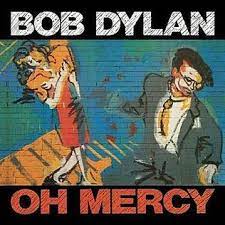
That’s about all I have on freshman year. The last thing is about the featured image for this post, which is the album cover for Bob Dylan’s Oh Mercy. I have written about The Pogues quite a bit, but the album I listened to most freshman year was Oh Mercy. After geology class had a break before lunch and would go back and semi-sleep to Oh Mercy. The quad was always empty at that time of day, and this was the best rest I would get. The album still makes me sleepy to this day, and features excellent production from the famed producer Daniel Lanois. So thank you Bob and Daniel.

Dedication: For Fred. And for George–I hope you are enjoying a little electrical banana up there in heaven.

to be continued…

Scenes from Hamilton College I: Meeting Ian and Jake

New Note: It’s been a while since I last posted this piece, and I’m glad to bring it back here as a republication. “Hamilton I” remains one of my favorite entries on the Kyoto Kibbitzer—an early chapter built around friendship, music, and the strange, formative textures of freshman year, especially the central presence of my good friends Ian and Jake, who shaped so much of that time. It’s also one of the more widely read pieces on the site, which I appreciate. Re-reading it now, I’m struck by how much of what came later was already there in embryo: the scenes, the sounds, the late nights, and the people who mattered. As always, thanks for reading.

And I recall the moment
More distant than it seems
When five green queens
On a black bin bag
Meant all the world to me

The Pogues

I attended Hamilton College, and managed to graduate–possibly in linen. At Hamilton I was an English major, and intended to be from when I enrolled. This was a decent choice; however both Hamilton and English were kind of my father’s choices. I also managed to cobble together an Asian Studies minor through the good auspices of my advisor who checked out my credits and told me I could put that together. This was a good call on his part, and even though I kind of stumbled into it, The Asian Studies minor was my choice.

I was pretty unprepared for college. Before going I was asked to fill out a kind of questionnaire to help the college place me with roommates. One of the questions was, are you clean, messy, or in the middle. I chose in the middle, which was sort of a mistake because it turns out men are pigs, and I was cleaner than most. At the same time though it wasn’t a mistake because if I had selected clean I may not have met Ian and Jake. Jake was my roommate, and we lived in a quad. The other two roommates were Brian and Geoff, and although I had a relationship of a sort with both of them freshman year, we were not really on the same page. Jake and I were. Ian was our next door neighbor, and he roomed with Marc Campbell, and two other people. Ian, Jake, and Marc are still in my life.

My parents came with me to upstate New York, and before I moved into the dorm we stayed for a few days in a hotel near campus. I was kind of apprehensive, and spent the days listening to The Pogues and quietly stressing. But when I moved into the quad things were fine. This was mostly because of Jake.

Jake was a bit of a wild character. He was from either New York or Connecticut as I recall, and I think he came from decent money. When I visited his house later that year it was very patrician, for lack of a better word. His father seemed like a super old-school WASP patriarch, and his mother didn’t work I don’t believe. His younger brother held right-wing political views at the time, while Jake was a lefty. This was a point of serious disagreement between the brothers, but other than that the family seemed pretty solid. I believe that his brother has since switched his political views.

I didn’t meet Jake’s family until Thanksgiving however, and got to know him first in the context of the quad. We lived in a dorm called North, on the first floor right by the door. (My buddy John Innes, who joined me at Hamilton from our high school lived in the neighboring dorm Kirkland, and next to that was South.) The door to North would be locked at night, and other dorm folks would regularly misplace their key and crawl through our always open window. Jake and I rarely slept, and I got in the habit of staying up until about five AM. After that I would get a little sleep before first period English class. Then I would attend Geology class, which satisfied some kind of Science graduation credit. For English class I was alert and on top of it, although I was still hand-writing my papers, which changed once I got in the habit of using the computers in the library. English class was small, maybe 12-15 people, whereas Geology was huge and held in a lecture hall. I would go lay down in the back in the aisle and try and sleep. I ended up getting As in almost all my English classes, and a C- in Geology, which was deserved to an extent because of the sleeping. However, the main question on the final was brutal and pretty unfair, which was to draw a seismograph. Literally, draw one, which we had never studied and I did cram for the final. Brutal action. Somehow I still made the honor roll that year, and every year, because of my performance in the humanities.

Jake was an English major as well as far as I recall, I kind of forget, but he knew a lot of the teachers I knew. In any case, we did not bond primarily in the classroom, but in the dorm and then at “Sig,” the frat he was associated with and later pledged. Sig was the alternative frat. I hung out there a bit, but when pledge season started they kind of cracked down on non-pledges attending parties. For Halloween, Jake snuck me in early, and although that night I got a few looks I was good with Jake’s blessing. That night I wore all black with a turtleneck and a paper sign on my back saying “No future for you.” As in the Sex Pistols. I was talking with an older guy, an alum (there were always some alums that hung at the frat parties at Sig) at the party and he said something to the effect of “I like you, but I don’t like your shirt.” OK dude.

That was the same night I believe that inspired the following little ditty I later shared with Jake:

I pissed in the toilet

He pissed in the sink

He said I haven’t got a god above

I haven’t got a drink

Jake later took umbrage with the lines, not the sink part, which was and remains credible, but the god part. I think he is, or was, a believer. In any case, he’s my friend and won’t sue.

I appreciated Jake showing me the ropes at Sig and elsewhere. In the dorm we would play his music–he was into the classics, Beatles and Stones, Kinks, Bowie. We would sing “The Ballad of John and Yoko,” and “Come Together,” mostly the former over and over, no doubt to the annoyance of our roommates. Jake also liked The Pogues, and this made me think even more highly of him.

Jake smoked, Marlboro Reds, and I soon started smoking too, the same brand. This was not out of a desire to be a smoker, but rather as a way to keep my hands occupied and look busy at parties, where I had some difficulty mixing. I picked up, or invented, a little trick where I would fold up the flaps of a cigarette pack so they looked like a paper airplane, and then lob the cigs around the room, usually to any girl that wanted one. This got me some attention and some affection, and I kind of became known for the move. It didn’t get me laid, but at least it was something. Jake and I were fast friends, and hung out a lot in the early part of the year, before he began to branch out. Once he started pledging Sig though I saw less of him, naturally enough I guess.

By the time Jake started pledging, and even before, I was spending more time with Ian. Ian was from Boston and his father was a medical doctor. He lived in a nice house in the suburbs–both Jake and Ian had quite a bit more money than I, a common feature at Hamilton where pretty much everyone had money expect me. I was on a pretty decent scholarship, despite my not so impressive high school record, and could not have afforded the school without the scholarship. I visited Ian once or twice I believe in college, and then stayed with his family for a few months in the fall after college, but that’s a story for a future post.

Ian had a massive record collection in his quad, next door to mine as I have said. I liked Jake’s music, especially “Rebel Rebel,” “Come Dancing,” and The Stones, however his selection was somewhat limited. Ian’s was capacious. He was into bands like The Stone Roses, The Charlatans, Ride, and a bunch of other British bands I didn’t know at the time. But he was really into everything. I spent hours in Ian’s room soaking up his music, and my association with him kind of took over where Dyche Alsaker’s left off. I think it was Ian who also introduced me to Luna, who was coming up at the time and is still one of my favorite bands to this day. Later, in senior year I think, Ian and I had a radio show together and one night we got to play records all night long when a few other people canceled suddenly. I would play The Replacements and the Pogues, and Ian would play his music, but I was also getting deep into the 4AD label and bands like Big Star, This Mortal Coil, and a little known band called The Binsey Poplars (who I’m not sure were even on 4AD), named after a Hopkins poem. But my favorite around that time was Nick Drake, who was on Rykodisc.

Drake is now pretty well known, mostly on the back of his song “Pink Moon,” which was featured on a Volkswagen commercial, but back then he was not well known outside serious music circles. I loved his song “Rider on the Wheel,” and was an evangelist for him, telling all and sundry to listen. Most people didn’t, of course, but the whole move was just odd enough to get a little attention, which I was definitely seeking. (Another friend from that time John mentioned to me a few years ago that I would sit on the front steps of his frat in my trench coat and read a book. I don’t really remember this, but if it’s true it was for sure for attention.) I remember one evening Ian had a kind of band that was playing and I “opened” for them. My act was simply talking about Nick Drake, painting him as a forgotten genius, which he was, and pleading with the crowd to listen. It went over pretty well, like I said probably just because it was different.

Later on, mostly the next year I think, Ian and I went to a few shows in Boston, including The Red House Painters, The Fall, and Love Spit Love. Ian would drive, and blast The Pogues with the window down to stay awake on the way home. Before one of these shows we managed to source a little green, which was enjoyable. We would park, illegally, in some lot Ian knew. In the lot, there were rats.

Jake and I were sort of on the same level–both semi-degenerate English majors–but Ian I looked up to. He was definitely the leader in the friendship, although he must have seen something in me because we hung out a fair bit. Ian was also friends with Marc, but he was perhaps closer to another group of guys who lived in two adjacent quads on the third floor. This included John and a guy called Will. I would go up there too, and Will would ask “what Dead do you want to listen to?” I always went with Reckoning because I liked the country-folk sound and the song “It Must Have Been the Roses.” I liked the third floor guys too, especially John.

Next door to Jake and my quad was Adam and Basmo. Adam and Basmo (a nickname) were seniors who for some reason decided to stay in what was basically a freshman dorm. Adam was cool, but pretty grown up. Basmo was still a kid, and loved to get high. Loved to get high. Early on in the year he would come over and ask “anyone want to get stoned and session?” A session, it turned out, was you would smoke, put on The Beatles, and watch Bugs Bunny or something with the sound down. The idea was the music would synch up with the cartoon and it would be hysterical. It totally worked, although I just liked to listen to music and bullshit rather than session. Real heads will remember the session. (Jake told me that sadly Basmo later took his own life as a result of the worsening effects of ef. That was really too bad because Basmo was just a pure open-hearted soul.) So basically we would get stoned when we could, smoke Reds, and stay up all night and listen to music, which was a pretty decent life all in all. Jake and Ian took me in, and made the first part of freshman year so much better in all ways than it would have been if I hadn’t known them.

Dedication: For Ian and Jake, for seeing something in me, and helping make me a little somebody.

to be continued…

Note: If you liked this piece, you may other like the other pieces below in the Hamilton series.

On The X-Files: The Paranoid Style of 1990s Television

Note: This reflection comes out of a long-standing fascination with The X-Files, one of the most distinctive television shows of the 1990s. When it first aired, the series managed to occupy a strange and compelling middle ground between science fiction, horror, conspiracy culture, and something closer to philosophical inquiry. Week after week the show asked the same unsettling question from slightly different angles: what if the world is not quite as stable or intelligible as we assume?

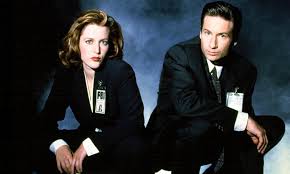
What made the series especially effective was the dynamic between Fox Mulder and Dana Scully. Mulder represented the pull of belief, intuition, and pattern-seeking; Scully stood for skepticism, evidence, and scientific restraint. The tension between those two orientations created a kind of philosophical engine that powered the show for many seasons.

The major episode discussed here is one of the early “mythology-adjacent” stories that sits near the boundary between the show’s monster-of-the-week format and its deeper conspiratorial arc. Watching it again years later, what stands out is not only the eerie storytelling but also the way the series captured a particular cultural mood of the 1990s — a time when technology was expanding rapidly, institutions were increasingly distrusted, and the possibility of hidden systems operating beneath the surface of ordinary life felt strangely plausible.

In that sense, The X-Files was never just about aliens or government cover-ups. It was about uncertainty itself — the uneasy space between explanation and mystery.

Epigraph:

“Autorerotic asphyxiation is not a pleasant way to go, Mr. Mulder.”

Clyde Bruckman, The X-Files

The X-Files is my second favorite television show of all time, behind only The Wire, and it’s not close.

That may sound like a bold claim given the sheer amount of television produced over the past thirty years, but for those of us who came of age in the 1990s the show hit a nerve that very few cultural artifacts ever have. It wasn’t just entertaining. It was atmospheric. It was unsettling. It felt like it was plugged directly into the cultural nervous system of the time.

To understand why, you have to begin with a simple generational fact. I was born in 1974, just eleven short years after the assassination of John F. Kennedy. That event cast a shadow that lingered for decades. My parents’ generation and my grandparents’ generation were deeply scarred by it in ways that people my age never fully understood. Something in the national psyche broke that day. Trust in institutions never really recovered.

Historians later described this cultural mood as “The Paranoid Style of American Politics,” borrowing the famous phrase from the essay by Richard Hofstadter. Whether one agreed with Hofstadter or not, the phrase stuck because it captured a very real undercurrent in American life: the suspicion that unseen forces were operating behind the scenes.

The genius of The X-Files was that it leaned directly into that atmosphere. It didn’t treat paranoia as pathology. It treated it as narrative fuel.


Discovering the Show

I was an early adopter.

The show premiered in 1993, and by 1994 I was already watching it in the dorms at Hamilton College with a group of friends. If possible we’d get a little baked first, which in hindsight may have been perfect. The X-Files is a show that rewards slightly altered states of perception.

At first it was something of a cult discovery. A few people watched it religiously while others barely knew it existed. But by the time the second and third seasons rolled around it had become a communal ritual. Thursday nights meant Mulder and Scully.

The chemistry between the leads was immediately apparent.

David Duchovny and Gillian Anderson had what we would now call “shipping chemistry,” although that term didn’t really exist yet. We simply knew that something electric was happening on screen. The characters worked because they embodied opposing ways of understanding the world. Mulder believed everything. Scully was more skeptical. Between them the truth hovered in an unresolved middle ground.

The show was also disciplined enough to hold that tension for years. In an era before streaming algorithms and social-media speculation, viewers waited week to week to see how the relationship evolved.

Hovering over them was their boss, the enigmatic Walter Skinner. For several seasons it was impossible to tell whether Skinner was helping Mulder and Scully or quietly managing them on behalf of darker forces. That ambiguity was one of the show’s greatest pleasures.

In a delightful twist of pop-culture irony, the actor Mitch Pileggi was at one point named TV’s Sexiest Man by a glossy magazine. Which is hilarious when you remember that Skinner is essentially a bald FBI bureaucrat in a gray suit. Such was the cultural power of the show.


The Smoking Man

Then there was the figure lurking in the shadows.

The Cigarette Smoking Man is one of the great villains in television history. Played with eerie understatement by William B. Davis, he appeared whenever the conspiracy thickened.

He looks exactly like the kind of man who would be at the center of a decades-long government cover-up. Three packs a day. Cheap cologne. A lingering Jameson hangover. The sense that he spends most of his time in dim Washington parking garages and windowless offices and only emerges from his crypt when the conspiracy requires it.

It’s a performance so physical that you can almost smell the character through the screen.


Three Essential Episodes

Every long-running show has defining episodes, and The X-Files produced dozens. But three in particular illustrate what made the series so special.

The first is the pilot itself, which introduces Mulder investigating mysterious disappearances in the Oregon woods. A key moment occurs when the agents experience missing time on a dark forest road. The scene establishes the tone immediately: eerie, ambiguous, and faintly plausible.

The second is Fallen Angel, an early classic that introduces the lovable conspiracy obsessive Max Fenig. Max’s jittery paranoia captures the spirit of the show perfectly. When he remarks that “someone’s always watching, Mr. Mulder,” it feels less like dialogue than like a thesis statement.

The third is the masterpiece of dark humor, Clyde Bruckman’s Final Repose, written by the great Darius Morgan. In it, a weary insurance salesman named Clyde Bruckman discovers that he can foresee the exact circumstances of people’s deaths. Played beautifully by Peter Boyle, the character delivers a hilarious and oddly touching performance. It is Bruckman who also delivers the immortal line that also gives us our epigraph: “Autorerotic asphyxiation is not a pleasant way to go, Mr. Mulder.” Run roh. Take that belt off Fox baby.

What makes the episode remarkable is that it gently mocks the show’s own hero. Mulder spends the entire series searching for hidden meaning in the universe. Clyde Bruckman, by contrast, believes life is largely arbitrary and tragic.

His prediction of Mulder’s death—immortalized in the epigraph above—is both absurd and strangely profound. It’s also a sign that by Season Three the show had gained enough confidence to poke fun at itself.


When the Mythology Expanded

Like many successful serialized shows, The X-Files eventually struggled under the weight of its own mythology. One of the central narrative engines involved Mulder’s missing sister, Samantha Mulder. Early on, the mystery added emotional depth to Mulder’s obsession with the paranormal.

But as the seasons progressed the storyline became increasingly convoluted. Samantha might have been abducted by aliens, or replaced by a clone, or transformed into something else entirely. Meanwhile the conspiracy expanded to include frozen alien ships in Siberian ice, shadowy government syndicates, and the infamous black-oil virus that seemed capable of possessing human hosts.

At a certain point the mythology began to chase its own tail.

Then, as the final blow, David Duchovny left the show. Gillian Anderson remained excellent, but The X-Files was always fundamentally a two-hander. Without Mulder and Scully together the balance of the series shifted in ways it never fully recovered from.


Why It Still Matters

And yet, for all the narrative tangles of the later seasons, the early years of The X-Files remain extraordinary television.

The show captured a very particular moment in cultural history: the twilight of the pre-internet era, when conspiracy theories spread through late-night radio programs, photocopied newsletters, and whispered conversations rather than social media feeds.

It was a time when the idea that powerful institutions might be hiding enormous secrets still felt plausible rather than merely exhausting.

For a few seasons in the 1990s, Thursday nights belonged to the weirdest, smartest, most paranoid show on television.

The truth, as Mulder kept reminding us, was out there

Dedication

For Dana and Fox. You know we still want to know what went down in that motel room baby.

Note: If you enjoyed this essay you may also enjoy the two essays below, both of which, in different ways, take up themes of intrigue and mystery.