Scenes from Hamilton College III: Sophomore Year I (with cameos from Sonic the Hedgehog, Ani DiFranco, and Candle Time)

Note: In Part I and Part II of this series I wrote about my freshman year at Hamilton. Part III will take up sophomore year where I lived down the hill in Bundy Dorm.

All you ladies and gentlemen
Who made this all so probable

Big Star

After freshman year I returned back to Washington State for the summer. I have written glancingly about this period, suffice it to say I was not up to much. Still broke, I did have a short lived girlfriend but she dumped me mid-summer. I spent a few days moping around playing nerf golf at my parents’ house, then got over it. I don’t remember much else from that summer except that I got back in good running shape, and when I got back to campus in the fall I turned out, once again, for the running team.

One thing I neglected to mention in my pieces on freshman year is that I actually competed on the JV running team at Hamilton for a time and ran a few races. I was not in great shape that year, and JV was not that exciting. As I have written, I had other pursuits. Sophomore year, however, I was in better shape and had a shot at making the top five. The only other runner I recall was called Harry. I thought Harry lived in Sig, but Jake tells me he was in a frat called THX, about which I remember nothing. In any case, Jake knew him. Harry was a hardcore runner and scolded me about my lifestyle, wanting me to devote myself to the team. I was not going to do this, but I was able to run with Harry and the first team for a number of practices. In the long run though it didn’t work out–they ran mornings and afternoons, and my summer shape wasn’t going to carry me through a hyper-competitive season. I was a good runner, but I just didn’t have the drive. Sooner or later I left the team, this time for good. I look back fondly on Harry however–he was right; I was lazy and needed a kick in the rear.

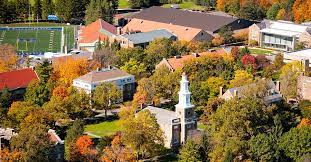
As a sophomore I roomed in a double with John Innes (there were two John’s in my friend group, John Innes and John Slack), in a dorm halfway down the hill to Clinton called Bundy. Marc Campbell was also on our floor. Ian was living in his frat, but spent a lot of time in Bundy as he was dating Ann, someone who I became close with over the year as well. Jake was over at Sig and I didn’t see much of him, mostly for geographic reasons.

Bundy was a way different story than North. First, I spent a lot more time in my dorm room with John Innes. Innes would watch the soap opera Days of Our Lives and insist I watched it too. I could have cared less, but watched it to be a good friend. We also played Sega, almost exclusively Sonic the Hedgehog and Sega Hockey, at which John usually beat me (however not in the biggest matches, as I’ll get to later). Innes liked rap music and had a pretty good collection. I could get into some of the rap; I liked Public Enemy, KRS One, De La Soul, and a minor band called Basehead which wasn’t really rap. However I was by then deep into what would today be described as alternative or indie music, so Innes’ taste and mine mostly diverged. We were both good about sharing airtime though, so he got to know my music and I his.

The record I listened to the most, by far, that year was Big Star Third: Sister Lovers from the then mostly forgotten American band Big Star. I loved this record (which was on Rykodisc), and played it endlessly while trying to advance in Sonic the Hedgehog. I stuck my mattress in the closet and hung a tapestry over the door area so I had a little cubby to sleep in. Overall, the whole scene was much more domestic than the pretty chaotic North.

Other than Marc and John Innes, I don’t remember exactly who the other guys who were on our floor, but I’ve been reminded that John Slack was one of them. Ian and Jake were living in frats, and over the year I got to know a new crew of people, including several girls. These included firstly Jenny and Jen, who lived in the female area on our same floor (maybe the second floor? Innes will remember). Innes and I became very close to Jenny and Jen, and spent almost every evening hanging out in their room doing something called “Candle Time.” Candle Time was pretty much exactly what it sounds like–we would turn down the lights, light candles (which was probably against school rules) and talk for hours. We would talk about our days, people and goings on in the dorm, and just life in general. It was really wholesome and again, a major change from North.

Candle Time lasted, in my recollection, for a number of months, but not all through the year. Despite spending so much time together, there was no romantic involvement, although I believe Innes and Jen did get together later, and briefly; I’m not really sure. I think it was supposed by some that I myself had a crush on Jen; however although I liked her a lot this was not the case. I did have a little bit of a crush on Jenny, but she had other people who were interested in her and we all hung out so nothing ever happened. That was fine–it was actually really nice to just have close female friends with no expectations.

Jenny and Jen were both from the upstate New York area, broader Rochester as I recall. My guess is they came from relatively less money than many of our classmates, who came from preppier areas, and schools. I actually visited Jenny’s house once or twice, and I think a bunch of us slept over once and watched the film Glengarry Glen Ross. These included Amy Holland, who was one of the coolest chicks around. She was called “Red,” on account of her red hair, and was totally my speed. Everyone else fell asleep during the movie except Amy and I and as I recall she loved what is, to be fair, a pretty stereotypically male film.

Jenny’s house was nice, but seemed pretty middle-class and maybe that’s part of why we all bonded–the richer kids, although I obviously hung around with them a lot, had their own life ways to some extent. I remember one evening Jenny and I went to see the band The New Dylans on campus. I thought they were a good band, and had found their cassette at the campus radio station where John Innes and I had a sports talk show. Their record has a song I liked called “The Prodigal Son Returns Today.” They sounded kind of like a minor league Big Head Todd and the Monsters or something, and are kind of dated today if I’m honest, but I was excited for the show. At first it was pretty full, but people left little by little and by the end it was just me and Jenny. The band played their hearts out for the two of us, including encores! After the show, I joined them for a cigarette outside and chatted. I told them that I really liked the show and they said thanks and all with no mention of the fact that the venue was totally empty. That’s professionalism, I thought, and I imagined that as a band trying to break through playing small colleges and sending cassettes to radio stations they’d had their share of ups and downs. I doubt they are still around, but if so I’m rooting for you guys!

A bigger star that played Hamilton was Ani DiFranco. I saw Ani several times, both on campus and off, as she was pretty huge in New York State at the time. She had not yet released Dilate,” which came in 1996 and was her mainstream breakthrough to the extent she ever had one, but she was a star on campus, mostly with the women but with a lot of the guys too. Ani put on a great show, and I totally got the appeal. She was kind of the Jeff Rosenstock of the day I suppose.

Shawn Colvin also came, and I knew some of the people who were assigned to take care of her backstage. They reported that she was a total asshole, asked for coke, and generally threw her weight around big time. Shawn Colvin was OK, but no so great that she could act like a diva I don’t think. Full on divas are acceptable-like Joni Mitchell might be a diva and what are you going to do–but minor league divas pretty much suck.

Anyway, like I say over the year although we still saw each other, I saw less of Jenny and Jen, and more of other people like Ann, Amy, and Matt Thornton. I’m not sure where Matt lived, maybe Bundy and maybe not, and I don’t recall either how or when I met him, but we soon became fast friends. Matt was full speed ahead, and argumentative, but I can handle my own in an argument, and I really liked him. Matt ran with an interesting group of friends, including several Asian-Americans who I believe lived on the Kirkland side of campus. Hamilton used to be a guys’ school and Kirkland was the attached girls’ school. Then at some point they merged, but the Kirkland side and the old Hamilton side always felt distinct to me and were separated by a bridge.

One time we were talking about going to New York and Matt told me about some clubs for Asians that he was interested in. Matt’s friends told him that he (or I) could not go to these clubs because we would get the shit kicked out of us. Had to be at least half-Asian apparently. But I think Matt went to these kinds of clubs anyway and did not get beat up, because he just sort of rolled that way.

Matt and I and Ian did go to New York eventually, and spent a few days uptown at some person’s apartment where I commandeered a prime sleeping space and we ordered pizza three times a day. I believe this was actually after graduation, as Matt transferred before graduating from Hamilton.

As I mentioned in an earlier piece, this was also the year Ian and I went to Boston to see music shows. We went with a fellow called Cale who was a freshman. Cale was cool, and also we liked him because of his name, reminiscent of John Cale, violist for the Velvet Underground who Ian and I were both fans of. With Ian and Cale I felt like I was in good company–we were all very simpatico.

My academic performance sophomore year was just OK. I took more English classes, and also started to take some History classes including some Asian History with Tom Wilson. Tom Wilson was a good professor, but I think he was one of those guys who really saw himself at U. Chicago or Yale or something. A lot of academics are like that. Nevertheless, Tom was good–tough but fair–and pushed me to really deepen my research abilities. Outside of Tom’s class, my effort was a little mixed, and during the dead of winter I skipped some morning classes because the climb up the hill was just too tough. The winters in upstate New York are pretty brutal, and I preferred to stay local down in Bundy a lot of the time.

One more thing I remember from this year is starting, and then dropping, photography class. I had an old camera that barely worked, and was interested in learning how to develop film in a darkroom. However, photography class was really expensive because we had to regularly buy these huge rolls of film which cost like $50 at the school store. A classmate I’ll call C. to protect his identity told me, “just tuck your pants into your socks and drop the film down your pants and walk out. That’s what I do.” But I wasn’t going to steal film all year and there was no way I could pay the outrageous costs. On top of that, I wasn’t all that good–certainly my classmates outclassed me, crappy camera or not. So I dropped it after six weeks or so; however now that I think about it I may well have met Matt Thornton in that exact class. It’s a possibility.

Note: That will do it for Part III. In Part IV I’ll write more about my friendship with Ann as well as the Sports Talk Show we did on the Hamilton radio station.

Dedication: For the whole Bundy dorm, actually. It was a pretty chill year.

to be continued…

Scenes from Hamilton College II: Freshman Year Continued (with cameos from Honey, the Print Shop, and Billy Bragg)

Note: In Part I of this series I wrote about my freshman year at Hamilton, focusing on two friends, Ian and Jake. Part II will branch out and cover a fairly wide, and somewhat random, set of memories.

Epigraph:

I had an uncle who once played for Red Star Belgrade
He said some things are really best left unspoken
But I prefer it all to be out in the open

Billy Bragg

I have already written quite a bit about the characters who lived in the North Dorm freshman year at Hamilton, however there are a few more to cover. First were the first floor stoners. Basmo was a stoner, and he lived on my side of the dorm, but on the other side of the first floor lived the hardcore stoners. This consisted of a quad of guys whose names I don’t totally recall, but one was Peter Kimber, and who got baked at all waking hours and played Roger Waters’ Amused to Death solo on repeat. Next to them, in a double I believe, lived Keys. Keys’ actual name was Caleb, but everyone called him Keys because of the six to eight keys he had dangling from around his neck at all times. What on earth did he need all those keys for? One for the dorm, maybe one for a car (although he should not have been driving at all because he was the single biggest stoner in the dorm and perhaps on campus), what else? I can’t imagine.

Keys and I were not that close, but I did see a lot of him because we had the same job, which was in the school print shop. I don’t know if print shops still exist in the same form in this digital age, but back then the print shop was busy as. We held the campus down. There were two slightly older women who worked at the print shop full-time and three of us students helping out. The full-timers were Sally and Deb. Deb was the boss, and she was kind of motherly and kind to the students. Sally was nice too, but she could be tough. She would bark at us when we made mistakes, which was often because we were running large machines that would glitch pretty frequently. Sally was both the little sister to Deb and also the enforcer. I liked them both, even though Deb ended up firing me, which I’ll get to later.

So Keys would come in lit every day and sort of fumble through his work, which consisted mostly of stapling and collating. I was trusted more than Keys, with good reason, so I ran the machines, but I also did stapling and collating. We printed things for professors, menus for the dining halls, the school newsletter, and a bunch of other stuff. The third student was a girl whose name I don’t recall, and she was a super-hardcore feminist. Everything in the world that was wrong was men’s fault, and it was her only topic. She didn’t seem to dislike me so much as just want to lecture Keys and I all through work, which usually lasted two to three hours in the afternoon, about the ills of men. I was, and am, up for a little feminist theory but Keys was no help and I don’t even think he noticed her, so it was kind of just me and her. Serious feminism and collating are, perhaps, not best paired.

I didn’t originally want the print shop job. I needed work, and there was kind of an intake for all working students where you put your first choice. I put library, but didn’t get the gig. John Innes put audio/video and he got it, which meant he often had to get up early to set up videos for professor’s classes. I would not have been good at that. The print shop was more my speed, but eventually it got really repetitive and I started skipping work more and more. I would go walk in the woods behind campus, or just drink coffee with about a half cup of honey and hang around after class. I also improved as a student through the year, and took my English classes pretty seriously so I was spending more time in the library, although still not sleeping much.

My money situation was tight, although not as bad as it would later be during my junior year abroad in New Zealand where it was super tight. I had a little income from the print shop and my parents sent a small allowance once in a while, but I usually didn’t have more than about 15 bucks in my pocket at any one time. What money I did have went mostly to CDs, as many as I could afford. I had a dining hall pass, but the dining hall food was not really my style so I mostly lived on toast and coffee with honey. Then at night people would order pizza from a local shop, but that was too expensive for me so I would get “friend dough.” Fried dough is just what it sounds like–deep friend pizza dough with powdered sugar, and it cost about $1.50 for a big box. Not the best diet, but it was what I could afford.

One time the father of one of my classmates from high school visited for some reason; he must have been in the area. We met for lunch, and when he left he handed me $100 bucks. This was a serious windfall, and I immediately blew it on CDs, perhaps Neil Young’s Harvest Moon and others. My CD collection, although no rival to Ian’s was slowly increasing and I liked it.

Back in the dorm, in addition to the guys I have discussed, there were also girls, who lived on the second and fourth floor. I got to know the girls directly above us on the second floor pretty well, although not many of the others in the dorm. Among these was Rochelle, who was the girl I was closest to. Rochelle was, I think, from New York, and when she arrived on campus she made a big deal about having a boyfriend. This didn’t last long however, and although I didn’t want her to be my girlfriend I did like hanging out with her. She kind of mothered me a bit though, which I wasn’t so into, because I was going to do what I was going to do. I still have her contact, and I believe she might even read this piece! I think I also met Marie Bishko freshman year, and Marie is someone I thought was really cool.

I don’t really remember any us North guys hooking up with the second floor girls, but it must of happened. Another incident which occurred around this time had to do with my roommate B. and his girlfriend from high school. Like Rochelle, and even more so, he made a big deal of his girlfriend and told us all kind of semi-salacious details. Then one day he told us she was coming to visit and he wanted the three of us in the quad to go to a hotel for a night. I told him sure, if you pay, but he said no. He was dead serious but we told him to forget it, so sure enough she arrived and they hooked up while we all pretended to sleep. That only happened once, thankfully, and it still strikes me as pretty odd. He later broke up with her and fell in love with a Jewish girl, but that didn’t last either because he wasn’t Jewish.

I mentioned in Part I that Jake pledged the fraternity Sig. Ian and John Slack also pledged, Chi Psi (I had to Google the spelling). I spent some time at Chi Psi as well as, where I was alleged to sit on the steps in my trench coat, but I preferred Sig. There was another frat called Deke, and that was where the wildest, and the worst parties were. At Deke there was copious amounts of Milwaukee’s Best (the fabled Beast) and jungle juice. The parties were terrible, but there was a pool table which was a bonus. I didn’t drink much at college, mostly because I had no money, but I did drink some at Deke, with exactly the results you would imagine. I believe it was at Deke where Marc Campbell pulled off his famous pacification move. I didn’t pledge a frat, and I was and remain glad I didn’t. Greek life wasn’t for me.

One guy who I believe lived in North was called Gabe. Gabe was super popular at first in freshman year, and he played guitar on the grass outside the dorm. He was pretty good and he would play “Sexuality” by Billy Bragg which was surprisingly popular in 1992. People, including girls, would flock around him, but over time something seemed to happen to Gabe. He ran for class president and lost to a guy called Kerry who was African American. Kerry lived down the hill in a different part of campus, and he ran really hard for the job. I think Gabe’s ran mostly on a music ticket, and although he got a lot of votes I think he came in second. He may have taken this hard, because he kind of faded into the background, or maybe he just changed up his action. I think I voted, but may have voted for Kerry.

As I mentioned, Jake and I saw less of one another once he started pledging, however we still saw each other in English class and in the English building. We overlapped professors, although he knew some I did not. The two best professors in the English department were George Balkhe and Fred Wagner. Balkhe was still in his prime, maybe late 50’s, whereas Wagner was older and I believe in a semi-emeritus role. I wasn’t even sure I ever took a class from Wagner, but it’s been confirmed that I did, Modern British and American Drama, which makes sense. I didn’t much like 20th century American plays, as plays are mostly blueprints anyway. In any case, Mr. Wagner knew me early in the year because Balkhe praised my reading knowledge to him. Jake and I would go to Wagner’s house, also down the hill toward the town of Clinton (the closest town to Hamilton, about a 15 minute walk), and I recall once we played him the song “Marlene Dietrich’s Favorite Poem” by Peter Murphy, formerly of Bauhaus, with Peter Murphy murmuring “sad-eyed pearl and drop lips…”

Peter Murphy is super underrated by the way, and Wagner liked the song, which just showed how cool he was.

I took a few classes with Balkhe, and we studied poems, and novels–typical choices mostly. I enjoyed these and read most of them, even Faulkner who is really dense. For the ones I didn’t I just faked it. Like I said, Balkhe thought I was amazing because on the first day of class he asked for a list of books we had read and I listed like 200. These were mostly Agatha Christie and John LeCarre and such, but I guess it was good enough. Balhke liked the singer Donovan and the song “Mellow Yellow.”

Electrical banana
Is gonna be a sudden craze

(I later saw Donovan at a new age convention in Boston when I was visiting Ian after college, which I will recount later).

Wagner and Balkhe are both passed away now, so rest in peace to two great English teachers and mentors.

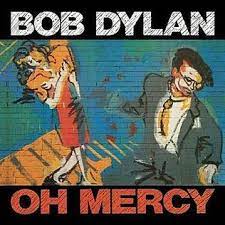
That’s about all I have on freshman year. The last thing is about the featured image for this post, which is the album cover for Bob Dylan’s Oh Mercy. I have written about The Pogues quite a bit, but the album I listened to most freshman year was Oh Mercy. After geology class had a break before lunch and would go back and semi-sleep to Oh Mercy. The quad was always empty at that time of day, and this was the best rest I would get. The album still makes me sleepy to this day, and features excellent production from the famed producer Daniel Lanois. So thank you Bob and Daniel.

Dedication: For Fred. And for George–I hope you are enjoying a little electrical banana up there in heaven.

to be continued…

Scenes from Hamilton College I: Meeting Ian and Jake

New Note: It’s been a while since I last posted this piece, and I’m glad to bring it back here as a republication. “Hamilton I” remains one of my favorite entries on the Kyoto Kibbitzer—an early chapter built around friendship, music, and the strange, formative textures of freshman year, especially the central presence of my good friends Ian and Jake, who shaped so much of that time. It’s also one of the more widely read pieces on the site, which I appreciate. Re-reading it now, I’m struck by how much of what came later was already there in embryo: the scenes, the sounds, the late nights, and the people who mattered. As always, thanks for reading.

And I recall the moment
More distant than it seems
When five green queens
On a black bin bag
Meant all the world to me

The Pogues

I attended Hamilton College, and managed to graduate–possibly in linen. At Hamilton I was an English major, and intended to be from when I enrolled. This was a decent choice; however both Hamilton and English were kind of my father’s choices. I also managed to cobble together an Asian Studies minor through the good auspices of my advisor who checked out my credits and told me I could put that together. This was a good call on his part, and even though I kind of stumbled into it, The Asian Studies minor was my choice.

I was pretty unprepared for college. Before going I was asked to fill out a kind of questionnaire to help the college place me with roommates. One of the questions was, are you clean, messy, or in the middle. I chose in the middle, which was sort of a mistake because it turns out men are pigs, and I was cleaner than most. At the same time though it wasn’t a mistake because if I had selected clean I may not have met Ian and Jake. Jake was my roommate, and we lived in a quad. The other two roommates were Brian and Geoff, and although I had a relationship of a sort with both of them freshman year, we were not really on the same page. Jake and I were. Ian was our next door neighbor, and he roomed with Marc Campbell, and two other people. Ian, Jake, and Marc are still in my life.

My parents came with me to upstate New York, and before I moved into the dorm we stayed for a few days in a hotel near campus. I was kind of apprehensive, and spent the days listening to The Pogues and quietly stressing. But when I moved into the quad things were fine. This was mostly because of Jake.

Jake was a bit of a wild character. He was from either New York or Connecticut as I recall, and I think he came from decent money. When I visited his house later that year it was very patrician, for lack of a better word. His father seemed like a super old-school WASP patriarch, and his mother didn’t work I don’t believe. His younger brother held right-wing political views at the time, while Jake was a lefty. This was a point of serious disagreement between the brothers, but other than that the family seemed pretty solid. I believe that his brother has since switched his political views.

I didn’t meet Jake’s family until Thanksgiving however, and got to know him first in the context of the quad. We lived in a dorm called North, on the first floor right by the door. (My buddy John Innes, who joined me at Hamilton from our high school lived in the neighboring dorm Kirkland, and next to that was South.) The door to North would be locked at night, and other dorm folks would regularly misplace their key and crawl through our always open window. Jake and I rarely slept, and I got in the habit of staying up until about five AM. After that I would get a little sleep before first period English class. Then I would attend Geology class, which satisfied some kind of Science graduation credit. For English class I was alert and on top of it, although I was still hand-writing my papers, which changed once I got in the habit of using the computers in the library. English class was small, maybe 12-15 people, whereas Geology was huge and held in a lecture hall. I would go lay down in the back in the aisle and try and sleep. I ended up getting As in almost all my English classes, and a C- in Geology, which was deserved to an extent because of the sleeping. However, the main question on the final was brutal and pretty unfair, which was to draw a seismograph. Literally, draw one, which we had never studied and I did cram for the final. Brutal action. Somehow I still made the honor roll that year, and every year, because of my performance in the humanities.

Jake was an English major as well as far as I recall, I kind of forget, but he knew a lot of the teachers I knew. In any case, we did not bond primarily in the classroom, but in the dorm and then at “Sig,” the frat he was associated with and later pledged. Sig was the alternative frat. I hung out there a bit, but when pledge season started they kind of cracked down on non-pledges attending parties. For Halloween, Jake snuck me in early, and although that night I got a few looks I was good with Jake’s blessing. That night I wore all black with a turtleneck and a paper sign on my back saying “No future for you.” As in the Sex Pistols. I was talking with an older guy, an alum (there were always some alums that hung at the frat parties at Sig) at the party and he said something to the effect of “I like you, but I don’t like your shirt.” OK dude.

That was the same night I believe that inspired the following little ditty I later shared with Jake:

I pissed in the toilet

He pissed in the sink

He said I haven’t got a god above

I haven’t got a drink

Jake later took umbrage with the lines, not the sink part, which was and remains credible, but the god part. I think he is, or was, a believer. In any case, he’s my friend and won’t sue.

I appreciated Jake showing me the ropes at Sig and elsewhere. In the dorm we would play his music–he was into the classics, Beatles and Stones, Kinks, Bowie. We would sing “The Ballad of John and Yoko,” and “Come Together,” mostly the former over and over, no doubt to the annoyance of our roommates. Jake also liked The Pogues, and this made me think even more highly of him.

Jake smoked, Marlboro Reds, and I soon started smoking too, the same brand. This was not out of a desire to be a smoker, but rather as a way to keep my hands occupied and look busy at parties, where I had some difficulty mixing. I picked up, or invented, a little trick where I would fold up the flaps of a cigarette pack so they looked like a paper airplane, and then lob the cigs around the room, usually to any girl that wanted one. This got me some attention and some affection, and I kind of became known for the move. It didn’t get me laid, but at least it was something. Jake and I were fast friends, and hung out a lot in the early part of the year, before he began to branch out. Once he started pledging Sig though I saw less of him, naturally enough I guess.

By the time Jake started pledging, and even before, I was spending more time with Ian. Ian was from Boston and his father was a medical doctor. He lived in a nice house in the suburbs–both Jake and Ian had quite a bit more money than I, a common feature at Hamilton where pretty much everyone had money expect me. I was on a pretty decent scholarship, despite my not so impressive high school record, and could not have afforded the school without the scholarship. I visited Ian once or twice I believe in college, and then stayed with his family for a few months in the fall after college, but that’s a story for a future post.

Ian had a massive record collection in his quad, next door to mine as I have said. I liked Jake’s music, especially “Rebel Rebel,” “Come Dancing,” and The Stones, however his selection was somewhat limited. Ian’s was capacious. He was into bands like The Stone Roses, The Charlatans, Ride, and a bunch of other British bands I didn’t know at the time. But he was really into everything. I spent hours in Ian’s room soaking up his music, and my association with him kind of took over where Dyche Alsaker’s left off. I think it was Ian who also introduced me to Luna, who was coming up at the time and is still one of my favorite bands to this day. Later, in senior year I think, Ian and I had a radio show together and one night we got to play records all night long when a few other people canceled suddenly. I would play The Replacements and the Pogues, and Ian would play his music, but I was also getting deep into the 4AD label and bands like Big Star, This Mortal Coil, and a little known band called The Binsey Poplars (who I’m not sure were even on 4AD), named after a Hopkins poem. But my favorite around that time was Nick Drake, who was on Rykodisc.

Drake is now pretty well known, mostly on the back of his song “Pink Moon,” which was featured on a Volkswagen commercial, but back then he was not well known outside serious music circles. I loved his song “Rider on the Wheel,” and was an evangelist for him, telling all and sundry to listen. Most people didn’t, of course, but the whole move was just odd enough to get a little attention, which I was definitely seeking. (Another friend from that time John mentioned to me a few years ago that I would sit on the front steps of his frat in my trench coat and read a book. I don’t really remember this, but if it’s true it was for sure for attention.) I remember one evening Ian had a kind of band that was playing and I “opened” for them. My act was simply talking about Nick Drake, painting him as a forgotten genius, which he was, and pleading with the crowd to listen. It went over pretty well, like I said probably just because it was different.

Later on, mostly the next year I think, Ian and I went to a few shows in Boston, including The Red House Painters, The Fall, and Love Spit Love. Ian would drive, and blast The Pogues with the window down to stay awake on the way home. Before one of these shows we managed to source a little green, which was enjoyable. We would park, illegally, in some lot Ian knew. In the lot, there were rats.

Jake and I were sort of on the same level–both semi-degenerate English majors–but Ian I looked up to. He was definitely the leader in the friendship, although he must have seen something in me because we hung out a fair bit. Ian was also friends with Marc, but he was perhaps closer to another group of guys who lived in two adjacent quads on the third floor. This included John and a guy called Will. I would go up there too, and Will would ask “what Dead do you want to listen to?” I always went with Reckoning because I liked the country-folk sound and the song “It Must Have Been the Roses.” I liked the third floor guys too, especially John.

Next door to Jake and my quad was Adam and Basmo. Adam and Basmo (a nickname) were seniors who for some reason decided to stay in what was basically a freshman dorm. Adam was cool, but pretty grown up. Basmo was still a kid, and loved to get high. Loved to get high. Early on in the year he would come over and ask “anyone want to get stoned and session?” A session, it turned out, was you would smoke, put on The Beatles, and watch Bugs Bunny or something with the sound down. The idea was the music would synch up with the cartoon and it would be hysterical. It totally worked, although I just liked to listen to music and bullshit rather than session. Real heads will remember the session. (Jake told me that sadly Basmo later took his own life as a result of the worsening effects of ef. That was really too bad because Basmo was just a pure open-hearted soul.) So basically we would get stoned when we could, smoke Reds, and stay up all night and listen to music, which was a pretty decent life all in all. Jake and Ian took me in, and made the first part of freshman year so much better in all ways than it would have been if I hadn’t known them.

Dedication: For Ian and Jake, for seeing something in me, and helping make me a little somebody.

to be continued…

Note: If you liked this piece, you may other like the other pieces below in the Hamilton series.

Shotgun in Seth’s Ford Explorer

Note: This piece takes place in Spokane, Washington in the fall of 1991, during our senior year at St. George’s School. CDs were still a relatively new luxury item for teenagers, Zip’s runs counted as real excursions across town, and a hunter green Explorer in the school parking lot could serve as the center of an entire small social world.

Epigraph:

Out with the posse on a night run
Girls on the corner, so let’s have some fun
Donald asked one if she was game
Back Alley Sally was her name
She moved on the car and moved fast
On the window pressed her ass
All at once we heard a crash
Donald’s dick had broke the glass

Ice T

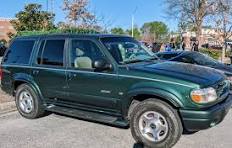
Seth drove a green Ford Explorer, which meant two things: he was always the driver, and John Innes almost always called shotgun.

Ours was a class of twenty-eight boys at St. George’s School, which meant the social landscape was less a battlefield than a small archipelago of cliques. Everyone knew everyone, and everyone more or less supported everyone else. Still, there were natural groupings. Seth, Innes, and I spent a good deal of time together, with Kelly sometimes orbiting the car and Richard Barkley frequently around as well.

The Explorer usually lived in the SGS parking lot behind the lower school. During the day it sat there waiting for the moment seniors could leave campus, which we could do whenever we wanted. When that moment came, Seth’s Jeep became a kind of small republic on wheels.

There were rules, or something close to rules. Seth drove. Innes called shotgun. He cared about it the most and therefore usually got it. Occasionally Barkley or I would challenge him, which would inevitably produce an argument about whether the call had been made properly or whether the timing had been unfair. The exact legal framework of shotgun was never fully settled, but the outcomes were usually predictable.

Inside the Explorer there were CDs everywhere. Not in a messy way—Seth kept the car pretty well—but there were dozens of them, probably stored in one of those large CD wallets that seemed to exist in every car in the early nineties. Seth would sometimes come back from Hastings with six or eight discs at a time. I remember watching those purchases with something close to disbelief. I could rarely afford a CD myself, so when I did manage to acquire something like Tindersticks or Billy Bragg’s Spy vs. Spy, it was a very big deal.

The music rotation in the Explorer was remarkably tolerant. Seth tended to favor Judas Priest and Metallica, while Innes leaned toward Ice-T. Joe Tyllia loved Cat Stevens and so Cat Stevens appeared frequently. I personally preferred Dire Straits at the time, which never quite made the regular rotation, so I generally waited for Warren Zevon or Cat Stevens to come back around. Nobody vetoed anyone else’s music. Whatever disc was in play generally stayed there.

The Explorer had a few regular destinations. State B basketball games were one. Another was Zip’s on the north side of town. Seniors could leave campus whenever they liked, and sometimes that meant simply deciding that a run across Spokane for burgers was necessary. Seth’s house was another stop, as was Hastings, where the CD acquisitions occurred.

Occasionally the driving extended further into the South Hill at night. Sometimes we would pass near Manito Park, though I remember doing those wandering drives more often with a slightly different crew—Dyche, Jonah, Karin, and Lisa. Once that group went to a show by They Might Be Giants, and afterward Kelly reported that the band had stiffed the opening act and paid them only ten dollars. Kelly knew this because his cousin was in the opening band.

The one time I ever took shotgun from John Innes without calling it came on the ride home from the state cross-country meet during our senior year. Our team had finished second by a single point, which felt at the time like the most unfair outcome imaginable. James Johnson had been our first runner, Cam Turner second, and I was third.

When we piled into the Explorer for the three-hour drive back to Spokane, I simply grabbed the seat. No call. No discussion. Just took it. And for that ride home I ran the decks.

For a while Seth’s Explorer was simply part of the landscape of our lives. It sat behind the lower school during the day, appeared at the Coleman house west of the South Hill at night, and carried us between games, fast-food runs, music stores, and wherever else we decided to go.

Then, like most small countries of teenage life, it quietly disappeared

Dedication: For my homies.

On My Brother’s Mike’s Second Wedding

Epigraph

“All we need is just a little patience.”
— Guns N’ Roses


I. Leaving Anyway

The wedding was in June, which was just a little inconvenient for me. School was still in session, and I had to miss work to go. I remember wishing that it had been in August. But once I decided I was going, the resistance fell away. I locked it in, and then I was genuinely excited—mostly to see my family.

I hadn’t seen my mom, Mike, or Pat since January 2018, before COVID. I hadn’t seen my dad since October of that year. That mattered more to me than the logistics or the calendar. So my wife Sachie and I flew from Japan to Seattle, and my son Hugh flew in separately from New Zealand, via Auckland and Los Angeles.

We landed at Sea-Tac and cleared international arrivals quickly. We had a few hours before my parents arrived to pick us up. They had rented a van, partly because it was a three-day event and partly because they were making breakfast on the last morning, which required supplies. While we waited, Sachie and I sat in the only open area we could find outside arrivals. We both needed a cigarette, so we took turns—one of us watching the bags while the other smoked. We bought two Starbucks coffees, which cost sixteen dollars. I ordered an extra shot in each, not realizing the Americanos already contained doubles.

While we were there, a man nearby was clearly overdosing—probably fentanyl, maybe heroin. He was nodding, drooling. The police came first, then EMTs. They all knew him by name. Sylvester. After about an hour, they took him away on a stretcher. No one around reacted much. It felt routine. I was just sad, thinking about how much damage fentanyl has done in the U.S.

I texted my mom. They were running late. Hugh arrived through domestic customs and joined us. When my parents finally came, they looked good—just older, of course. We hugged and walked back through the airport to the van. My dad had forgotten where he’d parked it, so that took a while too.

Once we got moving, things settled. Sachie, Hugh, and I loaded into the van and drove north to Anacortes, about two and a half hours. It was mid-afternoon. Hugh slept most of the way. Conversation came easily. It felt natural, like time hadn’t broken anything, just stretched it.

We had an early dinner at a restaurant on the water in Anacortes. Pat and Sarah drove up from Portland with their three girls and joined us. John Innes and Kristi had been invited but were tired from the drive and didn’t come. I had raw oysters, another seafood dish, and a margarita. My dad ordered one beer and then told the server, “Please bring another one in exactly twelve minutes.” He always does this. He usually has two beers this way; that day he had a third later. I find the whole thing very funny.

I ordered a second drink—a Negroni, which wasn’t on the menu. The waitress said she thought the bartender could figure it out. It arrived with no ice. I considered sending it back but she was busy, so I let it go.

It was sunny. I sat in the sun so Sachie could have the shade. After dinner, Pat, Hugh, the two older girls, and I walked down over some stones to the water for a while. Then we went to a supermarket for beer, wine, and light provisions. I wasn’t sure how I’d sleep—I don’t always sleep well when traveling—so I bought a bottle of wine just in case.

We drove to the lodge where we were staying. It was really nice. Sachie, Hugh, and I had our own apartment. I took a walk behind the lodge to sneak a cigarette. Sachie probably found somewhere to smoke too, but I’m not sure.

Later that evening, we went down to Pat’s room for beers. The girls played on the lawn outside, and Pat chased them around until they were breathless and laughing. Watching him with them, I was struck again by what a great dad he is. I drank wine instead of beer—I was still dealing with a lingering COVID hangover and a newer gluten intolerance—and eventually drifted off and fell asleep on the couch.

That was the first night.


II. Crossing Over

In the morning, I woke first. No one else was up yet. Eventually my mom got up too, and we drove back to the supermarket for coffee. She bought me a pair of sunglasses—nothing fancy, just functional—and it was good to have time with her, talking at length. The coffee place sold Turkish coffee and tried to upsell me on baklava, which I regretted again not being able to eat because of gluten.

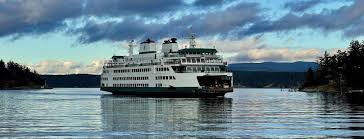
We all had breakfast later. It was underwhelming. I had yogurt. Around eleven, we drove out to the ferry terminal and got into a long line of cars. Sarah handed me one of those popular sparkling drinks in the U.S.—sweet, artificial—and I couldn’t finish it. The wrong kind of sweet.

On the ferry, I fell asleep. People were working on puzzles at tables. My parents stood outside because my mom has vertigo and gets dizzy. When we arrived at Friday Harbor, we went straight to the supermarket. There was no food at the camp except the rehearsal dinner and the wedding dinner, so I stocked up: hummus, corn chips—my mom handed me a huge bag of them—cheese, olives. I also had some soup at the market, which was excellent. I tried to get as much as I could because I knew options would be limited. I also bought wine.

The drive to the camp was supposed to be ten minutes, but the sign was tiny and we missed it. We overshot the turn and had to double back using Google Maps. We arrived mid-afternoon.

The camp was down a dirt road off the highway and much larger than I expected. There was a main lodge, a big lawn, a collection of cabins in different shapes and sizes, a barn where the wedding would be held, and a garden set up for the rehearsal dinner. We used metal push carts to haul our things from the parking lot to the cabins.

My parents were staying in the main lodge. Our cabin was about 150 meters away, next to Pat’s family. It was clean but very small: a tiny kitchen, a bedroom, a cramped closet you could barely move around in, a loft for Hugh, and a bathroom awkwardly placed between the kitchen and the bedroom. Kelly, his wife Courtney, and their kids Jacob and Ang were in another cabin. John and Kristi were nearby as well. Mason was staying in some kind of shared space. Between our cabin and Pat’s was a fire pit, and Sarah had already hung laundry over the chairs.

Smoking was allowed, but only at a few designated ashtrays—those tall black plastic ones on poles. The signs said that if you littered, the fine was one thousand dollars per cigarette butt.

I was a little concerned about whether the food I’d bought would last. I ate chips and hummus. Sachie went into the woods to smoke and put her cigarette butts on top of our garbage can. I told her about the rule and asked her to use the ashtray instead. She did.

Later, we gathered at the lodge. I brought wine. One of the camp staff asked if we wanted to hear the house rules. Mike said, “Lay them on us.” The rule was one open drink at a time in the lodge. It closed at ten, but we could use the nearby fire pits and deck afterward. I put my bottle of wine out of sight. Mike responded to the rule with a polite “Uh-huh, sure,” and I got the impression he had no intention of following it.

My dad, Hugh, and I drove back into town to pick up pizza for dinner. I ordered a cauliflower-crust pizza because of my gluten intolerance. We ordered too much—one pizza each plus one for my mom and Sachie—but that was fine. We ate, talked, and I drank wine. Mike, Colleen, and Felix were there. Colleen took Felix to bed. Later, Sachie asked me to go back to the cabin to get a bottle of white wine. I did, and we drank it. The rule wasn’t enforced. It was a relaxed evening.

That was also when I saw Eric Hillyard for the first time.


III. The FIRST NIGHT AND NEXT MORNING

Eric Hillyard is a character and a half. He’s one of Mike’s good friends from high school at Saint George’s, and one of only two people from that era who were there. The other was Dan Clarke—known as Jerry—who was officiating the wedding. Eric didn’t have a formal role. He didn’t need one.

I gave Eric a big hug when I saw him. I hadn’t seen him since high school. He razzes Mike like nobody else, but he was polite and warm with me and bowed to Sachie. He was drinking quite a bit. After ten, my parents went to bed, and Eric, Mike, and I gathered around the fire pit between the cabins.

Eric smoked a cigarette. I smoked two. We tossed them into the fire pit. Later, back at the cabin, it occurred to me that the cigarettes probably wouldn’t burn up completely. I was pretty cooked, but I walked back in the dark with my phone light, dug around in the ashes, found all three cigarette butts, and put them in the ashtray. I figured I’d just saved Mike and Colleen three thousand dollars.

Eric had told a joke that landed too close to home with Mike. Mike said it went too far. I got the impression this wasn’t the first time. It didn’t blow up, but it didn’t land well either.

I went to bed. Sachie and Hugh were already asleep. I slept fine.

The next morning I woke up first again. I ate more hummus and corn chips and went down to the lodge for coffee to see who was around. Free coffee was available. It was rehearsal day.

I don’t remember much of the day before the rehearsal itself. Earlier, when Hugh and I had gone into town on the pizza run, we’d stopped at a hardware store and bought a frisbee. Hugh played with the little kids—Colleen’s brother’s kids and others—on the lawn. I mostly hung around. Food was running low, and I was looking forward to dinner, which was scheduled for around five.

Before dinner there were family pictures, but before that something happened that I didn’t witness directly. Mike told me about it afterward.

They had hired a photographer, a makeup artist, and a band. All freelancers. The food was provided by the camp staff. Colleen was getting her makeup done and had asked for it to be light. Apparently it wasn’t. Mike saw it and said, “Babe, she pancaked you.” Colleen initially wanted to let it go, but they talked and then fired the makeup artist on the spot. Mike told me about it calmly and said that decision was kind of on him.

I didn’t judge it. What I found myself wondering was how much of her fee she got paid. I didn’t ask. I assumed she was paid for the day. The photographer had traveled a long way. I didn’t know whether the makeup artist was local. I hoped she was.

That evening, people gathered in the garden. Both sides of my family were there, along with Eric, Jerry, Mason, Kelly, John Innes, and others, as well as Colleen’s friends and family. The mood was good. But John was in bad shape.

By his own admission, John was pretty depressed. Both his parents had died, and something unresolved involving his father had happened before his death. He hadn’t been able to say goodbye properly. He’d had to have a few just to get ready to come to dinner and face people.

John and Kristi left early and Mason and I walked to the parking lot for a cigarette. There were ashtrays there, and I didn’t want to risk a fine. Colleen’s friends were smoking weed cigarettes back in the garden. Mason told me about a recent breakup that had been serious. He said he’d been immature for a long time and that the relationship and life had forced him to grow up. From his demeanor, it was clear that was true.

That night I also saw my Uncle Jeff’s third wife for the first time—she is from Mexico. Hugh talked with Jeff about his soccer influencer work. Jeff was impressed and invited Hugh to stay at his place in California anytime, for any length of time. Hugh was flattered and grateful.

Things wrapped up early. There was no repeat of the fire pit scene from the night before. I talked a lot with Amy, but mostly I was with Mason. Then we went back to the cabin and went to bed.


IV. DAN CLARKE/ BILL CLARKE DREAM

Wedding day morning felt like more of the same. I was low on cigarettes. I ate more corn chips and hummus from the seemingly endless bag and got coffee in the lodge and waited. Jerry was around. We talked. He’s had an interesting life—some wildness there—and I could see why Mike likes him so much.

Dan Clarke’s father is Bill Clarke, brother of Janet Mann and brother-in-law of Paul Mann. All Saint George’s power brokers. My dad and Bill Clarke were friendly once, but it went sideways. After that, my dad would complain about him endlessly in the car to my mom. Typical Ross behavior at the time, although I never understood the core issue

At some point that morning I thought about a dream I had years earlier, one that has stuck with me. I’m including it here as I wrote it at the time.

2/27/18:

Two intersecting and yet separate dreams about Bill Clark. These will take some unpacking.

I. I am with my father and someone else in a car on a rainy day. We are parked and Bill Clark is there. He looks like the real Bill Clark as I remember him, overweight and not too smooth. Bill Clark was an intermittent arch-enemy and then sometimes ally of my father at Saint George’s in the 90s. The encounter in the car is the culmination of several encounters with Bill in the dream and some of these have been just he and I. Bill is telling me through these encounters how much he admires our IB program and what I am doing with it. He stresses how important it is that I keep going. At the car, he does this again and looks a little desperate. Because he is so clearly sincere even my father who was his enemy gives him the space to say his piece. For my part, I am grateful for his kind words however the car kind of needs to get moving. I thank him from the window. I think he is about to get wet from the rain.

II. I am meeting with Bill Clark again, however a very different looking Bill Clark. Here he is trim with a wire grey beard cut short and a nice suit. He looks very distinguished and a little intimidating. This Bill Clark is also supportive however is much more firm with me. He tells me that I need to get on my hands and knees and beg and plead for resources. Somehow I get the image of a turtle on its back, open to the sky. This is the posture I need to adopt according to Bill. Nothing can be taken for granted and I have to beg. He is quite clear and I understand the wisdom in what he says.

Comment: This is a super interesting dream that bears unpacking. The two Bill Clarks are polar opposites and the second one is more regal and correct in every way. Why the former enemy of my father? This dream is so packed with symbolism.

Not long after that, it was time to shift gears and get ready for the ceremony.


V. The Ceremony

Before the ceremony began, I practiced rope-tying with Colleen’s brother and Pat. I hadn’t mentioned it earlier, but I had been enlisted to help tie Mike and Colleen’s hands together at the end of the ceremony. I was nervous. I had to go first, and as with the e. e. cummings poem years earlier at Mike’s first weeding, I had limited information. Mike told me it would be fine. Colleen’s brother Kevin and I made a joke of it together. Don’t fuck the whole wedding, bro. We got on well.

The rope was thin. There were several strands, intertwined.

Around four, people gathered again at the lodge. Only certain people had drinks. The rehearsal had gone smoothly. We had a clear walk-out order. My family walked out right after Mike and Colleen so I could be in the front row and step forward when it was my turn.

Everyone took their places. Jerry gave a classic, funny speech about being unprepared. Mike’s vows were sincere. Colleen received a huge round of applause when she walked out.

The ceremony was short. The moment came quickly. I stepped forward and did the tying. The ropes were longer than I expected and hung down toward the ground. I stumbled and nearly tripped over them, but I didn’t fall. Thank God.

The ceremony ended, and we moved directly into the barn for dinner.


VI. The WEDDING DINNER

Dinner started with oysters and a watermelon margarita, which I passed on. I drank red wine and hit it pretty hard. Dinner proper was pasta with sauce made by Colleen’s dad. I couldn’t eat it. I was hungry and ate oysters until there were literally none left. I got the last ones.

I spent some time standing outside with Kelly and his kids, Jacob and Ang. We talked. Inside, I sat with family. Hugh had the pasta and then went over to Colleen’s father to thank him for the sauce, which was a classy move.

After dinner, Kelly, Mason, Sachie, and I went out back for a cigarette. I was out and bummed one from Sachie, and it was the first time I’d ever seen Kelly smoke. I got to know Jacob, who was almost done with high school, and Ang, who was a couple of years younger.

I was wiped and left early. Sachie and Hugh came back later. Colleen’s dad gave a speech. My dad didn’t. Katie—my cousin through Amy—gave a great speech. Katie has Down syndrome, and everyone applauded.

That was the night.


VII. Dispersal

The next morning my parents were making breakfast, and the relatives who had stayed in town came back for it. My mom was prepping food. Amy brought gluten-free bagels. I had half a bagel, some fruit, and coffee and talked with people as they moved in and out. Breakfast was a performance, and it justified the van rental entirely.

We packed up and said goodbye to Mike, Colleen, and Felix. They were heading to a nearby island for a short honeymoon. From there, we drove first to the rental house where Pam and Steve were staying. I did laundry while everyone else went whale watching. I was keyed up about it—laundry had accumulated, and I don’t like traveling with dirty clothes. The door was left open, so I walked to the market for more soup and found my way back.

That evening we went back to the same pizza place. I had another cauliflower-crust pizza, a gluten-free beer that was just okay, and a glass of wine. I sat with Amy, her husband David, Sachie, Hugh, and Katie. I paid attention to Katie—she’s been developing early-onset dementia and I wanted to see how she was doing. My mom paid for dinner, which I appreciated.

We stayed at a hotel five minutes away that my parents had pre-booked. It was a large suite. Sachie and I took one room, my parents took the other, and Hugh slept on a cot in the living room. Hugh, my dad, and I played shuffleboard downstairs. I won. It was very relaxed. I had what was left of a small bottle of vodka, drank some, and poured the rest out.

The next morning we went to the ferry terminal. We ran into Jeff’s family again. My parents talked with them while Sachie, Hugh, and I got coffee and bought chocolates as omiyage. On the ferry back, a young naturalist gave a talk about whales. I listened and didn’t fall asleep this time.

Once we reached Anacortes, we drove the wrong way for about half an hour before my dad realized it. We turned around and headed toward Sea-Tac, staying near the airport. I was starving. We said goodbye to my parents. I cried a little. My mom did too.

At three in the afternoon we went straight to a steakhouse. I had steak, fries, and a Negroni. Hugh and Sachie ate as well. We sat in the regular dining section, not the bar, because Hugh was still twenty. We slept early.

The next morning we took a bus to the airport. Hugh left earlier, and Sachie went with him while I tried to sleep. At the airport, Sachie wanted to buy a specific bottle of whisky as a gift. The plane was already boarding. She ran off and made it back just in time. I was anxious, but she made it.

We flew back to Japan. I went back to work the next day and thanked everyone for covering for me while I was gone.


Dedication

For my family, with love and gratitude.

Note: If you enjoyed this piece, you may also enjoy the pieces below which also take up the topic of weddings.

https://thekyotokibbitzer.com/2025/11/28/on-gillian-welch-and-john-innes-wedding-with-a-cameo-from-two-jewish-revivalists-and-the-sabian-symbols/

On Gillian Welch and John Innes’ Wedding (with a cameo from two Jewish revivalists and the Sabian Symbols)

New Note: My great friend John Innes and his now wife Kristi’s wedding in August 2018 in Redfish Lake, Idaho was ultimately defined not by chronology but by attunement: the way memory moves not as a straight line but as a series of charged returns to people, places, and emotional registers that refuse to sit still. The Idaho weekend is never just “what happened,” but how it felt to drift between social orbits without fully belonging to any single one of them—listening more than participating, absorbing more than declaring, and finding meaning in the small overlaps where lives briefly align before separating again. In that sense, the writing itself behaves like Gillian Welch’s line: “I wanna do right, but not right now”—a suspended ethics of attention, where clarity exists, but timing remains its own force.

Epigraph I:

Take a look on your wedding night
in your wedding book —
see what name I signed.
— Paul Westerberg, “Nobody”

Epigraph II:

I wanna do right / but not right now.
— Gillian Welch, “Look Out Miss Ohio”

Gillian Welch: Look Out Miss Ohio

The singer/ songwriter Gillian Welch writes characters who are honest long before they are virtuous. “I wanna do right, but not right now” from “Look Out Miss Ohio” (Soul Journey, 2007, track 1) isn’t a confession — it’s a stance. The speaker understands the weight of responsibility, feels the moral horizon, knows exactly what she should be doing.

She just isn’t there today.

There’s no apology in the line and no rebellion either. It’s human suspension — the gap between intention and timing.

That’s why this line belongs at the start of the story of John Innes‘s wedding to his now wife Kristi up in Redfish Lake, Idaho. The entire weekend lived inside that same tension: wanting to be steady, grounded, present, clear — but feel ever so gently tugged in the direction of just a little trouble. Fatigue, history, travel, and emotion all pulled on us at the wedding, and Gillian Welch speaks to that moment better than anyone.

Gillian Welch is at her sharpest when she performs micro-anthropology — cataloguing the small human behaviors that make a place feel alive. “April the 14th” {Time (The Revalator, 2001, track 5} is basically a field report: burned couches, local bands, odd events held in anonymous spaces. It’s observational, almost ethnographic, but warm.

What you get is:local color, emotional temperature, social microclimates, and.the way a place feels from the inside, not the map.

And when I travel I enter the micro-anthropologist mode, big time. April the 14th has the band out in front from Idaho and the girl passed out in the backseat trash. I have all the wonderful, strange, moving, funny, and sometimes sad recollections from the weekend at Innes’ wedding.

CHAPTER 1: ARRIVAL IN IDAHO

I flew into Idaho from Japan via L.A.. late in the day on I think it was a Friday in early August, 2018, and checked into a roadside motel. Nothing memorable about the place except proximity, but it was pretty nice, had a pool I didn’t use, and provided the privacy I needed.

I dropped my bags and went out for food. There was a taco spot near the motel — simple, quick — and I ordered tacos and a beer. I remember listening to the locals around me. They were fascinating in that regional, unselfconscious way: talk I don’t hear in my normal life, a small window into Idaho that I only caught by overhearing. I was mostly fascinated by how people made a living up here. I didn’t join in. I just listened.

After eating I walked back to the motel and slept. Not deeply, not badly — just normal. In the morning I woke medium early to catch the bus up to town. Travel mode. No rush, no drama.

CHAPTER 2: THE MARKET, THE BOOKSTORE, THE JEWISH PAIR, THE STARBUCKS SINGER

I got into town around 10:30 and walked over toward the open-air market. It was already busy — not crowded, just alive in that small-town summer way. Stalls with produce, crafts, the usual mix of local pride and tourist bait. I didn’t buy anything. I wasn’t really looking to buy; I was just passing through.

After a lap of the market I headed to a bookstore — the small independent one you always find in places like this, curated enough to be interesting but not pretentious about it. I browsed for a few minutes and then bought a copy of the Sabian Symbols, an astrological work from Elsie Wheeler from the 1920’s that was channeled and all about symbolism of each birthday. I was actually looking for this exact book, so it felt just a little fated.

I took the book and my suitcase and walked a few blocks until I found a coffee shop with outdoor seating. I was reading, or trying to, when a couple about my age — maybe a little younger, late thirties — stopped near my table. This was a couple, a man and a woman, and they said to me right away:

“Are you Jewish?”

I said no. I told them I was reading the Sabian Symbols, and they said, “Oh,” in that way people do when they’re trying to place you — trying to make sense of a stranger’s choices. It turns out that they were on a sponsored trip around the American West and their job was to “find Jews and remind them of their obligations.” This seemed like a pretty good gig to me, and I said so.

This all led to a short conversation, maybe five minutes at most. We talked about astrology — nothing deep, nothing personal, just the light kind of chat you have with people you’re never going to see again. They were curious, open, friendly enough. Then they left. No strong emotion, no lesson, no coincidence. Just a small morning encounter in a small Idaho town.

After the coffee and the brief conversation with the Jewish pair, I walked over to the reception site — the place where the wedding reception was set to happen. It was closed when I got there. I’d misjudged the timing. Nothing was set up yet, no people, no noise, just an empty space waiting for the event to begin.

With time to kill, I headed to Starbucks. Small-town energy — a mix of locals, travelers, and people who look like they’ve been sitting in the same chair since breakfast.

Inside, there was an older guy, late 50s or early 60s, and he was singing for the store. No stage, just a dude with a guitar case in the corner. Seeing him made me think of Bruce Innes, John’s dad who had had so much success with the band The Original Caste with his then wife Dixie, and had a hit song called “One Tin Soldier.” However, Bruce’s life had taken several turns, and in his later life he was performing for rich people’s parties in and around Sun Valley. Bruce had had a bad accident when he was struck by a car a few years prior to this, and I think he was retired from full time gigging, and it occurred to me that Bruce was but one or two steps up from the Starbucks player. Must be a tough life I thought, unstable gigs, possibly no insurance, no security, just the hustle and the tunes What did he make? What were his days like? Did he have other work? Did he play this store every day? A million little questions on how people make ends meet in this mountain town.

I stayed put at Starbucks for a while because it was still early and the reception wasn’t set to start until 6 PM. A few hours of nothing in particular — just sitting, watching the door open and close, letting the day stretch out around me. Small-town time. Travel time. The kind of hours that don’t count as waiting because you’re not in a hurry.

People cycled through the Starbucks — commuters, tourists, locals who clearly had a routine. I stayed at my table, read a bit, drifted, watched the singer come and go in my peripheral vision. He had his own rhythm, his own orbit, and I stayed in mine.

At around 5:45, I headed to the restaurant where the reception was to be held. People were starting to gather, the early movements of a wedding weekend folding into place: staff preparing, guests milling around, the faint hum of logistics turning into occasion.

Nothing dramatic happened on the walk over. It was simply time to join the weekend.

CHAPTER 3: THE RECEPTION


When I got to the reception area around 5:45, the first familiar face I remember seeing was my mom. That made sense — she was the one I could approach without any social calibration. I wanted to let her know, gently, that I hadn’t gotten any clear information about the actual start time. I’d been floating most of the day. No ride, no schedule, no coordinated entry — just me making my way through the town, the market, the bookstore, and the Starbucks hours. It wasn’t an apology. Just a check-in.

She took this in, and I shifted from solo traveler to being folded back into the fabric of the weekend, embedded in shared, and in my case somewhat distant, history. At the reception, the clusters formed naturally—Spokane people on one side of the small garden, Hamilton College people on the other, with the familiar drift between them. My brother Mike and Mason Anderson were from Spokane by origin but moved easily in the Hamilton orbit; they had enough cross-history with John, and I to did as well.

There were appetizers going around, the kind people take absent-mindedly while scanning the crowd. Early reception energy—light, warm, slightly chaotic but in a pleasant way. The food was amazing and I learned that Bruce Innes has paid for the reception while Kristi’s parents covered most of the wedding. Given what I knew of the two families relative finances, this seemed reasonable.

It was time for dinner, which was steak and lobster with plenty of drinks for all. I ended up sitting with Marc Campbell, my close friend from Hamilton, and his wife, who happened to be Jewish herself. At some point I told the story of meeting the Jewish couple that morning—the pair who stopped at my table outside Starbucks and asked if I was Jewish, and then shifted immediately into a short, funny, totally nonchalant conversation about astrology when I told them I was reading the Sabian Symbols.

When I finished the story, Marc didn’t miss a beat. He looked at his wife, grinned, and said:

“Yeah—she needs some reminding.”

And everyone cracked up.

It was one of those jokes that lands because it’s affectionate and slightly self-incriminating, and because everyone in the circle understands the marriage dynamic without needing it explained. It was warm, disarming, and exactly the kind of humor that loosens the first hour of a reception.

Around me the conversations deepened. The clusters held but bled into each other just enough—the Spokane families, the Hamilton set, and anyone else in the Innes inner-circle. After a few hours the reception wrapped and it was time to take the bus up to Redfish Lake where the wedding would take place.

CHAPTER 4: THE BUS TO REDFISH LAKE AND DRINKING AT CAMP


There were two buses to Redfish Lake and we left the reception around 8:30 PM. On the bus I ended up talking to Claire Innes, John’s sister, for the first time at any real depth. That was nice. The bus gave us that suspended space where small talk can turn into something more—a 40-minute window where you’re not going anywhere except where the bus is going, and conversation happens because there’s nowhere else for the energy to go. It wasn’t all that deep, but it was real.

The landscape started to shift as we got closer—pine, lake light, that kind of thing. I was tired and slept a little on the 90 minute drive. People on the bus were in a good mood, half-travel, half-weekend, half-wedding expectation. When we arrived at Red Lake, the bar was open. Open open.


The open bar was one of those facts that tells you everything you need to know about the atmosphere at camp. It was close to 10 PM when we dropped our bags and hit the bar. It was: this is where people gather; this is where the weekend lives.

Now I know for sure that Mason, Mike and I were drinking at the bar that night and I think perhaps John Slack and Chris from Hamilton were there but I may be conflating this night with the next. As Ian Murphy, my great friend from Hamilton says, “Matthew is the writer; he’s allowed some artistic lefts.” In any case, we were all drinking pretty heavily but the alcohol was moving through me like water and did so all weekend. I guess I was just keyed up and the booze couldn’t touch me. Mason, on the other hand, was another matter.

Mason Anderson via Group Chat: I got trashed the night before the ceremony and couldn’t get out of bed day of, I struggled through ceremony in bad shape, didn’t feel good during dinner, gave my speech after Kristi’s brothers but before Marc. Hangover immediately lifted after speech, I drank a normal amount ceremony night after that speech fog lifted. Matt, you saw me drinking after the speech and kind of warned me to be careful considering my condition just a few hours earlier, but I knew I wasn’t going down that path two nights in a row.

Now the artistic left — was Slack there? I tend to think maybe no because Slack and Chris and Brett Stratten were staying in a cabin up in the hills above the camp, but I remember so vividly drinking with Slack that night and/ or the next that I’ll put it here. Let’s place Slack here on night one because on night two there was a lot of other action that will distract from the focus and attention that Slack deserves.

So, Slack was already drinking heavily by the time the bar pulled into focus, and as he drank, he talked about San Francisco. Not the postcard version — the part he lived through. He told me how the city burned him out, how by the end it felt unlivable: the homelessness, the open drug use, people using the bathroom on the street. He’s socially liberal and doesn’t posture about politics, but he said plainly that the city’s condition broke something in him.

He had been working in micro-tech, something with a social angle to it — not pure profit, but not nonprofit either I gathered— and that sector has its own kind of moral exhaustion I guess. Slack carried that. He said San Francisco didn’t just overwhelm him; it took something out of him that he was still trying to get back.

He was still coming down from that era, still coming to terms with what those years did to him. He wasn’t dramatic about it, but he was pretty emotional, and I could see he had been through it. I had been through it too, and was about to go through it more, so I could empathize. Red Lake wasn’t just a wedding for him; it was one of the spaces where he could be himself without any excuse.

We all wrapped up the session sometime after 1 AM and went to our rooms.

CHAPTER 5: NIGHT ONE / MORNING ONE


Night one at Redfish Lake, I slept almost not at all. I shared a room with Mason, and he had his sleep apparatus going — loud, steady, intrusive in a way that made real sleep basically impossible. A whole machine-respiratory rhythm filling the cabin. Anyone who knows that sound knows it’s not malicious, it’s just incompatible with light sleepers. I spent most of the night drifting in and out of shallow sleep, more tired than asleep.


Mike slept well. He was in the other bedroom, and he hadn’t had too much to drink that night, so he got a full night’s sleep — or close to it. Different room, different conditions.


When the first real light came in, I got up. No point in staying in bed when there’s no sleep left to chase. I threw on shorts and ran down to the lake to swim. The water was freezing — the good kind of freezing — the kind that shocks everything awake and resets the system. I didn’t warm up first, didn’t hesitate, just ran and got in. It was early enough that the camp was quiet, no one moving yet, just the trees, the air, and the cold water.


After the swim I ran barefoot through the camp back to the cabin — towel, shorts, nothing else — the same way you do when you’re in a place that isn’t yours but feels momentarily free.

Breakfast opened at I think 7:30, and I went right when it did. I was one of the only ones up. The only people I saw were Marc and his family. Everyone else was sound asleep. That was morning one: no sleep, cold lake, early breakfast, chatting with Marc in a quiet camp.

CHAPTER 6: LATE MORNING INTO AFTERNOON


After breakfast with Marc and his family, I walked back to the cabin. By then more people were starting to stir — my mom and dad, Mike, and Pat’s family. They weren’t heading to the lodge for breakfast; they were eating from the coolers and provisions they’d brought in their cars. That’s the Spokane way, the camp way — practical, self-contained, familiar. I’ve never been a cooler person, but it works for them.

Mike wasn’t eating. He never eats in the morning — at least not in that era. Morning food wasn’t part of his rhythm. He would eat later, and when he did, it would be a lot at once, not spaced out across the day. At some point I noticed Mike and my mother talking off to the side. It was a complex financial discussion — one of those conversations where you catch only the edges and know immediately you’re out of your depth or simply not part of that pattern. Their tone made it clear it was serious but controlled. I didn’t follow the content; it wasn’t for me.


The late morning drifted into early afternoon. Everyone was in their own pre-wedding mode — some getting ready early, some not ready at all, the usual mix of prep and pacing.

I just hung around, balanced between worlds, waiting for the time to come. I didn’t need anything, didn’t have anywhere particular to go. Eventually the clock got close enough to the start that it was time to get dressed.


I got ready and headed over to the wedding site a little before 4 PM. Early enough to be in place, late enough not to look too eager. The air had shifted — you can always feel when the wedding part of a wedding weekend is starting to switch on.

CHAPTER 7: THE WALK TO THE WEDDING/ THE WEDDING


When it was finally time, I left the cabin and started the walk to the wedding. It was about twelve minutes from the camp down to the beach — long enough to feel like a transition, short enough to do alone without thinking about it. I walked by myself.


That was fitting. The whole weekend had that shape for me — moving between people, never fully anchored in one group, carrying my own thoughts through the motions. Halfway down the path, I saw Brett Stratten.

I hadn’t expected to run into him in that exact moment, but there he was — familiar posture, familiar presence. And the first thing out of my mouth was:

“Is that Brett motherfucking Stratten?”

That line is the real bond — twenty years of friendship in five words. He grinned, and we slipped into step together, the two of us walking the final stretch as a pair. When we reached the wedding site, we filtered into the group. I wasn’t a reader — Mike, Mason, and Pat were. Those roles made sense: they fit the Spokane-Hamilton-family lattice in a way I didn’t. I was a guest, and that was correct. I was there for John, not for ceremony.


The air had that pre-wedding calm — the quiet before everyone stands, the moment where the lake holds all the sound and the trees feel like part of the architecture. People found their seats. The energy settled. And Brett and I took our place in the gathering, ready for the ceremony to begin.

The ceremony itself is mostly a blur in my memory. I remember pieces, impressions, more than the sequence and exact events. Everyone did great — the readers, the families, everyone who was part of the choreography.

John was nervous as hell, but he handled it beautifully. You could see it in his posture, in the way he looked out at the crowd, in the way he held himself steady against the moment. There’s a specific kind of nervousness that comes from caring deeply and wanting to do something right. That was John’s energy that day.

Kristi seemed solid — grounded, composed, exactly where she needed to be. She moved through the ceremony with a steadiness that matched the setting: the water behind them, the small arc of guests gathered, the quiet confidence of someone marrying the person she loves in a place that fits her life.

Everything went smoothly; nothing slipped. The ceremony did what ceremonies are supposed to do: mark the moment and then move everyone into the next phase of the evening.

After that, the energy shifted — the applause, the small laughter, the collective exhale. The blur dissolved into the flow of the reception and the night that followed.

CHAPTER 8: THE AFTER-PARTY AND THE NEXT MORNING


The after-party started early — before 5 PM — under the tents near the reception grounds. People drifted in from the ceremony, and the energy shifted from formal to loose almost immediately. The crowd was a mix of Hamilton, Spokane, family clusters, and random older people whose connections would make sense if you’d grown up in that world. A few were old teachers, including Betty Barber, which was great. I was hungry.


For the main course we had to choose between salmon and beef; I went with salmon. The food came quickly, and so did the drinking. Slack was drinking heavily right away.


Mike was drinking too, but looser, easier. John Innes’ cousin Dean was drinking heavily as well — loud, emotional, open. At some point Dean made an unscheduled speech. It went off the rails fast — not in a dangerous way, just in the way emotional men sometimes lose the center at weddings. People were kind, but there were raised eyebrows. It shifted the entire energy of the party.


After that, John and Kristi went back to their cabin early. The rest of us — the Hamilton group, Spokane, and Dean — moved to the bar. And this is where the night flipped.

Dean threw enough money down to cover almost the whole night for the entire crew.

No one argued. No one questioned it. It was pure chaotic generosity, the kind that can only happen in the exact emotional temperature of a wedding after-party. The vibe became: “Fuck it, we ball.” That’s the only accurate summary.


Before the bar a funny thing happened. Mike and I queued up to sign the wedding book came around. People signed it the way people do — polite congratulations, best wishes, etc. But I had a streak of mischief so I reminded Mike about the line from Paul Westerberg cited in the epigraph. And MIke, in a move that still makes me laugh, simply signed the book “Paul Westerberg.”


Not a joke spoken out loud — a joke left on the page, waiting for someone to notice days or weeks later. The perfect nod to Nobody, the perfect Westerberg gesture, and the perfect imprint of that night. It belongs in the wedding book exactly as he wrote it.

As the night deepened, the drinking picked up across the whole crew. Slack kept going hard — the same charged San Francisco energy running through him that had been simmering all day. He was animated, intense, talking fast and drinking fast.

Mike and cousin Dean were off together, and their drinking got a little messy — not dangerous, not out of control, just loose, loud, and emotional in that late-night, wedding-weekend way. Two guys feeding off each other, the volume creeping up, the edges getting softer.

I spent the night toggling between groups — Slack on one side, Mike and Dean on the other, Brett drifting through, Chris keeping steady because he was driving. People peeled off slowly as the hours passed. No one announced they were leaving; the night just thinned out.

By around 4 AM, we finally got everyone to bed. Not gracefully. Not disastrously. Just the natural end of a long, full, chaotic night.

I never slept. Not a minute. By the time the light began to seep into the cabin, I was fully awake in that wired, hollow way that comes after a four-hour slide from loudness into silence.

At 7:30, when the lodge opened for breakfast, I went straight there. I was one of the only ones up.

Marc and his family were already eating — they were always the earliest risers on that side of the weekend. The familiarity of their presence steadied the morning. We talked a little, easy and tired, and at some point Marc asked if I’d be willing to read his wife’s book — about “having it all” before it was published. I said I would.

A little later, my mom came to see me off. She’d woken up early just for that. My dad was still asleep, which was also completely in character.

Breakfast was $15, exactly the kind of fixed-price lodge breakfast that hits differently when you haven’t slept at all. Coffee, food, quiet. Functional. Then it was time. My ride to the airport came right on schedule, and I said my goodbyes and headed out.

CHAPTER 9: THE AIRPORT AND THE FLIGHT TO LA


The ride to the airport was quiet in the good way — that calm, reflective space after a long wedding weekend. The Idaho morning was bright, the roads almost empty. I felt the exhaustion from two nights of missing sleep in my bones, but it was a clean exhaustion, not tangled with worry or unfinished business.

At the airport, I ran into Marc and his wife again. Small airport, small plane. We talked a bit before boarding, easy conversation, the soft landing after a heavy night.


We boarded the small plane to Los Angeles — the kind with low ceilings and propellers you can almost feel spinning. The flight wasn’t long, but it was enough to let my brain downshift.


When we landed in LA, I headed to the airport hotel I’d chosen on purpose — two days of decompression before returning to Japan. It wasn’t a luxury choice, it was a necessity. I really wanted to decompress before flying home to Japan. The hotel was simple and clean, but it had no restaurant, just fast food outlets underneath.


So I walked about five minutes to a Marriott or something similar — one of those mid-range hotels with a real restaurant, real food, real wine. I sat at the bar, ordered beer and then wine, and ate properly for the first time in a day.

Then came the real moment of the night: I started reading Dean Wareham’s Black Postcards on my Kindle. And then, after finishing it, I immediately reread it in the hotel room. I devoured it.


It was so honest — painfully, beautifully honest — the kind of musician’s memoir that refuses myth making and instead talks about life exactly as it is lived. I’ve always resonated with Wareham’s tonal clarity: the unsentimental self-observation, the refusal to lie to himself on the page, the gentleness underneath the bluntness. That book met me right where I was — exhausted, reflective, a little cracked open. It’s one of those moments where the right book finds one at exactly the right emotional aperture.


I read until I finally slept properly — the first real sleep since the motel three days ago.

CHAPTER 10: RETURN TO JAPAN

I returned to Kyoto and re-entered my summer break. In two weeks I was scheduled to attend the Faculty of Astrological Studies at Oxford for summer school so I was getting geared up for that. That is a whole other story, so in the meantime thanks for reading about John Innes’ wedding.

Dedication:

For John and Kristi —
it was one hell of a wedding.

And for the Jewish couple —
thanks for talking a little astrology with me, baby.