Note: Some stories get better in the telling. This one doesn’t need to. It arrives fully formed—one line, perfectly placed—and has stayed that way ever since. I’ve told it for years and it still lands exactly the same. No embellishment required.
It’s September, 1989.
Two new teachers had just arrived at St. George’s School in Spokane, WA. These are Paul Hogan and Pete Aiken. Paul would go on to have a long and distinguished career, eventually becoming Principal of Jesuit High School in Portland—a major job, the kind that makes a life. I have no idea where Pete is today.
That night, my dad Ross invited them over to the house for dinner. It was one of those late-summer evenings that still carried a little warmth but hinted at the coming turn. Ross was out back at the grill, working over the barbecue with a beer in hand. The adults clustered nearby, talking, drinking, getting to know the new arrivals. There was that particular tone of adult conversation—half-professional, half-social, everyone just slightly aware of roles and impressions.
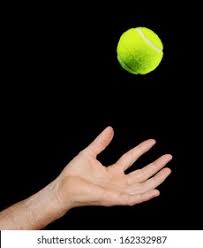
Out in the yard, it was just the three of us: Pat, Mike, and me. We were playing catch with a tennis ball. Nothing serious. Just throwing it around, loose, casual, the way kids do when the game isn’t really the point. At some point, either Mike or I made a bad throw. It sailed wide of Pat—too far, too high—and rolled past him.
A completely ordinary moment. The kind of thing that happens a hundred times in a backyard, in a summer, in a childhood.
Pat was six. He didn’t chase the ball. He didn’t complain. He didn’t turn to us. Instead, he turned—calmly, deliberately—and looked over at Pete Aiken, one of the brand-new teachers, a guest in our home, a man he had just met. And in a tone of quiet assurance, as if assigning responsibility in a meeting, he just said:
“On it, Pete.”
That was it. No smile. No wink. No awareness of what had just happened. The ball was recovered. The game went on. The adults kept talking. The evening continued. But something had shifted, just slightly, just enough.
Because in that moment, a six-year-old child had somehow crossed the boundary between worlds—between kids and adults, between play and work—and issued a line that did not belong to him, but fit him perfectly.
I don’t remember what happened next. I only remember that line. And I remember that we have been laughing about it ever since.
The On It Pete Blues (Pete’s POV)
I was new to the city, new shirt, new street,
Standing in a backyard trying hard to be discreet,
Ross on the grill and the talk running deep,
Just another first night—then I heard, “On it, Pete.”
I hadn’t been briefed, hadn’t learned the terrain,
Didn’t know the house or the shape of the game,
Just a beer in my hand, trying not to overreach,
Then a six-year-old turned and delegated to Pete.
Now I’ve worked in schools, I’ve handled my share,
Rooms full of noise, moments needing repair,
But nothing quite like that clean little feat—
Being calmly assigned by a kid in bare feet.
No panic, no pause, no doubt in his beat,
Just a glance and a nod—“On it, Pete.”
And the ball got found, and the night rolled on,
But I knew right then something strange had gone on—
In a yard full of voices, one line cut through the heat:
I wasn’t just visiting.
I was on it.
Pete.
Dedication:
For my brother Pat. And for Pete. Just get on it already baby.
Note: If you liked this story you may also like the stories below, which also cover my time at St. George’s High School.
Note: This story is drawn from memory and from an ongoing oral history conducted via group text with the surviving members of the expedition. As with many events that took place more than thirty years ago, certain details remain contested, most notably the identity of the fourth passenger and the exact geographic location of the cigar-ash pasta incident. Mason Anderson, when consulted, quickly clarified that he was not present, as he was living with an uncle in Key West that summer, thereby removing himself entirely from responsibility for the expedition.
Kelly, whose scientific theory regarding condensation remains central to the story, has not yet submitted his official rebuttal, though one is expected shortly. Should further testimony arrive—especially if it sheds light on the fate of the firearm hidden somewhere near the California border—I will append a brief postscript.
In the meantime, the above account represents the best reconstruction available.
Epigraph:
Bullshit baffles brains.
We graduated from St. George’s in June of 1992 and, like many newly minted high-school graduates, we had what we considered a very solid plan. We were going to drive from Spokane into the Selkirk Mountains in Idaho and spend several days trekking around in the wilderness like the rugged outdoorsmen we assumed we were.
The crew consisted of myself, Kelly, and Richard Barkley, along with a fourth member whose identity I am currently attempting to reconstruct through the miracles of modern group text. Mason Anderson, when contacted for this oral history, quickly clarified that he had nothing to do with the expedition whatsoever, as he was living with an uncle in Key West that summer and therefore cannot be blamed for any of the events that followed.
I had just gotten my driver’s license—rather late by American teenage standards—and was eager to demonstrate that I was now a fully functioning member of the motoring public. Richard had the car, Kelly had the confidence, and somewhere along the way we acquired a gun which I believe belonged to Will Rafferty, a year behind us at school.
Right away you may notice that this was not shaping up to be the most carefully planned expedition in the annals of Pacific Northwest mountaineering.
The Tarp
One of the first disagreements arose over equipment. I had suggested, quite reasonably I thought, that we bring a tent. Kelly rejected this idea outright.
A tarp, he assured us, would suffice.
Now, the Selkirks are a beautiful range, but they are not known for their gentle weather. Sure enough, as soon as we reached the foothills it began to rain. Not a polite drizzle either, but the kind of steady mountain rain that makes you realize nature has the upper hand.
Nevertheless we pressed on and eventually found a place to bivouac for the night.
We rigged Kelly’s tarp as best we could, laid out the sleeping bags, and attempted to cook something on the camp stove while water ran in small rivers through the campsite. At a certain point, after watching the tarp sag ominously under the weight of the rain, I reached what seemed to me the obvious conclusion.
“Dudes,” I said, “I don’t know about you, but I’m sleeping in the car.”
Kelly immediately objected. What followed was one of the great scientific claims of our generation.
“That’s a bad idea,” he said. “You’ll get more wet in the car because of the condensation.”
Now I’m no meteorologist, but even at eighteen this struck me as extremely unlikely. Outside the rain was falling steadily. Inside the car was, well, a car.
Nevertheless Kelly was confident in his theory. I was confident in my skepticism. We agreed to disagree.
Kelly, Richard, and at least one other member of the expedition slept under the tarp. I reclined the passenger seat of the car and slept quite comfortably.
In the morning, everything under the tarp was soaked.
To this day Kelly maintains that the condensation principle was sound.
The Pasta
Having discovered that trekking in the Selkirks during a mountain downpour was not especially enjoyable, we decided to improvise. The road trip continued deeper into Idaho, or perhaps Montana, where we eventually stopped beside a river to camp for the night.
This time tents were involved, which was already a step forward.
Kelly assumed responsibility for dinner and set about cooking pasta on the camp stove. Things seemed to be going well until he produced a cigar, lit it, and began tapping the ash—quite generously, I might add—into the simmering red sauce.
I objected immediately.
“Knock it off,” I said.
Kelly waved away my concerns.
“No, no,” he said. “Italian guy Joe does this. He says it’s the secret to a great sauce.”
I have never met Italian guy Joe, but I remain confident that he does not exist.
Kelly continued tapping ash into the pot. At that point I made the executive decision not to eat the pasta.
Kelly and I, despite being great friends, were at philosophical loggerheads for the first two days of the trip.
The Gun
At some point we decided to drive into California. This raised a new issue, namely that we were traveling with a gun.
I had been against the gun from the start. Kelly, however, had insisted that it was necessary. Necessary for what exactly was never entirely clear, but the gun had come along anyway.
Approaching the California border, we held a brief council and concluded that crossing state lines with a borrowed firearm might not be the wisest course of action.
The solution we arrived at was simple.
We would hide the gun in some bushes and retrieve it on the way back.
I pointed out that once a gun was hidden in random roadside bushes somewhere near the California border, the odds of ever finding it again were approximately zero.
Kelly disagreed.
We hid the gun.
We crossed into California without incident.
Later, as it turned out, we headed east anyway and never went back for it. Somewhere in a patch of roadside shrubbery, the gun presumably remains to this day.
Wyoming
Eventually the road carried us into Wyoming. We drove up onto a plateau above a large spread owned by the Mann family, who were something like Spokane and St. George’s royalty. My family and the Innes family had visited the place in previous summers to fish and wander around.
We had no invitation.
For a moment there was some discussion of whether we might simply camp there anyway, but cooler heads prevailed. As we were debating the matter, a caretaker appeared and asked what we were doing.
We explained that we were friends of the Manns and asked if it would be alright if we camped for the night.
He was entirely copacetic.
“Sure,” he said. “No problem.”
And just like that, after tarp disasters, pasta controversies, and the abandonment of a firearm somewhere in California shrubbery, we finally spent a perfectly pleasant night camping.
The Drive Home
The next day we drove back to Spokane, which I remember as being about fourteen hours straight.
It was Richard’s car. He asked me at one point if I wanted to take the wheel for a while, but I had only recently gotten my license and didn’t feel especially confident about highway driving yet. I declined and slept in the back seat while Richard drove most of the way and Kelly took a few turns.
Eventually we rolled back into Spokane.
We had not trekked the Selkirk Mountains.
We had lost a gun somewhere near California.
And we had proven absolutely nothing about condensation.
Note: This is the second piece in our series “On Some Meetings and Close Encounters with Musicians.” You can find the first installment here.
The encounters described here span more than thirty years and several cities — from a first arena concert in Pullman, Washington in 1991 to small club shows in Cambridge, Osaka, and Kyoto over the decades that followed. As with many memories of live music, the exact setlists and dates blur, but the rooms themselves — the sounds, the atmosphere, the strange and fleeting meetings between artists and audiences — remain vivid. These sketches attempt to capture a few of those moments as they were experienced at the time.
Epigraph
No fears alone at night she’s sailing through the crowd
In her ears the phones are tight and the music’s playing loud
— Dire Straits, “Skateaway”
Live music produces strange meetings. Sometimes you meet the musicians themselves. More often you meet a moment — a room, a sound, a feeling that sticks with you for decades while entire years of ordinary life quietly disappear.
Here are a few such encounters.
I. Initiation
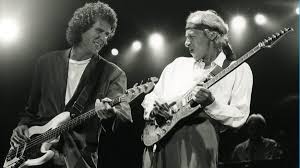
My first real concert was the On Every Street tour in 1991.
The band was Dire Straits, the venue was Pullman, Washington, and the company was the usual Spokane crew: Seth, Innes, Kelly.
I was the biggest fan in the car by far. The others liked the band well enough but I was the one who had studied the records, who knew the guitar parts, who was ready for the moment when the lights dropped and the first notes hit the arena. This was the On Every Street tour, which turned out to be their final record.
They played everything: Money for Nothing, Walk of Life, Sultans of Swing. It was a great show, and one of their last before retirement, though at the time I had no real way to judge such things. It was simply enormous — lights, volume, spectacle. I bought the black and blue tour shirt and wore it for five years.
At the time I thought concerts were supposed to be like that: huge, polished, and far away.
I would later learn otherwise.
II. Revelation
Several years later, during the Hamilton years, I saw Red House Painters at the Middle East in Cambridge.
I went with Ian. The room was small, maybe a few hundred people at most. Nothing about it resembled the arena in Pullman. And then, near the end of the set, Mark Kozelek began playing “Little Drummer Boy.” It lasted nine minutes. You could hear a pin drop in the room.
No spectacle. No lights. Just absolute concentration from everyone present. When the final notes faded the silence lingered for a moment before the applause came.
Afterward Ian and I drove back toward New York through the cold night with the windows cracked open, heaters flying out into the darkness, and Hell’s Ditch blasting through the car stereo to keep us awake.
That was the night I realized concerts could be something else entirely.
III. Chaos
Not every show produces reverence.
I once saw The Fall with Ian as well. The band’s leader, Mark E. Smith, seemed to be operating in his traditional mode of total hostility. The set was short — twenty-eight minutes by my estimate. Ian later checked the official record and insisted it was forty-three. Either way it felt brief and volatile. Smith barked into the microphone, glared at the band, and treated the entire enterprise with the air of someone barely tolerating the existence of the audience.
Which, to be fair, was exactly what many people had come to see.
IV. Theatre
The strangest performance I ever witnessed may have been Cat Power at Club Quattro in Osaka.
The evening began badly. An opening act — a woman in what appeared to be a fairy costume — sat at the piano and played for what felt like an eternity. Forty-five minutes at least. Perhaps longer. By the end of it the audience was openly confused.
Then Cat Power appeared.
Or rather she refused to appear in the conventional sense. Instead of remaining on the stage she wandered through the venue with a handheld microphone, singing and rapping while walking amongst the crowd, occasionally placing an arm around a patron or leaning against the bar.
At one point she came right up to where I was standing near the back rail and sang a line or two before drifting off again into the room.
The entire show felt less like a concert than a piece of improvised theatre.
V. Ritual
A few years later I saw Damo Suzuki at Club Metro in Kyoto. Damo had once fronted the legendary German band CAN, but this night bore no resemblance to those recordings. Nothing recognizable from the catalog appeared. And here he stood, just a few feet away from the audience with long black-and-grey hair flowing, bellowing and chanting over a constantly shifting improvisational band.
It was less a performance than a ritual.
Damo passed away not long ago. RIP and prayers up. I’m grateful I saw him when I did.
VI. Canada Night
Not all memorable shows are mystical.
Sometimes they’re simply loud.
One such evening occurred at Club Quattro in Osaka when Broken Social Scene and Death From Above 1979 came through town.
The Canadian ambassador was present and delivered a brief speech before the set explaining that Death From Above 1979 represented a fine example of Canadian enterprise because they were “only two men making so much noise.”
The room was packed with Canadian expats and the atmosphere was celebratory chaos. The ambassador was probably correct.
VII. Breakdown
Not every concert goes well.
I once saw Bonnie ‘Prince’ Billy at the small Kyoto venue Taku Taku. Something had clearly gone wrong with the lineup. The guitarist appeared to be brand new and could barely navigate the chords.
Will Oldham tried to push through but quickly grew frustrated and began openly calling the guitarist out from the stage. It was uncomfortable for everyone involved.
The show never recovered.
VIII. Redemption
Fortunately the story has a better ending.
Some years later I saw Bonnie “Prince” Billy again, this time at the beautiful Kyoto venue Urbanguild and everything worked great. Low benches and tables filled the room, Heartland beer bottles glowed green under the lights, and the band played a relaxed, confident set drawn mostly from the Bonnie “Prince” Billy catalog with a few Palace songs mixed in.
Opening the evening was an instrumental group called Bitchin Bajas whose sound reminded me faintly of early Phosphorescent if Phosphorescent had chosen to make instrumental records. After the show I found myself talking with three members of the band while they drank beer and ate fries. They were humble, friendly, and slightly surprised that anyone in Kyoto knew who they were. We talked for a while about touring and the constant challenge of trying to make a living as working musicians. Eventually the conversation drifted off and the room began to empty.
The music was over. The musicians were just people again, finishing their drinks and preparing to move on to the next city. And that, in the end, may be the most interesting encounter of all
Dedication
For live music fans everywhere. My true people. I love you baby.
Note: If you enjoyed this essay, you may also enjoy the essay below on the four time I met Yo La Tengo. Happy reading!
Note: This piece takes place in Spokane, Washington in the fall of 1991, during our senior year at St. George’s School. CDs were still a relatively new luxury item for teenagers, Zip’s runs counted as real excursions across town, and a hunter green Explorer in the school parking lot could serve as the center of an entire small social world.
Epigraph:
Out with the posse on a night run Girls on the corner, so let’s have some fun Donald asked one if she was game Back Alley Sally was her name She moved on the car and moved fast On the window pressed her ass All at once we heard a crash Donald’s dick had broke the glass
Ice T
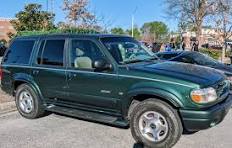
Seth drove a green Ford Explorer, which meant two things: he was always the driver, and John Innes almost always called shotgun.
Ours was a class of twenty-eight boys at St. George’s School, which meant the social landscape was less a battlefield than a small archipelago of cliques. Everyone knew everyone, and everyone more or less supported everyone else. Still, there were natural groupings. Seth, Innes, and I spent a good deal of time together, with Kelly sometimes orbiting the car and Richard Barkley frequently around as well.
The Explorer usually lived in the SGS parking lot behind the lower school. During the day it sat there waiting for the moment seniors could leave campus, which we could do whenever we wanted. When that moment came, Seth’s Jeep became a kind of small republic on wheels.
There were rules, or something close to rules. Seth drove. Innes called shotgun. He cared about it the most and therefore usually got it. Occasionally Barkley or I would challenge him, which would inevitably produce an argument about whether the call had been made properly or whether the timing had been unfair. The exact legal framework of shotgun was never fully settled, but the outcomes were usually predictable.
Inside the Explorer there were CDs everywhere. Not in a messy way—Seth kept the car pretty well—but there were dozens of them, probably stored in one of those large CD wallets that seemed to exist in every car in the early nineties. Seth would sometimes come back from Hastings with six or eight discs at a time. I remember watching those purchases with something close to disbelief. I could rarely afford a CD myself, so when I did manage to acquire something like Tindersticks or Billy Bragg’s Spy vs. Spy, it was a very big deal.
The music rotation in the Explorer was remarkably tolerant. Seth tended to favor Judas Priest and Metallica, while Innes leaned toward Ice-T. Joe Tyllia loved Cat Stevens and so Cat Stevens appeared frequently. I personally preferred Dire Straits at the time, which never quite made the regular rotation, so I generally waited for Warren Zevon or Cat Stevens to come back around. Nobody vetoed anyone else’s music. Whatever disc was in play generally stayed there.
The Explorer had a few regular destinations. State B basketball games were one. Another was Zip’s on the north side of town. Seniors could leave campus whenever they liked, and sometimes that meant simply deciding that a run across Spokane for burgers was necessary. Seth’s house was another stop, as was Hastings, where the CD acquisitions occurred.
Occasionally the driving extended further into the South Hill at night. Sometimes we would pass near Manito Park, though I remember doing those wandering drives more often with a slightly different crew—Dyche, Jonah, Karin, and Lisa. Once that group went to a show by They Might Be Giants, and afterward Kelly reported that the band had stiffed the opening act and paid them only ten dollars. Kelly knew this because his cousin was in the opening band.
The one time I ever took shotgun from John Innes without calling it came on the ride home from the state cross-country meet during our senior year. Our team had finished second by a single point, which felt at the time like the most unfair outcome imaginable. James Johnson had been our first runner, Cam Turner second, and I was third.
When we piled into the Explorer for the three-hour drive back to Spokane, I simply grabbed the seat. No call. No discussion. Just took it. And for that ride home I ran the decks.
For a while Seth’s Explorer was simply part of the landscape of our lives. It sat behind the lower school during the day, appeared at the Coleman house west of the South Hill at night, and carried us between games, fast-food runs, music stores, and wherever else we decided to go.
Then, like most small countries of teenage life, it quietly disappeared
“…yeah I got out, but it’s still a cage.” —after Ryan Adams, “Still a Cage”
I. — Launch vs. Escape
I didn’t understand Spokane’s sexual landscape until years after I left it, and by then it was already too late to pretend it had ever been the clean, conservative city adults insisted it was. The truth was simpler and messier: it was secretly wild and not so secretly wild, a place where desire slipped between the cracks of churches, cul-de-sacs, river pullouts, and private-school parking lots, and everyone knew more than they admitted. St. George’s launched me academically, but it did nothing to contain the currents running just outside its gates—the coded parties, the silent scandals, the hookups that lived like rumors, the older stories whispered by kids who shouldn’t have known them. What I didn’t realize then was that I wasn’t leaving Spokane away from anything. I was leaving toward other things—Japan, NAU, a life that moved. Only later did I understand I wasn’t going back.
II. — The Erotic City
What I didn’t see as a kid—but can’t unsee now—is that Spokane’s real wildness wasn’t teenage at all. It was adult. It was erotic energy humming under a conservative façade, the kind that starts as a pulse under the collar and ends in the kind of self-destruction people call “mistakes” years later. The city pretended to be a grid of churches, schools, tidy neighborhoods, and Rotary breakfasts, but the truth lived in back booths, river pullouts, dim bars off Division, and the long shadows of marriages that weren’t working. People were hungry. Not for sin—Spokane isn’t interesting enough for that—but for escape, for intensity, for feeling anything sharper than the soft monotony the town served as a diet. And because the city couldn’t admit that hunger, it acted it out sideways: affairs disguised as mentorships, private shame masked as judgment, the moral guardians always the ones who ran the hottest at night. And threaded through that landscape was Brookie, the wild boundary cat who drifted into our yard for weeks and then vanished for weeks, living with the kind of unashamed freedom the rest of Spokane pretended not to want. As a kid I only caught the edges of it, like smoke under a door. As an adult investigator returning later, it became obvious: the cage wasn’t made of rules, it was made of denial. And denial is the most erotic fuel a city can generate.
III. — SGS (Light Touch) and the Return
St. George’s sat just outside all that, or at least it pretended to. The river, the quiet paths, the small classes—SGS was the aesthetic of order laid gently over a city that hummed with contradiction. It launched me because it was designed to: college essays, seminar rooms, teachers who pushed hard without ever naming the ecosystem we were all standing in. It was a runway, not a refuge. I didn’t learn about Spokane from St. George’s; I learned about leaving from St. George’s. The city taught the rest. And when I go back now—if I do—it isn’t to recover anything. It’s as an investigator walking his old beat. I drive past the river, the schools, the neighborhoods that used to feel like separate worlds, and I can see the seams of the place with adult clarity: who lived double lives, who never left, who couldn’t leave, who escaped and reinvented themselves entirely. The old stories fall apart under scrutiny, but the architecture remains. The church parking lots. The dim bars. The hills where people walked off their secrets. Spokane didn’t change so much as reveal itself the moment I had enough distance to investigate it. And once you see the truth of a place, you can’t unsee the way it shaped you—even after you’ve run as far as you can from the cage you didn’t know you were inside.
IV. — Palo Alto
When I think of California, it’s never the big, cinematic pieces people imagine. It’s the little house we lived in in Palo Alto and the Whole Foods with the organic cookies — the kind of small domestic details that register as safety when you’re young and don’t yet have a name for that feeling. California wasn’t a fantasy; it was texture. Light off the sidewalk. Air that felt like it was already holding you up. And those drives with my dad to Foothills — Foothills Nature Preserve now, but back then it was still just Foothill Park — the private reserve only Palo Alto residents could enter. That’s the part that gets me now: how effortlessly belonging felt there. You didn’t have to explain yourself, or hide anything, or decode a system of silences. You just drove up into the hills and the world opened without consequence. Spokane had its wildness, but California had a kind of spaciousness that felt like permission. Even now, I miss it with an ache that catches me off guard. It’s not that I necessarily want to move back — it’s that a part of me never really left. California became the template for what openness feels like, the first geography that suggested freedom wasn’t an escape but a way of being.
V. — Cameo (Ian)
Sometimes, when I need a reminder of who I was before I understood any of this, I think of a photo from just after college — me and Ian and Matt Thornton in New York, staying way uptown in a borrowed flat, ordering pizza three times a day, probably getting high, taking the train like we were immortal. I grabbed the prime sleeping spot and held onto it, a small personal victory in an era when I rarely asserted myself. In the picture, Ian’s in front, already carrying that air of someone who had strong, fully-formed opinions about every band on earth. I’m behind him in my dark brown leather cap, looking like someone still half-becoming himself. That version of me had no understanding of cages. He just assumed the world was big.
VI. — Still a Cage
Maybe that’s why the Ryan Adams line hits the way it does. “Yeah, I got out, but it’s still a cage.” I didn’t hear it as confession the first time — I heard it as geography. That’s Spokane for me: a place I ran from without realizing I was running, a system I slipped out of long before I understood the bars. It wasn’t trauma; it wasn’t exile. It was something quieter and stranger — a recognition that the place that formed me was also the place I could never fully inhabit. California taught me what openness felt like. Japan gave me the life I wanted. But Spokane shaped the part of me that investigates, the part that reads cities like case files, the part that knows desire and denial can live under the same roof for decades without ever breaking stride. When I hear “Still a Cage,” it’s not about being trapped. It’s about understanding, finally, the architecture of the place you outgrew — and how long it takes to see it clearly. You can leave early, leave clean, leave without resentment. But the line only lands when you come back years later, driving those old streets like an investigator, realizing the cage was never the city itself. It was the silence. And the moment you see the silence for what it was, the lock falls open, and you know for sure you’re never going back.
Epigraph
“…yeah I got out, but it’s still a cage.” —after Ryan Adams, Still a Cage
I.
I didn’t understand Spokane’s emotional landscape until years after I left it, and by then it was already too late to pretend it had ever been the clean, conservative city adults insisted it was. The truth was simpler and messier: it was a place where desire moved quietly through the cracks of churches, cul-de-sacs, river pullouts, and private-school parking lots, and where people knew more than they said aloud.
St. George’s launched me academically, but it did nothing to contain the currents running just outside its gates—the coded parties, the silent scandals, the hookups that lived like rumors, the older stories whispered by kids who shouldn’t have known them. What I didn’t realize then was that I wasn’t leaving Spokane away from anything. I was leaving towardother things—Japan, NAU, a life that moved. Only later did I understand I wasn’t going back.
II. — The Erotic City
What I didn’t see as a kid—but can’t unsee now—is that Spokane’s wildness wasn’t teenage at all. It was adult. Not theatrical or decadent, but quiet and unresolved, an erotic energy humming beneath a conservative façade. The city presented itself as orderly: churches, schools, tidy neighborhoods, Rotary breakfasts. But the real emotional life lived in the margins—in dim bars off Division, in river pullouts, in the long shadows of marriages that had settled into routine.
People weren’t hungry for scandal. Spokane isn’t interesting enough for that. They were hungry for intensity, for escape, for moments that felt sharper than the soft monotony the town served as a daily diet. And because that hunger couldn’t be named directly, it surfaced sideways: affairs disguised as mentorships, judgment masking private confusion, moral certainty coexisting with private longing.
Threaded through that landscape was Brookie, the wild boundary cat who drifted into our yard for weeks and vanished for weeks, living with a freedom the rest of Spokane pretended not to want. As a kid I caught only the edges of it, like smoke under a door. As an adult returning later, the pattern became clearer: the cage wasn’t made of rules. It was made of denial. And denial, more than rebellion, is what gives a place its quiet erotic charge.
III. — SGS (Light Touch) and the Return
St. George’s sat just outside all that, or at least it seemed to. The river, the quiet paths, the small classes—SGS was the aesthetic of order laid gently over a city that hummed with contradiction. It launched me because it was designed to: college essays, seminar rooms, teachers who pushed hard without ever naming the broader ecosystem we were all standing in. It was a runway, not a refuge.
I didn’t learn Spokane from St. George’s; I learned leaving from St. George’s. The school offered direction without interpretation, preparation without excavation. The city supplied the rest.
And when I go back now—if I do—it isn’t to recover anything. It’s as an investigator walking his old beat. I drive past the river, the schools, the neighborhoods that once felt like separate worlds, and the seams of the place become visible with adult clarity: who lived double lives, who never left, who couldn’t leave, who escaped and reinvented themselves entirely. The stories shift, but the architecture remains. Spokane didn’t change so much as reveal itself the moment I had enough distance to see it.
IV. — Palo Alto
When I think of California, it’s never the cinematic version people imagine. It’s the small house we lived in in Palo Alto and the Whole Foods with the organic cookies—the quiet domestic textures that register as safety when you’re young and don’t yet have a name for that feeling. California wasn’t fantasy; it was atmosphere. Light off the sidewalk. Air that felt like it was already holding you up.
And those drives with my dad to Foothills—Foothills Nature Preserve now, but back then simply Foothill Park—the private reserve only Palo Alto residents could enter. That detail lands differently now: belonging there felt effortless. You didn’t have to decode silences or manage contradictions. You simply moved through the hills and the world opened without consequence.
Spokane had its wildness, but California offered spaciousness, a geography that suggested freedom didn’t need to be disguised. Even now, I miss it with an ache that catches me off guard. Not because I want to return permanently, but because a part of me never fully left. California became the first place that suggested openness wasn’t escape but orientation.
V. — Cameo (Ian)
Sometimes, when I need a reminder of who I was before I understood any of this, I think of a photo from just after college—me and Ian and Matt Thornton in New York, staying way uptown in a borrowed flat, ordering pizza three times a day, probably getting high, riding the train like we were immortal. I grabbed the prime sleeping spot and held onto it, a small personal victory in an era when I rarely asserted myself.
In the picture, Ian stands in front, already carrying that air of someone with strong, fully formed opinions about every band on earth. I’m behind him in my dark brown leather cap, looking like someone still half becoming himself. That version of me had no concept of cages. He simply assumed the world was big.
VI. — Still a Cage
Maybe that’s why the Ryan Adams line lands the way it does. “Yeah, I got out, but it’s still a cage.” I didn’t hear it as confession the first time. I heard it as geography.
That’s Spokane for me: a place I left without fully understanding why, a system I slipped out of long before I could see its contours. It wasn’t trauma or exile. It was something quieter—the recognition that the place that formed me was also the place I could never fully inhabit.
California taught me openness. Japan gave me the life I wanted. Spokane shaped the investigator—the part of me that reads cities like case files, that sees how desire and denial can coexist for decades without ever openly colliding.
When I hear “Still a Cage,” it isn’t about entrapment. It’s about understanding the architecture of a place you outgrew and how long it takes to see it clearly. You can leave early, leave clean, leave without resentment. But clarity arrives only later, when distance converts memory into interpretation.
The cage was never the city itself. It was the silence. And the moment you recognize the silence for what it was, the lock falls open. Not with anger or triumph, but with quiet certainty. You understand that leaving was less an escape than a translation—and that some places shape you most profoundly precisely because you cannot return to them.
“All we need is just a little patience.” — Guns N’ Roses
I. Leaving Anyway
The wedding was in June, which was just a little inconvenient for me. School was still in session, and I had to miss work to go. I remember wishing that it had been in August. But once I decided I was going, the resistance fell away. I locked it in, and then I was genuinely excited—mostly to see my family.
I hadn’t seen my mom, Mike, or Pat since January 2018, before COVID. I hadn’t seen my dad since October of that year. That mattered more to me than the logistics or the calendar. So my wife Sachie and I flew from Japan to Seattle, and my son Hugh flew in separately from New Zealand, via Auckland and Los Angeles.
We landed at Sea-Tac and cleared international arrivals quickly. We had a few hours before my parents arrived to pick us up. They had rented a van, partly because it was a three-day event and partly because they were making breakfast on the last morning, which required supplies. While we waited, Sachie and I sat in the only open area we could find outside arrivals. We both needed a cigarette, so we took turns—one of us watching the bags while the other smoked. We bought two Starbuckscoffees, which cost sixteen dollars. I ordered an extra shot in each, not realizing the Americanos already contained doubles.
While we were there, a man nearby was clearly overdosing—probably fentanyl, maybe heroin. He was nodding, drooling. The police came first, then EMTs. They all knew him by name. Sylvester. After about an hour, they took him away on a stretcher. No one around reacted much. It felt routine. I was just sad, thinking about how much damage fentanyl has done in the U.S.
I texted my mom. They were running late. Hugh arrived through domestic customs and joined us. When my parents finally came, they looked good—just older, of course. We hugged and walked back through the airport to the van. My dad had forgotten where he’d parked it, so that took a while too.
Once we got moving, things settled. Sachie, Hugh, and I loaded into the van and drove north to Anacortes, about two and a half hours. It was mid-afternoon. Hugh slept most of the way. Conversation came easily. It felt natural, like time hadn’t broken anything, just stretched it.
We had an early dinner at a restaurant on the water in Anacortes. Pat and Sarah drove up from Portland with their three girls and joined us. John Innes and Kristi had been invited but were tired from the drive and didn’t come. I had raw oysters, another seafood dish, and a margarita. My dad ordered one beer and then told the server, “Please bring another one in exactly twelve minutes.” He always does this. He usually has two beers this way; that day he had a third later. I find the whole thing very funny.
I ordered a second drink—a Negroni, which wasn’t on the menu. The waitress said she thought the bartender could figure it out. It arrived with no ice. I considered sending it back but she was busy, so I let it go.
It was sunny. I sat in the sun so Sachie could have the shade. After dinner, Pat, Hugh, the two older girls, and I walked down over some stones to the water for a while. Then we went to a supermarket for beer, wine, and light provisions. I wasn’t sure how I’d sleep—I don’t always sleep well when traveling—so I bought a bottle of wine just in case.
We drove to the lodge where we were staying. It was really nice. Sachie, Hugh, and I had our own apartment. I took a walk behind the lodge to sneak a cigarette. Sachie probably found somewhere to smoke too, but I’m not sure.
Later that evening, we went down to Pat’s room for beers. The girls played on the lawn outside, and Pat chased them around until they were breathless and laughing. Watching him with them, I was struck again by what a great dad he is. I drank wine instead of beer—I was still dealing with a lingering COVIDhangover and a newer gluten intolerance—and eventually drifted off and fell asleep on the couch.
That was the first night.
II. Crossing Over
In the morning, I woke first. No one else was up yet. Eventually my mom got up too, and we drove back to the supermarket for coffee. She bought me a pair of sunglasses—nothing fancy, just functional—and it was good to have time with her, talking at length. The coffee place sold Turkish coffee and tried to upsell me on baklava, which I regretted again not being able to eat because of gluten.
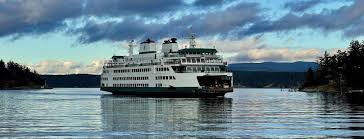
We all had breakfast later. It was underwhelming. I had yogurt. Around eleven, we drove out to the ferry terminal and got into a long line of cars. Sarah handed me one of those popular sparkling drinks in the U.S.—sweet, artificial—and I couldn’t finish it. The wrong kind of sweet.
On the ferry, I fell asleep. People were working on puzzles at tables. My parents stood outside because my mom has vertigo and gets dizzy. When we arrived at Friday Harbor, we went straight to the supermarket. There was no food at the camp except the rehearsal dinner and the wedding dinner, so I stocked up: hummus, corn chips—my mom handed me a huge bag of them—cheese, olives. I also had some soup at the market, which was excellent. I tried to get as much as I could because I knew options would be limited. I also bought wine.
The drive to the camp was supposed to be ten minutes, but the sign was tiny and we missed it. We overshot the turn and had to double back using Google Maps. We arrived mid-afternoon.
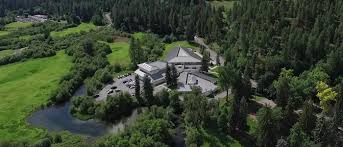
The camp was down a dirt road off the highway and much larger than I expected. There was a main lodge, a big lawn, a collection of cabins in different shapes and sizes, a barn where the wedding would be held, and a garden set up for the rehearsal dinner. We used metal push carts to haul our things from the parking lot to the cabins.
My parents were staying in the main lodge. Our cabin was about 150 meters away, next to Pat’s family. It was clean but very small: a tiny kitchen, a bedroom, a cramped closet you could barely move around in, a loft for Hugh, and a bathroom awkwardly placed between the kitchen and the bedroom. Kelly, his wife Courtney, and their kids Jacob and Ang were in another cabin. John and Kristi were nearby as well. Mason was staying in some kind of shared space. Between our cabin and Pat’s was a fire pit, and Sarah had already hung laundry over the chairs.
Smoking was allowed, but only at a few designated ashtrays—those tall black plastic ones on poles. The signs said that if you littered, the fine was one thousand dollars per cigarette butt.
I was a little concerned about whether the food I’d bought would last. I ate chips and hummus. Sachie went into the woods to smoke and put her cigarette butts on top of our garbage can. I told her about the rule and asked her to use the ashtray instead. She did.
Later, we gathered at the lodge. I brought wine. One of the camp staff asked if we wanted to hear the house rules. Mike said, “Lay them on us.” The rule was one open drink at a time in the lodge. It closed at ten, but we could use the nearby fire pits and deck afterward. I put my bottle of wine out of sight. Mike responded to the rule with a polite “Uh-huh, sure,” and I got the impression he had no intention of following it.
My dad, Hugh, and I drove back into town to pick up pizza for dinner. I ordered a cauliflower-crust pizza because of my gluten intolerance. We ordered too much—one pizza each plus one for my mom and Sachie—but that was fine. We ate, talked, and I drank wine. Mike, Colleen, and Felix were there. Colleen took Felix to bed. Later, Sachie asked me to go back to the cabin to get a bottle of white wine. I did, and we drank it. The rule wasn’t enforced. It was a relaxed evening.
That was also when I saw Eric Hillyard for the first time.
III. The FIRST NIGHT AND NEXT MORNING
Eric Hillyard is a character and a half. He’s one of Mike’s good friends from high school at Saint George’s, and one of only two people from that era who were there. The other was Dan Clarke—known as Jerry—who was officiating the wedding. Eric didn’t have a formal role. He didn’t need one.
I gave Eric a big hug when I saw him. I hadn’t seen him since high school. He razzes Mike like nobody else, but he was polite and warm with me and bowed to Sachie. He was drinking quite a bit. After ten, my parents went to bed, and Eric, Mike, and I gathered around the fire pit between the cabins.
Eric smoked a cigarette. I smoked two. We tossed them into the fire pit. Later, back at the cabin, it occurred to me that the cigarettes probably wouldn’t burn up completely. I was pretty cooked, but I walked back in the dark with my phone light, dug around in the ashes, found all three cigarette butts, and put them in the ashtray. I figured I’d just saved Mike and Colleen three thousand dollars.
Eric had told a joke that landed too close to home with Mike. Mike said it went too far. I got the impression this wasn’t the first time. It didn’t blow up, but it didn’t land well either.
I went to bed. Sachie and Hugh were already asleep. I slept fine.
The next morning I woke up first again. I ate more hummus and corn chips and went down to the lodge for coffee to see who was around. Free coffee was available. It was rehearsal day.
I don’t remember much of the day before the rehearsal itself. Earlier, when Hugh and I had gone into town on the pizza run, we’d stopped at a hardware store and bought a frisbee. Hugh played with the little kids—Colleen’s brother’s kids and others—on the lawn. I mostly hung around. Food was running low, and I was looking forward to dinner, which was scheduled for around five.
Before dinner there were family pictures, but before that something happened that I didn’t witness directly. Mike told me about it afterward.
They had hired a photographer, a makeup artist, and a band. All freelancers. The food was provided by the camp staff. Colleen was getting her makeup done and had asked for it to be light. Apparently it wasn’t. Mike saw it and said, “Babe, she pancaked you.” Colleen initially wanted to let it go, but they talked and then fired the makeup artist on the spot. Mike told me about it calmly and said that decision was kind of on him.
I didn’t judge it. What I found myself wondering was how much of her fee she got paid. I didn’t ask. I assumed she was paid for the day. The photographer had traveled a long way. I didn’t know whether the makeup artist was local. I hoped she was.
That evening, people gathered in the garden. Both sides of my family were there, along with Eric, Jerry, Mason, Kelly, John Innes, and others, as well as Colleen’s friends and family. The mood was good. But John was in bad shape.
By his own admission, John was pretty depressed. Both his parents had died, and something unresolved involving his father had happened before his death. He hadn’t been able to say goodbye properly. He’d had to have a few just to get ready to come to dinner and face people.
John and Kristi left early and Mason and I walked to the parking lot for a cigarette. There were ashtrays there, and I didn’t want to risk a fine. Colleen’s friends were smoking weed cigarettes back in the garden. Mason told me about a recent breakup that had been serious. He said he’d been immature for a long time and that the relationship and life had forced him to grow up. From his demeanor, it was clear that was true.
That night I also saw my Uncle Jeff’s third wife for the first time—she is from Mexico. Hugh talked with Jeff about his soccer influencer work. Jeff was impressed and invited Hugh to stay at his place in California anytime, for any length of time. Hugh was flattered and grateful.
Things wrapped up early. There was no repeat of the fire pit scene from the night before. I talked a lot with Amy, but mostly I was with Mason. Then we went back to the cabin and went to bed.
IV. DAN CLARKE/ BILL CLARKE DREAM
Wedding day morning felt like more of the same. I was low on cigarettes. I ate more corn chips and hummus from the seemingly endless bag and got coffee in the lodge and waited. Jerry was around. We talked. He’s had an interesting life—some wildness there—and I could see why Mike likes him so much.
Dan Clarke’s father is Bill Clarke, brother of Janet Mann and brother-in-law of Paul Mann. All Saint George’s power brokers. My dad and Bill Clarke were friendly once, but it went sideways. After that, my dad would complain about him endlessly in the car to my mom. Typical Ross behavior at the time, although I never understood the core issue
At some point that morning I thought about a dream I had years earlier, one that has stuck with me. I’m including it here as I wrote it at the time.
2/27/18:
Two intersecting and yet separate dreams about Bill Clark. These will take some unpacking.
I. I am with my father and someone else in a car on a rainy day. We are parked and Bill Clark is there. He looks like the real Bill Clark as I remember him, overweight and not too smooth. Bill Clark was an intermittent arch-enemy and then sometimes ally of my father at Saint George’s in the 90s. The encounter in the car is the culmination of several encounters with Bill in the dream and some of these have been just he and I. Bill is telling me through these encounters how much he admires our IB program and what I am doing with it. He stresses how important it is that I keep going. At the car, he does this again and looks a little desperate. Because he is so clearly sincere even my father who was his enemy gives him the space to say his piece. For my part, I am grateful for his kind words however the car kind of needs to get moving. I thank him from the window. I think he is about to get wet from the rain.
II. I am meeting with Bill Clark again, however a very different looking Bill Clark. Here he is trim with a wire grey beard cut short and a nice suit. He looks very distinguished and a little intimidating. This Bill Clark is also supportive however is much more firm with me. He tells me that I need to get on my hands and knees and beg and plead for resources. Somehow I get the image of a turtle on its back, open to the sky. This is the posture I need to adopt according to Bill. Nothing can be taken for granted and I have to beg. He is quite clear and I understand the wisdom in what he says.
Comment: This is a super interesting dream that bears unpacking. The two Bill Clarks are polar opposites and the second one is more regal and correct in every way. Why the former enemy of my father? This dream is so packed with symbolism.
Not long after that, it was time to shift gears and get ready for the ceremony.
V. The Ceremony
Before the ceremony began, I practiced rope-tying with Colleen’s brother and Pat. I hadn’t mentioned it earlier, but I had been enlisted to help tie Mike and Colleen’s hands together at the end of the ceremony. I was nervous. I had to go first, and as with the e. e. cummings poem years earlier at Mike’s first weeding, I had limited information. Mike told me it would be fine. Colleen’s brother Kevin and I made a joke of it together. Don’t fuck the whole wedding, bro. We got on well.
The rope was thin. There were several strands, intertwined.
Around four, people gathered again at the lodge. Only certain people had drinks. The rehearsal had gone smoothly. We had a clear walk-out order. My family walked out right after Mike and Colleen so I could be in the front row and step forward when it was my turn.
Everyone took their places. Jerry gave a classic, funny speech about being unprepared. Mike’s vows were sincere. Colleen received a huge round of applause when she walked out.
The ceremony was short. The moment came quickly. I stepped forward and did the tying. The ropes were longer than I expected and hung down toward the ground. I stumbled and nearly tripped over them, but I didn’t fall. Thank God.
The ceremony ended, and we moved directly into the barn for dinner.
VI. The WEDDING DINNER
Dinner started with oysters and a watermelon margarita, which I passed on. I drank red wine and hit it pretty hard. Dinner proper was pasta with sauce made by Colleen’s dad. I couldn’t eat it. I was hungry and ate oysters until there were literally none left. I got the last ones.
I spent some time standing outside with Kelly and his kids, Jacob and Ang. We talked. Inside, I sat with family. Hugh had the pasta and then went over to Colleen’s father to thank him for the sauce, which was a classy move.
After dinner, Kelly, Mason, Sachie, and I went out back for a cigarette. I was out and bummed one from Sachie, and it was the first time I’d ever seen Kelly smoke. I got to know Jacob, who was almost done with high school, and Ang, who was a couple of years younger.
I was wiped and left early. Sachie and Hugh came back later. Colleen’s dad gave a speech. My dad didn’t. Katie—my cousin through Amy—gave a great speech. Katie has Down syndrome, and everyone applauded.
That was the night.
VII. Dispersal
The next morning my parents were making breakfast, and the relatives who had stayed in town came back for it. My mom was prepping food. Amy brought gluten-free bagels. I had half a bagel, some fruit, and coffee and talked with people as they moved in and out. Breakfast was a performance, and it justified the van rental entirely.
We packed up and said goodbye to Mike, Colleen, and Felix. They were heading to a nearby island for a short honeymoon. From there, we drove first to the rental house where Pam and Steve were staying. I did laundry while everyone else went whale watching. I was keyed up about it—laundry had accumulated, and I don’t like traveling with dirty clothes. The door was left open, so I walked to the market for more soup and found my way back.
That evening we went back to the same pizza place. I had another cauliflower-crust pizza, a gluten-free beer that was just okay, and a glass of wine. I sat with Amy, her husband David, Sachie, Hugh, and Katie. I paid attention to Katie—she’s been developing early-onset dementia and I wanted to see how she was doing. My mom paid for dinner, which I appreciated.
We stayed at a hotel five minutes away that my parents had pre-booked. It was a large suite. Sachie and I took one room, my parents took the other, and Hugh slept on a cot in the living room. Hugh, my dad, and I played shuffleboard downstairs. I won. It was very relaxed. I had what was left of a small bottle of vodka, drank some, and poured the rest out.
The next morning we went to the ferry terminal. We ran into Jeff’s family again. My parents talked with them while Sachie, Hugh, and I got coffee and bought chocolates as omiyage. On the ferry back, a young naturalist gave a talk about whales. I listened and didn’t fall asleep this time.
Once we reached Anacortes, we drove the wrong way for about half an hour before my dad realized it. We turned around and headed toward Sea-Tac, staying near the airport. I was starving. We said goodbye to my parents. I cried a little. My mom did too.
At three in the afternoon we went straight to a steakhouse. I had steak, fries, and a Negroni. Hugh and Sachie ate as well. We sat in the regular dining section, not the bar, because Hugh was still twenty. We slept early.
The next morning we took a bus to the airport. Hugh left earlier, and Sachie went with him while I tried to sleep. At the airport, Sachie wanted to buy a specific bottle of whisky as a gift. The plane was already boarding. She ran off and made it back just in time. I was anxious, but she made it.
We flew back to Japan. I went back to work the next day and thanked everyone for covering for me while I was gone.
Dedication
For my family, with love and gratitude.
Note: If you enjoyed this piece, you may also enjoy the pieces below which also take up the topic of weddings.
I flew back to Japan in early December ’99, eleven months after Flagstaff, twenty six years ago today.
My girlfriend — soon to be my wife — met me in Kumamoto and before we went anywhere near a city office we took a bus tour of Kyushu. One of those packaged trips where the landscape is real but the schedule isn’t — temples, viewpoints, souvenir shops engineered into the route because somebody is getting a cut. I’ve never liked bus tours. Too passive. Too commercial. A landscape you watch instead of inhabit.
The first night in the hotel we were intimate for the first time in a year. It was good enough — tentative, self-conscious on my part, like we were remembering choreography rather than improvising. It would all come back pretty quickly.
After the tour we stayed with her parents in Uto City — small house, tatami floors, her childhood bedroom upstairs. We shared a single futon where she had slept alone as a girl. I remember the narrowness of it, two adults lying in a past built for one. The walls thin, the air still, her parents downstairs, in their own world.
.We went to the city office the first week of December and signed the papers — no ceremony, no white dress, no crowd, just bureaucracy, and permanence I suppose. A moment small in appearance and enormous in consequence. One pen stroke and we weren’t dating across continents anymore — we were married.
I flew back to Arizona before the semester resumed. I was a married man. Small ring. Big life. My cold room waiting.
That was the hinge — Japan in winter, Flagstaff in spring, and me between two homes that I didn’t yet know they would trade places for good.
NAU Year Two — Term One
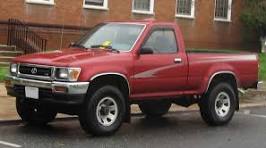
I flew back to Spokane that winter the same way I had the year before — no plan except back to NAU and see what I could do. The red Toyota pickup was waiting for me, still running, still mine, connecting Washington and Arizona. I drove south again — long highways, cheap motels, maps instead of GPS, how I knew what I was doing I have no idea.
Flagstaff was colder that winter, or maybe I had just forgotten what dry cold felt like. I didn’t keep the old room near campus, and I didn’t want to. I spent two nights in a budget hotel, stretching my graduate-tutor income across meals and rent in my head. Still — I was back, and that is what mattered.
A classmate pointed me toward a woman named Bev who had a room for rent. She lived twelve minutes from campus. She has a big house — divorce settlement money, and a shoo downtown that sold wood furniture she built by hand. The furniture was bad, and she told had sold exactly zero pieces. That alone told me she was operating on a different financial zone than the rest of us.
I moved in. My own room, my own bathroom, access to the kitchen, $700 a month. Not luxury, not struggle — just workable. I drove to campus every day, which meant less drinking, more structure. Only once did I drive home drunk, and it scared me enough to make sure it stayed a single incident. Mostly, I left the truck downtown and taxied home, or I didn’t drink at all.
Academically, the rhythm was set — Said, Ray Huang’s 1587, Braudel, Portelli, more Bourdieu when I could manage it. The hardest class was Bob Baron’s Marx seminar. Everything else felt manageable, maybe even easy when I had momentum. My friendship with Mandiola deepened that semester — sharper, closer, more real — the two outsiders orbiting the same department.
That was also when I noticed Sonia. First as a presence — around campus, then behind the counter at the organic market I could barely afford. The book van outside sold $1 paperbacks, and I bought more of those than groceries. We exchanged looks — recognition, curiosity — but nothing more. Later I realized she was an undergrad in the Post-War German History class I lectured in. That alone helped keep the boundary clean.
By late fall the loneliness was real. I was married, but alone. She missed me. I missed her. She was thriving at work — promoted to Head Nurse at 24 — and still, distance was beginning to feel like erosion rather than opportunity. So we made a plan:
So in the Fall of 2000 my wife would come to Flagstaff and take part-time English classes. We would be in the same place again.
Around that same time the last of my Hamilton debt — $17,000 — was paid off by her or by her mother. I’m still not certain which. Either way, relief arrived quietly. I would repay it not as a transaction but by building a life — covering everything from 2002 onward.
And that was the first term of year two. Cold roads, heavy reading, a quiet spark at the edge of ethics, and the decision that distance had served its purpose.
I found Rocket and a Bomb the way you sometimes meet the most important things in your life: by accident, with no money, in a used bin on Division in Spokane, during a summer when nothing was happening and I had no idea who I was supposed to become.
It was 1994, the summer before junior year. I wasn’t working — not out of rebellion or laziness, but because I somehow never got pushed into getting a job. My parents were juggling one car between them, sometimes borrowing a second from St. George’s, and when that second car was free, I took it and drifted through Spokane.
I had a circuit — three places I visited almost every day, like a loop I barely knew I was running.
1. A random coffee shop off Division They knew me as the quiet kid who ordered the same thing, sat alone, and had a half-crush on the barista for reasons I couldn’t articulate even then. I wasn’t flirting. I was just alive in her direction. It gave the day a shape.
2. A used bookstore in North Spokane Le Carré, Christie, metaphysics, philosophy, sci-fi, old paperbacks with cracked spines. Books were two to five dollars, and the older woman behind the counter would chat with me as if I were a real adult. I was still in my 150-books-a-year phase. It felt like productivity disguised as escape — or maybe escape disguised as productivity.
3. A used CD store up Division All used, because I was broke. Rows of mid-’90s detritus: dozens of copies of August and Everything After, inexplicable imports, promo discs dumped by radio stations. I’d flip through crates like a prospector searching for gold in a river everyone else had given up on.
And one day I found something.
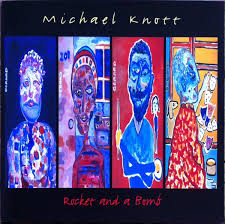
I pulled a CD I’d never heard of: Rocket and a Bomb by Michael Knott. The cover art — drawn by Knott — was strange and specific. The title was perfect. And for reasons I couldn’t explain, the whole thing felt special. Buried treasure. A private signal.
It was used. It was cheap. It felt like it had been waiting for me. I took it home, slid it into my boombox, and played it straight through. And something opened. Not revelation. Not identity. Not insight. Pure recognition.
The recognition that someone, somewhere, had lived inside a hallway-world that felt eerily close to my own. That someone understood the drift, the observation, the stasis, the human weirdness. This essay is about that record.
Jan the Weatherman
“Jan the Weatherman” was the first sign that Rocket and a Bomb wasn’t just another used-bin curiosity. The song opens with a portrait so sharp it bypasses metaphor entirely:
“Jan, Jan the weatherman Lives across the hall in an old beer can.”
It’s not symbolic. It’s not poetic. It’s literal. It’s Knott standing in a hallway in Hollywood, looking across at a neighbor, and writing down exactly what he sees. No interpretation. No commentary.
Then the details:
— A stick and a pan. — Sandwiches from questionable sources. — A kid sister who could use a tan. — Jan wanting to “join the band.”
Absurd and intimate at the same time.
I played the whole record constantly that Spokane summer. One afternoon, I was in the kitchen with my younger brother Pat, listening to “Jan the Weatherman” on the boombox. Pat — not a music obsessive — liked it immediately. At the same time, I was trying to get him to read Paul Auster’s New York Trilogy. In the first story, characters are named by colors: Mr. White, Mr. Black, Mrs. Blue.
While we were talking about that, the rotary phone rang.
One of us answered.
A man on the other end asked:
“May I speak to Mr. White?”
Pat froze, then fell backward onto the couch like he had been shot. It was uncanny. A Knott moment invading our Spokane kitchen. A micro-portrait becoming real.
John Barrymore Jr.
If Jan is the doorway, “John Barrymore Jr.” is the moment you step inside the building and realize what kind of place you’re in.
The title alone shocks you: Yes, it is that Barrymore — the son of the actor, the father of Drew, apparently. A man who once lived inside Hollywood mythology now wanders Knott’s hallway wearing golf shoes with the spikes still inside.
Knott gives the greatest couplet in the neighbor cosmos:
“John Barrymore, Jr. A weird guy Wearing golf shoes down the hall With the spikes still inside.”
It’s funny, and not funny at all. Funny because the image is ridiculous. Not funny because this is what happens when a life collapses out of frame. Knott doesn’t say “tragic,” or “fallen,” or “addict.” He doesn’t inflate or sanitize him.
Just:
“A weird guy.”
That’s compassion. That’s honesty. That’s Knott’s entire ethic. Barrymore isn’t elevated. He isn’t judged. He isn’t explained. He’s just a neighbor — one of the many ghosts drifting through the building.
Bubbles
“Bubbles” is where the neighbor songs turn dangerous.
Bubbles is a junkie. A rich man takes him into the hills in a limo. Bubbles gets beaten. He sleeps in the park. Knott reports the whole incident without emotion, elevation, or commentary. There is no moral, no sermon, no interpretation.
And the crucial detail — one of the most important on the album: Knott does not take Bubbles in.
No savior complex. No rescue fantasy. No sentimental lie.
His compassion is observational, not interventionist. He sees clearly, cares sincerely, and knows the limits of his own ability.
And then — astonishingly — the song becomes a banger. The ending is practically joyous. The dissonance is intentional.
Bubbles is still sleeping in the park. And the world keeps going. This is Knott’s ethics: attention without illusion.
Kitty
“Kitty” is the rumor song — the sharpest, most volatile one in the neighbor sequence. And it gives you almost nothing:
A pot. A missing husband. A whisper that Kitty cooked him.
That’s it.
Knott doesn’t shape the rumor. He doesn’t validate it. He doesn’t sanitize it. He doesn’t enlarge it. He repeats what people say in buildings like these when they shouldn’t be saying anything.
It’s uncomfortable because it’s overt. A little too cooked, literally and figuratively. But it belongs. Because every hallway has a rumor threshold.
Skinny Skins
“Skinny Skins” has always been my favorite neighbor portrait — the one that shows Knott’s true position in the ecosystem.
The sketch begins with flat humor:
“When he turns sideways, he disappears.”
A man thin enough to be mistaken for absence. The kind of description you only make about someone you see daily, someone who exists in your peripheral vision.
Then:
“When he beats that drum, it hurts my ears.”
It’s affectionate exasperation — the exhaustion of living near someone inconsistent but familiar.
Then the key line:
“A fifth of gin will let him win.”
Meaning: the only way he can function is by numbing himself.
And then the reveal:
“I owe him money.”
This is the moment the whole neighbor cosmos locks into place. Knott is not an observer. He is inside the system. He owes. He receives. He participates.
The cello underneath everything — bowed, heavy, grounding — prevents the song from tipping into caricature. It gives the portrait gravity. It insists this man is real.
Then the hammer:
“If that’s him knocking, don’t let him in. Let him in.”
That contradiction is the most human thing on the album.
You don’t want him in. You let him in. Because that’s what life is like in buildings full of people who can’t quite get it together but are still yours.
Skinny Skins is the final neighbor not because he is the strangest, but because he is the closest. He is the person Knott cannot shut out.
Jail
“Jail” is the first moment Knott points the camera inward. The entire song revolves around one line:
“I’m gonna meet the judge — She don’t care.”
That’s the whole spiritual and emotional architecture of the album in eight words. The world is indifferent. You are accountable anyway.
He follows it with:
“What am I supposed to learn? I haven’t learned it yet.”
Not rebellion. Not enlightenment.
Just the recognition that nothing about this system — legal, moral, spiritual — is designed to teach you anything.
And then there’s the public defender scratching a hundred-dollar bill with his ear — a line so strange and specific it has to be real. “Jail” is where the hallway turns into a mirror.
Serious
“Serious” used to be one of my favorites on the record, and it still holds a crucial position. It’s the first time Knott lets the internal crisis show without metaphor or disguise.
The plea:
“Someone get me a gun, someone get me a shotgun.”
Delivered not theatrically, but flatly — almost bored. Like someone reporting the content of a mind in disrepair.
But the real center is:
“I wanna end it if I can’t learn to supply.”
Not love. Not hope. Not purpose. Supply.
He’s afraid he cannot be counted on. That he cannot provide what others need. That he cannot hold up his end of any relational economy. This isn’t melodrama. It’s inadequacy.
“Serious” is the sound of someone realizing he may not be equipped for the life he’s in.
Make Me Feel Good
“Make Me Feel Good” is the quietest of the confession tracks, but one of the most psychologically precise.
“When you’re down No one wants you around.”
Not bitter. Not angry. Just a flat report of how people behave around the depressed or unstable. And then the devastating line:
“When you scream It’s easier to be seen But it’s harder to be missed.”
You get attention — but not presence. Visibility without care. Recognition without support. It’s the social physics of emotional collapse. This song is the exhale before the real reckoning.
Train
“Train” is the confession song that belonged to me long before I understood why.
Two lines define it:
“Maybe I won’t be on the list.” “Maybe I’ll just drink like a sieve.”
“Maybe I won’t be on the list” isn’t a theological fear — it’s existential. It’s the fear of irrelevance, of invisibility, of not being counted. It’s the Spokane summer feeling I lived inside:
Not a crisis. Not ambition. Just suspension.
And “Maybe I’ll just drink like a sieve” is the fallback — the low door one walks through when the higher door doesn’t feel real.
That was the emotional geometry of that Spokane summer:
No job. No movement. Late-night Law & Order. Random drives. A sense of being off any meaningful list. The quiet pull toward dissolution, but not enough recklessness to act on it.
“Train” didn’t teach me anything. It acknowledged something inside me long before I could name it.
The Summer in Spokane
It wasn’t a crisis summer. It was a suspended summer.
Days drifting through bookstores and CD crates. Nights washed in the glow of crime procedurals. A sense of time passing without accumulating.
My father shoved me once — the only time — out of frustration that I was doing nothing, going nowhere, stuck in an unlit room with reruns. It wasn’t symbolic. It wasn’t trauma. It was pressure hitting stasis.
I told him never again. He never did, and we never talked about it.
Rocket and a Bomb became the shape of that summer. Not just a soundtrack. A mirror.
Rocket and a Bomb
Then comes the title track — the cathedral of the album. The central contradiction:
“A good job and some bus fare And a rocket and a bomb.”
He wants nothing. He wants everything. He wants stability. He wants detonation. This is one of the most honest lines in American songwriting.
And then the pivot that makes Knott impossible to classify:
“Mr. God, is there a Mrs. God? Could she help me find a job…?”
It’s not blasphemy. It’s not a joke. It’s bleak sincerity.
Knott said in an interview he “knows Jesus,” and that doesn’t make him good, bad, saved, or functional. It just means he recognizes the presence. It doesn’t help.
This is not Christian rock. This is hallway theology — the kind where god is less a deity than a neighbor, and maybe his wife is the one responsible for the job-search department.
Knott kept re-recording this song because it wasn’t a hit. It was his self-portrait. And for a drifting kid in Spokane, it was the first real articulation of the contradiction I didn’t know had a name:
I want a simple life. And I want to blow it up.
Closing: Buried Treasure
I found Rocket and a Bomb for five dollars in a used bin. I didn’t know the name. I didn’t know the scene. I didn’t know the man. But I knew the feeling before I knew the language.
What stayed with me all these years wasn’t the stories, or the craft, or the persona. It was the attention without illusion. The way Knott saw people in hallways — and the way I felt like I was in one myself.
This album didn’t guide me. It didn’t rescue me. It didn’t fix me. It recognized me.
It saw the drift, the fear, the contradiction, the waiting. It saw the life before the life. It saw the hallway I didn’t yet have a vocabulary for.
It was buried treasure — not because it was rare, but because I was.
Dedication
To Michael Knott, Libra sun — whose songs moved with the restless, twin-voiced brilliance of a Gemini mind, and whose hallway portraits taught me how to see without illusion.
From a Libra rising who recognized the air in your work — the balance forever chased, the contradiction forever held, the drift that becomes a doorway.
I’ve been trying, lately, to understand the early spaces in my life where safety and memory intersect — the brief rooms in time that opened something in me before I even had language for it. Some moments don’t turn into stories, but they still leave a shape. This is one of those moments.
The Christmas Dance wasn’t held in the high school that year at all. It was downtown, in one of those Spokane venues that tried to look older than the city around it — chandeliers, carpeted floors, bathrooms with real mirrors. We had been dancing all night, the kind of teenage drifting where everyone is shy and bold by turns. And then it was over, and people were peeling away, breaking into rides and carpools and winter air.
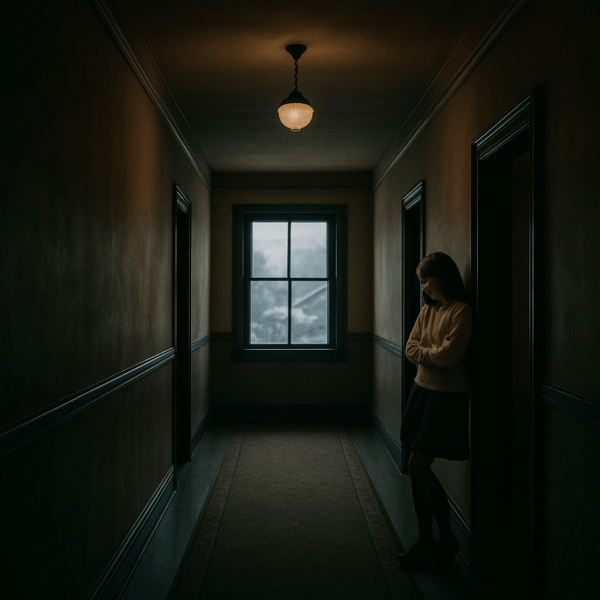
She and I ended up in the hallway.
We were already wrapped into each other — that soft, accidental teenage cuddle that feels both unplanned and absolutely right. The near-near kiss wasn’t something either of us aimed for. It was just the way our faces happened to be turned, the warmth, the pause, the sense that one more inch would have turned the moment into something else entirely. Instead it stayed suspended, held in the exact shape it needed to take.
Her name was Blythe.
I used to say I wrote poems “for girls who told me they were pearls,” but that was just self-mythology. In truth, I only ever wrote for one girl. And she never asked for anything.
Most of the real fun we had wasn’t during dances at all. It was in the gym at Saint George’s in Spokane. For high school games, boys and girls, the gym would be packed, and during the boys games she would sit in the front-row, and every single time I did anything even vaguely ok — a decent pass, a shot that actually went in, a little rebound — I’d look over mid-play and smile, and she’d already be smiling. She was in my corner before I understood what that meant. She didn’t push. She didn’t need to. She just stayed.
There was a suspended electricity in those years — innocent, unclaimed, lightly glowing. We never really dated. We never made a move beyond the moment that almost happened and didn’t. But she calibrated me. She was my corner girl. And that mattered.
The ending came the way some endings do when you’re young — clean as scissors. She graduated. Life tilted. The season shifted. Nothing dramatic, nothing painful. Just a quiet snap. A door that didn’t slam but simply shut.
I miss what we could have been, but I don’t regret a thing. Some connections aren’t meant to become stories. They’re meant to become orientation.
I don’t go back to that time for longing. I go back because that was the first time safety arrived before desire — and because that pattern stayed with me. It’s how I know when something is real.
I don’t need anyone to remind me how it ends. A hallway, a graduation, a clean break. What I keep going back for isn’t the ending anyway. It’s the part before — the girl in my corner, the room that opened in front of me, the feeling I carried forward.
Dedication
For Blythe, who stood in my corner before I even understood what that meant.
Note: If you enjoyed this piece, you might also enjoy the ones below which take up somewhat similar themes.
Say hello to Mr. Midnight tell him he’s still got that same old shine Tall, dark, walking wounded heart as lonesome as mine
Paul Westerberg, refracted
Note: I thought I was done with the Scenes from St. Georges series, however circumstances have arisen such that I am compelled to write one final entry. I recently learned that my high school classmate and friend, Dyche Alsaker, passed away in September of this year. This is a tremendously sad circumstance, and my heart goes out to Dyche’s family and all of those, and there were many, who loved him. In addition, I wish here to write a kind of second coda to my last piece in the St. George’s series, which can be found here. In that piece I wrote about my friendship with Dyche, mostly during senior year and the summer after, as well as a regrettable conflict that arose between our respective fathers several years after we graduated. I won’t reprise all of that here, however suffice it to say that, in a set of events that had really nothing to do with Dyche and myself, Dyche’s father was part of the board of directors of the school when my father left after challenging the then principal, and I guess by extension the board. Here is the second coda.
I wrote seven pieces in my series from St. George’s over a few years, and the first six were easy. These were mostly cheerful and sometimes humorous reminiscences about my time there and some of the characters, students and teachers, that populated the school. The seventh piece, on the other hand, took a while. This was because of its somewhat difficult content and because the structure and tone needed to be a little different, however mostly this was because I wanted Dyche’s permission, essentially, to publish it. Readers of that piece may recall that it dealt with the end of my father’s time at St. George’s, which stretched over two decades. The way that time ended was, I believe, deeply painful to both my father and my mother, and as a result, I guess, they have never really talked to me about it in any detail. As I wrote in the prior piece, I had to sort of piece things together from bits and pieces I heard over time. Because Dyche’s father was also a central player in that drama, and because I hadn’t talked to Dyche since that time when I was working on the series, I didn’t know how he felt about that whole time, and what he might think about the piece which would end up being dedicated to him.
The St. George’s series had a number of readers, mostly I suppose because over time people become increasingly nostalgic and some folks probably re-lived their own years at the school though my memories, which was really gratifying. Dyche was one of my best readers, and he commented on a number of the pieces, and helped shape one of them as well. Therefore, when it came to the last piece, I actually wanted to talk to him and get him to vet what I was working on, so to speak. So I contacted him through Facebook and told him what I was planning and that I wanted to connect. At first he said that he had to think about it, and then he got back to me and said he would like to talk. I called him, sometime in late 2022 as I recall, from the street here in Kyoto, and we talked for about an hour. He told me some of the things that were going on in his life, mentioned how much he enjoyed the series, talked about The Replacements, and then we talked about the conflict that led to my father leaving St. George’s. Dyche mentioned that his own father, much like mine, seemed to avoid the whole topic, and that what he himself knew of the events were also pieced together from reports of other of our classmates. We discussed how odd it was that the topic was essentially verboten in both of our households, and he gave me his blessing to write the piece. We parted on good terms, and I was very grateful to him for his time and his kindness. Then, I sat on the piece for more than a year because I just couldn’t find the tone.
Finally, in early 2024, I re-engaged with the piece and was able to get my head around a structure. The first half of the piece was an easy-going and upbeat account of my memories of hanging out with Dyche for a few months between high school and college in 1992, and the second half was a kind of reconstruction of what I understood to have occurred between our fathers and the school board in the early part of this century. I was happy with what I came up with, but still felt the need to run it by Dyche before I hit publish. So I sent him a draft by email, and he said he had a lot going on but he’d get back to me soon. About a week later he wrote back saying he thought I had written fairly and congratulated me on the whole series. He also said something kind of funny, which was that he was thinking of asking me for an update on the piece but didn’t want to seem egotistical. I was once again moved and grateful to him; I made some edits and published the piece. Maybe because of its content, or perhaps because it had been a while since I had updated the series, the piece got somewhat less feedback than the earlier ones, however a number of people read and reacted to the piece. I was done with St. George’s and moved on to writing about the songwriter Craig Finn.
I am not sure about this, and people who were closer to Dyche in his later years than I would know, but I wonder if he was already sick when he wrote to me in 2024. If he was, he didn’t mention it. When we communicated that year he alluded to some challenges in his life, but I’m not sure.
Before I close, I want to mention one memory I have of Dyche that I left out of the earlier piece. I recall him saying once that “if someone asks you to do something, do it really badly. That way they’ll never ask you again.” Now Dyche did many things very well, so I think he was just being sarcastic, but I always found this comment funny, and it stuck with me.
Overall, as I wrote prior, Dyche was a big influence on my life in terms of the depth of his music fandom. And, I really liked him. He was funny, generous, and had a huge heart. Everyone impacts someone I guess, but Dyche impacted so many people in a positive way. He will be greatly missed.
Dedication: As piece VII was already dedicated to Dyche, I guess this one will be for Spokane. The picture in the header is of the Spokane River, not the one that passed by the St. George’s campus, but the larger one. I never really loved Spokane to be honest, and haven’t been back since 2001, but I know a lot of people do. I understand this–it’s where we grew up after all.