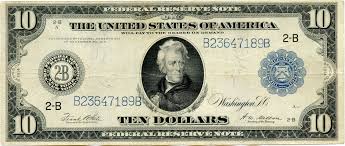
On Living Paycheck to Paycheck

Note: This essay gathers together several different periods of my life when money was tight and the margin for error was thin. Some of these moments go back many years, including a year abroad in Dunedin, New Zealand, at the University of Otago when a bureaucratic oversight left me without a meal plan for most of the academic year and forced me into a very basic daily routine of trail mix, apricot bars, and coffee. Others come from later phases of adulthood: early teaching years in Kumamoto, young family life in Kyoto’s Mukaijima district, the strange suspended months of COVID, and the present day.

I include these episodes not as a complaint but as a recognition of how common this experience actually is. Living paycheck to paycheck is often imagined as the result of bad choices or personal irresponsibility, yet in reality it is frequently the ordinary condition of people who are working hard, raising families, paying tuition bills, navigating institutional decisions, and simply trying to keep their lives moving forward.

The story of my friend Sergio Mandiola, included here with his blessing, illustrates another version of the same pattern. A long career in education, a series of institutional shifts, and one administrative decision were enough to push a once-stable life into years of financial improvisation before things slowly stabilized again.

What these experiences have taught me is less about money than about perspective. Hunger sharpens the mind, small kindnesses matter enormously, and the distance between stability and struggle is often much smaller than we imagine. For that reason, the real lesson of living paycheck to paycheck is not resentment but compassion.

Epigraph

Money won’t save your soul.
— Tim Burgess


A lot of people talk about living paycheck to paycheck as if it were a kind of personal failure. A budgeting problem. A lack of discipline. A mistake someone somewhere made.

In reality it is something far more ordinary than that. It is simply the condition in which millions of people live their lives. Often quietly, often competently, and often without anyone around them quite realizing how narrow the margin really is.

I first learned that margin in Dunedin.

I was on exchange at the University of Otago and through a small bureaucratic mix-up I was not on the meal plan. I had no work visa and no savings. My parents sent twenty dollars here and there, but it took months before anyone realized the full situation.

So for nearly the entire academic year I developed a system.

Breakfast and dinner came from a large white bucket in my room: trail mix, carob chips, raisins, peanuts. Lunch every day was the same: one yoghurt-covered apricot bar and one black coffee at the campus canteen. NZ $3.50.

Day after day after day.

My roommates didn’t know. They just thought I hated the mutton they cooked every night. And to be fair, I did hate the mutton.

Every once in a while a friend named Maren would buy me a Snickers and a Coke at the student club and we would sit there watching the O.J. Simpson chase and the trial coverage on television. Those snacks felt like luxury.

After Dunedin, life improved but the margins never entirely disappeared.

In Kumamoto in 1997 I was earning about ¥250,000 a month teaching English at NOVA. It wasn’t a fortune but it was enough. I could go to the izakaya, drink Asahi, play pool, and date the woman who would later become my wife. It wasn’t abundance, but it was livable.

A few years later, from 2002 to 2004, my wife and I were living in a subsidized apartment in Mukaijima on the Kintetsu Line outside Kyoto. I was working part-time as a social studies teacher and earning roughly the same ¥230,000–250,000 a month. Our rent was only ¥40,000 thanks to her hospital job in Uji, Kyoto. The apartment had three large rooms, a kitchen, a genkan, and it was surprisingly well insulated.

Our son Hugh had just been born and wasn’t yet in daycare. My wife worked night shifts and often made more money than I did. We weren’t rich, but we made it work. And we were happy.

Then years later came another version of the same story. During COVID I took leave from work and drifted into a strange suspended routine. I spent most of my time in my room playing chess online, watching chess streamers, and talking on the phone. My peak rating reached about 1200, which I was absurdly proud of.

My expenses were minimal because my life had contracted. I only went out drinking with a friend named Philip maybe three times a month, usually to places like Takimiya’s, Stones, or Rub-a-Dub.

Things were precarious, but manageable. Barely. And then there is the present.

In January of 2024 I had roughly $60,000 in savings and no debt. My wife and I also had about $20,000 in gold and platinum and a couple of retirement plans. It looked, on paper at least, like stability.

But the final years of my son’s schooling at the University of Auckland slowly drained those savings. As I write this in March of 2026, at age fifty-one going on fifty-two, I have about $3,000 in the bank and another $3,000 on a Kyoto Bank credit card. My ANA card covers most day-to-day expenses, but that line of credit has been cut before and could disappear again at any time.

I am a professional educator with thirty-five years of experience. I am gainfully employed and reasonably skilled at what I do.

And yet the margin remains thin. But my story is hardly unique.

My friend Mandiola is sixty-three years old and has spent most of his life in Los Angeles. He knows that city better than almost anyone I have ever met. His first job after high school was delivering maps for a map store, which meant driving all over the city and learning it street by street. Later he earned a degree from a University of California campus and became a high school teacher in the Beverly Hills public school system.

For a while things were stable. Then life intervened. Divorces, relocations, graduate school that never finished, and years of improvisation eventually brought him back to Los Angeles where he landed what he considered a dream job in an independent study program. He taught the children of show-business families and even got to know people like Larry King through the students he worked with.

He loved the work. He was his own boss and taught every subject except music. After school he played board games with the kids. He was, in his words, in hog heaven. Then a new administration arrived. He calls them the Chicago mafia. They decided he was too expensive and too independent. He was replaced, after years of conflict and legal battles, by what he describes as three bureaucratic drones. A $60,000 settlement kept him afloat for a while, but the money vanished quickly.

When I visited him in Los Angeles in March of 2024 he was essentially broke. He struggled to cover his mortgage, his association fees, his car insurance, and groceries at Trader Joe’s. He borrowed money from friends, from his mother, from anyone willing to help.

Eventually he pieced together work again through substitute teaching and tutoring. Today he earns about $4,100 a month and is just months away from retirement eligibility. Even now he occasionally borrows money. Not because he is irresponsible, but because life sometimes simply runs that way.

And that, in the end, is the point. Living paycheck to paycheck is not a moral failure. It is a structural reality for a huge portion of the population. Careers falter. Administrators make decisions. Tuition bills arrive. Children grow up. Systems fail. Life shifts. Hard times can strike almost anyone.

What those years taught me — from Dunedin to Kumamoto to Mukaijima to the strange suspended months of COVID and the present day — is how little we actually need to survive, how hunger sharpens the mind, and how enormously small acts of kindness can matter.

But most of all they taught me how close to the edge so many people really are. Which is why compassion is not optional. It is necessary. Now more than ever.

Dedication

For the middle and lower classes.
For now and eternity.
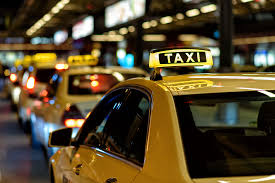
When the Taxi Driver Loses the Plot: A Poem

Note: This poem is a reconstruction. The original version appeared briefly on my first blog, Classical Sympathies, sometime around 2010, and like many things from that early site it was eventually lost in the digital shuffle. What remains here is an attempt to recreate the spirit of the piece from memory.

The poem itself is a mash-up of two real taxi rides that somehow fused together in recollection. One took place in Adelaide, Australia, during a ride from a hotel to the airport where the driver became thoroughly disoriented and began looping through unfamiliar streets. The other occurred years later in Kyoto, somewhere north of Sanjo, when a similarly confused driver managed to transform a short ride into a wandering tour of the nighttime grid.

Over time the two rides merged in memory into a single universal experience: the moment when a passenger realizes that the person holding the wheel may no longer fully know where he is going.

The result is presented here, perhaps a little mythologized, as a small recovered relic from the early days of the archive — a lost classic of the wandering taxi ride.

The haunted sweating taxi driver
took another right,
the meter ticking bravely
in the middle of the night.

The city slid past sideways
in a crooked grid of light,
and every turn he promised
somehow made the journey slight.

The haunted sweating taxi driver
muttered to the wheel,
as if the streets were hiding
some essential missing deal.

A restaurant we’d passed before
returned into my sight,
which meant the haunted driver
had again chosen wrong from right.

The haunted sweating taxi driver
took another right,
and wiped his brow dramatically
beneath the yellow light.

Now when your taxi driver loses the plot
this could go on all night,
because the man who holds the wheel
is captain of your flight.

You sit behind his kingdom
like a mildly troubled guest,
while every wrong decision
slowly multiplies the rest.

The haunted sweating taxi driver
leans forward in his seat,
as though the road might whisper
some confession through the street.

The meter ticks its steady hymn
to time and mortal plight,
while hostage to the haunted man
who’s searching for the right.

The haunted sweating taxi driver
takes yet another right,
and somewhere in the city
dawn prepares its quiet light.

But we remain in orbit
of his navigational blight—

for when your taxi driver loses the plot
this could go on all night.

Note: If you like this poem, you may also like the poems linked below. Happy reading!

In Partial Defense of Reddit

Note: This essay is not intended as a blanket endorsement of Reddit. The platform has many well-documented flaws: trolling, pile-ons, misinformation, and a general tendency toward chaos. Much of its reputation as one of the rougher corners of the internet is entirely deserved.

The point here is narrower.

Despite its disorder, Reddit also preserves something that has become rarer elsewhere on the modern web: large, open conversations among people who possess small but real pockets of knowledge about highly specific subjects. When these fragments accumulate—through correction, argument, memory, and curiosity—they can occasionally produce surprisingly informative results.

The examples in this essay range from the internal royalty disputes of Jane’s Addiction to a map of alleged sightings compiled by the Bigfoot Field Researchers Organization. In both cases the same phenomenon appears: individuals contributing small pieces of cultural memory that gradually assemble into something resembling a collective understanding.

This is the limited claim of the essay. Reddit is frequently messy and unreliable, but it also functions as a peculiar kind of public knowledge commons—one where curiosity, enthusiasm, and the occasional obsessive hobbyist can still combine to produce insights that might otherwise remain scattered or forgotten.

Everyone knows that Reddit is terrible.

It is chaotic. It is full of profanity, bad jokes, half-informed opinions, and the occasional theory that appears to have been typed at three in the morning by someone who has not slept since the Clinton administration. Entire careers have been built explaining why Reddit represents the worst tendencies of the modern internet.

And yet.

The other day I was reading a thread about the latest implosion of Jane’s Addiction, the once-great Los Angeles group whose internal tensions have been simmering since roughly the Reagan administration. The immediate subject was the collapse of a reunion tour following an onstage altercation involving frontman Perry Farrell. The comments were exactly what one would expect from Reddit: profanity, gallows humor, and several variations of “this band has been breaking up since 1991.”

But as the thread continued something interesting happened.

Between the jokes and one-line reactions, the users began reconstructing the band’s internal history. Someone noted that Jane’s had already declared itself finished several times across the decades. Someone else pointed out that the early sound of the band had been shaped heavily by bassist Eric Avery. Another commenter raised the eternal rock-band problem: royalties.

And this, as it turns out, is where the story becomes interesting.

Money has a way of dissolving even the most inspired musical partnerships. Bands begin as small utopian experiments—four or five people creating something new together—and then the checks begin to arrive. Once that happens, questions emerge that are almost impossible to resolve cleanly. Who wrote the song? Who contributed the riff? Who deserves the lion’s share of the publishing?

Rock history is essentially a graveyard of groups destroyed by arguments over fractions of ownership.

In the thread I was reading, one user mentioned a detail I had not known: a claim that Avery at one point wore or promoted merchandise suggesting a 51 percent stake in the band’s identity. Whether literally true or not, the anecdote captured something fundamental about how these disputes unfold. Creative partnerships may begin democratically, but the distribution of credit rarely stays that way.

The remarkable part was that I had learned all of this not from a music journalist or a band biography, but from a chaotic conversation among strangers.

Which brings me to the modest defense of Reddit.

The platform’s reputation is built on its worst features: trolling, argument, and endless bad takes. All of those things exist, of course. But what critics often miss is that Reddit also contains something else: an enormous micro-density of cultural knowledge.

The process is messy. Someone posts a half-remembered fact. Someone else corrects it. Another person adds a detail from an interview they once read fifteen years ago. Gradually, through the collision of dozens of small contributions, something resembling a coherent picture emerges.

It is not elegant. It is rarely authoritative in the traditional sense. But it is often surprisingly informative.

What Reddit does, at its best, is something the modern media ecosystem sometimes struggles to replicate: it gathers together thousands of people who care obsessively about very specific things. Musicians. Gearheads. Amateur historians. Programmers. Aviation nerds. Movie buffs. Backyard astronomers.

And when those people start talking, knowledge begins to accumulate.

The phenomenon becomes even clearer when the subject matter becomes absurd.

Consider a thread from the cryptozoology corner of Reddit devoted to a map of Bigfoot sightings. At first glance the discussion appears to be pure nonsense. The premise itself—tracking sightings of a large unidentified forest creature—is hardly the sort of topic one expects to produce serious information.

And yet the map itself is strangely compelling.

People immediately begin checking their regions. Someone from Maine wonders why Bigfoot seems to avoid the state despite its endless forests. Another user proposes that two “alpha Bigfoots” are fighting for territorial dominance between Maine and Canada. Someone else links to the sightings database maintained by the Bigfoot Field Researchers Organization. A commenter from rural Illinois notices that two reported sightings occurred along the same river that runs behind his property and proceeds to describe the terrain—swampy woods surrounded by miles of farmland where, he notes, something large might plausibly remain hidden.

The subject is ridiculous.

The conversation, however, is oddly informative.

You learn about geography. You learn about folklore. You learn where people live, how they interpret the landscapes around them, and how stories circulate through local communities. What begins as a joke about Bigfoot gradually becomes something like amateur field anthropology.

This is the strange virtue of Reddit.

The platform functions as a kind of digital commons in which thousands of small fragments of knowledge collide in public. No single commenter possesses the full story. But collectively they often assemble something larger than any individual source might provide.

Which leads to the modest conclusion of this essay.

If you want perfectly verified information delivered in polished and authoritative form, Reddit is not the place to go. But if you want to watch curiosity, memory, obsession, and local knowledge combine in unpredictable ways, it can be surprisingly useful.

It turns out that when enough ordinary people gather in one place to talk about the things they care about—even Jane’s Addiction royalty disputes or the migratory patterns of an imaginary forest giant—they occasionally produce something that the official channels of culture struggle to replicate.

Not perfection.

But knowledge, nonetheless.