STFU
—Everybody
Yo. Can you make that reverb pop a little bit for me?
—Conor Obrest
Everyone’s a critic.
—Slacker
I. Early Morning
Since my wife and I decided to get divorced about three months ago, I have noticed something curious. Almost everyone around me seems suddenly seems to have an opinion about how I should be conducting my life.
My family has opinions. My friends have opinions. Women I have dated have opinions. Women I have not yet dated have opinions. Complete strangers even seem to have opinions. Apparently becoming a fifty-two-year-old divorced man means acquiring an advisory board whether you requested one or not.
I am open to friendly advice from time to time. Good advice is one of life’s gifts. I have received plenty of it, and I have occasionally even followed some. But I am now fifty-two years old. I am newly divorced and dating for the first time in nearly thirty years. I am working hard to turn a thirty-year teaching career into a full-time writing career within the next ten months. I have finances to sort out, health problems to manage, a young adult son I love very much and need to keep showing up for, and a romantic life that presently resembles an international airport during a weather emergency.
I feel as though I have five full-time jobs. And everybody has a goddamn opinion.
My mother has opinions about my dating life despite not having dated since the Nixon administration. My on-again, off-again girlfriend Litz has various opinions about my daily habits. Men operating small medical clinics have opinions about where I should sit while smoking outside in the sun with my shirt off. Apps have opinions about which of my messages should be permitted to survive for more than twenty-four hours. Google Maps has various opinions, almost all of them wrong, about where I am, where I am going, how long it will take me to get there, and whether I should abandon the journey altogether.
Even the microwave in my hotel room had an opinion this morning. Its opinion was that it should be positioned ten feet from the nearest electrical outlet.
The day began around 3:30 AM after approximately four hours of sleep. This may not sound ideal. It was not unusual either. I have slept poorly since I was 14 years old, and I rarely get more than about 5 hours of sleep throughout the day.
I was staying at the Purple Eye hotel in Osaka, a wonderfully strange hotel with Art Deco ambitions that was once a love hotel, a large television, a karaoke microphone, a projector I had no intention of learning how to operate, and enough buttons beside the bed to launch a small spacecraft.
The room also has a flickering light behind my head that I cannot seem to turn off, and a water dispenser I can not operate without either burning my hand or extracting approximately a quarter-cup of cold water after several minutes of negotiation.
Both are out of control.
The phrase “out of control” has become increasingly important to me. Google Maps is out of control. Hotel appliances are out of control. Dating apps are out of control. My mother was especially out of control just this morning. Litz is often out of control, although in a different and generally more charming manner. I am frequently out of control myself, which is perhaps the point.
As the epigraph above says, everyone is a critic. Nobody perhaps is more committed to criticism than the man publicly documenting the behavior of everyone around him. I got dressed and walked to a nearby Lawson for a latte and some breakfast. I badly needed both.
The store was small and packed tightly enough to qualify as sushi-zume, a useful Japanese expression meaning crammed together like sushi in a box. The man behind the counter asked whether I wanted sugar in my latte, then prepared it himself behind the register. This felt like old Japan to me: the Japan of small courtesies, personal service, and coffee assembled by an actual human being rather than surrendered by a machine.
He mixed in the sugar. He handed me the cup. Perfect. Goldie Goldie baby.
Outside, the cicadas were screaming. Cicadas are called semi in Japanese, which I find funny because they are just about as loud as semi-trucks. They roared from every tree with the confidence of creatures who had waited underground for years and intended to make the most of their brief public career.
I sat on the stoop in front of what looked to be a deserted apartment block, right next to a small medical clinic. I drank my latte, smoked, and talked into my phone. A man arrived at the clinic pushing a woman in a wheelchair and asked me to move.
Technically, I was not on his property. It was none of his business. Spiritually, I was, apparently, obstructing the entire Japanese healthcare system. I ignored him and he went inside the clinic. This is the kind of thing that happens when everybody has an opinion. The opinion may be entirely reasonable. You may even comply with it. But you still resent its existence.
A few minutes later, another man approached me. He did not speak to me in either Japanese or English. He simply tapped me on the shoulder and crossed his forearms into a large X.
This was a far more efficient method of instruction. No explanation. No appeal. No philosophical argument. Just an X delivered by a masked man outside a clinic shortly after eight in the morning.
I put on my shirt, left it open, tucked a cigarette behind my ear, and returned to Lawson for two beers.
On the way back to the hotel, I considered the shape of the day. Pizza around eleven. A shower. Shisha at Shinsaibashi. Black wired headphones, because white Apple headphones look ridiculous and Bose headphones contain enough bass to flatten a small neighborhood. A haircut. Perhaps an early dinner. Perhaps a bar. Perhaps a date. Perhaps an escort. Perhaps not.
A great deal of my life presently exists in the word perhaps. The only definite plan was to call Litz.
The night before, she had told me that she wanted to marry me next year if I changed two habits. I was, let’s just say, quite surprised. This was a pretty big shift from her attitude just a day or two ago.
The first habit is my eating in bed.
This may sound more serious than it is. I do not generally eat full meals beneath the blankets. I am not lying there with a plate of Fettuccine Alfredo balanced on my chest. I eat crackers, Oreos, an occasional Snickers, perhaps a slice of pizza. Small foods. Bed-compatible foods. Foods requiring little more equipment than a hand and a functioning mouth.
Still, I could stop. I could eat at the kitchen counter. I could eat on the couch. I could even eat at the table like a civilized human. She eats in bed too, but whatever.
The second condition was that I listen to her more. This was also reasonable and yet considerably more difficult.
Everyone wants to be listened to. Litz wants me to listen to her. My mother wants me to listen to her. My friends want me to listen to them. I listen to my son. Even Google Maps wants me to listen, although Google Maps has forfeited that privilege through repeated incompetence.
I probably should listen more. I should also probably talk less. This became increasingly clear as I walked back to my room carrying two beers, breakfast, wine, Pocari Sweat, gum, cigarettes, and enough miscellaneous provisions to survive a modest siege.
Back in my room, I attempted to heat the breakfast wrap. The microwave would not start. I pushed buttons. I turned dials. I stared at Japanese instructions. I questioned the fundamental competence of the hotel in general.
Then I noticed that the microwave was not plugged in. The nearest outlet was, oddly, across the room. I had to lift the microwave from its shelf, carry it several feet, unplug something else, place the microwave on the floor, and stretch its cord across the carpet like a tripwire intended to kill me before lunch. The wrap heated beautifully. It was also hot enough to burn my mouth.
I thought back over the morning. Everybody seemed to have an opinion about what I should be doing this morning. My mother. Litz. The clinic men. The microwave. The cicadas. The apps. The hotel. The entire accumulated machinery of modern life.
And of course I had opinions about all of them. This is the complication.
I would like everyone else to shut the fuck up, but I am writing four thousand words about them and shipping the out on main for the whole world to read.
I may need to shut the fuck up most of all. Not yet, though. It is only nine in the morning.
II. Late Morning
Back in my room, I did what writers have always done after experiencing life for approximately six hours.
I immediately started writing it down.
The first draft is just to get things down. It exists in order to facilitate the second draft. Since today’s theme appeared to be criticism in all its various forms, I decided it would be hypocritical not to begin with my own.
“Conducting my life” was better than “living my life.”
“Nixon administration” was funnier than “Carter administration.”
Google Maps no longer merely had an opinion. It had forfeited its right to an opinion through repeated incompetence.
One sentence at a time, the morning crawled forward.
This is one of the stranger aspects of writing a journal. You do not simply remember your day. You improve your memory of it. You compress it. You rearrange it. You remove three dull conversations and keep the one line that somehow explained the entire day. The truth remains, and it becomes a better story.
As I edited, I put on Camper Van Beethoven. Their singer David Lowery has a way of making profound observations while sounding as though he is simply amused by the absurdity of being alive. That has always appealed to me.
Half the time I think life is a tragedy.
The other half I think it’s a government experiment, and we’re driving like hell.
=====
It was just about noon by this point.
Although I’d managed to check several small errands off my list the previous day—as described in A Day of Minor Annoyances—a few still remained. I needed a new SIM card, a pair of wired headphones, and a haircut. I also still wanted to smoke some shisha. I’d planned to do it the day before but never quite got around to it.
The afternoon, at least on paper, looked straightforward enough. I’d take the short train ride from Uehonmachi to Namba, wander through Shinsaibashi, pick up the things I needed, find somewhere for dinner, and take it from there.
As it turned out, almost none of this happened.
The one genuine success came when I stopped into a nearby SoftBank shop. The staff told me I could reserve a new SIM card and, even better, that it would be free. This was a bonus. With this small victory secured, I headed back toward the hotel to continue editing.
III. Afternoon
The afternoon was beginning to surrender to the evening. I began editing my morning’s work. The essay was already getting pretty long and.the spine was there. The Lee Marvin quote was there. The rest would come later. I wasn’t trying to finish it at this point. I was trying to make it better.
Editing has become one of my favorite parts of writing. Maybe even more than writing itself some days. A first draft is discovery. An edit is where you quietly remove everything that was standing in the way of the story all along.
Music took over after that.
Steve Earle first. I found myself arguing, as I always do, with my own rankings. The Week of Living Dangerously still sits at the top for me, though Guitar Town, Goodbye, Copperhead Road and What’s a Simple Man to Do? all make convincing cases depending on the day. That’s the pleasure of living with music for decades. The rankings never stay still. The songs don’t change. You do.
Then came the band Happyness.
I put on my favorite song by them Montreal Rock Band Somewhere, and within seconds I remembered why it keeps finding its way into every conversation I have about favorite songs. Some records don’t ask for your attention. They simply drift into the room and improve the atmosphere. Happyness have always felt like that to me. Quiet confidence. Great guitars. No unnecessary drama. Just songs that seem happier to reveal themselves over the tenth listen than the first.
The playlist wandered the way my brain usually does: Whiskeytown, Pulp, Cracker, Sonic Youth, Mary Gauthier. I wasn’t looking for anything in particular. I was just following instinct. That’s still my favorite way to listen to music. One song reminds you of another, one artist opens a door to someone else, and before long you’ve traveled thirty years without ever leaving the bed.
By then I knew the afternoon was over. The shower could wait another few minutes. Osaka would still be there when I finally walked outside. One more song, I told myself. It’s a promise I’ve broken happily for most of my adult life.
IV. Dinner and Shisha at Shinsaibashi
Toward the end of my edit I dialed up Whiskeytown’s version Hey There Little Girl’s Don’t You Wanna Smoke Some Crack With Me, and for the hundredth time I found myself wondering whether a two-minute throwaway recorded at a concert nearly thirty years ago deserved a place among my twenty favorite songs of all time. The sensible answer is probably no. The honest answer is that it just might. Music has never cared much about running time or reputation. Every now and then a song simply grabs hold of you and refuses to let go. That one still does.
One of the pleasures of getting older is giving yourself permission to stop defending your taste. Twenty-five years ago I probably would have felt obligated to explain why a forgotten live recording deserved to stand alongside acknowledged classics. Now I don’t care. If a song moves me, it moves me. If it makes me want to walk a little slower through Osaka with a cigarette in one hand and nowhere in particular to be, that’s enough. Rankings are fun. I like them.
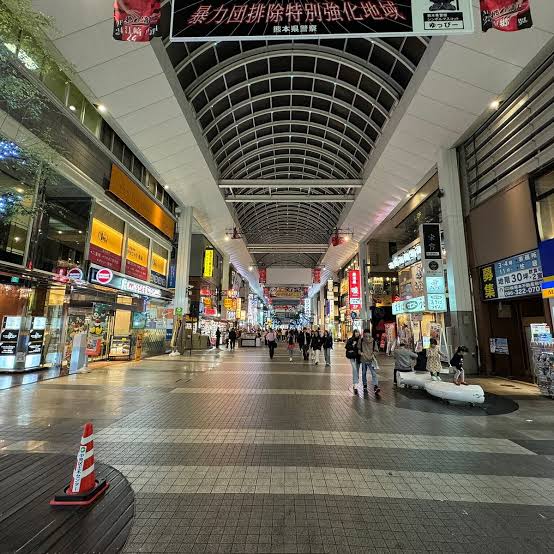
I headed north toward Shinsaibashi Station with no real plan beyond finding dinner and eventually making my way to Bar Nayuta. The streets were beginning to fill as the evening settled in. Restaurants were spilling light onto the pavement, smokers drifted in and out of doorways, security officers leaned on impossibly long wooden staffs as though they had all the time in the world, and every block offered another invitation to turn left instead of right. Osaka is one of those cities that rewards wandering. Even when you’re lost, you’re usually only a few minutes from somewhere worth finding.
V. Old Ghosts and Dinner
As often happens, I procrastinated leaving the hotel.
The afternoon disappeared into writing, music, a little wine, and the sort of gentle procrastination that always feels oddly productive when you’re a writer. Around six o’clock I finally got organized, walked over to Uehonmachi Station, boarded the short train to Namba, and wandered into Shinsaibashi looking for dinner.
On the way I noticed several policemen carrying long wooden batons tucked upright against their chests. They all carried radios clipped to their breastbone. They occasionally tapped the batons against the pavement as they walked.
Japan has remarkably little street crime. Shinsaibashi has even less. I still found myself instinctively straightening my posture and tensing up as I walked past them.
Some habits just persist that way.
Several years earlier I had a five month affair with a woman named Vicki. I met her at an upstairs open mic just a few minutes from Shinsaibashi Station. We spent five months together. I liked her very much. She eventually fell in love with me. Although I did like her, I was not in love with her, and in early 2019, as my life was becoming increasingly complicated, I ended the relationship.
I have not seen her since.
Recently I even looked into hiring a private investigator to try to find her again. The irony was that although I remembered her vividly, I somehow possessed remarkably little practical information that might actually help the PI locate her. The investigator’s fee wasn’t unreasonable, so the problem wasn’t the money. The problem was that memory doesn’t leave a forwarding address.
I still remembered where the old open mic was held, so I walked over and took the elevator upstairs, hoping against hope that she might be there. I glanced inside, saw there was nothing going on, and left. Some places deserve a brief visit simply because they remind you who you used to be.
I wandered around for a few more minutes looking for a restaurant I liked the look of. The streets were beginning to fill as the evening settled in. Restaurants were spilling light onto the pavement, smokers drifted in and out of doorways, security officers leaned on impossibly long wooden staffs as though they had all the time in the world, and every block offered another invitation to turn left instead of right. Osaka is one of those cities that rewards wandering. Even when you’re lost, you’re usually only a few minutes from somewhere worth finding.
Dinner itself was uncomplicated. I chose Café Bohemia because it is attached to what used to be the Hotel Unizo, where Vicki and I spent our second night together. The hotel has changed names since then, and is now a little more expensive than I care to pay, however Café Bohemia remains.
I ordered a Heartland beer, a plate of Bolognese, and some shisha. The pasta was smaller than expected but still excellent. The shisha was exactly as I remembered it—pleasant enough, but with an annoyingly weak draw that made every puff feel like work. After twenty minutes I’d had enough.
VI. Back At My Hotel
Walking back toward Namba Station, I found myself browsing escort websites again. I’d only been doing this for a little over a month, so I still knew very little about the industry. What fascinated me, oddly enough, wasn’t the women at first.
It was the pricing.
I have taught high school business for about 15 years, and I couldn’t stop wondering how the enormous price differences could possibly make economic sense. Some women charged modestly. Others charged sums that looked more like mortgage payments than hourly rates. All of them seemed equally attractive to me. For a while I found myself studying the market itself more carefully than the people in it.
Eventually I settled on a handful of women I was into it. By the time I reached the hotel, though, I had changed my mind.
There were essays waiting to be edited. Songs waiting to be ranked. A bottle of wine waiting for me. Suddenly, that sounded like the better evening.
From there the night settled into the familiar rhythm that has slowly become my profession: writing, rewriting, choosing photographs, adjusting SEO tags, publishing essays, and beginning the next one before the previous one had quite finished echoing.
The best nights rarely end with fireworks. They end with keys in the door, the familiar click of the lock, and the peculiar satisfaction of returning to a room that has slowly become your own. Home sweet home, even if home happens to be a small hotel room in Osaka. Two fresh packs of heaters hit the table beside a small mountain of convenience-store provisions: Pocari Sweat, a can of Ebisu beer, a bottle of wine, and a couple of small bottles of umeshu.
The room greeted me exactly as I had left it: clothes draped over chairs, chargers snaking across the floor, books stacked beside the bed, and the faint smell of tobacco that no amount of cracked windows can ever completely erase.
Before anything else came the little rituals. Plug in the phone. Hang the shirt that was almost dry and decide if my clothes from the day needed to be washed or not. Empty my pockets. Open the fridge. Take an inventory.
Somewhere in there I caught my reflection in the mirror and laughed. Another evening survived, another little expedition completed.
Outside, Osaka was still humming, but inside the room everything slowed to my preferred tempo. I checked the refrigerator. A Yona Yona Ale and some neglected soba that was quickly approaching its expiration date. I put the Pocari in to chill. I would drink the Ebisu first. Tomorrow’s problems could wait until tomorrow; tonight’s responsibilities extended no further than hydration, cigarettes, and deciding whether to eat the soba.
As the room settled into silence, music drifted from the laptop. A Michael… no, a Mark Kozelek song. His unmistakable voice. All of the sudden I found myself thinking about the movie Bound, still one of my favorite films from the Wachowskis. I have always preferred it to The Matrix. It’s tighter, stranger, funnier, and somehow more human. I especially love the line when the dude walks into a dark rom and says “It’s fucking dark in here” and then immediately gets capped. As I like to say, it’s funny to me. Great art has a way of sneaking back into your head when you’re doing the most ordinary things—sorting laundry, putting beers in the fridge, or brushing ash from the bedspread before company arrives.
By then the excitement of the night had largely given way to contentment. The room was as tidy as it was ever going to be. The bedspread had been rescued from a fresh snowfall of cigarette ash. My bladder, after several enthusiastic victories, had finally declared a ceasefire. The phone was charging. The drinks were cold. Whatever happened next would happen at its own pace.
It wasn’t one of those nights that changes your life. Most aren’t. It was simply another Osaka evening added to the ledger: a little wandering, a little music, a little planning, a little anticipation, and the quiet pleasure of returning to a place that, for now at least, felt enough like home.
VII. Late-Night Music Session
With what remained of my night, I meant to edit my most recent piece.
That was the whole plan. I drifted off to sleep for about half an hour around 3 AM, woke up, opened my draft, looked at it for all of thirty seconds, and then Conor Oberst showed up and threw a wrench in my plans.
It all started with his song Cape Canaveral. I had had it at number seven on my all time greatest song list for a while. I thought that this would still be about right, however when I played it again I suddenly realized that it was even better than I remembered. I played it two or three times, and came to the conclusion that it had, believe or not, jumped over Emmylou Harris’ Tulsa Queen, which has been my number song for the past decade. Just like that. After all these years, and all these arguments with myself, Cape Canaveral had somehow climbed to number one. I didn’t plan it. I didn’t force it. The song simply refused to lose,
I was listening to a version of the song on You Tube, and on this one Conor gives a short spoken introduction. He says:
“Yo… can you make that reverb pop a little bit more for me?”
It kills me every time. It’s such a small moment, a throwaway really, but somehow it makes the whole performance feel human. I laughed out loud every single time I rewound it. Little moments like these are why I love live recordings. They remind you there were actual people in the room making something instead of perfection arriving fully formed.
From there my night completely unraveled in the best possible way. Steve Earle. Ryan Adams. Sonic Youth, The Replacements. Moonface. Tindersticks. Lou Reed. The Church. Strand of Oaks. Craig Finn, naturally. Every time I thought I was done with my new ranking, another song would throw itself back into the fight. Easy Lucky Free jumped thirty places. Week of Living Dangerously reminded me just how much Steve Earle rules. Then Guitar Town barged back into the conversation like it had every right to be there. Which it does.
Somewhere in the middle of all this, I realized I hadn’t edited a single paragraph. I had taken a short nap, and taken care of another very ordinary biological need that I had passed in when I decided not to order the escort.. I drank another beer and stared out the hotel window into the night. I had spent nearly two hours arguing with myself over songs that have been following me around for half my life.
Honestly? Time well spent.
By six in the morning I made an executive decision. My days don’t end at midnight these days. They end when I finally decide to get some sleep. Six o’clock felt like a better border than midnight. So yesterday officially ended at 6:00 a.m. and Thursday began. I turned the music off, and made my way back to the Lawson for get some breakfast. The rankings, at least for now, were settled.
Conor was sitting at number one.
Tomorrow he’ll have to defend the title.
VIII. I Call My Mom
The last thing I had to do before breakfast was call my mother, Claudia, about a text I had sent her several hours earlier.
I stepped outside my hotel, sat down on the concrete stoop outside what appeared to be an empty apartment building, lit a cigarette, and dialed her number.
My mother and I have been engaged in a serious disagreement about my writing for over four years now.
She does not like that I sometimes use real names, real initials, and real events in my essays. I have tried to explain that many of the pieces she objects to recount events that took place thirty or even forty years ago. I have also pointed out that she and my father have long admired Gerald Durrell, whose autobiographical books affectionately—and yet often pointedly—make fun of his own family. I occasionally do the same. Every family piece I have ever written has been written with affection.
Until recently, our disagreements centered primarily around my essays about St. George’s School in Spokane, Washington, which I attended from first grade through graduation between 1980 and 1992.
From my perspective, this is all ancient history.
Most of the stories involve harmless episodes: a student pulling a fire alarm as a prank, a teacher dumping a garbage can over a student’s head, classmates getting into ridiculous situations that seemed important at the time and funny decades later. Many of the people involved probably do not even remember me, much less read my writing. A surprising number, however, do. I find this deeply gratifying.
I have been fortunate enough to accumulate many hundreds of readers for those essays, and several of my music and popular culture pieces have reached into the thousands. These are hardly world-beating numbers, however I enjoy checking my statistics almost every day to see how my pieces are doing.
Recently, however, our disagreement has taken a far more serious turn.
As mentioned earlier, my wife and I mutually decided to divorce a few months ago, and shortly afterward we filed our paperwork with Kyoto City Hall. We have agreed to divide our assets equally. She will return to her hometown of Kumamoto to help care for her aging parents. For the time being I will remain in Kyoto, continue teaching, and look for a modest apartment somewhere near downtown.
At the same time, I have become increasingly committed to making the transition from teacher to full-time writer as soon as possible, hopefully sometime next spring. I expect that transition to be challenging. Every day I find myself trying not only to become a better writer, but also to learn the countless small logistical tasks that accompany trying to make a living from writing.
My mother knows all of this.
Unfortunately, she does not seem to care.
Not long after the divorce, I joined several dating apps. Some have worked better than others. Some have proved to be too expensive. Most days these days I find myself talking to dozens of women online. Most of those conversations amount to little more than discussing our day, exchanging light flirtation, and making tentative plans that will probably never happen. A handful have developed into genuine friendships, and one has become a meaningful relationship, my on-again, off-again girlfriend, Litz.
Several hours before calling my mother, I had sent her another unusually direct text asking her, once again, to stop criticizing my writing, my dating life, and my romantic decisions.
When I called, it was around six o’clock in the morning in Japan and early afternoon on the American West Coast.
She told me she only had about ten minutes. That suited me fine.
I told her I wanted to say a few things, then I would gladly hear whatever she wanted to say in return. I explained that we had now been having exactly the same argument for four years.
I told her that my writing was none of her fucking business. If she disliked what I wrote, she did not have to read it.
Likewise, she was certainly entitled to whatever opinions she wished to hold about my dating life, my romantic life, or my sex life. What I was no longer willing to do was listen to those opinions every single time we spoke. Or at all.
For the past eight months I have been dealing with somewhat significant health problems. I have seen multiple doctors, am taking various medications, and have gradually begun improving. During that time I have often called my mother for ten or twenty minutes simply because I wanted a sympathetic ear.
Inevitably, those conversations have drifted toward my writing and personal life.
While she has been consistently compassionate about my health, she becomes intensely—and, from my perspective, relentlessly—critical the moment the subject changes.
I find this utterly exhausting.
I am generally a laid-back kind of guy. I dislike conflict. I dislike unnecessary stress about little things even more. Over and over again I had explained that these are my stories, my relationships, and my decisions. Over and over again she has repeated the same criticisms.
By this point, I am completely over it.
I told her she still treats me like an infant rather than a fifty-two-year-old man living three thousand miles away, trying to build a second life after the collapse of a nearly thirty-year marriage.
Eventually I lost my temper.
I had never spoken to my mother this way before.
I said, “Mom, I know you don’t like profanity, and I’m only going to say this once.
Shut the fuck up.
Butt the fuck out of my writing.
I don’t ever want to hear another opinion from you about my writing, my dating life, my romantic life, or my sex life. Ever.”
I reminded her that she would almost certainly never meet any of these women. On the unlikely chance that I eventually settled down with one of them, she might meet her at the wedding and perhaps once or twice afterward.
Beyond that, they simply were not part of her life and none of her business.
She met my dad in 1969. They built a stable marriage that has lasted more than half a century. Like every marriage, I’m sure it has had its ups and downs, but I have always admired—and, if I’m honest, occasionally envied—the stability they created together.
My own marriage had just ended. That meant I was trying to figure out what the second half of my life might look like.
Not hers.
Mine.
After I finished speaking, I told her I was ready to hear whatever she wanted to say.
She paused.
Finally she said there really wasn’t anything she could add. She would send me a short text later.
I told her I was absolutely serious. If she could not respect this boundary—if she could not stop treating my writing and my private life as subjects she was entitled to supervise—I would never talk to her again. No son or daughter ever wants to have to say this to a parent, and I certainly did not today. However, I felt like she had backed into a corner and I could see no other out of it.
I wished her a good day. Then I hung up.
As of this writing, it is about four hours after our call. It is the middle of the day West Coast Time, and she has not reopened. I guess she is considering her response, and I suppose I would the same in her situation. I am fine to wait, because as I her told on the phone, I will not her call her for a few weeks, or even a month. If she wants to talk to me, she can call me anytime, and I will pick up. This is where we currently stand.
VI. Final Reflection
Overall, today was a pretty good day. The conversation with my mother was tough, however I do feel better haven gotten things off of chest, and essentially issues her an ultimatum. How she choses to respond, I have no idea. I truly hope that she takes the all time she needs to think it over and lets me know that she is willing to meet me half way. If she does so, I will meet her halfway as well. If she does not, all bets are off. We shall see.
Looking back over the day, I realize that my long running argument with my mother isn’t really about my writing at all. Writing is simply the latest battlefield. The real disagreement is much older than that. It is about autonomy.
I am fifty-two years old. I am a grown man. I have lived in Japan for nearly three decades. In this time, I have juggled three careers, been married and divorced, raised a wonderful son, taught thousands of students, written hundreds of essays, and somehow we were still arguing over whether I am allowed to tell my own stories.
I am simply no longer prepared to continue this conversation at all.
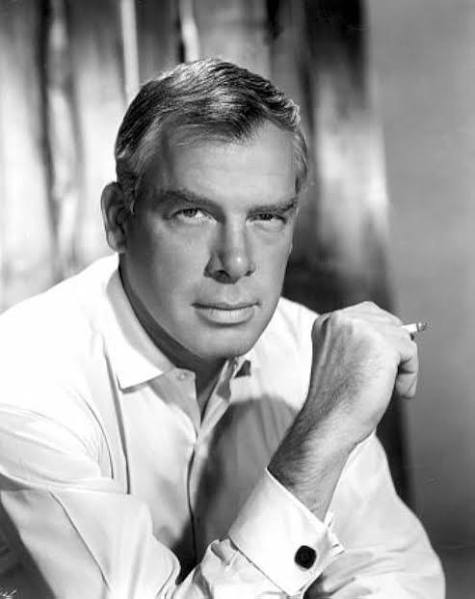
As I was starting this essay, I borrowed one of Lee Marvin’s great lines for the title. By the end of the day it no longer feels like a joke. In an interview with Roger Ebert from the early 1970’s, Marvin says:
“Look, if I want to develop an image, I’ll do it my own fucking way.”
I had spent much of the day getting lost, arguing with Google Maps, editing essays, thinking about old girlfriends, listening to Connor Oberst until dawn, eating convenience-store fried chicken, smoking and drinking wine, and having a very difficult conversation with my mother. And somehow all of it had become one story.
Nobody else could have written it exactly this way. That’s the point.
My mother doesn’t have to like what I write. Readers don’t have to like what I write. But the stories are mine, and so are the decisions about how to tell them.
Lee Marvin was right.
Nobody else gets to develop my image.
Nobody else gets to tell my stories.
That’s my job.
And, goddamn it—
I’ll do it my own fucking way.
Dedication:
For Lee. You sure make an image baby. You did your own fucking way, and you are my inspiration. You are my hero you glorious motherfucker.