The office was already in its late morning rhythm, which meant it had stopped pretending to be anything other than itself. Papers moved in shallow stacks. Ink dried on fingers that did not belong to the men using them. Conversations rose and fell without consequence, like breath in a cold room.
Niko sat at his desk with the quiet concentration of someone trying to stay slightly ahead of his own life. The work was not difficult. It was worse than that—it was repetitive in a way that made thought drift toward other, less supervised subjects.
The Southerner arrived without announcement, as he always did. He never seemed to enter a room so much as appear already inside it, as though the office had quietly agreed to produce him when needed.
He leaned on the edge of Niko’s desk.
“You are still here,” the Southerner said.
“I am paid to be,” Niko replied.
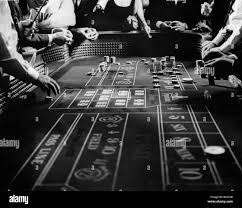
“That is not the same thing,” the Southerner said, smiling faintly. “Come along tonight. There is a place. A bathhouse annex. Dice. People worth meeting. You will find it useful.”
Niko looked up. “Is this work?”
“It is better than work,” the Southerner said. “It is instruction.”
Across the room, the Teutonic Knight cleared his throat with deliberate severity. He approached, holding a single sheet of paper as though it were evidence in a moral trial.
“This document,” the Knight said, “has migrated again.”
Niko glanced at it. “It appears to be in the correct file.”
“It was not there yesterday,” the Knight insisted.
“It is there today,” Niko said.
The Knight stared at him as though the universe had briefly failed to obey.
The Southerner sighed softly. “He is correct, you know. The paper is now where it should be.”
The Knight hesitated, recalibrated his indignation, and finally withdrew with a small, wounded dignity.
When he was gone, the Southerner tapped Niko’s desk twice.
“Seven,” he said. “Be there at seven.”
And then he left, as if the conversation had already been archived.
Scene Two: The Bathhouse Annex / Anya Appears
The bathhouse was warmer than the street in a way that felt almost indecent. Steam softened the edges of everything—voices, money, judgment, time. The annex behind it was not officially part of anything, which made it more important than anything that was.
Dice moved across low tables. Drinks appeared and disappeared, something without accounting. Men spoke in half-sentences that assumed agreement. Somewhere, someone laughed too long at a joke that had already ended. The crowd was a mixture of civil servants, military men, commercial travelers, and the odd semi-criminal element that such places always attract.
The Southerner greeted people as he passed, each nod suggesting a prior history Niko had not yet been invited into.
“Here,” the Southerner said at last, guiding him toward a table where the air felt slightly denser. “Watch first. Then play.”
Niko did not ask questions. He rarely did.
He sat.
The dice were small and worn, softened by use. They looked less like objects than habits. The first roll came quickly. Loss. The second, neutral. The third, unexpectedly favorable.
He felt something loosen in him—not relief exactly, but attention.
That was when she appeared.
Not entering so much as arriving within his field of perception, as though she had been standing just outside his awareness and decided to step in.
Anya did not look at the dice at first. She looked at him. Then she smiled slightly, as if confirming something she had already guessed.
“Buy me a drink,” she said.
It was not a request that demanded urgency. It was a test that did not require refusal. Niko paused just long enough to register the tone, the cost, the structure of the moment.
Then he nodded. “Of course.”
She accepted this as expected behavior.
Later, much later, after the dice had lost their clarity and the room had begun to fold into itself, Niko walked back through the city alone.
His lodging was a narrow stairwell building where the air smelled faintly of coal dust and old wood. He climbed slowly, as if each step were part of a decision he had already made.
In his room, he did not undress properly. He sat on the edge of the bed with his shoes still on, then removed them with deliberate care. Anya remained in the corner of his thoughts, not as a person exactly, but as a continuity.
He imagined a version of the future where she was simply present in it without explanation. Where evenings were not entered alone. Where dice were occasional rather than defining. Where risk could be contained rather than pursued.
He turned onto his back. The ceiling was damp in one corner. He would have to get that looked at, that is if his landlord could ever be located.
He fell asleep thinking, not of winning, but of Anya.
Scene Three: Two Weeks Later / The Restaurant
The restaurant was modest in the way things become modest after expense has been calculated too carefully. The light was steady, neither flattering nor cruel. Anya arrived slightly late, which made her presence feel more intentional when she finally appeared.
Niko stood when she entered, then immediately felt slightly foolish for doing so.
“You didn’t have to wait,” she said.
“I did not wait,” he replied. “I arrived earlier.”
This was technically true and socially irrelevant. They ordered simply. Niko paid without hesitation, though the number at the bottom of the bill lingered in his mind afterward like a minor echo.
Anya watched him over the rim of her glass.
“You are not very careful with money,” she said.
“I am careful in other ways,” he said.
“That is what men always say,” she replied, not unkindly.
There was a pause between them that was not awkward, but not empty either. It held its own structure.
When they left, she took his arm briefly—not as possession, but as orientation. He did not misread it. It was one night.
That would matter later.
Scene Four: The Morning / Anya’s Apartment
Morning arrived without ceremony.
Niko woke to the sound of movement in another room, not hurried, not performative. The ceiling above him was plain. The air smelled faintly of tea and something warm that had been cooked without ambition.
He lay still for a moment, listening to the normality of it. Anya entered carrying a cup of tea. She set it on the table beside the bed without comment.
“You stayed,” she said.
“I did,” Niko replied.
“That is not always how it goes,” she said.
“No,” he said.
She sat at the edge of the bed briefly, as if confirming that the space between them still existed in a usable form. Outside, the city was already functioning. Inside, nothing required immediate adjustment.
Niko took the tea. It was slightly too hot. He did not complain.
Anya watched him drink it, then stood.
“You should go soon,” she said, not unkindly.
“I know,” he said.
He did not move immediately.
And for a short while longer, neither of them tried to name what had already begun to form between them.
Note: A reflective piece on an Of Montreal track and a cluster of other listening moments where music stopped being background and became something closer to intervention. Starting in a cramped, overheated apartment in Furano, Hokkaido, on New Year’s Day 2006, the essay moves through a snowbound walk soundtracked by Kevin Barnes’ The Past is a Grotesque Animal, then branches outward to two other formative listening experiences—Bob Dylan on a half-awake AM radio morning, and Father John Misty in mid-career exhaustion on a city commute. It is less about music as taste than music as rupture: the way certain songs bypass interpretation and reorganize the inner self in real time, leaving the listener briefly unarmoured, and then altered.
Furano, New Year’s Day, 2006.
Outside, Hokkaido is doing what it does in winter when it stops pretending to be habitable: the air is an exposed blade, the snow hard-packed and granular underfoot, everything outside reduced to distance, glare, and breath. Inside Ken and Eri’s small apartment it is the opposite problem—heat pushed to excess, a sealed, overcompensating warmth that turns the room into a kind of shared pressure chamber. We are all in it together: Ken, serving in the Japanese army and posted up here in Furano; Eri, quietly and expertly holding the domestic center; their son Shinya, one year younger than our son Hugh; and the four of us effectively folded into one cramped sleeping arrangement that collapses night into proximity. It is kind, it is hospitable, it is also inescapably too much. The bed feels like it belongs to no one and everyone at once.
I remember wanting, with a clarity that felt almost physical, to go home. Not anywhere abstract—Kyoto specifically. My own bed. My own thermostat. The ability to set the heater somewhere between restraint and comfort rather than Arctic evacuation or sauna collapse. Kyoto’s winter is mild enough to forgive you for being human. Furano’s winter is not.
It is late afternoon on New Year’s Day. The holiday has that particular suspended quality: nothing is open, nothing is moving, and even time seems to have adopted local weather conditions. I have just discovered I have lost my wallet—ID, credit cards, the small administrative skeleton of a life—and I am trying not to let it tip everything further off balance. Eri will later find it, of course, lodged under the couch cushions, and post it back as if this is just another minor adjustment to the day’s equilibrium. At the time, though, it feels like the world tightening a little further around me.
So I go for a walk.
It is not a decision so much as a pressure release. I put on headphones, step out into the cold, and immediately the winter reasserts itself with total authority. No negotiation. Just air, snow, and the sound of my shoes biting into frozen ground. I am wearing sneakers instead of boots, which already feels like a small error in judgment that will have consequences.
And then I press play.
The Past is a Grotesque Animal arrives like a system taking over the system. Of Montreal, Kevin Barnes—whatever name you want to use for the person or force behind it—unfolding a twelve-minute architecture of confession, excess, fragmentation, and emotional overexposure that does not so much accompany the walk as overwrite it.
I do not listen once.
I walk for an hour in circles, or near-circles, or something that becomes circular by repetition. The song loops again and again—four times, maybe more—and each return feels less like repetition and more like deepening. The cold sharpens, the snow crunches, my breathing becomes part of the rhythm. At some point I am no longer fully tracking direction. I am just in motion inside the sound.
And I am crying.
Not the polite kind of emotional leakage you can disguise as weather or fatigue, but something closer to surrender. Barnes is doing something too exposed, too unguarded, too structurally unstable to defend against. It is not just lyrics—it is tone, duration, refusal of containment. The line lands like a fracture: you know things could be different / but they’re not.
That is the moment. Not because it is the most complex line, but because it is the simplest possible articulation of something I am already carrying without knowing it.
Ken and Eri are not the problem. In-laws are not the problem. Furano is not the problem. The problem is the accumulation: ambition just starting to harden into structure (new full-time role at Rits Uji after years of part-time teaching), the sense of trajectory toward IB, the pressure of becoming legible professionally, and underneath it all the quieter, more persistent anxiety about language, about my son’s future English, about whether proximity is enough when communication is not yet guaranteed.
Hugh is three. He doesn’t yet speak English in any sustained way. He will, later—Kyoto International School, gradual unfolding—but at this moment it feels like a future I am trying to pre-pay emotionally, as if worry could accelerate outcome.
And so the walk becomes something else entirely: a cold, repetitive loop through snow and sound, a private weather system synchronized to a song that refuses to stay at a safe emotional distance. I am half-lost in it, half-anchored by it. At some point I stop thinking in sentences.
When I finally turn back, the house is still there, still too warm, still intact. The ordinary world resumes its shape as if nothing has happened. Dinner will happen, conversation will happen, the night will pass.
But something has already been displaced.
That walk, that loop, that song—those remain as a fixed point. Not resolution, not transformation exactly. More like an encounter with a register of feeling I did not previously have language for, but which now exists and cannot be removed.
Barnes did not explain anything.
He just got through.
Kevin Barnes, the lead singer of Of Montreal, is one of those contemporary indie figures who refuses the clean categories people like to file musicians into. What’s known, in fairly plain terms, is that Barnes has moved over time into an openly fluid understanding of gender and sexuality—identifying in recent years as non-binary and queer, using multiple pronouns, and explicitly framing earlier work (including the Georgie Fruit persona) as something they now see as a problematic, overextended act of identification and performance. That matters because it retroactively clarifies what was already visible in the live persona you’re describing: drag-inflected glamour, exaggerated femininity/masculinity, theatrical self-invention as method rather than costume.
The deeper pattern is that Barnes’ sexuality and identity have never been “announced” in a single stable form so much as continuously staged—worked through performance, breakdown, and reinvention. The turbulence people sometimes read as “issues” (depression, relationship collapse, manic productivity, alter-egos like Georgie Fruit) sits less in the register of scandal than in the register of aesthetic method: self as unstable material. Albums like Hissing Fauna… are basically internal monologues set on fire, where romantic relationships, identity, and chemical imbalance are all entangled rather than separated into neat clinical categories.
Barnes sits in a lineage of glam and art-pop performers (Bowie is the obvious shadow) where gender play is not commentary on identity but the medium through which identity is continuously rewritten. The result is that the work feels emotionally confessional even when the persona is highly stylised: the sincerity and the artifice are not opposites; they are fused, sometimes uncomfortably so.
In short: Barns does not have a fixed sexuality, and lives t a life in which sexuality, gender, and performance are permanently entangled, and where his “issues” are inseparable from the creative engine itself.
Grotesque Animal arrives less like a track than like a prolonged exposure to someone thinking out loud with no filter, no editing instinct, and no interest in letting the listener rest. The Past is a Grotesque Animal begins with a kind of conceptual detonation: the past is no longer memory or narrative continuity, but something bodily and misbegotten, an organism that looks back at you with the capacity to reveal not just error, but total epistemic miscalibration. The emotional register is already unusual here—this is not nostalgia, but retrospective humiliation at the fact of having ever thought you were right about anything.
From there the song folds into a second movement that is almost aggressively self-conscious: desire framed through embarrassment, attraction filtered through cultural overreach, intimacy mediated by theory. The encounter with a “cute girl” is not allowed to remain simple; it immediately drags in philosophical reference points, as if feeling itself requires justification through external intellectual scaffolding. What should be direct becomes over-determined, and the over-determination is precisely the point: the narrator cannot experience attraction without simultaneously watching himself experience it. Even love becomes something like a performance being observed in real time.
Then comes the pivot where the track sharpens into something more brutal. The language shifts from reflection to collapse—academic failure, emotional disintegration, the recognition of being “gone” while simultaneously narrating that disappearance. The crucial gesture here is not despair but authorship: the insistence that even breakdown is self-produced. That phrase—“authoring disaster”—is doing a great deal of work. It removes the possibility of passive suffering and replaces it with something more modern and more punishing: agency inside collapse. One is not simply breaking; one is composing the form of one’s breaking as it happens.
By the time the song reaches its midsection, it has abandoned restraint entirely. What had been psychological becomes infrastructural. The fantasy of tearing things apart—houses, bodies, structures of containment—is not really about violence in a literal sense, but about the release from moderation. It is a desire for total unbinding, for a condition in which limits no longer apply and intensity can proceed without correction. It feels adolescent in energy but philosophically adult in implication: if order is already failing, why not accelerate the collapse and inhabit it consciously? “Let’s tear our fucking bodies apart.” Indeed.
What prevents the song from becoming mere excess is its final register shift into intimacy as circuitry rather than refuge. The closing idea is not reconciliation but connection as transmission—human relation imagined as something like hidden wiring beneath visible separation. Two people are not joined by resolution or understanding, but by something involuntary and continuous, an electrical sympathy that persists even when emotional coherence has dissolved. Love here is not stabilising; it is conductive. It carries instability rather than resolving it.
That is what makes the piece so unusual over its length. It does not progress toward clarity or resolution; it deepens a single proposition through repetition and escalation: that consciousness is unstable, self-authored, and perpetually aware of its own failure to stabilise. And yet, paradoxically, that awareness itself becomes the form of continuity. The song does not resolve the grotesque past—it learns to live inside its ongoing presence.
I like Of Montreal, but I don’t love them, and the distinction has mostly to do with form rather than intent. A lot of the catalogue is deliberately baroque—dense production, shifting textures, long runtimes that feel less like songs than elaborately staged environments you’re expected to inhabit rather than enter. There’s a kind of aesthetic overgrowth to it: too many surfaces, too many internal modulations, too much happening at once for easy emotional access. It’s not background music, and it doesn’t really want to be. The cost of that ambition, for me, is that it can be hard to get inside the songs in a way that feels immediate or bodily. You end up listening at them more than through them.
Which is why The Past is a Grotesque Animal feels so different. It breaks the pattern entirely. It is still maximal, still structurally excessive, still willing to stretch time, but it has a strange internal clarity that most of the other material doesn’t. There’s no sense of ornamental distraction or sonic clutter for its own sake. Instead, everything feels metabolised into a single forward-moving emotional logic. It doesn’t feel like it’s demonstrating complexity; it feels like it’s trapped inside it.
And crucially, it has no filler energy whatsoever. Even at length, it maintains pressure. It doesn’t meander—it accumulates. Each section feels necessary to the psychological arc it is tracing, even when the content is volatile or self-cancelling. That’s the paradox: it is expansive but not indulgent, long but not diffuse. It behaves less like a composition and more like a sustained state of consciousness that refuses to close.
That’s why it stands apart. In a catalogue where density sometimes becomes opacity, this one remains piercingly legible. It is maximal, but it is also focused. It doesn’t just add material—it tightens around an emotional core until it becomes unavoidable.
The final movement of this piece is really about how certain songs don’t just soundtrack life, they puncture it and then rearrange the internal furniture. I don’t have many of these, but I have a few, and they tend to arrive at moments when I am not exactly looking for them.
One is Bob Dylan’s “Every Grain of Sand,” heard half-awake at around 6:30 in the morning on AM radio, sometime in my late teens. I hadn’t slept properly in years—there was a long adolescent stretch where nights just bled into mornings—and the room was that grey-blue pre-dawn wash where nothing feels fully solid. I remember lying there with the radio still on from the night before, drifting through news bulletins, late-night voices, static, and then this song arriving like a kind of moral weather system. It doesn’t announce itself so much as settle in. Something in it made the world feel both unbearable and forgiven at the same time. I stayed in bed longer than I intended, not because I was tired, but because getting up felt like leaving something important unfinished.
Another is much later, in 2017, walking down the steps toward a Starbucks after work, head full of obligations, deadlines, the general low-grade administrative pressure of being a functioning adult in motion. On comes Father John Misty’s “Leaving LA” from Pure Comedy, and I just stop. Not dramatically—no cinematic pause—but enough that I find myself going up and down the steps again, as if I’ve temporarily forgotten what the destination was supposed to be. The song is slow, almost patient with its own despair, and it carries that peculiar tone of someone who has both succeeded and slightly lost the plot in the process. There’s a line of thinking in it about authorship, irony, and being turned into something by other people’s projections—about how the self becomes a kind of public object. And it landed at exactly the wrong/right time, which is to say: it landed perfectly.
And then there is the Of Montreal experience, specifically Kevin Barnes’ “The Past is a Grotesque Animal.” I like Of Montreal, but I don’t love them in general. The songs are often too baroque, too long, too densely wired to immediately enter; they resist casual listening in a way that can feel like work. But this one is different. It is not just long, it is internally necessary. It moves through regret, desire, self-destruction, erotic confusion, intellectual posturing, collapse, and a kind of exhausted self-awareness that never quite resolves. The refrain—“things could be different, but they’re not”—is almost banal on paper, but in the context of the song it becomes something closer to a philosophical statement about adulthood itself. There is no exit ramp offered. Only repetition, escalation, and admission.
What ties these three moments together is not genre or mood, but exposure. Each of them removes a layer of insulation. Dylan makes meaning feel too large to comfortably contain. Misty makes authorship feel slightly embarrassing, slightly external, as if the self has already been narrated elsewhere. Barnes, in the Of Montreal track, does something more aggressive: he refuses to simplify anything at all, and in doing so forces the listener into a kind of emotional honesty that is hard to sustain.
These are not “favourite songs” in any simple sense. They are more like points of contact where life briefly becomes too legible, and then continues anyway.
Dedication:
For Kevin. I know you’ve been through it baby. I’ve been through it too and I can hear it dude. 100. You rock baby.
Note: If you ilke this piece you may also like the pieces about music below.
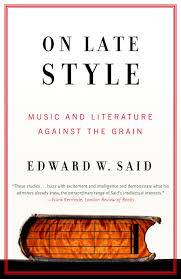
Note: This piece takes up On Late Style, the posthumously published and deliberately unfinished work by Edward Said on what he, following Theodor Adorno, calls “lateness”—not serenity or resolution at the end of a career, but tension, contradiction, and a refusal to reconcile. It’s a short book that opens out into large questions, and this will be less a full treatment than an attempt to think alongside it, particularly around the strange fact that a book about unresolvedness arrives in a form that is itself, in some essential way, unresolved.
Edward Said’s On Late Style is as rich a book as an unfinished work can be. Published posthumously, On Late Style expands on Theodor Adorno’s concept of “late works.” Late works are works with fall toward the end of an artist’s career, but not those like The Winter’s Tale or The Tempest which “reflect a special maturity, a new spirit of reconciliation and serenity often expressed in terms of a miraculous transfiguration of common reality” (6), but those like Beethoven’s Missa Solemnis or Lampedusa’s The Leopard–works which, in Adorno’s words are “devoid of sweetness, bitter and spiny, they do not surrender themselves to mere delectation,” or, in Said’s phrasing, are “uncoopted by a higher synthesis: they do not fit any scheme, and they cannot be reconciled or resolved” (12).
Said died in September 2003, before On Late Style was completed. In the foreward, his wife, Miriam writes of how Said was planning to get to work and get it done: “{In late August} he said to me as we were having breakfast that morning, ‘Today I will write the acknowledgments and preface to Humanism and Democratic Criticism {…} The introduction to From Oslo to Iraq and the Road Map I’ll finish by Sunday. And next week I’ll concentrate on completing On Late Style, which will be finished by December” (vii). He didn’t make it, and the little quote is a moving reminder that we never know how much time we have left. But Michael Wood, who arranged the various fragments Said had written on the topic of late style into this nearly seamless finished product, says that he doesn’t believe that Said ever wanted to finish the book: “Or rather, he wanted to finish it but was waiting for a time that would perhaps never have come. There would have been a time for this book about untimeliness, but this time was always: not quite yet” (xvi-xvii).
What does Adorno, and Said, mean by “late style,” and why would Said perhaps have not wanted to finish his work on this topic? Again, to understand what the term means we need to understand that late style is not simply synonomous with work accomplished late in life. Wood puts it this way, the “type of lateness {that Said was interested in} is quite different {…} from the unearthly serenity we find in the last works of Sophocles and Shakespeare. Oedipus at Colonus, The Tempest, and The Winter Tale are late enough in their way, but they have settled their quarrel with time” (xiii). In other words, these works are transcendent yet resigned–the author, knowing perhaps that death is coming to claim them, moves to preempt death by surrendering his grasp on reality and moving in the direction of a “higher synthesis,” and in the process attaining “a remarkable holiness and sense of resolution” (6). Said has nothing against such works at peace with themselves and with time, but these are not his subject. Lateness here seems to take its raison d’etre from Dylan Thomas; it rages against the dying of the light. As Said puts it, “Late style is what happens if art does not abdicate its rights in favor of reality” (9) and is “a form of exile” (8).
But if late style finds its power in a righteous rage against resignation, senescence, and serenity, it is at the same time complicit with disintegration and ultimately with death. In other words, an artist can embrace lateness in Said’s conception of the term, but can never be quit of it. Said writes: “For Adorno, lateness is the idea of surviving beyond what is acceptable and normal; in addition, lateness includes the idea that one cannot really go beyond lateness at all, cannot transcend or lift oneself out of lateness, but can only deepen the lateness” (13). Here, we understand why it was the Said, though he worked on the idea of lateness for over a decade, was not able to finish off what at only 160 pages is still a relatively slight work–only death itself can put a period on lateness. Wood writes: “for all his deep interest in lateness {…} Said was not attracted by the idea of a late, dissolving self. {…} Said wanted to continue with the self’s making, and if we divide a life into early middle, and late periods, he was still in the middle when he died at the age of sixty-seven {…} Still a little too early, I think he would have said, for real lateness” (xviii).
Another reason why On Late Style cannot exactly be classified as a “late” work is the urbane depth of its learning and its lightness of touch. Though deeply serious, Said in On Late Style wears his learning lightly, as only a true elitist can. For the fact is that despite its topic the book is oddly comforting; I can open it to any page in the moments before sleep and feel a rush of almost narcotic satisfaction and harmony. This effect is obtained not because Said takes an oppositional stance to his topic but because the extent of his learning is so colossal that it seems to achieve “a remarkable holiness and sense of resolution” based on its own gravitational force, even though acting in opposition to Said’s own thesis.
Thus, although we have only begun to scratch the surface of what Said has to say about lateness, it is already clear that while the relation between late style and classicism must for the moment remain unresolved, On Late Style as a text is a deeply classical enterprise, and this classicism is rooted in the remarkable range and depth of Said’s mind. Wood reminds us that being in opposition need not always mean manning the barricades–and this at least sets up the question raised in an earlier post about the ability of leftism and classicism to co-exist: “It is part of the generosity of Said’s critical imagination that he sees ‘amusement’ as a form of resistance. He can do this because amusement, like pleasure and privacy, does not require reconciliation with a status quo or a dominant regime” (xiv).
So perhaps On Late Style is complete in the only way a book about lateness can be. It circles, it deepens, it resists arriving. Edward Said writes against resolution, and the book quietly enacts that refusal, never quite allowing itself the satisfaction of a final statement. There is something fitting in this. Lateness, as he and Theodor Adorno understand it, is not a stage one passes through and exits, but a condition one can only move further into. Said, still “in the middle” by his own reckoning, never closed the circle. And so the book remains open—not unfinished in the sense of lacking something, but unfinished because its subject will not permit an end.
Note: This is the second in our series on the 1981 Film My Dinner with Andre. An early installment from first blog Classical Sympathies in 2009, this essay takes the Poland episode of My Dinner with Andre as a way into Andre Gregory’s search for “impulse” as a criterion of authenticity, moving carefully through the beehive workshop, Grotowski’s theatrical provocations, and the film’s broader tension between structured performance and lived spontaneity. Reading Andre’s retreat into experimental theatre, ceremony, and liminal group exercises, the piece argues that what appears to be a flight from social form is in fact only possible through highly artificial frames that permit “authentic” behavior to be staged, bracketed, and later resumed as ordinary life. Alongside close attention to the screenplay’s language of impulse, the essay folds in autobiographical reflection to test the boundary between experiment and everyday constraint, ultimately suggesting that Andre’s quest for unmediated action exposes both the appeal and the fundamental instability of authenticity as a lived ideal.
When we left off, Wally was just arriving at the fancy restaurant to which Andre had invited him. While Andre seems quite comfortable in his immediate surroundings throughout the film, he has not been well; in fact it is clear that he has experienced a prolonged period of painful self-questioning. Wally tells us in the voice-over that he re-connected with Andre only after a mutual friend (George Grassfield) found Andre weeping in the street:
George had been out walking his dog in some odd section of town when he had suddenly come upon a solitary man leaning against a crumbling building, sobbing uncontrollably. Well, George was about to walk by rapidly, as one does in New York, when he suddenly realized that the man was Andre {…} Andre explained to him that he’d been watching the Igmar Bergman movie Autumn Sonata about twenty-five blocks away, and he’d been seized by a fit of ungovernable crying when the character played by Ingrid Bergman had said, “I could always live in my art, but never in my life” (19).
It turns out that a few years previously Andre had lost the ability to “live in his art,” and began to struggle with living his life as well. Wally meets Andre, they embrace (“I remember, when I first started working with Andre’s company, I couldn’t get over the way actors would hug when they greeted people. ‘Now I’m really in the theater’, I thought” (20)) and move to the bar. Wally tells Andre that he looks “terrific” to which Andre responds “Well, thank you. I feel terrible” (20).
This exchange is a touchstone for the entire film, and also stands as a joke that can only be appreciated after seeing the whole film as the issue between how we read the surface expressions of our friends or lovers and how surface impressions often mask deeper issues and problems pervades the film. The exchange also indicates the shallowness of Wally’s observation of Andre at this point in the film, and his desire to simply get through the evening, even if this requires a reliance on cliche. Wally’s uncertainty about the state of his friendship with Andre and the state of the evening leads him to fall back on his “secret profession” as a private investigator. He begins to question Andre about his experiences and Andre begins his tale, which, from the very beginning, oscillates between profundity and absurdity, and between self-knowledge and self-pity.
About five years previous Andre had been invited to Poland to teach a workshop by a fellow director Jerzy Grotowski. He didn’t want to go “because, really, I had nothing left to teach. I had nothing left to say. I didn’t know anything. I couldn’t teach anything. Exercises meant nothing to me anymore. Working on scenes from plays seemed ridiculous. I didn’t know what to do” (22). Grotowski tells Andre to ask for anything he’d like as an attempt to lure him, and Andre responds: “If you could give me forty Jewish women who spoke neither English nor French, either women who have been in the theater for a long time and want to leave it but don’t know why, or young women who love the theater but have never seen a theater they could love, and if these women could play the trumpet or the harp, and if I could work in a forest, I’d come” (22). Grotowski can’t come up with forty Jewish women, but he comes close and finds forty women, plus some men, all of whom are questioning the theater and none of whom speak English. He also finds for Andre a forest which is populated by only “some wild boar and a hermit” (23). Andre agrees to go to Poland.
What we see here is that Andre, unable to live in his life or his art, is looking to get out of his comfort zone; he courts discomfort and discombobulation. He is, in short, a seeker. Once in the forest, Andre is adrift: “technically, of course, technically, the situation was a very interesting one, because if you find yourself in a forest with a group of forty people who don’t speak your language, then all your moorings are gone” (24). This potentially scary situation forces the participants back onto themselves in the absence of familiar structure, organization, hierarchy, or character. Andre likens what occurred in the forest to improvisation, but “in this case you’re the character, so you have no imaginary situation to hide behind. What you’re doing, in fact, is asking those questions that Stanislavski said that the actor should constantly ask himself as a character–Who am I? Why am I here? Where do I come from? and Where am I going?–but instead of applying them to a role, you apply them to yourself” (25-26).
And indeed the first three quarters of the film is primarily dedicated to the story of Andre’s travels as he tries to answer precisely these questions. The Polish episode, which lasts for several minutes in the film and several pages in the script, has two parts; Andre attends a “beehive” in town and then decamps to the forest with his “workshop”. Grotowski tells Andre about the beehive which Andre decides to attend. Grotowski then asks Andre to lead the beehive: “And I got very nervous, you know, and I said, ‘Well, what is a beehive?’ And he said, ‘Well, a beehive is, at eight o’clock a hundred strangers come into a room.’ And I said, ‘Yes?’ And he said, ‘Yes, and then whatever happens is a beehive” (27).
The beehive begins with a women singing a song of St. Francis and the hundred strangers join in; when this runs its course Andre breaks up the activity. One woman in the group had brought a teddy bear, and Andre uses the bear as a means of breaking the frame of the beehive. The way he describes his action is revealing, and leads us into the main point of this post: “Now there is, of course, as in any improvisation or a performance, an instinct for when it’s going to get boring. So, at a certain point, but I think it may have taken an hour to get there, or an hour and a half, I suddenly grabbed this teddy bear and threw it into the air” (29-30). The singing ends, and the group re-forms into two circles doing a rhythmic dance; the teddy bear flies around the room; Andre “{gives} the teddy bear suck” (31); and a number of people cluster around some candles. “I felt in that moment I could go with my own impulse, you know, and follow my impulse instead of trying to be aware of the whole thing–I saw that Grotowski had his hand right in the flame and was holding it there {…} and I wondered if I could do it” (32-33). Andre succeeds in keeping his left hand, but not his right hand, in the flame, and in due time, the beehive having gone well, Andre wants to wrap it up. Again, he uses the word impulse: “My impulse is that if the show’s been good–get out and leave them laughing” (33). But what differs with this performance is that the participants won’t leave at any determined time, but rather “the farewell took two hours, at least, because nobody left until they had a true impulse to leave” (34).
In the span of just a few minutes, Andre uses the word “impulse” four separate times. People leave the beehive at their own speed and on their own terms, and for Andre, in retrospect, this seems to have been the point of the exercise: “You see, also we’re talking about trying to find the truthful impulse, to not do what you should do or ought to do or what is expected of you, but trying to find what it is that you really want to do or need to do or have to do” (34).
The whole discussion of Poland, the beehive, and the forest is predicated upon Andre’s insecurity and inability to live either in his art or in his life. Thus, he is seeking some kind of liminal band where art and life meet and in which authentic action can be achieved. The key point here is that this liminal band, this performance space on the margins of art, where art bleeds into life and vice versa, is very much a constructed space. Andre is aware of this, and introduces the beehive explicitly as a type of performance: “I remember watching people preparing for this evening, and of course there was no makeup, there were no costumes, but it was exactly the way people prepare for a performance. You know, people sort of taking off their jewelry and their watches and stowing them away and making sure it’s all secure” (29). Likewise, at the end of the evening “everyone put on their earrings and their wristwatches and went off to the railroad station to drink a lot of beer and have a good dinner” (35). Presumably, over dinner and drinks the beehivers reverted to their “normal,” non-performative selves; after all, they were wearing their jewelry and their watches.
The point here is that although Andre’s account of the beehive suggests something both exciting and moving, the energy required to run the beehive, as well as the freedom required to act on impulse, are only made possible by the very artificiality of the scenario. The shedding of jewelry and watches is an indicator of the intentionality of the evening, a marker that tells us that the normal rules of daily life and human interactions will be suspended. So, while the beehive is not exactly theater, and not exactly performance, for most adults the impulse to throw teddy bears and hold one’s hands in candle flames can only be acted upon under deliberately constructed and constrained conditions. The challenge for Andre throughout his travels is how to “find the truthful impulse” within the context of everyday life.
Throughout the first three-quarters of the film Wally’s input into the conversation is limited almost entirely to “uh-huh,” “ha ha,” “God, really” and “So, what happened then?” We will see in a later post, however, that when Wally does become comfortable enough with the conversation he challenges Andre on exactly this point, asking if it is necessary to travel to the ends of the earth to have an authentic and “real” experience. Indeed, the issue of authenticity arises again and again throughout the film; one way that Andre and his group in Poland attempts to create authenticity is through ceremony. Ceremony, baptisms, mock funerals, sacraments, these are central features of “My Dinner with Andre,” and as Andre and his company prepare to leave the Polish forest his group engages in ceremony in order to celebrate his leadership: “On the final day in the forest the whole group did something so wonderful for me, Wally. They arranged a christening–a baptism–for me. And they filled the castle with flowers. And it was just a miracle of light, because they had set up literally hundreds of candles and torches. I mean, no church could have looked more beautiful” (36). One of the things which strikes me when watching the film is the extent to which Andre in his years of wandering seems to have depended on such ceremonial interludes–it is almost as if simple diurnal existence without explicit indexing of exceptionality and consecrated ceremony was not sufficient to satisfy his longing for authentic, meaningful experience.
So, where does this leave us? Certainly, we can relate to Andre’s desire to forge from ordinary experience a sense of life as sacrament and ceremony, can relate to the urge to transcend the mundanity of the daily grind, whether, as for Andre, this be embodied by “working on scenes” or by the routine of the office and one’s commute. But it is not as easy as all that. At the end of the film, Andre himself admits as much when he says: “I can imagine a life, Wally, in which each day would become an incredible, monumental creative task–a life in which everybody would just go with their impulses, all day long–they would just be themselves every moment, with others. And we’re not necessarily up to it” (109). But perhaps the problem lies deeper yet, and closer to the bone–the very strictures which Andre seeks to escape, those of form, of structure, of organizational reality, of hierarchy and deference, of repression of impulses and desires, these are what make social life in fact possible in the first place. Read thusly, Andre’s quest has about it an element of fundamental futility, of quixotic insistence on a purity of action that is unsustainable within the context of actual social life.
And yet, this is only one side of the argument. I fully understand the impulse behind the desire to act on impulse, understand as well the urge to create a space where anything goes, a space at once dangerous (in the range of actions that can be sanctioned by a sequestered zone which recognizes the viability of non-normal activity) and safe (in the fact that the other participants are trusted to remain “in-group,” and therefore to “behave” within the broadest definition of the term). When I was in university, some friends and I engineered an evening of “pants down.” Four of us sat around a friend’s dorm room sans trousers etc. and then attempted to act as normal as possible. One of us was gay. The exact rationale for the stunt now escapes me, but the general idea was to test to what degree pants were necessary for normal life to proceed. While nothing particularly memorable was said or done, the evening remains memorable: my primary memory is the initial frisson which accompanied the experiment–it felt like we were putting something on the line. Andre through the film suffers from a similar need to put himself on the line.
The trouble with authenticity and living on impulse is, simply, that one person’s authenticity is another’s callousness; one person’s impulse is another’s betrayal; one person’s honesty is another’s arrogance. Believe me on this last point, dear reader, for I know of what I write. Still, even for the more responsibly minded among us there are moments when the tissue which constrains our behavior within the realm of social acceptability begins to fray, and the liminal zone between life and art, between normality and some version of outre performance, may appear on our event horizon. In “My Dinner with Andre,” Andre moves from the intentional structuring of events in which the barrier between acceptable and bizarre may be broached, to simply ignoring this barrier altogether, and finally back to more class-appropriate activities such as telling tall tales of lost years over fine wines in a Manhattan restaurant. This is not to suggest, however, that Andre’s concerns are rendered in any way passe by the film–indeed the issues which his relentless self-questioning brings to bear haunt one past bedtime, and deep into the night.
* This post deals with pages 19-37 of the screenplay.
Note: These four poems come from an early era of my writing life—where satire, associative logic, and linguistic mischief are all still operating at full voltage and without much concern for genre stability. They move freely between cultural detritus, private irritation, and comic metaphysics, as if trying to test how far language can bend before it either collapses into nonsense or reveals a hidden structure underneath it. What holds them together is less any single theme than a consistent tone of alert instability: a mind watching itself generate connections in real time, amused by its own excesses but also half-suspicious of what they might mean. Read together, they sit somewhere between parody, dream-logic, and cognitive overproduction—early signals of a style that treats thought not as expression of meaning, but as an event that happens in language.
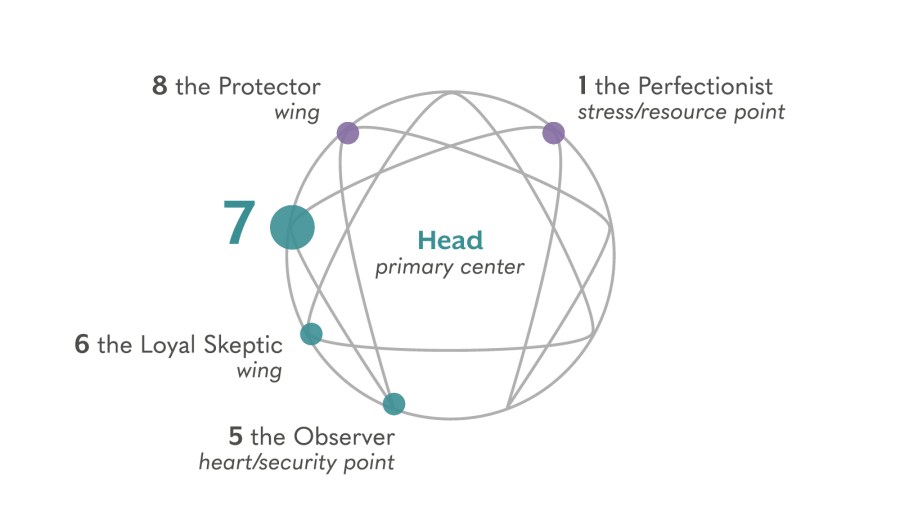
Note: The disintegration model in Enneagram theory is often presented as a stable directional map—types “move” under stress into predictable neighboring patterns. But in lived experience, this model can become overly schematic and psychologically flattening.
What it risks missing is that what looks like “disintegration” is often not a movement into another type, but a loss of functional integration across multiple systems at once: attention, affect regulation, impulse control, social adaptation, and narrative coherence do not shift in a single vector. They fragment unevenly.
In practice, what gets labeled as disintegration may include: regression into earlier learned coping strategies rather than type-specific movement; situational adaptation under constraint (not structural change); nervous system overload presenting as behavioral inconsistency; or simply fatigue states misread as typological drift.
The model also assumes a kind of psychological symmetry between integration and disintegration paths that is not always empirically supported. Integration often feels like increased flexibility and coherence, but “disintegration” can be indistinguishable from stress, grief, substance effects, sleep deprivation, or environmental pressure.
The core critique is therefore structural: The disintegration pathway is better understood as a metaphor for destabilization under load, not a reliable map of personality transformation.
Which means its value is poetic and heuristic, but limited as a diagnostic or predictive framework for actual human behavior over time.
Epigraph
These days I feel immune To all the sadness and the gloom If things fall into place Get onto the right side of grace
— The Jesus and Mary Chain
Introduction and Thesis
This paper takes a direct and critical look at the Enneagram concept of the “direction of disintegration,” more recently reframed as the “stress point.” While various authors and teachers—including Don Richard Riso and Russ Hudson—have attempted to soften or reinterpret this terminology, the underlying assumption remains largely intact: that movement in one direction represents growth, while movement in the other reflects regression under stress.
This paper challenges that assumption directly. I argue that if one of the central aims of Enneagram work is to evolve through the full set of connecting points (for example, 5–8–2–4–1–7), then the so-called “direction of disintegration” cannot coherently be understood as purely regressive. On the contrary, it may represent a necessary and even ultimate phase of development—one that completes the circuit rather than deviating from it.
More specifically, I propose that what is commonly termed “disintegration” is better understood as the destabilizing emergence of previously repressed or underdeveloped capacities. Movement along these lines—particularly under conditions of stress—may therefore appear chaotic or maladaptive in the short term, while in fact reflecting the early stages of a deeper and more comprehensive integration. In this sense, the concept of “disintegration” does not merely mislabel the process; it obscures its developmental significance.
This perspective may be further illuminated by comparison with cyclical models of development, including certain strands of Buddhist thought, in which the movement from undifferentiated being through structured identity and back toward a more integrated state is understood as a continuous process. From this vantage point, the so-called “direction of disintegration” may be interpreted not as a fall from development, but as a return toward a more foundational mode of experience—one that has been obscured, rather than lost, in the formation of personality.
Personal and Theoretical Grounding
My interest in this question is not purely theoretical. From the outset, I found the concept of “disintegration” difficult to reconcile with lived experience—particularly in relation to my own type, Type 5. In the standard model, the Five is said to disintegrate toward Type 7, exhibiting scattered, excessive, or escapist tendencies under stress. While I recognize the descriptive accuracy of this account at certain levels of functioning, it does not fully capture the experiential reality of the movement.
In my own case, the movement toward 7 has not been merely regressive. On the contrary, it has often represented access to states that feel more expansive, embodied, and alive than the constrained intellectualism of the core Five structure. This raises a fundamental question: if the experiential quality of this movement can be described as more “whole” rather than less, in what sense can it be understood as disintegration?
One possible answer lies in the developmental origins of type itself. If personality structure is understood, as Don Richard Riso and Russ Hudson suggest, as a provisional adaptation formed in early childhood, then it is reasonable to ask what precedes that adaptation. It is at least conceivable that what emerges in the movement toward the so-called disintegration point is not simply dysfunction, but the reactivation of capacities that were present prior to the consolidation of type—capacities that were subsequently repressed in the service of psychological survival.
In this light, the apparent instability of “disintegration” may reflect not breakdown, but overload: the sudden return of domains of experience—such as sensation, spontaneity, or emotional intensity—that the personality has not yet learned to integrate. What appears as regression is, in this sense, the difficulty of expansion. The task is not to avoid this movement, but to engage it consciously, such that what begins as turbulence may ultimately become integration.
Literature Review: The Problem of Directionality in Enneagram Theory
The question of directional movement along the Enneagram’s lines of connection remains one of the least resolved and most inconsistently articulated aspects of the system. While widely taught using the language of “integration” and “disintegration,” there is no clear consensus in the literature regarding the precise meaning, function, or developmental significance of these movements. A review of major contributors to the field reveals a pattern of partial reformulation without full theoretical resolution.
The most influential articulation of directional movement appears in the work of Don Richard Riso and Russ Hudson, particularly in Personality Types (1987/1996) and The Wisdom of the Enneagram(1999). In this model, each type is understood to move along two lines: one toward “integration” (growth) and one toward “disintegration” (stress). Movement in the direction of integration is said to require conscious effort and corresponds to psychological health, while movement toward disintegration is described as automatic, reactive, and associated with declining levels of functioning.
However, this model contains an important and often overlooked tension. Riso and Hudson also suggest that the broader aim of Enneagram development is to move “around the circle,” integrating the positive capacities of all types over time. This implies that the points reached via the so-called direction of disintegration are not inherently pathological, but form part of a larger developmental sequence. The result is a structural ambiguity: movement toward a given point may be framed as regressive in one context and developmental in another, depending on whether it is understood locally (single-step movement) or globally (full-cycle integration). This inconsistency has not been fully resolved within their framework.
Subsequent authors have attempted to refine or reframe this model, often by softening the negative connotations of “disintegration” without fundamentally altering the underlying directional asymmetry. Sandra Maitri, for example, rejects the terminology of stress and disintegration and instead proposes an “inner flow” governed by what she describes as a “logic of the soul.” In her model, forward movement along the lines is driven by a search for fulfillment that ultimately proves unsatisfying, while backward movement leads toward what she terms the “heart point,” associated with a deeper layer of the self or “soul child.” While this approach usefully destabilizes the purely negative interpretation of one directional line, it replaces it with a different asymmetry, privileging backward movement as more essential to growth. Moreover, the conceptual basis of this model remains insufficiently specified, particularly in its account of how and why one direction should be considered developmentally primary.
Beatrice Chestnut builds on and systematizes aspects of Maitri’s approach, offering a more structured reinterpretation of the lines of connection. In her model, movement along both lines can be either constructive or maladaptive, depending on the level of awareness and integration involved. Terms such as “growth through stress” and “security point” attempt to capture the complexity of these dynamics, acknowledging that development may occur through challenge as well as stability. While this represents a significant advance in clarifying the bidirectional potential of the lines, it nevertheless retains an implicit directional logic and does not fully resolve the question of whether one direction should be considered primary, or whether the distinction itself is theoretically necessary.
Other contributors, including Tom Condon, have explicitly questioned the stability of unified directional models. Condon argues that individuals routinely access both connecting points under a range of conditions and that attempts to impose a single, consistent directional pathway oversimplify what is, in practice, a complex and dynamic psychological process. From this perspective, the notion of a fixed “direction of disintegration” becomes increasingly difficult to sustain, as both lines appear capable of expressing high and low functioning depending on context.
Across successive editions and public teachings, Russ Hudson has made a clear and commendable effort to soften the language surrounding the Enneagram’s directional model. Terms such as “disintegration” have increasingly been reframed as “stress,” and there is greater emphasis on the idea that no movement within the system is wholly negative. This shift toward more “warm” and less judgmental language reflects a broader maturation within the field and has undoubtedly made the system more accessible and psychologically usable.
At the same time, this evolution in terminology has not been matched by a corresponding clarification of the underlying theory. The central asymmetry—where one direction is implicitly associated with growth and the other with regression—remains largely intact, even as the language used to describe it has become more neutral. As a result, the model continues to carry an unresolved tension: it acknowledges that all points contain both higher and lower expressions, yet continues to treat movement toward certain points as fundamentally stress-based rather than developmentally necessary.
As other contributors have begun to explore more symmetrical and developmentally integrated interpretations of the lines, the persistence of the traditional asymmetry begins to feel less like a settled conclusion and more like an inherited assumption that has yet to be fully re-examined.
In this respect, the field appears to have reached a transitional stage. The vocabulary has evolved, the teaching has broadened, and important correctives have been introduced. Yet the underlying structure of the model—particularly with respect to directional movement—remains theoretically underdeveloped. For a system that places such emphasis on precision of language and clarity of inner dynamics, this gap is not insignificant. It suggests that what has often been treated as a foundational principle of the Enneagram may, in fact, remain an open question—one that calls for more direct and systematic reconsideration.
Applications: Reconsidering the Nine Directional Movements
If the preceding analysis is correct, then the implications must be demonstrated concretely across the system itself. What follows is a re-examination of each of the nine directional movements traditionally described as “disintegration.” In each case, I argue that what has been labeled regression can be more accurately understood as the activation of a higher function—a necessary but often turbulent phase of integration.
Type 1 → Type 4: Emotional Depth as Higher Function
In the conventional model, Type 1 “disintegrates” to Type 4, becoming moody, self-absorbed, and emotionally volatile. The principled, rule-oriented One—committed to order and correctness—appears to lose stability and fall into irrational feeling states.
However, this interpretation overlooks the rigidity inherent in the One’s structure. Ones tend to operate within strict internal frameworks, often fearing deviation from what is “right.” This can produce clarity and integrity, but also emotional constriction and black-and-white thinking.
Movement toward Type 4 introduces a necessary counterbalance: emotional depth, nuance, and subjectivity. The Four’s capacity for feeling, imagination, and romantic engagement allows the One to move beyond mere correctness into lived experience. What appears as instability may, in fact, be the early and uneven integration of emotional life. A One who cannot access this domain risks becoming brittle and overly moralistic. The 1 → 4 movement, properly integrated, expands the One’s humanity.
Type 2 → Type 8: Assertion as Higher Function
Type 2 is traditionally understood to “disintegrate” to Type 8, becoming aggressive, domineering, and self-centered. The caring, other-oriented Two is seen to abandon empathy in favor of force.
Yet the Two’s structure often involves excessive attunement to others at the expense of the self. Twos may defer, accommodate, and seek approval, losing touch with their own needs and convictions.
Movement toward Type 8 activates the capacity for directness, strength, and self-assertion. The Eight’s willingness to say “this is what I think” or “this is what I need” is precisely what the Two lacks when overextended. While this shift may initially appear abrupt or even confrontational, it represents a critical step toward autonomy. The 2 → 8 movement allows the Two to embody their own authority rather than living exclusively through others.
Type 3 → Type 9: Grounded Presence as Higher Function
In the standard model, Type 3 “disintegrates” to Type 9, becoming disengaged, complacent, and apathetic. The driven, success-oriented Three is seen to lose momentum and fall into inertia.
However, the Three’s relentless focus on achievement can lead to over-identification with external validation and performance. The constant pursuit of success may obscure deeper questions of meaning, connection, and being.
Movement toward Type 9 introduces stillness, acceptance, and presence. The Nine’s capacity to step out of striving and into being offers a necessary counterweight to the Three’s forward drive. This shift can soften the ego’s edge, allowing the individual to reconnect with others and with themselves beyond performance. What appears as loss of ambition may, at a higher level, represent the integration of humility and peace—qualities often observed in mature leaders who transition from personal success to collective contribution.
Type 4 → Type 2: Relational Engagement as Higher Function
Type 4 is said to “disintegrate” to Type 2, becoming needy, dependent, and overly focused on others for validation. The introspective, emotionally rich Four appears to lose depth and become externally fixated.
Yet the Four’s structure can incline toward solipsism—an intense inward focus on personal identity, feeling, and uniqueness. This can limit engagement with others and reinforce a sense of separation.
Movement toward Type 2 opens the Four to relational connection. The Two’s outward orientation—its attentiveness to the needs and feelings of others—provides a pathway out of self-absorption. While this may initially manifest as dependency, it also represents the development of empathy, generosity, and shared experience. The 4 → 2 movement enables the Four to participate in relationship rather than merely reflect upon it.
Type 5 → Type 7: Embodiment and Expansion as Higher Function
Type 5 “disintegrates” to Type 7 in the traditional model, becoming scattered, impulsive, and escapist. The focused, analytical Five is seen to lose coherence and retreat into distraction.
In practice, however, the Five’s core challenge lies in over-withdrawal into the mind. The Five often privileges thought over experience, constructing elaborate internal systems while remaining detached from immediate reality.
Movement toward Type 7 activates sensation, spontaneity, and engagement with life. The Seven’s openness to experience allows the Five to step out of abstraction and into embodied presence. In my own experience, this movement has not been merely destabilizing but profoundly enlivening—an entry into states of being that feel more whole and integrated than the Five’s default stance. The initial excesses of this shift reflect the difficulty of integrating long-repressed domains, not their inherent dysfunction.
Type 6 → Type 3: Self-Confidence and Agency as Higher Function
Type 6 is said to “disintegrate” to Type 3, becoming competitive, image-conscious, and arrogant. The loyal, cautious Six appears to abandon its grounded nature in favor of performance.
However, the Six’s strengths—commitment, vigilance, and reliability—can become limiting when accompanied by self-doubt and over-reliance on external validation. Sixes may hesitate to act decisively, seeking reassurance rather than asserting direction.
Movement toward Type 3 introduces confidence, initiative, and forward momentum. The Three’s capacity to act, to lead, and to project capability is precisely what the Six requires to move beyond hesitation. While this may initially appear as overcompensation, it represents the development of self-trust. The 6 → 3 movement allows the Six to step into authority rather than continually deferring it.
Type 7 → Type 1: Structure and Discipline as Higher Function
Type 7 “disintegrates” to Type 1, becoming critical, rigid, and constrained. The free-spirited, pleasure-seeking Seven is seen to lose joy and become moralistic.
Yet the Seven’s pursuit of experience can lead to fragmentation—constant movement without depth or completion. Avoidance of discomfort may prevent sustained engagement with reality.
Movement toward Type 1 provides structure, discipline, and ethical grounding. The One’s capacity for focus and follow-through allows the Seven to channel its energy into meaningful action. While this shift may feel restrictive at first, it enables coherence and purpose. Real-life trajectories often reflect this movement, as individuals transition from restless seeking to grounded commitment, finding stability where previously there was only motion.
Type 8 → Type 5: Reflection and Restraint as Higher Function
Type 8 is said to “disintegrate” to Type 5, becoming withdrawn, secretive, and overly cerebral. The powerful, action-oriented Eight appears to retreat into isolation.
However, the Eight’s strength can become overextended, leading to dominance and a lack of reflection. Constant outward force may limit the ability to process experience or consider alternative perspectives.
Movement toward Type 5 introduces introspection, analysis, and restraint. The Five’s capacity to step back allows the Eight to refine its actions with insight. This shift does not diminish strength but deepens it, transforming immediate power into considered leadership. The 8 → 5 movement enables the Eight to lead with both force and understanding.
Type 9 → Type 6: Engagement and Commitment as Higher Function
Type 9 “disintegrates” to Type 6, becoming anxious, reactive, and worried. The calm, accommodating Nine appears to lose peace and stability.
Yet the Nine’s desire for harmony can lead to passivity and avoidance. By minimizing conflict, the Nine may disengage from necessary challenges and from their own priorities.
Movement toward Type 6 activates engagement, vigilance, and commitment. The Six’s attentiveness to potential problems encourages the Nine to confront rather than avoid difficulty. While this may introduce anxiety, it also fosters responsibility and active participation. The 9 → 6 movement transforms passive peace into engaged stability, grounded in awareness rather than avoidance.
Conclusion
This paper does not claim to offer a final or definitive resolution to the question of directional movement within the Enneagram. The system itself remains, by the admission of its most influential contributors, a work in progress. What has been offered here is a more limited but, I would argue, necessary intervention: a direct challenge to the prevailing assumption that one line of connection represents “integration” while the other represents “disintegration” or regression under stress.
The analysis presented suggests that this distinction, while historically influential, is conceptually unstable and developmentally incomplete.At a broader level, the persistence of this framework points to a certain hesitation within the field. There remains, at times, a noticeable deference to the foundational formulations of Don Richard Riso and Russ Hudson—a deference that is understandable given their substantial contributions, but which may also inhibit more direct re-examination of their assumptions.
Foundational work deserves respect; it does not require preservation in its original form. In a living field, even the most influential models must remain open to revision where they no longer adequately account for observed experience.The evidence considered here—both theoretical and experiential—suggests that movement along the so-called “direction of disintegration” is not inherently regressive, but often represents the activation of underdeveloped capacities essential for full psychological integration. While this movement may initially appear chaotic or destabilizing, it is better understood as the early phase of expansion rather than contraction. To continue to frame it primarily in terms of breakdown risks obscuring one of the Enneagram’s most valuable insights: that growth frequently occurs through precisely those domains the personality has learned to avoid.If this paper has a broader aim, it is simply to encourage a more direct and less deferential conversation about this aspect of Enneagram theory.
The language of “integration” and “disintegration” has had a long and influential run, but its limitations are increasingly apparent. All theoretical systems, if they are to remain vital, must be willing to outgrow their earlier formulations. It is in that spirit that this argument is offered—not as a final word, but as a contribution toward moving the discussion forward.
Dedication.:
For Tom Condon, the GOAT. And for Lynn.
Note: If you enjoyed this piece you may also like the piece below which also takes up the topic of the Enneagram.
I wrote all night Like the fire of my words could burn a hole up to heaven I don’t write all night burning holes up to heaven no more
Phosphorescent
Note:These reflections were written in March 2019, in the immediate aftermath of a personal experience that destabilized me more than anything I had previously encountered. They were never intended for publication and have not been revised.I’m sharing them now as a record of that moment—not as a finished account, but as a document of what it felt like to be inside it: heightened, contradictory, and often unclear even to myself.
I have written at length about my experiences with the woman I am calling Isobel. You can find the narrative series here, here, and here. You can also find the play I wrote about this time here.
3/28/19:
I went too far. I cannot tell if I went too far on purpose; certainly I pushed and pushed until I came to the end of the line. Like an explorer bent on reaching the furthest possible point, I pushed my mind and body until they could take no more. Now, the wind has gone out of my sails, for how long I cannot say. Perhaps for a long time. Yet I am not at peace, not yet, not now. “I came so far for beauty/ I left so much behind.”
Why was it that I had to roam so far out? What was I running from? Why did I lock my heart up so tightly that it had to explode in order to feel? Was there a point at which I could have taken another turn, or was it all slated to occur just as it did? You can ask why forever and get nowhere. This I know.
So I met a woman and this shook me up. She shook me up. She wasn’t trying to, but she did. My carefully balanced psyche, assembled and jury-rigged over decades, came apart in a matter of days. Anything could have happened, and by the grace of god I was able to retain some kind of governing function, however weak, which helped me stay safe. Over seven weeks everything that could be thrown at me was. I was under massive physical and psychological strain and only my years of amateur study of consciousness and the unconsciousness saved me from succumbing entirely. If I could do it over again (a terrifying notion), I would do almost nothing the same. However, I understand why I made the choices I did. There is little point, really, in interrogating the choices that we made in the light of the circumstances that were in place. Things were, and I reacted to them as I did. There is no getting around this.
Still, I made every mistake in the book. A classic mid-life crisis. Stereo-fucking-typical, scripted to the t. The funny thing is, I knew all about the blueprint and it still happened. “My Dinner with Andre” was a foundation text. I’d read Jung and James Hollis on midlife, extensively. Paradoxically perhaps, the very knowledge of the blueprint may have helped bring the symptoms into being. Or not, maybe I was semi-consciously gathering resources with the implicit foreknowledge that one day they would be needed. Either way, advance information about the terrain only allowed me to stay on my feet—it did not allow me to change course.
I was a Gemini warrior on a private quest, one unseeable from the outside and barely even discernible to myself. So many windmills, so much striving for the grail. To what end? A window seat—a temporary sinacure—and a chance to draw breath at sea level. That’s about it. Can I learn to live as it seems others do, with a little less metaphysical strum und drang, present in the world of the senses, just living? I don’t know what it is like not to live in my head and don’t remember when I started living this way. What I know now though it, it’s a trap. A mire. An maze with no exit. A road to nowhere.
In five years time will this all seem to have been necessary—just part of the process of being a human? God I hope so. That’s what the literature says—the final stage is acceptance. How I am doing with that? I accept that what happened happened. I accept that I made choices that made sense in the moment. I accept that that my personality was in large part a construct and that I am better off without a lot of it. And, I accept the possibility of a silver lining somewhere down the line. The magnitude of the experience and its ripple effects, these are things I am still coming to terms with.
I have seen some things that many will never see. Beautiful and fantastic things, awful things. As a result, I am shaken and somewhat unsteady. That’ll happen when you stray too close to the light. But those things are not mine—they do not belong to me. They have their own location, their own zone, at the edges of the known. I was granted, or gained, access to a sliver of another realm, yet I do not know how deep or how wide that realm is. Right now it is enough to know that it is there, more than enough. Both climbers and divers may feel sick when returning to sea level. I don’t know if I have been climbing or diving or, somehow, both, and in the end it does not matter. Leonard Cohen’s ladies man dies again and again throughout the ages. “It’s like a visit to the moon or to that other star/ I guess you’d go for nothing/ if you really want to go that far.” I didn’t want to go that far, not really, but I did anyway.
===== =====
3/29/19:
Why did I give up on my job? Because let’s face it, I gave up. Let’s get some things out in the open. I managed my energy very poorly for a long time. I was using shortcuts and papering over energetic issues to keep going at the pace I was working. For the last three or four years I was also withdrawing bit by bit—taking more half days off, shrugging more off, and putting off longer term planning that was necessary for the program. I was basically exhausted on an energetic level and this led to taking more time for myself and spending too much money just to get a space to reset—to feel something.
What was it that was so exhausting? As I’ve spoken about to many, the constant pushing of the stone uphill, the constant battle to get needs listened to, was certainly tiring. The feeling that it was really just me, a middle man, at the top of a huge operation and I didn’t have the tools or the power to do the things I needed to. The feeling that there were so many program areas that were not as good as they could be. The growing gap in my marriage which allowed me to seek feeling connections recklessly and a little randomly.
After a while, my psyche was being held together by string, by a thread. I was carrying deep wounds from the past which I hardly knew existed, had hardly ever looked at. I was an unitegrated personality in many ways and have no real root here in Japan. The sense of being included in an extended family that existed when I met my wife was long gone. My dream life was giving me warnings and maybe I could have done something with them. I was primed for a crack-up.
What was it about Elodie that enraptured me so entirely? I think it was the combination and sexuality and motherliness, her openness, her painful past which she was so open about, and some kind of deep inherent similarity that we both felt, and proceeded to blow out of all proportion. And she wanted to spend every minute with me! I was around the bend about her within a day. There are funny parts to the story—man I knew I was in trouble. That’s why I was listening to the Mendoza Line non-stop. “Mistakes were made tonight” indeed. I recognized that I was right on the edge and programmed myself not to step over it on the conference. And then I got on the plane and proceeded to step right off the cliff in another way. Long term, I guess it was a better cliff but how I thought I was in the right frame of mind to make that kind of decision, I’ll never understand. The correct move I made was to put people around me to keep me safe. The mistake I made was to recruit them into my plan to leave my job when I should have sought advice and depended on them to guide my decisions.
I feel like I want to say this—school leadership was poor. My decision to leave was not a direct result of the lack of leadership; it was a result of a massive energy change/ charge that took my system by storm and caused me to lose all perspective. However, the energy issues were in many ways a result of stress and repression of anger and frustration over how things were being handled, both over the short and the longer term. The issues were deep—still today my body is not right. I’m fragile, I’m weak, I’m a shell of my former self.
“This is the new not normal”—I’m listening to the new Lambchop album. It’s good of course, but kind of all sounds the same. That’s OK though. How can I get used to this new not normal at this office? There is nothing to do. Maybe that will change, and maybe I can make it change. Right now I am the definition of a clock-watcher. I know I put myself in this position and I’ll endure, but at what cost? Something needs to change, but I know I can’t push myself back into a bunch of old patterns even if I could. Maybe I was acting like an INTP—maybe feeling was the most buried function of all. This is probable.
My damage is deep, generational. If I am right in imagining that for some bizarre reason I had a role to play in clearing up or shouldering this burden and sort of resolving it, well that’s something I did. I certainly felt this way last fall, and that sense, that notion is still present. And now what? I am not special just because I have begun to own up to my damage. The best thing I can do now is to pass on as little as I can to my son—to be as present as I can with him as often as I can.
I also need to extend my working lifespan. This is a priority, and I need to be realistic about this. However, I’ve been stressing myself out to figure this out like today and that I can’t do. My priorities have to be: i) to minimize spending and pay the bills; ii) to cut way back on drinking; iii) to network and think positively about the future little by little. Anything can come. Tell yourself, anything can come. Anything can come.
FIN
===== =====
3/30/19:
There is no point in trying to write well right now. I am writing just to pass the time and continue to process my guilt and my heartache. The sense that somehow I was wired wrong is persistent, despite people who care about me trying to tell me otherwise. I mean, I have not been practical, have not made ordered decisions about securing my life and that of my family. I have made ordered decisions in so many other areas, not this one. How could that even be? I have no real answer to this—magical thinking, arrogance, the feeling that I could somehow tread water forever. I don’t know.
Ann wrote that I might have a form of PTSD from the collision with Elodie. This rings true. Meeting her shook up my mind and body at a core level. The ideas of animating archetypes are not just ideas. They are real. When Elodie and I fell into one another, I lost all sense of self. I wanted to give everything and anything to her, falling over myself to do so, to explain, to unburden myself. She was attracted and fascinated by some of this, but was also overwhelmed by the extent and speed of it all. On my end, I was overwhelmed too, overwhelmed by the depth of the attraction and how far I fell into her. We talked, and I could not figure out was this an ascent or a descent. So strange that it could be both. It was more a trip into the infinite. A trip for sure. I exited London and I was undone. I was terrified and thought I was bulletproof at the same time. I should have leaned more into the terror—I should have slowed down and assessed. This I did not do.
Calling Lynn and getting the idea of the kundalini was helpful. This was another juncture I could have turned for the better—tried to get grounded in a more appropriate way. Like the runner I once was, I just thought I could run the energy to ground. In the end I did, too late and with too much cost. So here I sit in a purgatory of my own making, bereft. Is this what I was destined to have to deal with—the emptiness, the total lack of self without the worldly tasks that were set me? I am having new thoughts—thoughts about the break up of extended families and that this is one of the core problems in modern life, perhaps the core one. Loneliness is probably an epidemic, almost certainly.
For a moment there was music, there was dance and movement, there was sexual confidence, there was bravodo. No longer. Why can’t those feelings, those urges, be regulated and controlled? I suppose they can, with practice. Apply myself, that’s something I’ve always had difficulty doing toward a skill. Variety seeking—always on the lookout to change direction. How boring.
I know I need to focus on my health, but how can I do that with these days stretching in front of me like this? I am in a tough situation. This is a fact. I can’t write my way out of this. What am I supposed to be learning? What is it even possible to learn here? Patience, humility? Patience for what, for reinstatement to the culture that pushed me over the edge? I read about principles under stress in Australia and no one wanting the job. I can understand why. I never wanted to be that high up either—really didn’t. I only accepted it because I was apparently the best person. What could have been different? I did all I could to delegate, well, I tried. I felt guilt over my classes being below-par, could not stop working on the weekend, got worn down.
There has to be a silver lining. Well, one is the conference lifestyle is over. That had to end, and an end was forced on me. That’s a net positive. I may be able to address my habits. This is going to be super hard because of the sleep and because I gain pleasure from the pub. Can I keep the pub and drop the rest? That has to be the goal.
Dedication:
For Elodie. I love you.
=====
Note: If you liked this piece, you may also like the pieces below which also take up the difficulties of modern romance.
Note: This piece takes up the 2008 record The Sunset Tree by The Mountain Goats as a tightly structured emotional sequence rather than a loose collection of autobiographical songs, tracing how John Darnielle moves from childhood survival through adolescent endurance, imagined justice, outward identification with others’ suffering, and finally a grounded, unsettling encounter with memory and partial reconciliation.
Epigraph:
I leaned my head in close to the little record player on the floor
So this is what the volume knob’s for.
Released in 2005, The Sunset Tree is widely regarded as the defining record by The Mountain Goats and the most directly autobiographical work by John Darnielle. The album centers on his childhood and adolescence under an abusive stepfather, and the long, uneven emotional project of trying—never quite succeeding—to understand or forgive that past. It has become the band’s best-known record, both for its clarity and its force, with songs like This Year and “No Children” forming its core identity in the wider culture.
Dance Music
“Dance Music” opens in a small, specific place—Johnson Avenue in San Luis Obispo—and immediately establishes the strange clarity of childhood memory: precise details without full understanding. A television hums with the Watergate hearings, a child senses that something is wrong but cannot name it, and a record player becomes an unlikely refuge. From that point, the song moves with quiet precision between moments of violence, escape, and interior unraveling, compressing years of experience into just over two minutes.
What strikes me is how firmly he anchors the song in space and time: Johnson Avenue, San Luis Obispo, five or six years old, Watergate hearings on TV. It’s precise enough to feel real, but not over-described. This isn’t abstraction—it’s memory with edges.
The child doesn’t understand what’s happening, but senses it. That “spidy sense” of something wrong is exactly right. The record player becomes a kind of accidental sanctuary. And then the line about the volume knob—discovering control for the first time—still hits hard. It’s a moment of agency inside chaos.
Cut forward, and nothing has resolved. The same house, the same structure, but now adolescence, relationships, internal damage. The “secret sickness” feels like a slow internalisation of everything that could not be processed earlier. The movement language—twisting roads, cul-de-sacs—suggests trying to find exits that don’t exist, or lead back into themselves.
And then the final image: police, dance music still playing. No resolution, just continuation under pressure. The refusal to close is part of the point.
This Year
If “Dance Music” shows how survival begins, “This Year” shows how it is sustained. Still rooted in the same autobiographical terrain of John Darnielle’s adolescence, the song shifts from memory to immediacy. It is one of the most recognizable songs by The Mountain Goats, defined by urgency, repetition, and forward motion.
This song is about survival and grit. The details—an older car, struggling engine, movement through space—create a physical sense of instability. You can feel the effort of motion.
The repetition is not optimism—it’s insistence. Saying something until it becomes structurally real. “Manifest” is the right word. This is survival being constructed in real time.
The narrative sections imply violence without naming it. Everything is loaded, but never fully articulated. That restraint is what makes it powerful.
And the ending—moving toward a distant, almost mythic place like Jerusalem—carries the sense of escape not as fantasy, but as direction.
Up the Wolves
Placed mid-record, “Up the Wolves” becomes the pivot between endurance and imagination. Where This Year insists on survival and Song for Dennis Brown expands suffering outward, this song introduces the possibility of emotional reordering—of imagining forgiveness, escape, and restructured power.
The key idea here is that damage is not escapable—it follows you. But alongside that is the introduction of imagined relief. The more aggressive imagery is not literal—it’s emotional escalation, the mind testing what justice might feel like if it were unconstrained.
The Roman myth framing matters: origin stories built from violence and absence. It lifts the personal into something archetypal. This is the first time the album seriously considers not just survival, but transformation of structure.
Song for Dennis Brown
At first glance, this appears to be a departure—a tribute song placed late in a deeply personal record. But it functions instead as expansion. The focus shifts from autobiography to shared human conditions of mortality, damage, and endurance.
Dennis Brown died in 1999, widely associated with Rastafari culture and a life shaped by both musical legacy and personal struggle.
This is not just about Dennis Brown—it is identification. The song places him and the speaker inside the same pattern of fragility and consequence.
The world is not paused by death. It continues. That’s the structural point. The imagery of decay alongside innocence creates dissonance—life continuing in spite of damage.
The violent reworking of natural imagery reinforces that nothing remains untouched. This is the album’s outward turn. Not introspection, but scale.
Pale Green Things
As the final track, this returns to specificity. The stepfather is no longer a looming figure of power but a weakened, aging man after a heart attack, still performing small routines at the racetrack. The focus is observational rather than symbolic.
We are grounded in physical detail: racetrack, stopwatch, Racing Form. A man reduced but still engaged with structure The “pale green things” recur as quiet markers of life continuing—small growth, persistence, indifference.
The shift is subtle but crucial: the speaker is now present with him in this space. Not outside it. Memory returns not to violence but to observation. That is the emotional pivot. What remains is not resolution, but recognition. The mind returns to this moment rather than others.
Closing reflection
Across these five songs, The Sunset Tree traces a coherent emotional progression: from childhood survival in “Dance Music,” to adolescent insistence in This Year, to imagined restructuring in Up the Wolves, to outward identification in Song for Dennis Brown, and finally to direct, grounded confrontation in Pale Green Things.
What makes the record so enduring is not that it resolves the question of abuse or forgiveness, but that it refuses to simplify it. Survival is shown as repetition, will, imagination, projection, and finally memory itself. Forgiveness appears not as an endpoint, but as something unstable, partial, and deeply contested.
It is also worth noting—without collapsing interpretation into autobiography—that these questions are not abstract. Many listeners carry their own histories of harm and difficulty in forgiving those histories fully. I would include myself in that broader human category. What makes this record remarkable is not that it answers forgiveness, but that it shows how seriously it must be attempted, even when it remains unresolved.
That is why The Sunset Tree endures: it treats survival and forgiveness not as conclusions, but as ongoing acts of attention.
Note: This piece argues that male circumcision should be strictly outlawed for non-consenting minors. It approaches the topic from a strict bodily autonomy framework regarding non-consensual, non-therapeutic interventions on minors, and treats irreversible bodily alteration without consent as the central ethical issue. It is not addressing medically necessary or emergency procedures, nor situations where an intervention is required to prevent serious immediate harm, which are outside its scope. The argument also focuses on principle rather than comparative cultural practice, and is intended as a normative claim about legal consistency in liberal systems rather than a commentary on individual intent, belief, or identity.
Epigraph:
Jesus don’t touch my baby.
Ryan Adams
Male Circumcision Should Be Outlawed — 1 Million Percent
Male circumcision of non-consenting minors should be outlawed globally, with legal penalties applied to those who perform or facilitate it, and civil penalties imposed on parents who authorise it. I was circumcised in infancy in a Catholic family in 1974. The issue is not medical ambiguity or cultural discomfort but a basic question of bodily autonomy: whether irreversible, non-therapeutic alteration of a child’s body can ever be justified without consent. In a liberal legal system that claims to prioritise individual rights, the answer should be consistent and categorical. Anything less relies on inherited exemptions—religious, medical, or cultural—that do not withstand ethical scrutiny once the principle is stated plainly.
The core objection is simple: irreversible bodily modification without consent is impermissible when it is not medically necessary. A child cannot consent, and parental authority is not unlimited; it is a delegated responsibility bounded by the child’s future autonomy. Circumcision is not an emergency intervention. It is not a life-saving procedure in the vast majority of cases. It is the removal of healthy tissue from an individual who will live the entirety of their life with that alteration imposed before they had any capacity to participate in the decision.
This is where liberal societies already reveal a partial but incomplete consistency. We accept that consent is not static across childhood. We do not allow children to make binding decisions about sexual activity, because we recognise developmental thresholds of agency and understanding. That is why age of consent laws exist at all, and why they sit at or near adulthood in most jurisdictions. But the same logic applies more fundamentally to irreversible bodily alteration. If we accept that certain domains require maturity before consent is meaningful, then permanent physical modification must fall under the same principle. The difference is not moral category; it is legal lag.
The counter-case is not weak in structure, even if it fails ethically. It rests on four main claims: parental rights, medical justification, religious freedom, and social normalisation. Parents are routinely empowered to make medical decisions on behalf of children under a “best interests” standard. Circumcision is often placed within this framework as a preventive health measure. Some studies are cited to suggest reduced risks of urinary tract infections or sexually transmitted infections later in life, and complication rates in clinical settings are presented as low. On this basis, it is framed not as cosmetic alteration but as permissible preventive medicine.
Religion provides a second pillar. In Judaism, circumcision is a covenantal rite central to religious identity. In Islam, it is widely practiced as a tradition of purification and belonging. Liberal states are deeply reluctant to interfere with such practices, treating them as protected expressions of religious freedom. On this view, banning circumcision would represent not neutrality but intrusion into foundational religious life.
The third pillar is cultural and social integration. In societies where circumcision is widespread, particularly where it is near-universal within certain populations, deviation can create stigma or perceived abnormality. The argument follows that enforcing prohibition could impose social harm on children by marking them as different within their communities. Finally, legal systems distinguish male circumcision from female genital cutting on the basis of severity, medical context, and institutionalisation within healthcare systems, arguing that harm is not equivalent and therefore regulation need not be symmetrical.
Taken together, these arguments form a sort of a defense of permissibility under existing liberal frameworks: parental discretion within medical norms, protected religious practice, and harm-based legal classification.
But each of these pillars collapses under a stricter application of bodily autonomy.
Parental authority is real, but it is not sovereign. It exists only insofar as it serves the future autonomy and welfare of the child. It does not extend to irreversible, non-therapeutic bodily alteration where no immediate necessity exists. The “best interests of the child” standard is not a blank cheque; it is a constraint. We already recognise this in other domains where the state intervenes against parental choice when irreversible harm or violation of fundamental rights is at stake. The question is whether we apply that constraint consistently.
Medical justification also fails the threshold test when examined carefully. Even if certain population-level benefits exist, they are statistical, not essential. They can be achieved through far less invasive means—hygiene, education, barrier protection—without permanently altering the body of an individual who has not consented. Preventive possibility is not sufficient justification for irreversible intervention. Medicine does not normally operate on the principle that minor statistical risk reduction permits non-consensual surgery on healthy individuals.
Religious justification is where liberal systems most visibly reveal their tension. Freedom of religion is a foundational principle, but it is not absolute. It has never been interpreted as permitting unlimited parental action upon a child’s body. The critical distinction is between belief and irreversible physical imposition. Religious freedom protects the right to believe, to practice, and to transmit culture—but it cannot logically extend to authorising permanent bodily modification of an individual who has not consented to participate in that covenant. A child is born into a tradition, not owned by it.
The social integration argument similarly confuses descriptive normativity with ethical justification. That a practice is common within a group does not mean deviation is harmful in a way that justifies irreversible intervention. Social discomfort is not equivalent to bodily violation. Otherwise, any culturally dominant practice could immunise itself from ethical scrutiny simply by achieving prevalence.
The legal distinction between male circumcision and female genital cutting is often defended on the basis of harm severity and medical framing. But this distinction, while operationally convenient, becomes unstable when the underlying principle is examined. If the governing value is bodily integrity and consent, then sex-based differences do not determine permissibility. The relevant question is not comparative severity alone, but whether irreversible non-consensual alteration is being authorised at all. Harm thresholds may differ in degree, but the structural violation—altering a child’s body without consent—remains.
Once these counter-arguments are reduced to their core, what remains is not a justification but a set of accommodations: to tradition, to institutional history, to religious continuity, and to cultural inertia. None of these constitute a moral defence of the act itself; they constitute reasons why it persists.
This is why enforcement matters. A principle without enforcement is not a principle in practice. If bodily autonomy is to mean anything in a liberal legal system, it must be protected even when the practice is culturally embedded or religiously significant. That requires prohibition of the act itself, accountability for those who perform it in violation of the rule, and civil liability for those who authorise it on behalf of non-consenting minors. The aim is not punishment for its own sake, but alignment of law with the ethical principle it already claims to uphold in other domains of bodily autonomy.
What makes this issue more than historical critique is that it persists into the present as a live inconsistency. It is 2026. Liberal legal systems already recognise that bodily autonomy is foundational in adulthood. They already recognise that consent has developmental thresholds. They already prohibit non-consensual genital alteration in other contexts. The remaining question is whether they are prepared to apply the same principle consistently when tradition, religion, and medical normalisation converge.
A system that protects bodily autonomy only after adulthood has not resolved the ethical question; it has merely deferred it. The principle either applies universally to the body of the individual, or it does not. If it does, then non-therapeutic circumcision of minors cannot stand as an exception. 1 million percent.
Note: This piece is part of the Splinter Fraction series of political positions that the two-person Trans-Pacific political party has taken. You can find some of the others below.
New Note: This essay began as a draft conference paper in 2019 and was never delivered in that form. I am publishing it now as a document of a particular period of questioning rather than as a finished thesis. Since writing it, my thinking about archetypes, gender, projection, and mid-life development has continued to evolve. I remain interested in the role dreams play in periods of re-orientation, but I am less certain of universal frameworks and more attentive to context, culture, and personal responsibility. Readers should take this piece as exploratory rather than definitive.
Note: The following is a draft of a conference presentation I was due to give at the International Association for the Study of Dreams (IASD) in 2019. Life, as they say, intervened, and I was not able to give the presentation. The draft below is way too long, and was set to be edited a lot before prime time, however I do think there is material of interest here, perhaps especially for men (and hopefully women) in mid-life.
Stipulated:
The dream examples in this presentation lean heavily toward “anima” dreams, as this is my own experience. I hope that in the discussion period we can re-balance this weighting.
Advance Notice:
This presentation contains frank discussion about sexuality within the context of the main topic.
Postulate I:
The “mid-life crisis” is no less universal and acute than the challenging teenage period. It’s predictably is such that it is better termed “re-orientation” than “crisis.”
Postulate II:
Dreams can provide advanced warning and guidance about how to navigate this period.
Postulate III:
Following Carl Jung, the anima archetype (most commonly in the male) and the animus archetype (most commonly in the female) are the most commonly associated archetypes with the mid-life period, and therefore deserve especially close attention.
Postulate IV:
Although it is not clear how changing norms around gender (e.g. increased visibility of non-binary and other identities) might impact our understanding of the anima and animus in mid-life, we are advised to make space for the possibility that these archetypes develop/ evolve alongside culture.
Question #1:
What dreams have you had that might relate to the anima/ animus archetypes, and to what extent have they predicted/ informed a mid-life re-orientation?
Question #2:
Jung stresses the universal or near-universal nature of the anima/ animus archetypes (as well as other archetypes). To what extent is holding to Jung’s universalistic perspective helpful/ unhelpful for understanding the play of these archetypes today?
Question #3:
Jung says that “when a situation occurs which corresponds to a given archetype, that archetype becomes activated and a compulsiveness appears which {…} gains its way against all reason.” This not a very hopeful prognosis, even if it has an ample experiential basis. To what extent can understanding and attention to our dreams and unconscious decrease the force of an activated archetype?
Question #4: What other kind of dreams/ dream archetypes might also predict/ presage a mid-life re-orientation?
Postulate II expanded:
Dreams, if treated as basically integrative, give us both a heads up and also a faith/ confidence that we can survive and navigate mid-life re-orientation, although when we are in it we can feel totally overwhelmed.
Dream #: 1
7/20/13:
I am in a battle with some quasi-army people, running around a rainy landscape, ducking behind and in and out of cars. I am carrying a very small pistol, possible a “Derringer.” This action goes on for a long time. Finally, the two army factions meet in a parking lot. I am off to to side of where two groups are arguing heatedly. I try to fire my weapon to get everyone’s attention; it makes only a small sound and no one pays attention. However, just then a group forms beside me, to my right. There are quite a lot of people, more than the two factions combined. These people are aligned with one or the other sides in the battle, and are now trying to bring the two sides together. One women, middle aged or a little older and Caucasian, speaks to me very passionately about reconciliation, and grabs me. I put my hands on her shoulders and look deeply into her eyes. The argument is still going; there is a contest to see which group’s energy would prevail.
I disengage from the first women, and there is a younger woman, maybe early 20s with blondish hair. We embrace deeply; I am holding her and stroking her hair. She is “Dusty.” As with the first woman, Dusty and I are involved in some kind of structural reconciliation–we are not simply two people but representing two sides of a conflict.
Dusty has a friend, a thin girl, also in her 20s. The thin girl and Dusty are loosely connected to the older women’s movement. However, the thin girl seems like the prime mover and Dusty is just along for the ride. I get the distinct feeling that Dusty had been around a bit, young as she is. The three of us retire to a sofa—the argument is left behind. Dusty is on my lap, stretched out, while the thin girl, who is also sort of tanned, is to our left. We chat casually, as if we had all known each other for ages. I say, “you are foot soldiers in the women’s movement,” and the thin girl laughs and says yes. I am not in love with Dusty, rather I feel happy and blessed to be able to be connected with her for any amount of time.
THEMES: BATTLE, RECONCILIATION, EMBRACE, YOUNG WOMEN, OLDER WOMAN, CAUCASIAN WOMAN
Dream #: 2
1/17/17:
I arrive late to a pool party with a very deep swimming pool. I am wearing a suit. A lady in an elaborate purple gown falls in the pool (or maybe she jumps in on purpose). In any case, she begins to sink to the bottom. She is underwater for too long, and I decide to jump in and try to save her. I hesitate for a fraction of a second, either because I am fully dressed, or because I am afraid. I feel shame with this delay and dive down. The dive is successful and I go to the bottom of the pool. The woman is only a few feet away however when I try to swim over to her it is like I am swimming through jelly. I can barely move through the water. She drifts away slightly, and I keep trying to make progress aware that my own breath is limited. I resolve to take a few more hard strokes and in so doing try to kind of push the water under her to lift her up because I can’t reach her. Then I head back for the surface and emerge with labored breath—I have used about 90% of my capacity down there. The woman has already surfaced and has been pulled out of the pool by several people on the other side of the pool (the pool is quite large). She is seated on a raised platform kind of similar to a throne. I get out and only one or two people notice that I have been in the pool at all. Later though the woman thanks me for my efforts.
A few noticeable things about this dream are that I had the sense that the woman threw herself in on purpose and also that I knew through the dream that she would get out OK one way or the other. In fact, it was me that was in more danger than her even though she was under water for much longer.
I am at an underground concert/ art event late at night. There are multiple acts playing in a series of narrow hallways and spaces between pipes as such with an audience, including myself, who is kind of milling about. All the acts are simultaneously being fed into an audio feed and there is a second audience in a separate, possibly more subterranean, room. I am not in this second room however somehow know of and can visualize it. The audio feed is being controlled be either Richard Branson or Jann Wenner or someone of that stature. This is kind of a big deal in a weird way—definitely an art event.
I am attached to a show that is beginning. The group is the Red Krayola, and the leader is a youngish female with short hair, creamy skin, a little Asian, probably in her mid-twenties. At first, I am appointed to be the lead singer, which is terrifying. Fortunately, the first part of the first song has a long, chugging, guitar and bass buildup which is transporting and awesome. Also fortunately, for me, the leader starts to sign or hum, no words only sounds. Maybe she will be the lead vocal after all? I begin to try to harmonize as best I can and it goes OK. I am deeply hopeful that my harmonies will stay down in the mix and that at no time will I need to be the lead singer as I know I will not be equal to the task.
The lead-in to the song goes on for several minutes, at least three or four, and it is the best music I have ever heard, which is amazing because the act is almost totally unknown—perhaps this is our debut? I start to fall in love with the leading lady, slowly, totally.
Suddenly, the electricity cuts off and so does the music. I hear a voice from the other audience room ask for our band’s signal to be brought back up. People are asking for more. However, Jann’s voice comes over the speaker and says we have lost power. The show is over.
I am both relieved (because I don’t need to sing anymore) and disappointed (because I wanted to hear the rest of the song). The disappointment registers in my stomach. Before she gets swept into the crowd (which is large and active), I approach the leading lady. She is gorgeous, slight, with earrings. She has a range of cards like small index cards with Taoist symbols in front of her as well as some jewellery and beads, not ostentatious—very tasteful. She asks me where I am from, where I live, and my spiritual orientation. I tell her, wondering if I should describe myself as a Taoist or whether she would see that as pretentious. I tell her I am a new-ager, but only in order to access ancient wisdom—things we have always known and have forgotten. As I tell her, we lean closer together and I am falling head over heels for her. I am sure that she has a line of people waiting for her and will move me along soon, however instead we began to kiss as we lean together. This operation is made difficult by a single metal spike in her lower left lip—a piercing that you sometimes see. The piercing is difficult for me to navigate and a little painful.
Scene cut and we are in bed together, unclothed, coupling. However, it turns out she has multiple piercings all over her body and no matter what arrangement we make the operation is too difficult. The dream ends, with a memory of the music.
THEMES: YOUNG WOMAN, SEMI-ASIAN WOMAN, MUSIC, SPIRTUALITY, FEAR, PIERCINGS, KISSING, FAILED SEXUAL INTERCOURSE
Dream #: 4
10/11/17:
I am in a parking lot with somebody, perhaps the parking lot of a gas station. There is a van that a woman is living in, traveling around in. I know this before seeing the woman. The woman leans out of the van which looks a bit like a food truck and may be. She is Asian but also not Asian and she leans right down in front of me. I kiss her, briefly, and she kisses me back, briefly. Then she pulls back and talks about her life on the road. She says her name is Mary. She is very attractive, with curls in the front of her pretty short hair and big cheeks. She gives me a business card that is handmade. The business card calls her “Wild Mary” and there is a drawing of a map which is full of squiggles and impossible to follow. She says this is a map to her live music event which I need to come to. I want to go, however feel like there is no way I will decipher the map.
I am in a pool like a large whirlpool, maybe 8 feet deep or so, with a bunch of other people, mostly Japanese women. One woman is kind of sleeping in the pool and she leans on me like people sometimes will on trains. She is in a bathing suit and young and pretty good looking, wearing glasses. I allow her to lean on me, she floats away, then comes back. She appears to be relaxing. Then, everyone is getting out of the pool which appears to be closing. The woman becomes totally horizontal and looks at me. She asks for a doctor—just says “doctor.” She is unwell and can’t move herself. I scoop her up and swim to the side where various people are getting out and starting to dress. I tell another woman she needs a doctor and then repeat this in Japanese. Several people move off to find a doctor who will be downstairs (we are in some kind of complex and a doctor will be on hand.) The woman is laying comatose by the side of the pool and I hope the doctor comes soon. Then, my wife is there and I try to explain the situation with the woman. While I am doing this I look up and the woman is gone. She has rallied and disappeared without a word. The doctor never arrives.
THEMES: YOUNG WOMAN, ASIAN WOMAN, WATER, RESCUE, WIFE, ELUSIVITY
Dream #: 6
4/5/18:
I have been chasing a man I think I know up to the 7th floor of a tall building. Although I am athletic and running hard, I can’t catch him, and face a variety of set backs. Giving up, I retreat to the back of a dentist’s office where there are an assortment of rooms up some steps. Entering the highest room all the way in the back of this building I see a woman I know. She is from my college and I have a longstanding relationship with her. She is wearing a beige blouse which is buttoned at the neck and looks to be of Asian design. She comes over to me from the wall where she has apparently been waiting. We embrace and are very glad to see one another. We will spend the next few days together and I know in the course of those days I will be unfaithful to her in some way. I hope not to lose her as a consequence.
After waking briefly I try to renter the dream space to find her again. I am unable to do so–instead I see a bunch of filament-like strands in space. A voice says “maybe everything is connected.” It is possible that a single strand connects all elements in the unconscious and in the universe. Still, no woman.
THEMES: MIDDLE AGED WOMAN, ASIAN DRESS, ESCAPE, UNFAITHFULLNESS, METAPHYSICS
Dream #: 7
6/3/18:
I have a distinct feeling I am being called. This is not the first time I have had this feeling however this time it is as or more insistent than ever.
I dream I am seeking wisdom from some underground women spirits/ half women half spirits. They are locked behind a door and only accessible through an intermediary, also a woman. The intermediary takes my request for wisdom and something more to the women and comes back empty handed. She says the women rejected my request because I have the keys to the door. This is not saying that I have the wisdom, only that I have the keys and need to unlock it myself.
Later I dream of a teacher. I am walking down a hillside and there is a kind of encampment on my left. Here there is a teacher. The teacher quickly vacates the encampment. I see a man in purple on the far shore. He is bearded and serene. Perhaps he is a fisherman. I get a full body chill because he is the teacher. Then, another man appears closer to me on a more accessible bank. He is wearing flannel and also bearded. It is clear that the first man, though dignified, is not the teacher and this second man is. I consider approaching him but instead wind up in the encampment. There is a youngish woman, not so young but younger than me, there. She is the real teacher and she is in town for only a day or so. I go over to her and am ecstatic to be with her. She allows me to nuzzle her neck and we begin talking. She has signs like the dao on her body—not exactly tattoos more sort of birthmarks. A man is there who is kind of her minder and he lets me be close to her. I will take her teaching in a day or so.
I am seeking wisdom and instead of getting it from the underground women I need to make my own way. I see a vertical rectangle with three square boxes at the base. In the boxes are letter like SO, XOS, SXO. These are a symbolic alphabet and indicate a deeper knowledge that I should have access too. I understand that these symbols are the key to unlocking the door to the underworld.
THEMES: TEACHER, METAPHYSICS, UNDERWORLD, SELF-KNOWLEDGE, BODY MARKINGS
Dream #: 8
6/25/18:
I am skiing on a smallish yet pretty steep hill. There are some very good skiers who are blasting down and somehow also skiing back uphill, quite quickly. I am getting down ok but can only ski-walk partway back to the top each time. I am capable yet not fully confident on the skis.
A tall young Asian woman is there and I need to protect her a bit. Probably it is her first time on skis. Later, it is suggested that she does a ski jump. The ski jumps are supposed to take place over a 4-5 foot spiral cone of water but the cones aren’t ready today so I hold out a pointed object like a stick laterally at chest height instead. This seems a little dangerous and also I want her to succeed so I resolve to lower the stick as need be without telling anyone. There is a bit of a crowd around and some delay. Then, she is ready to go.
Suddenly I look up and realize that we are in a carpeted room which is only about 10 feet in depth and that there is a wooden ceiling closing the room from the ski slope. To do the jump, she will need to come across from the left side, jump diagonally, and stop almost immediately on carpet. This seems impossible so I try to call off the jump. The crowd protests and the skier also indicates willingness to continue. This is madness, so I try to demonstrate how little space she has by simulating a landing. I feel like I’m calling attention to something super obvious and the others are dense and irresponsible.
THEMES: YOUNG WOMAN, ASIAN WOMAN, SKIING, DANGER, RESCUE, INEFFECTIVENESS
Dream # 9:
7/29/18:
Last day in Bali. Dreams here have been intense and long. This dream is loaded with metaphysics. I will try to describe it carefully.
The dream starts with an image of a large whisky bottle. The bottle is very fat and also ceremic. So in fact it looks nothing like a normal whisky bottle. It is perhaps of Suntory brand. I know before I know that a story of some kind will unfold inside the bottle. I am reminded somehow of a ship inside a bottle. Suddenly I am inside the bottle itself. There is a whole word here and all sorts of people in a city-scape. I come to understand that everyone lives in relative fear of a species or group of overlords.
The overlords are both omni-present and also very distant. They rule by fear and have the power to rub out anyone at any time. Sort of. When a person is marked for removal their status is updated. Their status is displayed on a kind of glowing chip in their shoulder. There are basically theft types of statuses. First is “needing to have the life wrung out of them.” There are marked people and their time is limited. Apparently they are political criminals, thought criminals. Oddly, even when marked these people continue to circulate and take part in oppositional activity. I never actually see one of them removed, although their actions do take on a greater sense of urgency.
The second category is another worded status. This one is more elliptical and I forget the wording. Though safer than the first, this is still a status to be avoided if possible.
Third is a number. A voice tells the city that statuses will be updated and that anything under 40000 is a safe score. I check my update with bated breath, fearing the dreaded worded status. My number is 49500. Not bad I think—although not under 40000 this is perhaps for young people. 49500 seems reasonable for my age.
Suddenly the view shifts and I can see into the bottle from the outside. All of the people and various creatures and scrambling for the mouth of the body. The bottle begins to approach a wall into which is will soon merge. Here, the entrance to he bottle will be sealed. The I character in the dream is also scrambling for the exit although he doesn’t seem to stand much of a chance. Creatures spill over one another and one baby creature somewhere between a human baby and a little mouse slips through the mouth of the bottle to the other side of the wall. The bottle snaps closed and I am once again staring at the large ceremony bottle from the beginning of the dream. I feel a sense of relief that the perfect creature has escaped.
Only the second real dream since August and the first since the car crash dream three months ago.
I am in a large and ramshackle house which is apparently part of a larger complex of cabins. This may be some kind of resort, certainly it is out of town. There is a ranger hut as well so I guess we are in the woods.
After some interactions with the ranger which are painless (it is clear that I am welcome here) I begin exploring the house with a small team of people, maybe three or four. We are doing some kind of catalogue or space survey, and every space I see I have to climb in and have my picture taken in it. This means like alcoves, cubby spaces, closets, skylights, etc. Sometimes one of the other people also gets in the space, but I always do. It is unclear what the survey is for, however it is obvious that we need to do it. This process goes on for a long time and we cover much of this large house.
Eventually we come to a kind of alcove carved above a hallway, a space that doesn’t really exist in nature. An attractive Caucasian women in a white swimsuit climbs into the space and someone takes a picture. This picture becomes the definitive record of our whole trip. I don’t think I enter this space.
The group moves to a basement floor and suddenly there are a lot more people, maybe 20 or more. It’s crowded and a little noisy. The complexion of the group has changed. There is a trap door to a sub-basement and I open it and drop down. One person at least follows me, perhaps two, an older couple maybe. The sub-basement is about 4 and a half feet high and I have to stoop. It is full of junk, large foam blocks, other boxes. There is barely any room to move and nothing to see or find. I feel immediately claustrophobic and also have a flash of fear that one of the larger group will close the trap door. This fear comes and goes quickly, but it’s enough for me to ask myself why I have to always be the one exploring the spaces. If there is a group of twenty we can share the load. And, I don’t want to be in this claustrophobic sub-basement anymore.