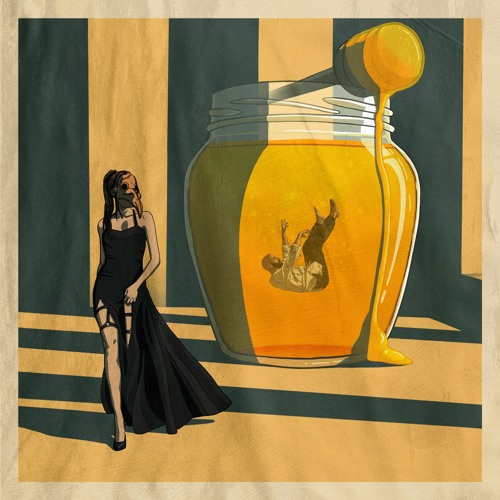
Peter Berger and Thomas Luckmann’s “The Social Construction of Reality” and Related Issues

Author’s Note: This piece is a re-write of a piece from my first blog, Classical Sympathies. At that time I was interested in the relationship between the individual and his or her place of work/ organization. Classical Sympathies was fortunate to have a number of regular readers, some of whom took the time to comment, sometimes at length. The blog got a surprising amount of traffic for some reason, although it is now lost to time. Some pieces from back then are, looking back, a little too flowery, however the style was the style. Andrew Inch, a guy that a uncatagorizable cross-section of people here in Japan knew back in the day, was one of the most prolific and interesting commenters, and I have left his remarks in this re-write.

Berger and Luckmann’s The Social Construction of Reality:

This piece will look in some detail at Peter Berger and Thomas Luckmann’s The Social Construction of Reality, and comment on some of the ideas that it raises. Anyone who works in an organization will be aware that the intersection of the individual, in all of her preferences and particularities, and the institution can involve some friction. In The Social Construction of Reality, Berger and Luckmann spend 45 pages on the topic of “institutionalization,” so they had obviously gave the matter some thought.

They make the point that while man (The Social Construction of Reality, published in 1966, uses the gender-specific term), makes his world, he is given to losing sight of this and projecting (or “reifying”) aspects of the social world so that they are perceived as entirely external and beyond his control. They write:

“Man’s self-production is always, and of necessity, a social enterprise. Men together produce a human environment, with the totality of its socio-cultural and psychological formations” (51).

Human culture, then, is invented. However, being prone to reification, people tend to:

“{apprehend} the products of human activity as if there were something else than human products–such as facts of nature, results of cosmic law, or manifestations of divine will. Reification implies that man is capable of forgetting his own authorship of the human world {and experiencing it} as a strange facticity, {…} over which he has no control” (89).

When mis-apprehending social reality as something other than the product of his own action and consciousness, man forgets that:

“the social world was made by men–and, therefore, can be remade by them,” but, ironically that,“reification is a modality of consciousness {…} Even when apprehending the world in reified terms, man continues to produce it” (89).

We can extrapolate the statement “even when apprehending the world in reified terms, man continues to produce it” to suggest that the perception of sedimented, externally controlled or created, facticity continually creates the very facticity in question. Put slightly differently, the denial of agency diminishes, even uncreates, free-will, while the exercise of free-will depends in large part, perhaps entirely, on the strength of one’s belief in it.

Now, this is not to argue that reification is simply false-consciousness, or that groupings within society do not go to considerable trouble to perpetuate and legitimate reification of their activities. Berger and Luckmann make this quite clear in their analysis of what they call “socially segregated subuniverses of meaning” such as “Hindu castes, the Chinese literary bureaucracy, or the priestly coteries of ancient Egypt” (85), (and we would add to this list lawyers, doctors, television pundits, university English departments, etc.). They write that subuniverses:

“become esoteric enclaves {…} to all but those who have been properly initiated into their mysteries {…} The outsiders have to be kept out {but} if the subuniverse requires various special privileges and recognitions from the larger society, there is the problem of keeping out the outsiders and at the same time having them acknowledge the legitimacy of this procedure. This is done through various techniques of intimidation {…} mystification and, generally, the manipulation of prestige symbols” (87).

“And generally the manipulation of prestige symbols” indeed. Those who engage, consciously or unconsciously, in the manipulation of prestige symbols are, in Berger and Luckmann’s language, involved in creating a “typification.” The acceptance of typifications, in turn, sediments social facticity and brings into being a taken-for-grantedness in the performance of social actors.

The authors indicate that while the typified actor may “act-into” a socially authorized way of acting in public, the same actor, in the privacy of their home, the confessional, or the bar may seek to establish a certain “role distance” through behaviors which blur, or indeed outright contradict, their public “face;” this distance is apt to shrink again when the times comes once again for the actor to take up their public role. In so doing, the actor re-activates that segment of the self which is objectified in terms of the currently available socially available typification(s).

When I started my first blog in 2009 I wrote at some length about why I wore a necktie at work, even though I didn’t really have to and some co-workers thought it was a little strange. My buddy Andrew Inch wrote an extensive, and highly perceptive comment on the topic which is instructive here. Mr. Inch, it will be apparent, is one smart dude. It’s kind of long, but it is worth it.

“Reflection on MT’s devotion to this apparently innocuous task, knotting a piece of cloth around his neck each morning, leads us towards what has become a key element of many recent theories of ideology. Derived from Pascal’s advice to non-believers, ‘kneel and pray, and then you will believe’, the French philosopher Louis Althusser sought to assert the materiality of ideas, and how ideology works through our actions as well as our words to define us as certain sorts of subjects. For Michel Foucault, one of Althusser’s students who sought to break with Marxism and the concept of ideology, the knotting of that neck-tie might have been considered a ‘practice of the self’, a way of disciplining oneself in line with a particular matrix of power and knowledge. The question that I think both of these thinkers struggle to address, however, is the extent to which we are able to shape our own selves, rather than simply being shaped by power. What scope do we have to resist the power embedded in these apparently mundane everyday motions? {…} By kneeling to pray, or standing in front of the mirror adjusting the knot, we perform belief and so take on socially available identities. And as for the rest of us in that office – what was the effect of not knotting the tie each morning? At times there were no doubt some who reveled in the non-conformity of that not knotting. In truth, however, did our alternative practices of the self not simply reproduce a slightly different, perhaps less respect-able but nonetheless conformist, relationship to the rules and rituals that regulated life in that particular setting? Was not wearing a necktie not just another kind of necktie after all?”

“In truth, however, did our alternative practices of the self not simply reproduce a slightly different, perhaps less respect-able but nonetheless conformist, relationship to the rules and rituals that regulated life in that particular setting?” This sentence is phenomenal, and predicated on a particularly alert and acute piece of self-knowledge. Mr. Inch is saying that those in the office who refused to put on a tie, or who flaunted the organizational dress code altogether, while thinking that they were “rebelling” and “sticking it to the man,” were in fact playing into a pre-determined archetype every bit as much as I was with my neckties and apparent “conformity.”

Mr. Inch is essentially making the same point that Berger and Luckmann do when they point out that roles and typifications are “endemic to social interaction {…} All institutionalized conduct involves roles.” And then, the authors bring matters home:

“The institution, with its assemblage of ‘programmed’ actions, is like the unwritten libretto of a drama. The realization of the drama depends upon the reiterated performance of its prescribed roles by living actors. The actors embody the roles and actualize the drama by representing it on the given stage. Neither drama nor institution exist empirically apart from this recurrent realization” (75).

In short, both Mr. Inch and Berger and Luckmann do not confine the acting out of prescribed roles, the submission to typification (e.g. “conformism”) to those in positions of authority within an institution. To the contrary, I read them both as saying that both the master and the servant, the “teacher’s pet” and the “bad boy,” the necktie wearer and the necktie shunner, the consummate insider and the professional rebel are all engaged in the recurrent realization of pre-typified activity.

Explication With Reference to Obama and Talleyrand:

Now, it is true that the above reading of Berger and Luckmann may leave the door open a purely cynical outlook by suggesting that all forms of behavior by institutionalized actors are equal. This is not quite what I wish to argue. Barack Obama has defined his political philosophy as “ruthless pragmatism.” While I understand this formulation, it does seem a little cold (as Obama is famously said to be) What if we added the word “principled” here? Could “principled ruthless pragmatism” sustain meaning without slipping irrevocably into the realm of the oxymoronic?

Let’s take a closer look in relation to organizational life as opposed to the political sphere. “Principled” because one’s initial agreement to engage with institutionalization (through the acceptance of a job offer for example) assumes a principled acceptance of the role one will be asked to play and the attendant tasks and behaviors that will be expected.

“Pragmatic” in that in order to accomplish anything in the social world, wherein competing interests, visions, and ideologies are, and ever will be, an unavoidable reality, one must be prepared to lose the battle in the service of, hopefully, winning the war. It has been my experience that the inability to lose a battle is a problem for many people in the modern workplace. Related to the ability to lose a battle is one’s attitude toward “compromise.” Is “compromise” a dirty word? It’s hard to say. On the one hand, the actor who blithely declares “there can be no compromise where my principles are concerned” may sooner or later find their principles encased under glass in their own private shrine to imagined rectitude. In other words, total denial of the possibility of compromise is tantamount to surrendering all hope of getting anything done. In the immortal words of William Jefferson Clinton, “sooner or later, you have to cut a deal.” On the other hand, there are a certain class of situations where certain compromises just do not feel acceptable, situations where one has what we could call an existential objection to the terms of the proposed compromise.

The question does not, I think, concern whether deals should be struck in general, they should, so much as whether any individual deals is in the long term interest of the project in question and the people involved with this project. This is where “ruthless” perhaps applies. At the very least, the pragmatist needs to accept in herself a degree of strategic focus where goals rooted in principle are concerned. We cannot deny, of course, that this is an easily misused sentiment—if we continually apply “pragmatic ruthlessness” to a project which we are deeply attached to there is the real danger of a concomitantly continual shifting of the moral goal-posts. In short, these are muddy waters.

Talleyrand, Napoleon’s foreign minister is, perhaps, most famous for his remark that “treason is a matter of dates.” Gives you the chills, does it not? Benjamin Schwarz writes of Talleyrand:

“Arguably a turncoat, possibly a degenerate {…} certainly a shameless flatterer and world-class bribe taker, Talleyrand was also the most skillful and farsighted diplomat of his age and a man of arresting grace, wit, and style {…} He was as seductive as he was obviously dangerous {…} Talleyrand subscribed to the idea that statecraft’s modest but arduous task is to enable one’s country to survive and prosper in the world as it exists–not to transform international relations and not to further the alleged cause of mankind” (The Atlantic, December 2007, 93-4).

A hero or a villain? Schwarz is not sure, but he is charmed. For my part, I see in Talleyrand perhaps an 18th century form of “principled ruthless pragmatism” where France’s survival and prosperity was the principle from which his ruthless pragmatism stemmed. While your own cause may or may not be the triumph of the French nation, the application of a ruthless pragmatism in the service of a deeper principle does hold a certain appeal. However, I just don’t personally feel that “ruthless” is really the most appealing qualifier for pragmatism in regards to acting within the public sphere.

Comment:

Instead, I am more interested in understanding how and when to “follow the rules” and surrender to form, as opposed to how and when to do a little end-run. To function effectively within an organization it is essential to realize the power inherent in form. At times, often times really, a “surrender to form” is required. However, instead of simply surrendering to form and that being that, we may be able to add a qualifier of our own. Certain situations may call for a “strategic surrender to form” for the moment, while at the same time “bracketing” or “pocketing” the possibility of the end-run. Here, perhaps, we may have a window into a pragmatic post-post-modern stance which takes post-modernism’s relentless questioning of form and turns it inside out, recognizing that the tyranny of form is something we bring upon ourselves by allowing form to tyrannize.

Put another way, we can expand slightly on Berger and Luckmann’s claim that “an apprehension of reification as a modality of consciousness is dependent upon at least relative derefication of consciousness, which is a comparatively late development in history and in any individual biography” (90). I would suggest that an apprehension of reification as a modality of consciousness is dependent upon at least relative dereification of consciousness which may then lead into the ability to either and/or alternately i) embrace reification and role typification as a strategy (that is to inhabit a form which brings with it certain prerogatives and forms of access), and ii) radically overthrow reification and typification through the recognition that the establishment of social facticity is but a spectacular bluff resting on the manipulation of prestige symbols and the shaman’s art whereby an illusory thinness is reflected as an eternal massivity. In so doing, we may be of service to truly worthwhile cause, protecting a space for action and free-will in the face of the ever-expanding institutionalization of both the public and the private sphere. That might be worth working on.

Dedication: For Mr. Inch. Thank you for commenting. You rock baby.

The Thin Man in Singapore Part II: The Thin Man on Assignment

1DBD4BFF-E32B-4584-B058-469BDD270CC4The cry of a peacock, flies buzz in my head/ ceiling fan’s broken, there’s a heat in my bed/ street band playing “Nearer My God to Thee.”



Bob Dylan

Dateline Singapore, late fall during the 100 year anniversary of the end of the Great War

This little country, such an unlikely success story, such a strange winding of forces. The Thin Man has been on land for two weeks and his sea legs have mostly subsided. His stomach is still in limbo; years of gruel below the waves have seen to that.

Now there is nothing more that the Thin Man wanted after washing up here earlier in the season then a long weekend. Say, five years. Five years in the hammock, five years frolicing with the lovely ladies at the bar with the occasional flyer over in Macau. Five years out of the swim of modern capitalism, if you can even call it that. Five years clean. That was the dream. Twelve days in and the Thin Man was looking for work, the money gone in a haze of long days and longer nights. Wine, women, song, and a speedboat ride or two will add up quick. C’est La Vie partner. That’s what comes from burning holes up to heaven, in the words of the bard.

The Thin Man is a gamer, and is constitutionally unable to categorize situations as problems. No problemo senor, no worries mate. Instead, he has a few issues. The first being, he is barely employable. It turns out that a few decades on the ocean floor running the house game prepares him for casino work, underground games, and giving blood. That’s about it; he wants no part of card games and giving blood makes him nauseous. Also, he has a limited quantity. So, he asked around, kept his ear to the wind. A shipmate turned him onto a broker of services of sorts, the kind of individual who specializes in assisting upstanding institutions with their shining mission statements and their CSR campaigns navigate the grey areas of competition and market position. The broker, like all of his kind, couldn’t give a shit who he was pimping as long as he got his 8% commision. It was he that took the Thin Man’s data points and turned them into a resume which accentuated the high stakes, low reference point nature of his previous work. A bite came back within 36 hours. The broker knew his lane, apparently.

The man from Company X introduced himself as Alejandro, and Alejandro came bearing work. “What sort of work,” asked the Thin Man. Alejandro’s smile was thin as a razor. “The best kind, the kind where you get in and out.”

“I deal cards,” replied the Thin Man, “I’m not a safecracker.”

Alejandro’s smile widened fractionally. “Of course not. We are a respectable company with a 400 year history. This work is simple. The company is in negotiations around a merger with Green Group Ltd. They are playing hardball and we need to know their real intentions.”

“Basically you want to know if they are bluffing?”

“Precisely. And who better than an operator such as yourself to find this out?”

“And what do I have to go on?”

“The Green Group will be having a party at the Swissotel downtown tomorrow night. There will be 200 guests. You will infiltrate the party and get the lowdown. That is what you British say yes, “the lowdown.”

The Thin Man was not British but it didn’t matter. “Yes, that’s right. OK, book me a room on the club floor. I’ll need a new suit, a haircut, and a cell phone. How’s $500 a day for expenses and $20,000 for the job?”

Alejandro eyed him carefully. “What about the broker?”

“That’s your end,” said the Thin Man. My end is $20,000.”

“Deal. Don’t fuck up.”

“I don’t intend to.” And with that the conversation was over. The Thin Man had acquitted himself well, but only by the grace of god. Several things were running through his mind. i) Was $20,000 a lot or a little for a one-night stint of corporate espionage? Alejandro had bit right away so perhaps he was underselling his services. Or, Company X was desperate; ii) 200 people at the party and the Thin Man knew not a one of them. He’d have to research, chose a few likely targets. Two weeks of carousing and there wasn’t a lot of research energy to spare. He’d need to make minimal and efficient moves; iii) he had no bank account. His severance had been paid in cash and he did not intend to stay in Singapore forever, however appealing the locale. He’d need to get legal sooner rather than later. The very thought fatigued him, so he grabbed the Handy phone the hotel provided and headed to the bar.

Dateline Singapore, that evening, around 17:07.

Well apart from the things that I touched/ nothing got broke all that much/ and apart from the things that I took/ nothing got stolen babe, and look.

Matthew Houck

The Alligator Pear is the poolside bar at the Swissotel, and the Thin Man figures tomorrow’s party will be at held around the pool. Thus, this visit is classified as reconnasaince. This visit is billable, baby. A single couple lingers over a menu across the way. “What’ll it be?” asks the bartender? “Do you have any eggnog” asks the Thin Man, more out of habit than preference. The bartender gives him a sideways look, as if he is not sure who the joke is on. “No sir, I am afraid we only serve eggnog during the Christmas week. How about one of our signature Manhattans?”

Manhattans, they taste like mouthwash.

“Sure a double Manhattan. And pop an egg in it would you?” This time the bartender doesn’t even blink. “Of course, sir. One Manhattan with a raw egg.” The drink is served and the Thin Man knocks it back straight. It is as disgusting as an adult beverage can be. “Perfection,” says the Thin Man. I’ll take a double martini with a sprig of Rosemary please.” As the barkeep makes his second drink the Thin Man turns to survey the space. Despite knowing no one and nothing about tomorrow evening’s party, he has a few advantages. First, event spaces are inherently permeable. More on this later. Second, he has nothing to lose. Nothing whatsoever. The $20,000 is what you call a titular payment. Hypothetical. His sainted mother has long passed; his poor dear widowed sister may as well exist in a different century. The Costa Rican chick who claimed he’d knocked her up in ’04 was probably still out there, but he had no confidence in her presentation of events. He was only on shore for 48 hours and months under water tends to take a few miles off a guy’s fastball. She was sweet, but it was probably a hustle. So like I say, nothing to lose, and therefore easy to underestimate. That’s what the Thin Man is counting on. He’d better; the bastard’s precious little else.

The martini is served and the Thin Man takes a deep drink. Three men approach the bar, lanyards around their neck, ties beginning to come undone, voices high. The Green Group, thinks the Thin Man, excellent. He takes a deep breath and turns his head slightly to the right, cementing his presence in their field of vision without being in any way threatening or intrusive. “Can you fuckin’ believe Bill?” asks one of the men. Pulling up sick on a day like this, the company going to shit?” “I think he’s faking,” says the second man, a lifer in his early 50s. He’s always been weak like that. Looking to cover his ass.” “Fucking wanker, if you ask me,” replies the first man. “Pussy.”

The Thin Man looks up at the men and smiles. He sympathises. He will be their good friend tonight. Corporate espionage, he decides, is like everything else. It’s just a matter of intention.

to be continued…

Works Cited/ Referenced:

American Music Club. “Myopic Books.”

Dylan, Bob. “Caribbean Wind.”

Phosphorescent. “C’est La Vie.”

Phosphorescent. “Nothing Was Stolen.”

Some Things I’ve Learned by 44: A Poem

6AD91397-DC97-465E-808C-E0BD7853ACF3.jpeg

There’s a lot I don’t know

and a few things I might

life’s a hell of a show

a bit tough to get right


well, some folks they want you

and other folks don’t

some folks they will

and other folks won’t


you’ll get plenty of chances

you’ll blow the best part

you’ll twirl at some dances

you’ll get shot through the heart


some folks you can trust

up to a point, more or less

others? trust’s a bust

they’ll spilt the joint, leave a mess


try and tell the truth

you’ll take blow after blow

don’t tell the truth and

no one’ll save your soul


anything’s possible, in dreams

who’s better than you?

everyone, it seems

but it just isn’t true


they’re all full of bull

faking til’ they make it

so just push when they pull

baby stand when they sit


cause no one knows shit

and everything’s thin

I’ve been around a bit

a never was, a has-been


but that ain’t you baby

it ain’t me anymore

no one can save me

I’ve outlasted the war


so all you got is today

and maybe not that

that’s all I’ve got to say

take the meat, leave the fat.

FIN


The Hired Hand Part I: Azerbaijan, 1990.

14F05E5B-56BC-4624-AB18-F05B2E729E12


Epigraph:

So you think you can tell/ heaven from hell?

Pink Floyd

INTRODUCING MITCHELL GREY

March 7th, 1990. Mitchell Grey waits at a make-shift roadblock on the Iranian side of the Iranian/ Azerbaijani border at Astara. The Azerbaijani populace has been on a 40 day general strike since a desperate and cornered Gorbachev ordered a crackdown on the citizens of Baku. Nerves on the border are stretched thin, to say the least. Grey takes his time, keeps his head down. He turned 30 in November, a mid-Sagittarius, born adventurer. Not that he’d had much choice. Of course, Grey is no more his name than it is yours, unless that is your name happens to be Grey.

Four or five people, all men, are processed and it is Grey’s turn. He turns over his passport for inspection. The customs officer looks it over, gingerly as if it might be edged with arsenic. “What is your profession?” he asks, in perfectly good English. “Engineer,” replies Grey. He had settled on this option after much thought. Grey stands 5 foot 10, with clipped hair, three-day stubble, and work boots. He is operating on a $1500 advance paid three weeks ago in Milan by his handler whom he had met for 10 minutes. Precious little remains, and Grey is in no position, no mood to pretty himself up for the Astara crossing. He does not look like a businessman or financier, and is not about to take the risk of trying. Nor does he look like a writer, despite the capaciousness of that particular category. He looks like what he is, a hand for hire, a mercenary. Engineers are scientists, more or less, and he hoped that at least a patina of respect would be accorded his proffered status.

“Engineer of what? You are here to steal our oil, yes.” Not a question. The border guard gives Grey a look somewhere between a sneer and a smirk. A game player, thought Grey, a patriot perhaps, but a game player first. This is usable information. Grey takes a low deep breath and forced himself to relax. “A structural engineer. I specialize in basements and aqueducts,” he replies. Grey hoped that the word “aqueduct” would escape the guard and that he would tire of the game soon. However the young man was not such an easy mark.

“Basements,” said the guard, with heavy sarcastic emphasis. He turns to the man to his right, an older man, long past fed up with the conversation. “You have business in our country about basements?” It was time for Grey to fall back on the cover story. “I am not here on business. I am meeting an elderly couple in the countryside. They are passionate hunters, and we will be hunting your famous Caucasian snowcock. As well as of course quail and pheasant.”

“So you are on holiday,” askes the guard. “Holiday, now, after the brutal crackdown of the Russians, you are here to shoot birds on holiday.”

Read more

Andrea in the Far East: Night One

Intense silence

As she walked in the room

Her black robes trailing

Sister of the moon

Stevie Nicks

Andrea got off the second leg of the flight to Seoul around 14:30 on Tuesday, military time. She had quasi-slept, faded somewhere into her subconscious, for an hour and a little. Andrea was not a heavy explorer of her subconscious, more like she knew it was there. On the flight, up there under an ocean of ozone, black window spiders jousted with a velvet gloved countess and bunches of green grapes for supremacy of the space. That was all fine, she was essentially sober, Mr. Brown had been rendered comatose by hour one, and as she rolled into customs she felt, if not exactly happy, at least ready. Ready for the industry conference and its banalities, ready for the Lotte Hotel downtown with its wall of kimchi options at breakfast, ready, even, for a puleun or two. Maybe. We’ll just have to see.

The conference “event” is set to kick off at 8 Wednesday morning, and Andrea had no intention of being on time. Events, by and large, are well planned and poorly designed. They are programmed to run and be completed, and the narrative arc conception is, well, bad. The Seoul event would be no different. “An event should be eventful,” someone once told here, and Andrea had held on to that guy like a tailsman. And, sometimes when the event lacks eventfulness, well, you gotta inject a little of that yourself. She giggled at the thought; the possibilities were many. She got game, our girl. Watch the f*** out boys.

Why don’t you ask him what’s going on?

Why don’t you ask him if he’s going away?

Why don’t you tell me what’s going on?

Lindsey Buckingham

Jump cut on account of a lazy writer. Sorry Andrea, you just lost several hours. That’s the breaks baby.

10:47 PM, Andrea is on the STREET. Can’t learn it in the office, gotta learn it on the STREET. Monsieur Puleun 1 is strolling with a feathered friend on the boulavard. Site of a protest from earlier in the day that Andrea missed. Another peanut tantrum? Korean scandels are unrivaled in their bizarre and byzantine nature. And, the assassin chick of the brother of the NK head dude wore an LOL shirt. So 2017. Check the video. Check the record/ check the guy’s track record. (Le) homo sapien sapiens, them’s bizarre. Puleun 1 sees Andrea; she sees him. Opportunity presents itself–Andrea, she needs a token, a takeaway, a reminder that she was here at all.  At the “event” site no doubt volunteers are cross-stressing before cross-dressing. Could not care less—that’s all paid for by the company. Event spaces are super permeable. So is the puleun. Andrea swings into action.

“My friend, do you know how to get to Sungnyemun?”

“Yes I do. Go with me?”

Andrea pondered. On the one hand, well, you know. Street guy? Seriously? And on the other, well, she is on vacation. A. B, she has her needs. Not what you are thinking brother. Andrea’s needs are a little more, well, esoteric. For lack of a better word.

“For a little while. Let’s walk.” Andrea slips her arm under his and feels him thrill to her touch. Hooking, hooking is easy. She’s a natural. It’s pretty clear.

Read more

Half Hours on Earth

Singapore, October 2018.

Over at @kyotokibbitzer on Periscope we like to “play the hits,” as any self-respecting radio station should. New content is, I promise, on the way soon, however in the meantime we are playing not so much the hits but rather the B-sides from my first blog Classical Sympathies. On Sympathies the longer pieces of linguistic anthropology got the most attention, followed probably by the pieces on the film My Dinner with Andre. There was some original poetry on the site as well, some of my own and some from talented contributors. It is, in my opinion, all worth looking back at.

Here is “Half Hours on Earth,” which I wrote in Auckland in 2009. There are a lot of mussels served in Auckland, incidentally.

The theme is pretty obvious; the poem is about an encounter, or, more precisely, an event, during which time, for me, compressed itself almost to a standstill. You have probably had this experience if you have been knocked of your bicycle by a car or something like that. When this happens over a half-hour, that’s a bit of a different guy.

Anyway, here is the poem, unchanged since it was written in 2009. I’ve always loved a good b-side. Hell, I even like the bad ones.

The quality of experience in half hours
is not uniform.
Some half hours are simply wasted
in others, something occurs
and leads into something else.
Other half hours pass quickly
they are maintenance,
but leave little residue.

Half hours on earth
what are they worth?
I don’t know.”

With the occasional half hour
something actually happens,
in the Raymond Carver sense,
something that matters.
The air is charged and thin,
butterflies roil one’s viscera
and something is on the line.

“Half hours on earth
what are they worth?”

These electric half hours
even those isolated in time
are frightening, or better
giddily upsetting, and dangerous.
They sear themselves into the memory
more–they ripple the fabric of the cosmos.

“Half hours on earth.”

The Process Has a Point of View: A Poem

This little ditty comes from my first blog, which was called “Classical Sympathies.” It is called “the process has a point of view.”  When I started Sympathies, I didn’t really know what I was doing.  I still don’t.

the process has a point of view
the process has a plan
it consecrates opinion
of the group or of the man
the process can be tampered with
but one must take great pains
to regard the ghouls that process fronts for
ghouls weighted down with chains
each time we wantonly with process toy
one chain process doth loose
if the ghouls become untethered
we have ourselves cooked goose
blood rites, human sacrifice, motions carried
parliamentary procedures of every kind
serve well to prettify men’s base designs
but their rigidity may insult the mind
so by all means make your end run around
the process, subvert the stated order, bring fresh
thinking but beware the ghouls of process
which will claim their pound of flesh
or better yet submit to process and to “the rules”
establish your credentials and sanctify intent
until you see that form is but an empty suit
and process, when respected, can be bent