The Days and Nights of My 50s II: 7/21/26. A Day of Minor Annoyances.

Epigraph:

I’m so, I’m so, unsatisfied.

The Replacements

Dude, what are you doing?

Me

I: Morning and Afternoon

Today was a domestic day. Some days have a theme. This one announced itself before breakfast. It wasn’t tragedy. It wasn’t triumph. It was simply a day of minor annoyances, one after another, each too small to matter and yet somehow impossible to ignore.

Although I wasn’t at home in Kyoto, I was only about half an hour down the road in Osaka, my other city and, increasingly, my second home. I love Tokyo as well, but it’s farther away, considerably more expensive, and there is just too much going on. Osaka is more chill. I like that

When in Osaka I usually stay somewhere around Shinsaibashi, my favorite part of town, where I can happily wander for hours without much of a plan. Over the past several months I have been working hard to make the transition from teaching to writing full-time. I’ve been writing seriously for nearly two decades and have always thought of myself primarily as a writer. This spring, however, I finally decided to treat writing not simply as a passion but as a profession. The distinction matters.

Writing is the part I love. The profession includes everything else. I published my first novel, a thriller, earlier this year. I am happy with it and eager to do ever better next time. The book sold decently, and I’m still waiting for my first royalty payment. I don’t expect this money to change my life. If I’m lucky, it might pay for a few nights in a hotel, a handful of good dinners, and a strategically irresponsible number of cocktails. That’s perfectly fine. Every career has to start somewhere.

What I’ve gradually begun to understand is that being a professional writer involves far more than sitting in front of a keyboard. There are websites to maintain, emails to answer, banking problems to solve, social media to update, editors to contact, drafts to organize, and a hundred other little administrative jobs that somehow multiply while I sleep. To be honest, some of those tasks are a bit of a pain in the ass. Others are fun. Still, they’re part of the job now, and I intend to get as good as I can with them.

I am also recently divorced and dating again for the first time in nearly thirty years. Earlier this summer I dated a wonderful woman named Litz for about seven weeks. Most of this was online, and then the last eleven days we spent in her tiny apartment in Kochi City in central Japan. Eleven days in a small apartment is more than enough for minor differences to add up, and add up they did. After this time together, we mutually decided that we would not remain a couple and would no longer be exclusive. This is the right decision for both of us. We remain close friends, talk on the phone multiple times a day, and as of this writing are planning to meet for the first time in almost a month this coming Sunday. We have agreed to give our relationship a fresh start with as few expectations as possible. This will be a little tough as we have already spent many hundreds of hours on the phone and in person, however we will give it our best shot and hope for the best. Interested readers can read my longer piece on the recent state of our relationship here.

These days I am talking with dozens of women all over Japan and the world on several dating apps. Some conversations are thoughtful, some are flirtatious, some become unexpectedly intimate, and others consist almost entirely of discussions about pets, weather, coffee, and whether either of us has remembered to eat lunch. I enjoy all of it. I only block women when they ask me for money I am not going to give them. My mother finds all of this pretty remarkable and even a little shocking, which I find quite funny and so I remind her that “yeah mom you met dad in 1969 and things were a more than a little different back then. Today every single person and many married people besides are on the apps and carrying on a bunch of conversations just like me.” She laughs too.

I have been on a few dates since Litz and I ended our exclusive relationship with both professional women and regular civilians, and while these have all been nice, nothing has really materialized yet. I also have several more dates lined up across Japan and Southeast Asia over the next month and I find this really great. When I first went on the apps back in April just days after my wife and I agreed to divorce, I expected it to maybe take a few months to get anything new going. Within just three days I met Litz and we were off to the races. I had been with my ex-wife for nearly 30 years, so I think the reader will forgive me for not fully understanding the modern dating scene. Nevertheless, I dramatically underestimated how many people are online today, how badly they seek meaningful connections, how horny they are, and frankly how they can be, and I include myself in this, just a little bit desperate sometimes.

So yeah, there is a lot going on in my life right now. Today, however, was mostly little chores. I woke just after 3:30 this morning after about four and a half hours of sleep. That may not sound like much, but I’ve slept this way since I was a teenager. I don’t necessarily recommend it, but I no longer spend any time worrying about it.

I got up, made a quick coffee, and took a quiet walk through the neighborhood surrounding my hotel near Hommachi Station. It was one of those peaceful Japanese mornings that almost seems to belong to another world. The covered shopping street nearby was almost completely deserted. Every shutter was down except for a couple of twenty-four-hour beef bowl restaurants serving the early shift workers and the late night drinkers. I wasn’t in the mood for gyudon, so I wandered into a convenience store instead, picked up a light breakfast and another coffee, and walked slowly back to the hotel while the city stretched itself awake.

Back in my room I realized I wanted to stay in Osaka a few more days. Summer vacation gives me six precious weeks away from school, and I’ve learned not to waste them. My son will soon be returning to Japan in a few days after spending much of the summer traveling overseas covering the World Cup, and I wanted enough time in Osaka to write before heading back to Kyoto to see him. That simple decision turned out to shape the entire day.

I extended my checkout twice, paying a few thousand yen for the privilege of remaining in the room instead of wandering around the city with my suitcase for half the afternoon. The extra time was worth every yen. I finished editing an essay, attended to some texts, and worked for a little while on my finances, a full time job in and of itself. When I checked the TV with the intention of extending for three nights, I realized that, although it was mid-week and not a holiday, the price was suddenly jacked up by double. This pissed me off a bit, however there was nothing I would do so I started looking for another hotel that didn’t require a working credit card. That last detail turned out to be more difficult than I expected.

I’m currently replacing both my primary bank and my credit cards, which means that perfectly ordinary tasks occasionally become miniature adventures. Booking a room, moving money between accounts, confirming reservations, receiving verification codes, signing into banking apps—none of it is difficult in isolation, but together they have an ability to consume an entire morning.

After a while I found a hotel in my price range near Tennoji Station and took the short train ride across town. The hotel is a former love hotel, a little older than my previous one, and the room is enormous. It has a huge bathtub, an improbably large bed, an oversized sofa, enough switches to launch a small spacecraft, and, for reasons known only to former love hotels, more amenities than I could possibly need.

The air conditioner was already on high when I arrived, which felt like an act of unexpected kindness after walking through the July heat. I unpacked my bag, plugged in my computer, laid tonight’s clothes across the sofa, and settled in. I had time, so I did something I had been putting off for nearly two months. I took all the things out of my large suitcase, laid them on the desk, and ended up throwing several bags of old clothes and other junk away before putting the rest back. This felt great because I am a bit of a minimalist and I seriously dislike clutter. For the first time all day there was nothing that absolutely had to be done. The domestic work was finished. The night could begin.

As of this writing, it is just before seven o’clock in the evening. I just finished editing and published yesterday’s diary entry, so I am starting on today’s. My plan is to begin the evening at a wonderful little cocktail bar near Shinsaibashi Station before wandering a few blocks over to one of my favorite karaoke joints. I hope to meet a woman tonight. I’m optimistic, but we’ll see. If it happens, wonderful. If it doesn’t, that’s perfectly fine too. When I was younger, I was relatively introverted. Over the years I’ve worked hard to become more outgoing, and these days I genuinely enjoy talking to strangers. I’ll probably end up chatting with a few dozen of people before the night is over. Perhaps a few will become new friends. Maybe one of them will become something more. Either way, I expect to wander back to my hotel sometime after midnight, finish this essay, get a few hours of sleep, and wake up tomorrow ready to do it all again. We’ll see where the night takes me.

II: Evening and Night

After getting settled into my new hotel, I decided it was time to head over to Shinsaibashi for the evening. Before I could think about cocktails or karaoke, however, I needed one thing: cash.

That turned out to be more complicated than expected.

The ATM had an English button, which naturally suggested that it would operate in English. Of course it did not. Add it to the list of minor annoyances that my day for some reason oriented itself around. I switched back to Japanese, poked my way through the menu, and managed to withdraw enough money for the evening. The whole episode took only a few minutes, and yet felt strangely representative of the day. Even the simplest tasks seemed to require one extra step, one extra guess, one extra little annoyance.

Even the cash in my pocket got in on the action. One of my ¥10,000 notes somehow emerged from my pocket slightly damp, despite the complete absence of rain. I have no idea how this happened. Whatever.

Outside, the evening was magnificent. As night fell, the temperature had fallen into the high sixties, and Osaka had become wonderfully walkable again. Summer nights here have a way of redeeming even the most irritating afternoons. I set off toward Shinsaibashi, thinking I’d simply grab a taxi and be there in a few minutes.

Google Maps had other ideas.

For reasons known only to itself, Google confidently informed me that Shinsaibashi was thirty-five minutes away by car. That couldn’t possibly be right. I know Osaka well enough to know when something doesn’t pass the common-sense test. Tennoji and Shinsaibashi are quite close together, but the app was operating like they were on opposite sides of the moon. They are not. I stared at the map, looked around at the streets in the area, and became increasingly convinced that either I was out of it or Google Maps was.

As it turned out, the answer was a little of both.

Unable to find a taxi, I wandered toward the nearest station hoping to sort things out underground. I asked the station guy the way to Shinsaibashi Station. He told me to take the Seninmichi Line. I walked over and of course, this is just the kind of day it was, the Seninmichi Line didn’t stop at Shinsaibashi at all. It did however stop at Namba, the stop before Shinsaibashi. Thinking about it I remembered that Namba was actually closer to the Drunken Clam than Shinsaibashi. Great. I had been to the Clam about five or six times and thought I had a pretty good sense of where it was. This would turn out to be wrong.

On the train I found myself making small editorial changes in my head to the Bobby Fischer essay I had just finished back at my hotel. I reread the essay on my phone, and focussed on one sentence: I had written that Fischer “couldn’t outrun what was following him.” Following wasn’t quite right. Chasing was better. Much better. It gave the sentence urgency. That’s the sort of microscopic revision nobody else notices but that writers somehow can’t stop making. I made a mental note to change it later.

Before leaving the hotel I’d also checked the latest stats for my blog. The Fischer essay had begun attracting readers, and the comments were starting to arrive. Other recent pieces were also moving well. This made me happy, because although I would not say I am obsessed with my stats I do find myself checking them several times a day.

At this point, I thought, I had sufficient cash, a reasonably good idea where I was going, and a beautiful July evening stretching out ahead of me. The middle part, again, turned out to be dead wrong.

Namba Station is only a few minutes from Tennoji Station, despite Google Maps claiming it is 35 minutes by car. It is not. It is more like five. Whatever dude. Do better I guess. If you can.

When I got up to the street above Namba Station, Google Maps told me that the Drunken Clam was 8 minutes away and it showed me the direction. The two blue arrows were pointing in opposite directions, but this is nothing new. I have learned over time that the arrows never have a clue as to what the hell they are doing, for some reason, and the only way to do it is to rely on the blue dotted line who generally is much more accurate. It was now close to 10 PM. I set out for the Clam and walked about 5 minutes before checking the app again. This time it had me going in the same direction, however it said I was now 13 minutes away. Typical. This seems absurd, so I looked around and at this point I still felt like I was more or less on track. I was not.

At one point I found myself standing in what appeared to be a dead end, staring once again at the little blue dot on Google Maps. The spinning wheel turned, the arrow drifted, recalculated, spun again, and generally behaved like a man trying to remember where he’d parked his car. I began to lose my patience.

A reassessment of the situation revealed to me that I was lost. I was not getting any closer to the Clam, and in fact Google Maps was insisting I was getting further away. I found myself asking the obvious question. How, after all these years, is this all still so difficult?

Presumably Google employs thousands of brilliant engineers whose entire job is making sure people know where they are. They have satellites, artificial intelligence, unimaginable computing power, and enough data to know what I had for breakfast. Yet somehow the little blue arrows still can’t tell me which way to walk down a street in central Osaka.

This isn’t a village in the mountains. It’s Osaka. It is one of the largest metropolitan areas on Earth. Tens of millions of people move through these streets every day. It is extensively mapped. If there is one place on the planet where a navigation app ought to know exactly where you are, surely Osaka is it. Nah.

I walked around in circles for another 20 minutes and then gave up and tried hailing a taxi. Google Maps was just busted. He sucks. Figure it out. I don’t know. The first taxi swept straight past me, reserved, which seemed about right. The second one stopped and picked me up. By this point I was sweating heavily in the July heat and was mopping my face with my shirt. The blast of cold air in the taxi felt like heaven.

After about a five minute drive the driver said the street to the Clam was closed to cars and it was just a few minutes away. This felt about right to me, so I paid my fare and made my way in the direction where I thought the Clam was. I was right back where I started over an hour ago, right next to Namba Station. I guess I was just being stupid and I should have just asked somebody instead of relying on the ever increasingly outta control Google Maps. But I had not. Oh well, I was almost there now. So I thought.

I was excited to sing karaoke as it had been months since my last time. Although I was a weekday, I knew from experience that the Clam would be packed. I would be lucky to get even one song in and I was going to choose Elton John’s Tiny Dancer, a real crowd pleaser. I knew that someone would play What’s Up by the 4 Non Blondes and Mr. Brightside by the Killers. These two songs are absolute staples of the karaoke scene in Japan and around the world. I was by this point thirsty and hungry and was looking for somewhere, anywhere, that was still open where I could grab a quick bite before the Clam. I felt that I was mere minutes away.

Right about then a total babe, a little chubby with rosy apple cheeks, walked past me. She made three seconds of eye contact, gave me a big smile, and winked. I smiled back. Nice. Her boyfriend noticed and kind of gave her the side eye. She glanced at him then looked back at me, smiled, and winked again! She wants the D I thought to myself and laughed. At least something was going my way.

I switched back to Google Maps, somewhat against my better judgement at this point. The large blue arrow pointed east while the smaller one pointed north. Again. A few seconds later they had switched places. Meanwhile the blue route calmly suggested I continue straight before making a short turn a block ahead. The map, the arrows, and my own sense of direction were conducting three entirely separate conversations.

So I made an executive decision to just ignore the arrows. They were not helping at all. The suggested route itself seemed about right. I started recognizing familiar landmarks. Sam & Dave’s couldn’t be far away. Neither could The Drunken Clam. Once those places enter your mental map, you’re effectively home.

As my confidence returned, so did my mood. A row of misting fans blasted cold air onto the sidewalk, and after well over an hour of wandering around in the July humidity they felt miraculous. I stood there for a few seconds longer than necessary, letting the cool mist wash over me before continuing on. Sometimes the smallest comforts are just the best.

Google Maps, however, remained committed to its own interpretation of reality. Every time I looked down, the arrows had adopted another opinion about which direction I was facing. Eventually I stopped arguing with them. They clearly weren’t interested in hearing my side of the story.

The streets grew busier. Hostesses and sex workers called out to passing pedestrians with the practiced ease of people who had repeated the same lines thousands of times. I smiled, exchanged a joke with one or two of them as I often do, and kept walking. It was simply another familiar part of the neighborhood, another sign that I was finally getting close.

When I checked the map one last time, it informed me that I was nine minutes away. An hour and a half ago minutes earlier it had insisted I was only eight minutes away. Whatever dude.

By now I had reached the point where optimism was becoming difficult to sustain. The estimated walking time seemed to change every time I looked down despite the fact that I had been walking steadily in what I thought was the right direction. It no longer mattered. What mattered was that I was once again lost. The bright, busy streets around Namba had quietly given way to somewhere much quieter. It simply didn’t feel right. I knew enough about Osaka to recognize when the city stopped matching the picture in my head.

After another twenty minutes of wandering through the July heat I was soaked with sweat and rapidly losing enthusiasm for the adventure. I wanted air conditioning, a cold drink, a restroom, and bed. The romantic idea of strolling across Osaka had officially run its course.

I finally admitted defeat and decided to grab a taxi to go back to my hotel. One pulled up right away. I climbed in, gave the driver the name of my hotel. After spending the better part of two hours arguing with Google Maps, there was something deeply reassuring about talking to a human being who knew exactly where he was going.

I thought the ride would take about 12 minutes, so I kicked off my crocs and leaned my head back against the seat to catch a few Zs. Instead the ride lasted all of four minutes. That, more than anything else, confirmed what I’d suspected all along. I’d never been very far away. The whole trip from door to door should not have taken more than 10 minutes. By the grace of Google Maps it took two hours. He is simply outta control. He does not know his ass from his elbow after 20 years. It makes zero sense.

III: Close

Back outside my hotel I walked the two minutes to Seven Eleven to get a few late night provisions. I lit a cigarette on the walk, because I smoke all day long, and also because I was still a littler stressed from my ordeal. With finally a minute to breathe I thought about ordering an escort. Although it was almost midnight, I knew the escort agencies would still be open. Some of them are open 24 hours, and others close for just a few hours in the morning. I would use the same agency I used last night to book Yuki. My date with Yuki had gone well enough, and she was very sweet, however she just wasn’t my speed and I was not going to book her again. I liked the picture of another girl on the app, and briefly contemplated booking her once I got back to my room. I just as quickly rejected this option because after my long walk around the greater Namba area I was simply exhausted. The only move was to smoke a couple more cigarettes, wash up, drink some water and maybe a little red wine, and call it a night. And this is what I did.

IV: Final Reflection

Looking back on the say, there wasn’t a dramatic event. Nobody fell in love. Nobody died. I didn’t solve any great problem or have any profound revelation. Instead I spent the better part of twenty hours dealing with hotel reservations, bank cards, ATMs, Google Maps, train stations, taxis, convenience stores, and the thousand tiny pieces of modern life that quietly consume so much of our time. Twenty-five-year-old me would have dismissed it as a wasted day. Fifty-two-year-old me isn’t so sure. Ordinary days are, after all, what most of life consists of. If you can’t learn to appreciate them—or at least laugh at them—you’ll spend most of your life waiting for life to begin.

In the end everything worked out. I found another hotel, finished some writing I was happy with, got hopelessly lost, eventually found my way home again, shared a smile with a beautiful stranger, sang no karaoke whatsoever, and ended the night exactly where I was supposed to be: back in my room, tired but happy, and with another essay nearly finished. Tomorrow will almost certainly bring another entirely different collection of small victories and minor frustrations. If today’s lesson was anything, it’s that those days are worth paying attention to too.

Dedication:

To the apple cheeked babe. There is always tomorrow honey.

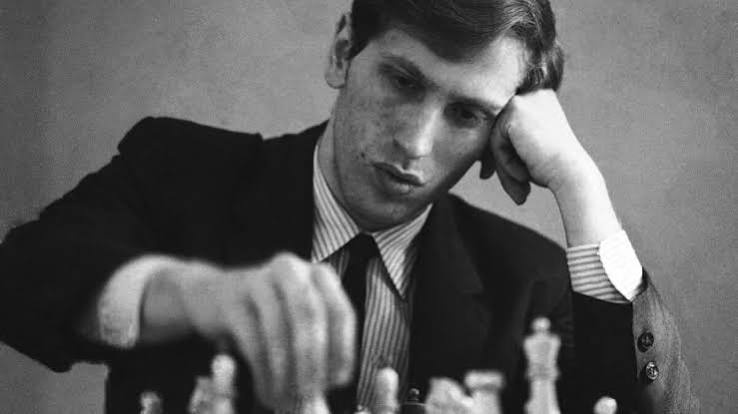
On Bobby Fischer, the Greatest Chess Player of All Time

Epigraph:

Why not see a legend while it’s still being made?

The Silver Jews

Introduction:

This essay looks at the life and career of the greatest chess player of all time, Bobby Fischer.

This one is especially meaningful to me because my dad, Ross Thomas, taught me to play chess when I was a little kid. Neither of us has ever been a great player, but we both love the game. Ross still enjoys playing today as do I, and although I don’t follow competitive chess as closely as I once did, I’ve never lost my fascination with its history—or with the remarkable personalities who have shaped it.

Few personalities have ever been as brilliant, complicated, or tragic as Bobby Fischer.

In this essay I explore Fischer’s astonishing rise from Brooklyn prodigy to World Champion, the unforgettable 1972 Match of the Century against Boris Spassky, his extraordinary genius over the board, and the painful decline that followed. Like many towering figures, Fischer left behind a legacy that is impossible to separate from his contradictions.

Whether you’re a lifelong chess player or simply interested in remarkable lives, I hope you’ll enjoy the journey. As always, thank you for reading, commenting, sharing, and making these conversations possible.

I. Brooklyn

There are bogglers, and then there is Bobby Fischer.

History is littered with men who threw away fortunes, marriages, careers, and reputations. Every generation seems to produce a few gifted souls who wake up one morning, look at a perfectly good life, and decide to drive it into a ditch at seventy miles an hour. Howard Hughes belongs in that conversation. John McAfee as well. A handful of Roman emperors deserve honorable mention. But if I had to pick a patron saint of the truly bewildering decision, the gold medal still goes to Bobby Fischer.

Which makes the whole thing even stranger, because Bobby began as almost the opposite of a boggler. He was a skinny kid from Brooklyn who found a chessboard before he found the rest of the world and went on in short order to change the game forever.

I never saw Bobby Fischer play. By the time I was old enough to understand chess, he long gone. The World Championship in Reykjavík belonged to another era, and Bobby himself had already begun drifting into legend. I didn’t discover him through television or newspaper headlines. I discovered him through my father, who loved chess and spoke of Bobby the way baseball fans talk about Willie Mays or boxing fans talk about Muhammad Ali. Bobby wasn’t simply another grandmaster. Bobby was Bobby.

Even if you know almost nothing about chess, you’ve probably heard the name. That’s rare.

Most world champions become famous inside their sport. Bobby transcended the board entirely. For a brief moment in 1972, during the height of the Cold War, a chess player became one of the most recognizable people on the planet. He wasn’t just trying to beat Boris Spassky. Millions of people saw him as the lone American challenging decades of Soviet dominance in the game’s intellectual heartland.

He won.

And then… Well. This is where the boggling really begins.

II. Brooklyn & Chess

Every legend has to begin somewhere. Abraham Lincoln had the log cabin. Muhammad Ali had Louisville. Bob Dylan had Hibbing. Bobby Fischer had a small apartment in Brooklyn, a single mother, and a chessboard.

Not exactly the ingredients from which you would expect history to emerge.

Bobby wasn’t born into wealth or privilege. There was no grandmaster father waiting to pass down generations of chess wisdom. There was no Soviet state pouring unlimited resources into his development. There was just a skinny, bright kid who discovered a game that somehow made more sense to him than almost everything else around him.

The game never let him go.

Neither, apparently, did he ever let go of it.

I never saw Bobby Fischer play.

By the time I was old enough to understand what a chessboard even was, Bobby had already disappeared from competitive chess. I was born in 1974, just two years after Reykjavík, so I missed the whole thing. My Bobby wasn’t the Bobby of television broadcasts and newspaper headlines. My Bobby came secondhand through my father.

Dad loved chess.

He wasn’t a master by any stretch, but he loved the history, the personalities, and above all Bobby Fischer. Long before YouTube breakdowns, Twitch streams, and chess engines stronger than every human being who has ever lived, my father told me stories about this kid from Brooklyn who walked into a game the Soviet Union practically owned and somehow beat them anyway.

To a little kid, that sounded impossible.

And maybe that’s why Bobby has fascinated me ever since.

Not because I became a serious chess player—I didn’t. Not because I memorized openings or dreamed of becoming a grandmaster. I didn’t do that either. Bobby fascinated me because even before I knew the details, he already felt larger than life. Some people become famous. Others become myths. Bobby somehow managed to become both before he was thirty.

There’s another thing I like about Bobby. He wasn’t polished. He wasn’t exactly charming. He wasn’t selling anything.

He didn’t seem remotely interested in being a celebrity. If anything, fame looked like something that had happened to him against his will. He wanted to play chess. The rest of the world insisted on turning him into a symbol.

That’s a dangerous bargain. Especially for someone who already viewed the world with suspicion.

The irony, of course, is that the qualities that made Bobby great at chess were probably the same qualities that made ordinary life so difficult. Absolute concentration. Endless preparation. Refusing to accept conventional wisdom. Seeing threats and possibilities invisible to everyone else. Across sixty-four squares those qualities made him nearly unbeatable. Outside the chessboard, they often made life bewilderingly complicated.

The boy from Brooklyn had found the one place in the world where everything made perfect sense. The trouble began when he had to leave the board.

III. Bobby’s Rise

The funny thing about genius is that it rarely announces itself politely. It doesn’t knock on the door. It kicks the damn thing in.

By the time Bobby Fischer was in his early teens, the whispers had already begun. Chess players who had spent decades studying the game found themselves losing to a kid who wasn’t even old enough to drive. Adults who expected to teach him lessons instead received one themselves. Tournament after tournament, Bobby kept climbing until people slowly stopped asking whether he was unusually talented and began asking a much stranger question:

How good can one human being actually become?

That question haunted the chess world for the next decade.

Remember, this wasn’t today’s chess. There was no internet. No YouTube lectures. No databases containing millions of games. No engines instantly pointing out every mistake with the emotional warmth of a tax auditor. If you wanted to improve, you studied books until they fell apart. You replayed famous games by hand. You stared at positions for hours. Chess was slower, lonelier, and in many ways far more mysterious.

Bobby loved every minute of it.

Or perhaps “loved” isn’t the right word. He consumed it. The game became less a hobby than an ecosystem. Everything else seemed secondary. School. Friends. Ordinary teenage life. Those things existed somewhere off to the side while Bobby disappeared deeper into sixty-four squares.

That kind of obsession usually scares people. Sometimes it should. But every now and then history rewards it.

By the late 1960s Bobby wasn’t merely America’s best player. He had become the only serious obstacle standing between the Soviet Union and permanent ownership of the World Championship. For decades the Soviets had treated chess almost as a national project. They produced champion after champion with an efficiency that bordered on the industrial. To beat one Soviet grandmaster was impressive.

To beat all of them? That sounded ridiculous. Bobby apparently didn’t’ received the memo. What amazes me isn’t simply that he won. It’s how he won. He didn’t scrape through on lucky breaks. He didn’t sneak across the finish line. He flattened people.

Strong grandmasters—men who had dedicated their lives to becoming the best in the world—found themselves losing in ways that almost never happened at that level. His Candidates matches became the stuff of legend. The scores looked less like contests between equals than demonstrations of what happened when somebody operating on a different frequency sat down at the board.

There are athletes who win. There are athletes who dominate. Then there are the rare few who make everyone watching wonder whether the rules somehow stopped applying.

Babe Ruth. Wayne Gretzky. Michael Jordan. Michael Phelps. Usain Bolt. Bobby Fischer belongs in that conversation.

That’s the point people often miss. Bobby’s greatness wasn’t confined to chess enthusiasts. His rise had the unmistakable feeling of witnessing something unprecedented. You didn’t need to understand the Sicilian Defense or the King’s Indian to recognize that this skinny kid from Brooklyn was forcing an entire establishment to panic.

And somewhere along the way, Bobby stopped being just another chess player. He became a symbol. Americans wanted him to humble the Soviets. Journalists wanted a story. Television wanted a star. Sponsors wanted a celebrity. Everyone wanted a piece of Bobby Fischer. I’m not sure Bobby wanted any of them.

Looking back now, that’s the first place I can see the seeds of The Greatest Boggler beginning to sprout. Before the paranoia, before the disappearances, before the bizarre interviews and the years wandering from country to country, there was already a young man who seemed profoundly uncomfortable with everything that came attached to success except the game itself.

He wanted chess. The world insisted on giving him everything else. And history has a habit of charging interest on bargains like that.

IV. The Wooden Click

By the summer of 1972, Bobby Fischer had become something no chess player had ever really become before. A global celebrity. That sentence still sounds strange.

Golf has Tiger. Basketball has Jordan. Boxing has Ali. Baseball has Ruth. Tennis has Federer. Even if you’ve never watched them play, you know their names.

Chess? Chess wasn’t supposed to work that way.

Yet for a few extraordinary weeks in Reykjavík, Iceland, it did.

The Cold War had turned sixty-four squares into a battlefield. Bobby Fischer wasn’t simply challenging Boris Spassky for the World Championship. Fairly or unfairly, millions of people saw him as one American standing against an entire Soviet chess machine that had dominated the game for decades.

Every move became news. Every expression became news. Every delay became news. The entire world seemed to be watching a board covered in little carved pieces of wood. Most people would have loved every second of it. Bobby Fischer looked like he wanted to crawl under the table.

Here’s where “The Greatest Boggler” first begins to make sense. Most celebrities worry about bad reviews. Most athletes worry about losing.

Bobby worried about everything. The lights. The cameras. The spectators. The photographers. The chairs. The draft. The conditions. If there was a distraction available, Bobby could find it.

Reading about Reykjavík today, I can’t help but laugh at one recurring image. I picture Bobby sitting at the board convinced there were eyes in his soup. Not literally, of course, but psychologically. Somebody was always watching. Somebody was always listening. Somebody was always trying to gain an advantage.

The walls had ears. The soup had eyes. The room itself felt hostile. To the outside world, this looked ridiculous. To Bobby, I suspect, it felt completely real.

The most famous example has become almost comic. The noise. Specifically…

The little wooden click.

Imagine devoting your entire life to becoming the greatest chess player on Earth. You arrive for the biggest match in the history of the game. Billions of people—well, what feels like billions—are watching. Your opponent reaches for a knight. He places it on the board.

Click.

Bobby couldn’t stand it. Now, I admit, this is where my sympathy and my sense of humor collide. Part of me wants to put an arm around Bobby and say,

“Buddy… it’s a knight.”

“It’s made of wood.”

“It’s going to make a little wooden click.”

“It just is.”

“Have a cup of tea.”

“Take a breath.”

“Let’s play.”

Because the knight isn’t going to stop clicking. It just isn’t. The cameras aren’t going to disappear. The reporters aren’t going to go home. History has arrived. You’re Bobby Fischer. This is the price.

But another part of me wonders what that match must have felt like from inside Bobby’s own head.

Imagine carrying not only your own expectations but those of an entire country. Imagine believing every sound matters. Every movement matters. Every distraction matters. Imagine sitting across from the Soviet World Champion knowing that one lapse in concentration could cost you everything. Suddenly the little wooden click doesn’t seem quite so funny anymore.

It becomes symbolic. The click isn’t really about the knight. It’s about a mind that could never completely switch itself off. That’s Bobby.

The same obsessive concentration that allowed him to discover combinations invisible to everyone else also made ordinary imperfections almost unbearable. His gift and his burden may have been the very same thing. The remarkable thing is that none of it ultimately mattered.

Not the cameras. Not the click. Not the endless negotiations. Not the circus surrounding the match. Bobby won. Against all the noise, all the distractions, all the pressure, he became World Champion. For one shining moment, the kid from Brooklyn stood alone at the top of the chess world. It should have been the beginning of a long reign. Instead, astonishingly, it proved to be the beginning of something else entirely.

The greatest boggler had finally reached the summit. Now he was about to begin climbing back down.

V. The Walk Away

History loves a coronation. It has far less patience for an abdication.

If this were a Hollywood movie, Bobby Fischer wins the World Championship in Reykjavík, returns home a conquering hero, defends the title half a dozen times, writes a bestselling book, gives exhibitions around the world, settles into a comfortable house somewhere in California, and spends old age dispensing colorful stories to admiring grandchildren.

Instead… He walked away. Not immediately. Not dramatically. Just… steadily. Like a man fading into the California sun. That’s the image that stays with me. Not the young genius lifting the crown. The older Bobby, somewhere in Los Angeles, drifting farther and farther from the life everyone assumed he would lead.

People forget just how extraordinary this decision was. Imagine Michael Jordan retiring forever after his first NBA title. Imagine Tiger Woods winning the Masters once and never entering another major. Imagine Bob Dylan releasing Highway 61 Revisited and deciding he’d said everything he needed to say.

That’s the scale of Bobby’s disappearance. He simply stopped defending the thing he had spent his entire life trying to win.

Officially, there were disputes over match conditions, prize funds, and the rules proposed by FIDE. Bobby wanted changes. FIDE accepted some, rejected others, and when agreement couldn’t be reached, he refused to play. In 1975 the title passed to Anatoly Karpov by default.

No final game. No dramatic defeat. Just… Silence.

That, to me, is the first truly monumental boggle. Because Bobby had finally reached the summit. The hard part was over. History was his.

He could have defended the title once, twice, maybe five times. He could have become the elder statesman of American chess. He could have written books, taught children, appeared on television once a year, smiled for the cameras, and lived comfortably for the next forty years.

Instead he disappeared.

The farther Bobby drifted from chess, the farther he seemed to drift from almost everyone else. His relationship with his mother had always been complicated. She had encouraged his early interest in chess but also worried, understandably, that it was consuming his life.

As Bobby became more famous, the distance between them widened. Their relationship fractured, and by adulthood they were largely estranged. There is something deeply sad about that. The person who first helped place a chessboard in his life became someone increasingly absent from it.

Then came the paranoia. Now, I want to tread carefully here. It’s tempting to diagnose people after the fact. Every eccentric becomes “obviously” this or “clearly” that. Real life isn’t that tidy.

What we do know is that Bobby became increasingly distrustful of institutions, governments, journalists, organizers, and eventually whole groups of people. The suspicious streak that had surfaced during Reykjavík seemed to expand until almost nothing escaped it.

The cameras weren’t merely annoying. People weren’t merely mistaken. The soup still had eyes. Everywhere Bobby looked, somebody seemed to be watching. Somebody seemed to be cheating. Somebody seemed to be plotting.

And perhaps the saddest part is that the world kept giving him reasons to feel besieged. Fame invites attention. Attention attracts opportunists. The more Bobby withdrew, the more mysterious he became, and the more mysterious he became, the more people pursued him.

Round and round it went. By the 1980s, he had become almost a ghost.

There were periods when he was reportedly living with remarkably little money. Accounts differ on exactly how precarious his circumstances became, but there were stretches in Southern California when he moved from place to place, staying with acquaintances, in modest accommodations, sometimes even homeless, living a life almost unimaginable for the most famous chess player in the world.

That image boggles my mind. The undisputed World Champion. The man who had conquered the Soviet chess empire. A man without a stable home. How does that happen?

Then there is even a darker chapter. This is has to with Bobby’s antisemitic statements. There is no graceful way around them. They were ugly.

They became more frequent as he grew older, and they permanently damaged his reputation. The bitter irony, of course, is that Fischer had Jewish ancestry through his family background, making his rhetoric all the more bewildering. Whatever mixture of grievance, paranoia, anger, or ideology produced those statements, they caused real harm and deserve neither excuse nor romanticization.

This is where the essay stops being merely funny. Because up until now we’ve been laughing about wooden clicks. About photographers. About impossible demands. About eyes in his soup. Now we’re watching a genuine hero unravel in public. That’s different. It’s heartbreaking.

I keep coming back to the same question. What if Bobby had simply found peace?

Not perfection. Just peace. A little house. A morning walk. A cup of coffee. Chess club on Tuesdays. A few exhibitions every year. Maybe a family, maybe not. Just… enough.

Instead, the world champion kept walking. Farther from chess. Farther from home. Farther, it sometimes seemed, from himself.

And the California sun kept getting lower

VI. The Long Decline

There’s an old saying that every man dies twice. The first time is when his heart stops. The second is the last time someone says his name.

If that’s true, Bobby Fischer may never die.

Even people who couldn’t explain en passant or the Sicilian Defense know who Bobby Fischer was. The tragedy is that millions know him for the wrong reasons. The years after Reykjavík don’t unfold so much as scatter. He’s here. He’s there.

Budapest. The Philippines. Japan. Iceland. Anonymous apartments. Hotel rooms. Friends’ spare bedrooms. Long disappearances.

Then suddenly he’d surface again, as if he’d been underwater for years. The world would remember. Then he’d vanish once more. His life begins to feel almost impossible to narrate because it no longer has a center.

There’s no career. No family life to anchor the story. No steady work. No annual rhythm. Just movement. Always movement.

I’ve known people like that. Not world champions. Just drifters. Men who are always leaving. Always beginning again. Always convinced that the next city, the next apartment, the next job, the next relationship will finally outrun whatever has been chasing them.

It never does.

Because the thing following them is themselves. That’s Bobby’s sadness. No matter where he went, Bobby Fischer came too. There were occasional bursts of hope. Every few years somebody would announce that Bobby was coming back.

Maybe another match. Maybe another appearance. Maybe another interview. Maybe this time everything would settle down. It never quite happened.

Instead, Bobby became almost mythological. People told stories.

“I heard he’s living here…”

“I heard somebody saw him there…”

“I heard he’s working on this…”

Like Elvis or Howard Hughes, the man slowly disappeared while the legend continued multiplying.

The saddest thing about isolation is that eventually it becomes self-reinforcing. If you believe everyone is watching you you stop trusting people. When you stop trusting people you become lonely. Loneliness makes suspicion stronger. Suspicion creates more loneliness.

Round and round it goes. Eventually the circle becomes almost impossible to break. I don’t pretend to know exactly what was happening inside Bobby’s mind. None of us can. It’s easy—far too easy—to diagnose historical figures from the comfort of an armchair decades later.

Life isn’t a psychology textbook. Human beings rarely fit neatly into categories. What we can say is simpler.

Bobby became increasingly isolated. Increasingly angry. Increasingly suspicious. And increasingly difficult for the people who cared about him to reach.

Those are observations. They’re almost enough. The truly heartbreaking part is that flashes of the old Bobby never seemed to disappear. Whenever chess came up, the brilliance was still there. He could still see the board in ways almost nobody else could.

He advocated for Chess960, arguing that modern opening preparation had become too mechanical. Whether or not one agrees, it was another reminder that Bobby never stopped thinking deeply about the game itself. Even after decades away from the championship, his mind was still searching for new possibilities.

That fascinates me.

Because it suggests Bobby never really abandoned chess. He abandoned the world surrounding chess. Those are two very different things. People sometimes ask why geniuses so often end badly. I think that’s the wrong question.

Most geniuses don’t. Most extraordinarily gifted people build long, productive lives. The better question is why some geniuses seem unable to find a place to stand once the applause stops. For Bobby, victory solved the one problem he’d devoted his life to solving. After that…

What remains? You can spend twenty years climbing Everest. You can’t spend the next twenty standing on the summit. Eventually you have to come down. Most people descend into ordinary life. Bobby never really did.

He remained, psychologically, somewhere on that mountain. Still listening. Still watching. Still hearing the tiny wooden click. Still looking for eyes in his soup. And that’s why I keep resisting simple explanations. Was Bobby a hero?

Absolutely. Was he also capable of saying ugly, hateful, indefensible things? Absolutely. Both can be true. History isn’t obligated to give us clean characters. Some lives remain stubbornly contradictory. Perhaps that’s why Bobby still fascinates us more than fifty years after Reykjavík.

Not because he was perfect. Not because he was monstrous. Because he was profoundly, bewilderingly human. Gifted beyond measure. Flawed beyond measure. A man who could see twenty moves ahead on a chessboard and sometimes seemed unable to see the next move in his own life.

Then came one of my favorite Bobby stories.

For years, chess fans traded rumors that Bobby had quietly returned to the internet, anonymously playing blitz games against unsuspecting opponents. The greatest of those stories involved English grandmaster Nigel Short, who later said he believed he’d been playing Fischer himself.

Was it really Bobby? Nobody knows for certain. Maybe yes. Maybe no. That’s almost beside the point. The story sounds like Bobby, so I like to think that it is true.

The greatest chess player in history, hiding behind a screen name somewhere, refusing interviews, refusing publicity, refusing to tell anyone who he was, and simply playing chess because that was still the one language that made sense to him.

Whether it happened exactly that way almost doesn’t matter anymore. It has become mythology. And Bobby, by then, belonged as much to mythology as to history.

VII. Checkmate

Every story has to end somewhere. It’s fitting, I suppose, that Bobby Fischer’s ended in Iceland. Not New York. Not Brooklyn. Not Los Angeles. Not Moscow. Iceland.

The little island where, for one extraordinary summer in 1972, he became the most famous chess player who had ever lived. It was the only country that would still welcome him.

Life has a strange sense of symmetry. After years of drifting through countries and controversies, after the endless rumors, the disappearances, the interviews that shocked the world, the legal battles, the wandering, Iceland quietly opened its doors to him one last time.

In Iceland, at least, Bobby found something resembling peace. Not complete peace. I’m not sure Bobby Fischer was ever built for complete peace. But enough. Enough to walk. Enough to think. Enough to play a little chess. Enough, possibly, to grow old.

He did a couple of interviews just before his death and I have read one or two. In them he sounds, if not exactly becalmed, at least somewhere approaching peace. This is a good note to end on.

Bobby Fischer died in Reykjavik January 2008 at tixty-four years old. A chessboard has sixty-four squares. Just one of those funny coincidences I guess. It’s hard not to smile. The number somehow feels right. When Bobby died, the obituaries arrived almost immediately. Some celebrated the genius. Some dwelled on the paranoia. Some focused almost entirely on the antisemitism and the bitterness of his later years.

All of them were telling part of the truth. None of them were telling all of it.

That’s the difficulty with Bobby Fischer. He refuses to fit inside a headline. He wasn’t simply a genius. He wasn’t simply a crank. He wasn’t simply a hero. He wasn’t simply a tragic figure. He was all of those things. That’s what makes him so fascinating.

Earlier I called Bobby Fischer the greatest boggler who ever lived. I stand by it. Not because he was the strangest. History has produced stranger people.

Not because he was the cruelest. History has produced far crueler men.

But because no one ever stood so close to having everything and then walked away from so much of it.

That’s the boggle.

Not the wooden click. Not the cameras. Not the soup with eyes. Those were symptoms. The real mystery is simpler.

How does a boy from Brooklyn become the greatest chess player on Earth and never really find a place to live in the world outside the board?

I don’t know. I don’t think anyone does. Maybe that’s why we’re still talking about him. His chess itself is immortal. The combinations still sparkle. The games are still taught. The brilliancies are still breathtaking.

Young players who weren’t born until decades after Reykjavík still sit in quiet rooms and replay Bobby’s victories, shaking their heads at moves that seem impossible until suddenly they aren’t.

That’s one kind of immortality. The other is stranger. Some people leave behind answers. Bobby Fischer left behind questions.

Questions about genius. Questions about obsession. Questions about loneliness. Questions about the terrible price that brilliance sometimes demands.

Suppose Bobby Fischer were sitting across from us now. No cameras. No reporters. No photographers. No Soviet delegation. No championship. Just a quiet chess club on an ordinary Tuesday afternoon.

I’d like to think we’d set up the board. He’d reach for his knight. It would land with that tiny…

click.

I’d smile. He probably wouldn’t.

Then we’d play.

And for a little while at least, the world would make perfect sense again.

Dedication:

For Bobby. And for my dad, who taught me everything I know about chess. Dad you are my hero and I love you.

The Days and Nights of My 50s I: 7/20/26, the Unwritten Libretto.

Author’s Note:

Five days ago, I made what may prove to be the most important professional decision of my life.

For months—years really—I had been thinking about giving up my teaching career and becoming a full-time writer. I have talked to many of my family and friends about this and taken several small steps in this direction. I recently published a novel, have written and published hundreds of essays, and written almost every day for eighteen years. I have hundreds of pages of dream records, journals and letters, some sent and some only in draft form. I am hard at work on the sequel to my first novel, and am currently working on five books with many more in the making.

Over this time I have also become very good at making excuses. School is too busy. Life is complicated. The timing isn’t quite right. Next month. Next term. Next year. One day. It was all true, and yet it barely matters. A few days ago, I finally admitted what had been staring me in the face for a long time: if I wanted to call myself a writer, I had to stop waiting for someone else to make that decision for me. Whether I eventually succeed or fail is almost beside the point. The decision itself changed something in me. I stopped thinking about the life I wished I had and started taking responsibility for the one I actually have.

Today wasn’t the happiest day of my life, nor the saddest. It wasn’t the day I got married, the day my son was born, the day I published my first book, or the day I realized my marriage was ending. Objectively speaking, it was an ordinary Monday in Osaka. I listened to music. I wandered the city. I shared dinner and my bed with a woman whose path happened to cross mine for a couple of hours before diverging forever. By tomorrow morning she would be somewhere else, and so would I. Yet somewhere between checking into a modest hotel, thinking about my future, and sitting alone quietly after she left, something finally clicked. My teaching career is rapidly coming to a close. The marriage that defined most of my adult life is over. The books I dream about haven’t been written yet. The cities I may someday call home are still only possibilities. The people who will matter most over the next twenty years are, at this moment, complete strangers.

For the first time since I was a young man, there is no obvious script. That realization is exhilarating. It is also terrifying. Most of all, it is deeply liberating.

So this seems as good a place as any to begin this series.

Epigraph:

Yesterday is history. Tomorrow is a mystery.

Anonymous

Anything could happen.

Bash and Pop

I: My General Situation As of Today

For the better part of thirty years, my life had possessed a remarkable amount of structure. I graduated from college. I moved to Japan. I found a teaching career almost by accident and stuck with it for a quarter of a century. I got married, and my wife and I bought a house together in Kyoto. We raised a wonderful son together who we both love more than words can say. We have paid bills, argued over groceries, worried about our dear dog Daisy, taken vacations when we could afford to, and slowly accumulated the ordinary rituals that eventually become a life. There were wonderful years and there were difficult ones, but there was almost always a next step waiting patiently in front of me. Whether I liked the script or not, there was a some kind of a script.

Then, almost imperceptibly at first, it disappeared.

My marriage ended not with a single dramatic explosion but with the gradual realization that two decent people could simply reach the end of the road together. My teaching career, once the defining feature of my adult identity, began to quietly recede into the background. Friends scattered across countries and continents. My parents grew older. I turned fifty-two without feeling especially old, but with the unmistakable sense that I had entered the second half of whatever story remained.

It is a peculiar thing to discover that freedom and uncertainty are twins. For years I imagined freedom as something uncomplicated. Finish work. Write books. Travel. Meet interesting people. Drink coffee in strange cities. Listen to music until two in the morning. Wake up whenever I pleased. Answer to no one.

There is truth in that fantasy. There is another truth as well.

Freedom also means that no one hands you tomorrow. No institution is waiting to promote you. No family obligation automatically determines your next decision. No invisible current carries you downstream. Every meaningful choice becomes your responsibility. Every success belongs to you. Every failure belongs to you too.

That realization can feel less like opening a door than standing on the edge of a cliff. You can step forward. Or you can spend the rest of your life admiring the view. Five days before the evening you’re about to read about, I decided I was done standing still.

I wasn’t retiring, not yet anyway. I wasn’t exactly reinventing myself. I wasn’t chasing some impossible dream. I was simply acknowledging something that had probably been true for twenty years. I am a writer. I feel like I was born to be one. Whether anyone else eventually agrees is, in many ways, beside the point. The work itself has become the destination. Everything else—the cities, the books, the women, the music, the bars, the victories, the humiliations, the friendships, the failures—is simply material for my work.

This series is an attempt to pay attention to the contours of my daily life, in whatever form the may take. And, perhaps for the first time in my life, to trust that the story doesn’t need an outline before it begins.

II: Osaka

Osaka has always felt different to me than Kyoto.

Kyoto is the city where I built my adult life. It is where I have worked, and lived for more than twenty years with my life and son. It is where the mortgage was paid and our dog was walked, where ordinary afternoons quietly accumulated slowly into decades. I know its rhythms inside and out. I know which coffee shops open early, which bridges are worth crossing at sunset, and where to stand beside the Kamogawa when I need to remember that almost everything eventually passes.

Osaka has always been to me something else entirely.

It has never asked me to be responsible. When I come here, I feel somehow lighter. Less like a teacher. Less like a husband. Less like the man who spent twenty-four years inside the same corporate institution. Osaka has always given me permission to become, if only for a day or two, a slightly different version of myself. Not a better man or a worse one. Just someone with fewer expectations resting on his shoulders.

Perhaps every city we visit has a role to play in our lives. Kyoto has been my home. Tokyo has often been a dream. Singapore has long been my favorite escape. Osaka, though, has become my intermission. A place where I can step off the stage for a little while before the next act begins. A place to just get away.

This Monday afternoon I checked into a small APA Hotel not far from Shinsaibashi Station, which I affectionally call Mr. Shin. Like most APA hotels, it is clean, efficient, and just a little too compact. The room isn’t exactly designed for lingering. It is designed for sleeping, showering, and moving on. My suitcase for neatly against one wall. The desk is barely large enough for my laptop and a cup of coffee. The large television in front of my bed I will barely use. It suits my current mood perfectly.

I took a taxi to the hotel from Shin-Osaka Station and arrived around 7:30 PM. I dropped my overnight bag on the floor, drew the curtains apart, and looked out over another slice of Osaka. Nothing spectacular. Just traffic, apartment buildings, and the quiet machinery of a city getting on with its day.

I remember thinking how strange it felt to have absolutely nowhere I needed to be. No lesson to prepare. No meeting to attend. No papers to grade. No one waiting for me at all.

That realization no longer frightened me the way it once might have. It felt… spacious. There are moments in life when freedom announces itself with fireworks. This wasn’t one of them. It arrived almost silently. Like an empty afternoon. Like a city that has never asked me to explain myself. My hotel room is simple. It is what I can afford.

Outside, Osaka continued exactly as it always had. Inside, almost without me realizing it, the next stage of my life had already begun.

III: Meeting Yuki

I should flash back briefly here to introduce my date for the evening. There are evenings that require months of planning. This was not one of them.

The plan, such as it was, consisted of very little. Conversation. Sex. Cigarettes. Dinner. That was enough. As I stepped out of the taxi, I saw her standing quietly on the street.

She was slightly built, dressed in a simple black skirt, and carried herself with the quiet confidence of someone accustomed to meeting complete strangers. There was no dramatic meeting, no cinematic slow motion, no instant thunderbolt. We smiled, introduced ourselves, and within a minute or two were walking side by side into the hotel through the warm Osaka evening as though we had agreed to meet as old friends rather than someone we had never laid eyes on before.

Her name was Yuki.

We went up to my room and made the sort of awkward conversation that strangers always make at first. Where are you from? Where do you live today? Had I been to Osaka often? Was I enjoying the summer?

Nothing remarkable. Which, in retrospect, was itself remarkable. There is something deeply comforting about ordinary conversation. For a little while, neither of us had to be anything more than two people just getting to know each other.

Eventually, because pretending otherwise would have been absurd, the reason we had met entered the conversation. She is thirty-six and works as an escort. I had hired her for the evening.

There is no point dressing those facts up in prettier language. They are neither the whole story nor something I feel any particular need to defend. They simply belong to it. Human lives are untidy. We make decisions for reasons that are sometimes noble, sometimes lonely, sometimes curious, and sometimes impossible even to explain to ourselves. This was one of mine.

I went into the bathroom to wash up, took my clothes off, and hung them neatly on the hangers on the wall. By the time I came out of the bathroom she was naked too. That was what we were there for. I put on one of my favorite bands Whiskeytown, lay back on the bed for a few minutes, listened hard, and let the sweet sweet sounds of Ryan Adams’ voice wash over me. I was, briefly, in heaven.

Then, inevitably, we began to kiss. She is a smoker and tasted like stale tobacco and faintly like green peas. I am a smoker too so I am sure I tasted the same. She unwrapped one of the condoms that I had bought earlier for occasions just like this and began to pleasure me with her mouth. While I do enjoy oral sex to some extent, it is far from my favorite sexual act and I have never been able to cum this way. Not for lack of trying, I simply find that the women who have performed the act on me can never sufficiently been able to get their teeth out of the way. It is not their fault at all, but it is just that simple.

Soon enough, I asked her to climb on top of me. My penis was already erect and she was slick as well, and I entered her cleanly and easily. After a little while, we flipped around and began to engage in the missionary position. I was on the urge of cumming when I pulled out, turned over on my back, and finished my self off with two hands. Nine times out of ten I finish this way if I finish at all. After all, I know my own equipment better than else, so to speak. Before we began to have sex I put on some porn. I chose very quickly as we were on the clock. I selected some perfectly nun priest porn, totally chalk. Of course we both barely watched it as our eyes were mostly closed. The moment I came I toweled off, shut off the porn, and immediately pressed play on the Whiskeytown video I had paused before sex.

Then a funny thing happened. During sex she had repeatedly asked me to turn down the porn and to shush in general. She said we were at a business hotel and that we were bothering the other guests. Although I love to be babied. I do not like to mothered at all. It is just not my thing, and I have written about this at some length here. I already knew that I would not book Yuki again, and this moment helped crystalize my decision. She is sweet and cool, and I am glad I met her for one night, however she is just not my jam. And also, nobody shushes my boy.

Anyway, she asked me to turn my music down. I just laughed and cranked it. Then she laughed too and the mood lifted and passed. Neither of us was yet in the mood for a shower, mostly because we were on the clock and by this point only had about 40 minutes left in our appointment. I did not feel like a round two, so I suggested we head down to the street to smoke for a smoke and then get a little dinner. Although we had less than an hour left and the hotel restaurant was a little busy, she agreed to have dinner with me.

We finished our cigarette and entered the first floor hotel restaurant. We sat down and briefly consulted the menu. The restaurant specializes in pasta, so I ordered tomato pasta with eggplant and she ordered the zucchini linguine. The food took a while to arrive, so halfway through the meal she asked for a doggie bag. I quickly finished my meal and we went upstairs so she could pack her bag.

The evening had never pretended to be anything it wasn’t. Neither of us confused it with romance. Neither of us imagined it was the beginning of some extraordinary love story. It was simply two lives crossing for a few hours before continuing in different directions. There is something quietly beautiful about that too.

Outside, Osaka was still very much alive. Trains rattled somewhere in the distance. Traffic rolled steadily beneath the hotel windows. Thousands of strangers were beginning nights that had nothing to do with ours. Ours, quietly and without complaint, was coming to an end.

I told her I was going to wash up for a minute. She said through the door that she had to leave. I said goodbye babes and she replied in the same fashion. When I came back out, she was already gone.

And I didn’t even kiss her goodbye.

IV: Coda

For most of my adult life, my future had always arrived with an outline. There was always another semester to teach. Another report to write. Another mortgage payment to make. Another family holiday to plan. Another school year waiting just over the horizon. Even when life became difficult, I almost always had a sense of what would come next. The details may change, but the broad shape of the story had already been sketched.

And now it hadn’t.

As I write this the marriage that defined nearly half my life has come to an end. My teaching career, after almost thirty years, is slowly coming to an end. My son is a grown man, trying his best making his own way in the world and earning his own money. My wife and I are immensely proud of him as well we should be. Our house of 19 years will soon belong to someone else. My life is rapidly becoming quite different and everything that had once seemed permanent has become part of the past.

This all may sound just a bit sad. Some of it may be, sure. It also happens to be exhilarating. Tomorrow I might wake up in Kyoto. Next month I might find myself in Singapore. A year from now I may be living in Osaka. Anything could happen.

Perhaps I’ll write ten more books. Perhaps no one will read them. Perhaps I’ll fall in love again. Perhaps I won’t. There will be close friends I haven’t made yet. There are cities I have not yet wandered. There are songs I haven’t fallen in love with, thank god.

There are mistakes waiting patiently for me. There are joys I cannot yet possibly imagine. For the first time since I was in my early twenties, the next chapter of my life has not yet been written.

As I stood there in that little Osaka hotel room, listening to Whiskeytown waft through the room, I finally understood what life had trying to tell me for days.

My life hadn’t fallen apart. It had, in fact, opened up. And somewhere beyond everything I thought I knew, waiting patiently for me, was the unfinished libretto.

Dedication:

For Yuki. Thanks for a lovely evening. I’ll never see you again, babe. Go with God.

On Why My Friend Litz and I Are No Longer Boyfriend and Girlfriend—for Now

Epigraph:

Some people claim there’s a woman to blame but I know it’s my own damn fault.
—Jimmy Buffett, “Margaritaville”

I. Meeting Litz Online

I met Litz on Tinder right around the end of April 2026, just about two and a half months ago today. Relationships often begin before either person realizes that anything has begun. Two strangers exchange a few messages, one of them sends a photograph or a joke, and suddenly an event that seemed inconsequential at the time becomes the first scene in a story.

Within a few days, Tinder suspended my account after yet another unsuccessful attempt to satisfy its increasingly byzantine photographic-identification system. I had failed this test many times before. The platform’s technology remained unable to determine that the large, slightly tired-looking man holding the phone was the same large, slightly tired-looking man depicted in the photographs directly beneath him. I found this highly frustrating, although by then it hardly mattered. Litz and I had already begun speaking elsewhere.

The first thing she sent me was a voice message. It lasted only a few seconds. I believe she simply introduced herself. What I remember best is her voice: low, warm, and unexpectedly musical. Litz had once been a professional singer. In her early twenties, she had received a recording contract in South Korea despite speaking little or no Korean at the time. I still do not entirely understand how that arrangement came about, but after hearing her speak I understood why someone might have wanted to record her.

Her voice reminded me slightly of Margo Timmins of Cowboy Junkies—not because they sounded identical, but because both possessed a quality that is difficult to manufacture: intimacy without effort and deeply sensual. To be frank, her voice turned me on immediately, and almost as quickly she did too. Litz could make a routine greeting sound private. Even when she was discussing work, groceries, family obligations, or the weather in Kochi City, I sometimes had the feeling that she was singing under her breath.

I told her how much I loved her voice. She later told me that she had fallen for me almost immediately. I cannot honestly say that I proceeded with greater caution.

Over the next six weeks, we talked almost every day, usually several times a day. Some calls lasted twenty minutes. Others lasted an hour, two hours, or longer. There were mornings when we spoke shortly after waking, afternoons when one of us called while walking somewhere, and nights when we continued talking long after both of us had run out of any practical reason to remain awake. By the time we met in person, we had accumulated hundreds of hours of conversation.

We discussed our families, our marriages, our children, our work, our financial worries, our health, our failures, and our hopes for whatever remained of the future. I have one adult son; she has two adult children. We spoke about the different paths that had carried us into our early fifties and about the lives we might still construct from there. We talked about music, food, travel, friendship, jealousy, loneliness, and sex. We also talked about nothing at all, which may be the greater test of intimacy. It is relatively easy to tell another person the dramatic events of one’s life. It is harder to remain interested while that person describes a difficult customer, a delayed train, an irritating piece of paperwork, or what she intends to eat for dinner.

With Litz, those ordinary conversations rarely felt ordinary.

At the time, I was emerging from a marriage that had lasted twenty-nine years. My wife and I had mutually decided to divorce earlier that spring, although the practical and emotional consequences of that decision were still unfolding. I had not lived as a single man since my early twenties. I had almost no recent experience of dating and even less understanding of how quickly two people could create a private world through their phones.

My mother and several other people cautioned me that Litz and I might be moving too fast. They were not hostile to her, nor were they trying to discourage me from beginning a new life. They had simply lived long enough to recognize acceleration when they saw it.

In retrospect, they were right.

At the time, however, the speed felt less like recklessness than recognition. After so many years inside one relationship, I mistook the intensity of discovery for certainty. Litz and I had not yet confronted the thousand small realities that distinguish knowing someone from imagining that one knows her. We knew one another’s histories, preferences, fears, and fantasies. We knew how to make each other laugh. We knew when the other person sounded tired or distracted. We knew which subjects produced excitement and which could quietly darken the mood.

That felt like knowledge. Some of it was. Some of it was projection. We also became virtually intimate before meeting in person. We had phone sex only twice, although the number is less important than what the experiences represented. Both of us had been lonely, and the intimacy provided a necessary outlet and a sense of closeness across a considerable distance.

At other times, when her work schedule or my obligations made a longer encounter impossible, we exchanged photographs or allowed each other brief intimate glimpses through the phone.

I do not include this information to be provocative. It matters because the relationship did not begin as a cautious friendship that slowly became romantic after a series of conventional dates. Emotionally and sexually, we had already moved far beyond introduction before we occupied the same room. By the time I traveled to Kochi, we had created expectations that neither of us fully understood.

For most of those six weeks, we had almost no disagreements. Litz sometimes expressed concern about whether I brushed my teeth frequently enough, an impressive question given that she was hundreds or thousands of kilometers away and had never stood close enough to inspect them. I assured her that I did. She remained unconvinced. This should perhaps have told us something.

Mostly, though, we were happy. We called each other baby. We spoke openly about becoming engaged and, eventually, getting married. We discussed travel plans and imagined a shared domestic future with the confidence available only to people who have not yet attempted to share a bathroom, a schedule, a kitchen, or a narrow futon.

I knew we were rushing. I rushed anyway.

I returned to Japan on June 12, two days before my fifty-second birthday. Almost immediately, I began arranging the trip to Kochi. Traveling there from Kyoto or Osaka is neither impossible nor particularly convenient. The round trip cost roughly ¥25,000, and the journey consumed much of a day. At fifty-two, a man should perhaps think carefully before spending that amount of time and money to meet someone he knows primarily as a voice emerging from a small electronic device. I went nonetheless.

By the time I reached Kochi Station, it was close to eleven at night. The late arrival eliminated any possibility of a proper birthday dinner. We bought snacks and wine instead and carried them back to a hotel near the station, where we did our best to turn convenience-store provisions into a meal.

There was an unavoidable strangeness in seeing her at full human scale. For six weeks she had existed inside photographs and rectangles, her face appearing or disappearing according to the strength of the connection. Now she was standing beside me, very small and entirely real. Litz is only four feet eleven inches tall. I am six feet three. The physical contrast between us was nearly comic, although neither of us seemed troubled by it.

We talked, drank wine, ate our improvised dinner, and gradually adjusted to the fact that the person we had imagined was now close enough to touch. The transition was easier than it might have been. Her voice was the same voice. Her humor survived the journey out of the phone. The affection between us did not vanish under the brighter and less forgiving light of an actual room.

We slept together that night and again the following morning. The sex was very good, but what mattered more was the sense of confirmation surrounding it. Whatever else we had misunderstood, the attraction was real. We were comfortable enough to laugh, to pause, and to begin again. Nothing felt forced. The night seemed to promise that the emotional and virtual intimacy of the previous six weeks could become an ordinary physical life.

Had the visit ended the following morning, I might have returned home convinced that we had been right about everything.

But eight hours together seemed inadequate after six weeks of anticipation and a ¥25,000 journey. Litz had an apartment in Kochi City, and I asked whether I might stay with her for a few days. She kindly agreed and began rearranging her work schedule so that we could spend more time together. I was, and remain, deeply grateful for that generosity. Inviting someone into a small home is an act of trust. Inviting a new boyfriend who is more than a foot taller than you and has arrived carrying the accumulated habits of twenty-nine years of marriage may be an act of courage.

I expected to remain for several days.

I stayed for ten.

For the first time, Litz and I would no longer be two people describing our daily lives from a distance. We would have a daily life together. We would wake in the same room, eat the same food, negotiate the same space, and discover whether the ease of our conversations could survive the pressures of proximity.

For the first few days, it did.

II. On Learning Someone in Person

By the end of my stay, I had remained in Kochi for about ten days.

Those ten days contained enough happiness to convince me that our relationship had real promise. They also contained enough friction to suggest that promise alone would not be enough.

Very quickly we settled into something resembling a small domestic partnership. Litz would go to work, though she had generously arranged her schedule so we could spend much more time together than originally planned. I cooked when I could, helped with the laundry, cleaned the apartment, ran errands, and generally tried to make myself useful. In the evenings we wandered around Kochi, stopped for drinks, browsed little shops, cooked simple meals together, and continued discovering one another in the quiet rhythm of ordinary life.

Those ordinary moments are, after all, where real relationships actually live. The first few days were wonderful. Then, almost imperceptibly, small tensions began to appear. The first involved something so minor that I still find it difficult to believe it became an issue at all.

I am a smoker. Rather than smoke inside Litz’s apartment, I stepped onto her small balcony several times a day. While smoking I would occasionally call my family or a close friend back in Kyoto. I was speaking quietly, during the daytime, on private property. To me it seemed entirely unremarkable.

Apparently one of Litz’s elderly neighbors felt otherwise.

The neighbor contacted the building management company and complained that the foreign guest next door was smoking and talking on the balcony. The management company called Litz and politely asked if her guest could simply take phone calls inside the apartment instead. That was all.

There was no threat of eviction. There was no confrontation. Nobody came to the apartment. No police appeared. No lease violations were mentioned. It was, from everything I could tell, a routine request that could have been solved in approximately thirty seconds.

I would gladly have stopped taking calls on the balcony. Instead, something else happened. Litz panicked.

When she told me about the call she was visibly shaken. She was close to tears. She repeatedly told me she might lose the apartment she had worked so hard to obtain. She imagined herself forced to leave. She imagined financial disaster. She imagined the worst possible outcome almost immediately.

I asked her a simple question.

“Baby, did the management company actually say you were going to be evicted?”

“No.”

“What did they say?”

“They asked that you talk on the phone inside.”

“I can absolutely do that.”

For me, the problem was already solved. For her, it had barely begun.

Looking back now, I understand that this was not really about balconies, cigarettes, or phone calls. It was anxiety. Real anxiety.Not theatrical anxiety. Not attention-seeking anxiety. Genuine anxiety that transformed relatively ordinary inconveniences into looming catastrophes.

I had not fully understood the depth of that tendency while we were talking online because online relationships naturally allow each person to present a calmer, more edited version of themselves. Daily life removes that luxury.

Unfortunately, her anxiety had an unfortunate side effect. It triggered my own. There are many unpleasant emotions in life, but few I dislike more than chronic stress. I can handle sadness. I can handle disappointment. I can even handle uncertainty reasonably well. Constant anxiety, however, is simply not good for me.

As Litz became more anxious, I found myself becoming more anxious in return. Neither of us wanted that. Neither of us knew quite what to do about it.

Other small disagreements gradually appeared. From my perspective they were simply the kinds of adjustments every new couple eventually faces. From her perspective they often carried greater emotional weight than I expected.

For example, she became increasingly interested in my daily routines.

How many times was I brushing my teeth? Why had I skipped shaving that morning? Was I taking proper care of myself?

These were perfectly reasonable questions in another context. Had we been married for twenty years, they might have seemed almost affectionate. But we were not married. We were not engaged. We had only recently met in person after knowing one another online.

I was fifty-two years old. She was in her fifties as well. I thought that certain decisions about my grooming, my appearance, and my daily habits still belonged primarily to me. I tried to explain this as gently as I could, just as she tried to explain why these matters genuinely concerned her.

Neither of us was entirely wrong. We were simply beginning to discover the practical differences between two people who had fallen in love through conversation and two people attempting to share everyday life. The gap continued to grow.

Reflecting on our first six weeks together, I am increasingly struck by something that I already knew to some extent. There is, in fact, a tremendous difference between getting to know somebody online and getting to know them in person. This may seem obvious. However, my time with Litz underscored that truth in ways I genuinely did not expect.

By the time I finally left Kochi, we were still together. We were still affectionate. We were still physically intimate. We still considered ourselves boyfriend and girlfriend. But beneath the surface, the first fault lines had begun to appear.


III. One Day at a Time

When people hear that a relationship has ended, they almost always want a simple explanation. Someone must have been the villain. Someone must have made the cheated. Someone must have loved less, cared less, tried less, or failed more spectacularly than the other. Real life rarely works that way in my experience.

Litz is one of the kindest people I have ever met. She is generous with her time, devoted to her children, remarkably hardworking, and capable of great tenderness. She also struggles with anxiety in ways that sometimes make ordinary life much harder than it needs to be. I, meanwhile, have my own collection of flaws. I rush into things. I value independence almost to a fault. I can be stubborn, dismissive of worries that seem obvious to others, and too quick to believe that every problem has a quick solution. These qualities have served me well in some areas of my life. In this relationship they sometimes made matters worse.

Neither of us was trying to hurt the other. We were simply carrying different histories into the same room. And perhaps that is what every relationship really is: two biographies attempting to occupy the same present tense. Sometimes they fit together naturally. Sometimes they require patience neither person yet possesses. Sometimes they arrive at exactly the wrong moment, even when the feelings themselves are genuine.

I do not regret meeting Litz. I do not regret falling in love with her. I certainly do not regret the laughter, the conversations that lasted until sunrise, the train rides, her little apartment in Kochi, or the quiet mornings when, for a little while at least, building a future together felt entirely possible. Those moments were real. They remain real.

Today, Litz and I are no longer boyfriend and girlfriend. We are, however, still good friends. We continue to care about one another and talk on the phone, and we both hope that time will provide perspective where emotion sometimes could not. We are discussing the possibility of traveling abroad together later this year. If this happens it happens and if it does not it does not. In either case, we will travel as friends, not as a couple.

The challenges in our relationship were the product of two imperfect people, each bringing old habits, old fears, old hopes, and old wounds into something new. That is not failure. It is simply the complicated business of being human.

So I will keep trying. To become a better man. A better friend. And, if circumstances ever allow, a better boyfriend. I hope Litz finds the same peace she has always wished for me.

Some people claim that there’s a woman to blame. But I know it’s my own damn fault. Perhaps.

Dedication:

For my friend Litz. Let’s just take things one day at a time, baby.

Note: Interested readers may also wish to read the love poem I wrote for Litz during the early part of our relationship. This poem is linked below.

On Meeting My Wife Sachie

Epigraph

Lisa says on a night like this it’d be so nice if you gave me a kiss.

—The Velvet Underground

Author’s Note: This essay is the first of several essays on the theme of my 27 year marriage to and recent divorce from my wife Sachie. As noted below, I met her in the summer of 1997 in Kumamoto Japan, her home town. I had just accepted a job with NOVA Corporation in that same city. This essay traces the first few months of our relationship.

The dates in this essay are reconstructed from memory nearly thirty years later. While I have tried to be as accurate as possible, the chronology is necessarily approximate.

Introduction:

In January of 1997, a few months before I departed for Japan, my grandfather Bill Kolb handed me an envelope.

Inside was $1,700 in cash.

Even now this sentence doesn’t sound quite real.

My mother still can’t believe it. Truth be told, neither can I. Bill wasn’t a wealthy man handing me money because he had too much of it. He simply believed in me. I don’t know exactly why. I was twenty-two years old, fresh out of college, without much of a plan beyond teaching English for a year somewhere on the other side of the world.

“Go with God,” he said. “Good luck in Japan.”

Nearly thirty years later, I still believe it was one of the greatest gifts anyone has ever given me.

Kumamoto and NOVA:

I left for Japan in April with two duffel bags, a stack of CDs, a handful of books, several pack of cigarettes, and the sort of confidence that belongs almost exclusively to young people. I wasn’t fearless. I was simply too young to appreciate all the things that could go wrong.

Before arriving in Kumamoto, NOVA sent me to Osaka for about a week of training. Most of the details have faded into that blur reserved for airports, orientation sessions, and hotel conference rooms, but I do remember how Japan felt.

Little things amazed. The stations. The food. The language. Even the convenience stores. I’d never been anywhere remotely like it.

Then I took the train south to Kumamoto.

People who have never been to Japan often imagine Tokyo whenever they hear the word “Japan.” Kumamoto is not Tokyo. It moves at its own pace. The downtown area is was built around a long covered shopping street—the Shotengai—that functioned as the city’s living room. People shopped there, met friends there, drank there, wandered there, and, if you stayed long enough, discovered that everybody seemed to know everybody else.

I arrived without knowing a soul. That didn’t last very long.

NOVA occupied a building at the north end of the Shotengai. At the time it was an enormous company, hiring English teachers from Britain, Australia, New Zealand, Canada and the United States. It has since gone downhill. The classrooms had glass walls. Lessons ran almost continuously. Teachers appeared, disappeared, smiled, taught, smiled again, and hurried off to the next class. It all worked surprisingly well.

It also felt a little like living inside an aquarium.

Things became even more interesting when I learned I’d be sharing an apartment with one of my supervisors.

Her name was Sam. She was from Wales, probably in her mid-thirties, and had an almost supernatural awareness of everybody else’s business. She wasn’t mean about it. She simply seemed constitutionally incapable of not knowing who was dating whom, who had called in sick, who had stayed out too late, and who might be about to break one of NOVA’s many unofficial rules.

My other roommate was a fellow teacher named Heather. The arrangement wasn’t terrible. It just wasn’t private.

Most afternoons I’d finish teaching, wander through the Shotengai interested me more and more with each passing day. I was also hoping to meet someone.

Not because I had arrived in Japan determined to find a wife. I had come looking for adventure, work, and maybe a little direction. If romance happened somewhere along the way, that would simply be a bonus.

Then one afternoon, sometime around late May, the classroom door opened and in walked Sachie Asahi.

The first thing I noticed was her haircut. It was incredibly short—shorter than mine—and on almost anyone else it probably wouldn’t have worked. On her it looked perfect.

The second thing I noticed was her T-shirt. Across the front was Andy Warhol’s Campbell’s Soup Can. Now at twenty-two I saw connections everywhere.

My first thought wasn’t, She’s wearing Warhol.

It was, She might actually know the Velvet Underground.

As soon as class ended, curiosity got the better of me.

“Miss Asahi,” I said, “can I ask you something?”

“Sure.”

“Do you know the Velvet Underground?”

She smiled.

“Yes I do. They are one of my favorite bands.”

Mine too.

That certainly got my attention. Looking back, that conversation probably lasted less than a minute. In memory it lasts forever.

Our First Two Dates:

A few days later I found myself lingering outside NOVA around lunchtime, pretending I wasn’t waiting for anyone in particular. I was waiting for her.

The door opened. Out walked Sachie.

“Are you heading home?” I asked.

“Yes.”

“Would you like to get some lunch?”

She thought about it briefly and said “I know a nice coffee shop.”

We walked over together. The owner was an older gentleman who made coffee the traditional Japanese way, pouring hot water slowly through paper filters with the concentration of a surgeon. We ordered sandwiches, lit cigarettes, and settled into conversation as though we’d been doing it for years.

At one point I looked at her cigarette and smiled.

“You know,” I said, “nurses probably shouldn’t smoke.”

Without missing a beat she smiled back.

“Teachers probably shouldn’t either.”

Touché.

It was such a small exchange. I’ve remembered it for twenty-nine years.

I wish I could tell you I played it cool after that first lunch. I did not.

Whenever our schedules lined up, I would find myself outside NOVA around lunchtime. Sometimes I really was heading out for lunch. Sometimes I was just hoping the door would open and Sachie would walk through it.

Sometimes it did.

As we were finishing our first lunch together I asked if I could call her. She said yes.

I called her the next morning around eleven, thinking this was an appropriate time. When she answered she laughed.

“Why didn’t you call earlier?”

“I didn’t want to seem too eager.”

“Eager would have been good.”

This was encouraging.

Our first proper date was a screening of Hal Hartley’s Amateur. I remember the movie mostly because I remember the evening. Hartley has always struck me as one of those directors I admire more than I love. I’m glad I’ve seen his films, but they never quite found a permanent place in my heart.

Near the end of the film she leaned toward me. Not to kiss me. Not yet.

She brought her lips close enough that I could feel her breath against my ear and whispered, in English,

“What is this music?”

I didn’t know but it didn’t matter. What mattered was that one moment of intimacy.

She was close enough that my entire body lit up. We didn’t kiss in the theatre. I think we held hands on the walk back to the car, but that’s about all. It was wonderfully innocent in the way that only the beginning of a relationship can be.

Kumamoto is not a very big city, and we quickly settled into a rhythm. We’d grab coffee, wander through the nearby Shotengai, or simply drive around with nowhere in particular to go. Looking back, it strikes me that we spent an awful lot of time in her little Mitsubishi. We couldn’t exactly go to my apartment—I lived with my boss, after all—and bringing a young American teacher home to meet your very traditional Japanese father wasn’t something either of us was ready for after a week or two.

So the car became our living room.

We’d park by the river or find a quiet place to talk, windows cracked just enough for the cigarette smoke to drift outside. We would make out in her parked car. I would finger her and she would return the favor. It never felt dramatic. It just felt…comfortable. We were both twenty-two, trying to figure each other out one car ride at a time.

I Join Washington Language School:

Around the same time another opportunity came along.

Washington English School offered better hours, more independence, and what sounded like a healthier working environment than NOVA. I handed in my month’s notice and, sometime around the middle of July, packed my two duffel bags yet again.

Leaving NOVA turned out to be one of the easiest decisions I’ve ever made. Fortunately, Washington was only a short distance away. The boss gave me the use of a cheap apartment, which was a bonus. For the first time since arriving in Japan I had a place of my own.

It wasn’t much. A small furnished apartment on the second floor of a walk-up, two tatami rooms, sliding doors, a tiny kitchen, an even tinier bathroom, a loft that was far too hot to sleep in during the summer, and just enough room for one young teacher who didn’t own very much.

I unpacked my books, stacked my CDs beside a little stereo, purchased groceries I barely knew how to cook, and slowly began settling into something that resembled ordinary life.

When I wasn’t teaching, I was usually doing one of two things. I was either with Sachie or working on a baseball simulation game.

That probably sounds stranger now than it did then. My uncle Steve had inspired me to try designing a tabletop baseball game based on real statistics, and I became completely absorbed by it. Most evenings found me surrounded by notebooks, pencils and baseball encyclopedias, trying to solve statistical puzzles. For weeks one pitcher, Lefty Grove, refused to cooperate. His adjusted ERA simply would not behave the way I wanted it to.

By August we were seeing each other almost every day.

One evening another young woman came on to me at a bar. I was briefly tempted. She was perfectly nice, and yet while talking with her I realized, almost in the middle of the conversation, that I didn’t want to be talking to anyone else except for Sachie.

The next day I told Sachie what had happened. She listened quietly and then she smiled. I said I would like to become exclusive. She agreed. Sometimes the most important decisions in life announce themselves quietly. This was one of those cases.

A few weeks later we decided to spend a weekend together in Tokyo.

Like so many romantic plans made by young people, ours was perfect in theory. Reality had other plans.

Our weekend in Tokyo was supposed to be the moment. We agreed we would have sex in our hotel room. By then we had been dating for a couple of months. We were crazy about each other, and it was time for the real intimacy to begin.

For dinner we had fish and soup and a few glasses of wine. Sachie was never much of a drinker, especially in those days. A few glasses of wine were enough to leave her happily, gloriously intoxicated. By the time we got back to the room she was laughing, stumbling a little, and having a wonderful time.

Then she collapsed across the bed. She was too drunk. Sex was off the table. We went to sleep

Somehow that failed evening made me like her even more. Real relationships, I was beginning to discover, aren’t built on perfect moments. They’re built on imperfect ones that two people survive together.

A week or two later back in Kumamoto life intervened in a somewhat dramatic way.

During the afternoon of August 31, 1997, I was walking home from work when someone stopped me on the street.

“Princess Diana died in a car accident.”

For a second I thought I’d misheard. I was shocked.

News traveled differently then. There were no smartphones and no social media. One stranger told another stranger, and for a few moments the whole world seemed strangely quiet. Such was the case here.

I walked the rest of the way home thinking about Diana, about Paris, about how somebody so famous could simply disappear in the middle of an ordinary night.

History has a curious habit of attaching itself to our private memories. I can’t think about Princess Diana without thinking about that afternoon.

Sachie came over later that afternoon. The mood was quieter than usual. We talked for a while, made coffee, listened to music, and eventually stopped talking altogether.

This time there was no hotel. No elaborate plans. No expectations. Just the two of us in my tiny apartment.

It happened naturally. We fell into bed together. We became lovers.

The sex was good; however I had nothing to compare it to. I was a virgin at 23. She had had some limited experience. I wore a condom for perhaps the first and last time. After that we weren’t trying to make a baby necessarily. If it happened it happened.

Outside, late-summer Kumamoto carried on exactly as it always had. Cars passed. Somebody’s television drifted through an open window. Somewhere in the distance a train moved through the evening.

The world hadn’t changed.

Mine had.

Looking back now, it’s tempting to search those first months for signs of what was coming.

Were there clues? Warnings? Promises?

Possibly.

There was simply a young American teacher who had wandered halfway around the world with two duffel bags, too many cigarettes, a head full of music, and absolutely no expectation of meeting the person he would build his adult life with.

And there was a young Japanese English student who happened to walk into one of his English classes wearing an Andy Warhol T-shirt.

The rest, as they say, is history.

Conclusion:

Sachie and I stayed together for twenty-nine years. We were married for twenty-seven of these.

Our marriage eventually came to an end just this spring, as many marriages do. Time changes people. Interests diverge. Careers pull in different directions. Habits change. Sex stops. Sometimes two people simply grow into different versions of themselves.

We tried our best. In the end our best was not good enough but we had fun along the way,

This essay belongs to two young people on the cusp of life. It belongs to coffee and cigarettes. To our long walks on the Shotengai. To Kumamoto. To our friends who were also young and looking to make a little life of their own.

To a little Mitsubishi with the windows cracked on warm evenings and making out passionately in the front seat.

To the Velvet Underground and an old man carefully pouring coffee.

To a whispered question in a dark movie theatre.

And to a grandfather who slipped an envelope into his grandson’s hand and said, “Go with God.”

Dedication:

For my wife, Sachie. And for my grandfather Bill Kolb, my hero. I love you Grandpa.

For Litzy Litz With an I My Babush Baby: A Love Poem 

“Isn’t she / pretty in pink.”
— Richard Butler

Baby, I love you so very much.
And darling, baby, I don’t mean just. 
I mean to ten thousand stars and back again,
And I’ll write this poem like a half-good man.

I’ve done this before and I’ll do it again,
But meeting you, baby, is the biggest win.
The greatest win of my whole strange life.
And someday soon you will be my wife.

Pause. Deep breath, dude. Don’t get all rude.
Spill the beans and spill the tea.
Don’t get all weak in the knees please. 
Baby Litzy, I love you clear to the moon,
And every time I see you, darling, I swoon.

I’ll fall to my knees and beg you please,
Say yes forever and stay with me.
For life, my darling. For all our days.
Forever and ever in every single way. 

And baby I’ll never, ever give you up,
For I am no chump, and I’ve taken my lumps. 

So Litzy, my Babush baby, pause.
Cause baby, just because because.
I’ve written poems since I was eight,
And some were good and some weren’t great.

And that’s the way these things can go.
Sometimes they shine, sometimes they blow.
I wrote for girls who said they were pearls,
Sweet little queens in shiny worlds.

But none were half as sweet as you.
And baby, yes, that much is true.
No candy shop or sugared peach
Could ever come within your reach.

Babush! Lol and OMG.
Baby, darling, can’t you see?
I love you like the bees love honey.
Like Wall Street loves money.

I love you like ships love the sea.
Like tall green forests love the trees.
And baby this may sound absurd,
But I mean every word.

I love you more than words can say,
More than the sunlight loves the day.
More than my father—and yes it’s true.
But more than anything: I love you.

Sweet baby babes, it’s been three weeks.
And still I cannot quit your cheeks.
Your apple cheeks are so soft and sweet.
They totally cannot be beat.

And if you’re sad or feeling blue,
I’ll always make some room for you.
Just rest your little head on me,
And baby all will gravy be.

Cause you’re four-eleven, cute and small,
And I’m six-three and standing tall.
Baby mine, I’m built like trees.
You rise up barely to my knees.

So I shall buy you some small place,
A little home with warmth and grace.
Or maybe some downtown apartment
Where all of our love can rest apace. 

And yes beneath the sheets we’ll creep—
OMG, baby, did I just say sheets?
But sheets, my darling, cannot lose.
They totally and fully rule.

I must have took some love-drunk pill,
And baby I am floating still.
Or maybe swallowed the whole jar.
I know that sounds a little bizarre.

But that’s just how I feel for you,

My Babush baby tried and true.
Don’t yawn, my pet, don’t drift away.
I need your sweetness every day.

I’m crazy for you. Wild it’s true.
And usually I’m mellow, 
But not around you. No no no.
Around you all my feelings do grow.

They rise and swell like ocean tides,
Like moonlit waves at eventide.
They crash and roar upon the shore
And then come rolling back for more.

The angels watch from high above.
The gods too, baby. That is love.
They watch you, me, and all mankind—
The short, the tall, the sweet, and the kind.

And sweetheart yes, you are my heart.
At least the biggest, finest part.
Though room remains there for my son.
And baby I have only one.

He means the whole wide world to me.
Just like you do, my honey bee.

Baby baby, my Litzy Litz honey.

I have some money. And you do too.
But our love runs deeper than money, honey,
And baby I know that much is true.

And maybe that sounds a little funny.
Laugh out loud. Let’s laugh awhile.
Cause baby we are the cool-kid crowd,
And darling we do it all with style.

And I shall buy you a shining ring.
Yes dear, the ring is the thing.
No wait—make that two instead.
One for your hand and one for my head.

Platinum maybe, or jeweled with light,
Like the crown you wear day and night.
Princess mine, yes the ring’s the best.
And baby your beauty outshines the rest.

And I shall worship down at your feet.
And honestly baby, ain’t that neat?
Then I shall stand and carry you slow
Back to our room where the soft lights glow.

And I just said bed—yes that’s true.
That is just what I said to you.
With giant pillows that puff and billow,
Soft as clouds or a little marshmallow.

Or maybe baby it’s a waterbed.
Wouldn’t that rule? Enough said.
We’ll sleep together like little mice,
Warm and tiny and cozy and nice.

And ain’t they cute? Well shoot, they are.
Baby you shine like a lucky star.
Our first date now is drawing near.
OMG baby, it’s almost here.

And we have spent long hours on phones,
So neither of us feels all alone.
Cause baby you always carry me,
As I carry you through stormy seas.

And I don’t know much, but this I know:
My love for you will just grow and grow. 
I’m fifty-two and you are fifty,
And honestly baby, ain’t that nifty?

I don’t want younger girls no more,
Even the pearl-like beauties ashore.
Cause baby I only and fully want you.
Forever and ever. Tried and true.

Bank it sweetheart. Trust what I say.
Everything’s gonna be fine someday.
Pause dude. Baby just chill.
Don’t go and spill your ink at will.

Don’t splash your words all over the page.
That is the path to readerly rage.
Keep it moving. Keep it light.
Keep the rhythm warm and bright.

Cause baby this poem must soon end,
But I shall always your heartstrings mend.
If sadness finds you, I’ll stay nearby.
I’ll hold your hand and I’ll never lie.

For I will never break with you.
My heart stays faithful, tried and true.
As faithful as wind over oceans blue,
And sweet as melons in morning dew.

And I shall take you to heaven and back,

With love and warmth and midnight snacks.
And heaven, darling, must surely be
Somewhere with you right next to me.

So come here close now, baby mine.
Your little hand fits well in mine.
And I shall kiss your mouth so sweet,
And places farther down beneath—

OMG baby, I just said south.
Quick, back again now to your mouth.
Your lips, your nose, your hips, your eyes,
The stars reflected in midnight skies.

And all of you shall belong with me,
As mine belongs completely to thee.
For sure, sweetheart. Forever true.
Litzy Litz baby—I love you.

Dedication:

For my darling Litz. I am so happy that you are in my life baby. I promise to love you forever and a day. I love you.

The Adventures of the Thin Man and Andrea II CHAPTER 4: The Thin Man’s Great Grandfather in Moscow I

CHAPTER IV — THE ANNEX

Scene One: The Office / The Invitation

The office was already in its late morning rhythm, which meant it had stopped pretending to be anything other than itself. Papers moved in shallow stacks. Ink dried on fingers that did not belong to the men using them. Conversations rose and fell without consequence, like breath in a cold room.

Niko sat at his desk with the quiet concentration of someone trying to stay slightly ahead of his own life. The work was not difficult. It was worse than that—it was repetitive in a way that made thought drift toward other, less supervised subjects.

The Southerner arrived without announcement, as he always did. He never seemed to enter a room so much as appear already inside it, as though the office had quietly agreed to produce him when needed.

He leaned on the edge of Niko’s desk.

“You are still here,” the Southerner said.

“I am paid to be,” Niko replied.

“That is not the same thing,” the Southerner said, smiling faintly. “Come along tonight. There is a place. A bathhouse annex. Dice. People worth meeting. You will find it useful.”

Niko looked up. “Is this work?”

“It is better than work,” the Southerner said. “It is instruction.”

Across the room, the Teutonic Knight cleared his throat with deliberate severity. He approached, holding a single sheet of paper as though it were evidence in a moral trial.

“This document,” the Knight said, “has migrated again.”

Niko glanced at it. “It appears to be in the correct file.”

“It was not there yesterday,” the Knight insisted.

“It is there today,” Niko said.

The Knight stared at him as though the universe had briefly failed to obey.

The Southerner sighed softly. “He is correct, you know. The paper is now where it should be.”

The Knight hesitated, recalibrated his indignation, and finally withdrew with a small, wounded dignity.

When he was gone, the Southerner tapped Niko’s desk twice.

“Seven,” he said. “Be there at seven.”

And then he left, as if the conversation had already been archived.


Scene Two: The Bathhouse Annex / Anya Appears

The bathhouse was warmer than the street in a way that felt almost indecent. Steam softened the edges of everything—voices, money, judgment, time. The annex behind it was not officially part of anything, which made it more important than anything that was.

Dice moved across low tables. Drinks appeared and disappeared, something without accounting. Men spoke in half-sentences that assumed agreement. Somewhere, someone laughed too long at a joke that had already ended. The crowd was a mixture of civil servants, military men, commercial travelers, and the odd semi-criminal element that such places always attract.

The Southerner greeted people as he passed, each nod suggesting a prior history Niko had not yet been invited into.

“Here,” the Southerner said at last, guiding him toward a table where the air felt slightly denser. “Watch first. Then play.”

Niko did not ask questions. He rarely did.

He sat.

The dice were small and worn, softened by use. They looked less like objects than habits. The first roll came quickly. Loss. The second, neutral. The third, unexpectedly favorable.

He felt something loosen in him—not relief exactly, but attention.

That was when she appeared.

Not entering so much as arriving within his field of perception, as though she had been standing just outside his awareness and decided to step in.

Anya did not look at the dice at first. She looked at him. Then she smiled slightly, as if confirming something she had already guessed.

“Buy me a drink,” she said.

It was not a request that demanded urgency. It was a test that did not require refusal. Niko paused just long enough to register the tone, the cost, the structure of the moment.

Then he nodded. “Of course.”

She accepted this as expected behavior.

Later, much later, after the dice had lost their clarity and the room had begun to fold into itself, Niko walked back through the city alone.

His lodging was a narrow stairwell building where the air smelled faintly of coal dust and old wood. He climbed slowly, as if each step were part of a decision he had already made.

In his room, he did not undress properly. He sat on the edge of the bed with his shoes still on, then removed them with deliberate care. Anya remained in the corner of his thoughts, not as a person exactly, but as a continuity.

He imagined a version of the future where she was simply present in it without explanation. Where evenings were not entered alone. Where dice were occasional rather than defining. Where risk could be contained rather than pursued.

He turned onto his back. The ceiling was damp in one corner. He would have to get that looked at, that is if his landlord could ever be located.

He fell asleep thinking, not of winning, but of Anya.


Scene Three: Two Weeks Later / The Restaurant

The restaurant was modest in the way things become modest after expense has been calculated too carefully. The light was steady, neither flattering nor cruel. Anya arrived slightly late, which made her presence feel more intentional when she finally appeared.

Niko stood when she entered, then immediately felt slightly foolish for doing so.

“You didn’t have to wait,” she said.

“I did not wait,” he replied. “I arrived earlier.”

This was technically true and socially irrelevant. They ordered simply. Niko paid without hesitation, though the number at the bottom of the bill lingered in his mind afterward like a minor echo.

Anya watched him over the rim of her glass.

“You are not very careful with money,” she said.

“I am careful in other ways,” he said.

“That is what men always say,” she replied, not unkindly.

There was a pause between them that was not awkward, but not empty either. It held its own structure.

When they left, she took his arm briefly—not as possession, but as orientation. He did not misread it. It was one night.

That would matter later.


Scene Four: The Morning / Anya’s Apartment

Morning arrived without ceremony.

Niko woke to the sound of movement in another room, not hurried, not performative. The ceiling above him was plain. The air smelled faintly of tea and something warm that had been cooked without ambition.

He lay still for a moment, listening to the normality of it. Anya entered carrying a cup of tea. She set it on the table beside the bed without comment.

“You stayed,” she said.

“I did,” Niko replied.

“That is not always how it goes,” she said.

“No,” he said.

She sat at the edge of the bed briefly, as if confirming that the space between them still existed in a usable form. Outside, the city was already functioning. Inside, nothing required immediate adjustment.

Niko took the tea. It was slightly too hot. He did not complain.

Anya watched him drink it, then stood.

“You should go soon,” she said, not unkindly.

“I know,” he said.

He did not move immediately.

And for a short while longer, neither of them tried to name what had already begun to form between them.

On Of Montreal’s The Past is a Grotesque Animal

Note: A reflective piece on an Of Montreal track and a cluster of other listening moments where music stopped being background and became something closer to intervention. Starting in a cramped, overheated apartment in Furano, Hokkaido, on New Year’s Day 2006, the essay moves through a snowbound walk soundtracked by Kevin Barnes’ The Past is a Grotesque Animal, then branches outward to two other formative listening experiences—Bob Dylan on a half-awake AM radio morning, and Father John Misty in mid-career exhaustion on a city commute. It is less about music as taste than music as rupture: the way certain songs bypass interpretation and reorganize the inner self in real time, leaving the listener briefly unarmoured, and then altered.

Furano, New Year’s Day, 2006.

Outside, Hokkaido is doing what it does in winter when it stops pretending to be habitable: the air is an exposed blade, the snow hard-packed and granular underfoot, everything outside reduced to distance, glare, and breath. Inside Ken and Eri’s small apartment it is the opposite problem—heat pushed to excess, a sealed, overcompensating warmth that turns the room into a kind of shared pressure chamber. We are all in it together: Ken, serving in the Japanese army and posted up here in Furano; Eri, quietly and expertly holding the domestic center; their son Shinya, one year younger than our son Hugh; and the four of us effectively folded into one cramped sleeping arrangement that collapses night into proximity. It is kind, it is hospitable, it is also inescapably too much. The bed feels like it belongs to no one and everyone at once.

I remember wanting, with a clarity that felt almost physical, to go home. Not anywhere abstract—Kyoto specifically. My own bed. My own thermostat. The ability to set the heater somewhere between restraint and comfort rather than Arctic evacuation or sauna collapse. Kyoto’s winter is mild enough to forgive you for being human. Furano’s winter is not.

It is late afternoon on New Year’s Day. The holiday has that particular suspended quality: nothing is open, nothing is moving, and even time seems to have adopted local weather conditions. I have just discovered I have lost my wallet—ID, credit cards, the small administrative skeleton of a life—and I am trying not to let it tip everything further off balance. Eri will later find it, of course, lodged under the couch cushions, and post it back as if this is just another minor adjustment to the day’s equilibrium. At the time, though, it feels like the world tightening a little further around me.

So I go for a walk.

It is not a decision so much as a pressure release. I put on headphones, step out into the cold, and immediately the winter reasserts itself with total authority. No negotiation. Just air, snow, and the sound of my shoes biting into frozen ground. I am wearing sneakers instead of boots, which already feels like a small error in judgment that will have consequences.

And then I press play.

The Past is a Grotesque Animal arrives like a system taking over the system. Of Montreal, Kevin Barnes—whatever name you want to use for the person or force behind it—unfolding a twelve-minute architecture of confession, excess, fragmentation, and emotional overexposure that does not so much accompany the walk as overwrite it.

I do not listen once.

I walk for an hour in circles, or near-circles, or something that becomes circular by repetition. The song loops again and again—four times, maybe more—and each return feels less like repetition and more like deepening. The cold sharpens, the snow crunches, my breathing becomes part of the rhythm. At some point I am no longer fully tracking direction. I am just in motion inside the sound.

And I am crying.

Not the polite kind of emotional leakage you can disguise as weather or fatigue, but something closer to surrender. Barnes is doing something too exposed, too unguarded, too structurally unstable to defend against. It is not just lyrics—it is tone, duration, refusal of containment. The line lands like a fracture: you know things could be different / but they’re not.

That is the moment. Not because it is the most complex line, but because it is the simplest possible articulation of something I am already carrying without knowing it.

Ken and Eri are not the problem. In-laws are not the problem. Furano is not the problem. The problem is the accumulation: ambition just starting to harden into structure (new full-time role at Rits Uji after years of part-time teaching), the sense of trajectory toward IB, the pressure of becoming legible professionally, and underneath it all the quieter, more persistent anxiety about language, about my son’s future English, about whether proximity is enough when communication is not yet guaranteed.

Hugh is three. He doesn’t yet speak English in any sustained way. He will, later—Kyoto International School, gradual unfolding—but at this moment it feels like a future I am trying to pre-pay emotionally, as if worry could accelerate outcome.

And so the walk becomes something else entirely: a cold, repetitive loop through snow and sound, a private weather system synchronized to a song that refuses to stay at a safe emotional distance. I am half-lost in it, half-anchored by it. At some point I stop thinking in sentences.

When I finally turn back, the house is still there, still too warm, still intact. The ordinary world resumes its shape as if nothing has happened. Dinner will happen, conversation will happen, the night will pass.

But something has already been displaced.

That walk, that loop, that song—those remain as a fixed point. Not resolution, not transformation exactly. More like an encounter with a register of feeling I did not previously have language for, but which now exists and cannot be removed.

Barnes did not explain anything.

He just got through.

Kevin Barnes, the lead singer of Of Montreal, is one of those contemporary indie figures who refuses the clean categories people like to file musicians into. What’s known, in fairly plain terms, is that Barnes has moved over time into an openly fluid understanding of gender and sexuality—identifying in recent years as non-binary and queer, using multiple pronouns, and explicitly framing earlier work (including the Georgie Fruit persona) as something they now see as a problematic, overextended act of identification and performance. That matters because it retroactively clarifies what was already visible in the live persona you’re describing: drag-inflected glamour, exaggerated femininity/masculinity, theatrical self-invention as method rather than costume.

The deeper pattern is that Barnes’ sexuality and identity have never been “announced” in a single stable form so much as continuously staged—worked through performance, breakdown, and reinvention. The turbulence people sometimes read as “issues” (depression, relationship collapse, manic productivity, alter-egos like Georgie Fruit) sits less in the register of scandal than in the register of aesthetic method: self as unstable material. Albums like Hissing Fauna… are basically internal monologues set on fire, where romantic relationships, identity, and chemical imbalance are all entangled rather than separated into neat clinical categories. 

Barnes sits in a lineage of glam and art-pop performers (Bowie is the obvious shadow) where gender play is not commentary on identity but the medium through which identity is continuously rewritten. The result is that the work feels emotionally confessional even when the persona is highly stylised: the sincerity and the artifice are not opposites; they are fused, sometimes uncomfortably so.

In short: Barns does not have a fixed sexuality, and lives t a life in which sexuality, gender, and performance are permanently entangled, and where his “issues” are inseparable from the creative engine itself.

Grotesque Animal arrives less like a track than like a prolonged exposure to someone thinking out loud with no filter, no editing instinct, and no interest in letting the listener rest. The Past is a Grotesque Animal begins with a kind of conceptual detonation: the past is no longer memory or narrative continuity, but something bodily and misbegotten, an organism that looks back at you with the capacity to reveal not just error, but total epistemic miscalibration. The emotional register is already unusual here—this is not nostalgia, but retrospective humiliation at the fact of having ever thought you were right about anything.

From there the song folds into a second movement that is almost aggressively self-conscious: desire framed through embarrassment, attraction filtered through cultural overreach, intimacy mediated by theory. The encounter with a “cute girl” is not allowed to remain simple; it immediately drags in philosophical reference points, as if feeling itself requires justification through external intellectual scaffolding. What should be direct becomes over-determined, and the over-determination is precisely the point: the narrator cannot experience attraction without simultaneously watching himself experience it. Even love becomes something like a performance being observed in real time.

Then comes the pivot where the track sharpens into something more brutal. The language shifts from reflection to collapse—academic failure, emotional disintegration, the recognition of being “gone” while simultaneously narrating that disappearance. The crucial gesture here is not despair but authorship: the insistence that even breakdown is self-produced. That phrase—“authoring disaster”—is doing a great deal of work. It removes the possibility of passive suffering and replaces it with something more modern and more punishing: agency inside collapse. One is not simply breaking; one is composing the form of one’s breaking as it happens.

By the time the song reaches its midsection, it has abandoned restraint entirely. What had been psychological becomes infrastructural. The fantasy of tearing things apart—houses, bodies, structures of containment—is not really about violence in a literal sense, but about the release from moderation. It is a desire for total unbinding, for a condition in which limits no longer apply and intensity can proceed without correction. It feels adolescent in energy but philosophically adult in implication: if order is already failing, why not accelerate the collapse and inhabit it consciously? “Let’s tear our fucking bodies apart.” Indeed.

What prevents the song from becoming mere excess is its final register shift into intimacy as circuitry rather than refuge. The closing idea is not reconciliation but connection as transmission—human relation imagined as something like hidden wiring beneath visible separation. Two people are not joined by resolution or understanding, but by something involuntary and continuous, an electrical sympathy that persists even when emotional coherence has dissolved. Love here is not stabilising; it is conductive. It carries instability rather than resolving it.

That is what makes the piece so unusual over its length. It does not progress toward clarity or resolution; it deepens a single proposition through repetition and escalation: that consciousness is unstable, self-authored, and perpetually aware of its own failure to stabilise. And yet, paradoxically, that awareness itself becomes the form of continuity. The song does not resolve the grotesque past—it learns to live inside its ongoing presence.

I like Of Montreal, but I don’t love them, and the distinction has mostly to do with form rather than intent. A lot of the catalogue is deliberately baroque—dense production, shifting textures, long runtimes that feel less like songs than elaborately staged environments you’re expected to inhabit rather than enter. There’s a kind of aesthetic overgrowth to it: too many surfaces, too many internal modulations, too much happening at once for easy emotional access. It’s not background music, and it doesn’t really want to be. The cost of that ambition, for me, is that it can be hard to get inside the songs in a way that feels immediate or bodily. You end up listening at them more than through them.

Which is why The Past is a Grotesque Animal feels so different. It breaks the pattern entirely. It is still maximal, still structurally excessive, still willing to stretch time, but it has a strange internal clarity that most of the other material doesn’t. There’s no sense of ornamental distraction or sonic clutter for its own sake. Instead, everything feels metabolised into a single forward-moving emotional logic. It doesn’t feel like it’s demonstrating complexity; it feels like it’s trapped inside it.

And crucially, it has no filler energy whatsoever. Even at length, it maintains pressure. It doesn’t meander—it accumulates. Each section feels necessary to the psychological arc it is tracing, even when the content is volatile or self-cancelling. That’s the paradox: it is expansive but not indulgent, long but not diffuse. It behaves less like a composition and more like a sustained state of consciousness that refuses to close.

That’s why it stands apart. In a catalogue where density sometimes becomes opacity, this one remains piercingly legible. It is maximal, but it is also focused. It doesn’t just add material—it tightens around an emotional core until it becomes unavoidable.

The final movement of this piece is really about how certain songs don’t just soundtrack life, they puncture it and then rearrange the internal furniture. I don’t have many of these, but I have a few, and they tend to arrive at moments when I am not exactly looking for them.

One is Bob Dylan’s “Every Grain of Sand,” heard half-awake at around 6:30 in the morning on AM radio, sometime in my late teens. I hadn’t slept properly in years—there was a long adolescent stretch where nights just bled into mornings—and the room was that grey-blue pre-dawn wash where nothing feels fully solid. I remember lying there with the radio still on from the night before, drifting through news bulletins, late-night voices, static, and then this song arriving like a kind of moral weather system. It doesn’t announce itself so much as settle in. Something in it made the world feel both unbearable and forgiven at the same time. I stayed in bed longer than I intended, not because I was tired, but because getting up felt like leaving something important unfinished.

Another is much later, in 2017, walking down the steps toward a Starbucks after work, head full of obligations, deadlines, the general low-grade administrative pressure of being a functioning adult in motion. On comes Father John Misty’s “Leaving LA” from Pure Comedy, and I just stop. Not dramatically—no cinematic pause—but enough that I find myself going up and down the steps again, as if I’ve temporarily forgotten what the destination was supposed to be. The song is slow, almost patient with its own despair, and it carries that peculiar tone of someone who has both succeeded and slightly lost the plot in the process. There’s a line of thinking in it about authorship, irony, and being turned into something by other people’s projections—about how the self becomes a kind of public object. And it landed at exactly the wrong/right time, which is to say: it landed perfectly.

And then there is the Of Montreal experience, specifically Kevin Barnes’ “The Past is a Grotesque Animal.” I like Of Montreal, but I don’t love them in general. The songs are often too baroque, too long, too densely wired to immediately enter; they resist casual listening in a way that can feel like work. But this one is different. It is not just long, it is internally necessary. It moves through regret, desire, self-destruction, erotic confusion, intellectual posturing, collapse, and a kind of exhausted self-awareness that never quite resolves. The refrain—“things could be different, but they’re not”—is almost banal on paper, but in the context of the song it becomes something closer to a philosophical statement about adulthood itself. There is no exit ramp offered. Only repetition, escalation, and admission.

What ties these three moments together is not genre or mood, but exposure. Each of them removes a layer of insulation. Dylan makes meaning feel too large to comfortably contain. Misty makes authorship feel slightly embarrassing, slightly external, as if the self has already been narrated elsewhere. Barnes, in the Of Montreal track, does something more aggressive: he refuses to simplify anything at all, and in doing so forces the listener into a kind of emotional honesty that is hard to sustain.

These are not “favourite songs” in any simple sense. They are more like points of contact where life briefly becomes too legible, and then continues anyway.

Dedication:

For Kevin. I know you’ve been through it baby. I’ve been through it too and I can hear it dude. 100. You rock baby.

Note: If you ilke this piece you may also like the pieces about music below.

On Edward Said’s “On Late Style.”

Note: This piece takes up On Late Style, the posthumously published and deliberately unfinished work by Edward Said on what he, following Theodor Adorno, calls “lateness”—not serenity or resolution at the end of a career, but tension, contradiction, and a refusal to reconcile. It’s a short book that opens out into large questions, and this will be less a full treatment than an attempt to think alongside it, particularly around the strange fact that a book about unresolvedness arrives in a form that is itself, in some essential way, unresolved.

Edward Said’s On Late Style is as rich a book as an unfinished work can be.  Published posthumously, On Late Style expands on Theodor Adorno’s concept of “late works.”  Late works are works with fall toward the end of an artist’s career, but not those like The Winter’s Tale or The Tempest which “reflect a special maturity, a new spirit of reconciliation and serenity often expressed in terms of a miraculous transfiguration of common reality” (6), but those like Beethoven’s Missa Solemnis or Lampedusa’s The Leopard–works which, in Adorno’s words are “devoid of sweetness, bitter and spiny, they do not surrender themselves to mere delectation,” or, in Said’s phrasing, are “uncoopted by a higher synthesis: they do not fit any scheme, and they cannot be reconciled or resolved” (12).

Said died in September 2003, before On Late Style was completed.  In the foreward, his wife, Miriam writes of how Said was planning to get to work and get it done: “{In late August} he said to me as we were having breakfast that morning, ‘Today I will write the acknowledgments and preface to Humanism and Democratic Criticism {…} The introduction to From Oslo to Iraq and the Road Map I’ll finish by Sunday.  And next week I’ll concentrate on completing On Late Style, which will be finished by December” (vii).  He didn’t make it, and the little quote is a moving reminder that we never know how much time we have left.  But Michael Wood, who arranged the various fragments Said had written on the topic of late style into this nearly seamless finished product, says that he doesn’t believe that Said ever wanted to finish the book: “Or rather, he wanted to finish it but was waiting for a time that would perhaps never have come.  There would have been a time for this book about untimeliness, but this time was always: not quite yet” (xvi-xvii).

What does Adorno, and Said, mean by “late style,” and why would Said perhaps have not wanted to finish his work on this topic?  Again, to understand what the term means we need to understand that late style is not simply synonomous with work accomplished late in life.  Wood puts it this way, the “type of lateness {that Said was interested in} is quite different {…} from the unearthly serenity we find in the last works of Sophocles and Shakespeare.  Oedipus at Colonus, The Tempest, and The Winter Tale are late enough in their way, but they have settled their quarrel with time” (xiii).  In other words, these works are transcendent yet resigned–the author, knowing perhaps that death is coming to claim them, moves to preempt death by surrendering his grasp on reality and moving in the direction of a “higher synthesis,” and in the process attaining “a remarkable holiness and sense of resolution” (6).  Said has nothing against such works at peace with themselves and with time, but these are not his subject.  Lateness here seems to take its raison d’etre from Dylan Thomas; it rages against the dying of the light.  As Said puts it, “Late style is what happens if art does not abdicate its rights in favor of reality” (9) and is “a form of exile” (8).

But if late style finds its power in a righteous rage against resignation, senescence, and serenity, it is at the same time complicit with disintegration and ultimately with death. In other words, an artist can embrace lateness in Said’s conception of the term, but can never be quit of it. Said writes: “For Adorno, lateness is the idea of surviving beyond what is acceptable and normal; in addition, lateness includes the idea that one cannot really go beyond lateness at all, cannot transcend or lift oneself out of lateness, but can only deepen the lateness” (13). Here, we understand why it was the Said, though he worked on the idea of lateness for over a decade, was not able to finish off what at only 160 pages is still a relatively slight work–only death itself can put a period on lateness. Wood writes: “for all his deep interest in lateness {…} Said was not attracted by the idea of a late, dissolving self. {…} Said wanted to continue with the self’s making, and if we divide a life into early middle, and late periods, he was still in the middle when he died at the age of sixty-seven {…} Still a little too early, I think he would have said, for real lateness” (xviii).

Another reason why On Late Style cannot exactly be classified as a “late” work is the urbane depth of its learning and its lightness of touch. Though deeply serious, Said in On Late Style wears his learning lightly, as only a true elitist can. For the fact is that despite its topic the book is oddly comforting; I can open it to any page in the moments before sleep and feel a rush of almost narcotic satisfaction and harmony. This effect is obtained not because Said takes an oppositional stance to his topic but because the extent of his learning is so colossal that it seems to achieve “a remarkable holiness and sense of resolution” based on its own gravitational force, even though acting in opposition to Said’s own thesis.

Thus, although we have only begun to scratch the surface of what Said has to say about lateness, it is already clear that while the relation between late style and classicism must for the moment remain unresolved, On Late Style as a text is a deeply classical enterprise, and this classicism is rooted in the remarkable range and depth of Said’s mind. Wood reminds us that being in opposition need not always mean manning the barricades–and this at least sets up the question raised in an earlier post about the ability of leftism and classicism to co-exist: “It is part of the generosity of Said’s critical imagination that he sees ‘amusement’ as a form of resistance. He can do this because amusement, like pleasure and privacy, does not require reconciliation with a status quo or a dominant regime” (xiv).

So perhaps On Late Style is complete in the only way a book about lateness can be. It circles, it deepens, it resists arriving. Edward Said writes against resolution, and the book quietly enacts that refusal, never quite allowing itself the satisfaction of a final statement. There is something fitting in this. Lateness, as he and Theodor Adorno understand it, is not a stage one passes through and exits, but a condition one can only move further into. Said, still “in the middle” by his own reckoning, never closed the circle. And so the book remains open—not unfinished in the sense of lacking something, but unfinished because its subject will not permit an end.

On the Film My Dinner with Andre Part II: Andre in Poland

Note: This is the second in our series on the 1981 Film My Dinner with Andre. An early installment from first blog Classical Sympathies in 2009, this essay takes the Poland episode of My Dinner with Andre as a way into Andre Gregory’s search for “impulse” as a criterion of authenticity, moving carefully through the beehive workshop, Grotowski’s theatrical provocations, and the film’s broader tension between structured performance and lived spontaneity. Reading Andre’s retreat into experimental theatre, ceremony, and liminal group exercises, the piece argues that what appears to be a flight from social form is in fact only possible through highly artificial frames that permit “authentic” behavior to be staged, bracketed, and later resumed as ordinary life. Alongside close attention to the screenplay’s language of impulse, the essay folds in autobiographical reflection to test the boundary between experiment and everyday constraint, ultimately suggesting that Andre’s quest for unmediated action exposes both the appeal and the fundamental instability of authenticity as a lived ideal.

When we left off, Wally was just arriving at the fancy restaurant to which Andre had invited him. While Andre seems quite comfortable in his immediate surroundings throughout the film, he has not been well; in fact it is clear that he has experienced a prolonged period of painful self-questioning. Wally tells us in the voice-over that he re-connected with Andre only after a mutual friend (George Grassfield) found Andre weeping in the street:

George had been out walking his dog in some odd section of town when he had suddenly come upon a solitary man leaning against a crumbling building, sobbing uncontrollably. Well, George was about to walk by rapidly, as one does in New York, when he suddenly realized that the man was Andre {…} Andre explained to him that he’d been watching the Igmar Bergman movie Autumn Sonata about twenty-five blocks away, and he’d been seized by a fit of ungovernable crying when the character played by Ingrid Bergman had said, “I could always live in my art, but never in my life” (19).

It turns out that a few years previously Andre had lost the ability to “live in his art,” and began to struggle with living his life as well. Wally meets Andre, they embrace (“I remember, when I first started working with Andre’s company, I couldn’t get over the way actors would hug when they greeted people. ‘Now I’m really in the theater’, I thought” (20)) and move to the bar. Wally tells Andre that he looks “terrific” to which Andre responds “Well, thank you. I feel terrible” (20). 

This exchange is a touchstone for the entire film, and also stands as a joke that can only be appreciated after seeing the whole film as the issue between how we read the surface expressions of our friends or lovers and how surface impressions often mask deeper issues and problems pervades the film. The exchange also indicates the shallowness of Wally’s observation of Andre at this point in the film, and his desire to simply get through the evening, even if this requires a reliance on cliche. Wally’s uncertainty about the state of his friendship with Andre and the state of the evening leads him to fall back on his “secret profession” as a private investigator. He begins to question Andre about his experiences and Andre begins his tale, which, from the very beginning, oscillates between profundity and absurdity, and between self-knowledge and self-pity.

About five years previous Andre had been invited to Poland to teach a workshop by a fellow director Jerzy Grotowski. He didn’t want to go “because, really, I had nothing left to teach. I had nothing left to say. I didn’t know anything. I couldn’t teach anything. Exercises meant nothing to me anymore. Working on scenes from plays seemed ridiculous. I didn’t know what to do” (22). Grotowski tells Andre to ask for anything he’d like as an attempt to lure him, and Andre responds: “If you could give me forty Jewish women who spoke neither English nor French, either women who have been in the theater for a long time and want to leave it but don’t know why, or young women who love the theater but have never seen a theater they could love, and if these women could play the trumpet or the harp, and if I could work in a forest, I’d come” (22). Grotowski can’t come up with forty Jewish women, but he comes close and finds forty women, plus some men, all of whom are questioning the theater and none of whom speak English. He also finds for Andre a forest which is populated by only “some wild boar and a hermit” (23). Andre agrees to go to Poland.

What we see here is that Andre, unable to live in his life or his art, is looking to get out of his comfort zone; he courts discomfort and discombobulation. He is, in short, a seeker. Once in the forest, Andre is adrift: “technically, of course, technically, the situation was a very interesting one, because if you find yourself in a forest with a group of forty people who don’t speak your language, then all your moorings are gone” (24). This potentially scary situation forces the participants back onto themselves in the absence of familiar structure, organization, hierarchy, or character. Andre likens what occurred in the forest to improvisation, but “in this case you’re the character, so you have no imaginary situation to hide behind. What you’re doing, in fact, is asking those questions that Stanislavski said that the actor should constantly ask himself as a character–Who am I? Why am I here? Where do I come from? and Where am I going?–but instead of applying them to a role, you apply them to yourself” (25-26). 

And indeed the first three quarters of the film is primarily dedicated to the story of Andre’s travels as he tries to answer precisely these questions. The Polish episode, which lasts for several minutes in the film and several pages in the script, has two parts; Andre attends a “beehive” in town and then decamps to the forest with his “workshop”. Grotowski tells Andre about the beehive which Andre decides to attend. Grotowski then asks Andre to lead the beehive: “And I got very nervous, you know, and I said, ‘Well, what is a beehive?’ And he said, ‘Well, a beehive is, at eight o’clock a hundred strangers come into a room.’ And I said, ‘Yes?’ And he said, ‘Yes, and then whatever happens is a beehive” (27).

The beehive begins with a women singing a song of St. Francis and the hundred strangers join in; when this runs its course Andre breaks up the activity. One woman in the group had brought a teddy bear, and Andre uses the bear as a means of breaking the frame of the beehive. The way he describes his action is revealing, and leads us into the main point of this post: “Now there is, of course, as in any improvisation or a performance, an instinct for when it’s going to get boring. So, at a certain point, but I think it may have taken an hour to get there, or an hour and a half, I suddenly grabbed this teddy bear and threw it into the air” (29-30). The singing ends, and the group re-forms into two circles doing a rhythmic dance; the teddy bear flies around the room; Andre “{gives} the teddy bear suck” (31); and a number of people cluster around some candles. “I felt in that moment I could go with my own impulse, you know, and follow my impulse instead of trying to be aware of the whole thing–I saw that Grotowski had his hand right in the flame and was holding it there {…} and I wondered if I could do it” (32-33). Andre succeeds in keeping his left hand, but not his right hand, in the flame, and in due time, the beehive having gone well, Andre wants to wrap it up. Again, he uses the word impulse: “My impulse is that if the show’s been good–get out and leave them laughing” (33). But what differs with this performance is that the participants won’t leave at any determined time, but rather “the farewell took two hours, at least, because nobody left until they had a true impulse to leave” (34). 

In the span of just a few minutes, Andre uses the word “impulse” four separate times. People leave the beehive at their own speed and on their own terms, and for Andre, in retrospect, this seems to have been the point of the exercise: “You see, also we’re talking about trying to find the truthful impulse, to not do what you should do or ought to do or what is expected of you, but trying to find what it is that you really want to do or need to do or have to do” (34).

The whole discussion of Poland, the beehive, and the forest is predicated upon Andre’s insecurity and inability to live either in his art or in his life. Thus, he is seeking some kind of liminal band where art and life meet and in which authentic action can be achieved. The key point here is that this liminal band, this performance space on the margins of art, where art bleeds into life and vice versa, is very much a constructed space. Andre is aware of this, and introduces the beehive explicitly as a type of performance: “I remember watching people preparing for this evening, and of course there was no makeup, there were no costumes, but it was exactly the way people prepare for a performance. You know, people sort of taking off their jewelry and their watches and stowing them away and making sure it’s all secure” (29). Likewise, at the end of the evening “everyone put on their earrings and their wristwatches and went off to the railroad station to drink a lot of beer and have a good dinner” (35). Presumably, over dinner and drinks the beehivers reverted to their “normal,” non-performative selves; after all, they were wearing their jewelry and their watches.

The point here is that although Andre’s account of the beehive suggests something both exciting and moving, the energy required to run the beehive, as well as the freedom required to act on impulse, are only made possible by the very artificiality of the scenario. The shedding of jewelry and watches is an indicator of the intentionality of the evening, a marker that tells us that the normal rules of daily life and human interactions will be suspended. So, while the beehive is not exactly theater, and not exactly performance, for most adults the impulse to throw teddy bears and hold one’s hands in candle flames can only be acted upon under deliberately constructed and constrained conditions. The challenge for Andre throughout his travels is how to “find the truthful impulse” within the context of everyday life.

Throughout the first three-quarters of the film Wally’s input into the conversation is limited almost entirely to “uh-huh,” “ha ha,” “God, really” and “So, what happened then?” We will see in a later post, however, that when Wally does become comfortable enough with the conversation he challenges Andre on exactly this point, asking if it is necessary to travel to the ends of the earth to have an authentic and “real” experience. Indeed, the issue of authenticity arises again and again throughout the film; one way that Andre and his group in Poland attempts to create authenticity is through ceremony. Ceremony, baptisms, mock funerals, sacraments, these are central features of “My Dinner with Andre,” and as Andre and his company prepare to leave the Polish forest his group engages in ceremony in order to celebrate his leadership: “On the final day in the forest the whole group did something so wonderful for me, Wally. They arranged a christening–a baptism–for me. And they filled the castle with flowers. And it was just a miracle of light, because they had set up literally hundreds of candles and torches. I mean, no church could have looked more beautiful” (36). One of the things which strikes me when watching the film is the extent to which Andre in his years of wandering seems to have depended on such ceremonial interludes–it is almost as if simple diurnal existence without explicit indexing of exceptionality and consecrated ceremony was not sufficient to satisfy his longing for authentic, meaningful experience.

So, where does this leave us? Certainly, we can relate to Andre’s desire to forge from ordinary experience a sense of life as sacrament and ceremony, can relate to the urge to transcend the mundanity of the daily grind, whether, as for Andre, this be embodied by “working on scenes” or by the routine of the office and one’s commute. But it is not as easy as all that. At the end of the film, Andre himself admits as much when he says: “I can imagine a life, Wally, in which each day would become an incredible, monumental creative task–a life in which everybody would just go with their impulses, all day long–they would just be themselves every moment, with others. And we’re not necessarily up to it” (109). But perhaps the problem lies deeper yet, and closer to the bone–the very strictures which Andre seeks to escape, those of form, of structure, of organizational reality, of hierarchy and deference, of repression of impulses and desires, these are what make social life in fact possible in the first place. Read thusly, Andre’s quest has about it an element of fundamental futility, of quixotic insistence on a purity of action that is unsustainable within the context of actual social life.

And yet, this is only one side of the argument. I fully understand the impulse behind the desire to act on impulse, understand as well the urge to create a space where anything goes, a space at once dangerous (in the range of actions that can be sanctioned by a sequestered zone which recognizes the viability of non-normal activity) and safe (in the fact that the other participants are trusted to remain “in-group,” and therefore to “behave” within the broadest definition of the term). When I was in university, some friends and I engineered an evening of “pants down.” Four of us sat around a friend’s dorm room sans trousers etc. and then attempted to act as normal as possible. One of us was gay. The exact rationale for the stunt now escapes me, but the general idea was to test to what degree pants were necessary for normal life to proceed. While nothing particularly memorable was said or done, the evening remains memorable: my primary memory is the initial frisson which accompanied the experiment–it felt like we were putting something on the line. Andre through the film suffers from a similar need to put himself on the line.

The trouble with authenticity and living on impulse is, simply, that one person’s authenticity is another’s callousness; one person’s impulse is another’s betrayal; one person’s honesty is another’s arrogance. Believe me on this last point, dear reader, for I know of what I write. Still, even for the more responsibly minded among us there are moments when the tissue which constrains our behavior within the realm of social acceptability begins to fray, and the liminal zone between life and art, between normality and some version of outre performance, may appear on our event horizon. In “My Dinner with Andre,” Andre moves from the intentional structuring of events in which the barrier between acceptable and bizarre may be broached, to simply ignoring this barrier altogether, and finally back to more class-appropriate activities such as telling tall tales of lost years over fine wines in a Manhattan restaurant. This is not to suggest, however, that Andre’s concerns are rendered in any way passe by the film–indeed the issues which his relentless self-questioning brings to bear haunt one past bedtime, and deep into the night.

* This post deals with pages 19-37 of the screenplay.

to be continued…