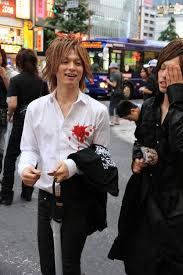
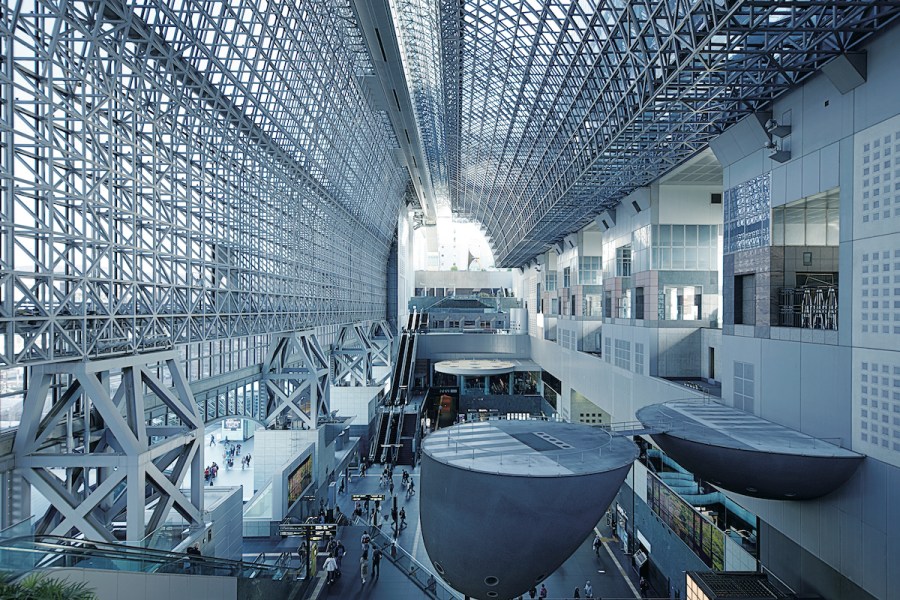
The Adventures of the Thin Man and Andrea II: The Thin Man’s Son. CHAPTER 1: The Thin Man in Tokyo

TOKYO — 1:13 PM, late January

He wakes up without remembering the descent. Not the drinking. Not the last message. Not the shape of the night leaving his body. Just the slow return of weight.

The house is rented, not lived in. A clean, architectural expanse in western Tokyo—glass, pale wood, too much air between objects. The kind of space that does not ask questions because it assumes nothing will answer.

He sits up once, then stops. 1:13 PM. The afternoon has already begun without him. He lies back for a moment and listens to the silence of money maintaining itself. There is a bottle on the floor beside the bed. Half-finished. Warm now. He doesn’t look at it again.

He stands, showers without thinking, dresses in the order that muscle memory dictates: black shirt, trousers, jacket. No tie. Never a tie unless someone insists.

His phone is already lit when he returns. Two messages. One from Tomoyo.

“Weekend still okay?”

One from Mina.

“Bar As One. Late.”

He reads them without responding yet. Then another notification appears. A different rhythm. Alejandro.

No name attached. Just the letter cluster, like something filed incorrectly in a system that never bothered to correct itself.

“Need you in Akasaka. KBS situation. Quiet, but messy.”

He stares at it longer than he should. Then:

“Corporate accounting discrepancy. Possibly internal extraction.”

That word—extraction—is always a translation problem. It never means only one thing. He exhales, once.

And for the first time that day, he is fully awake.

KYOTO — That Same Day

I am in my classroom when I see the notification. I’m not during anything important. Just one of those pauses between things where students are pretending to work and I am pretending not to notice they aren’t.

The phone is face down. I flip it. It’s Signal. I don’t even check the sender first anymore; I know it’s from the Thin Man.

“Akasaka. KBS. Quiet job.”

That’s it. No greeting. No explanation. No punctuation beyond necessity.

I look up at the room. The students are writing essays on narrative voice, ironically enough. I tell them to keep going and step into the hallway.

Outside, the corridor smells like floor wax and winter coats that never fully dry. I write back:

“You’re back?”

A pause.

Then:

“Always.”

I sit down on the stairs and realize I’ve been waiting for this message more than I admitted to myself. Not because I want the job. Because when he appears, the world becomes legible again.

Even if it shouldn’t.

TOKYO — 5:57 PM That Same Day

Akasaka in daylight is almost offensive in its normality. Glass buildings pretending they are neutral. People moving like they have somewhere else to be even when they don’t. He enters KBS through a side entrance.

Not invited. Not uninvited. Just expected. The problem is explained in fragments.

A mid-level finance manager has flagged irregular payments in a production budget. Someone else has flagged the flag. A third layer has erased the second.

Now everyone is quietly pretending nothing happened while insisting something must be done. He listens. He does not take notes. He asks three questions.

The answers contradict each other in useful ways.

By 4:02 PM, he knows what happened. By 4:07 PM, he knows who benefited. By 5:12 PM, he knows why no one will say it out loud.

He leaves without announcing that anything is resolved. This is the job. 

On the street outside, he finally replies to Tomoyo who he has beeb seeing for about two moths now:

“Saturday still okay.”

Then Mina:

“Later.”

Then Alejandro:

“Done.”

No embellishment. No summary. Just closure.

KYOTO — 10:02 PM That Same Day 

I am in a shisha place near Sanjo when he updates me. Not the kind of shisha place you imagine. Cleaner. Quieter. Students pretending to be older than they are. A place where time slows down but doesn’t stop.

I have a draft open on my laptop. A text arrives. It is about him. It is always about him these days.

“KBS resolved.”

That’s all. No story. No detail.

I type:

“What was it?”

Three dots appear. Disappear. Return.

“Accounting.”

That word again. He uses it the way other people use weather reports. I lean back.

Outside, Kyoto is doing its careful thing—bicycles, soft neon, the sense that nothing ever fully arrives here.

I realize I’ve stopped writing fiction and started writing evidence. 

TOKYO — 11:35 PM That Same Night

Bar As One is half-lit, as always. Mina is behind the counter like she has been there longer than the building. She does not ask what happened in Akasaka. She never asks anything that can be answered incorrectly.

He sits and orders a whisky ginger. They talk about nothing that matters. Tomoyo arrives later. She wears corporate black like it is a second job. She kisses him once, briefly, like a scheduled interruption. He notices everything about her that is real and nothing about her that is performance. That is what he likes about her.

At some point, his phone vibrates again. A new Signal message. It’s from Matt.

KYOTO — 11:26 PM. That Same Night.

I’m still at Shisha, still thinking about the Thin Man, I shouldn’t be doing this in public. But I am.

Me:

“I think I understand what you do in Tokyo.”

A reply comes faster than expected.

“You don’t.”

I almost smile. Then I don’t. I type:

“I’m going to Costa Rica.”

This time there is a long pause.  Then:

“Why.”

I look at the ceiling of the shisha place. Smoke moves like it has intention.

“Luciana.”

The name sits there on my screen like it has weight. I don’t know if he will respond. 

But I know I’ve crossed a line.

TOKYO — 12:14 AM The Next Morning

He reads the name once. Then again. Luciana.

Not spoken in years. Not held in any current system. Not part of any job file. He steps outside for a smoke. 

Akasaka is quieter at night, but not safer. Just less honest about itself. He does not ask Matt not to go. That would be meaningless.

Instead he writes:

“Don’t dig wrong.”

Then, after a pause:

“If you’re going, be precise.”

He puts the phone away. Tomoyo is still inside, laughing at something someone said that is not funny. Mina is polishing glasses that are already clean.

He thinks, briefly, of leaving Tokyo again. Not because something is wrong. Because something has started.

And that is usually enough.

KYOTO — 12:44 AM The Next Morning

I read his message twice.

Be precise.

As if precision is the problem. As if I have ever been anything else. 

I close my laptop. Outside, Kyoto continues as if nothing has happened. But I know it has.

I have a name now. And names are how you begin to lose your distance from things.

On My Curious Relationship with the Enneagram

Note: This piece reflects a personal journey with the Enneagram between 2013 and 2018, including conferences, workshops, and informal conversations. The impressions here are subjective and based on lived experience rather than formal study. I remain intrigued by the Enneagram as a reflective tool, even as I view aspects of the professional community with some skepticism. As always, this is written in a spirit of curiosity, appreciation, and lightness rather than critique for its own sake.

Epigraph
“We’ll take the Skyway / high above that busy little one way”
— Skyway, The Replacements


I first heard of the Enneagram in 2013 at a six-day beginner NLP training in Singapore run by a company called Mind Transformations. The training was led by Barney Wee, a tightly wound but candid guy who shared a lot about his life — past struggles with party drugs, his mentally challenged son, his strict vegetarianism — all delivered with a kind of intense openness that set the tone for the week. His right-hand woman, Angus Lau, was the mother and the emotional center of the operation. Warm, encouraging, and deeply comfortable in what she herself called “woo-woo,” she talked about Sedona hot springs, New Age energies, and personal transformation with complete sincerity. I hit it off with her immediately. She praised my small contributions, which felt good, and we bonded quickly.

There was also Bae, Barney’s younger assistant, mid-twenties, cheerful, cute as a button, and she did props and logistics. The first night in the hotel lobby she broke out a strange psychology-themed board game and we played for a while, and somewhere in the middle of that conversation she mentioned the Enneagram. It was the first time I’d ever heard of it. I was intrigued. On the way back to Japan I stopped for one night in Singapore, wandered into Kinokuniya at Takashimaya on Orchard Road, bought a few introductory books, and started reading them on the plane home. That was the beginning of what I later came to think of as my curious apprenticeship.

For a few years, it was just reading. I typed myself as a 5w4 with a strong 8 lean, which felt roughly right, and I found the system evocative — not scientific exactly, but suggestive, like personality poetry. It seemed to capture tones and tendencies rather than fixed truths, and I liked that. I read more, thought more, and gradually became curious about the actual community.

My first conference came in August 2016 in Minneapolis. I stayed at the hotel hosting the event, down in a quiet basement space, and we were the only people in the area. It was close to the arena where the Minnesota Timberwolves play, and you could walk there through the Skyway, which made me think of the Replacements song which provides the epigraph, and gave the whole weekend a slightly Midwestern, slightly melancholy frame.

I arrived early the first morning — nervous, excited, and very aware that I had done a fair amount of reading but had almost no real-world experience. I grabbed coffee and sat with a pleasant older couple from the Midwest, and before long I was talking about peak experiences and epiphanies and probably talking too much. I was jittery, caffeinated, and eager. They were kind and listened. Later, when I checked the program, I realized the woman was one of the main presenters and a big deal in the community. Run roh. But it was fine. That, in retrospect, was my first brush with the gentle hierarchy of the field.

I also met Jessica Dibb from her Shift Network podcast, which I had been listening to a fair bit and paying far too much for. She was warm, generous, and exactly as open in person as she sounded online. I liked her immediately, and I still think she was providing a real service to the community. But she also seemed, in a way I would come to recognize more clearly later, very much inside the tent. On the podcast, she rarely pushed back, even when guests — including Russ Hudson — leaned on origin stories involving the so-called Desert Fathers that were total bullshit. I knew they were bullshit, and what was worse, he knew it too. And yet there he was, repeating them ad nauseam. The more I heard those claims, the less convincing they sounded. There’s no clear historical transmission, no diagram, no nine-type personality system — just thematic similarities retroactively elevated into lineage. At a certain point, it stops sounding like history and starts sounding like branding. Sorry, but it’s just a bunch of bull. And yet no one inside the community seemed eager to challenge it. The culture, I began to suspect, rewarded agreement.

The rest of Minneapolis was a mix of seriousness and absurdity. I skipped a packed session by Jean Houston — a decision I later half regretted — and instead attended a tiny aromatherapy session run by two Southern women in matching green shirts who were clearly there to sell oils. They were GENKI as hell and the whole thing was unintentionally hilarious. Each day ended with a drum circle led by a ponytailed New Age facilitator, and I found myself unexpectedly moved, tired and open after long days of conversation.

I met a towering gay guy named Ron selling singing bowl CDs, and eventually I met Jean herself. She was drinking white wine, I was drinking red, and she was as warm as could be. We talked about Japan, about why I’d come, and then we danced together for twenty minutes. She killed it. That moment — generous, playful, human — felt like the community at its best.

Two years later I went to the European conference in Amsterdam. By then I felt like I knew a fair amount about the Enneagram. I had been reading deeply in Beatrice Chestnut and related subtype material, and I arrived in what I can only describe as a somewhat provocative mood. I stayed at the Apollo Hotel on the canal and walked to the conference each morning. The first person I met was Lynn, a total riot — from San Francisco originally, recently divorced, now running a Kundalini Yoga studio in Athens. She knew everyone and all the back-channel dynamics, who was sleeping with whom, and we bonded instantly. She quickly became my co-conspirator.

The opening talk by Hudson repeated familiar material, including the Desert Fathers, and I came close to challenging him publicly but somehow held back. I do have a big mouth at times. Big dick energy. Then I heard Tom Condon, tall, white-haired, grounded, integrating NLP and Ericksonian ideas into a practical approach. He is the quiet hero of the piece.

The rest of Amsterdam was lively and strange. A movement-based types exercise nearly ended in an accidental kiss. Lunch ran long, as conference lunches always do, and I met people from all over the world. The closing session paired Chestnut’s academic framing with experiential work, including a moment where a participant broke down emotionally on the floor. The atmosphere oscillated between meaningful and chaotic.

At the end, Lynn urged me to ask a provocative question. I did, politely: which aspect of the Enneagram might not be around in thirty years? Chestnut answered cautiously but clearly: tritype — too complicated, not especially helpful. It was a small ripple, but it felt like testing the edges.

That fall, I brought Condon to Tokyo. I was a member of the International Mental Health Professionals Japan (IMPJ), and when I saw he would be in town I arranged a small talk at TELL the night before the conference. About thirty people came. He gave a clear, practical overview. People loved it. Afterward some of us went to the pub; he declined, needing rest for the next day. He was ripping heaters with me outside, though. Legend.

In the end, my curious apprenticeship with the Enneagram left me with more affection than skepticism, even if the skepticism is real. I learned a lot from the system. I still find the types evocative, even poetic, and I still catch myself using them as a loose lens on people and situations. And I genuinely liked the people. The Enneagram world attracts seekers, therapists, wanderers, and enthusiastic amateurs, and I have a real soft spot for that whole vibe — the openness, the fast intimacy, the willingness to experiment. At its best, the community is warm, generous, and human.

But the professional side of the field also felt small, and because it is small, sometimes insular. Limited conferences, limited airtime, gentle pressure toward agreement. Origin stories harden. Pushback is rare. None of this invalidates the system, but it shapes the culture.

By contrast, the astrology world — much larger, more diffuse — feels more pluralistic. Multiple branches coexist. Disagreement is normal. No single group controls the conversation. The atmosphere, in my experience, is looser, less competitive, more comfortable with divergence.

So where does that leave me? Somewhere in the middle, which is probably where I started. The Enneagram, for me, remains personality poetry — suggestive, useful, occasionally illuminating, but not doctrine. My apprenticeship may have been unusual — Singapore hotel lobbies, Minneapolis skyways, Amsterdam provocations, Tokyo workshops, and smoke breaks with Tom — but I wouldn’t trade it. I learned, I laughed, I met memorable people, and I came away with a tool I still sometimes use, lightly. That’s enough.

Dedication:

For Lynn and Tom.

The Adventures of the Thin Man and Andrea Available Now!

Well everyone, today is the day. My first novel, The Adventures of the Thin Man and Andrea is now available on Amazon and wherever books are sold.

This one took a while—written in fits and starts, in bars and hotel lobbies here in Kyoto—but it finally found its shape. More than anything, today I just want to thank all the readers of The Kyoto Kibbitzer, wherever you hail from; I’ve always thought of this as an ongoing conversation, and a lot of this book grew out of that exchange.

If you do pick it up, I hope you enjoy the ride—and if it lands for you, a quick review on Amazon would mean a great deal. Thank you, as always, for reading.

Matt

On Touts and Micro-Touts: Japan Observations

Note: This piece collects observations gathered across decades of nights out in Japan — moments that, taken individually, felt minor but over time revealed a coherent social pattern. The essay is not intended as a warning against nightlife, nor as an indictment of any particular place or person. Rather, it is an attempt to understand the subtle choreography that unfolds in urban night economies, where invitation, performance, and commerce intersect in ways that are rarely dramatic but often instructive.

The distinction between macro-touts and micro-touts emerged gradually. It reflects less a rigid taxonomy than a traveler’s growing sensitivity to atmosphere, tone, and the shifting boundaries between hospitality and transaction. Most encounters described here were neither dangerous nor traumatic; they were moments of mild disorientation that ultimately sharpened perception and deepened appreciation for the social intelligence required to navigate unfamiliar environments.

Japan remains one of the safest and most generous countries in the world to explore at night. The experiences recounted here are offered not as cautionary tales but as small pieces of ethnography — reminders that every city contains micro-economies of possibility, and that learning to read their signals is part of the quiet education that travel provides.

If there is a broader lesson, it is simply this: nightlife is built on invitations, and the skill of the traveler lies not in accepting or rejecting them categorically, but in recognizing the scripts they carry and choosing, with awareness, when to participate.

Part I — Kumamoto, Japan, Summer 1997

「どこの社長ですか?」

I was twenty-three and new to Japan — not just geographically new, but existentially new, the kind of new that leaves you unable to distinguish between hospitality and performance, sincerity and choreography. At that age you carry a quiet belief that experience will organize itself around you, that invitations are destiny, and that uncertainty is merely the prelude to belonging.

Kumamoto summer did nothing to challenge this illusion. The humidity hung in the air like a second shirt, streets shimmering with heat that seemed less meteorological than emotional. I met a couple of guys at a bar — friendly in that easy, late-night way where language fragments are enough and tone carries meaning. Half English, half Japanese, and entirely good-natured, they asked if I wanted to join their baseball team. I said yes immediately, not because I had any intention of playing, but because at twenty-three you rarely decline the promise of future identity.

The baseball team never materialized. But the invitation served its purpose. It opened the bridge.

They told me they wanted to show me real Japan. A phrase that should always raise questions but rarely does when you’re young and curious. “We know a place,” they said, the universal preface to experiences that exist somewhere between revelation and mild financial education.

That is how I entered my first hostess club.

It was not the neon spectacle I might have imagined. No polished decadence, no velvet rope theatrics. Instead: low lighting, carpet that seemed older than the Heisei era, and furniture whose best days had passed quietly without ceremony. Yet the room possessed its own gravitational pull, created not by décor but by orbit — women rotating from table to table with practiced ease, their presence transforming a modest environment into something that felt improbably expensive.

Mama-san presided with the quiet authority of someone who understood both mathematics and psychology. Her hair lacquered into permanence, her gaze sharp as accounting software, she functioned as conductor of a carefully orchestrated social economy. The women, each moving with subtle intentionality, carried scripts composed of compliments, curiosity, and gentle physical proximity.

Whisky mizuwari arrived with ritual precision, poured slowly as if time itself were being measured in diluted amber. The drink tasted ordinary. The price did not.

I was not uncomfortable — only aware of my own lack of schema. A foreigner equipped with politeness but not context, seated inside a room where intimacy operated as currency and identity functioned as flexible fiction. The women laughed easily, touched my arm, leaned close enough to suggest familiarity without commitment.

I did not interpret this as romance. I interpreted it as welcome.

Then came the line — delivered with effortless certainty and a smile that contained neither irony nor doubt:

「どこの社長ですか?」
Which company are you president of?

Not if.
Which.

Because the hostess club does not deal in biography. It deals in possibility. Within its walls, the boundaries of self dissolve gently. You arrive as yourself but are encouraged to inhabit a more generous narrative: company president, successful entrepreneur, patron of refined pleasures, bearer of an inexhaustible wallet. Identity becomes costume, worn lightly for the duration of the evening.

I understood that markup existed. What I did not yet understand was the degree to which markup could inhabit fantasy.

The bill arrived — perhaps thirty thousand yen. Not ruinous, not outrageous, but enough to sting the uninitiated and sharpen awareness. Before embarrassment could surface or negotiation begin, the friends who had invited me paid without ceremony. A wink, a casual next time, and the implicit understanding that this particular version of me — baseball player, future regular, provisional shachō — would remain confined to that evening.

I left lighter, though not poorer.

Not scammed.
Initiated.

The lesson did not arrive as resentment but as clarity:

Flattery has a price.
Fantasy carries a tab.
Sometimes you do not pay it directly — but you still learn the cost.


Part II — Kyoto: Rub-a-Dub and Bar Colors

Rub-a-Dub felt like oxygen.

A basement reggae bar where the air seemed shared rather than owned, bodies pressed into temporary community, music operating less as entertainment than as connective tissue. Tommy, as always, orbiting the jukebox with missionary zeal, attempting to convert the room to his playlist while flirting with the bar girl in ways that were equal parts hopeful and theatrical.

I stood with a Red Stripe, jacket discarded somewhere behind me, already drifting toward the kind of night where White Russians become plausible and conversation loosens into anecdote. Sweat, laughter, strangers whose names evaporate but whose presence remains — the familiar ingredients of third-place belonging.

Two men approached. One Jamaican, ponytail, voice thick with authority that seemed rooted in lived reggae culture rather than performance. The other younger, bilingual, improvising rap verses that moved seamlessly between Japanese and English with real talent. Not novelty talent — actual fluency. Conversation flowed easily. Fifteen, twenty minutes of exchange that lowered the drawbridge of suspicion.

Then the invitation:

“Let’s go to Bar Colors.”

I had seen the sign before. A reggae logo, unobtrusive, upstairs somewhere near Kiyamachi. Nothing alarming, nothing clandestine. Just another bar in a district defined by possibility.

We followed.

Three floors up — a vertical ascent that subtly altered the power geometry. Rub-a-Dub’s crowded warmth replaced by a smaller room with thinner oxygen. No dance floor, just music and seating. I chose the seat nearest the door, an instinctive habit that rarely announces itself consciously but persists nonetheless. Tommy relaxed into the environment with characteristic ease, while the rapper transitioned seamlessly into microphone performance, his skill functioning as social anesthesia.

We ordered beers — two each. Six hundred yen apiece. Simple arithmetic, comforting in its predictability. Safety often disguises itself as math.

Then came the disruption.

The Jamaican leaned in, tone shifting just enough to register as discordant:

“Who will pay the bill?”

The question felt misplaced. The wrong person asking, the wrong moment, the wrong authority. I responded with obvious clarity: we would pay for our drinks. He shook his head dramatically and launched into a loud, performative argument with the bartender — defending us against an unseen injustice, positioning himself as ally.

The performance was transparent once recognized. Theater designed to manufacture gratitude. Gratitude designed to justify inflated cost.

This is how micro-predation operates in Kyoto: not through threat but choreography.

When the bill arrived, it totaled five thousand yen. Double expectation. Not devastating, merely disorienting. Enough to create tension between principle and convenience.

I stood — full height, voice calm:

“I know what you’re doing. It’s bullshit. We came here in good faith.”

No escalation. No anger. Just refusal to participate in the narrative assigned.

We paid — not capitulation but calculation. Peace sometimes costs less than confrontation. Exit achieved without drama, wallets lighter but awareness sharpened.

Not victims.
Not victors.
Just awake.

The deeper lesson was not financial but perceptual: danger rarely announces itself loudly in Kyoto. It appears as suggestion, invitation, relational choreography. You do not need to be taken to understand the mechanics of being taken.

Rub-a-Dub had offered warmth.
Bar Colors offered clarity.

Some nights you dance.
Some nights you pay to leave.


Part III — The Kiyamachi Ecology of Micro-Touts

If Kumamoto introduced fantasy and Bar Colors revealed choreography, Kiyamachi provided taxonomy.

Kyoto’s nightlife economy operates differently from more overt red-light districts. There is little aggressive solicitation, no carnival barking, no theatrical insistence. Instead, micro-signals populate liminal spaces: a man standing slightly too still near a stairwell, a laminated menu with vague promises, a bilingual conversation that begins casually and ends directionally.

The micro-tout does not sell forcefully. He offers possibility.

And possibility is harder to refuse.

Micro-touting thrives in moments of uncertainty — the pause between bars, the lull between conversations, the question of where the night continues. The invitation arrives not as proposition but as continuity.

“Just one drink.”
“I know a place.”
“Special price.”
“Members bar but I can get you in.”

The language is intentionally thin. Curiosity performs the heavy lifting.

Unlike macro-touting, where spectacle clarifies the transaction, micro-touting relies on relational ambiguity. Trust precedes the offer. Conversation establishes provisional safety. Only then does the invitation appear.

You are not pressured.
You are positioned.

And positioning is the mechanism.


Part IV — Macro-Touts and Micro-Touts: A Taxonomy

Macro-touts belong to visible red-light economies. Their pitches are explicit, directional, and theatrical. Customers understand the transactional nature immediately. Kabukicho hosts calling from sidewalks, Osaka promoters guiding tourists toward neon staircases — these figures operate through spectacle.

Micro-touts function differently.

They blend into ordinary social environments: musicians, patrons, casual acquaintances, language exchange partners. Their authority derives from relational proximity rather than territorial control. They do not sell a product but offer narrative continuation.

Macro-touting relies on volume.
Micro-touting relies on timing.

Macro-touting demands attention.
Micro-touting waits for uncertainty.

Japan’s cultural emphasis on politeness and conflict avoidance creates fertile ground for micro-touting. The customer hesitates to confront, the operator anticipates this, and civility becomes economic leverage.

The genius of micro-touting lies in its invisibility. It rarely crosses legal boundaries and seldom escalates into overt harm. Instead, it extracts modest margins through social choreography.

Not robbery.
Repositioning.


Part V — The Ethics of Almost

What remains from these encounters is not resentment but recognition.

Both Kumamoto and Kyoto experiences share structural similarities: voluntary participation in constructed realities. The hostess club invites fantasy; the micro-tout offers narrative continuation. In each case, the individual is not coerced but positioned within an unfolding script.

The moment of realization rarely arrives as crisis. It appears as subtle awareness — a bill exceeding expectation, a tonal shift, a fragment of choreography revealing itself as performance.

Travel rarely educates through catastrophe. More often, it educates through near-misses — the ethics of almost.

You almost believed.
You almost overpaid.
You almost escalated.
You almost became the character the room was preparing.

Micro-touts teach attention rather than fear.


Part VI — Return to the Street

Kiyamachi after midnight remains a pedestrian theater of extraordinary subtlety. Music spills from doorways, cigarettes glow like punctuation, laughter dissolves into river air. Within this ordinary magic, micro-touts continue their quiet labor — neither villains nor heroes, simply participants in the nocturnal economy of possibility.

Nightlife is built on invitations.

Some lead to connection.
Some to illusion.
Some to modest financial education.

But all reveal the architecture of the city that issues them.

Kumamoto taught me fantasy has a tab.
Kyoto taught me ambiguity has a margin.

Neither felt like loss.
Both felt like tuition.

Because travel, like nightlife, is rarely about destinations. It is about learning to read the scripts unfolding around you — and recognizing that sometimes the most instructive figures in any city are the ones whose invitations you decline with gratitude.

Part I — Kumamoto, Japan, Summer 1997

「どこの社長ですか?」

I was twenty-three and new to Japan — not just geographically new, but existentially new, the kind of new that leaves you unable to distinguish between hospitality and performance, sincerity and choreography. At that age you carry a quiet belief that experience will organize itself around you, that invitations are destiny, and that uncertainty is merely the prelude to belonging.

Kumamoto summer did nothing to challenge this illusion. The humidity hung in the air like a second shirt, streets shimmering with heat that seemed less meteorological than emotional. I met a couple of guys at a bar — friendly in that easy, late-night way where language fragments are enough and tone carries meaning. Half English, half Japanese, and entirely good-natured, they asked if I wanted to join their baseball team. I said yes immediately, not because I had any intention of playing, but because at twenty-three you rarely decline the promise of future identity.

The baseball team never materialized. But the invitation served its purpose. It opened the bridge.

They told me they wanted to show me real Japan. A phrase that should always raise questions but rarely does when you’re young and curious. “We know a place,” they said, the universal preface to experiences that exist somewhere between revelation and mild financial education.

That is how I entered my first hostess club.

It was not the neon spectacle I might have imagined. No polished decadence, no velvet rope theatrics. Instead: low lighting, carpet that seemed older than the Heisei era, and furniture whose best days had passed quietly without ceremony. Yet the room possessed its own gravitational pull, created not by décor but by orbit — women rotating from table to table with practiced ease, their presence transforming a modest environment into something that felt improbably expensive.

Mama-san presided with the quiet authority of someone who understood both mathematics and psychology. Her hair lacquered into permanence, her gaze sharp as accounting software, she functioned as conductor of a carefully orchestrated social economy. The women, each moving with subtle intentionality, carried scripts composed of compliments, curiosity, and gentle physical proximity.

Whisky mizuwari arrived with ritual precision, poured slowly as if time itself were being measured in diluted amber. The drink tasted ordinary. The price did not.

I was not uncomfortable — only aware of my own lack of schema. A foreigner equipped with politeness but not context, seated inside a room where intimacy operated as currency and identity functioned as flexible fiction. The women laughed easily, touched my arm, leaned close enough to suggest familiarity without commitment.

I did not interpret this as romance. I interpreted it as welcome.

Then came the line — delivered with effortless certainty and a smile that contained neither irony nor doubt:

「どこの社長ですか?」
Which company are you president of?

Not if.
Which.

Because the hostess club does not deal in biography. It deals in possibility. Within its walls, the boundaries of self dissolve gently. You arrive as yourself but are encouraged to inhabit a more generous narrative: company president, successful entrepreneur, patron of refined pleasures, bearer of an inexhaustible wallet. Identity becomes costume, worn lightly for the duration of the evening.

I understood that markup existed. What I did not yet understand was the degree to which markup could inhabit fantasy.

The bill arrived — perhaps thirty thousand yen. Not ruinous, not outrageous, but enough to sting the uninitiated and sharpen awareness. Before embarrassment could surface or negotiation begin, the friends who had invited me paid without ceremony. A wink, a casual next time, and the implicit understanding that this particular version of me — baseball player, future regular, provisional shachō — would remain confined to that evening.

I left lighter, though not poorer.

Not scammed.
Initiated.

The lesson did not arrive as resentment but as clarity:

Flattery has a price.
Fantasy carries a tab.
Sometimes you do not pay it directly — but you still learn the cost.


Part II — Kyoto: Rub-a-Dub and Bar Colors

Rub-a-Dub felt like oxygen.

A basement reggae bar where the air seemed shared rather than owned, bodies pressed into temporary community, music operating less as entertainment than as connective tissue. Tommy, as always, orbiting the jukebox with missionary zeal, attempting to convert the room to his playlist while flirting with the bar girl in ways that were equal parts hopeful and theatrical.

I stood with a Red Stripe, jacket discarded somewhere behind me, already drifting toward the kind of night where White Russians become plausible and conversation loosens into anecdote. Sweat, laughter, strangers whose names evaporate but whose presence remains — the familiar ingredients of third-place belonging.

Two men approached. One Jamaican, ponytail, voice thick with authority that seemed rooted in lived reggae culture rather than performance. The other younger, bilingual, improvising rap verses that moved seamlessly between Japanese and English with real talent. Not novelty talent — actual fluency. Conversation flowed easily. Fifteen, twenty minutes of exchange that lowered the drawbridge of suspicion.

Then the invitation:

“Let’s go to Bar Colors.”

I had seen the sign before. A reggae logo, unobtrusive, upstairs somewhere near Kiyamachi. Nothing alarming, nothing clandestine. Just another bar in a district defined by possibility.

We followed.

Three floors up — a vertical ascent that subtly altered the power geometry. Rub-a-Dub’s crowded warmth replaced by a smaller room with thinner oxygen. No dance floor, just music and seating. I chose the seat nearest the door, an instinctive habit that rarely announces itself consciously but persists nonetheless. Tommy relaxed into the environment with characteristic ease, while the rapper transitioned seamlessly into microphone performance, his skill functioning as social anesthesia.

We ordered beers — two each. Six hundred yen apiece. Simple arithmetic, comforting in its predictability. Safety often disguises itself as math.

Then came the disruption.

The Jamaican leaned in, tone shifting just enough to register as discordant:

“Who will pay the bill?”

The question felt misplaced. The wrong person asking, the wrong moment, the wrong authority. I responded with obvious clarity: we would pay for our drinks. He shook his head dramatically and launched into a loud, performative argument with the bartender — defending us against an unseen injustice, positioning himself as ally.

The performance was transparent once recognized. Theater designed to manufacture gratitude. Gratitude designed to justify inflated cost.

This is how micro-predation operates in Kyoto: not through threat but choreography.

When the bill arrived, it totaled five thousand yen. Double expectation. Not devastating, merely disorienting. Enough to create tension between principle and convenience.

I stood — full height, voice calm:

“I know what you’re doing. It’s bullshit. We came here in good faith.”

No escalation. No anger. Just refusal to participate in the narrative assigned.

We paid — not capitulation but calculation. Peace sometimes costs less than confrontation. Exit achieved without drama, wallets lighter but awareness sharpened.

Not victims.
Not victors.
Just awake.

The deeper lesson was not financial but perceptual: danger rarely announces itself loudly in Kyoto. It appears as suggestion, invitation, relational choreography. You do not need to be taken to understand the mechanics of being taken.

Rub-a-Dub had offered warmth.
Bar Colors offered clarity.

Some nights you dance.
Some nights you pay to leave.


Part III — The Kiyamachi Ecology of Micro-Touts

If Kumamoto introduced fantasy and Bar Colors revealed choreography, Kiyamachi provided taxonomy.

Kyoto’s nightlife economy operates differently from more overt red-light districts. There is little aggressive solicitation, no carnival barking, no theatrical insistence. Instead, micro-signals populate liminal spaces: a man standing slightly too still near a stairwell, a laminated menu with vague promises, a bilingual conversation that begins casually and ends directionally.

The micro-tout does not sell forcefully. He offers possibility.

And possibility is harder to refuse.

Micro-touting thrives in moments of uncertainty — the pause between bars, the lull between conversations, the question of where the night continues. The invitation arrives not as proposition but as continuity.

“Just one drink.”
“I know a place.”
“Special price.”
“Members bar but I can get you in.”

The language is intentionally thin. Curiosity performs the heavy lifting.

Unlike macro-touting, where spectacle clarifies the transaction, micro-touting relies on relational ambiguity. Trust precedes the offer. Conversation establishes provisional safety. Only then does the invitation appear.

You are not pressured.
You are positioned.

And positioning is the mechanism.


Part IV — Macro-Touts and Micro-Touts: A Taxonomy

Macro-touts belong to visible red-light economies. Their pitches are explicit, directional, and theatrical. Customers understand the transactional nature immediately. Kabukicho hosts calling from sidewalks, Osaka promoters guiding tourists toward neon staircases — these figures operate through spectacle.

Micro-touts function differently.

They blend into ordinary social environments: musicians, patrons, casual acquaintances, language exchange partners. Their authority derives from relational proximity rather than territorial control. They do not sell a product but offer narrative continuation.

Macro-touting relies on volume.
Micro-touting relies on timing.

Macro-touting demands attention.
Micro-touting waits for uncertainty.

Japan’s cultural emphasis on politeness and conflict avoidance creates fertile ground for micro-touting. The customer hesitates to confront, the operator anticipates this, and civility becomes economic leverage.

The genius of micro-touting lies in its invisibility. It rarely crosses legal boundaries and seldom escalates into overt harm. Instead, it extracts modest margins through social choreography.

Not robbery.
Repositioning.


Part V — The Ethics of Almost

What remains from these encounters is not resentment but recognition.

Both Kumamoto and Kyoto experiences share structural similarities: voluntary participation in constructed realities. The hostess club invites fantasy; the micro-tout offers narrative continuation. In each case, the individual is not coerced but positioned within an unfolding script.

The moment of realization rarely arrives as crisis. It appears as subtle awareness — a bill exceeding expectation, a tonal shift, a fragment of choreography revealing itself as performance.

Travel rarely educates through catastrophe. More often, it educates through near-misses — the ethics of almost.

You almost believed.
You almost overpaid.
You almost escalated.
You almost became the character the room was preparing.

Micro-touts teach attention rather than fear.


Part VI — Return to the Street

Kiyamachi after midnight remains a pedestrian theater of extraordinary subtlety. Music spills from doorways, cigarettes glow like punctuation, laughter dissolves into river air. Within this ordinary magic, micro-touts continue their quiet labor — neither villains nor heroes, simply participants in the nocturnal economy of possibility.

Nightlife is built on invitations.

Some lead to connection.
Some to illusion.
Some to modest financial education.

But all reveal the architecture of the city that issues them.

Kumamoto taught me fantasy has a tab.
Kyoto taught me ambiguity has a margin.

Neither felt like loss.
Both felt like tuition.

Because travel, like nightlife, is rarely about destinations. It is about learning to read the scripts unfolding around you — and recognizing that sometimes the most instructive figures in any city are the ones whose invitations you decline with gratitude.

Note: If you like this essay, you may like “Tuesday Kyoto Bar Crawl.” You can find it here.

On Why I Told the World to Fuck Off for 36 Hours

Subtitle: And Saved My Life in the Process

So I called you a cab and they called you a hearse,
and I knew what they were talking about.

— The Mendoza Line, “It’s a Long Line (But It Moves Quickly)”

Note: This piece pairs naturally with my recent essay On the Safe Space (aka Corner Girl). Both pieces are about the small moments that hold us together when we are breaking apart. You can read that piece here.

By 2012 I finally understood what I had been circling back in 2008 without fully naming: the business hotel wasn’t just a neutral space — it was a controlled dissociation chamber. A place where my mind could flatten without collapsing. A room where the world muted itself into CNN-colored soft focus, where time thinned out, where nothing asked anything of me. I didn’t know it then, but all those mid-range rooms — the bland art, the sealed windows, the gentle hum of an air conditioner tuned to the exact frequency of psychic anesthesia — were teaching me a skill I would need later: how to disappear just long enough to come back intact.

So when the pressure finally broke, when I had been working thirty straight thirteen-hour days and felt myself sliding toward the edge of something unnamed, I took the Shinkansen to Tokyo, checked into a business hotel, turned my phone off, and told the world — or most of it — to fuck off for thirty-six hours. And the shocking thing wasn’t that it worked. The shocking thing was realizing I had been preparing for it years earlier, in those identical rooms where the towels were always clean, the windows always closed, and 9-ball was always on.

So I ducked into the nearest konbini and bought a latte from the machine — the one small ritual that still made sense. The warm cup in my hand steadied me just enough to get through the turnstiles. Kyoto Station felt too bright, too full of intersecting lives and needs, the air full of other people’s urgency. I didn’t have the bandwidth to absorb anyone else’s story; I barely had enough for my own. All I knew was that the next Shinkansen to Tokyo was leaving in eleven minutes, and if I didn’t get on it, something in me would snap in a way I wouldn’t be able to walk back. The latte was cooling fast, my hands were shaking, and every part of my body was saying the same thing: Go. Now. Before you say yes to one more thing you don’t have the energy to carry.

Once the room was arranged — bag on the stand, shoes lined up by the door, Pocari Sweat sweating slightly on the desk next to the bottle of red — my whole system downshifted into something like relief. Not joy. Not peace. Just the quiet recognition that, for the next thirty-six hours, my time belonged to me and no one else. I didn’t have to speak. I didn’t have to answer. I didn’t have to hold anything together. All I needed to do was sit on the bed, take a long drink of Pocari, a short drink of wine, and let my body loosen by degrees. It wasn’t dramatic. It wasn’t cinematic. It was just freedom in the smallest, most essential sense: I get to be here, in this room, alone, and the world can wait.

After the first wave of relief, the question always arrived: Do I go out?

Tokyo was right there.

Akasaka-Mitsuke humming five floors beneath me, restaurants lit up like little stages, the crossing full of men in suits walking fast enough to convince you they knew exactly where they were going. I never did. So I’d sit on the bed and pull up the map — not to plan, but to orient. Izakaya here, ramen there, a bar tucked down some side street with red lanterns and a name I couldn’t pronounce. Nothing fancy. Nothing difficult. Just food, warmth, and maybe one drink that wasn’t red wine from a convenience store. I wasn’t looking for a night out. I was looking for simple movement, the kind that doesn’t require performance or decision-making. A walk, a meal, a seat at a counter. A single beer poured by someone who didn’t know my name and didn’t need to.
That was the whole question every time: stay in the bubble, or slip into the Tokyo night just long enough to remember I was a person.

Stepping out into Akasaka-Mitsuke wasn’t lonely — it was liberating. The air felt different the second the sliding doors breathed me out into the crosswalk light. I wasn’t hiding from anyone. I wasn’t avoiding anything. I was simply off the clock in a way that almost never happened in my real life. No one knew where I was, and for the first time in weeks, that fact didn’t carry a threat or a stain of guilt. It felt clean. It felt earned. I wasn’t missing; I was saving my own damn life by giving it a night without responsibility. The freedom wasn’t dramatic. It was simply this: I could walk in any direction, and every direction was allowed.

Out in the Akasaka night, I felt like the version of myself that gets buried under work and obligation — the real me, the one who just wants to wander and see who’s out, what’s open, what energy the city is holding. I wasn’t searching for anything dramatic. I wasn’t looking for revelation or escape. I was just checking things out — the izakaya with the red lantern, the alley with the quiet bar, the group of people laughing too loud on the corner. Dabbling. Moving lightly. Letting Tokyo show me whatever it wanted to show, without needing to make a night out of it. It was the simplest, purest freedom: explore until something feels right, and stop when it doesn’t.

I walked the Akasaka backstreets the way I always do when I’m in this mode — cutting down alleys, taking long cuts and shortcuts that don’t make geographic sense but feel right in my body. Tokyo is a city you navigate by instinct, not logic. You follow energy. You drift. You take the turn that looks interesting, then the one that feels safe, then the one that’s pulsing with life. Sometimes I’d follow the Google map to the place I thought I wanted to eat, only to walk past it and keep going. Other times I’d catch a glimpse of something through a noren curtain — warm light, the sound of laughter, a chef moving with the right kind of ease — and that would be the signal. It was never about the spot itself. It was about finding the right spot, the one that matched the night’s frequency. And over the course of the evening, I usually did both: follow the algorithm, then abandon it; trust the map, then trust myself.

Eventually I found the place — an oyster bar tucked behind one of those half-lit alleys where Akasaka feels a little European and a little dreamlike. Warm light, wood counter, the soft clatter of shells, and a chef who moved with the kind of quiet competence that settles you the moment you sit down. This was exactly my jam: an oyster platter arranged like a small geography, cold and briny and perfect, a bowl of clam chowder steaming in front of me, and a carafe of white wine that I poured slowly, deliberately, one glass at a time. Spendy, sure — but in this mode spendy isn’t excess. Spendy is permission. Spendy is dignity. Spendy is saying to yourself: I get to take my time with this. I get to have a meal that cares for me back. And in that moment, slurping an oyster with the city humming outside, I could feel the night open around me in the cleanest way.

The white wine hit me in that way good pairings do — not as a buzz, but as a reminder of how people take care of themselves when they’re not drowning. White wine and oysters belong together; everyone knows that, and sitting there I felt myself re-enter that understanding. The pairing wasn’t fancy. It was human. It was the kind of small, civilized pleasure most people allow themselves without thinking, and I’d been so buried under work and obligation that I’d forgotten what that felt like. The red I’d had earlier had already warmed me, softened the hard edges, and now the white layered over it, sharpening the night just enough to make everything shimmer. I was slightly buzzed and buzzing — not out of control, not hiding, just finally aligned with myself again.

I left the oyster bar with that warm, gentle buzz humming through me — the kind that makes Tokyo feel lit from within — and walked until I found the sort of place I always look for on these nights. A spendy cocktail bar: dim lights, bottles arranged like small works of art, a bartender in a crisp vest moving with that Japanese mix of precision and grace that makes you feel taken care of without being noticed. I took a high seat at the counter and ordered something I never drink in real life — a proper cocktail, layered, balanced, spendy. Spendy was the point. Spendy meant: I am worth slowing down for. Spendy meant: no one is waiting, no one is watching, no one needs anything from me. I sipped slowly, letting the night stretch out in front of me like a long exhale, feeling myself settle into the version of me that only Tokyo brings out — curious, quiet, open, free.

The bar I ended up in wasn’t some sleek Tokyo cocktail temple — it was better. Two bartenders from Nepal were working the counter, the kind of guys who’ve lived ten different lives before landing in Japan, commuting in from way out because Akasaka rent is a joke. We talked the way travelers talk when no one is trying to impress anyone — about where they were from, how far they lived, what Kathmandu feels like in winter. I wasn’t performing, just listening, rapping with them in that easy drift that happens when you’re slightly buzzed and buzzing in a foreign city. I ordered red wine — not more cocktails — because that was the right shape for the night, and when I finished my glass one of them poured me another, full to the brim, “for the gentleman.” It wasn’t flirtation. It wasn’t special treatment. It was the small grace of the night saying: You came to the right place. You came at the right time. And you’re not carrying anyone else’s weight right now.

When I stepped back out into the night after the second glass of wine, the whole neighborhood felt like it belonged to me. Not in a macho way, not in a performative way — just in that rare, private way where the city’s pace matches your own and you fall into step with its pulse. Akasaka was quiet but lit, humming but not crowded, and for five or six blocks I felt like I owned a slice of it. My slice. The alleys, the crosswalk glow, the last trains whispering underneath the city — all of it moved around me without touching me. I wasn’t hiding. I wasn’t disappearing. I was just walking back to my faded little hotel in a state of clean, earned sovereignty, knowing the world wasn’t tracking me for once. And for those fifteen minutes, Tokyo wasn’t a megacity. It was mine — exactly the size of the person I was in that moment.

Back in the room — my little faded Akasaka hideout five or six blocks from the bar — I didn’t overthink a thing. I drank more red wine, chased it with Pocari, stripped down to my boxers, and let my body fall exactly where it wanted to fall. There was nothing left to hold, nothing left to manage, nothing left to translate. I slept like a baby — a full, unbroken twelve hours, eleven to eleven — the kind of sleep that only arrives when you’ve been carrying too much for too long and finally set it all down in a room no one else can enter. No dreams, no interruptions, no alarms. Just the deep, uncomplicated sleep of someone who gave himself thirty-six hours of mercy and actually took them.

When I woke up around eleven, I felt clear-eyed and ready for more of exactly what the night had been—a continuation of me time. No urgency, no guilt, no one waiting on anything. Just hunger in my stomach and calm in my body. I didn’t rush. I stayed in the room for hours, drifting between the bed and the window, drinking instant coffee, sipping a little more Pocari, scrolling nothing, letting the quiet stretch. I could go out or stay in—either was fine. The whole point was that the day was mine to waste or spend however I wanted. After twelve hours of baby-level sleep, I wasn’t reborn—I was simply functional again. Hungry, steady, grounded, and free.

The next day I was set to return to Kyoto. When it’s time to go, it’s time to go — and the Thin Man cleans up quick. I showered, shaved, packed my bag with the same neat ritual I’d used the night before, and stepped back out into Akasaka like someone who had never been tired in the first place. Before heading to the station I picked up omiyage — the small gesture that makes the return feel seamless — something for the office, something for home. It wasn’t guilt; it was continuity. A way of saying: I left for a day and a half, and now I’m back in the world with all the edges smoothed. By the time I boarded the Shinkansen back to Kyoto, I was already shifting into IB mode — the coordinator, the problem-solver, the guy who keeps the whole thing moving. But now the engine was clean again. The reset had worked. Thirty-six hours alone in a faded Tokyo hotel, oysters, wine, a long sleep, a morning that belonged only to me — and suddenly I could re-enter at full tilt. Not as a martyr. Not as a runaway. Just as myself, restored enough to carry everything again.

Dedication:

For Akasaka — whoever designed that little slice of urban order also re-ordered my mind in the best possible way. Thanks there, baby.

Why It Is So Hard to Get Breakfast in Japan (with a dream cameo from the Gemini Donald Trump)

New Note (2025): Since this piece was first published, Japanese Breakfast the band has gotten even bigger, Michelle Zauner wrote another book, and the cultural universe has shifted enough times that some aspects of this essay may be outdated. I’ve kept the original text intact because the dream-logic and breakfast-logic still stand.

I live in Kyoto, Japan, and after many years here I’ve traveled pretty widely—especially in the greater Tokyo area. Traveling in Japan is pretty easy as long as you can manage a little spoken Japanese and read a train map. The trains are famously efficient and connect most of the country, including every major city.

I haven’t driven a car here in more than fifteen years and don’t miss it at all. Trains and taxis get the job done just fine. Overall, I love traveling in Japan and I love exploring Tokyo, a city that contains worlds within worlds. I have almost no complaints about Japanese travel.

Except for one.

It is nearly impossible to get a good breakfast—or really any breakfast—when you’re on the road.

Now, it’s not that Japanese people don’t eat breakfast. They do. The archetypal morning meal—rice, miso soup, maybe a little fish—is as recognizable in its way as the “full English” of sausages and beans. But the Japanese breakfast is overwhelmingly a home operation. Once you’re traveling, the options narrow to two—two and a half, if we’re being generous.

I. The Hotel Breakfast

Mid-price and nicer hotels usually offer a breakfast buffet with “Japanese” (rice, miso, maybe grilled fish) and “Western” (toast, jam, and some ambivalent eggs) selections. Except at the truly top-tier hotels, these buffets manage to be both overpriced and bad. A traveler is lucky to escape for ¥1,500–¥1,800 (about fifteen dollars before the yen weakened), and more commonly pays north of ¥2,000 for a pretty uninspired spread.

Budget hotels often don’t offer breakfast at all.

In my experience, Japanese hotel breakfasts are among the weakest anywhere in the world. I take this as symptomatic of a broader truth: Japanese people simply don’t care about breakfast when they’re on the road—and maybe not all that much at home either.

II. The Convenience Store (“Combini”) Breakfast

When I have raised the issue of the lack of decent breakfast in Japan, Japanese people usually point me to the convenience store. And it’s true: you can purchase food and coffee at any of the ubiquitous combinis—Family Mart, 7/11, Daily, Lawson, and the rest. They’re open 24 hours, and they stock a range of items that theoretically qualify as breakfast. Hard-boiled eggs, yogurt, rice balls, steamed buns, fried chicken, sometimes bananas, and of course hot and cold coffee.

I’ve certainly been in situations where I had no choice but to fall back on the combini for breakfast while traveling. And this is…fine, to an extent. But most combinis have nowhere to actually sit and eat, and in any case you can’t really call a combini breakfast nice.

Most Japanese folks seem to regard a combini breakfast as perfectly acceptable—desirable even. And while one can admire the low expectations, or the cultural pragmatism behind them, it’s possible to admire those qualities and still wish for more.

III. Starbucks or a Local Coffee Shop

Starbucks are fairly common in major cities and usually open at 7 a.m. (if you’re lucky) or, more commonly, 8 a.m. They should really open at 6. The food offerings are overpriced, and Starbucks has never truly figured out its food—which remains baffling. Still, one can grab a few combini items and smuggle them in, or settle for a four-dollar fragment of quiche with your Americano. I would not classify Starbucks as having breakfast, per se, but they are pleasant enough to sit in, and one can create a simulacrum of breakfast there.

Then there are the local coffee shops. These, fortunately, often open at 7 a.m. or even earlier, and serve strong coffee—often brewed by hand at the counter with a drip filter—and a breakfast that nearly always consists of a single piece of white toast and an egg. White toast, egg, and handmade coffee with old guys reading the paper around you is, I admit, at least an approximation of breakfast, and I have certainly relied on this setup while on the road.

But it’s still not quite what we are looking for if we want a hearty, balanced breakfast. There is no French toast, no fruit bowl, no omelette, and only very occasionally a strip of bacon. None of the staples one might reasonably expect from a decent, full breakfast.

And that’s more or less the list. You can also find 24-hour beef-bowl restaurants, but they are cheap as and not exactly the sort of thing you look forward to when greeting the day. Beyond that, most restaurants simply don’t open until 11:00 or 11:30 for lunch. The concept of brunch—dicey even under ideal circumstances—barely exists outside the swankiest of upmarket hotels.

It is, put bluntly, really hard to find a proper breakfast in Japan unless you make it yourself. And that fact continues to puzzle me. I understand that most people here eat rice and miso at home, or grab something at the convenience store. Fine. But metropolitan Tokyo has roughly 30 million people. None of these 30 million want a real breakfast at 7:00 or 7:30 a.m.? Not even a few hundred thousand?

It seems incomprehensible. And yet, incomprehensible or not, this is simply the reality. There is no broad Japanese market for breakfast. I mean, I’m in the market—but apparently one man does not a demographic make.

Go figure.

Now, I’ve covered the issue of Japanese breakfast—its scarcity, its odd cultural positioning—to the best of my ability. But before we move on, I want to add a few details that may seem unrelated. Let’s see if we can get them to connect.

Because the truth is, I dream about getting breakfast in Japan. And in a surprising number of these dreams, the Trumpster shows up.

More precisely: the dreams focus on the fact that the Trumpster and I share a birthday (June 14th), which makes us both late Geminis. Late Geminis, I have good reason to believe, are uniquely dangerous and slippery. But in my dreams the Trumpster isn’t dangerous at all. He shows up as basically an empty suit.

Trump/ Breakfast Dream I:

I am at a breakfast buffet in Japan. This is at a hotel that I am not staying at, and I may indeed be attempting to crash the buffet while masquerading as a hotel guest. Trump is there with an entourage, and he sees me staking out the buffet. I make a comment to him that we are both late Gemini, and he nods, curtly but with some minimal consideration. He sees me trying to steal the breakfast, does not care, and would probably provide cover if it came to that. He and I are not aligned, but nor are we enemies.

Trump/ Breakfast Dream II:

I am outside in the morning, standing on a dock or something of that nature. I am looking for breakfast, and not finding it. There is a commotion above me to the east, and I realize that Trump is being rolled out, literally on like coaster wheels, for a speech. He is on some kind of sliding seat and when this seat hits the balcony he stands up and postures about like Mussolini. I am watching and he sees me watching, but continues with his Mussolini act. I realize quickly that this is a total act and that he doesn’t even want to be there. He is not dangerous in this moment or in this speech, just faintly ridiculous. Still, no breakfast.

=====

What do Trump and breakfast have to do with one another? I’m not sure yet. But I do know that Trump, although maligned by nearly everyone I know (I know a bunch of liberals), and apart from being an egotistical, mafia-adjacent, easily flattered, shape-shifting sociopath, is also pretty funny. Before I lose half of my readership, I’ll just nod to the comedian Shane Gillis, who made this point several months after Trump left office.

Has enough time passed that we can admit Trump was funny? Can we finally admit that he was funny? (…) He was funny (…) I saw it. I’d show my friends I’d say look at that. They’d be like “what?”

“It’s funny.”

“There’s nothing funny about Donald Trump.”

I don’t know, during Hurricane Dorian he was like “maybe we should nuke it” (…) Like that was a real suggestion from the President (…) “Hey we got a big storm coming, you want me to blow it up?”

They were like “no, what the fuck are you talking about?”

“I don’t know, I fuck around dude. It’s what I do.”

“I fuck around, it’s what I do,” is a great summary of Trump’s whole approach to governing. Now, is there anything funny about his terrible immigration policies, his attempted pressure of the Georgia secretary of state to “find” 1800 votes, his total disregard of democratic norms? No, not really. But is there anything funny about his speculation that maybe a little light and a little bleach could cure COVID? Why yes, there is. Is there anything funny about his noting that Frederick Douglas is getting bigger and bigger these days? Yes indeed. Is the way he pronounces “huge” funny? It’s funny to me anyway. And in my dreams, the two above being part of a series of about four or five total Trump breakfast dreams, he always shows up as semi-defanged, basically neutered, and non-dangerous. I think this is because, as a fellow late Gemini, I kind of have Trump’s number. It takes a late Gemini to know one, and I know this guy. In fact, I see right through him, to the extent that I know he’s not even there.

One other salient piece of data, there is an indie rock band called Japanese Breakfast that is getting bigger and bigger these days (they tell me “sir, this Japanese Breakfast is getting bigger and bigger these days, and I say look at that, wow, this Japanese Breakfast is really getting huge”). I don’t know them that well, but they sound like the kind of band I would like. I do wonder though if their name is not an ironic nod to the fact that Japanese breakfast is not a thing. Is the band name self-effacing, or even self-erasing? Does Japanese Breakfast the band exist at all? Does Trump? There is a way in which the Trump presidential term has come to feel like a fever dream or collective delusion, a set of events that cannot really have occurred as we recall them. In this sense, the Trump presidency may in the future be subject to Phantom Time Hypothesis speculation. And he and his handlers have already played right into this speculation what with their first lady doubles, the totally unhinged press conferences with the ubiquitous helicopter waiting in the wings, and the classic Trumpism, “we’ll see what happens.”

Here is what I think. Japanese Breakfast as a band exists. The Trumpster exists, but his wife spent most of her time in the White House being doubled. Trump and I are dream doubles, and I have his number. Japanese people don’t care about breakfast. And I am always starving at around 9 AM when on the road in Japan. Someone should look into the matter. I hear the Trumpster is free these days, maybe he’s the guy for the job.

Note: If you enjoyed this piece, you may also like the pieces below which also deal with American politics, albeit from a slightly different angle.

https://thekyotokibbitzer.wordpress.com/2025/11/25/on-the-federal-age-of-consent-a-reply-to-alan-dershowitz/