
Everybody Tips

Note: There’s a Ryan Adams song that’s always felt like a quiet diagnosis. The emotional math is simple: people give you just enough tenderness to keep you upright, but never quite enough to really move you from wherever you are. It’s from “Oh My God, Whatever, Etc.” — track 5 on Easy Tiger (2007).

You find out you’ve been underpaid, in a sense, for years, not because anyone meant you harm, but because the default setting in some long-forgotten form was never double-checked. The system assumed it was correct. Everyone assumed it was correct. And the thing is, it makes sense—you look like the sort of person who doesn’t need tending. So you stand there with the revised numbers in your hand, not angry exactly, just noticing the symmetry of it all. This is the pattern: people offer small kindnesses, small gestures, small acknowledgments.


Everybody tips.

Just not quite enough to knock me over.

It reminded me of something from years ago at my little IB school here in Japan. Back then I was stretched thin in a way you can only be in your thirties—trying to prove something, mostly to myself. I’d rush through lunch like it was another task to complete. One day Scott, one of our English teachers and a high school homeroom teacher, watched me finish a meal in about two minutes and said, gently, almost to himself, “That’s not good.” It wasn’t an intervention. It wasn’t even advice. Just a small observation from someone who was paying attention in the limited way people do. A tip, not a gesture. A flicker of care that landed, and then the moment passed.

Looking back, I think that’s why the moment stayed with me. It was concern, yes, but it was also something rarer: someone catching a glimpse of the strain I kept tucked under the surface. I wasn’t used to that. Most people saw the polished version—competent, fast, self-sufficient—and adjusted their care accordingly. Scott’s comment didn’t rearrange my life, but it landed in that narrow space where a person can be briefly seen without being exposed. A small kindness with a little weight on it, though not enough to shift anything. Another tip.

When I think about it now, it wasn’t an isolated moment. My life is full of small gestures like that—light touches of concern, half-noticed details, people offering just enough care to register but not enough to alter the trajectory. It’s not their fault; it’s how most of us move through the world. We read surfaces. We assume competence means comfort. We assume steadiness means abundance. So what comes my way is always the manageable version of kindness, the soft-edged form that stays within social limits. It accumulates, in its way, but it never quite tips the balance.

And then there’s the other meaning of the word I keep circling. To tip isn’t only to offer a small gesture—it also means to wobble, to shift the weight of something just enough that it might tilt. In that sense, everybody does tip me. Every small kindness knocks me a little off balance, just not in the dramatic way Adams means. It’s more like a brief lean in the direction of connection, a momentary swerve in the steady line of the day. A soft recalibration, not a collapse. The world nudges, not crashes. It’s movement—just not the kind that bowls you over or forces a change. The cumulative effect is real, but subtle enough that you only notice it in retrospect.

Most days, that’s all life is: a series of micro-tilts. A colleague covering five minutes without comment. A student bowing an extra beat longer than expected. A friend sending a small message at the exact right moment without knowing why. They don’t change your direction, but they do alter your angle by a degree or two. You barely feel it while it’s happening. You just register that your emotional center shifts slightly—a soft lean, a subtle recalibration, the faintest sense of being moved without being moved on. These moments don’t rewrite your story; they just keep it from calcifying. They are the human version of a brushstroke: slight, necessary, almost invisible unless you stand back and look at the whole canvas.

Every once in a while, though, someone doesn’t just tilt you—they land with actual force. It’s rare, but every few years, if you’re lucky, someone steps forward with something closer to full human weight. No calibration, no optics, no politeness. Just the clean, unmistakable feeling of another person showing up without trimming the edges of what they mean. Those are the moments you remember because they interrupt the pattern. They don’t just adjust your angle; they reset your coordinates.

That’s what happened to me in 2018. I’ve told this story in my Bad Moves piece, however to re-state I’d been traveling to see the band Phosphorescent in New York, Boston, Philly, and D.C. I was moving through my own private fog, the kind you don’t mention to anyone because you don’t want to make a spectacle of it. I told the merch gal I’d flown in from Japan, not as a plea for anything, just as passing context. She passed it on to Matthew Houck, the lead singer. And he didn’t do the socially appropriate thing, the small nod or the quick thanks. He came down off the stage and hugged me. A real hug, the full weight of it, twice across two different nights. No hesitation. No half-gesture. He gave me the exact amount of human force the moment called for.

What stayed with me wasn’t the hug itself, but the certainty behind it. Most gestures come wrapped in hesitation or self-consciousness; people soften their own impact before they even reach you. Houck didn’t. And part of the weight was this: he’d been through it himself—not abstractly, not a decade removed, but in the very songs he wrote on Muchacho, the record he made after his own life had come apart. He’d talked about it publicly, openly, without varnish. So when he came down off the stage to hug me, it wasn’t fandom or performance or politeness. It was recognition—one human being who had already walked through his own fire seeing another who was still in it. And the thing about weight is that you feel it instantly. It bypasses the usual filters, lands somewhere deeper, rearranges whatever you were carrying. For a second, you’re not holding yourself up alone. Someone else is taking on a share, however briefly. That’s why I remember it. Not because it was dramatic, but because it was unmistakably real.

I still don’t expect the big gestures. Most people don’t have them to give, and institutions certainly don’t. But my little allowance situation reminded me of something I should probably stop forgetting: I can be steady without letting people assume I’m inexhaustible. I can be competent without accepting the bare minimum as my baseline. Everybody tips, and I do appreciate it. But that doesn’t mean I should be content with being underpaid, overlooked, or treated as some kind of default. The small gestures matter; they keep things from freezing over. They’re just not a substitute for fairness, or for the kind of presence that actually moves you.

And if I’m honest, before the Houck hugs the last time I got knocked over didn’t happen at a show, or in a meeting, or anywhere you could itemize on a form. It was one of those chance crossings where someone walks in at full voltage, doesn’t shrink themselves, and then carries on while you’re still quietly recalibrating. Nothing official changes. Your job is the same, your allowance is the same, your life on paper is the same. But now you know, in your body, what real weight feels like when it lands. And once you know that, it gets a lot harder to pretend that tips—however kind—are the whole story.


Dedication

For the White Russians — the ones who tilt the whole room just by arriving.

On Good Talkers and Great Talkers (featuring my friends Kelly Rudd and Marc Campbell)

New Note: I am republishing this piece on the back of a recent exchange in our group chat with Kelly Rudd. As detailed below, Kelly is a great talker, and like many a great talkers he is also periodically full of it. We were reminiscing about a trip to the Selkirk Mountains in 1992 with Kelly, Mason Anderson, Richard Barkley, and myself. We were supposed to spend about a week up in the mountains, however a big storm came in. We had to shelter in place, and then left the next day. Kelly was responsible for the tent situation, and had only packed a tarp–no tent. So we struggled to put up the tarp in the rain and then I said I would sleep in the car rather than under the tarp. The whole area was already soaked, “pre-soaked” in Kelly’s questionable formulation, because at the end of the day, soaked is soaked.

In any case, after I said I would sleep in the car Kelly came up with the immortally absurd formulation: “Well you will actually get just as wet because of the condensation.” Uh huh. I slept in the car and was, predictably, bone dry and the boys were pre-soaked, regular soaked, and post-soaked. We drove on to Wyoming and had a great trip, but the condensation episode has stuck with me ever since.

This piece also features my friend from Hamilton College, Marc Campbell, as well as some fast talking by me. I hope you enjoy it.

I think I’m a pretty good talker. But I’m not a great talker. The reason I know this is because my friend Kelly is a great talker. And I can’t hold a candle to him.

In this piece I want to explore what makes a good talker good and a great talker great. Here, our conclusion can be partially stated upfront: a good talker will almost always also be a good BSer. Everyone knows what BS is, of course, and the term is usually used pejoratively, more or less, for example in phrases such as “oh that’s a bunch of BS,” or “come on dude, cut the BS.” However, BS is clearly also an essential element of the talker’s toolkit (from now on we will simply use the term “talker” unless specifically delineating between a good and a great talker). BS alone though does not a great talker make. There has to be something else involved. Let’s see if we can figure out what this might be.

We will start with an example from my professional life. I work in a high school in Japan, and it’s a fairly complex place. Although a Japanese school, it also features two different international courses and over time we have welcomed a wide variety of visitors from around the world for various reasons. A few years back, we hosted a group of educators from Abu Dhabi, including at least one representative of the Abu Dhabi Ministry of Education. My boss at the time was a Japanese gentlemen who spoke decent, but not phenomenal, English. He was set to give a welcome speech to this group, and my boss loved, absolutely loved, networking and hosting visitors at our school. It was his singular passion. The higher ranked or more “prestigious” they were the better. A visiting teacher from Elton College would be treated like the Pope, accorded all of the pomp and ceremony of a royal visit. Although an inveterate networker, my boss was not a natural public speaker, and he was uncomfortable making such an important speech in English, so he asked me to write something for him. Some people might have found this request to be annoying or even insulting, but I relished it. The role of the ghostwriter is one I greatly enjoy, because it gives me a chance to slip a few little things in there just for me. I have a bit of a weakness for inside jokes.

The Abu Dhabi visit was in early April, just in time for cherry blossom season in Japan. A few places around the world, including Washington D.C., celebrate cherry blossom season; however, in Japan it’s huge. People come from around the world to see the blossoms, and there’s even a special type of event called the hanami where folks from salarymen to universities students and everyone in between will set up tarps or blankets by the river or in a park under the cherry blossoms and get blasted. The Japanese refer to the cherry blossoms as sakura. So, I thought, what would be more natural than to open the speech with a reference to the sakura?

I don’t remember much about the speech, but I do remember the first few lines. They went like this:

It is my great pleasure to offer you a very warm welcome to Japan and (school name). We are deeply honored to receive such a prestigious group from the wonderful country of Abu Dhabi. And indeed, you have fortunately come at the perfect time to see the famous Japanese cherry blossoms, the sakura.

Now this might not sound too out of the ordinary, however for me the genius lay in the last comma. In my head I heard a deep and pregnant pause between “the famous Japanese cherry blossoms” and “the sakura.” As I like to say, it was funny to me. I sent the speech to my boss and we didn’t really have time to go over it, so I just hoped for the best. Now my boss wasn’t much of a writer, but he was, in his own way, a showman. He had clearly spent time practicing the speech, and when he spoke these first lines his delivery exceeded even my wildest expectations. Not only was the pregnant pause there, it was deeper and more profound than I had dreamed. He has perfectly grasped the import of the comma. This dude fucking nailed it.

What does this have to do with BS? Well, when I wrote the lines above, in my own way I was BSing. I knew my boss’s taste for VIPs ran deep and so made sure to lay it on pretty thick (“great pleasure,” “very warm welcome,” “wonderful country,” etc.). Also, the comma, in its own way, was total BS. And the fact that my boss killed his delivery meant that he not only understood BS on an elemental level, he relished it too.

Later on during that same meeting with the Abu Dhabi folks my boss presented about some English vocabulary system our school was using as part of the English curriculum. This was a software program designed by my boss’ buddy that the school had paid an absurd amount of money to lease. It was, predictably, a piece of trash. However, my boss built it up as the greatest piece of educational tech since whatever, and showed a little of it on an overhead screen. The visitors were no dummies though, and one of them asked a sensible question: “why did you decide to go with this essentially handmade program where there are a lot of well-known and tested commercial programs available?” My boss wasn’t going to touch that one, so he turned it over to me. Now, I knew this thing was complete garbage; however, I also recognized, in addition to the need to save face, the opportunity to lay on a little BS. So I said something like:

“Well, that’s a really good question (always start with this when BSing an answer because it gives you time to think)

we chose this program after looking carefully at the alternatives (not true—we had looked at no alternatives)

and we felt in the end that this program best met the very specific needs of Japanese learners (also total nonsense—there is nothing so specific about Japanese learners that a software program needs to be so tailored).

In all our experience working with Japanese students, we felt like we needed something bespoke and fit-for-purpose, and we are really happy with our choice… (when BSing it is advised to throw around words like “bespoke” and “fit-for-purpose” in the hopes of throwing your listener(s) off the scent).

I probably went on some more, but you get the idea. The questioner thanked me and we moved on, however I knew that I had not in fact thrown him off the scent. He knew that I was BSing; I knew that he knew that I was BSing; and I like to think that maybe he knew that I knew that he knew that I was BSing. If so, he played his part in our little production to a T as well.

How did I feel about packing so much BS into one afternoon? I felt great about it. In the long history of bullshit corporate communications, the exaggerations and white lies I told that day rank pretty low down the list in terms of negative externalities if you will, and our visitors went away feeling welcomed and catered to, BS vocabulary programs aside. I guess in this instance I was a “pretty good talker.” However a great talker needs to do more than smooth over an awkward question in an education meeting. A great talker needs to prove it when there is substantially more on the line. To explicate this point, let’s take a look at an incident where my friend Kelly talked some dude out of murdering us.

My friend Kelly is a great talker. Ever since I’ve known him, he’s been a serial exaggerator, however, far from being a limitation to his conversational ability, it’s a huge asset. This is because, unlike another type of exaggerator who exaggerates their own role or place in a story (let’s call this the “narcissistic exaggerator,”) Kelly instead downplays his own role while simultaneously boosting usually one other player into comic, even mythic heights (let’s call this the “comic exaggerator”). Kelly is a lawyer, and if he’s telling a story about a country lawyer he’s run across, for instance, this fellow gets built up and built up, his every mannerism and turn of phrase turned up to 11, until we have not just a comic figure, but a heroic one. As for Kelly’s own role in whatever drama he is recounting, that gets dismissed with an “aw shucks, I was just kind of there” wave of his metaphorical hand. Kelly has had this ability forever, and has honed it to an art form. I have good reason to think that his abilities as a talker are instinctual, rather than learned, however, because of an instance where he had to draw on skills far different than his normal style.

One time my friend Kelly and I decided (well he decided and I went along) to walk from suburban Spokane where he lived all the way up to a kind of resort/ lodge place high up on Mount Spokane. The walk was about 20 miles, and would take all day. Now, a 20 mile hike is one thing—that’s pretty long—however hikes can be quite pleasant for those so inclined. This was not a hike though, as the whole thing was on public roads, most of them out in the middle of nowhere. All in all, this was not the best plan Kelly ever came up with, however we set out and were about 10 or 12 miles into the trek, outside of town, when a reddish car came flying down the hill in front of us. The driver saw us and swerved right at us. This, unfortunately, is something that sometimes happens in the U.S. for reasons passing understanding. This dude though didn’t just swerve toward us a bit, he full on tried to take us out. So much so in fact that his car went perpendicular to the road and halfway into the ditch and got stuck.

This seemed bad, and my instinct was to run with Kelly into the nearby field. Kelly, however, had other ideas. The guy got out of the car and started yelling at us: “you fucking kids…, fuck you…, etc.” Not very creative, but still pretty worrying. Kelly though had the situation in hand from the get-go. He walked right over to the guy (who was at least 10 or 15 years older than us) and started talking to him:

Hey buddy, what’s going on? You having a bad day man? Anything I can do? Looks like your car get a bit stuck there—that’s OK, my friend and I will help dig you out.

Now I knew Kelly pretty well and knew he was a good talker from way back as mentioned. But this was another level. And the effect on the irate driver was incredible. In no time at all the guy was apologizing to Kelly, telling him his woes, and asking how we could get his car out together. Sure enough a few minutes later we were all three pushing and pulling his car out of the ditch and he went on his way.

What was going on here? Kelly must have realized somehow that the driver didn’t bear any specific ill-will toward us and was just engaging in a little road-rage because he was an angry about something or other. Also, the guy’s car was truly stuck, and neither Kelly nor I are small dudes, so he might not have liked his odds if it came to a fight. But there was just something about the way Kelly approached and disarmed him so quickly that I couldn’t really wrap my mind around. I realized then that my friend Kelly was not just a good talker, he was a great talker.

Although I’ve never seen anyone else pull off what Kelly did on that day, the general form of what he did I have seen before. In fact, a very similar, but slightly lower-stakes, incident happened when I was in university and attended a fraternity party. I was not in a fraternity and didn’t want to be. I did go to some fraternity parties just because that was what people did. Occasionally these parties could be creative, but mostly usually they were every bit as cliched as you might imagine—bros broing out and trying to get laid, women doing whatever the female equivalent of broing out might be, drunk billiards in the basement, people passing out on jungle juice, etc. Not only do these sound like terrible parties now, they were pretty terrible even back then. Nonetheless, I was at one, along with some friends from my dorm including Marc Campbell. Marc is maybe not the purest form of great talker that Kelly is, but he’s pretty darn good. While Kelly’s style is often oratorical (and BS laden—more on that in a moment), Marc’s style is smoother and has more of a cool jazz feel. Where Kelly goes for the comedically dramatic exaggeration, Marc stays more in the realm of gentle patter. Both talkers though achieve a sort of hypnotic effect through their respective styles, and Marc’s patter came in handy at this particular party.

We were a group of about five, and had barely entered the door when some guy I didn’t know came up and started getting in our face for no apparent reason. He was directing his attention to another member of our group—maybe they had run into each other before? It wasn’t clear, but what was clear is that this guy was itching for a fight right out of the gate. Now I have been in plenty of situations where I have had to try to defuse something or someone from kicking off, and have some skills in this arena. However, most people’s instincts, my own included, still tend to be a little defensive. Most people, even if committed to defusal, might say something like: “hey dude, settle down. There’s no need to be so aggro man. Just chill.” This kind of approach can work, however there is no guarantee that it will. Sometimes people who are looking to pick a fight will fall back on a kind of bizarre and unwarranted self-righteousness, coming back with something like “I’m not gonna fucking chill man—don’t tell me what to do. You wanna see aggro, I’ll give you aggro.” So the “dude settle down” approach is a bit hit or miss. Marc Campbell could do better.

Instead of telling the guy to chill, Marc Campbell pulled out a Kelly-like move. Although he was not the direct object of the guy’s ire, he went right over to the guy and stuck his hand out. “Hi I’m Marc,” he said “nice to meet you. What’s your name?” Just like that. Marc didn’t even reference the fact that this guy was acting like a total ass-clown for no reason at all—in fact he acted like he didn’t even notice it. The effect on this guy was exactly the same as with the angry driver. The guy calmed down immediately and he and Marc started rapping. In no time at all the situation was completely defused and everyone was friends.

Read more

Scenes from St. George’s Part III: Mr. Dreyer, French Teacher Extraordinaire (with a cameo from Richard Marx)

When I was in middle school I took French from one Monsieur Dreyer. I had already been studying (the verb is used loosely) French for a couple of years, and had some of the basics. In Mr. Dreyer’s class I learned a little more, and could actually kind of hack it in French there for a bit. But any actual language learning that took place in Mr. Dreyer’s class was seriously secondary to the excellent action that took place around his class.

I wasn’t first introduced to Mr. Dreyer in middle school, however. In fact, I first met him when I was in elementary school around the time he began teaching at the school where my father taught, and I attended, in the early 1980s. I remember going to the apartment he shared with his wife, who is Japanese, when they had an exchange student called Atsushi from Japan staying with them. Atsushi was my age, and he showed us how to make onigiri (rice balls). Making rice balls is not all that tough, just rice, water, and salt. Still, I thought onigiri were pretty exotic and Atsushi pretty cool. Some time later Mr. Dreyer and his wife must have come up a bit short of ready cash, because they lived in a tent in my family’s front yard for a while. This seems a little strange looking back, but it wasn’t then. I have no idea what the bathroom or shower situation looked like, but something must have happened.

(My brother Mike also lived out in a tent in the front yard during the summer for a number of years. Maybe it was the same tent. Mike would run an extension cord out to the tent and play his boombox. This was a few years after the Dreyer clan was tenting it, and Mike was deep into the singer Richard Marx. I thought Richard Marx was alright, but he didn’t seem to have a lot of songs. This mattered not at all to Mike who played the same Richard Marx tunes over and over again.

Today Richard Marx is, strangely enough, bigger than ever. But not as a musician. He runs a popular Twitter account where he is a big liberal and also pretty funny. Marx is like Rex Chapman but less problematic. Rex Chapman is super-problematic. I’m not sure exactly how, I just know he is.)

Mr. Dreyer also played a little chess with my father, although my impression is that both of them were pretty bad. Certainly they were not pulling out a lot of “hard-to-find” moves. At that time, I knew Mr. Dreyer was a French teacher, but didn’t know if he was in fact French. Today I believe it to be the case that he is not French, is in fact from California, and just somehow became proficient in the language. Good for him.

Even before I took his class, I was aware that Mr. Dreyer was, let’s say, a different sort of fellow. He liked to tell a story about his brother who lived on a massive contour map of the San Francisco Bay area. The map was located in an enclosed structure that hung under a bridge in Oakland or something. And his brother just chilled there full time, so the story went. So Mr. Dreyer, apparently, was the normal one in his family.

(I remember Mr. Dreyer talking to me about John Lennon one day as well. This was maybe when I was taking his class, but I think it might have been before that. “John Lennon’s assassination was really sad,” he said, “he was just starting to put his life back together.” I had heard of John Lennon but at that time knew nothing of the circumstances of his death. And I certainly didn’t know about his ups and downs in the 1970s. Mr. Dreyer must have been a Lennon fan though, and wanted to tell me about it.)

In any case, when I got to middle school I was assigned Mr. Dreyer, as mentioned. Mr. Dreyer wore a mustache that looked pretty Frenchy to me—maybe that’s why I kind of thought he was a French native. There were also a number of the Tintin books in French on a shelf in the back of the room. I had read most of the Tintin books in English by then, so it was fun to browse the French versions and take in some of the action from a new lens.

In Mr. Dreyer’s class everyone got a “French name,” and I was called “Philippe.” I don’t really care for all these fake names in language class, although I recognize that some people do adopt them as a kind of alter ego. I mean, if a Japanese gal called “Sari” wants to go by “Sally” in English class that’s great. Makes sense. But my actual name sounds nothing like Philippe, so it just seemed kind of random. In any case, little Phillippe was not a bad French student, but he was a restless one. Mr. Dreyer’s classroom opened from the back door onto a kind of grassy area, and for reasons passing understating Philippe would leave class in the middle of the lesson and then try to crawl back in through the back door and up through the room, hoping to escape Mr. Dreyer’s attention. Mr. Dreyer did notice, of course, but he was pretty cool about it.

“What you doing there Philippe? Sneaking back into the room again? Welcome to French class si vous plait.” Something like that. I wasn’t trying to aggravate Mr. Dreyer or anything because I really liked him as a teacher, I was just doing what 12 year old boys do. However, Mr. Dreyer did not view every student as leniently as myself. One of my classmates was a guy we’ll call “E.P.” E.P. was a trouble-maker, and was known to pull the fire alarm in the middle school there on a regular basis. His parents were called, repeatedly, but he didn’t care. He loved pulling that fire alarm. E.P. would also prank call mothers of other students for whom he somehow had phone numbers from the school phone and talk dirty to them in a fake voice. So, yeah.

One week, E.P. and some other students had started throwing wadded up pieces of paper toward a metal garbage can located at the front right corner of Mr. Dreyer’s classroom. Mr. Dreyer let this roll for a few days, however one day before lunch he decided to crack down. “Mr. E.P.,” he said, “I’ll make you a deal.” “You can have one more throw of a paper at that trash can. If you make it, you can go to lunch. If you miss, you have lunch detention.”

Now this struck me as a pretty fair deal, because E.P. didn’t have to accept the challenge. He could have just passed and gone about his day. That, of course, is not what happened. Instead, E.P. wadded up yet another piece of paper and lobbed it at the trash can. He missed. This was the last straw for Mr. Dreyer who, instead of keeping him in detention as promised, took matters a step further. He grabbed the trash can (which was about three and a half feet high) and carried it over to where E.P. was sitting.

“You like garbage!” he shouted. “I’ll show you garbage.” And sure enough Mr. Dreyer, onigiri expert, former tent dweller, and French teacher extraordinaire, emptied the whole thing right on top of E.P.’s dome. Now you might think this was some bad action, and from today’s perspective sure, it probably was. But for us middle schoolers it was hysterical.

“Did you hear what Mr. Dreyer did?” we whispered for the rest of the week. “He dumped a full garbage can on E.P.’s head.” This was the biggest thing to happen all month, and we milked it, obviously. Again, if this happened today, Mr. Dreyer might have faced some kind of sanction, but the 1980’s were not like that. E.P. had been dumped on, and life moved on.

Mr. Dreyer eventually left that school and moved to Kyoto where he taught for a while at Kyoto International School before ultimately moving back to California where his brother lived on a map. Years later I reconnected with Mr. Dreyer on Facebook, where he regularly posts groaningly bad, yet still somehow funny, visual puns. “Cyrano wins by a nose” with a drawing of Cyrano crossing the finish line in a foot race, that sort of thing. Anyway, I wanted to get his perspective on the whole the garbage can situation so I sent him a message. What did he recall of the incident?

He didn’t remember it at first, but then he said “oh yes, that was with a student called “J.”

“No,” I replied, “it was with E.P.”

“No, no, no,” he replied, it was “J. JFK.”

Now I knew that Mr. Dreyer is prone to making some strange jokes, and at first I thought he was making some kind of oblique assassination reference. Was he suggesting that there must have been a second shooter?

“This was not JFK related,” I said. “It was some E.P. action. I‘m sure of it.”

Mr. Dreyer was not sold though, and it occurred to me that there may have been more than one dumping. This may, in fact, have been Dreyer’s go-to-move. After all, his treatment of E.P. was, in truth, pretty unfair—the deal was advertised as sink the shot or detention. Dumping was never mentioned. Was Dreyer moving about the globe and dumping full garbage cans on students left and right? It was a possibility. Maybe I was smart to stay low to the ground after all.

These days, Mr. Dreyer is living in California where he enjoys the warm climate. And he reads this blog. Hey there Mr. Dreyer baby, you’re a cool guy but that garbage can move could maybe use a little reflection. E.P. was a troublemaker, sure, but dumping just wasn’t part of the deal.

to be continued…

On John Innes, the Fabulist (with cameos from Bruce Innes and Hunter S. Thompson)

John Innes is a high school English teacher in Oregon. He works at a Catholic School there where he also coaches basketball, and probably does some other stuff. His players call him “Coach Innes,” and I think they respect him. And this is reasonable enough. Innes is a good coach, and good teacher, and most of the time a pretty good guy. He used to be a good golfer, but I think he lost it. Too much water on the elbow, can’t control the slice. But teachers show one side of themselves in the classroom and another outside of it. What John Innes has kept hidden from his students and players is that he is big old fabulist.

I know this because Innes, probably to fill the time when his lesson plans peter out or something, is known to tell stories to his students about the days when he and I were in high school and university together. And these stories are all completely bonkers. Innes will tell his students a story about me throwing people into the Little Spokane river back in high school. But I would never do that. I mean the Little Spokane is cold, and what kind of person would toss a fellow student into a cold river just because? Also, to get to the Little Spokane, which ran by our school, you had to cross a super long bridge. I’m not dragging some chick or dude across a super long bridge just to get them wet. Doesn’t make sense. I don’t know where Innes gets this stuff. It’s totally ridiculous. Innes is big old fabulist.

In another of his little “stories,” Innes claims that during university at Hamilton College I snuck into the chapel there on campus and climbed up into the bell tower. Now, there might have been a chapel at Hamilton, sure. There might have been a lot of things. Hamilton has some pretty old buildings, and it’s not impossible that a chapel would have some kind of bells in it. But I’m not gonna go climbing up there. Innes fancies himself a “literature” teacher, and maybe he’s mixing in some part of a Dorothy Sayers plot or something. Also, Innes may be extrapolating from the notion that I generally may attempt to access certain spaces that might seem “off limits.” That’s possible. I mean, if I see a “Members Only” sign on the door of a club, I’m gonna think “hey there pal, I’m a member. In fact, I’m a permanent member baby” and I’m gonna go right on in. I have also noticed that in buildings where there may be some public spaces and some private or closed spaces, if you are dressed nicely, as I can, and are pretty tall, as I am, you can sometimes just wander wherever and people will, by and large, just let you, especially if you wear some kind of lanyard around your neck. But this doesn’t mean I’m going to go poking around a bunch of bells. It’s totally ridiculous. Innes is a big fabulist, and he needs to get over it.

Innes tells another story about me graduating from university in linen. What’s he even talking about? I mean, I did graduate and have a piece of paper somewhere I think, but linen? What a bizarre thing to say. And for that matter, what if I did? Linen is a cloth, clothes are made from cloth, I was presumably clothed at graduation. So what? I think what may be going on here is that the water from his elbow is migrating up to his brain. I want to give him the benefit of the doubt, and what I do recall is that I wore a little purple flower in my hair at graduation and some dude from the newspaper took a picture of me and this ran somewhere. Innes may have remembered the flower thing and then imagined a whole bunch of other nonsense around it. Linen. It’s totally ridiculous. His fables are just getting out of control.

So Innes apparently thinks it’s funny to spin a bunch of nonsense about me. I don’t know exactly why he does this, but he may come by his mendacity honestly, so to speak. Innes has a father called Bruce Innes. Bruce Innes is a Canadian, and a pretty interesting guy. He used to be in a band called The Original Caste, and they had a hit called “One Tin Soldier.” The song is still pretty well known to a certain generation, which is cool. That band split and Bruce Innes must have drifted around blowing his money for a while, cause he ended up in Spokane in the late 80s, which is when I met the fabulist John Innes. I went to Bruce Innes’ house sometimes in order to crush John Innes at a video game called “R.B.I. Baseball.” I don’t play a lot of video games, but it doesn’t matter. I crushed John Innes at Sega Hockey a few years later as well and he whined about it for weeks. Guy has water on the elbow from way back.

Anyway, Bruce Innes’ Spokane house was pretty large and had a fully soundproofed music studio in the basement. I’d never seen anything like this and assumed that he must have some serious cash. But I don’t think this was actually the case. Like I said, I think Bruce Innes had spent most of his money from his music heyday by this time. My brother Mike, who remembers some stuff and forgets other stuff, told me recently that Bruce Innes made his living around this time by writing jingles for an audio and video store in town called Huppins. I don’t remember anything about this, but it’s too specific not to be at least a little bit true. It can’t all have been Huppins though, right? He must have done other stuff. Bruce Innes ended up leaving Spokane and moving to Sun Valley where he became the go to guy to play music sets at rich people’s parties. Then he moved to Oregon. I don’t know where he lives now. So yeah, he’s had an interesting life.

Back in the days when Bruce Innes was high on the hog with his music royalties he ran around with some famous folks. He met Leonard Cohen, and told me one time that Cohen was a total dick. Leonard Cohen is a legend of course, and is now remembered best as a genial older statesman, but this doesn’t preclude the possibility that back in the 70’s he may have been a dick. Doesn’t preclude it at all. Mr. Google says that Bruce Innes also knew Joni Mitchell. More well known though is Bruce Innes’ association with the writer Hunter S. Thompson. Most people of a certain age will remember Thompson, the “gonzo” inheritor of Hemingway and a pretty major figure in American literary history. Thompson wrote Fear and Loathing on the Campaign Trail ’72, in which he relates a funny anecdote of bonding over college football with President Richard Nixon in the back of a car sometime, despite the fact that Thompson hated Nixon. Thompson also wrote Fear and Loathing in Las Vegas, which I also have read. This is the book that the Terry Gilliam movie is based on, the one where Benicio DelToro plays Thompson’s sidekick and always advises him “as your lawyer…,” a phrase that has entered popular culture and is still widely used.

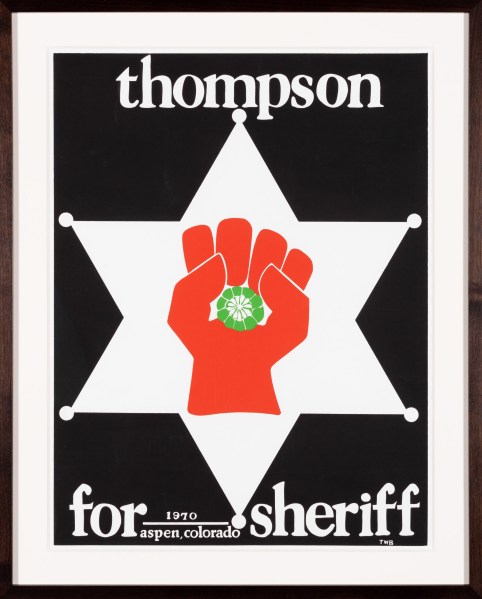
This is also the book that features Bruce Innes and some story about a monkey. I’m not sure if this next part is in Las Vegas or not, and in fact I think it isn’t, but another story is that Thompson and Bruce Innes were hanging out in Colorado somewhere and decided they would run for political office on the same ticket. Thompson would run for sheriff and Bruce Innes would run for something else. Now, Thompson’s run for sheriff is a well known piece of his mythos, and he did actually have a platform under the umbrella of “Freak Power,” but I imagine that whatever this run really entailed, Thompson exaggerated it pretty dramatically in later telling. I’ve heard Bruce Innes talk about this as well, and he makes it sound like the two of them were actually aspiring politicians for a time. But I don’t believe it. I’ll bet you what happened was these two guys were hanging out and getting stoned, and thought it would be funny if they “ran” for office. They probably got a poster or two made and hung them up around town, told all their friends about it as a lark, and talked a bunch of BS for a while. Bruce Innes is a great guy, but I think he and Thompson are kind of full of it. So like I say, John Innes probably comes by it honestly.

Whatever the source of John Innes’ struggles with the truth, one time after he had told some of his usual whoppers about me, one of his students found these stories interesting and wrote me a request for more information. He actually wrote it in verse, which was pretty creative, so I wrote him back in the same style on a flight out of Adelaide. The poem basically attempts to correct the record that the fabulist John Innes so regularly distorts. It also touches on some of the lowlights of my college career, including my fondness for writing excuses for students who needed extensions, the fact that I sported a tan trench coat for much of my first year, and my inability to get a steady girlfriend. John Innes, the fabulist, is referred to as “J.I.” in the poem. In the interest of having some of my “b-sides” back in print, I am re-posting this guy in its original form. It’s called “An Open Book,” and I gotta say, it’s still pretty good.

“An Open Book”

Not really in the mood
but you’ll think me quite rude
if I don’t make a reply
around me on the plane
folks eat, are entertained
no one’s writing save I

So I’ll take a look back
to days at the dog track
where I ended up by mistake
thought we could beat the odds
just silly teenage sods
there was no money to make

I know not if J.I.
has spun a pack of lies
concerning my personhood
Yes, I wrote poems for girls
who told me they were pearls
ah–but they weren’t any good

About a cold river,
and the rest of his quiver
of myths and exaggerations
well if someone was shoved
it was done out of love
or congratulations

So to upstate New York
in a trench coat–what a dork
but the world took pity
the life there was fine
but naught was on the line
should have gone to the city

I did two things quite well,
needing something to sell
I wrote brilliant excuses
‘bout ridiculous capers,
couldn’t finish my papers
I claimed aces, held deuces

My second great skill
is one I hold still
I fell for crazy ladies
locals, Russians, and Turks
they all drove me berserk
with a boatload of maybes

Four years in the dorms
and countless reforms
led to little of note
I left sans a sob
a plan or a job
and without my trench coat

Dedication: For John Innes, the fabulist. You know I won that Sega game, but I confess I may have tried to get up in that bell tower. So let’s call it a tie there baby.

Postscript: Since this piece was first published, Bruce Innes has sadly passed away, I believe in Vermont. As I said in the piece, Bruce had a fascinating life, and he was also a genuinely sweet guy. I really liked him. RIP Bruce, maybe you can win an election or two up there in heaven.

Note: If you enjoyed this piece, you may also enjoy “An Open Book,” also about the character known as John Innes. You can find that here.

Andrea Travels, Part III: A Little Mix-Up During Cocktail Hour

Dateline Seoul: The Lotte Hotel, Sunday, 10:17

As Andrea luxuriates on the 17th floor of the Lotte, the opening banalities of the industry conference waft through the hotel. The organizers have gotten at cross-purposes with talent, one Lord Duncan, some kind of a minor royal somebody or something, who had been promised a major speaking slot at the conference opening. This was rescinded at the last minute on account of his financial ties to one of the sponsors. Someone saw a conflict of interest, and the Lord’s press agent is seriously pissed. He’s been relegated to a couple of introductions, reduced to a laugh line. No less than three conference people have tried to explain the situation to the agent, three poor souls, three different stories. The agent is chewing her nails, chewing her nicorette. The Lord is putting a brave face on things, puffing and posing, Lord this and Lord that. Blah blah blah. Andrea’s in bed.

There are a number of other people from her firm at the conference, and a name list, so she’s going to have to put in an appearance at some point. She decides to roll down about 40 minutes before lunch. This way she can drop into a session, stroll the floor for a bit, beat the lunch line, and eat some SOUP.

“Area man’s plan to stay home all weekend and play video games goes off without a hitch.” Like the area man, Andrea’s plan is foolproof in its simplicity. Before leaving her room she tucks the key in her valise, just in case.

Andrea puts on a black dress, tasteful but not demure, and black heels. Dressed to kill and ready for soup, she takes the elevator.

Dateline The Lotte Hotel: Sunday, Late Morning

The soup was pumpkin, of course. Pumpkin soup is the staple of international hotels everywhere. Most pumpkin soup is so-so; today’s was at least decent. Her hunger is sated, but that’s about the only thing about her that is. She’s bowed and scraped to a dozen industry veterans and talked trade with the guys from her firm. She’s been seen.

Today’s closing remarks are underway and the conference, 1100 strong, is packed into the main ballroom. Andrea circles to the back to the sound and light booth. This is the nerve center of the room and the man with his finger on the buttons is Mouse. Mouse is a known quantity–he is sound man to the world and works events just like this one 280 days a year around the world. He used to work full time for Bausch and Lomb before going freelance. A total pro, but he has a weakness. A weakness for Andrea.

She slides her arm under his; it’s a hello.

“How’s it going Mouse?”

“Same old same old. Drinks at 16:30. We’ll see how we are in a few hours.”

Were you dear reader in the medical tubing industry you’d want to tie one on as well. In tumult lies opportunity, thought Andrea.

Andrea hangs with Mouse for half an hour or so, asking various questions about the boards. She’s a quick study, obviously; she’s got the hang of things.

Bathroom break and Andrea bumps into the press agent. “They stitched us up, the bastards,” she rails to Andrea as they stand at the mirror. It could be anybody. Andrea makes sympathetic murmurs.

“How much were you paid?”

“17,000 pounds, bloody hell. And all he gets are two lousy introductions. It’s a total embarrassment.”

Good work if you can get it thinks Andrea. A couple more murmurs and she exits.

Dateline The Lotte Hotel, Sunday, 17:10

White wine, red wine, crab cakes, an item on a Saltine. Conference drink hours are designed for maximum intoxication with minimum calories. Andrea takes two whites back to Mouse.

“Baby I can’t drink on duty.”

“Sure you can–everything’s under control right?”

Mouse looks around, a tic. A tip for you Mouse my man, no one cares. I’m straight up telling you brother. People don’t give a shit.

He takes a couple sips and turns to Andrea. “Bingo is next–I gotta go up front and set the mic up.” Andrea smiles, “I got ya” she says, “I’ll watch the boards.” Famous last words. Mouse heads off and Andrea puts her game face on.

10 minutes later and we are bingoing. A bingo master has been trotted out, and it’s… Lord Duncan. He lets rip with a call of “let’s biiiiiiiingo” and the first number is called. There is nothing quite as captivating for a mixed audience as bingo. Bingo works baby.

Character Analysis: What do we think? I mean Andrea is a gainfully employed professional. She has a rep. And she’s not, normally, an anarchist. But there’s something in the air, some combination of boredom, stasis, and jet leg that adds up. Press that button/ your ass gonna go.

The tension mounts; the room can feel that first bingo coming. Big time action. Mouse is still up front; Lord Duncan is ripping and running. Andrea takes a deep breath and hits the light switch. The room is plunged into darkness. The conference giggles. Titters before tatters. Phase two, Andrea activates the spotlight and turns it full force on Lord Duncan. He does a little pirouette, making the most of the moment. “Lights please” he calls. Not so fast. He steps back out the spotlight and Andrea follows him. “And the next number is…” he jokes, gamely. Spotlight off. Spotlight on. His head is on a swivel, beads of sweat turning to rivults. Andrea leans into the microphone and in her deepest and sultriest voice intones: “in the event of an emergency, the nearest exit may be behind you.” Then she throws the light back on and takes three lateral steps to her right. Grabs a white from the sideboard and surges into the conference space, sidling up right next to Duncan’s press agent.

“When it rains it pours eh?” she asks?

“Jesus Christ what next?” replies the agent.

Mouse is back at the booth, wondering what in the world happened. But on some level he knows. Andrea’s a handful. He’ll cover for her–has no choice. It’s Day 1 and all will be forgotten. Ces’t La Vie partner. Price of doing business.

The bingo has been short-circuited after the disruption. Lord Duncan is guzzling wine with the agent. Andrea approaches.

“Are you some kind of somebody?” she asks.

“I’m the jester at this here party,” says the Lord, “apparently.”

“Are you in the tubing industry,” she asks, innocently.

“Good god no, I give speeches for a living.”

“Speeches about what?”

“Well, about being me dear. I talk about being me.”

“He’s the best in the business, and they treat him like this,” says the agent. “It’s intolerable.”

“Ginny is a little bent out of shape,” says the Lord, “there was a mix-up.”

“A mix-up or a muddle-up?” asks Andrea.

“Bit of both,” says the Lord. “Bit of both.”

to be continued…

Dedication: For all the Andrea’s out there who make life a little more interesting.

The Thin Man in Rome, Part II: At the Jazz Club

My baby’s gonna pay for me.

The National

Dateline The Jazz Club: November 5th, 17:54

The thin man met Grey in the lobby as promised where Grey handed him several hundred Euros as well as some American dollars. “Just in case we get separated,” Grey said. The thin man could take care of himself ok at a poolside party in Singapore, however tonight’s action already felt a little different. He wondered if Grey was carrying a gun. Happy as he was to have the cash, the thin man hoped Grey would not stray too far afield. The driver had the car ready, and they drove the 20 minutes to the jazz club.

Once inside (the doors had actually soft-opened sometime before 18:00) the thin man takes the place in. It’s a pretty large club with a stage area at floor  in front, a bar to the left, and a sound booth in the middle with aisles on each side so that patrons can feed back into a lobby area where another bar is set-up, as well as space for the “merch table.”

There are already 20 or 30 people inside, drinking, talking, smoking. The thin man decides to buy a pack of cigarettes–cigarettes are a great ice breaker and the thin man will need to break some ice later on. He asks for American Spirits, purple, and the bartender hands them over.

“Who’s playing tonight?” asks the thin man in English.

“The Peter Andreessen Trio,” replies the bartender in the same language. “They are pretty popular, and a little far out.”

Far out, thinks the thin man. Far out is good. I can work with far out. He sees Grey across the room, sitting with two younger men. Neither of these looks much like a senior vice-president. The thin man starts to move toward the group but Grey shakes his head, almost imperceptibly. Guess we don’t know each other, thinks the thin man. Makes sense. He recalibrates mentally for a second–he’s just here to take in a little jazz and maybe hit on some women. Or one particular woman perhaps.

He orders a white lady, gin and Cointreau, on the rocks. The thin man is a dabbler, in life and in alcohol, and white ladies are there to be dabbled in. He starts to circulate, moving easily, just looking to make conversation. One of the men Grey had been talking to is at the back bar and the thin man approaches.

“Hi, I’m Jack.”

“Hey Jack,” says the man, “I’m Philip. You here for some jazz?” Philip has what sounds like an American accent, and the thin man guesses he works for Company X in some capacity.

“Sure am,” says the thin man. “I’m a big jazz fan, but I don’t know these guys tonight. Do you know anything about them?”

“Yeah, I saw them play before here in town. They’re from Norway and they’re pretty far out.”

“Cool,” says the thin man, “sounds like fun. Where are you from Philip?”

“From the USA man, Kentucky originally. But I’ve been living here in Rome for about two years.”

“What do you do?”

“I work for a company called Company X. I’m in the marketing department, and I report directly to a vice-president over here. It’s a pretty good gig.”

“Company X huh? I think I’ve heard of them. Aren’t they in talks to buy the Green Group or something?”

“Yeah, that’s right,” replies Philip. “You’re up to speed on the business news.”

“I dabble,” says the thin man, “but I don’t know much more than that. Is anyone else from your company going to be here tonight?”

“There should be a few of us, yeah. I think my boss is coming too, with his new girlfriend.” Philip leans closer to the thin man and says quietly “you gotta check this chick out man. She’s got it all going on. She’s called Maya and she just arrived in town like three weeks ago. My fuckin’ boss moves fast man.”

“It’s good to be the boss I guess,” says the thin man.

“Yeah man,” says Philip. “What ya drinking?”

“It’s called a white lady. You should order one too.”

“Maya’s a white lady too I think. Not really sure. I think she was in Eastern Europe before somewhere. Anyway, I should stop talking about Maya, it’s bad form I guess.”

The thin man laughed. “Not bad form at all. I’m interested. What does she do here in Rome?”

“I’m not really sure. She’s living at the Plaza, probably on my boss’ dime. I think she’s in corporate in some way. You can ask her yourself, she should be here soon.”

“I’d like to meet her,” said the thin man. “If you would be kind enough to make an introduction.”

“Sure thing. I’m not sure you’re her type but you never know. She likes action, and money.”

“Well I don’t have any money,” replies the thin man, “but maybe I can generate a little action. Let’s see how things go.”

The thin man and his new friend chat a little more, before a woman who looks to be in her early thirties comes in with an older man in a suit with no necktie. The suit looks sharp, maybe not as sharp as our driver’s outfit, but sharp, however the man inside it looks like he’s got some things going on. His hair is slightly out of place and he looks around the club rapidly. He’s a little jumpy. The woman is dressed in a stunning black dress with a fur coat on top, kitten heels, and a necklace with an inset ruby. Philip waves at them and they wave back. This must be Maya, thinks the thin man. Very intriguing.

As Maya checks her coat, the VP approaches the bar.

“Good to see you Philip,” he says. “Maya was running a little late as usual and I was afraid we’d miss the first part of the show. What are you drinking?”

“It’s called a white lady,” says Philip, “he turned me on to it.” Philip gestures toward the thin man who has already turned slightly to face the duo. The VP offers his hand to the thin man.

“Alan McKnight,” he says, “white ladies eh?”

“Jack Bishop,” says the thin man. “Yes sir, there is nothing more satisfying than a white lady after a long day.”

“I have no doubt,” says McKnight, “but I think I’ll just have a beer. Maya might try one of those though, she like her fancy cocktails.”

His beer arrives as Maya comes over to join the group. She glances at the thin man before turning to McKnight.

“Buy me a martini darling. Two olives.” She speaks with the absolute assurance of someone who never has to pay her own way.

As the bartender is mixing her martini a few notes from a saxophone drift back from the area of the stage. The band is setting up, testing instruments.

“I won’t even have time to enjoy my beer before the show starts,” complains McKnight. “I wish you didn’t take so long to get ready honey.”

Maya turns up her nose–McKnight’s salvo doesn’t even merit a reply. The thin man still hasn’t been introduced to Maya, so he comes one step closer and says “hi I’m Jack. I was just chatting with Philip before you guys came in. Philip says you’re new to Rome?”

“This time around, yes,” she says. “I used to live here though, so I know the city.”

“How long will you be staying?” asks the thin man.

“As long as he’ll have me,” she replies, turning to McKnight. “Right darling?”

McKnight is not paying attention. “Uh, right, uh huh.”

“I said you’re going to keep me around aren’t you?”

“Of course I am.” McKnight has regained his focus. “You know how much I treasure you honey.”

The thin man finds all this talk pretty banal, but it does provide some insight into Maya and McKnight’s relationship. McKnight might well treasure her, however he is also clearly unhappy with certain aspects of their relationship. In addition, he is continuing to look around as if he was expecting someone or something. The thin man wonders if McKnight has a suspicion that all was not what it seemed with Maya. He might realize this on an instinctual level without guessing, for example, that she might be a corporate spy.

“Shall we go up front? The show’s about to start,” says Philip.

The group takes their drinks and moves past the sound booth to get a good view of the stage. The thin man looks around surreptitiously but sees no sign of Grey. He does see the driver however, leaning against the inside bar and smoking a cigarette. The thin man makes a strategic decision to separate temporary from the Company X crew. If he’s going to make a move on Maya tonight it’s better that he approaches from a more oblique angle anyway.

The thin man walks across to the bar and stands next to the driver. Although Grey had indicated that the he should act like a stranger, the room is filling up and he feels like a little chat can’t hurt anything. He keeps his voice low though, just as a matter of tradecraft.

“I didn’t get your name before,” says the thin man. “Mine’s Jack.”

“Ali,” says the man. “Making any progress?” He is apparently entirely up to speed with this evening’s operation.

“Hard to say. I’ll need more time. Do you work for Company X as well?”

“Not I,” says Ali in perfectly inflected English. “Grey doesn’t either, really. We’re contractors.”

“I see. Have you worked together long?”

Ali looks at the thin man and pauses. For just a second the thin man sees something flash in the man’s eyes, something close to sadness. Then it’s gone, and the man says matter of factly, “I’ve known Grey for thirty years. We’re partners.”

All of the sudden a tallish women comes on stage and, without a word, begins playing what looks to the thin man like a mini-theremin. The keening notes of this unusual instrument fill the room, and Ali looks at the thin man with a slight smile and shrugs. Mini-theremin may or may be not be Ali’s cup of tea, but he’s a gamer, and the thin man feels warmly toward him. The theremin player starts ramping things up and a second musician joins her on stage and, again without a word, begins playing the saxophone, loudly and erratically. The show has begun.

to be continued…

The Thin Man in Singapore, Part III: The Drinking Accountants

The elevator was a padded cell/ for the socially insane/ and the chronically unwell/ up three flights of stairs/ to the girl I knew/ she wore skin on skin/ with amphetamine/ on the hair of her lip/ the key doesn’t fit the lock no more.

Happyness

Dateline The Alligator Pear: November 1st, 17:08

Groups of male drinkers are highly permeable. Groups of female drinkers are also basically permeable, however, for various reasons that you will be aware of, somewhat less so than their more devolved counterparts. With these truisms in mind, the thin man prepared his cover.

He selects the largest of the group, ruddy complexion running to seed through a noxious combination of hotel living, corporate ineptitude, and nature, and opens with the most anodyne possible comment. “That’s a tough one,” he says extending his hand. “I’m Jack from marketing, over from London. You wouldn’t believe what happened to me today.”

The men give him a quick once over. This is more than enough. “You wouldn’t believe what happened to US today” says the big man. “Jesus what a day.” He sits down and “Jack” is established. Just like that.

Three hours later and the thin man has learned the following:

i) “Bill” is Bill Wetherington, Head of Accounting for the Green Group Asia. Aristocratic name, upper-middle class title, garden variety courage.

ii) The drinkers are also in accounting.

iii) Green Group is under internal pressure based on intensifying rumors of shady financial action at the very top. The current CEO, Anderson, is being challenged by a new board member, Rink. The rumors are rampant yet unproven, and the three men know relatively little about what is going on.

iv) Bill’s absence means that the men have no one to take their cue from re their stance on the firm’s political climate. Predictably they have been drinking for days. They are easy marks, too easy, but they don’t know enough. The thin man will have to attend the party tomorrow and scout an insider.

v) The men drank whisky alternated with beers and the occasional shot, tequila or vodka, which always came with roars of achievement and slaps on the back. The thin man gave himself to the role; he slapped back.

Eventually one of the men did circle back to Jack’s role in the firm. The thin man kept it vague, of course, claiming to be a kind of internal consultant and using a lot of words. A small amount of information communicated verbosely is a sure recipe for boredom and soon enough the men moved back to their own woes. It was a quarter after midnight when the thin man had heard enough and he bid them goodnight. By this time they were fast friends, and had agreed to meet for a pre-event drink the next day. The event space is pre-permeated; the reception folks don’t stand a chance.

Dateline The Thin Man’s Room: November 2nd, 0:32

Now we have a little confession to make. While the thin man may appear the picture of competence in the events depicted above, competence is a) relative; and b) often pretty narrow. He can ply information from drinkers in a company on the brink, sure, and this is a skill that pays. And while his severance pay was still running some women were around the general lifespace. Which was all good. However while the thin man may spend his days in a blur of undirected motion, he does have specific tastes in certain matters. The thin man, for instance, likes women to tell him what to do from a distance. More precisely he enjoys instruction from a non-copresent muse.

On the ship he and the crew didn’t always have the ability to live entirely on the internet as the modern human is wont to do, however since washing ashore in Singapore the thin man has established contact with some women he has never met. Of course there are plenty of guys who pay for the privilege of being under the thumb of a woman, there is apparently a whole industry around it. Good for them. That particular industry is a bit on the overt side though, and the thin man is not of it. He may, however, be quasi-adjacent. In any case after a shower the thin man texts Desiree.

What he wants here is, basically, for Desiree, who is 23 half French and half Romanian, to give him feedback in the form of some word, action, or idea to integrate into his espionage performance. A whisperer stage right, who can introduce the element, the thrilling frisson, of the random. A stylist, a sequencer, a psychically co-present muse. Desiree plays this role only moderately well; she is studying to be a dancer, goes to auditions, and generally alternates between attention and absence. Are you familiar, dear reader, with the interplay of attention and absence? I thought as much.

Anyway, tonight Desiree comes through. Fear, she says, fear is the operating mood of the Green Group employees. Young she may be, but she is smart our Desiree. Ingratiating oneself with the fearful is easy she says. And she is right, if the instability runs all the way to the top so will the fear. He just has to find the right mark and he’ll get what he needs. The idea of pocketing the $20,000 is appealing, 100%. He thanks her and tries to keep her on but she is done. Oh well, you get what you get. Some form of sleep and wake up as Jack. No problemo senor.

to be continued…

The Thin Man in Singapore Part II: The Ask

Well apart from the things that I touched/ nothing got broke all that much/ and apart from the things that I took/ nothing got stolen babe, and look.

Matthew Houck

Dateline Singapore: October 30th, 8:02

The thin man woke at the 1887 happy to be alive and went on down to breakfast as instructed. He picked out his guy immediately. The broker was perfectly of his type, his suit barely disguising, indeed almost accentuating, the hustler inside. The thin man ordered orange juice and eggs, the broker drank coffee. He had probably already eaten.

The broker, like all of his kind, couldn’t give a shit who he was pimping as long as he got his 10% commission. He took the thin man’s data points and promised to turn them into a resume that would emphasize the high stakes, low reference point nature of his previous work. “I’ll get something going,” said the broker.

Dateline Singapore: November 1st, 11:43

The thin man stayed on at the 1887, hoping that the bill was paid for a few days at least. On Wednesday the phone rang, and the man on the other end introduced himself as Alejandro from Company X. The broker knew his lane, apparently.

“I have work for you,” Alejandro said.

“What sort of work?” asked the thin man.

“The best kind, the kind where you get in and out.” The thin man could hear Alejandro’s razor thin smile through the phone.

“I deal cards,” replied the thin man, “I’m not a safecracker.

“Of course not. We are a respectable company with a 400 year history. This work is simple. The company is in negotiations around a merger with Green Group Ltd. They are playing hardball and we need to know their real intentions.”

“Basically you want to know if they are bluffing?”

“Precisely. And who better than an operator such as yourself to find this out?”

“And what do I have to go on?”

“The Green Group will be having a party at the Swissotel downtown tomorrow night. There will be about 200 guests. You will infiltrate the party and get the lowdown. That is what you British say yes, “the lowdown.”

The thin man was not British but it didn’t matter. “Yes, that’s right. OK, book me a room on the club floor starting today. I’ll need a new suit, a haircut, and a cell phone. How’s $500 a day for expenses and $20,000 for the job?”

“What about the broker?”

“That’s your end,” said the thin man. My end is $20,000.”

“Deal. Don’t fuck up.”

“I don’t intend to.” And with that the conversation was over. The thin man had acquitted himself well, but only by the grace of god. Several things were running through his mind;

i) was $20,000 a lot or a little for a one-night stint of corporate espionage? Alejandro had bit right away so perhaps he was underselling his services. Or, Company X was desperate;

ii) 200 people at the party and the thin man knows not a one of them. He’ll have to research, chose a few likely targets, although after five weeks of carousing there wasn’t a lot of research energy left. He’ll need to make minimal and efficient moves;

iii) he has no bank account. His severance was paid in cash and he does not intend to stay in Singapore forever, however appealing the locale. He’ll need to get legal sooner rather than later.

Dateline Singapore: Around 17:07

The thin man is up for the job, however like we said he could use a little up-front information. So he checks out of the 1887, which is all paid up, and grabs a taxi to the Swissotel where he checks in, showers, and scopes out the premises. The Alligator Pear is the poolside bar at the Swissotel, fancy, and the thin man figures tomorrow’s party will be at held around the pool. Thus, this visit is classifiable as reconnaissance–this visit is billable, baby. A single couple lingers over a menu across the way.

“What’ll it be?” asks the bartender?

“Do you have any eggnog” asks the thin man, more out of habit than preference. The bartender gives him a sideways look, as if he is not sure who the joke is on.

“No sir, I am afraid we only serve eggnog during the Christmas week. How about one of our signature Manhattans?”

Manhattans, they taste like mouthwash.

“Sure a double Manhattan. And pop an egg in it would you?” This time the bartender doesn’t even blink.

“Of course, sir. One Manhattan with a raw egg.”

The drink is served and the thin man knocks it back straight. It is as disgusting as an adult beverage can be. “Perfection,” says the thin man. I’ll take a double martini with a sprig of Rosemary please.” As the barkeep makes his second drink the thin man turns to survey the space. Despite knowing no one and nothing about tomorrow evening’s party, he has a few advantages. First, event spaces are inherently permeable. More on this later. Second, he has nothing to lose. Nothing whatsoever. The $20,000 is what you call a titular payment. Hypothetical. His sainted mother has long passed; his widowed sister could be anywhere. The Costa Rican chick who claimed he’d knocked her up in ’04 was probably still out there, but he had no confidence in her presentation of events. He was only on shore for 48 hours and months on the water tends to take a few miles off a guy’s fastball. She was sweet, but it was probably a hustle. So like I say, nothing to lose, and therefore easy to underestimate. That’s what the thin man is counting on.

He’d better; the bastard’s precious little else.

The martini is served and the thin man takes a deep drink. Three men approach the bar, lanyards around their neck, ties beginning to come undone, voices high. The Green Group, thinks the thin man, excellent. He takes a deep breath and turns his head slightly to the right, cementing his presence in their field of vision without being in any way threatening or intrusive. “Can you fuckin’ believe Bill?” asks one of the men. Pulling up sick on a day like this, the company going to shit?” “I think he’s faking,” says the second man, a lifer in his early 50s. “He’s always been weak like that. Looking to cover his ass.” “Fucking wanker, if you ask me,” replies the first man. “Pussy.”

The thin man looks up at the men and smiles. He sympathises. He will be their good friend tonight. Corporate espionage, he decides, is like everything else. It’s just a matter of intention.

to be continued…

Dedication: For salarymen everywhere. I sympathise.

Half Hours on Earth (A Poem)

Note: I wrote this poem in Auckland in 2009 however it is based on an encounter I had in Adelaide a few days prior. (There are a lot of mussels served in Auckland, incidentally.) The theme here is pretty obvious; it’s about an encounter, or, more precisely, an event, during which time compressed itself almost to a standstill. You have probably had this experience if you have been knocked of your bicycle by a car or something like that. When this happens over a half-hour, that’s a bit of a different guy.

This is one of my favorite poems that I have written. The title, and the repeating coda, are borrowed from the band The Silver Jews.

The quality of experience in half hours
is not uniform.
Some half hours are simply wasted;
in others, something occurs,
leads into something else.

“Half hours on earth/ what are they worth?/ I don’t know”

With the occasional half hour
something actually happens,
(in the Raymond Carver sense)
something that matters.
The air is charged, and thin;
butterflies roil one’s viscera;
and something is on the line.

“Half hours on earth/ what are they worth?”

These electric half hours
even if isolated in time
are frightening, or better
giddily upsetting, and dangerous.
They sear themselves into the memory,
rippling the fabric of the universe.

“Half hours on earth”

Dedication: For Molly. And for David Berman, RIP.

On Kris Kristofferson’s “To Beat the Devil”

This piece takes a look at Kris Kristofferson’s “To Beat the Devil.” The song appears on Kristofferson’s self-titled debut album from 1970 on Monument, which is, by any standard, an astonishingly good record. The album features “Me and Bobby McGee,” “Sunday Morning Coming Down,” and “Just the Other Side of Nowhere,” along with the ol’ Devil. That’s four absolute classics right there for ya.

Sunday Morning features an opening quatrain that most other songwriters would trade their career for:

Well I woke up Sunday morning/ with no way to hold my head that didn’t hurt/ and the beer I had for breakfast wasn’t bad/ so I had one more for dessert

(I could play this game all day—Jason Isbell’s Southeastern features another couple life-work worthy couplets:

The first two lines of “Super 8”:

Don’t wanna die in a super 8 motel/ just because somebody’s evening didn’t go so well

And from “Different Days”:

Time went by and I left and I left again/ Jesus loves a sinner but the highway loves a sin.

If I’d written lines that great I’d call it a career and sip martinis on the house for the duration.)

Sunday Morning and Bobby are probably objectively better songs than To Beat the Devil, yet what I like about this one is that Kristofferson states very clearly a kind of founding intention for his life in song and art, right out of the gate. The only parallel I can think of is Craig Finn’s The Hold Steady, whose first album Almost Killed Me kicks off with “A Positive Jam.”

(Here’s Finn telling it like it is:

I got bored when I didn’t have a band/ so I started a band/ we’re gonna start it with a positive jam/ hold steady.

Rock on Craig baby.)

Anyway, let’s get to the focus of this piece. Kristofferson opens with a spoken intro.:

A couple of years back I come across a great and wasted friend of mine in the hallway of a recording studio. And while he was reciting some poetry to me that he had written, I saw that he was about a step away from dying, and I couldn’t help but wonder why. And the lines of this song occurred to me.

Here the singer is looking up at his idol who is both “great and wasted.” I wasn’t around quite yet in 1970, yet I can easily imagine Ginsberg’s “best minds” line hanging over talented folks across a lot of zones. Klosterman wasn’t quite there either (June 5, 1972–a mid Gemini of course), but he was close, and to indulge not for the last time in a little Klostermania, the zeitgeist seemed to be making people thirsty.

The singer receives some scraps of poetry, shards of shattered inspiration, and a song “occurs” to him. He doesn’t state it directly, however we imagine the song arrives fully formed, like “Pancho and Lefty,” or “Kubla Khan.” Thus, To Beat the Devil is also both an answer and an offer of redemption to his idol, who here is John(ny) Cash.

I’m happy to say he’s no longer wasted, and he’s got him a good woman. And I’d like to dedicate this to John and June, who helped showed me how to beat the devil.

The singer takes up the mantle of the master, and in so doing opens a possibility window onto redemption for his senior. This is no exaggeration—Cash also recorded To Beat the Devil in 1970 and we are basically stipulating that Kristofferson’s genius, descended from Cash while also original to himself, helped rescue Cash from addiction and the whole deal there. We won’t be deep diving into the archive on this one—as we said we’re just keeping it local and breaking it down, so you’ll have to take my word on it or search it up your own self.

Here’s the first verse; the words speak for themselves:

It was wintertime in Nashville/ down on Music City Row/ and I was looking for a place/ and to get myself out of the cold/ to warm the frozen feeling that was eating at my soul/ keep the chilly wind off my guitar

A classic down and out in the big city piece of scene-setting. The singer is physiologically and psychologically frozen, a cold wind gusts across his art. The man needs a break.

My thirsty wanted whiskey/ my hungry needed beans/ but it had been a month of paydays/ since I’d heard that eagle scream/ so with a stomach full of empty/ and a pocket full of dreams/ I left my pride and stepped inside a bar

You might think that the operative nouns here would be “thirst” and “hunger,” but no. This is not a man with a thirst; this is a thirsty man. We also hear an echo of a now-ancient American past where a man with an empty stomach would go in search of, of all things, “beans.”

Anyway, he’s got no money, can’t really bring himself to care. So, a singer walks into a bar.

Actually I’d guess you’d call it a tavern/ cigarette smoke to the ceiling
and sawdust on the floor/ friendly shadows/ I saw that there was just one old man sitting at the bar/ and in the mirror I could see him checking me and my guitar/ and he turned and said/ come up here, boy, and show us what you are/ I said I’m dry, and he bought me a beer

The man in the mirror, the devil himself. The singer comes face to face with the man who checks him out and summons him over. Kristofferson then enters into a bargain–offers up the terms of an encounter: a beer on the old man’s tab. Score one for the thirsty man. The singer faces the old man; it’s to be a showdown. He doesn’t have much, but he’s got some “friendly shadows,” traces of an older map perhaps, an older memory.

I can’t help here but engage in a bit of presumption. When I play the song in my head, I want to hear “in the mirror I saw him casing me and my guitar,” (listen to the way he pronounces “guitar” on the track. Kristofferson was born in Brownsville, Texas in ‘36 and behind the laid back folksinger you can here some roots here baby).

If I could make one edit to the song, it would be to replace “checking me,” with “casing me.” What a great verb “to case” is.

Lexical Interlude: “To case the joint”

1. slang To observe a place in order to familiarize oneself with its workings in preparation for some criminal activity (often robbery). Judging from the security footage, those men cased the joint hours before robbing it.

2. slang By extension, to thoroughly examine a place. In this usage, no devious motive is implied. As soon as my kids walking into the hotel room, they started casing the joint, exclaiming about everything from the TV to the mini-fridge.

The seminal use of this verb phrase comes from Bill Callahan, formerly of Smog. Callahan is an odd duck—he is so artificial, so obviously self-created as an entertainer, that he has become almost post-authentic.  Callahan contains multitudes.

My favorite Smog album, well in the top two, is Red Apple Falls, which features “Ex-Con,” on which Callahan sings: 

Jean jacket and tie/ feel like such a lie/ when I go to your house/ I feel like I’m/ casing the joint

Devious motive implied.

=====

He nodded at my guitar and said/ it’s a tough life, ain’t it?/ I just looked at him/ he said “you ain’t making any money, are you?“/ I said, you been reading my mail/ he just smiled and said, let me see that guitar/ I got something you ought to hear/ and then he laid it on me

The devil has a bead on the singer, and he’s not far off.  Yes he’s broke.  Yes he’s down and out.  Whaddaya want?

=====

Filmic Interlude I: The Long Goodbye

In Robert Altman The Long Goodbye, written by Leigh Brackett, the main character Philip Marlowe gets out of jail somewhere in the first act and heads to a all-purpose pit stop restaurant who’s owner apparently collects Marlowe’s mail. The dialogue is exquisite.

Marlowe: You got any messages for me?

Owner: Believe we’ve got a few over there. As a matter of fact, you’ll find my phone bill in there too.

Marlowe: I wouldn’t worry about that.

When you ain’t got nothing you got nothing to lose. Kristofferson’s got nothing to hide in his mail. Those bills go straight to the wastebasket.

=====

If you waste your time a talkin’ / to the people who don’t listen/ to the things that you are saying/ who do you thinks gonna hear?/ and if you should die explaining how/ the things that they complain about/ are things they could be changing/ who do you thinks gonna care?

there were other lonely singers/ in a world turned deaf and blind/ who were crucified for what they tried to show/ and their voices have been scattered by the swirling winds of time/ ‘cause the truth remains that no one wants to know

The devil’s words speak for themselves. The path of the troubadour is a dead end. The world has not ears to hear nor eyes to see. Truth tellers meet a bad end. Whiners gonna whine. It’s a strong opening bet, made, we presume, with his red right hand.

Well the old man was a stranger/ but I’d heard his song before/ back when failure had me locked out/ on the wrong side of the door/ when no one stood behind me/ but my shadow on the floor/ and lonesome was more than a state of mind

The singer is on familiar territory; he’s has been tempted by this cynical incantation, he’s not immune to tuning out his calling when out in the cold. Who is?

You see, the devil haunts a hungry man/ if you don’t want to join him/ you gotta beat him/ I ain’t saying I beat the devil/ but I drank his beer for nothing/ then I stole his song

This is the key verse in our little tale. You see, when we tango with the devil the devil usually gets to lead. That’s just the way it goes. But the thing about the devil is, his game is a bit of a bluff. A couple of low pairs, maybe. You just gotta call.

and you still can hear me singing/ to the people who don’t listen/ to the things that I am saying/ praying someone’s gonna hear/ and I guess I’ll die explaining how/ the things that they complain about/ are things they could be changing/ hoping someone’s gonna care

I was born a lonely singer/ and I’m bound to die the same/ but I’ve gotta feed the hunger in my soul/ and if I never have a nickel/ I won’t ever die ashamed/ ‘cause I don’t believe that no one wants to know

Kristoffeson flips it right around. The devil’s got a point; the singer may die dead broke, that’s fine. Songs are borne on the wind in any case. The thing is to have faith in your audience. To believe someone is out there, heart in their hands and ear to the wind. And to hold this faith as a mantra. That’ll keep ‘em guessing, cause then you’re not playing their game, you’re playing your own.

Overall, To Beat the Devil is a young man’s song. It’s got a confidence, a swagger, even a hubris. So, after drafting most of this piece I wanted to find a recent live version, see how it’s aged. I stumbled on a version from a live set with Lou Reed released in 2017. The set is part of The Bottom Line Archive, and it finds Kristofferson in a Waitsian stage of life. The voice is richer than ever, but he’s not exactly singing. Then again, that’s what they said about Dylan and it’s B.S. The voice is the voice; singing is just a category.

The set is interspersed with short interviews of the two songwriters. Here is Kristofferson’s spoken introduction that precedes To Beat the Devil. It is instructive.

Interviewer: The devil figures in some of your songs, you know there’s that silver tongued devil and he pops up from time to time. Who’s the devil? What’s the devil for you? What are your demons?

K.K.: Well, I, I’ll do that song then. Ahhh…

Interviewer: Is that a metaphor or is that something real for you?

K.K.: Well here’s a song called To Beat the Devil. Maybe it’ll explain it. I can’t.