Scenes from St. George’s, Part II: Scorekeeping, the Sandhills, and a Would Be Yearbook Heart

Note: This is the second installment of scenes from St. George’s. The first installment contains a little more context about this series. Joan Dideon says that a writer is always selling somebody out. I’m not sure I agree with this exactly, but I have taken the liberty of using some real names and some realish initials. These scenes are written with love more or less, however if I do seem to be selling anyone out I guess I feel like the statute of limitations has pretty much expired.

Gary Leinhart and My Father Forget How to Count

Gary Leinhart was another one of our middle school teachers and he also coached boys basketball for a time. He was no Mr. Dreyer, however he was a decent teacher and pretty well liked. He was not a great basketball coach, but he did like to play a little himself. I guess Gary was in his early to mid-thirties around this time but I’m not really sure.

A few miscellaneous things about Gary:

i) he was minus a finger, I think a pinky, from an accident with a saw one time, but you never really noticed it. I guess you don’t really need your pinkies all that much.

ii) he once made a citizens arrest with his friend who was also a teacher at Saint George’s.

iii) After Saint George’s I believe he moved to Alaska.

Now when Gary first came to the school he and my father (who I think was still teaching in the middle school at that time) seemed to get along fine. In fact, my father and I played in Gary’s fantasy baseball league where I was assigned to be the commissioner. Fantasy baseball is impossible at the best of times, and pre-internet it was super impossible, so the league was short-lived. Nonetheless, things were fine there for a while.

As I mentioned above, Gary was the high school boys basketball coach, and my father coached the girls. At some point there must have been some issues, because Gary and my father started to seriously dislike each other. I don’t know what was going on actually, but I’m guessing it was basketball related. Like I said, Gary was a good, if easy-going, teacher, maybe just a bit lazy. My classmate L.W. recently reminded me of some story involving Gary, an air raid siren, and J.T., but I don’t really remember this. The point is, Gary seemed to me be a pretty good guy, except on the basketball floor where he became hyper-competitive.

Around this time I was the lead scorekeeper for the high school basketball games. This involved running the game clock and the shot clocks and keeping the game score correct on the score board. It was a pretty involved job, and I loved it. I threw myself into being every day and in every way the best scorekeeper I could be, and it was a pretty big responsibility for a young fellow. J.T. was my assistant; I think he did the shot clocks. Our school played in a league with schools from all over Eastern Washington, and there were a few schools up near the Canadian border that were a bit rough. Their fans, parents of players mostly and some others, would drive down. There was a visitor section and a home section, as with most gyms. One day some dude from up north must have come to the game a little lit, or a lot lit, and after the game (which SGS won at the last second) he came charging over to the scorers’ table from the visitor’s section. He started accusing me of cheating by giving the home team extra seconds at the end of the game (e.g. not starting the clock when the ball was inbounded). I had done no such thing; and he was drunk, which I helpfully pointed out to him. I think he wanted to punch my lights out, and probably some adults had to intervene.

In any case, I was a good scorekeeper and one day my father and Gary Leinhart were playing basketball against each other with mixed teams of other teachers and students. They had chosen teams I guess and the teams were pretty balanced. My father has never been a great basketball player, but once upon a time he could play a little, and Gary was also decent. The students were all on the basketball team so the game should have been close. And it was. I should know because I was keeping score. However for what was essentially an intramural game we were not using the scoreboard, and I think I was just using a piece of paper or keeping score in my head. The game began, and both teams started scoring. As I recall, the score was 14-12 in favor of my father’s team when the trouble started. Gary’s team scored a basket and he took it on himself to try and usurp my position.

“12-0 us,” he called.

Now this was completely ridiculous because it was a two point lead for my father’s team, not a 12 point lead for Gary Leinhart’s. Before I could correct the score, my father yelled back:

“It’s not 12-0. It’s 15-2 us!”

This was equally ridiculous. As I have made clear, the score was 14-12. As any pick-up basketball player will know, it’s totally possible to lose track of the score of a game as you are playing and miss a basket here and there. This is why, as a matter of fact, there are scorekeepers to begin with. So I did my best:

“Hey guys,” I called, “the score is 14-12 red team.”

“There’s no way they have 14,” said Gary.

“There’s no way we are only up by two,” said my father.

“Yeah, the score is 14-12.”

But unfortunately my efforts to settle the matter were for naught. Gary and my father started screaming at each other and fighting about the score like little children. This was awkward and after a bit people just sort of checked out of the game space and the game ground to a halt, never to be re-started. I guess there was no way to bridge the collective 25 point gap in score perception.

Looking back at this incident, it still boggles my mind. I’ve played quite a bit of pick-up, and I’ve never seen anything quite like this. I wonder what the core issue was.

The Sandhill and Points West

Back in the day Saint George’s had something called “the Sandhill.” There were actually two Sandhills, which were predictably called “the Little Sandhill” and “the Big Sandhill.” These were conjoint, and located behind the baseball field at the back end of the school property.

The Sandhills, especially the big one, were super tough to climb, but they were both great for jumping off. With a running start, one could fly twenty or thirty feet in the air off the Little Sandhill and land safely near the bottom. When I was first at the school the Big Sandhill actually had a rope swing attached to a tree at the top, and you could run, grab the rope swing, and fly way out in the air. This was a much larger fall than jumping off the Little Sandhill, but it was basically safe. It was also a blast.

In addition to the Sandhill swing, the school had another swing which swung over the Little Spokane river. This is the river that the fabulist John Innes claims I used to throw people in. In any case, the river swing survived longer than the Sandhill swing, because a few years after I first got there the school took the Sandhill swing down. Too dangerous. This was basically a terrible decision and was probably made by someone who had never been on a swing in their life. School bureaucracy sucks sometimes.

So although many of my future classmates at the school never got to experience the glories of the Sandhill swing, there was plenty more to explore back in the woods up behind the Sandhill to the west. Several hundred meters back there was a set of rocks which had little climbing routes naturally built into them. These were not hardcore rock climbs by any means, but they were sufficiently testing for us students and generally pretty good action. Our school had a cross-country team, and the cross-country course turned around just before these rocks. One day a female student who was a few years my senior was running the course by herself and came across a guy on a bicycle completely nude just chilling by the rocks. She came back and reported the situation. What did you do, she was asked? I just turned around and kept running, she replied. Smart move.

There was all kinds of action, both good and bad, up in those hills. My friend J.T. and others whom I will not name would go up into the hills and start fires. Now I understand that young boys like to start fires—it’s an age old pastime—but I was not that into fires. First, they seemed dangerous, and second, and more importantly, they just seemed unnecessary. I was in the minority on this point though; fires were set.

One day I went climbing on the rocks with my friend Kelly and his half-brother who was a few years older. Kelly’s father is Art Rudd, and he had had two children with his first wife over in Seattle or something before moving out and coming to Spokane. Kelly’s older brother was interesting and I got the feeling like he had already seen a lot in his life. Art Rudd was a dentist, and was in fact my dentist. Art Rudd was a garrulous individual and also tried to talk to you when you were in the dentist chair as if you could just chat right back. Overall, Art Rudd was an OK dentist I guess, but I also think he was running a scam. And this scam is not, I think, unique to Art Rudd. I think this scam is widespread, insidious, and bad.

I didn’t have serious dental issues, but I did seem to go to the dentist a lot, which may have been its own scam, however when I was twelve or thirteen Art Rudd suddenly started talking my mother into the concept of me getting braces. Now braces may be important for some certain people with teeth that are like seriously out of alignment, I don’t know, but that was not the case with me. My teeth were totally fine. Nonetheless, the braces conversation was initiated, and kept up, until my mother caved and I was referred to an “orthodontist” friend of Art Rudd’s. “Orthodontists,” I believe, are all basically scammers, and I am totally sure that Art Rudd was getting kick backs there from this “orthodontist.”

I went to see the “orthodontist,” who was a portly and cheerful fellow (he ought to be with all his braces money), and he said sure enough looks like you need some braces. Now I was attuned enough to BS even then to know that this dude was full of it. But I was stuck on a train I couldn’t get off of. I ended up getting braces, which did nothing, and then they came off. Scam, all the way.

Anyway, that’s beside the point. The point is, the Sandhills were awesome and whoever took down that swing is an asshole.

I Fail to Draw a Heart in R.s Yearbook

I wrote in the second scene of this series about drawing a solid sun for N.C. when I was in the lower school. What I didn’t mention is that there were actually two lower schools—the one up on the hill for Grades 1-3 and another one down by the river for Grades 4-6. When I was attending the second lower school a new girl joined our class. She was called R. Now I didn’t have a crush on R. of anything like the intensity of my crush on N.C., however I did kind of like her, and at the end of 6th grade when students were writing in each other’s yearbooks, I resolved to make my big move. I would sign her yearbook, I thought, and draw a nice little heart as well. My successful sun drawing was in the books and everything, and I thought the heart would be easy.

Sure enough, R. asked me to write something in her yearbook, so I wrote something anodyne, and then went in for the heart move. I had practiced this in my head several times, because when you get nervous sometimes you mess stuff up and I didn’t want to choke and draw a bad heart. So I took a deep breath, and went for it. And I couldn’t get close. What came out looked nothing like a heart, nothing like a sun, it looked in fact like some kind of undefinable blob. This was bad, and I had precious little time to salvage the situation. In fact, I had no time, because R. must have seen the heart coming, and she asked “what’s that?” in a fake innocent voice that made it clear to me that she knew exactly what was going on.

“Nothing,” I replied. “Just drawing something.”

I tried to improve the heart to no avail, and then scratched it out and tried again. No luck. If anything the second heart was worse than the first. I had no idea how to draw a heart, had no idea at all what one was even supposed to look like. Suddenly, I was the Steve Sax of heart rendering.

“Never mind,” I said finally. “Just read my message.” My message was not the point though—it was the heart that tied the whole presentation together. And I had blown it, badly.

Thinking back on it, it was probably inevitable that I would choke on the heart for R. I mean, this was the last day of lower school and here I was attempting a heart for a girl other than N.C. I was a faithless individual, a turncoat, and the heart was never going to materialize as my own heart was still back up on the hill with N.C. in Science class. And, come to think of it, it still is.

to be continued…

Scenes from St. George’s, Part I: Erosions, First Love, Headmasters

Sometimes you wanna put the past in the past/ but every generation gets bit in the ass

Portastatic

Note: This is a series of “scenes” from Saint George’s, the school in Spokane, Washington I attended back in the 1980s and early 1990s. Although this was all a while ago and I forget all kinds of stuff, I remember a few things. Saint George’s was a good school in many ways, but it was also a pretty loose environment. I’m sure it’s changed now, but back in the day a lot of pretty wild stuff happened. These pieces will collect a few incidents as I recall them; the scenes at best loosely connected; most are funny—a few are maybe a little serious. I plan do a few installments in this series, so if you like this one stay tuned.

Also I make no claim to my memories being authoritative in any sense. As with all memories, these have been colored, and eroded, by time. However, I will try to write only about things I witnessed first hand, or things that I have on what I believe to be pretty good authority.

My Brother Mike Looks for Erosions

When I was in the lower school (elementary school) at Saint George’s I had a teacher we will call L.K. In the lower school each grade had a main teacher, what you might call a homeroom teacher, and students also had classes with other specialist-type teacher such as Science or Music. L.K. was an OK homeroom teacher for me, not very memorable, but not terrible either. However a few years later when she was serving as the homeroom teacher for my brother Mike, things changed.

By the time Mike was in her class, L.K. was apparently in a little entanglement with the headmaster at the time called George Edwards, whom I believe was separated, or separating, from his wife. The headmaster of Saint George’s always lived on campus in a fancy house called The Davenport House, and I guess the action between himself and L.K.’s was pretty widely known. It must have been if even I, as like a fifth grader, was aware of it. I think this relationship, whatever it consisted of, must have been on the rocks though by this time, and there may have been some bad action. In any case, L.K. was totally checked out from her job. Now teachers sometimes totally check out, and this can go unnoticed for weeks or even months. Teaching is an important job, but it’s not like flying a plane or something; a checked out teacher generally doesn’t put students’ lives on the line.

Note: Since I published this piece, none other than the one and only George Oglethorpe Edwards, my former Principal, has responded at some length in a comment for this piece. He states that the rumored affair described above did not take place, and that L. was dismissed and subsequently sued the school. I have left the original text intact as a reflection of how events were understood at the time, but readers should be aware of his account.

Anyway, L.K. was way checked out. Saint George’s was, and presumably still is, situated on a very large piece of property down there by the Little Spokane river and was surrounded by wilds that were not Saint George’s property, but that students could explore. The lower school in particular was set up against a hill that went for a mile or so up above the school building. So there was a lot of space. However, there was also a basically bounded playground and lower school students would also play on the large lawn of the Davenport House, so there was no need for them to be foraging way up on the hill. Except in L.K.’s class though, because she developed a kind of genius strategy to do no teaching at all for my brother’s class. What she would do was, at the start her assigned homeroom teacher block, let’s say it was three periods in the morning, just tell her students to “go look for erosions.” The students must have learned about erosions in Science class or something, because Mike knew the word as like a second grader. The students would go up on the hill on their own and scout around for erosions, of which there were many, all morning and come back for lunch.

Now, a day of looking for erosions would have been one thing— a little erosion location could easily be justified as a Science class extension, ideally supervised—however L.K. didn’t just pull out this move once. In fact she pulled it out day after day for, I believe, a matter of weeks. Everyday Mike would come home and my mother would ask “what did you do today?” Mike would reply “went looking for erosions.” Like most parents, mine probably didn’t pay super careful attention to the ins and out of what was going on with our schooling, however after some weeks of this my mother started to find all this erosion action a bit strange.

“You went looking for erosions again?”

“Yup,” said my brother. “More erosions.” I think Mike was totally fine looking for erosions all day, as I would have been, however my mother had heard enough.

“That’s too much looking for erosions. It’s been weeks and you’re still looking for erosions. I’m going to talk to somebody.”

I believe my mother did talk to somebody, because L.K. changed up her all-erosion-all-the-time strategy. I think she was still checked out, but maybe made an effort to disguise it a little better. She left the school at the end of that year as I recall and I don’t know what happened to her after that.

That’s the funny thing about teachers—they are often remembered by students for the strangest thing they did. I don’t remember a single thing from L.K.’s class or anything else about her really, but I do remember that she loved her some erosions.

Drawing a Sun for N.C.

As I mentioned, Saint George’s had the Davenport House, which was right across from the lower school, and one of the rooms of the Davenport House was used as a classroom when I was there. We had Science class in this room for a while. One day, the teacher asked us to draw the solar system or something like that, and I started by drawing the sun. Now I had always seen the sun depicted with like pointy rays of light coming out of it—you know, the sun looks kind of angular most of the time. So that’s how I drew it.

There was a girl in my class we’ll call N.C. I don’t know if anyone else from Saint George’s back then remembers her because she wasn’t there for too long, but I do and I had a huge crush on her. In fact, I thought about her all the time. We would play tag games on the lawn on the Davenport House, “freeze tag,” and “television tag,” (I don’t remember the rules) and I would always try to tag N.C. just to be close to her. Anyway, N.C. was in Science class with me, and I showed her my sun, which I thought was pretty solid. Then, another classmate, a boy whose name I forget but who was a bad seed, interrupted my little chat with N.C.

“That’s not what the sun looks like. The sun doesn’t really have rays like that. It’s actually just round. Look at my paper, I have it the right way.”

Sure enough, this little brat had drawn the sun like a big red circle. Now I suspected at the time that on some level this guy was probably right, and that the sun as an actual mass or whatever didn’t have physical rays. But his sun looked super ugly, and also he was putting my drawing down in front of N.C. and just basically being terrible. So I turned to N.C.

“What do you think N.C. Which sun do you like better?”

And N.C. just smiled at me and said “I like your sun better.”

That was all I needed to hear. N.C. was on my team, and the little brat could stick his sun where…well you know. I was elated by N.C.’s appreciation; my sun had carried the day. I was totally in love with her, more than ever, after this sun incident.

A while back I tried looking N.C. up online, and although her name is not super common, I found four or five people who could have been her. I was hoping to send her the sun story and say thanks, but I didn’t want to just fire this anecdote over to a bunch of random N.C.’s, so I held back. If you do know who I’m talking about and you know where she’s at, let me know. Maybe she remembers my pretty solid sun.

More George Edwards Action (with a cameo from the Manimal, Kenneth Faried)

I mentioned above that when he was headmaster of Saint George’s George Edwards was entangled up with L.K. And this is true. He was headmaster for a while though, so he also did some other stuff.

All in all I would say George Edwards was a mediocre headmaster. He looked more or less the part, wore a mustache that was less Frenchy than my middle school French teacher Mr. Dreyer’s, and generally didn’t intervene too much in school matters, which was a positive. He was a decent public speaker, and put on a good showing at the annual auction and things of that nature. On the other hand, he was not especially inspiring, and as we’ve seen, had some stuff going on in his personal life which distracted him. He was from Texas originally and when he first came to the school his wife came with him, but I think this was just for show because she was out of there pretty soon after. Like I said, he was at the school for a while and I actually took a class from him in high school. More on that in a second.

I was at the school a lot because my father taught there and also coached basketball and stuff into the evenings, and myself and my friend J.T., whose father also taught at the school, kind of had the run of the place. J.T. somehow got copies of the master keys to the middle school and upper school made and gave me a set, and we would just open up the buildings whenever we wanted and go wherever. J.T. and I would sneak into the faculty lounge in the high school and pinch sugar cubes from the teacher’s coffee area, and later on we snuck into the science room to appropriate some ammonia packs from the first aid kits. I think someone eventually noticed that the first aid kits were always running out of ammonia. Yeah, that was us. George Edwards was gone a lot, and we would also go on into the Davenport House, which somehow was just open, and poke around. We probably even did this a few times when George Edwards was staying there, which is admittedly a little bizarre. The Davenport House had a kind of servants’ area as I recall, and a back set of stairs which was really cool.

Anyway, because I was always around, George Edwards asked me one time to babysit his daughter when he was off doing something. I was probably in middle school at this time, and his daughter was about 8 or 9. His daughter is probably a lovely person today, but at the time she was known to be a bit of a handful. In addition to the L.K. factor, George Edwards was, in my recollection perpetually, going through a divorce and things may have been a little tense on the Edwards family front. I didn’t know his daughter too well, but I said sure, I’ll babysit. Good he said, you can do whatever you want but just don’t let her dance on the roof.

This seemed like a very specific instruction, and I wondered what he meant. Was he just giving me a general example of a bad idea, or was she an inveterate roof dancer and I’d somehow have to try to control this tendency? It turned out to be the latter. The babysitting was going fine for a while, until she said:

“I’m going to go dance on the roof.”

“Uh, I’m not sure that’s a good idea. Your dad told me not to let you do that.”

“Yeah, I’m going to go dance on the roof. Are you coming?”

Now I was bigger than her, and a guy, but still it’s not exactly easy to corral an 8 year old girl hellbent on roof dancing, and I clearly wasn’t going to be able to talk her out of it. So, I thought, the best thing to do was to go with her and keep an eye on things. The “roof” was actually not the roof of the house exactly, more like an open patio area that a window on the second floor opened on to. It didn’t really have any railings or anything around it, and all in all it was not the safest spot for dancing. However, it was medium big and looked kind of OK. Also she was clearly a veteran roof dancer, so I figured she had it under control.

She danced for a while and I watched, and then we went back inside. I had a pretty nice day with her as she was actually pretty cool, and then George Edwards came home.

“How’d it go,” he asked. “She didn’t dance on the roof did she?”

“No sir, nothing like that at all. We just stayed inside mostly and read books and talked.”

“Good job. She does like to dance on that roof. I’m glad you handled her today.”

I told George Edwards a fib, it’s true, but I felt like I earned my money you know. Roof dancing had occurred, but it has also been contained. You’re welcome there George Edwards.

One day during the George Edwards era, when I was poking around the Davenport House for reasons passing understanding, I came across a soft-core videotape in the TV room on the second floor. There was a picture on the box of some frolicking beach babes and it had some kind of suggestive title. Interesting, I thought, George Edwards likes himself some beach babes. More interesting than that though was the fact that he just left this lying around. Maybe George Edwards needed a couple of lessons in headmaster trade craft. Or perhaps he didn’t expect that J.T. and I would just be cruising around his house uninvited. In any case, I would get a different kind of glimpse into the person behind the role via a story my classmates related to me which happened one day when I was staying home with my trick knee.

What is a trick knee? Well, the trick knee was the patented move of a Seattle Seahawks defensive lineman called Joe Nash back in the day. Basically Nash, and sometimes his teammates, would fake an injury (thus the “trick knee”) to stop the clock late in the game. In American Football it is super important to stop the clock in late game situations; this is why you always see players trying to get out of bounds in these spots. Joe Nash and the Seahawks found a loophole in the rules, which at the time didn’t prohibit the fake injury move. I believe the rules have now been adjusted.

I found an article from the South Florida Sun-Sentinel by one Sharon Robb from 1989 that talks about this. (The South Florida Sun-Sentinel has some super organized archives by the way.) Robb is talking about the 1988 AFC title game between the Seahawks and the Cincinnati Bengals. “Clarke” here is Ken Clarke, Nash’s fellow defensive lineman.

Seven times Nash (five) and Clarke (two) took turns faking injuries on third-down situations to enable the Seahawks’ nickel defense to get onto the field. After the third time Nash went down, the crowd of 58,560 caught on and started booing. Cincinnati coach Sam Wyche and his players were livid, complaining to whatever official was within earshot. The fourth time, Nash went down and feigned injury without ever getting hit, and walked off the field under his own power.

I remember watching this game and marveling at Nash’s trick knee move. To me this was an example of exactly the kind of player I liked. Nash was probably not the best lineman in the league, but he did what he had to to try and help the Seahawks win. I played basketball for a while at Saint George’s and later on as well. As a basketball player I had strengths and weaknesses, but was never going to be the go to scorer. So I developed other skills, especially offensive rebounding. This was my specialty, and my favorite NBA player of all time is the Manimal Kenneth Faried. Like me, Faried wasn’t a great scorer, but he made up for it with his dominating offensive rebounding. He stuck around the league for a while because of just this one skill.

When I was in graduate school in Arizona in my 20s I played a lot of pick-up at the gym there. Pick-up is interesting because players mostly don’t know each other and just have to kind of fit together on the fly. This process is pretty hit or miss; however I was a good pick-up teammate because I could score if need be, but was just as happy to try and dominate the glass on both ends, especially the offensive glass. Most pick-up players don’t rebound all that hard, so by just going all out in that aspect of the game I could pretty much control things a lot of the time. One day I was matched up against a slightly older guy and I was kicking his ass on the glass. I was pulling out all my moves, and he basically had no chance. He started getting mad and began pushing me in the small of the back when I was going for a rebound. In basketball a little pushing and elbowing is acceptable but pushing your opponent in the small of the back is bad form. I let him know his play was out of line and told him:

“Hey dude, you can push me all you want and I’m still going to eat your lunch on the boards.” This was the last straw and my guy said something I’ll never forget:

“You aren’t a real basketball player. You’re just a fucking garbage man.”

What he meant was I was just picking up all the rebounds and loose balls like a garbage man picks up trash. He intended it as an insult, but I took it as a huge compliment. I am absolutely a garbage man, me and the Manimal both.

Anyway, I loved Joe Nash so I copied his trick knee move. Not on the football field though, my trick knee would flare up on days when I didn’t feel like going to school. “My knee hurts,” I’d tell my mother, and she’d let me stay home. I didn’t pull this move out much because I basically liked going to school, but once and a while my chronic knee condition got the best of me. One day in what must have been 1990 (just a bit after Joe Nash’s epic playoff performance) I was trick-kneeing it and missed George Edward’s class, which I recall was some kind of government class or something. The fabulist and video game loser John Innes will remember.

The reason that I know this happened in 1990 is because this was when the First Gulf War was kicking off. It turned out that George Edwards had once upon a time been in the military, or more precisely I think he was at the time in the military reserves. The gulf action must have made him feel nostalgic or something, because the next day after my knee had healed I went back to school and my classmates told me something extraordinary had happened in government class. What was that? I asked. George Edwards had us go outside and march, they told me. March? What kind of marching? Military marching, they told me. He had us do military marches and gave this big talk about the military and he was actually crying.

Now this all sounded pretty odd, and I felt like my trick knee had worsened on just the right day because I sure wasn’t up for any marching.

“What was going on with him?” I asked.

“We don’t know. He was just getting super emotional and he made us march on the road all class.”

Although I was glad to have missed it, I found this story interesting. To be fair, this was not an L.K.-like move where George Edwards just didn’t feel like teaching that day. He was out leading the marching, apparently. He wasn’t a great government teacher, however after I heard about the marching I liked him better. This incident, I felt, provided a little window into the real guy, the Texas native who liked beach babes, didn’t want his daughter falling off the roof, and felt a deep connection to the military reserves.

One thing I wonder about is if any other teacher at the school was aware that all this marching was going on. I think they must have been because it apparently took place right on the road in front of the school. I wrote in my Mr. Dreyer piece about how back in the day teachers would just do questionable stuff and nothing happened. George Edwards was the principal, so he probably had carte blanche on the marching front in any case, but did no one ask him, “hey there George Edwards, everything OK out there today? Maybe we should chill a bit on all the marching” or anything? It can be really tough to tell principals what to do, although I’ve gotten pretty good it in my own career. Anyway, I wonder.

George Edwards moved to Seattle later on and got another head of school job. My brother Mike ran into him over there and says he’s a really good guy. As for his daughter, I hope she’s still out there, dancing her little heart out.

Dedication: For N.C., wherever you are.

to be continued…

The Thin Man in Rome, Part II: At the Jazz Club

My baby’s gonna pay for me.

The National

Dateline The Jazz Club: November 5th, 17:54

The thin man met Grey in the lobby as promised where Grey handed him several hundred Euros as well as some American dollars. “Just in case we get separated,” Grey said. The thin man could take care of himself ok at a poolside party in Singapore, however tonight’s action already felt a little different. He wondered if Grey was carrying a gun. Happy as he was to have the cash, the thin man hoped Grey would not stray too far afield. The driver had the car ready, and they drove the 20 minutes to the jazz club.

Once inside (the doors had actually soft-opened sometime before 18:00) the thin man takes the place in. It’s a pretty large club with a stage area at floor  in front, a bar to the left, and a sound booth in the middle with aisles on each side so that patrons can feed back into a lobby area where another bar is set-up, as well as space for the “merch table.”

There are already 20 or 30 people inside, drinking, talking, smoking. The thin man decides to buy a pack of cigarettes–cigarettes are a great ice breaker and the thin man will need to break some ice later on. He asks for American Spirits, purple, and the bartender hands them over.

“Who’s playing tonight?” asks the thin man in English.

“The Peter Andreessen Trio,” replies the bartender in the same language. “They are pretty popular, and a little far out.”

Far out, thinks the thin man. Far out is good. I can work with far out. He sees Grey across the room, sitting with two younger men. Neither of these looks much like a senior vice-president. The thin man starts to move toward the group but Grey shakes his head, almost imperceptibly. Guess we don’t know each other, thinks the thin man. Makes sense. He recalibrates mentally for a second–he’s just here to take in a little jazz and maybe hit on some women. Or one particular woman perhaps.

He orders a white lady, gin and Cointreau, on the rocks. The thin man is a dabbler, in life and in alcohol, and white ladies are there to be dabbled in. He starts to circulate, moving easily, just looking to make conversation. One of the men Grey had been talking to is at the back bar and the thin man approaches.

“Hi, I’m Jack.”

“Hey Jack,” says the man, “I’m Philip. You here for some jazz?” Philip has what sounds like an American accent, and the thin man guesses he works for Company X in some capacity.

“Sure am,” says the thin man. “I’m a big jazz fan, but I don’t know these guys tonight. Do you know anything about them?”

“Yeah, I saw them play before here in town. They’re from Norway and they’re pretty far out.”

“Cool,” says the thin man, “sounds like fun. Where are you from Philip?”

“From the USA man, Kentucky originally. But I’ve been living here in Rome for about two years.”

“What do you do?”

“I work for a company called Company X. I’m in the marketing department, and I report directly to a vice-president over here. It’s a pretty good gig.”

“Company X huh? I think I’ve heard of them. Aren’t they in talks to buy the Green Group or something?”

“Yeah, that’s right,” replies Philip. “You’re up to speed on the business news.”

“I dabble,” says the thin man, “but I don’t know much more than that. Is anyone else from your company going to be here tonight?”

“There should be a few of us, yeah. I think my boss is coming too, with his new girlfriend.” Philip leans closer to the thin man and says quietly “you gotta check this chick out man. She’s got it all going on. She’s called Maya and she just arrived in town like three weeks ago. My fuckin’ boss moves fast man.”

“It’s good to be the boss I guess,” says the thin man.

“Yeah man,” says Philip. “What ya drinking?”

“It’s called a white lady. You should order one too.”

“Maya’s a white lady too I think. Not really sure. I think she was in Eastern Europe before somewhere. Anyway, I should stop talking about Maya, it’s bad form I guess.”

The thin man laughed. “Not bad form at all. I’m interested. What does she do here in Rome?”

“I’m not really sure. She’s living at the Plaza, probably on my boss’ dime. I think she’s in corporate in some way. You can ask her yourself, she should be here soon.”

“I’d like to meet her,” said the thin man. “If you would be kind enough to make an introduction.”

“Sure thing. I’m not sure you’re her type but you never know. She likes action, and money.”

“Well I don’t have any money,” replies the thin man, “but maybe I can generate a little action. Let’s see how things go.”

The thin man and his new friend chat a little more, before a woman who looks to be in her early thirties comes in with an older man in a suit with no necktie. The suit looks sharp, maybe not as sharp as our driver’s outfit, but sharp, however the man inside it looks like he’s got some things going on. His hair is slightly out of place and he looks around the club rapidly. He’s a little jumpy. The woman is dressed in a stunning black dress with a fur coat on top, kitten heels, and a necklace with an inset ruby. Philip waves at them and they wave back. This must be Maya, thinks the thin man. Very intriguing.

As Maya checks her coat, the VP approaches the bar.

“Good to see you Philip,” he says. “Maya was running a little late as usual and I was afraid we’d miss the first part of the show. What are you drinking?”

“It’s called a white lady,” says Philip, “he turned me on to it.” Philip gestures toward the thin man who has already turned slightly to face the duo. The VP offers his hand to the thin man.

“Alan McKnight,” he says, “white ladies eh?”

“Jack Bishop,” says the thin man. “Yes sir, there is nothing more satisfying than a white lady after a long day.”

“I have no doubt,” says McKnight, “but I think I’ll just have a beer. Maya might try one of those though, she like her fancy cocktails.”

His beer arrives as Maya comes over to join the group. She glances at the thin man before turning to McKnight.

“Buy me a martini darling. Two olives.” She speaks with the absolute assurance of someone who never has to pay her own way.

As the bartender is mixing her martini a few notes from a saxophone drift back from the area of the stage. The band is setting up, testing instruments.

“I won’t even have time to enjoy my beer before the show starts,” complains McKnight. “I wish you didn’t take so long to get ready honey.”

Maya turns up her nose–McKnight’s salvo doesn’t even merit a reply. The thin man still hasn’t been introduced to Maya, so he comes one step closer and says “hi I’m Jack. I was just chatting with Philip before you guys came in. Philip says you’re new to Rome?”

“This time around, yes,” she says. “I used to live here though, so I know the city.”

“How long will you be staying?” asks the thin man.

“As long as he’ll have me,” she replies, turning to McKnight. “Right darling?”

McKnight is not paying attention. “Uh, right, uh huh.”

“I said you’re going to keep me around aren’t you?”

“Of course I am.” McKnight has regained his focus. “You know how much I treasure you honey.”

The thin man finds all this talk pretty banal, but it does provide some insight into Maya and McKnight’s relationship. McKnight might well treasure her, however he is also clearly unhappy with certain aspects of their relationship. In addition, he is continuing to look around as if he was expecting someone or something. The thin man wonders if McKnight has a suspicion that all was not what it seemed with Maya. He might realize this on an instinctual level without guessing, for example, that she might be a corporate spy.

“Shall we go up front? The show’s about to start,” says Philip.

The group takes their drinks and moves past the sound booth to get a good view of the stage. The thin man looks around surreptitiously but sees no sign of Grey. He does see the driver however, leaning against the inside bar and smoking a cigarette. The thin man makes a strategic decision to separate temporary from the Company X crew. If he’s going to make a move on Maya tonight it’s better that he approaches from a more oblique angle anyway.

The thin man walks across to the bar and stands next to the driver. Although Grey had indicated that the he should act like a stranger, the room is filling up and he feels like a little chat can’t hurt anything. He keeps his voice low though, just as a matter of tradecraft.

“I didn’t get your name before,” says the thin man. “Mine’s Jack.”

“Ali,” says the man. “Making any progress?” He is apparently entirely up to speed with this evening’s operation.

“Hard to say. I’ll need more time. Do you work for Company X as well?”

“Not I,” says Ali in perfectly inflected English. “Grey doesn’t either, really. We’re contractors.”

“I see. Have you worked together long?”

Ali looks at the thin man and pauses. For just a second the thin man sees something flash in the man’s eyes, something close to sadness. Then it’s gone, and the man says matter of factly, “I’ve known Grey for thirty years. We’re partners.”

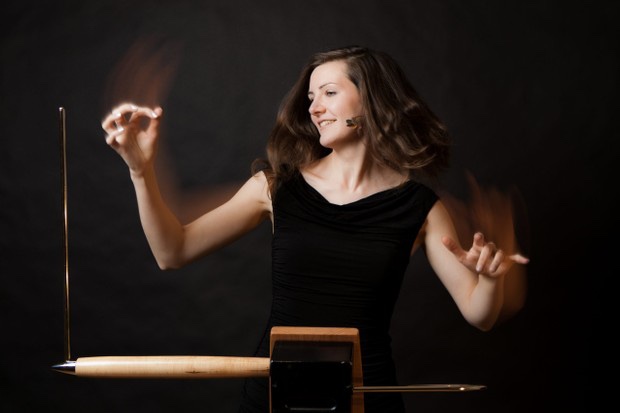
All of the sudden a tallish women comes on stage and, without a word, begins playing what looks to the thin man like a mini-theremin. The keening notes of this unusual instrument fill the room, and Ali looks at the thin man with a slight smile and shrugs. Mini-theremin may or may be not be Ali’s cup of tea, but he’s a gamer, and the thin man feels warmly toward him. The theremin player starts ramping things up and a second musician joins her on stage and, again without a word, begins playing the saxophone, loudly and erratically. The show has begun.

to be continued…

Peter Berger and Thomas Luckmann’s “The Social Construction of Reality” and Related Issues

Author’s Note: This piece is a re-write of a piece from my first blog, Classical Sympathies. At that time I was interested in the relationship between the individual and his or her place of work/ organization. Classical Sympathies was fortunate to have a number of regular readers, some of whom took the time to comment, sometimes at length. The blog got a surprising amount of traffic for some reason, although it is now lost to time. Some pieces from back then are, looking back, a little too flowery, however the style was the style. Andrew Inch, a guy that a uncatagorizable cross-section of people here in Japan knew back in the day, was one of the most prolific and interesting commenters, and I have left his remarks in this re-write.

Berger and Luckmann’s The Social Construction of Reality:

This piece will look in some detail at Peter Berger and Thomas Luckmann’s The Social Construction of Reality, and comment on some of the ideas that it raises. Anyone who works in an organization will be aware that the intersection of the individual, in all of her preferences and particularities, and the institution can involve some friction. In The Social Construction of Reality, Berger and Luckmann spend 45 pages on the topic of “institutionalization,” so they had obviously gave the matter some thought.

They make the point that while man (The Social Construction of Reality, published in 1966, uses the gender-specific term), makes his world, he is given to losing sight of this and projecting (or “reifying”) aspects of the social world so that they are perceived as entirely external and beyond his control. They write:

“Man’s self-production is always, and of necessity, a social enterprise. Men together produce a human environment, with the totality of its socio-cultural and psychological formations” (51).

Human culture, then, is invented. However, being prone to reification, people tend to:

“{apprehend} the products of human activity as if there were something else than human products–such as facts of nature, results of cosmic law, or manifestations of divine will. Reification implies that man is capable of forgetting his own authorship of the human world {and experiencing it} as a strange facticity, {…} over which he has no control” (89).

When mis-apprehending social reality as something other than the product of his own action and consciousness, man forgets that:

“the social world was made by men–and, therefore, can be remade by them,” but, ironically that,“reification is a modality of consciousness {…} Even when apprehending the world in reified terms, man continues to produce it” (89).

We can extrapolate the statement “even when apprehending the world in reified terms, man continues to produce it” to suggest that the perception of sedimented, externally controlled or created, facticity continually creates the very facticity in question. Put slightly differently, the denial of agency diminishes, even uncreates, free-will, while the exercise of free-will depends in large part, perhaps entirely, on the strength of one’s belief in it.

Now, this is not to argue that reification is simply false-consciousness, or that groupings within society do not go to considerable trouble to perpetuate and legitimate reification of their activities. Berger and Luckmann make this quite clear in their analysis of what they call “socially segregated subuniverses of meaning” such as “Hindu castes, the Chinese literary bureaucracy, or the priestly coteries of ancient Egypt” (85), (and we would add to this list lawyers, doctors, television pundits, university English departments, etc.). They write that subuniverses:

“become esoteric enclaves {…} to all but those who have been properly initiated into their mysteries {…} The outsiders have to be kept out {but} if the subuniverse requires various special privileges and recognitions from the larger society, there is the problem of keeping out the outsiders and at the same time having them acknowledge the legitimacy of this procedure. This is done through various techniques of intimidation {…} mystification and, generally, the manipulation of prestige symbols” (87).

“And generally the manipulation of prestige symbols” indeed. Those who engage, consciously or unconsciously, in the manipulation of prestige symbols are, in Berger and Luckmann’s language, involved in creating a “typification.” The acceptance of typifications, in turn, sediments social facticity and brings into being a taken-for-grantedness in the performance of social actors.

The authors indicate that while the typified actor may “act-into” a socially authorized way of acting in public, the same actor, in the privacy of their home, the confessional, or the bar may seek to establish a certain “role distance” through behaviors which blur, or indeed outright contradict, their public “face;” this distance is apt to shrink again when the times comes once again for the actor to take up their public role. In so doing, the actor re-activates that segment of the self which is objectified in terms of the currently available socially available typification(s).

When I started my first blog in 2009 I wrote at some length about why I wore a necktie at work, even though I didn’t really have to and some co-workers thought it was a little strange. My buddy Andrew Inch wrote an extensive, and highly perceptive comment on the topic which is instructive here. Mr. Inch, it will be apparent, is one smart dude. It’s kind of long, but it is worth it.

“Reflection on MT’s devotion to this apparently innocuous task, knotting a piece of cloth around his neck each morning, leads us towards what has become a key element of many recent theories of ideology. Derived from Pascal’s advice to non-believers, ‘kneel and pray, and then you will believe’, the French philosopher Louis Althusser sought to assert the materiality of ideas, and how ideology works through our actions as well as our words to define us as certain sorts of subjects. For Michel Foucault, one of Althusser’s students who sought to break with Marxism and the concept of ideology, the knotting of that neck-tie might have been considered a ‘practice of the self’, a way of disciplining oneself in line with a particular matrix of power and knowledge. The question that I think both of these thinkers struggle to address, however, is the extent to which we are able to shape our own selves, rather than simply being shaped by power. What scope do we have to resist the power embedded in these apparently mundane everyday motions? {…} By kneeling to pray, or standing in front of the mirror adjusting the knot, we perform belief and so take on socially available identities. And as for the rest of us in that office – what was the effect of not knotting the tie each morning? At times there were no doubt some who reveled in the non-conformity of that not knotting. In truth, however, did our alternative practices of the self not simply reproduce a slightly different, perhaps less respect-able but nonetheless conformist, relationship to the rules and rituals that regulated life in that particular setting? Was not wearing a necktie not just another kind of necktie after all?”

“In truth, however, did our alternative practices of the self not simply reproduce a slightly different, perhaps less respect-able but nonetheless conformist, relationship to the rules and rituals that regulated life in that particular setting?” This sentence is phenomenal, and predicated on a particularly alert and acute piece of self-knowledge. Mr. Inch is saying that those in the office who refused to put on a tie, or who flaunted the organizational dress code altogether, while thinking that they were “rebelling” and “sticking it to the man,” were in fact playing into a pre-determined archetype every bit as much as I was with my neckties and apparent “conformity.”

Mr. Inch is essentially making the same point that Berger and Luckmann do when they point out that roles and typifications are “endemic to social interaction {…} All institutionalized conduct involves roles.” And then, the authors bring matters home:

“The institution, with its assemblage of ‘programmed’ actions, is like the unwritten libretto of a drama. The realization of the drama depends upon the reiterated performance of its prescribed roles by living actors. The actors embody the roles and actualize the drama by representing it on the given stage. Neither drama nor institution exist empirically apart from this recurrent realization” (75).

In short, both Mr. Inch and Berger and Luckmann do not confine the acting out of prescribed roles, the submission to typification (e.g. “conformism”) to those in positions of authority within an institution. To the contrary, I read them both as saying that both the master and the servant, the “teacher’s pet” and the “bad boy,” the necktie wearer and the necktie shunner, the consummate insider and the professional rebel are all engaged in the recurrent realization of pre-typified activity.

Explication With Reference to Obama and Talleyrand:

Now, it is true that the above reading of Berger and Luckmann may leave the door open a purely cynical outlook by suggesting that all forms of behavior by institutionalized actors are equal. This is not quite what I wish to argue. Barack Obama has defined his political philosophy as “ruthless pragmatism.” While I understand this formulation, it does seem a little cold (as Obama is famously said to be) What if we added the word “principled” here? Could “principled ruthless pragmatism” sustain meaning without slipping irrevocably into the realm of the oxymoronic?

Let’s take a closer look in relation to organizational life as opposed to the political sphere. “Principled” because one’s initial agreement to engage with institutionalization (through the acceptance of a job offer for example) assumes a principled acceptance of the role one will be asked to play and the attendant tasks and behaviors that will be expected.

“Pragmatic” in that in order to accomplish anything in the social world, wherein competing interests, visions, and ideologies are, and ever will be, an unavoidable reality, one must be prepared to lose the battle in the service of, hopefully, winning the war. It has been my experience that the inability to lose a battle is a problem for many people in the modern workplace. Related to the ability to lose a battle is one’s attitude toward “compromise.” Is “compromise” a dirty word? It’s hard to say. On the one hand, the actor who blithely declares “there can be no compromise where my principles are concerned” may sooner or later find their principles encased under glass in their own private shrine to imagined rectitude. In other words, total denial of the possibility of compromise is tantamount to surrendering all hope of getting anything done. In the immortal words of William Jefferson Clinton, “sooner or later, you have to cut a deal.” On the other hand, there are a certain class of situations where certain compromises just do not feel acceptable, situations where one has what we could call an existential objection to the terms of the proposed compromise.

The question does not, I think, concern whether deals should be struck in general, they should, so much as whether any individual deals is in the long term interest of the project in question and the people involved with this project. This is where “ruthless” perhaps applies. At the very least, the pragmatist needs to accept in herself a degree of strategic focus where goals rooted in principle are concerned. We cannot deny, of course, that this is an easily misused sentiment—if we continually apply “pragmatic ruthlessness” to a project which we are deeply attached to there is the real danger of a concomitantly continual shifting of the moral goal-posts. In short, these are muddy waters.

Talleyrand, Napoleon’s foreign minister is, perhaps, most famous for his remark that “treason is a matter of dates.” Gives you the chills, does it not? Benjamin Schwarz writes of Talleyrand:

“Arguably a turncoat, possibly a degenerate {…} certainly a shameless flatterer and world-class bribe taker, Talleyrand was also the most skillful and farsighted diplomat of his age and a man of arresting grace, wit, and style {…} He was as seductive as he was obviously dangerous {…} Talleyrand subscribed to the idea that statecraft’s modest but arduous task is to enable one’s country to survive and prosper in the world as it exists–not to transform international relations and not to further the alleged cause of mankind” (The Atlantic, December 2007, 93-4).

A hero or a villain? Schwarz is not sure, but he is charmed. For my part, I see in Talleyrand perhaps an 18th century form of “principled ruthless pragmatism” where France’s survival and prosperity was the principle from which his ruthless pragmatism stemmed. While your own cause may or may not be the triumph of the French nation, the application of a ruthless pragmatism in the service of a deeper principle does hold a certain appeal. However, I just don’t personally feel that “ruthless” is really the most appealing qualifier for pragmatism in regards to acting within the public sphere.

Comment:

Instead, I am more interested in understanding how and when to “follow the rules” and surrender to form, as opposed to how and when to do a little end-run. To function effectively within an organization it is essential to realize the power inherent in form. At times, often times really, a “surrender to form” is required. However, instead of simply surrendering to form and that being that, we may be able to add a qualifier of our own. Certain situations may call for a “strategic surrender to form” for the moment, while at the same time “bracketing” or “pocketing” the possibility of the end-run. Here, perhaps, we may have a window into a pragmatic post-post-modern stance which takes post-modernism’s relentless questioning of form and turns it inside out, recognizing that the tyranny of form is something we bring upon ourselves by allowing form to tyrannize.

Put another way, we can expand slightly on Berger and Luckmann’s claim that “an apprehension of reification as a modality of consciousness is dependent upon at least relative derefication of consciousness, which is a comparatively late development in history and in any individual biography” (90). I would suggest that an apprehension of reification as a modality of consciousness is dependent upon at least relative dereification of consciousness which may then lead into the ability to either and/or alternately i) embrace reification and role typification as a strategy (that is to inhabit a form which brings with it certain prerogatives and forms of access), and ii) radically overthrow reification and typification through the recognition that the establishment of social facticity is but a spectacular bluff resting on the manipulation of prestige symbols and the shaman’s art whereby an illusory thinness is reflected as an eternal massivity. In so doing, we may be of service to truly worthwhile cause, protecting a space for action and free-will in the face of the ever-expanding institutionalization of both the public and the private sphere. That might be worth working on.

Dedication: For Mr. Inch. Thank you for commenting. You rock baby.