On George Santos (aka The Fabulous Kitara)

Note: This piece uses the figure of George Santos as a kind of cultural parable. The story of Santos—his improbable congressional run on Long Island, the famous unraveling of his résumé (including the legendary and totally outta control Baruch volleyball claim), the rapid collapse of political support from fellow New York Republicans, his eventual expulsion from Congress, and his strange second act as a Cameo celebrity—forms one of the more surreal public morality plays of recent American politics.

The apartment story that frames the essay is not meant as a literal equivalence. Kitara is not Santos, and roommates are not members of Congress. The comparison operates at the level of archetype: the charismatic figure who arrives full of sunshine, quickly becomes central to a small social world, and then—through one small but revealing detail—forces everyone around them to confront the uneasy coexistence of charm and opportunism.

The name “Kitara,” Santos’ drag name from back in Brazil where he if from (Santos is gay of course) is used here in the spirit of narrative shorthand rather than biography. Anyone who has lived with roommates long enough will recognize the basic situation. Shared apartments are small republics built on trust, improvisation, and the quiet hope that everyone involved is playing roughly the same game. Most of the time that hope is justified. Occasionally it is not.

If the tone of the piece drifts toward amusement, and even affection, rather than outrage, that is deliberate. Characters like Santos—and the occasional fabulous roommate—have a peculiar ability to provoke both exasperation and reluctant admiration. The performance can be infuriating. But it can also be oddly entertaining.

Such people rarely disappear completely. They simply move on to the next stage. Sometimes that stage is Congress. Sometimes it is Cameo (get that scratch Georgie baby!). And sometimes it is just the memory of a roommate who once seemed almost too good to be true.

Epigraph

“People seldom do what they believe in.
They just do what is convenient, then repent.”

— Bob Dylan


I. The Fabulous Roommate

Every apartment has its mythology.

The quiet one who never emerges from his room except to microwave things at strange hours. The earnest one who tries to establish chore charts that everyone pretends to follow for about ten days. The one who adopts pets with a confidence that suggests the rest of the household has already agreed to care for them.

And then, once in a while, there is the fabulous roommate. Kitara was that roommate.

She arrived with the sort of personality that immediately rearranges the emotional furniture of a place. Cheerful without being cloying. Social without being exhausting. Organized without being smug about it. She seemed to understand, instinctively, the delicate social contract of shared living: when to chat, when to disappear, when to clean something quietly so no one felt guilty.

Visitors loved her. Friends who came by would inevitably say some version of the same thing: “Your roommate is amazing.”

And she was. At least at first.

She was the sort of person who made the apartment feel like a small, cheerful republic. There were occasional dinners, occasional drinks, occasional pets that appeared temporarily in the orbit of the household. Nothing dramatic. Just the easy, slightly improvised domestic life that happens when a handful of semi-adults share a roof and try to keep the machinery of living running smoothly.

There are people who move through life like that—people who bring lightness with them. People who make small environments work better simply by being present. You think, when you meet someone like this: what a lucky break.


II. The Sunshine Personality

There is another category of person, however, that resembles the fabulous roommate from a distance. These people also arrive with sunshine. They are charming. They are energetic. They seem to know how to move through rooms with effortless confidence. They shake hands warmly. They remember names. They tell stories. They radiate the sort of friendliness that makes everyone feel briefly like a co-conspirator in something cheerful.

The difference is subtle, and it often takes time to notice. These are not merely charming people.

These are the performers. And, one of the most remarkable recent examples of this type in American public life was George Santos.

Santos appeared, seemingly out of nowhere, in the political ecosystem of Long Island. His run for Congress was, at least initially, improbable in the way that many modern political stories can be. The district had long been competitive, but his rise through the local Republican apparatus was unusually smooth. There was little serious opposition within the party. The campaign itself unfolded with the sort of confident momentum that often accompanies candidates who seem, at least on paper, to possess a compelling life story.

And what a life story it was.

Santos presented himself as the son of immigrants who had risen through the financial world, a man with an impressive résumé and a philanthropic sensibility. He spoke of professional success, cultural fluency, and various achievements that painted a portrait of upward mobility and cosmopolitan competence.

The voters of Long Island sent him to Congress. And then, almost immediately, the details began to unravel.


III. The Volleyball Player

The first cracks appeared through the ordinary mechanism of local journalism. Reporters from Long Island newspapers began to do what reporters traditionally do: verify things.

The résumé turned out to be an imaginative document. The professional history did not quite match reality. The educational claims were questionable. Various details that had seemed impressive during the campaign began to dissolve under scrutiny.

One of the most memorable revelations involved an oddly specific athletic claim. Santos had described himself as a standout volleyball player during his time at Baruch College. Not merely a participant, but something close to a star—someone whose record-setting performance had been part of his biography.

There was just one problem. Baruch College had no record of him playing volleyball. None at all. Outta control. The story collapsed on that small detail. It is often the small details that do that.

A résumé can contain many large claims, and those claims can hover in a kind of vague plausibility for a surprisingly long time. But one precise, checkable fact—the volleyball team roster, the game statistics, the athletic department archives—can puncture an entire narrative.

The reporters pulled the thread and the sweater unraveled.


IV. The Grifter Archetype

Once the unraveling began, it accelerated. Claims about employment at major financial firms proved dubious. Educational credentials evaporated. Personal history mutated in various directions depending on which previous statement one examined.

Soon the story had migrated from the political pages into the broader theater of American spectacle. Late-night comedians noticed. Cable news panels convened. Social media filled with the strange, almost baroque details of the saga. Members of his own party began to distance themselves.

Several Republican members of the New York congressional delegation—figures who had initially welcomed a new colleague—publicly called for him to resign as the scope of the fabrications became clear. The situation became untenable. The House of Representatives eventually voted to expel him, a rare and historically notable step.

It was a dramatic fall.

And yet even during the collapse, Santos retained something remarkable.

Charm.

He gave interviews. He sparred with reporters. He adopted, at times, an almost mischievous tone about the entire affair. There was a faint air of theatricality to the proceedings, as though the story had become a kind of performance art about the boundaries of credibility.

The grifter archetype has a peculiar resilience. Even when the illusion collapses, the performer often remains oddly entertaining.


V. The Apartment

Watching the Santos saga unfold, I found myself thinking more about Kitara.

Because the thing about grifters is not simply that they deceive.

It is that they charm.

They charm their way into rooms, into institutions, into social networks. They radiate warmth. They build small communities of goodwill around themselves. And for quite a while, everything feels perfectly normal.

Until one day something small happens. Something missing.

In the apartment it was GM’s silver. Not a vast treasure. Not an heirloom of historic significance. Just a small, familiar object that lived in a particular drawer and had always lived there.

One morning it was gone. The initial reaction in situations like this is always practical. Maybe you moved it. Maybe it fell behind something. Maybe someone borrowed it.

The mind runs through a series of benign explanations, each one slightly less convincing than the last.

And then a thought appears.

Quietly.

Oh shit.


VI. The Knowledge You Don’t Want

Roommate life operates on a fragile form of trust.

You share space. You share kitchens. Sometimes you share pets, groceries, furniture, phone bills, music, stories. The arrangement functions because everyone tacitly agrees not to test the boundaries of that trust too aggressively.

When something disappears, the entire structure trembles.

But there is another complication.

Sometimes you realize what probably happened. And you also realize that confirming it would destroy the social equilibrium of the apartment.

So you do a strange psychological maneuver.

You know. But you decide not to know.

Life continues.

The dishes are washed. Conversations occur. The roommate remains charming. The apartment continues to function as a small republic of semi-functional adults.

But a hairline crack now runs through the arrangement.


VII. The Fall

For Santos the crack widened into a canyon.

The congressional investigation intensified. Ethical questions multiplied. Party support evaporated. Eventually the House voted to expel him, ending one of the most surreal political tenures in recent memory.

Yet even after the fall, Santos demonstrated a familiar trait of the charismatic grifter.

He adapted. He appeared on podcasts. He commented on political scandals involving others. He expressed a certain moral indignation about the ethical lapses of fellow politicians—including members of his own party—sometimes with a tone that was almost hilariously sanctimonious given the circumstances.

The performer remained on stage. And then came the truly modern twist.

Santos joined Cameo. And he’s fucking great on it!

For a fee, he would record personalized video messages: birthday greetings, congratulations, small performances of his peculiar brand of post-scandal celebrity.

The internet, as it often does, embraced the absurdity.


VIII. The Cameo

At some point I watched a few of his videos.

There he was, smiling warmly into the camera, delivering a cheerful greeting to a stranger somewhere in America. The tone was friendly, relaxed, slightly mischievous.

And I laughed.

Because the performance was genuinely funny. The charm, infuriatingly, still worked. It reminded me of the old fable about the scorpion and the frog.

The scorpion asks for a ride across the river. The frog hesitates, noting that scorpions have a reputation for stinging frogs. The scorpion assures him that such a thing would be irrational; if he stung the frog mid-crossing, both of them would drown.

The frog agrees.

Halfway across the river the scorpion stings him.

“Why?” the frog asks as they sink.

“I can’t help it,” the scorpion replies. “It’s my nature.”

The scorpion cannot help himself.

But every now and then the scorpion also sends someone a birthday message on Cameo, smiling warmly and wishing them a fantastic year ahead.

And you find yourself laughing anyway.

The truth about characters like Santos—and perhaps about certain roommates—is that their charm is not an illusion.

It’s real.

The trouble is that it coexists quite comfortably with everything else.

Dedication:

For Kitara. May you make a fucking mint on Cameo and look totally gorgeous while doing it.

Note: If you enjoyed this story, you might also enjoy these other pieces about American grifters.

In Partial Defense of Reddit

Note: This essay is not intended as a blanket endorsement of Reddit. The platform has many well-documented flaws: trolling, pile-ons, misinformation, and a general tendency toward chaos. Much of its reputation as one of the rougher corners of the internet is entirely deserved.

The point here is narrower.

Despite its disorder, Reddit also preserves something that has become rarer elsewhere on the modern web: large, open conversations among people who possess small but real pockets of knowledge about highly specific subjects. When these fragments accumulate—through correction, argument, memory, and curiosity—they can occasionally produce surprisingly informative results.

The examples in this essay range from the internal royalty disputes of Jane’s Addiction to a map of alleged sightings compiled by the Bigfoot Field Researchers Organization. In both cases the same phenomenon appears: individuals contributing small pieces of cultural memory that gradually assemble into something resembling a collective understanding.

This is the limited claim of the essay. Reddit is frequently messy and unreliable, but it also functions as a peculiar kind of public knowledge commons—one where curiosity, enthusiasm, and the occasional obsessive hobbyist can still combine to produce insights that might otherwise remain scattered or forgotten.

Everyone knows that Reddit is terrible.

It is chaotic. It is full of profanity, bad jokes, half-informed opinions, and the occasional theory that appears to have been typed at three in the morning by someone who has not slept since the Clinton administration. Entire careers have been built explaining why Reddit represents the worst tendencies of the modern internet.

And yet.

The other day I was reading a thread about the latest implosion of Jane’s Addiction, the once-great Los Angeles group whose internal tensions have been simmering since roughly the Reagan administration. The immediate subject was the collapse of a reunion tour following an onstage altercation involving frontman Perry Farrell. The comments were exactly what one would expect from Reddit: profanity, gallows humor, and several variations of “this band has been breaking up since 1991.”

But as the thread continued something interesting happened.

Between the jokes and one-line reactions, the users began reconstructing the band’s internal history. Someone noted that Jane’s had already declared itself finished several times across the decades. Someone else pointed out that the early sound of the band had been shaped heavily by bassist Eric Avery. Another commenter raised the eternal rock-band problem: royalties.

And this, as it turns out, is where the story becomes interesting.

Money has a way of dissolving even the most inspired musical partnerships. Bands begin as small utopian experiments—four or five people creating something new together—and then the checks begin to arrive. Once that happens, questions emerge that are almost impossible to resolve cleanly. Who wrote the song? Who contributed the riff? Who deserves the lion’s share of the publishing?

Rock history is essentially a graveyard of groups destroyed by arguments over fractions of ownership.

In the thread I was reading, one user mentioned a detail I had not known: a claim that Avery at one point wore or promoted merchandise suggesting a 51 percent stake in the band’s identity. Whether literally true or not, the anecdote captured something fundamental about how these disputes unfold. Creative partnerships may begin democratically, but the distribution of credit rarely stays that way.

The remarkable part was that I had learned all of this not from a music journalist or a band biography, but from a chaotic conversation among strangers.

Which brings me to the modest defense of Reddit.

The platform’s reputation is built on its worst features: trolling, argument, and endless bad takes. All of those things exist, of course. But what critics often miss is that Reddit also contains something else: an enormous micro-density of cultural knowledge.

The process is messy. Someone posts a half-remembered fact. Someone else corrects it. Another person adds a detail from an interview they once read fifteen years ago. Gradually, through the collision of dozens of small contributions, something resembling a coherent picture emerges.

It is not elegant. It is rarely authoritative in the traditional sense. But it is often surprisingly informative.

What Reddit does, at its best, is something the modern media ecosystem sometimes struggles to replicate: it gathers together thousands of people who care obsessively about very specific things. Musicians. Gearheads. Amateur historians. Programmers. Aviation nerds. Movie buffs. Backyard astronomers.

And when those people start talking, knowledge begins to accumulate.

The phenomenon becomes even clearer when the subject matter becomes absurd.

Consider a thread from the cryptozoology corner of Reddit devoted to a map of Bigfoot sightings. At first glance the discussion appears to be pure nonsense. The premise itself—tracking sightings of a large unidentified forest creature—is hardly the sort of topic one expects to produce serious information.

And yet the map itself is strangely compelling.

People immediately begin checking their regions. Someone from Maine wonders why Bigfoot seems to avoid the state despite its endless forests. Another user proposes that two “alpha Bigfoots” are fighting for territorial dominance between Maine and Canada. Someone else links to the sightings database maintained by the Bigfoot Field Researchers Organization. A commenter from rural Illinois notices that two reported sightings occurred along the same river that runs behind his property and proceeds to describe the terrain—swampy woods surrounded by miles of farmland where, he notes, something large might plausibly remain hidden.

The subject is ridiculous.

The conversation, however, is oddly informative.

You learn about geography. You learn about folklore. You learn where people live, how they interpret the landscapes around them, and how stories circulate through local communities. What begins as a joke about Bigfoot gradually becomes something like amateur field anthropology.

This is the strange virtue of Reddit.

The platform functions as a kind of digital commons in which thousands of small fragments of knowledge collide in public. No single commenter possesses the full story. But collectively they often assemble something larger than any individual source might provide.

Which leads to the modest conclusion of this essay.

If you want perfectly verified information delivered in polished and authoritative form, Reddit is not the place to go. But if you want to watch curiosity, memory, obsession, and local knowledge combine in unpredictable ways, it can be surprisingly useful.

It turns out that when enough ordinary people gather in one place to talk about the things they care about—even Jane’s Addiction royalty disputes or the migratory patterns of an imaginary forest giant—they occasionally produce something that the official channels of culture struggle to replicate.

Not perfection.

But knowledge, nonetheless.

On Comebacks and Failed Comebacks V: Rod Blagojevich

Note: This essay concludes the small series “On Comebacks and Failed Comebacks.” The earlier pieces explored several very different kinds of returns: the moral vindication of Kofi Annan, the sly tactical persistence of Joe Nash of the Seattle Seahawks, the tragic artistic authenticity of Amy Winehouse, and the mythic public legend surrounding Muhammad Ali.


The story of Rod Blagojevich introduces a different category altogether: the shameless comeback.

Unlike the other figures in the series, Blagojevich’s return to public life does not depend on moral vindication, heroic persistence, or cultural myth. Instead it illustrates something more peculiar about contemporary politics and media. In an age of fragmented audiences and constant attention cycles, a disgraced figure may sometimes reappear simply by refusing to leave the stage.

Whether one sees Blagojevich’s re-emergence as comic, absurd, or oddly instructive, it provides a fitting final example for the series. Not every comeback is admirable, but each one reveals something about the strange ways public life allows stories to continue.

Not all comebacks are noble.

Some are heroic, like the moral vindication of Kofi Annan. Some are tactical, like the sly fourth-quarter returns engineered by Joe Nash of the Seattle Seahawks. Some exist somewhere between tragedy and authenticity, like the brief blazing career of Amy Winehouse. And some, like the legend of Muhammad Ali, grow into something close to myth.

But there is another type of comeback altogether.

The shameless comeback.

For that, it is difficult to find a more perfect case than Rod Blagojevich, the former governor of Illinois whose political career once appeared to have ended in spectacular disgrace.

The original scandal is by now familiar. In 2008 federal investigators revealed that Blagojevich had been recorded on FBI wiretaps discussing how he might profit from appointing a replacement to the U.S. Senate seat vacated by President-elect Barack Obama. The recordings were devastating. In one of the most memorable lines in modern American political scandal, Blagojevich described the Senate seat as something valuable that he was reluctant to give away for nothing.

The fallout was swift. Blagojevich was impeached and removed from office by the Illinois legislature. Later he was convicted on multiple corruption charges and sentenced to federal prison. For most politicians, this sequence would represent the end of the story.

Disgrace. Prison. Silence.

But American public life has always contained another possibility: the comeback powered not by redemption but by spectacle.

Even before his imprisonment, Blagojevich seemed instinctively drawn toward the theatrical dimension of his situation. He appeared on television talk shows, launched media interviews, and treated the unfolding scandal almost as if it were a strange kind of reality program in which he remained the central character.

His appearance on The Celebrity Apprentice, hosted by Donald Trump, felt less like an attempt to restore dignity than a recognition that modern politics and entertainment had already merged.

Then came the commutation.

In 2020 Trump commuted Blagojevich’s prison sentence, releasing him after several years behind bars. The decision itself was controversial, but the effect was unmistakable: the stage was suddenly open again.

And Blagojevich, to his credit—or perhaps to his creditlessness—walked right back onto it.

The most striking feature of his post-prison public life has been the absence of embarrassment. Many disgraced politicians attempt some form of contrition when they re-enter the public conversation. Apologies are issued. Lessons are discussed. A tone of humility is adopted.

Blagojevich chose a different path.

Instead he embraced a kind of shameless persistence, appearing in conservative media outlets, repositioning himself politically, and speaking about his case with the tone of someone who believes the whole episode was misunderstood or exaggerated. The ideological shift from Democrat to Republican was particularly striking, not because party changes are unheard of but because in Blagojevich’s case it seemed less like a conversion than a strategic recalibration.

It was, in other words, a comeback powered by the modern media ecosystem.

In an earlier era, a corruption scandal of this magnitude might have consigned a politician to permanent obscurity. But the fragmented media landscape of the twenty-first century offers a different possibility. There is always another audience somewhere, another platform, another narrative waiting to be constructed.

Blagojevich appears to understand this instinctively.

Which is why his story belongs in a series about comebacks, even if the comeback itself is of a peculiar variety. Unlike the moral return of Annan or the mythic return of Ali, Blagojevich’s version depends less on redemption than on endurance.

The secret of the shameless comeback is simple.

You refuse to leave the stage.

You keep talking. You keep appearing. You keep telling your version of the story until, slowly but inevitably, the scandal itself begins to blur into just another chapter in the larger spectacle of American politics.

In that sense Rod Blagojevich may represent a distinctly modern form of comeback: not heroic, not tragic, but theatrical.

And in the strange carnival of contemporary public life, theatrical persistence can sometimes be enough.

On Comebacks and Failed Comebacks IV: Muhammad Ali

Note: This essay is the third entry in the series “On Comebacks and Failed Comebacks.” The earlier pieces looked at very different kinds of returns: the moral vindication of Kofi Annan and the small, tactical in-game comebacks engineered by Joe Nash of the Seattle Seahawks.


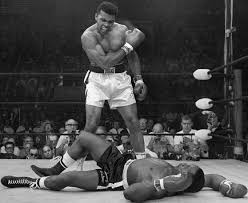
The story of Muhammad Ali operates on a much larger stage. Ali’s exile from boxing after refusing the Vietnam draft and his eventual return to the championship ranks is one of the most famous comebacks in sports history. But the episode described here—the Los Angeles suicide rescue in 1981—is a smaller and stranger moment.


The event appears to have genuinely occurred, yet it also carries the faint aura of legend that often surrounds Ali’s public life. The champion arrives, speaks to a desperate man at a window, and the crisis resolves itself. It is almost too perfectly aligned with the myth of Muhammad Ali not to raise a few questions about performance, storytelling, and the way public figures sometimes inhabit the roles the world expects them to play.


In that sense the episode captures something essential about Ali’s comeback. By the time his boxing career entered its final chapters, he had become more than an athlete. He had become a figure whose life continually generated stories that felt larger than ordinary events.


Whether one treats the Los Angeles episode as simple heroism, public theater, or some mixture of the two, it remains a fascinating illustration of how Ali’s legend continued to grow long after the great fights were over.

Some comebacks are measured in championships.

Others are measured in stories.

The career of Muhammad Ali contains both. His return to boxing after the long exile of the late 1960s is one of the great sporting comebacks of the twentieth century. Stripped of his title for refusing induction into the Vietnam War, banned from the ring during what should have been his athletic prime, Ali eventually returned to reclaim the heavyweight championship and cement his place as the most famous boxer on earth.

But the Ali comeback is not just about boxing.

Long before the exile and the triumphant return, the story had already begun to take on mythic dimensions. In 1964 a young fighter from Louisville named Cassius Clay stunned the world by defeating Sonny Liston for the heavyweight title. Soon afterward he announced that Cassius Clay was a “slave name” and that he would henceforth be known as Muhammad Ali.

The change was shocking to much of the American public at the time. Ali aligned himself with the Nation of Islam, spoke openly about race and politics, and quickly became one of the most controversial athletes in the country.

Then came the draft.

In 1967 Ali refused induction into the U.S. Army during the Vietnam War. The consequences were immediate and severe. He was stripped of his heavyweight title, banned from boxing, and faced the possibility of prison. For several years the greatest fighter in the world was not allowed to step into the ring.

The exile transformed him.

When Ali eventually returned to boxing in the early 1970s, he was no longer merely a talented heavyweight with a flair for poetry and bravado. He had become something larger: a political figure, a symbol of resistance, a man whose name carried moral and cultural weight far beyond the sport.

The comeback fights that followed helped cement that transformation. In 1974 Ali traveled to Zaire to face George Foreman in the legendary The Rumble in the Jungle. Foreman was younger, stronger, and widely expected to win easily.

Instead Ali introduced the world to the “rope-a-dope,” leaning back against the ropes and absorbing Foreman’s punches until the younger champion exhausted himself. In the eighth round Ali knocked him out.

It was one of the great theatrical moments in sports history: the exiled champion returning to reclaim the crown.

But somewhere along the way Ali’s comeback had begun to operate on another level entirely.

He had become something more than a boxer. Part athlete, part moral figure, part living myth. And like all myths, the Ali story eventually began to generate episodes that feel almost too perfectly suited to the character.

One of the strangest of these occurred in Los Angeles in 1981.

A man was threatening to jump from the ledge of a ninth-floor building. Police had been negotiating for hours. Crowds gathered below, watching the terrible drama unfold at a distance.

Then Muhammad Ali arrived.

Accounts differ slightly in the details, but the basic outline is consistent. Ali spoke to the man from a nearby window, urging him not to jump. Eventually the man climbed back inside the building with Ali beside him. Photographs exist of the moment, and police officers later confirmed the story.

By all reasonable accounts, Ali helped save the man’s life.

And yet the story carries a faint aura of improbability.

Not because it didn’t happen—it clearly did—but because it feels so perfectly aligned with the Ali persona that one can’t help wondering about the role of performance in the moment.

Ali had always understood something most athletes do not: that being Muhammad Ali was itself a kind of public art.

From the beginning he blurred the line between competition and theater. The rhymes, the predictions, the playful insults directed at opponents—all of it was part of a larger performance. Ali didn’t simply fight boxers. He performed the role of the greatest boxer in the world.

By the early 1980s that role had evolved even further. Ali was no longer just the heavyweight champion. He had become a global cultural figure, a symbol of resilience after exile, a man whose public presence carried moral weight.

So when the story of the suicide rescue circulated, it seemed less like an unexpected episode and more like the natural continuation of the legend.

Of course Muhammad Ali would appear at the window.

Of course Muhammad Ali would talk the man down.

Of course the cameras would be there.

None of this means the moment was insincere. Ali may well have acted from genuine compassion. But it is also possible—one suspects just slightly—that he understood something about the scene as it unfolded: that the story would become another chapter in the larger narrative of Muhammad Ali.

If so, it was a brilliant instinct.

Because the image of the champion talking a desperate man back from the ledge captures something essential about the Ali comeback. After the long years of controversy and exile, Ali returned not merely as a boxer but as a figure people wanted to believe in.

The story may be small compared with the great fights—the Rumble in the Jungle, the Thrilla in Manila. Yet in its own strange way it may be just as revealing.

A champion reclaiming his title is impressive.

A champion stepping to a window and becoming, for a moment, exactly the hero the world expects him to be—that is something else entirely.

And Muhammad Ali, more than anyone, always understood the power of the moment.

On Comebacks and Failed Comebacks III: Amy Winehouse

Note: This short piece reflects on the strange artistic tension that defined the career of Amy Winehouse: the way her extraordinary authenticity as a singer seemed inseparable from the personal instability that surrounded her life.

Winehouse’s music—especially the songs on Back to Black—felt at once timeless and painfully immediate. The sound drew deeply from earlier traditions of soul and rhythm and blues, yet the emotional directness of the lyrics was unmistakably modern. Few artists have managed to sound so rooted in musical history while simultaneously feeling so exposed to the present moment.

The song Rehab stands as the clearest example of this tension. Its humor, defiance, and vulnerability all exist in the same breath, making it one of the most distinctive pop recordings of the twenty-first century.

Like many listeners, I remember the late-2000s period—particularly around the Glastonbury era—when Winehouse was both an enormous star and visibly struggling. Watching those performances could feel uneasy, yet the brilliance of the voice was undeniable. The same intensity that made the music so compelling also made her career difficult to sustain.

This piece is simply an attempt to think about that paradox: how authenticity and self-destruction can sometimes become intertwined in the lives of great artists.

There are many great singers, but very few voices that feel instantly definitional—voices that seem to arrive already carrying an entire world inside them.

Amy Winehouse was one of those voices.

By the time her second album, Back to Black, exploded in the mid-2000s, it already felt as though she had stepped fully formed out of some earlier musical era. The sound was unmistakably rooted in Motown and 1960s soul, yet the lyrics were brutally modern—messy, confessional, sometimes almost painfully direct.

Winehouse didn’t just sing about heartbreak and addiction. She sang about them as if the audience had wandered into the middle of a private argument she was having with herself.

That tension—between authentic confession and visible self-destruction—became the defining element of her career.

You could hear it most clearly in Rehab, which remains one of the most distinctive pop songs of the twenty-first century. The song is catchy, almost playful on the surface, driven by a swinging brass section that feels lifted from a lost Stax session.

But the lyrics are something else entirely.

They tried to make me go to rehab / I said no, no, no.

It’s funny. It’s defiant. It’s also deeply unsettling, because the listener quickly realizes that the singer is not playing a character. The refusal at the center of the song is real.

In that sense “Rehab” became more than a hit single. It became a kind of thesis statement for the strange artistic space Winehouse occupied. The same vulnerability that gave her music its emotional power also exposed the raw nerves of her life to public view.

You could feel that tension during the years when she was both at the height of her fame and visibly unraveling.

The Glastonbury era captured this perfectly. Winehouse had become a massive international star, yet her stage presence could swing wildly from moment to moment. One minute she would be commanding the crowd with that huge, smoky voice; the next she might appear distracted, fragile, or physically unsteady.

Watching those performances could be oddly uncomfortable. The audience was witnessing genuine brilliance, but it often felt as though the brilliance was emerging from a life that was spinning out of control.

And yet the authenticity of the music was inseparable from that volatility.

Winehouse sang as if every lyric had been torn directly out of lived experience. There was no polite distance between the artist and the material. When she sang about jealousy, addiction, or heartbreak, it sounded less like performance and more like confession.

That quality made her music electrifying. It also made her career precarious.

Pop music has always had a complicated relationship with self-destructive artists. Audiences are drawn to performers who seem emotionally transparent, but the same intensity that produces great art can also be difficult to sustain under the glare of fame.

Winehouse lived inside that contradiction.

The tabloids followed her relentlessly. Every public misstep, every argument, every sign of physical decline became part of a growing media narrative. The spectacle sometimes threatened to overwhelm the music itself.

Yet when she stepped to the microphone and began to sing, the spectacle vanished.

What remained was that extraordinary voice: raw, soulful, and oddly timeless, as if it had traveled forward from another musical generation. In a pop landscape often dominated by carefully engineered personas, Winehouse sounded startlingly real.

That authenticity is why her work still resonates long after her death in 2011.

Many talented singers release successful albums. Only a handful manage to create songs that feel permanently etched into the culture. “Rehab” is one of those songs. The moment those opening horns start, the listener knows exactly what world they are entering.

It is the world of Amy Winehouse: funny, defiant, wounded, brilliant.

A place where honesty and self-destruction were never quite separable—and where the truth of the music was powerful enough to survive them both.

Note:

On Comebacks and Failed Comebacks I: Kofi Annan

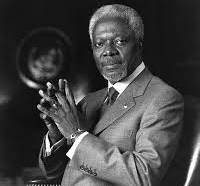
Note: This piece begins a small series I’m calling “On Comebacks and Failed Comebacks.” Political and public life are full of attempted returns. Leaders lose elections, wars, or moral arguments and then try to reclaim the stage. Most of these efforts fail. The moment has passed, the audience has moved on, and what once felt urgent has dissolved into what might be called moral fatigue. Yet every so often a different pattern appears. Occasionally someone loses the immediate battle but remains present long enough for history itself to shift. When that happens, what first looked like defeat begins to resemble something closer to a delayed victory. Kofi Annan provides a particularly interesting case. His opposition to the Iraq War did not stop the invasion, and at the time it appeared that the argument had been decisively lost. Yet as the years passed and the consequences of the war became clearer, the moral judgment he articulated gained increasing weight.
In that sense, the story of Annan’s career suggests a useful distinction: some comebacks succeed not because the player reclaims the moment, but because the argument itself eventually catches up with history. Future pieces in this series will look at other figures—some who managed remarkable returns, and others whose comebacks never quite arrived.

Political life especially produces them in abundance. A leader loses a battle—an election, a war, a moral argument—and disappears into the quiet margins where yesterday’s figures slowly fade. The public moves on. The moral urgency of the moment dissolves into what might be called moral fatigue. Outrage that once seemed unstoppable becomes background noise. A new crisis appears, and the world’s attention shifts.

Once this fatigue sets in, comebacks are difficult. The audience that once cared has already drifted elsewhere. The stage has changed. Most players who attempt to return find that the moment that once belonged to them has passed.

Yet every so often a different pattern appears.

Occasionally a figure loses the immediate battle but remains present long enough for the moral tide itself to turn. When that happens, what looked like defeat begins to resemble something else entirely.

Kofi Annan offers one of the most intriguing examples of this phenomenon.

In 2003 the United States and the United Kingdom invaded Iraq. The invasion was justified by a mixture of strategic arguments, intelligence claims, and moral rhetoric about tyranny and liberation. In Washington and London the momentum of the moment was overwhelming. The war was framed as both necessary and inevitable.

The United Nations, by contrast, found itself sidelined. Annan, then serving as Secretary-General, watched as the institution he led was bypassed by the coalition preparing for war. The moment belonged to the advocates of intervention—particularly the group of American policy thinkers who had spent years arguing for the removal of Saddam Hussein.

At the time, it was not at all clear who would ultimately win the argument. What was clear was that the United Nations had lost the immediate struggle for influence. The invasion proceeded without explicit UN authorization, and the diplomatic machinery that Annan represented appeared powerless to prevent it.

The moral emergency that had animated the debate quickly hardened into geopolitical reality.

Then, in September 2004, Annan said something remarkable. In a BBC interview he stated plainly that the invasion of Iraq was illegal under international law.

It was an extraordinary declaration. Rarely does a sitting Secretary-General of the United Nations describe the actions of the world’s most powerful government in such blunt terms. Yet the statement did not produce the dramatic reversal one might imagine. The war continued. Washington and London dismissed the criticism. The machinery of global politics moved forward largely unchanged.

In the short term, Annan had lost the battle.

And the personal toll of that moment appears to have been considerable. In his biography there is a striking image from this period: Annan alone in his darkened living room, unable for a time to rise from the floor. The room itself reportedly kept in near darkness. It was not exactly depression, at least not in the clinical sense, but something close to exhaustion after a prolonged moral struggle that had failed to alter events.

It is a haunting scene. One of the most powerful diplomats in the world sitting on the floor of a dark room, confronting the limits of his influence.

At that moment, the story of Kofi Annan could easily have ended as the story of a failed comeback. A leader who tried to reassert the moral authority of international law and found that the world had already moved on.

But history has a way of rearranging the meaning of certain moments.

As the years passed, the Iraq War came to be widely regarded as a profound strategic and humanitarian mistake. The claims that had justified the invasion collapsed. The war itself destabilized the region and reshaped global politics in ways that few of its original advocates had anticipated.

Gradually, the moral argument that Annan had made—quietly but firmly—became the prevailing historical judgment.

After leaving the United Nations, Annan did not retreat entirely from public life. Instead he reappeared in a different role as a member of The Elders, a group of former statesmen attempting to exert moral influence outside formal political structures.

It was a curious transformation. No longer the head of the UN, Annan had less formal power than he once possessed. Yet his voice now carried a different kind of authority—the authority of someone who had remained in the arena long enough for events to vindicate his judgment.

By the end of his life, the moral verdict on the Iraq War had shifted decisively. Few serious observers still defended the intervention with the confidence that characterized the early years of the conflict. The consensus had moved, slowly but unmistakably, toward the position Annan had articulated when it mattered least.

In this sense, his career offers an unusual example in the history of comebacks.

He lost the battle.
But he may have won the argument.

That distinction matters.

Most political figures attempt comebacks by trying to reclaim the exact moment they once dominated. They want the same stage, the same audience, the same authority. When the moment has passed, the comeback fails.

Annan’s story suggests a different possibility. Sometimes the moral argument itself continues moving through history long after the political battle appears settled. If a leader remains present long enough, the tide may eventually turn.

Which leads to a simple but revealing observation about great players in any arena.

A truly great player is never entirely out of the game.

The moment may pass. The audience may drift away. But if the underlying argument proves sound, history itself has a way of reopening the field.

And when it does, the comeback is already underway.

The Theory of Catalyzed Emergency

Note: The concept presented here emerged from a recurring observation: certain events appear to produce consequences vastly disproportionate to their scale. Assassinations, attacks, epidemics, or even seemingly minor encounters can trigger transformations that reshape entire systems. Yet these events rarely create the underlying crisis themselves. More often, they activate tensions that already exist beneath the surface of an apparently stable order.

The Theory of Catalyzed Emergency proposes that many systems operate in a state of provisional equilibrium that conceals latent instability. Political alliances, institutions, and social relationships often persist through the management or postponement of unresolved tensions. Under such conditions, relatively small incidents can function as catalysts, accelerating processes that were already structurally possible.

Historical examples illustrate the pattern. The Assassination of Archduke Franz Ferdinand triggered a general war within a European system already strained by militarization and alliance commitments. The September 11 attacks catalyzed geopolitical tensions that rapidly transformed global security policy. The emergence of HIV/AIDS likewise revealed vulnerabilities embedded in medical, social, and political institutions.

What these events share is structural rather than causal similarity: a relatively small catalyst activates latent instability, compresses decision time, and forces a system into crisis. The theory proposed here attempts to describe this recurring pattern.

A Structural Model of Crisis Activation

Abstract

This paper develops a formal framework termed the Theory of Catalyzed Emergency, which explains how large-scale transformations in social, political, and interpersonal systems often arise from relatively minor triggering events. Rather than treating these events as primary causes, the theory proposes that they function as catalysts that activate latent instabilities already present within complex systems. Once activated, these instabilities compress the temporal horizon of decision-making and produce what may be termed a decision emergency, in which actors must rapidly commit to positions that reveal underlying structural relationships. Historical cases—including the Assassination of Archduke Franz Ferdinand, the emergence of HIV/AIDS, the September 11 attacks, and the 2008 global financial crisis—demonstrate recurring patterns in which catalytic incidents transform latent structural tensions into overt crises. The model integrates insights from historical sociology, crisis theory, and complex systems analysis.


1. Introduction

Major historical transformations are frequently narrated through trigger events: assassinations, terrorist attacks, market collapses, or disease outbreaks. Yet these explanations often obscure the deeper structural conditions that render systems vulnerable to crisis.

The Theory of Catalyzed Emergency proposes that crises arise when pre-existing instabilities within complex systems are activated by catalytic events that dramatically accelerate underlying processes. The catalyst itself is rarely proportional to the transformation it produces. Rather, it functions as a structural ignition point, collapsing decision horizons and forcing actors to reveal latent alignments.

This perspective intersects with several intellectual traditions. The sociology of knowledge associated with Peter L. Berger and Thomas Luckmann highlights how social realities are actively maintained through everyday institutional practices. Similarly, the philosophy of history articulated by Walter Benjamin emphasizes moments in which historical time is suddenly ruptured, exposing underlying tensions previously masked by routine order.

The present framework seeks to formalize these insights by identifying the structural conditions under which catalytic events generate systemic crises.


2. Latent Instability

All complex systems contain internal tensions. Political alliances, economic networks, institutional hierarchies, and interpersonal relationships operate through temporary equilibria maintained by norms, expectations, and procedural delays.

Latent instability emerges when such systems exhibit:

  • unresolved structural contradictions
  • suppressed or deferred conflicts
  • asymmetrical power distributions
  • unresolved decision pathways

These tensions do not immediately produce crisis because systems possess mechanisms of equilibrium maintenance—diplomatic negotiation, bureaucratic inertia, cultural norms, or emotional restraint.

However, this equilibrium remains contingent rather than permanent.


3. Catalysts

A catalytic event is defined as a relatively small incident that dramatically accelerates the activation of pre-existing structural tensions.

Unlike direct causes, catalysts function through activation rather than creation. They do not introduce instability into the system; rather, they trigger the release of instability already embedded within it.

Historical examples illustrate this mechanism.


3.1 Geopolitical Catalysis

The Assassination of Archduke Franz Ferdinand is widely treated as the immediate cause of the First World War. Yet the European political system in 1914 was already characterized by rigid alliance structures, militarization, and nationalist tensions. The assassination catalyzed these conditions, triggering rapid mobilization across the alliance network.

Similarly, the September 11 attacks activated structural tensions surrounding transnational terrorism, Middle Eastern geopolitics, and global security policy, initiating a prolonged transformation of international relations.


3.2 Epidemiological Catalysis

The emergence of HIV/AIDS catalyzed profound transformations in public health, sexuality, and medical research. The virus interacted with pre-existing social and epidemiological structures—dense urban sexual networks, stigmatized communities, and fragmented health infrastructures—producing a global crisis that reshaped cultural and scientific discourse.


3.3 Economic Catalysis

The 2008 global financial crisis similarly illustrates catalytic activation. Years of accumulated financial risk within global credit markets were activated by the collapse of mortgage-backed securities, rapidly transforming localized financial instability into a systemic crisis.


4. Temporal Compression

A defining feature of catalyzed emergencies is temporal compression.

Before the catalytic event, systems operate under conditions of extended decision time, allowing actors to defer commitments. Once the catalyst occurs, however, the system enters a phase in which decisions must be made rapidly.

Actors suddenly confront binary choices:

  • mobilize or delay
  • intervene or abstain
  • acknowledge or suppress
  • cooperate or defect

The system thus enters what may be termed a decision emergency, in which the range of possible actions narrows dramatically.


5. Structural Revelation

Catalyzed emergencies perform an important epistemic function: they reveal the underlying structure of systems.

During periods of equilibrium, alliances and loyalties may remain ambiguous. Crisis moments force actors to declare positions, thereby exposing hidden relationships of power, ideology, or affinity.

In this sense, catalyzed emergencies serve as diagnostic events that illuminate structural features otherwise concealed by routine stability.


6. Formal Propositions of the Theory

The Theory of Catalyzed Emergency can be summarized through six formal propositions.

Proposition 1: Latent Instability

All complex social systems contain latent instabilities arising from unresolved structural tensions.

Proposition 2: Equilibrium Maintenance

Such systems maintain temporary stability through institutional norms, procedural delays, and conflict suppression.

Proposition 3: Catalytic Activation

A catalytic event activates latent instability when it triggers processes already embedded within the system.

Proposition 4: Disproportion

The magnitude of systemic transformation following a catalytic event is often disproportionate to the scale of the triggering event.

Proposition 5: Temporal Compression

Catalytic activation compresses the temporal horizon of decision-making, forcing actors into rapid commitments.

Proposition 6: Structural Revelation

During catalyzed emergencies, underlying structures of power, alliance, and vulnerability become visible through the actions taken by actors under pressure.


7. The Catalytic Cycle

The dynamics of catalyzed emergency can be represented as a cyclical process.

LATENT INSTABILITY

STRUCTURAL EQUILIBRIUM

CATALYTIC EVENT

TEMPORAL COMPRESSION

DECISION EMERGENCY

STRUCTURAL REVELATION

SYSTEM TRANSFORMATION

NEW EQUILIBRIUM

This cycle explains why many historical transformations appear both sudden and inevitable: the underlying tensions accumulate gradually, yet the catalytic moment that activates them may occur abruptly.


8. Scale Invariance

One of the most striking features of catalyzed emergency is scale invariance. The same structural pattern appears across multiple levels of social organization.

At the civilizational level, catalytic events may trigger wars, revolutions, or global crises.

At the institutional level, leadership changes or policy decisions may catalyze organizational transformation.

At the interpersonal level, seemingly minor encounters may activate latent emotional dynamics that permanently reshape relationships.

This cross-scale recurrence suggests that catalyzed emergency may represent a general structural property of complex adaptive systems.


9. Conclusion

The Theory of Catalyzed Emergency reframes the relationship between events and historical transformation. Rather than treating crises as the direct consequences of triggering incidents, the theory emphasizes the role of latent instability and catalytic activation in producing systemic change.

By identifying the structural conditions that make catalytic activation possible, the theory offers a more nuanced account of why certain events produce transformative consequences while others do not. In doing so, it highlights the importance of analyzing not only the catalysts themselves but also the underlying tensions that render systems susceptible to catalytic rupture.

Note: This essay is Part I of our series on the concept of the “Catalyzed Emergency.” You can read the other two essays below.

In Defense of Conor Oberst

Note: This essay focuses on the songwriting of Conor Oberst and the broader arc of his work as a writer and performer. It does not attempt to settle every critical debate about his career or evaluate the many shifting narratives that have surrounded him over the years.

Instead, the argument here is simpler: when listeners return to the songs themselves — especially pieces like “Cape Canaveral,” “Easy/Lucky/Free,” and “I Didn’t Know What I Was In For” — the caricature of Oberst as merely an overwrought diarist becomes difficult to sustain. Whatever one thinks of the mythology around him, the writing continues to reward careful listening.

For more than twenty years now it has been fashionable to treat Conor Oberst as a kind of permanent adolescent: the patron saint of overwrought confession, the boy genius who mistook emotional intensity for wisdom and simply never grew out of it. Even listeners who admired the early records sometimes adopt a gentle condescension when talking about him now. Those songs were powerful, they say, but they belonged to a particular moment — a moment of youthful melodrama that serious listeners eventually leave behind.

The outline is familiar. Too many feelings. Too many words. Too much trembling urgency in the voice. Somewhere along the way Oberst became shorthand for the idea that emotional sincerity, taken too far, turns embarrassing.

But like many tidy cultural narratives, this one collapses as soon as you start listening carefully again.

The first thing worth remembering is that Oberst began writing and recording music at an age when most people are still learning how to articulate their own thoughts. The early Bright Eyes records captured something very specific: the internal weather of late adolescence and early adulthood. The confusion, the moral absolutism, the sudden swings between despair and hope. Critics often call this melodrama, but melodrama is sometimes just another word for emotional honesty before the world teaches you to disguise it.

What Oberst did during those years was document the process of becoming a person. The songs are full of doubt, self-contradiction, and grand declarations that may not survive contact with reality. But that is exactly how young consciousness works. It moves through extremes. It searches for certainty and then dismantles it. Listening to those records now is less like hearing a performance than like reading a diary written in real time while the author tries to understand himself.

The voice, which so many critics found grating, was central to that effect. Oberst sang as if the words were arriving at the exact moment he needed them. The wavering pitch, the occasional cracks, the sense of someone pushing language slightly faster than it could comfortably travel — all of that created the feeling of urgency. It sounded like a mind thinking out loud.

The strange thing about Oberst’s career is that this intensity became the very thing people later held against him. Emotional transparency, once celebrated as authenticity, gradually hardened into caricature. Listeners who had grown older began to treat the songs as artifacts from a younger self they preferred not to revisit. Oberst did not change enough for some critics, while for others he changed too much.

But the best way to understand his writing is to look closely at several songs that capture the full range of what he does. “Cape Canaveral,” from his 2008 solo record, is often cited by fans as one of his finest achievements, and for good reason. The song moves with a calm, reflective confidence, drifting through memory, regret, and travel before arriving at a quietly devastating insight: “Every time I try to pick up the pieces / Something shatters.” The writing has none of the frantic urgency critics associate with Oberst. Instead it feels mature, patient, almost philosophical — proof that his gift for emotional clarity did not disappear when he left his early twenties.

Another example arrives with “Easy/Lucky/Free,” one of the defining songs from Digital Ash in a Digital Urn. The track looks outward rather than inward, sketching a world where technology and surveillance gradually erode the illusion of personal freedom. The chorus lands with a mixture of dread and irony that feels more prophetic with every passing year. What might once have sounded like youthful paranoia now reads as a remarkably prescient meditation on the digital age.

And then there is “I Didn’t Know What I Was In For,” perhaps the most quietly devastating song of Oberst’s middle period. The track unfolds with almost conversational simplicity, recounting memories of youth, friendship, and the slow arrival of adult responsibility. By the time the final lines arrive — “You said that you hate my suffering / And you understood / And I said that I love you too” — the song has achieved something rare: a portrait of adulthood that feels honest without becoming cynical.

Taken together, these songs reveal the real architecture of Oberst’s songwriting. Beneath the reputation for emotional excess lies a writer deeply concerned with memory, time, and the fragile ways people try to make sense of their lives. His best work captures the moment when experience shifts from confusion into recognition — when a half-formed feeling finally finds the right words.

Another reason Oberst’s work continues to resonate is that he writes from inside experience rather than from a critical distance. Many songwriters polish their observations until the emotional edges disappear. Oberst tends to leave the edges intact. His songs preserve the awkwardness, the uncertainty, the half-formed thoughts that accompany real moments of reflection. The result is sometimes messy, occasionally excessive, but often uncannily recognizable.

This quality also explains why Oberst has remained so influential among younger songwriters. He helped create a space in indie music where vulnerability could coexist with literary ambition. The songs suggested that personal confession and careful craft were not mutually exclusive. For a generation of listeners trying to articulate their own emotional lives, that permission mattered.

None of this means that every Oberst record works equally well, or that every lyric survives scrutiny. A career built on openness will inevitably produce uneven moments. But the larger body of work tells a more interesting story than the caricature of a permanently anguished songwriter. It shows an artist who has spent decades documenting the slow evolution of a restless mind.

And perhaps that is the real reason Oberst continues to provoke such divided reactions. His songs refuse to adopt the protective distance that many listeners eventually develop toward their own past selves. Instead they remain exposed — still searching, still uncertain, still willing to ask questions that adulthood often teaches us to bury under routine.

In that sense the emotional intensity people once dismissed as youthful melodrama begins to look different. It becomes a record of someone refusing to abandon the difficult work of feeling deeply about the world. For listeners willing to meet him there, the songs offer something rare in modern music: the sound of a consciousness continuing to unfold, one uneasy thought at a time.

Note: This is the third piece in our series “In Defense Of.” Iy you enjoyed this essay, you may also enjoy the one on Mark Kozelek. You can access it below.

On the Song “Encounter at 3 AM”

Note: This piece sits at the intersection of music, memory, and atmosphere rather than narrative disclosure. It reflects on a late-night encounter whose emotional resonance exceeded its visible duration, while respecting the privacy of the people involved and the ambiguity that gives such moments their meaning.

The essay is less about what happened than about how certain hours alter perception — the thin, liminal spaces where experience feels lightly refracted and ordinary interaction carries unexpected depth. References to artists like Franz Wright, Clem Snide, and Steve Earle, function as interpretive companions rather than explanatory frameworks, illustrating how art often provides language for encounters that resist direct narration.

If the piece feels intentionally incomplete, that is by design. Some experiences are best preserved as atmospheres rather than stories — moments acknowledged without being fully claimed, interpreted without being resolved.

In that sense, this essay is not an account but a calibration: a quiet recognition that certain hours open briefly, rearrange something internal, and then close without explanation.

And that noticing, in itself, is enough.

A brief reflection on songs, hauntings, and the thin hour of the night

Epigraph
“All I wanted was a little money / All I needed was a week or two…”
— Steve Earle, What’s a Simple Man to Do? (2002)

I first learned the shape of this feeling not through Steve Earle, but through Clem Snide’s cover of Franz Wright — an artistic relay in which one voice carries another’s encounter across distance and time, transforming the original into something that feels simultaneously intimate and secondhand. That is often how hauntings arrive for me: sidelong, refracted, mediated by art before experience recognizes itself inside the echo.

A borrowed door into an original room.

And that is where the hour begins.

There exists a space late at night — or early in the morning, depending on temperament and life stage — when cognition thins and the world grows slightly porous. The clock reads 3 AM, but the number matters less than the condition: the hour when ordinary structures loosen their grip, when language quiets, when identity becomes less declarative and more receptive.

At that hour, the city changes character.

Sound carries differently.
Light softens into suggestion.
Distance feels compressed.
Time feels elastic.

Even familiar rooms acquire the faint strangeness of places visited in dreams. Furniture appears slightly displaced from its daytime certainty. Street sounds arrive as fragments rather than narratives. The mind, deprived of external reinforcement, becomes a receptive surface for impressions that would dissolve immediately under daylight scrutiny.

It is not mystical.
Not dangerous.
Not even especially dramatic.

Just thin.

I have had moments there — most of us have — when the boundary between witnessing and participating becomes ambiguous. One moment in particular remains lodged in memory like a quiet shoulder tap. There were real people involved, real conversation, real movement through space. And yet layered within the literal event was something harder to categorize: a presence that did not claim metaphysical authority but nonetheless altered the emotional pressure of the moment.

I cannot narrate specifics. Confidentiality holds the center, and the encounter was not fully mine to claim. But proximity alone can leave residue. Sometimes you do not own the story, yet the story alters you.

Earle’s character inhabits a world of visible stakes — border desperation, economic precarity, the sudden rearrangement of circumstance that forces moral improvisation. His question, What’s a simple man to do?, is less rhetorical than existential. It captures the sound of a human recognizing that the script he believed himself to be following has dissolved without warning.

Franz Wright’s terrain is quieter but no less destabilizing. His encounters are interior, structured around visitations that resist empirical verification yet exert undeniable psychological gravity. Wright’s presence is not law enforcement but the invisible: the sudden sense that one’s life has drifted subtly from its intended trajectory, that something unsummoned has stepped forward and is waiting for acknowledgment.

My hour lived somewhere between those poles.

Not danger.
Not mysticism.
A pressure change.

A moment when the ordinary surface of experience felt slightly displaced by depth — as if an unseen observer had entered the room and paused long enough for recognition without introduction. The encounter unfolded within the grammar of everyday interaction, yet its emotional register belonged to a different frequency.

Here is the calibration, because honesty matters more than narrative ownership:

I turned.

And what I saw was both literal and not literal at all. A person whose presence carried echoes beyond biography. A crossing of emotional currents that felt disproportionate to duration. A moment whose significance resided less in content than in atmosphere.

These encounters are rarely sustained. They appear, register, and dissolve before interpretation can fully assemble. But dissolution does not negate impact. Some experiences operate as quiet rearrangements — subtle shifts in perception that reveal themselves only through later reflection.

You do not leave with answers.
You leave with altered attention.

Music offers a framework for understanding this phenomenon. Covers, reinterpretations, and artistic relays mirror the structure of thin-hour encounters: one experience passing through another consciousness, reshaped without losing origin. Clem Snide’s refracted Wright, Wright’s visitation, Earle’s desperation — each functions as a mediated echo, a reminder that human experience rarely arrives unfiltered.

The encounter at 3 AM belongs to this lineage of mediation. It was not an event demanding explanation but an atmosphere demanding acknowledgment.

Afterward, the memory settles differently from ordinary recollection. It does not assert itself loudly or demand retelling. Instead, it persists as a quiet calibration tool — a reference point that subtly informs later perception. You find yourself recognizing similar atmospheric shifts more quickly, attuned to moments when reality thins and emotional depth approaches the surface.

Such experiences resist mythologizing not because they lack significance but because their significance depends on restraint. To narrate them too fully would distort their nature. They exist precisely in the space between explanation and silence.

You live with them quietly.

Without overclaiming.
Without dramatizing.
Without converting them into personal mythology.
Without pretending you earned, summoned, or deserved their arrival.

They came because certain hours open.

Most do not.

You do not chase these moments. Pursuit transforms them into performance. Instead, you cultivate a form of attention that allows recognition without grasping. When the next thin hour arrives — and it will, though unpredictably — the task is simply to remain receptive enough to notice.

The encounter does not require interpretation.
It requires witness.

And perhaps that is the deeper resonance linking Earle, Wright, and the thin-hour experience itself: each represents a moment when life’s ordinary narrative pauses just long enough to reveal underlying possibility. A reminder that identity is less fixed than assumed, that meaning often arrives indirectly, and that some of the most consequential experiences unfold without external spectacle.

They do not change your life in visible ways.
They change the way your life feels from within.

You return to ordinary routines — morning coffee, daylight conversations, the practicalities of schedule and obligation — carrying an unspoken awareness that certain hours remain portals rather than merely timestamps. The world resumes its solidity, but the memory of porosity lingers.

And so the encounter remains:

not a story,
not a revelation,
not a lesson,
but a quiet rearrangement.

A reminder that sometimes the world steps slightly closer without explanation, offering a glimpse of emotional depth that cannot be captured but can be carried.

You do not chase it.
You do not interpret it.
You do not claim it.

You simply remain awake enough to notice when the hour opens again.


Dedication
For the hour that opened.

On the Sarah Lawrence Kids: My Take

Contextual Note

This reflection is inspired by reporting on the case of Lawrence “Larry” Ray, whose actions at Sarah Lawrence College became the subject of extensive journalism and later criminal prosecution. Ray, the father of a student, embedded himself within a group of students and, over a period of years, exerted psychological and material control that culminated in multiple federal charges. In 2022, he was convicted in U.S. federal court on counts including racketeering conspiracy, extortion, forced labor, and sex trafficking, following testimony detailing patterns of manipulation, coercion, and abuse.

The essay above is not intended as investigative reporting or a comprehensive account of the case. Rather, it uses widely documented elements of the Sarah Lawrence story as a lens for examining broader dynamics of influence, consent, authority, and psychological boundary erosion. Readers interested in detailed factual accounts are encouraged to consult court records and major journalistic coverage of the case.

Epigraph
“I can’t force myself to say something
More than I can think of a thing to do
Any more than you can pull yourself out of nothing
When there is nothing forcing you to.”

— Bedhead, Extramundane

This isn’t really a story about sex, crime, or even a “cult” in the way headlines tend to frame it. It’s a story about how consent can be quietly eroded — not through force or spectacle, but through a gradual shift in tempo. An adult inserts himself into a group of bright, searching young people and begins, almost imperceptibly, to reorganize how they interpret their own experience. Nothing dramatic happens at first. There is conversation, attention, fluency in the language of care. The early moves feel supportive, even mentorship-like. And that is precisely why they work. By the time anything overtly troubling emerges, the conditions for real choice have already thinned out. The ground tilts before anyone recognizes that it’s moving.

The students drawn in aren’t naïve caricatures or damaged stereotypes. They’re thoughtful, introspective, and accustomed to treating their interior lives as material for reflection. That habit, usually a strength, becomes a vulnerability in the presence of someone adept at narrating other people’s feelings back to them. The dynamic isn’t driven primarily by charisma or intellectual brilliance. It’s driven by tempo. Boundaries aren’t crossed so much as softened. A late-night conversation becomes a pattern. A pattern becomes a shared framework. A framework becomes dependency. And when harm finally appears, it doesn’t feel like a clear rupture between “yes” and “no.” It feels like a choice being made inside a structure already built.

There is often a moment when the room shifts, but it rarely looks like a turning point. Someone says they’re exhausted, and exhaustion is reframed as a signal with hidden meaning. Confusion becomes resistance. Ordinary hesitation becomes evidence of deeper moral or psychological blockage. Each reframing lands with the texture of insight rather than coercion. Over time, reactions are no longer treated as self-authorizing; they become data awaiting interpretation by the person occupying the role of guide. The students aren’t agreeing with an authority figure so much as agreeing with a version of themselves that figure has begun to narrate. When narrative voice drifts outward like that, autonomy doesn’t vanish dramatically. It diffuses.

The difficulty in describing situations like this lies in the absence of clear theatrical markers. There is no singular moment of surrender, no obvious villain/victim tableau. The participants often experience themselves not as surrendering but as collaborating. They believe they are doing the work, gaining insight, moving toward growth. Particularly for intellectually curious students, the promise of self-understanding is compelling. When directives are framed as pathways to clarity, resistance can feel like failure rather than protection. The structure tightens without ever announcing itself as such.

What emerges from observing cases like this is less outrage than a kind of double vision. On one level, the mechanics appear familiar: authority built through interpretive fluency, dependence fostered through narrative control, legitimacy derived from proximity to vulnerability. On another level, the situation remains unsettling precisely because the openings are so ordinary. The dynamic does not depend on extraordinary charisma or theatrical manipulation. It depends on recognizable human needs: attention, guidance, belonging, the desire to make sense of one’s own experience. Intelligence does not necessarily protect against these forces; in certain contexts, it can deepen engagement with them.

That recognition invites a measure of humility. The distance between observer and participant is not always as large as hindsight suggests. What protects one person in a given moment may be temperament, timing, or simple circumstance rather than superior discernment. The impulse to locate safety in personal invulnerability can obscure the broader lesson: susceptibility is situational, and the pathways into these dynamics are rarely marked by obvious warning signs. Often they look like ordinary conversations extended just a little too far.

If the Bedhead lyric offers a frame, it is through its quiet attention to inertia. The line does not describe dramatic coercion but a subtler erosion of agency — the sensation of trying to act from a place that has already been partially displaced. “You can’t pull yourself out of nothing when there is nothing forcing you to” captures the paradox at the center of this story: the absence of overt pressure can itself become constraining. Consent may appear intact even as its underlying architecture shifts. The drift is gradual, almost ambient, and therefore difficult to name in real time.

Perhaps the most unsettling aspect is the ordinariness of the openings. The story is not about an extraordinary manipulator but about how easily authority can be constructed within familiar relational spaces, and how collaboration can feel indistinguishable from growth until perspective changes. The lesson, if there is one, is less about condemnation than awareness — a recognition of how narrative authority operates, how tempo shapes consent, and how autonomy can narrow without any single decisive moment marking its loss.

Dedication
For those who walked.
And for those who couldn’t.

Note: If you enjoyed this piece, you may also enjoy my other piece on educational institutions. You can read it here.