Epigraphs:
Hey hey, my my
Rock and roll can never die
—Neil Young
Here’s to Your Fuck
—The Gits
I love Mia Zapata.
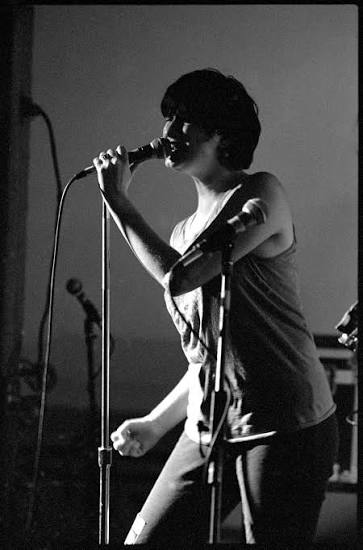
Mia Zapata was the front woman of the Gits. The Gits were formed in 1986 at Antioch College in Yellow Springs, Ohio, where Zapata met guitarist Andy Kessler, bassist Matt Dresdner, and drummer Steve Moriarty. Their first shows took place on and around the Antioch campus. In 1989, the four of them moved west and settled in Seattle, landing in a shared house on Capitol Hill and quickly becoming part of the city’s developing punk scene.
The distinction between punk and grunge matters, to some extent anyway. The Gits were present for the rise of grunge and were frequently folded into the story of Seattle music, but they did not sound much like Nirvana, Pearl Jam, or Soundgarden. They were faster, tighter, and more directly indebted to punk, blues, soul, and hardcore. Seattle claimed them because they were there, because they played with the right bands in the right rooms, and because they were plainly excellent. But they did not sound manufactured by Seattle. They brought their own aesthetic with them from Ohio.
The band released three early singles before its first full-length album, Frenching the Bully, appeared on C/Z Records in 1992. The record includes “Another Shot of Whiskey,” “Second Skin,” “It All Dies Anyway,” and “Here’s to Your Fuck.” It is not a slick album. It sounds a little muddy. The guitars press together, the drums arrive hard, and Zapata’s voice sometimes sounds as though it is being forced through a wall of noise. I don’t consider this a problem at all. In fact the opposite. It is part of the record’s appeal. Had the Gits continued, they might have worked with a larger recording budget and a producer who could have separated the instruments slightly without cleaning the life out of them. They might have refined the sound. The substance was already there.
“Here’s to Your Fuck” kicks ass. The Gits kick ass. Mia Zapata kicks serious ass. She just does.
There is no way of knowing how big the Gits could have become. This is the maddening thing about interrupted careers: their possible futures expand forever because reality never arrives to limit them. The band might have remained a beloved regional act. They might have become a nationally respected punk band with a loyal audience and a long sequence of increasingly strong records. They may have become global superstars. Any of these outcomes is plausible. What is clear is that the Gits were moving. They had built a reputation through years of rehearsing, touring, and playing small rooms. They were preparing for a nation wide tour. Tim Sommer, then working in A&R for Atlantic Records, had received permission to sign them and told the band he wanted them. According to Sommer, they accepted his offer in June 1993. Less than four weeks later, Mia was dead.
Seattle Before the Fall
Mia’s death belongs to the history of Seattle music, although the Gits should not be reduced to a chapter in somebody else’s grunge story. The early 1990s were an extraordinary period for the city. An underground community that had spent years developing beyond the attention of the national music industry suddenly became the center of it. The world arrived with money, cameras, contracts, magazine covers, and a need to package a complicated musical culture under one convenient name.
Nirvana became the emblem of that transformation. I was in high school when “Smells Like Teen Spirit” hit the airwaves and I was not initially the band’s biggest fan. The song did not particularly appeal to me. Part of my resistance was probably the ordinary resistance one feels when told that a cultural event is mandatory. I did not know much of Nirvana’s catalog, and I was in no hurry to learn.
A few years later I heard MTV Unplugged in New York and became a fan. This performance was recorded in November 1993 and broadcast that December. The album appeared in November 1994, seven months after Kurt Cobain’s death. It remains by far my favorite Nirvana album. The set contains Nirvana songs such as “About a Girl,” “Come as You Are,” “Pennyroyal Tea,” “Dumb,” and “All Apologies,” alongside extraordinary covers: the Vaselines’ “Jesus Doesn’t Want Me for a Sunbeam,” David Bowie’s “The Man Who Sold the World,” three songs by the Meat Puppets, and the dynamite closer “Where Did You Sleep Last Night,” performed through Lead Belly’s arrangement. I also like Fecal Matter, Cobain’s pre-Nirvana project, but that is a different matter.
Cobain died on April 5, 1994, apparently from a self-inflicted shotgun wound. His body was found three days later. His death came nine months after Mia’s murder. Their deaths were radically different, and I do not mean to suggest otherwise. One was ruled a suicide; the other was a rape and murder committed by a stranger. Yet the proximity of the two deaths cast a terrible shadow over a scene that had only recently become, at least from the outside, the center of the musical world.
Pearl Jam and Soundgarden were two of the other major bands to emerge from the same period. “Jeremy” was Pearl Jam’s breakthrough signature song, although their cover of “Last Kiss” later became their highest-charting American single. Like “Smells Like Teen Spirit,” “Jeremy” did not do much for me, and I did not particularly care for Pearl Jam at first. A few years later, however, I heard “Better Man” on Vitalogy and fell in love with it. “Better Man” remains my favorite Pearl Jam song.
Soundgarden belonged to the heavier side of the Seattle sound. I was never really a fan, but Chris Cornell possessed one of the defining rock voices of his generation. Cornell died by suicide in 2017, adding another tragic death to the history surrounding Seattle music. One could extend this list through Andrew Wood, Stefanie Sargent, Layne Staley, and others until the history of the scene begins to look like a memorial wall. That is not the essay I wish to write here. The names establish the context; Mia remains my subject.
The Voice
The danger in writing about a murdered artist is that the murder acquires a terrible gravitational force. It pulls every detail toward itself. Songs become premonitions. Photographs become “last photographs.” Ordinary remarks become clues. A person’s life is rearranged into an approach toward death, as though the ending had always been waiting inside the beginning.
Mia Zapata deserves better than that. She matters because of her life and her music, not because of the notoriety of the crime committed against her. Her murder explains why the Gits stopped. It does not explain why anyone should listen.
Listen first to her voice. Zapata did not sound like the decorative singer attached to a loud band, and she did not sound like someone adopting punk anger as a costume. Her voice carried blues damage, gospel command, punk abrasion, and a strange emotional precision. It could scrape and shout, but it could also bend around a phrase. She sounded older than twenty-seven—experienced, weathered, as though several inherited traditions were moving through her fiercely animated body.
Tim Sommer has described her as a blues shouter placed at the front of a punk band, falling somewhere between figures as different as Janis Joplin, Nina Simone, Johnny Rotten, Sam Cooke, and Iggy Pop. The comparisons may sound excessive until one listens. Zapata had Joplin’s rasp without imitating Joplin. She had the directness of punk but not its more narrow emotional range. There is vulnerability alongside aggression as well as something tender beneath it all. Mia rules.
“Another Shot of Whiskey” makes The Gits fusion of sound immediately audible. The title suggests just another drinking song, but Zapata sings with the authority of someone testifying from inside the wreckage rather than celebrating it from a distance. The band moves beneath her with economical force. Nothing hangs around waiting to be admired. The performance arrives, makes its case, and leaves.
“Second Skin” is one of the Gits’ most durable songs because it compresses their qualities so efficiently. The rhythm section drives; the guitar cuts; Zapata sounds simultaneously defiant and exposed. The title itself offers a useful description of what the band gives her. The music is not merely accompaniment. It becomes another skin around the voice—hard enough to protect it, flexible enough to move with it.
Then there is “Here’s to Your Fuck,” a song whose title performs its own critical introduction. It is short, furious, rude, funny, and exact. It does not seek permission to exist. Zapata does not soften the emotion into tasteful disappointment. She gives betrayal the language it deserves. The song is not the whole of the Gits, but it is an excellent doorway into them because it contains their refusal to behave prettily for an audience.
The rest of the band deserves emphasis. Kessler, Dresdner, and Moriarty did not simply stand behind a singular singer. They built the pressure that allowed her singularity to register. The Gits could be ferocious, but their playing was disciplined. The songs possess more structure than their surface violence initially suggests. Zapata’s voice could appear to be tearing free of the band because the band was strong enough to give her something worth tearing free from.
This is where my mild complaint about the recorded sound becomes almost complimentary. The early recordings can be muddy. The parts sometimes collide. Yet that collision catches something important about the Gits: they sound like four people occupying the same dangerous physical space. A more expensive producer might have clarified the instruments, widened the field, and helped the hooks announce themselves. A bad producer might also have destroyed them by polishing away the friction. The artistic problem would have been not how to make them respectable, but how to make their existing power more audible without domesticating it.
Zapata was also a visual artist, and her paintings reinforce the impression made by her performances. The figures are tense, wounded, unstable, and alive. They look caught in the middle of becoming something or escaping something. Her art and music seem to emerge from the same nervous system. Both reject the separation between beauty and damage. Both insist that pain may be shaped without being prettified.
The official biography on the Gits’ website makes an important refusal: it does not want the ending to dwarf the beginning and middle. That is exactly right. Tragedy did not make Mia Zapata a great singer. Tragedy merely prevented more people from discovering that she already was one.
The Twenty-Seven Club
Mia Zapata was twenty-seven when she died. This places her within the famous 27 Club, the cultural category reserved for musicians who died at that age. Its best-known members include Brian Jones, Jimi Hendrix, Janis Joplin, Jim Morrison, Kurt Cobain, Amy Winehouse and Robert Johnson. The list feels somewhat uncanny because several immense talents appear on it and because the number is young enough to make every death feel like an interruption.
There is no persuasive evidence of an actual curse. A 2011 study published in The BMJ examined the mortality of famous musicians and found no special spike at twenty-seven; the observed risk was similar at twenty-five and thirty-two. Musicians do face an elevated risk of early death generally, but twenty-seven possessed no unique statistical power. The club is a story created after the fact, a human attempt to impose a visible shape upon unrelated losses.
The story nevertheless affects cultural memory. Hendrix, Joplin, Morrison, Cobain, and Winehouse were already major stars before they died. Their catalogs continue to circulate through radio, film, books, reissues, tribute albums, posters, shirts, and the machinery of inherited fame. Death froze them at twenty-seven, but it did not erase their public identities. In some cases it enlarged them.
Mia’s position is different. She reached the same age without receiving the opportunity to establish herself in mass culture. She died at the threshold of greatness. The Gits had made one full-length album and spent years earning local and underground respect, however outside of Seattle they were still little known. She belongs to the 27 Club biologically, but not mythologically. The myth remembers stars who died young. Mia was a star whom most of the world did not yet recognize.
That difference makes her death particularly heartbreaking to me. I admire many artists who died young: Hendrix, Joplin, Winehouse, Tim and Jeff Buckley, Justin Townes Earle, David Berman, Vic Chesnutt, Mark Linkous, and many others. Every early death leaves songs unwritten and unrealized potential behind. Yet we possess enough work from some of these artists to appreciate the shape of their achievement. With Mia, we have the evidence, but not the completed argument. We can hear the beginning of a great career. We cannot hear what it would have become.
A Stolen Future
It is particularly tragic when a young artist of any gender or type loses their life. Talent does not make one life more valuable than another. Fame is not a moral measurement. The death of an unknown twenty-seven-year-old is not less terrible than the death of a singer. Art matters here because it allows us to perceive the stolen future in unusually concrete form. We can hear what Mia had already learned to do. We do not know how much further she could have gone.
I believe Mia Zapata and the Gits would have had a long and illustrious career if Mia had survived. This cannot be proven. Bands break up. Record labels lose interest. Musicians quarrel, burn out, change direction, become parents, take ordinary jobs, or simply decide that life on the road is no longer worth the scratch. The imagined future should not become another sentimental fiction.
Still, the evidence points toward possibility rather than burn out. The Gits had already survived the unglamorous years that destroy many bands: the small shows, shared houses, vans, little money, independent releases, and a long apprenticeship. Their live reputation was strong. A national tour was coming. Atlantic Records had authorized an offer. They had songs, a sound, and a front woman whom people remembered after seeing once. They had done the difficult work required to become lucky.
What might have followed? Perhaps a sharper second or third album. Perhaps a record on which Zapata’s blues and soul inheritance came further forward. Perhaps an acoustic turn, a solo record, a collaboration, or a late-career return after a breakup. Perhaps the Gits would have remained loud and gloriously impolite for thirty years. Zapata might have become a writer, painter, producer, mentor, mother, recluse, public figure, or some combination no speculative list can capture.
These possibilities are not evidence that she would have become famous. They are evidence that she was alive. A human future is not a straight line toward professional success. It is a proliferating field of choices, accidents, relationships, mistakes, recoveries, and second acts. Her killer stole all of them. Fuck him.
I find her death entirely pointless and totally stupid.
The Long Wait for Justice
During the early morning of July 7, 1993, Zapata left the Comet Tavern on Seattle’s Capitol Hill. She visited the basement rehearsal space in a nearby building and briefly saw a friend. Sometime after two in the morning, while moving through the city alone, she encountered a man she did not know. She was raped, beaten, and strangled. Her body was found a little more than an hour after she had left the bar.
The crime was brutal, and detailing every injury does not deepen our understanding. It merely forces Mia’s body to undergo the attack again for an audience. The essential facts are that she was going about her life, a stranger attacked her and killed her for no reason.
The murder initially appeared all but impossible to solve. Investigators naturally examined the people in Zapata’s life, in part because many murders are committed by someone known to the victim. Friends were questioned. Rumors developed. The Seattle music community raised money for a private investigator, Leigh Hearon, while benefit concerts and donations supported the effort. Years passed without an arrest. The case appeared on national crime programs, but publicity did not produce an answer.
The absence of an obvious connection was the central problem. The killer was not a former partner, band associate, fan, or person carrying a visible grievance against Mia. The attack was random. There was no narrative pathway leading from her relationships to the man who killed her. For nearly a decade, the lack of connection protected him.
DNA technology finally supplied the connection that ordinary investigation could not. Biological evidence from the crime scene had been preserved. In 2002, investigators developed a usable profile, and the eventual database match pointed to Jesús Mezquía, who was then living in Florida and whose DNA had entered the system following an unrelated arrest. Seattle detectives arrested him in January 2003.
A jury convicted Mezquía of first-degree felony murder in March 2004. His conviction survived appeal, although litigation over the sentence continued, and he ultimately received approximately thirty-seven years in prison. He died in custody in 2021.
Justice is the word normally placed at the end of such a chronology, but it feels somehow inadequate here. The conviction established legal responsibility and ended the uncertainty surrounding the killer’s identity. It mattered. It mattered to Mia’s family, friends, bandmates, and community. It mattered that justice was done. But a verdict cannot turn back time. It cannot give the Gits a new record. It cannot return a daughter, sister, friend, or the woman who walked out of the Comet Tavern expecting to walk home safely.
It went another way.
What Remains
The people who loved Mia did not wait for the case to be solved before building something from their grief. Women within Seattle’s music and arts community began meeting after the murder to discuss violence, fear, and the inadequacy of conventional self-defense advice. Many available courses were expensive or structured around telling women to restrict their lives: do not walk at night, do not work late, do not go alone, do not inhabit the city freely. For musicians, artists, bartenders, and service workers, such advice was both impractical and somewhat insulting.
From those conversations came Home Alive, a collective that offered free or sliding-scale self-defense education. Its approach extended beyond physical techniques to boundaries, verbal resistance, de-escalation, and the social conditions surrounding violence. The organization sponsored classes and benefit concerts, produced educational materials, and released compilations featuring artists from the Seattle community. Its formal structure changed over time, but its curriculum and influence survived. Home Alive did not compensate for Mia’s death. Nothing could. It represented a refusal to let fear have the final organizational word.
The Gits’ musical afterlife expanded as well. They released Enter: The Conquering Chicken in 1994, followed by archival collections. Joan Jett performed with the surviving members under the name Evil Stig—“Gits Live” reversed—and helped raise money for the investigation. The band 7 Year Bitch released ¡Viva Zapata! in Mia’s memory. Kerri O’Kane’s documentary The Gits eventually carried the band’s story to audiences who had never entered one of those Seattle rooms.
In 2024, Sub Pop announced that it had become the new home of the Gits’ catalog and reissued remastered versions of the band’s albums. This matters because cultural memory depends partly upon access. An artist can disappear without anyone intentionally suppressing them. Records go out of print. Small labels close. Websites rot. Search results fill with accounts of a crime until the music becomes difficult to locate beneath the murder. Making the catalog readily available gives new listeners the chance to meet Mia as a singer before meeting her as a victim.
The Gits remain moderately well known today, especially among listeners of punk and Seattle music. They are not forgotten. Yet time has inevitably eroded much of their cultural presence. Their name does not circulate as automatically as Nirvana, Pearl Jam, or Soundgarden. For many people who encounter Mia at all, the first sentence is still about her murder.
That order can be changed. Listen first. Begin with Frenching the Bully. Play “Another Shot of Whiskey,” “Second Skin,” and “Here’s to Your Fuck.” Watch the surviving live footage and see how completely she inhabited the songs. Then learn what happened if you must. The death is part of the history. It is not the source of the talent.
Coda: Just Listen
As mentioned above, the death of a young artist is particularly heartbreaking. It terminates not only a life but a changing relationship between the artist and the work. We lose the possibility of mature records, the failures, the comebacks, the ups and downs, the strange experiments, and the possibility that the artist might someday have rejected everything that first made them famous.
I do believe that Mia Zapata and the Gits would have had a long and illustrious career if Mia had survived. Perhaps I am wrong. There is no way to test the proposition. But uncertainty does not make the loss smaller. It enlarges it. Every version of the future was taken at once.
There is no lesson to be taken from her murder. It did not happen so that a community could create Home Alive. It did not happen so that a murder could eventually be solved through DNA. It did not happen so that later listeners could discover a brilliant singer and experience the pleasurable sadness of imagining what might have been. Those were human responses to an atrocity, not justifications for it.
The Gits are still part of the culture. Their records remain. Their surviving members, friends, listeners, documentary, reissues, and the work created in Mia’s memory continue to carry them forward. But cultural memory is not self-sustaining. Time erodes names unevenly, and the artists who die before the publicity machine has fully claimed them are especially vulnerable. I find this sad, although inevitable.
As for me, I will continue to listen to the Gits and keep the flame alive. Mia Zapata did not live long enough to become the star she might have become. She should not have needed to die in order for us to hear her.
I love Mia Zapata. Listen to the Gits, and you may understand why.
Dedication:
For Mia my baby. I love you and miss you. Rest well, sweetheart.
Selected Sources
The Gits, “About the Gits,” official band website.
Sub Pop, “Sub Pop Is the Proud New Home of the Gits,” November 13, 2024.
State v. Mezquia, Washington Court of Appeals, 2005.
Seattle Post-Intelligencer, “Mia Zapata’s Killer Again Gets 37 Years,” January 29, 2009.
— —

