Scenes from Hamilton College IV: Sophomore Year II: The Sports Show, Ann, Getting Fired

Note: This is Part IV of the Hamilton series. Part I, Part II and Part III are available. This post will take up my friendship with Ann, the Sports Show John Innes and friends had, and losing my job at the print short.

I was living in the delta
Wasting most of my time

Car Seat Headrest

I mentioned in Part III that I was on a sports talk show on the college radio station, WHCL. This was called Sports Corner. John Innes was the leader; it was his show. A friend of ours called Jeff Kingsley was on the show, as well as myself. Kingsley was a huge Buffalo Bills fan, and he stayed on top of the sports news, especially the NFL. Innes was always super prepared, and taped the shows which he would later play for his dad when we got back to Washington State. I sort of kept up with the sports scene, but I was mostly there for comic relief. I would crack jokes and make fun of stuff, but was definitely the third banana on the show.

The radio station didn’t have a lot of bandwidth so the listeners were mostly on campus and Clinton locals, but I recall Sports Corner having a number of regular listeners who would call in. From my point of view, the callers were the best part of the show. We treasured our listeners and gave them plenty of airtime. I never told any of them to “cold compress ma’am.” I was a regular as a sophomore and the first half of junior year until I went abroad to New Zealand. When I came back as a senior I think I just guested. I remember one show where Innes asked me what kind of sports were big in New Zealand. I said “marbles, marbles are really big.” I was just fucking around, but it was pretty funny. Although I was only marginally prepared, Sports Corner was a blast and Innes was a great host. He totally could have done it professionally.

I also talked in Part III about Ann. Ann was Ian’s girlfriend sophomore year, and I got to know her pretty well. Ann sort of took over where Rochelle left off in the mothering department, but she was really different from Rochelle. More intense. Ann didn’t like smoking and she tried to stop me from doing so, to no effect. I remember once, I think it was junior year actually, where at a dorm party she grabbed my cigarette from me and threw it out the window. I just shrugged and lit another one.

If Ann was intense, she thought I was. Innes and Ann and I were hanging out once and Innes said “M.A. (that was my nickname at college) is the chillest guy I know,” and Ann replied “I think he is the most intense.” Well, someone will maybe eventually get to the bottom of that one. One day I dropped by Ann’s room and there was a big jigsaw puzzle partially done. I started picking at it, and she stopped me. “That’s for me and Ian,” she said. Must have been some puzzle. Another time I went to Ann’s house with Ian and she tried, I guess, to pair me up with one of her friends. This wasn’t going to take, but we all did sleep, clothed, in the same bed that night. I don’t think I got a lot of sleep.

While some friends came and went at Hamilton, Ann I was close to sophomore, junior and senior year. After graduation she moved to the U.K. for a bit. I wrote about this elsewhere and will reprint it here.

“My friend Ann from Hamilton College went to England after graduation and she and I exchanged a few letters, back when people still wrote letters. She wrote me that she was drinking some, so I wrote a poem about my image of her over there. The original poem had two or three more verses, but they were terrible. Then a little while back I reconnected with Ann, which was great, and re-worked the poem, which wasn’t. It might have been a little better, but it was still bad. These two stanzas, on the other hand, are awesome, and maybe that’s all there ever needs to be said about Ann in England, you know?” Here is that poem fragment:

Ann belle princess of the isles
the orbs whisper your name even if you’ve gotten piles
or if you’re on the game

Buxom barmaid or bellicose barfly
begs the inevitable question
booze improves the poet’s eye. but ruins her digestion

I still like it.

Ann has read some of this blog, and even contributed a piece as a guest writer, which is not currently live.

The other big event sophomore year was when Deb fired me. I mentioned that as a freshman I skipped work some, and the next year this pattern was exacerbated. I still had no money, however work was becoming really tough. This was not Deb and Sally’s fault at all–I just couldn’t hack walking all the way up the hill just to collate. Instead, I spent time in the woods jumping off little cliffs and messing around in the late afternoon. No hard feelings; looking back I should have done things differently. I don’t remember exactly when I was fired, but I think it was about two thirds of the way through the year.

That’s it–this is a short one. There are a bunch of other things that may have happened this year or the next, so I’ll cover some of these in my upcoming junior year pieces.

Dedication: For Ann, the belle princess.

to be continued…

Scenes from Hamilton College III: Sophomore Year I (with cameos from Sonic the Hedgehog, Ani DiFranco, and Candle Time)

Note: In Part I and Part II of this series I wrote about my freshman year at Hamilton. Part III will take up sophomore year where I lived down the hill in Bundy Dorm.

All you ladies and gentlemen
Who made this all so probable

Big Star

After freshman year I returned back to Washington State for the summer. I have written glancingly about this period, suffice it to say I was not up to much. Still broke, I did have a short lived girlfriend but she dumped me mid-summer. I spent a few days moping around playing nerf golf at my parents’ house, then got over it. I don’t remember much else from that summer except that I got back in good running shape, and when I got back to campus in the fall I turned out, once again, for the running team.

One thing I neglected to mention in my pieces on freshman year is that I actually competed on the JV running team at Hamilton for a time and ran a few races. I was not in great shape that year, and JV was not that exciting. As I have written, I had other pursuits. Sophomore year, however, I was in better shape and had a shot at making the top five. The only other runner I recall was called Harry. I thought Harry lived in Sig, but Jake tells me he was in a frat called THX, about which I remember nothing. In any case, Jake knew him. Harry was a hardcore runner and scolded me about my lifestyle, wanting me to devote myself to the team. I was not going to do this, but I was able to run with Harry and the first team for a number of practices. In the long run though it didn’t work out–they ran mornings and afternoons, and my summer shape wasn’t going to carry me through a hyper-competitive season. I was a good runner, but I just didn’t have the drive. Sooner or later I left the team, this time for good. I look back fondly on Harry however–he was right; I was lazy and needed a kick in the rear.

As a sophomore I roomed in a double with John Innes (there were two John’s in my friend group, John Innes and John Slack), in a dorm halfway down the hill to Clinton called Bundy. Marc Campbell was also on our floor. Ian was living in his frat, but spent a lot of time in Bundy as he was dating Ann, someone who I became close with over the year as well. Jake was over at Sig and I didn’t see much of him, mostly for geographic reasons.

Bundy was a way different story than North. First, I spent a lot more time in my dorm room with John Innes. Innes would watch the soap opera Days of Our Lives and insist I watched it too. I could have cared less, but watched it to be a good friend. We also played Sega, almost exclusively Sonic the Hedgehog and Sega Hockey, at which John usually beat me (however not in the biggest matches, as I’ll get to later). Innes liked rap music and had a pretty good collection. I could get into some of the rap; I liked Public Enemy, KRS One, De La Soul, and a minor band called Basehead which wasn’t really rap. However I was by then deep into what would today be described as alternative or indie music, so Innes’ taste and mine mostly diverged. We were both good about sharing airtime though, so he got to know my music and I his.

The record I listened to the most, by far, that year was Big Star Third: Sister Lovers from the then mostly forgotten American band Big Star. I loved this record (which was on Rykodisc), and played it endlessly while trying to advance in Sonic the Hedgehog. I stuck my mattress in the closet and hung a tapestry over the door area so I had a little cubby to sleep in. Overall, the whole scene was much more domestic than the pretty chaotic North.

Other than Marc and John Innes, I don’t remember exactly who the other guys who were on our floor, but I’ve been reminded that John Slack was one of them. Ian and Jake were living in frats, and over the year I got to know a new crew of people, including several girls. These included firstly Jenny and Jen, who lived in the female area on our same floor (maybe the second floor? Innes will remember). Innes and I became very close to Jenny and Jen, and spent almost every evening hanging out in their room doing something called “Candle Time.” Candle Time was pretty much exactly what it sounds like–we would turn down the lights, light candles (which was probably against school rules) and talk for hours. We would talk about our days, people and goings on in the dorm, and just life in general. It was really wholesome and again, a major change from North.

Candle Time lasted, in my recollection, for a number of months, but not all through the year. Despite spending so much time together, there was no romantic involvement, although I believe Innes and Jen did get together later, and briefly; I’m not really sure. I think it was supposed by some that I myself had a crush on Jen; however although I liked her a lot this was not the case. I did have a little bit of a crush on Jenny, but she had other people who were interested in her and we all hung out so nothing ever happened. That was fine–it was actually really nice to just have close female friends with no expectations.

Jenny and Jen were both from the upstate New York area, broader Rochester as I recall. My guess is they came from relatively less money than many of our classmates, who came from preppier areas, and schools. I actually visited Jenny’s house once or twice, and I think a bunch of us slept over once and watched the film Glengarry Glen Ross. These included Amy Holland, who was one of the coolest chicks around. She was called “Red,” on account of her red hair, and was totally my speed. Everyone else fell asleep during the movie except Amy and I and as I recall she loved what is, to be fair, a pretty stereotypically male film.

Jenny’s house was nice, but seemed pretty middle-class and maybe that’s part of why we all bonded–the richer kids, although I obviously hung around with them a lot, had their own life ways to some extent. I remember one evening Jenny and I went to see the band The New Dylans on campus. I thought they were a good band, and had found their cassette at the campus radio station where John Innes and I had a sports talk show. Their record has a song I liked called “The Prodigal Son Returns Today.” They sounded kind of like a minor league Big Head Todd and the Monsters or something, and are kind of dated today if I’m honest, but I was excited for the show. At first it was pretty full, but people left little by little and by the end it was just me and Jenny. The band played their hearts out for the two of us, including encores! After the show, I joined them for a cigarette outside and chatted. I told them that I really liked the show and they said thanks and all with no mention of the fact that the venue was totally empty. That’s professionalism, I thought, and I imagined that as a band trying to break through playing small colleges and sending cassettes to radio stations they’d had their share of ups and downs. I doubt they are still around, but if so I’m rooting for you guys!

A bigger star that played Hamilton was Ani DiFranco. I saw Ani several times, both on campus and off, as she was pretty huge in New York State at the time. She had not yet released Dilate,” which came in 1996 and was her mainstream breakthrough to the extent she ever had one, but she was a star on campus, mostly with the women but with a lot of the guys too. Ani put on a great show, and I totally got the appeal. She was kind of the Jeff Rosenstock of the day I suppose.

Shawn Colvin also came, and I knew some of the people who were assigned to take care of her backstage. They reported that she was a total asshole, asked for coke, and generally threw her weight around big time. Shawn Colvin was OK, but no so great that she could act like a diva I don’t think. Full on divas are acceptable-like Joni Mitchell might be a diva and what are you going to do–but minor league divas pretty much suck.

Anyway, like I say over the year although we still saw each other, I saw less of Jenny and Jen, and more of other people like Ann, Amy, and Matt Thornton. I’m not sure where Matt lived, maybe Bundy and maybe not, and I don’t recall either how or when I met him, but we soon became fast friends. Matt was full speed ahead, and argumentative, but I can handle my own in an argument, and I really liked him. Matt ran with an interesting group of friends, including several Asian-Americans who I believe lived on the Kirkland side of campus. Hamilton used to be a guys’ school and Kirkland was the attached girls’ school. Then at some point they merged, but the Kirkland side and the old Hamilton side always felt distinct to me and were separated by a bridge.

One time we were talking about going to New York and Matt told me about some clubs for Asians that he was interested in. Matt’s friends told him that he (or I) could not go to these clubs because we would get the shit kicked out of us. Had to be at least half-Asian apparently. But I think Matt went to these kinds of clubs anyway and did not get beat up, because he just sort of rolled that way.

Matt and I and Ian did go to New York eventually, and spent a few days uptown at some person’s apartment where I commandeered a prime sleeping space and we ordered pizza three times a day. I believe this was actually after graduation, as Matt transferred before graduating from Hamilton.

As I mentioned in an earlier piece, this was also the year Ian and I went to Boston to see music shows. We went with a fellow called Cale who was a freshman. Cale was cool, and also we liked him because of his name, reminiscent of John Cale, violist for the Velvet Underground who Ian and I were both fans of. With Ian and Cale I felt like I was in good company–we were all very simpatico.

My academic performance sophomore year was just OK. I took more English classes, and also started to take some History classes including some Asian History with Tom Wilson. Tom Wilson was a good professor, but I think he was one of those guys who really saw himself at U. Chicago or Yale or something. A lot of academics are like that. Nevertheless, Tom was good–tough but fair–and pushed me to really deepen my research abilities. Outside of Tom’s class, my effort was a little mixed, and during the dead of winter I skipped some morning classes because the climb up the hill was just too tough. The winters in upstate New York are pretty brutal, and I preferred to stay local down in Bundy a lot of the time.

One more thing I remember from this year is starting, and then dropping, photography class. I had an old camera that barely worked, and was interested in learning how to develop film in a darkroom. However, photography class was really expensive because we had to regularly buy these huge rolls of film which cost like $50 at the school store. A classmate I’ll call C. to protect his identity told me, “just tuck your pants into your socks and drop the film down your pants and walk out. That’s what I do.” But I wasn’t going to steal film all year and there was no way I could pay the outrageous costs. On top of that, I wasn’t all that good–certainly my classmates outclassed me, crappy camera or not. So I dropped it after six weeks or so; however now that I think about it I may well have met Matt Thornton in that exact class. It’s a possibility.

Note: That will do it for Part III. In Part IV I’ll write more about my friendship with Ann as well as the Sports Talk Show we did on the Hamilton radio station.

Dedication: For the whole Bundy dorm, actually. It was a pretty chill year.

to be continued…

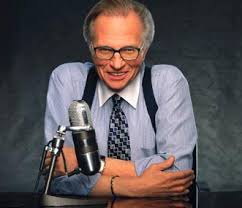
On Larry King, the Radio GOAT

Epigraph:

“I listened to the radio / I waited all night long…”
— Radio Radio, Elvis Costello

Note: This piece reflects my personal memories of listening to Larry King’s overnight radio show in the late 1980s and early 1990s, along with later impressions from television appearances, interviews, and conversations with people who knew him. It is written in the spirit of appreciation and nostalgia rather than media criticism, and emphasizes the uniquely loose, humane, and unpredictable quality of King’s radio work, which for me remains the defining core of his legacy.

I grew up listening to Larry King’s overnight radio show between roughly 1988 and 1992, and in my opinion — which happens to be correct — the radio show was much better than the television version that later made him famous. The TV show was good, even great at times, but radio was longer, looser, freer, and far more unpredictable. It had weird guests, weirder callers, and the feeling that anything might happen at two in the morning. That’s where Larry really lived.

I would listen in my bedroom at my parents’ house in Spokane, Washington, the volume turned low, the house quiet, insomnia hovering. The Spokane AM station — KGA 1510 — carried the show from around 9 PM Pacific time, and then, wonderfully, they would run it again. So I’d listen from nine to midnight, fade, wake at two or three, and hear the same segment again in a half-dream. The effect was surreal. Didn’t I just hear that caller? Didn’t Larry just say that? It created a strange loop of late-night déjà vu that only made the whole thing more atmospheric. The show felt less like programming and more like a continuous nocturnal conversation.

My friend Kelly Rudd loved Larry too. When we were in high school we were both big fans of the radio show, and we talked about it constantly. There were a couple of things that we especially liked. The first was that Larry famously did no preparation. He knew a huge amount about the world, of course, but he didn’t read guests’ books ahead of time. He wanted to come in cold. If his guest was a firefighter, he’d ask, “So what’s it like to be a firefighter?” It sounds lazy, but it was brilliant. By staying open and getting out of the way, he let the conversation go anywhere. This way the show became eventful.

Another thing we loved was what happened after the guest left. Larry would open the lines and take questions about absolutely anything. Most of the time he was generous and patient, but when callers went off the rails he had a signature phrase. He’d cut them off gently: “Cold compress, ma’am,” or “Cold compress, sir.” Basically: lie down, ice your head, regroup. It was hysterical, especially because he used it sparingly. When “cold compress” dropped, you knew things had gotten weird.

Anyway, Kelly and I loved Larry so much that when the station suddenly dropped the show, Kelly proposed we drive to the radio station and protest. So we skipped school, drove across town, and rang the intercom demanding to speak to someone about the cancellation. The station manager eventually came down and heard us out. We knew we weren’t changing anything, but it felt right to try. Larry never came back to Spokane radio, and the show faded not long after, but the whole episode captured what the show meant to us. It wasn’t just background noise. It felt alive.

Larry’s on-air style was the key. He was unbelievably relaxed. By the late ’80s you could tell he had done thousands of hours. Nothing fazed him. Weird guests, drunk callers, eccentrics — all the same to Larry. He absorbed everything. He had pet phrases — “cold compress” chief among them — and he deployed them like a veteran reliever, only when needed. He famously did no prep, and he leaned into naïve questions. He’d ask something simple and let the guest do the work. The effect was disarming. People opened up. He also had real humanity. He listened. He didn’t mock callers. He didn’t rush them. There was compassion there, and I think that’s what I loved most.

And the show could get wonderfully out of control. In one story Larry told from his old Miami days, an adult actress he was interviewing suggested they just have sex during the commercial break. Larry, amused, asked the producers to clear out — but there wasn’t enough time. That kind of anecdote captures the looseness of late-night radio. It wasn’t polished. It was alive.

Larry left the overnight Mutual Radio show in 1994 to focus on television. By then I had already drifted away, but I still caught Larry King Live on CNN over the years. I remember watching during the O. J. Simpson trial while at Otago University in New Zealand, when the show became part of the nightly noise. Later there were the Vladimir Putin interviews — classic Larry, conversational and oddly disarming. And of course there were the great comic moments, like the interview with Jerry Seinfeld where Larry suggested the show had been canceled and Seinfeld snapped back in disbelief, and the Norm Macdonald appearance where Norm kept repeating, “I’m a deeply closeted homosexual,” and Larry tried earnestly to parse it. “So that means you’re gay?” “No, Larry,” Norm replied, “it means I’m deeply closeted.” Pure Larry: sincere confusion meeting absurdist comedy.

Larry’s personal life was famously complicated. He married eight times, had several children — including sons Chance and Cannon later in life — and lived in a kind of perpetual romantic improvisation. The marriages came and went. The last ended painfully and publicly. He once joked he’d never leave his wife unless Angie Dickinson came along — and when she did, he married her. That was Larry: impulsive, affectionate, slightly chaotic. Despite decades of success, he didn’t leave the kind of massive fortune people assumed. The money came and went, as did the marriages. It was a life lived in motion.

My friend Sergio Mandiola actually knew Larry in his later years in Los Angeles. Sergio was running an independent studies program at Beverly Hills High School, and Larry’s sons Cannon and Chance, and he taught his sons for three years. Larry would come by for open nights or just to chat.

Sergio Mandiola: “Larry would come in from time to time and we would talk. He was lovely and open. He talked about his family and his career. One time he told me, ‘Sergio, you should totally have a radio show!’ I was flattered. One thing about Larry is his politics were more to the left than he let on on air. He had strong views and wasn’t afraid to share them in person. Larry was a true mensch and I’m glad I got to spend time with him. I miss him.”

In the end, I’ll say it plainly: for me, Larry King is the radio GOAT. There was no one like him, and there probably never will be. It wasn’t just longevity. It was the curiosity, the looseness, the humanity, the love of people, politics, baseball, and life. He trusted the conversation. He let the night unfold.

And then there was that absurd, wonderful USA Today column, which read like a diary gone completely outta control. Mets lose 6–4…Rain in Baltimore…Clinton flies to Ireland…You’d read it and think, Larry, baby, WTF is this? And also, Mr. USA Today, WTAF are you doing paying for this? But somehow it worked. It was pure Larry — fragmentary, observational, intimate.

And that’s how I remember him most clearly: late nights in high school, the radio turned low, insomnia hanging in the room, Spokane quiet outside.. Sometimes I’d listen from nine to midnight, fade, then wake again to the rerun, half-dreaming, half-aware, caught in that strange déjà vu — didn’t I just hear this? — while Larry kept talking, calm as ever, taking calls from truckers and insomniacs and eccentrics. My listening years were brief, but they stuck. And when I think of Larry now, that’s where I go back to: the low hum of AM radio, the half-fade, and the sweet sounds of his voice in my ear.

Dedication:

For the one and only GOAT, Larry Motherfucking King. RIP baby.

Scenes from St. George’s, Part VI: Teacher Quality/ Senior Year I

Don’t get sued.

My Readers

Note: This is Part VI of Scenes From St. George’s. You can find the earlier parts here: Part I, Part II, Part III, Part IV, Part V. I want to make just a few comments here about the direction of this series. I had originally planned to do only five of these pieces, and this is already number six. This is mostly because of the positive reception the pieces have gotten, which has been great, and I have been prompted by the many pieces of feedback I have gotten from readers to expand the scope of the series slightly. Nonetheless, the narrative arc of this series is nearing a close, and I don’t expect to write more than one or two more of these.

High School Chinese History Class, High School Computer Class

In this series I have already talked a bit about teacher quality at St. George’s, as well as suggesting that student quality, for lack of a better term, is also related to the perception of teacher effectiveness. For example, I wrote that E.T. was a “mediocre” science teacher, however he was in fact a good science teacher for students who wanted to learn Physics. He just wasn’t the best at controlling a large science lab where only 20% or so of the class had an interest in learning on a given day. In contrast, I wrote that C.F. was a good teacher for 5th graders despite being somewhat lazy. I’m not sure the lazy part of this is fair or not actually–all in all he managed to control what I’m sure was a pretty unruly classroom and left me with some memorable learning points, so maybe he was actually a good teacher until he peaced out. In any case, teacher quality is often pretty subjective. However I think I can state unequivocally that Betty Barber was a good teacher, and that this guy called J.G. was a bad one. Both Betty and J.G. taught me in high school; Betty taught Chinese History as a senior elective and J.G. taught English mainly I think, but I had him for computer class. Overall, Betty’s Chinese History class was the most important I ever took and was central to establishing my life course, and J.G.’s computer class was an unmitigated disaster.

Let’s start with the bad. J.G. was a pretty young guy, bearded, who had a serious hippie vibe. He came to school as part of a “teaching couple” with a woman called V., however I don’t believe that arrangement lasted very long. A lot of schools like to hire teaching couples; my own experience leads me to suggest giving them a miss, by and large. J.G. told us he had walked through Japan on foot with next to no money staying with people he met all along the way, and overall he seemed like an alright dude. However, his computer class was terrible.

What I recall was, we had basically one assignment all term which was to make a white ball that was sitting at the bottom of the screen move and bounce off the other sides of the screen. It was like we were re-making the game Pong or something. In order to make the ball move, we were supposed to do some coding, I guess. And this might have been possible, however J.G. gave us no instructions, no hints, no information or data of any kind about how to move the freaking ball. This was around 1990, so it wasn’t like we could cruise over to You Tube and figure it out. So we would ask J.G. “hey there J.G. dude, could you give us some pointers on where to start with this here ball movement?” And J.G. would answer “no. That’s the whole idea of learning something. You have to figure it out for yourself.”

Now I don’t know a lot about learning theory, but I know a little bit, and I don’t think this is really right. The learning theory that makes the most general sense to me is called “The Zone of Proximal Development.” If you are in education, or even if you are not, you might be familiar with the Zone of Proximal Development, or ZPD for short. In this theory, there is stuff the learner can already do, stuff they can do with help (that’s the zone of proximal development itself), and stuff they currently are not going to be able to do (stuff that is developmentally non-proximal so to speak). So in computer class in 1990 stuff we students could already do might include: turn on the computer and open an application, or whatever passed for an application in 1990; play a video game; and probably compose an essay or report on a writing program. For me, in any case, stuff I could handle most certainly did not include coding a white ball to bounce around. I had literally no idea where to start, not even the hint of a “coding language” or anything from J.G. there.

So, if a student such as myself is bouncing-white-ball-challenged, ZPD theory says they need to be shown the way toward acquiring the new skill through scaffolding. Scaffolding is just what it sounds like; it is giving the student sufficient steps to be able to get to a point where they can expand their ZPD like a balloon and incorporate the new skill in their repertoire. For the bouncing white ball, in my estimation, this would at an absolute minimum have required showing us how to access the coding section of the computer or program or whatever we were supposed to be doing, giving us some information about what kind of code we needed to write, and giving us some of the elements of the coding language. At a minimum. I mean as a freshman in university I took Latin, and my first semester Latin teacher had us reading Cicero by October, which was ambitious, but at least he gave us six weeks of verbs first. I can’t speak for others, but I needed six weeks, or at least six days, of coding language to begin to move the ball. But we didn’t get it, so after about 30 minutes of messing around with the computer the boys started to do other things such as compose dirty limericks and make jokes about other people’s mothers. The girls, I am sure, were more productive. I mean, what else were we supposed to do in the face of such incompetent instruction? Here is one little ditty I composed at the time–I apologize in advance, but it does contain some American History knowledge:

A pious reformer named Mather

Was frequently known to blather

About the great judgement hour

But the word from the shower

Was that Mather knew his way around lather

This should not be in print. In any case, eventually, some student figured out how to move the ball and told everyone else, and J.G. just sat there and watched, and we all passed the assignment. Was this the point? Was this all some elaborate exercise in collaboration? Here are the possibilities as I see them, from most generous to least generous to J.G.:

i) J.G. was giving us a lesson in working together when faced with a hard problem and the class went just like he intended.

ii) J.G. actually gave us a little more information than I am recalling, and it was enough for the better computer students to work things out and we all learned by osmosis. Sort of a ib) actually.

iii) J.G. believed in the learning method he stated–namely that the point of learning is to do everything yourself. Although I believe this to be an ineffective learning theory most of the time, it is at least a theory.

iv) J.G. had no idea how to code the ball to move either and was just hoping a student could solve it. In the meantime, he knew the challenge would take a while, and was killing class time so he didn’t have to teach any more computer.

v) J.G. resented having to teach computer class, which, as a penniless hippie, he knew nothing about, and intentionally sabotaged the class.

All and all I’m guessing a combination of iii) and iv) that was in play here, with maybe just a bit of ii). But I legit do not remember him teaching us a single thing or me learning a single thing in a whole term of class. So I’d have to say, he was a pretty bad teacher.

Betty Barber, on the other hand, was a great Chinese History teacher. Prior to taking this as a senior elective as I mentioned, I had taken World History from Betty as a sophomore or junior. I did pretty well in this class, but my maturity level was still only slightly higher than that of Mason Anderson, so Mason and I would take turns trying to steal each other’s wallets from the pocket of our letter jackets for much of the class. Pick-pocketing, I am sure, is one of the world’s oldest professions, and I’m sure my skills in this arena exceeded my computer skills, but still I didn’t exactly distinguish myself. In Chinese History, things were different. Betty had taken student groups to China in the very early 1980’s, just after the country opened up for tourists after the death of Mao and the Gang of Four era, and had a deep knowledge of the topic. Most of our high school teachers, I would say, were competent enough in their subject, with the notable exception of J.G., however Betty was really an expert in Chinese History, and I don’t use that term lightly.

Part of what made her a good Chinese History teacher for me and the class a good class was undoubtedly that it was an elective. In other words, I was there by choice. The second thing was, she knew the subject in great detail and relished sharing it with us. And third, as I mentioned above, she had been to China at an absolutely critical time in history in the early Deng Xiaoping era and had a view of events informed by real life knowledge and experience. She told us that she expected us to take the class seriously. We read a range of challenging texts, delved deeply into pre and post-WWII Chinese politics, and I personally was finally mature enough by this time to grasp and respect the depth of Betty’s knowledge and passion. As a result, and for the first time in my life, I worked my ass off. I wrote a super long, properly researched, if rose-colored glasses influenced, paper on The Long March, and developed a desire to visit China and Tibet (I eventually made it to China, though have yet to get to Tibet, which is just a little more challenging even though I have ample Yeti theory all ready to go). When it came time to chose classes at university, although I was an English Literature major, I gravitated to classes in Asian Art, Asian History, and Asian Politics, and ended up with the much coveted (or at least somewhat unusual) Asian Studies minor. And within ten months of graduating university I was living in Asia. There is no way any of this would have happened if it hadn’t been for senior year Chinese History.

So Betty was a good teacher because she just was, but also because I was a good student. Was J.G. a good teacher to someone who just happened to crush the Pong reboot? If you dear reader are that student, please do get in touch. But I seriously doubt it. I think J.G. sucked. (Don’t get sued Matty baby.) One way to look at the matter is, how would the respective teaching strategies hold up today? Well, the white ball issue would be solved in 10 minutes on someone’s phone, while Betty could teach the exact same class and it would still be excellent.

I could say a lot more about teachers, good bad and in-between, however I have probably commented more than enough on the professional skills, or lack thereof, of people who may be in my extended Facebook audience, so I will desist. And Betty if you happen to see this, thank you dude. You rock.

The School Credit System and My Senior Year Part I:

One odd feature of SGS in the early 90’s was its very generous credit system. Private schools generally have less oversight on their credit system, less oversight in general much of the time, and either no administrator there chose to focus on the credit system or something had just slipped through the cracks, because my senior year classes, in their totality, included: English Class, Chinese History, Knowledge Bowl. That was it. I also took statistics at night a few times a week with K.R. and J.S. at a local college for college credit.

(K.R. and J.S. and I had been in the advanced Math class since 7th grade with one other student, and we had had John Nord as our teacher from 8th grade through junior year of high school. How I was placed into advanced math, I have no idea because although I could hack the algebra alright, I was a poor geometry student and an even worse calculus student. I passed junior year calculus only because K.R. gave me her, beautiful, notes (thanks K.R.), and I just faked it on the basis of these notes. Anyway, I got a 1 on the Calculus A.P.–the worst score–yet this was still good enough for Mr. Nord to vote for me for student of the year, based on the fact that I read Catch 22 in my spare time. As much as I appreciated the confidence, Joseph Heller didn’t help me a whit with derivatives.)

The odd thing is, I think my senior year class load was only slightly lighter than my classmates, as some of them still had in-school math to complete. As a result, we had tons of time to mess around, play street hockey, skip school because of trick knees, regional basketball games, or any other excuse, etc. The credit system was really bizarre, and I wonder why.

I’ll tell one story here that probably happened senior year because my friends all had drivers’ licenses already, and which I incorporated in my essay on good and great talkers. When I was in high school my friend Kelly Rudd and I were both big fans of Larry King’s radio show. For those who don’t remember, King had a late night radio show for years before, and briefly concurrent with, his TV show on CNN. I liked Larry’s CNN show, however the radio show was way better. There were a couple of features of the show that I especially liked. The first was that King famously did no preparation for his guests. He knew a huge amount about the world of course, however he never read the guests’ book ahead of time or anything like that.

Now, this might sound lazy, but King explained that it was because he wanted to come in totally open. He’d say “if my guest is a firefighter, my first question will be ‘so what’s it like to be a firefighter?’” This was his style—open-ended and non-directive. King was perhaps a “lazy” interviewer, but in the best possible sense. By making the guest do almost all the work, King got himself out of the way, and as a result guests might go in any direction and the show became “eventful.” Another thing I loved was, after the main guest left King would take questions on absolutely anything. Most of the time he would give full, generous answers to his listeners, however sometimes a caller would be really weird or inappropriate. In these cases, King would fall back on a singular phrase. He’d cut off the conversation by saying “cold compress ma’am” or “cold compress sir.” Basically, he was telling them to lie down and ice their head. Which is hysterical.

Anyway, Kelly and I loved Larry, and Kelly even lent me Larry’s books, which were, predictably, about talking. King’s show was broadcast in Spokane from around 9 PM Pacific time and then re-run immediately after, and I would listen to him before falling asleep only to wake up in the middle of the night with the re-run playing. (Like many male teenagers, I had trouble sleeping, and still do). And then, all of the sudden, King’s show was dropped from the AM radio station in town. Now, you might think this was something we had no ability to do anything about, however Kelly didn’t see it that way. He proposed we drive down to the radio station and stage a protest. This seemed to me just bizarre enough to be exciting, so I said sure, let’s go. So Kelly and me and another friend piled into Kelly’s car, skipping out of school mid-morning, and drove the 45 minutes or so to the station. We had no appointment, and were just three high school kids with no leverage of any kind. When we got to the front door it was locked and there was a kind of intercom. Kelly, naturally, nominated himself to do the talking, and started to explain over the intercom why we had come.

“Do you have an appointment?” they asked?

“No.”

“Who are you?”

“We are high school students and we are Larry King fans. We think it’s outrageous that your station recently cancelled his show and we want to talk to someone about it.”

Kelly’s approach was pretty brazen, and at first it didn’t get the job done. We remained shut out of the station. However he kept going, and going, and sooner or later the person on the other end caved. “OK,” she said, “we’ll send someone down.” Sure enough, the station manager himself came down and let us into the hallway. Kelly pleaded his case, and I backed him up to the best of my ability. The station manager, to his great credit, heard us out. “I understand you guys were big fans, and I’m sorry about the cancellation. We love Larry too, and we’d like to bring him back.” And so on. The station manager was BSing us, of course, and we knew it, however it was nice to get a hearing. We left after a while, knowing we hadn’t changed policy but that we had, at least, given it our best shot. Then we drove back to school.

By the time we got back to school it was after lunch and we were late for English class. The teacher eyed us as we walked and said something like “there’d better be a story.” And Kelly said, “why yes there is,” and proceeded to recount the whole incident in his patented comic manner. This was obviously more than enough for the teacher who laughed and folded us into the class. King never came back on the Spokane airwaves, and his radio show gave way to TV pretty soon after in any case, however I learned from Kelly that day. What I learned was, social “rules” are often pretty fungible with the right amount of conversational lubricant. As I understood it, Kelly was essentially creating his own reality by “re-framing” the Larry King situation. We kids had no standing to protest the show’s cancellation, however his insistence that we were passionate fans and therefore deserved a hearing carried the day. Likewise, although we were late for class, Kelly delivered a funny story that won over the teacher and gave us a little grace.

The Larry King incident was just one in a senior year full of off-the-clock shenanigans and foolishness. I would drive out with friends to the dog tracks in Idaho, possibly during school time, with the idea that I could use my hard-won statistics knowledge to “beat the track.” Yeah right. Dog track odds are stacked against you, just in case you hadn’t guessed. But I never would have figured that out if the school hadn’t given me so much time to undertake an independent study in dog racing, so I guess I owe SGS a thank you there. Thanks dude. You rock. Ish.

to be continued…