On The Death of the Second Life

Subtitle: Why Nobody Can Disappear Anymore

There’s a one in a billion chance we’re in base reality.

—Elon Musk

You’re a quick study, aren’t you?

—Freddie Miles, The Talented Mr. Ripley

I fought the law and the law won.

—Sonny Curtis

On Disappearing

It used to be possible to disappear. Not easy, exactly, and rarely clean. You needed nerve, mobility, a little money, a plausible story, perhaps a talent for accents, and the good sense not to return to the same bar every Thursday. You needed to understand that most identity was local. A man was the person his neighbors recognized, his employer paid, his landlord tolerated and the woman across the street remembered seeing come home. If he crossed an ocean, a mountain range or sometimes merely a state line, he passed through an interval in which nobody knew him well enough to contradict him. That interval was the birthplace of the second life.

The interval has nearly closed. A person may still abandon a marriage, occupation, city or circle of friends. He may stop answering the telephone and go silent on social media. The difficulty begins when he wants an apartment, salary, bank account, prescription, airline ticket or hotel room. The machinery that enables ordinary existence is now the machinery that identifies us. Every convenience asks the same question in a different form: are you still the person you were yesterday? The modern fugitive may escape a room, but eventually he needs an ATM.

This is not merely a criminal fantasy for me. Years ago I invented the Thin Man, the central figure in The Thin Man and Andrea, as an alter ego and doppelgänger. He is Niko, although the first book withholds even that. He carries an ambiguous face and an American-seeming education acquired elsewhere. He moves through the world of corporate espionage, which is partly a MacGuffin and partly an excuse to put him aboard a cruise ship, in hotel bars, and within striking distance of Andrea, Jessica, Maya, Desiree and women who sense that his absence of a past is also a kind of invitation. The submarine in the earliest version became a cruise ship because a cruise ship can plausibly contain a temporary world: flags, ports, false intimacies, a cabin to abandon and another country waiting in the morning.

The Thin Man was never fundamentally an alien or a figure composed of negative space, although traces of those early ideas remain. The governing fantasy was simpler. He was me without social, professional or familial responsibility. He could love somebody without joining her calendar. He could enter a city without owing the city an explanation. The plot offered him passports, handlers and invented business, but his real superpower was exemption. He lived without the claims that make an ordinary person locatable.

I now possess fewer of those claims than I once did. My professional responsibilities have diminished. My marriage has ended. My son is grown. In some respects I am living the Thin Man dream, although with less espionage and considerably more concern about hotel credits. The discovery is predictable but still worth making: relief from responsibility does not make a man somebody else. It simply leaves him alone with a clearer version of the same man.

Daniel Defoe understood the mechanical version of the fantasy three centuries ago. When I was fifteen, several friends and I discussed burning or drowning Moll Flanders. We meant the physical book, naturally, not Moll herself. The novel seemed interminable. Moll acquired another name, husband, lover, crime, punishment, jurisdiction and source of money; then the process began again. At fifteen this felt less like structure than clerical error. At fifty-two I can see that the repetition is the structure. “Moll Flanders” announces that the name is not her own. Her identity consists of whatever biography can survive the next room.

Moll is born in Newgate Prison, passes through households and marriages, becomes a thief, evades execution through transportation, returns to Virginia and eventually obtains prosperity and something resembling repentance. She can repeatedly become another woman because identity in her world is portable. It is held in clothing, speech, manners, money and the testimony of the few people nearby. A past can be defeated by distance.

John McAfee tried to perform the same operation in a world that already made it ridiculous. Wanted for questioning in Belize after the 2012 murder of his neighbor Gregory Faull, McAfee hid, fled and simultaneously turned his flight into a media production. He claimed that he buried himself in sand for hours with a cardboard box over his head. He dyed his hair repeatedly and stuffed chewing gum beneath his upper lip as a disguise. The founder of an antivirus company attempted to defeat recognition by making his mouth slightly lumpier.

McAfee possessed money, technical knowledge, mobility, paranoia and an almost supernatural resistance to embarrassment. He nevertheless contacted journalists, issued updates and supplied the public with a running commentary on his disappearance. A photograph posted by the Vice reporters accompanying him contained location metadata pointing toward Guatemala. McAfee wanted to vanish and receive credit for vanishing. That contradiction will return. For now it is enough to say that Moll Flanders could escape because nobody in Virginia had read the London file. McAfee carried the file with him, broadcasting all the way.

The Portable Self

The literature of disappearance flourished before the administrative state completed its map. Luigi Pirandello’s The Late Mattia Pascal, published in 1904, supplies the cleanest philosophical version. Mattia, trapped in an unhappy life, discovers that a corpse has been mistaken for his own. The world has accidentally released him. He takes another name and attempts to enjoy the freedom of a man officially dead.

But a man without a past possesses no enforceable future. Mattia’s second identity cannot securely marry, own, complain to the police or participate in the institutions through which personality becomes social fact. He has escaped the first life without acquiring the legal substance required for a second. Pirandello arrives at the modern paradox before biometrics: identity is a burden until one needs its protection.

Jean Valjean and Edmond Dantès offer opposing French solutions. Valjean becomes Monsieur Madeleine through moral action. He builds an industry, employs a town, practices generosity and becomes mayor. He changes so completely that the humane judgment is to regard him as a different man. Javert refuses. For Javert, the file is the man, and goodness performed under an alias is merely a fugitive’s more sophisticated disguise. Les Misérables places grace in conflict with administrative continuity.

Dantès, in The Count of Monte Cristo, builds identity through theater and money. Wealth buys clothes, servants, property, introductions, silence and the assumption of prior importance. Nobody asks the Count for a childhood photograph because aristocratic confidence authenticates itself. Dantès does not erase his first life so much as return with a second one powerful enough to prosecute it.

James Gatz performs the American variation. He becomes Jay Gatsby not primarily to evade the law but to escape poverty, embarrassment and the intolerable smallness of his assigned place. Gatsby manufactures manner, history and spectacle. His tragedy is not that the new identity convinces nobody. It convinces almost everybody. Daisy remains dangerous because she knew him before the costume was complete. The person who remembers the original name possesses veto power over the second life.

These stories depend upon a portable self: an identity capable of crossing a boundary and being accepted on the strength of performance. Sometimes the transformation is moral, sometimes theatrical and sometimes criminal. Each assumes that a society contains blank spaces. The traveler enters one and begins supplying information before contradictory information arrives.

You’re a Quick Study, Aren’t You?

Tom Ripley is the great student of the portable self. In Patricia Highsmith’s novel and Anthony Minghella’s 1999 film, Tom begins as a watcher. He studies wealth before he attempts to inhabit it. He studies jazz, handwriting, clothes, gestures, voices and the particular freedom enjoyed by people whose money causes strangers to complete their stories for them. Dickie Greenleaf possesses everything Tom lacks: beauty, ease, inheritance and the right to become bored with other people.

Tom’s desire is not reducible to robbery. He wants proximity to Dickie, then recognition from Dickie, then the life of Dickie. When those desires become incompatible, murder provides the transition. Tom can imitate Dickie because he has watched with the concentration of the excluded. The peeping is apprenticeship.

Freddie Miles recognizes the dangerous speed of Tom’s education. Visiting Dickie’s Roman apartment, he notices that Tom suddenly understands the geography, furnishings and habits of a life in which he supposedly remains a guest. “You’re a quick study, aren’t you?” Freddie asks. It is a brilliant accusation because it identifies the one part of imitation that cannot be disguised: the curve of improvement. Yesterday Tom did not know where anything was. Today he gives directions.

Seconds later, Tom kills him with the stone head of Hadrian. A Roman emperor becomes the instrument by which the social climber removes a witness. The joke is almost too exact. Freddie does not possess fingerprints or facial-recognition software. He possesses memory, class instinct and contempt. He knows what Tom looked like before Tom learned the role.

Tom’s impersonation is fraudulent, but it is also emotionally sincere. Being Dickie feels more authentic to him than remaining Tom. That is why Ripley endures beyond the machinery of the thriller. He embodies the suspicion that our socially verified identity may be less true than the person we could convincingly perform if nobody interrupted us. He also demonstrates the price. Each new witness becomes a threat because the second life demands the permanent editing of the first.

The criminal achievement eventually becomes less impressive than the psychological imprisonment. Tom escapes particular investigations, but he cannot stop monitoring the room. He must hear every hesitation in his adopted name and see every glance toward the piano, ring or signature. A successful second life is not freedom. It is a part one can never stop playing.

Dick Whitman and Don Draper

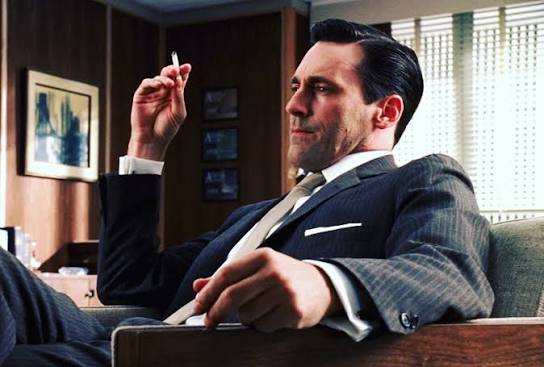
Dick Whitman performs the most durable modern transformation in American television. During the Korean War, an explosion kills Lieutenant Donald Draper beside him. Dick exchanges identification tags with the dead officer, survives under Draper’s name and returns to the United States inside a clerical conclusion. War supplies the confusion, body and paperwork. The dead man exits; the living man acquires his place.

Unlike Ripley, Don does not live permanently at the edge of exposure. The new identity accumulates institutional weight. Don works, pays taxes, marries, buys property, fathers children and builds a career. Time itself begins authenticating him. After enough years, the invented man possesses more documentary substance than the abandoned one.

Advertising is the ideal profession because Don’s labor reproduces his own transformation. He takes an ordinary product, suppresses its manufacturing history and gives it a story people prefer. He does the same with himself. The handsome executive, suburban husband and creative genius are not wholly false. They are real accomplishments attached to stolen paperwork.

Yet Mad Men understands that the administrative victory cannot settle the psychological case. Dick is not chiefly afraid that a camera will recognize him. He is afraid that intimacy will. Every person who approaches Don closely eventually reaches the locked room containing Dick Whitman: his poverty, family, desertion, shame and the knowledge that another man’s death financed his ascent.

The Thin Man fantasy and the Don Draper fantasy meet here. Remove the obligations, choose the wardrobe, enter the next room with a name nobody questions. What remains is the person who performed the removal. The Eagles’ old line is unavoidable: “You can check out any time you like, but you can never leave.” One may leave a home, spouse, profession and nation. The ghosts keep the original booking.

The Missing and the Dead

Ambrose Bierce entered Mexico in 1913 and disappeared. That is nearly everything we know about this paritcular case. He may have joined Pancho Villa’s forces, reached Chihuahua and died quickly. He may have been executed, killed himself, succumbed to illness or continued traveling. The absence of evidence has generated a century of endings because disappearance makes authors of the people left behind.

Bierce had already written one of literature’s cruelest imaginary escapes. In “An Occurrence at Owl Creek Bridge,” Peyton Farquhar falls from a bridge with a rope around his neck, escapes into the water, runs home and approaches his wife—only for the narrative to reveal that the journey occurred inside the final instant before his broken body swings beneath the bridge. The mind creates a second life because the body has no exit. Bierce’s own disappearance feels uncannily like an extension of the story, although we should resist converting formal elegance into evidence. He probably did not begin again. He probably died where the map became uncertain.

John List demonstrates how recently a complete second life remained possible. After murdering his wife, mother and three children in New Jersey in 1971, he traveled west and became Robert Peter Clark. He found accounting work, joined a Lutheran church, remarried and lived within ordinary society for nearly eighteen years. List was not sleeping in a cave. He was commuting, filing returns and participating in carpools. The jurisdictions containing John List and Robert Clark did not effectively speak to one another.

Television finally forced the conversation. America’s Most Wantedaired the case in 1989 using an age-progressed sculpture whose resemblance to List was extraordinary. A former neighbor recognized him. Fingerprints from his military records completed the identification. List stands at the border between eras: he constructed the second life through disconnected paper systems and lost it when mass media connected a face to the buried name.

John Darwin attempted the comic British variation in 2002. He paddled into the North Sea, staged his death and allowed his wife to collect insurance and pension payments while he secretly lived nearby. The plan expanded toward Panama. It collapsed when an online photograph showed the supposedly dead man beside his wife. A basic image search linked John, Anne and Panama. The second life had appeared on the first page of the internet.

Robert Hoagland achieved something quieter. He vanished from Connecticut in 2013 and lived in New York as Richard King until his death in 2022. The new life appears to have been modest rather than operatic. That may be the surviving modern model: abandon grandeur, remain geographically ordinary, ask institutions for as little as possible and hope nobody searches the correct connection. His identity was established after death.

Ryan Borgwardt showed in 2024 how poorly the romantic disappearance now survives contact with the contemporary record. He staged a kayaking death in Wisconsin and left the country. Investigators found evidence of preparation, travel and financial activity, contacted him abroad and persuaded him to return. In 2025 a judge sentenced him to eighty-nine days in jail, matching the period during which he had actively misled authorities, and ordered restitution toward the costly search. The symmetry of the sentence was better than the plan.

These cases are morally different. Bierce may simply have died. Hoagland appears to have abandoned a family without committing the crimes of List or Darwin. List was a murderer. The point is not to place them in one ethical category. It is to watch the available space contract. List could build an ordinary life for eighteen years. Borgwardt’s itinerary began becoming evidence before his family had finished grieving.

You Could Call It the End of the World

Money is the most practical border. A person can sleep outdoors without identification. The moment he wants a hotel, apartment, salary, international ticket or functioning bank account, somebody asks for the name behind the money. A friend of mine treats $9,999 as the largest sum one may carry into the United States. The actual rule is subtler: more than $10,000 may be transported legally, but it must be declared. Japan similarly requires declaration above one million yen. The threshold is not a wall. It is a checkpoint at which money becomes narrative. Where did it come from? Why are you carrying it? Who are you?

The old fugitive relied on fragmentation. A birth certificate sat in one office, fingerprints in another, employment history in a filing cabinet, border entries in ledgers and newspaper photographs in local archives. None of these systems was necessarily weak. They simply did not consult one another quickly. The fugitive’s skill lay in remaining inside the delay.

The decisive modern development is linkage. Passports became machine-readable and biometric. Banking systems identify customers and flag patterns. Phones create location and relationship histories. Cameras no longer merely preserve images; increasingly, software compares faces. Search engines connect photographs with names and places. DNA can identify a person who never submitted a sample because a distant relative did. Public records, commercial databases and social media supply continuity from childhood to the present.

Every system contains errors. Facial recognition misidentifies people. Records conflict. Databases leak. Names are misspelled. The second life does not die because any single machine knows everything. It dies because machines ask one another. The old fugitive needed to prevent one sheriff from telephoning another. The modern fugitive must prevent every machine from recognizing every other machine.

Josef Rusnak’s largely forgotten 1999 science-fiction film The Thirteenth Floor supplies the finest image of this condition. Douglas Hall, a computer scientist in Los Angeles, discovers that the simulated version of 1937 Los Angeles created by his company contains conscious inhabitants. More disturbingly, he learns that his own Los Angeles is another simulation. Following instructions left by his murdered mentor, Hall drives toward Tucson, ignores the road signs and barricades, and eventually reaches the boundary of his universe. The desert stops. The mountains dissolve. Beyond them stands an unfinished green wireframe—the scaffolding of a world nobody expected its inhabitants to inspect. Hall has not merely failed to escape Los Angeles. He has reached the place where Los Angeles runs out.

“You could call it the end of the world,” he says. The line is quiet because terror has already done the shouting. Moll Flanders could leave one town and supply the next with another name. Valjean could cross into another jurisdiction. Dick Whitman could exchange identification tags with a dead officer. Hall cannot accomplish even the preliminary act of departure because the road, desert and destination belong to the same system.

There is no countryside beyond surveillance and no unindexed territory in which to begin again; there is only the end of the program. Our world has not yet become Hall’s wireframe desert, but it increasingly resembles it. Every road leads toward another camera, account, border record or machine asking the traveler to confirm that he remains the person who departed.

The inhabitants of the film’s simulated 1937 discover that their world was created for users elsewhere. Hall then discovers that his apparently real 1999 is also one among thousands of simulations. “You weren’t supposed to find out,” he is told. The sentence might serve as the motto of every identity system. The structure works best when the contained person mistakes its limitations for the natural shape of reality.

Elon Musk’s claim that there is only a one-in-billions chance of our inhabiting “base reality” is not a scientific calculation. It is a swaggering compression of the simulation argument: if advanced civilizations produce enormous numbers of conscious simulated worlds, a randomly situated observer is more likely to occupy one of those than the single original reality beneath them. Whether or not Musk is right, The Thirteenth Floor understands the emotional consequence. The final disappearance is not concealment within the map. It is the impossible search for a place outside it.

The Last Fugitive

John McAfee deserves the title because he possessed nearly every advantage. He had money, international mobility, technical knowledge, familiarity with surveillance, political connections, access to boats and aircraft, and the willingness to behave in ways a normal investigator might not predict. He also possessed a cardboard box.

I have long suspected that McAfee knew more about Gregory Faull’s murder than he admitted, perhaps much more. That is an opinion, not a proven fact. Belizean authorities sought McAfee for questioning, but he was not convicted or charged in connection with the killing. Suspicion does not become evidence merely because its subject is spectacularly strange.

I nevertheless wanted McAfee to remain in circulation. I wanted him alive, ranting online, threatening to parachute into Fukuoka, appearing without warning at a Kyoto bar and ordering a strip steak while explaining that income tax was metaphysically invalid. This is not a defense of anything he may have done. It is an admission that fugitives provide a form of entertainment respectable citizens cannot. McAfee turned the ordinary police question—where is this man?—into theater.

His technical competence makes the comedy sharper. He knew that networks retain traces. He warned endlessly about surveillance. He promoted cryptocurrency and privacy as routes around state control. Yet his own need for audience continually defeated his wish for concealment. He contacted reporters while hiding, traveled with a film crew, cultivated disguises elaborate enough to become stories and generated the publicity through which strangers could follow him.

The Vice metadata incident is almost too perfect. A technology journalist accompanying the antivirus pioneer posted a photograph containing geographical information. The machine did not need to recognize McAfee’s altered face or chewing-gum lip. It merely reported where the photograph had been made. McAfee’s legend and location traveled inside the same file.

This is why he is the last fugitive rather than the greatest one. A true second life requires anonymity. McAfee could tolerate danger, accusation, ridicule and legal jeopardy. He could not tolerate being unknown. He wanted to disappear and narrate the disappearance, to escape the state while retaining the crowd. The modern fugitive may finally be defeated less by the camera than by his inability to live without looking into it.

That appetite is not confined to eccentrics. We announce departures, document privacy, turn reinvention into a new profile and carry our old audiences toward the new life. The desire to become somebody else competes with the desire to have everyone recognize the transformation. Moll Flanders supplies the next town with a story. McAfee supplies the whole planet with updates.

Coda

Is the death of the second life good or bad? Neither. It is a historical development with benefits, cruelties and unforeseen emotional costs. Connected systems catch murderers, fraudsters and people attempting to abandon obligations. They also make escape more difficult for abused spouses, political dissidents, debtors, refugees and ordinary human beings whose worst mistake has become permanently searchable. Accountability and mercy do not rise together automatically.

There remains an important distinction between disappearance and reinvention. An adult can legally change a name, move, choose another occupation, close public accounts and refuse contact. The state does not require everyone to preserve the social life into which he happened to arrive. But legal reinvention preserves continuity. Debts, convictions, parenthood and court orders belong to the person through the change. The first life is not erased. It is amended.

The Thin Man occupies the fantasy beyond amendment. He moves without the drag of continuity. He may enter Andrea’s life, Jessica’s cabin or another city under circumstances that do not require him to explain the previous scene. I invented him because I wanted the freedom of a man nobody could summon. Yet even he carries Niko beneath the working identity. Georgia remains inside him. Education, language, childhood, loss and desire cross every border without documentation.

That is the final limitation, older than passports and more reliable than facial recognition. You cannot outrun your ghosts. A person may defeat the file and still remain the person described by everything the file omitted. Tom Ripley acquires Dickie’s signatures but retains Tom’s hunger. Don Draper obtains Don’s career but brings Dick’s shame into every marriage. McAfee crosses borders with the cardboard box and John McAfee climbs out from beneath it.

At fifteen, I thought Moll Flanders was shapeless because Moll repeatedly acquired another husband, name, occupation, crime, punishment and jurisdiction. Now the repetition looks like the record of a vanished human possibility. Moll continually finds another exit. We inhabit a world of fewer exits, better records and longer memories.

Perhaps this is why stories of disappearance retain their force. They promise that one life need not be final. Somewhere beyond the jurisdiction, ocean, desert or wireframe mountain waits a place where nobody knows what we have done and no machine asks us to confirm it. We know better. The map follows us, and even if it did not, we would arrive carrying ourselves.

Moll Flanders could become another woman. We can only become ourselves somewhere else.

Sources

Daniel Defoe, Moll Flanders (1722), and Encyclopedia Virginia’s account of the novel’s transportation plot.

Luigi Pirandello, The Late Mattia Pascal (1904).

Victor Hugo, Les Misérables; Alexandre Dumas, The Count of Monte Cristo; F. Scott Fitzgerald, The Great Gatsby.

Patricia Highsmith, The Talented Mr. Ripley, and Anthony Minghella’s screenplay for the 1999 film.

AMC, Mad Men: the Dick Whitman/Don Draper identity narrative.

Project Gutenberg and the Ambrose Bierce Project, “An Occurrence at Owl Creek Bridge” and biographical materials.

FBI historical materials on John List and the America’s Most Wanted identification.

Contemporary reporting on John Darwin, Robert Hoagland and Ryan Borgwardt.

U.S. Customs and Border Protection and Japan Customs guidance on cross-border currency declarations.

U.S. Department of Homeland Security, biometric identification materials.

Josef Rusnak, The Thirteenth Floor (1999), adapted from Daniel F. Galouye’s Simulacron-3.

Code Conference 2016, Elon Musk’s discussion of simulation and “base reality.”

Contemporary Wired, Guardian and Vice reporting on John McAfee’s flight from Belize.

The Days and Nights of My 50s I: 7/20/26, the Unwritten Libretto.

Author’s Note:

Five days ago, I made what may prove to be the most important professional decision of my life.

For months—years really—I had been thinking about giving up my teaching career and becoming a full-time writer. I have talked to many of my family and friends about this and taken several small steps in this direction. I recently published a novel, have written and published hundreds of essays, and written almost every day for eighteen years. I have hundreds of pages of dream records, journals and letters, some sent and some only in draft form. I am hard at work on the sequel to my first novel, and am currently working on five books with many more in the making.

Over this time I have also become very good at making excuses. School is too busy. Life is complicated. The timing isn’t quite right. Next month. Next term. Next year. One day. It was all true, and yet it barely matters. A few days ago, I finally admitted what had been staring me in the face for a long time: if I wanted to call myself a writer, I had to stop waiting for someone else to make that decision for me. Whether I eventually succeed or fail is almost beside the point. The decision itself changed something in me. I stopped thinking about the life I wished I had and started taking responsibility for the one I actually have.

Today wasn’t the happiest day of my life, nor the saddest. It wasn’t the day I got married, the day my son was born, the day I published my first book, or the day I realized my marriage was ending. Objectively speaking, it was an ordinary Monday in Osaka. I listened to music. I wandered the city. I shared dinner and my bed with a woman whose path happened to cross mine for a couple of hours before diverging forever. By tomorrow morning she would be somewhere else, and so would I. Yet somewhere between checking into a modest hotel, thinking about my future, and sitting alone quietly after she left, something finally clicked. My teaching career is rapidly coming to a close. The marriage that defined most of my adult life is over. The books I dream about haven’t been written yet. The cities I may someday call home are still only possibilities. The people who will matter most over the next twenty years are, at this moment, complete strangers.

For the first time since I was a young man, there is no obvious script. That realization is exhilarating. It is also terrifying. Most of all, it is deeply liberating.

So this seems as good a place as any to begin this series.

Epigraph:

Yesterday is history. Tomorrow is a mystery.

Anonymous

Anything could happen.

Bash and Pop

I: My General Situation As of Today

For the better part of thirty years, my life had possessed a remarkable amount of structure. I graduated from college. I moved to Japan. I found a teaching career almost by accident and stuck with it for a quarter of a century. I got married, and my wife and I bought a house together in Kyoto. We raised a wonderful son together who we both love more than words can say. We have paid bills, argued over groceries, worried about our dear dog Daisy, taken vacations when we could afford to, and slowly accumulated the ordinary rituals that eventually become a life. There were wonderful years and there were difficult ones, but there was almost always a next step waiting patiently in front of me. Whether I liked the script or not, there was a some kind of a script.

Then, almost imperceptibly at first, it disappeared.

My marriage ended not with a single dramatic explosion but with the gradual realization that two decent people could simply reach the end of the road together. My teaching career, once the defining feature of my adult identity, began to quietly recede into the background. Friends scattered across countries and continents. My parents grew older. I turned fifty-two without feeling especially old, but with the unmistakable sense that I had entered the second half of whatever story remained.

It is a peculiar thing to discover that freedom and uncertainty are twins. For years I imagined freedom as something uncomplicated. Finish work. Write books. Travel. Meet interesting people. Drink coffee in strange cities. Listen to music until two in the morning. Wake up whenever I pleased. Answer to no one.

There is truth in that fantasy. There is another truth as well.

Freedom also means that no one hands you tomorrow. No institution is waiting to promote you. No family obligation automatically determines your next decision. No invisible current carries you downstream. Every meaningful choice becomes your responsibility. Every success belongs to you. Every failure belongs to you too.

That realization can feel less like opening a door than standing on the edge of a cliff. You can step forward. Or you can spend the rest of your life admiring the view. Five days before the evening you’re about to read about, I decided I was done standing still.

I wasn’t retiring, not yet anyway. I wasn’t exactly reinventing myself. I wasn’t chasing some impossible dream. I was simply acknowledging something that had probably been true for twenty years. I am a writer. I feel like I was born to be one. Whether anyone else eventually agrees is, in many ways, beside the point. The work itself has become the destination. Everything else—the cities, the books, the women, the music, the bars, the victories, the humiliations, the friendships, the failures—is simply material for my work.

This series is an attempt to pay attention to the contours of my daily life, in whatever form the may take. And, perhaps for the first time in my life, to trust that the story doesn’t need an outline before it begins.

II: Osaka

Osaka has always felt different to me than Kyoto.

Kyoto is the city where I built my adult life. It is where I have worked, and lived for more than twenty years with my life and son. It is where the mortgage was paid and our dog was walked, where ordinary afternoons quietly accumulated slowly into decades. I know its rhythms inside and out. I know which coffee shops open early, which bridges are worth crossing at sunset, and where to stand beside the Kamogawa when I need to remember that almost everything eventually passes.

Osaka has always been to me something else entirely.

It has never asked me to be responsible. When I come here, I feel somehow lighter. Less like a teacher. Less like a husband. Less like the man who spent twenty-four years inside the same corporate institution. Osaka has always given me permission to become, if only for a day or two, a slightly different version of myself. Not a better man or a worse one. Just someone with fewer expectations resting on his shoulders.

Perhaps every city we visit has a role to play in our lives. Kyoto has been my home. Tokyo has often been a dream. Singapore has long been my favorite escape. Osaka, though, has become my intermission. A place where I can step off the stage for a little while before the next act begins. A place to just get away.

This Monday afternoon I checked into a small APA Hotel not far from Shinsaibashi Station, which I affectionally call Mr. Shin. Like most APA hotels, it is clean, efficient, and just a little too compact. The room isn’t exactly designed for lingering. It is designed for sleeping, showering, and moving on. My suitcase for neatly against one wall. The desk is barely large enough for my laptop and a cup of coffee. The large television in front of my bed I will barely use. It suits my current mood perfectly.

I took a taxi to the hotel from Shin-Osaka Station and arrived around 7:30 PM. I dropped my overnight bag on the floor, drew the curtains apart, and looked out over another slice of Osaka. Nothing spectacular. Just traffic, apartment buildings, and the quiet machinery of a city getting on with its day.

I remember thinking how strange it felt to have absolutely nowhere I needed to be. No lesson to prepare. No meeting to attend. No papers to grade. No one waiting for me at all.

That realization no longer frightened me the way it once might have. It felt… spacious. There are moments in life when freedom announces itself with fireworks. This wasn’t one of them. It arrived almost silently. Like an empty afternoon. Like a city that has never asked me to explain myself. My hotel room is simple. It is what I can afford.

Outside, Osaka continued exactly as it always had. Inside, almost without me realizing it, the next stage of my life had already begun.

III: Meeting Yuki

I should flash back briefly here to introduce my date for the evening. There are evenings that require months of planning. This was not one of them.

The plan, such as it was, consisted of very little. Conversation. Sex. Cigarettes. Dinner. That was enough. As I stepped out of the taxi, I saw her standing quietly on the street.

She was slightly built, dressed in a simple black skirt, and carried herself with the quiet confidence of someone accustomed to meeting complete strangers. There was no dramatic meeting, no cinematic slow motion, no instant thunderbolt. We smiled, introduced ourselves, and within a minute or two were walking side by side into the hotel through the warm Osaka evening as though we had agreed to meet as old friends rather than someone we had never laid eyes on before.

Her name was Yuki.

We went up to my room and made the sort of awkward conversation that strangers always make at first. Where are you from? Where do you live today? Had I been to Osaka often? Was I enjoying the summer?

Nothing remarkable. Which, in retrospect, was itself remarkable. There is something deeply comforting about ordinary conversation. For a little while, neither of us had to be anything more than two people just getting to know each other.

Eventually, because pretending otherwise would have been absurd, the reason we had met entered the conversation. She is thirty-six and works as an escort. I had hired her for the evening.

There is no point dressing those facts up in prettier language. They are neither the whole story nor something I feel any particular need to defend. They simply belong to it. Human lives are untidy. We make decisions for reasons that are sometimes noble, sometimes lonely, sometimes curious, and sometimes impossible even to explain to ourselves. This was one of mine.

I went into the bathroom to wash up, took my clothes off, and hung them neatly on the hangers on the wall. By the time I came out of the bathroom she was naked too. That was what we were there for. I put on one of my favorite bands Whiskeytown, lay back on the bed for a few minutes, listened hard, and let the sweet sweet sounds of Ryan Adams’ voice wash over me. I was, briefly, in heaven.

Then, inevitably, we began to kiss. She is a smoker and tasted like stale tobacco and faintly like green peas. I am a smoker too so I am sure I tasted the same. She unwrapped one of the condoms that I had bought earlier for occasions just like this and began to pleasure me with her mouth. While I do enjoy oral sex to some extent, it is far from my favorite sexual act and I have never been able to cum this way. Not for lack of trying, I simply find that the women who have performed the act on me can never sufficiently been able to get their teeth out of the way. It is not their fault at all, but it is just that simple.

Soon enough, I asked her to climb on top of me. My penis was already erect and she was slick as well, and I entered her cleanly and easily. After a little while, we flipped around and began to engage in the missionary position. I was on the urge of cumming when I pulled out, turned over on my back, and finished my self off with two hands. Nine times out of ten I finish this way if I finish at all. After all, I know my own equipment better than else, so to speak. Before we began to have sex I put on some porn. I chose very quickly as we were on the clock. I selected some perfectly nun priest porn, totally chalk. Of course we both barely watched it as our eyes were mostly closed. The moment I came I toweled off, shut off the porn, and immediately pressed play on the Whiskeytown video I had paused before sex.

Then a funny thing happened. During sex she had repeatedly asked me to turn down the porn and to shush in general. She said we were at a business hotel and that we were bothering the other guests. Although I love to be babied. I do not like to mothered at all. It is just not my thing, and I have written about this at some length here. I already knew that I would not book Yuki again, and this moment helped crystalize my decision. She is sweet and cool, and I am glad I met her for one night, however she is just not my jam. And also, nobody shushes my boy.

Anyway, she asked me to turn my music down. I just laughed and cranked it. Then she laughed too and the mood lifted and passed. Neither of us was yet in the mood for a shower, mostly because we were on the clock and by this point only had about 40 minutes left in our appointment. I did not feel like a round two, so I suggested we head down to the street to smoke for a smoke and then get a little dinner. Although we had less than an hour left and the hotel restaurant was a little busy, she agreed to have dinner with me.

We finished our cigarette and entered the first floor hotel restaurant. We sat down and briefly consulted the menu. The restaurant specializes in pasta, so I ordered tomato pasta with eggplant and she ordered the zucchini linguine. The food took a while to arrive, so halfway through the meal she asked for a doggie bag. I quickly finished my meal and we went upstairs so she could pack her bag.

The evening had never pretended to be anything it wasn’t. Neither of us confused it with romance. Neither of us imagined it was the beginning of some extraordinary love story. It was simply two lives crossing for a few hours before continuing in different directions. There is something quietly beautiful about that too.

Outside, Osaka was still very much alive. Trains rattled somewhere in the distance. Traffic rolled steadily beneath the hotel windows. Thousands of strangers were beginning nights that had nothing to do with ours. Ours, quietly and without complaint, was coming to an end.

I told her I was going to wash up for a minute. She said through the door that she had to leave. I said goodbye babes and she replied in the same fashion. When I came back out, she was already gone.

And I didn’t even kiss her goodbye.

IV: Coda

For most of my adult life, my future had always arrived with an outline. There was always another semester to teach. Another report to write. Another mortgage payment to make. Another family holiday to plan. Another school year waiting just over the horizon. Even when life became difficult, I almost always had a sense of what would come next. The details may change, but the broad shape of the story had already been sketched.

And now it hadn’t.

As I write this the marriage that defined nearly half my life has come to an end. My teaching career, after almost thirty years, is slowly coming to an end. My son is a grown man, trying his best making his own way in the world and earning his own money. My wife and I are immensely proud of him as well we should be. Our house of 19 years will soon belong to someone else. My life is rapidly becoming quite different and everything that had once seemed permanent has become part of the past.

This all may sound just a bit sad. Some of it may be, sure. It also happens to be exhilarating. Tomorrow I might wake up in Kyoto. Next month I might find myself in Singapore. A year from now I may be living in Osaka. Anything could happen.

Perhaps I’ll write ten more books. Perhaps no one will read them. Perhaps I’ll fall in love again. Perhaps I won’t. There will be close friends I haven’t made yet. There are cities I have not yet wandered. There are songs I haven’t fallen in love with, thank god.

There are mistakes waiting patiently for me. There are joys I cannot yet possibly imagine. For the first time since I was in my early twenties, the next chapter of my life has not yet been written.

As I stood there in that little Osaka hotel room, listening to Whiskeytown waft through the room, I finally understood what life had trying to tell me for days.

My life hadn’t fallen apart. It had, in fact, opened up. And somewhere beyond everything I thought I knew, waiting patiently for me, was the unfinished libretto.

Dedication:

For Yuki. Thanks for a lovely evening. I’ll never see you again, babe. Go with God.

The Adventures of the Thin Man and Andrea II: The Thin Man’s Son. CHAPTER 1: The Thin Man in Tokyo

TOKYO — 1:13 PM, late January

He wakes up without remembering the descent. Not the drinking. Not the last message. Not the shape of the night leaving his body. Just the slow return of weight.

The house is rented, not lived in. A clean, architectural expanse in western Tokyo—glass, pale wood, too much air between objects. The kind of space that does not ask questions because it assumes nothing will answer.

He sits up once, then stops. 1:13 PM. The afternoon has already begun without him. He lies back for a moment and listens to the silence of money maintaining itself. There is a bottle on the floor beside the bed. Half-finished. Warm now. He doesn’t look at it again.

He stands, showers without thinking, dresses in the order that muscle memory dictates: black shirt, trousers, jacket. No tie. Never a tie unless someone insists.

His phone is already lit when he returns. Two messages. One from Tomoyo.

“Weekend still okay?”

One from Mina.

“Bar As One. Late.”

He reads them without responding yet. Then another notification appears. A different rhythm. Alejandro.

No name attached. Just the letter cluster, like something filed incorrectly in a system that never bothered to correct itself.

“Need you in Akasaka. KBS situation. Quiet, but messy.”

He stares at it longer than he should. Then:

“Corporate accounting discrepancy. Possibly internal extraction.”

That word—extraction—is always a translation problem. It never means only one thing. He exhales, once.

And for the first time that day, he is fully awake.

KYOTO — That Same Day

I am in my classroom when I see the notification. I’m not during anything important. Just one of those pauses between things where students are pretending to work and I am pretending not to notice they aren’t.

The phone is face down. I flip it. It’s Signal. I don’t even check the sender first anymore; I know it’s from the Thin Man.

“Akasaka. KBS. Quiet job.”

That’s it. No greeting. No explanation. No punctuation beyond necessity.

I look up at the room. The students are writing essays on narrative voice, ironically enough. I tell them to keep going and step into the hallway.

Outside, the corridor smells like floor wax and winter coats that never fully dry. I write back:

“You’re back?”

A pause.

Then:

“Always.”

I sit down on the stairs and realize I’ve been waiting for this message more than I admitted to myself. Not because I want the job. Because when he appears, the world becomes legible again.

Even if it shouldn’t.

TOKYO — 5:57 PM That Same Day

Akasaka in daylight is almost offensive in its normality. Glass buildings pretending they are neutral. People moving like they have somewhere else to be even when they don’t. He enters KBS through a side entrance.

Not invited. Not uninvited. Just expected. The problem is explained in fragments.

A mid-level finance manager has flagged irregular payments in a production budget. Someone else has flagged the flag. A third layer has erased the second.

Now everyone is quietly pretending nothing happened while insisting something must be done. He listens. He does not take notes. He asks three questions.

The answers contradict each other in useful ways.

By 4:02 PM, he knows what happened. By 4:07 PM, he knows who benefited. By 5:12 PM, he knows why no one will say it out loud.

He leaves without announcing that anything is resolved. This is the job. 

On the street outside, he finally replies to Tomoyo who he has beeb seeing for about two moths now:

“Saturday still okay.”

Then Mina:

“Later.”

Then Alejandro:

“Done.”

No embellishment. No summary. Just closure.

KYOTO — 10:02 PM That Same Day 

I am in a shisha place near Sanjo when he updates me. Not the kind of shisha place you imagine. Cleaner. Quieter. Students pretending to be older than they are. A place where time slows down but doesn’t stop.

I have a draft open on my laptop. A text arrives. It is about him. It is always about him these days.

“KBS resolved.”

That’s all. No story. No detail.

I type:

“What was it?”

Three dots appear. Disappear. Return.

“Accounting.”

That word again. He uses it the way other people use weather reports. I lean back.

Outside, Kyoto is doing its careful thing—bicycles, soft neon, the sense that nothing ever fully arrives here.

I realize I’ve stopped writing fiction and started writing evidence. 

TOKYO — 11:35 PM That Same Night

Bar As One is half-lit, as always. Mina is behind the counter like she has been there longer than the building. She does not ask what happened in Akasaka. She never asks anything that can be answered incorrectly.

He sits and orders a whisky ginger. They talk about nothing that matters. Tomoyo arrives later. She wears corporate black like it is a second job. She kisses him once, briefly, like a scheduled interruption. He notices everything about her that is real and nothing about her that is performance. That is what he likes about her.

At some point, his phone vibrates again. A new Signal message. It’s from Matt.

KYOTO — 11:26 PM. That Same Night.

I’m still at Shisha, still thinking about the Thin Man, I shouldn’t be doing this in public. But I am.

Me:

“I think I understand what you do in Tokyo.”

A reply comes faster than expected.

“You don’t.”

I almost smile. Then I don’t. I type:

“I’m going to Costa Rica.”

This time there is a long pause.  Then:

“Why.”

I look at the ceiling of the shisha place. Smoke moves like it has intention.

“Luciana.”

The name sits there on my screen like it has weight. I don’t know if he will respond. 

But I know I’ve crossed a line.

TOKYO — 12:14 AM The Next Morning

He reads the name once. Then again. Luciana.

Not spoken in years. Not held in any current system. Not part of any job file. He steps outside for a smoke. 

Akasaka is quieter at night, but not safer. Just less honest about itself. He does not ask Matt not to go. That would be meaningless.

Instead he writes:

“Don’t dig wrong.”

Then, after a pause:

“If you’re going, be precise.”

He puts the phone away. Tomoyo is still inside, laughing at something someone said that is not funny. Mina is polishing glasses that are already clean.

He thinks, briefly, of leaving Tokyo again. Not because something is wrong. Because something has started.

And that is usually enough.

KYOTO — 12:44 AM The Next Morning

I read his message twice.

Be precise.

As if precision is the problem. As if I have ever been anything else. 

I close my laptop. Outside, Kyoto continues as if nothing has happened. But I know it has.

I have a name now. And names are how you begin to lose your distance from things.

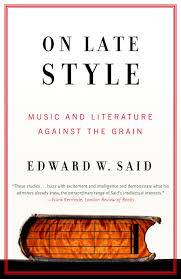
On Edward Said’s “On Late Style.”

Note: This piece takes up On Late Style, the posthumously published and deliberately unfinished work by Edward Said on what he, following Theodor Adorno, calls “lateness”—not serenity or resolution at the end of a career, but tension, contradiction, and a refusal to reconcile. It’s a short book that opens out into large questions, and this will be less a full treatment than an attempt to think alongside it, particularly around the strange fact that a book about unresolvedness arrives in a form that is itself, in some essential way, unresolved.

Edward Said’s On Late Style is as rich a book as an unfinished work can be.  Published posthumously, On Late Style expands on Theodor Adorno’s concept of “late works.”  Late works are works with fall toward the end of an artist’s career, but not those like The Winter’s Tale or The Tempest which “reflect a special maturity, a new spirit of reconciliation and serenity often expressed in terms of a miraculous transfiguration of common reality” (6), but those like Beethoven’s Missa Solemnis or Lampedusa’s The Leopard–works which, in Adorno’s words are “devoid of sweetness, bitter and spiny, they do not surrender themselves to mere delectation,” or, in Said’s phrasing, are “uncoopted by a higher synthesis: they do not fit any scheme, and they cannot be reconciled or resolved” (12).

Said died in September 2003, before On Late Style was completed.  In the foreward, his wife, Miriam writes of how Said was planning to get to work and get it done: “{In late August} he said to me as we were having breakfast that morning, ‘Today I will write the acknowledgments and preface to Humanism and Democratic Criticism {…} The introduction to From Oslo to Iraq and the Road Map I’ll finish by Sunday.  And next week I’ll concentrate on completing On Late Style, which will be finished by December” (vii).  He didn’t make it, and the little quote is a moving reminder that we never know how much time we have left.  But Michael Wood, who arranged the various fragments Said had written on the topic of late style into this nearly seamless finished product, says that he doesn’t believe that Said ever wanted to finish the book: “Or rather, he wanted to finish it but was waiting for a time that would perhaps never have come.  There would have been a time for this book about untimeliness, but this time was always: not quite yet” (xvi-xvii).

What does Adorno, and Said, mean by “late style,” and why would Said perhaps have not wanted to finish his work on this topic?  Again, to understand what the term means we need to understand that late style is not simply synonomous with work accomplished late in life.  Wood puts it this way, the “type of lateness {that Said was interested in} is quite different {…} from the unearthly serenity we find in the last works of Sophocles and Shakespeare.  Oedipus at ColonusThe Tempest, and The Winter Tale are late enough in their way, but they have settled their quarrel with time” (xiii).  In other words, these works are transcendent yet resigned–the author, knowing perhaps that death is coming to claim them, moves to preempt death by surrendering his grasp on reality and moving in the direction of a “higher synthesis,” and in the process attaining “a remarkable holiness and sense of resolution” (6).  Said has nothing against such works at peace with themselves and with time, but these are not his subject.  Lateness here seems to take its raison d’etre from Dylan Thomas; it rages against the dying of the light.  As Said puts it, “Late style is what happens if art does not abdicate its rights in favor of reality” (9) and is “a form of exile” (8).

But if late style finds its power in a righteous rage against resignation, senescence, and serenity, it is at the same time complicit with disintegration and ultimately with death. In other words, an artist can embrace lateness in Said’s conception of the term, but can never be quit of it. Said writes: “For Adorno, lateness is the idea of surviving beyond what is acceptable and normal; in addition, lateness includes the idea that one cannot really go beyond lateness at all, cannot transcend or lift oneself out of lateness, but can only deepen the lateness” (13). Here, we understand why it was the Said, though he worked on the idea of lateness for over a decade, was not able to finish off what at only 160 pages is still a relatively slight work–only death itself can put a period on lateness. Wood writes: “for all his deep interest in lateness {…} Said was not attracted by the idea of a late, dissolving self. {…} Said wanted to continue with the self’s making, and if we divide a life into early middle, and late periods, he was still in the middle when he died at the age of sixty-seven {…} Still a little too early, I think he would have said, for real lateness” (xviii).

Another reason why On Late Style cannot exactly be classified as a “late” work is the urbane depth of its learning and its lightness of touch. Though deeply serious, Said in On Late Style wears his learning lightly, as only a true elitist can. For the fact is that despite its topic the book is oddly comforting; I can open it to any page in the moments before sleep and feel a rush of almost narcotic satisfaction and harmony. This effect is obtained not because Said takes an oppositional stance to his topic but because the extent of his learning is so colossal that it seems to achieve “a remarkable holiness and sense of resolution” based on its own gravitational force, even though acting in opposition to Said’s own thesis.

Thus, although we have only begun to scratch the surface of what Said has to say about lateness, it is already clear that while the relation between late style and classicism must for the moment remain unresolved, On Late Style as a text is a deeply classical enterprise, and this classicism is rooted in the remarkable range and depth of Said’s mind. Wood reminds us that being in opposition need not always mean manning the barricades–and this at least sets up the question raised in an earlier post about the ability of leftism and classicism to co-exist: “It is part of the generosity of Said’s critical imagination that he sees ‘amusement’ as a form of resistance. He can do this because amusement, like pleasure and privacy, does not require reconciliation with a status quo or a dominant regime” (xiv).

So perhaps On Late Style is complete in the only way a book about lateness can be. It circles, it deepens, it resists arriving. Edward Said writes against resolution, and the book quietly enacts that refusal, never quite allowing itself the satisfaction of a final statement. There is something fitting in this. Lateness, as he and Theodor Adorno understand it, is not a stage one passes through and exits, but a condition one can only move further into. Said, still “in the middle” by his own reckoning, never closed the circle. And so the book remains open—not unfinished in the sense of lacking something, but unfinished because its subject will not permit an end.

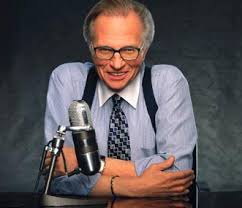
On Larry King, the Radio GOAT

Epigraph:

“I listened to the radio / I waited all night long…”
— Radio Radio, Elvis Costello

Note: This piece reflects my personal memories of listening to Larry King’s overnight radio show in the late 1980s and early 1990s, along with later impressions from television appearances, interviews, and conversations with people who knew him. It is written in the spirit of appreciation and nostalgia rather than media criticism, and emphasizes the uniquely loose, humane, and unpredictable quality of King’s radio work, which for me remains the defining core of his legacy.

I grew up listening to Larry King’s overnight radio show between roughly 1988 and 1992, and in my opinion — which happens to be correct — the radio show was much better than the television version that later made him famous. The TV show was good, even great at times, but radio was longer, looser, freer, and far more unpredictable. It had weird guests, weirder callers, and the feeling that anything might happen at two in the morning. That’s where Larry really lived.

I would listen in my bedroom at my parents’ house in Spokane, Washington, the volume turned low, the house quiet, insomnia hovering. The Spokane AM station — KGA 1510 — carried the show from around 9 PM Pacific time, and then, wonderfully, they would run it again. So I’d listen from nine to midnight, fade, wake at two or three, and hear the same segment again in a half-dream. The effect was surreal. Didn’t I just hear that caller? Didn’t Larry just say that? It created a strange loop of late-night déjà vu that only made the whole thing more atmospheric. The show felt less like programming and more like a continuous nocturnal conversation.

My friend Kelly Rudd loved Larry too. When we were in high school we were both big fans of the radio show, and we talked about it constantly. There were a couple of things that we especially liked. The first was that Larry famously did no preparation. He knew a huge amount about the world, of course, but he didn’t read guests’ books ahead of time. He wanted to come in cold. If his guest was a firefighter, he’d ask, “So what’s it like to be a firefighter?” It sounds lazy, but it was brilliant. By staying open and getting out of the way, he let the conversation go anywhere. This way the show became eventful.

Another thing we loved was what happened after the guest left. Larry would open the lines and take questions about absolutely anything. Most of the time he was generous and patient, but when callers went off the rails he had a signature phrase. He’d cut them off gently: “Cold compress, ma’am,” or “Cold compress, sir.” Basically: lie down, ice your head, regroup. It was hysterical, especially because he used it sparingly. When “cold compress” dropped, you knew things had gotten weird.

Anyway, Kelly and I loved Larry so much that when the station suddenly dropped the show, Kelly proposed we drive to the radio station and protest. So we skipped school, drove across town, and rang the intercom demanding to speak to someone about the cancellation. The station manager eventually came down and heard us out. We knew we weren’t changing anything, but it felt right to try. Larry never came back to Spokane radio, and the show faded not long after, but the whole episode captured what the show meant to us. It wasn’t just background noise. It felt alive.

Larry’s on-air style was the key. He was unbelievably relaxed. By the late ’80s you could tell he had done thousands of hours. Nothing fazed him. Weird guests, drunk callers, eccentrics — all the same to Larry. He absorbed everything. He had pet phrases — “cold compress” chief among them — and he deployed them like a veteran reliever, only when needed. He famously did no prep, and he leaned into naïve questions. He’d ask something simple and let the guest do the work. The effect was disarming. People opened up. He also had real humanity. He listened. He didn’t mock callers. He didn’t rush them. There was compassion there, and I think that’s what I loved most.

And the show could get wonderfully out of control. In one story Larry told from his old Miami days, an adult actress he was interviewing suggested they just have sex during the commercial break. Larry, amused, asked the producers to clear out — but there wasn’t enough time. That kind of anecdote captures the looseness of late-night radio. It wasn’t polished. It was alive.

Larry left the overnight Mutual Radio show in 1994 to focus on television. By then I had already drifted away, but I still caught Larry King Live on CNN over the years. I remember watching during the O. J. Simpson trial while at Otago University in New Zealand, when the show became part of the nightly noise. Later there were the Vladimir Putin interviews — classic Larry, conversational and oddly disarming. And of course there were the great comic moments, like the interview with Jerry Seinfeld where Larry suggested the show had been canceled and Seinfeld snapped back in disbelief, and the Norm Macdonald appearance where Norm kept repeating, “I’m a deeply closeted homosexual,” and Larry tried earnestly to parse it. “So that means you’re gay?” “No, Larry,” Norm replied, “it means I’m deeply closeted.” Pure Larry: sincere confusion meeting absurdist comedy.

Larry’s personal life was famously complicated. He married eight times, had several children — including sons Chance and Cannon later in life — and lived in a kind of perpetual romantic improvisation. The marriages came and went. The last ended painfully and publicly. He once joked he’d never leave his wife unless Angie Dickinson came along — and when she did, he married her. That was Larry: impulsive, affectionate, slightly chaotic. Despite decades of success, he didn’t leave the kind of massive fortune people assumed. The money came and went, as did the marriages. It was a life lived in motion.

My friend Sergio Mandiola actually knew Larry in his later years in Los Angeles. Sergio was running an independent studies program at Beverly Hills High School, and Larry’s sons Cannon and Chance, and he taught his sons for three years. Larry would come by for open nights or just to chat.

Sergio Mandiola: “Larry would come in from time to time and we would talk. He was lovely and open. He talked about his family and his career. One time he told me, ‘Sergio, you should totally have a radio show!’ I was flattered. One thing about Larry is his politics were more to the left than he let on on air. He had strong views and wasn’t afraid to share them in person. Larry was a true mensch and I’m glad I got to spend time with him. I miss him.”

In the end, I’ll say it plainly: for me, Larry King is the radio GOAT. There was no one like him, and there probably never will be. It wasn’t just longevity. It was the curiosity, the looseness, the humanity, the love of people, politics, baseball, and life. He trusted the conversation. He let the night unfold.

And then there was that absurd, wonderful USA Today column, which read like a diary gone completely outta control. Mets lose 6–4…Rain in Baltimore…Clinton flies to Ireland…You’d read it and think, Larry, baby, WTF is this? And also, Mr. USA Today, WTAF are you doing paying for this? But somehow it worked. It was pure Larry — fragmentary, observational, intimate.

And that’s how I remember him most clearly: late nights in high school, the radio turned low, insomnia hanging in the room, Spokane quiet outside.. Sometimes I’d listen from nine to midnight, fade, then wake again to the rerun, half-dreaming, half-aware, caught in that strange déjà vu — didn’t I just hear this? — while Larry kept talking, calm as ever, taking calls from truckers and insomniacs and eccentrics. My listening years were brief, but they stuck. And when I think of Larry now, that’s where I go back to: the low hum of AM radio, the half-fade, and the sweet sounds of his voice in my ear.

Dedication:

For the one and only GOAT, Larry Motherfucking King. RIP baby.

On Coming Through

New Note: This essay sits roughly in the middle of my writing life online. By the time it was written I had already spent several years experimenting with ideas and forms in earlier blogs—first Classical Sympathies, which was more academic and literary in tone, and later Jungian Intimations, which tried to bring Jungian psychology, symbolism, and dream material into a more personal register. Both projects were attempts to understand the terrain of the mind and the pressures placed on a thinking person trying to live inside modern institutions.

“On Coming Through” belongs to that same line of inquiry, but it also marks a turning point. At the time I felt strongly that one phase of life—what might loosely be called early adulthood—was coming to a close. The essay reflects an effort to make sense of that closing: the roles I had played, the ambitions that had driven me, and the ways in which those ambitions both clarified and constrained the direction of my life.

The language of Jung, Hollis, and Rudhyar appears throughout the piece because those writers were the tools I was using at the time to think about cycles of development, identity, and what Jung famously called individuation. Looking back now, some of the terminology feels a little grand, but the underlying questions remain ones I still care about: how a person develops a provisional identity in youth, how that identity eventually exhausts itself, and how one finds the courage to begin again.

In hindsight this essay also foreshadows something that had not yet fully taken shape for me: the idea that writing itself might become the primary vehicle through which I would explore those questions. The project I mention near the end—“Where I’m Coming From: A Straight Answer to the Smart Kids”—was never completed in the form imagined here. But in another sense it never really went away either. Many of the later essays I would write over the following decade, including those that eventually appeared on The Kyoto Kibbitzer, are variations on that same impulse: to record honestly what it feels like to move through the world as a reflective person trying to make sense of culture, relationships, and the shifting terrain of the self.

For that reason I have left the essay largely as it was originally written. It captures a particular moment in the middle of the journey—after the early experiments of Classical Sympathies and Jungian Intimations, but before the more narrative, outward-facing voice that would later emerge. Seen from that vantage point, it reads less like a conclusion and more like a bridge between phases of thought and writing.

Original Note: This little piece is a lightly structured meditation on aspects of the past and clarification of intentions concerning the future.  It appends my previous statement of intent from four years ago (posted below).  Although there is some continuity of concern, specifically around the nature of the demands that playing a role or roles in society places on the individual actor, and some continuity of theory through the continued influence of Peter Berger and Thomas Luckmann, hopefully there is some new material and new thinking as well.  I should acknowledge a debt to several writers whom I have read intensively over the past four years: most especially this piece bears the fingerprints of Carl Jung, James Hollis, and Dane Rudhyar, and many of the ideas here would not exist, or at least not be as fully articulated, without their assistance.  I should also acknowledge that I have been experimenting with different means of writing, different approaches to producing a text, and to the extent that anything herein bears traces of the spirit I can claim no credit.

Epigraph:

“I wanna dedicate this to someone out there watching tonight, I know she knows who she is.”

Bob Dylan, spoken introduction to “Oh Sister.”  From the bootleg record “Songs for Patty Valentine.”

Today I feel as if I stand at the edge of a new world.  The journey through early adulthood has drawn itself to a close, in stages, over the past several years, and I am alive to the fact that a new journey must now be set out upon.  In order to face any new journey properly, with intelligence and intention, we are called upon first to recognize the altered nature of the landscape we will make our way across in the new phase.

The longer I live, the more I understand the words of Ecclesiastes, “to every thing there is a season, and a time to every purpose under the heavens.”  Each era of our lives, each season, sometime even each week or set of weeks, seems to take on a certain coloring and certain characteristics that differentiate it from what came before, just as each zone of time seems to require different things of us.  The strength of our intention and will, as well as the quality and effectiveness of our reactions and decision making, are forever put to the test in small ways, and large ones, and we are forced to define, if only to ourselves, the nature of our relationship to our surroundings, our community, our dharma, our fate.

When we are young, time seems to stretch on almost indefinitely.  The summer of my eighth year, for example, was experienced as a vast expanse of almost undifferentiated time; two or three weeks would pass in a barely conscious haze of biking around my parent’s property, hiking and collecting stones from quarries in the area, or sitting on the roof in the sun, a child in the flow of nature, without “problems” of his own.  Looking back on such a period today, it indeed has a coloring of a kind, and this coloring is so loaded with low-grade nostalgia and barely remembered circumstances that my memories exist not so much in the form of events, rather in the form of a “feel.”  I have a sense of what it felt like to be eight, a sense of the patterns into which life energy fell or was collected, pooled, also a sense of my budding interests, which would in time round into what we are pleased to call “personality.”  There was nothing specific that I was “up to,” and I never had the need to think more than a day or so in advance.  The expression of my energy was essentially aligned with the desires of my heart as much as at that age we can know these at all–or perhaps that is just the point, in a state of primitive unknowingness we are naturally and effortlessly aligned with the desires of our heart, and only when we begin to have to analyze or ask after these do we begin to lose connection with them.

As we grow, the process of socialization begins to crowd in on us, and no person, no personality, is wholly free from the pressures of socialization, of collective expectation, of the reactive categorizations and projections of the always slightly behind-the-curve zeitgeist.  Depending on our own type and manner of apprehending the world as it appears to us, we react and position ourselves in some relation to, at some angle toward, the categories and projections that surround us.  Indeed, both the conformist and the rebel define themselves in relation to and reaction to “the system,” and in many ways their respective positioning is far more similar than otherwise.  Dane Rudyhar makes this point clearly, as do, in more elliptical and elaborated terms, Berger and Luckmann.  Even those (myself for example) who purport or imagine to be able to live outside of collective expectations, to create their own life and write their own script, yet define themselves primarily through the categories that the zeitgeist makes available–it takes work, huge, lasting work, to even begin to transcend one’s era and circumstance in even the smallest part.

The first part of life is necessarily a struggle to find one’s footing in the swim of society, to demonstrate value, usefulness, and the ability to check whichever boxes one is asked to check.  Occasionally, we meet someone who in significant ways seems to have wrenched herself free of some of this static at an earlier age, but even such persons habitually define themselves in terms of existing categories and remain to some extent still a prisoner of them.  For most of us, the child turned young adult, buffeted by external events and demands, adjusts herself over a period of years by applying her core characteristics, tendencies, and abilities to the game as it seems to present itself, and in the process slowly relinquishes immediate touch with that inner voice that provided direction to the child of nature who knew instinctively what was and wasn’t good for her, what was and wasn’t desirable.

At the same time, the goals that one identifies for oneself in youth are not to be lightly dismissed.  They do often provide a symbol sufficient, to borrow Jung’s phrase, to drive libido up a gradient steeper than nature; one learns to accomplish “work,” and to appreciate both the material and ego-related satisfactions that comes from this accomplishment.  Jung says as much when he tells us that it is essentially heathy and necessary when a young person becomes “entangled with fate” which “(involves) him in life’s necessities and the consequent sacrifices and efforts through which his character is developed and his experience matured.”  This dance with fate leads us into a variety of positions and stances, some of which we may carry out with grace and ease, others of which require contortions which we preform without a clear sense of the relationship between the presented or required form and our ability to functionally engage with that form.

Under the pressure to make something of ourselves, to build a career, a business, an image, a body of work, to make more of time by trying to subdue it, we may come to feel that we have found the game, we are on the fast track, we are properly situated under the stage lights, playing the part as it is supposed to be played.  A little light, a little attention, these things classically and nearly inevitably lead to a degree of what Jung calls “inflation,” the expansion of ego-consciousness and the over-identification with the product of one’s work in the world as the summum bonum.  The small still voice of the spirit recedes, or expresses itself through fantasy and other forms of idle ideational free association–fantasies of setting out to sea, of starting over with a new name in an unknown land, of being orphaned and having to fend for oneself, intriguing as these dreams may be they most often serve to cement through counterpoint the existence we actually live out and the style, or lack thereof, in which we do so.

My favorite singer, Matthew Houck from Phosphorescent has a song called Los Angeles where he describes the deeply ambivalent relationship one can have toward one’s accomplishments in the world.  He sings:

The road is alive/ And everybody’s all here/ I’m closing my eyes/ Till the colours appear/ Oh me oh my/ Ain’t it funny up here/ To stand in the light/ Said I ain’t come to Los Angeles just to die

They told me my eyes/ Would never be clearer/ To hold on to mine/ Make good money out here/ They told me those lies/ Just a grinning from ear to ear/ They said ‘here is our offer, ain’t it fine’

Are you getting a lot of attention now/ Are you bleeding in every direction now/ Are they covering you up with affection now/ Are they giving you a lot of attention now…Said I ain’t came here to Los Angeles, baby, just to die

I know, in exquisite and painful detail, exactly what Houck means (or I know exactly what he means to me, which is all the audience can ever really claim to know).  He means that when you bring your interior goods, your art, your vision, your beauty and light, out into the public eye and when some part of that is seen as having value or serving the purposes of established interests, an offer is made whereby your specific value, your original genius and spark, is rewarded at the same time as it is strangled, rewarded through exposure and compensation, and strangled as established interests nearly always (but perhaps not absolutely always) want and need to tie you to a set of projections and definitions that have already taken external form and are recognized as valid, and therefore commodifiable, categories.

At the same time, the singer in this equation is not without culpability in the narrowing of his own genius.  He knows that the kind of attention he is getting is dangerous for him, that it threatens to bring out his worst tendencies, his tendency toward excess, and to distance him from the source of his own art, but he is getting a little addicted to the attention, to the light.  The paradox, or trap, turns out to be that it is very, very difficult for a younger person in the first flush of ego-development to stand in the stage lights for too long without beginning to mistake this external light for the light inside.  Although the singer is trapped, he recognizes the trap, recognizes that he is dying out there, and the song remains hopeful, hopeful that the singer will be able to relocate the reasons for coming to Los Angeles in the first place.  After all, if he didn’t come all the way to Los Angles just to die, he came for some other purpose.

However, what the singer maybe does not recognize is that sometimes a death is necessary in order for life to begin anew.  Most ancient cultures, perhaps all, practiced sacrifice, and the idea at the heart of sacrifice is precisely this–new life follows inexorably from the exhaustion of the old.  The ancients, being literal minded and without the ability to metaphorize as fully as humanity has since learned to, could only see this sacrifice as taking physical form–thus human and animal sacrifice entailed actual bloodletting.  The story of Issac in the Bible, as well as the story of Job, are in fact kind of metaphors for a psychological hinge point in the development of consciousness among the people of the ancient Eastern Mediterranean, a development which eventually led, among other things, to the dwindling of the use of such literal forms of religious sacrifice, but the core idea remains in our present culture in all sorts of places.  (Indeed, much of the Old Testament deals with the development of what we call “consciousness” and the alterations in the character of the Old Testament god mirror alterations in the fundamental psychological character and mentality of the swim of generations over a period of several hundred or a thousand years leading up to to the birth of Christ.)  That is kind of another story, so let us just say that all nature seems to be structured around cyclicality, not so much linearity.  From the ashes of the old comes the living spark of the new.  

The above outline of the first flush of adulthood and its inevitable compromises is not original to me, and those who have looked honestly and hard at the development of the human life have set out this process much more precisely.  James Hollis puts it this way: “What I have called the middle passage arises from the collision of the provisional personality–that group of behaviors, attitudes toward self and other, and reflexive responses which the child is obliged to assemble and manage its relationship with an all powerful environment–with the insurgency of the natural, instinctual Self (…) The passage is experienced as an enervation of the former way of seeing oneself or of one’s functioning in the world (…) The exhaustion of the old is the occasion for the advent of the new, though we are seldom pleased to suffer that death which is necessary for older values to be supplanted.  In fact, one may wander, alone and afraid, for a very long time in the great In-Between before a new psychic image will arise to direct libido into the required development channel.”  Enervation means weakening, loss of vigor, and what Hollis points to in his description of mid-life is a kind of inflection point that I think actually occurs periodically through life, a juncture where one is obliged to examine that agglomeration of the “provisional personality” and the diminishing returns it may be receiving.  Once again, constructing an effective set of behaviors and approaches to the work of life turns out not to be a fully linear process, rather it seems to be cyclical and to necessitate periods of emptiness and exhaustion as well as periods of zenith and culmination.

The last three years of my own life have been but stages toward the exhaustion of this provisional personality.  A character from the television show “The Wire,” explaining to another character that when he says he is ready he means it, says something to the effect of: “you have no idea what I had to do to get to where I am today.”  To the extent that I have embodied and carried out my statement of intent from 2010, I can with some justification say the same.  Being in a position to say this is not necessarily the most pleasant place to be, and I cannot really recommend my process and progress through the proverbial belly of the whale to anyone, certainly not to anyone with a faint heart.  However, along the way I have been blessed, there is no better word, to have met extraordinary people who have given me essential clues as to from where and in which direction my second journey would launch.  I have also been fortunate beyond all measure and worthiness to have received several “big dreams,” and if this indeed characteristic of the stellium in my astrological ninth house (Rudhyar writes that a ninth house person will be drawn to “whatever expands a person’s field of activity or the scope of his mind–long journeys, close contacts with other cultures and with foreigners in general, and (…) ‘great dreams'”) I will take it.  Finally, through periods of intense work and strain which have combined, sometimes combustibly and unpredictably with both great people and great dreams, my consciousness has pulsed or rippled open a fraction, in the process integrating to some extent my inferior functions, first feeling, and then, more challengingly, sensing.

Coming to terms with one’s inferior functions is an essential part of coming to terms with one’s limitations, as these are much the same thing.  However, in some mysterious way that I can barely begin to name, I feel as if I am carrying, and trying to pay off, a larger karmic debt of some kind.  To be honest, I don’t even know how to begin to write about this.  Two years ago, in the autumn, I consulted a humanistic astrologer based in the United Kingdom.  Very well known in her field, she turned out, over Skype, to be deeply learned as well as deeply open and generous.  Her reading was strong, interesting in every respect, but still it was a reading–she has a professional method which she applied with ease and confidence.  Except in one respect–twice during the reading she stumbled, paused, lot her train of thought and said that she couldn’t put her finger on something.  The first time was when she said that I was on the verge of leaving behind an ancestral inheritance 500 years in the making.  She didn’t know what this was, but said it was in my bloodline.  Thirty minutes later or so she cycled back to it, saying she couldn’t make it out but that I was poised to see something or break out of a way of reacting or thinking that had held back my ancestors for generations.  Her reading took place a few months after my inheritance dream, which occurred in the summer of 2011.  Here is the dream:

My father is due to receive an inheritance, and his acceptance of it somehow enables others (his extended family) to also share in the inheritance.  My mother is telling me this in a darkened bedroom with my father outside the door.  She doesn’t want him to hear that she is telling me this, and keeps lowering her voice.  I get the impression that my father’s portion of the inheritance is relatively small, but somehow his taking of it is key to everyone’s access.  While at first I think that it is only a medium sized inheritance, suddenly the television comes on and begins to give more backstory.  It turns out, according to the program, that my father is attached, in a roundabout way, to one of the largest fortunes in the world, and one that is intimately connected to shadowy political power in some unnamed European countries (perhaps Germany, Austria, but spilling westward as well).  The program is a fairly typical expose of networks and hidden hands behind the throne, but nonetheless absolutely riveting.  There is a single male figure at the center of this network, shown briefly in the dream standing behind a spokesman who is speaking into a microphone.  This takes place on a lawn in front of a large and well-to-do house, but both the male figure and the house appear relatively normal and not obviously terrifying or malevolent.  My father’s reluctance to take up his inheritance thus represents a reluctance to involve himself in the political power networks, but the program makes clear through implication that failure to take up the inheritance poses a danger both to himself, and perhaps to my mother and myself.  Much or all of the action in the dream takes place indirectly–through implication or (literally) through a screen.

Humankind being a pattern seeking animal, of course I immediately connected the two data points with a third, the moment in which Ruth Van Reken, the author of “Third Culture Kids” and basically co-founder of this field of study, told me in a hotel lounge in Singapore in March of that same year that god had a mission for me, and a fourth, a quiet but persistent inner voice telling me I had a gift that was not being fully given to others, a gift I was holding inside, that I had another gear, that perhaps I hadn’t come to Los Angeles just to die.

What, in hindsight, I was dealing with and trying to make sense of was in fact Hollis’ insurgent self, a self which was seeking a new psychic image, a new core myth around which a fresh tapestry of charged energy could be woven.  I was living Jung’s individuation, or it was living through me.  This quest was apparent as the subtext to the inheritance dream, and many others of that period.  After writing down the inheritance dream I commented as follows:

There is a lot of context for the dream, best summarized as a fluid and somewhat wild/ chaotic/ noisy social night scene.  This kind of backdrop is quite common in my dreams, so much so I am inclined to refer to my ‘long night dreams’.  These usually take place over several ‘hours’ and spill late into the night or early morning.  They generally build through escalating events/ imagery and crystalize in a single memorable and stirring image.  The dream about an inheritance is in this larger category, but the specific incident in question feels broken out of its immediate context and stands alone in the dreamspace.

Another memorable long night dream from a slightly earlier period culminated in a scene where I came upon a group of revelers around a bonfire, deep in the forest, swinging in hammocks or dancing unrestrainedly some hours after midnight–maybe two in the morning.  Although I was not, knew I was not, of them, I longed to join in their joyous communal frenzy.  This image of a revelry around a bonfire possessed an energetic charge that animated all that came into contact with it, in other words this image, the image of the inheritance, and other images buried late in these long night dreams, were presenting themselves as possible material for my personal myth.  I can imagine a life founded on the idea of an enormous inheritance or a communal dance just as the grail image has, as Robert Johnson convincingly argues, served as the founding myth for western masculinity for a thousand years.

Standing back a little, and thinking about how it is that I have the courage to face a new journey, certain steps, some fairly conventional, others rather more esoteric and specific, have been necessary for me to face the future with confidence and with nerve, to lay the past to rest, to open a new channel to life.  Life, sounds, smells, textures, colors, spill into me and swirl around as never before, and a multi-year process has certainly reached exhaustion, and cleared the way for a realized rebirth.  Rudhyar writes revealingly about the ending of a cycle: “Any person who has had to improvise a speech after a dinner party knows how difficult it is to bring his talk to a convincing and significant end.  When coming to the close of their speech many speakers fumble, repeat themselves, go from climax to anticlimax, and perhaps let their words die out wearily and inconclusively (…) The composer of music, the dramatist, and the novelist often find the same difficulty when confronted with the obvious necessity of bringing their works to a conclusion.”  He goes on: “the natural end of everything is exhaustion–one gets exhausted and so do the people around you.  The speech or the individual himself, dies rather meaninglessly of old age.  Unless the self, the spiritual being, takes control and, binding up all the loose strings of the great lifelong effort, gathers the most essential elements into an impressive and revealing conclusion, there is danger that the great moment will become obscured by the settling dust of the struggle.”

Here, Rudhyar seems to be talking about the end of life, but a little later it becomes clear that he is actually talking about all acts, all events: “The art of bringing every experience to a creative end is the greatest of all arts (…) What this art demands first of all is the courage to repudiate the ‘ghosts’ of the past.  It is this repudiation that is also called severance (…) One must have the courage to dismiss the things unsaid, the gestures unloved, the love unexperienced, and to make a compelling end on the basis of what has been done.”  In other words, a graceful ending acknowledges that there is a great deal more that could have been done, and nonetheless strives to encapsulate and put into perspective that which was done.

With exhaustion of the old comes, as we have seen, the first breath of the new.  In what areas, to what purpose, and up which gradient ought I to apply my newfound energies and intent?  I suspect that the paying off of whatever karmic debt I am holding is a necessary feature of taking up whatever inheritance is to be assumed.  Once again, Rudhyar gives us a hint when he writes of crossing the threshold of rebirth: if the individual “has absorbed and assimilated the darkness represented by the ‘Guardian of the Threshold’–the memories and complexes of the personal and collective Unconscious–then the Tone of the new cycle can ring out clearly.  The individual, conscious of his true Identity, is able to use for his purpose of destiny whatever conditions have been inherited from his past and the past of his race, from his parents and from humanity” (italics in the original).

I love this phrase, “the Tone of the new cycle,” capitalized Tone, (by which we could also understand to mean “style”).  If indeed I am saddled with some sort of baggage from centuries past, an idea which I do not advance lightly in the least, then clearly it is my duty as a future directed individual who simultaneously “believes” in cyclicality as a basic principle of human and natural operations, to transform the elements of this baggage, this ragged tune, into a new tone which can ring clear to anyone who might benefit in some way from hearing it.  My listeners, my audience, are those smart kids who, blessed and cursed with preciosity, struggle to make sense of the terrain of their own mind which, in the immortal words of Gerard Manly Hopkins has mountains, O the mind, mind has mountains.

In order to reach authentically another I need then to perform in my own style.  Arriving at an original style is the first great challenge for any artist; in the arts formally this generally entails assimilating the style of others with one’s own insurgent urge toward expression such that the resulting product is recognizably your own and resonates with your inner sense of what you are about.  The effort to live one’s life with style, to make of one’s life a work of art, is harder still, for instead of working toward a finished product, a song, a novel, poem, or canvas, we are instead seeking to infuse each moment, each encounter, each event pocket, with creative intent and energy.  This effort requires attention as well as imagination, and here attention and imagination exist in a delicate and precise balance. Without attention the mind quickly loses itself in projection, in maya, the mist of illusion and fantasy.  However, without imagination attention may be overly focussed in the immediately apparent and explicable.  Hollis quotes Gaston Bachelard: “Psychically, we are created by our reverie–created and limited by our reverie–for it is the reverie which delineates the furthest limits of our mind.”  The courage to imagine, to wander, and to bring back to and integrate into diurnal consciousness the imprints and impressions of our furthest wanderings, this is the courage we may need in order to live at the highest levels of creativity.

This essay is beginning to feel the pressure to make a compelling end.  The other evening, I ran into an acquaintance from an earlier incarnation and we started talking event theory.  He summarized his own view of events in five words: “an event should be eventful.”  The eventfulness of an event depends on both the arrangement and combination of space, time and energy to create an event arc with pockets of luminosity and on the willingness of the participant to experience eventfulness, to happen.  Oddly, happenings are neither entirely willed and created nor entirely received.  Instead, happenings and events transpire in the liminal band between will and fate, writer and muse, figure and ground.  Phosphorescent again: “See I was the wounded master/ oh then I was the slave/ my hands and my mouth, aw honey/ they would not behave/ See, I was the holy writer/ then I was the page/ I was the bleeding actor/ then I was the stage.”  Who are we in our journey through life, around, and back again?  Are we the maker, or the made?  The master, or the slave?  The writer, or the page?  The actor, or the stage?  The happening, or the happened to?  Are we in charge of our own destiny or awash and afloat in a current so much stronger than we are?  Are we all of these things simultaneously?  What is my mission on this new journey I am called to alight upon?  What is the mission of my young friends, a generation younger than I, who face the difficult transition to adulthood in the keening wind of the 21st century?

My deepest wish is simply this, that today’s smart kids may navigate the delicate relationship between their mind and their life during the first half of life in a more graceful and integrated manner than have I, that they receive, if only from a handful of people, compassionate help and understanding to this end, and that the experiences visited upon me may in some small way assist this integration, if necessary as a sort of sacrifice.  Perhaps in the end this makes me too an “established interest.”  However, I hope I have no specific requirements any more than I have specific requirements for myself, no program, no method, no dogma other than the welling hope that when they reach their own Los Angeles they are able to negotiate their own terms upon being asked to stand for a while in the light.

On the last page of Italo Calvino’s masterpiece Invisible Cities, the Great Khan and Marco Polo are concluding their conversation about Polo’s travels across the globe.

Already the Great Khan was leafing through his atlas, over the maps of the cities that menace in nightmares and maledictions: Enoch, Babylon, Yahooland, Butua, Brave New World.

He said: “It is all useless, if the last landing place can only be the infernal city, and it is there that, in ever-narrowing circles, the current is drawing us.”

And Polo said: “The inferno of the living is not something that will be; if there is one, it is what is already here, the inferno where we live every day, that we form by being together.  There are two ways to escape suffering it.  The first is easy for many: accept the inferno and become such a part of it that you can no longer see it.  The second is risky and demands constant vigilance and apprehension: seek and learn to recognize who and what, in the midst of the inferno, are not inferno, then make them endure, give them space.”

The philosopher Ludwig Wittgenstein, who worked at Cambridge, once advised a colleague to leave the university as there was “no oxygen” for him there.  Upon being asked why then he, Wittgenstein, stayed, the philosopher is said to have replied: “It doesn’t matter…I manufacture my own oxygen.”  While I am deeply grateful to those handful of people who have gone out of their way to give me space, in some ways I feel as if I have to too great a degree, had to manufacture my own oxygen.  Perhaps the atmosphere of the coming journey will consist of some other arrangement of elements such that oxygen, or whatever allows one to breath there, is made more freely available.  In the meantime, I intend to give the only gift that I have to whichever smart kids might take something away from it.  This gift is simply the truthful and open record of what it has been like for one relatively smart kid to navigate life, relationships, and his own psychology and mentality–a primer on the basic aspects of living the first half of life as a semi-ambitious introverted intuitive living between centuries and shuttling between east and west.

Before any new journey can be set out upon, passage must be secured–I know this because I have dreamt it.  Possessing no riches of my own, the price of the new journey will have to be paid by the brokering of an inscription, a text, of the old one.  This text will necessarily be partial, incomplete, subject to criticism for what it redacts, a map that barely begins to reflect the territory as was the dream text itself, as are all dream texts.  This has to be accepted at the outset; after all even the holy writer is perpetually bound by the constraints of form.  And even as we are writing the record of our coming through that earlier landscape, the greater work of embodying the living word such that the opulent and decorative higher floors of our co-constructed mansion are made manifest through our participation in reverie and revelry, of ascending the far-flung mountains of a new Aeon, will already have begun.

Dedication:

For all the smart kids.

Works Cited/ Referenced:

Peter Berger and Thomas Luckmann, The Social Construction of Reality.

Italo Calvino, Invisible Cities.

Ecclesiastes.

Gerard Manly Hopkins, “Mind Has Mountains (No Worst, There is None).”

James Hollis, Creating a Life: Finding Your Individual Path.

Julian Jaynes, The Origins of Consciousness in the Bicameral Mind.

Robert Johnson, He.

Carl Jung, On the Nature of the Psyche.

Van Morrison, “No Guru No Method, No Teacher.”

Phosphorescent, “Los Angeles,” from Here’s to Taking it Easy.

Phosphorescent, “Terror in the Canyons,” from Muchacho.

Dane Rudhyar, The Astrological Houses.

Andrei Tarkovsky, Stalker.