My Favorite Songs of All Time: 1-20 With Commentary

Music motherfucking rules

Me

I hear the aged footsteps
Like a motion on the sea
Sometimes I turn there’s someone there
Other times it’s only me

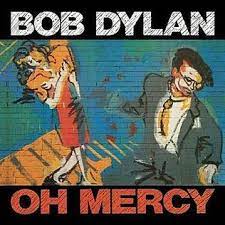
Bob Dylan

They say that victory’s sweet
Even deep in the cheap seats

Conor Obrest

Note: This list speaks for itself, it is simply my 20 favorite songs of all time that include lyrics. For this list I have included extended commentary on each song. When I first published this list it was 110 songs long, and I will publish a full 250 this time in several installments. With the first publication, several people let me know that they had discovered new songs from it, and honestly that is the best outcomes I could have hoped for. This list does not include ambient music or jazz, two genres I also love. The list is a product of nearly 40 years of intensive music listening, so it is, at a minimum, highly curated. Thank you for reading, and may you find a new favorite somewhere here.

1. Cape Canaveral — Conor Oberst

For the first time since I began making versions of this list, I have a new number one. Conor Obrest’s Cape Canaveral has slowly, almost imperceptibly, worked its way past every other song I love. I didn’t exactly wake up one morning and decide that it was the greatest song ever. I simply noticed that I had already begun treating it that way. I return to it constantly, and it still gives me full-body chills and moves me to tears almost every time I hear it. After nearly forty years of obsessive music listening, Cape is as good of a number that I can come up with.

Conor is my number five artist of all time, and the fact that Cape Canaveral has become the song above all others that explains why. Number one. There it is. Man oh man. I didn’t see this one coming.

I have loved Cope for about eight years since I first heard it shorty after the release of the record it is on, Conor’s solo self titled debut from 2008. It is in my opinion his most beautiful and moving song. Conor also wrote my number 13 favorite song, Easy/Lucky/Free, which I write about below. Cape Canaveral uses the space program—those televised launches from decades ago, the spectacle of rockets lifting off into the unknown—as a proxy for growing up in America in the latter part of the 20th century. It’s about distance, aspiration, and the strange way in which memory reshapes people and moments over time.

It is one of the most gorgeous American songs ever written. “I watched your face age backwards / changing shape in my memory / you told me victory’s sweet / even deep in the cheap seats.” This is one of the loveliest passages ever set to music. Oberst is doing something subtle and devastating here—he’s taking the language of triumph and reframing it from the margins. Victory’s sweet even deep in the cheap seats is not a grand statement, however it is oddly triumphant. It’s about making meaning over time, with partial access, and moving from watching to participating.

That’s what the whole song feels like: an attempt to construct something lasting out of fragments—TV images, half-remembered conversations, the emotional residue of growing up. The rockets go up, but the song stays grounded in what it felt like to watch them, to want something more without knowing exactly what that “more” was. Full body chills every time. Conor is my number three artist of all time, and Cape Canaveral is exactly why.

2. Leaving LA — Father John Misty 

As of recently, “Leaving L.A.” is my second favorite song of all time. I first heard it when Father John Misty released Pure Comedy in 2017, and I can remember almost exactly where I was. I was walking after work, headphones on, going down the stairs at a train station on my way to a Starbucks. I have had exactly two genuine musical epiphanies in my life. The first came in the summer of 1991, when I heard Bob Dylan’s acoustic “Every Grain of Sand”—the famous barking-dog version—on The Bootleg Series Volumes 1–3. The second came walking down those stairs listening to “Leaving L.A.” The song absolutely fucking flooded me.

And it is a motherfucker of a song. Thirteen minutes long, mostly acoustic, essentially one enormous unfolding narrative, and utterly unconcerned with whether you have the patience to follow it. Misty moves through his accelerating fame and his profound ambivalence about the same; Los Angeles and the absurdity of being a successful singer-songwriter there; marriage; self-mythology; artistic pretension; mortality; and his own suspicion that perhaps writing a thirteen-minute acoustic song about all of this is itself ridiculous. He even takes a drive-by at Amy Grant and contemporary Christian music along the way. Nobody is safe, least of all Father John Misty.

One of the song’s funniest passages is his description of music that sounds like “dollar signs and Amy Grant,” part of a larger assault on commercially manufactured profundity. But the jokes never exist merely as jokes. Misty keeps using comedy to approach things he cannot quite approach straight on. The strangest and best example is his childhood story about nearly choking to death on watermelon candy while shopping with his mother. An apparently ridiculous memory suddenly opens onto mortality: the adult artist looking backward at the child who could simply have ceased to exist right there, before any of the fame, records, marriage, drinking, jokes, or bullshit ever happened.

That movement—from comic digression into something unexpectedly frightening or tender—is the song’s great trick. “Leaving L.A.” keeps wandering away from its subject only to reveal that the wandering is its subject. This is a song about the stories we construct around ourselves, and about the increasingly absurd position of a man becoming famous for constructing stories about himself while simultaneously distrusting the entire enterprise.

And then the song closes movingly by bringing all that sprawl back down to two people and the possibility of another life: he could quit drinking; she could write her script. Yeah, right. As of this writing, I have no real clue whether Father John Misty has quit drinking, and no idea whether his best girl ever wrote that script. I hope so. What matters inside the song is that for a moment another version of their lives becomes imaginable—less spectacular, perhaps, but also less ridiculous. After thirteen minutes spent exploding his own mythology, Misty ends with something remarkably small and human.

I keep this one beside me at all times. It is one of the handful of songs I love falling asleep to, partly because its length and pace allow me simply to disappear inside it. Sometimes I make it to the end and sometimes I don’t. It hardly matters. I love this song and every line in it.

“Leaving L.A.” is the towering centerpiece of Pure Comedy, and it is by some distance my favorite Father John Misty song. There are plenty of others I greatly enjoy—“I’m Writing a Novel,” “The Night Josh Tillman Came to Our Apt.,” “Hollywood Forever Cemetery Sings,” “Chateau Lobby #4 (in C for Two Virgins),” “Mr. Tillman,” and “Nancy From Now On” among them—but none has ever hit me remotely like this one.

Thirteen-minute acoustic songs are not generally how one goes about acquiring casual listeners. Fine. If you are a literate music fan with any tolerance at all for the long, digressive, dirge-like form, give it thirteen minutes and let the bastard work on you. It has been working on me since the first time I heard it walking down those train-station stairs.

Number two. Father John Misty fucking rules.

3. Cruiser — Red House Painters

“Cruiser” is my third favorite song of all time. It narrowly nudges out Whiskeytown’s glorious “Houses on the Hill” and Craig Finn’s absolutely amazing “It’s Never Been a Fair Fight.” Right now I have it placed just behind “Leaving L.A.,” but damn, is it close. Full-body goosebumps. Tears. The whole fucking thing.

Like “Leaving L.A.,” “Cruiser” is a long song, and it has absolutely no interest in hurrying. It seems to be about the singer’s love for, or fascination with, a Japanese woman living in Los Angeles. According to the song, she possesses the “biggest smile from Tokyo,” and she came out to Los Angeles five years earlier. So there we are: Kozelek, a recent Japanese transplant, Los Angeles, and a car. That is more than enough to build a world.

The song meanders and takes its time. Along the way we get a tour of Los Angeles as it existed when Kozelek wrote it: driving around, streets and neighborhoods passing by, the city experienced not as a collection of landmarks but from inside a moving car. That matters. “Cruiser” really does cruise. It has the strange floating quality of driving around a city with nowhere particularly urgent to be, when the person beside you and whatever is coming through the speakers become more important than the destination.

And naturally, music is part of the landscape. One of the things I have always loved about artists like Kozelek is that beneath all the songwriting, mythology, and accumulated weirdness, they remain genuine music fans. Kozelek has spent his entire career listening, absorbing, interpreting, and arguing with other people’s songs. He has covered AC/DC, Modest Mouse, John Denver, Kris Kristofferson, Paul McCartney, and many others, often transforming the source material so completely that the cover becomes a Kozelek song.

I especially love his version of AC/DC’s “Rock ’n’ Roll Singer.” The original is a little too goofy for me; Kozelek strips away the attempted humor and plays the thing completely straight. Under the Red House Painters name, he recorded an acoustic version, and later, under his Sun Kil Moon moniker, he returned to it electrically. Suddenly what had been a cocky young rock song becomes something closer to a statement of purpose: this is what I wanted to become, and this is what I became. His cover of Modest Mouse’s “Never Ending Math Equation” is similarly amazing. Kozelek is an incredible singer, but he is also an extraordinary interpreter of the rock-and-roll canon.

And that musical consciousness matters in “Cruiser,” because the song feels partly like Kozelek constructing his own little canon in real time: the woman, the car, Los Angeles, whatever is playing, memory already forming while the experience itself is still happening. The city becomes inseparable from the music, and the music becomes inseparable from the person sitting beside him.

There are many Kozelek songs I love, and several more will appear below. “Have You Forgotten,” “Michigan,” “Japanese to English,” “Rock ’n’ Roll Singer,” and others all have legitimate claims on me. But “Cruiser,” for my money, stands head and shoulders above the rest.

It is romantic without being sentimental, sprawling without becoming shapeless, and beautiful without seeming to work particularly hard at being beautiful. It just rolls along until somehow you realize it has completely fucking destroyed you.

Number three. My man.

4 (t). Houses on the Hill

“Houses on the Hill” appears on Whiskeytown’s 1997 masterpiece Strangers Almanac. Until about a month ago, I was convinced that Strangers Almanac was by far Whiskeytown’s best record. Their final album, Pneumonia, is great too, of course, and contains “Jacksonville Skyline” as well as the absolutely glorious and unbelievably beautiful ballad “My Hometown.” But recently I’ve been getting deep into their 1995 debut, Faithless Street, and today I consider it every bit as good as Strangers Almanac. Songs such as the title track, “Lo-Fi Tennessee Mountain Angel,” and “Mining Town” stand out, along with many others.

However, it is “Houses on the Hill” that remains my very favorite Whiskeytown song.

The lyric is simply wonderful. The song reaches backward into another generation and constructs an entire vanished life out of photographs, letters, houses, war, and memory. My favorite moment comes when the narrator describes a young man being sent off to World War II. He leaves behind the woman he loves and carries her picture with him when he goes ashore. That tiny sequence absolutely destroys me. Ryan Adams can toss off an image like that almost casually and suddenly an entire life—love, separation, war, mortality—is sitting there inside a couple of lines.

Motherfucking full-body goosebumps. Full-body tears.

A lot of songs make me cry, and “Houses on the Hill” is right near the top of the list. Part of its power is how little it insists upon itself. There is no giant emotional announcement. Adams and Caitlin Cary, who co-wrote the song, simply let these remnants of somebody else’s life accumulate until the emotional weight becomes almost unbearable. It is a song about what survives people: houses, photographs, letters, stories—and the people who come afterward trying to reconstruct what those objects once meant.

I especially love the live-in-the-studio version included with the deluxe Strangers Almanac. The studio version is great. I love the studio versions of virtually all my favorite songs, obviously. But for whatever reason, I tend to love live versions even more, and this one is no exception. The performance was recorded for KCRW in September 1997, and it opens the song up beautifully; even the instrumental ending seems to let some additional air into the story. 

Ryan Adams has gone on to have an almost absurdly prolific career. His official discography already runs to dozens of releases, beginning with his solo debut Heartbreaker in 2000 and continuing right through new music in 2026. Heartbreaker contains “Oh My Sweet Carolina,” another of my favorite Adams songs and one that appears later in this list. There are many, many others.

But for now, “Houses on the Hill” remains my favorite Whiskeytown/Ryan Adams song by a little ways.

It simply fucking rules. Stay tuned.

4 (t). It’s Never Been a Fair Fight

5. Tulsa Queen — Emmylou Harris.

For years, “Tulsa Queen” was my answer to the question “what is the greatest song ever.” It was number one I thought. Don’t bother asking me again. And then, eventually, Cape Canaveral by Conor Obrest slipped past it. Barely. This isn’t really a demotion so much as the smallest possible movement inside the topmost tier: Tulsa Queen remains one of the most overwhelming pieces of music I have ever heard, and Emmylou Harris remains, for my money, the greatest vocalist who ever lived.

Then straight into:

I get full body chills and my eyes well up with tears every time I hear it…

The existing conclusion needs the corresponding tiny adjustment. Instead of “The GOAT. Pure legend. Full stop,” which contradicts #2, I’d go:

For a very long time, Tulsa Queen was the GOAT. Now it is number five. Nothing about the song has changed. I did. It is still absolutely legendary. Always will be.

I get full body chills and my eyes well up with tears every time I hear Tulsa Queen. Emmylou is the greatest vocalist of all time by far, and Tulsa presents the clearest evidence—not because it’s flashy or showy, but because it is so perfectly, devastatingly controlled. She doesn’t overpower the song; she becomes it. The song starts—“I saw the train/ in the Tulsa night/ calling out my name/ looking for a fight”—and it’s just pure magic. Just unbelievable. The phrasing, the restraint, the sense that the story is already in motion before you’ve even arrived—there is nothing like it. You’re not being introduced to a narrative; you’re being dropped into the middle of one that already feels lived-in and already carries weight.

What makes Tulsa Queen so overwhelming is that it distills everything that makes Emmylou Harris who she is as an artist across her entire career: the fusion of country, folk, and rock sensibilities; the emotional clarity; the ability to inhabit a character without ever losing the self; the sense that every line has been earned. From her earliest work through her later records, she has always been able to locate the emotional center of a song with uncanny precision, but here she doesn’t just locate it—she holds it, perfectly, for the entire duration. It exists in the same emotional universe as something like “Boulder to Birmingham”—another wonderful, better-known masterpiece—but Tulsa Queen goes deeper.

Where “Boulder” is open grief, expansive and communal, Tulsa Queen is interior, private, almost dangerous in how close it lets you get to the narrator’s unrest. It feels less like a performance and more like a confession you were never meant to overhear. There are no words in any language to fully describe the feeling of listening to Tulsa Queen. That’s not hyperbole; it’s recognition. The song operates at a level that bypasses explanation and goes straight to the nervous system. It doesn’t ask to be analyzed—it insists on being felt. Emmylou baby you remain the GOAT.

6. Faded — Afghan Whigs.

The Afghan Whigs’ lead singer Greg Dulli does something remarkable of Faded, which is blend swagger, menace, mystery, bravado, and also deep insecurity in one package. Seeing the Whigs play this as the encore at the Paradiso in Amsterdam in 2017 was one of the highlights of my life. It lands as an encore because it has to—it’s the only place a song like this can go. It doesn’t just end a set; it empties it out. Faded closes Black Love, which is not just an album but a fully realized world—cinematic, shadowy, saturated with urban crime, bad decisions, and the kind of late-night moral drift that never quite resolves.

Across the record, songs like Going to Town and Honky’s Ladder are all forward motion and attitude, pure swagger on the surface. But that swagger always feels a little overextended, like it’s covering something fragile underneath. By the time you get to Faded, the cover is gone. What’s been hinted at all along—doubt, damage, a kind of spiritual exhaustion—comes fully into view. There is no mystery as to why this has been the encore for every Whigs show for 30 years.

When Dulli asks to be lifted out of the night, to have someone look down and see the mess he’s in, it doesn’t feel performative. It feels exposed. The bravado is still there, but it’s cracked open, and what comes through is something far more human and far more dangerous. Not only is this the best Afghan Whigs song, Black Love is their best album by a mile. Everything they do well converges there—the mood, the storytelling, the tension between control and collapse—and Faded is the final, perfect release of that tension. He is a genius and the motherfucking man, and Faded is the best of many great Whigs songs. A worthy inclusion at number seven.

7. My Life Is Sweet — Simon Joyner.

“Met the drinker for a drink/ back when I was drinking everything but the kitchen sink”—and sure enough this song is about drinking, and drunks. Joyner’s friend is an alcoholic, and at the time of writing so is Joyner. They go to a bar and sit together, talking a little, mostly not, letting the night pass in that particular way that only two people who know each other well can manage.

Ultimately, this song is about male companionship, and how a quiet drink with a quiet friend can be life-saving when you really need it. Joyner takes a taxi home—drunk, or hungover, or somewhere in between—and collapses on the floor. And then the song ends with that extraordinary sequence where the city drops away, becomes something almost beautiful from a distance, and he arrives at that fragile, hard-won conclusion: my life is sweet. Anyone who is, or has been, a drinker will immediately recognize what Joyner is doing here—he is rationalizing the unrationalizable, but at the same time he’s not lying about it.

Is drinking so, so sweet? Yes and no, of course—and that tension is the point of this truly magnificent song. Part of what makes Joyner so compelling is how deeply rooted he is in the Omaha scene that would later produce Conor Oberst. Joyner is the elder figure there—born in 1971, a few years ahead of Oberst, who came up in the early ’80s generation—and his influence on Conor is both documented and unmistakable. Oberst has cited Joyner as a major influence, and you can hear it: the diaristic honesty, the willingness to let a song feel unfinished, the comfort with contradiction.

Joyner was mapping that terrain before it had a name, and before it had an audience beyond the local. He’s also massively underrated. He has other great songs—Fearful ManOne for the Catholic Girls—but My Life Is Sweet feels like the purest distillation of what he does best. There’s no artifice, no attempt to resolve the contradictions he’s living inside. Just a voice, a night, a friend, and the uneasy grace of getting through it. Anyone who’s been there knows: that’s more than enough.

8 (T). Never Aim to Please — Bash and Pop

Tommy Stinson, the bassist from The Replacements—went on to have, in my opinion, an even better solo career than the band’s lead singer Paul Westerberg. And considering that Westerberg is a genius and an absolute legend, this is saying something.

Stinson was barely out of childhood when the Replacements were at their peak—a teenager holding down the low end in one of the most chaotic, brilliant bands of their era. That early immersion shows up everywhere in his later work: the instinct for melody, the looseness, the sense that a song should feel lived-in rather than perfected. But what’s striking about his post-Replacements career—through Bash & Pop and his solo records—is how much he refines that instinct. The pure thrash and glorious sloppiness of early Replacements material gives way to something sweeter, more polished, but never sanitized. The edges are still there; they’re just better framed.

Never Aim to Please comes from Bash & Pop’s first record, Friday Night Is Killing Me, and Stinson has alternated between Bash & Pop releases and solo records over the 35 years since the Replacements broke up. In the first verse, Stinson sings about the absence of a point of view, and that marvelous line always reminds me of Westerberg’s writing on “Someone Take the Wheel”—that same sense of dislocation, of trying to find footing in a world that keeps shifting under you. There’s a great anecdote from Westerberg that early on, the Replacements pretended to hate The Rolling Stones—it was part of the pose, the punk posture. But it was just that: a pose. They actually loved the Stones.

And you can hear that lineage clearly in Stinson’s work. For all of his originality, he’s very much working in that classic rock tradition—songcraft, groove, emotional directness—but he does it in the best possible way, without nostalgia or mimicry. It feels inherited, not borrowed. Stinson may not claim to have a point of view in this song, but he’s been a remarkable curator and keeper of the Replacements’ legacy, especially as Westerberg has retreated from the music scene over the last decade. There’s a quiet authority in that, a sense of continuity that runs through his work. And the song itself? It just fucking kicks. It hits me in all the feels every time, and it is a worthy number nine.

9. A Bathtub in the Kitchen — Craig Finn.

My favorite of many possible Finn contendersBathtub is about friendship, guilt, redemption, betrayal, and mostly about thankfulness. It’s the greatest song ever written about New York City and also about moving to a big city in general. Finn compresses an entire early chapter of a life into a few lines—the arrival, the uncertainty, the desperation to be claimed by the city, and the friend who makes that possible by opening his door. That friend—Francis—is the emotional center of the song. Twenty years earlier, he’s the one who shows the narrator the ropes, lets him crash on the couch, gives him a foothold when he doesn’t have one. He is, in a very real sense, the reason the narrator makes it at all. And now, in the present of the song, Francis is down and out, struggling, a diminished version of the figure who once seemed stable and generous.

What makes the song hit so hard is the narrator’s response to that reversal. There’s hesitation, even avoidance. He tries, briefly, to pass the responsibility off—to suggest that someone else, someone more put-together, might be in a better position to help. It’s a small moment, almost throwaway, but it reveals everything: the discomfort, the guilt, the instinct to deflect when confronted with a debt that can’t really be repaid. Because that’s the truth the song circles around—some debts can’t be repaid. Not cleanly, not proportionally.

In the end, the narrator does give Francis money—two hundred bucks—but it lands with a kind of quiet insufficiency. It’s something, but it’s not enough, and it never could be. You can’t square that kind of ledger. You can only acknowledge it. And that’s where the thankfulness comes in. Not as a resolution, not as a way of tying things up neatly, but as a recognition that what was given mattered, even if what is returned will always fall short. Finn doesn’t offer redemption in the traditional sense. He offers something more honest: awareness, discomfort, and the attempt—however partial—to do right by someone who once did right by you. It’s a stunning, stunning song and an absolutely worthy number nine.

10. Dreadful — The Violet Burning

“Dreadful” by The Violet Burning fucking slaps. That’s really all there is to it. It just slaps. So damn hard.

The song is only two minutes and twenty-eight seconds long, and it is just totally dialed in. There’s no wasted motion, no long setup, no attempt to turn itself into something grander than it needs to be. It comes in, kicks ass, and gets out. I spend a lot of time in hotels and if “Dreadful” is playing when I leave the room, I usually leave it playing as loud as I can for, as I like to say, my good angels. Angels rule. Why not?

The Violet Burning are a criminally underrated band. Basically nobody today knows who they are, but I do, and I have loved them for years. The band began around 1990 in Orange County, California, and from the beginning the central figure has been singer, guitarist, and songwriter Michael Pritzl. The musicians around him have changed repeatedly over the decades, but Pritzl has remained the constant—the voice, songwriter, guitarist, and creative mainspring of the whole enterprise. 

And what an enterprise it has been. Pritzl has made more than twenty albums, EPs, and live recordings under The Violet Burning and related names, toured relentlessly through the United States and Europe, and somehow maintained a fiercely loyal audience while remaining almost completely outside the mainstream. Their early sound drew from post-punk and alternative rock—The Cure, U2, Echo & the Bunnymen—and over time expanded into the huge, atmospheric guitar music that has over time became unmistakably theirs. 

The Violet Burning came out of the Christian alternative-rock world, although Pritzl has never exactly fit comfortably inside that box. That puts him in the same broad lineage as people like Larry Norman, Gene Eugene, and Michael Knott: artists for whom faith was part of the work but never sufficient to explain the work. The music is too strange, too wounded, too beautiful, and often simply too fucking loud for that. Pritzl himself has always seemed interested in the collision between devotion and doubt, beauty and damage, transcendence and straight-up rock and roll.

R.I.P. Gene Eugene, the man. And R.I.P. Michael Knott, the motherfucking badass of all badasses.

In addition to being hugely underrated, parts of The Violet Burning catalog remain frustratingly difficult to find on the major streaming services. That is a real shame, because this is precisely the sort of band that should be continually rediscovered. They built an enormous body of work without ever becoming remotely as famous as the quality of that work deserved. Even at their commercial peak they were essentially an independent proposition, building their audience through touring and word of mouth rather than anything resembling mainstream success. 

I wish more people knew The Violet Burning. I wish more people heard these songs.

My number two Violet Burning song is “Gorgeous,” which we’ll get to a little later. That song is enormous, emotional, and glorious in an entirely different way. But for now, “Dreadful” is the one.

Two minutes and twenty-eight seconds. Nothing wasted.

Number ten.

This bad boy fucking slaps.

11. The Traitor — Leonard Cohen

Cohen’s early career began not as a songwriter but as a poet and novelist—already established in literary circles before he ever stepped into popular music. When he moved into song, it wasn’t a reinvention so much as a translation. Early breakthroughs like Suzanne and later Bird on the Wire introduced a voice that felt unlike anything in contemporary pop: formally literary, emotionally restrained, but spiritually enormous.

Across a career that stretches from that early poetic minimalism to late-period gravity, Cohen repeatedly returned to the same emotional territory in different registers. Seems So Long Ago, Nancy carries quiet tragedy without spectacle. Death of a Ladies’ Man leans into chaos and contradiction. Alexandra Leaving and That Don’t Make It Junk show a late-career clarity—less ornament, more acceptance. And then, right at the end, The Night of Santiago from Thank You for the Dance—completed after his death by his son Adam—feels like a final echo rather than a conclusion, as if the voice is still resolving even after it has stopped.

But it is this passage that sits at the center of everything: “I told my mother, mother I must leave you / preserve my room and do not shed a tear / should rumor of a shabby ending reach you / it was half my fault and half the atmosphere.” Quite possibly the greatest verse ever set to paper.

There is something almost unbearable in its tenderness—the attempt to leave without destroying what you came from, to depart without turning departure into permanent damage. “Preserve my room” is not a realistic request; it is a desire for time to stop, for memory to remain untouched while the self moves forward into uncertainty, drift, and likely failure.

Cohen does something very few writers ever manage: he distributes responsibility without dissolving it. “Half my fault and half the atmosphere” is not an excuse—it is an ethics of existence. The self is accountable, but so is the world that formed it. There is guilt here, but no self-pity. There is clarity, but no absolution. He is naming the condition of being human with a precision that feels almost too large to hold. And what makes the song extraordinary is that it refuses resolution. Cohen never tries to solve the tension he has introduced. Instead, he inhabits it fully.

Across his work—from the early poetic breakthrough to the late songs of acceptance and erosion—he speaks to the quester, the striver, the poet, and the mystic in each of us. Not by offering answers, but by dignifying the act of searching itself. Leaving, longing, failing, seeking—these are not problems to resolve, but conditions to endure with awareness. His voice carries all of it: resignation, yearning, and a kind of quiet, unbreakable grace.

His best by a mile. Simply marvelous.

12. Gorgeous (live)— The Violet Burning

“Gorgeous” is gorgeous. It is gorgeous, as indicated by the title, and probably one of the most gorgeous songs ever recorded. This is my number two favorite Violet Burning song, as indicated in my discussion of “Dreadful” above. The Violet Burning is a criminally underrated band. I will never understand how they don’t have a bigger footprint. They deserve to be widely recognized and appreciated.

While Dreadful is almost certainly the slappiest song of all time, if that is a thing, Gorgeous is absolutely one of the sweetest. It starts with Michael Pritzl, the band’s lead singer and creative center, singing, “I swear it was the Fourth of July.” Oh yeah, Michael? Are you sure? Okay, baby, whatever you say. So yeah, it’s the Fourth of July: patriotism, mom and pop, apple pie, fireworks—the whole nine. But Pritzl immediately turns all of that American iconography into the language of romantic awe. The fireworks aren’t really the point. The person he is looking at is.

And then the song eventually delivers its payoff: baby, you’re so gorgeous.

Motherfucker.

Of course.

Gorgeous originally appeared on Demonstrates Plastic and Elastic, released in 2001, one of the strangest and more adventurous records in The Violet Burning catalog. The album moves between glam, alternative rock, electronics, enormous guitars, and quieter atmospheric material, with Gorgeous arriving towards the end. It is a perfect example of what makes Michael Pritzl such an unusual songwriter: underneath all the sonic experimentation is a deeply sincere romantic. He can build a wall of noise around a feeling, but he never seems embarrassed by the feeling itself.

Pritzl has described honesty and vulnerability—including honest conversations about God and ordinary human life—as central to what the band does. He specifically included Gorgeous among the songs on Demonstrates Plastic and Elastic that embody that impulse. That combination—spiritual yearning, romantic yearning, distortion, beauty—is basically the Violet Burning universe in miniature.

And Gorgeous has endured. It remained important enough to the band to appear late in sets and sometimes close them many years after its release. I particularly love the live versions because Pritzl can stretch the song outward until what begins as a simple declaration of attraction becomes something much larger. The sweetness survives the volume. If anything, the volume makes it sweeter.

That is also why I can put Dreadful and Gorgeous this high on the same list without feeling remotely repetitive. They represent opposite poles of what I love about this band. Dreadful fucking slaps. Gorgeous fucking glows. One makes me want to turn the stereo up until the walls shake; the other reminds me that sometimes the most effective thing a songwriter can do is look at another human being and say the simplest possible thing: you are gorgeous.

And Michael Pritzl makes me believe him every goddamn time.

13. Albuquerque Mark Kozelek (Neil Young Cover)

Well, they say that Santa Fe
Is less than ninety miles away
And I got time to roll another number and rent a car
Oh, Albuquerque.

Oh my God, Neil. What are you doing to me? Neil, baby, you’re breaking my heart. Neil, shut the fuck up.

“Albuquerque” appears on the back end of Neil Young’s 1975 record Tonight’s the Night, immediately before “New Mama.” “Roll Another Number (For the Road),” with which I constantly confuse it for reasons that will shortly become obvious, appears a few songs earlier. Tonight’s the Night, as many readers will remember, is Neil’s record most haunted by death. It was largely recorded in 1973 but held back until 1975, and the deaths of Crazy Horse guitarist, singer, and songwriter Danny Whitten and Young’s roadie Bruce Berry hang over the entire thing.

Berry is famously eulogized in the two versions of “Tonight’s the Night” that bookend the record: “Bruce Berry was a working man / He used to load that Econoline van.” Neil, my man.

Obviously Neil Young loved Bruce Berry and Danny Whitten. He basically wrote an entire record out of the grief that followed their deaths. Tonight’s the Night is consequently a strange, ragged, drunken, grief-stricken motherfucker of a record. It sounds at times as though everybody involved is barely holding the thing together, which is exactly why it works.

Tonight’s the Night also includes one of the first Neil Young songs I ever heard, “Tired Eyes,” with the stone-cold classic opening: “Well, he shot four men in a cocaine deal / And he left them lying in an open field / Full of old cars with bullet holes in the mirrors.”

Neil. Bullet holes in the mirrors? Really, baby? Again: oh my.

In any case, I often get “Albuquerque” and “Roll Another Number” confused, simply because “Albuquerque” itself contains the line, “So I’ll roll another number for the road / I feel able to get under any load.” Obviously Mr. Young was rolling his own during this period.

Probably other periods too.

But my favorite lines from “Albuquerque” are these: “So I’ll stop when I can / Find some fried eggs and country ham / I’ll find somewhere where they don’t care who I am.”

Motherfucker.

By 1975, Neil Young was already a global superstar. He was massive in his native Canada, massive in the United States, and increasingly massive around the world. In his wonderful song “Don’t Be Denied,” Young writes about reaching that point—record executives suddenly all over him and the band when all he really wanted to do was play rock and roll. Neil, fucking do it.

And that context is part of what makes “Albuquerque” so moving. This is a famous man singing about wanting to disappear. He doesn’t want the record company, the expectations, the mythology, or apparently anybody asking where the hell Neil Young is. He wants to get into a car, roll another number, eat some fried eggs and country ham, and go somewhere where nobody cares who he is. It is an almost comically modest fantasy of escape, which is precisely why it works.

And then there is Mark Kozelek. I love Neil Young’s original, obviously, but it is Kozelek’s cover that gets the spot on this list. Kozelek has always been a magnificent interpreter of other people’s songs—AC/DC, John Denver, Modest Mouse, Paul McCartney, Kris Kristofferson, and many others—and he understands exactly what makes “Albuquerque” work. He doesn’t try to improve Neil Young. He slows everything down, opens up the spaces between the words, and lets the loneliness that was already buried in the song come completely to the surface.

That is what the best covers do. They don’t replace the original; they reveal something that was already there. Neil Young wrote a great song about escape. Mark Kozelek heard the loneliness inside the escape and made it almost unbearably beautiful.

Fried eggs. Country ham. Nobody caring who you are. Sometimes that is the whole fucking dream.

Neil, my man. My god what an amazing song.

14. Oh My Sweet Carolina — Ryan Adams

One of the most beautiful and sad songs in modern American songwriting. The record Heartbreaker—Adams’ solo debut after his run fronting Whiskeytown—remains his peak for many listeners. It’s also the album where everything still feels unforced: the writing, the pacing, the emotional exposure. Later records like Gold brought wider recognition, and something like Chris gets close in flashes, but Heartbreaker has a coherence of mood that he never quite replicated.

What defines Oh My Sweet Carolina is its dual perspective. On the surface, it’s a travel song—young man on the road, drifting through cities like Cleveland, accumulating damage, spending energy and money with a kind of reckless momentum that feels both chosen and inevitable. But underneath that motion is something much older: a pull backward, toward origin, toward a place that isn’t just geographic but emotional. North Carolina isn’t just home—it’s coherence.

The Cleveland passages (“So I went on to Cleveland and I ended up insane/ I bought a borrowed suit and learned to dance/ And I was spending money like the way it likes to rain/ Man, I ended up with pockets full of cane”) carry that classic Ryan Adams contradiction: charm and collapse in the same breath. The narrator moves through instability with the confidence of someone still convinced that motion equals meaning, even as that belief is starting to fail him. It’s the sound of someone learning, mid-stream, that movement alone doesn’t resolve anything. And then the emotional center of the song reveals itself: (Oh mw sweet Carolina/ what compels me to go/ oh, my sweet disposition/ may you one day carry me home), the longing not just to return, but to be returned in one piece. Not improved, not transformed—just intact.

This is where the collaboration with Emmylou Harris matters. Her voice doesn’t decorate the song; it stabilizes it. It sounds like witness. Adams has written other songs that brush this same emotional territory—English Girls ApproximatelyOh My God, Whatever, Etc.Still a CageBirmingham—but none of them quite hold the same balance of youth and exhaustion, romance and reckoning. Oh My Sweet Carolina feels like a hinge between those states: a young man already speaking like he understands what the older version of himself will miss. It’s a debut record moment that feels strangely final. A song about going forward that only makes sense when you understand what it costs to leave things behind. A truly majestic entry—and a worthy entry here at fifteen.

15. (T) Montreal Rock Band Somewhere — Happyness

“Montreal Rock Band Somewhere” is totally out of control. Of course it is. What else can you say about a song that contains the lyric, “I’m wearing Win Butler’s hair / There’s a scalpless singer of a Montreal rock band somewhere”? Win Butler is, of course, the lead singer of Arcade Fire, who suck.

They suck.

Arcade Fire hit the big time with Funeral, released in 2004. I like Funeral okay, but I haven’t listened to it in more than a decade, and I probably never will again. It just isn’t my speed. It sounds to me like a concept record: operatic, overblown, and the production lets it down at every turn.

So yeah, I don’t like Arcade Fire.

However, Happyness is massively underrated. Other than The Violet Burning and maybe Daddy Issues, Happyness is, to my mind, the most underrated band of all time. And that is saying something.

“Montreal Rock Band Somewhere” runs 5:04, and it is a sprawling guitar workout that somehow feels much bigger than its running time. The Happyness boys can really fucking play. That sometimes gets obscured by how funny they are, and by the deliberately tossed-off quality of the whole operation. The songs can sound as though three guys wandered into a room, made each other laugh, picked up their instruments, and accidentally recorded something brilliant. But listen underneath the jokes: these guys know exactly what they are doing.

There is also some weird history surrounding the song’s placement. Weird Little Birthday was originally released in the UK in 2014 as a 13-song record without “Montreal Rock Band Somewhere.” The expanded 2015 release added four bonus songs, with “Montreal” coming immediately after what had originally been the album closer, “Monkey in the City.” That expanded record also contains “Orange Luz” and the wonderfully titled “Refrigerate Her,” but those were already part of the original album. 

I am fascinated by song order on records, and I spend a ridiculous amount of time thinking and writing about it. “Janie Jones” goes first. “Rocks Off” goes first. Some songs simply announce themselves as openers or closers. “Montreal Rock Band Somewhere” feels to me like a closer: sprawling, funny, strange, guitar-heavy, and just unresolved enough to leave the record hanging in the air after it ends.

There are plenty of other great songs on Weird Little Birthday, including the title track and “Leave the Party.” In “Leave the Party,” for example, the narrator proposes killing everyone at the party and then heading home.

Really, baby? You’re going to murder the whole party and just jet like that? Settle down. Take a shower. Think things through. Not the best move perhaps.

They followed the debut with Write In in 2017 and eventually Floatr in 2020, a much slower, denser, stranger record. I like Floatr, but it is not an easy record to get into. The immediacy and wiseass humor of Weird Little Birthday are still there in places, but everything feels more submerged. It is the sort of record that asks you to come toward it rather than coming toward you.

And maybe that helps explain why Happyness never really broke through. They were always slightly sideways to whatever might have made them commercially successful. They can write hooks, they can make enormous guitar noise, the songs are genuinely beautiful, and they are extremely funny. However for some reason they never seemed particularly interested in making things easy for their audience. Even their best songs tend to wander around, stop somewhere unexpected, make a joke, get sad, and then suddenly fucking explode.

“Montreal Rock Band Somewhere” contains almost the entire Happyness proposition in five minutes. It is funny without being a novelty song, melancholy without announcing itself as melancholy, and loose without actually being sloppy. Beneath the Win Butler joke is a genuinely beautiful piece of guitar music made by a band that understood exactly how much room a song sometimes needs.

They never became Arcade Fire. Good. I’ll take Happyness every day of the week.

15. (T) Crushed Out — Bad Moves

17. Caribbean Wind — Bob Dylan

18. (T) Center of Asia — Paul Pena 

19. (T) Rocket and a Bomb — Michael Knott

This is Knott’s best-known—and, for many people, only known—song. It’s the one that traveled beyond the small, fractured world he spent his career navigating, the one that people who don’t know the rest of his catalog can still recognize. And that’s fitting, because it captures almost everything that made him singular. Knott never fit comfortably inside the Christian rock community that was supposed to be his home. He clashed with labels, bounced from one situation to another, tried repeatedly to start his own imprints just to maintain control of his work, and spent much of his career existing in the margins of an already marginal scene. There were too many expectations, too many rules about what a “Christian artist” was supposed to sound like, what he was supposed to say, how cleanly he was supposed to resolve things. Knott refused all of it.

You can hear the lineage—artists like Larry Norman laid some of the groundwork—but Knott is no inheritor in the traditional sense. He’s a total original. Where Norman and others often leaned toward proclamation, Knott leaned into contradiction, mess, unresolved tension. He wasn’t interested in presenting faith as an answer; he was interested in showing what it felt like to live inside it when the answers didn’t come.

His career reflects that restlessness. From the early chaos of Popsicle and Popsavers, through the darker, more aggressive phases of L.S. Underground and LSU, into his solo work and projects like Aunt Betty’s, Knott kept shifting forms, refusing to settle into anything that could be easily categorized. The sound changed, the bands changed, the labels changed—but the core impulse didn’t: tell the truth as he experienced it, even if it didn’t line up with what anyone wanted to hear. Rocket and a Bomb distills all of that into something deceptively simple. There’s humor in it, almost absurdity—“Mr. God, is there a Ms. God? Can she help me find a job?”—but it lands because it’s so nakedly real. This is a man of Christ who is also a man of the world, standing in the gap between those identities, not reconciling them but living them both at once. He’s not asking for salvation in the abstract; he’s asking for something immediate, practical, human. He just needs a goddam job.

That tension runs through everything he ever said and did. His line—“I know Christ. It doesn’t make me good; it doesn’t make me bad; it doesn’t make me anything. It just means I know Christ.”—might be the clearest articulation of his entire ethos. Faith is not a moral upgrade, not a solution, not a transformation you can point to and quantify. It’s a relationship, and relationships are messy. So what is a rocket and a bomb? They’re things most people don’t get to touch. Power, transcendence, impact—forces that exist beyond the everyday. The narrator wants a job, something stable, something achievable. But he also wants more. He wants access to something larger, something explosive, something that breaks the limits of an ordinary life. Knott lived that contradiction. He lived fast, pushed hard, refused to smooth out the edges that made him difficult to categorize or contain. He burned through systems that couldn’t hold him, left behind a body of work that feels both deeply personal and strangely universal. He had to.

20. There Must Be More Than Blood — Car Seat Headrest.

This is a tricky one, because it forces us to deal with a shift—not just in a song, but in an artist. My thesis is that this is Will Toledo going into a kind of relative hiding, and the song reads like a document of that transition in real time. His early work—from Beach Life-in-Death through Nervous Young Man to Sleeping with Strangers—was as direct, as exposed, as heart-on-the-sleeve as anything in the last decade of rock music. He wasn’t just confessional; he was incapable of not being confessional. He was the heart on his sleeve songwriter of his generation. You didn’t have to work to understand him—you just had to be willing to feel what he was feeling.

And then you put that next to someone like John Darnielle—super prolific, deeply lofi in his early approach, but always a little more mediated, a little more constructed. Darnielle throws his material against the wall and lets it accumulate into narrative. Toledo, at his best, just bleeds. So when Making a Door Less Open arrives, even the title signals a shift. Something is closing. Something is being sealed off. The masks—first the normal face coverings, then the Trait mask, then the gas mask—aren’t just stagecraft. They’re statements. The question isn’t “what is he hiding?” but “why does he suddenly feel the need to hide at all?” There Must Be More Than Blood sits right in the middle of that tension. You get these images of dislocation—of a life that used to feel rooted and now doesn’t. The delta, the shoreline, the houses stripped away—it doesn’t read like a literal disaster so much as an internal one. The sense of ground disappearing. Of structures—family, identity, whatever “home” used to mean—losing their coherence. He talks about wasting time, but you know that’s not true. He’s one of the most prolific songwriters around. What he’s really describing is a shift in how that time feels from the inside.

And then there’s the second movement—the red-eye flight, the self-recognition that barely qualifies as recognition at all. He sees himself, but only as an outline, a set of lines without substance. That’s the real break from the early work. The old Toledo was hyper-present, almost overwhelmingly so. This Toledo is thinning out, becoming harder even for himself to locate. So what do you do when you can’t see yourself clearly anymore? You disappear further. You become, in a sense, the Invisible Man. That’s what the masks start to feel like—not affectation, but adaptation. A way of dealing with a self that no longer feels stable enough to present directly. And if you follow that thread forward, you get to The Scholars—The Scholars—his most recent record. It’s even more oblique than Door. There are great songs there—Stay With Me (I Don’t Want to Be Alone)Equals—but they’re harder to parse, less immediately accessible. The emotional core is still there, but it’s buried deeper, refracted through more layers.

Part of that may simply be life catching up with him. Toledo dealt with serious health issues in the lead-up to that record—long COVID, histamine intolerance—and the process became more collaborative, less singularly driven. That alone changes the texture of the work. The lone voice becomes one voice among several. The signal diffuses.So There Must Be More Than Blood starts to feel like a hinge point. The moment where the old mode—pure exposure, pure immediacy—begins to give way to something more guarded, more fragmented, more difficult to access. But the core hasn’t disappeared. It’s just harder to reach. And that’s why the song matters. It captures an artist in the act of losing something essential—or at least transforming it into something less direct, less available, maybe even less comforting. Will Toledo is a mysterious guy. Deep, fragile, a little haunted, clearly carrying more than he lets on. He’s dealt with some tough stuff, and you can feel it in the way the work shifts over time. And for anyone still saying “rock is dead”—they can fuck off. There is still The Hold Steady and Car Seat Headrest making records that matter, records that wrestle with something real. You just have to be willing to meet them where they are now, not where they used to be.


On Conor Oberst’s “Cape Canaveral”: The Greatest Song of All Time

Note:

I have been working for several months on pretty challenging project: ranking my top 250 favorite songs of all time. Yeah I know. It’s a lot.

There are now nearly 500 songs under consideration for what I continue, somewhat inaccurately, to call my Top 250. Songs rise. Songs fall. Songs appear from nowhere and kick the living shit out of songs I have loved for thirty years.

And then something genuinely unexpected happened.

For the past decade of more, Emmylou Harris’s “Tulsa Queen” has been my favorite song of all time. I assumed it probably always would be.

I was wrong,

The new number one is Conor Oberst’s “Cape Canaveral.”

This essay is partly about that song and partly about the forty-plus years of listening that somehow brought me to it: childhood folk records, American musical history, Emmylou Harris, Bob Dylan, Craig Finn, Bright Eyes, Better Oblivion Community Center, Ryan Adams, live music, and the strange experience of discovering that a song you have known for years has suddenly become something else entirely.

Music rules, everybody.

Long live music.

Epigraphs:

Music rules
—Evervbody

I support the French Revolution
—Dean Wareham

I heard that victory’s sweet/ even deep in the cheap seats
—Conor Oberst

Introduction:

For the last several months on the Kyoto Kibbitzer, I’ve been working on a piece entitled “The Top 250 Songs of All Time.” This is, of course my list, and it is therefore entirely subjective. Nevertheless, it is the product of more than forty years of intensive, daily listening to music of all kinds.

“Cape Canaveral,” by Conor Oberst, recently displaced “Tulsa Queen” as my number-one song of all time.

This is no small thing. “Tulsa Queen” has been my favorite song for at least ten years, possibly longer. The first full album of hers that I fell in love with was the 2008 live record Spyboy. I knew of Emmylou before that, of course, and I especially liked “’Til I Gain Control Again,” which at that point I knew largely through the immaculate This Mortal Coil cover. I was also familiar with her connection to Gram Parsons, and knew how devastated she had been by his death. I knew songs like “Boulder to Birmingham,” and I may or may not have heard “Tulsa Queen” a time or two. I don’r know. It was all a long time ago.

In any case, it was Spyboy that really made me pay attention to Emmylou for the first time. I devoured the record and loved it. I still do.

Listening For Something

By the time I heard Spyboy, I had already listened intensively to hundreds and hundreds—probably thousands—of records. In fact, my relationship with music goes much farther back than that.

When I was six or seven, Joan Baez’s “The Sweet Sunny South” was the first song I truly fell in love with. It simply captivated me. About a year earlier, I had dug an old record of American folk songs out of what we called the “back closet,” which was actually the front closet. I forget the title. It was something straightforward, along the lines of The Greatest American Folk Songs.

The song I really fell in love with was “The Big Rock Candy Mountain.” This song contains the great verse:

In the Big Rock Candy Mountains
You never change your socks,
And the little streams of alcohol
Come a-trickling down the rocks

I understood the song, even then, to be a fantasy of escape: the mythical paradise of the hobo, where ordinary deprivation and misery have somehow been turned upside down.

American musical history fascinates me. In the mid-twentieth century, collectors such as Alan Lomax preserved thousands upon thousands of American folk performances that might otherwise have disappeared. Those archives remain an invaluable resource for musicians, critics, historians, and ordinary music fans alike.

I’ve poked around in archives like Lomax’s myself, and I find them endlessly fascinating. My primary musical preference remains American and British folk and Americana. I also love most forms of country music, although, to be honest, some popular country gets a little too saccharine and sappy for me.

I also love indie and alternative rock, especially the indie music of the 1990s and early aughts. As I’ve written elsewhere, I don’t keep up with new music these days as much as I probably should. I do try to keep up with new releases from favorite active artists: Conor Oberst, Craig Finn, Sun Kil Moon, Ryan Adams, Neil Young, and even Bob Dylan, who remarkably continues making music well into old age.

And this brings me back to “Cape Canaveral.”

When I finally fully appreciated the song, I realized something strange:

I had been listening for it my entire life.

Cape Canaveral

For my money, “Cape Canaveral” is primarily a song about escape.

It is also a song about the vicissitudes of patriotism, about being an American, about the Fourth of July, and the American space program. It is one of the sweetest songs I have ever heard. It is also super sad. Conor just has a way of breaking a guy’s heart.

There is one particular acoustic live performance on KCRW in 2014 that I particularly love. Conor introduces the song by talking casually to the audience about his big backyard in Omaha, being outside at night, looking up at the stars, and relaxing with whoever happens to be beside you. Then the first few notes hit, and the effect is devastating.

I love music. I love live music the most. I also love musicians introducing their songs. I’ve written about this at some length elsewhere. These little introductions can become almost as important to me as the songs themselves. They cement a song in a place and a moment. They also give you a little insight into the artistic process, which I find super cool.

And then the song starts.

What gets me first is the sound. “Cape Canaveral” is remarkably spare. Conor doesn’t overplay things. The acoustic guitar carries the song along gently, and his voice sounds simultaneously intimate and far away. The whole thing has the quality of somebody sitting outside late at night, thinking about his life while everyone else has gone to bed.

And then there are the images: rockets, orange groves, interstate highways, television, war movies, stars, cheap seats. The song keeps moving between the enormous and the ordinary: outer space and somebody’s backyard; American history and private memory; the grand technological dream of the space program and one lonely human being trying to understand where he is.

That scale is part of what makes the song so beautiful to me. The rocket goes up. The stars get smaller. Everything changes.

And then there is the line that just breaks my heart every time:

Victory’s sweet
Even deep in the cheap seats

FUCK YEAH CONOR. You know it, baby.

And underneath all of this, I hear escape.

That is the thread that connects “Cape Canaveral” to “The Big Rock Candy Mountain” for me. One song imagines a hobo’s paradise and the other looks toward rockets, highways, and the night sky, but both contain the same ancient human impulse: maybe there is somewhere else to go.

Maybe there is some kind of life beyond this one. Maybe if you keep moving long enough, something will finally open up for ya.

For now, anyway, “Cape Canaveral” is my favorite song of all time.

Is Conor Obrest My Favorite Songwriter?

As I write this today, when I really think about it, Conor Oberst may be my favorite songwriter of all time.

Actually, I have three favorite songwriters and a close fourth. My three are Conor Oberst, my current favorite; Bob Dylan, the historical champion; and Craig Finn.

Until very recently, I would have sworn to you that Finn was—and probably always would remain—my favorite songwriter. But it has now been a few weeks since I replaced “Tulsa Queen” with “Cape Canaveral,” and during that time I have probably listened to “Cape Canaveral” eighty or a hundred times. Sometimes I listen on Spotify. More often, I return to the live performance.

Conor first burst onto the scene as a teenage wunderkind with Bright Eyes. I like Bright Eyes a lot. I especially love “Easy/Lucky/Free” and “Gold Mine Gutted,” both from 2008’s Digital Ash in a Digital Urn. This is a curious and funny title, and I like it.

A lot of people also know I’m Wide Awake, It’s Morning. I like that record too, but it has never really floated my boat.

When it comes to Conor’s solo catalog, however—and then Better Oblivion Community Center, his collaboration with Phoebe Bridgers—the picture starts to shift.

In addition to “Cape Canaveral,” I love “Classic Cars,” and “A Little Uncanny,” which is totally out of control. I love “Next of Kin,” including this wonderfully deadpan line:

Yeah I met Lou Reed and Patty Smith
I didn’t make me feel different.

I liked these lines so much that I used them as an epigraph to an earlier piece.

I love “No One Changes,” one of Conor’s saddest songs. I love “I Don’t Want to Die (In the Hospital),” which is also extremely funny. I love “The Rockaways.” I love so many of his songs.

And then there is Better Oblivion Community Center.

When I first hear the record, the immediate standout was “Dylan Thomas.” I wrote about it almost immediately in an essay called “On the Song Dylan Thomas and Rhyme.”

I wrote that piece very fast—in ten or twelve minutes, as I recall—while standing on a train from Akasaka Station to Tokyo Station.

I’m proud of the piece. Quite improbably, it has also experienced a dramatic resurgence in readers recently.

I find all this very exciting. It makes me proud to be a writer and proud to have kept a near-daily blog for all these years. I love writing. I love reading. I love everything about them, and I always have.

There are many other great Conor and Bright Eyes songs I could name, but the list would tale up too much space. Suffice it to say that today I believe Conor Oberst and Craig Finn are the two greatest songwriters working, while Dylan remains the historical champion.

Ryan Adams

If Conor is my current favorite, Finn is tied or running a very close second, and Dylan remains the historical champion, I would be remiss not to mention Ryan Adams in the four spot.

There is one ugly episode in Conor’s history worth addressing first. In 2013, a woman publicly accused Oberst of raping her after a Bright Eyes concert years earlier. Oberst denied it. The woman subsequently retracted the accusation entirely apologized, and admitted that she had fabricated it.

Making a knowingly false accusation of rape is an appalling thing to do. It harms the falsely accused person, and it also makes life harder for actual victims of sexual violence. Rape is an atrocious crime. Deliberately inventing one is a different act with different consequences, and there is no reason for me to construct some kind of grand hierarchy here. The relevant point is simpler: the allegation against Oberst was withdrawn by the person who made it, who acknowledged that she had fabricated it.

Ryan Adams presents a messier case.

In 2019, multiple women, including his former wife Mandy Moore and Phoebe Bridgers, a then up and coming musician who toured with Ryan around this time, publicly accused Adams of manipulative or abusive behavior. Moore described psychologically controlling behavior, and said that Adams had not sufficiently helped to advance her music career. Specifically, she accused Adams of not giving her free studio time. At the time and still today, I find this accusation completely ridiculous. It is his studio. He can with it whatver he wants.

Bridgers, in turn, described a romantic and professional relationship that she said had became emotionally abusive. She finished the tour with Adams, and the two went their separate ways. Another accusation was more serious. Adams disputed significant portions of the reporting. As of this writing, Adams has never been arrested or charged for any of these incidents.

Whatever judgment one makes about Ryan Adams the man, none of this changes his greatness as a songwriter.

“Oh My Sweet Carolina,” “Damn, Sam (I Love a Woman That Rains),” and “Come Pick Me Up” are indelibly etched into the American folk-rock canon. Mandy Moore has had an successful career of her own, but she and Adams occupy very different musical territories, and comparing their importance as songwriters isn’t particularly helpful.

There is also a curious connection here. Bridgers later formed Better Oblivion Community Center with Conor Oberst, an older man like Adama. I have no idea whether Conor and Phoebe were ever lovers, however it is fun to ship them. I kind of hope they got together once or twice in the studio or at the hotel or something.

I’ll never know. And it’s none of my business.

Ryan therefore stays in the four spot: a difficult man by numerous accounts, a songwriter whose work has meant an enormous amount to me, and another tributary feeding the musical river that eventually brought me to “Cape Canaveral.”

The biography matters. The allegations matter. But this is an essay about listening.

And his songs are why Ryan Adams is here.

A New Number One

So that’s about it. I have a new favorite song, and it’s “Cape Canaveral.”

I don’t foresee it getting knocked out of the number-one spot anytime soon. Of course, I thought the same thing about “Tulsa Queen.”

And I was wrong.

Right now, “Leaving LA,” the glorious song by Father John Misty, is number two. “Cruiser” is number three. The totally slapping “Dreadful,” by The Violet Burning, is number four. And “Tulsa Queen” has now been bumped all the way down to number five.

Sorry, baby. You know I love you.

I continue to listen to music every day, often for several hours. I sleep to music. I wake up to music. I shower and brush my teeth to music. I read to music. I eat to music. I drink coffee and tea to music. I make love to music.

I love music more than almost anything in my life, except my son, of course. I love nearly every form of music, and I love live music most of all. The thrill of a great live concert is unequaled by almost any other experience under the sun.

I did get the chance to see Conor live in Osaka just a few months ago with my friend Jack. It was a small venue downtown. Conor was great. He opened with a few songs I knew and a few I had never heard before.

Although I was having a good time, unfortunately I was so zonked that I had to leave after only about twenty-five minutes. I was disappointed, but I was so tired that I simply had no choice.

Jack told me on the phone the next day that he had left only about five minutes after I did. I guess he too was beyond all help.

That night, anyway, we were completely out of control.

Long Live Music

Part of me wants “Cape Canaveral” to hold onto the number-one spot forever.

Another part of me hopes a new challenger emerges.

“Leaving LA” and “Cruiser” are the obvious contenders, with “Dreadful” right there too. “Tulsa Queen” has already fallen four places, so I don’t see her charging back to number one anytime soon.

But who knows?

The artists I listen to most frequently these days include Whiskeytown and The Jesus and Mary Chain. Both absolutely slap and totally rule. Whiskeytown occupies the folk/country side of my canon; The Jesus and Mary Chain occupy the alternative and early-indie side.

Other artists I play constantly include Craig Finn, Happiness, Daddy Issues, The Violet Burning, and Michael Knott, and many others.

R.I.P. Michael Knott. R.I.P. to a legend.

I listen to so many songs every day that I can hardly keep count. That is one reason I’ve taken to making these lists in the first place. The rankings change. The artists change. I change. Some song I’ve heard fifty times suddenly opens itself up on the fifty-first listen and becomes an entirely different thing.

That is part of the fun. That is part of the mystery. That is why I keep listening.

Long live music. Long live live music. Long live music fans.

Long live Conor Oberst. And long live “Cape Canaveral.”

Amen.


Dedication:

For musicians and music fans everywhere. I love you. And for Conor Oberst. You’re the fucking man, baby.

Scenes from Hamilton College III: Sophomore Year I (with cameos from Sonic the Hedgehog, Ani DiFranco, and Candle Time)

Note: In Part I and Part II of this series I wrote about my freshman year at Hamilton. Part III will take up sophomore year where I lived down the hill in Bundy Dorm.

All you ladies and gentlemen
Who made this all so probable

Big Star

After freshman year I returned back to Washington State for the summer. I have written glancingly about this period, suffice it to say I was not up to much. Still broke, I did have a short lived girlfriend but she dumped me mid-summer. I spent a few days moping around playing nerf golf at my parents’ house, then got over it. I don’t remember much else from that summer except that I got back in good running shape, and when I got back to campus in the fall I turned out, once again, for the running team.

One thing I neglected to mention in my pieces on freshman year is that I actually competed on the JV running team at Hamilton for a time and ran a few races. I was not in great shape that year, and JV was not that exciting. As I have written, I had other pursuits. Sophomore year, however, I was in better shape and had a shot at making the top five. The only other runner I recall was called Harry. I thought Harry lived in Sig, but Jake tells me he was in a frat called THX, about which I remember nothing. In any case, Jake knew him. Harry was a hardcore runner and scolded me about my lifestyle, wanting me to devote myself to the team. I was not going to do this, but I was able to run with Harry and the first team for a number of practices. In the long run though it didn’t work out–they ran mornings and afternoons, and my summer shape wasn’t going to carry me through a hyper-competitive season. I was a good runner, but I just didn’t have the drive. Sooner or later I left the team, this time for good. I look back fondly on Harry however–he was right; I was lazy and needed a kick in the rear.

As a sophomore I roomed in a double with John Innes (there were two John’s in my friend group, John Innes and John Slack), in a dorm halfway down the hill to Clinton called Bundy. Marc Campbell was also on our floor. Ian was living in his frat, but spent a lot of time in Bundy as he was dating Ann, someone who I became close with over the year as well. Jake was over at Sig and I didn’t see much of him, mostly for geographic reasons.

Bundy was a way different story than North. First, I spent a lot more time in my dorm room with John Innes. Innes would watch the soap opera Days of Our Lives and insist I watched it too. I could have cared less, but watched it to be a good friend. We also played Sega, almost exclusively Sonic the Hedgehog and Sega Hockey, at which John usually beat me (however not in the biggest matches, as I’ll get to later). Innes liked rap music and had a pretty good collection. I could get into some of the rap; I liked Public Enemy, KRS One, De La Soul, and a minor band called Basehead which wasn’t really rap. However I was by then deep into what would today be described as alternative or indie music, so Innes’ taste and mine mostly diverged. We were both good about sharing airtime though, so he got to know my music and I his.

The record I listened to the most, by far, that year was Big Star Third: Sister Lovers from the then mostly forgotten American band Big Star. I loved this record (which was on Rykodisc), and played it endlessly while trying to advance in Sonic the Hedgehog. I stuck my mattress in the closet and hung a tapestry over the door area so I had a little cubby to sleep in. Overall, the whole scene was much more domestic than the pretty chaotic North.

Other than Marc and John Innes, I don’t remember exactly who the other guys who were on our floor, but I’ve been reminded that John Slack was one of them. Ian and Jake were living in frats, and over the year I got to know a new crew of people, including several girls. These included firstly Jenny and Jen, who lived in the female area on our same floor (maybe the second floor? Innes will remember). Innes and I became very close to Jenny and Jen, and spent almost every evening hanging out in their room doing something called “Candle Time.” Candle Time was pretty much exactly what it sounds like–we would turn down the lights, light candles (which was probably against school rules) and talk for hours. We would talk about our days, people and goings on in the dorm, and just life in general. It was really wholesome and again, a major change from North.

Candle Time lasted, in my recollection, for a number of months, but not all through the year. Despite spending so much time together, there was no romantic involvement, although I believe Innes and Jen did get together later, and briefly; I’m not really sure. I think it was supposed by some that I myself had a crush on Jen; however although I liked her a lot this was not the case. I did have a little bit of a crush on Jenny, but she had other people who were interested in her and we all hung out so nothing ever happened. That was fine–it was actually really nice to just have close female friends with no expectations.

Jenny and Jen were both from the upstate New York area, broader Rochester as I recall. My guess is they came from relatively less money than many of our classmates, who came from preppier areas, and schools. I actually visited Jenny’s house once or twice, and I think a bunch of us slept over once and watched the film Glengarry Glen Ross. These included Amy Holland, who was one of the coolest chicks around. She was called “Red,” on account of her red hair, and was totally my speed. Everyone else fell asleep during the movie except Amy and I and as I recall she loved what is, to be fair, a pretty stereotypically male film.

Jenny’s house was nice, but seemed pretty middle-class and maybe that’s part of why we all bonded–the richer kids, although I obviously hung around with them a lot, had their own life ways to some extent. I remember one evening Jenny and I went to see the band The New Dylans on campus. I thought they were a good band, and had found their cassette at the campus radio station where John Innes and I had a sports talk show. Their record has a song I liked called “The Prodigal Son Returns Today.” They sounded kind of like a minor league Big Head Todd and the Monsters or something, and are kind of dated today if I’m honest, but I was excited for the show. At first it was pretty full, but people left little by little and by the end it was just me and Jenny. The band played their hearts out for the two of us, including encores! After the show, I joined them for a cigarette outside and chatted. I told them that I really liked the show and they said thanks and all with no mention of the fact that the venue was totally empty. That’s professionalism, I thought, and I imagined that as a band trying to break through playing small colleges and sending cassettes to radio stations they’d had their share of ups and downs. I doubt they are still around, but if so I’m rooting for you guys!

A bigger star that played Hamilton was Ani DiFranco. I saw Ani several times, both on campus and off, as she was pretty huge in New York State at the time. She had not yet released Dilate,” which came in 1996 and was her mainstream breakthrough to the extent she ever had one, but she was a star on campus, mostly with the women but with a lot of the guys too. Ani put on a great show, and I totally got the appeal. She was kind of the Jeff Rosenstock of the day I suppose.

Shawn Colvin also came, and I knew some of the people who were assigned to take care of her backstage. They reported that she was a total asshole, asked for coke, and generally threw her weight around big time. Shawn Colvin was OK, but no so great that she could act like a diva I don’t think. Full on divas are acceptable-like Joni Mitchell might be a diva and what are you going to do–but minor league divas pretty much suck.

Anyway, like I say over the year although we still saw each other, I saw less of Jenny and Jen, and more of other people like Ann, Amy, and Matt Thornton. I’m not sure where Matt lived, maybe Bundy and maybe not, and I don’t recall either how or when I met him, but we soon became fast friends. Matt was full speed ahead, and argumentative, but I can handle my own in an argument, and I really liked him. Matt ran with an interesting group of friends, including several Asian-Americans who I believe lived on the Kirkland side of campus. Hamilton used to be a guys’ school and Kirkland was the attached girls’ school. Then at some point they merged, but the Kirkland side and the old Hamilton side always felt distinct to me and were separated by a bridge.

One time we were talking about going to New York and Matt told me about some clubs for Asians that he was interested in. Matt’s friends told him that he (or I) could not go to these clubs because we would get the shit kicked out of us. Had to be at least half-Asian apparently. But I think Matt went to these kinds of clubs anyway and did not get beat up, because he just sort of rolled that way.

Matt and I and Ian did go to New York eventually, and spent a few days uptown at some person’s apartment where I commandeered a prime sleeping space and we ordered pizza three times a day. I believe this was actually after graduation, as Matt transferred before graduating from Hamilton.

As I mentioned in an earlier piece, this was also the year Ian and I went to Boston to see music shows. We went with a fellow called Cale who was a freshman. Cale was cool, and also we liked him because of his name, reminiscent of John Cale, violist for the Velvet Underground who Ian and I were both fans of. With Ian and Cale I felt like I was in good company–we were all very simpatico.

My academic performance sophomore year was just OK. I took more English classes, and also started to take some History classes including some Asian History with Tom Wilson. Tom Wilson was a good professor, but I think he was one of those guys who really saw himself at U. Chicago or Yale or something. A lot of academics are like that. Nevertheless, Tom was good–tough but fair–and pushed me to really deepen my research abilities. Outside of Tom’s class, my effort was a little mixed, and during the dead of winter I skipped some morning classes because the climb up the hill was just too tough. The winters in upstate New York are pretty brutal, and I preferred to stay local down in Bundy a lot of the time.

One more thing I remember from this year is starting, and then dropping, photography class. I had an old camera that barely worked, and was interested in learning how to develop film in a darkroom. However, photography class was really expensive because we had to regularly buy these huge rolls of film which cost like $50 at the school store. A classmate I’ll call C. to protect his identity told me, “just tuck your pants into your socks and drop the film down your pants and walk out. That’s what I do.” But I wasn’t going to steal film all year and there was no way I could pay the outrageous costs. On top of that, I wasn’t all that good–certainly my classmates outclassed me, crappy camera or not. So I dropped it after six weeks or so; however now that I think about it I may well have met Matt Thornton in that exact class. It’s a possibility.

Note: That will do it for Part III. In Part IV I’ll write more about my friendship with Ann as well as the Sports Talk Show we did on the Hamilton radio station.

Dedication: For the whole Bundy dorm, actually. It was a pretty chill year.

to be continued…

Scenes from Hamilton College II: Freshman Year Continued (with cameos from Honey, the Print Shop, and Billy Bragg)

Note: In Part I of this series I wrote about my freshman year at Hamilton, focusing on two friends, Ian and Jake. Part II will branch out and cover a fairly wide, and somewhat random, set of memories.

Epigraph:

I had an uncle who once played for Red Star Belgrade
He said some things are really best left unspoken
But I prefer it all to be out in the open

Billy Bragg

I have already written quite a bit about the characters who lived in the North Dorm freshman year at Hamilton, however there are a few more to cover. First were the first floor stoners. Basmo was a stoner, and he lived on my side of the dorm, but on the other side of the first floor lived the hardcore stoners. This consisted of a quad of guys whose names I don’t totally recall, but one was Peter Kimber, and who got baked at all waking hours and played Roger Waters’ Amused to Death solo on repeat. Next to them, in a double I believe, lived Keys. Keys’ actual name was Caleb, but everyone called him Keys because of the six to eight keys he had dangling from around his neck at all times. What on earth did he need all those keys for? One for the dorm, maybe one for a car (although he should not have been driving at all because he was the single biggest stoner in the dorm and perhaps on campus), what else? I can’t imagine.

Keys and I were not that close, but I did see a lot of him because we had the same job, which was in the school print shop. I don’t know if print shops still exist in the same form in this digital age, but back then the print shop was busy as. We held the campus down. There were two slightly older women who worked at the print shop full-time and three of us students helping out. The full-timers were Sally and Deb. Deb was the boss, and she was kind of motherly and kind to the students. Sally was nice too, but she could be tough. She would bark at us when we made mistakes, which was often because we were running large machines that would glitch pretty frequently. Sally was both the little sister to Deb and also the enforcer. I liked them both, even though Deb ended up firing me, which I’ll get to later.

So Keys would come in lit every day and sort of fumble through his work, which consisted mostly of stapling and collating. I was trusted more than Keys, with good reason, so I ran the machines, but I also did stapling and collating. We printed things for professors, menus for the dining halls, the school newsletter, and a bunch of other stuff. The third student was a girl whose name I don’t recall, and she was a super-hardcore feminist. Everything in the world that was wrong was men’s fault, and it was her only topic. She didn’t seem to dislike me so much as just want to lecture Keys and I all through work, which usually lasted two to three hours in the afternoon, about the ills of men. I was, and am, up for a little feminist theory but Keys was no help and I don’t even think he noticed her, so it was kind of just me and her. Serious feminism and collating are, perhaps, not best paired.

I didn’t originally want the print shop job. I needed work, and there was kind of an intake for all working students where you put your first choice. I put library, but didn’t get the gig. John Innes put audio/video and he got it, which meant he often had to get up early to set up videos for professor’s classes. I would not have been good at that. The print shop was more my speed, but eventually it got really repetitive and I started skipping work more and more. I would go walk in the woods behind campus, or just drink coffee with about a half cup of honey and hang around after class. I also improved as a student through the year, and took my English classes pretty seriously so I was spending more time in the library, although still not sleeping much.

My money situation was tight, although not as bad as it would later be during my junior year abroad in New Zealand where it was super tight. I had a little income from the print shop and my parents sent a small allowance once in a while, but I usually didn’t have more than about 15 bucks in my pocket at any one time. What money I did have went mostly to CDs, as many as I could afford. I had a dining hall pass, but the dining hall food was not really my style so I mostly lived on toast and coffee with honey. Then at night people would order pizza from a local shop, but that was too expensive for me so I would get “friend dough.” Fried dough is just what it sounds like–deep friend pizza dough with powdered sugar, and it cost about $1.50 for a big box. Not the best diet, but it was what I could afford.

One time the father of one of my classmates from high school visited for some reason; he must have been in the area. We met for lunch, and when he left he handed me $100 bucks. This was a serious windfall, and I immediately blew it on CDs, perhaps Neil Young’s Harvest Moon and others. My CD collection, although no rival to Ian’s was slowly increasing and I liked it.

Back in the dorm, in addition to the guys I have discussed, there were also girls, who lived on the second and fourth floor. I got to know the girls directly above us on the second floor pretty well, although not many of the others in the dorm. Among these was Rochelle, who was the girl I was closest to. Rochelle was, I think, from New York, and when she arrived on campus she made a big deal about having a boyfriend. This didn’t last long however, and although I didn’t want her to be my girlfriend I did like hanging out with her. She kind of mothered me a bit though, which I wasn’t so into, because I was going to do what I was going to do. I still have her contact, and I believe she might even read this piece! I think I also met Marie Bishko freshman year, and Marie is someone I thought was really cool.

I don’t really remember any us North guys hooking up with the second floor girls, but it must of happened. Another incident which occurred around this time had to do with my roommate B. and his girlfriend from high school. Like Rochelle, and even more so, he made a big deal of his girlfriend and told us all kind of semi-salacious details. Then one day he told us she was coming to visit and he wanted the three of us in the quad to go to a hotel for a night. I told him sure, if you pay, but he said no. He was dead serious but we told him to forget it, so sure enough she arrived and they hooked up while we all pretended to sleep. That only happened once, thankfully, and it still strikes me as pretty odd. He later broke up with her and fell in love with a Jewish girl, but that didn’t last either because he wasn’t Jewish.

I mentioned in Part I that Jake pledged the fraternity Sig. Ian and John Slack also pledged, Chi Psi (I had to Google the spelling). I spent some time at Chi Psi as well as, where I was alleged to sit on the steps in my trench coat, but I preferred Sig. There was another frat called Deke, and that was where the wildest, and the worst parties were. At Deke there was copious amounts of Milwaukee’s Best (the fabled Beast) and jungle juice. The parties were terrible, but there was a pool table which was a bonus. I didn’t drink much at college, mostly because I had no money, but I did drink some at Deke, with exactly the results you would imagine. I believe it was at Deke where Marc Campbell pulled off his famous pacification move. I didn’t pledge a frat, and I was and remain glad I didn’t. Greek life wasn’t for me.

One guy who I believe lived in North was called Gabe. Gabe was super popular at first in freshman year, and he played guitar on the grass outside the dorm. He was pretty good and he would play “Sexuality” by Billy Bragg which was surprisingly popular in 1992. People, including girls, would flock around him, but over time something seemed to happen to Gabe. He ran for class president and lost to a guy called Kerry who was African American. Kerry lived down the hill in a different part of campus, and he ran really hard for the job. I think Gabe’s ran mostly on a music ticket, and although he got a lot of votes I think he came in second. He may have taken this hard, because he kind of faded into the background, or maybe he just changed up his action. I think I voted, but may have voted for Kerry.

As I mentioned, Jake and I saw less of one another once he started pledging, however we still saw each other in English class and in the English building. We overlapped professors, although he knew some I did not. The two best professors in the English department were George Balkhe and Fred Wagner. Balkhe was still in his prime, maybe late 50’s, whereas Wagner was older and I believe in a semi-emeritus role. I wasn’t even sure I ever took a class from Wagner, but it’s been confirmed that I did, Modern British and American Drama, which makes sense. I didn’t much like 20th century American plays, as plays are mostly blueprints anyway. In any case, Mr. Wagner knew me early in the year because Balkhe praised my reading knowledge to him. Jake and I would go to Wagner’s house, also down the hill toward the town of Clinton (the closest town to Hamilton, about a 15 minute walk), and I recall once we played him the song “Marlene Dietrich’s Favorite Poem” by Peter Murphy, formerly of Bauhaus, with Peter Murphy murmuring “sad-eyed pearl and drop lips…”

Peter Murphy is super underrated by the way, and Wagner liked the song, which just showed how cool he was.

I took a few classes with Balkhe, and we studied poems, and novels–typical choices mostly. I enjoyed these and read most of them, even Faulkner who is really dense. For the ones I didn’t I just faked it. Like I said, Balkhe thought I was amazing because on the first day of class he asked for a list of books we had read and I listed like 200. These were mostly Agatha Christie and John LeCarre and such, but I guess it was good enough. Balhke liked the singer Donovan and the song “Mellow Yellow.”

Electrical banana
Is gonna be a sudden craze

(I later saw Donovan at a new age convention in Boston when I was visiting Ian after college, which I will recount later).

Wagner and Balkhe are both passed away now, so rest in peace to two great English teachers and mentors.

That’s about all I have on freshman year. The last thing is about the featured image for this post, which is the album cover for Bob Dylan’s Oh Mercy. I have written about The Pogues quite a bit, but the album I listened to most freshman year was Oh Mercy. After geology class had a break before lunch and would go back and semi-sleep to Oh Mercy. The quad was always empty at that time of day, and this was the best rest I would get. The album still makes me sleepy to this day, and features excellent production from the famed producer Daniel Lanois. So thank you Bob and Daniel.

Dedication: For Fred. And for George–I hope you are enjoying a little electrical banana up there in heaven.

to be continued…

On Coming Through

New Note: This essay sits roughly in the middle of my writing life online. By the time it was written I had already spent several years experimenting with ideas and forms in earlier blogs—first Classical Sympathies, which was more academic and literary in tone, and later Jungian Intimations, which tried to bring Jungian psychology, symbolism, and dream material into a more personal register. Both projects were attempts to understand the terrain of the mind and the pressures placed on a thinking person trying to live inside modern institutions.

“On Coming Through” belongs to that same line of inquiry, but it also marks a turning point. At the time I felt strongly that one phase of life—what might loosely be called early adulthood—was coming to a close. The essay reflects an effort to make sense of that closing: the roles I had played, the ambitions that had driven me, and the ways in which those ambitions both clarified and constrained the direction of my life.

The language of Jung, Hollis, and Rudhyar appears throughout the piece because those writers were the tools I was using at the time to think about cycles of development, identity, and what Jung famously called individuation. Looking back now, some of the terminology feels a little grand, but the underlying questions remain ones I still care about: how a person develops a provisional identity in youth, how that identity eventually exhausts itself, and how one finds the courage to begin again.

In hindsight this essay also foreshadows something that had not yet fully taken shape for me: the idea that writing itself might become the primary vehicle through which I would explore those questions. The project I mention near the end—“Where I’m Coming From: A Straight Answer to the Smart Kids”—was never completed in the form imagined here. But in another sense it never really went away either. Many of the later essays I would write over the following decade, including those that eventually appeared on The Kyoto Kibbitzer, are variations on that same impulse: to record honestly what it feels like to move through the world as a reflective person trying to make sense of culture, relationships, and the shifting terrain of the self.

For that reason I have left the essay largely as it was originally written. It captures a particular moment in the middle of the journey—after the early experiments of Classical Sympathies and Jungian Intimations, but before the more narrative, outward-facing voice that would later emerge. Seen from that vantage point, it reads less like a conclusion and more like a bridge between phases of thought and writing.

Original Note: This little piece is a lightly structured meditation on aspects of the past and clarification of intentions concerning the future.  It appends my previous statement of intent from four years ago (posted below).  Although there is some continuity of concern, specifically around the nature of the demands that playing a role or roles in society places on the individual actor, and some continuity of theory through the continued influence of Peter Berger and Thomas Luckmann, hopefully there is some new material and new thinking as well.  I should acknowledge a debt to several writers whom I have read intensively over the past four years: most especially this piece bears the fingerprints of Carl Jung, James Hollis, and Dane Rudhyar, and many of the ideas here would not exist, or at least not be as fully articulated, without their assistance.  I should also acknowledge that I have been experimenting with different means of writing, different approaches to producing a text, and to the extent that anything herein bears traces of the spirit I can claim no credit.

Epigraph:

“I wanna dedicate this to someone out there watching tonight, I know she knows who she is.”

Bob Dylan, spoken introduction to “Oh Sister.”  From the bootleg record “Songs for Patty Valentine.”

Today I feel as if I stand at the edge of a new world.  The journey through early adulthood has drawn itself to a close, in stages, over the past several years, and I am alive to the fact that a new journey must now be set out upon.  In order to face any new journey properly, with intelligence and intention, we are called upon first to recognize the altered nature of the landscape we will make our way across in the new phase.

The longer I live, the more I understand the words of Ecclesiastes, “to every thing there is a season, and a time to every purpose under the heavens.”  Each era of our lives, each season, sometime even each week or set of weeks, seems to take on a certain coloring and certain characteristics that differentiate it from what came before, just as each zone of time seems to require different things of us.  The strength of our intention and will, as well as the quality and effectiveness of our reactions and decision making, are forever put to the test in small ways, and large ones, and we are forced to define, if only to ourselves, the nature of our relationship to our surroundings, our community, our dharma, our fate.

When we are young, time seems to stretch on almost indefinitely.  The summer of my eighth year, for example, was experienced as a vast expanse of almost undifferentiated time; two or three weeks would pass in a barely conscious haze of biking around my parent’s property, hiking and collecting stones from quarries in the area, or sitting on the roof in the sun, a child in the flow of nature, without “problems” of his own.  Looking back on such a period today, it indeed has a coloring of a kind, and this coloring is so loaded with low-grade nostalgia and barely remembered circumstances that my memories exist not so much in the form of events, rather in the form of a “feel.”  I have a sense of what it felt like to be eight, a sense of the patterns into which life energy fell or was collected, pooled, also a sense of my budding interests, which would in time round into what we are pleased to call “personality.”  There was nothing specific that I was “up to,” and I never had the need to think more than a day or so in advance.  The expression of my energy was essentially aligned with the desires of my heart as much as at that age we can know these at all–or perhaps that is just the point, in a state of primitive unknowingness we are naturally and effortlessly aligned with the desires of our heart, and only when we begin to have to analyze or ask after these do we begin to lose connection with them.

As we grow, the process of socialization begins to crowd in on us, and no person, no personality, is wholly free from the pressures of socialization, of collective expectation, of the reactive categorizations and projections of the always slightly behind-the-curve zeitgeist.  Depending on our own type and manner of apprehending the world as it appears to us, we react and position ourselves in some relation to, at some angle toward, the categories and projections that surround us.  Indeed, both the conformist and the rebel define themselves in relation to and reaction to “the system,” and in many ways their respective positioning is far more similar than otherwise.  Dane Rudyhar makes this point clearly, as do, in more elliptical and elaborated terms, Berger and Luckmann.  Even those (myself for example) who purport or imagine to be able to live outside of collective expectations, to create their own life and write their own script, yet define themselves primarily through the categories that the zeitgeist makes available–it takes work, huge, lasting work, to even begin to transcend one’s era and circumstance in even the smallest part.

The first part of life is necessarily a struggle to find one’s footing in the swim of society, to demonstrate value, usefulness, and the ability to check whichever boxes one is asked to check.  Occasionally, we meet someone who in significant ways seems to have wrenched herself free of some of this static at an earlier age, but even such persons habitually define themselves in terms of existing categories and remain to some extent still a prisoner of them.  For most of us, the child turned young adult, buffeted by external events and demands, adjusts herself over a period of years by applying her core characteristics, tendencies, and abilities to the game as it seems to present itself, and in the process slowly relinquishes immediate touch with that inner voice that provided direction to the child of nature who knew instinctively what was and wasn’t good for her, what was and wasn’t desirable.

At the same time, the goals that one identifies for oneself in youth are not to be lightly dismissed.  They do often provide a symbol sufficient, to borrow Jung’s phrase, to drive libido up a gradient steeper than nature; one learns to accomplish “work,” and to appreciate both the material and ego-related satisfactions that comes from this accomplishment.  Jung says as much when he tells us that it is essentially heathy and necessary when a young person becomes “entangled with fate” which “(involves) him in life’s necessities and the consequent sacrifices and efforts through which his character is developed and his experience matured.”  This dance with fate leads us into a variety of positions and stances, some of which we may carry out with grace and ease, others of which require contortions which we preform without a clear sense of the relationship between the presented or required form and our ability to functionally engage with that form.

Under the pressure to make something of ourselves, to build a career, a business, an image, a body of work, to make more of time by trying to subdue it, we may come to feel that we have found the game, we are on the fast track, we are properly situated under the stage lights, playing the part as it is supposed to be played.  A little light, a little attention, these things classically and nearly inevitably lead to a degree of what Jung calls “inflation,” the expansion of ego-consciousness and the over-identification with the product of one’s work in the world as the summum bonum.  The small still voice of the spirit recedes, or expresses itself through fantasy and other forms of idle ideational free association–fantasies of setting out to sea, of starting over with a new name in an unknown land, of being orphaned and having to fend for oneself, intriguing as these dreams may be they most often serve to cement through counterpoint the existence we actually live out and the style, or lack thereof, in which we do so.

My favorite singer, Matthew Houck from Phosphorescent has a song called Los Angeles where he describes the deeply ambivalent relationship one can have toward one’s accomplishments in the world.  He sings:

The road is alive/ And everybody’s all here/ I’m closing my eyes/ Till the colours appear/ Oh me oh my/ Ain’t it funny up here/ To stand in the light/ Said I ain’t come to Los Angeles just to die

They told me my eyes/ Would never be clearer/ To hold on to mine/ Make good money out here/ They told me those lies/ Just a grinning from ear to ear/ They said ‘here is our offer, ain’t it fine’

Are you getting a lot of attention now/ Are you bleeding in every direction now/ Are they covering you up with affection now/ Are they giving you a lot of attention now…Said I ain’t came here to Los Angeles, baby, just to die

I know, in exquisite and painful detail, exactly what Houck means (or I know exactly what he means to me, which is all the audience can ever really claim to know).  He means that when you bring your interior goods, your art, your vision, your beauty and light, out into the public eye and when some part of that is seen as having value or serving the purposes of established interests, an offer is made whereby your specific value, your original genius and spark, is rewarded at the same time as it is strangled, rewarded through exposure and compensation, and strangled as established interests nearly always (but perhaps not absolutely always) want and need to tie you to a set of projections and definitions that have already taken external form and are recognized as valid, and therefore commodifiable, categories.

At the same time, the singer in this equation is not without culpability in the narrowing of his own genius.  He knows that the kind of attention he is getting is dangerous for him, that it threatens to bring out his worst tendencies, his tendency toward excess, and to distance him from the source of his own art, but he is getting a little addicted to the attention, to the light.  The paradox, or trap, turns out to be that it is very, very difficult for a younger person in the first flush of ego-development to stand in the stage lights for too long without beginning to mistake this external light for the light inside.  Although the singer is trapped, he recognizes the trap, recognizes that he is dying out there, and the song remains hopeful, hopeful that the singer will be able to relocate the reasons for coming to Los Angeles in the first place.  After all, if he didn’t come all the way to Los Angles just to die, he came for some other purpose.

However, what the singer maybe does not recognize is that sometimes a death is necessary in order for life to begin anew.  Most ancient cultures, perhaps all, practiced sacrifice, and the idea at the heart of sacrifice is precisely this–new life follows inexorably from the exhaustion of the old.  The ancients, being literal minded and without the ability to metaphorize as fully as humanity has since learned to, could only see this sacrifice as taking physical form–thus human and animal sacrifice entailed actual bloodletting.  The story of Issac in the Bible, as well as the story of Job, are in fact kind of metaphors for a psychological hinge point in the development of consciousness among the people of the ancient Eastern Mediterranean, a development which eventually led, among other things, to the dwindling of the use of such literal forms of religious sacrifice, but the core idea remains in our present culture in all sorts of places.  (Indeed, much of the Old Testament deals with the development of what we call “consciousness” and the alterations in the character of the Old Testament god mirror alterations in the fundamental psychological character and mentality of the swim of generations over a period of several hundred or a thousand years leading up to to the birth of Christ.)  That is kind of another story, so let us just say that all nature seems to be structured around cyclicality, not so much linearity.  From the ashes of the old comes the living spark of the new.  

The above outline of the first flush of adulthood and its inevitable compromises is not original to me, and those who have looked honestly and hard at the development of the human life have set out this process much more precisely.  James Hollis puts it this way: “What I have called the middle passage arises from the collision of the provisional personality–that group of behaviors, attitudes toward self and other, and reflexive responses which the child is obliged to assemble and manage its relationship with an all powerful environment–with the insurgency of the natural, instinctual Self (…) The passage is experienced as an enervation of the former way of seeing oneself or of one’s functioning in the world (…) The exhaustion of the old is the occasion for the advent of the new, though we are seldom pleased to suffer that death which is necessary for older values to be supplanted.  In fact, one may wander, alone and afraid, for a very long time in the great In-Between before a new psychic image will arise to direct libido into the required development channel.”  Enervation means weakening, loss of vigor, and what Hollis points to in his description of mid-life is a kind of inflection point that I think actually occurs periodically through life, a juncture where one is obliged to examine that agglomeration of the “provisional personality” and the diminishing returns it may be receiving.  Once again, constructing an effective set of behaviors and approaches to the work of life turns out not to be a fully linear process, rather it seems to be cyclical and to necessitate periods of emptiness and exhaustion as well as periods of zenith and culmination.

The last three years of my own life have been but stages toward the exhaustion of this provisional personality.  A character from the television show “The Wire,” explaining to another character that when he says he is ready he means it, says something to the effect of: “you have no idea what I had to do to get to where I am today.”  To the extent that I have embodied and carried out my statement of intent from 2010, I can with some justification say the same.  Being in a position to say this is not necessarily the most pleasant place to be, and I cannot really recommend my process and progress through the proverbial belly of the whale to anyone, certainly not to anyone with a faint heart.  However, along the way I have been blessed, there is no better word, to have met extraordinary people who have given me essential clues as to from where and in which direction my second journey would launch.  I have also been fortunate beyond all measure and worthiness to have received several “big dreams,” and if this indeed characteristic of the stellium in my astrological ninth house (Rudhyar writes that a ninth house person will be drawn to “whatever expands a person’s field of activity or the scope of his mind–long journeys, close contacts with other cultures and with foreigners in general, and (…) ‘great dreams'”) I will take it.  Finally, through periods of intense work and strain which have combined, sometimes combustibly and unpredictably with both great people and great dreams, my consciousness has pulsed or rippled open a fraction, in the process integrating to some extent my inferior functions, first feeling, and then, more challengingly, sensing.

Coming to terms with one’s inferior functions is an essential part of coming to terms with one’s limitations, as these are much the same thing.  However, in some mysterious way that I can barely begin to name, I feel as if I am carrying, and trying to pay off, a larger karmic debt of some kind.  To be honest, I don’t even know how to begin to write about this.  Two years ago, in the autumn, I consulted a humanistic astrologer based in the United Kingdom.  Very well known in her field, she turned out, over Skype, to be deeply learned as well as deeply open and generous.  Her reading was strong, interesting in every respect, but still it was a reading–she has a professional method which she applied with ease and confidence.  Except in one respect–twice during the reading she stumbled, paused, lot her train of thought and said that she couldn’t put her finger on something.  The first time was when she said that I was on the verge of leaving behind an ancestral inheritance 500 years in the making.  She didn’t know what this was, but said it was in my bloodline.  Thirty minutes later or so she cycled back to it, saying she couldn’t make it out but that I was poised to see something or break out of a way of reacting or thinking that had held back my ancestors for generations.  Her reading took place a few months after my inheritance dream, which occurred in the summer of 2011.  Here is the dream:

My father is due to receive an inheritance, and his acceptance of it somehow enables others (his extended family) to also share in the inheritance.  My mother is telling me this in a darkened bedroom with my father outside the door.  She doesn’t want him to hear that she is telling me this, and keeps lowering her voice.  I get the impression that my father’s portion of the inheritance is relatively small, but somehow his taking of it is key to everyone’s access.  While at first I think that it is only a medium sized inheritance, suddenly the television comes on and begins to give more backstory.  It turns out, according to the program, that my father is attached, in a roundabout way, to one of the largest fortunes in the world, and one that is intimately connected to shadowy political power in some unnamed European countries (perhaps Germany, Austria, but spilling westward as well).  The program is a fairly typical expose of networks and hidden hands behind the throne, but nonetheless absolutely riveting.  There is a single male figure at the center of this network, shown briefly in the dream standing behind a spokesman who is speaking into a microphone.  This takes place on a lawn in front of a large and well-to-do house, but both the male figure and the house appear relatively normal and not obviously terrifying or malevolent.  My father’s reluctance to take up his inheritance thus represents a reluctance to involve himself in the political power networks, but the program makes clear through implication that failure to take up the inheritance poses a danger both to himself, and perhaps to my mother and myself.  Much or all of the action in the dream takes place indirectly–through implication or (literally) through a screen.

Humankind being a pattern seeking animal, of course I immediately connected the two data points with a third, the moment in which Ruth Van Reken, the author of “Third Culture Kids” and basically co-founder of this field of study, told me in a hotel lounge in Singapore in March of that same year that god had a mission for me, and a fourth, a quiet but persistent inner voice telling me I had a gift that was not being fully given to others, a gift I was holding inside, that I had another gear, that perhaps I hadn’t come to Los Angeles just to die.

What, in hindsight, I was dealing with and trying to make sense of was in fact Hollis’ insurgent self, a self which was seeking a new psychic image, a new core myth around which a fresh tapestry of charged energy could be woven.  I was living Jung’s individuation, or it was living through me.  This quest was apparent as the subtext to the inheritance dream, and many others of that period.  After writing down the inheritance dream I commented as follows:

There is a lot of context for the dream, best summarized as a fluid and somewhat wild/ chaotic/ noisy social night scene.  This kind of backdrop is quite common in my dreams, so much so I am inclined to refer to my ‘long night dreams’.  These usually take place over several ‘hours’ and spill late into the night or early morning.  They generally build through escalating events/ imagery and crystalize in a single memorable and stirring image.  The dream about an inheritance is in this larger category, but the specific incident in question feels broken out of its immediate context and stands alone in the dreamspace.

Another memorable long night dream from a slightly earlier period culminated in a scene where I came upon a group of revelers around a bonfire, deep in the forest, swinging in hammocks or dancing unrestrainedly some hours after midnight–maybe two in the morning.  Although I was not, knew I was not, of them, I longed to join in their joyous communal frenzy.  This image of a revelry around a bonfire possessed an energetic charge that animated all that came into contact with it, in other words this image, the image of the inheritance, and other images buried late in these long night dreams, were presenting themselves as possible material for my personal myth.  I can imagine a life founded on the idea of an enormous inheritance or a communal dance just as the grail image has, as Robert Johnson convincingly argues, served as the founding myth for western masculinity for a thousand years.

Standing back a little, and thinking about how it is that I have the courage to face a new journey, certain steps, some fairly conventional, others rather more esoteric and specific, have been necessary for me to face the future with confidence and with nerve, to lay the past to rest, to open a new channel to life.  Life, sounds, smells, textures, colors, spill into me and swirl around as never before, and a multi-year process has certainly reached exhaustion, and cleared the way for a realized rebirth.  Rudhyar writes revealingly about the ending of a cycle: “Any person who has had to improvise a speech after a dinner party knows how difficult it is to bring his talk to a convincing and significant end.  When coming to the close of their speech many speakers fumble, repeat themselves, go from climax to anticlimax, and perhaps let their words die out wearily and inconclusively (…) The composer of music, the dramatist, and the novelist often find the same difficulty when confronted with the obvious necessity of bringing their works to a conclusion.”  He goes on: “the natural end of everything is exhaustion–one gets exhausted and so do the people around you.  The speech or the individual himself, dies rather meaninglessly of old age.  Unless the self, the spiritual being, takes control and, binding up all the loose strings of the great lifelong effort, gathers the most essential elements into an impressive and revealing conclusion, there is danger that the great moment will become obscured by the settling dust of the struggle.”

Here, Rudhyar seems to be talking about the end of life, but a little later it becomes clear that he is actually talking about all acts, all events: “The art of bringing every experience to a creative end is the greatest of all arts (…) What this art demands first of all is the courage to repudiate the ‘ghosts’ of the past.  It is this repudiation that is also called severance (…) One must have the courage to dismiss the things unsaid, the gestures unloved, the love unexperienced, and to make a compelling end on the basis of what has been done.”  In other words, a graceful ending acknowledges that there is a great deal more that could have been done, and nonetheless strives to encapsulate and put into perspective that which was done.

With exhaustion of the old comes, as we have seen, the first breath of the new.  In what areas, to what purpose, and up which gradient ought I to apply my newfound energies and intent?  I suspect that the paying off of whatever karmic debt I am holding is a necessary feature of taking up whatever inheritance is to be assumed.  Once again, Rudhyar gives us a hint when he writes of crossing the threshold of rebirth: if the individual “has absorbed and assimilated the darkness represented by the ‘Guardian of the Threshold’–the memories and complexes of the personal and collective Unconscious–then the Tone of the new cycle can ring out clearly.  The individual, conscious of his true Identity, is able to use for his purpose of destiny whatever conditions have been inherited from his past and the past of his race, from his parents and from humanity” (italics in the original).

I love this phrase, “the Tone of the new cycle,” capitalized Tone, (by which we could also understand to mean “style”).  If indeed I am saddled with some sort of baggage from centuries past, an idea which I do not advance lightly in the least, then clearly it is my duty as a future directed individual who simultaneously “believes” in cyclicality as a basic principle of human and natural operations, to transform the elements of this baggage, this ragged tune, into a new tone which can ring clear to anyone who might benefit in some way from hearing it.  My listeners, my audience, are those smart kids who, blessed and cursed with preciosity, struggle to make sense of the terrain of their own mind which, in the immortal words of Gerard Manly Hopkins has mountains, O the mind, mind has mountains.

In order to reach authentically another I need then to perform in my own style.  Arriving at an original style is the first great challenge for any artist; in the arts formally this generally entails assimilating the style of others with one’s own insurgent urge toward expression such that the resulting product is recognizably your own and resonates with your inner sense of what you are about.  The effort to live one’s life with style, to make of one’s life a work of art, is harder still, for instead of working toward a finished product, a song, a novel, poem, or canvas, we are instead seeking to infuse each moment, each encounter, each event pocket, with creative intent and energy.  This effort requires attention as well as imagination, and here attention and imagination exist in a delicate and precise balance. Without attention the mind quickly loses itself in projection, in maya, the mist of illusion and fantasy.  However, without imagination attention may be overly focussed in the immediately apparent and explicable.  Hollis quotes Gaston Bachelard: “Psychically, we are created by our reverie–created and limited by our reverie–for it is the reverie which delineates the furthest limits of our mind.”  The courage to imagine, to wander, and to bring back to and integrate into diurnal consciousness the imprints and impressions of our furthest wanderings, this is the courage we may need in order to live at the highest levels of creativity.

This essay is beginning to feel the pressure to make a compelling end.  The other evening, I ran into an acquaintance from an earlier incarnation and we started talking event theory.  He summarized his own view of events in five words: “an event should be eventful.”  The eventfulness of an event depends on both the arrangement and combination of space, time and energy to create an event arc with pockets of luminosity and on the willingness of the participant to experience eventfulness, to happen.  Oddly, happenings are neither entirely willed and created nor entirely received.  Instead, happenings and events transpire in the liminal band between will and fate, writer and muse, figure and ground.  Phosphorescent again: “See I was the wounded master/ oh then I was the slave/ my hands and my mouth, aw honey/ they would not behave/ See, I was the holy writer/ then I was the page/ I was the bleeding actor/ then I was the stage.”  Who are we in our journey through life, around, and back again?  Are we the maker, or the made?  The master, or the slave?  The writer, or the page?  The actor, or the stage?  The happening, or the happened to?  Are we in charge of our own destiny or awash and afloat in a current so much stronger than we are?  Are we all of these things simultaneously?  What is my mission on this new journey I am called to alight upon?  What is the mission of my young friends, a generation younger than I, who face the difficult transition to adulthood in the keening wind of the 21st century?

My deepest wish is simply this, that today’s smart kids may navigate the delicate relationship between their mind and their life during the first half of life in a more graceful and integrated manner than have I, that they receive, if only from a handful of people, compassionate help and understanding to this end, and that the experiences visited upon me may in some small way assist this integration, if necessary as a sort of sacrifice.  Perhaps in the end this makes me too an “established interest.”  However, I hope I have no specific requirements any more than I have specific requirements for myself, no program, no method, no dogma other than the welling hope that when they reach their own Los Angeles they are able to negotiate their own terms upon being asked to stand for a while in the light.

On the last page of Italo Calvino’s masterpiece Invisible Cities, the Great Khan and Marco Polo are concluding their conversation about Polo’s travels across the globe.

Already the Great Khan was leafing through his atlas, over the maps of the cities that menace in nightmares and maledictions: Enoch, Babylon, Yahooland, Butua, Brave New World.

He said: “It is all useless, if the last landing place can only be the infernal city, and it is there that, in ever-narrowing circles, the current is drawing us.”

And Polo said: “The inferno of the living is not something that will be; if there is one, it is what is already here, the inferno where we live every day, that we form by being together.  There are two ways to escape suffering it.  The first is easy for many: accept the inferno and become such a part of it that you can no longer see it.  The second is risky and demands constant vigilance and apprehension: seek and learn to recognize who and what, in the midst of the inferno, are not inferno, then make them endure, give them space.”

The philosopher Ludwig Wittgenstein, who worked at Cambridge, once advised a colleague to leave the university as there was “no oxygen” for him there.  Upon being asked why then he, Wittgenstein, stayed, the philosopher is said to have replied: “It doesn’t matter…I manufacture my own oxygen.”  While I am deeply grateful to those handful of people who have gone out of their way to give me space, in some ways I feel as if I have to too great a degree, had to manufacture my own oxygen.  Perhaps the atmosphere of the coming journey will consist of some other arrangement of elements such that oxygen, or whatever allows one to breath there, is made more freely available.  In the meantime, I intend to give the only gift that I have to whichever smart kids might take something away from it.  This gift is simply the truthful and open record of what it has been like for one relatively smart kid to navigate life, relationships, and his own psychology and mentality–a primer on the basic aspects of living the first half of life as a semi-ambitious introverted intuitive living between centuries and shuttling between east and west.

Before any new journey can be set out upon, passage must be secured–I know this because I have dreamt it.  Possessing no riches of my own, the price of the new journey will have to be paid by the brokering of an inscription, a text, of the old one.  This text will necessarily be partial, incomplete, subject to criticism for what it redacts, a map that barely begins to reflect the territory as was the dream text itself, as are all dream texts.  This has to be accepted at the outset; after all even the holy writer is perpetually bound by the constraints of form.  And even as we are writing the record of our coming through that earlier landscape, the greater work of embodying the living word such that the opulent and decorative higher floors of our co-constructed mansion are made manifest through our participation in reverie and revelry, of ascending the far-flung mountains of a new Aeon, will already have begun.

Dedication:

For all the smart kids.

Works Cited/ Referenced:

Peter Berger and Thomas Luckmann, The Social Construction of Reality.

Italo Calvino, Invisible Cities.

Ecclesiastes.

Gerard Manly Hopkins, “Mind Has Mountains (No Worst, There is None).”

James Hollis, Creating a Life: Finding Your Individual Path.

Julian Jaynes, The Origins of Consciousness in the Bicameral Mind.

Robert Johnson, He.

Carl Jung, On the Nature of the Psyche.

Van Morrison, “No Guru No Method, No Teacher.”

Phosphorescent, “Los Angeles,” from Here’s to Taking it Easy.

Phosphorescent, “Terror in the Canyons,” from Muchacho.

Dane Rudhyar, The Astrological Houses.

Andrei Tarkovsky, Stalker.