On “Dude” Usage

Note: This piece is a re-worked version of one of our early attempts at what might be called “linguistic ethnography.” Linguistic ethnography, as I see it, is basically the study of how language is used and evolves with special attention to the social role of language. A comprehensive look at dude usage is a bit beyond the scope of this blog; therefore, what follows is a breakdown of some of the more interesting dude variants as used, primarily (although not exclusively) by and between North American males. Longtime readers may recall the original version of this piece, which has been updated with a brand new dude variant.

Introduction:

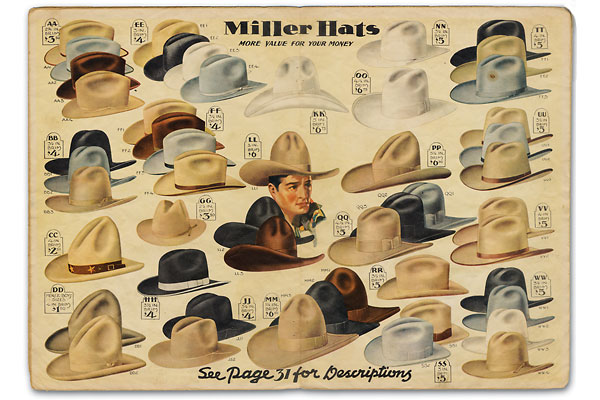
“Dude” I think, goes back to cowboy culture and something called “dude ranches.” I don’t really know what a dude ranch is, however I suspect it is horse-related. I do though know a bit about the modern use of “dude.” Below are some examples of “dude variants in the wild.” I am neither endorsing or critiquing and of the phrases or behaviors described. Dude variants simply abide.

I: “Dude, what the fuck?”

One of the classic dude phrases, this is used to register sincere umbrage, usually with a friend or “mate.” Examples include: a friend says something unkind about a woman you both know, a friend steps in front of your putt on a golf course, a friend takes the last juice from your refrigerator without asking, etc. “Dude, what the fuck?” is a little tart, however it contains an opportunity for the offender to “climb down.”

Example:

Guy 1: Dude, I don’t know about that chick Tracy. She’s blowing me off and she’s really becoming kind of a bitch.

Guy 2: Dude, what the fuck? You know Tracy’s a friend of mine and she’s cool people. Come on man.

Guy 1: Sorry man, you’re right. It’s just been a rough week.

Guy 2: Dude that’s totally understandable. We love you man—we got you.

Comment: Illustrated here is a principal of male friendship where guys can speak sharply to each other, offend, and just totally get over it the next moment. Guys marvel at women, who seem sometimes to drag reconciliation after a conflict across a greater expanse of time, and count themselves lucky, in this instance, to be guys.

II: “Duuuuuude”

This is used when a guy sees a guy he knows and hasn’t seen for a while. It is often coupled with a hand shake and “bro-hug” and/ or a slap on the back.

Example:

Guy 1 (seeing his friend approaching): “Duuuuude”

Guy 2: Hey buddy, what’s up man?

Guy 1: Duuuude, how the fuck are you?

Guy 2: Dude, it’s crazy to see you man.

Guy 1: Dude, I know right. So what are we doing? Are we drinking yet or what?

Comment: Illustrated here is the multi-purpose functionality of both “dude” and “man,” which may seem interchangeable to the untrained ear, but in fact have different nuances and ideal placements in male patter. And, a good long “duuuuuude” can be very satisfying to unleash.

III: “Dude, that’s not the way we need to go here”

“Dude, that’s not the way we need to go here” exists in a family of phrases which includes for example, “dude, that’s really not gonna get it done,” “dude, I’m going to ask you to take a step back and check yourself for a second,” etc. These are all part of the very wide set of phrases that a manager can use with a direct. Modern managerial theory is divided on whether or not “dude,” is acceptable in supervisory conversations of this sort, and strong opinions exist on both sides. I side with the “yes” camp, but only in a basically dude-centric culture. As a middle-manger for many years I have often used phrases such as these while perhaps using the person’s name or just “hold on” in place of “dude.” But in my head, I’m saying “dude” every time.

IV: “Dude I’ve been thinking…”

This can go a lot of ways. It’s a crisper “dude,” and an entry into a SERIOUS TOPIC. Often found towards the end of drink two or into drink three, when guys are staring to get comfortable with their feelings, this phrase is usually either a precursor to a promise to spend more time together, or to a project or idea the guy has that he wants to share with his buddy.

Example:

Guy 1: Dude I’ve been thinking…

Guy 2: Uh oh. That’s never good…

Guy 1: Shut up dude and just listen for a second, man. I’m seriously thinking about building a greenhouse. Like seriously dude.

Guy 2 (thinking): Man, that actually sounds pretty sweet. A greenhouse. Cool man. That’s really cool.

Guy 1: I’ve got a line on this guy who can get me the parts for like $400. I just have to assemble it. Man, this could really be big.

Guy 2: Fuck, man. That’s awesome dude. I’m proud of you.

Comment: An exchange such as the above will often be accompanied by some light physical contact, actual or attempted, if not a full-on “bro-hug.”

V: “Dude, I’ve got this”

“Dude, I’ve got this” is used to tell a friend to back off from attempting to assist with a task a guy thinks he has under control.

Example I:

Guy 1 (seeing his friend trying to carry two beers up a narrow set of stairs at the bar): Dude, let me give you a hand.

Guy 2: Thanks dude, I’ve got this.

Guy 1: Of course you do dude. But we’ve all had a few and I just don’t want you to spill anything.

Guy 2: Dude, I said I’ve got this.

Example II:

Guy 1 (watching his friend trying to fix a flat tire on another friend’s bicycle): Dude I think you may need to take the tire all the way off first.

Guy 2: Thanks dude, I’ve got this.

Guy 1: Sure dude. I’m just not sure you’re gonna be able to fix it like that.

Guy 2: Dude. I’ve got this.

Comment: “Dude, I’ve got this” is clearly a softer way of saying “back off,” and if you push a guy who is in “I’ve got this” mode, you may in fact elicit a “back off.” Because in most cases neither guy wants to get to the “dude back off” stage, most of the time Guy 1 will concede after the second “I’ve got this” is played. In Example I, Guy 2’s repetition of the phrase is more or less in the same tone as its initial use. In Example II however, we see the tone of Guy 2 shift with the repetition. While “thanks dude, I’ve got this,” is said in a light, casual tone, “Dude. I’ve got this” sees him breaking out the pause-as-warning. So in fact it would sound something like this: “Dude (pause) I’ve got this.” As implied above, this guy usually ends the conversation.

VI: “Alright dude”

“Alright dude,” is usually said towards the end of a conversation or phone call and serves as an indicator of a positive conclusion to the encounter.

Example:

Guy 1: Alright dude, it’s been good catching up.

Guy 2: Dude, for real. Always fun man.

Guy 1: Let’s do it again.

Guy 2: Cool man—I’d like that.

Guy 1: Alright dude. You be good.

Guy 2: Dude, bro, it’s all good. Check you later.

VII: “Dude, check this out”

“Dude, check this out” is a highly versatile phrase used to draw a friend’s attention to a matter of interest.

Example I:

Guy 1: Dude, check this shit out. It’s a shuffleboard, man. Whaddya say?

Guy 2: Duuuuude, shuffleboard…

Example II:

Guy 1: Dude check this chick out right over there, behind the begonias. She’s just looked your way, like three times.

Guy 2: Shut the fuck up man. She’s not looking at me. Get out of here, dude.

Guy 3: Dude, she totally is. You should totally go over and say hi.

Guy 2: Come on guys. Knock it off.

Guy 1: Dude, she just did it again…

If you have come across a dude variant that you think merits inclusion pop it in the comments with an example or two and we’ll see what we can do.

On the Prefix “Soft”: Part I

The prefix “soft” is incredibly useful. Generally speaking, it indicates either actual relative softness (e.g. “soft cream,” a softer form of ice cream), or a certain gentleness and/ or flexibility obtaining to a non-tangible concept (e.g. soft schedule). This piece (which will be broken up into a couple of posts) will explore a number of instances of the prefix “soft” at greater or lesser length.

“Soft-schedule”

Francis Wade in the classic blog post “Hard vs Soft Scheduled Items” comments thusly on soft scheduling:

Professionals who undertake the discipline of Scheduling at higher skill levels (Orange and Green belts) have their calendar as the central point of focus (…) Their lives would be made much easier if Outlook were to distinguish between different kinds of segments, recognizing them as either “hard” or “soft.

(Let’s just pause for a moment to appreciate Wade’s capitalization of “Scheduling,” as well as his reference to “Orange and Green belts” as scheduling skill levels. This dude is serious about scheduling.) Wade here hits on an essential point, Outlook (the Microsoft program) does not (or did not, Wade was writing in 2011) allow users to classify schedule items as “hard” or “soft,” viewing instead all items as identically fixed. In Outlook, something is either on or off one’s schedule. This is a problem according to Wade because:

A soft item is one that only involves the user, and can easily be moved around one’s calendar, with few immediate consequences. They might have great importance, but a late start would not endanger the end result.

Obviously, Wade is differentiating a soft item from a “hard item.” Thus, in the realm of scheduling, “soft” indicates that the item is flexible because it is individually owned. For example, a teacher may have “grade papers” on her schedule at an appointed time, however in practice everyone knows that this schedule item is fungible.

In my opinion, Wade is right on as far as he goes. His point about Outlook is a seminal one. However, I do not agree that we can only soft schedule something that applies only to ourselves. I believe we can just as easily soft schedule a call with a friend or a meeting at the pub. If my friend texts me and wants to speak on the phone tomorrow, I might reply with “sounds great, let’s soft-schedule that for 2 PM.” This means, clearly, that 2 PM is the target time, however it may be a little earlier, or, more probably, a little later. If you think about your own life you will probably recognize the role that soft scheduling plays in it. In fact, soft scheduling is everywhere, you probably just don’t use the term.

(Before we go any further I want to address the issue of hyphens. Mr. Google suggests that “soft schedule” should not be hyphenated, nor, in fact, should basically any of the terms this piece will examine. I can give this one to Mr. Google because it is just easier to skip the hyphen. However, logically, and even emotionally, I like the hyphen for a lot of “soft” prefixes. This is because the hyphen, in my view, serves to attach the prefix to the term, thereby underlining the fact that we are engaging in an act of proactive and meaningful categorization.

An additional grammatical point here is that nowhere in Wade’s piece, for example, does he use “soft schedule” as a verb phrase, or indicate that we can do so. Folks in general massively underrate the effectiveness of turning a noun phrase like “a soft scheduled item” into a verb phrase “to soft schedule.”)

In any case, you get the idea with soft scheduling. Let’s move on.

“Soft pedal”

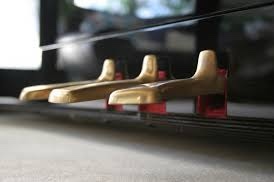
A soft pedal originally referred to a piano pedal, which is interesting, however for our purposes it means something else. According to Collins dictionary: “If you soft-pedal something, you deliberately reduce the amount of activity or pressure that you have been using to get something seen or done.” (Look at this s***—Mr. Collins Dictionary is hyphenating soft-pedal! Mr. Google, though, disagrees. Why would we hyphenate soft-pedal and not soft schedule? What’s going on?)

We see soft-pedaling all the time in politics. A politician or party will advance an idea and then back away slightly from said idea without entirely abandoning it. They just turn down the temperature around it. It will be apparent that soft-pedal is lexically and conceptually related to a number of other idioms, for example “tap the breaks,” “put on the back-burner,” “let’s put a pin in that,” and, my favorite and perhaps quasi-original to me, “to bracket.”

(When we bracket something, we acknowledge the existence, and importance, to one or more parties in a conversation, of the item in question while indicating that the item needs to wait or be placed in the background for the time being. We may bracket an item because we don’t have time to deal with it right now, because it doesn’t fit conceptually with what else we are doing, or because it is too sensitive, political, or otherwise complex to address at the current moment. As an example, let’s imagine a newly hired HR manager at a large company. In the first week on the job she is told by multiple people of an alleged instance of sexual harassment from a senior male manager to a subordinate younger female. The HR manager is told that everyone knows about this instance and that nothing has been done or said on any level. Now, our HR manager (let’s call her Jessica) is in a tight spot—obviously the allegation is a live issue, and perhaps a growing one as it has not even been acknowledged. Also, by very virtue of the fact that this complaint has come to Jessica several times immediately after her hiring it is clear that other employees are expecting her to do something about it. And she should. On the other hand…Jessica is brand new. She probably does not have a full handle, or even much of a grasp, of the corporate culture or power dynamics at the company. She does not know who to go to, necessarily, and even if there is a specified reporting flow for these kind of complaints, and, this point is crucial, she knows already that even if there is a flow it is not functioning properly. In fact, if she was to bring the matter immediately to a direct superior she could well be stepping on a political land mine. So our Jessica, god bless her, may say to her colleague something like: “I get it. This sounds like a serious issue and I understand that the fact that it has not been addressed only exacerbates the situation. However, let’s bracket it for the time being, and in the meantime I’ll try to learn more and see what the right next step might be.” Now in theory is this the right call? Maybe not. Maybe Jessica should go guns blazing up the chain. But no, she really shouldn’t. She should listen, observe, assess. In other words, she should probably bracket.)

Back to soft-pedal. Unlike soft schedule, which is basically always a positive, soft-pedaling can cut both ways. Soft-pedaling can be a risk. Take for example the Democratic primary contest for the 2020 presidential nomination in the United States. As any political watcher knows, candidates in primaries generally tack further to the left or right and in the general tack back to the center. The reasons for this are obvious, however in the digital age where every word, every micro-shift in a candidate’s position, gets analyzed in depth in real time, it is becoming far harder to tack from side to side without coming off as inauthentic. In the 2020 primary, Bernie Sanders’ plan for Medicare for All became the default position of anyone running anywhere near the left lane of the party. Now, the fact that Medicare for All was unlikely to get passed even under a Sanders administration, much less that of a bandwagon candidate like Kamala Harris, made it basically safe for a leftish candidate to champion the cause right through the primary.

Two candidates, Kamala Harris and Elizabeth Warren, initially jumped on-board with Medicare for All as they were trying to run in the left (Warren) or center-left (Harris) lane. Other candidates including Joe Biden (the eventual winner) and Pete Buttigieg were running basically as centrists, so they weren’t obligated to support it. Others, such as Andrew Yang, were niche candidates and/ or somehow on a tangent to the left/ center axis, and were therefore not endangered by the issue one way or the other. Harris and Warren could have just stuck with their support, however as the primary advanced they felt compelled to soft-pedal their position. This was probably from some combination of media demands for them to differentiate their plan from Sanders’, advisors telling them they needed to triangulate ahead of the voting, and, in Harris’ case, a lack of a political core that left her susceptible to political wobbling. Harris was going to lose in any case; she was a bad candidate with a toxic relationship to her staff and a habit of telling ridiculously embellished life stories. Warren, on the other hand, arguably lost her shot at the nomination because of her decision to soft-pedal Medicare for All. She couldn’t get her position straight, started to dissemble and flop-about, and her candidacy stalled in the Fall of 2019 as a pretty direct result. Such was the fall-out from her soft-pedal.

Nonetheless, in politics and in organizational settings the soft-pedal can be a crucial move. In an office environment a manager or manager group may try to roll out a new initiative and run into headwinds from employees. Said managers then have a choice, they can continue to push straight through and force the initiative, in the process risking the goodwill and enthusiasm of the team, or they can soft-pedal. Here, the soft-pedal is often the right call because it is quite different from “the climb down.” When managers climb down (or “back down” in more common parlance), they may put the issues to rest however they will likely lose face. Sometimes a climb down is necessary and hygienic, as when the managers realize the initiative is simply a non-starter and it’s best to cut their losses. The soft-pedal, however, allows for two things: i) it allows the managers to save face and to maintain the flexibility to bring the initiative back, perhaps in a revised form, at a later date, and ii) by leaving the initiative on the theoretical table while taking it “off the front burner” employees are reminded that the point behind the initiative may still be important in the future. When and if the initiative is brought back, the issue set has been “seeded,” and this seeding can “prime” employees to be more receptive the next time around when the initiative (by this time re-packaged) is re-introduced. Of course, the managers can also just allow the initiative to die off of its own accord over time while avoiding the (more sudden) climb down.

Such are the pros and cons of the soft-pedal. Handle with care.

to be continued…

On the Centrality of the No Helmet Law

Once upon a time I was in graduate school. I studied history, which was an error. I should have studied anthropology. It doesn’t matter–it was a long time ago. I was in my 20s, and there were quite a few older students in the department. These “adult” learners were invariably interesting, having backstories and life experiences far richer than my own. One of these older students was Gary.

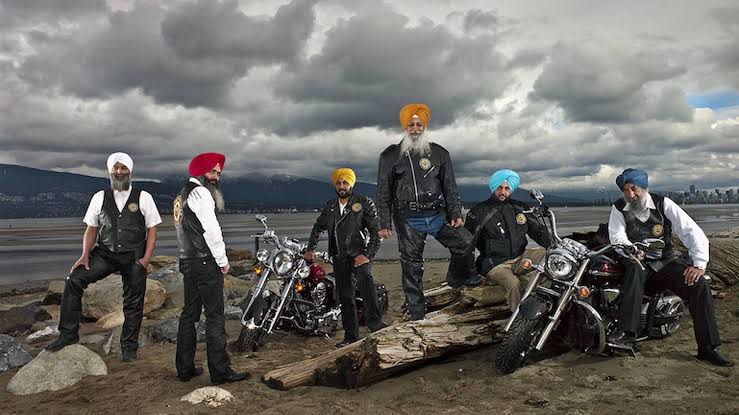
Gary was probably in his mid-late 40s at the time I knew him and he was a biker. Black leather jacket, boots, the whole deal. Gary was a live and let live kind of character, not the sort to get too worked up about pretty much anything. Except one topic. Helmet laws. Gary hated helmet laws. Hated them to the core of his being. On this topic and this topic alone he would become immediately vitriolic. A biker’s right to ride without a helmet was, to Gary, the very essence of freedom. It was the whole point of being an American. Gary was up to speed on the state of helmet laws pending helmet legislation all over the country. This was in 1999, and George W. Bush was running for president. What did Gary think about Bush? Well, he’d say, when Bush was governor of Texas he didn’t support efforts to pass a helmet law. Therefore, he’s a good dude. That’s it, I would ask? That’s all you need to know? That’s all I need to know, he said. Gary was a true single issue voter.

I marveled at the clarity, the pointillistic precision, of his politics. Would life be better or worse if approached in this manner, I wondered. For the most part it seemed life would be immeasurably better. To know what matters and have that thing be so easy to quantify and discern must free one’s mind up in so many ways. The truth was I envied Gary’s outlook.

Later that year Gary’s brother, also a biker, died in a motorcycle accident on a New Mexico mountain. It was a sad day for the department and for Gary. His brother was a biker and a cop, and I happened to walk past the church where the funeral was being held. There were dudes in Hell’s Angels jackets and cops in dress uniform side by side. Gary came by the graduate student office a day or two later. Yeah, he said, a funeral like that is the only time you’ll see bikers and cops side by side. He talked about his brother and how much he loved his motorcycle. I offered my condolences, but then curiosity got the better of me, as per usual.

“Gary, I have to ask, was your brother wearing a helmet?”

“Of course not. He died like he lived, free.”

“Does the accident make you think any differently about helmet laws?”

“If anything, it makes me more opposed to them. The right to ride without a helmet is what makes a biker a biker. Without that, we have nothing. My brother would feel the same.”

So there you had it.

This was 20 years ago, and I still think about Gary and his views a lot. The Kinks tell us that it’s a mixed up muddled up shook up world except for Lola. Gary felt that is was a mixed up muddled up shook up world except helmet laws were the devil’s doing. My own life since meeting Gary has involved navigating one grey area, after another, after another. I still envy his moral clarity.

Note: If you enjoyed this piece, you may also enjoy “On the Phrase ‘I Got a Guy For That.'” Available below.

On the Phrase “I Got a Guy For That”

The Thin Man 0: The Man Under the Bridge

Everything’s thin. The Wire

Setting:

We open onto a large office in what looks to be Moscow.  It could be anywhere in the East however, anywhere from Petersburg to Potsdam.  The office appears busy; clerks filing, apprentices bustling, managers shouting instructions and reprimands that go generally unheard, not out of rebellion, nor compromised auditory canals, but rather because the generalized cacophony of the office space is such that the collective action set cannot but unfold without coordination or direction.

The office is draughty and usually cold, although an occasional over-active heat pipe burbles out a bit of local warmth for certain fortunate corners.  The walls are covered from floor to ceiling with filing cabinets; the major task of the office is simply to inspect, stamp, classify, and file an endless stream of nominally related documents.  It is mid-fall, nearly harvest season.  Summer’s bounty this year has been acceptable, and the local populace will have food for the holidays.  Inside, however, the mood is one of permanent resignation to circumstance.

Scene One: Morning

You found me on the other side of a loser’s winning streak/ where my thoughts all wander further than they should

Dawes

The office’s hierarchy is complex, following rules of its own.  Those at the bottom of the ladder are blissfully unseen and operate without oversight or sanction unless transgressing in a manner so egregious that the neighbours become involved.  Those in the middle-lower classes are a little more visible; their seating, for instance, is of great importance.  Members of this class are ever being told that their stool has been moved to another section of the office.  Reason is neither given nor sought.  Transience is the way of the world, and is widely accepted.

The scene opens in the morning, just after the workers arrive.  At a large oak table, two members of this class sit, within mere inches of one another.  One of these is a thin man–the other, a Teutonic Knight.  Both have piles of papers left over from the day before in their work spaces, spaces delineated by a crack in the oak.  One of the papers from the thin man’s zone has shifted by a fraction of an inch overnight, whether on account of the draft or the vagaries of the cleaning staff is unknown.

The Teutonic Knight turns to face the thin man.

“I think you forgot something in my space,” he says.

“I didn’t forget anything in your space,” replies the thin man, “if you are referring to this piece of paper, it has shifted marginally and is abutting the crack which separates my zone from yours.”

“You have forgotten something,” insists the Knight.  “Take it away.”

The thin man sighs and removes the paper.  Good money after bad, he thinks to himself, applying a concept from the card tables, tables which he has, perhaps, been frequenting a little more often than he might want to admit.  The Knight knows nothing of the gambler’s demi-monde, spending his evenings as he does in endless rows over minor matters with one of the succession of women he sees.  And the thin man, well he has at least managed to stay out of the clutches of the worst money-lenders and knee-cappers in the city thus far.  His taste, in the last analysis, may run more to the risque than to risk per se.  In any case, the skirmish over, the knight withdraws from the field of battle, content in his triumph.  The thin man looks at the clock.  These days, everything seems to take all morning.

Scene Two: A Few Days Later

Well I was drinkin’ last night with a biker/ and I showed him a picture of you/ I said “Pal get to know her, you’ll like her”/ seemed like the least I could do

The Dead

The office has a kind of canteen, an open space where weak tea and the occasional edible biscuit have been reported. Here lives another man, a man from the south. His status with the company is ambiguous–a matter of no little gossip. Tales are told of whirlwind romances, payments under the table, mutually compromising material. No one really knows. This southerner spends his days reading and drinking tea in a most relaxed fashion. Good work if you can get it, muses the thin man. The thin man and the southerner are allies of the kind that sometimes arise during wartime conditions. The details of his ally’s dalliances and contractual complexities are only of a general interest to the thin man, who is however curious what value the southerner is seen to be providing to the company. Literacy is good and all, but the filing by god, the filing waits for no man.

Sometime that fall, the southerner pulls the thin man aside, for a talk. His manner is furtive, his words oblique. The thin man’s time with the company is limited, he whispers. His number is up. Time to hit the bricks, pal.

The thin man takes this news in stride. The tables beckon and he’s met a woman, a lady of the evening, perhaps, yet classy–demure, yet perfectly capable of looking after her own interests. He has only seen her a few times, true, yet there are possibilities. Of course being sans salary is not likely to widen that particular possibility set. So when the southerner leans in and whispers low, the thin man listens close.

“There is a man, a man you may meet,” says the southerner. “You must not ever tell anyone I told you this. The man will be under a bridge on a high holiday. There will be revelry. He may make you an offer.”

Gambling man he may be, but the thin man is confused.

“What should I do?”

“Stay alert. Pay attention. I can say no more.”

Easy to say, harder to execute, thinks the thin man. Alert for what? A man under a bridge is easy enough to spot, however the southerner seemed to be referring to another matter, an occasion where attention would be needed to carry the day. The thin man files the conversation away, and resolves to stay open to a situation that appears to have elements of fluidity.  It seems like the least he can do.

Scene Three: A Few Weeks Later

In bar light/ she looked alright/ in day light/ she looked desperate

Hold Steady

The thin man waited out the fall, his gambling limited to the occasional dice game at the Metropole. The southerner’s sage advice, if not quite forgotten, had faded into the general background of the holiday season. The city filled with lights and good cheer, and the denizens of the office slipped into a gentle numbness even more pronounced than usual. The demure lass was deft enough to dangle enough hints and intimations to keep the thin man hooked. You get what you get, he mused, when were it ever otherwise?  A couple of hot streaks at the tables allowed him to further postpone thoughts of the future. He would buy a round or two for a barfly girl he knew–at least she was around. Eggnog, that was her tipple.

One day a upper-middle manager summoned the thin man into a meeting. Called him by name no less. The meeting started crisply.

“Thin man, as you know you number is up here at the company.”

Hit the bricks, pal.

“As a result, we won’t be renewing your employment next year.”

Uh huh…ok, eggnog time then.

“I want you to understand that you won’t be employed by the company next year.”

What was that? “Stay alert,” so said the southerner.

“You won’t be offered a contract with the company. Do you understand?”

Unnecessarily repetitive. Information is being underlined. Pay attention.

“I understand perfectly,” said the thin man. And he thought that he did.

Scene IV: The Next Day

It was in Pittsburgh, late one night/ lost my hat, got into a fight/ I rolled and I tumbled, ’til I saw the light/ went to the Big Apple, took a bite

Dylan

After receiving the news of his impending termination, the thin man felt he had relatively little to lose.  He spent the next day in the canteen talking with the southerner.  The Tutonic Knight still reigned supreme over the crack in the oak; there was no there there in any case.  The southerner read philosophy, remained on the payroll.

“I’m attending a holiday party,” said the southerner.  “It will be this Saturday.  Under a bridge in the dead center of town.”

Indeed.

“There will be a man there.  If you decide to come to the party, meet me on the street just above the bridge.  I will act as if our meeting was coincidence.  Then, I will take you to the man under the bridge.  He is waiting to meet you.”

The thin man had but one true weakness, a byproduct, perhaps, of over-indulgence in games of chance.  His weakness, he knew, was for the unexpected.  For the unplanned. For, essentially, the random.

“Sure.  What time Saturday.”

“18:30”

Military time.

“OK.  I will present myself on the street as instructed,” said the thin man.

Scene V: Saturday

I said hey Senorita that’s astute/ why don’t we get together and call ourselves an institute

Paul Simon

On Saturday, the thin man arrived on time as promised.  The southerner materialized on the street just then.

“Ah, thin man, what an amazing coincidence.  I was just heading down under this here bridge to see a man about a mule.  Perhaps you would like to join me.  He may have an extra one for sale.”

“A mule might help me get out of town in a hurry,” said the thin man.  “Let’s see what’s happening.”

Under an inky moon the two men descended, passing through waves of people, men and women, reveling in the moonlight and watching the circus.  It was cake they ate, cake it was.  The density of erotic micro-transactions formed an exact square to the paucity of actual action.  Such was the slightly unkind thought that ran through the head of the thin man as he navigated the pretty party people.  In any case, the locus of action was ever in motion.

They pushed on, through the crowd, and reached the lowest point of the city.  Here, a man with a coat of many colors stood, in pointed shoes and a tricorne.  The host with the most, he held court to a motley crew of the pockmarked and the lame–the beautiful people of our fair city.

“This is a thin man,” said the southerner to the tricorne.

The man with the tricorne folded the thin man into a close embrace.  “You will be my new best friend,” said he.

“Naturally,” said the thin man.  “I think we will be very good friends indeed.”

“Now,” said the tricorne, “I have a little talent business, providing the right kind of people to the company.  You are my new best friend.  I will provide you to the company.  As talent.  That I found.”

“Of course you will,” said the thin man.  “Wither the eggnog, si vous plais?”

Dedication: For the southern man. Thanks for putting up with my nonsense over all these years.

Half Hours on Earth (A Poem)

Note: I wrote this poem in Auckland in 2009 however it is based on an encounter I had in Adelaide a few days prior. (There are a lot of mussels served in Auckland, incidentally.) The theme here is pretty obvious; it’s about an encounter, or, more precisely, an event, during which time compressed itself almost to a standstill. You have probably had this experience if you have been knocked of your bicycle by a car or something like that. When this happens over a half-hour, that’s a bit of a different guy.

This is one of my favorite poems that I have written. The title, and the repeating coda, are borrowed from the band The Silver Jews.

The quality of experience in half hours
is not uniform.
Some half hours are simply wasted;
in others, something occurs,
leads into something else.

“Half hours on earth/ what are they worth?/ I don’t know”

With the occasional half hour
something actually happens,
(in the Raymond Carver sense)
something that matters.
The air is charged, and thin;
butterflies roil one’s viscera;
and something is on the line.

“Half hours on earth/ what are they worth?”

These electric half hours
even if isolated in time
are frightening, or better
giddily upsetting, and dangerous.
They sear themselves into the memory,
rippling the fabric of the universe.

“Half hours on earth”

Dedication: For Molly. And for David Berman, RIP.

The Respectable Man (A Poem)

Note: I wrote this poem when I was in my twenties and it shows. Back then I wrote poems really fast. Today I still write really fast, but can barely write poetry at all. Anyway, this is sort of my version of a punk tune. It’s called “The Respectable Man,” and kind of speaks for itself.

The respectable man
reflects if he can
but the world won’t wait for reflectors
the respectable man
sits on the can
sits on the board of directors

The respectable man
hawks wares to the clan
who cannot tell shit from shinola
the respectable man
sees a water ban
and irrigates crops with a cola

The respectable man
works on his tan
en route to his room at the Hilton
the respectable man
is pimping a plan
with robust tax-giveaways built-in

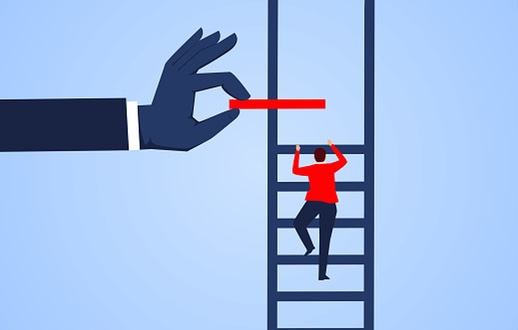
The respectable man
spits on his hands
and scurries his way up the ladder
the respectable man
looks over the land
and respectfully empties his bladder

Song of the Day: Luna’s “Tracy I Luv You”

The song of the day is “Tracy I Luv You,” from Luna. Tracy was first recorded for the Penthouse sessions (released in 1995), and left off the record. It was later collected on the deluxe version. The Penthouse version sounds pretty finished to me, however the band would hold it back and rework it for Pup Tent. It is hard to say where the song would have been sequenced if it had made the cut. Especially in the early version, it is not as uptempo as “Chinatown,” still the obvious single. It would also not have fit well around “23 Minutes in Brussels,” which needs its own space. I could see it sequenced second, with “Sideshow by the Seashore” moved to anchor the back half somewhere–but that’s party because I like Tracy better than Sideshow. Or, it could have gone late–say 11th if Penthouse had had 12 tracks. I like a really sneaky good song like Tracy second to last. A good example of this move is on Lambchop’s Flotus, where “NIV” sits 10th and sets up the shaggy-epic “The Hustle.” Here, Tracy would set up “Bonnie and Clyde,” maybe not a natural fit but I kind of like it. The Penthouse version is only 3:50 though, while the Pup Tent version is 4:50. 4:50 is a better length to set up a song like Bonnie.

Anyway, the slightly more syrupy, marginally slower early version was redone and ended up on 1997’s Pup Tent. I like the fact that the new version gets an one minute extended outro with the cascade of “doooo/ doo doo doo,” though I’m not sure that I don’t like the early version better. Pup Tent’s sound was notoriously labored over, and in his memoir Wareham writes that Tracy was especially tough to get the vocal for. Although the album was trying to record, Wareham writes that “Pup Tent was not our best record, but it was our best-sounding record, containing all kinds of sonic textures.” He also told filmmaker Noah Baumbach in 2016 that “there are some really cool sounding things on Pup Tent; ‘Pup Tent’ itself, ‘Tracy I Love You,’ ‘Fuzzy Wuzzy.’ So, sonically, I love it.” Indeed Tracy has stayed on the set list and established itself as one of the standouts of Luna’s catalog.

The song opens with a classic Wareham verse:

Tell me stories on my birthday/ buy me gifts on Halloween/ she’s pretending not to know me/ but I know where she’s been.

Nobody does needy/ cheeky/ sly/ sexy in quite the same combination as peak Wareham.

Two verses later we get another deeply quotable verse:

I spend too much time in airplanes/ eating peanuts and getting high/ don’t know why I can’t stop smiling/ when I only need to cry.

It is this verse especially that I prefer on the Penthouse sessions–there is a weird stuttering reverb that almost pulls the vocal back in time–it’s like a car trying and not quite getting into third gear. For the Pup Tent version, Eden’s guitar behind the vocal has been improved, and the vocal is much smoother. To each their own–both versions rock.

On Kris Kristofferson’s “To Beat the Devil”

This piece takes a look at Kris Kristofferson’s “To Beat the Devil.” The song appears on Kristofferson’s self-titled debut album from 1970 on Monument, which is, by any standard, an astonishingly good record. The album features “Me and Bobby McGee,” “Sunday Morning Coming Down,” and “Just the Other Side of Nowhere,” along with the ol’ Devil. That’s four absolute classics right there for ya.

Sunday Morning features an opening quatrain that most other songwriters would trade their career for:

Well I woke up Sunday morning/ with no way to hold my head that didn’t hurt/ and the beer I had for breakfast wasn’t bad/ so I had one more for dessert

(I could play this game all day—Jason Isbell’s Southeastern features another couple life-work worthy couplets:

The first two lines of “Super 8”:

Don’t wanna die in a super 8 motel/ just because somebody’s evening didn’t go so well

And from “Different Days”:

Time went by and I left and I left again/ Jesus loves a sinner but the highway loves a sin.

If I’d written lines that great I’d call it a career and sip martinis on the house for the duration.)

Sunday Morning and Bobby are probably objectively better songs than To Beat the Devil, yet what I like about this one is that Kristofferson states very clearly a kind of founding intention for his life in song and art, right out of the gate. The only parallel I can think of is Craig Finn’s The Hold Steady, whose first album Almost Killed Me kicks off with “A Positive Jam.”

(Here’s Finn telling it like it is:

I got bored when I didn’t have a band/ so I started a band/ we’re gonna start it with a positive jam/ hold steady.

Rock on Craig baby.)

Anyway, let’s get to the focus of this piece. Kristofferson opens with a spoken intro.:

A couple of years back I come across a great and wasted friend of mine in the hallway of a recording studio. And while he was reciting some poetry to me that he had written, I saw that he was about a step away from dying, and I couldn’t help but wonder why. And the lines of this song occurred to me.

Here the singer is looking up at his idol who is both “great and wasted.” I wasn’t around quite yet in 1970, yet I can easily imagine Ginsberg’s “best minds” line hanging over talented folks across a lot of zones. Klosterman wasn’t quite there either (June 5, 1972–a mid Gemini of course), but he was close, and to indulge not for the last time in a little Klostermania, the zeitgeist seemed to be making people thirsty.

The singer receives some scraps of poetry, shards of shattered inspiration, and a song “occurs” to him. He doesn’t state it directly, however we imagine the song arrives fully formed, like “Pancho and Lefty,” or “Kubla Khan.” Thus, To Beat the Devil is also both an answer and an offer of redemption to his idol, who here is John(ny) Cash.

I’m happy to say he’s no longer wasted, and he’s got him a good woman. And I’d like to dedicate this to John and June, who helped showed me how to beat the devil.

The singer takes up the mantle of the master, and in so doing opens a possibility window onto redemption for his senior. This is no exaggeration—Cash also recorded To Beat the Devil in 1970 and we are basically stipulating that Kristofferson’s genius, descended from Cash while also original to himself, helped rescue Cash from addiction and the whole deal there. We won’t be deep diving into the archive on this one—as we said we’re just keeping it local and breaking it down, so you’ll have to take my word on it or search it up your own self.

Here’s the first verse; the words speak for themselves:

It was wintertime in Nashville/ down on Music City Row/ and I was looking for a place/ and to get myself out of the cold/ to warm the frozen feeling that was eating at my soul/ keep the chilly wind off my guitar

A classic down and out in the big city piece of scene-setting. The singer is physiologically and psychologically frozen, a cold wind gusts across his art. The man needs a break.

My thirsty wanted whiskey/ my hungry needed beans/ but it had been a month of paydays/ since I’d heard that eagle scream/ so with a stomach full of empty/ and a pocket full of dreams/ I left my pride and stepped inside a bar

You might think that the operative nouns here would be “thirst” and “hunger,” but no. This is not a man with a thirst; this is a thirsty man. We also hear an echo of a now-ancient American past where a man with an empty stomach would go in search of, of all things, “beans.”

Anyway, he’s got no money, can’t really bring himself to care. So, a singer walks into a bar.

Actually I’d guess you’d call it a tavern/ cigarette smoke to the ceiling
and sawdust on the floor/ friendly shadows/ I saw that there was just one old man sitting at the bar/ and in the mirror I could see him checking me and my guitar/ and he turned and said/ come up here, boy, and show us what you are/ I said I’m dry, and he bought me a beer

The man in the mirror, the devil himself. The singer comes face to face with the man who checks him out and summons him over. Kristofferson then enters into a bargain–offers up the terms of an encounter: a beer on the old man’s tab. Score one for the thirsty man. The singer faces the old man; it’s to be a showdown. He doesn’t have much, but he’s got some “friendly shadows,” traces of an older map perhaps, an older memory.

I can’t help here but engage in a bit of presumption. When I play the song in my head, I want to hear “in the mirror I saw him casing me and my guitar,” (listen to the way he pronounces “guitar” on the track. Kristofferson was born in Brownsville, Texas in ‘36 and behind the laid back folksinger you can here some roots here baby).

If I could make one edit to the song, it would be to replace “checking me,” with “casing me.” What a great verb “to case” is.

Lexical Interlude: “To case the joint”

1. slang To observe a place in order to familiarize oneself with its workings in preparation for some criminal activity (often robbery). Judging from the security footage, those men cased the joint hours before robbing it.

2. slang By extension, to thoroughly examine a place. In this usage, no devious motive is implied. As soon as my kids walking into the hotel room, they started casing the joint, exclaiming about everything from the TV to the mini-fridge.

The seminal use of this verb phrase comes from Bill Callahan, formerly of Smog. Callahan is an odd duck—he is so artificial, so obviously self-created as an entertainer, that he has become almost post-authentic.  Callahan contains multitudes.

My favorite Smog album, well in the top two, is Red Apple Falls, which features “Ex-Con,” on which Callahan sings: 

Jean jacket and tie/ feel like such a lie/ when I go to your house/ I feel like I’m/ casing the joint

Devious motive implied.

=====

He nodded at my guitar and said/ it’s a tough life, ain’t it?/ I just looked at him/ he said “you ain’t making any money, are you?/ I said, you been reading my mail/ he just smiled and said, let me see that guitar/ I got something you ought to hear/ and then he laid it on me

The devil has a bead on the singer, and he’s not far off.  Yes he’s broke.  Yes he’s down and out.  Whaddaya want?

=====

Filmic Interlude I: The Long Goodbye

In Robert Altman The Long Goodbye, written by Leigh Brackett, the main character Philip Marlowe gets out of jail somewhere in the first act and heads to a all-purpose pit stop restaurant who’s owner apparently collects Marlowe’s mail. The dialogue is exquisite.

Marlowe: You got any messages for me?

Owner: Believe we’ve got a few over there. As a matter of fact, you’ll find my phone bill in there too.

Marlowe: I wouldn’t worry about that.

When you ain’t got nothing you got nothing to lose. Kristofferson’s got nothing to hide in his mail. Those bills go straight to the wastebasket.

=====

If you waste your time a talkin’ / to the people who don’t listen/ to the things that you are saying/ who do you thinks gonna hear?/ and if you should die explaining how/ the things that they complain about/ are things they could be changing/ who do you thinks gonna care?

there were other lonely singers/ in a world turned deaf and blind/ who were crucified for what they tried to show/ and their voices have been scattered by the swirling winds of time/ ‘cause the truth remains that no one wants to know

The devil’s words speak for themselves. The path of the troubadour is a dead end. The world has not ears to hear nor eyes to see. Truth tellers meet a bad end. Whiners gonna whine. It’s a strong opening bet, made, we presume, with his red right hand.

Well the old man was a stranger/ but I’d heard his song before/ back when failure had me locked out/ on the wrong side of the door/ when no one stood behind me/ but my shadow on the floor/ and lonesome was more than a state of mind

The singer is on familiar territory; he’s has been tempted by this cynical incantation, he’s not immune to tuning out his calling when out in the cold. Who is?

You see, the devil haunts a hungry man/ if you don’t want to join him/ you gotta beat him/ I ain’t saying I beat the devil/ but I drank his beer for nothing/ then I stole his song

This is the key verse in our little tale. You see, when we tango with the devil the devil usually gets to lead. That’s just the way it goes. But the thing about the devil is, his game is a bit of a bluff. A couple of low pairs, maybe. You just gotta call.

and you still can hear me singing/ to the people who don’t listen/ to the things that I am saying/ praying someone’s gonna hear/ and I guess I’ll die explaining how/ the things that they complain about/ are things they could be changing/ hoping someone’s gonna care

I was born a lonely singer/ and I’m bound to die the same/ but I’ve gotta feed the hunger in my soul/ and if I never have a nickel/ I won’t ever die ashamed/ ‘cause I don’t believe that no one wants to know

Kristoffeson flips it right around. The devil’s got a point; the singer may die dead broke, that’s fine. Songs are borne on the wind in any case. The thing is to have faith in your audience. To believe someone is out there, heart in their hands and ear to the wind. And to hold this faith as a mantra. That’ll keep ‘em guessing, cause then you’re not playing their game, you’re playing your own.

Overall, To Beat the Devil is a young man’s song. It’s got a confidence, a swagger, even a hubris. So, after drafting most of this piece I wanted to find a recent live version, see how it’s aged. I stumbled on a version from a live set with Lou Reed released in 2017. The set is part of The Bottom Line Archive, and it finds Kristofferson in a Waitsian stage of life. The voice is richer than ever, but he’s not exactly singing. Then again, that’s what they said about Dylan and it’s B.S. The voice is the voice; singing is just a category.

The set is interspersed with short interviews of the two songwriters. Here is Kristofferson’s spoken introduction that precedes To Beat the Devil. It is instructive.

Interviewer: The devil figures in some of your songs, you know there’s that silver tongued devil and he pops up from time to time. Who’s the devil? What’s the devil for you? What are your demons?

K.K.: Well, I, I’ll do that song then. Ahhh…

Interviewer: Is that a metaphor or is that something real for you?

K.K.: Well here’s a song called To Beat the Devil. Maybe it’ll explain it. I can’t.

Notes on Breathing

A lot has been written and said about breathing.  Here’s some more of that.

Most people it seems to me breathe pretty high in their chest.  This makes some sense because your lungs are up there somewhere.  However, I’ve long thought this was basically wrong.  When someone says, “take a deep breath,” well, deep implies lower down.  And, meditators, who know something about the topic, sort of breathe with their belly.  That’s why they get a little fat there–a little buddha belly.  Breathing in the belly centers us and calms us down.  It’s also a pretty cool motion.

Recently though, I realized that I have been over-modeling meditation breathing at the expense of breathing in my chest.  I went from one extreme to the other, failing to remember the middle way principal.  Do you know the middle way principal?  It’s pretty easy to remember.  The middle way principal is simply: “just split the difference, dude.”

So that’s what I’m working on.  Breathing in the chest upward with vigor–that brings inspiration and good upstairs action.  And, breathing in the belly, making a little balloon there at the same time.  This feels good.  Like a middle way.

No one really teaches you these things, or at least they didn’t me.  If this makes sense to you in any way, maybe tell someone about it.

Introducing The Kyoto Kibbitzer

“Half hours on earth/ What are they worth/ I don’t know

In 27 years/ I’ve drunk fifty thousand beers/ And they just wash against me/like the sea into a pier…”

David Berman (Silver Jews), from Trains Across the Sea.

Welcome to thekyotokibbitzer.com. On this site you will experience posts uploaded whenever I write one. I write mostly about people, music, language, things that happened to me, and things I have observed. I also write some fiction.

Basically, I like to “check things out,” so some of the posts will just be sort of check-ins–that is briefish looks at a topic. Other pieces will be a little fuller, a little more polished.

The kibbitzer, classically, seeks neither fame nor fortune and is seen only by those in the audience, if at all.  If you feel like an audience member, drop a line or leave a polite and interesting comment. Also, if you’d like to write for the site send me a guest post and I’ll see if it’s a good fit.

Peace out.