On My Week with Isobel (aka London Girl) Part I

Subtitle: I didn’t sleep with her so I had to quit my job.

Mistakes were made tonight

The Mendoza Line

Note: This piece is about a single week in my life that reordered things for good. At a minimum it’s an interesting story; at maximum it is the hinge between two versions of myself. I do not pretend to be the hero of it, and I take full responsibility for everything contained here.

It begins with a dream I had in Bali at the very end of July 2018. I was the lead trainer for the IB Asia Pacific workshop leader and school visitor training — my first time in that role after five years of apprenticeship. At the same time I was working at Ritsumeikan Uji as shukan, a kind of junior administrator. By mid-2018 I was burnt out: long days, multiple roles stacked on top of one another, and, most of all, a boss I no longer trusted. I was scheduled to go to the Faculty of Astrological Studies (FAS) at Exeter College, Oxford at the end of August, and in the meantime I would attend John Innes’s wedding to his fiancee Kristi. All this occurred, and here is that dream.

PROLOGUE: DREAM I

7/29/2018:

The dream starts with an image of a large whisky bottle. The bottle is very fat and also ceremic. So in fact it looks nothing like a normal whisky bottle.  It is perhaps of Suntory brand. I know before I know that a story of some kind will unfold inside the bottle. I am reminded somehow of a ship inside a bottle.  Suddenly I am inside the bottle itself. There is a whole word here and all sorts of people in a cityscape. I come to understand that everyone lives in relative fear of a species or group of overlords. 

The overlords are both omni-present and also very distant. They rule by fear and have the power to rub out anyone at any time. Sort of. When a person is marked for removal their status is updated. Their status is displayed on a kind of glowing chip in their shoulder.  There are basically three types of statuses. First is “needing to have the life wrung out of them.”  There are marked people and their time is limited. Apparently they are political criminals, thought criminals. Oddly, even when marked these people continue to circulate and take part in oppositional activity. I never actually see one of them removed, although their actions do take on a greater sense of urgency. 

The second category is another worded status. This one is more ellitipcal and I forget the wording. Though safer than the  first, this is still a status to be avoided if possible. 

Third is a number.  A voice tells the city that statuses will be updated and that anything under 40000 is a safe score. I check my update with bated breath, fearing the dreaded worded status. My number is 49500.  Not bad I think—although not under 40000 this is perhaps for young people. 49500 seems reasonable for my age. 

Suddenly the view shifts and I can see into the bottle from the outside.  All of the people and various creatures and scrambling for the mouth of the body. The bottle begins to approach a wall into which is will soon merge. Here, the entrance to the bottle will be sealed. The I character in the dream is also scrambling for the exit although he doesn’t seem to stand much of a chance.  Creatures spill over one another and one baby creature somewhere between a human baby and a little mouse slips through the mouth of the bottle to the other side of the wall. The bottle snaps closed and I am once again staring at the large ceremony bottle from the beginning of the dream. I feel a sense of relief that the perfect creature has escaped. End of dream. 

This dream is about reincarnation. 

(The me on the treadmill does not survive. Dream group says whisky is a spirit which takes 50 years to mature.  That gives me a book deadline I guess-49.5 the book and the end of the provisional personality.)

PART I — Sunday → Wednesday

Sunday, late August 2018

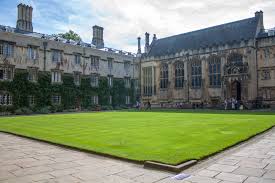
I flew into London from Osaka and took a pre-arranged bus to Oxford, then walked to Exeter College. Check-in, dorm keys, linens. The halls smelled like old plaster and a little like soap — an old building. I carried my bag upstairs, opened the door to the room that would be mine for the week, and sat on the bed for a moment to locate myself. New country, new rhythm, no context yet.

I walked the campus — stone walls, grass cut low, shaded paths. The quad had that contained feeling of a place that already had its stories. I didn’t know I was about to enter one.

I went to dinner at a taco place just outside campus and had a beer or two. Back in the room I read a little astrology to warm up for the week and listened to the band The Mendoza Line. Little did I know they would end up playing a surprisingly large role in what followed.

Around 10 PM the fire alarm went off. Everyone in the building stumbled outside in pajamas and stood around talking for a few minutes. Odd, but fitting — a small communal disturbance to start the week off.


Monday

I woke up, showered and dressed and grabbed my notebook for the astrology sessions. At this time I was fully committed to attending sessions and making the most of them. Breakfast opened early and I liked that — fruit, eggs, strong coffee. The hall had a low hum, people still new to each other. I walked to the first seminar which was given by Ms. Claire Martin. Claire was in her 70s, and a very comforting presence. She’d been doing astrology forever and has a couple of books which are helpful. The seminar was on the first floor, window onto one of the gardens. The air had that mild, hopeful tone of a first session.

Claire spoke on the 1890s — fields of meaning, ectoplasm, etc. I offered something Jung-coded because that’s where my mind goes when the border between psyche and symbol starts to move. I didn’t know she was in the room yet, Isobel (not her real name), though she already was.

At one point Claire mentioned an Aries Moon. I said, simply, “I’m an Aries Moon.” Nothing loaded, nothing aimed. Lecture ended, chairs moved, and she came to me from the back of the room.

“I am an Aries Moon too.”

We walked to the next session together. That was it — no delay, no drift. We sat side-by-side for the rest of the day. Chatting between sessions, coffee break close but not touching, her chart in her bag. She showed me her own chart print-outs — hers and her fiancé’s — and we compared placements. Similarities everywhere.

Lunch in the dining hall. More sessions in the afternoon. Light talk, no electricity announced but already there. Monday night we ate with a group — tutors, a few new friends. We were beside each other the whole time, not hiding it. Later we drifted to the courtyard bar, opened wine bottles, and someone lit a cigarette. I hadn’t smoked more than a dozen cigarettes in sixteen years, but I took one with her, and then another. Not ceremony, more like instinct, more like inevitable.

We ended the night late. I walked back to the dorm alone and put on The Mendoza Line again. I already knew I was in trouble so in addition to “It’s a Long Line (But It Moves Quickly)” I was listening over and over again to “Mistakes Were Made” from which the epigraph comes. Sometimes you just know.


Tuesday

We had planned to have breakfast together, not at Exeter but at Pret, about an eight minute walk away. We both ate and she helped me pick my breakfast. We were acting like a couple already. We attended the morning sessions, seated right next to each other and then the day started to open. In the afternoon we did not attend sessions, instead we spent the time in one of the beautiful gardens. We sat close on the bench by the open window, listening to the session through the gap. I talked about muses and how I work best with one. She talked about photography, stalled career energy, her family, and Swiss-Russian split. Russian women, I reflected not for the first time, are a problem, and I knew deep down I was already in trouble.

Tuesday night the singer-songwriter Lucy Dacus was scheduled to play Oxford, and I had a ticket, but she canceled. Instead we went out for dinner, just the two of us, at an Indian restaurant near campus. We were already deep into our relationship, and everything came easy; I could feel it inside ten minutes. This was one of the best meals I have ever had for reasons bigger than taste. I told her about my two epiphanies, one when I was four years old and one when I was seventeen. The whole evening felt like a third epiphany.

Back at campus everyone was drinking in the courtyard again. There was Mystery and her daughter, tutors, people rotating. We stayed late, drank wine, smoked, and flirted like teenagers. I went to my room around 1:30 AM, playing The Mendoza Line over my headphones again. I was seeking their counsel, essentially, and they are a great band.


Wednesday

I woke up and this day we had breakfast at the dining hall. By this time, people were noticing us. Comments here and there, sideways smiles. Morning and lunch blurred into one long conversation — the garden, the bench, a little grass, nothing hidden. We were finishing each other’s thoughts, and I was in deeper than I had ever been. We didn’t attend much of anything. Afternoon break she went to change. I went back to my room and put on Mendoza Line with the full weight of obsession. She came back later and said, without shame, that she’d pleasured herself during the break — just stated it directly. This was a complication.

For dinner that night she changed again — a red dress, short but not careless. Stunning. Whispering at the table, touching lightly, laughing against each other. Everyone knew by then. After dinner was wine again, talking with the tutors, including the lovely Rod Chang and Mystery the long courtyard. I met Darby Costello in person for the first time. Darby is my astrologer and we had already had a number of phone consultations by this point. She was fully alive drinking wine, and talking like someone who knows how to hold a room. I was so happy that she was my astrologer. Isobel and I stayed late once more, and cleared the courtyard. Around two in the morning we parted, cheeks touched, no bedroom, no act.

Back in my room, lights low, I lay on the narrow bed with Mendoza Line in my ears. I knew exactly where I was standing:

I would keep going. I would see where this led. But I would not sleep with her. I couldn’t.

That was the shape. That was the decision. Wednesday ended on that line.

On My Brother’s Mike’s Second Wedding

Epigraph

“All we need is just a little patience.”
— Guns N’ Roses


I. Leaving Anyway

The wedding was in June, which was just a little inconvenient for me. School was still in session, and I had to miss work to go. I remember wishing that it had been in August. But once I decided I was going, the resistance fell away. I locked it in, and then I was genuinely excited—mostly to see my family.

I hadn’t seen my mom, Mike, or Pat since January 2018, before COVID. I hadn’t seen my dad since October of that year. That mattered more to me than the logistics or the calendar. So my wife Sachie and I flew from Japan to Seattle, and my son Hugh flew in separately from New Zealand, via Auckland and Los Angeles.

We landed at Sea-Tac and cleared international arrivals quickly. We had a few hours before my parents arrived to pick us up. They had rented a van, partly because it was a three-day event and partly because they were making breakfast on the last morning, which required supplies. While we waited, Sachie and I sat in the only open area we could find outside arrivals. We both needed a cigarette, so we took turns—one of us watching the bags while the other smoked. We bought two Starbucks coffees, which cost sixteen dollars. I ordered an extra shot in each, not realizing the Americanos already contained doubles.

While we were there, a man nearby was clearly overdosing—probably fentanyl, maybe heroin. He was nodding, drooling. The police came first, then EMTs. They all knew him by name. Sylvester. After about an hour, they took him away on a stretcher. No one around reacted much. It felt routine. I was just sad, thinking about how much damage fentanyl has done in the U.S.

I texted my mom. They were running late. Hugh arrived through domestic customs and joined us. When my parents finally came, they looked good—just older, of course. We hugged and walked back through the airport to the van. My dad had forgotten where he’d parked it, so that took a while too.

Once we got moving, things settled. Sachie, Hugh, and I loaded into the van and drove north to Anacortes, about two and a half hours. It was mid-afternoon. Hugh slept most of the way. Conversation came easily. It felt natural, like time hadn’t broken anything, just stretched it.

We had an early dinner at a restaurant on the water in Anacortes. Pat and Sarah drove up from Portland with their three girls and joined us. John Innes and Kristi had been invited but were tired from the drive and didn’t come. I had raw oysters, another seafood dish, and a margarita. My dad ordered one beer and then told the server, “Please bring another one in exactly twelve minutes.” He always does this. He usually has two beers this way; that day he had a third later. I find the whole thing very funny.

I ordered a second drink—a Negroni, which wasn’t on the menu. The waitress said she thought the bartender could figure it out. It arrived with no ice. I considered sending it back but she was busy, so I let it go.

It was sunny. I sat in the sun so Sachie could have the shade. After dinner, Pat, Hugh, the two older girls, and I walked down over some stones to the water for a while. Then we went to a supermarket for beer, wine, and light provisions. I wasn’t sure how I’d sleep—I don’t always sleep well when traveling—so I bought a bottle of wine just in case.

We drove to the lodge where we were staying. It was really nice. Sachie, Hugh, and I had our own apartment. I took a walk behind the lodge to sneak a cigarette. Sachie probably found somewhere to smoke too, but I’m not sure.

Later that evening, we went down to Pat’s room for beers. The girls played on the lawn outside, and Pat chased them around until they were breathless and laughing. Watching him with them, I was struck again by what a great dad he is. I drank wine instead of beer—I was still dealing with a lingering COVID hangover and a newer gluten intolerance—and eventually drifted off and fell asleep on the couch.

That was the first night.


II. Crossing Over

In the morning, I woke first. No one else was up yet. Eventually my mom got up too, and we drove back to the supermarket for coffee. She bought me a pair of sunglasses—nothing fancy, just functional—and it was good to have time with her, talking at length. The coffee place sold Turkish coffee and tried to upsell me on baklava, which I regretted again not being able to eat because of gluten.

We all had breakfast later. It was underwhelming. I had yogurt. Around eleven, we drove out to the ferry terminal and got into a long line of cars. Sarah handed me one of those popular sparkling drinks in the U.S.—sweet, artificial—and I couldn’t finish it. The wrong kind of sweet.

On the ferry, I fell asleep. People were working on puzzles at tables. My parents stood outside because my mom has vertigo and gets dizzy. When we arrived at Friday Harbor, we went straight to the supermarket. There was no food at the camp except the rehearsal dinner and the wedding dinner, so I stocked up: hummus, corn chips—my mom handed me a huge bag of them—cheese, olives. I also had some soup at the market, which was excellent. I tried to get as much as I could because I knew options would be limited. I also bought wine.

The drive to the camp was supposed to be ten minutes, but the sign was tiny and we missed it. We overshot the turn and had to double back using Google Maps. We arrived mid-afternoon.

The camp was down a dirt road off the highway and much larger than I expected. There was a main lodge, a big lawn, a collection of cabins in different shapes and sizes, a barn where the wedding would be held, and a garden set up for the rehearsal dinner. We used metal push carts to haul our things from the parking lot to the cabins.

My parents were staying in the main lodge. Our cabin was about 150 meters away, next to Pat’s family. It was clean but very small: a tiny kitchen, a bedroom, a cramped closet you could barely move around in, a loft for Hugh, and a bathroom awkwardly placed between the kitchen and the bedroom. Kelly, his wife Courtney, and their kids Jacob and Ang were in another cabin. John and Kristi were nearby as well. Mason was staying in some kind of shared space. Between our cabin and Pat’s was a fire pit, and Sarah had already hung laundry over the chairs.

Smoking was allowed, but only at a few designated ashtrays—those tall black plastic ones on poles. The signs said that if you littered, the fine was one thousand dollars per cigarette butt.

I was a little concerned about whether the food I’d bought would last. I ate chips and hummus. Sachie went into the woods to smoke and put her cigarette butts on top of our garbage can. I told her about the rule and asked her to use the ashtray instead. She did.

Later, we gathered at the lodge. I brought wine. One of the camp staff asked if we wanted to hear the house rules. Mike said, “Lay them on us.” The rule was one open drink at a time in the lodge. It closed at ten, but we could use the nearby fire pits and deck afterward. I put my bottle of wine out of sight. Mike responded to the rule with a polite “Uh-huh, sure,” and I got the impression he had no intention of following it.

My dad, Hugh, and I drove back into town to pick up pizza for dinner. I ordered a cauliflower-crust pizza because of my gluten intolerance. We ordered too much—one pizza each plus one for my mom and Sachie—but that was fine. We ate, talked, and I drank wine. Mike, Colleen, and Felix were there. Colleen took Felix to bed. Later, Sachie asked me to go back to the cabin to get a bottle of white wine. I did, and we drank it. The rule wasn’t enforced. It was a relaxed evening.

That was also when I saw Eric Hillyard for the first time.


III. The FIRST NIGHT AND NEXT MORNING

Eric Hillyard is a character and a half. He’s one of Mike’s good friends from high school at Saint George’s, and one of only two people from that era who were there. The other was Dan Clarke—known as Jerry—who was officiating the wedding. Eric didn’t have a formal role. He didn’t need one.

I gave Eric a big hug when I saw him. I hadn’t seen him since high school. He razzes Mike like nobody else, but he was polite and warm with me and bowed to Sachie. He was drinking quite a bit. After ten, my parents went to bed, and Eric, Mike, and I gathered around the fire pit between the cabins.

Eric smoked a cigarette. I smoked two. We tossed them into the fire pit. Later, back at the cabin, it occurred to me that the cigarettes probably wouldn’t burn up completely. I was pretty cooked, but I walked back in the dark with my phone light, dug around in the ashes, found all three cigarette butts, and put them in the ashtray. I figured I’d just saved Mike and Colleen three thousand dollars.

Eric had told a joke that landed too close to home with Mike. Mike said it went too far. I got the impression this wasn’t the first time. It didn’t blow up, but it didn’t land well either.

I went to bed. Sachie and Hugh were already asleep. I slept fine.

The next morning I woke up first again. I ate more hummus and corn chips and went down to the lodge for coffee to see who was around. Free coffee was available. It was rehearsal day.

I don’t remember much of the day before the rehearsal itself. Earlier, when Hugh and I had gone into town on the pizza run, we’d stopped at a hardware store and bought a frisbee. Hugh played with the little kids—Colleen’s brother’s kids and others—on the lawn. I mostly hung around. Food was running low, and I was looking forward to dinner, which was scheduled for around five.

Before dinner there were family pictures, but before that something happened that I didn’t witness directly. Mike told me about it afterward.

They had hired a photographer, a makeup artist, and a band. All freelancers. The food was provided by the camp staff. Colleen was getting her makeup done and had asked for it to be light. Apparently it wasn’t. Mike saw it and said, “Babe, she pancaked you.” Colleen initially wanted to let it go, but they talked and then fired the makeup artist on the spot. Mike told me about it calmly and said that decision was kind of on him.

I didn’t judge it. What I found myself wondering was how much of her fee she got paid. I didn’t ask. I assumed she was paid for the day. The photographer had traveled a long way. I didn’t know whether the makeup artist was local. I hoped she was.

That evening, people gathered in the garden. Both sides of my family were there, along with Eric, Jerry, Mason, Kelly, John Innes, and others, as well as Colleen’s friends and family. The mood was good. But John was in bad shape.

By his own admission, John was pretty depressed. Both his parents had died, and something unresolved involving his father had happened before his death. He hadn’t been able to say goodbye properly. He’d had to have a few just to get ready to come to dinner and face people.

John and Kristi left early and Mason and I walked to the parking lot for a cigarette. There were ashtrays there, and I didn’t want to risk a fine. Colleen’s friends were smoking weed cigarettes back in the garden. Mason told me about a recent breakup that had been serious. He said he’d been immature for a long time and that the relationship and life had forced him to grow up. From his demeanor, it was clear that was true.

That night I also saw my Uncle Jeff’s third wife for the first time—she is from Mexico. Hugh talked with Jeff about his soccer influencer work. Jeff was impressed and invited Hugh to stay at his place in California anytime, for any length of time. Hugh was flattered and grateful.

Things wrapped up early. There was no repeat of the fire pit scene from the night before. I talked a lot with Amy, but mostly I was with Mason. Then we went back to the cabin and went to bed.


IV. DAN CLARKE/ BILL CLARKE DREAM

Wedding day morning felt like more of the same. I was low on cigarettes. I ate more corn chips and hummus from the seemingly endless bag and got coffee in the lodge and waited. Jerry was around. We talked. He’s had an interesting life—some wildness there—and I could see why Mike likes him so much.

Dan Clarke’s father is Bill Clarke, brother of Janet Mann and brother-in-law of Paul Mann. All Saint George’s power brokers. My dad and Bill Clarke were friendly once, but it went sideways. After that, my dad would complain about him endlessly in the car to my mom. Typical Ross behavior at the time, although I never understood the core issue

At some point that morning I thought about a dream I had years earlier, one that has stuck with me. I’m including it here as I wrote it at the time.

2/27/18:

Two intersecting and yet separate dreams about Bill Clark. These will take some unpacking.

I. I am with my father and someone else in a car on a rainy day. We are parked and Bill Clark is there. He looks like the real Bill Clark as I remember him, overweight and not too smooth. Bill Clark was an intermittent arch-enemy and then sometimes ally of my father at Saint George’s in the 90s. The encounter in the car is the culmination of several encounters with Bill in the dream and some of these have been just he and I. Bill is telling me through these encounters how much he admires our IB program and what I am doing with it. He stresses how important it is that I keep going. At the car, he does this again and looks a little desperate. Because he is so clearly sincere even my father who was his enemy gives him the space to say his piece. For my part, I am grateful for his kind words however the car kind of needs to get moving. I thank him from the window. I think he is about to get wet from the rain.

II. I am meeting with Bill Clark again, however a very different looking Bill Clark. Here he is trim with a wire grey beard cut short and a nice suit. He looks very distinguished and a little intimidating. This Bill Clark is also supportive however is much more firm with me. He tells me that I need to get on my hands and knees and beg and plead for resources. Somehow I get the image of a turtle on its back, open to the sky. This is the posture I need to adopt according to Bill. Nothing can be taken for granted and I have to beg. He is quite clear and I understand the wisdom in what he says.

Comment: This is a super interesting dream that bears unpacking. The two Bill Clarks are polar opposites and the second one is more regal and correct in every way. Why the former enemy of my father? This dream is so packed with symbolism.

Not long after that, it was time to shift gears and get ready for the ceremony.


V. The Ceremony

Before the ceremony began, I practiced rope-tying with Colleen’s brother and Pat. I hadn’t mentioned it earlier, but I had been enlisted to help tie Mike and Colleen’s hands together at the end of the ceremony. I was nervous. I had to go first, and as with the e. e. cummings poem years earlier at Mike’s first weeding, I had limited information. Mike told me it would be fine. Colleen’s brother Kevin and I made a joke of it together. Don’t fuck the whole wedding, bro. We got on well.

The rope was thin. There were several strands, intertwined.

Around four, people gathered again at the lodge. Only certain people had drinks. The rehearsal had gone smoothly. We had a clear walk-out order. My family walked out right after Mike and Colleen so I could be in the front row and step forward when it was my turn.

Everyone took their places. Jerry gave a classic, funny speech about being unprepared. Mike’s vows were sincere. Colleen received a huge round of applause when she walked out.

The ceremony was short. The moment came quickly. I stepped forward and did the tying. The ropes were longer than I expected and hung down toward the ground. I stumbled and nearly tripped over them, but I didn’t fall. Thank God.

The ceremony ended, and we moved directly into the barn for dinner.


VI. The WEDDING DINNER

Dinner started with oysters and a watermelon margarita, which I passed on. I drank red wine and hit it pretty hard. Dinner proper was pasta with sauce made by Colleen’s dad. I couldn’t eat it. I was hungry and ate oysters until there were literally none left. I got the last ones.

I spent some time standing outside with Kelly and his kids, Jacob and Ang. We talked. Inside, I sat with family. Hugh had the pasta and then went over to Colleen’s father to thank him for the sauce, which was a classy move.

After dinner, Kelly, Mason, Sachie, and I went out back for a cigarette. I was out and bummed one from Sachie, and it was the first time I’d ever seen Kelly smoke. I got to know Jacob, who was almost done with high school, and Ang, who was a couple of years younger.

I was wiped and left early. Sachie and Hugh came back later. Colleen’s dad gave a speech. My dad didn’t. Katie—my cousin through Amy—gave a great speech. Katie has Down syndrome, and everyone applauded.

That was the night.


VII. Dispersal

The next morning my parents were making breakfast, and the relatives who had stayed in town came back for it. My mom was prepping food. Amy brought gluten-free bagels. I had half a bagel, some fruit, and coffee and talked with people as they moved in and out. Breakfast was a performance, and it justified the van rental entirely.

We packed up and said goodbye to Mike, Colleen, and Felix. They were heading to a nearby island for a short honeymoon. From there, we drove first to the rental house where Pam and Steve were staying. I did laundry while everyone else went whale watching. I was keyed up about it—laundry had accumulated, and I don’t like traveling with dirty clothes. The door was left open, so I walked to the market for more soup and found my way back.

That evening we went back to the same pizza place. I had another cauliflower-crust pizza, a gluten-free beer that was just okay, and a glass of wine. I sat with Amy, her husband David, Sachie, Hugh, and Katie. I paid attention to Katie—she’s been developing early-onset dementia and I wanted to see how she was doing. My mom paid for dinner, which I appreciated.

We stayed at a hotel five minutes away that my parents had pre-booked. It was a large suite. Sachie and I took one room, my parents took the other, and Hugh slept on a cot in the living room. Hugh, my dad, and I played shuffleboard downstairs. I won. It was very relaxed. I had what was left of a small bottle of vodka, drank some, and poured the rest out.

The next morning we went to the ferry terminal. We ran into Jeff’s family again. My parents talked with them while Sachie, Hugh, and I got coffee and bought chocolates as omiyage. On the ferry back, a young naturalist gave a talk about whales. I listened and didn’t fall asleep this time.

Once we reached Anacortes, we drove the wrong way for about half an hour before my dad realized it. We turned around and headed toward Sea-Tac, staying near the airport. I was starving. We said goodbye to my parents. I cried a little. My mom did too.

At three in the afternoon we went straight to a steakhouse. I had steak, fries, and a Negroni. Hugh and Sachie ate as well. We sat in the regular dining section, not the bar, because Hugh was still twenty. We slept early.

The next morning we took a bus to the airport. Hugh left earlier, and Sachie went with him while I tried to sleep. At the airport, Sachie wanted to buy a specific bottle of whisky as a gift. The plane was already boarding. She ran off and made it back just in time. I was anxious, but she made it.

We flew back to Japan. I went back to work the next day and thanked everyone for covering for me while I was gone.


Dedication

For my family, with love and gratitude.

Note: If you enjoyed this piece, you may also enjoy the pieces below which also take up the topic of weddings.

https://thekyotokibbitzer.com/2025/11/28/on-gillian-welch-and-john-innes-wedding-with-a-cameo-from-two-jewish-revivalists-and-the-sabian-symbols/

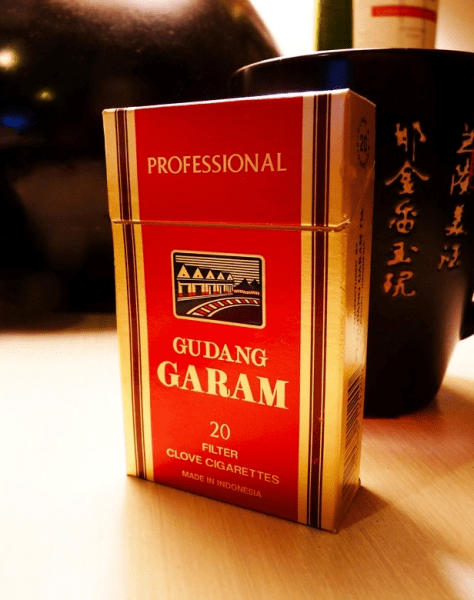
The Splinter Fraction: On Why Clove Cigarettes Should Be Legal in the US

Note: This is the fourth position of the Trans-Pacific Political Partnership known as The Splinter Fraction. Our first position is about the Age of Consent in the U.S. Our second position is about privileged access for Medecins Sans Frontieres to all war zones and protection from the powers that be for their operations. Our third position is to spread karaoke as widely as possible.

Full disclosure: I love clove cigarettes. I’m not here to pretend tobacco is harmless, but I do smoke and I love cloves specifically — their sweetness, their bite, the way they announce themselves rather than slip by unnoticed. They’re not a casual habit. They’re not cheap. They’re not especially forgiving. They are, unmistakably, a specialty product for adults who already know what they’re doing. Which is precisely why their disappearance from the United States strikes me as so strange. If public policy is supposed to focus on scale, harm, and likelihood, cloves barely register. And yet they were eliminated cleanly and completely.

This isn’t a brief for Juul, bubblegum vapes, or any product designed to recruit new smokers as efficiently as possible. Those deserve scrutiny, regulation, and in some cases outright prohibition. Clove cigarettes are something else entirely. They were never poised to take over American high schools. They were never discreet, never mass-market, never engineered for easy uptake. They appealed to a narrow, adult audience — travelers, artists, longtime smokers with particular tastes. Their banning didn’t meaningfully change youth smoking behavior; it simply removed a minor, culturally specific option from the legal market. Which raises a quiet but important question: why was such a small thing targeted so decisively, while other flavored cigarettes were not?

The answer, of course, is the carve-out. In 2009, when the United States banned flavored cigarettes, it did so selectively. Clove cigarettes were prohibited outright. Menthol cigarettes were not. This distinction was never really about flavor chemistry or relative harm; it was about politics, constituencies, and consequence. Menthol had a large, organized user base and a long, fraught history tied to race, policing, and targeted marketing. Regulators understood that banning menthol would provoke backlash, raise enforcement concerns, and create secondary harms. So menthol survived. Cloves, by contrast, had no organized defenders, no obvious political cost, and no plausible narrative of collateral damage. They were small enough to remove without resistance.

We don’t object to the menthol carve-out. In fact, I understand it. Public policy often has to weigh downstream effects as much as stated intentions, and there were legitimate fears about what a menthol ban might unleash. But that logic cuts both ways. If menthol was spared because its removal would have caused disproportionate disruption, cloves deserved consideration for the opposite reason. Their user base was tiny. Their market footprint was negligible. Their elimination solved no urgent public-health problem and prevented no foreseeable epidemic. It simply demonstrated how regulation tends to work in practice: not by calibrating rules to scale and risk, but by acting most decisively where the fewest people are able—or willing—to object.

What the clove ban reveals, more than anything, is how regulation actually moves through the world. It does not flow evenly from evidence to outcome. It flows through constituencies. Products with organized users, sympathetic narratives, and visible secondary effects are handled with caution. Products without those protections are handled cleanly. Clove smokers were never numerous enough, loud enough, or legible enough to matter. There was no lobby. No advocacy group. No credible fear of backlash. As a result, cloves became an easy victory: a flavored cigarette could be banned, a public-health win could be declared, and no meaningful political cost would be incurred.

This is not corruption so much as gravity. Policymaking, especially in public health, often advances where resistance is lowest. That doesn’t make it malicious, but it does make it uneven. And unevenness matters. When regulation targets the smallest, quietest practices first—those least likely to produce harm at scale—it risks confusing symbolic action with effective policy. The clove ban didn’t fail because it was harsh; it failed because it was misaligned. It addressed a marginal behavior while leaving far larger, more consequential ones to be negotiated indefinitely.

One of the unspoken assumptions behind the flavored-cigarette ban was that flavor itself was the problem. But not all flavors function the same way. Some are engineered for mass adoption: sweet, smooth, cheap, discreet, and easy to inhale even for first-time users. Those products lower the barrier to entry and deserve aggressive scrutiny. Clove cigarettes operate at the opposite end of the spectrum. They are pungent, smoky, and unmistakable. They announce themselves immediately. They are harder on the throat, more expensive, and far less forgiving to the uninitiated. In other words, they are an acquired taste by design.


This distinction matters because public health should be attentive not just to ingredients, but to uptake dynamics. Products that spread rapidly among new users pose a different kind of risk than products that remain confined to a narrow, self-selecting adult audience. Cloves never behaved like a recruitment tool. They didn’t mask tobacco; they added complexity to it. They weren’t optimized for stealth or scale. Treating them as equivalent to mass-market flavored cigarettes collapses important differences and replaces targeted regulation with blunt prohibition. If the goal is to prevent widespread initiation, then precision matters—and cloves were never the right target.

There is also the question of adult autonomy, which is often treated gingerly in tobacco policy but can’t be avoided entirely. Smoking remains legal. That fact alone establishes a baseline assumption: adults are permitted to make choices that carry known risks. Within that framework, the question is not whether tobacco should be virtuous, but whether adults are trusted to exercise discernment among legal options. Choosing a clove cigarette is not an attempt to evade regulation or denial of harm; it is an aesthetic preference exercised within an already constrained and taxed marketplace.

This is where the phrase “following the muse” matters. It sounds indulgent until you realize how narrow the claim is. It is not a demand for limitless choice or novelty flavors designed to entice new users. It is a request for consistency. If adults are allowed to smoke, they should be allowed to choose among products that differ meaningfully in character, tradition, and appeal—especially when those products are demonstrably niche and non-expansionary. Removing cloves didn’t protect children. It simply narrowed adult choice in a way that feels arbitrary rather than principled.

It’s reasonable to ask why any of this matters. Clove cigarettes are not a public-health crisis. Their absence does not rank among the great injustices of modern regulation. But small decisions often reveal larger habits of mind. When policy treats scale, intent, and impact as interchangeable, it stops distinguishing between meaningful intervention and symbolic tidying. The clove ban solved a rhetorical problem more than a real one. It demonstrated action without demanding precision.

What’s left behind is an inconsistency that never quite resolves. A flavored cigarette with massive market share remains legal because its removal would be disruptive. A flavored cigarette with negligible market share was eliminated because its removal was easy. That asymmetry doesn’t undermine public health as a goal, but it does weaken confidence in how that goal is pursued. If regulation is to be trusted, it should align most tightly with where harm is greatest—not where resistance is lowest.

This is not a call to roll back tobacco regulation or to relitigate every compromise embedded in public-health law. It’s a narrower observation. When a system is willing to make exceptions for powerful constituencies while eliminating marginal practices without consideration, it reveals something about how decisions are actually made. Clove cigarettes weren’t banned because they were uniquely dangerous. They were banned because no one important would miss them.


Even so, positions don’t need mass movements to exist. Sometimes they begin as a splinter fraction: a small, clear objection to an unnecessary loss. If smoking is legal, and if nuance still matters, then there is room—at least in principle—for a carve-out that acknowledges scale, intent, and adult choice. Even if only two people think so, even if it’s just me and Annie, that’s enough to say it out loud.

I Have a Crush on Katie Park From Bad Moves

Epigraph:

Could you read between the lines
Or was it just so obvious?

Bad Moves

New Note: This is an older piece, however I am re-releasing it here. I recently shared a longer piece about some aspects of my life, including, quite centrally, music, so this seemed like a good time.

As with anyone’s story, there are layers to mine. One pretty big layer is when in 2018 I traveled to New York/ Brooklyn, Boston, Philadelphia, and Washington D.C. to see the band Phosphorescent. I saw Phosphorescent four times total on their C’est La Vis tour and they were amazing. I bought a sweatshirt from the merch table and the merch gal told Matthew Houck, the lead singer, about me because I told her I’d come all the way from Japan to see the band. He came down from the stage and gave me a big bearhug, not once but twice at two of the shows. He knew I was going through it, and I needed a hug. He’d been through it too, big time, before and when he was writing Muchacho a few years prior.

As I was seeing Phosphorescent I also took the opportunity to see a few other bands. I saw Yo La Tengo twice at the Borwey Ballroom, Jay Som in Boston, and most memorably The Hold Steady twice at the Brooklyn Bowl where they were playing a three night set. The opener for The Hold Steady was a band called Bad Moves. I had never heard of this band, however, and I don’t say this lightly, they put on a better show than The Hold Steady. Now an opener should try to do just this, to “steal the show,” so to speak. A Bad Moves stole it big time. I was enraptured by their lead singer Katie Park, and met her at the merch table which she was running, which is recounted below. My friend I met at the shows, Austin, pushed me to check out their album Tell No One in depth, which I did, and I loved it. On the train from Washington D.C. back to New York I wrote the first version of this piece, which has been fairly extensively edited since then. This is my sneaky favorite piece, maybe not my best, but you can be the judge. Here it is:

I love live music. More than that, I love live music fans, and music fans in general. This piece is basically about being a music fan, and was inspired when I saw the band Bad Moves open for The Hold Steady in 2018 at the Brooklyn Bowl. They were touring on the back of their first full length, Tell No One. While at the Bad Moves/ Hold Steady show a music geek introduced me to a band called Swearin’. Swearin’ has been around a little longer than Bad Moves, and in 2018 had released Fall Into the Sun. The two bands don’t really sound all that much alike (Bad Moves is basically “Power Pop” and Swearin’ is basically “Indie”) but they write somewhat similarly about matters of love and friendship.

Let’s play a game that we live in a world where a record by a band like Bad Moves or Swearin’ would produce radio hits. I want to live in that world. Or maybe I don’t; maybe it’s better for everyone that bands like these stay a little more on the DL. Let’s first take a look at Fall Into the Sun. (Swearin’s frontwoman is Allison Crutchfield, and the band is mostly her baby.) My pick for the single would be the lead off track, “Big Change.” 

The song opens with this soft-spoken reminiscence — basement shows, empty cans, old romances, long nights of half-drunken idealism. Crutchfield sketches a friendship held together by music, chaos, and the sense that they’d accidentally stumbled into their own mutant little world.

I really like what Crutchfield does here. She is basically writing about a friendship solidified over a shared love of music. Now, I know a lot of people. I also have some friends. When you ask an adult, “How many real friends do you have?” the number will vary widely. A lot of people will say “four or five,” something like that. People in general have surprisingly few real friends. I have ten or fifteen, maybe more, but am only in regular contact with about half that number. A good friendship, in my opinion, is one where no matter how long you and your friend have not hung out, if you see them it’s as if not a day has passed. With this sort of friend, I’ve found, there is between yourself and them something fundamental shared. It can be anything really. For example, I first met my good buddy when we were both in graduate school in Arizona, and at first I thought he was a total dick. He was loud, interrupted people constantly, and loved being the center of attention. One night we were drinking as a department and he started razzing me there on the street, just casually insulting me left and right. Suddenly I got where he was coming from. This was, in fact, his way of offering to be friends. Once I understood this, I began to give it right back to him. Called him every name in the book. And he ate it up. By the end of the night we were fast friends and have been ever since, because we share an understanding that our friendship is based, in part, on ripping on each other. Music, obviously, is another great basis for a friendship.

When Crutchfield sings “no art degree, no conservatory/ just Katie and me,” I’m reminded of the refrain from Don DiLillo’s Underworld: “who’s better than us.” If they can do it, why not us? Fuck ’em. That’s what attitude looks like kids–take notes.

So “Big Change” is my single from Fall Into the Sun. (“My single” here just means the song I would choose as the single. For some records, the single is super obvious, while for other records it’s debatable. Bands and producers, in my opinion, do not always get this right.) A good record will tend to have at least two singles; three is a bonus.

For Fall Into the Sun’s second single I’ll go with “Grow into a Ghost.” It opens with a chugging guitar riff with an almost Krautrock drum line. The song is a perfect 3:10–in and out. Do you know anything about lost love? Swearin’ does.

Midway through the record, she writes to an old love with that drifting, half-in-the-desert melancholy she does so well — remembering who she’d been before they met, watching someone fade into absence until they feel more like a ghost than a memory.

Swearin’ is good, but Bad Moves is better. And the star of Bad Moves is the exquisite Katie Park. (I know they are a collective, but my world is my world baby.) Before their show Katie was at the merch table selling…magic eye! That she made by hand. And what did it say? The magic eye said “Bad Moves.” Obviously. I checked it out and chatted for a few minutes with Katie, trying to play it cool. It was the highlight of my year. 20 minutes later she and the band were on stage, crushing it.

The single here is pretty easy. It’s “Crushed Out.” The band released “Crushed Out,” “Spirit FM” and “Cool Generator” as the singles, all of which are excellent. Maybe “Spirit FM” is catchier than “Crushed Out”? Possible. But “Crushed Out” has more lasting power in my opinion. “Crushed Out” is about exactly what it sounds like. It has a basically perfect power pop structure with a killer hook, a classic bridge, and a theme at once super obvious and super deep–the power of a crush.

The whole song is a tumble of infatuation — that feeling where you can’t focus, can’t think straight, and every look or scribbled message feels like it should be obvious to the other person. It captures the power-pop rush of a crush so clearly it almost stings.

Baby, if you are crush-prone that power never goes away. Bad Moves knows this–it’s kind of what the record is about. Crushing out that way can be pretty obvious–do you think I’m crushing out on Katie at all? Nah, this is just a piece of music appreciation.

Cool Generator is my second favorite song on the album, but my “sneaky favorite” is “Missing You.” A sneaky favorite is just what it sounds like: it’s that song that may fly under most people’s radar but that you have a special soft spot for. My all time sneaky favorite song is “Three Drinks” by Craig Finn of the aforementioned Hold Steady. “Three Drinks” shows up on Finn’s 2016 EP Newmyer’s Roof. It’s nearly acoustic, unlike most Hold Steady songs, and sounds just a little bit country. Three Drinks is about a woman (most great songs are) who may have been a child star once upon a time, and is now a drinker. It is an example of a certain type of song that Finn is amazing at, the deeply empathetic look at adult relationships in all of their gloriously flawed complexity. In this sense, Three Drinks fits in with “Spinners” from The Hold Steady’s 2014’s Teeth Dreams, “Tangletown” from Finn’s 2017 solo record We All Want the Same Things, and “Esther” a Hold Steady single from 2018. Finn’s writing on Three Drinks and Tangletown is at its absolute apex. 

“Three Drinks” delivers Finn at peak empathy. A woman with a messy past drifts through a hotel lobby filled with minor disasters, trying to hold herself together until that magic window — the hour between the third drink and the one that tips the night over the edge. Finn nails that space between fear and transcendence where people feel briefly holy.

The refrain focuses on that magic hour between drinks 3 and 4, when matters begin to move from the slightly anxious first stage of the evening to something entirely other:

So anyway, my sneaky favorite on Tell No One is “Missing You.” The song starts like the others, high-speed power pop, and after two verses switches to a near-spoken word breakdown of the tug-of-war between a crush and the expectations of the world around. Guess which wins?

“Missing You” turns into a spoken-word confession halfway through: the push-and-pull between what the world tells you not to do and the crush that keeps winning anyway. It’s simple rhyming, almost naive, but devastatingly effective.

I officially support these sentiments. .

So that’s my sneaky favorite –doesn’t mean it’s better than “Crushed Out” (it isn’t) it’s just a little sneaky. I’m all about sneaky babes and sneaky favorites, on all levels.

In addition to the Magic Eye, Bad Moves also engage in a little publishing. A little literature. Specifically they publish a pamphlet called “The Virtues of Wearing White.”

Chatting with Katie, she acknowledged more than a passing familiarity with the literature of the Jehovah Witnesses. I love Witness literature. Both Witness and Bad Moves publications have a real “it’s gonna be a bright, bright sunshiny day” vibe. If you know me this is not a secret, but I’m a hardcore closet New Ager. There, secret’s out. I’ve messed around with all kinds of New Age action. Once I attended a Kabbala meetup in Manhattan. There were some hardcore New Agers there too, seriously. Those folks were not in the closet at all. Shining eyes, whatever color they are wearing. Me, I like black because it’s easier to launder, but Bad Moves have me thinking. (One other publication you should take a look at if you are into this kind of thing is the Christian Science Monitor. It’s a serious piece of literature. God is great baby, god is great.)

When I was younger my parents had a friend called Tom Hutchinson, who, predictably, went by “Hutch.” Hutch owned a boutique coffee shop there in town and I drove a delivery van for him for a bit. But that’s another story. Anyway, Hutch was a weird guy and he hated the Witnesses. It was one of his favorite topics. He’d call them the “Witlesses,” and say: “When they come to my house I turn the hose on ’em.” People thought this was pretty funny, but I was not that into Hutch’s attitude to the Witnesses. I mean, he didn’t want anyone trying to convert him on his property, which is fair; however, I felt, and still feel, that if someone wants to come to my door, give me a little literature, and talk about how god loves me I’m gonna let them. I genuinely like the Witnesses. They seem like lovely people. Read more