On the Strange Geography of Conferences

Note: This essay began with a memory from an IB Global Conference in Singapore sometime in the mid-2010s, when I first began to notice that large professional gatherings possess a kind of unofficial geography. The official conference—the keynote halls, breakout rooms, and printed program—forms only one map of the event. Running alongside it is a second map composed of bars, lobby couches, dinner tables, and long conversations that drift well past the scheduled sessions.

Years earlier I had written a short reflection on what I called unconferencing, the quiet relocation of intellectual “action” from the formal program to these improvised spaces around it. The present essay grows out of that earlier observation but shifts attention from theory to terrain. Rather than asking why unconferencing occurs, it asks where it tends to happen and how participants gradually learn to navigate those unofficial zones.

Readers interested in the conceptual background may wish to consult the earlier essay on unconferencing, which explores the phenomenon through the lens of Erving Goffman and the broader question of how individuals negotiate the locus of action within institutional environments.

As with many pieces on the Kibbitzer, the goal here is less to offer a definitive theory than to describe a pattern that, once noticed, becomes difficult to unsee. Conferences, like many human systems, operate simultaneously on two levels: the one announced in the program and the one discovered by those who know how to find the action.

“The locus of action is always in motion.”
— Erving Goffman


I arrived a day late to the conference.

This was in Singapore sometime around 2014 or 2015, at one of the IB Global Conferences for the Asia–Pacific region. The event was being held in a large glass hotel near the river, not far from Chinatown and just south of Raffles Place if memory serves. The keynote room alone seated something like eleven or twelve hundred people. The conference program was thick with panels, workshops, and presentations that began early in the morning and ran straight through the afternoon.

My suitcase had arrived before I had. I had been in China the day before running another IBEN training, and while the conference itself was already underway, I was still in transit. By the time I checked in and made my way downstairs, the official proceedings were well established: keynote speakers, crowded sessions, conference badges swinging from lanyards, the whole apparatus of professional gathering fully in motion.

At the time I was only about a year into my work with IBEN. My regional manager was Avi Nanda, who was excellent in many respects but not especially hard-charging as a networker. Gill Pressland, who later became a formidable presence in the region, was not yet in the picture. I knew a few people, most importantly Steve Keegan in Australia, who had become a kind of mentor to me. I also knew Ed Lawless, who had previously overseen a great deal of the professional development work in the region.

Ed had once joked to me, only half joking, that his job had become little more than “wedding planning.” Conferences, workshops, schedules, logistics—endless coordination. Eventually he burned out on it entirely and moved on, first to Pamoja, the online curriculum company, and later into a somewhat undefined role at an IB school in Tokyo that seemed to blend management, marketing, and development. Such trajectories are not uncommon in the IB ecosystem. People drift through roles that are part educational, part organizational, part entrepreneurial.

In any case, arriving late to the Singapore conference had the curious effect of placing me immediately at its margins rather than at its center. The keynote sessions were already underway, but instead of rushing directly into the large ballroom where most of the attendees were gathered, I began encountering people in the spaces just outside it: the lobby, the cafés, and eventually the hotel bars.

One of the first people I reconnected with was Darlene Fischer from Australia. Darlene was in her early sixties at the time and something of a force of nature. She had the sort of presence that made conversations reorganize themselves around her. Through Darlene I soon met two others who would become central figures in what I later came to think of as the conference’s unofficial inner circle: Sue Richards and Gerald Conlin.

Gerald was in his mid-sixties then, a slight man with white hair and an almost theatrical grin. His professional life consisted largely of consulting work connected to education programs, particularly the wave of hybrid master’s degrees in education that universities around the world had begun launching. Institutions like Tsukuba in Japan and Bath in the UK were building these programs, often with cohorts of twenty or so students, and Gerald had carved out a niche as the person who could authorize and evaluate them. He was also constantly presenting, constantly researching, constantly moving through the conference circuit.

Within about five minutes of meeting me he decided that I would make the perfect number two for his MA authorization work. It was flattering, though I suspected there might be additional motives behind his enthusiasm. Gerald was an openly and exuberantly gay man, and his warmth toward me carried a certain theatrical flair. He had a habit of calling me “my boy,” delegating tasks such as selecting restaurants or ordering drinks, and occasionally resting a hand on my upper thigh while speaking with great intensity about some educational development or other. None of this particularly disturbed me; conferences are full of strong personalities, and I was by then quite capable of navigating such dynamics.

Sue Richards, meanwhile, functioned as Gerald’s counterpart and amplifier. Where Gerald was slightly reserved and professorial, Sue was outgoing, energetic, and socially strategic. She worked directly for the IB at the time and moved easily through the conference environment, introducing Gerald before presentations, praising his work with extravagant enthusiasm, and generally acting as a kind of corner person for his professional persona. If Gerald was the fighter in the ring, Sue was the one shouting encouragement from the ropes.

The two of them formed a kind of traveling intellectual unit, and through them I began spending more time not in the conference sessions themselves but in the hotel’s bars and restaurants.

There were perhaps four or five of us in total who fell into this pattern. What struck me fairly quickly was that these individuals rarely attended the conference sessions unless they were running them. The keynote speeches, the panels, the carefully scheduled workshops—these seemed largely directed at newcomers or first-time attendees. The veterans, by contrast, moved through the conference in a completely different way.

They ran the unconference.

By this I mean something slightly more specific than simply skipping sessions. Years ago I wrote an essay about what I called “unconferencing,” referring to the parallel conference that emerges quietly around the official one. What interests me here is less the theory of unconferencing than its geography: the physical spaces through which these unofficial conversations travel.

At the Singapore conference, that geography quickly became clear.

There was the large ballroom where the official keynote addresses were delivered to more than a thousand people. But there were also the bars—two of them in particular—where smaller groups gathered throughout the afternoon and evening. There were the restaurant tables where dinner conversations stretched for hours. There were the lobby seating areas where people drifted in and out between sessions.

And there were the walks.

Within a day or two I began to see that the conference operated according to two distinct maps. The first map was the one printed in the program: rooms, times, speakers, sessions. The second map was entirely informal, emerging through patterns of conversation and social gravity.

The keynotes were for the newbies.

The action was at the bar and at dinner.

I was somewhat ambitious at that stage in my career, eager to establish myself in the region and become a respected trainer. Because of this ambition I paid close attention to where energy seemed to accumulate. It did not take long to realize that the most consequential conversations were happening far from the podium.

In the bars and restaurants people spoke more candidly about the IB, about institutional politics, about emerging programs, about who was doing interesting work and who was not. Opportunities were floated, collaborations proposed, rumors exchanged. Careers, in small ways, were advanced.

The official conference continued to run its scheduled course upstairs, but the real motion of the event—the circulation of ideas, alliances, and opportunities—took place elsewhere.

Seen in this light, conferences begin to resemble temporary cities with two overlapping infrastructures. The official infrastructure is highly visible: lecture halls, keynote rooms, printed programs, registration desks. The unofficial infrastructure is quieter and more fluid: bars, café tables, hallways, and late-night dinners.

Participants gradually learn to navigate both maps.

Some remain primarily within the official one, moving dutifully from session to session. Others develop an instinct for the second map, drifting toward the places where conversation gathers and where the boundaries between formal roles begin to loosen.

It is in these spaces that the unconference unfolds.

The term itself is slightly tongue-in-cheek, but the phenomenon is real. Once a small group of experienced participants begins congregating in a particular location—usually a bar or restaurant—others start to appear. Conversations splinter and recombine. Someone joins for twenty minutes before leaving for dinner. Someone else arrives with news from another corner of the conference.

Over time the group becomes a kind of floating node within the larger event, a place where information circulates rapidly and where participants feel unusually free to explore ideas that might never make their way into a formal presentation.

In retrospect, what struck me most about that Singapore conference was not any particular keynote or panel discussion but the realization that conferences possess a strange and dynamic geography. Action is rarely confined to the places where organizers expect it to occur. Instead it migrates across the built environment of the event, settling temporarily wherever people feel the oxygen is richest.

The ballroom may host the official performance, but the bar hosts the conversation about what the performance actually means.

And so the conference proceeds along two parallel tracks: the one announced in the program, and the one discovered by those who know how to find the action.

The unconferencers simply learn to follow the latter.

Dedication:

For all those who know how to find the action.

Note: If you enjoyed this essay, you may also enjoy the essays linked below, all of which also take up the fascinating theme of professional conferences.

On One Evening in Adelaide

Note: This recollection dates to June 2010, when I traveled to Adelaide, Australia for my first IB Theory of Knowledge workshop. At the time our school’s governing body, officially Ritsumeikan, but semi-affectionately known around town as “Keichimeikan,” (the cheap school) had begun investing heavily in International Baccalaureate training, and for a brief but memorable stretch I found myself traveling widely across the Asia-Pacific region attending workshops and conferences. Adelaide happened to be the first stop on that circuit.

The encounter described here took place midway through that week. Like many moments that occur while traveling, it was both ordinary and oddly memorable — a short conversation, a near-comic personal embarrassment narrowly avoided, and then a small gap in memory that I still cannot fully explain.

For privacy I refer to the person involved simply as “M.”, and a few identifying details have been softened. The strange behavior of my phone afterward — messages arriving out of sequence and the device occasionally insisting it was in Adelaide or Nagoya — was quite real, though I have never had a satisfying explanation for it.

In Japanese there is a phrase that captures the mood of such moments perfectly: cho fushigi — very mysterious.

Epigraph

Half hours on earth

What are they worth?

I don’t know.

David Berman


I. Adelaide

I was in Adelaide for my first IB Theory of Knowledge workshop, sometime around June of 2010. In those years our principal had suddenly decided that IB travel was a worthwhile investment, and so for a brief and glorious period I was dispatched all over the Asia-Pacific region like a slightly rumpled educational attaché. Workshops in Singapore, Hong Kong, Kuala Lumpur, and, in this case, Adelaide.

The school hosting the workshop was one of those extremely well-appointed Australian private schools — immaculate rugby grounds, manicured lawns, a cafeteria that would have put many universities to shame. The workshop itself was perfectly pleasant. TOK people tend to be reflective types and reasonably good company, though after two days of epistemology everyone is usually ready for a drink.

Which is how, on the second evening, a small group of us ended up at a bar a few minutes from the hotel.


II. M.

At some point the table thinned out until it was just the two of us talking. She was from San Francisco. Let’s call her M.

We were sitting close, leaning in the way people do in bars when the music is slightly too loud and the conversation slightly too interesting to abandon. I told her about my small blog, Classical Sympathies, which at the time was still young and full of ambition. She told me she wrote long travel essays and posted them on Facebook where, she said with a shrug, they had gathered a modest but loyal readership.

Like a complete peon, I offered to host them on my site.

She smiled politely and said she’d probably keep them where they were for now.

Which was entirely reasonable.

The conversation moved on. We started talking about family — fathers, specifically — and the strange emotional weather that tends to gather around that subject. It was one of those unexpectedly intimate bar conversations that sometimes appear between near-strangers and then vanish again.


III. A Minor Emergency

There was, however, a complication.

Let us say that during the course of this conversation Young Mr. Johnson began to make his presence known.

Nothing dramatic. But enough that standing up suddenly would have created a situation. So I employed the classic defensive maneuver familiar to men everywhere: crossed legs, careful posture, strategic angles.

A small but significant crisis was unfolding beneath the table.

Eventually the situation resolved itself through patience and good fortune. When the moment seemed safe, I made my exit with what I hoped was dignity intact. We exchanged Facebook information, said our goodbyes, and I stepped out into the alley behind the bar on the way back to the hotel.

At that moment I felt something close to relief.

By the grace of God, I had narrowly avoided making a spectacular fool of myself.


IV. The Missing Ten Minutes

And then something strange happened.

I remember stepping into the alley.

The next thing I remember is being back in my hotel room.

Fully clothed. Completely sober. The evening still early — maybe ten-thirty, eleven at the latest.

What I did not remember was the ten minutes in between.

No walk back to the hotel. No elevator ride. No keycard in the door.

Just a small, clean gap in the record.


V. The Phone

The truly odd part came later.

For the next year and a half my phone behaved as though it had lost its grip on reality.

Texts appeared months after they had supposedly been sent. Messages from April surfaced in October. Time stamps were wrong. Location data wandered.

Sometimes the phone seemed to believe it was still in Adelaide.

More often it insisted it was in Nagoya, a city I had visited only once for a consulting visit to a school in the hills.

It was never anything dramatic — just enough small glitches to make me raise an eyebrow every now and then.


VI. Cho Fushigi

I never saw M. again.

We remained distant Facebook acquaintances for a while. She became, I believe, an English teacher back in San Francisco. Her essays continued to appear occasionally in the feed, and then eventually they stopped.

The phone eventually sorted itself out as well.

Technology, like memory, tends to repair its own small fractures over time.

Still, every once in a while I think about that short walk down the Adelaide alley and the ten missing minutes afterward.

And the only phrase that really fits is the one the Japanese use for such things.

Cho fushigi.

Very mysterious

Dedication:

For Molly. Thanks for the half hour baby.

Note: If you enjoyed this essay, you may enjoy the two essays linked below, both of which take up similar themes or charged, fleeting, and romantic encounters.

On The X-Files: The Paranoid Style of 1990s Television

Note: This reflection comes out of a long-standing fascination with The X-Files, one of the most distinctive television shows of the 1990s. When it first aired, the series managed to occupy a strange and compelling middle ground between science fiction, horror, conspiracy culture, and something closer to philosophical inquiry. Week after week the show asked the same unsettling question from slightly different angles: what if the world is not quite as stable or intelligible as we assume?

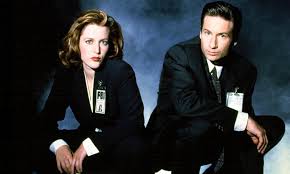
What made the series especially effective was the dynamic between Fox Mulder and Dana Scully. Mulder represented the pull of belief, intuition, and pattern-seeking; Scully stood for skepticism, evidence, and scientific restraint. The tension between those two orientations created a kind of philosophical engine that powered the show for many seasons.

The major episode discussed here is one of the early “mythology-adjacent” stories that sits near the boundary between the show’s monster-of-the-week format and its deeper conspiratorial arc. Watching it again years later, what stands out is not only the eerie storytelling but also the way the series captured a particular cultural mood of the 1990s — a time when technology was expanding rapidly, institutions were increasingly distrusted, and the possibility of hidden systems operating beneath the surface of ordinary life felt strangely plausible.

In that sense, The X-Files was never just about aliens or government cover-ups. It was about uncertainty itself — the uneasy space between explanation and mystery.

Epigraph:

“Autorerotic asphyxiation is not a pleasant way to go, Mr. Mulder.”

Clyde Bruckman, The X-Files

The X-Files is my second favorite television show of all time, behind only The Wire, and it’s not close.

That may sound like a bold claim given the sheer amount of television produced over the past thirty years, but for those of us who came of age in the 1990s the show hit a nerve that very few cultural artifacts ever have. It wasn’t just entertaining. It was atmospheric. It was unsettling. It felt like it was plugged directly into the cultural nervous system of the time.

To understand why, you have to begin with a simple generational fact. I was born in 1974, just eleven short years after the assassination of John F. Kennedy. That event cast a shadow that lingered for decades. My parents’ generation and my grandparents’ generation were deeply scarred by it in ways that people my age never fully understood. Something in the national psyche broke that day. Trust in institutions never really recovered.

Historians later described this cultural mood as “The Paranoid Style of American Politics,” borrowing the famous phrase from the essay by Richard Hofstadter. Whether one agreed with Hofstadter or not, the phrase stuck because it captured a very real undercurrent in American life: the suspicion that unseen forces were operating behind the scenes.

The genius of The X-Files was that it leaned directly into that atmosphere. It didn’t treat paranoia as pathology. It treated it as narrative fuel.


Discovering the Show

I was an early adopter.

The show premiered in 1993, and by 1994 I was already watching it in the dorms at Hamilton College with a group of friends. If possible we’d get a little baked first, which in hindsight may have been perfect. The X-Files is a show that rewards slightly altered states of perception.

At first it was something of a cult discovery. A few people watched it religiously while others barely knew it existed. But by the time the second and third seasons rolled around it had become a communal ritual. Thursday nights meant Mulder and Scully.

The chemistry between the leads was immediately apparent.

David Duchovny and Gillian Anderson had what we would now call “shipping chemistry,” although that term didn’t really exist yet. We simply knew that something electric was happening on screen. The characters worked because they embodied opposing ways of understanding the world. Mulder believed everything. Scully was more skeptical. Between them the truth hovered in an unresolved middle ground.

The show was also disciplined enough to hold that tension for years. In an era before streaming algorithms and social-media speculation, viewers waited week to week to see how the relationship evolved.

Hovering over them was their boss, the enigmatic Walter Skinner. For several seasons it was impossible to tell whether Skinner was helping Mulder and Scully or quietly managing them on behalf of darker forces. That ambiguity was one of the show’s greatest pleasures.

In a delightful twist of pop-culture irony, the actor Mitch Pileggi was at one point named TV’s Sexiest Man by a glossy magazine. Which is hilarious when you remember that Skinner is essentially a bald FBI bureaucrat in a gray suit. Such was the cultural power of the show.


The Smoking Man

Then there was the figure lurking in the shadows.

The Cigarette Smoking Man is one of the great villains in television history. Played with eerie understatement by William B. Davis, he appeared whenever the conspiracy thickened.

He looks exactly like the kind of man who would be at the center of a decades-long government cover-up. Three packs a day. Cheap cologne. A lingering Jameson hangover. The sense that he spends most of his time in dim Washington parking garages and windowless offices and only emerges from his crypt when the conspiracy requires it.

It’s a performance so physical that you can almost smell the character through the screen.


Three Essential Episodes

Every long-running show has defining episodes, and The X-Files produced dozens. But three in particular illustrate what made the series so special.

The first is the pilot itself, which introduces Mulder investigating mysterious disappearances in the Oregon woods. A key moment occurs when the agents experience missing time on a dark forest road. The scene establishes the tone immediately: eerie, ambiguous, and faintly plausible.

The second is Fallen Angel, an early classic that introduces the lovable conspiracy obsessive Max Fenig. Max’s jittery paranoia captures the spirit of the show perfectly. When he remarks that “someone’s always watching, Mr. Mulder,” it feels less like dialogue than like a thesis statement.

The third is the masterpiece of dark humor, Clyde Bruckman’s Final Repose, written by the great Darius Morgan. In it, a weary insurance salesman named Clyde Bruckman discovers that he can foresee the exact circumstances of people’s deaths. Played beautifully by Peter Boyle, the character delivers a hilarious and oddly touching performance. It is Bruckman who also delivers the immortal line that also gives us our epigraph: “Autorerotic asphyxiation is not a pleasant way to go, Mr. Mulder.” Run roh. Take that belt off Fox baby.

What makes the episode remarkable is that it gently mocks the show’s own hero. Mulder spends the entire series searching for hidden meaning in the universe. Clyde Bruckman, by contrast, believes life is largely arbitrary and tragic.

His prediction of Mulder’s death—immortalized in the epigraph above—is both absurd and strangely profound. It’s also a sign that by Season Three the show had gained enough confidence to poke fun at itself.


When the Mythology Expanded

Like many successful serialized shows, The X-Files eventually struggled under the weight of its own mythology. One of the central narrative engines involved Mulder’s missing sister, Samantha Mulder. Early on, the mystery added emotional depth to Mulder’s obsession with the paranormal.

But as the seasons progressed the storyline became increasingly convoluted. Samantha might have been abducted by aliens, or replaced by a clone, or transformed into something else entirely. Meanwhile the conspiracy expanded to include frozen alien ships in Siberian ice, shadowy government syndicates, and the infamous black-oil virus that seemed capable of possessing human hosts.

At a certain point the mythology began to chase its own tail.

Then, as the final blow, David Duchovny left the show. Gillian Anderson remained excellent, but The X-Files was always fundamentally a two-hander. Without Mulder and Scully together the balance of the series shifted in ways it never fully recovered from.


Why It Still Matters

And yet, for all the narrative tangles of the later seasons, the early years of The X-Files remain extraordinary television.

The show captured a very particular moment in cultural history: the twilight of the pre-internet era, when conspiracy theories spread through late-night radio programs, photocopied newsletters, and whispered conversations rather than social media feeds.

It was a time when the idea that powerful institutions might be hiding enormous secrets still felt plausible rather than merely exhausting.

For a few seasons in the 1990s, Thursday nights belonged to the weirdest, smartest, most paranoid show on television.

The truth, as Mulder kept reminding us, was out there

Dedication

For Dana and Fox. You know we still want to know what went down in that motel room baby.

Note: If you enjoyed this essay you may also enjoy the two essays below, both of which, in different ways, take up themes of intrigue and mystery.

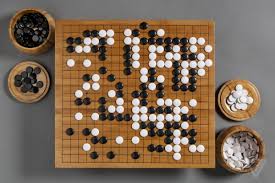
On Trying (and Failing) to Learn Go

Note: This essay reflects on my long and mostly unsuccessful attempt to learn the game of Go. I first encountered the game through Yasunari Kawabata’s The Master of Go, which portrays Go not merely as a contest but as a cultural ritual tied to patience, tradition, and dignity. Like many readers, I came away with the impression that the game contained some deep strategic wisdom.

Naturally, I tried to learn it.

The attempt did not go well. Despite buying a few introductory books and trying computer tutorials, I quickly discovered that the game required a kind of spatial patience and intuition that I simply did not possess. The books remain on my shelf as evidence of that early ambition.

The essay also reflects on a friend who has continued studying the game seriously for years, meeting regularly with a teacher and approaching the board with a patience I deeply admire.

Finally, the piece briefly touches on the modern transformation of Go through artificial intelligence. Even as machines have surpassed human players, the quiet ritual of the game continues wherever people sit down together and place the stones.

Epigraph

This game is bloody impossible!

— Matt Thomas


I first heard about Go when I was around twenty-one.

This was 1995 and I was going through what might fairly be called a Japanese literature phase. I was reading Natsume SōsekiJunichiro Tanizaki, and Yasunari Kawabata, along with a terrific mystery writer named Seicho Matsumotowhose books I devoured with great enthusiasm.

Somewhere in that run I encountered Kawabata’s famous novel The Master of Go, which tells the story of an aging master playing a final match against a younger challenger. The novel is less about the tactics of the game than about ritual, tradition, and the quiet passing of an era. The old master loses, and the loss seems to symbolize something larger than a board game.

It made Go sound mystical.

Naturally I decided I should learn it.

This did not go well.

I bought a couple of books with encouraging titles. One of them was called Get Strong at Invading, which sounded promising. Invading! I imagined bold strategic incursions and elegant positional mastery. The whole thing seemed very Japanese, very subtle, very deep.

Then I tried actually playing the game.

At the time I had a computer program that included a beginner tutorial board — the little 9×9 version, which is supposed to be the simplest possible entry point into the game.

I was completely hopeless.

Not slightly confused. Not rusty. I mean utterly lost. I stared at the board as if it were some kind of philosophical diagram whose meaning had been explained to everyone else but me. Stones appeared, shapes formed, and somehow everything I did made the position worse.

Within a short time I realized a painful truth.

I was a complete washout at Go.

I gave up quickly.

The books remain on my shelf to this day.

Go, as it turns out, is not chess.

Chess feels like an argument. Pieces attack and defend, plans unfold, and even when you lose you usually understand why. Go feels more like weather. Stones accumulate quietly across the board until suddenly there is a vast pattern you cannot quite explain but which apparently determines everything.

Experts talk about influence, thickness, and sente.

I am still trying to figure out which group is alive.

My friend Dean, on the other hand, actually plays the game.

Every month or so he meets with an older Japanese gentleman who teaches him. Dean told me once that the teacher has very few students, so he feels a kind of obligation to keep showing up. I admire this enormously.

Dean is a patient man. I have known this since about 2003. He has the stamina to sit with the board, to think, to place stones carefully and let the game develop at its own pace.

Patience is not my natural game.

While Dean studies Go properly, I have mostly watched from the sidelines as the larger story of artificial intelligence unfolded around the game. I had followed the earlier moment when Deep Blue defeated Garry Kasparov back in the 1990s, and I suspected something similar had eventually happened in Go as well.

Sure enough, the breakthrough arrived when AlphaGo, developed by DeepMind, defeated top human players. Even the greatest masters of the game now study the moves produced by machines.

The machines, it turns out, understand Go better than we do.

Even attempts to escape the machines do not entirely succeed. When Bobby Fischer invented Fischer Random Chess — now called Chess960 — he hoped to eliminate opening theory and restore creativity to the game. Yet modern engines have mastered that variant as well.

Even Fischer’s attempt to outflank the machines eventually became another playground for them.

Which leaves the rest of us where we began.

Dean continues to sit across the board from his teacher, patiently placing stones and learning the game properly. The ancient rhythms of Go continue quietly in small rooms all over the world.

Meanwhile I remain stuck where I started, staring at a tiny beginner board and wondering what on earth I am supposed to do next.

And the books, I should add, are still on the shelf.

Dedication

For Dean, who plays the long game.

Note: If you like this essay, you may like the essays linked below.

On the Other City

Note: This piece grew out of a long fascination of mine with what might be called the “night economy” — the network of bartenders, servers, managers, taxi drivers, and late-shift workers who keep a city alive after most people have gone home. If the daytime city is governed by office hours and commuter rhythms, the nighttime city runs on a different clock entirely.

The two figures mentioned here, Haku and Haru, are part of that world in Kyoto. Haku runs the bar at ING and seems to operate on a schedule that would puzzle most daylight citizens, opening in the evening and closing well into the small hours while somehow producing food, music, and atmosphere in a space not much larger than a good-sized living room. Haru manages a shisha lounge in eastern Gion and moves easily between the daytime and nighttime rhythms of that neighborhood, which has its own distinct ecosystem of bars, touts, and late-night wanderers.

The small bar Ishimaru Shoten, tucked down an alley off Pontocho in the Kiyamachi district, serves in the essay as a kind of neutral ground — one of those places where the various inhabitants of the nocturnal city briefly cross paths once their shifts end.

The central idea is simple enough: most cities contain two cities. The first is the one that tourists and office workers see during the day. The second comes into view only after midnight, when the people who keep the lights on, the drinks pouring, and the plates spinning begin their own quieter rounds.

Epigraph:

Last night, I told a stranger all about you
They smiled patiently with disbelief
I always knew you would succeed no matter what you tried
And I know you did it all
In spite of me

Morphine, In Spite of Me


Most people believe a city goes to sleep around midnight. This is not true. Around that time a city simply changes populations.

The day city winds down: office workers, shopkeepers, commuters heading home, lights switching off floor by floor. But another population wakes up. The bartenders. The shisha managers. The taxi drivers. The people who work the strange hours when the streets are quieter but the human drama is often louder.

This is the other city.

If you spend enough nights wandering around it, you begin to recognize its citizens. They are the people who actually know how the place works after midnight.

One of them is Haku.

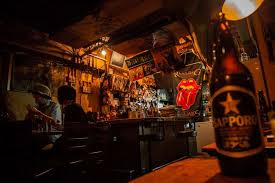
Haku runs the bar at ING. He opens around seven in the evening and closes somewhere between three and four in the morning. Prep starts around six. By the time the first customers wander in, the night has already begun for him.

He has long greying hair and rotates through a collection of Rolling Stones T-shirts, something like twenty-eight of them. I have never seen him wear anything else. He smokes constantly, drinks Sapporo if he is drinking at all, and otherwise survives on black coffee.

Somehow he produces a full menu in a kitchen that appears to consist primarily of a Bunsen burner and sheer stubbornness.

Haku’s bar has rules. No Japanese music is the main one. The other rule is that the bar itself is reserved for singles. Groups can sit elsewhere. The bar is for individuals who have come out into the night alone.

But Haku’s real gift is music. He reads the room the way a card player reads a table.

If the crowd is German he might throw on Rammstein. If Scandinavians wander in the speakers might suddenly fill with black metal. Australians get The Saints. If I’m there he might put on My Morning Jacket. The world rotates through the speakers depending on who happens to be occupying the stools that night.

Simply and totally the original man.

Another citizen of the other city is Haru.

Haru manages the shisha lounge in eastern Gion, a part of town where the nightlife becomes a little more ambiguous. The streets there are full of micro-touts, men and women both, gently trying to guide passersby into Thai or Japanese dancer clubs. Small space heaters glow outside doorways and mama-sans smile from behind them like patient spiders.

I never go into those places, though the invitations are often persuasive.

Haru opens the shisha lounge most days at noon sharp. If she is not there, someone named B. or a long-haired young guy handles things until she arrives. She tends the charcoal, mixes my Malibu Milk, and quietly extends the session when the official time runs out.

She knows my habits well enough by now that when I head up the stairs she doesn’t assume I am leaving. She knows I am just stepping outside to smoke.

For a long time she existed in my mind simply as the shisha girl, one of the many figures who keep the other city functioning. But then one night I ran into her somewhere unexpected.

The place was Ishimaru Shoten, a tiny late-night bar down an alley just west of Pontocho in the heart of Kiyamachi. Outside the entrance hang bright red, green, and blue lamps that glow like a small carnival in the dark.

I first discovered the place at four in the morning on a very long night. I was broke that evening, absolutely skint, and there was a very aggressive Japanese guy at the bar who clearly believed the entire establishment belonged to him.

The bar woman, who is about forty-five and still hot as blazes, was batting her eyes at me with what seemed like professional enthusiasm. Meanwhile I realized with growing clarity that I did not actually have the money to pay for the large bottle of beer I had just ordered.

But men are predictable creatures.

I understood immediately that if I played my cards right the territorial guy would buy the drink for me. So I joked with him, gave him a friendly punch on the shoulder, made it clear I recognized him as the reigning emperor of the room. He razzed me a little but saw that I was no threat to his throne.

Sure enough, he covered the beer.

I stumbled home to the Royal Park Hotel on Sanjo Street as the sky was turning pale, crashing into bed around five-thirty in the morning.

Weeks later I returned to Ishimaru and found Haru sitting there.

I teased her gently about sometimes opening the shisha lounge five or ten minutes late when she bikes over from home. I suggested she must be hungover. She laughed, not the polite laugh people sometimes use for customers but a bright, real laugh.

She said she was happy to see me.

And that was when I learned her name. Haru.

We talked for a while. I drank a White Russian and ate dashi maki while she sipped something that might have been shochu or nihon-shu. I felt a strange rush of adrenaline the whole time, those goosebumps that run up both arms when the night suddenly opens into possibility.

Not necessarily romantic possibility. Just the larger sense that anything could happen.

Anything can come.

After twenty or thirty minutes she said goodnight and promised we would meet there again sometime. We did run into each other once more about a week and a half later, though the evening remained just as light and brief as the first.

But something had shifted.

She was no longer simply the shisha worker in my mental map of the city. She was Haru, a fellow traveler in the other city.

And that is the thing about the people who live their lives after midnight. They know parts of the city the rest of us never really see. They watch the celebrations and the arguments, the flirtations and the quiet breakdowns. They see who walks home alone and who finds someone to share the long dark streets.

Every city has two maps.

The one everyone uses during the day.

And the other one that only appears after midnight.

Dedication:

For the men and women of the night. Who keep the drinks coming and the plates spinning. It’s a rocky world, and you rock it baby.

Note: If you enjoyed this essay, you may also enjoy the two essays below, which also feature Kyoto and Osaka nightlife in all it’s beautiful glory.

On Some Meetings and Close Encounters with Musicians II

Note: This is the second piece in our series “On Some Meetings and Close Encounters with Musicians.” You can find the first installment here.

The encounters described here span more than thirty years and several cities — from a first arena concert in Pullman, Washington in 1991 to small club shows in Cambridge, Osaka, and Kyoto over the decades that followed. As with many memories of live music, the exact setlists and dates blur, but the rooms themselves — the sounds, the atmosphere, the strange and fleeting meetings between artists and audiences — remain vivid. These sketches attempt to capture a few of those moments as they were experienced at the time.

Epigraph

No fears alone at night she’s sailing through the crowd

In her ears the phones are tight and the music’s playing loud

— Dire Straits, “Skateaway”

Live music produces strange meetings. Sometimes you meet the musicians themselves. More often you meet a moment — a room, a sound, a feeling that sticks with you for decades while entire years of ordinary life quietly disappear.

Here are a few such encounters.


I. Initiation

My first real concert was the On Every Street tour in 1991.

The band was Dire Straits, the venue was Pullman, Washington, and the company was the usual Spokane crew: Seth, Innes, Kelly.

I was the biggest fan in the car by far. The others liked the band well enough but I was the one who had studied the records, who knew the guitar parts, who was ready for the moment when the lights dropped and the first notes hit the arena. This was the On Every Street tour, which turned out to be their final record.

They played everything: Money for Nothing, Walk of Life, Sultans of Swing. It was a great show, and one of their last before retirement, though at the time I had no real way to judge such things. It was simply enormous — lights, volume, spectacle. I bought the black and blue tour shirt and wore it for five years.

At the time I thought concerts were supposed to be like that: huge, polished, and far away.

I would later learn otherwise.


II. Revelation

Several years later, during the Hamilton years, I saw Red House Painters at the Middle East in Cambridge.

I went with Ian. The room was small, maybe a few hundred people at most. Nothing about it resembled the arena in Pullman. And then, near the end of the set, Mark Kozelek began playing “Little Drummer Boy.” It lasted nine minutes. You could hear a pin drop in the room.

No spectacle. No lights. Just absolute concentration from everyone present. When the final notes faded the silence lingered for a moment before the applause came.

Afterward Ian and I drove back toward New York through the cold night with the windows cracked open, heaters flying out into the darkness, and Hell’s Ditch blasting through the car stereo to keep us awake.

That was the night I realized concerts could be something else entirely.


III. Chaos

Not every show produces reverence.

I once saw The Fall with Ian as well. The band’s leader, Mark E. Smith, seemed to be operating in his traditional mode of total hostility. The set was short — twenty-eight minutes by my estimate. Ian later checked the official record and insisted it was forty-three. Either way it felt brief and volatile. Smith barked into the microphone, glared at the band, and treated the entire enterprise with the air of someone barely tolerating the existence of the audience.

Which, to be fair, was exactly what many people had come to see.


IV. Theatre

The strangest performance I ever witnessed may have been Cat Power at Club Quattro in Osaka.

The evening began badly. An opening act — a woman in what appeared to be a fairy costume — sat at the piano and played for what felt like an eternity. Forty-five minutes at least. Perhaps longer. By the end of it the audience was openly confused.

Then Cat Power appeared.

Or rather she refused to appear in the conventional sense. Instead of remaining on the stage she wandered through the venue with a handheld microphone, singing and rapping while walking amongst the crowd, occasionally placing an arm around a patron or leaning against the bar.

At one point she came right up to where I was standing near the back rail and sang a line or two before drifting off again into the room.

The entire show felt less like a concert than a piece of improvised theatre.


V. Ritual

A few years later I saw Damo Suzuki at Club Metro in Kyoto. Damo had once fronted the legendary German band CAN, but this night bore no resemblance to those recordings. Nothing recognizable from the catalog appeared. And here he stood, just a few feet away from the audience with long black-and-grey hair flowing, bellowing and chanting over a constantly shifting improvisational band.

It was less a performance than a ritual.

Damo passed away not long ago. RIP and prayers up. I’m grateful I saw him when I did.


VI. Canada Night

Not all memorable shows are mystical.

Sometimes they’re simply loud.

One such evening occurred at Club Quattro in Osaka when Broken Social Scene and Death From Above 1979 came through town.

The Canadian ambassador was present and delivered a brief speech before the set explaining that Death From Above 1979 represented a fine example of Canadian enterprise because they were “only two men making so much noise.”

The room was packed with Canadian expats and the atmosphere was celebratory chaos. The ambassador was probably correct.


VII. Breakdown

Not every concert goes well.

I once saw Bonnie ‘Prince’ Billy at the small Kyoto venue Taku Taku. Something had clearly gone wrong with the lineup. The guitarist appeared to be brand new and could barely navigate the chords.

Will Oldham tried to push through but quickly grew frustrated and began openly calling the guitarist out from the stage. It was uncomfortable for everyone involved.

The show never recovered.


VIII. Redemption

Fortunately the story has a better ending.

Some years later I saw Bonnie “Prince” Billy again, this time at the beautiful Kyoto venue Urbanguild and everything worked great. Low benches and tables filled the room, Heartland beer bottles glowed green under the lights, and the band played a relaxed, confident set drawn mostly from the Bonnie “Prince” Billy catalog with a few Palace songs mixed in.

Opening the evening was an instrumental group called Bitchin Bajas whose sound reminded me faintly of early Phosphorescent if Phosphorescent had chosen to make instrumental records. After the show I found myself talking with three members of the band while they drank beer and ate fries. They were humble, friendly, and slightly surprised that anyone in Kyoto knew who they were. We talked for a while about touring and the constant challenge of trying to make a living as working musicians. Eventually the conversation drifted off and the room began to empty.

The music was over. The musicians were just people again, finishing their drinks and preparing to move on to the next city. And that, in the end, may be the most interesting encounter of all

Dedication

For live music fans everywhere. My true people. I love you baby.


Note: If you enjoyed this essay, you may also enjoy the essay below on the four time I met Yo La Tengo. Happy reading!

On Wearing Only the Color Black

Note: Clothing essays have a way of sounding more intentional than the habits they describe. In reality, most personal “styles” are not carefully engineered systems but small practical decisions repeated over time until they become a pattern. Black clothing, in particular, tends to accumulate this way: one shirt becomes three, three become six, and eventually the wardrobe settles into a quiet monochrome.

The appeal of black has been noted in many places — from musicians and writers to bartenders, stagehands, and city dwellers who prefer a certain anonymity in public life. It simplifies choices, travels well, and works in nearly every setting from classroom to barstool.

None of this was planned in advance. It simply turned out that black shirts, black trousers, and a good pair of shoes made the day a little easier to begin. Over time that small convenience hardened into habit, and habit into something that might almost be called a uniform.

Epigraph:

I could listen to all my friends
And go out again
And pretend it’s enough,
Or I could make a career of being blue
I could dress in black and read Camus,
Smoke clove cigarettes and drink vermouth
Like I was 17
That would be a scream
But I don’t want to get over you

The Magnetic Fields

At some point in my adult life I realized that I wear almost nothing but black.

This wasn’t the result of a manifesto, or some deep philosophical commitment to minimalism. It simply happened. One day I looked in the closet and noticed that nearly everything hanging there was black: shirts, sweaters, jackets, trousers. Even the socks.

But the habit actually goes back much further. In high school I developed what could fairly be called a monotone sartorial program. The uniform was simple and extremely effective: a black turtleneck, black chinos, black loafers, black socks, and — for the sake of total conceptual coherence — black boxers as well.

I never felt better.

There was something immediately satisfying about the whole arrangement. No fuss, no pattern matching, no color balancing. Just black on black on black. A complete system.

People probably assumed it was a bit of a pose. High school audiences are naturally suspicious of anyone who appears to be making a stylistic statement. But black is also just a normal color, and the outfit was apparently acceptable enough that nobody made too much of it. I wasn’t trying to be mysterious or intellectual. I just liked the way it looked and, more importantly, the way it simplified the day.

The system continued into college.

At Hamilton College the core wardrobe remained black, but I added one important layer: a tan trench coat. It cost $199 at the Men’s Wearhouse in downtown Spokane and felt, at the time, like a serious investment in adulthood. The coat went over the black shirts and black trousers, and on top of that I wore a tan floppy felt hat.

That was the look.

Looking back, it probably struck some people as theatrical. A young man walking across campus dressed entirely in black with a trench coat and a floppy hat could easily be mistaken for someone attempting a role. But at the time it didn’t feel like an imitation of anyone. Later I became aware of figures like Johnny Cash, the famous “Man in Black,” or the elegant nocturnal wardrobes of Lou Reed and Leonard Cohen. But when the wardrobe first appeared in my life it was entirely sui generis.

I was just doing me.

Over the years the practical advantages of black clothing became increasingly obvious. Wearing mostly black eliminates an astonishing number of small daily decisions. You don’t stand in front of the closet wondering whether this shirt matches that pair of trousers or whether the shade of blue is slightly wrong for the jacket. Everything works with everything else.

Shopping becomes easier. Cleaning becomes easier. Packing for travel becomes easier. A black shirt can be worn day after day without drawing much attention, and a good pair of black chinos can quietly carry a person through an entire week.

In this sense, wearing black is less a fashion statement than a small act of logistical efficiency.

The habit also works remarkably well in cities. Black is neutral enough to move through almost any environment without attracting attention. Restaurants, classrooms, airports, bars — the wardrobe fits all of them without adjustment.

This turns out to be particularly true in Kyoto, where I now live. The city’s narrow streets, dim bars, and late-night corners seem almost designed for dark clothing. Walking into places like ING or Mafia or Haku in a black shirt and black trousers feels perfectly natural. No one notices, and that is exactly the point.

One unexpected side effect is that Kyoto locals often assume I am a local as well. Something about the overall look apparently signals familiarity rather than tourism. While visitors frequently move through the city in bright outdoor gear and colorful jackets, the monotone wardrobe seems to blend easily into the quieter rhythms of the place.

I never feel out of place.

Which may be the real secret of wearing black: it allows you to move through the world without the constant small negotiation of appearance.

There are, of course, occasional deviations. Every now and then a pink shirt or a purple one appears in the rotation, like a brief holiday from the system. But these are temporary excursions. The gravitational center of the wardrobe remains the same.

Black shirt.
Black trousers.
Black shoes.

Some people wear black because they believe it signals seriousness or artistic temperament. Others wear it as a form of rebellion against brighter fashions. For me the explanation is much simpler.

It works.

And once you discover something that works every day, there is very little reason to stop.

Dedication:

For the LL Bean turtleneck. You rock baby.

Note: If you enjoyed this essay, you may also enjoy this one.

On the Strangest Soundtrack of the 1990s

Note: Until the End of the World exists in multiple versions, the most expansive being the nearly five-hour director’s cut released years after the original theatrical run. The longer version allows the film’s wandering structure — its globe-spanning travel, technological speculation, and philosophical detours — to breathe more fully, though it also requires a certain stamina from even devoted viewers.

The soundtrack occupies a special place in the film’s legacy. Director Wim Wenders reportedly asked participating musicians to imagine the kind of music they might be making a decade in the future when composing their contributions. The result is less a literal prediction of future sounds than a fascinating snapshot of major artists working at the outer edge of their early-1990s creativity.

As for the film itself, it remains a curious hybrid: part road movie, part technological fable, part romantic obsession, and part philosophical meditation on images, memory, and dreams. Like many of Wenders’ most ambitious projects, it is best approached less as a tightly engineered narrative and more as a long cinematic journey — one whose most memorable moments often arrive when the plot pauses and the mood takes over.

Epigraph

In the blood of Eden lie the woman and the man
With the man in the woman and the woman in the man
In the blood of Eden lie the woman and the man
We wanted the union, oh the union of the woman and the man
— Peter Gabriel, “Blood of Eden”

I love Wim Wenders. My favorite of his films is Until the End of the World, followed closely by Paris, Texas. Wings of Desire is good too, though perhaps a little chalk. The American Friend — with Dennis Hopper wandering through a Patricia Highsmith plot — is offbeat and charming in that peculiar late-70s European way.

The End of Violence is terrible.

But Until the End of the World is something else entirely: a sprawling, beautiful, occasionally baffling film that might best be described as a magnificent mess. The director’s cut runs close to five hours, and even devoted fans tend to fade somewhere around hour three. That’s not really a criticism. The movie feels less like a conventional narrative and more like a long road — something you travel through rather than simply watch.

The story centers on Claire Tourneur, played by Solveig Dommartin, a restless Parisian drifting through life when she encounters a mysterious traveler named Sam Farber, played by William Hurt. Sam is carrying stolen technology — a device capable of recording images directly from the human brain — and he is trying to reach his father, a scientist working in the Australian desert. The purpose of the machine is unexpectedly tender: Sam’s father believes it may allow his blind wife to see again by transmitting visual images through Sam’s eyes.

But because the technology has been stolen from a corporate research project, Sam is being chased by various interested parties who would very much like the machine returned. This sets the film in motion. Claire becomes fascinated with Sam and begins following him across continents as he attempts to evade his pursuers.

What follows is one of the great wandering journeys in cinema.

The story moves through Paris, Berlin, Lisbon, Moscow, Beijing, Tokyo, and eventually Australia. There are gangsters, satellite technology, eccentric scientists, and the faint sense that the entire world has become one enormous road. The film is technically a thriller, but it rarely behaves like one. Wenders is much more interested in movement, landscapes, and the strange emotional gravity that develops between two people traveling together.

The relationship between Sam and Claire is itself slightly unstable. Part romance, part obsession, part philosophical partnership. At times it almost feels like a kind of mutual kidnapping. Sam keeps disappearing, Claire keeps chasing him, and neither seems entirely capable of escaping the other’s orbit.

It probably didn’t help that the two actors reportedly did not get along during the making of the film. Hurt, already an established star after performances in films like Body Heat, brought a certain American cool to the role. He had that slightly detached, inward quality that made him so effective in the early 1980s. Dommartin, on the other hand, plays Claire with an intensity that borders on obsession. The tension between them gives the film a strange electricity. At times it feels less like romantic chemistry than two people circling each other warily.

Eventually their journey brings them to Australia, where Sam’s father is conducting his experiments in the outback.

And then comes one of the great scenes in modern cinema.

Claire and Sam are flying over the Australian desert when the plane suddenly loses power. The engines fall silent. Instead of plunging toward the earth, the aircraft begins to glide, drifting quietly over the vast red landscape below.

There is no panic.

Just sky.
Motion.
Silence.

And then the music enters.

Blood of Eden by Peter Gabriel begins to play.

Gabriel’s voice arrives slowly, almost as if it were rising from the land itself. The plane floats over the outback. The desert stretches endlessly beneath them. For a few minutes the film stops being a story and becomes something else entirely — a meditation on distance, longing, and the strange human desire to see and be seen.

It’s one of those rare moments where cinema and music fuse perfectly.

The soundtrack surrounding that moment is one of the most unusual ever assembled. When Wenders commissioned the music for the film, he asked the participating artists to imagine the kind of songs they might be making ten years in the future. The film itself was set slightly ahead of its time, so the idea was that these musicians would try to anticipate their own sound in the coming decade.

The lineup was absurdly strong: Lou Reed, R.E.M., Nick Cave, Depeche Mode, Talking Heads, U2, and others. It reads almost like a summit meeting of late-twentieth-century alternative music.

The idea was that they would create future music.

But artists rarely predict the future.

What they tend to do instead is deepen the present.

Listening to the soundtrack today, what you mostly hear is 1991 at its most imaginative. The musicians push their sound slightly outward into darker, more atmospheric territory, but they’re still working with the tools they had.

And the tools were 1991.

Still, several of the songs are outstanding. What’s Good is classic Lou Reed: dry, philosophical, slightly amused by the whole strange business of being alive. Reed had an unmatched ability to deliver lines that sound both cynical and strangely tender. At one point he sings, “life’s like bacon and ice cream / that’s what life’s like without you,” which somehow manages to be both ridiculous and oddly moving at the same time.

Then there is Until the End of the World by U2, written during the band’s remarkable early-1990s creative surge. The song carries the darker propulsion of the Achtung Baby era and hints at the experimental atmosphere the band would later explore more fully on albums like Zooropa and the Passengers project. The lyrics, told from the perspective of Judas speaking to Jesus after the betrayal, give the song an almost Biblical scale.

But the emotional summit of the whole enterprise remains Gabriel’s Blood of Eden.

When that song arrives during the silent glide over the Australian desert, the movie suddenly lifts into another register. The wandering plot, the strange technology, the global chase — all of it falls away for a moment, leaving only the image of two people floating above the earth while Gabriel sings about the ancient longing between man and woman.

The future, it turns out, rarely sounds like the future.

It usually sounds like the present imagining what might come next.

Dedication:

For Lou. What’s good baby?

On the Three Fundamental Types of Drinkers

Note: The taxonomy presented in this essay should not be interpreted too strictly. Like most human classifications, the categories are somewhat fluid. A One-Drink Person may occasionally drift into Three. A Three-Drink Person may, under the right atmospheric conditions, wander into Six. Cities, companions, and the general momentum of the evening all play their roles.

The individuals mentioned here — Jon Brooks, my brother Pat, my brother Mike, my father Ross, and my friends Philip and Jack — are cited with affection and respect as exemplary specimens of their respective drinking styles. Any exaggerations should be understood in the spirit of barroom anthropology rather than scientific certainty.

The Simon Joyner lyric used below as the epigraph comes from one of the great chroniclers of American barroom life, whose songs capture with particular accuracy the strange fellowship and wandering philosophy that often emerge around a table of drinks.

Epigraph:

I met the drinker for the drink/ back when I was drinking everything/ but the kitchen sink.

Simon Joyner

Human beings go out for drinks for many reasons.

To loosen up after the day.
To bond with friends.
To flirt.
To seek the company of the opposite sex.
To complain about coworkers and bosses and get it all out of the system.
To chase novelty.
To see what the night might offer.

There may be pool involved. There may be a little weed involved. There may be laughter, storytelling, and occasionally the pursuit of romance. Some people even manage to get into fights, though I have always considered that an unnecessary complication.

Whatever the precise motivation, if you spend enough time in bars — conferences, faculty gatherings, Kyoto wanderings — a pattern begins to emerge.

Drinkers, broadly speaking, fall into three categories.

It’s not a perfect system, but it’s remarkably reliable.

I. The One-Drink Person

The One-Drink Person possesses a trait that fascinates the rest of the drinking world: sufficiency.

One drink is enough.

Not “enough for now.”
Not “enough before the next bar.”

Just enough.

The One-Drink Person orders calmly, often something familiar.

“I’ll have my usual IPA. Just the one.”

They sip slowly. They participate in the conversation. They are fully present at the table. And then, at some point, they stand up and leave with perfect dignity while the rest of the group is still negotiating whether a second round is happening.

I know two pure examples of this species: Jon Brooks and Pat Thomas.

They are calm, stable, and mysteriously immune to the centrifugal forces that tend to expand most nights.

There is also a fascinating adjacent species in my father Ross, who is technically a Two-Drink Person. Ross orders two beers spaced exactly twelve minutes apart for what he calls the “maximum fade.” He informs the waitress of the twelve-minute interval with great seriousness, as if he were conducting a controlled laboratory experiment.

Among the other tribes, the One-Drink Person inspires both admiration and mild suspicion. Their discipline seems almost supernatural.

II. The Three-Drink Person

The Three-Drink Person represents the ideal of civilized social drinking.

Three drinks produce a predictable arc.

Drink one warms the room.
Drink two brings the conversation fully alive.
Drink three arrives at the sweet spot: relaxed, sociable, cheerful.

Then the Three-Drink Person goes home.

No drama.
No philosophical speeches.
No mysterious late-night decisions.

In theory this is the perfect category.

In practice, however, there is a complication.

Many people who identify as Three-Drink People are not actually Three-Drink People at all.

Their most common sentence is something like:

“I’ve only had four, chillax.”

Which is when the observant barroom anthropologist begins to suspect that the Three-Drink classification may be partly aspirational.

These days I am more or less a Three-Drink Person myself. But this is a relatively recent development. As recently as the late COVID years — say 2023 — I was still operating comfortably in a different category.

III. The Six-Drink Person

The Six-Drink Person rarely begins the evening intending to drink six.

In fact the Six-Drink Person almost always starts with a sentence that sounds very reasonable.

“I’ll just have one.”

But the night has a tendency to expand around them.

One drink leads to another conversation.
Another conversation leads to another round.
The stories become louder.
The table becomes friendlier.

The evening begins to acquire momentum.

At a certain point the Six-Drink Person may also say something like:

“OK motherfucker, we are going to arm wrestle!”

This is generally a signal that the night has entered its advanced phase.

My brother Mike is the purest Six-Drink specimen I know. Mike goes for it. If the night has possibilities, Mike will find them.

My friend Philip also operates comfortably in this zone. These are the drinkers who power the great stories.

They are responsible for a very large percentage of legendary nights.

Also, it must be said, a fair number of mornings that begin with a quiet promise to take it easier next time.

A Personal Adjustment

My own shift from Six-Drink territory into the Three-Drink category happened fairly recently.

One evening earlier this year I was sitting at ING and realized something unusual. I had already had two drinks. I ordered a third Negroni, and suddenly a small voice in my head said: that’s probably enough.

The old circuit was still there.

Concrete. Ishimaru. Haru.
The whole Kyoto 4-a.m. constellation.

Their siren songs were faintly audible.

But that night I did something unexpected.

I finished the third drink, paid the bill, and went home.

As Homer might say, Odysseus stayed on the ship.

The Final Observation

Most people believe they are Three-Drink People.

Very few actually are.

In reality the species are fluid. A One-Drink Person may occasionally drift into Three. A Three-Drink Person may, under the right atmospheric conditions, slide quietly into Six.

And certain cities — Kyoto among them — possess a remarkable talent for turning what begins as a perfectly innocent One-Drink Plan into something much more expansive.

Which is how, sooner or later, every barroom anthropologist eventually arrives at the same conclusion:

The taxonomy is real.

But the night always has the last word.

Dedication:

For drinkers everywhere. I love you, bro.

Note: If you liked this essay, you might also like the ones below, which also deal with Kyoto nightlife in all its glory.

On the Mixed Tape

Note: The mixed tape described in this essay — The M.A. Blues — was given to me by my friend Kelly Rudd when we were juniors at St. George’s School in Spokane, Washington in the mid-1990s. Kelly is now a distinguished attorney in Wyoming and will likely deny, with professional seriousness, certain details in this piece, particularly the late-night excursions to the basement to watch scrambled Playboy or Cinemax on cable. Nevertheless, a flat fact remains a flat fact.

The nickname “M.A.” came from our older friend Brent Olsen, who solved the problem of too many similar family names by assigning everyone initials: Matt became M.A., Mike M.I., Pat P.A., my father Ross R.O., and my mother Claudia C.L. Brent later went on to become a successful potato farmer in Republic, Washington, where Olsen’s Famous Potatoes now appear on menus across Eastern Washington and beyond.

The artists mentioned in the Kumamoto tapes from 1997 — This Mortal Coil, Cocteau Twins, Slowdive, Mojave 3, and His Name Is Alive — were central to the atmospheric indie and dream-pop soundscape of that era and formed the emotional palette of those early tapes.

As with most mixed tapes, the exact track lists have partly faded into memory. What remains vivid is not the precise sequencing but the feeling of the object itself: a hand-labeled cassette, built slowly, and handed from one person to another with care.

The first great mixed tape I ever received came from Kelly Rudd when we were juniors at St. George’s School in Spokane.

Kelly lived in what we always referred to, half joking and half in awe, as the Rudd mini-mansion, owned by his father Art Rudd the dentist and his mother Robin. It was the sort of house that made teenage sleepovers feel like minor expeditions. His bedroom was on the second floor, and that’s where the tape appeared.

He handed it to me casually.

“I made this for you,” he said. “Hope you like it.”

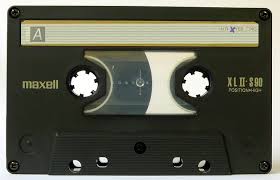
It was a black Maxell cassette. On the spine, written in careful handwriting, were the words:

The M.A. Blues.

“M.A.” was my nickname at the time. Our older friend Brent Olsen had decided that all the family names in our orbit sounded too similar, so he invented a system of initials: I became M.A. for Matt, my brother Mike was M.I., my brother Pat P.A., my dad R.O., my mom C.L. Brent later went on to become a well-known potato farmer up in Republic, Washington, selling Olsen’s Famous Potatoes to restaurants all over Eastern Washington. But at the time he was simply the guy who had given me a nickname that eventually ended up on the spine of a mixed tape.

Kelly and I stayed up late that night. I slept on the futon in his room. At some point we wandered down to the basement and watched scrambled Playboy or Cinemax on cable. Kelly will absolutely deny this now, as the distinguished Wyoming lawyer he has become, but a flat fact is a flat fact, baby.

The real moment, though, happened later.

Back at my own house.

My bedroom was at the front of the house, small and slightly chaotic. I had a green CD player with a tiny black-and-white TV built into it. VH1 ran constantly. I remember seeing the Replacements’ “Merry Go Round” on that little screen and falling in love with it. The room also contained a teenage anthropologist’s collection of beer bottles lining the walls. Beavis and Butt-Head ran on MTV. Seinfeld reruns. Law & Order reruns. The usual educational programming of the era.

That’s where I first really listened to The M.A. Blues.

The tape opened with George Thorogood’s “I Drink Alone.” I loved that immediately. It had swagger. It had barroom confidence.

Then came AC/DC’s “You Shook Me All Night Long.” That one hit even harder. Along with what came later on the tape, it felt strangely adult. Not scandalous exactly, but like it belonged to a slightly older world than the one I was living in.

Somewhere in the sequence Kelly slipped in Robert Johnson’s “They’re Red Hot.” Suddenly the tape reached backward sixty years into the original blues. That alone felt like a kind of lesson.

But the moment that sealed the whole thing was near the end.

Dire Straits — “Your Latest Trick.”

The slow saxophone intro.
The late-night mood.
The strange wooziness of the rhythm.

It sounded like 2 a.m. in a bar somewhere, even though I was just a high school kid sitting in a small bedroom in Spokane.

That was when I realized something important.

This wasn’t just a bunch of songs.

Kelly had built a mood.

The tape moved from rowdy blues swagger to something cinematic and nocturnal. It felt deliberate. Sequenced. Composed.

In other words, it felt like an art form.


Mixed tapes in those years were somewhat common, but rare enough that they still mattered. People made them for friends, sometimes for girlfriends. I never made one for my early high-school crushes Blythe or Gina, though I did write Blythe long romantic poems instead. (Those stories live elsewhere on this site.)

But the mixed tape itself carried a particular social meaning.

It was an intimate gesture.

A curated, hand-crafted artifact given and received with love.

You had to sit there with the stereo, dubbing songs one by one, rewinding, getting the levels right, deciding what went on Side A and what went on Side B. A standard cassette gave you about ninety minutes total, forty-five minutes per side. That limit mattered. It forced choices.

A mixed tape was basically a short story told with songs.


A few years later I found myself on the other side of the ritual.

In the summer of 1997, in Kumamoto, during the first weeks of my relationship with Sachie, I made three mixed tapes for her. They were on deep blue Maxell cassettes, and they were extremely moody.

Artists like:

  • This Mortal Coil
  • Cocteau Twins
  • Slowdive
  • Mojave 3
  • His Name Is Alive

It was the full late-90s dream-pop emotional weather system.

Those tapes mattered. They were given to her within the first couple of weeks of our relationship, and they became part of the early rhythm of us dating. She would play them in her minivan, and I have the impression she played them a lot.

In the cassette era that was basically a form of romantic language.

Before texting.
Before Spotify.
Before sending links.

A mixed tape said something very simple:

I spent hours thinking about you.


The culture faded quietly around 2000.

Burned CDs arrived. Napster arrived. Then digital libraries and services like eMusic. I switched to digital music around that time and stopped using cassettes almost overnight.

Technologically the cassette lingered for another decade or so, but socially the mixed-tape ritual was already gone.

Today something of the spirit survives.

My friend Ian still makes enormous playlists mapping entire musical ecosystems — Nick Cave, Mick Harvey, the Dirty Three, the whole Cave universe. They’re impressive, but they often run hundreds of songs long. More like archives than gestures.

I’ve made a number of strong Spotify playlists myself — ones devoted to the Mendoza Line orbit (Shannon, Tim, Elizabeth) and another exploring the strange constellation around Michael Knott, Lifesavers Underground, and Aunt Betty’s. Those playlists really work.

But the social loop isn’t the same.

Only Ian has ever really listened to them.

That’s the quiet difference between eras.

A mixed tape once had a specific recipient. It was handed over physically. It traveled from one person’s room or car stereo into another person’s life.

A playlist floats in the cloud.

Which is why I can still picture that black Maxell cassette labeled The M.A. Blues.

It began in a second-floor bedroom in a Spokane mini-mansion and ended up playing through cheap speakers in a teenage bedroom full of beer bottles and VH1 reruns.

And when the saxophone from “Your Latest Trick” came out of the speakers, the room suddenly felt larger.

A door had opened.

Not just into music, but into the strange, beautiful possibility that songs — arranged carefully enough — could create an entire emotional world and hand it, quietly, from one friend to another.

Dedication:

For tapers everywhere.

Note: If you like this essay, you may also like the one below.