An Open Book

Note: This little poem was originally written way back as early as 2008, and is also collected in a piece about John and his dad the pretty famous singer songwriter Bruce Innes, and that can be found here. John and I were together both in high school and college, and had a lot of great times together.

As I’ve written about before, Innes would tell his students marginally true stories about my time at St. Georges’s school and Hamilton College. I did get up to some things, I admit, but Innes does like to exaggerate a bit. All in good fun, and good faith. In any case, one time one of his students became kind of interested in my story, and wrote me asking for information. So I wrote him this back, in verse. This poem is below.

The reason I’m re-printing this today is, I’m finally working on a book. Well, I’ve been working on it all along, and now I’m just arranging things. The book will have, among other things, some oral history in the form of interviews. I have done a few and am doing more, and would like to expand my interview scope a bit. So if that sounds like something you would be interested in, for whatever reason, do let me know. And as always, thanks for reading.

“An Open Book”

Not really in the mood
but you’ll think me quite rude
if I don’t make a reply
around me on the plane
folks eat, are entertained
no one’s writing save I

So I’ll take a look back
to days at the dog track
where I ended up by mistake
thought we could beat the odds
just silly teenage sods
there was no money to make

I know not if J.I.
has spun a pack of lies
concerning my personhood
Yes, I wrote poems for girls
who told me they were pearls
ah–but they weren’t any good

About a cold river,
and the rest of his quiver
of myths and exaggerations
well if someone was shoved
it was done out of love
or congratulations

So to upstate New York
in a trench coat–what a dork
but the world took pity
the life there was fine
but naught was on the line
should have gone to the city

I did two things quite well,
needing something to sell
I wrote brilliant excuses
‘bout ridiculous capers,
couldn’t finish my papers
I claimed aces, held deuces

My second great skill
is one I hold still
I fell for crazy ladies
locals, Russians, and Turks
they all drove me berserk
with a boatload of maybes

Four years in the dorms
and countless reforms
led to little of note
I left sans a sob
a plan or a job

and without my trench coat

Dedication: For Innes. Let’s rock this little decade baby. And for biographers everywhere. It’s an interesting genre.

Note: If you enjoyed this poem, you may also enjoy “Some B-Side Poems.” You can read that here.

On Staying in Business Hotels (Featuring a Little 9-ball)

A hotel room: the same cell in a different city — clean towels, a window, and the sense of being contained but cared for

Mark Sandman, refracted

A haunted hotel room, unblessed, charged with static; objects shifting on their own.

The Church, refracted

New Note: On the kibbitzer (two b’s there Mr. Auto-Correct baby), I am re-printing certain select pieces for a little while while I work on another writing project. Today I am re-printing this piece on hotels. This piece has gone through several iterations over time, it is in fact probably my most heavily edited piece, and concerns the experience of staying at business hotels. In a way this is perhaps my very best piece in that it is one of only three that survive from my first blog Classical Sympathies, which I started in 2008, right around the time I began working to build the IB Course at our school. Of course given later (and earlier) events, this was no coincidence. Essentially, the blogs were, for lack of a better phrase “trauma blogs,” or, to put it more positively, recovery blogs. I like that–let’s stick with it. So this piece was about finding safety, physical and psychological, in a hotel room, while at the same time knowing, paradoxically, that hotels, especially fancy ones, are sometimes, or even often, the target of violence for various reasons.

Note: I have stayed in a number of such hotels over the years and engaged deeply with the room-space in each case. At this point, I am prepared to say that I am “good at” staying in hotels (an absurd claim that I advance nonetheless), and feel authorized to advance some notes toward a general hotel theory. Facility as a hotel guest though not exactly a marketable skill, has yielded some insights about the general, perhaps archetypal, nature of the modern hotel stay. Despite at this point considerable experience in the field, I continue to find the hotel experience at once comforting and bizarre, and hotel rooms, when properly apportioned, womb-like and exercising a specific and fascinating gravity. Also, the first draft of this piece was completed when Larry King was still alive.

This piece also mentions my “fugue state,” and it is true that as a PTSD response to childhood sexual abuse I would sometimes, more than once for sure, slip into a kind of state of taking automatic actions which I recall, but only somewhat. During these states I would arrange and re-arrange the room, the things in my bag, etc. in a way to place little reminders to myself in the future. It is a little hard to explain, however once again psychologically literate folks will follow along.

Finally, in my opinion, this is a pretty funny piece. Not as funny as Mason Anderson but still not bad. And it advances the absurd, yet still somehow defensible, position that I am “good at” staying in hotels. I hope you enjoy it.

Part I:

The TV was turned to CNN, which was focused on violence somewhere. I could not tell where. The experts in their suits and hairsprayed hair presented the conflict as if conflict was inevitable. They agreed it was happening now and could be prevented, but at the same time at the conclusion of the piece they smiled politely and signed off as if the violence was also occurring in a land so distant it might as well be the past.

Emily Maloney

I have stayed in quite a number of business hotels, in quite a number of countries. This piece provides, in essence, a sort of “psychograph” of the business hotel experience. Three features of business hotels that we may want to consider are: i) like airports, all business hotels share a single ethos, an un-pindownable character that feels, wherever one happens to be geographically speaking, of a piece; ii) the effect of the television offerings, in particular CNN International, on the business traveler, is one of overwhelming relaxation, bordering on complacency and even numbness; iii) as a corollary to i), it is far easier to enumerate how business hotels resemble one another than to lay out any salient differences.

Oddly, minor local variations only seem to further reinforce a central sameness. Checking into an 11th floor room at a classic example of the species, for instance the Numzau Tokyu Hotel, half an hour south of Tokyo, Japan, one is affected at once by that strangely pleasant fugue state, a state of mind almost exactly halfway between bliss and malaise, attendant on “business” hotels. Once inside a business hotel, especially those neither top-of-the-line nor quite down-and-out, one is confronted with a kind of disembodied space which seems at once connected to a global network of similar hotels (accomplished in part through the simultaneously soothing and hypnotizing effect of CNN International) and disconnected from the local environment. The traveler is sucked into global weirdness through a combination of the flat, post-political window of CNN, the persistent low hum of the air conditioner, and the anodyne staleness, almost spartan, quality of the decor.

Oddly, any “artwork” or decorative flourishes that a hotel room may possess only serves to further a sense of featurelessness; the art in question being almost exclusively of the most banal nature–bland seascapes, abstracts denuded of all edge or verve, and those odd non-paintings that, try as you might, you forget the second you exit your room. One has to remind oneself that a business trip means that there is work to be done–the TV, the slight high resulting from contact with the bowing attendants, the men in black, and the blushing young lady who carries your bag, the knowledge that your company is footing the bill–all this lulls you into a kind of sleep of the spirit.

Turning on the TV, you feel that you could spend years, lifetimes even, staring at CNN’s Larry King (the long-dessicated one), the post-racial female anchors who bring that special Code 46 feel of the non-overt future, or the exquisitely paralyzing “World Weather,” before awakening in another age, the Rip Van Winkle of the travel world. When CNN finally wears out its welcome, one’s choices of pay channels open up the fascinating worlds of…golf (the Golf Channel), silicone starlets (the Playboy Channel), intimate acts in close-up (the “adult channel”), and, most fittingly, drama set in outer space (the Battlstar Galatica channel). This profile of options, golf, softcore, hardcore, and outer space, the result, presumably, of reams of data on the tastes of business travelers like me, the mobile working male, I want to find depressing, but the menu has something beautifully efficient about it. Not wanting to get sucked into the anesthesizing vortex of any of these choices, I have to force myself to rise from the supine contemplation of the only-vaguely Chinese news anchor and move on with the day.

My senses are momentarily quickened by a report of an attack on a hotel in Pakistan: a horrific assault which has taken place at a Marriott in Islamabad. Oddly, the reality of this event quickly fades, and what Richard Todd calls the “non-ness” of the Marriott up the road strangely becomes the non-ness of violence–the attack in Islamabad conveys, through the lens of the CNN International, not exactly shock, but a continuing and deepening sense of global weirdness only slightly tinged by fear resting on the realization that as a business traveler in exactly this kind of hotel, I am the target. Oddly, this realization is not as disturbing as it ought to be: my fugue state is such that I am more in, more of, Islamabad than Numazu, but not wholly there either. Instead, I am poised somewhere between Islamabad and Battlestar Galactica, cavorting with post-racial android news anchors who bring me news of a planet this 11th floor, air-conditioned bubble of a non-space has left far behind.

Part II:

In part II of this essay will we delve a little deeper into the business hotel experience using as a lens “J.G. Ballard: Conversations.” Ballard probably needs no introduction, but for those who have yet to fall until his influence, he is the author of “Empire of the Sun” and “Crash” who wrote dozens of fantastic semi-Sci Fi short stories in the late 1950s and through the 1960s including “Prima Belladonna,” Thirteen to Centaurus,” and “The Terminal Beach.” Ballard novels, in my opinion, are not as uniformly satisfying as his short stories; at novel length his “obsessions,” beach resorts, empty swimming pools, gated communities, plastic surgery, car crashes, the interplay of sexuality and technology, tend to wear a little thin.

In “Conversations,” Ballard offers the following defense of his insularity and thematic repetition: “I think the values of bourgeois society by and large have triumphed. We’re living in a world where people at the age of 22 and 23 are thinking about their mortgages. It is a fact, and there’s nothing much on can do about it, except cultivate one’s obsessions and one’s own imagination” (144), but this approach works better in his short stories (which Ballard has not written for nearly two decades now), where his limited set of concerns are reflected and replayed through a panoply of settings and situations such that he resembles a virtuoso musician building off of certain stable base elements to create endless riffs and improvisations.

As a boy, Ballard was, famously, incarcerated in a Japanese prison camp in Shanghai, and this formative experience informs both his autobiographical “Empire of the Sun” and his short stories. But instead of literal prisons with externally imposed walls and limitations, Ballard’s characters seem over and over again to be immured within prisons of their own creation. Story after story features some variation on one of two related themes; scientists careening off on private quests that eventually destroy them or people seemingly sequestered or restrained who turn out to be acting in psychic complicity with their imprisonment. Ballard himself admits to the centrality of the prison experience in “Conversations” when Mark Pauline asks him “Writing Empire of the Sun hasn’t helped you forget those horrible years in the camp” and Ballard responds “But I’ve been writing about it all the time–I just wrote about it in disguise” (138).

“J.G. Ballard: Conversations” was overseen by one V. Vale, who, to all appearances, is a full-fledged Ballard maniac, and contains a number of Vale’s telephone conversations with Ballard and other Ballardians including the composer Graeme Revell and Ballard archivist, David Pringle. Ballard has a lot to say about that particular semi-reality fugue state described in my earlier post. As noted above, Ballard has a special fascination with self-imposed psychic incarceration: “I have a nightmare vision of a gated community of extremely expensive houses inside a larger gated community. It’s bizarre” (72). Ballard is also concerned with the dual themes of self-immurement and the mind-meld that occurs between the individual and their media systems. These two themes may not seem to be obviously related, but after reading 300 pages of Ballard on the telephone, all of his particular obsessions do seem intertwined, and connect with my experience of staying in business hotels. Take for example Ballard on why Surrealism no longer obtains:

“Classical surrealism, beginning after the First World War, made a very clear distinction between the outer world of reality {…} and the inner world of imagination {…} But after the Second World War, particularly as the media landscape developed enormously–thanks to television, mass advertising and the whole consumer goods landscape–the distinction between our reality and inner fantasy began to break down {…} This means that it’s very difficult to maintain the dichotomy, that contrast that the Surrealists required {…} As I’ve said before, in the last 20 years if you stop somebody in the street and ask the time, you might look at a watch with Mickey Mouse on the dial {…} It cuts the ground from under classical Surrealism” (166).

When viewing CNN International at a business hotel, I realize, pace Ballard, that the world as reflected does have aspects of the surreal, especially in the consummately inoffensive manner in which it presents horrific international incidents interlaced with “the exquisitely paralyzing World Weather” and 9-ball tournaments from Bangkok replayed several times a day. This approach effectively colonizes my own imagination by rendering the unthreatening creepy and and the unbearable passe.

The oddest thing about CNN International is that the news itself is actually not all that bad. Real news about real, important, global events, comes across the airwaves, but it gets somehow stripped on much of its impact through the presentation. Ballard in 1991: “We get the Newzak all the time. It’s been homogenized, trivialized, and there’s too much filler added to smooth it down so that it comes out like paste from a tube” (178). It’s not that the news isn’t there, it’s just that, pace Ballard, there is no room for either surrealism or real impact. Ballard explains that the Dali/ Bunuel films (Un chien andalou and L’ Âge d’or), so shocking at the time, would not work today: “The sight of people dragging dead donkeys through a dining room would {seem to be} some sort of advertising stunt–a beer commercial” (166). Here is David Pringle on why Ballard is not a Marxist:

“Ballard, being a good Freudian, is much more interested in the individual’s–yours and mine–collusion with what’s going on, our secret wishes, that in the idea of conspiracy–that there are conspiratorial entities out there trying to ‘get us’ {…} Ballard asks, ‘What are you out to do to yourself? What are you own darkest wishes? What are we all doing to ourselves collectively?'” (226).

Ballard also writes “I accept the Surrealist formula: the need to place the logic of the visible at the service of the invisible, to remake the world around us by the power of one’s imagination, which after all is all we’ve got. I mean, the central nervous system is faced with a world of Mariott hotels and ex-actors turned world leaders, dangerous medicines and you name it. The individual central nervous system can only attempt to make sense of this” (276).

Eventually, if she has even the slightest modicum of self-awareness, the business traveler comes face to face with Ballard’s question: “‘What are you out to do to yourself? What are you own darkest wishes? What are we all doing to ourselves collectively?’ This is because the enervating lassitudinal comfort of your standard Mariott is, in the worst possible sense, addictive. When you begin to run down the list of hotel features: airport pickup, bowing attendants, elevators, room service, air conditioning, permanently locked windows, security barrier, ubiquitous carpeting, fresh towels and soap, overpriced but almost appetizing meals, pool and hot tub, 9-ball on a loop, world weather, all these items add up to a simulacrum of a total existence that very quickly begins to edge out the rest of the world–there is no need to leave the compound and submission to the soft tyranny of over-priced conveniences sets in almost immediately.

At the same time, CNN International allows the illusion of connectedness while in fact only furthering one’s suspension in the high-rise ether of the business hotel complex. “One has the illusion you’ve seen a place in fact when you haven’t seen it at all. All you’ve seen are the airports and the hotels” (288). Ballard here hints at something I have long felt to be the case: all airports actually belong to a single country, and the vast majority of business hotels likewise sit uneasily within their supposed national confines; they are more like each other than they are like the buildings or community around them. The overpriced airport hotel in Tokyo resembles nothing so much as the overpriced airport hotel in Vancouver, which in turn is the kissing cousin of the airport hotel in Beijing, etc. Here again, local differences only seem to accentuate a basic central identicalness.

Ballard again: “People use mental formulas that they’ve learned from TV. Even in ordinary conversation, if you’re talking to the mechanic at the garage about whether you need new tires for your car, you and he probably talk in a way that his equivalent thirty years ago would never have done. You use–not catch phrases but verbal formulas. Suddenly you realize you’re hearing echoes of some public-information, accident-prevention commercial. It’s uncanny” (83).

(Ballard has the strange habit of ending thought after thought with “It’s bizarre;” “It’s strange;” “It’s uncanny”–this verbal tick serves as a running indicator of the way that Ballard sees the world and helps explain how, over the course of a novel, he can focus on a certain object, a tennis machine for example, or swimming pool, with such relentless obsessed focus that the formerly normal becomes invested with a kind of pathological creepiness that entirely transcends simplistic one-to-one correlative symbolism.)

Ballard’s central point here hints again at the colonizing power of certain ideas and turns of phrases which seep into our everyday speech, tempered only by feeble attempts to ironize. Thus, when in the course of normal conversation one refers to a storm as “an extreme climatological event,” to a sign as “singage,” or to a car crash as “a simultaenous intersection of vehicular components” the use of such terms, although masked with a patina of apparently self-knowing irony is still, in its own way, perfectly sincere. Here, submission to the linguistic idiocy of corporate non-speak marries submission to the blissful “non-ness” of the business hotel, a paradise of our own collective fantasy where the towels are always clean, the windows are always closed, and 9-ball is always on.

Dedication: For the APA chain. I know it’s kind of a cult, but man are they reasonable, conveniently located, and comfy.

Works Cited:

J.G. Ballard, J.G. Ballard: Conversations, ed. V. Vale (San Francisco: RE/Search Publications, 2005).

Emily Maloney, from an essay in an early-2000s political anthology (exact source lost to time)

On Some Bands That Don’t Like Each Other I: The Breakup of Galaxie 500

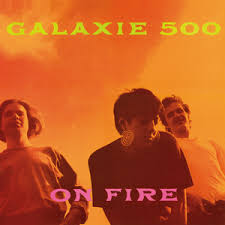
Note: This new series will take up a seriously interesting topic, band break-ups. We will also look at some bands that don’t like each other but somehow stay together, such as The Rolling Stones. Some bands I hope to write about include Jane’s Addiction, The Smiths, and Pink Floyd–these are all situations I know something about and am interested in. Other bands that had a bad break up, or at least serious tension, include of course The Beatles, The Clash, and Guns ‘N Roses. I’m not sure if I’ll write about The Beatles because that has all been heavily covered, but the other two maybe, when I can look into them. But we will start with the breakup of the late 80’s and early 90’s band, Galaxie 500. This piece draws on a collection of snippets about the situation on the website A Head Full of Wishes, which is run by Galaxie and Luna’s biggest fan, who I believe lives in the U.K. Dean knows him well I believe. I think a lot of people are interested in this general topic, so I hope this series reaches some of you.

Galaxie 500 broke up in 1991, when the lead singer and songwriter Dean Wareham quit the band on the phone after a final show at Bowdoin College on the 5th of April of that year. The band had been on an extensive tour, and played some dates as the opener for The Cocteau Twins, which would have been a pretty big deal for what was still an up-and-coming band. Galaxie 500 was set to begin a tour in Japan shortly after this, and Dean quit when his bandmate Damon Krukowski called him to book plane tickets. AI gets the part about Dean quitting, suddenly, at least from Damon’s perspective, but also says that a contributing factor was that Damon and his partner Naomi Yang were becoming “disillusioned” with the band’s situation. However I don’t think this is really right, because Damon and Naomi are on the record saying how devastated they were by the breakup and that they did not see Dean quitting coming at all. It is clear that Dean and Damon were not getting along for a while prior, but Damon definitely wanted to continue the band. Dean would go on to form Luna almost immediately, one of the great bands of all time, and Damon and Naomi would record several records under their own names, some of which are good, however it would take them some years to recover from the ending of Galaxie.

I have actually written about this breakup a bit twice before, in the context of other pieces. I first wrote about it in my piece about seeing Damon and Naomi live in Kyoto in the earlier part of this century. This was the famous night that Damon told me to shut up, and the whole story is pretty funny. I also alluded to the breakup in a different piece about stage banter when I was discussing the Luna record Luna Live. The two extracts below actually tell a good bit of the story.

=====

From my piece on Damon:

Damon and Naomi were members of the late 80s/ early 90’s band Galaxie 500 with Dean Wareham. The band didn’t really know what it was doing at first, like many a band before, and kind of stumbled into near-greatness before Wareham walked and started Luna, the world’s greatest band. Wareham details the reasons behind the break-up in his memoir Black Postcards. Poe is supposed to have said that any man who tells the simple truth of his life would write a masterpiece. Wareham gets pretty close to following Poe’s dictum.

The ending of Galaxie 500 came about, according to Wareham, essentially because Wareham was tired of being treated like a child by the other two, a long-time couple. I think he wanted his own band, and wanted to chill a little.  From Black Postcards:

Traveling is stressful. And with Damon tour-managing, it seemed like every hotel check-in, every seat assignment, and every rental car was a problem. Damon would argue about what floor his room was on. He would get annoyed if he didn’t get the seat he wanted on the flight. I shouldn’t have let this bother me. I should have minded my own business. But traveling together highlights your differences.

At one show in late 1990, a techie shone a spotlight on Dean as he stepped downstage for a solo. This seems to have been the breaking point. Black Postcards again:

Damon: “In retrospect I notice that Dean chose the L.A. show to launch this new trick, when the audience was full of music industry people. We hadn’t had any spotlights in Columbus or Dallas!”

Dean in his contemporaneous tour diary: “Damon said he doesn’t like me walking in front of his drum kit–it throws him off. I didn’t tell him to go fuck himself.”

Things were rough, and Dean split in 1991. (Wareham quotes a Damon interview saying “Here are the dirty facts!  What happened was simply that Dean quit, more or less out of the blue, on the telephone one day.”  Ah oui, les sales faits.) Galaxie 500 is still an interesting band and has a handful of great songs. Then, Damon and Naomi formed their own group, named eponymously. They are pretty good. I like “This Car Climbed Mount Washington,” from More Sad Hits, and the whole record Playback Singers is strong.  Still, they are a far cry from Galaxie, much less Luna.

From my piece on Dean’s stage banter:

Luna Live is a showcase record from 2005 from one of the greatest bands ever, Luna. It basically serves as a greatest hits pre-Rendevous (their final album and my personal favorite), and features killer renditions of a number of classics, including “Chinatown,” (their poppiest tune); “Friendly Advice,” (guitar on the original by Sterling Morrison); “23 Minutes in Brussels” (Luna’s “Marquee Moon,” and somehow their most popular song); and, epically, “4th of July,” originally a Galaxie 500 song.

4th of July, from Galaxie 500’s last album This is Our Music, is relevant here as it firmly established Wareham as a comedian. The inter-band dynamic of Galaxie 500 is interesting, suffice it to say here that the sonic and lyrical nature of the band did not obviously lend itself to comedy, although comedy was there in Wareham, the beating heart of the band, all along. In his awesome memoir Black Postcards, Wareham calls This is Our Music the band’s weakest record, and Wareham at the time was in the process of leaving the band. Wareham has his own reasons for his opinion about the final Galaxie record, however 4th of July is the seminal Galaxie song, with “Don’t Let Our Youth go to Waste,” as its only real competition. 

The song opens with one of Wareham’s deadpan mini-monologues — a tossed-off poem rejected by a dog, a drunken glance at the Empire State Building, everything reduced to the size of a nickel — all of it funny and self-deflating in the signature Galaxie way.

Later, the narrator holes up on July 4th, staging what he calls a “bed-in” for one, a perfect slacker-era joke that half-mocks and half-honors Yoko-and-Lennon theatrics. Given that his band mate Naomi Yang was heavily influenced by Yoko Ono, that Dean was trying to get out of Galexie and change his style but having a hard time getting up the nerve to make the break, that the song comes from 1991, the beginning of the “slacker” era, and that Wareham himself describes himself as “lazy” on numerous occasions in his memoir, there is no finer kiss-off to the idea of a visibly politically engaged artist than this line. (Of course Wareham was also a big Lennon fan, and his cover of Jealous Guy on The Best of Luna is sweet and cool.)  4th of July also blows Oasis’ “start a revolution from my bed” from the water. Oasis doesn’t come within a million miles of Dean Wareham.

=====

According to A Head Full of Wishes, there were about forty of fifty people at the Bowdoin show, which was kind of normal for shows at a small college back in the day. I have written elsewhere about shows at small colleges in one of my pieces about my time at Hamilton College. In Black Postcards, Dean states that the opening band at the Bowdoin show played too long and the band was irritated about it. After the show Dean left in his car (an attendee of the show said “he packed up and went out the door and drove away. I don’t even think he said thank you”) and apart from the Japan phone call I don’t know if Dean and Damon have ever spoken again. In 1997, Damon stated that they had not, but that’s a long time ago and Galaxie 500 still collects royalties so there must be some communication, at least between business managers. I find the whole royalties situation in general very interesting, and would like to know more about how it all works.

As seen above, in Black Postcards, Dean details some of his running frustrations with Damon and it is clear from this book that he had been getting up the nerve to leave for a while, and had discussed this with Damon and Naomi more than once. “Damon called first. My heart skipped a beat. The moment was upon me. I said don’t buy the tickets to Japan because I was leaving the band, and this time it was for real. They weren’t so nice and understanding this time. They were furious. There were three days of angry phone calls.”

Naomi basically confirms this, saying that, in an out of character moment, she yelled at Dean on the phone. “I couldn’t believe that Dean could just throw everything away so carelessly and not even want to discuss it.”

Now Galaxie 500 were a very good band, but I also suspect that what was happening was that Dean, over and above his frustrations with Damon’s tour managing and the rest, just wanted his own thing. Luna’s first album is Lunapark from 1992, released on Elektra Records, and although there may be traces of the Galaxie sound on it, it basically sounds quite a bit different. Luna is much smoother than Galaxie, less experimental, and, by the time of 1994’s Bewitched (also on Elektra), at least in my opinion, much more polished. For my money, Luna is a far better band, especially after the arrival of the guitarist Sean Eden who played on Bewitched and has played on all of their subsequent records. There is another funny bit from Black Postcards where Dean talks about Sean’s approach to making music:

By the end of the Rendevous sessions, Bryce had come up with a new way to produce Sean.  “Sean,” he said.  “You can come in at eleven tomorrow morning and play your twenty guitar solos, and figure out which one you like.  Adam will record you.  I don’t need to be here for that.”  “Sean is a brilliant guitarist,” Bryce told me.  “But he is one of these people who equates the music-making process with a great deal of pain.”

Dean also talks about in his book how at their final shows (Luna actually also broke up in 2005 but got back together in 2014 and are still together today, although Dean records more under his own name these days) Sean kept pushing to get his own songs (Eden wrote and sang two songs on Rendezvous) on the setlist, and Dean resisted because the songs aren’t much good, which is true, but because Eden is a key part of Luna, Dean was willing to give way. However another member of the Luna universe, not a band member more like a producer of their live shows I kind of forget, would change the setlist at the last minute to remove the Eden songs. Dean approved, but didn’t want to do it himself.

Dean was the beating heart of both Galaxie 500 and Luna, so it is understandable to me that he called the shots in both cases. Damon and Naomi are both interesting musicians, and contributed a lot to Galaxie’s more arty sound, however sans Dean they are ultimately pretty minor, artistically. Damon is known today for two other reasons; the first is he is a prominent and very articulate, critic of Spotify, and secondly he hosted a podcast, and maybe still does, on sound and its various incarnations, which I have listened to and it’s good. So Damon is pretty high level, even if he got in my face in 2005 or 2006.

Overall, the break up of Galaxie 500 (as well as the much less dramatic tension in Luna) is a fascinating example of the push and pull that occurs in bands. Personally, I’m glad the band did break up because the Luna records are indispensable and the Galaxie ones, for the most part, are not, at least for me. I have not, incidentally, had a chance to see Luna play live, however I did see Dean play in 2018 as a kind of support for a guy called Cheval Sombre. They did a record together, which is pretty good, but not great. I didn’t get a chance to talk with Dean after the show, however I did speak with Cheval and he said “now I need to go and hide” and basically told me how miserable he was. Now that was not great, because he was playing with Dean motherfucking Wareham! But Cheval clearly had his own things going on. In any case, I really want to see Luna live. They are still touring, but seem to be only playing a few shows here and there according to Songkick.com, a super great website that tells you where everyone is playing. If I can get my little resources together I’m gonna do it. As for Damon and Naomi, they haven’t played live for about a year, but I wouldn’t be surprised if they added new dates sometime. And if they come to Japan, I’ll be sure to be there with my Pernod.

Dedication: For all three members of Galaxie 500, who have all had a pretty big impact on me one way or another.

Sources:
Black Postcards (Dean Wareham),
A Head Full of Wishes (galaxie500.com),
Prior Kyoto Kibbitzer posts.

On Jason Molina’s “Leave the City”

Here on the far side of a fading streak, my thoughts drift too far. Let me share a little solitude, buy the next drink, and try to defend these misunderstood hearts.
— after Dawes

The old Molina idea — half your life lived on highways, half of it chosen for you — still hits me hard.
— after Jason Molina

This post takes up the song “Leave the City” by Jason Molina. Molina recorded both under his own name and under the name Magnolia Record Co. Leave the City is collected on the record Trials and Errors, released on Secretly Canadian in 2005. It is track 8 of 10, anchoring the back half of the record. It also appears, in a different version, on the record “What Comes After the Blues,” also in 2005 and also on Secretly Canadian. What Comes After the Blues was produced by the Uber-producer, now deceased, Steve Albini, who produced Nirvana among many others and also recorded his own music with a few different bands. On What Comes After the Blues, Leave the City is track 3 of 8. I prefer the Trials and Errors version; it is more acoustic, contains less reverb, and for my money there is just a little more emotion in Molina’s voice, however both versions are great.

This piece will be a little different in that I won’t actually comment on or analyze the lyrics. They totally speak for themselves. What I will say, and if you have been following along with my story you will have already intuited this, if Molina spent half his life on the highway, well I have him beat.

Molina was born just one year before me, and died in 2013 at the age of 40 of advanced alcoholism. On Leave the City, especially again the Trials and Errors version. I don’t know what kind of issues really he may had had, but some for sure. You don’t write Leave the City without issues.

I too left the city, left my place of birth, and moved halfway across the world when I was 22. Before that, I spent my junior year in New Zealand, also a long way from home. I wrote about this year here in my Hamilton College series. I plan to recount more about my moving to Asia and subsequent events in future pieces, however for now if you want to understand why I left, while I think I always had a taste for adventure, but also there’s this.

The song opens with Molina describing how leaving the city shattered what was left of his heart — the part that wasn’t already broken. He admits he once had good reasons for leaving, but can’t name a single one anymore. It was a hard time, and somehow he came through it, grateful in a bruised way for the blues that carried him.

He sings about spending half his life on highways, half in places he never quite chose. He remembers catching the North Star over a freight yard — a moment of lonely illumination that told him just how rough the road had been, and yet how it still carried him forward.

The line that always devastates me is his admission that someone was waiting for him, but he “had so many things to do.” It’s the gentlest explanation and the harshest truth. He knows the person deserved better luck, but his voice softens: with them, he’s not giving up — not tonight.

Dedication: For the road, tiring as it may be. You do meet a lot of interesting folks along the way.

I Have a Crush on Katie Park From Bad Moves

Epigraph:

Could you read between the lines
Or was it just so obvious?

Bad Moves

New Note: This is an older piece, however I am re-releasing it here. I recently shared a longer piece about some aspects of my life, including, quite centrally, music, so this seemed like a good time.

As with anyone’s story, there are layers to mine. One pretty big layer is when in 2018 I traveled to New York/ Brooklyn, Boston, Philadelphia, and Washington D.C. to see the band Phosphorescent. I saw Phosphorescent four times total on their C’est La Vis tour and they were amazing. I bought a sweatshirt from the merch table and the merch gal told Matthew Houck, the lead singer, about me because I told her I’d come all the way from Japan to see the band. He came down from the stage and gave me a big bearhug, not once but twice at two of the shows. He knew I was going through it, and I needed a hug. He’d been through it too, big time, before and when he was writing Muchacho a few years prior.

As I was seeing Phosphorescent I also took the opportunity to see a few other bands. I saw Yo La Tengo twice at the Borwey Ballroom, Jay Som in Boston, and most memorably The Hold Steady twice at the Brooklyn Bowl where they were playing a three night set. The opener for The Hold Steady was a band called Bad Moves. I had never heard of this band, however, and I don’t say this lightly, they put on a better show than The Hold Steady. Now an opener should try to do just this, to “steal the show,” so to speak. A Bad Moves stole it big time. I was enraptured by their lead singer Katie Park, and met her at the merch table which she was running, which is recounted below. My friend I met at the shows, Austin, pushed me to check out their album Tell No One in depth, which I did, and I loved it. On the train from Washington D.C. back to New York I wrote the first version of this piece, which has been fairly extensively edited since then. This is my sneaky favorite piece, maybe not my best, but you can be the judge. Here it is:

I love live music. More than that, I love live music fans, and music fans in general. This piece is basically about being a music fan, and was inspired when I saw the band Bad Moves open for The Hold Steady in 2018 at the Brooklyn Bowl. They were touring on the back of their first full length, Tell No One. While at the Bad Moves/ Hold Steady show a music geek introduced me to a band called Swearin’. Swearin’ has been around a little longer than Bad Moves, and in 2018 had released Fall Into the Sun. The two bands don’t really sound all that much alike (Bad Moves is basically “Power Pop” and Swearin’ is basically “Indie”) but they write somewhat similarly about matters of love and friendship.

Let’s play a game that we live in a world where a record by a band like Bad Moves or Swearin’ would produce radio hits. I want to live in that world. Or maybe I don’t; maybe it’s better for everyone that bands like these stay a little more on the DL. Let’s first take a look at Fall Into the Sun. (Swearin’s frontwoman is Allison Crutchfield, and the band is mostly her baby.) My pick for the single would be the lead off track, “Big Change.” 

The song opens with this soft-spoken reminiscence — basement shows, empty cans, old romances, long nights of half-drunken idealism. Crutchfield sketches a friendship held together by music, chaos, and the sense that they’d accidentally stumbled into their own mutant little world.

I really like what Crutchfield does here. She is basically writing about a friendship solidified over a shared love of music. Now, I know a lot of people. I also have some friends. When you ask an adult, “How many real friends do you have?” the number will vary widely. A lot of people will say “four or five,” something like that. People in general have surprisingly few real friends. I have ten or fifteen, maybe more, but am only in regular contact with about half that number. A good friendship, in my opinion, is one where no matter how long you and your friend have not hung out, if you see them it’s as if not a day has passed. With this sort of friend, I’ve found, there is between yourself and them something fundamental shared. It can be anything really. For example, I first met my good buddy when we were both in graduate school in Arizona, and at first I thought he was a total dick. He was loud, interrupted people constantly, and loved being the center of attention. One night we were drinking as a department and he started razzing me there on the street, just casually insulting me left and right. Suddenly I got where he was coming from. This was, in fact, his way of offering to be friends. Once I understood this, I began to give it right back to him. Called him every name in the book. And he ate it up. By the end of the night we were fast friends and have been ever since, because we share an understanding that our friendship is based, in part, on ripping on each other. Music, obviously, is another great basis for a friendship.

When Crutchfield sings “no art degree, no conservatory/ just Katie and me,” I’m reminded of the refrain from Don DiLillo’s Underworld: “who’s better than us.” If they can do it, why not us? Fuck ’em. That’s what attitude looks like kids–take notes.

So “Big Change” is my single from Fall Into the Sun. (“My single” here just means the song I would choose as the single. For some records, the single is super obvious, while for other records it’s debatable. Bands and producers, in my opinion, do not always get this right.) A good record will tend to have at least two singles; three is a bonus.

For Fall Into the Sun’s second single I’ll go with “Grow into a Ghost.” It opens with a chugging guitar riff with an almost Krautrock drum line. The song is a perfect 3:10–in and out. Do you know anything about lost love? Swearin’ does.

Midway through the record, she writes to an old love with that drifting, half-in-the-desert melancholy she does so well — remembering who she’d been before they met, watching someone fade into absence until they feel more like a ghost than a memory.

Swearin’ is good, but Bad Moves is better. And the star of Bad Moves is the exquisite Katie Park. (I know they are a collective, but my world is my world baby.) Before their show Katie was at the merch table selling…magic eye! That she made by hand. And what did it say? The magic eye said “Bad Moves.” Obviously. I checked it out and chatted for a few minutes with Katie, trying to play it cool. It was the highlight of my year. 20 minutes later she and the band were on stage, crushing it.

The single here is pretty easy. It’s “Crushed Out.” The band released “Crushed Out,” “Spirit FM” and “Cool Generator” as the singles, all of which are excellent. Maybe “Spirit FM” is catchier than “Crushed Out”? Possible. But “Crushed Out” has more lasting power in my opinion. “Crushed Out” is about exactly what it sounds like. It has a basically perfect power pop structure with a killer hook, a classic bridge, and a theme at once super obvious and super deep–the power of a crush.

The whole song is a tumble of infatuation — that feeling where you can’t focus, can’t think straight, and every look or scribbled message feels like it should be obvious to the other person. It captures the power-pop rush of a crush so clearly it almost stings.

Baby, if you are crush-prone that power never goes away. Bad Moves knows this–it’s kind of what the record is about. Crushing out that way can be pretty obvious–do you think I’m crushing out on Katie at all? Nah, this is just a piece of music appreciation.

Cool Generator is my second favorite song on the album, but my “sneaky favorite” is “Missing You.” A sneaky favorite is just what it sounds like: it’s that song that may fly under most people’s radar but that you have a special soft spot for. My all time sneaky favorite song is “Three Drinks” by Craig Finn of the aforementioned Hold Steady. “Three Drinks” shows up on Finn’s 2016 EP Newmyer’s Roof. It’s nearly acoustic, unlike most Hold Steady songs, and sounds just a little bit country. Three Drinks is about a woman (most great songs are) who may have been a child star once upon a time, and is now a drinker. It is an example of a certain type of song that Finn is amazing at, the deeply empathetic look at adult relationships in all of their gloriously flawed complexity. In this sense, Three Drinks fits in with “Spinners” from The Hold Steady’s 2014’s Teeth Dreams, “Tangletown” from Finn’s 2017 solo record We All Want the Same Things, and “Esther” a Hold Steady single from 2018. Finn’s writing on Three Drinks and Tangletown is at its absolute apex. 

“Three Drinks” delivers Finn at peak empathy. A woman with a messy past drifts through a hotel lobby filled with minor disasters, trying to hold herself together until that magic window — the hour between the third drink and the one that tips the night over the edge. Finn nails that space between fear and transcendence where people feel briefly holy.

The refrain focuses on that magic hour between drinks 3 and 4, when matters begin to move from the slightly anxious first stage of the evening to something entirely other:

So anyway, my sneaky favorite on Tell No One is “Missing You.” The song starts like the others, high-speed power pop, and after two verses switches to a near-spoken word breakdown of the tug-of-war between a crush and the expectations of the world around. Guess which wins?

“Missing You” turns into a spoken-word confession halfway through: the push-and-pull between what the world tells you not to do and the crush that keeps winning anyway. It’s simple rhyming, almost naive, but devastatingly effective.

I officially support these sentiments. .

So that’s my sneaky favorite –doesn’t mean it’s better than “Crushed Out” (it isn’t) it’s just a little sneaky. I’m all about sneaky babes and sneaky favorites, on all levels.

In addition to the Magic Eye, Bad Moves also engage in a little publishing. A little literature. Specifically they publish a pamphlet called “The Virtues of Wearing White.”

Chatting with Katie, she acknowledged more than a passing familiarity with the literature of the Jehovah Witnesses. I love Witness literature. Both Witness and Bad Moves publications have a real “it’s gonna be a bright, bright sunshiny day” vibe. If you know me this is not a secret, but I’m a hardcore closet New Ager. There, secret’s out. I’ve messed around with all kinds of New Age action. Once I attended a Kabbala meetup in Manhattan. There were some hardcore New Agers there too, seriously. Those folks were not in the closet at all. Shining eyes, whatever color they are wearing. Me, I like black because it’s easier to launder, but Bad Moves have me thinking. (One other publication you should take a look at if you are into this kind of thing is the Christian Science Monitor. It’s a serious piece of literature. God is great baby, god is great.)

When I was younger my parents had a friend called Tom Hutchinson, who, predictably, went by “Hutch.” Hutch owned a boutique coffee shop there in town and I drove a delivery van for him for a bit. But that’s another story. Anyway, Hutch was a weird guy and he hated the Witnesses. It was one of his favorite topics. He’d call them the “Witlesses,” and say: “When they come to my house I turn the hose on ’em.” People thought this was pretty funny, but I was not that into Hutch’s attitude to the Witnesses. I mean, he didn’t want anyone trying to convert him on his property, which is fair; however, I felt, and still feel, that if someone wants to come to my door, give me a little literature, and talk about how god loves me I’m gonna let them. I genuinely like the Witnesses. They seem like lovely people. Read more

On Good Talkers and Great Talkers (featuring my friends Kelly Rudd and Marc Campbell)

New Note: I am republishing this piece on the back of a recent exchange in our group chat with Kelly Rudd. As detailed below, Kelly is a great talker, and like many a great talkers he is also periodically full of it. We were reminiscing about a trip to the Selkirk Mountains in 1992 with Kelly, Mason Anderson, Richard Barkley, and myself. We were supposed to spend about a week up in the mountains, however a big storm came in. We had to shelter in place, and then left the next day. Kelly was responsible for the tent situation, and had only packed a tarp–no tent. So we struggled to put up the tarp in the rain and then I said I would sleep in the car rather than under the tarp. The whole area was already soaked, “pre-soaked” in Kelly’s questionable formulation, because at the end of the day, soaked is soaked.

In any case, after I said I would sleep in the car Kelly came up with the immortally absurd formulation: “Well you will actually get just as wet because of the condensation.” Uh huh. I slept in the car and was, predictably, bone dry and the boys were pre-soaked, regular soaked, and post-soaked. We drove on to Wyoming and had a great trip, but the condensation episode has stuck with me ever since.

This piece also features my friend from Hamilton College, Marc Campbell, as well as some fast talking by me. I hope you enjoy it.

I think I’m a pretty good talker. But I’m not a great talker. The reason I know this is because my friend Kelly is a great talker. And I can’t hold a candle to him.

In this piece I want to explore what makes a good talker good and a great talker great. Here, our conclusion can be partially stated upfront: a good talker will almost always also be a good BSer. Everyone knows what BS is, of course, and the term is usually used pejoratively, more or less, for example in phrases such as “oh that’s a bunch of BS,” or “come on dude, cut the BS.” However, BS is clearly also an essential element of the talker’s toolkit (from now on we will simply use the term “talker” unless specifically delineating between a good and a great talker). BS alone though does not a great talker make. There has to be something else involved. Let’s see if we can figure out what this might be.

We will start with an example from my professional life. I work in a high school in Japan, and it’s a fairly complex place. Although a Japanese school, it also features two different international courses and over time we have welcomed a wide variety of visitors from around the world for various reasons. A few years back, we hosted a group of educators from Abu Dhabi, including at least one representative of the Abu Dhabi Ministry of Education. My boss at the time was a Japanese gentlemen who spoke decent, but not phenomenal, English. He was set to give a welcome speech to this group, and my boss loved, absolutely loved, networking and hosting visitors at our school. It was his singular passion. The higher ranked or more “prestigious” they were the better. A visiting teacher from Elton College would be treated like the Pope, accorded all of the pomp and ceremony of a royal visit. Although an inveterate networker, my boss was not a natural public speaker, and he was uncomfortable making such an important speech in English, so he asked me to write something for him. Some people might have found this request to be annoying or even insulting, but I relished it. The role of the ghostwriter is one I greatly enjoy, because it gives me a chance to slip a few little things in there just for me. I have a bit of a weakness for inside jokes.

The Abu Dhabi visit was in early April, just in time for cherry blossom season in Japan. A few places around the world, including Washington D.C., celebrate cherry blossom season; however, in Japan it’s huge. People come from around the world to see the blossoms, and there’s even a special type of event called the hanami where folks from salarymen to universities students and everyone in between will set up tarps or blankets by the river or in a park under the cherry blossoms and get blasted. The Japanese refer to the cherry blossoms as sakura. So, I thought, what would be more natural than to open the speech with a reference to the sakura?

I don’t remember much about the speech, but I do remember the first few lines. They went like this:

It is my great pleasure to offer you a very warm welcome to Japan and (school name). We are deeply honored to receive such a prestigious group from the wonderful country of Abu Dhabi. And indeed, you have fortunately come at the perfect time to see the famous Japanese cherry blossoms, the sakura.

Now this might not sound too out of the ordinary, however for me the genius lay in the last comma. In my head I heard a deep and pregnant pause between “the famous Japanese cherry blossoms” and “the sakura.” As I like to say, it was funny to me. I sent the speech to my boss and we didn’t really have time to go over it, so I just hoped for the best. Now my boss wasn’t much of a writer, but he was, in his own way, a showman. He had clearly spent time practicing the speech, and when he spoke these first lines his delivery exceeded even my wildest expectations. Not only was the pregnant pause there, it was deeper and more profound than I had dreamed. He has perfectly grasped the import of the comma. This dude fucking nailed it.

What does this have to do with BS? Well, when I wrote the lines above, in my own way I was BSing. I knew my boss’s taste for VIPs ran deep and so made sure to lay it on pretty thick (“great pleasure,” “very warm welcome,” “wonderful country,” etc.). Also, the comma, in its own way, was total BS. And the fact that my boss killed his delivery meant that he not only understood BS on an elemental level, he relished it too.

Later on during that same meeting with the Abu Dhabi folks my boss presented about some English vocabulary system our school was using as part of the English curriculum. This was a software program designed by my boss’ buddy that the school had paid an absurd amount of money to lease. It was, predictably, a piece of trash. However, my boss built it up as the greatest piece of educational tech since whatever, and showed a little of it on an overhead screen. The visitors were no dummies though, and one of them asked a sensible question: “why did you decide to go with this essentially handmade program where there are a lot of well-known and tested commercial programs available?” My boss wasn’t going to touch that one, so he turned it over to me. Now, I knew this thing was complete garbage; however, I also recognized, in addition to the need to save face, the opportunity to lay on a little BS. So I said something like:

“Well, that’s a really good question (always start with this when BSing an answer because it gives you time to think)

we chose this program after looking carefully at the alternatives (not true—we had looked at no alternatives)

and we felt in the end that this program best met the very specific needs of Japanese learners (also total nonsense—there is nothing so specific about Japanese learners that a software program needs to be so tailored).

In all our experience working with Japanese students, we felt like we needed something bespoke and fit-for-purpose, and we are really happy with our choice… (when BSing it is advised to throw around words like “bespoke” and “fit-for-purpose” in the hopes of throwing your listener(s) off the scent).

I probably went on some more, but you get the idea. The questioner thanked me and we moved on, however I knew that I had not in fact thrown him off the scent. He knew that I was BSing; I knew that he knew that I was BSing; and I like to think that maybe he knew that I knew that he knew that I was BSing. If so, he played his part in our little production to a T as well.

How did I feel about packing so much BS into one afternoon? I felt great about it. In the long history of bullshit corporate communications, the exaggerations and white lies I told that day rank pretty low down the list in terms of negative externalities if you will, and our visitors went away feeling welcomed and catered to, BS vocabulary programs aside. I guess in this instance I was a “pretty good talker.” However a great talker needs to do more than smooth over an awkward question in an education meeting. A great talker needs to prove it when there is substantially more on the line. To explicate this point, let’s take a look at an incident where my friend Kelly talked some dude out of murdering us.

My friend Kelly is a great talker. Ever since I’ve known him, he’s been a serial exaggerator, however, far from being a limitation to his conversational ability, it’s a huge asset. This is because, unlike another type of exaggerator who exaggerates their own role or place in a story (let’s call this the “narcissistic exaggerator,”) Kelly instead downplays his own role while simultaneously boosting usually one other player into comic, even mythic heights (let’s call this the “comic exaggerator”). Kelly is a lawyer, and if he’s telling a story about a country lawyer he’s run across, for instance, this fellow gets built up and built up, his every mannerism and turn of phrase turned up to 11, until we have not just a comic figure, but a heroic one. As for Kelly’s own role in whatever drama he is recounting, that gets dismissed with an “aw shucks, I was just kind of there” wave of his metaphorical hand. Kelly has had this ability forever, and has honed it to an art form. I have good reason to think that his abilities as a talker are instinctual, rather than learned, however, because of an instance where he had to draw on skills far different than his normal style.

One time my friend Kelly and I decided (well he decided and I went along) to walk from suburban Spokane where he lived all the way up to a kind of resort/ lodge place high up on Mount Spokane. The walk was about 20 miles, and would take all day. Now, a 20 mile hike is one thing—that’s pretty long—however hikes can be quite pleasant for those so inclined. This was not a hike though, as the whole thing was on public roads, most of them out in the middle of nowhere. All in all, this was not the best plan Kelly ever came up with, however we set out and were about 10 or 12 miles into the trek, outside of town, when a reddish car came flying down the hill in front of us. The driver saw us and swerved right at us. This, unfortunately, is something that sometimes happens in the U.S. for reasons passing understanding. This dude though didn’t just swerve toward us a bit, he full on tried to take us out. So much so in fact that his car went perpendicular to the road and halfway into the ditch and got stuck.

This seemed bad, and my instinct was to run with Kelly into the nearby field. Kelly, however, had other ideas. The guy got out of the car and started yelling at us: “you fucking kids…, fuck you…, etc.” Not very creative, but still pretty worrying. Kelly though had the situation in hand from the get-go. He walked right over to the guy (who was at least 10 or 15 years older than us) and started talking to him:

Hey buddy, what’s going on? You having a bad day man? Anything I can do? Looks like your car get a bit stuck there—that’s OK, my friend and I will help dig you out.

Now I knew Kelly pretty well and knew he was a good talker from way back as mentioned. But this was another level. And the effect on the irate driver was incredible. In no time at all the guy was apologizing to Kelly, telling him his woes, and asking how we could get his car out together. Sure enough a few minutes later we were all three pushing and pulling his car out of the ditch and he went on his way.

What was going on here? Kelly must have realized somehow that the driver didn’t bear any specific ill-will toward us and was just engaging in a little road-rage because he was an angry about something or other. Also, the guy’s car was truly stuck, and neither Kelly nor I are small dudes, so he might not have liked his odds if it came to a fight. But there was just something about the way Kelly approached and disarmed him so quickly that I couldn’t really wrap my mind around. I realized then that my friend Kelly was not just a good talker, he was a great talker.

Although I’ve never seen anyone else pull off what Kelly did on that day, the general form of what he did I have seen before. In fact, a very similar, but slightly lower-stakes, incident happened when I was in university and attended a fraternity party. I was not in a fraternity and didn’t want to be. I did go to some fraternity parties just because that was what people did. Occasionally these parties could be creative, but mostly usually they were every bit as cliched as you might imagine—bros broing out and trying to get laid, women doing whatever the female equivalent of broing out might be, drunk billiards in the basement, people passing out on jungle juice, etc. Not only do these sound like terrible parties now, they were pretty terrible even back then. Nonetheless, I was at one, along with some friends from my dorm including Marc Campbell. Marc is maybe not the purest form of great talker that Kelly is, but he’s pretty darn good. While Kelly’s style is often oratorical (and BS laden—more on that in a moment), Marc’s style is smoother and has more of a cool jazz feel. Where Kelly goes for the comedically dramatic exaggeration, Marc stays more in the realm of gentle patter. Both talkers though achieve a sort of hypnotic effect through their respective styles, and Marc’s patter came in handy at this particular party.

We were a group of about five, and had barely entered the door when some guy I didn’t know came up and started getting in our face for no apparent reason. He was directing his attention to another member of our group—maybe they had run into each other before? It wasn’t clear, but what was clear is that this guy was itching for a fight right out of the gate. Now I have been in plenty of situations where I have had to try to defuse something or someone from kicking off, and have some skills in this arena. However, most people’s instincts, my own included, still tend to be a little defensive. Most people, even if committed to defusal, might say something like: “hey dude, settle down. There’s no need to be so aggro man. Just chill.” This kind of approach can work, however there is no guarantee that it will. Sometimes people who are looking to pick a fight will fall back on a kind of bizarre and unwarranted self-righteousness, coming back with something like “I’m not gonna fucking chill man—don’t tell me what to do. You wanna see aggro, I’ll give you aggro.” So the “dude settle down” approach is a bit hit or miss. Marc Campbell could do better.

Instead of telling the guy to chill, Marc Campbell pulled out a Kelly-like move. Although he was not the direct object of the guy’s ire, he went right over to the guy and stuck his hand out. “Hi I’m Marc,” he said “nice to meet you. What’s your name?” Just like that. Marc didn’t even reference the fact that this guy was acting like a total ass-clown for no reason at all—in fact he acted like he didn’t even notice it. The effect on this guy was exactly the same as with the angry driver. The guy calmed down immediately and he and Marc started rapping. In no time at all the situation was completely defused and everyone was friends.

Read more

Craig Finn on Nightlife and Adult Relationships II: Killer Parties

Killer Parties (Live) — Nights That Almost Killed Us, Nights That Made Us

Note: This is the second part of our series on songs of The Hold Steady that take up the intertwined themes of nightlife and the complexities of adult relationships. Part I is available. This piece will deal with “Killer Parties,” specifically the live version from A Positive Rage.

“Killer Parties,” written by Craig Finn, closes Almost Killed Me (2003) and provides its title line. But the 2008 live version is the definitive one for me — a 10-minute slow burn that opens not with guitars but with an invocation. Finn’s spoken intro sets the terms for who this band is, who the audience is, and why these communal nights matter.


I. The Invocation

Before a single lyric, Finn does what Finn does: greets the tribe.

He jokes, he rambles, he self-deprecates, he misdirects — and then he lands it:

There’s so much joy in what we do up here. Thank you for sharing that joy with us.

That’s the thesis of The Hold Steady.
Everything else is commentary.

The band isn’t just a band; Finn isn’t just a frontman. The Hold Steady is a community, a lineage, a shared memory palace built out of long nights, near-misses, inside jokes, loud guitars, and people who actually want to be there.

When I saw them twice at the Brooklyn Bowl in 2018, I wrote:

Hold Steady fans are pretty much fanatics… They were super possessive of their space, they all seemed to know each other. One guy sized me up and said, “I want to not like you, but there’s some kind of aura around you, man.”

That’s the thing: the fans are a little cliquey, but the band itself is radically welcoming. Finn means it when he thanks people. He means it when he says he’s met half the room. He means it when he collapses the distinction between performer and audience:

“We are, and you are, The Hold Steady.”

That’s what the spoken intro really says.


II. Charlemagne and the Unsaid

The song opens with a classic Finn move — an elliptical report of something that happened, but we’re not going to get the details:

If they ask about Charlemagne,
be polite and keep it vague —
another lover lost to the restaurant raids.

Charlemagne is the old recurring character, drug-dealer-adjacent, always on the edge of calamity. Did he OD? Get busted? Get swallowed by his own myth?
Finn doesn’t tell you. He protects the dignity of the fallen.

This is identical in spirit to the opening of “A Bathtub in a Kitchen.”

I’ve known people like this. You’ve known people like this. Someone falls off the map, and when they resurface, it’s a new person in the same body. The specifics get blurry; the compassion gets sharper.


III. Leaving, Loving, Running

The next verses broaden out:

We left because we were young and in love.
We left because we needed space.
We left because we heard about this mythical country called the United States.

When Finn sings that line, he’s not being literal — he’s describing the classic American story: the pilgrimage to the realbig city. The wide open possibility. The idea that somewhere else — New York, especially — is where the real life is.

I relate.
I left my hometown and moved halfway across the world.
Finn moved from Minneapolis to New York; I moved from Spokane to Asia.
And like him, I sometimes feel pangs for what I missed.

But I needed space. I needed something bigger.


IV. Killer Parties

Then we hit the geography of sin:

Virginia for lovers.
Philly for brotherhood.
Pensacola for pills.
Ybor City for the nights that go too far.

And then the line we can quote directly:

“Killer parties almost killed me.”

Finn doesn’t romanticize this. He’s looking back at the nights that were ecstatic and dangerous at the same time. Nights that reshaped his body chemistry. Nights that made him who he is.

I’ve had my run at nightlife — nothing like Finn’s, but enough to understand the way one night can rewrite your wiring, for better or worse.


V. The Blur and the Transcendence

The final verses repeat themselves, because that’s how memory works:

We partied (I think?).
We departed from our bodies.
We woke up in Ybor City.

The nights are a blur — Finn partied but gets the details secondhand. What he does remember is the transcendence, the weightless moment when the body gives out and the self floats somewhere above it. And then the long, punishing hangover that follows.

For me, Ybor City has always functioned like El Dorado — the mythical endpoint of the American night. Maybe Finn has been there; maybe he hasn’t. Maybe you can only reach it by running the gauntlet of long days and longer nights. Maybe you can only get there by losing yourself a little too fully.

I’m not sure Ybor City would be good for me.


VI. The Ex-Introvert Who Still Wants the Night

And here’s where my story threads into the song:

I am an ex-introvert reinvented as an extrovert — something I’ve talked about with several friends. I’m too old for some of the clubbing I once did, but I still love the nightlife, still love running around, talking to strangers, seeing where the night wants to take me.

And it takes you to strange places.

I think this is the real theme of “Killer Parties”: The appeal of the night, the call of the road, and the deep human need to leave the known world and find out what’s waiting elsewhere.

I return to this song in all kinds of circumstances — when I miss the road, when I need a reminder that the self is porous, when I want to remember what it felt like to be new somewhere.


VII. The Circle Closes: Community

And yet — for all the mythology and all the escapism — Finn always brings it back to community.

The Hold Steady isn’t just Finn narrating the lives of misfits. It’s Finn saying:

We survived the killer nights.
We made it home.
We found each other.

The live intro becomes the retrospective moral:

There’s so much joy in what we do up here.
Thank you for sharing that joy with us.

And so the whole arc — the wandering, the leaving, the nightlife, the blurring of memory, the near-death nights — ends where it must:

With the people who showed up.
The people who stayed.
The people in front of the stage.
The people who are, themselves, The Hold Steady.

Craig Finn on Nightlife and Adult Relationships I: Most People are DJs

I. Setting the Frame — What the Song Is “About,” and What Finn Says It’s About

Most People Are DJs” appears on Almost Killed Me (2003), track three if you don’t count the spoken prologue. If “Killer Parties” is the band’s thesis on community, “Most People Are DJs” is the thesis on the scene—why it’s fun, why it’s corrosive, and why it matters.

Finn himself once said:

“Just a reaction to life in NYC in the 2000s… The part I don’t get is when I get emails that start with ‘Come see me DJ’ and end with ‘Here is what I’m going to play…’ I think DJing, like rock criticism, tends to be a way for people to participate in the ‘scene’ without the risks to the ego that go along with producing art.”

His hedge—“Of course, I don’t apply this to all DJs”—isn’t convincing. And that’s okay. Artists don’t owe us diplomatic consensus statements. What he’s really saying is: there is a gap between creating and curating. Between risk and commentary. Between the ones who make things and the ones who play things.

Now: I don’t fully agree with him.
And that’s part of what makes this song fun to write about.

Because the truth is:
Finn is reacting to a very specific time and place—New York in the early 2000s—where the “scene” was swollen with people who wanted proximity to art more than they wanted the agony of making it.

But he also wrote a song so overflowing with confidence and adrenaline that, even if you disagree with the premise, the song still wins.

II. Alliteration, Lineage, and the New York Scene (Early 2000s)

One thing that hits immediately in “Most People Are DJs” is the density—the alliteration, the internal rhyme, the almost cartoonish velocity of the lines. Finn came out of Lifter Puller, a band whose songs were so tightly coiled with alliteration they were practically tongue-twisters set to guitars. That sonic fingerprint carries directly into Almost Killed Me.

“Jet skis into the jetty,”
“skipping off the good ship,”
“searching for the merchant”—
this is Finn still flexing the Lifter Puller muscle.

But something is different now.
A subtle pivot.

With The Hold Steady, the alliteration stops feeling like a hallucinatory fever dream and starts to feel like a narrator in full command of his mythmaking. LP was chaos; THS is authorship. LP was young-person disorientation; THS is a guy in his early thirties cataloguing his own survival.

And that survival intersects directly with Finn’s take on the early-millennium New York City “scene.”

If you didn’t live there then, it’s hard to reconstruct the vibe, but from the outside—I was never a New York resident, just a visitor—it felt like every bar and backroom was filled with:

  • people wanting to be seen
  • people curating themselves more than expressing themselves
  • self-mythologizing in real time
  • and a thousand micro-scenes stacked on top of each other

New York has always been a city where people come to reinvent themselves, but in the 2000s, with the rise of the internet, music blogs, Vice magazine, and the early social media era, there was suddenly an audience for every aesthetic micro-gesture. DJ nights proliferated not necessarily because people loved vinyl but because DJing let you participate in culture without risking the humiliation of failure that comes with creation.

Finn clearly bristled at this dynamic—at least enough to write this song about it.
But crucially: he’s not sneering. He’s needling.
He’s amused and annoyed in equal measure.

Because he had just spent years in a band (LP) that nearly no one outside Minneapolis cared about. He’d paid his dues in the purest sense—tiny clubs, no money, hardcore kids, bad drives, worse mornings—and so when he encountered the Manhattan version of a “scene,” it must have felt surreal. A party ecosystem where participation wasn’t dependent on talent or risk, just aesthetics.

And so the song becomes a little manifesto:

Some people create.
Most people curate.
I know which side I’m on.

But I don’t fully agree with Finn here. DJing, like criticism, can absolutely be an art. Plenty of DJs are actual geniuses of sequencing, mood, texture, and propulsion. And Finn’s own songs rely heavily on the idea that everyone constructs a soundtrack for their life. He lives inside the psychology of people who soundtrack their heartbreak, their addictions, their breakthroughs, their mistakes.

So his jab at DJs is both sincere and playful—an elbow thrown by someone who knows perfectly well that without DJs, nightlife wouldn’t exist.

Still, the tension is productive.
It pushes the song forward.
It gives it its bite.

This is where Finn’s shift from Lifter Puller to The Hold Steady becomes clear:
LP described nightlife as a labyrinth; THS describes it as a world he made it out of, barely, and will now narrate for the rest of us.

Almost Killed Me is a debut in name only—it’s actually a rebirth.

III. The Ice Machine, the Trash Bin, and the Myth of Mis-Spent Youth

If the early verses of “Most People Are DJs” sketch out the external landscape—Ybor City confetti, jet skis, five-second dealers, Phil Lynott doppelgängers—then the center of the song turns inward. The gaze shifts from the scene itself to the person who once tried to survive inside it.

And it starts with a line that sounds like a joke until it doesn’t:

“I was a teenage ice machine…”

It’s metaphorical, but also literal in the sideways way Finn always manages:
a kid who kept it cold, kept it contained, kept taking in whatever the night handed him. Drinking until he dreamed, and when he dreamed, dreaming only of the scene. It’s the way youth can feel like preparation for nightlife, not the other way around.

Then comes the image of the little lambs looking up at him—those younger kids just entering the arena. There’s no arrogance in it; it’s simply the moment you realize you’ve shifted from participant to veteran, from the kid on the floor to the older presence leaning against the bar. It’s an eerie, recognizable sensation for anyone who came up in tight little music worlds, whether Minneapolis hardcore or the DIY venues that orbit all cities.

And then the next admission hits harder:

“I was a Twin Cities trash bin…”

Here Finn stops ornamenting the story. He talks frankly about taking everything the scene gave him and jamming it into his system. He doesn’t romanticize those years—he frames them as messy, hungry, adrenaline-charged, and sometimes self-destructive. It’s the classic Hold Steady blend of humor, regret, and affection for the person he once was. Anyone who’s lived through their own version of that era understands the mixture of pride and embarrassment that comes with looking back.

Then the song shifts again, suddenly back in a room, back in a body:

“She got me cornered by the kitchen…”

It’s one of those instantly recognizable nightlife moments—some stranger with a lot on her mind talking too closely, too sincerely, in the wrong place at the wrong time. Finn’s response, “I’ll do anything but listen,” is both funny and revealing. It’s the impatience of a younger self who wants motion, wants noise, wants the next thing, not the emotional monologue of someone he’s just met.

But the real anchor of this section comes next:

“We’re hot soft spots on a hard rock planet.”

This is the line that echoes back to the earlier “tiny white specks” but deepens it. We may be insignificant on the grand scale, but we’re still soft, still human, still easily bruised. For all the bluster and late nights, there’s vulnerability baked into every corner of the scene. Finn recognizes it, even here, even in a song that pretends to be about DJs and parties.

And this middle section becomes the emotional axis for the entire track. The drug years, the clubs, the kitchens, the impatience, the kids, the tiny planets we all carried around–it’s Finn turning his own biography into something mythic and still somehow intimate. It’s the moment the song stops being an anecdote about nightlife and becomes a portrait of the person who lived it.

IV. “Teenage Ice Machine”: Finn’s Youth, My Youth, Everyone’s Youth

This is where the song really cracks open — the run of verses where Finn folds his own misspent youth into the larger portrait of nightlife. It’s the part where the memoirist in him steps forward.

“I was a teenage ice machine / I kept it cool in coolers and I drank until I dreamed…”

Finn describes his early years in Minneapolis with blunt clarity: he was taking whatever the night handed him, jamming it into his system, chasing scenes and dreams and any story worth telling. He’s frank about the drugs, the bravado, the hunger. And that image of “kids like little lambs looking up at me” shows the strange dynamic of growing older inside a scene — one day you realize the new kids think you know something. They think you’ve made it out of the maze.

And Finn knows these kids. He knows their impulsiveness, their devotion, their need to be part of something burning and bright. He knows it because he lived it.

“I was a Twin Cities trash bin / I did everything they’d give me…”

It’s funny, and a little raw — Finn admitting he was just shoveling it all in, whatever “it” was. And the lines about being cornered in the kitchen and doing “anything but listen” land perfectly. This is the social physics of nightlife: the way adrenaline and self-invention outrun patience or reflection. The kitchen confrontation is a tiny scene, but it captures the whole era — Finn always moving, always dodging, always hungry for the next thing, the next rush, the next room.

And then the knockout line:

“We’re hot soft spots on a hard rock planet.”

This connects back to the earlier perspective shift — from Minneapolis sidewalks to this tiny-blue-dot cosmic backdrop. It’s Finn’s version of existentialism: the world is hard, unforgiving, indifferent; we are temporary flashes of warmth against it. But the point isn’t despair. The point is urgency. You don’t get that many nights where it all lines up. You don’t get that many years where your body and your heart and your recklessness harmonize. You take the nights when they come.

This is where the song clicks for me. That line is the thesis.

V. “Everyone’s a Critic and Most People Are DJs”: The Thesis and the Tension

“Baby, take off your beret
Everyone’s a critic and most people are DJs
And everything gets played.”

This is the line that gives the song its name and its pulse. Finn has already sketched the landscape — Ybor City’s chaos, New York’s 2000s absurdities, his own Twin Cities coming-of-age — and now he turns outward, toward the observation that set this whole song off in the first place.

Finn has said himself that this was his early-2000s response to the particular New York ecosystem where everyone wanted to be adjacent to culture without the exposure of making anything. The emails that said “come see me DJ, here’s what I’m going to play,” the ubiquity of people who curated rather than created. And he delivers the line with this mixture of mockery and affection — like a guy who remembers how much he once needed subcultural scaffolding and who also knows how flimsy that scaffolding can be.

But I don’t totally agree with the dismissiveness, and that’s part of why the line hits so hard for me. I think critics can make art, and DJs — literal or metaphorical — can shape the emotional weather of a room. I DJ my own life, like anyone who uses music to modulate their mood or define a moment. Spotify is my deck. The commute is my booth. There’s a pleasure in that autonomy that isn’t fake or lesser, just different.

Still, I get Finn’s point. There’s a risk he’s insisting on: the risk of putting something authentic into the world, the risk of failing publicly, the risk of making something instead of just spinning something. And this is the part where he plants his flag:
he is a maker, not a curator.
And he’s calling out everyone else — kindly, but unmistakably.

The song is gentler than the critique. It’s not a scolding. It’s a reminder: life isn’t a playlist you assemble from the safety of the booth. You have to actually step into the room. You have to actually take the hit.

This is where the song becomes more than a snapshot of early-2000s New York. It’s a life instruction.

Get in the game.

Because eventually everything gets played — your choices, your nights out, the people you loved, the things you messed up, the mornings you woke up on the floor of a city you barely knew. And at the end of all that, you want to be able to say you did it, not that you watched someone else do it.

VI. The Night Rolls On

The final verse snaps everything into focus. Finn works backwards through the chain of a night out—doctor to drugs, packie to taxi, taxi to club—like retracing the evidence after the damage is done. It’s funny and a little grim, but honest: this is how people actually live when they’re young, restless, and trying to outrun something unnamed.

A thousand kids fall in love in these clubs; a thousand end up bleeding.
Two thousand don’t sleep; two thousand still feel pretty sweet.

That’s the gamble of the night. Always has been.

And this is where my own life sits closest to Finn’s. I’ve said before that I’m an ex-introvert reinvented as an extrovert, and the night has been part of that transformation. I’m long past the age where I should be closing clubs, but I still love the energy of being out in the world, meeting people, letting chance decide the direction. The night takes you to weird places, sometimes beautiful and sometimes sketchy, and if you’re wired like me—or like Finn—that current is hard to resist.

And then there’s Ybor City, which in the Finn cosmology feels half-real, half-mythic. A kind of El Dorado of the American night. Did he actually go there? Maybe. But in the logic of the song, it doesn’t matter. Ybor City is where you wake up when the night has taken you further than planned. A place that might kill you or crown you, or both. I’m not sure Ybor City would be good for me. I’m not sure it’s good for anyone.

But the truth is:
the pull of that world—the risk, the release, the possibility—is part of what makes these songs hit as hard as they do.

VII. Closing Thoughts

In the end, Most People Are DJs isn’t one of Finn’s masterpieces, but it doesn’t have to be. It’s a mission statement disguised as a party track. An early announcement that he wasn’t done writing about the night, about the kids who rush into it headlong, about the way music becomes a map for people who don’t quite know where they’re going but desperately want to get there fast.

The song is chaotic, generous, a little arrogant, and very alive—exactly what Almost Killed Me needed to be. It sketches the outlines of the universe Finn will later fill with addicts, romantics, bartenders, prophets, screwups, saints, and that long list of people who show up again and again in his songs because he sees them clearly. Because he was them once.

I keep returning to it not because it’s Finn at his deepest but because it’s Finn at his most open-throated:
young, wired, taking in the world at full volume.

It’s the sound of the door swinging open on everything that would follow—from the great epics (Separation SundayStay PositiveTeeth Dreams) to the late-career short-story gems. You can hear the whole project of The Hold Steady rumbling under this song, even if Finn himself shrugs the song off as a joke at the expense of DJs and critics.

Maybe that’s the secret: sometimes the songs artists dismiss end up revealing more than the ones they cherish.

For me, this one captures something essential about the moment you step into the night—
when the lights go up, the bass starts running, and you feel, for just a second, like anything could happen.

It’s a snapshot of youth, of movement, of mischief and possibility.

And yeah—
I still feel pretty sweet.

On the Between-Song Patter on the Bob Dylan Bootleg Record “Peco’s Blues”

Introduction

Behind any work of art, pretty much, there is some kind of “process.” The scope and complexity of this process differs across art forms, of course. The writer’s process is rather different than that of, let’s say, the magician David Copperfield. I find all artistic processes fascinating, and am drawn specifically to what happens “backstage.” Backstage is a world unto itself.

In the early 1970’s, the film director Sam Peckinpah was making a film called Pat Garrett and Billy the Kid, and he asked Bob Dylan to do the soundtrack. He also offered him a small role in the movie, a character called Alias. Dylan hadn’t really done a soundtrack before, nonetheless he headed down to Mexico to work on the film with Peckinpah. Pat Garrett and Billy the Kid the film is ok; it’s not my favorite Peckinpah by any means. (That is reserved for Bring Me the Head of Alfredo Garcia, with the one and only Warren Oates in the lead role. Oates around this time also starred in the film Cockfighter, which features the greatest rejected tagline of any film even “he came into town with his cock in his hands and what he did with it was illegal in 48 states.”) The Pat Garrett soundtrack in many ways transcends the film, mostly because this is where we are first introduced to “Knockin’ on Heaven’s Door,” which would go on to become one of Dylan’s best known songs, and is a really good soundtrack overall, however I am more interested in an extended set of outtakes from the sessions which are collected on a bootleg record called Peco’s Blues. Peco’s Blues features a number of alternate versions of the best known songs on the soundtrack, including Heaven’s Door and “Billy,” however the most interesting part of Peco’s Blues for me is the black and forth patter between Dylan, his sound engineer Chuck, and his band. This patter, I suggest, opens a fascinating and unique window into Dylan’s working methods and general approach to art. In what follows we will look at each incident of patter or conversation in the order they occur. All of the instances occur within the first 20 minutes of the nearly 70 minute recording as Dylan, his band, and the engineer endeavor to get on the same musical page.

Patter at the End of “Billy 2,” around the 7:34 Mark:

Dylan (D) wraps up a lengthy take of Billy 2 and asks his engineer Chuck (C):

D: Was that any good?

C: Pretty good Bob. What happened was was you hit the mic twice when you were moving around out there and we had a couple of clunks on it.

D: That’s too bad (…) Shit, I wish Sam was here. He’d know what to do.

C: That mic’s just a little more sensitive than the Sennheiser’s and I’m getting a little…

D: That’s too, uh…that’s…

C: And I’m getting a little puff of wind sometimes when you get real close to it when you sing.

D: That’s too sensitive.

C: Let me move it back a little for you Bob.

D: I think we must have got it though Chuck.

C: (with what sounds like a pencil in his mouth) Oh I recorded it, darn tootin’. I had a little puff from your voice once and you knocked the mic twice.

D: Well that might have been alls that we need.

C: You wanna, you wanna hear a playback on it?

D: Yeah, I would.

Comment:

We see right away here that Dylan is the boss and that the engineer is walking on eggshells a little bit. This is made clear by Dylan’s reference to “Sam,” who he obviously thinks is a better engineer than Chuck. We have more than a little sympathy for Chuck, as it wasn’t he that knocked the mic and he is trying his best to give Dylan the relevant information.

I love how Dylan here, while implicitly criticizing Chuck, also picks up on Chuck’s framing of the microphone situation and agrees that “that’s too sensitive.” However, the relative sensitivity of the mic is not Dylan’s main concern. Dylan, famously, likes to work fast. For some of his records that has been a positive, on these the sound and performances come across as organic and coordinated, like all of the players grasped their roles and just ran with them. On other records, Dylan’s preference for speed let’s him down, and songs, and especially the production, can feel rushed, even a little sloppy. Dylan famously warred with Uber-producer Daniel Lanois, who had produced U2 and Peter Gabriel among others before Dylan asked him to produce 1989’s Oh Mercy. Oh Mercy sounds great and was Dylan’s “comeback” album after a mixed, to say the least, mid 80’s period, however Lanois’ sonic fingerprints are all over it. Too much so for Dylan, who wanted a faster, looser approach. Lanois is no pushover, and held his own with Dylan. We get the sense that Chuck is no Lanois.

So, despite the knocks on the mic and the puff of wind, Dylan is going to be fine with using this version on the record. Chuck, of course, is going to want Dylan to play it again. Chuck, or someone, would win this one because the extended take of Billy 2 here is not the one used on the final album. The little tussle between Dylan and Chuck ends in a draw as they agree to listen to the playback.

Patter at the Beginning of “Turkey,” around the 8:40 Mark:

D: Hey Roger, when I stop, when I stop, you stop. I’ll do something else and you figure it out. So it might go like this (Dylan starts playing and the band fills in a little hesitantly behind him).

D: Say Chuck, Chuck?

C: Yeah

D: Let’s take this down and mark it under, uh, Turkey…We got a buzz in the amp.

C: I’m not picking it up.

D: OK come on now.

The band plays on the instrumental Turkey for about a minute before Dylan stops.

D: OK, this is under Turkey.

Dylan begins again, and this time the band fills in much better, the song sounding fuller and tighter in all ways.

Comment:

This is in my opinion the most illuminating of Dylan’s comments and gives us a window into his way of working throughout his career. As mentioned above, Dylan works fast and expects his musicians to do the same. Thus he instructs Roger that when he Dylan stops, Roger is to stop, Dylan will “do something else” and Roger needs to “figure it out.” Dylan’s instructions may not sound very fair to poor Roger, but I think they actually are. A musical team is in this case not unlike a sports team, say a basketball team, where even if an offense is running a designed play or “set,” players need to figure out what’s going on and adjust their own position and movements constantly and on the fly. There is no playbook, not set of absolute rules about how to accomplish this any more than there is a set of rules about how to follow Dylan musically. The musician, like the athlete, just has to work by feel, take in all the information around him or her, and figure it out. If they can, they will keep their job; if not, not.

Patter at the Beginning of “Billy Surrenders,” around the 18:10 Mark:

D: Let’s see now. You know, you know what we want when Billy starts (laughs) this guy Jerry Fielding’s gonna go nuts man when he hears this (laughs). You know what we want when like Pat Garrett comes down from the hills right, and all these guys come out like one by one. And Billy comes out, he’s almost standing in a circle you know, so like (indistinct) one by one and then there’s like a big pause and he stops and there’s silence. You know those big organ notes, those scary things (hums organ notes) (laughs). Can you get behind that? (Dylan and the band laughing.)

Comment:

The recording of the Pat Garrett soundtrack was pretty complicated, in large part because Jerry Fielding, Peckinpah’s usual composer, was relegated to a supporting role and apparently resented it. Accounts differ as to whether Fielding quit, walked off set (and maybe came back), actually did try to advise Dylan as requested, or some combination of the above, however the history of the film makes clear that there was friction. Dylan is clearly aware of the tension with Fielding, and makes a joke about it in a place where it doesn’t even seem relevant. Dylan seems to almost revel in the conflict, setting up Fielding to his band as a “suit” who is not in the field so to speak, and who Dylan enjoys winding up with his musical choices. Whatever the exact situation with Fielding was, the issue is clearly a live one at the time of recording.

My sense is that Dylan is mostly talking to his band here, as there are a number of people in the background laughing along with Dylan through this monologue. Despite his reputation for playing fast and loose most of the time, Dylan shows a pretty good grasp of particular scenes in the film and clearly knows what he wants. The “big organ notes” he mentions do indeed feature on the soundtrack, however maybe not to the extent Dylan wanted. I have to laugh at the very 1970’s question “can you get behind that?”

Conclusion

Overall, Peco’s Blues provides a fascinating window into Dylan’s working methods and expectations for his crew. Of course not every musician works this way; many will give much more precise instructions I am sure, and in the era of computer aided music Dylan’s approach on Pat Garrett is certainly a old-fashioned one. But I like it. It is absolutely worth listening to the entirety of Peco’s Blues to get a sense of Dylan’s working methods as well as how a band, here playing together live and recorded live, “figures itself out” and gets from sketch to finished product. I am myself not a musician but a writer, and the writing process, although never exactly easy, is perhaps a little less complex, mostly because most writers write by themselves, with an editor or editing team looking over the work at a later date. There is nothing in writing quite like “I’ll do something else and you figure it out,” and it is the shifting, quicksilver like nature of Dylan’s approach to music making here that continues to interest me and draw me in.

Scenes from St. George’s VII: Senior Year II and Coda (with cameos by Bill Gates, Soft-Water, and Twin Peaks)

I used to be free/ I used to be seventeen

Sharon Van Etten

Never said a word, I never had to/ it was my attitude/ that you thought was rude

The Replacements

Long may you run

Neil Young

Note: This is the last in our series about Saint George’s, the school I attended from Grade 1 through Grade 12. You can find the other parts here: Part I, Part II, Part III, Part IV, Part V, Part VI. Thank you to everyone who read this series.

Senior Year II, and After:

It’s time to wrap up the Scenes from St. George’s series, as I’ve said most of what I want to say about that time and place. Before I finish, I want to write a bit about the very end of senior year and the summer after graduation as well as the first winter vacation back from college, and add a short coda.

After a number of us seniors got busted for drinking on our senior trip, things were pretty much winding down. Because we were a smallish class, everyone pretty much got along and there weren’t many cliques, however it is true that the two or three-season athletes, myself included, lived in a slightly different world than those students who mostly didn’t play sports. After baseball season of senior year whatever remaining barriers between classmates crumbled, and sometime around here I finally got a driver’s license. As a result, I spent a bit of time out at Dyche Alsaker’s house. Dyche and I were not all that close, but I liked him for a couple of reasons. One was, although his family certainly had more money than mine, and a bigger house, he never acted like some kind of alpha, which was cool. He just seemed happy to have people over (his parents never seemed to be home) and to go with the flow. I was as well. Dyche’s house was in “the valley” (do all towns have a valley?), which was really just the open space between Eastern Washington and Western Idaho. Most of the real rich folks at St. George’s lived on the South Hill, so maybe there was something about the Valley that was a little more “beta” than the South Hill. At that point in time, as now, I was more than happy to hang with some beta-males, or at least in a circumstance where such ridiculous distinctions no longer obtained.

Dyche loved the band the Replacements and their lead singer Paul Westerberg, and I caught onto his passion for this band. Actually, I may have discovered them on my own first, as their single “Merry Go Round” played a lot on VH1 and at that time I was a regular viewer of their music video program. “Merry Go Round” is the lead off track on the band’s final record All Shook Down, which was released in 1990 and is still by far my favorite “Mats” album. I bought the record and played it over and over in my room as “rock music” was kind of verboten in the main part of the house for reasons passing understanding. I remember one specific day where we drove out to a lake, probably in Idaho, and Dyche boated us around while drinking and listening to Westerberg’s first solo record 14 Songs. 14 Songs is pretty good and has a catchy single “Knocking’ on Mine,” but it’s no All Shook Down. As for drunk boating, while not advisable, it is somewhat preferable to drunk driving because there is simply more space, and Westerberg made the perfect companion for such an outing.

Although I was already into a lot of music at the time, including Dylan, R.E.M., Fine Young Cannibals, and Dire Straits (this list holds up pretty well actually), I was impressed with Dyche’s deeper level of fandom and aspired to know more about my favorite bands. By the time I got to university I had a better idea of what it meant to be a music fan, and this was in no small part because of Dyche. Out at Dyche’s house, there was a predictable amount of drinking and hooking up; the first interested me a little, the second more, although I was still having a bit of a tough time getting anything going in that area. Drinking was easier. One night I drank most of a bottle of whiskey in the hot tub there, and people came to think I had a high tolerance, which wasn’t really true. I also remember commandeering a bed at his house one night when a classmate came in with a girl I did not know. Can we have the bed, they asked–we are stuck on the trampoline. This was not my problem I felt, however they persisted and I gave way. I suppose they needed it more than I did.

As I mentioned, there didn’t seem to be much parental presence at Dyche’s house, which was a positive, but things never got too crazy. People came over, enjoyed the trampoline and the hot tub, and stayed the night instead of driving impaired. It was, all in all, a reasonably healthy developmental zone. This action lasted for a few weeks after graduation, and then kicked off again during the first winter after we went off to college. During that break there was a party at another classmate’s house–similar vibe, no parents, booze, and hooking up. I attended, and the next morning found myself with a girlfriend of sorts. This was a positive. What I recall about that night was, I watched the film The Graduate, walked away with a girlfriend, and smoked a cigar. Decent action, good action, bad action. Two out of three ain’t bad, baby.

Like all scenes of this sort, it didn’t last, nor did my girlfriend. I didn’t really know how to have a girlfriend, so to speak, and although we wrote letters from our respective colleges that spring the relationship had faded by summer. Nonetheless, the whole period, bisected by a few semesters of college, stands out as a crucial, if brief, interlude between high school and “real life.”

Coda:

Disclaimer: This section is pieced together from things I know and things I think probably happened. This is not meant to serve as a strict historical record of events that, for whatever reason, my parents have barely shared with me–and even if they had, this would only be one side of the story. Thus, in historical terms, this is kind of a reconstruction, so take it for what it’s worth.

St. George’s at this point should have been in the rear view mirror, and it mostly was. I came back as an alum, hung around a little, and moved on to the next thing, which turned out to be Japan. However, it was not entirely behind me because my parents still worked there, and my father, after I left, got sucked deeper and deeper into school politics. I wish to tread lightly here because there is so much about this murky period that I still don’t totally understand, however the basic facts as I know them are as follows:

i) After George Swope, who had a cameo in Part VI of this series, St. George’s had a new principal called Jonathan Slater. My father had wanted the job, and didn’t get it.

ii) At first, my father and Slater were fast friends, but I think this was a mutually cynical political relationship in a sense. My father was the head teacher and a power in the school, and Slater would have come in knowing this. They bonded under the auspices that Slater would give way at some point to my father, but this was never going to happen. I knew this, even if my parents did not. At first Slater would invite my family to Thanksgiving and such, and my father praised him to the skies. That changed however, and the two men became bitter enemies. This enmity led eventually to my father leaving the school.

Now St. George’s was an interesting place, and it was pretty much run by the rich folks that sent their kids there. There was some kind of board that pushed the principals around, and this was mostly made up of folks from the South Hill, who tended to be a little on the stuck up side–not terribly in most instances, but somewhat for sure. Also, by the time in question here Dyche’s father was on it, as I understand. I guess Dyche’s dad was the token Vallyer on the basically South Hill board, but then the school got a big donation from the Gates Foundation and I think Bill Gates’ sister came onto the board, or at least into the zone. In essence this was Western Washington doing a little light colonization of Eastern Washington, the red-headed stepchild of that state. Eastern and Western Washington are divided by the Cascades mountains, where Twin Peaks is set. Twin Peaks is in this piece.

Now I don’t know much about Bill Gates, but I suspect he’s not a great guy. In fact, I think he’s pedophile-adjacent. But I know that Bill Gates is not a force for good in the world for a different reason, which has to do with my struggles with my Skype password a few years back. Back before Zoom came along and ate Skype’s lunch six ways to Sunday, I used the service and had a password for it which worked fine. Then Microsoft took it over or something and all the sudden I had to provide a Microsoft password to “get through” to Skype for some reason. This was terrible, because I try to avoid Microsoft at all costs and I didn’t even know if I had a Microsoft password. Certainly I didn’t want one.

But for weeks I could not get anywhere near Skype because of this password issue, and it was driving me nuts. I needed Skype for work and it just wasn’t coming through. In marketing terms, this is a “process” issue. Process is one of the 7 Ps of the marketing mix in business, and basically it refers to how easy, or hard, it is for the customer to access your good or service. Amazon’s one-click check-out is an example of good process. Microsoft’s multi-step, super frustrating, password labyrinth is the opposite. I got so fed up with this whole situation, and by extension Gates, that I even ranted about it and him on the short lived, but awesome, Periscope platform–which Twitter later bought and then killed.

So like I say, Microsoft sucks, Periscope rocks, Skype sucks and deserves its fate, and Bill Gates, in my opinion, also sucks. I don’t know anything about his sister, but her arrival was, I think, the catalyst for my father’s removal.

(By the way, the Skype password issue reminds me of the soft-water issue. When I was a teenager I would frequently see soft-water trucks driving around, and I wondered what in the world soft-water was. I am basically a huge fan of the prefix “soft” and wrote about it here. The only soft-prefixed phrase I don’t like is soft-water. That’s because, trucks and aggressive marketing aside, soft-water is terrible. It’s marketed as some kind of improvement over “hard-water,” which I guess is supposed to be full of minerals or something. However, soft-water is completely terrible. The absence of minerals means that it is totally ineffective at getting soap off your skin, so after a soft-water shower you walk around all day with a patina of soap residue stuck to you. Soft-water is awful and a total scam, just like orthodontists. There is no real connection between Microsoft passwords and soft-water, except both totally suck. I bet you Bill Gates is a big soft-water guy–he does look a little soapy.)

In any case, my father was friendly with the rich folks on the South Hill, and as a result we spent a lot of time at their various big houses. I was less enamored with the South Hill crowd as a whole, as I have made clear, although I did have friends who lived there, however my father was political so he kind of had to suck up a bit. But I don’t think he really loved this sort of hobnobbing–he never seemed really at home in these settings. My overall sense is that at St. George’s my father was mostly on the right side of history, but his shortcomings as a politician were his Achilles Heel.

So, the relationship with Slater was going south for a while, and then the principal’s little predilections started to become basically public knowledge. I don’t know if Slater is still alive–if he is he’d be pretty old, but I think it is a matter of record that if George Edwards liked him some beach babes, Jonathan Slater there was more interested in babes in the cradle, so to speak. Again, just something I’ve heard, but I’ve been hearing it more and more these days. The rumor was that Slater would spend time in, I guess they were, basically sex clubs in downtown Spokane, and his tastes ran as young as possible, staying, perhaps, just this side of legal. Spokane is not that big of a city, and with something of that nature, well word does get around.

So let’s use a little Occam’s Razor on this situation. Just looking at it, here’s what I guess happened. This dude Jonathan Slater was principal for a while and was good at raising money. He was also, like Bill Gates, pedophile-adjacent and Spokane is a small town. While his money raising skills gave him space to engage in some borderline bad action there in downtown Spokane and to cover for a few bad actor friends of his on campus for a while, over time tongues talked and whispers became louder and Slater had to go. My father (who is named Ross) ran point on this effort from within in terms of rallying the teachers to oppose Slater, and at the same time Ross was perhaps positioning himself to get nominated as principal, but I’m not really sure. However, the board didn’t want Ross to be principal because they recognized that he would be a “teacher’s principal” (like a player’s coach in a sense). Board opposition to Ross probably had a few aspects, some more flattering to the board, some less.

One aspect was probably that the board as a whole (I don’t mean any one board member individually, but as a collective over time) had covered for Slater a bit even when his little peccadillos were, or should have been, becoming apparent, and when they came to the conclusion finally that he had to go they wanted to do it quietly. Ross’ involvement was making that difficult. This aspect of the situation is not in the board’s favor. A second aspect is perhaps that the board realized that not only did Slater have to go but the school as a whole, the teaching staff and the administration, needed more accountability and standards, and having a teacher’s principal in place would, in their view, not advance this goal. This is more in the board’s favor.

I am not suggesting that Ross was anti-standards, quite the opposite in many respects, however it is true, in my view, that he was very much driven by personal relationships and by who was on his team. In this sense he approached school administration like he did coaching. And while there are positive aspects to this approach to administration, there are also drawbacks, which the board must have been aware of. Another factor here is that for someone who had serious political aspirations within education for several decades, Ross was in many ways still a limited politician. Although he associated with the wealthy class that ran the school, attended their parties, ate their food, and, at times, flattered them, he was, as I mentioned, at heart not comfortable in these spaces and indexed this in multiple ways. His other weakness, in my opinion, was a tendency to vilification, which as I say started with Slater a while before all the action came to a head. In this case though, I think the vilification was justified. All in all, in the immortal words of The Mendoza Line, mistakes were made.

Somehow the Gates sister got deep in the mix, and the board summarily fired Ross’ best-friend and right hand man. Ostensibly this was, I believe, for not updating his teaching credential, and/or for being habitually late for work (which he was), but in actuality this was a shot at Ross, whom they felt they could not fire. Ross did not take the firing well, and started to raise holy hell, using the Slater business as leverage. There was some kind of teacher revolt that was shut down, and then Ross was pushed out–fired, or left, I’m still not quite sure. Then, Ross sued the school (again, I heard this but my parents never really told me about any of it, but I believe they did eventually get some money), and the Slater business may have made the papers. The Spokane papers don’t have great archives (unlike the South Florida Sun-Sentinel), so I don’t know this for sure, but the basic narrative is along these lines, I believe.

With Slater and Ross both gone, the school moved on and probably the Gates sister installed her own puppet, and that was that for my family’s association with the school. Ross’ relationship with the South Hillers was pretty much shattered, and for some reason he took special issue with the role of Dyche’s dad (who he never had had a relationship with). I didn’t really know Dyche’s dad much, and when I did meet him he seemed pretty chill, so I’m guessing there might have been a bit of projection there. In any case, all those doors closed.

Years later however, one of the rich families who Ross used to be close with must have thought that having Ross back in the fold would be a good idea, and they decided to use me in a roundabout way to try and re-open the door. I was already pretty well along in my IB career here in Asia, and St. George’s was in the process of, or had become, an IB school as well. I got a message asking me if I wanted to come and consult with the school, and although I could totally handle a little consulting, this was a bit odd because I was based in Asia and surely they could get someone more local to give advice. I got the feeling that what was really going on though was the consulting gig was being dangled as a way get to Ross, but maybe it was in good faith, in which case cool. I told my parents about the offer and my mother was horrified that I would even consider it. That’s how bad matters were left with the school. But consider it I did, because if someone wants to fly me somewhere and pay me for my time, I’m probably gonna take it.

The offer fell through though, I’m guessing because the powers-that-were figured out that whatever they were angling for Ross to do wasn’t going to happen and they never really wanted me to consult anyway. I felt a little used, but not really–it was just politics.

Ross moved on to become principal of a Catholic school in Oregon, and was able to implement his team-based approach there and I think he did a great job. He is, I believe, a retired principal in good standing there, and he was widely liked, except by those that he let go. My father is a good man, and a moral one, but he was also a little tough and if he didn’t like the way things were going with a staff member he’d cut the cord. I understand this, and sometimes you gotta do it, but myself take a little longer term view of trying to get people to pull their weight. People are different.

The epigraph for this piece is from the Replacements, of course, from the song “Attitude” off All Shook Down. My two favorite songs on the record are “Someone Take the Wheel” (“I see we’re fighting again/ in some fucking land/ aw throw in another tape man,”) and “Attitude.” All in all I think I’m an alright fellow much of the time, but some people have said I have a little attitude myself. Well, if so I probably picked it up from the Mats.

And Mr. St. George’s, if your IB program is dragging a little or if you are looking for a little consultation in pretty much any area, hit me up. I’ll be there and it won’t even cost you that much. After all, I’ve always been a cheap date.

Dedication: For Dyche. Getting to know you was way more interesting than any subsequent politics. Thanks for the Mats. And for my father. Long may you run.