I. Setting the Frame — What the Song Is “About,” and What Finn Says It’s About
“Most People Are DJs” appears on Almost Killed Me (2003), track three if you don’t count the spoken prologue. If “Killer Parties” is the band’s thesis on community, “Most People Are DJs” is the thesis on the scene—why it’s fun, why it’s corrosive, and why it matters.
Finn himself once said:
“Just a reaction to life in NYC in the 2000s… The part I don’t get is when I get emails that start with ‘Come see me DJ’ and end with ‘Here is what I’m going to play…’ I think DJing, like rock criticism, tends to be a way for people to participate in the ‘scene’ without the risks to the ego that go along with producing art.”
His hedge—“Of course, I don’t apply this to all DJs”—isn’t convincing. And that’s okay. Artists don’t owe us diplomatic consensus statements. What he’s really saying is: there is a gap between creating and curating. Between risk and commentary. Between the ones who make things and the ones who play things.
Now: I don’t fully agree with him.
And that’s part of what makes this song fun to write about.
Because the truth is:
Finn is reacting to a very specific time and place—New York in the early 2000s—where the “scene” was swollen with people who wanted proximity to art more than they wanted the agony of making it.
But he also wrote a song so overflowing with confidence and adrenaline that, even if you disagree with the premise, the song still wins.
II. Alliteration, Lineage, and the New York Scene (Early 2000s)
One thing that hits immediately in “Most People Are DJs” is the density—the alliteration, the internal rhyme, the almost cartoonish velocity of the lines. Finn came out of Lifter Puller, a band whose songs were so tightly coiled with alliteration they were practically tongue-twisters set to guitars. That sonic fingerprint carries directly into Almost Killed Me.
“Jet skis into the jetty,”
“skipping off the good ship,”
“searching for the merchant”—
this is Finn still flexing the Lifter Puller muscle.
But something is different now.
A subtle pivot.
With The Hold Steady, the alliteration stops feeling like a hallucinatory fever dream and starts to feel like a narrator in full command of his mythmaking. LP was chaos; THS is authorship. LP was young-person disorientation; THS is a guy in his early thirties cataloguing his own survival.
And that survival intersects directly with Finn’s take on the early-millennium New York City “scene.”
If you didn’t live there then, it’s hard to reconstruct the vibe, but from the outside—I was never a New York resident, just a visitor—it felt like every bar and backroom was filled with:
- people wanting to be seen
- people curating themselves more than expressing themselves
- self-mythologizing in real time
- and a thousand micro-scenes stacked on top of each other
New York has always been a city where people come to reinvent themselves, but in the 2000s, with the rise of the internet, music blogs, Vice magazine, and the early social media era, there was suddenly an audience for every aesthetic micro-gesture. DJ nights proliferated not necessarily because people loved vinyl but because DJing let you participate in culture without risking the humiliation of failure that comes with creation.
Finn clearly bristled at this dynamic—at least enough to write this song about it.
But crucially: he’s not sneering. He’s needling.
He’s amused and annoyed in equal measure.
Because he had just spent years in a band (LP) that nearly no one outside Minneapolis cared about. He’d paid his dues in the purest sense—tiny clubs, no money, hardcore kids, bad drives, worse mornings—and so when he encountered the Manhattan version of a “scene,” it must have felt surreal. A party ecosystem where participation wasn’t dependent on talent or risk, just aesthetics.
And so the song becomes a little manifesto:
Some people create.
Most people curate.
I know which side I’m on.
But I don’t fully agree with Finn here. DJing, like criticism, can absolutely be an art. Plenty of DJs are actual geniuses of sequencing, mood, texture, and propulsion. And Finn’s own songs rely heavily on the idea that everyone constructs a soundtrack for their life. He lives inside the psychology of people who soundtrack their heartbreak, their addictions, their breakthroughs, their mistakes.
So his jab at DJs is both sincere and playful—an elbow thrown by someone who knows perfectly well that without DJs, nightlife wouldn’t exist.
Still, the tension is productive.
It pushes the song forward.
It gives it its bite.
This is where Finn’s shift from Lifter Puller to The Hold Steady becomes clear:
LP described nightlife as a labyrinth; THS describes it as a world he made it out of, barely, and will now narrate for the rest of us.
Almost Killed Me is a debut in name only—it’s actually a rebirth.
III. The Ice Machine, the Trash Bin, and the Myth of Mis-Spent Youth
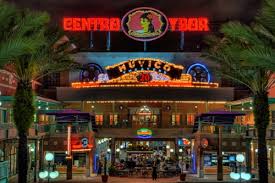
If the early verses of “Most People Are DJs” sketch out the external landscape—Ybor City confetti, jet skis, five-second dealers, Phil Lynott doppelgängers—then the center of the song turns inward. The gaze shifts from the scene itself to the person who once tried to survive inside it.
And it starts with a line that sounds like a joke until it doesn’t:
“I was a teenage ice machine…”
It’s metaphorical, but also literal in the sideways way Finn always manages:
a kid who kept it cold, kept it contained, kept taking in whatever the night handed him. Drinking until he dreamed, and when he dreamed, dreaming only of the scene. It’s the way youth can feel like preparation for nightlife, not the other way around.
Then comes the image of the little lambs looking up at him—those younger kids just entering the arena. There’s no arrogance in it; it’s simply the moment you realize you’ve shifted from participant to veteran, from the kid on the floor to the older presence leaning against the bar. It’s an eerie, recognizable sensation for anyone who came up in tight little music worlds, whether Minneapolis hardcore or the DIY venues that orbit all cities.
And then the next admission hits harder:
“I was a Twin Cities trash bin…”
Here Finn stops ornamenting the story. He talks frankly about taking everything the scene gave him and jamming it into his system. He doesn’t romanticize those years—he frames them as messy, hungry, adrenaline-charged, and sometimes self-destructive. It’s the classic Hold Steady blend of humor, regret, and affection for the person he once was. Anyone who’s lived through their own version of that era understands the mixture of pride and embarrassment that comes with looking back.
Then the song shifts again, suddenly back in a room, back in a body:
“She got me cornered by the kitchen…”
It’s one of those instantly recognizable nightlife moments—some stranger with a lot on her mind talking too closely, too sincerely, in the wrong place at the wrong time. Finn’s response, “I’ll do anything but listen,” is both funny and revealing. It’s the impatience of a younger self who wants motion, wants noise, wants the next thing, not the emotional monologue of someone he’s just met.
But the real anchor of this section comes next:
“We’re hot soft spots on a hard rock planet.”
This is the line that echoes back to the earlier “tiny white specks” but deepens it. We may be insignificant on the grand scale, but we’re still soft, still human, still easily bruised. For all the bluster and late nights, there’s vulnerability baked into every corner of the scene. Finn recognizes it, even here, even in a song that pretends to be about DJs and parties.
And this middle section becomes the emotional axis for the entire track. The drug years, the clubs, the kitchens, the impatience, the kids, the tiny planets we all carried around–it’s Finn turning his own biography into something mythic and still somehow intimate. It’s the moment the song stops being an anecdote about nightlife and becomes a portrait of the person who lived it.
IV. “Teenage Ice Machine”: Finn’s Youth, My Youth, Everyone’s Youth
This is where the song really cracks open — the run of verses where Finn folds his own misspent youth into the larger portrait of nightlife. It’s the part where the memoirist in him steps forward.
“I was a teenage ice machine / I kept it cool in coolers and I drank until I dreamed…”
Finn describes his early years in Minneapolis with blunt clarity: he was taking whatever the night handed him, jamming it into his system, chasing scenes and dreams and any story worth telling. He’s frank about the drugs, the bravado, the hunger. And that image of “kids like little lambs looking up at me” shows the strange dynamic of growing older inside a scene — one day you realize the new kids think you know something. They think you’ve made it out of the maze.
And Finn knows these kids. He knows their impulsiveness, their devotion, their need to be part of something burning and bright. He knows it because he lived it.
“I was a Twin Cities trash bin / I did everything they’d give me…”
It’s funny, and a little raw — Finn admitting he was just shoveling it all in, whatever “it” was. And the lines about being cornered in the kitchen and doing “anything but listen” land perfectly. This is the social physics of nightlife: the way adrenaline and self-invention outrun patience or reflection. The kitchen confrontation is a tiny scene, but it captures the whole era — Finn always moving, always dodging, always hungry for the next thing, the next rush, the next room.
And then the knockout line:
“We’re hot soft spots on a hard rock planet.”
This connects back to the earlier perspective shift — from Minneapolis sidewalks to this tiny-blue-dot cosmic backdrop. It’s Finn’s version of existentialism: the world is hard, unforgiving, indifferent; we are temporary flashes of warmth against it. But the point isn’t despair. The point is urgency. You don’t get that many nights where it all lines up. You don’t get that many years where your body and your heart and your recklessness harmonize. You take the nights when they come.
This is where the song clicks for me. That line is the thesis.
V. “Everyone’s a Critic and Most People Are DJs”: The Thesis and the Tension
“Baby, take off your beret
Everyone’s a critic and most people are DJs
And everything gets played.”
This is the line that gives the song its name and its pulse. Finn has already sketched the landscape — Ybor City’s chaos, New York’s 2000s absurdities, his own Twin Cities coming-of-age — and now he turns outward, toward the observation that set this whole song off in the first place.
Finn has said himself that this was his early-2000s response to the particular New York ecosystem where everyone wanted to be adjacent to culture without the exposure of making anything. The emails that said “come see me DJ, here’s what I’m going to play,” the ubiquity of people who curated rather than created. And he delivers the line with this mixture of mockery and affection — like a guy who remembers how much he once needed subcultural scaffolding and who also knows how flimsy that scaffolding can be.
But I don’t totally agree with the dismissiveness, and that’s part of why the line hits so hard for me. I think critics can make art, and DJs — literal or metaphorical — can shape the emotional weather of a room. I DJ my own life, like anyone who uses music to modulate their mood or define a moment. Spotify is my deck. The commute is my booth. There’s a pleasure in that autonomy that isn’t fake or lesser, just different.
Still, I get Finn’s point. There’s a risk he’s insisting on: the risk of putting something authentic into the world, the risk of failing publicly, the risk of making something instead of just spinning something. And this is the part where he plants his flag:
he is a maker, not a curator.
And he’s calling out everyone else — kindly, but unmistakably.
The song is gentler than the critique. It’s not a scolding. It’s a reminder: life isn’t a playlist you assemble from the safety of the booth. You have to actually step into the room. You have to actually take the hit.
This is where the song becomes more than a snapshot of early-2000s New York. It’s a life instruction.
Get in the game.
Because eventually everything gets played — your choices, your nights out, the people you loved, the things you messed up, the mornings you woke up on the floor of a city you barely knew. And at the end of all that, you want to be able to say you did it, not that you watched someone else do it.
VI. The Night Rolls On
The final verse snaps everything into focus. Finn works backwards through the chain of a night out—doctor to drugs, packie to taxi, taxi to club—like retracing the evidence after the damage is done. It’s funny and a little grim, but honest: this is how people actually live when they’re young, restless, and trying to outrun something unnamed.
A thousand kids fall in love in these clubs; a thousand end up bleeding.
Two thousand don’t sleep; two thousand still feel pretty sweet.
That’s the gamble of the night. Always has been.
And this is where my own life sits closest to Finn’s. I’ve said before that I’m an ex-introvert reinvented as an extrovert, and the night has been part of that transformation. I’m long past the age where I should be closing clubs, but I still love the energy of being out in the world, meeting people, letting chance decide the direction. The night takes you to weird places, sometimes beautiful and sometimes sketchy, and if you’re wired like me—or like Finn—that current is hard to resist.
And then there’s Ybor City, which in the Finn cosmology feels half-real, half-mythic. A kind of El Dorado of the American night. Did he actually go there? Maybe. But in the logic of the song, it doesn’t matter. Ybor City is where you wake up when the night has taken you further than planned. A place that might kill you or crown you, or both. I’m not sure Ybor City would be good for me. I’m not sure it’s good for anyone.
But the truth is:
the pull of that world—the risk, the release, the possibility—is part of what makes these songs hit as hard as they do.
VII. Closing Thoughts
In the end, Most People Are DJs isn’t one of Finn’s masterpieces, but it doesn’t have to be. It’s a mission statement disguised as a party track. An early announcement that he wasn’t done writing about the night, about the kids who rush into it headlong, about the way music becomes a map for people who don’t quite know where they’re going but desperately want to get there fast.
The song is chaotic, generous, a little arrogant, and very alive—exactly what Almost Killed Me needed to be. It sketches the outlines of the universe Finn will later fill with addicts, romantics, bartenders, prophets, screwups, saints, and that long list of people who show up again and again in his songs because he sees them clearly. Because he was them once.
I keep returning to it not because it’s Finn at his deepest but because it’s Finn at his most open-throated:
young, wired, taking in the world at full volume.
It’s the sound of the door swinging open on everything that would follow—from the great epics (Separation Sunday, Stay Positive, Teeth Dreams) to the late-career short-story gems. You can hear the whole project of The Hold Steady rumbling under this song, even if Finn himself shrugs the song off as a joke at the expense of DJs and critics.
Maybe that’s the secret: sometimes the songs artists dismiss end up revealing more than the ones they cherish.
For me, this one captures something essential about the moment you step into the night—
when the lights go up, the bass starts running, and you feel, for just a second, like anything could happen.
It’s a snapshot of youth, of movement, of mischief and possibility.
And yeah—
I still feel pretty sweet.