On Kris Kristofferson’s “To Beat the Devil”

This piece takes a look at Kris Kristofferson’s “To Beat the Devil.” The song appears on Kristofferson’s self-titled debut album from 1970 on Monument, which is, by any standard, an astonishingly good record. The album features “Me and Bobby McGee,” “Sunday Morning Coming Down,” and “Just the Other Side of Nowhere,” along with the ol’ Devil. That’s four absolute classics right there for ya.

Sunday Morning features an opening quatrain that most other songwriters would trade their career for:

Well I woke up Sunday morning/ with no way to hold my head that didn’t hurt/ and the beer I had for breakfast wasn’t bad/ so I had one more for dessert

(I could play this game all day—Jason Isbell’s Southeastern features another couple life-work worthy couplets:

The first two lines of “Super 8”:

Don’t wanna die in a super 8 motel/ just because somebody’s evening didn’t go so well

And from “Different Days”:

Time went by and I left and I left again/ Jesus loves a sinner but the highway loves a sin.

If I’d written lines that great I’d call it a career and sip martinis on the house for the duration.)

Sunday Morning and Bobby are probably objectively better songs than To Beat the Devil, yet what I like about this one is that Kristofferson states very clearly a kind of founding intention for his life in song and art, right out of the gate. The only parallel I can think of is Craig Finn’s The Hold Steady, whose first album Almost Killed Me kicks off with “A Positive Jam.”

(Here’s Finn telling it like it is:

I got bored when I didn’t have a band/ so I started a band/ we’re gonna start it with a positive jam/ hold steady.

Rock on Craig baby.)

Anyway, let’s get to the focus of this piece. Kristofferson opens with a spoken intro.:

A couple of years back I come across a great and wasted friend of mine in the hallway of a recording studio. And while he was reciting some poetry to me that he had written, I saw that he was about a step away from dying, and I couldn’t help but wonder why. And the lines of this song occurred to me.

Here the singer is looking up at his idol who is both “great and wasted.” I wasn’t around quite yet in 1970, yet I can easily imagine Ginsberg’s “best minds” line hanging over talented folks across a lot of zones. Klosterman wasn’t quite there either (June 5, 1972–a mid Gemini of course), but he was close, and to indulge not for the last time in a little Klostermania, the zeitgeist seemed to be making people thirsty.

The singer receives some scraps of poetry, shards of shattered inspiration, and a song “occurs” to him. He doesn’t state it directly, however we imagine the song arrives fully formed, like “Pancho and Lefty,” or “Kubla Khan.” Thus, To Beat the Devil is also both an answer and an offer of redemption to his idol, who here is John(ny) Cash.

I’m happy to say he’s no longer wasted, and he’s got him a good woman. And I’d like to dedicate this to John and June, who helped showed me how to beat the devil.

The singer takes up the mantle of the master, and in so doing opens a possibility window onto redemption for his senior. This is no exaggeration—Cash also recorded To Beat the Devil in 1970 and we are basically stipulating that Kristofferson’s genius, descended from Cash while also original to himself, helped rescue Cash from addiction and the whole deal there. We won’t be deep diving into the archive on this one—as we said we’re just keeping it local and breaking it down, so you’ll have to take my word on it or search it up your own self.

Here’s the first verse; the words speak for themselves:

It was wintertime in Nashville/ down on Music City Row/ and I was looking for a place/ and to get myself out of the cold/ to warm the frozen feeling that was eating at my soul/ keep the chilly wind off my guitar

A classic down and out in the big city piece of scene-setting. The singer is physiologically and psychologically frozen, a cold wind gusts across his art. The man needs a break.

My thirsty wanted whiskey/ my hungry needed beans/ but it had been a month of paydays/ since I’d heard that eagle scream/ so with a stomach full of empty/ and a pocket full of dreams/ I left my pride and stepped inside a bar

You might think that the operative nouns here would be “thirst” and “hunger,” but no. This is not a man with a thirst; this is a thirsty man. We also hear an echo of a now-ancient American past where a man with an empty stomach would go in search of, of all things, “beans.”

Anyway, he’s got no money, can’t really bring himself to care. So, a singer walks into a bar.

Actually I’d guess you’d call it a tavern/ cigarette smoke to the ceiling
and sawdust on the floor/ friendly shadows/ I saw that there was just one old man sitting at the bar/ and in the mirror I could see him checking me and my guitar/ and he turned and said/ come up here, boy, and show us what you are/ I said I’m dry, and he bought me a beer

The man in the mirror, the devil himself. The singer comes face to face with the man who checks him out and summons him over. Kristofferson then enters into a bargain–offers up the terms of an encounter: a beer on the old man’s tab. Score one for the thirsty man. The singer faces the old man; it’s to be a showdown. He doesn’t have much, but he’s got some “friendly shadows,” traces of an older map perhaps, an older memory.

I can’t help here but engage in a bit of presumption. When I play the song in my head, I want to hear “in the mirror I saw him casing me and my guitar,” (listen to the way he pronounces “guitar” on the track. Kristofferson was born in Brownsville, Texas in ‘36 and behind the laid back folksinger you can here some roots here baby).

If I could make one edit to the song, it would be to replace “checking me,” with “casing me.” What a great verb “to case” is.

Lexical Interlude: “To case the joint”

1. slang To observe a place in order to familiarize oneself with its workings in preparation for some criminal activity (often robbery). Judging from the security footage, those men cased the joint hours before robbing it.

2. slang By extension, to thoroughly examine a place. In this usage, no devious motive is implied. As soon as my kids walking into the hotel room, they started casing the joint, exclaiming about everything from the TV to the mini-fridge.

The seminal use of this verb phrase comes from Bill Callahan, formerly of Smog. Callahan is an odd duck—he is so artificial, so obviously self-created as an entertainer, that he has become almost post-authentic.  Callahan contains multitudes.

My favorite Smog album, well in the top two, is Red Apple Falls, which features “Ex-Con,” on which Callahan sings: 

Jean jacket and tie/ feel like such a lie/ when I go to your house/ I feel like I’m/ casing the joint

Devious motive implied.

=====

He nodded at my guitar and said/ it’s a tough life, ain’t it?/ I just looked at him/ he said “you ain’t making any money, are you?/ I said, you been reading my mail/ he just smiled and said, let me see that guitar/ I got something you ought to hear/ and then he laid it on me

The devil has a bead on the singer, and he’s not far off.  Yes he’s broke.  Yes he’s down and out.  Whaddaya want?

=====

Filmic Interlude I: The Long Goodbye

In Robert Altman The Long Goodbye, written by Leigh Brackett, the main character Philip Marlowe gets out of jail somewhere in the first act and heads to a all-purpose pit stop restaurant who’s owner apparently collects Marlowe’s mail. The dialogue is exquisite.

Marlowe: You got any messages for me?

Owner: Believe we’ve got a few over there. As a matter of fact, you’ll find my phone bill in there too.

Marlowe: I wouldn’t worry about that.

When you ain’t got nothing you got nothing to lose. Kristofferson’s got nothing to hide in his mail. Those bills go straight to the wastebasket.

=====

If you waste your time a talkin’ / to the people who don’t listen/ to the things that you are saying/ who do you thinks gonna hear?/ and if you should die explaining how/ the things that they complain about/ are things they could be changing/ who do you thinks gonna care?

there were other lonely singers/ in a world turned deaf and blind/ who were crucified for what they tried to show/ and their voices have been scattered by the swirling winds of time/ ‘cause the truth remains that no one wants to know

The devil’s words speak for themselves. The path of the troubadour is a dead end. The world has not ears to hear nor eyes to see. Truth tellers meet a bad end. Whiners gonna whine. It’s a strong opening bet, made, we presume, with his red right hand.

Well the old man was a stranger/ but I’d heard his song before/ back when failure had me locked out/ on the wrong side of the door/ when no one stood behind me/ but my shadow on the floor/ and lonesome was more than a state of mind

The singer is on familiar territory; he’s has been tempted by this cynical incantation, he’s not immune to tuning out his calling when out in the cold. Who is?

You see, the devil haunts a hungry man/ if you don’t want to join him/ you gotta beat him/ I ain’t saying I beat the devil/ but I drank his beer for nothing/ then I stole his song

This is the key verse in our little tale. You see, when we tango with the devil the devil usually gets to lead. That’s just the way it goes. But the thing about the devil is, his game is a bit of a bluff. A couple of low pairs, maybe. You just gotta call.

and you still can hear me singing/ to the people who don’t listen/ to the things that I am saying/ praying someone’s gonna hear/ and I guess I’ll die explaining how/ the things that they complain about/ are things they could be changing/ hoping someone’s gonna care

I was born a lonely singer/ and I’m bound to die the same/ but I’ve gotta feed the hunger in my soul/ and if I never have a nickel/ I won’t ever die ashamed/ ‘cause I don’t believe that no one wants to know

Kristoffeson flips it right around. The devil’s got a point; the singer may die dead broke, that’s fine. Songs are borne on the wind in any case. The thing is to have faith in your audience. To believe someone is out there, heart in their hands and ear to the wind. And to hold this faith as a mantra. That’ll keep ‘em guessing, cause then you’re not playing their game, you’re playing your own.

Overall, To Beat the Devil is a young man’s song. It’s got a confidence, a swagger, even a hubris. So, after drafting most of this piece I wanted to find a recent live version, see how it’s aged. I stumbled on a version from a live set with Lou Reed released in 2017. The set is part of The Bottom Line Archive, and it finds Kristofferson in a Waitsian stage of life. The voice is richer than ever, but he’s not exactly singing. Then again, that’s what they said about Dylan and it’s B.S. The voice is the voice; singing is just a category.

The set is interspersed with short interviews of the two songwriters. Here is Kristofferson’s spoken introduction that precedes To Beat the Devil. It is instructive.

Interviewer: The devil figures in some of your songs, you know there’s that silver tongued devil and he pops up from time to time. Who’s the devil? What’s the devil for you? What are your demons?

K.K.: Well, I, I’ll do that song then. Ahhh…

Interviewer: Is that a metaphor or is that something real for you?

K.K.: Well here’s a song called To Beat the Devil. Maybe it’ll explain it. I can’t.

Introducing The Kyoto Kibbitzer

“Half hours on earth/ What are they worth/ I don’t know

In 27 years/ I’ve drunk fifty thousand beers/ And they just wash against me/like the sea into a pier…”

David Berman (Silver Jews), from Trains Across the Sea.

Welcome to thekyotokibbitzer.com. On this site you will experience posts uploaded whenever I write one. I write mostly about people, music, language, things that happened to me, and things I have observed. I also write some fiction.

Basically, I like to “check things out,” so some of the posts will just be sort of check-ins–that is briefish looks at a topic. Other pieces will be a little fuller, a little more polished.

The kibbitzer, classically, seeks neither fame nor fortune and is seen only by those in the audience, if at all.  If you feel like an audience member, drop a line or leave a polite and interesting comment. Also, if you’d like to write for the site send me a guest post and I’ll see if it’s a good fit.

Peace out.

The Man Under the Bridge: A Fiction

“Everything’s thin.”

The Wire

Setting:

We open onto a large office in what looks to be Moscow in the 1890s.  It could be anywhere in the East though, anywhere from Potsdam to Petersburg.  The office appears busy; clerks filing, apprentices bustling, managers shouting instructions and reprimands that go generally unheard and unacted upon–unheard not out of rebellion, nor compromised auditory canals, but rather because the generalized cacophony of the office space is such that the collective action set cannot but unfold without coordination or direction.

The office is draughty and usually cold, although an occasional over-active heat pipe burbles out a bit of local warmth for certain fortunate corners.  The walls are covered from floor to ceiling with filing cabinets; the major task of the office is simply to inspect, stamp, classify, and file an endless stream of nominally related documents.  It is mid-fall, nearly harvest season.  Summer’s bounty this year has been acceptable, and the local populace will have food for the holidays.  Inside, however, the mood is one of permanent resignation to circumstance.

Scene One:

You found me on the other side of a loser’s winning streak/ where my thoughts all wander further than they should

The office’s hierarchy is complex, following rules of its own.  Those at the bottom of the ladder are blissfully unseen and operate without oversight or sanction unless transgressing in a manner so egregious that the neighbours become involved.  Those in the middle-lower classes are a little more visible; their seating, for instance, is of great importance.  Members of this class are ever being told that their stool has been moved to another section of the office.  Reason is neither given nor sought.  Transience is the way of the world, and is widely accepted.

The scene opens in the morning, just after the workers arrive.  At a large oak table, two members of this class sit, within mere inches of one another.  One of these is a thin man–the other, a Teutonic Knight.  Both have piles of papers left over from the day before in their work spaces, spaces delineated by a crack in the oak.  One of the papers from the thin man’s zone has shifted by a fraction of an inch overnight, whether on account of the draft or the vagaries of the cleaning staff is unknown.

The Teutonic Knight turns to face the thin man.

“I think you forgot something in my space,” he says.

“I didn’t forget anything in your space, “replies the thin man, “if you are referring to this piece of paper, it has shifted marginally and is abutting the crack which separates my zone from yours.”

“You have forgotten something,” insists the Knight.  “Take it away.”

The thin man sighs and removes the paper.  Good money after bad, he thinks to himself, applying a concept he has learned recently at the card tables, tables which he has, perhaps, been frequenting a little more often than he might want to admit to his blessed mother or dear widowed sister.  The Knight knows nothing of the gambler’s demi-monde, spending his evenings as he does in endless rows over minor matters with one of the succession of women he sees.  The thin man has, on the other hand, managed to stay out of the clutches of the worst money-lenders and knee-cappers in the city thus far.  His taste, in the last analysis, may run more to the risque than to risk per se.  In any case, the skirmish over, the knight withdraws from the field of battle, content in his triumph.  The thin man looks at the clock.  These days, everything seems to take all morning.

Scene Two (a few days later)

Well I was drinkin’ last night with a biker/ and I showed him a picture of you/ I said “Pal get to know her, you’ll like her”/ seemed like the least I could do

The office has a kind of canteen, an open space where weak tea and an occasionally edible biscuit or two have been reported. Here lives another man, a man from the south. His status with the company is ambiguous–a matter of no little gossip. Tales are told of whirlwind romances, payments under the table, mutually compromising material. No one really knows. This southerner spends his days reading and drinking tea in a most relaxed fashion. Good work if you can get it, muses the thin man. The thin man and the southerner are allies of the kind that sometimes arise during wartime conditions. The details of his ally’s dalliances and contractual complexities are only of a general interest to the thin man, who is however curious what value the southerner is seen to be providing to the company. Literacy is good and all, but the filing by god, the filing waits for no man.

Sometime that fall, the southerner pulls the thin man aside, for a talk. His manner is furtive, his words oblique. The thin man’s time with the company is limited, he whispers. His number is up. Time to hit the bricks, pal.

The thin man takes this news in stride. The tables beckon and he’s met a woman, a lady of the evening, perhaps, yet classy–demure, yet perfectly capable of looking after her own interests. He has only seen her a few times, true, yet there are possibilities.

Of course being sans salary is not likely to widen that particular possibility set. So when the southerner leans in and whispers low, the thin man listens close.

“There is a man, a man you may meet,” says the southerner. “You must not ever tell anyone I told you this. The man will be under a bridge on a high holiday. There will be revelry. He may make you an offer.”

Gambling man he may be, but the thin man is confused.

“What should I do?”

“Stay alert. Pay attention. I can say no more.”

Easy to say, harder to execute, thinks the thin man. Alert for what? A man under a bridge is easy enough to spot, however the southerner seemed to be referring to another matter, another occasion where attention will be needed to carry the day. The thin man files the conversation away, and resolves to stay open to what a situation that appears to have elements of fluidity.  It seems like the least he could do.

Read more

On a small run-in with Damon of Damon and Naomi in a Kyoto Basement (aka “A Minor Incident, aka A Dis-Track”)

What follows is a true story.  Or, in the words of Damon K., formerly of Galaxie 500 and presently of Damon and Naomi, “Here are the dirty facts.”

It was sometime in the first decade of the 21st century.  I was minding my own business in my fair adopted city of Kyoto.  You see, I live in North Kyoto and unless I have good reason, prefer to stay in orb of the north-central part of the city.  The south is for business, the east for the occasional mountain jaunt, and the west too wild and forbidding for a humble man such as myself.  Mostly, I just try to stay north of Shijo Dori (positively 4th street, so to speak).  That’s my zone.

As with any excellent locality, there is plenty to explore in North Kyoto.  One place that the locals know is Cafe Independants–a cafe with a small bar which from time to time hosts shows.  Cafe Independants is located in a basement with exposed white pipes and stone walls.  It’s hip if you’re into that kind of thing, certainly not trendy though.  And, it features a kick-ass pair of staircases that are worlds into themselves.  I have enjoyed those staircases many a time my own self.


I have had the pleasure of seeing the great Bill Callahan open for the immaculate harpist Joanna Newsom there when Ms. Newson was just breaking through.  Callahan was the bigger name, and his generosity in opening for her was striking.  That was a great night.  I may have even smoked a rare cigarette.  I also saw my mate Darren Hannah play bass there with a bow.  That was something–and the dude executed a beauty of a bow toss at the end of the show.  A bow toss for a bassist is like a mic drop for an MC.  Show’s over folks.  So you see, I’d had some nights there.

The Cafe runs an open kitchen which serves right through gigs and back in the day also had a record shop open in the back.  It’s a small place, seating maybe 35 on a good day, and when a show is on people tend to pack around the big pole in the center and squeeze into communal tables.  Smoking is allowed.  The Cafe, at the best of times, is not a quiet place.  This is to be borne in mind with what followed.

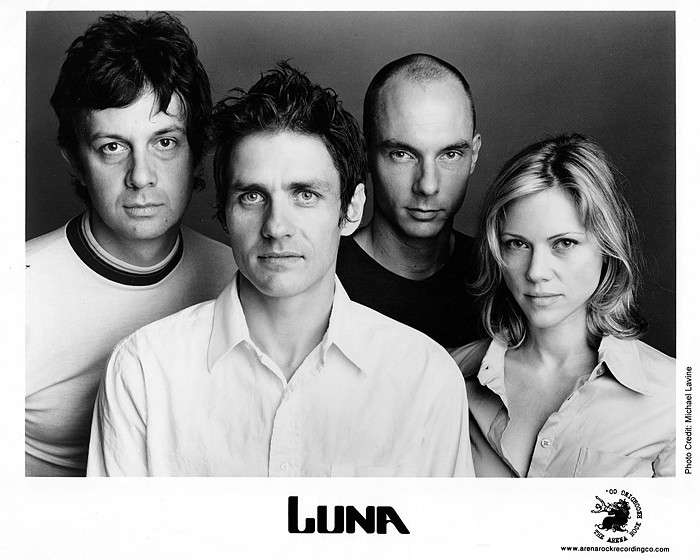
So one evening I had secured tickets to see Damon and Naomi play.  Damon and Naomi were members of the late 80s/ early 90’s band Galaxie 500 with Dean Wareham.  The band didn’t really know what it was doing at first, like many a band before, and kind of stumbled into near-greatness before Wareham walked and started Luna, the world’s greatest band.  Wareham details the reasons behind the break-up in his memoir Black Postcards.  Poe is supposed to have said that any man who tells the simple truth of his life would write a masterpiece.  Wareham gets pretty close to following Poe’s dictum.

The ending of Galaxie 500 came about, according to Wareham, essentially because Wareham was tired of being treated like a child by the other two, a long-time couple.  I think he wanted his own band, and wanted to chill a little.  From Black Postcards:

Traveling is stressful.  And with Damon tour-managing, it seemed like every hotel check-in, every seat assignment, and every rental car was a problem.  Damon would argue about what floor his room was on.  He would get annoyed if he didn’t get the seat he wanted on the flight.  I shouldn’t have let this bother me.  I should have minded my own business.  But traveling together highlights your differences.

At one show in late 1990, a techie shone a spotlight on Dean as he stepped downstage for a solo.  This seems to have been the breaking point.  Black Postcards again:

Damon: “In retrospect I notice that Dean chose the L.A. show to launch this new trick, when the audience was full of music industry people.  We hadn’t had any spotlights in Columbus or Dallas!”

Dean in his contemporaneous tour diary: “Damon said he doesn’t like me walking in front of his drum kit–it throws him off.  I didn’t tell him to go f*** himself.”

Things were rough, and Dean split in 1991.  (Wareham quotes a Damon interview saying “Here are the dirty facts!  What happened was simply that Dean quit, more or less out of the blue, on the telephone one day.”  Ah oui, les sales faits.)  Galaxie 500 is still an interesting band and has a handful of great songs.  Then, Damon and Naomi formed their own group, named eponymously.  They are pretty good.  I like “This Car Climbed Mount Washington,” from More Sad Hits, and the whole record Playback Singers is strong.  Still, they are a far cry from Galaxie, much less Luna.

Nevertheless, I was excited to hear they were coming to little old North Kyoto in fact to play the Independants.  I showed up early with a friend and we had a few drinks, as you do.  There were 30 or 40 people there, as normal.  People were chatting, eating, smoking, and a local warm-up act started preparing on stage.  Actually, there is no stage at the Cafe, just floor space.  The show, from my point of view, HAD NOT STARTED.  Additionally, I WAS BEHIND THE POLE.  I wish at this time to stipulate this very clearly in light of what followed.  I also wish to stipulate that no-one is a bigger fan of the idea of the local warm up act than my good self.  Nobody.  By god, I remember seeing the Tenniscoats, a much beloved Japanese band that you won’t have heard of, open up in Kyoto for someone, Bonnie Prince Billy maybe, and saw the great Saya Ueno play in her barefeet.  I even tweeted about it, for Christ’s sake.  I support the local art community with a whole heart.  And no blasted interloper will tell me otherwise.

Anyway, on the night in question I will admit I was talking to my buddy while the local artist was getting set up.  And yes, she may have said something into the microphone.  I don’t really know.  Because before I could do anything, here comes Damon K. bounding across the room, right in my face, and shushed me.  “Don’t speak when the ARTIST is talking,” he hissed.  Right…in…my…face.

Now, the human mind is a remarkable deal.  When Damon shushed me, two simulataneous and equally strong thoughts came into my head.  The first was, “wow, Damon from Galaxie 500 just shushed me.  Cool.”  The second was, “dude, f******** you!  This is my city you pompous SOB, the show HAS NOT STARTED, there is a room full of chattering people, and you are going to lecture me about the ARTIST.”

What did I do next, you will ask.  Well, in my mind I like to think I produced a gesture equivalent to Dave Moss’s finger flips in Glengarry Glen Ross.  The moment comes when the little men in the sales office are on the other end of a berating passing for “motivation” when just for a moment, Moss takes the upper hand.

Or, I may have stared dumbly at the guy.  One of the other.

On the Velvet Underground’s Live at Max’s Kansas City, the future poet and songwriter Jim Carroll famously “ruins” the recording of “Sweet Jane” by asking for “a double Pernod.”  You can find reference to this minor incident in works as scholarly as The Encyclopedia of Popular Music, published by Oxford Press.

“Excuse me can I have a Pernod, get me a Pernod’. Poet and author Jim Carroll’s boorish demands for a bloody Pernod ruined (this) illegal cassette taping.”  Well, let’s look at the (dirty) facts.  The fact is that Carrol’s so-called boorish demands are almost entirely heard between songs when the band is tuning.  On Sweet Jane, for example, Reed finishes the song and then we hear:

“Oh yeah, I wrote it, but it’s pretty new, yeah.  Did you get the Pernod?  You had to get the, you had to go to the downstairs floor.”

Sure, he is a little lit.  Sure he is close to the mic.  But the song is over.  There is downtime.  The man is thirsty.  The recording is “ILLEGAL.”  Now I ask you, is this “ruining” the song?  Only if you are an actual prat.  Otherwise, this is called local color.  Guess what Damon, buddy?  I’m a local.  This is my city.  I’m colorful.  And I’ll take my bloody Pernod whenever I goddamn well feel like it.

Works Cited/ Referenced:

Damon and Naomi,  More Sad Hits.

Damon and Naomi, Playback Singers.

Glengarry Glen Ross.  Directed by James Foley.  Written by David Mamet.

Oxford Reference, “Velvet Underground–Live at Max’s Kansas City.” http://www.oxfordreference.com/view/10.1093/acref/9780195313734.001.0001/acref-9780195313734-e-89759.  Retrieved 9/20/2018.

The Velvet Underground, Live at Max’s Kansas City.

Style Note:

The style of this piece is deeply indebted to Eric Ambler’s The Intercom Conspiracy.  Inspiration from this master of form is acknowledged, with deep gratitude.

Breakdown: The Stage Banter of Matthew Houck and Dean Wareham

After the rousing success of our first breakdown here on the kibbitzer, we have doubled down on the form.  Here we will be exploring two incidences of stage banter by musicians captured on live albums.  We will look at Matthew Houck from Phosphorescent introducing his band, and Dean Wareham from Luna riffing with a French audience.  Phosphorescent and Luna are two of our most beloved bands, and the proto-thesis of this piece is that through their stage banter we can see into the core of what makes Matthew and Dean who they are as artists and entertainers, and in so doing discover anew what makes them great.  Stage banter, in short, may be the royal road to stylistic explication.

That all sounds pretty good, though we aren’t actually going to start with stage banter. Instead, we will take a quick stroll through the archives, back to 2009 when we published a little piece on our first blog, Classical Sympathies called “Curtis John Tucker Had a Lot to Do With It.”  Around this time, I was interested in artistic communities, artistic communes really, I guess.  My Dinner with Andre was a huge influence.

Around that time I was also listening to a bit of Giant Sand.  Giant Sand is an ever-evolving group of musicians around the enigmatic Howe Gelb, a shape-shifting Southwest troubadour who makes a lot of music, some of which is really good.  On the record Cover Magazine, the Sand covers a Kris Kristofferson song called “The Pilgrim (Chapter 33)“.  It is this song that the Curtis John Tucker piece took up.

The themes that occupy a Gemini through life, though certainly never stable, do have a certain macro-coherence.  Such is it with stage banter—our current focus calls back to this little piece on Giant Sand.  What follows then is a re-write of the original piece as an introduction to our main topic.


Re-write of “Curtis John Tucker Had a Lot to Do With It;” original version July, 2009.

On Nothing Left to Lose, a Kris Kristofferson tribute album, and later collected on Giant Sand’s Cover Magazine Howe Gelb covers the song “The Pilgrim (Chapter 33).”  You may know the song; it goes:

he’s a poet/ he’s a picker/ he’s a prophet/ he’s a pusher/ he’s a pilgrim and a preacher and a problem when he’s stoned/ he’s a walking contradiction/ partly fact and partly fiction/ taking every wrong direction on his lonely way back home.

Yeah, you know the one.

It’s a good song, and Gelb turns in a sound version.  But it’s his spoken introduction that really peaks my interest.  On Kristofferson’s original he name-checks a number of folks who “had something to do with” the genesis of the song.  Gelb repeats the original name-checks, slightly out of order, before listing a set of artists that he, Gelb, learned the song for:

Well, I guess when Kris wrote this song he wrote it for Chris Gantry–he started out doing it though by–ended up writing it for Dennis Hopper, Johnny Cash, Norman Norbert, Funky Donny Fritts, Billy Swan, Paul Seibel, Bobby Neuwirth, Jerry Jeff Walker.  Ramblin’ Jack Eliot had a lot to do with it.

Me I ended up learning this song for Vic Chesnutt, Jason Lytle, Evan Dando, Polly Jean, Paula Jean, Patsy Jean, Juliana, Victoria, Bobby Neuwirth, Bobby Plant.  Curtis John Tucker had a lot to do with it.

The alliterative Bobbys and the matching of Ramblin’ Jack Eliot and Curtis John Tucker make this speech into a mini-poem of sorts, and we know many of the protagonists.  Hopper and Cash of course; Jerry Jeff Walker and Ramblin’ Jack Eliot are folk singers, older than Kristofferson; Bobby Neuwirth is a folk singer, multimedia artist, and Dylan confidant in Don’t Look Back,  Funky Donny Fritts is a session keyboardist, and I believe Norman Norbert and Billy Swan were session musicians as well.  Paul Seibel was also a folksinger–I don’t know him; maybe you do.  Kris’ meaning is pretty clear—a song like The Pilgrim doesn’t come from nowhere, and the folksingers he learned from are portals back in time to an earlier tradition to which he generously pays tribute.

Not being myself a 70’s session musician completist I did have to look up a few of the names.  The Gelb names are more familiar, expect one.  Vic Chesnutt, Jason Lytle and Victoria (Williams) are folk singers (or were, as sadly Chesnutt has passed).  Evan Dando, Juliana Hatfield, and P.J. Harvey are/were alt-rock superstars.  Bobby Plant would be Robert Plant of Led Zeppelin fame, Bobby Neuwirth is Bobby Neuwirth.

But here’s the point, after listening to Kristofferson and Gelb name-check Funky Donny and Curtis John, I feel an affinity for them–were I to bump into Funky Donny in an airport bar or lounge his presence would resonate with an essential familiarity.  Even if I didn’t know precisely that it was he, I would recognize immediately that he was indeed funky, not to mention a serious problem when he’s stoned.  And Curtis John Tucker, well, his role is still opaque to me, but he clearly had a lot to do with it.

What both singers hint at in their evocation of the circumstances surrounding the creation of a song is the presence of community behind the music.  Behind or beside every Kristofferson is a Norman Norbert, behind every Dylan a Bobby Neuwirth, every Gelb a Curtis John Tucker.  In 2009 I wrote that “this thought fills me with a little jealously and a little sadness; I’m not at all sure that such communities of practice are as common as they once were; (there is) something about the atomisation of human affairs in the first world in the 21st century means that the idea of an artistic community where minor but still vital players such as Norman Norbert is no longer viable.” Today, although this statement still rings somewhat true, things appear rather different to me.  It seems that at least two things are occurring: first the internet has evolved such that any artistically minded person can find a niche community(s) that fits their style, and live with a foot in this community.  The second is that an apparently opposite, and actually concomitant, vitalisation of local community is underway all over the world, and a vitalised local community by necessity contains a vitalised local artistic scene.

Whatever the case, the humanity and camaraderie inherent in the spoken introductions to The Pilgrim remind us that artistic communities are vital in the creation of lasting artistic production–Neuwirth may not have been essential to Dylan’s art in the mid-60’s, but he was instrumental to its vitality; Kristofferson wrote “The Pilgrim” but it wouldn’t have been as good without Paul Seibel.  And as for Curtis John Tucker, well he had a lot to do with it.


On the spoken introduction of the band Phosphorescent by Matthew Houck between the songs “Joe Tex, These Taming Blues” and  “Los Angeles,” from Live at the Music Hall.

On side two of Phosphorescent’s majestic 2015 live album Live from the Music Hall, the band plays a song from their 2005 album Aw Come Aw Wry, called “Joe Tex, These Taming Blues.”  Houck’s early Phosphorescent albums are interesting–they are more ambient and keening than his mature work and some of the songs are really long.  Joe Tex is one of the better early songs, and Houck puts a little something special into the first couple lines on the live version: 

Is it ever gonna not be so hard to see you around/ or am I really really really really gonna have to really gonna have to really have to leave town

Houck is a master at harnessing the power of repetition—here each “really” takes on its own character and valance.  The band gives an excellent performance, which goes for about 4 minutes.  It is apparently the second last song of the night, because at the end of the song Houck moves to introduce the band.  Here he goes, as the band chugs on behind him:

Brooklyn, that’s Scott Stapleton playing that piano right there…

The first “Brooklyn” is loaded with import–Houck is going to drop some wisdom on the folks tonight.  Stapleton plays a few understatedly beautiful lilting keys and…

Brooklyn, that’s David Torch playing that percussion right there…

Torch gives a little maracas shake, right on time, as Houck establishes the rhythm and flow of the introductions.  The basic elements include a “Brooklyn,” which shifts in valance a little each time, and the band member playing “that (instrument),” “right there.”

Brooklyn, this is Rustin Bragaw playing that bass guitar right there…

A slight shift in the pattern–probably Rustin is standing next to Houck.  Bragaw drops a couple of notes on his funky bass and on we go–naturally, the bassist gets the lowest key introduction.

Brooklyn, Christopher Showtime Marine playing those drums right there…

Houck reaches for a higher register here, both on the slightly more breathless and rushed “Brooklyn” and an uptone delivery of Marine’s nickname.  Another shift in the pattern–Marine has a moniker.  Showtime delivers a healthy drum piece and…

Brooklyn, the trigger finger Ricky…Ray…Jackson playing that guitar and that pedal steel right there, come on…

We’re getting there.  The crowd is excited for this one; the pedal steel player is clearly a star.  Houck pauses a beat on each name, “Ricky…Ray…Jackson, come on,” and the come on is both an entreaty to the crowd and also a general “come on can you believe this guy!” from the lead singer.  Pedal steel is no joke.  Also, Ricky Ray’s nickname comes before the name–he is in fact the trigger finger here tonight, his birth name is just data.

The trigger finger plays a couple of high notes and…

Brooklyn, last but certainly not least, the best looking one in the group, Joe Help, playing those keyboards right there, come on.

No fuss around the two-syllable “Joe Help,” which Houck delivers as if it was one word.  Joe Help and Joe Tex, good looking guys that’s all.

I can’t tell you what a pleasure this has been y’all. Thank you for being here. Hope you come back again.  We’re going to play one more song; thank you guys so much again.  This is a song called Los Angeles; this is how it goes.

And the band plays a stunning closer.

=====

So what’s going on here?  On the one hand, Houck is just introducing the band like any other bandleader might.  However there are layers to what he is doing that are really interesting.  First, the introductions take up a good 2 minutes 20 seconds, more than a third of the 6:13 running time of the track.  Second, the whole thing is a mini-performance in and of itself.  It has an introduction, momentum, a high point at “the trigger finger Ricky Ray Jackson,” and a come down in the clipped, humorous Joe Help introduction.  Houck is doing a little “bit,” where each introduction, although seemingly quite similar, is actually it’s own piece, with his own special kind of appreciation for each band member. Read more

On Kris Kristofferson’s “To Beat the Devil”

Here comes the first “breakdown” on the kibbitzer. A breakdown is basically what the young folks these days call a “deep dive.” Only we’re not spending days falling through interweb rabbit holes to get there. That kind of action is reserved for “Tusk,” matters of that ilk. Tusk ilk is pretty thin on the ground.

Instead, a breakdown is just a close look at an item of interest. We’ll start with a couple of songs, see how the method wants to evolve. First off we’ll be breaking down Kris Kristofferson’s “To Beat the Devil.”

To Beat the Devil appears on Kristofferson’s self-titled debut album from 1970 on Monument. It is, by any standard, an astonishingly good record, featuring “Me and Bobby McGee,” “Sunday Morning Coming Down,” and “Just the Other Side of Nowhere,” along with the ol’ Devil. That’s four absolute classics right there for ya.

{Sunday Morning features an opening quatrain that most other songwriters would trade their career for:

Well I woke up Sunday morning/ with no way to hold my head that didn’t hurt/ and the beer I had for breakfast wasn’t bad/ so I had one more for dessert

I could play this game all day—Jason Isbell’s Southeastern features another couple life-work worthy couplets:

The first two lines of “Super 8”:

Don’t wanna die in a super 8 motel/ just because somebody’s evening didn’t go so well

And from “Different Days”:

Time went by and I left and I left again/ Jesus loves a sinner but the highway loves a sin.

We’ll do a Different Days breakdown a little later on. If I’d written a song that great I’d call it a career and sip martinis on the house for the duration.}

Sunday Morning and Bobby are probably objectively better songs than To Beat the Devil, yet what I like about this one is that Kristofferson states very clearly a kind of founding intention for his life in song and art, right out of the gate. The only parallel I can think of is Craig Finn’s The Hold Steady, whose first album Almost Killed Me kicks off with “A Positive Jam.”

Here’s the master telling it like it is:

I got bored when I didn’t have a band/ so I started a band/ we’re gonna start it with a positive jam/ hold steady.

Rock on Craig baby.

Anyway, let’s get to the focus of this piece. And if you’d like to experience it sans interpretation, here you go:

TO BEAT THE DEVIL

Kristofferson opens with a spoken intro.:

A couple of years back I come across a great and wasted friend of mine in the hallway of a recording studio. And while he was reciting some poetry to me that he had written, I saw that he was about a step away from dying, and I couldn’t help but wonder why. And the lines of this song occurred to me.

Here the singer is looking up at his idol who is both “great and wasted.” I wasn’t around quite yet in 1970, yet I can easily imagine Ginsberg’s “best minds” line hanging over talented folks across a lot of zones. Klosterman wasn’t quite there either (June 5, 1972–a mid Gemini of course), but he was close, and to indulge not for the last time in a little Klostermania, the zeitgeist seemed to be making people thirsty.

The singer receives some scraps of poetry, shards of shattered inspiration, and a song “occurs” to him. He doesn’t state it directly, however we imagine the song arrives fully formed, like “Pancho and Lefty,” or “Kubla Khan.” Thus, To Beat the Devil is also both an answer and an offer of redemption to his idol, who here is John(ny) Cash.

I’m happy to say he’s no longer wasted, and he’s got him a good woman. And I’d like to dedicate this to John and June, who helped showed me how to beat the devil.

The singer takes up the mantle of the master, and in so doing opens a possibility window onto redemption for his senior. This is no exaggeration—Cash also recorded To Beat the Devil in 1970 and we are basically stipulating that Kristofferson’s genius, descended from Cash while also original to himself, helped rescue Cash from addiction and the whole deal there. We won’t be deep diving into the archive on this one—as we said we’re just keeping it local and breaking it down, so you’ll have to take my word on it or search it up your own self.

Here’s the first verse, and we’ll tread a little lightly from here and let the words speak for themselves:

It was wintertime in Nashville
Down on Music City Row
And I was looking for a place
And to get myself out of the cold
To warm the frozen feeling that was eating at my soul
Keep the chilly wind off my guitar

A classic down and out in the big city piece of scene-setting. The singer is physiologically and psychologically frozen, a cold wind gusts across his art. The man needs a break. Read more

Introducing thekyotokibbitzer

“Half hours on earth/ What are they worth/

I don’t know

In 27 years/ I’ve drunk fifty thousand beers/ And they just wash against me/
Like the sea into a pier…”

David Berman (Silver Jews), from Trains Across the Sea.

Welcome to thekyotokibbitzer.  On this site you will experience posts uploaded whenever I write one or whenever I accept a guest post.  In other words, from time to time.  Posts will touch on a wide range of themes; the only common factor will be that all posts will in one sense or another be grounding in locality.  We will, in other words, be “keeping it local.”

The kyotokibbitzer is loosely associated with the nascent Periscope channel @kyotokibbitzer.  Over at Periscope we will be doing a bit of rapping and a bit of mapping, taking our credo of “checking in and checking out people, places, and zones.”  You know what I’m talking about here folks.  Anyway, we are also on the Periscope.

The kibbitzer, classically, seeks neither fame nor fortune and is seen only by those in the audience, if at all.  If you feel like an audience member, drop a line, leave a polite and interesting comment, or even donate a peso or two for our walking shoes.

Here’s Trains Across the Sea for y’all:

Peace out.