Craig Finn on Nightlife and Adult Relationships I: Most People are DJs

I. Setting the Frame — What the Song Is “About,” and What Finn Says It’s About

Most People Are DJs” appears on Almost Killed Me (2003), track three if you don’t count the spoken prologue. If “Killer Parties” is the band’s thesis on community, “Most People Are DJs” is the thesis on the scene—why it’s fun, why it’s corrosive, and why it matters.

Finn himself once said:

“Just a reaction to life in NYC in the 2000s… The part I don’t get is when I get emails that start with ‘Come see me DJ’ and end with ‘Here is what I’m going to play…’ I think DJing, like rock criticism, tends to be a way for people to participate in the ‘scene’ without the risks to the ego that go along with producing art.”

His hedge—“Of course, I don’t apply this to all DJs”—isn’t convincing. And that’s okay. Artists don’t owe us diplomatic consensus statements. What he’s really saying is: there is a gap between creating and curating. Between risk and commentary. Between the ones who make things and the ones who play things.

Now: I don’t fully agree with him.
And that’s part of what makes this song fun to write about.

Because the truth is:
Finn is reacting to a very specific time and place—New York in the early 2000s—where the “scene” was swollen with people who wanted proximity to art more than they wanted the agony of making it.

But he also wrote a song so overflowing with confidence and adrenaline that, even if you disagree with the premise, the song still wins.

II. Alliteration, Lineage, and the New York Scene (Early 2000s)

One thing that hits immediately in “Most People Are DJs” is the density—the alliteration, the internal rhyme, the almost cartoonish velocity of the lines. Finn came out of Lifter Puller, a band whose songs were so tightly coiled with alliteration they were practically tongue-twisters set to guitars. That sonic fingerprint carries directly into Almost Killed Me.

“Jet skis into the jetty,”
“skipping off the good ship,”
“searching for the merchant”—
this is Finn still flexing the Lifter Puller muscle.

But something is different now.
A subtle pivot.

With The Hold Steady, the alliteration stops feeling like a hallucinatory fever dream and starts to feel like a narrator in full command of his mythmaking. LP was chaos; THS is authorship. LP was young-person disorientation; THS is a guy in his early thirties cataloguing his own survival.

And that survival intersects directly with Finn’s take on the early-millennium New York City “scene.”

If you didn’t live there then, it’s hard to reconstruct the vibe, but from the outside—I was never a New York resident, just a visitor—it felt like every bar and backroom was filled with:

  • people wanting to be seen
  • people curating themselves more than expressing themselves
  • self-mythologizing in real time
  • and a thousand micro-scenes stacked on top of each other

New York has always been a city where people come to reinvent themselves, but in the 2000s, with the rise of the internet, music blogs, Vice magazine, and the early social media era, there was suddenly an audience for every aesthetic micro-gesture. DJ nights proliferated not necessarily because people loved vinyl but because DJing let you participate in culture without risking the humiliation of failure that comes with creation.

Finn clearly bristled at this dynamic—at least enough to write this song about it.
But crucially: he’s not sneering. He’s needling.
He’s amused and annoyed in equal measure.

Because he had just spent years in a band (LP) that nearly no one outside Minneapolis cared about. He’d paid his dues in the purest sense—tiny clubs, no money, hardcore kids, bad drives, worse mornings—and so when he encountered the Manhattan version of a “scene,” it must have felt surreal. A party ecosystem where participation wasn’t dependent on talent or risk, just aesthetics.

And so the song becomes a little manifesto:

Some people create.
Most people curate.
I know which side I’m on.

But I don’t fully agree with Finn here. DJing, like criticism, can absolutely be an art. Plenty of DJs are actual geniuses of sequencing, mood, texture, and propulsion. And Finn’s own songs rely heavily on the idea that everyone constructs a soundtrack for their life. He lives inside the psychology of people who soundtrack their heartbreak, their addictions, their breakthroughs, their mistakes.

So his jab at DJs is both sincere and playful—an elbow thrown by someone who knows perfectly well that without DJs, nightlife wouldn’t exist.

Still, the tension is productive.
It pushes the song forward.
It gives it its bite.

This is where Finn’s shift from Lifter Puller to The Hold Steady becomes clear:
LP described nightlife as a labyrinth; THS describes it as a world he made it out of, barely, and will now narrate for the rest of us.

Almost Killed Me is a debut in name only—it’s actually a rebirth.

III. The Ice Machine, the Trash Bin, and the Myth of Mis-Spent Youth

If the early verses of “Most People Are DJs” sketch out the external landscape—Ybor City confetti, jet skis, five-second dealers, Phil Lynott doppelgängers—then the center of the song turns inward. The gaze shifts from the scene itself to the person who once tried to survive inside it.

And it starts with a line that sounds like a joke until it doesn’t:

“I was a teenage ice machine…”

It’s metaphorical, but also literal in the sideways way Finn always manages:
a kid who kept it cold, kept it contained, kept taking in whatever the night handed him. Drinking until he dreamed, and when he dreamed, dreaming only of the scene. It’s the way youth can feel like preparation for nightlife, not the other way around.

Then comes the image of the little lambs looking up at him—those younger kids just entering the arena. There’s no arrogance in it; it’s simply the moment you realize you’ve shifted from participant to veteran, from the kid on the floor to the older presence leaning against the bar. It’s an eerie, recognizable sensation for anyone who came up in tight little music worlds, whether Minneapolis hardcore or the DIY venues that orbit all cities.

And then the next admission hits harder:

“I was a Twin Cities trash bin…”

Here Finn stops ornamenting the story. He talks frankly about taking everything the scene gave him and jamming it into his system. He doesn’t romanticize those years—he frames them as messy, hungry, adrenaline-charged, and sometimes self-destructive. It’s the classic Hold Steady blend of humor, regret, and affection for the person he once was. Anyone who’s lived through their own version of that era understands the mixture of pride and embarrassment that comes with looking back.

Then the song shifts again, suddenly back in a room, back in a body:

“She got me cornered by the kitchen…”

It’s one of those instantly recognizable nightlife moments—some stranger with a lot on her mind talking too closely, too sincerely, in the wrong place at the wrong time. Finn’s response, “I’ll do anything but listen,” is both funny and revealing. It’s the impatience of a younger self who wants motion, wants noise, wants the next thing, not the emotional monologue of someone he’s just met.

But the real anchor of this section comes next:

“We’re hot soft spots on a hard rock planet.”

This is the line that echoes back to the earlier “tiny white specks” but deepens it. We may be insignificant on the grand scale, but we’re still soft, still human, still easily bruised. For all the bluster and late nights, there’s vulnerability baked into every corner of the scene. Finn recognizes it, even here, even in a song that pretends to be about DJs and parties.

And this middle section becomes the emotional axis for the entire track. The drug years, the clubs, the kitchens, the impatience, the kids, the tiny planets we all carried around–it’s Finn turning his own biography into something mythic and still somehow intimate. It’s the moment the song stops being an anecdote about nightlife and becomes a portrait of the person who lived it.

IV. “Teenage Ice Machine”: Finn’s Youth, My Youth, Everyone’s Youth

This is where the song really cracks open — the run of verses where Finn folds his own misspent youth into the larger portrait of nightlife. It’s the part where the memoirist in him steps forward.

“I was a teenage ice machine / I kept it cool in coolers and I drank until I dreamed…”

Finn describes his early years in Minneapolis with blunt clarity: he was taking whatever the night handed him, jamming it into his system, chasing scenes and dreams and any story worth telling. He’s frank about the drugs, the bravado, the hunger. And that image of “kids like little lambs looking up at me” shows the strange dynamic of growing older inside a scene — one day you realize the new kids think you know something. They think you’ve made it out of the maze.

And Finn knows these kids. He knows their impulsiveness, their devotion, their need to be part of something burning and bright. He knows it because he lived it.

“I was a Twin Cities trash bin / I did everything they’d give me…”

It’s funny, and a little raw — Finn admitting he was just shoveling it all in, whatever “it” was. And the lines about being cornered in the kitchen and doing “anything but listen” land perfectly. This is the social physics of nightlife: the way adrenaline and self-invention outrun patience or reflection. The kitchen confrontation is a tiny scene, but it captures the whole era — Finn always moving, always dodging, always hungry for the next thing, the next rush, the next room.

And then the knockout line:

“We’re hot soft spots on a hard rock planet.”

This connects back to the earlier perspective shift — from Minneapolis sidewalks to this tiny-blue-dot cosmic backdrop. It’s Finn’s version of existentialism: the world is hard, unforgiving, indifferent; we are temporary flashes of warmth against it. But the point isn’t despair. The point is urgency. You don’t get that many nights where it all lines up. You don’t get that many years where your body and your heart and your recklessness harmonize. You take the nights when they come.

This is where the song clicks for me. That line is the thesis.

V. “Everyone’s a Critic and Most People Are DJs”: The Thesis and the Tension

“Baby, take off your beret
Everyone’s a critic and most people are DJs
And everything gets played.”

This is the line that gives the song its name and its pulse. Finn has already sketched the landscape — Ybor City’s chaos, New York’s 2000s absurdities, his own Twin Cities coming-of-age — and now he turns outward, toward the observation that set this whole song off in the first place.

Finn has said himself that this was his early-2000s response to the particular New York ecosystem where everyone wanted to be adjacent to culture without the exposure of making anything. The emails that said “come see me DJ, here’s what I’m going to play,” the ubiquity of people who curated rather than created. And he delivers the line with this mixture of mockery and affection — like a guy who remembers how much he once needed subcultural scaffolding and who also knows how flimsy that scaffolding can be.

But I don’t totally agree with the dismissiveness, and that’s part of why the line hits so hard for me. I think critics can make art, and DJs — literal or metaphorical — can shape the emotional weather of a room. I DJ my own life, like anyone who uses music to modulate their mood or define a moment. Spotify is my deck. The commute is my booth. There’s a pleasure in that autonomy that isn’t fake or lesser, just different.

Still, I get Finn’s point. There’s a risk he’s insisting on: the risk of putting something authentic into the world, the risk of failing publicly, the risk of making something instead of just spinning something. And this is the part where he plants his flag:
he is a maker, not a curator.
And he’s calling out everyone else — kindly, but unmistakably.

The song is gentler than the critique. It’s not a scolding. It’s a reminder: life isn’t a playlist you assemble from the safety of the booth. You have to actually step into the room. You have to actually take the hit.

This is where the song becomes more than a snapshot of early-2000s New York. It’s a life instruction.

Get in the game.

Because eventually everything gets played — your choices, your nights out, the people you loved, the things you messed up, the mornings you woke up on the floor of a city you barely knew. And at the end of all that, you want to be able to say you did it, not that you watched someone else do it.

VI. The Night Rolls On

The final verse snaps everything into focus. Finn works backwards through the chain of a night out—doctor to drugs, packie to taxi, taxi to club—like retracing the evidence after the damage is done. It’s funny and a little grim, but honest: this is how people actually live when they’re young, restless, and trying to outrun something unnamed.

A thousand kids fall in love in these clubs; a thousand end up bleeding.
Two thousand don’t sleep; two thousand still feel pretty sweet.

That’s the gamble of the night. Always has been.

And this is where my own life sits closest to Finn’s. I’ve said before that I’m an ex-introvert reinvented as an extrovert, and the night has been part of that transformation. I’m long past the age where I should be closing clubs, but I still love the energy of being out in the world, meeting people, letting chance decide the direction. The night takes you to weird places, sometimes beautiful and sometimes sketchy, and if you’re wired like me—or like Finn—that current is hard to resist.

And then there’s Ybor City, which in the Finn cosmology feels half-real, half-mythic. A kind of El Dorado of the American night. Did he actually go there? Maybe. But in the logic of the song, it doesn’t matter. Ybor City is where you wake up when the night has taken you further than planned. A place that might kill you or crown you, or both. I’m not sure Ybor City would be good for me. I’m not sure it’s good for anyone.

But the truth is:
the pull of that world—the risk, the release, the possibility—is part of what makes these songs hit as hard as they do.

VII. Closing Thoughts

In the end, Most People Are DJs isn’t one of Finn’s masterpieces, but it doesn’t have to be. It’s a mission statement disguised as a party track. An early announcement that he wasn’t done writing about the night, about the kids who rush into it headlong, about the way music becomes a map for people who don’t quite know where they’re going but desperately want to get there fast.

The song is chaotic, generous, a little arrogant, and very alive—exactly what Almost Killed Me needed to be. It sketches the outlines of the universe Finn will later fill with addicts, romantics, bartenders, prophets, screwups, saints, and that long list of people who show up again and again in his songs because he sees them clearly. Because he was them once.

I keep returning to it not because it’s Finn at his deepest but because it’s Finn at his most open-throated:
young, wired, taking in the world at full volume.

It’s the sound of the door swinging open on everything that would follow—from the great epics (Separation SundayStay PositiveTeeth Dreams) to the late-career short-story gems. You can hear the whole project of The Hold Steady rumbling under this song, even if Finn himself shrugs the song off as a joke at the expense of DJs and critics.

Maybe that’s the secret: sometimes the songs artists dismiss end up revealing more than the ones they cherish.

For me, this one captures something essential about the moment you step into the night—
when the lights go up, the bass starts running, and you feel, for just a second, like anything could happen.

It’s a snapshot of youth, of movement, of mischief and possibility.

And yeah—
I still feel pretty sweet.

On Craig Finn’s “A Bathtub in the Kitchen”

I. Opening Notes

This is my third piece dealing with the songwriter Craig Finn. I wrote at length about his song “It’s Never Been a Fair Fight,” and a little more in my piece on Katie Park and The Bad Moves. Although my primary allegiance will always be to Dylan, if I am totally honest Finn is my favorite songwriter. Dylan is a transcendent force, world-historical, and therefore also sort of unapproachable. Finn is down-to-earth—I can imagine having a drink or three with Finn, whereas Dylan would probably have his hoodie up.

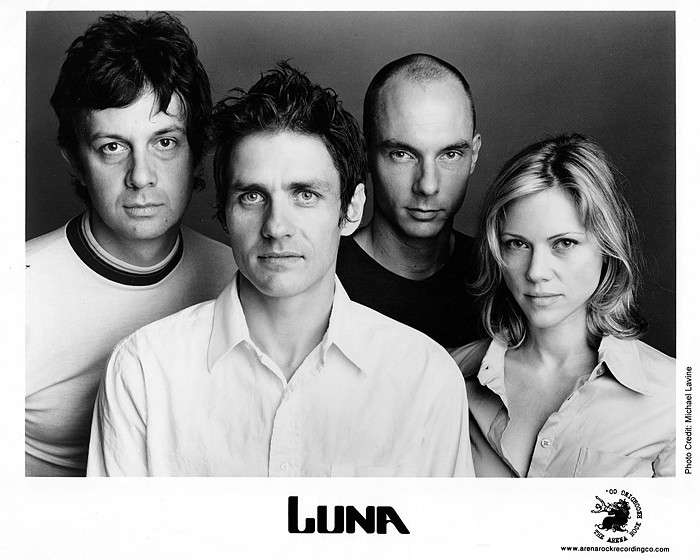
So, for the record: my favorite band is Luna, my favorite songwriter is Craig Finn, and the greatest is Dylan. My three favorite Finn songs are “It’s Never Been a Fair Fight,” “A Bathtub in the Kitchen,” and “Killer Parties.” This post takes a close look at “A Bathtub in the Kitchen,” with the aim of explicating both the song and Finn’s delivery.


II. Premise and Setup

“A Bathtub in the Kitchen” is track three on Craig Finn’s 2019 album I Need a New War, released by Partisan Records. For my money, it is not only the standout track on the record, but one of the three greatest songs of my all-time favorite songwriter. The song is ostensibly about an old friend of the narrator (I will refer to him as C.) called Francis, but it’s also about trying to make it in the big city, and about moving on from the past. Making it—or not making it—in the big city is a classic Finn theme.


III. Verse One — The Accident and the Past

The song opens with a report of an accident. The nature of the event is unspecified, but my best guess is an overdose.

The lightning clarity typical of Finn is all over these four lines. We learn that C. and Francis have a relationship shaded by deception, that they still move in overlapping circles, and that both originally came from somewhere else. The final line delivers one of those Finn-isms that cut both ways: city transplants trying to recreate a tiny town, while C. himself is still entangled in the very past he’s trying to escape.


IV. Verse Two — Money, Health, and Elegance

By the second part of the verse it seems Francis has recovered somewhat, and C. has met with him again.

Finn’s concision is astonishing. In eight lines we understand the dynamic completely: C. has money he could give, but knows it’s probably enabling; Francis is perhaps an addict, though neither man states it. We also glimpse Francis in better days—The Parkside, elegant companions, a life C. once aspired toward. And already C. is trying, gently, to pass responsibility to someone else.

This touches something universal: the friend who needs more than we can sustainably give. Or the times we’ve been that friend ourselves.


V. The Chorus — Youth, Longing, and New York

The chorus arrives, one of Finn’s most moving and beautiful. His voice rises on I was drinking, I was dancing, packed with emotion.

This is a flashback to young C. in New York—broke, naive, crashing on Francis’s couch. Finn underlines C.’s passivity three times: waiting, hoping, desperate for New York to ask me out. That phrasing is brilliant. It captures the essential vulnerability of arriving in New York with dreams, no plan, and a subway map.

The memory sends me to my own first visit to New York. Stepping out of the station at 42nd Street into the noise, I felt the shock of sensation—an energy I still feel every time I return. I’ve been to many great cities—Tokyo, London, Singapore, Amsterdam, Melbourne, Hong Kong, Kuala Lumpur—but there is nowhere like New York.

And in a city like that, it can be nearly impossible to get your footing. Everyone is already in motion. Finn evokes that perfectly.


VI. Verse Three — Present-Day Francis

Back to the present:

Francis has been in New York for twenty-three years, and C. nearly as long, since he knows the number by heart. The “bathtub in the kitchen” signals the classic New York starter apartment—a detail so iconic it becomes the song’s title. Francis still goes to the roof for better reception. Phones get disconnected. Life is fraying. C. registers all of this without overt judgment, but with distance. A sense of “there but for the grace of God go I.”


VII. Chorus Reprise — Guilt and Gratitude

The chorus returns with slight changes—“doing things I shouldn’t”—and doubled gratitude: Francis let me crash out on his couch. Repetition becomes confession.

My father read my “Fair Fight” draft and, not knowing anything about Craig Finn, immediately said he sensed a strong midwestern Catholic vibe. He was spot-on. Finn grew up Catholic in Minnesota; guilt, forgiveness, and redemption run through almost everything he writes.

There is also a phenomenal YouTube video of Finn performing this at the Murmrr Theatre, and during the post-chorus especially the performance takes on a spiritual intensity you can’t miss.


VIII. Post-Chorus — The Confession

The lines:

I can’t keep saying thank you, Francis…

These cut two ways. C. is saying:

  1. The couch surfing was long ago, and he has done what he can.
  2. And simultaneously: I’m not the person who can save you.

The confession is directed at Francis—but maybe just as much at himself.


IX. Verse Four — The Old Ropes and the New Distance

The final verse returns briefly to the past: Francis teaching C. how to navigate New York nightlife—befriend bartenders, tip big on the first round. These are the rules of the game. C. remembers them vividly.

Then we snap to the present: Francis’s job rumors, his terrible landlord, the $200 that will “help him breathe a bit easy.” And the repeated question: Francis, do you even have a plan? C. has given him money, but not much, and not with much faith. The trust between them has frayed into obligation.


X. Outro — The Spiritual Release

The outro repeats the confession. Again, it’s worth watching the Murmrr Theatre live version to feel how Finn leans into this. It becomes a kind of secular prayer, a release and a resignation all at once.


XI. Closing Thoughts

“A Bathtub in the Kitchen” is about youth and aging, about friendship and how it lasts and decays, about guilt and human selfishness in the face of real need. More than anything, it captures what it feels like to try to survive in New York.

I think this song, like “It’s Never Been a Fair Fight,” is more personal for Finn than some of his strictly narrative pieces. The narrator here has “made it.” Finn himself is an immigrant to New York, from Minnesota, and has sampled deeply from the nightlife he writes about. Few songwriters have chronicled nightlife with more range, consistency, or compassion.

Even if C. can’t keep saying thank you, I can. This song moves me in ways I’ve tried to describe here but still can’t fully encompass.

On the Stage Banter of Matthew Houck and Dean Wareham

Introduction:

This post takes up the subject of stage banter with the hopes of gaining a window into what makes a great artist great. Before we get to stage banter, however, I want to look at Howe Gelb’s spoken introduction to Giant Sand’s cover of “The Pilgrim (Chapter 33).” Stage banter and spoken introductions are, clearly, related animals.

Gelb is the lead singer of the band Giant Sand, and the cover in question first appeared on Nothing Left to Lose, a Kris Kristofferson tribute album. The song was later collected on Giant Sand’s album Cover Magazine. You may know the song–it goes:

he’s a poet/ he’s a picker/ he’s a prophet/ he’s a pusher/ he’s a pilgrim and a preacher and a problem when he’s stoned/ he’s a walking contradiction/ partly fact and partly fiction/ taking every wrong direction on his lonely way back home.

It’s a good song, and Gelb turns in a sound version. But it’s his spoken introduction that really peaks my interest. On Kristofferson’s original he name-checks a number of folks who “had something to do with” the genesis of the song. Gelb repeats the original name-checks, slightly out of order, before listing a set of artists that he, Gelb, learned the song for:

Well, I guess when Kris wrote this song he wrote it for Chris Gantry-he started out doing it though by-ended up writing it for Dennis Hopper, Johnny Cash, Norman Norbert, Funky Donny Fritts, Billy Swan, Paul Seibel, Bobby Neuwirth, Jerry Jeff Walker. Ramblin’ Jack Eliot had a lot to do with it. Me I ended up learning this song for Vic Chesnutt, Jason Lytle, Evan Dando, Polly Jean, Paula Jean, Patsy Jean, Juliana, Victoria, Bobby Neuwirth, Bobby Plant. Curtis John Tucker had a lot to do with it.

The alliterative Bobbys and the matching of Ramblin’ Jack Eliot and Curtis John Tucker make this speech into a mini-poem of sorts, and we know many of the protagonists. Hopper and Cash of course; Jerry Jeff Walker and Ramblin’ Jack Eliot are folk singers, older than Kristofferson; Bobby Neuwirth is a folk singer, multimedia artist, and Dylan confidant in Don’t Look Back. Funky Donny Fritts is a session keyboardist, and I believe Norman Norbert and Billy Swan were session musicians as well. Paul Seibel was also a folksinger-I don’t know him; maybe you do. Kris’ meaning is pretty clear-a song like The Pilgrim doesn’t come from nowhere, and the folksingers he learned from are portals back in time to an earlier tradition to which he generously pays tribute.

Not being myself a 70’s session musician completist I did have to look up a few of the names. The Gelb names are more familiar, expect one. Vic Chesnutt, Jason Lytle and Victoria (Williams) are folk singers (or were, as sadly Chesnutt has passed). Evan Dando, Juliana Hatfield, and P.J. Harvey are/were alt-rock superstars. Bobby Plant would be Robert Plant of Led Zeppelin fame, Bobby Neuwirth is Bobby Neuwirth.

But here’s the point, after listening to Kristofferson and Gelb name-check Funky Donny and Curtis John, I feel an affinity for them-were I to bump into Funky Donny in an airport bar or lounge his presence would resonate with an essential familiarity. Even if I didn’t know precisely that it was he, I would recognize immediately that he was indeed funky, not to mention a serious problem when he’s stoned. And Curtis John Tucker, well, his role is still opaque to me, but he clearly had a lot to do with it.

What both singers hint at in their evocation of the circumstances surrounding the creation of a song is the presence of community behind the music. Behind or beside every Kristofferson is a Norman Norbert, behind every an a Bobby Neuwirth, every Gelb a Curtis John Tucker.

The humanity and camaraderie inherent in the spoken introductions to The Pilgrim remind us that artistic communities are vital in the creation of lasting artistic production–Neuwirth may not have been essential to Dylan’s art in the mid-60’s, but he was instrumental to its vitality; Kristofferson wrote “The Pilgrim” but it wouldn’t have been as good without Paul Seibel. And as for Curtis John Tucker, well he had a lot to do with it.

On the Spoken Introduction of the Band Members of Phosphorescent by Matthew Houck on Live at the Music Hall

On side two of Phosphorescent’s majestic 2015 live album Live from the Music Hall, the band plays a song from their 2005 album Aw Come Aw Wry, called “Joe Tex, These Taming Blues.” Houck’s early Phosphorescent albums are interesting–they are more ambient and keening than his mature work and some of the songs are really long.  Joe Tex is one of the better early songs, and Houck puts a little something special into the first couple lines on the live version: 

Is it ever gonna not be so hard to see you around/ or am I really really really really gonna have to really gonna have to really have to leave town

Houck is a master at harnessing the power of repetition—here each “really” takes on its own character and valance.  The band gives an excellent performance, which goes for about 4 minutes. It is apparently the second last song of the night, because at the end of the song Houck moves to introduce the band. Here he goes, as the band chugs on behind him:

Brooklyn, that’s Scott Stapleton playing that piano right there…

The first “Brooklyn” is loaded with import–Houck is going to drop some wisdom on the folks tonight. Stapleton plays a few understatedly beautiful lilting keys and…

Brooklyn, that’s David Torch playing that percussion right there…

Torch gives a little maracas shake, right on time, as Houck establishes the rhythm and flow of the introductions. The basic elements include a “Brooklyn,” which shifts in valance a little each time, and the band member playing “that (instrument),” “right there.”

Brooklyn, this is Rustin Bragaw playing that bass guitar right there…

A slight shift in the pattern–probably Rustin is standing next to Houck. Bragaw drops a couple of notes on his funky bass and on we go–naturally, the bassist gets the lowest key introduction.

Brooklyn, Christopher Showtime Marine playing those drums right there…

Houck reaches for a higher register here, both on the slightly more breathless and rushed “Brooklyn” and an uptone delivery of Marine’s nickname. Another shift in the pattern–Marine has a moniker. Showtime delivers a healthy drum piece and…

Brooklyn, the trigger finger Ricky…Ray…Jackson playing that guitar and that pedal steel right there, come on…

We’re getting there. The crowd is excited for this one; the pedal steel player is clearly a star. Houck pauses a beat on each name, “Ricky…Ray…Jackson, come on,” and the come on is both an entreaty to the crowd and also a general “come on can you believe this guy!” from the lead singer. Pedal steel is no joke. Also, Ricky Ray’s nickname comes before the name–he is in fact the trigger finger here tonight, his birth name is just data.

The trigger finger plays a couple of high notes and…

Brooklyn, last but certainly not least, the best looking one in the group, Joe Help, playing those keyboards right there, come on.

No fuss around the two-syllable “Joe Help,” which Houck delivers as if it was one word. Joe Help and Joe Tex, good looking guys that’s all.

I can’t tell you what a pleasure this has been y’all. Thank you for being here. Hope you come back again.  We’re going to play one more song; thank you guys so much again.  This is a song called Los Angeles; this is how it goes.

And the band plays a stunning closer.

Read more

On the Between-Song Patter on the Bob Dylan Bootleg Record “Peco’s Blues”

Introduction

Behind any work of art, pretty much, there is some kind of “process.” The scope and complexity of this process differs across art forms, of course. The writer’s process is rather different than that of, let’s say, the magician David Copperfield. I find all artistic processes fascinating, and am drawn specifically to what happens “backstage.” Backstage is a world unto itself.

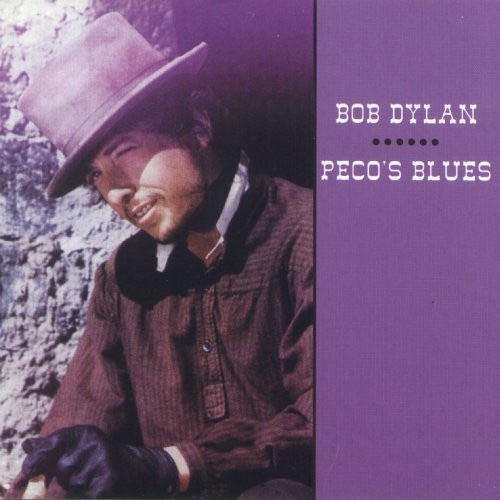
In the early 1970’s, the film director Sam Peckinpah was making a film called Pat Garrett and Billy the Kid, and he asked Bob Dylan to do the soundtrack. He also offered him a small role in the movie, a character called Alias. Dylan hadn’t really done a soundtrack before, nonetheless he headed down to Mexico to work on the film with Peckinpah. Pat Garrett and Billy the Kid the film is ok; it’s not my favorite Peckinpah by any means. (That is reserved for Bring Me the Head of Alfredo Garcia, with the one and only Warren Oates in the lead role. Oates around this time also starred in the film Cockfighter, which features the greatest rejected tagline of any film even “he came into town with his cock in his hands and what he did with it was illegal in 48 states.”) The Pat Garrett soundtrack in many ways transcends the film, mostly because this is where we are first introduced to “Knockin’ on Heaven’s Door,” which would go on to become one of Dylan’s best known songs, and is a really good soundtrack overall, however I am more interested in an extended set of outtakes from the sessions which are collected on a bootleg record called Peco’s Blues. Peco’s Blues features a number of alternate versions of the best known songs on the soundtrack, including Heaven’s Door and “Billy,” however the most interesting part of Peco’s Blues for me is the black and forth patter between Dylan, his sound engineer Chuck, and his band. This patter, I suggest, opens a fascinating and unique window into Dylan’s working methods and general approach to art. In what follows we will look at each incident of patter or conversation in the order they occur. All of the instances occur within the first 20 minutes of the nearly 70 minute recording as Dylan, his band, and the engineer endeavor to get on the same musical page.

Patter at the End of “Billy 2,” around the 7:34 Mark:

Dylan (D) wraps up a lengthy take of Billy 2 and asks his engineer Chuck (C):

D: Was that any good?

C: Pretty good Bob. What happened was was you hit the mic twice when you were moving around out there and we had a couple of clunks on it.

D: That’s too bad (…) Shit, I wish Sam was here. He’d know what to do.

C: That mic’s just a little more sensitive than the Sennheiser’s and I’m getting a little…

D: That’s too, uh…that’s…

C: And I’m getting a little puff of wind sometimes when you get real close to it when you sing.

D: That’s too sensitive.

C: Let me move it back a little for you Bob.

D: I think we must have got it though Chuck.

C: (with what sounds like a pencil in his mouth) Oh I recorded it, darn tootin’. I had a little puff from your voice once and you knocked the mic twice.

D: Well that might have been alls that we need.

C: You wanna, you wanna hear a playback on it?

D: Yeah, I would.

Comment:

We see right away here that Dylan is the boss and that the engineer is walking on eggshells a little bit. This is made clear by Dylan’s reference to “Sam,” who he obviously thinks is a better engineer than Chuck. We have more than a little sympathy for Chuck, as it wasn’t he that knocked the mic and he is trying his best to give Dylan the relevant information.

I love how Dylan here, while implicitly criticizing Chuck, also picks up on Chuck’s framing of the microphone situation and agrees that “that’s too sensitive.” However, the relative sensitivity of the mic is not Dylan’s main concern. Dylan, famously, likes to work fast. For some of his records that has been a positive, on these the sound and performances come across as organic and coordinated, like all of the players grasped their roles and just ran with them. On other records, Dylan’s preference for speed let’s him down, and songs, and especially the production, can feel rushed, even a little sloppy. Dylan famously warred with Uber-producer Daniel Lanois, who had produced U2 and Peter Gabriel among others before Dylan asked him to produce 1989’s Oh Mercy. Oh Mercy sounds great and was Dylan’s “comeback” album after a mixed, to say the least, mid 80’s period, however Lanois’ sonic fingerprints are all over it. Too much so for Dylan, who wanted a faster, looser approach. Lanois is no pushover, and held his own with Dylan. We get the sense that Chuck is no Lanois.

So, despite the knocks on the mic and the puff of wind, Dylan is going to be fine with using this version on the record. Chuck, of course, is going to want Dylan to play it again. Chuck, or someone, would win this one because the extended take of Billy 2 here is not the one used on the final album. The little tussle between Dylan and Chuck ends in a draw as they agree to listen to the playback.

Patter at the Beginning of “Turkey,” around the 8:40 Mark:

D: Hey Roger, when I stop, when I stop, you stop. I’ll do something else and you figure it out. So it might go like this (Dylan starts playing and the band fills in a little hesitantly behind him).

D: Say Chuck, Chuck?

C: Yeah

D: Let’s take this down and mark it under, uh, Turkey…We got a buzz in the amp.

C: I’m not picking it up.

D: OK come on now.

The band plays on the instrumental Turkey for about a minute before Dylan stops.

D: OK, this is under Turkey.

Dylan begins again, and this time the band fills in much better, the song sounding fuller and tighter in all ways.

Comment:

This is in my opinion the most illuminating of Dylan’s comments and gives us a window into his way of working throughout his career. As mentioned above, Dylan works fast and expects his musicians to do the same. Thus he instructs Roger that when he Dylan stops, Roger is to stop, Dylan will “do something else” and Roger needs to “figure it out.” Dylan’s instructions may not sound very fair to poor Roger, but I think they actually are. A musical team is in this case not unlike a sports team, say a basketball team, where even if an offense is running a designed play or “set,” players need to figure out what’s going on and adjust their own position and movements constantly and on the fly. There is no playbook, not set of absolute rules about how to accomplish this any more than there is a set of rules about how to follow Dylan musically. The musician, like the athlete, just has to work by feel, take in all the information around him or her, and figure it out. If they can, they will keep their job; if not, not.

Patter at the Beginning of “Billy Surrenders,” around the 18:10 Mark:

D: Let’s see now. You know, you know what we want when Billy starts (laughs) this guy Jerry Fielding’s gonna go nuts man when he hears this (laughs). You know what we want when like Pat Garrett comes down from the hills right, and all these guys come out like one by one. And Billy comes out, he’s almost standing in a circle you know, so like (indistinct) one by one and then there’s like a big pause and he stops and there’s silence. You know those big organ notes, those scary things (hums organ notes) (laughs). Can you get behind that? (Dylan and the band laughing.)

Comment:

The recording of the Pat Garrett soundtrack was pretty complicated, in large part because Jerry Fielding, Peckinpah’s usual composer, was relegated to a supporting role and apparently resented it. Accounts differ as to whether Fielding quit, walked off set (and maybe came back), actually did try to advise Dylan as requested, or some combination of the above, however the history of the film makes clear that there was friction. Dylan is clearly aware of the tension with Fielding, and makes a joke about it in a place where it doesn’t even seem relevant. Dylan seems to almost revel in the conflict, setting up Fielding to his band as a “suit” who is not in the field so to speak, and who Dylan enjoys winding up with his musical choices. Whatever the exact situation with Fielding was, the issue is clearly a live one at the time of recording.

My sense is that Dylan is mostly talking to his band here, as there are a number of people in the background laughing along with Dylan through this monologue. Despite his reputation for playing fast and loose most of the time, Dylan shows a pretty good grasp of particular scenes in the film and clearly knows what he wants. The “big organ notes” he mentions do indeed feature on the soundtrack, however maybe not to the extent Dylan wanted. I have to laugh at the very 1970’s question “can you get behind that?”

Conclusion

Overall, Peco’s Blues provides a fascinating window into Dylan’s working methods and expectations for his crew. Of course not every musician works this way; many will give much more precise instructions I am sure, and in the era of computer aided music Dylan’s approach on Pat Garrett is certainly a old-fashioned one. But I like it. It is absolutely worth listening to the entirety of Peco’s Blues to get a sense of Dylan’s working methods as well as how a band, here playing together live and recorded live, “figures itself out” and gets from sketch to finished product. I am myself not a musician but a writer, and the writing process, although never exactly easy, is perhaps a little less complex, mostly because most writers write by themselves, with an editor or editing team looking over the work at a later date. There is nothing in writing quite like “I’ll do something else and you figure it out,” and it is the shifting, quicksilver like nature of Dylan’s approach to music making here that continues to interest me and draw me in.

On the Song “Dylan Thomas” and Comments on Ryhme

This post is about the song “Dylan Thomas” from the first Better Oblivion Community Center record. For the uninitiated (which is probably everyone reading this–recently a friend texted me a funny article from The Onion entitled “Study: No Two People Have Listened To Same Band Since 2003”), Better Oblivion Community Center is Conor Oberst and Phoebe Bridgers. “Dylan Thomas” is the single, if singles still existed. You still won’t know them.

I want to write about the song because it has a killer structure and is awesome. The structure is based around a neat rhyme scheme with fabulous use of “near rhymes” and also around a see-saw in the verses between fairly pointed political commentary and apolitical hedonism. As with all interpretation, I can’t be sure that what I hear was intended, but what the hell–communication is what the listener does after all.

Now, a lot of songs, most, rhyme. That’s obvious. But not too many songs really hold up on the page as well, as poetry. I think “Dylan Thomas” does and I’d like to explore why.

Verse I:

It was quite early one morning/ hit me without warning/ I went to hear the general speak/ I was standing for the anthem/ banners all around him/ confetti made it hard to see

So the first verse clearly alludes to our political moment–it appears politically engaged to some extent. The reference to “the general” is redolent of South American politics (I am reminded of the fabulous Drugstore song “El President”). The rhyme scheme is tricky–it’s AABCC(D), where (d) “see” almost rhymes with “speak” in the delivery although the words don’t actually rhyme, instead being only vaguely alliterative.

Verse II:

Put my footsteps on the pavement/ starved for entertainment/ four seasons of revolving doors/ so sick of being honest/ I’ll die like Dylan Thomas/ a seizure on the bathroom floor

Verse II sees a clear shift from the political to the personal, the hedonistic, the depraved. While Thomas is famous for his “rage against the dying of the light,” Better Oblivion taps the seedier side of Thomas’ legacy–the singers (most of the songs on the album including “Dylan Thomas” are duets) in verse II are seeking pleasure and there is no hint of the macro picture here. So, verse I=macro, verse II=micro.

The rhyme scheme shifts to AABCCB, with a definite rhyme between “doors” and “floor.” “Entertainment” and “pavement” I would consider near-rhymes, and the slightly off-kilter near-rhymes are for me what really make this song stand out as a piece of writing.

Chorus:

I’m getting greedy with this private hell/ I’ll go it alone, but that’s just as well

Hard to say exactly what “this private hell” refers to, however we get a sense of doubling down on the dissolute–in for a penny in for a pound as they say.

Verse III:

These cats are scared and feral/ the flag pins on their lapels/ the truth is anybody’s guess/ these talking heads are saying/ “The king is only playing/ a game of four dimensional chess”

Verse III is clearly political again, setting up a 1 for 1 see-saw (so far). “Cats” here cuts both ways–on the one hand “people” with flag pins in the era of truthiness, on the other, well real cats are feral. It’s a very clever, subtle move. Is the general from verse I the king from verse III? Probably. We live in an era where world leaders are not in the business of leading, but rather of playing elaborate, endless games.

The rhyme scheme here is a AABCCB where the second C and the second B are part of a single quote. Very nicely done.

Verse IV:

There’s flowers in the rubble/ the weeds are gonna tumble/ I’m lucid but I still can’t think/ I’m strapped into a corset/ climbed into your corvette/ I’m thirsty for another drink

This is where the song really comes into its own as a mini-masterpiece. On its own, this verse is nakedly apolitical and local–I am reminded of one of my favorite lines of all time from the final Replacements album. The song is “Someone Take the Wheel” and the line goes: “they’re fighting again in some fuckin’ land/ ah throw in another tape man.”

In 1990, Paul Westerberg didn’t give a shit about the Iraq War and wanted nothing more than to listen to music on the road. That’s an understandable point of view on the level of the human individual. What I love about what Oberst and Bridgers do with this song is how they alternate verses between the macro and the micro, the engaged and the depraved. The same conceit is used on the first song of the record, “Didn’t Know What I Was In For”:

I didn’t know what I was in for/ when they took my belt and strings/ they told me I’d gone crazy/ my arms are strapped in a straight jacket/ so I couldn’t save those TV refugees

I get this sentiment. Seriously I do. If we zoom out a bit on our world situation these days, we could easily say that every person with even a patina of ethical conscience ought to be on the front lines in one way or another. And then I look at myself and…well, I chose Medicine Sans Frontiers as the charity that gets some small percentage of my Amazon purchases. Will the future see me as a head in the sand hedonist? Probably, and with some justification.

The rhyme scheme in verse IV is again a clear AABCCB with near-rhymes (probably the first time in history “corset” has been rhymed with “corvette”), in fact the same scheme as limericks. I f***ing love AABCCB. God bless it. Also, the line “I’m lucid but I still can’t think” pretty much summarizes my entire life to date.

Verse V:

If advertised, we’ll try it/ and buy some peace and quiet/ and shut up at the silent retreat/ they say you’ve gotta fake it/ at least until you make it/ that ghost is just a kid in a sheet

AABCCB again, the scheme which carries the song with the striking exception on verse I. Verse V alludes to the theme of the record–Better Oblivion Community Center is some kind of partially defined wellness retreat–and kind of splits the difference between the political and the personal, the macro and the micro. It also serves as a commentary on the commercialization of “wellness” and is a cheeky meta-comment on the cover of Bridgers 2017 debut:

Is this a shot at some critics? A self-aware reference to a DIY cover? I don’t know, and I love the line.

Following the logic of this piece, we have a kind of scheme of the verses as well. Let’s call is ABABC where A=political, B=apolitical, and C splits the difference.

Verse VI/ Outro:

I’m getting used to these dizzy spells/ I’m taking a shower at the Bates Motel/ I’m getting greedy with this private hell/ I’ll go it alone, but that’s just as well

It’s a simple AABB with the outro calling back the chorus from mid-song. The see-saw between the personal the political sort of resolves itself in the killer couplet. “I’m getting used to these dizzy spells” suggests acclimatization to the altitude–metabolization of the fear. “I’m taking a shower at the Bates Motel” is an amazingly effective counterpoint line–we are living at the knife point of maniacs. Ah well, let’s hit the bar. I’m thirsty for another drink.

Seriously, check out “Dylan Thomas” and the whole record. I know no one listens to anything I listen to, but still.

Postscript: So Mr. Spotify seems to have decided that “Dylan Thomas” is my very favorite song, and cues it up time after time after I’ve finished listening to whatever I have selected. I do love this song, by Mr. Spotify there is almost making me tired of it. Change it up there Mr. Spotify please.

Scenes from St. George’s VII: Senior Year II and Coda (with cameos by Bill Gates, Soft-Water, and Twin Peaks)

I used to be free/ I used to be seventeen

Sharon Van Etten

Never said a word, I never had to/ it was my attitude/ that you thought was rude

The Replacements

Long may you run

Neil Young

Note: This is the last in our series about Saint George’s, the school I attended from Grade 1 through Grade 12. You can find the other parts here: Part I, Part II, Part III, Part IV, Part V, Part VI. Thank you to everyone who read this series.

Senior Year II, and After:

It’s time to wrap up the Scenes from St. George’s series, as I’ve said most of what I want to say about that time and place. Before I finish, I want to write a bit about the very end of senior year and the summer after graduation as well as the first winter vacation back from college, and add a short coda.

After a number of us seniors got busted for drinking on our senior trip, things were pretty much winding down. Because we were a smallish class, everyone pretty much got along and there weren’t many cliques, however it is true that the two or three-season athletes, myself included, lived in a slightly different world than those students who mostly didn’t play sports. After baseball season of senior year whatever remaining barriers between classmates crumbled, and sometime around here I finally got a driver’s license. As a result, I spent a bit of time out at Dyche Alsaker’s house. Dyche and I were not all that close, but I liked him for a couple of reasons. One was, although his family certainly had more money than mine, and a bigger house, he never acted like some kind of alpha, which was cool. He just seemed happy to have people over (his parents never seemed to be home) and to go with the flow. I was as well. Dyche’s house was in “the valley” (do all towns have a valley?), which was really just the open space between Eastern Washington and Western Idaho. Most of the real rich folks at St. George’s lived on the South Hill, so maybe there was something about the Valley that was a little more “beta” than the South Hill. At that point in time, as now, I was more than happy to hang with some beta-males, or at least in a circumstance where such ridiculous distinctions no longer obtained.

Dyche loved the band the Replacements and their lead singer Paul Westerberg, and I caught onto his passion for this band. Actually, I may have discovered them on my own first, as their single “Merry Go Round” played a lot on VH1 and at that time I was a regular viewer of their music video program. “Merry Go Round” is the lead off track on the band’s final record All Shook Down, which was released in 1990 and is still by far my favorite “Mats” album. I bought the record and played it over and over in my room as “rock music” was kind of verboten in the main part of the house for reasons passing understanding. I remember one specific day where we drove out to a lake, probably in Idaho, and Dyche boated us around while drinking and listening to Westerberg’s first solo record 14 Songs. 14 Songs is pretty good and has a catchy single “Knocking’ on Mine,” but it’s no All Shook Down. As for drunk boating, while not advisable, it is somewhat preferable to drunk driving because there is simply more space, and Westerberg made the perfect companion for such an outing.

Although I was already into a lot of music at the time, including Dylan, R.E.M., Fine Young Cannibals, and Dire Straits (this list holds up pretty well actually), I was impressed with Dyche’s deeper level of fandom and aspired to know more about my favorite bands. By the time I got to university I had a better idea of what it meant to be a music fan, and this was in no small part because of Dyche. Out at Dyche’s house, there was a predictable amount of drinking and hooking up; the first interested me a little, the second more, although I was still having a bit of a tough time getting anything going in that area. Drinking was easier. One night I drank most of a bottle of whiskey in the hot tub there, and people came to think I had a high tolerance, which wasn’t really true. I also remember commandeering a bed at his house one night when a classmate came in with a girl I did not know. Can we have the bed, they asked–we are stuck on the trampoline. This was not my problem I felt, however they persisted and I gave way. I suppose they needed it more than I did.

As I mentioned, there didn’t seem to be much parental presence at Dyche’s house, which was a positive, but things never got too crazy. People came over, enjoyed the trampoline and the hot tub, and stayed the night instead of driving impaired. It was, all in all, a reasonably healthy developmental zone. This action lasted for a few weeks after graduation, and then kicked off again during the first winter after we went off to college. During that break there was a party at another classmate’s house–similar vibe, no parents, booze, and hooking up. I attended, and the next morning found myself with a girlfriend of sorts. This was a positive. What I recall about that night was, I watched the film The Graduate, walked away with a girlfriend, and smoked a cigar. Decent action, good action, bad action. Two out of three ain’t bad, baby.

Like all scenes of this sort, it didn’t last, nor did my girlfriend. I didn’t really know how to have a girlfriend, so to speak, and although we wrote letters from our respective colleges that spring the relationship had faded by summer. Nonetheless, the whole period, bisected by a few semesters of college, stands out as a crucial, if brief, interlude between high school and “real life.”

Coda:

Disclaimer: This section is pieced together from things I know and things I think probably happened. This is not meant to serve as a strict historical record of events that, for whatever reason, my parents have barely shared with me–and even if they had, this would only be one side of the story. Thus, in historical terms, this is kind of a reconstruction, so take it for what it’s worth.

St. George’s at this point should have been in the rear view mirror, and it mostly was. I came back as an alum, hung around a little, and moved on to the next thing, which turned out to be Japan. However, it was not entirely behind me because my parents still worked there, and my father, after I left, got sucked deeper and deeper into school politics. I wish to tread lightly here because there is so much about this murky period that I still don’t totally understand, however the basic facts as I know them are as follows:

i) After George Swope, who had a cameo in Part VI of this series, St. George’s had a new principal called Jonathan Slater. My father had wanted the job, and didn’t get it.

ii) At first, my father and Slater were fast friends, but I think this was a mutually cynical political relationship in a sense. My father was the head teacher and a power in the school, and Slater would have come in knowing this. They bonded under the auspices that Slater would give way at some point to my father, but this was never going to happen. I knew this, even if my parents did not. At first Slater would invite my family to Thanksgiving and such, and my father praised him to the skies. That changed however, and the two men became bitter enemies. This enmity led eventually to my father leaving the school.

Now St. George’s was an interesting place, and it was pretty much run by the rich folks that sent their kids there. There was some kind of board that pushed the principals around, and this was mostly made up of folks from the South Hill, who tended to be a little on the stuck up side–not terribly in most instances, but somewhat for sure. Also, by the time in question here Dyche’s father was on it, as I understand. I guess Dyche’s dad was the token Vallyer on the basically South Hill board, but then the school got a big donation from the Gates Foundation and I think Bill Gates’ sister came onto the board, or at least into the zone. In essence this was Western Washington doing a little light colonization of Eastern Washington, the red-headed stepchild of that state. Eastern and Western Washington are divided by the Cascades mountains, where Twin Peaks is set. Twin Peaks is in this piece.

Now I don’t know much about Bill Gates, but I suspect he’s not a great guy. In fact, I think he’s pedophile-adjacent. But I know that Bill Gates is not a force for good in the world for a different reason, which has to do with my struggles with my Skype password a few years back. Back before Zoom came along and ate Skype’s lunch six ways to Sunday, I used the service and had a password for it which worked fine. Then Microsoft took it over or something and all the sudden I had to provide a Microsoft password to “get through” to Skype for some reason. This was terrible, because I try to avoid Microsoft at all costs and I didn’t even know if I had a Microsoft password. Certainly I didn’t want one.

But for weeks I could not get anywhere near Skype because of this password issue, and it was driving me nuts. I needed Skype for work and it just wasn’t coming through. In marketing terms, this is a “process” issue. Process is one of the 7 Ps of the marketing mix in business, and basically it refers to how easy, or hard, it is for the customer to access your good or service. Amazon’s one-click check-out is an example of good process. Microsoft’s multi-step, super frustrating, password labyrinth is the opposite. I got so fed up with this whole situation, and by extension Gates, that I even ranted about it and him on the short lived, but awesome, Periscope platform–which Twitter later bought and then killed.

So like I say, Microsoft sucks, Periscope rocks, Skype sucks and deserves its fate, and Bill Gates, in my opinion, also sucks. I don’t know anything about his sister, but her arrival was, I think, the catalyst for my father’s removal.

(By the way, the Skype password issue reminds me of the soft-water issue. When I was a teenager I would frequently see soft-water trucks driving around, and I wondered what in the world soft-water was. I am basically a huge fan of the prefix “soft” and wrote about it here. The only soft-prefixed phrase I don’t like is soft-water. That’s because, trucks and aggressive marketing aside, soft-water is terrible. It’s marketed as some kind of improvement over “hard-water,” which I guess is supposed to be full of minerals or something. However, soft-water is completely terrible. The absence of minerals means that it is totally ineffective at getting soap off your skin, so after a soft-water shower you walk around all day with a patina of soap residue stuck to you. Soft-water is awful and a total scam, just like orthodontists. There is no real connection between Microsoft passwords and soft-water, except both totally suck. I bet you Bill Gates is a big soft-water guy–he does look a little soapy.)

In any case, my father was friendly with the rich folks on the South Hill, and as a result we spent a lot of time at their various big houses. I was less enamored with the South Hill crowd as a whole, as I have made clear, although I did have friends who lived there, however my father was political so he kind of had to suck up a bit. But I don’t think he really loved this sort of hobnobbing–he never seemed really at home in these settings. My overall sense is that at St. George’s my father was mostly on the right side of history, but his shortcomings as a politician were his Achilles Heel.

So, the relationship with Slater was going south for a while, and then the principal’s little predilections started to become basically public knowledge. I don’t know if Slater is still alive–if he is he’d be pretty old, but I think it is a matter of record that if George Edwards liked him some beach babes, Jonathan Slater there was more interested in babes in the cradle, so to speak. Again, just something I’ve heard, but I’ve been hearing it more and more these days. The rumor was that Slater would spend time in, I guess they were, basically sex clubs in downtown Spokane, and his tastes ran as young as possible, staying, perhaps, just this side of legal. Spokane is not that big of a city, and with something of that nature, well word does get around.

So let’s use a little Occam’s Razor on this situation. Just looking at it, here’s what I guess happened. This dude Jonathan Slater was principal for a while and was good at raising money. He was also, like Bill Gates, pedophile-adjacent and Spokane is a small town. While his money raising skills gave him space to engage in some borderline bad action there in downtown Spokane and to cover for a few bad actor friends of his on campus for a while, over time tongues talked and whispers became louder and Slater had to go. My father (who is named Ross) ran point on this effort from within in terms of rallying the teachers to oppose Slater, and at the same time Ross was perhaps positioning himself to get nominated as principal, but I’m not really sure. However, the board didn’t want Ross to be principal because they recognized that he would be a “teacher’s principal” (like a player’s coach in a sense). Board opposition to Ross probably had a few aspects, some more flattering to the board, some less.

One aspect was probably that the board as a whole (I don’t mean any one board member individually, but as a collective over time) had covered for Slater a bit even when his little peccadillos were, or should have been, becoming apparent, and when they came to the conclusion finally that he had to go they wanted to do it quietly. Ross’ involvement was making that difficult. This aspect of the situation is not in the board’s favor. A second aspect is perhaps that the board realized that not only did Slater have to go but the school as a whole, the teaching staff and the administration, needed more accountability and standards, and having a teacher’s principal in place would, in their view, not advance this goal. This is more in the board’s favor.

I am not suggesting that Ross was anti-standards, quite the opposite in many respects, however it is true, in my view, that he was very much driven by personal relationships and by who was on his team. In this sense he approached school administration like he did coaching. And while there are positive aspects to this approach to administration, there are also drawbacks, which the board must have been aware of. Another factor here is that for someone who had serious political aspirations within education for several decades, Ross was in many ways still a limited politician. Although he associated with the wealthy class that ran the school, attended their parties, ate their food, and, at times, flattered them, he was, as I mentioned, at heart not comfortable in these spaces and indexed this in multiple ways. His other weakness, in my opinion, was a tendency to vilification, which as I say started with Slater a while before all the action came to a head. In this case though, I think the vilification was justified. All in all, in the immortal words of The Mendoza Line, mistakes were made.

Somehow the Gates sister got deep in the mix, and the board summarily fired Ross’ best-friend and right hand man. Ostensibly this was, I believe, for not updating his teaching credential, and/or for being habitually late for work (which he was), but in actuality this was a shot at Ross, whom they felt they could not fire. Ross did not take the firing well, and started to raise holy hell, using the Slater business as leverage. There was some kind of teacher revolt that was shut down, and then Ross was pushed out–fired, or left, I’m still not quite sure. Then, Ross sued the school (again, I heard this but my parents never really told me about any of it, but I believe they did eventually get some money), and the Slater business may have made the papers. The Spokane papers don’t have great archives (unlike the South Florida Sun-Sentinel), so I don’t know this for sure, but the basic narrative is along these lines, I believe.

With Slater and Ross both gone, the school moved on and probably the Gates sister installed her own puppet, and that was that for my family’s association with the school. Ross’ relationship with the South Hillers was pretty much shattered, and for some reason he took special issue with the role of Dyche’s dad (who he never had had a relationship with). I didn’t really know Dyche’s dad much, and when I did meet him he seemed pretty chill, so I’m guessing there might have been a bit of projection there. In any case, all those doors closed.

Years later however, one of the rich families who Ross used to be close with must have thought that having Ross back in the fold would be a good idea, and they decided to use me in a roundabout way to try and re-open the door. I was already pretty well along in my IB career here in Asia, and St. George’s was in the process of, or had become, an IB school as well. I got a message asking me if I wanted to come and consult with the school, and although I could totally handle a little consulting, this was a bit odd because I was based in Asia and surely they could get someone more local to give advice. I got the feeling that what was really going on though was the consulting gig was being dangled as a way get to Ross, but maybe it was in good faith, in which case cool. I told my parents about the offer and my mother was horrified that I would even consider it. That’s how bad matters were left with the school. But consider it I did, because if someone wants to fly me somewhere and pay me for my time, I’m probably gonna take it.

The offer fell through though, I’m guessing because the powers-that-were figured out that whatever they were angling for Ross to do wasn’t going to happen and they never really wanted me to consult anyway. I felt a little used, but not really–it was just politics.

Ross moved on to become principal of a Catholic school in Oregon, and was able to implement his team-based approach there and I think he did a great job. He is, I believe, a retired principal in good standing there, and he was widely liked, except by those that he let go. My father is a good man, and a moral one, but he was also a little tough and if he didn’t like the way things were going with a staff member he’d cut the cord. I understand this, and sometimes you gotta do it, but myself take a little longer term view of trying to get people to pull their weight. People are different.

The epigraph for this piece is from the Replacements, of course, from the song “Attitude” off All Shook Down. My two favorite songs on the record are “Someone Take the Wheel” (“I see we’re fighting again/ in some fucking land/ aw throw in another tape man,”) and “Attitude.” All in all I think I’m an alright fellow much of the time, but some people have said I have a little attitude myself. Well, if so I probably picked it up from the Mats.

And Mr. St. George’s, if your IB program is dragging a little or if you are looking for a little consultation in pretty much any area, hit me up. I’ll be there and it won’t even cost you that much. After all, I’ve always been a cheap date.

Dedication: For Dyche. Getting to know you was way more interesting than any subsequent politics. Thanks for the Mats. And for my father. Long may you run.

Scenes from St. George’s Part III: Mr. Dreyer, French Teacher Extraordinaire (with a cameo from Richard Marx)

When I was in middle school I took French from one Monsieur Dreyer. I had already been studying (the verb is used loosely) French for a couple of years, and had some of the basics. In Mr. Dreyer’s class I learned a little more, and could actually kind of hack it in French there for a bit. But any actual language learning that took place in Mr. Dreyer’s class was seriously secondary to the excellent action that took place around his class.

I wasn’t first introduced to Mr. Dreyer in middle school, however. In fact, I first met him when I was in elementary school around the time he began teaching at the school where my father taught, and I attended, in the early 1980s. I remember going to the apartment he shared with his wife, who is Japanese, when they had an exchange student called Atsushi from Japan staying with them. Atsushi was my age, and he showed us how to make onigiri (rice balls). Making rice balls is not all that tough, just rice, water, and salt. Still, I thought onigiri were pretty exotic and Atsushi pretty cool. Some time later Mr. Dreyer and his wife must have come up a bit short of ready cash, because they lived in a tent in my family’s front yard for a while. This seems a little strange looking back, but it wasn’t then. I have no idea what the bathroom or shower situation looked like, but something must have happened.

(My brother Mike also lived out in a tent in the front yard during the summer for a number of years. Maybe it was the same tent. Mike would run an extension cord out to the tent and play his boombox. This was a few years after the Dreyer clan was tenting it, and Mike was deep into the singer Richard Marx. I thought Richard Marx was alright, but he didn’t seem to have a lot of songs. This mattered not at all to Mike who played the same Richard Marx tunes over and over again.

Today Richard Marx is, strangely enough, bigger than ever. But not as a musician. He runs a popular Twitter account where he is a big liberal and also pretty funny. Marx is like Rex Chapman but less problematic. Rex Chapman is super-problematic. I’m not sure exactly how, I just know he is.)

Mr. Dreyer also played a little chess with my father, although my impression is that both of them were pretty bad. Certainly they were not pulling out a lot of “hard-to-find” moves. At that time, I knew Mr. Dreyer was a French teacher, but didn’t know if he was in fact French. Today I believe it to be the case that he is not French, is in fact from California, and just somehow became proficient in the language. Good for him.

Even before I took his class, I was aware that Mr. Dreyer was, let’s say, a different sort of fellow. He liked to tell a story about his brother who lived on a massive contour map of the San Francisco Bay area. The map was located in an enclosed structure that hung under a bridge in Oakland or something. And his brother just chilled there full time, so the story went. So Mr. Dreyer, apparently, was the normal one in his family.

(I remember Mr. Dreyer talking to me about John Lennon one day as well. This was maybe when I was taking his class, but I think it might have been before that. “John Lennon’s assassination was really sad,” he said, “he was just starting to put his life back together.” I had heard of John Lennon but at that time knew nothing of the circumstances of his death. And I certainly didn’t know about his ups and downs in the 1970s. Mr. Dreyer must have been a Lennon fan though, and wanted to tell me about it.)

In any case, when I got to middle school I was assigned Mr. Dreyer, as mentioned. Mr. Dreyer wore a mustache that looked pretty Frenchy to me—maybe that’s why I kind of thought he was a French native. There were also a number of the Tintin books in French on a shelf in the back of the room. I had read most of the Tintin books in English by then, so it was fun to browse the French versions and take in some of the action from a new lens.

In Mr. Dreyer’s class everyone got a “French name,” and I was called “Philippe.” I don’t really care for all these fake names in language class, although I recognize that some people do adopt them as a kind of alter ego. I mean, if a Japanese gal called “Sari” wants to go by “Sally” in English class that’s great. Makes sense. But my actual name sounds nothing like Philippe, so it just seemed kind of random. In any case, little Phillippe was not a bad French student, but he was a restless one. Mr. Dreyer’s classroom opened from the back door onto a kind of grassy area, and for reasons passing understating Philippe would leave class in the middle of the lesson and then try to crawl back in through the back door and up through the room, hoping to escape Mr. Dreyer’s attention. Mr. Dreyer did notice, of course, but he was pretty cool about it.

“What you doing there Philippe? Sneaking back into the room again? Welcome to French class si vous plait.” Something like that. I wasn’t trying to aggravate Mr. Dreyer or anything because I really liked him as a teacher, I was just doing what 12 year old boys do. However, Mr. Dreyer did not view every student as leniently as myself. One of my classmates was a guy we’ll call “E.P.” E.P. was a trouble-maker, and was known to pull the fire alarm in the middle school there on a regular basis. His parents were called, repeatedly, but he didn’t care. He loved pulling that fire alarm. E.P. would also prank call mothers of other students for whom he somehow had phone numbers from the school phone and talk dirty to them in a fake voice. So, yeah.

One week, E.P. and some other students had started throwing wadded up pieces of paper toward a metal garbage can located at the front right corner of Mr. Dreyer’s classroom. Mr. Dreyer let this roll for a few days, however one day before lunch he decided to crack down. “Mr. E.P.,” he said, “I’ll make you a deal.” “You can have one more throw of a paper at that trash can. If you make it, you can go to lunch. If you miss, you have lunch detention.”

Now this struck me as a pretty fair deal, because E.P. didn’t have to accept the challenge. He could have just passed and gone about his day. That, of course, is not what happened. Instead, E.P. wadded up yet another piece of paper and lobbed it at the trash can. He missed. This was the last straw for Mr. Dreyer who, instead of keeping him in detention as promised, took matters a step further. He grabbed the trash can (which was about three and a half feet high) and carried it over to where E.P. was sitting.

“You like garbage!” he shouted. “I’ll show you garbage.” And sure enough Mr. Dreyer, onigiri expert, former tent dweller, and French teacher extraordinaire, emptied the whole thing right on top of E.P.’s dome. Now you might think this was some bad action, and from today’s perspective sure, it probably was. But for us middle schoolers it was hysterical.

“Did you hear what Mr. Dreyer did?” we whispered for the rest of the week. “He dumped a full garbage can on E.P.’s head.” This was the biggest thing to happen all month, and we milked it, obviously. Again, if this happened today, Mr. Dreyer might have faced some kind of sanction, but the 1980’s were not like that. E.P. had been dumped on, and life moved on.

Mr. Dreyer eventually left that school and moved to Kyoto where he taught for a while at Kyoto International School before ultimately moving back to California where his brother lived on a map. Years later I reconnected with Mr. Dreyer on Facebook, where he regularly posts groaningly bad, yet still somehow funny, visual puns. “Cyrano wins by a nose” with a drawing of Cyrano crossing the finish line in a foot race, that sort of thing. Anyway, I wanted to get his perspective on the whole the garbage can situation so I sent him a message. What did he recall of the incident?

He didn’t remember it at first, but then he said “oh yes, that was with a student called “J.”

“No,” I replied, “it was with E.P.”

“No, no, no,” he replied, it was “J. JFK.”

Now I knew that Mr. Dreyer is prone to making some strange jokes, and at first I thought he was making some kind of oblique assassination reference. Was he suggesting that there must have been a second shooter?

“This was not JFK related,” I said. “It was some E.P. action. I‘m sure of it.”

Mr. Dreyer was not sold though, and it occurred to me that there may have been more than one dumping. This may, in fact, have been Dreyer’s go-to-move. After all, his treatment of E.P. was, in truth, pretty unfair—the deal was advertised as sink the shot or detention. Dumping was never mentioned. Was Dreyer moving about the globe and dumping full garbage cans on students left and right? It was a possibility. Maybe I was smart to stay low to the ground after all.

These days, Mr. Dreyer is living in California where he enjoys the warm climate. And he reads this blog. Hey there Mr. Dreyer baby, you’re a cool guy but that garbage can move could maybe use a little reflection. E.P. was a troublemaker, sure, but dumping just wasn’t part of the deal.

to be continued…

The Thin Man in Rome, Part III: Reading Maya’s Chart

Dateline The Jazz Club: November 5th, 20:29

The saxophonist and theremin player jam for about fifteen minutes before taking a break. Nothing is announced, and the thin man can’t tell what’s going on. Was that the opening act? Are either of these players part of the trio? Where is the trio? Which if any of these people is Peter Andreessen? Information is thin. A guy in a black and white striped shirt brings out an electric organ and begins setting it up while the theremin player hits the bar. For a moment the thin man forgets about his assignment and just allows himself to enjoy the scene.

Maya is sitting with Philip, McKnight, and the other young man from before. This group as currently constructed does not look particularly permeable, so the thin man bides his time. After a while, the organ player starts playing a riff, high on the keyboard, lots of black keys. The saxophone player comes back out and act two of the show is underway. This duo is actually really good, and the thin man envies the organ player’s facility. The dude can play.

A few stools down from the thin man and Ali sits a woman with dark blonde hair, fully made up, wearing a fur shawl and spiky leather boots. She looks to be in her mid-40s, give or take a few years. She addresses herself to the thin man.

“Sit here,” she says, gesturing to the stool next to her.

The thin man considers this request. On the one hand, she doesn’t seem like his usual type, for another thing, he’s working. That said, the thin man is a gentleman of a kind, and doesn’t like to say no to ladies. He moves over to next to her.

“You’re not from here,” she says. Not a question.

“No. I just got in from Singapore.” This much is true.

“You’re cute,” she says. “Buy me a drink.”

“What would you like?”

“Manhattan. He knows how I like it,” she says, gesturing to the bartender. This woman, the thin man takes it, is a regular. “I’m Vivian,” she says.

“Jack Bishop,” says the thin man.

“Hi Jack Bishop,” she says and lays her right hand on his arm. “I’m glad I met you tonight.”

The thin man’s usual type she may not be, however she is a well-put together woman for sure and her initial moves seem pretty promising. The thin man takes her hand below the bar and they exchange smiles. The thin man sneaks a glance at Ali, but the driver’s face is impassive. Ali has seen it all—therefore sees nothing.

The organ and saxophone set turns out to be a longer than the first, and after about 20 minutes the thin man sees Maya heading back to the lobby, alone. Vivian is going to have to wait; he’ll be back later, if possible. He slides along the left side of the room back to the lobby where he finds Maya, smoking a menthol.

“May I join you,” he asks, taking out his American Spirits.

“Sure, want a light?”

“That would be fantastic.”

Maya lights the thin man’s cigarette as he looks around. The theremin player has established herself behind the merch table and there are about 20 different items for sale, CDs, vinyl, some kind of flash drive thing with music on it, etc. Peter Andreessen is one prolific individual, thinks the thin man, if there even is a Peter Andreessen. The thin man remembers that Philip had said that Maya liked action, and the plurality of merch choices gives him an idea.

“Want to play a game?” he asks Maya.

“What kind of game?”

The thin man takes her arm and steers her over to the merch table. “Pick a number between one and twenty.” The thin man knows that very few people, beautiful temptresses not excluded, can resist picking a number.

Maya flushes slightly. “14,” she says. “I like 14.”

“14 is my lucky number,” says the thin man. “Let’s count.” And he starts counting off the items from the top left one by one until he gets to 14.

“I’ll take this one,” he tells the theremin player. She looks at the CD and smiles. “That’s one of my favorites,” she says.

“I’m sure it’s awesome,” says the thin man. He pays for the record with some of Grey’s Euros and turns back to Maya.

“May I buy you a white lady madam?”

She laughs lightly.

“Are you trying to pick me up? Because you should know I’m taken.”

The thin man has already decided to take a direct approach.

“I’m not trying to pick you up,” he says. “I’m just hitting on you.”

Maya blushes outright. “Are you always so straightforward?”

“Just a straight arrow, that’s me.”

“Somehow I doubt that,” says Maya. But she stays put.

The thin man decides it’s time to tack back to safer ground.

“Have you known Alan long?” he asks, even though he has already gleaned this information from Philip.

“Sure, I’m his bae,” says Maya.

“What’s a bae?”

“It means before anyone else, silly.” Three weeks and already a bae? thinks the Thin Man.

“Oh, so you’ve been together a while then?”

“Actually no, I’m not really his bae. I’m just the slut on the side.”

Now this is information the thin man can get behind. Time to push his chips in.

“Do you have a cellphone?” he asks. Yes, she does.

“Let me borrow it for a second.” Maya looks at the thin man quizzically.

“What for?” she asks.

“I’ll do your chart. Do you know your birth time?”

“I think so. It’s like 1:34 in the morning.” Maya has her phone out and the thin man slides it into his own hands.

“May I open a browser?”

“I guess so,” says Maya. “I mean if you are going to do my chart and all.”

“What’s your birthday?”

“February 3rd, 1989.”

“Ah, an Aquarius. Figures.”

“What do you mean ‘figures’?” she asks, “what figures?”

“Well I just mean that you’re an air sign, which makes sense to me. I’m an air sign too. You think fast and move fast. I like that about you already.”

“Oh you do do you. Well we’ll see about that.” She pauses, and then, because having your chart read is just basically addictive, she asks, “What else do you see?”

The thin man points to the glyph representing Mars. “Mars is in your 6th house—that’s a strong placement for a career woman. I’d say you are a powerful force in your own sphere, am I right?”

Maya smiles coyly. “Maybe. Maybe I am. Is there anything else about my career?”

“Well Mars is square Venus in the 2nd house. That’s interesting. That could mean a lot of things. It might mean that your work life and love life are connected. Maybe there’s something there that’s being worked out.”

Now you might think that the thin man is playing it a little too fast and loose here, but he knows what he’s doing. He’s no expert in astrology, but he’d picked up a bit from a bartender called Jessica who he’d worked with back on the cruise ship. Jessica was a pro, and would read customers’ charts on the regular. The thin man had watched her performance many a time. From Jessica he knew that when reading someone’s chart you can basically say anything as long as you ground it in a little actual astrological theory. So it was with the Mars-Venus square, a perfect opening into Maya’s secret world.

“Are you suggesting I’m sleeping with my boss?“ she asks. “Because he’s not my boss. And anyway I’m barely sleeping with him.”

“I didn’t mean anything of the kind,” replies the thin man smoothly. “From looking at your chart I’d say it’s more like there is something in the realm of love that will be a turning point for you professionally one way or another. I’m not sure what that could be.”

“Oh my gosh, it’s exciting,” says Maya. “Tell me more about my chart.”

Running out of ideas, the thin man stalls. “Let me look more carefully. There’s a lot here.”

“Am I complex?” she asks.

“Very complex. Complex and deep I’d say. A lot of planets below the horizon.”

Before the thin man can delve further into the mysteries of Maya’s chart, two men approach. The one in front is heavyset and looks to be a native Italian. The other one is lighter with blonde hair and a slight sneer already in place. The thin man guesses he is from Northern Europe, Germany maybe. The heavyset man squares his stance just a foot or two from the thin man and Maya.

“You two are getting pretty cozy back here, aren’t you?”

“And this matters to you how exactly?” asks the thin man.

“She’s my sister,” says the man, “and I don’t want some creep like you hanging around her.”

The man was not Maya’s brother, this much the thin man knew. However he played along.

“You have a very interesting sister,” he says “do you know she’s a natal Aquarius?”

“How about this,” says the man, “how about you shut the fuck up and fuck off?”

“Now that’s not very nice,” says the thin man. “I thought we were just starting to get along.”

The blonde man steps forward. “We’re not asking twice pal,” he says. He’s seen one two many movies this guy. The thin man turns to Maya. “Looks like you got the manners in the family,” he says. But Maya turns away.

“I’m sorry,” she says. “I had probably better get back to my group.” Kin they may not be; however the men have some kind of hold over her, and she heads back to where the show is kicking off once again.

The thin man is prepared to beat a strategic retreat when the heavyset man starts in again.

“What were you doing on her phone?”

The thin man considers his response carefully. On the one hand he could tell the truth—we were just checking out her birth chart—but that might only further aggravate the man. The thin man guesses that these two are some kind of minders sent from Pelican corp. to keep an eye on Maya. They are probably worried about her phone containing sensitive information. Before the thin man can reply Mitchell Grey appears as if from nowhere.

“Is there some kind of a problem gentlemen?”

“No problem old timer,” says the heavyset man, “this guy was just hassling my sister.”

“I don’t think so,” says Grey. “I don’t think that is what was going on at all.” Grey may be in his sixties, but as he squares his shoulders and lifts his chin slightly it’s clear that he is not a guy to mess with. The heavyset man registers this, takes a beat. Slowly he pulls back the right flap of his jacket to reveal a gun on his hip.

“What’s that?” asks the thin man.

“It’s a gun.”

“Let me have it.”

The man barks out a laugh. “The fuuck are you two?”

“We’re not the guys you kill,” replies the thin man, “We’re the guys you buy.”

“Well, I’m the guy you kill,” says Grey, “but not tonight I think.”

The heavyset man has heard enough, and balls his fists, holding them slightly in front of his body. “You motherf…” he starts, but gets no further because Ali is already behind him and twists his right arm up behind his back, hard. The man yelps in pain and Ali slams him against the wall. The German takes a step back and raises his hands slightly as if in surrender, his sneer turned to fear.

“Looks like you’re outnumbered now,” says Grey as cool as can be. Why don’t you put it back in your pants and let’s go have a little talk.”

to be continued…

The Thin Man in Rome, Part II: At the Jazz Club

My baby’s gonna pay for me.

The National

Dateline The Jazz Club: November 5th, 17:54

The thin man met Grey in the lobby as promised where Grey handed him several hundred Euros as well as some American dollars. “Just in case we get separated,” Grey said. The thin man could take care of himself ok at a poolside party in Singapore, however tonight’s action already felt a little different. He wondered if Grey was carrying a gun. Happy as he was to have the cash, the thin man hoped Grey would not stray too far afield. The driver had the car ready, and they drove the 20 minutes to the jazz club.

Once inside (the doors had actually soft-opened sometime before 18:00) the thin man takes the place in. It’s a pretty large club with a stage area at floor  in front, a bar to the left, and a sound booth in the middle with aisles on each side so that patrons can feed back into a lobby area where another bar is set-up, as well as space for the “merch table.”

There are already 20 or 30 people inside, drinking, talking, smoking. The thin man decides to buy a pack of cigarettes–cigarettes are a great ice breaker and the thin man will need to break some ice later on. He asks for American Spirits, purple, and the bartender hands them over.

“Who’s playing tonight?” asks the thin man in English.

“The Peter Andreessen Trio,” replies the bartender in the same language. “They are pretty popular, and a little far out.”

Far out, thinks the thin man. Far out is good. I can work with far out. He sees Grey across the room, sitting with two younger men. Neither of these looks much like a senior vice-president. The thin man starts to move toward the group but Grey shakes his head, almost imperceptibly. Guess we don’t know each other, thinks the thin man. Makes sense. He recalibrates mentally for a second–he’s just here to take in a little jazz and maybe hit on some women. Or one particular woman perhaps.

He orders a white lady, gin and Cointreau, on the rocks. The thin man is a dabbler, in life and in alcohol, and white ladies are there to be dabbled in. He starts to circulate, moving easily, just looking to make conversation. One of the men Grey had been talking to is at the back bar and the thin man approaches.

“Hi, I’m Jack.”

“Hey Jack,” says the man, “I’m Philip. You here for some jazz?” Philip has what sounds like an American accent, and the thin man guesses he works for Company X in some capacity.

“Sure am,” says the thin man. “I’m a big jazz fan, but I don’t know these guys tonight. Do you know anything about them?”

“Yeah, I saw them play before here in town. They’re from Norway and they’re pretty far out.”

“Cool,” says the thin man, “sounds like fun. Where are you from Philip?”

“From the USA man, Kentucky originally. But I’ve been living here in Rome for about two years.”

“What do you do?”

“I work for a company called Company X. I’m in the marketing department, and I report directly to a vice-president over here. It’s a pretty good gig.”

“Company X huh? I think I’ve heard of them. Aren’t they in talks to buy the Green Group or something?”

“Yeah, that’s right,” replies Philip. “You’re up to speed on the business news.”

“I dabble,” says the thin man, “but I don’t know much more than that. Is anyone else from your company going to be here tonight?”

“There should be a few of us, yeah. I think my boss is coming too, with his new girlfriend.” Philip leans closer to the thin man and says quietly “you gotta check this chick out man. She’s got it all going on. She’s called Maya and she just arrived in town like three weeks ago. My fuckin’ boss moves fast man.”

“It’s good to be the boss I guess,” says the thin man.

“Yeah man,” says Philip. “What ya drinking?”

“It’s called a white lady. You should order one too.”

“Maya’s a white lady too I think. Not really sure. I think she was in Eastern Europe before somewhere. Anyway, I should stop talking about Maya, it’s bad form I guess.”

The thin man laughed. “Not bad form at all. I’m interested. What does she do here in Rome?”

“I’m not really sure. She’s living at the Plaza, probably on my boss’ dime. I think she’s in corporate in some way. You can ask her yourself, she should be here soon.”

“I’d like to meet her,” said the thin man. “If you would be kind enough to make an introduction.”

“Sure thing. I’m not sure you’re her type but you never know. She likes action, and money.”

“Well I don’t have any money,” replies the thin man, “but maybe I can generate a little action. Let’s see how things go.”

The thin man and his new friend chat a little more, before a woman who looks to be in her early thirties comes in with an older man in a suit with no necktie. The suit looks sharp, maybe not as sharp as our driver’s outfit, but sharp, however the man inside it looks like he’s got some things going on. His hair is slightly out of place and he looks around the club rapidly. He’s a little jumpy. The woman is dressed in a stunning black dress with a fur coat on top, kitten heels, and a necklace with an inset ruby. Philip waves at them and they wave back. This must be Maya, thinks the thin man. Very intriguing.

As Maya checks her coat, the VP approaches the bar.

“Good to see you Philip,” he says. “Maya was running a little late as usual and I was afraid we’d miss the first part of the show. What are you drinking?”

“It’s called a white lady,” says Philip, “he turned me on to it.” Philip gestures toward the thin man who has already turned slightly to face the duo. The VP offers his hand to the thin man.

“Alan McKnight,” he says, “white ladies eh?”

“Jack Bishop,” says the thin man. “Yes sir, there is nothing more satisfying than a white lady after a long day.”

“I have no doubt,” says McKnight, “but I think I’ll just have a beer. Maya might try one of those though, she like her fancy cocktails.”

His beer arrives as Maya comes over to join the group. She glances at the thin man before turning to McKnight.

“Buy me a martini darling. Two olives.” She speaks with the absolute assurance of someone who never has to pay her own way.

As the bartender is mixing her martini a few notes from a saxophone drift back from the area of the stage. The band is setting up, testing instruments.

“I won’t even have time to enjoy my beer before the show starts,” complains McKnight. “I wish you didn’t take so long to get ready honey.”

Maya turns up her nose–McKnight’s salvo doesn’t even merit a reply. The thin man still hasn’t been introduced to Maya, so he comes one step closer and says “hi I’m Jack. I was just chatting with Philip before you guys came in. Philip says you’re new to Rome?”

“This time around, yes,” she says. “I used to live here though, so I know the city.”

“How long will you be staying?” asks the thin man.

“As long as he’ll have me,” she replies, turning to McKnight. “Right darling?”

McKnight is not paying attention. “Uh, right, uh huh.”

“I said you’re going to keep me around aren’t you?”

“Of course I am.” McKnight has regained his focus. “You know how much I treasure you honey.”

The thin man finds all this talk pretty banal, but it does provide some insight into Maya and McKnight’s relationship. McKnight might well treasure her, however he is also clearly unhappy with certain aspects of their relationship. In addition, he is continuing to look around as if he was expecting someone or something. The thin man wonders if McKnight has a suspicion that all was not what it seemed with Maya. He might realize this on an instinctual level without guessing, for example, that she might be a corporate spy.

“Shall we go up front? The show’s about to start,” says Philip.

The group takes their drinks and moves past the sound booth to get a good view of the stage. The thin man looks around surreptitiously but sees no sign of Grey. He does see the driver however, leaning against the inside bar and smoking a cigarette. The thin man makes a strategic decision to separate temporary from the Company X crew. If he’s going to make a move on Maya tonight it’s better that he approaches from a more oblique angle anyway.

The thin man walks across to the bar and stands next to the driver. Although Grey had indicated that the he should act like a stranger, the room is filling up and he feels like a little chat can’t hurt anything. He keeps his voice low though, just as a matter of tradecraft.

“I didn’t get your name before,” says the thin man. “Mine’s Jack.”

“Ali,” says the man. “Making any progress?” He is apparently entirely up to speed with this evening’s operation.

“Hard to say. I’ll need more time. Do you work for Company X as well?”

“Not I,” says Ali in perfectly inflected English. “Grey doesn’t either, really. We’re contractors.”

“I see. Have you worked together long?”

Ali looks at the thin man and pauses. For just a second the thin man sees something flash in the man’s eyes, something close to sadness. Then it’s gone, and the man says matter of factly, “I’ve known Grey for thirty years. We’re partners.”

All of the sudden a tallish women comes on stage and, without a word, begins playing what looks to the thin man like a mini-theremin. The keening notes of this unusual instrument fill the room, and Ali looks at the thin man with a slight smile and shrugs. Mini-theremin may or may be not be Ali’s cup of tea, but he’s a gamer, and the thin man feels warmly toward him. The theremin player starts ramping things up and a second musician joins her on stage and, again without a word, begins playing the saxophone, loudly and erratically. The show has begun.

to be continued…

Song of the Day: Luna’s “Tracy I Luv You”

The song of the day is “Tracy I Luv You,” from Luna. Tracy was first recorded for the Penthouse sessions (released in 1995), and left off the record. It was later collected on the deluxe version. The Penthouse version sounds pretty finished to me, however the band would hold it back and rework it for Pup Tent. It is hard to say where the song would have been sequenced if it had made the cut. Especially in the early version, it is not as uptempo as “Chinatown,” still the obvious single. It would also not have fit well around “23 Minutes in Brussels,” which needs its own space. I could see it sequenced second, with “Sideshow by the Seashore” moved to anchor the back half somewhere–but that’s party because I like Tracy better than Sideshow. Or, it could have gone late–say 11th if Penthouse had had 12 tracks. I like a really sneaky good song like Tracy second to last. A good example of this move is on Lambchop’s Flotus, where “NIV” sits 10th and sets up the shaggy-epic “The Hustle.” Here, Tracy would set up “Bonnie and Clyde,” maybe not a natural fit but I kind of like it. The Penthouse version is only 3:50 though, while the Pup Tent version is 4:50. 4:50 is a better length to set up a song like Bonnie.

Anyway, the slightly more syrupy, marginally slower early version was redone and ended up on 1997’s Pup Tent. I like the fact that the new version gets an one minute extended outro with the cascade of “doooo/ doo doo doo,” though I’m not sure that I don’t like the early version better. Pup Tent’s sound was notoriously labored over, and in his memoir Wareham writes that Tracy was especially tough to get the vocal for. Although the album was trying to record, Wareham writes that “Pup Tent was not our best record, but it was our best-sounding record, containing all kinds of sonic textures.” He also told filmmaker Noah Baumbach in 2016 that “there are some really cool sounding things on Pup Tent; ‘Pup Tent’ itself, ‘Tracy I Love You,’ ‘Fuzzy Wuzzy.’ So, sonically, I love it.” Indeed Tracy has stayed on the set list and established itself as one of the standouts of Luna’s catalog.

The song opens with a classic Wareham verse:

Tell me stories on my birthday/ buy me gifts on Halloween/ she’s pretending not to know me/ but I know where she’s been.

Nobody does needy/ cheeky/ sly/ sexy in quite the same combination as peak Wareham.

Two verses later we get another deeply quotable verse:

I spend too much time in airplanes/ eating peanuts and getting high/ don’t know why I can’t stop smiling/ when I only need to cry.

It is this verse especially that I prefer on the Penthouse sessions–there is a weird stuttering reverb that almost pulls the vocal back in time–it’s like a car trying and not quite getting into third gear. For the Pup Tent version, Eden’s guitar behind the vocal has been improved, and the vocal is much smoother. To each their own–both versions rock.