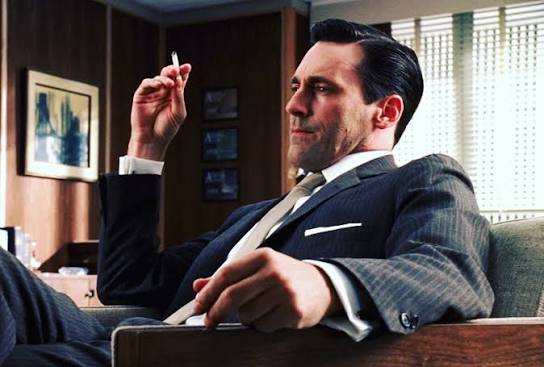
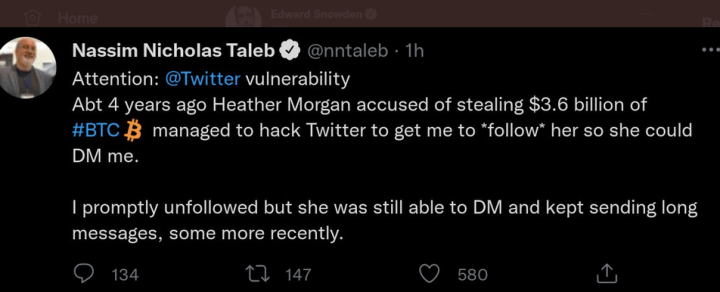
The Most Insane People of All Time (aka You’re Outta Control!): #2 John McAfee

Note: This second installment in The Most Insane People of All Time (aka You’re Outta Control) looks at John McAfee, tracing his evolution from software pioneer to global fugitive, crypto evangelist, and online cult figure. The piece emphasizes the improvisational chaos of his later life and contrasts it with more conventional tech figures like Elon Musk and Bill Gates, arguing that McAfee’s volatility places him in a category of his own. The tone is impressionistic, comparative, and intentionally informal.

Epigraph: 

“I fought the law and the law won…”

— I Fought the Law, The Clash

John McAfee starts in relatively conventional fashion: brilliant programmer, eccentric personality, builds the first widely adopted consumer antivirus software in the late 1980s, and becomes extremely wealthy when McAfee Associates takes off. But even in the early years there’s instability, and a foreshadowing of things to come — drug use, paranoia, erratic business decisions, and a growing anti-authority streak. He sells his stake, drifts through various ventures, and by the late 2000s relocates to Central America, eventually settling in Belize. There he buys beachfront property, hires armed guards, collects dogs, experiments with quasi-scientific projects, and begins acting like a semi-autonomous local strongman. It’s the first fully “outta control” phase: money, isolation, guns, and a man already well inclined toward paranoia.

Then comes the neighbor incident. In 2012, McAfee’s American neighbor, Gregory Faull, is found murdered. McAfee is named a person of interest — never charged — and instead of lying low, he goes fully theatrical. He claims the authorities are targeting him, allegedly evades police by hiding, disguising himself, and moving between safe houses, all while giving interviews and live-tweeting the saga. With girlfriend (later wife) Janice McAfee and various associates in tow, he flees Belize, surfaces in Guatemala, is detained, then ultimately allowed back to the United States. The whole episode is surreal: a tech millionaire allegedly on the run for murder, narrating the chase in real time on social media. It’s not just outta control — it’s performance art.

Back in the U.S., McAfee briefly lands in Florida but quickly re-enters chaos. He promotes cryptocurrencies, launches bizarre tokens, courts publicity, and cultivates a global cult following. He posts paranoid threads about surveillance, claims he lives inside Faraday cages, talks about government plots, and offers wild schemes — including promises to evade arrest by sea, air, or even paragliding into New Mexico to meet with fans! He pops up in unexpected places, from Caribbean boats to European cities, always accompanied by Janice and a rotating cast of loyalists. At one point he tattoos crypto branding onto himself, predicts conspiracies, and positions himself as both fugitive and prophet. The line between performance and belief dissolves completely.

Eventually, legal trouble catches up. U.S. authorities charge him with tax evasion and crypto-related fraud, and he’s arrested in Spain in 2020. From prison he continues tweeting through intermediaries, hinting at conspiracies and insisting he’ll never kill himself. In June 2021, shortly after a Spanish court approves extradition to the United States, McAfee is found dead in his cell — ruled a suicide. His supporters, including Janice, immediately dispute the finding, pointing to earlier posts and tattoos as supposed foreshadowing. The ending is as chaotic as the life: software pioneer turned fugitive, Twitter antihero, crypto evangelist, paranoid showman, and finally a death that only deepened the mythology. Outta control doesn’t even begin to cover it.

Compared to John McAfee, figures like Elon Musk and Bill Gates still look almost conventional — even when they drift into odd territory. Musk’s public persona is chaotic in a very modern way: late-night posting, impulsive announcements, awkward humor, and personal-life theatrics. The relationship with Grimes, the bizarre naming of children, and the infamous weekend when Azealia Banks claimed she was stranded at Musk’s house amid talk of LSD and general weirdness all add to the sense of volatility. Then there are the dad-joke moments — hauling a sink into Twitter headquarters and posting “let that sink in,” which is either performance art or just terrible humor. It’s eccentric, sometimes cringe, occasionally outta control — but the companies still run, rockets still launch, and the chaos never fully escapes the bounds of reality.

Gates, by contrast, is a more old-school eccentric. Bill Gates has the reputation of a hyper-competitive young executive who mellowed into a philanthropic technocrat, but the quirks linger. The awkward dancing, the slightly rumpled appearance, the perennial jokes about dandruff — he has always projected a kind of brilliant-but-uncool energy. The later-life turbulence — divorce from Melinda after decades, scrutiny over his contacts with Jeffrey Epstein, and the general aura of a private billionaire navigating public controversy — adds complexity but not chaos. Gates remains structured, Musk volatile, but both operate within functioning systems. McAfee, meanwhile, is something else entirely: not just eccentric but improvisationally unstable, a man who turned paranoia, fugitivity, and spectacle into a lifestyle. Musk may be chaotic, Gates may be awkward, but McAfee is outta control in a different register altogether.

In the end, John McAfee feels more outta control than Keith Raniere, Elon Musk, or Bill Gates — and that’s saying something. Raniere was creepy and manipulative but small; Musk is chaotic but still tethered to real-world outcomes; Gates is eccentric but fundamentally structured. McAfee, by contrast, seemed to live entirely outside normal constraints. Guns, boats, dogs, girlfriends, crypto tokens, Faraday cages, live-tweeting alleged manhunts, promising wild escapes, drifting between countries — the whole thing reads less like a biography and more like a fever dream. He wasn’t just eccentric; he appeared to improvise his life day by day, escalating the spectacle each time. That kind of volatility is rare. It’s also why he became a cult hero: he embodied a fantasy of total freedom, however reckless, however unsustainable.

Years after his death, the mythology hasn’t faded. Supporters still debate the circumstances, quote his tweets, and treat him as a kind of outlaw technologist who refused to play by the rules. Whether you see him as mad genius, performance artist, or cautionary tale, the scale of the chaos is undeniable. There may have been more dangerous figures, more powerful figures, even more tragic figures — but few as consistently, flamboyantly outta control. That’s what makes McAfee a legend. Not admirable, not necessarily likable, but unforgettable. And like all true originals, there probably won’t be another. So RIP, prayers up, and pour one out for a real one, John Motherfucking McAfee.

Note: If you liked this piece, you may also like the other ones in out “You’re Outta Control” series.

On My Curious Relationship with the Enneagram

Note: This piece reflects a personal journey with the Enneagram between 2013 and 2018, including conferences, workshops, and informal conversations. The impressions here are subjective and based on lived experience rather than formal study. I remain intrigued by the Enneagram as a reflective tool, even as I view aspects of the professional community with some skepticism. As always, this is written in a spirit of curiosity, appreciation, and lightness rather than critique for its own sake.

Epigraph
“We’ll take the Skyway / high above that busy little one way”
— Skyway, The Replacements


I first heard of the Enneagram in 2013 at a six-day beginner NLP training in Singapore run by a company called Mind Transformations. The training was led by Barney Wee, a tightly wound but candid guy who shared a lot about his life — past struggles with party drugs, his mentally challenged son, his strict vegetarianism — all delivered with a kind of intense openness that set the tone for the week. His right-hand woman, Angus Lau, was the mother and the emotional center of the operation. Warm, encouraging, and deeply comfortable in what she herself called “woo-woo,” she talked about Sedona hot springs, New Age energies, and personal transformation with complete sincerity. I hit it off with her immediately. She praised my small contributions, which felt good, and we bonded quickly.

There was also Bae, Barney’s younger assistant, mid-twenties, cheerful, cute as a button, and she did props and logistics. The first night in the hotel lobby she broke out a strange psychology-themed board game and we played for a while, and somewhere in the middle of that conversation she mentioned the Enneagram. It was the first time I’d ever heard of it. I was intrigued. On the way back to Japan I stopped for one night in Singapore, wandered into Kinokuniya at Takashimaya on Orchard Road, bought a few introductory books, and started reading them on the plane home. That was the beginning of what I later came to think of as my curious apprenticeship.

For a few years, it was just reading. I typed myself as a 5w4 with a strong 8 lean, which felt roughly right, and I found the system evocative — not scientific exactly, but suggestive, like personality poetry. It seemed to capture tones and tendencies rather than fixed truths, and I liked that. I read more, thought more, and gradually became curious about the actual community.

My first conference came in August 2016 in Minneapolis. I stayed at the hotel hosting the event, down in a quiet basement space, and we were the only people in the area. It was close to the arena where the Minnesota Timberwolves play, and you could walk there through the Skyway, which made me think of the Replacements song which provides the epigraph, and gave the whole weekend a slightly Midwestern, slightly melancholy frame.

I arrived early the first morning — nervous, excited, and very aware that I had done a fair amount of reading but had almost no real-world experience. I grabbed coffee and sat with a pleasant older couple from the Midwest, and before long I was talking about peak experiences and epiphanies and probably talking too much. I was jittery, caffeinated, and eager. They were kind and listened. Later, when I checked the program, I realized the woman was one of the main presenters and a big deal in the community. Run roh. But it was fine. That, in retrospect, was my first brush with the gentle hierarchy of the field.

I also met Jessica Dibb from her Shift Network podcast, which I had been listening to a fair bit and paying far too much for. She was warm, generous, and exactly as open in person as she sounded online. I liked her immediately, and I still think she was providing a real service to the community. But she also seemed, in a way I would come to recognize more clearly later, very much inside the tent. On the podcast, she rarely pushed back, even when guests — including Russ Hudson — leaned on origin stories involving the so-called Desert Fathers that were total bullshit. I knew they were bullshit, and what was worse, he knew it too. And yet there he was, repeating them ad nauseam. The more I heard those claims, the less convincing they sounded. There’s no clear historical transmission, no diagram, no nine-type personality system — just thematic similarities retroactively elevated into lineage. At a certain point, it stops sounding like history and starts sounding like branding. Sorry, but it’s just a bunch of bull. And yet no one inside the community seemed eager to challenge it. The culture, I began to suspect, rewarded agreement.

The rest of Minneapolis was a mix of seriousness and absurdity. I skipped a packed session by Jean Houston — a decision I later half regretted — and instead attended a tiny aromatherapy session run by two Southern women in matching green shirts who were clearly there to sell oils. They were GENKI as hell and the whole thing was unintentionally hilarious. Each day ended with a drum circle led by a ponytailed New Age facilitator, and I found myself unexpectedly moved, tired and open after long days of conversation.

I met a towering gay guy named Ron selling singing bowl CDs, and eventually I met Jean herself. She was drinking white wine, I was drinking red, and she was as warm as could be. We talked about Japan, about why I’d come, and then we danced together for twenty minutes. She killed it. That moment — generous, playful, human — felt like the community at its best.

Two years later I went to the European conference in Amsterdam. By then I felt like I knew a fair amount about the Enneagram. I had been reading deeply in Beatrice Chestnut and related subtype material, and I arrived in what I can only describe as a somewhat provocative mood. I stayed at the Apollo Hotel on the canal and walked to the conference each morning. The first person I met was Lynn, a total riot — from San Francisco originally, recently divorced, now running a Kundalini Yoga studio in Athens. She knew everyone and all the back-channel dynamics, who was sleeping with whom, and we bonded instantly. She quickly became my co-conspirator.

The opening talk by Hudson repeated familiar material, including the Desert Fathers, and I came close to challenging him publicly but somehow held back. I do have a big mouth at times. Big dick energy. Then I heard Tom Condon, tall, white-haired, grounded, integrating NLP and Ericksonian ideas into a practical approach. He is the quiet hero of the piece.

The rest of Amsterdam was lively and strange. A movement-based types exercise nearly ended in an accidental kiss. Lunch ran long, as conference lunches always do, and I met people from all over the world. The closing session paired Chestnut’s academic framing with experiential work, including a moment where a participant broke down emotionally on the floor. The atmosphere oscillated between meaningful and chaotic.

At the end, Lynn urged me to ask a provocative question. I did, politely: which aspect of the Enneagram might not be around in thirty years? Chestnut answered cautiously but clearly: tritype — too complicated, not especially helpful. It was a small ripple, but it felt like testing the edges.

That fall, I brought Condon to Tokyo. I was a member of the International Mental Health Professionals Japan (IMPJ), and when I saw he would be in town I arranged a small talk at TELL the night before the conference. About thirty people came. He gave a clear, practical overview. People loved it. Afterward some of us went to the pub; he declined, needing rest for the next day. He was ripping heaters with me outside, though. Legend.

In the end, my curious apprenticeship with the Enneagram left me with more affection than skepticism, even if the skepticism is real. I learned a lot from the system. I still find the types evocative, even poetic, and I still catch myself using them as a loose lens on people and situations. And I genuinely liked the people. The Enneagram world attracts seekers, therapists, wanderers, and enthusiastic amateurs, and I have a real soft spot for that whole vibe — the openness, the fast intimacy, the willingness to experiment. At its best, the community is warm, generous, and human.

But the professional side of the field also felt small, and because it is small, sometimes insular. Limited conferences, limited airtime, gentle pressure toward agreement. Origin stories harden. Pushback is rare. None of this invalidates the system, but it shapes the culture.

By contrast, the astrology world — much larger, more diffuse — feels more pluralistic. Multiple branches coexist. Disagreement is normal. No single group controls the conversation. The atmosphere, in my experience, is looser, less competitive, more comfortable with divergence.

So where does that leave me? Somewhere in the middle, which is probably where I started. The Enneagram, for me, remains personality poetry — suggestive, useful, occasionally illuminating, but not doctrine. My apprenticeship may have been unusual — Singapore hotel lobbies, Minneapolis skyways, Amsterdam provocations, Tokyo workshops, and smoke breaks with Tom — but I wouldn’t trade it. I learned, I laughed, I met memorable people, and I came away with a tool I still sometimes use, lightly. That’s enough.

Dedication:

For Lynn and Tom.

On My Early Years in the IB, 2008–2010

Note: This piece belongs to a loose series of reflections on my years working with the International Baccalaureate at Ritsumeikan Uji.

Over the years I have written about various moments and characters from that period — the improbable dinner conversations, the bureaucratic skirmishes, the strange coalition of personalities that somehow managed to build something durable inside a large Japanese school system. Pieces such as On the Eventification of Pre-Identified Incidents, Dr. Fox, and On Good and Great Talkers circle around that same institutional landscape from different angles.

This essay goes further back than those. It describes the early years when the program existed mostly on paper, when the staff could still fit around a single table, and when the whole project balanced uneasily between optimism and administrative chaos.

Looking back now, what strikes me most is not the difficulty of the work itself but the sheer improbability of the outcome. Programs like this often fail quietly long before authorization. The fact that ours did not is largely due to a small group of people who were willing, for a time, to push far harder than their job descriptions required.

This piece is my attempt to record that moment before memory smooths it into something simpler than it really was.

Epigraph

It’s like a visit to the moon

or to that other star

I guess you’ll go for nothing

if you really want to go that far.

— Leonard Cohen, Death of a Ladies’ Man


I. The Call-Up

In February 2008 I was called down to the principal’s office at Ritsumeikan Uji.

At that point I had been at the school for several years already. I had started part-time in 2002–03, moved to full-time shortly after, and by 2007 had landed on what I later called “the man under the bridge contract.” The bridge in question was a middleman arrangement run through a broker named Masaki Yasumoto, a classic education-world intermediary. These figures flourish in private school systems: part fixer, part recruiter, part relationship broker.

Masaki was a funny guy. We were friendly in those days. He invited me to his Christmas parties—cheap hotel buffet affairs—and occasionally took me out for yakiniku. I later fell out with him, but that belongs to another story. At the time we were on good terms.

Through Masaki’s bridge contract the school kept me on staff while avoiding a full tenured appointment.

So in February 2008 I was teaching SEL under Mary Walters and a handful of social studies classes. Business Management was still in my future. That morning Principal Kitamura and Vice-Principal Terada called me in. We sat on the little sofa chairs in the office. They pitched me the role of IB Diploma Programme Coordinator. At the time I knew almost nothing about the International Baccalaureate.

My entire knowledge base consisted of one fact: a school called Katoh Gakuen near Numazu had introduced IB in 1999. That information had come secondhand from Mr. Ogawa, our Head of High School. That was it. No workshops. No training. No background. Just the idea.

When they asked if I would take the job, I said yes—on one condition. I needed a sennin appointment when the bridge contract ended. Kitamura said we could revisit the matter in a year. Good enough. I went home and discussed it with my wife. The next day I accepted. I was 34 years old and this felt like my big break.

I was determined to make the most of it.


II. The Principals

When I first arrived at Ritsumeikan Uji in 2002 the principal was Kawasaki. I barely knew him.

He made speeches at opening ceremonies and graduations but I never interacted with him personally. The gossip around the school was that he was a major power broker in the wider Ritsumeikan system. The other rumor—less flattering—was that he hired office staff based largely on the attractiveness of their legs. Whether true or not, the administrative office at the time did indeed contain several strikingly good-looking employees.

In 2008 Kawasaki left the school and moved to a senior role at Ritsumeikan Suzaku. Later he attempted to become Chancellor of the entire university system. That campaign became a minor drama inside the organization. My immediate boss at the time, Dr. Fox, supported him, as did another senior administrator, Higashitani.

At one point Kawasaki’s campaign team came to Uji to gather support. In the meeting room one of the Suzaku representatives looked at me—sitting there in a suit—and said:“Dr. Fox, we are so happy to have your support.” Fox was about 65 years old at the time. I was 39. But apparently one foreigner looked like another. It was harmless and genuinely funny.

Kawasaki ultimately lost the election by a handful of votes and eventually left the Ritsumeikan system.


III. The Placeholder

Kawasaki’s successor at Uji was Kitamura. This appointment shocked everyone. Kitamura had been Head of the Junior High School and had relatively little senior administrative experience. Overnight he jumped several levels and became principal.

Only later did I learn the reason. Kitamura was essentially a placeholder. The real plan was for Shiozaki, a senior administrator who had been on extended medical leave, to return once his health recovered. Shiozaki was nearing retirement age and the system wanted him back in charge before he finished his career. Kitamura’s job was simply to keep the seat warm. It was brutal, but that’s the old Keichimeikan way. And to his credit, he did exactly that. He also gave me my big break.

Years later I saw him again at the Kyoto girls’ Ekiden race on Christmas Eve. He was wearing a worn sweater and looked slightly down on his luck. I didn’t exactly admire him as a leader. But I always felt compassion for him.

After all, he took the bullet for the squad.


IV. Hashizume

Another key figure in the early IB story was Hashizume. Hashizume occupied a strange position. Officially he was an office administrator. In practice he was the number two power in the building. All major financial decisions flowed through him. Every yen connected to the IB project passed through his hands.

His real passion, however, was American football. He coached the boys’ football team and took the job extremely seriously. Years later he left Uji entirely after being recruited by a major university program in Tokyo.

Dr. Higashitani, who despised him, called the hiring university “idiots and imbeciles” when he heard the news.

Hashizume was also a prodigious drinker. We went out drinking together exactly once. It started at ING, the little rock bar in Kiyamachi. Then we moved to several other bars. Then it was 3 AM. Then Hashizume started calling friends who owned additional bars and asking them to stay open. They agreed. By the time I finally staggered home it was about 4:30 in the morning.

The next day I was violently hungover. Pocari Sweat. Miso soup. Saltines. Nothing stayed down. By noon I was in the hospital on an IV. Hashizume, meanwhile, seemed perfectly fine.


V. VP Terada

The most important administrator in the entire early IB story was Vice-Principal Terada. Terada had spent fifteen years in the school as a homeroom teacher and grade leader before moving into administration. When the IB project began he became my direct ally.

Every Tuesday afternoon the school held the Steering Committee meeting. This was the arena where every IB proposal had to be approved.

My memos would go to Terada first. He rewrote them in polished Ritsumeikan bureaucratic Japanese and presented them to the committee. I usually stayed silent while Terada handled the negotiations.

One day I noticed something interesting. Whenever someone opposed one of our proposals—especially Ms. Ono, my great nemesis—Terada would cover his mouth with his hand and say something like: “That is a very good point. We will have to think about that.”

At first I believed him. Then one day after a meeting I confronted him in a small side room. He laughed. “No,” he said. “We are not thinking about it at all.”

He was simply letting the opposition save face. That was when I realized I could trust him completely.


VI. Pre-Authorization

Our pre-authorization visit came in May 2009. The visiting team included Steve Keegan from the IB regional office and Peter MacKenzie, principal of Hiroshima International School.

At that point we barely had a staff. It was essentially just me and Tim Chanecka, who was helping temporarily until we could hire more teachers. I had written almost all of the program policies myself—language policy, assessment policy, academic honesty—working largely alone.

The visit went reasonably well. At one point Keegan left the room and accidentally left his notebook open. I glanced down. The only thing written on the page was: “Stress in the school.”

Fair enough.

We passed pre-authorization.


VII. The Staff

By the time the authorization visit in May 2010 arrived we had assembled an actual team.

The core group looked like this:

  • Me — DPC, CAS, TOK, Business Management, and History
  • Scott Sim — English A and future homeroom teacher
  • Mike Gurnick— Mathematics, assessment, and scheduling
  • Tomoko Wano — Japanese A and translation powerhouse
  • Nick Sutton — Physics (part-time)
  • Oliver Manlick — Chemistry curriculum design
  • Ayako Kurokawa — Visual Arts

Ms. Wano in particular was indispensable. She attended every senior meeting, translated every document, and essentially kept the program alive during its early phase.

Without her we would not have survived.


VIII. The Dinners

During the authorization visit we hosted the visiting team for two dinners. The first night I chose a small izakaya near Kyoto Station. Mary Walters had warned me that it was “kind of a greasy spoon.” But when we arrived Peter MacKenzie looked around happily and said: “This is great. People usually take us to the fanciest restaurant in town to try and impress us.”

Score one for the hokke and the frosty mugs of beer.

The second dinner took place at Suzaku. Five of us attended: Shiozaki, Keegan, MacKenzie, a sharply dressed Suzaku administrator with a goatee, and me. At one point MacKenzie’s wine glass ran empty. There was no waiter nearby. So I stood up, walked around the table, and refilled his glass. When I sat down the Suzaku administrator gave me a small approving nod.

Another quiet point scored.


IX. The August Scare

The visit ended. Then we waited. Weeks passed. By mid-August there was still no decision. At the time I was in Oregon, visiting my family with Sachie and Hugh. Instead of relaxing I spent the vacation checking email obsessively.

Finally I contacted Keegan. A few days later he replied. There was a problem. Several of our teachers—including me—did not possess formal teaching licenses in our home countries.

I reminded him that we had discussed this already during the visit. The Kyoto Board of Education did not require Western-style teaching licenses. They evaluated subject knowledge based on transcripts and TESL credentials.

Keegan agreed. But Peter MacKenzie was raising objections.

So I pushed back. Politely—but firmly. The IB operates in over 120 countries. Mandatory teaching licenses are not a universal requirement.

Then I gathered examples from elite IB schools in the United States whose hiring requirements explicitly did not require teaching licenses. After that the objection disappeared.

Two weeks later the decision arrived. Ritsumeikan Uji was officially granted IB World School status. The certificate—signed by IB Director General Jeffrey Beard—was hung in the principal’s office.

After months of uncertainty, we finally exhaled.


X. Exhaustion

In truth, by that point I was completely spent.

That summer I had also attended the OACAC conference at Babson College as the school’s overseas college counselor. I had traveled, networked, presented, and worked almost nonstop. By the time authorization finally arrived I felt less triumphant than drained.

Not depressed. Just cooked.

The exhaustion lasted until about November 2010. After that I rallied. Because the next great milestone was coming. In April 2011 we would begin our first actual IB teaching.

But that is another story.


Dedication

For the whole team that carried our little IB program through authorization.

A million thank-yous.

And especially for Vice-Principal Terada. You’re the motherfucking GOAT baby!

Note: If you liked this piece you may like the pieces below which also discuss my time with the IB.

On the Strange Geography of Conferences

Note: This essay began with a memory from an IB Global Conference in Singapore sometime in the mid-2010s, when I first began to notice that large professional gatherings possess a kind of unofficial geography. The official conference—the keynote halls, breakout rooms, and printed program—forms only one map of the event. Running alongside it is a second map composed of bars, lobby couches, dinner tables, and long conversations that drift well past the scheduled sessions.

Years earlier I had written a short reflection on what I called unconferencing, the quiet relocation of intellectual “action” from the formal program to these improvised spaces around it. The present essay grows out of that earlier observation but shifts attention from theory to terrain. Rather than asking why unconferencing occurs, it asks where it tends to happen and how participants gradually learn to navigate those unofficial zones.

Readers interested in the conceptual background may wish to consult the earlier essay on unconferencing, which explores the phenomenon through the lens of Erving Goffman and the broader question of how individuals negotiate the locus of action within institutional environments.

As with many pieces on the Kibbitzer, the goal here is less to offer a definitive theory than to describe a pattern that, once noticed, becomes difficult to unsee. Conferences, like many human systems, operate simultaneously on two levels: the one announced in the program and the one discovered by those who know how to find the action.

“The locus of action is always in motion.”
— Erving Goffman


I arrived a day late to the conference.

This was in Singapore sometime around 2014 or 2015, at one of the IB Global Conferences for the Asia–Pacific region. The event was being held in a large glass hotel near the river, not far from Chinatown and just south of Raffles Place if memory serves. The keynote room alone seated something like eleven or twelve hundred people. The conference program was thick with panels, workshops, and presentations that began early in the morning and ran straight through the afternoon.

My suitcase had arrived before I had. I had been in China the day before running another IBEN training, and while the conference itself was already underway, I was still in transit. By the time I checked in and made my way downstairs, the official proceedings were well established: keynote speakers, crowded sessions, conference badges swinging from lanyards, the whole apparatus of professional gathering fully in motion.

At the time I was only about a year into my work with IBEN. My regional manager was Avi Nanda, who was excellent in many respects but not especially hard-charging as a networker. Gill Pressland, who later became a formidable presence in the region, was not yet in the picture. I knew a few people, most importantly Steve Keegan in Australia, who had become a kind of mentor to me. I also knew Ed Lawless, who had previously overseen a great deal of the professional development work in the region.

Ed had once joked to me, only half joking, that his job had become little more than “wedding planning.” Conferences, workshops, schedules, logistics—endless coordination. Eventually he burned out on it entirely and moved on, first to Pamoja, the online curriculum company, and later into a somewhat undefined role at an IB school in Tokyo that seemed to blend management, marketing, and development. Such trajectories are not uncommon in the IB ecosystem. People drift through roles that are part educational, part organizational, part entrepreneurial.

In any case, arriving late to the Singapore conference had the curious effect of placing me immediately at its margins rather than at its center. The keynote sessions were already underway, but instead of rushing directly into the large ballroom where most of the attendees were gathered, I began encountering people in the spaces just outside it: the lobby, the cafés, and eventually the hotel bars.

One of the first people I reconnected with was Darlene Fischer from Australia. Darlene was in her early sixties at the time and something of a force of nature. She had the sort of presence that made conversations reorganize themselves around her. Through Darlene I soon met two others who would become central figures in what I later came to think of as the conference’s unofficial inner circle: Sue Richards and Gerald Conlin.

Gerald was in his mid-sixties then, a slight man with white hair and an almost theatrical grin. His professional life consisted largely of consulting work connected to education programs, particularly the wave of hybrid master’s degrees in education that universities around the world had begun launching. Institutions like Tsukuba in Japan and Bath in the UK were building these programs, often with cohorts of twenty or so students, and Gerald had carved out a niche as the person who could authorize and evaluate them. He was also constantly presenting, constantly researching, constantly moving through the conference circuit.

Within about five minutes of meeting me he decided that I would make the perfect number two for his MA authorization work. It was flattering, though I suspected there might be additional motives behind his enthusiasm. Gerald was an openly and exuberantly gay man, and his warmth toward me carried a certain theatrical flair. He had a habit of calling me “my boy,” delegating tasks such as selecting restaurants or ordering drinks, and occasionally resting a hand on my upper thigh while speaking with great intensity about some educational development or other. None of this particularly disturbed me; conferences are full of strong personalities, and I was by then quite capable of navigating such dynamics.

Sue Richards, meanwhile, functioned as Gerald’s counterpart and amplifier. Where Gerald was slightly reserved and professorial, Sue was outgoing, energetic, and socially strategic. She worked directly for the IB at the time and moved easily through the conference environment, introducing Gerald before presentations, praising his work with extravagant enthusiasm, and generally acting as a kind of corner person for his professional persona. If Gerald was the fighter in the ring, Sue was the one shouting encouragement from the ropes.

The two of them formed a kind of traveling intellectual unit, and through them I began spending more time not in the conference sessions themselves but in the hotel’s bars and restaurants.

There were perhaps four or five of us in total who fell into this pattern. What struck me fairly quickly was that these individuals rarely attended the conference sessions unless they were running them. The keynote speeches, the panels, the carefully scheduled workshops—these seemed largely directed at newcomers or first-time attendees. The veterans, by contrast, moved through the conference in a completely different way.

They ran the unconference.

By this I mean something slightly more specific than simply skipping sessions. Years ago I wrote an essay about what I called “unconferencing,” referring to the parallel conference that emerges quietly around the official one. What interests me here is less the theory of unconferencing than its geography: the physical spaces through which these unofficial conversations travel.

At the Singapore conference, that geography quickly became clear.

There was the large ballroom where the official keynote addresses were delivered to more than a thousand people. But there were also the bars—two of them in particular—where smaller groups gathered throughout the afternoon and evening. There were the restaurant tables where dinner conversations stretched for hours. There were the lobby seating areas where people drifted in and out between sessions.

And there were the walks.

Within a day or two I began to see that the conference operated according to two distinct maps. The first map was the one printed in the program: rooms, times, speakers, sessions. The second map was entirely informal, emerging through patterns of conversation and social gravity.

The keynotes were for the newbies.

The action was at the bar and at dinner.

I was somewhat ambitious at that stage in my career, eager to establish myself in the region and become a respected trainer. Because of this ambition I paid close attention to where energy seemed to accumulate. It did not take long to realize that the most consequential conversations were happening far from the podium.

In the bars and restaurants people spoke more candidly about the IB, about institutional politics, about emerging programs, about who was doing interesting work and who was not. Opportunities were floated, collaborations proposed, rumors exchanged. Careers, in small ways, were advanced.

The official conference continued to run its scheduled course upstairs, but the real motion of the event—the circulation of ideas, alliances, and opportunities—took place elsewhere.

Seen in this light, conferences begin to resemble temporary cities with two overlapping infrastructures. The official infrastructure is highly visible: lecture halls, keynote rooms, printed programs, registration desks. The unofficial infrastructure is quieter and more fluid: bars, café tables, hallways, and late-night dinners.

Participants gradually learn to navigate both maps.

Some remain primarily within the official one, moving dutifully from session to session. Others develop an instinct for the second map, drifting toward the places where conversation gathers and where the boundaries between formal roles begin to loosen.

It is in these spaces that the unconference unfolds.

The term itself is slightly tongue-in-cheek, but the phenomenon is real. Once a small group of experienced participants begins congregating in a particular location—usually a bar or restaurant—others start to appear. Conversations splinter and recombine. Someone joins for twenty minutes before leaving for dinner. Someone else arrives with news from another corner of the conference.

Over time the group becomes a kind of floating node within the larger event, a place where information circulates rapidly and where participants feel unusually free to explore ideas that might never make their way into a formal presentation.

In retrospect, what struck me most about that Singapore conference was not any particular keynote or panel discussion but the realization that conferences possess a strange and dynamic geography. Action is rarely confined to the places where organizers expect it to occur. Instead it migrates across the built environment of the event, settling temporarily wherever people feel the oxygen is richest.

The ballroom may host the official performance, but the bar hosts the conversation about what the performance actually means.

And so the conference proceeds along two parallel tracks: the one announced in the program, and the one discovered by those who know how to find the action.

The unconferencers simply learn to follow the latter.

Dedication:

For all those who know how to find the action.

Note: If you enjoyed this essay, you may also enjoy the essays linked below, all of which also take up the fascinating theme of professional conferences.

On The X-Files: The Paranoid Style of 1990s Television

Note: This reflection comes out of a long-standing fascination with The X-Files, one of the most distinctive television shows of the 1990s. When it first aired, the series managed to occupy a strange and compelling middle ground between science fiction, horror, conspiracy culture, and something closer to philosophical inquiry. Week after week the show asked the same unsettling question from slightly different angles: what if the world is not quite as stable or intelligible as we assume?

What made the series especially effective was the dynamic between Fox Mulder and Dana Scully. Mulder represented the pull of belief, intuition, and pattern-seeking; Scully stood for skepticism, evidence, and scientific restraint. The tension between those two orientations created a kind of philosophical engine that powered the show for many seasons.

The major episode discussed here is one of the early “mythology-adjacent” stories that sits near the boundary between the show’s monster-of-the-week format and its deeper conspiratorial arc. Watching it again years later, what stands out is not only the eerie storytelling but also the way the series captured a particular cultural mood of the 1990s — a time when technology was expanding rapidly, institutions were increasingly distrusted, and the possibility of hidden systems operating beneath the surface of ordinary life felt strangely plausible.

In that sense, The X-Files was never just about aliens or government cover-ups. It was about uncertainty itself — the uneasy space between explanation and mystery.

Epigraph:

“Autorerotic asphyxiation is not a pleasant way to go, Mr. Mulder.”

Clyde Bruckman, The X-Files

The X-Files is my second favorite television show of all time, behind only The Wire, and it’s not close.

That may sound like a bold claim given the sheer amount of television produced over the past thirty years, but for those of us who came of age in the 1990s the show hit a nerve that very few cultural artifacts ever have. It wasn’t just entertaining. It was atmospheric. It was unsettling. It felt like it was plugged directly into the cultural nervous system of the time.

To understand why, you have to begin with a simple generational fact. I was born in 1974, just eleven short years after the assassination of John F. Kennedy. That event cast a shadow that lingered for decades. My parents’ generation and my grandparents’ generation were deeply scarred by it in ways that people my age never fully understood. Something in the national psyche broke that day. Trust in institutions never really recovered.

Historians later described this cultural mood as “The Paranoid Style of American Politics,” borrowing the famous phrase from the essay by Richard Hofstadter. Whether one agreed with Hofstadter or not, the phrase stuck because it captured a very real undercurrent in American life: the suspicion that unseen forces were operating behind the scenes.

The genius of The X-Files was that it leaned directly into that atmosphere. It didn’t treat paranoia as pathology. It treated it as narrative fuel.


Discovering the Show

I was an early adopter.

The show premiered in 1993, and by 1994 I was already watching it in the dorms at Hamilton College with a group of friends. If possible we’d get a little baked first, which in hindsight may have been perfect. The X-Files is a show that rewards slightly altered states of perception.

At first it was something of a cult discovery. A few people watched it religiously while others barely knew it existed. But by the time the second and third seasons rolled around it had become a communal ritual. Thursday nights meant Mulder and Scully.

The chemistry between the leads was immediately apparent.

David Duchovny and Gillian Anderson had what we would now call “shipping chemistry,” although that term didn’t really exist yet. We simply knew that something electric was happening on screen. The characters worked because they embodied opposing ways of understanding the world. Mulder believed everything. Scully was more skeptical. Between them the truth hovered in an unresolved middle ground.

The show was also disciplined enough to hold that tension for years. In an era before streaming algorithms and social-media speculation, viewers waited week to week to see how the relationship evolved.

Hovering over them was their boss, the enigmatic Walter Skinner. For several seasons it was impossible to tell whether Skinner was helping Mulder and Scully or quietly managing them on behalf of darker forces. That ambiguity was one of the show’s greatest pleasures.

In a delightful twist of pop-culture irony, the actor Mitch Pileggi was at one point named TV’s Sexiest Man by a glossy magazine. Which is hilarious when you remember that Skinner is essentially a bald FBI bureaucrat in a gray suit. Such was the cultural power of the show.


The Smoking Man

Then there was the figure lurking in the shadows.

The Cigarette Smoking Man is one of the great villains in television history. Played with eerie understatement by William B. Davis, he appeared whenever the conspiracy thickened.

He looks exactly like the kind of man who would be at the center of a decades-long government cover-up. Three packs a day. Cheap cologne. A lingering Jameson hangover. The sense that he spends most of his time in dim Washington parking garages and windowless offices and only emerges from his crypt when the conspiracy requires it.

It’s a performance so physical that you can almost smell the character through the screen.


Three Essential Episodes

Every long-running show has defining episodes, and The X-Files produced dozens. But three in particular illustrate what made the series so special.

The first is the pilot itself, which introduces Mulder investigating mysterious disappearances in the Oregon woods. A key moment occurs when the agents experience missing time on a dark forest road. The scene establishes the tone immediately: eerie, ambiguous, and faintly plausible.

The second is Fallen Angel, an early classic that introduces the lovable conspiracy obsessive Max Fenig. Max’s jittery paranoia captures the spirit of the show perfectly. When he remarks that “someone’s always watching, Mr. Mulder,” it feels less like dialogue than like a thesis statement.

The third is the masterpiece of dark humor, Clyde Bruckman’s Final Repose, written by the great Darius Morgan. In it, a weary insurance salesman named Clyde Bruckman discovers that he can foresee the exact circumstances of people’s deaths. Played beautifully by Peter Boyle, the character delivers a hilarious and oddly touching performance. It is Bruckman who also delivers the immortal line that also gives us our epigraph: “Autorerotic asphyxiation is not a pleasant way to go, Mr. Mulder.” Run roh. Take that belt off Fox baby.

What makes the episode remarkable is that it gently mocks the show’s own hero. Mulder spends the entire series searching for hidden meaning in the universe. Clyde Bruckman, by contrast, believes life is largely arbitrary and tragic.

His prediction of Mulder’s death—immortalized in the epigraph above—is both absurd and strangely profound. It’s also a sign that by Season Three the show had gained enough confidence to poke fun at itself.


When the Mythology Expanded

Like many successful serialized shows, The X-Files eventually struggled under the weight of its own mythology. One of the central narrative engines involved Mulder’s missing sister, Samantha Mulder. Early on, the mystery added emotional depth to Mulder’s obsession with the paranormal.

But as the seasons progressed the storyline became increasingly convoluted. Samantha might have been abducted by aliens, or replaced by a clone, or transformed into something else entirely. Meanwhile the conspiracy expanded to include frozen alien ships in Siberian ice, shadowy government syndicates, and the infamous black-oil virus that seemed capable of possessing human hosts.

At a certain point the mythology began to chase its own tail.

Then, as the final blow, David Duchovny left the show. Gillian Anderson remained excellent, but The X-Files was always fundamentally a two-hander. Without Mulder and Scully together the balance of the series shifted in ways it never fully recovered from.


Why It Still Matters

And yet, for all the narrative tangles of the later seasons, the early years of The X-Files remain extraordinary television.

The show captured a very particular moment in cultural history: the twilight of the pre-internet era, when conspiracy theories spread through late-night radio programs, photocopied newsletters, and whispered conversations rather than social media feeds.

It was a time when the idea that powerful institutions might be hiding enormous secrets still felt plausible rather than merely exhausting.

For a few seasons in the 1990s, Thursday nights belonged to the weirdest, smartest, most paranoid show on television.

The truth, as Mulder kept reminding us, was out there

Dedication

For Dana and Fox. You know we still want to know what went down in that motel room baby.

Note: If you enjoyed this essay you may also enjoy the two essays below, both of which, in different ways, take up themes of intrigue and mystery.

On Living Paycheck to Paycheck

Note: This essay gathers together several different periods of my life when money was tight and the margin for error was thin. Some of these moments go back many years, including a year abroad in Dunedin, New Zealand, at the University of Otago when a bureaucratic oversight left me without a meal plan for most of the academic year and forced me into a very basic daily routine of trail mix, apricot bars, and coffee. Others come from later phases of adulthood: early teaching years in Kumamoto, young family life in Kyoto’s Mukaijima district, the strange suspended months of COVID, and the present day.

I include these episodes not as a complaint but as a recognition of how common this experience actually is. Living paycheck to paycheck is often imagined as the result of bad choices or personal irresponsibility, yet in reality it is frequently the ordinary condition of people who are working hard, raising families, paying tuition bills, navigating institutional decisions, and simply trying to keep their lives moving forward.

The story of my friend Sergio Mandiola, included here with his blessing, illustrates another version of the same pattern. A long career in education, a series of institutional shifts, and one administrative decision were enough to push a once-stable life into years of financial improvisation before things slowly stabilized again.

What these experiences have taught me is less about money than about perspective. Hunger sharpens the mind, small kindnesses matter enormously, and the distance between stability and struggle is often much smaller than we imagine. For that reason, the real lesson of living paycheck to paycheck is not resentment but compassion.

Epigraph

Money won’t save your soul.
— Tim Burgess


A lot of people talk about living paycheck to paycheck as if it were a kind of personal failure. A budgeting problem. A lack of discipline. A mistake someone somewhere made.

In reality it is something far more ordinary than that. It is simply the condition in which millions of people live their lives. Often quietly, often competently, and often without anyone around them quite realizing how narrow the margin really is.

I first learned that margin in Dunedin.

I was on exchange at the University of Otago and through a small bureaucratic mix-up I was not on the meal plan. I had no work visa and no savings. My parents sent twenty dollars here and there, but it took months before anyone realized the full situation.

So for nearly the entire academic year I developed a system.

Breakfast and dinner came from a large white bucket in my room: trail mix, carob chips, raisins, peanuts. Lunch every day was the same: one yoghurt-covered apricot bar and one black coffee at the campus canteen. NZ $3.50.

Day after day after day.

My roommates didn’t know. They just thought I hated the mutton they cooked every night. And to be fair, I did hate the mutton.

Every once in a while a friend named Maren would buy me a Snickers and a Coke at the student club and we would sit there watching the O.J. Simpson chase and the trial coverage on television. Those snacks felt like luxury.

After Dunedin, life improved but the margins never entirely disappeared.

In Kumamoto in 1997 I was earning about ¥250,000 a month teaching English at NOVA. It wasn’t a fortune but it was enough. I could go to the izakaya, drink Asahi, play pool, and date the woman who would later become my wife. It wasn’t abundance, but it was livable.

A few years later, from 2002 to 2004, my wife and I were living in a subsidized apartment in Mukaijima on the Kintetsu Line outside Kyoto. I was working part-time as a social studies teacher and earning roughly the same ¥230,000–250,000 a month. Our rent was only ¥40,000 thanks to her hospital job in Uji, Kyoto. The apartment had three large rooms, a kitchen, a genkan, and it was surprisingly well insulated.

Our son Hugh had just been born and wasn’t yet in daycare. My wife worked night shifts and often made more money than I did. We weren’t rich, but we made it work. And we were happy.

Then years later came another version of the same story. During COVID I took leave from work and drifted into a strange suspended routine. I spent most of my time in my room playing chess online, watching chess streamers, and talking on the phone. My peak rating reached about 1200, which I was absurdly proud of.

My expenses were minimal because my life had contracted. I only went out drinking with a friend named Philip maybe three times a month, usually to places like Takimiya’s, Stones, or Rub-a-Dub.

Things were precarious, but manageable. Barely. And then there is the present.

In January of 2024 I had roughly $60,000 in savings and no debt. My wife and I also had about $20,000 in gold and platinum and a couple of retirement plans. It looked, on paper at least, like stability.

But the final years of my son’s schooling at the University of Auckland slowly drained those savings. As I write this in March of 2026, at age fifty-one going on fifty-two, I have about $3,000 in the bank and another $3,000 on a Kyoto Bank credit card. My ANA card covers most day-to-day expenses, but that line of credit has been cut before and could disappear again at any time.

I am a professional educator with thirty-five years of experience. I am gainfully employed and reasonably skilled at what I do.

And yet the margin remains thin. But my story is hardly unique.

My friend Mandiola is sixty-three years old and has spent most of his life in Los Angeles. He knows that city better than almost anyone I have ever met. His first job after high school was delivering maps for a map store, which meant driving all over the city and learning it street by street. Later he earned a degree from a University of California campus and became a high school teacher in the Beverly Hills public school system.

For a while things were stable. Then life intervened. Divorces, relocations, graduate school that never finished, and years of improvisation eventually brought him back to Los Angeles where he landed what he considered a dream job in an independent study program. He taught the children of show-business families and even got to know people like Larry King through the students he worked with.

He loved the work. He was his own boss and taught every subject except music. After school he played board games with the kids. He was, in his words, in hog heaven. Then a new administration arrived. He calls them the Chicago mafia. They decided he was too expensive and too independent. He was replaced, after years of conflict and legal battles, by what he describes as three bureaucratic drones. A $60,000 settlement kept him afloat for a while, but the money vanished quickly.

When I visited him in Los Angeles in March of 2024 he was essentially broke. He struggled to cover his mortgage, his association fees, his car insurance, and groceries at Trader Joe’s. He borrowed money from friends, from his mother, from anyone willing to help.

Eventually he pieced together work again through substitute teaching and tutoring. Today he earns about $4,100 a month and is just months away from retirement eligibility. Even now he occasionally borrows money. Not because he is irresponsible, but because life sometimes simply runs that way.

And that, in the end, is the point. Living paycheck to paycheck is not a moral failure. It is a structural reality for a huge portion of the population. Careers falter. Administrators make decisions. Tuition bills arrive. Children grow up. Systems fail. Life shifts. Hard times can strike almost anyone.

What those years taught me — from Dunedin to Kumamoto to Mukaijima to the strange suspended months of COVID and the present day — is how little we actually need to survive, how hunger sharpens the mind, and how enormously small acts of kindness can matter.

But most of all they taught me how close to the edge so many people really are. Which is why compassion is not optional. It is necessary. Now more than ever.

Dedication

For the middle and lower classes.
For now and eternity.

On Julian Jaynes and the Origins of Consciousness: A Modern Look

Note: This essay is a reflection on the ideas of Julian Jaynes and his remarkable 1976 book The Origin of Consciousness in the Breakdown of the Bicameral Mind. Jaynes’ theory—that human beings once experienced divine voices guiding their actions before the emergence of modern introspective consciousness—remains controversial and widely debated. The purpose of this essay is not to prove or disprove Jaynes’ neurological model but to explore the enduring power of the questions he raised.

In particular, I am interested in two aspects of Jaynes’ work that remain deeply suggestive: his interpretation of early literature such as the Iliad, where modern psychological interiority appears strangely absent, and his observations about how mobility—travelers, shepherds, merchants, and wanderers moving between cultures—may have destabilized older systems of divine authority. These figures, operating in uncertain cultural terrain, may have been among the first people forced into the improvisational reasoning that resembles modern consciousness.

The essay also touches on institutions like the Oracle of Delphi and on the persistence of voice phenomena in modern contexts, ranging from hypnagogic states and exhaustion to more troubling historical cases such as the assassination of Robert F. Kennedy by Sirhan Sirhan. These examples are not presented as proof of Jaynes’ theory but as reminders that the boundary between internal thought and perceived external command may be more complex than we sometimes assume.

Finally, the brief personal anecdote involving an MRI scan is included not as evidence but as illustration: a small modern echo of the ambiguous mental territory Jaynes explored. Moments in which voices seem to arise from somewhere between the inner and outer mind remain part of human experience.

Whether Jaynes was ultimately correct in his sweeping historical claims is still an open question. But his work continues to provoke a fascinating possibility: that consciousness itself has a history, and that the modern reflective self emerged gradually out of older forms of human experience.

If nothing else, Jaynes reminds us that the human mind is not a finished structure. It is something still unfolding—shaped by culture, language, movement, and time.

“She keeps coming closer saying I can feel it in my bones
Schizophrenia is taking me home.”
— Sonic Youth


There are certain books that never quite disappear. They do not settle comfortably into the academic canon, nor are they fully dismissed. They linger. They circulate quietly among curious readers, occasionally resurfacing in conversation decades after publication, as if waiting for another generation to discover them.

One such book is The Origin of Consciousness in the Breakdown of the Bicameral Mind.

Its author, Julian Jaynes, was a psychologist who spent much of his career outside the central institutions of modern neuroscience. When the book appeared in 1976 it created an immediate sensation. Reviewers alternately described it as brilliant, bizarre, visionary, or simply impossible. The theory it proposed was breathtaking in scope. Jaynes suggested that the subjective, introspective consciousness modern people take for granted—the inner sense of “I,” the reflective voice narrating our own thoughts—was not an ancient human constant. It had emerged, he argued, only a few thousand years ago.

According to Jaynes, the minds of early civilizations functioned differently. People did not experience themselves as the authors of their own decisions. Instead they heard the voices of gods.

Not metaphorically. Literally.

Commands issued in auditory form—voices that appeared to come from outside the self—guided action. These voices, Jaynes argued, were generated by one hemisphere of the brain and experienced by the other as divine instruction. He called this earlier mentality the bicameral mind.

The theory has never been accepted in its full neurological form. Archaeologists, classicists, and neuroscientists have raised serious objections. And yet the book continues to circulate, discussed by philosophers, psychologists, historians of religion, and the occasional curious reader who stumbles across it in a used bookstore or late-night internet search.

Why?

Part of the answer is simple: Jaynes was asking a question that remains deeply unsettling.

What if human consciousness has a history?

What if the inner voice we experience as our own—our private mental narrator—was not always there?

I first encountered Jaynes sometime around 2012 or 2013, during a period when I was reading deeply in the work of Carl Jung and writing a small series of reflections that I called Jungian Intimations. Like many readers drawn to Jung, I was interested in symbolism, archetypes, and the strange persistence of mythic imagery in the modern psyche. I briefly considered enrolling in an online course with the Jungian analyst Michael Conforti, though in the end I took a class from his wife, Nancy Qualls-Corbett, on Jung and visual art. Around that time I read the slim but remarkable volume Jung on Art, which argues that artistic creation often emerges when archetypal material pushes through the individual psyche into symbolic form.

Jaynes appeared in my reading not long afterward. At first glance he seemed to be asking a related but far more radical question. Jung had treated mythic figures as symbolic expressions of the psyche. Jaynes suggested that the gods of ancient literature might once have been experienced as genuine voices—psychological events interpreted as divine command.

Whether or not one ultimately accepts his neurological model, Jaynes assembled a body of evidence that continues to provoke thought. In particular, he pointed to a striking feature of early literature. Characters in ancient texts often act without the kind of introspective self-reflection modern readers expect. Decisions appear suddenly, attributed not to inner deliberation but to divine intervention.

Nowhere is this more visible than in the world of the Iliad. When Achilles restrains himself from killing Agamemnon, it is not because he pauses to analyze his emotions. Athena appears beside him and tells him what to do. The boundary between divine command and human action is porous.

Jaynes argued that such passages were not merely literary conventions but traces of an earlier mentality.

Yet perhaps the most fascinating part of his theory lies elsewhere—in the margins of ancient societies, among the people least anchored to a single cultural world.

The wanderers.


Ancient civilizations were more mobile than we sometimes imagine. Even in the Bronze Age there were shepherds drifting across borderlands, merchants following caravan routes between cities, sailors moving from port to port across the Mediterranean and Near East. These figures lived at the edges of cultural systems that otherwise depended on stability and hierarchy.

For Jaynes, such wanderers may have played an unexpected role in the transformation of the human mind.

The bicameral system, as he described it, functioned best within tightly structured societies. Authority flowed downward through clear hierarchies: gods to kings, kings to priests, priests to ordinary people. Ritual, language, and shared myth reinforced the system. The divine voices guiding behavior were embedded within a familiar cultural environment.

But travelers moved beyond those environments.

A shepherd leaving his village might cross into territory where different gods were worshipped. A merchant arriving in a foreign city encountered unfamiliar laws, languages, and customs. A sailor might spend months among people whose rituals and social expectations bore little resemblance to those of home.

In such situations the guiding voices of one’s own culture could become unreliable.

If a divine command urged action in a place where the surrounding society operated under entirely different assumptions, the voice might cease to function as a stable guide. The traveler found himself in a new psychological situation—cut loose from the authority structures that had previously organized experience.

This was not a comfortable position.

To survive, wanderers had to develop different skills. They had to negotiate, observe, and interpret. They had to learn foreign languages and read unfamiliar social signals. They had to improvise.

In other words, they had to think.

Jaynes speculated that these mobile figures—shepherds, traders, sailors—may have been among the first people forced into something like modern reflective consciousness. The birthplaces of that consciousness may not have been temples or palaces but the messy contact zones of ancient trade: caravan routes crossing deserts, harbor towns where languages mingled, frontier markets where strangers bargained with one another under uncertain rules.

If the bicameral system required cultural enclosure to function, then mobility threatened its stability.

And the ancient world was becoming increasingly mobile.


Even as this transformation unfolded, remnants of the earlier mentality persisted in institutional form.

One of the most famous examples was the Oracle of Delphi. For centuries Greek leaders traveled to Delphi seeking divine guidance on matters of war, colonization, and political decision-making. The oracle’s pronouncements—often delivered in trance-like states by the Pythia—were treated as authoritative messages from the god Apollo.

From a Jaynesian perspective, institutions like Delphi may represent cultural technologies designed to preserve the authority of divine voices even as the underlying psychological system weakened. Kings and city-states continued to seek guidance from gods because the tradition of divine command remained embedded in social life.

Gradually, however, new forms of decision-making emerged.

Written law codes appeared. Philosophical reflection developed. Greek drama explored the tensions between divine authority and human responsibility. The shift was not sudden or uniform, but over time a new psychological landscape became visible—one in which individuals increasingly experienced themselves as authors of their own thoughts.

This transition was not simply intellectual. It may have been neurological, cultural, linguistic, and historical all at once.

Jaynes placed the decisive phase of the transformation during the turmoil of the late Bronze Age collapse, roughly between 1200 and 800 BCE—a period when many ancient societies experienced widespread disruption. Cities were destroyed, trade networks collapsed, and populations migrated. In the midst of this upheaval, older forms of authority may have faltered, forcing new modes of self-organization to emerge.

Whether or not Jaynes correctly identified the precise mechanism, he was surely right about one thing: consciousness as we experience it today may not be a timeless given.

It may be an achievement—fragile, historically contingent, and still evolving.


Yet if the bicameral mind truly vanished, one might expect the phenomenon of hearing commanding voices to disappear entirely from modern experience.

It has not.

Under certain conditions, people still report experiences remarkably similar to those Jaynes described. In states of extreme exhaustion, during moments of sensory deprivation, or in the liminal territory between waking and sleep, voices sometimes appear that are difficult to classify as either internal or external.

I had an experience of this kind several years ago while undergoing an MRI scan in a hospital.

Anyone who has had an MRI knows the strange psychological environment it creates. You lie alone inside a narrow tube, immobilized, while the machine produces a sequence of loud mechanical pulses and vibrations. The noise is rhythmic and relentless. There is little sensory input beyond the sound and the awareness of one’s own breathing.

Somewhere in the midst of that experience, a voice appeared.

It was not loud or dramatic. It was simply there—a calm male voice with the unmistakable tone of a father speaking to a child. The message itself was simple, almost reassuring. But what struck me most was the ambiguity of the experience. The voice did not feel exactly like a thought, yet it did not feel entirely external either. It occupied a strange borderland between inner and outer perception.

The moment passed quickly, but the memory lingered.

Experiences of this sort are not uncommon. Psychologists studying hypnagogic states—the transitional zone between waking and sleep—have documented similar phenomena. Auditory hallucinations appear in certain psychiatric conditions, most famously schizophrenia. Hypnotic suggestion can also produce experiences in which subjects perceive commands or messages that seem to originate outside their conscious control.

Jaynes believed such phenomena represented vestiges of the older bicameral mentality.

The voices of the gods, in his view, had not entirely vanished. They had simply retreated to the margins of modern consciousness.


Occasionally these phenomena intersect with darker episodes of modern history.

The assassination of Robert F. Kennedy by Sirhan Sirhan remains one of the most disturbing cases often discussed in connection with hypnosis and altered states of consciousness. Some researchers have argued that Sirhan may have been unusually susceptible to hypnotic suggestion, raising unsettling questions about the relationship between external influence and voluntary action.

It would be irresponsible to claim that Jaynes’ theory explains such events. Human behavior is far too complex for any single model to capture fully. Yet cases like Sirhan’s remind us that the boundary between autonomous decision and externally shaped impulse is not always as clear as modern assumptions suggest.

The mind remains a mysterious territory.


Half a century after its publication, The Origin of Consciousness in the Breakdown of the Bicameral Mind continues to provoke debate not because it solved the problem of consciousness but because it reframed it. Jaynes forced readers to confront the possibility that the human mind has undergone profound historical transformations.

Even if the details of his neurological model prove incorrect, the broader insight may endure. Literature, religion, and psychology all suggest that the experience of selfhood has changed over time. The ancient world did not necessarily perceive the mind in the same way we do.

Something was gained in the transition to modern consciousness.

We gained introspection, philosophical reflection, and the capacity to examine our own motives. We gained the intellectual freedom that made science, democracy, and modern literature possible.

But something may also have been lost.

In the world Jaynes described, human beings lived in a landscape animated by voices of divine authority. Decisions arrived not through anxious deliberation but through commands experienced as sacred guidance. That world may have been more constrained, but it may also have felt more certain.

Modern consciousness offers freedom, but it also brings doubt and solitude. The voices of the gods have largely fallen silent, replaced by the quieter and often less confident voice we call our own.

Perhaps the most we can say is that consciousness, like culture itself, continues to evolve. The wanderers of ancient caravan routes helped shape the first emergence of reflective thought. Today we inhabit a global world of constant movement, translation, and negotiation—a world not entirely unlike those early contact zones where cultures once collided.

We are all wanderers now.

And somewhere, perhaps, the faint echoes of older voices still remain.


For dreamers and wanderers everywhere.

Stringer Bell: Middle Manager

Note: This essay reflects on the character of Stringer Bell from The Wire, one of the most carefully written figures in modern television drama. Like many viewers, I first experienced the show simply as a gripping crime story. Only later did I begin to appreciate how deeply it is really about institutions—how they work, how they resist reform, and how the people inside them often misunderstand the systems they inhabit.

The reflections here are not meant as a definitive interpretation of the series, but rather as one viewer’s attempt to think through what makes Stringer Bell such a haunting figure. His intelligence, ambition, and curiosity make him unusually sympathetic for a character who is also capable of ruthless decisions. That tension is part of what makes his story linger long after the episode ends.

If this essay encourages even a few readers who have never seen The Wire to give it a try, it will have done its job.

Epigraph

“Problems go away because someone does something about them.”
— Peter Drucker

“Are you taking notes on a criminal fuckin’ conspiracy?”
— Stringer Bell


When people first enter the world of The Wire, the Barksdale organization appears to be run by two men.

Avon Barksdale and Stringer Bell.

But the first time the audience—and the Baltimore Police Department—really sees the organization up close, it is not Avon who appears.

It is Stringer.

Early in the first season, Detective Jimmy McNulty begins digging into the Barksdale crew after the murder trial of D’Angelo Barksdale. The courtroom scene is deceptively quiet. The defense attorneys maneuver. Witnesses crumble. The case falls apart.

And sitting calmly in the courtroom, overseeing the entire operation, is Stringer Bell.

Avon Barksdale is nowhere to be seen.

It takes McNulty, Kima Greggs, Lester Freamon and the rest of the detail several episodes just to figure out who Avon even is. The name circulates through the investigation like a rumor. The man himself remains hidden.

That arrangement is not accidental.

Avon’s power depends on distance. He is the sovereign, and sovereigns are not meant to be easily found.

Stringer, meanwhile, is everywhere.

He attends the meetings. He coordinates the lawyers. He moves through the organization like a senior executive walking the floor of a factory.

To the police, Stringer looks like the boss.

To the young dealers on the corner, Stringer looks like the boss.

But he is not.

Inside the Barksdale organization, Avon Barksdale is the sovereign.

Stringer Bell is the middle manager.


The Face of the Organization

One of the most fascinating dynamics in the early seasons of The Wire is the way the younger dealers perceive Stringer.

For Bodie Broadus, Poot Carr, and Wallace—the kids working the Pit—Stringer Bell is a kind of mythic figure.

When the SUVs pull up and Stringer steps out in dark glasses, the reaction is immediate. The security guys spread out. The conversations stop. Bodie and Poot straighten up.

It is like watching a celebrity arrive.

Stringer has the clothes, the posture, the quiet authority. He moves through the neighborhood with a calm confidence that suggests total control.

Avon inspires fear.

Stringer inspires admiration.

That difference matters.

Because for the people actually living inside the organization, Stringer looks like the boss.

But the real power structure tells a different story.

Avon is the sovereign.

Stringer is the administrator.

He handles the money. He organizes the meetings. He manages the supply lines. He solves the problems.

Stringer Bell, in other words, is the middle manager of a criminal enterprise.

And for a long time, the arrangement works perfectly.


The Wallace Problem

One of the earliest hints of Stringer’s managerial mindset appears in the tragedy of Wallace.

Wallace is young, sensitive, and increasingly disturbed by the violence surrounding the drug trade. After the brutal murder of Brandon, Wallace begins unraveling. He disappears from the Pit. When he eventually returns, he is clearly not the same person.

Stringer recognizes the problem immediately.

Wallace is unstable.

In a normal organization, instability might mean poor performance reviews or termination.

In the Barksdale organization, instability means something else entirely.

Wallace becomes a liability.

And liabilities are removed.

The decision that follows—Bodie and Poot carrying out Wallace’s execution—is one of the most haunting moments in the series. Wallace is not a rival. He is not a traitor. He is simply a young man who cannot psychologically survive inside the system.

Stringer sees the weakness clearly.

And acts accordingly.

It is a brutally rational decision.

It is also a glimpse of the darker side of managerial thinking: the moment when people begin to look like components in a machine.


The D’Angelo Decision

If Wallace’s death hints at Stringer’s managerial instincts, the fate of D’Angelo Barksdale reveals them in full.

D’Angelo is not just another soldier in the organization. He is Avon’s nephew. His position inside the crew is both familial and political.

But prison changes him.

Separated from the streets and increasingly disillusioned with the life he has been living, D’Angelo begins questioning the entire system. He reads books. He reflects. He talks openly about the violence and the futility of the drug trade.

From Stringer’s perspective, this creates an intolerable risk.

D’Angelo might talk.

D’Angelo might cooperate.

D’Angelo might bring the entire organization crashing down.

So Stringer makes a decision.

D’Angelo must be removed.

The murder in the prison library—staged as a suicide—is one of the most chilling scenes in the show. It is also the moment where Stringer Bell fully commits himself to the logic of the organization he hopes one day to escape.

D’Angelo becomes a problem.

And problems, as Peter Drucker might say, go away because someone does something about them.

Stringer does something.

The consequences will follow him for the rest of the series.


The Education of Stringer Bell

One of the most extraordinary details in The Wire is Stringer’s quiet pursuit of education.

While running one of the most powerful drug organizations in Baltimore, Stringer enrolls in community college economics courses.

The image borders on the surreal.

By day, he sits in a classroom discussing supply and demand curves.

By night, he oversees one of the city’s most lucrative heroin distribution networks.

But Stringer takes the lessons seriously.

He studies the language of markets. He begins speaking about product elasticity and supply chains. He becomes fascinated with the idea that organizations can be structured rationally—that chaos can be replaced with systems.

At one point he attempts to introduce Robert’s Rules of Order to a meeting of drug dealers.

The result is both comic and strangely admirable.

Stringer genuinely believes the world can be organized.

Violence is inefficient.

War disrupts business.

Stability produces profit.

These ideas will shape everything he attempts to build in the seasons that follow.


The Co-Op

By the third season, Stringer has begun putting his theories into practice.

Working with Proposition Joe, the careful and pragmatic East Baltimore kingpin, he helps create a cooperative arrangement among several drug organizations.

The goal is simple: stabilize the market.

Under the Co-Op system, competing crews share access to high-quality product and reduce unnecessary warfare. Prices stabilize. Territories become less important. Profits increase.

From a managerial perspective, it is a brilliant solution.

The Co-Op is essentially a cartel.

And it represents the closest Stringer Bell ever comes to successfully rationalizing the drug trade.

But the Co-Op also reveals the limits of Stringer’s power.

Because while Stringer is busy building alliances and managing markets, Avon is thinking about something else entirely.

Reputation.

Territory.

War.


Avon Returns

When Avon is released from prison, the delicate balance between sovereign and minister begins to collapse.

Avon quickly realizes that Stringer has been running the organization.

More troublingly, he has been running it according to rules Avon does not fully respect.

Negotiation instead of dominance.

Cooperation instead of conquest.

To Avon, this looks dangerously close to weakness.

The emergence of Marlo Stanfield only sharpens the conflict.

Marlo represents the future of the street—pure sovereignty, stripped of managerial compromise. His only concern is power and reputation.

Stringer sees Marlo as a business problem.

Avon sees Marlo as a challenge.

The difference is fatal.


Clay Davis

While this conflict is unfolding on the street, Stringer begins pursuing what he believes will be his final transition: legitimacy.

Through Proposition Joe, he enters the orbit of Baltimore politics and real-estate development. The meetings take place in offices rather than abandoned row houses. The language shifts from territory and product to zoning permits and development projects.

For Stringer, this looks like the next step.

The doorway out.

But the world he is entering operates according to rules he does not yet understand.

State Senator Clay Davis greets Stringer warmly. He speaks the language of political access and investment opportunities. He promises permits, influence, connections.

And Stringer believes him.

The moment of realization arrives slowly and then all at once.

The money is gone.

The development deals are illusions.

And Clay Davis responds to Stringer’s anger with one of the most surreal pieces of advice ever delivered in the series.

If Stringer wants to find the money, the senator explains, he should get himself some running shoes.

Because the faucet has already been turned on.

And the money has already flowed away.

The respectable world Stringer hoped to enter turns out not to be more rational than the drug trade.

It is simply corrupt in a different vocabulary.


A Small Recognition

Watching Stringer struggle with these systems, I sometimes feel a small flicker of recognition.

At one point in my own professional life I became deeply interested in the development of strong child protection policies in schools. From my perspective the issue seemed straightforward: the risks involved were serious, the international standards were clear, and the responsible course of action was to align institutional practice with those standards.

So I did what people like Stringer Bell often do when they encounter complicated systems.

I went looking for expertise.

I attended conferences and studied international best practices in child protection. One particularly influential experience was a conference at the Western Academy of Beijing, where I met the child protection expert Jim Hulbert.

I came away convinced that the issue was both urgent and solvable.

My assumption—naive, as it turned out—was that if I could simply demonstrate the seriousness of the issue and show how other institutions were addressing it through clear policies and professional standards, the system would naturally move in that direction.

That was not what happened.

Large organizations, like criminal enterprises, develop internal logics of their own. And once those logics become embedded in everyday practice, they can be remarkably resistant to rational reform.

Stringer Bell is discovering the same lesson, only under far more dangerous circumstances.


The Final Exchanges

By the end of the third season, the web of betrayals has fully formed.

Stringer gives up Avon’s location to Major Bunny Colvin, hoping the police will remove the sovereign whose instincts threaten the stability of the organization.

Avon, in turn, quietly provides Omar Little and Brother Mouzone with Stringer’s location.

And somewhere above them all, Clay Davis continues collecting money and smiling.

The systems Stringer tried to manage—street power, political corruption, organizational loyalty—close in around him.


The End of the Manager

In the final scene, Stringer stands alone in a half-constructed building.

Omar Little and Brother Mouzone walk slowly toward him.

For three seasons Stringer Bell tried to manage the world he lived in.

He studied economics.

He built alliances.

He created the Co-Op.

He tried to rationalize both the corners of West Baltimore and the offices of Baltimore politics.

But the systems he moved through were never built for management.

They were built for sovereigns.

And by the time Stringer Bell finally understands that lesson, the meeting is already over.

The middle manager has finally run out of problems he can solve.

Are There Aliens In Our Oceans? An Objective Investigation

Note: This essay is written in the spirit of amused inquiry rather than firm conclusion. Human history is filled with reports of strange visions, unexplained lights, divine visitations, and unidentified aerial phenomena. The interpretation of such experiences has tended to shift with the cultural vocabulary of the time. Medieval Europeans often described encounters with saints or angels. In the twentieth century the language of extraterrestrials became available.

The psychologist Carl Jung famously suggested that UFO sightings may function partly as modern mythologies—symbolic attempts by societies to understand mysterious experiences in technological terms. Jung also observed, with characteristic dry humor, that UFOs often appear to be “somehow not photogenic.”

The present investigation was prompted by my brother Mike, who recently asserted via text message that extraterrestrials are currently residing in Earth’s oceans. His wife Coleen agreed. “They are everywhere,” she said. While this claim remains unverified, the oceans themselves are vast, poorly explored, and capable of sustaining a wide range of speculative hypotheses.

The purpose of the essay is therefore not to prove or disprove the existence of extraterrestrial life in the ocean. Rather, it is to examine why such ideas persist, how they resemble earlier historical visions—from medieval religious phenomena to modern UFO culture—and why the possibility continues to feel strangely plausible to otherwise reasonable adults.

Epigraph

There are aliens in our midst.

Wussy

The Jung Problem

At this point in the investigation one is reminded of a dry observation by the Swiss psychiatrist Carl Jung.

Jung noted that UFOs possess a curious property: they are “somehow not photogenic.” Sightings multiply, witnesses speak with conviction, yet the documentation remains just slightly blurry.

Jung’s larger argument was that such phenomena often behave like modern myths. They appear at moments when societies are under stress, technological change is accelerating, and people are searching for new symbolic explanations of the world.

In other words, the sky fills with things.


Medieval Precedents

This pattern is not entirely new.

During certain periods of medieval Europe, particularly when grain supplies were contaminated by the fungus ergot, communities reported vivid religious visions: glowing figures in the sky, saints appearing in fields, the Virgin Mary materializing in unexpected places.

Ergot poisoning, now understood scientifically, can produce powerful hallucinations. But to the people experiencing them the visions were not chemical side effects. They were divine manifestations.

Entire crowds could witness miraculous shapes in the heavens or detect holy images in the crust of bread. A modern observer might diagnose environmental intoxication or collective suggestion. The participants experienced revelation.

The important point is that the content of the vision reflected the cultural vocabulary available at the time.

Medieval Europe saw saints. Modern America sees aliens.

One can see this dynamic clearly in the case of Joan of Arc. Joan reported hearing voices and receiving instructions from heavenly figures whom she identified as saints.

Historians generally accept that Joan sincerely believed these visions were divine communications.

But it is difficult not to notice that saints were the most advanced category of non-human intelligence available in fifteenth-century France. The conceptual vocabulary for extraterrestrials would not be invented for several hundred years.

Had Joan lived in the late twentieth century, it is at least possible that the same experience might have been interpreted somewhat differently.

She might have reported a craft.


The Cold War Sky

By the late 1940s the heavens had acquired a new cast of characters.

The famous incident near Roswell occurred in 1947, just as the Cold War was beginning to reorganize the world’s imagination. Reports of flying saucers multiplied. The mysterious visitors were described with increasing consistency: small grey beings with large heads and enormous eyes.

The explanation most often offered by the authorities was considerably less glamorous.

Weather balloons.

Strange objects falling from the sky during the early Cold War often turned out to be classified surveillance equipment. Unfortunately, the phrase “weather balloon” never fully satisfied the public imagination.

Aliens, after all, are much more interesting than meteorology.


The Mulder Doctrine

By the 1990s the entire mythology had been carefully systematized by American television.

The X-Files:

In the series, FBI agent Fox Mulder dedicates his career to investigating extraterrestrial activity after his sister Samantha is abducted from their home during childhood.

The abduction occurs at night. A strange light fills the room. The sister disappears.

Mulder spends the rest of his life attempting to prove that what he witnessed was real.

His partner, Dana Scully, is assigned to bring scientific skepticism to the enterprise. Their relationship gradually becomes one of the most beloved partnerships in television history, built on the productive tension between belief and doubt.

Entire generations of viewers absorbed the idea that somewhere in the sky—or possibly beneath the ocean—extraterrestrial activity might be quietly unfolding.


A Modern Lens

Seen from a slightly greater distance, the pattern begins to look familiar.

Medieval villagers saw saints because saints were the explanatory language available to them. Cold War Americans saw aliens because aliens had become the new vocabulary of the unknown.

Both phenomena may reflect the same basic human impulse: when confronted with mysterious experiences, we populate the heavens with the most compelling figures our culture provides.

Which brings us back to Mike.


So Are There Aliens In Our Oceans?

It must be admitted that if an advanced civilization from another planet wished to observe humanity without attracting attention, the deep ocean would offer several practical advantages. The environment is dark, difficult to access, and rarely visited by surface-dwelling primates equipped with submarines that can only remain operational for limited periods of time.

From a strategic standpoint, it would be an excellent hiding place.

This possibility has occurred to more than one observer, including my friend Mason, who recently suggested that a technologically sophisticated off-world civilization might simply have decided that the bottom of the ocean was the most convenient place to avoid the rest of us.

Provisional Conclusions

My brother Mike believes there are aliens in the ocean.

Carl Jung might have suggested that mysterious phenomena often adopt the symbolic clothing of their era. The Middle Ages had saints. The twentieth century produced extraterrestrials.

Mike has simply moved the story offshore.

The oceans remain vast and poorly explored. The woods remain dark and occasionally unsettling at night. Both environments have the correct atmospheric conditions for unexpected encounters.

If extraterrestrials are present, they may well prefer the sea.

But it would be a mistake to rule out the woods.

In either case, it seems wise to remain polite.

Footnote: The Ocean Logic

It must be admitted that if extraterrestrials wished to establish a long-term observational presence on Earth, the ocean would offer several advantages. Humans rarely visit the deep sea, and when we do we tend to leave fairly quickly due to crushing pressure, darkness, and the general inconvenience of breathing water.

From the perspective of an advanced extraterrestrial civilization attempting to avoid unnecessary interaction with our species, the ocean may therefore represent the single most sensible real estate on the planet.

Mike may, in other words, be thinking strategically.

POSTSCRIPT: Supplemental Testimony

Shortly after the investigation began, the primary witness—my brother Mike—provided additional clarification regarding his position.

According to Mike, extraterrestrial life has not only visited Earth’s oceans but has been present there for a considerable period of time. The aliens, he explained, appear to prefer the environment and have constructed bases beneath the sea.

When asked for supporting evidence, Mike cited the well-known Navy pilot videos showing unidentified aerial objects performing unusual maneuvers.

These videos—often referred to as the “Tic Tac” incidents—have circulated widely in recent years and are frequently interpreted as evidence of advanced technology of unknown origin.

Mike considers them decisive.

A second observer, his wife Colleen, agreed with this general assessment while expanding the hypothesis somewhat.

In her view, extraterrestrials may not be confined to the ocean at all. Rather, they may be present around us at all times.

According to Colleen, it is entirely possible that aliens walk among us.

At this stage of the investigation, these claims remain under review.

Dedication: For my brother Mike. I love you bro, but I still thinks them shits are in the woods.

Note: If you liked this piece, you may also like the pieces below, which also discuss the famous psychologist Carl Jung.

On Comebacks and Failed Comebacks V: Rod Blagojevich

Note: This essay concludes the small series “On Comebacks and Failed Comebacks.” The earlier pieces explored several very different kinds of returns: the moral vindication of Kofi Annan, the sly tactical persistence of Joe Nash of the Seattle Seahawks, the tragic artistic authenticity of Amy Winehouse, and the mythic public legend surrounding Muhammad Ali.


The story of Rod Blagojevich introduces a different category altogether: the shameless comeback.

Unlike the other figures in the series, Blagojevich’s return to public life does not depend on moral vindication, heroic persistence, or cultural myth. Instead it illustrates something more peculiar about contemporary politics and media. In an age of fragmented audiences and constant attention cycles, a disgraced figure may sometimes reappear simply by refusing to leave the stage.

Whether one sees Blagojevich’s re-emergence as comic, absurd, or oddly instructive, it provides a fitting final example for the series. Not every comeback is admirable, but each one reveals something about the strange ways public life allows stories to continue.

Not all comebacks are noble.

Some are heroic, like the moral vindication of Kofi Annan. Some are tactical, like the sly fourth-quarter returns engineered by Joe Nash of the Seattle Seahawks. Some exist somewhere between tragedy and authenticity, like the brief blazing career of Amy Winehouse. And some, like the legend of Muhammad Ali, grow into something close to myth.

But there is another type of comeback altogether.

The shameless comeback.

For that, it is difficult to find a more perfect case than Rod Blagojevich, the former governor of Illinois whose political career once appeared to have ended in spectacular disgrace.

The original scandal is by now familiar. In 2008 federal investigators revealed that Blagojevich had been recorded on FBI wiretaps discussing how he might profit from appointing a replacement to the U.S. Senate seat vacated by President-elect Barack Obama. The recordings were devastating. In one of the most memorable lines in modern American political scandal, Blagojevich described the Senate seat as something valuable that he was reluctant to give away for nothing.

The fallout was swift. Blagojevich was impeached and removed from office by the Illinois legislature. Later he was convicted on multiple corruption charges and sentenced to federal prison. For most politicians, this sequence would represent the end of the story.

Disgrace. Prison. Silence.

But American public life has always contained another possibility: the comeback powered not by redemption but by spectacle.

Even before his imprisonment, Blagojevich seemed instinctively drawn toward the theatrical dimension of his situation. He appeared on television talk shows, launched media interviews, and treated the unfolding scandal almost as if it were a strange kind of reality program in which he remained the central character.

His appearance on The Celebrity Apprentice, hosted by Donald Trump, felt less like an attempt to restore dignity than a recognition that modern politics and entertainment had already merged.

Then came the commutation.

In 2020 Trump commuted Blagojevich’s prison sentence, releasing him after several years behind bars. The decision itself was controversial, but the effect was unmistakable: the stage was suddenly open again.

And Blagojevich, to his credit—or perhaps to his creditlessness—walked right back onto it.

The most striking feature of his post-prison public life has been the absence of embarrassment. Many disgraced politicians attempt some form of contrition when they re-enter the public conversation. Apologies are issued. Lessons are discussed. A tone of humility is adopted.

Blagojevich chose a different path.

Instead he embraced a kind of shameless persistence, appearing in conservative media outlets, repositioning himself politically, and speaking about his case with the tone of someone who believes the whole episode was misunderstood or exaggerated. The ideological shift from Democrat to Republican was particularly striking, not because party changes are unheard of but because in Blagojevich’s case it seemed less like a conversion than a strategic recalibration.

It was, in other words, a comeback powered by the modern media ecosystem.

In an earlier era, a corruption scandal of this magnitude might have consigned a politician to permanent obscurity. But the fragmented media landscape of the twenty-first century offers a different possibility. There is always another audience somewhere, another platform, another narrative waiting to be constructed.

Blagojevich appears to understand this instinctively.

Which is why his story belongs in a series about comebacks, even if the comeback itself is of a peculiar variety. Unlike the moral return of Annan or the mythic return of Ali, Blagojevich’s version depends less on redemption than on endurance.

The secret of the shameless comeback is simple.

You refuse to leave the stage.

You keep talking. You keep appearing. You keep telling your version of the story until, slowly but inevitably, the scandal itself begins to blur into just another chapter in the larger spectacle of American politics.

In that sense Rod Blagojevich may represent a distinctly modern form of comeback: not heroic, not tragic, but theatrical.

And in the strange carnival of contemporary public life, theatrical persistence can sometimes be enough.