Well everyone, today is the day. My first novel, The Adventures of the Thin Man and Andrea is now available on Amazon and wherever books are sold.
This one took a while—written in fits and starts, in bars and hotel lobbies here in Kyoto—but it finally found its shape. More than anything, today I just want to thank all the readers of The Kyoto Kibbitzer, wherever you hail from; I’ve always thought of this as an ongoing conversation, and a lot of this book grew out of that exchange.
If you do pick it up, I hope you enjoy the ride—and if it lands for you, a quick review on Amazon would mean a great deal. Thank you, as always, for reading.
Note: Some stories get better in the telling. This one doesn’t need to. It arrives fully formed—one line, perfectly placed—and has stayed that way ever since. I’ve told it for years and it still lands exactly the same. No embellishment required.
It’s September, 1989.
Two new teachers had just arrived at St. George’s School in Spokane, WA. These are Paul Hogan and Pete Aiken. Paul would go on to have a long and distinguished career, eventually becoming Principal of Jesuit High School in Portland—a major job, the kind that makes a life. I have no idea where Pete is today.
That night, my dad Ross invited them over to the house for dinner. It was one of those late-summer evenings that still carried a little warmth but hinted at the coming turn. Ross was out back at the grill, working over the barbecue with a beer in hand. The adults clustered nearby, talking, drinking, getting to know the new arrivals. There was that particular tone of adult conversation—half-professional, half-social, everyone just slightly aware of roles and impressions.
Out in the yard, it was just the three of us: Pat, Mike, and me. We were playing catch with a tennis ball. Nothing serious. Just throwing it around, loose, casual, the way kids do when the game isn’t really the point. At some point, either Mike or I made a bad throw. It sailed wide of Pat—too far, too high—and rolled past him.
A completely ordinary moment. The kind of thing that happens a hundred times in a backyard, in a summer, in a childhood.
Pat was six. He didn’t chase the ball. He didn’t complain. He didn’t turn to us. Instead, he turned—calmly, deliberately—and looked over at Pete Aiken, one of the brand-new teachers, a guest in our home, a man he had just met. And in a tone of quiet assurance, as if assigning responsibility in a meeting, he just said:
“On it, Pete.”
That was it. No smile. No wink. No awareness of what had just happened. The ball was recovered. The game went on. The adults kept talking. The evening continued. But something had shifted, just slightly, just enough.
Because in that moment, a six-year-old child had somehow crossed the boundary between worlds—between kids and adults, between play and work—and issued a line that did not belong to him, but fit him perfectly.
I don’t remember what happened next. I only remember that line. And I remember that we have been laughing about it ever since.
The On It Pete Blues (Pete’s POV)
I was new to the city, new shirt, new street,
Standing in a backyard trying hard to be discreet,
Ross on the grill and the talk running deep,
Just another first night—then I heard, “On it, Pete.”
I hadn’t been briefed, hadn’t learned the terrain,
Didn’t know the house or the shape of the game,
Just a beer in my hand, trying not to overreach,
Then a six-year-old turned and delegated to Pete.
Now I’ve worked in schools, I’ve handled my share,
Rooms full of noise, moments needing repair,
But nothing quite like that clean little feat—
Being calmly assigned by a kid in bare feet.
No panic, no pause, no doubt in his beat,
Just a glance and a nod—“On it, Pete.”
And the ball got found, and the night rolled on,
But I knew right then something strange had gone on—
In a yard full of voices, one line cut through the heat:
I wasn’t just visiting.
I was on it.
Pete.
Dedication:
For my brother Pat. And for Pete. Just get on it already baby.
Note: If you liked this story you may also like the stories below, which also cover my time at St. George’s High School.
Note: This piece belongs to a loose series of reflections on my years working with the International Baccalaureate at Ritsumeikan Uji.
Over the years I have written about various moments and characters from that period — the improbable dinner conversations, the bureaucratic skirmishes, the strange coalition of personalities that somehow managed to build something durable inside a large Japanese school system. Pieces such as On the Eventification of Pre-Identified Incidents, Dr. Fox, and On Good and Great Talkers circle around that same institutional landscape from different angles.
This essay goes further back than those. It describes the early years when the program existed mostly on paper, when the staff could still fit around a single table, and when the whole project balanced uneasily between optimism and administrative chaos.
Looking back now, what strikes me most is not the difficulty of the work itself but the sheer improbability of the outcome. Programs like this often fail quietly long before authorization. The fact that ours did not is largely due to a small group of people who were willing, for a time, to push far harder than their job descriptions required.
This piece is my attempt to record that moment before memory smooths it into something simpler than it really was.
Epigraph
It’s like a visit to the moon
or to that other star
I guess you’ll go for nothing
if you really want to go that far.
— Leonard Cohen, Death of a Ladies’ Man
I. The Call-Up
In February 2008 I was called down to the principal’s office at Ritsumeikan Uji.
At that point I had been at the school for several years already. I had started part-time in 2002–03, moved to full-time shortly after, and by 2007 had landed on what I later called “the man under the bridge contract.” The bridge in question was a middleman arrangement run through a broker named Masaki Yasumoto, a classic education-world intermediary. These figures flourish in private school systems: part fixer, part recruiter, part relationship broker.
Masaki was a funny guy. We were friendly in those days. He invited me to his Christmas parties—cheap hotel buffet affairs—and occasionally took me out for yakiniku. I later fell out with him, but that belongs to another story. At the time we were on good terms.
Through Masaki’s bridge contract the school kept me on staff while avoiding a full tenured appointment.
So in February 2008 I was teaching SEL under Mary Walters and a handful of social studies classes. Business Management was still in my future. That morning Principal Kitamura and Vice-Principal Terada called me in. We sat on the little sofa chairs in the office. They pitched me the role of IB Diploma Programme Coordinator. At the time I knew almost nothing about the International Baccalaureate.
My entire knowledge base consisted of one fact: a school called Katoh Gakuen near Numazu had introduced IB in 1999. That information had come secondhand from Mr. Ogawa, our Head of High School. That was it. No workshops. No training. No background. Just the idea.
When they asked if I would take the job, I said yes—on one condition. I needed a sennin appointment when the bridge contract ended. Kitamura said we could revisit the matter in a year. Good enough. I went home and discussed it with my wife. The next day I accepted. I was 34 years old and this felt like my big break.
I was determined to make the most of it.
II. The Principals
When I first arrived at Ritsumeikan Uji in 2002 the principal was Kawasaki. I barely knew him.
He made speeches at opening ceremonies and graduations but I never interacted with him personally. The gossip around the school was that he was a major power broker in the wider Ritsumeikan system. The other rumor—less flattering—was that he hired office staff based largely on the attractiveness of their legs. Whether true or not, the administrative office at the time did indeed contain several strikingly good-looking employees.
In 2008 Kawasaki left the school and moved to a senior role at Ritsumeikan Suzaku. Later he attempted to become Chancellor of the entire university system. That campaign became a minor drama inside the organization. My immediate boss at the time, Dr. Fox, supported him, as did another senior administrator, Higashitani.
At one point Kawasaki’s campaign team came to Uji to gather support. In the meeting room one of the Suzaku representatives looked at me—sitting there in a suit—and said:“Dr. Fox, we are so happy to have your support.” Fox was about 65 years old at the time. I was 39. But apparently one foreigner looked like another. It was harmless and genuinely funny.
Kawasaki ultimately lost the election by a handful of votes and eventually left the Ritsumeikan system.
III. The Placeholder
Kawasaki’s successor at Uji was Kitamura. This appointment shocked everyone. Kitamura had been Head of the Junior High School and had relatively little senior administrative experience. Overnight he jumped several levels and became principal.
Only later did I learn the reason. Kitamura was essentially a placeholder. The real plan was for Shiozaki, a senior administrator who had been on extended medical leave, to return once his health recovered. Shiozaki was nearing retirement age and the system wanted him back in charge before he finished his career. Kitamura’s job was simply to keep the seat warm. It was brutal, but that’s the old Keichimeikan way. And to his credit, he did exactly that. He also gave me my big break.
Years later I saw him again at the Kyoto girls’ Ekiden race on Christmas Eve. He was wearing a worn sweater and looked slightly down on his luck. I didn’t exactly admire him as a leader. But I always felt compassion for him.
After all, he took the bullet for the squad.
IV. Hashizume
Another key figure in the early IB story was Hashizume. Hashizume occupied a strange position. Officially he was an office administrator. In practice he was the number two power in the building. All major financial decisions flowed through him. Every yen connected to the IB project passed through his hands.
His real passion, however, was American football. He coached the boys’ football team and took the job extremely seriously. Years later he left Uji entirely after being recruited by a major university program in Tokyo.
Dr. Higashitani, who despised him, called the hiring university “idiots and imbeciles” when he heard the news.
Hashizume was also a prodigious drinker. We went out drinking together exactly once. It started at ING, the little rock bar in Kiyamachi. Then we moved to several other bars. Then it was 3 AM. Then Hashizume started calling friends who owned additional bars and asking them to stay open. They agreed. By the time I finally staggered home it was about 4:30 in the morning.
The next day I was violently hungover. Pocari Sweat. Miso soup. Saltines. Nothing stayed down. By noon I was in the hospital on an IV. Hashizume, meanwhile, seemed perfectly fine.
V. VP Terada
The most important administrator in the entire early IB story was Vice-Principal Terada. Terada had spent fifteen years in the school as a homeroom teacher and grade leader before moving into administration. When the IB project began he became my direct ally.
Every Tuesday afternoon the school held the Steering Committee meeting. This was the arena where every IB proposal had to be approved.
My memos would go to Terada first. He rewrote them in polished Ritsumeikan bureaucratic Japanese and presented them to the committee. I usually stayed silent while Terada handled the negotiations.
One day I noticed something interesting. Whenever someone opposed one of our proposals—especially Ms. Ono, my great nemesis—Terada would cover his mouth with his hand and say something like: “That is a very good point. We will have to think about that.”
At first I believed him. Then one day after a meeting I confronted him in a small side room. He laughed. “No,” he said. “We are not thinking about it at all.”
He was simply letting the opposition save face. That was when I realized I could trust him completely.
VI. Pre-Authorization
Our pre-authorization visit came in May 2009. The visiting team included Steve Keegan from the IB regional office and Peter MacKenzie, principal of Hiroshima International School.
At that point we barely had a staff. It was essentially just me and Tim Chanecka, who was helping temporarily until we could hire more teachers. I had written almost all of the program policies myself—language policy, assessment policy, academic honesty—working largely alone.
The visit went reasonably well. At one point Keegan left the room and accidentally left his notebook open. I glanced down. The only thing written on the page was: “Stress in the school.”
Fair enough.
We passed pre-authorization.
VII. The Staff
By the time the authorization visit in May 2010 arrived we had assembled an actual team.
The core group looked like this:
Me — DPC, CAS, TOK, Business Management, and History
Scott Sim — English A and future homeroom teacher
Mike Gurnick— Mathematics, assessment, and scheduling
Tomoko Wano — Japanese A and translation powerhouse
Nick Sutton — Physics (part-time)
Oliver Manlick — Chemistry curriculum design
Ayako Kurokawa — Visual Arts
Ms. Wano in particular was indispensable. She attended every senior meeting, translated every document, and essentially kept the program alive during its early phase.
Without her we would not have survived.
VIII. The Dinners
During the authorization visit we hosted the visiting team for two dinners. The first night I chose a small izakaya near Kyoto Station. Mary Walters had warned me that it was “kind of a greasy spoon.” But when we arrived Peter MacKenzie looked around happily and said: “This is great. People usually take us to the fanciest restaurant in town to try and impress us.”
Score one for the hokke and the frosty mugs of beer.
The second dinner took place at Suzaku. Five of us attended: Shiozaki, Keegan, MacKenzie, a sharply dressed Suzaku administrator with a goatee, and me. At one point MacKenzie’s wine glass ran empty. There was no waiter nearby. So I stood up, walked around the table, and refilled his glass. When I sat down the Suzaku administrator gave me a small approving nod.
Another quiet point scored.
IX. The August Scare
The visit ended. Then we waited. Weeks passed. By mid-August there was still no decision. At the time I was in Oregon, visiting my family with Sachie and Hugh. Instead of relaxing I spent the vacation checking email obsessively.
Finally I contacted Keegan. A few days later he replied. There was a problem. Several of our teachers—including me—did not possess formal teaching licenses in our home countries.
I reminded him that we had discussed this already during the visit. The Kyoto Board of Education did not require Western-style teaching licenses. They evaluated subject knowledge based on transcripts and TESL credentials.
Keegan agreed. But Peter MacKenzie was raising objections.
So I pushed back. Politely—but firmly. The IB operates in over 120 countries. Mandatory teaching licenses are not a universal requirement.
Then I gathered examples from elite IB schools in the United States whose hiring requirements explicitly did not require teaching licenses. After that the objection disappeared.
Two weeks later the decision arrived. Ritsumeikan Uji was officially granted IB World School status. The certificate—signed by IB Director General Jeffrey Beard—was hung in the principal’s office.
After months of uncertainty, we finally exhaled.
X. Exhaustion
In truth, by that point I was completely spent.
That summer I had also attended the OACAC conference at Babson College as the school’s overseas college counselor. I had traveled, networked, presented, and worked almost nonstop. By the time authorization finally arrived I felt less triumphant than drained.
Not depressed. Just cooked.
The exhaustion lasted until about November 2010. After that I rallied. Because the next great milestone was coming. In April 2011 we would begin our first actual IB teaching.
But that is another story.
Dedication
For the whole team that carried our little IB program through authorization.
A million thank-yous.
And especially for Vice-Principal Terada. You’re the motherfucking GOAT baby!
Note: If you liked this piece you may like the pieces below which also discuss my time with the IB.
Note: This short reflection began simply as a reaction to hearing “Sixers” from The Price of Progress by The Hold Steady. Over time, however, it became clear that the song belongs to a larger lineage in Craig Finn’s writing: the quiet, observant songs about adult relationships that never quite come together.
Listeners familiar with Finn’s work will recognize echoes of earlier pieces such as “Spinners,” “Tangletown,” “Esther,” and especially “Jessamine,” where a brief encounter carries emotional weight far beyond its duration. What interests me most about these songs is not romance itself but the fragile moment where two people briefly imagine a connection that may or may not exist.
“Sixers” captures that moment with remarkable economy. Like many of Finn’s best narratives, the drama unfolds not through big revelations but through small gestures, passing observations, and the social physics of an evening that slowly runs out of momentum.
The song feels unmistakably rooted in the atmosphere of the pandemic and its aftermath—a period when many people were cautiously trying to reconnect with the world after long stretches of isolation. In that sense the characters in “Sixers” are not unusual figures but recognizable ones: two lonely people improvising a small pocket of companionship inside a quiet apartment building.
That the connection ultimately proves fleeting is not really the point. The attempt itself—the knock on the door, the drinks, the conversation—is what gives the evening its meaning.
I came to The Hold Steady a little late. Around 2016 I first heard “Constructive Summer” and “Sequestered in Memphis” from the 2008 album Stay Positive—probably through the Spotify algorithm, which occasionally earns its keep. That was the gateway. Even though I had missed the band’s original wave of excitement, I quickly made up for lost time and worked my way through the entire catalog.
A couple years later I went deeper and began listening seriously to the solo records by Craig Finn. That opened another rabbit hole. My early favorite was “Three Drinks,” but over time songs like “A Bathtub in the Kitchen” and “It’s Never Been a Fair Fight” began to feel like the real center of gravity in Finn’s songwriting. The solo records are quieter and more novelistic than the Hold Steady albums, and in some ways I’ve come to think they are even stronger.
Around that same time a music-obsessed friend I met at two Hold Steady shows at Brooklyn Bowl told me that if I really wanted to understand Finn’s writing I needed to go back further, to his earlier band Lifter Puller. He was right. Lifter Puller turned out to be a wilder and more manic version of the same storytelling instinct. The songs move faster, the rhymes pile up in breathless clusters, and the characters—people like Nightclub Dwight—feel sketchier and stranger than the ones who would later populate Hold Steady songs about figures like Charlemagne. Tracks like “Nice Nice” and the closing songs on Fiasco are still some of the most exhilarating music Finn ever made.
All of which is to say that Craig Finn has gradually become, for me, the greatest living songwriter—even if I still concede that the all-time crown belongs to Bob Dylan.
What makes Finn particularly fascinating is the emotional terrain he covers. Early Hold Steady songs often dealt with youthful chaos—parties, drugs, Catholic guilt, and the reckless mythology of young adulthood. But over time he has developed another genre that may be even more compelling: songs about messy adult relationships.
These songs usually revolve around people chasing the thrill of a connection even when they suspect, somewhere deep down, that the connection will probably be short-lived. The crush, the fling, the brief dalliance—these impulses are deeply wired into human psychology and deeply embedded in the culture and art we consume. Finn understands that instinct perfectly. His characters repeatedly pursue moments of intimacy that are intense, fleeting, and often slightly ill-advised.
You can hear that theme in songs like Spinners, Tangletown, Esther, and perhaps most perfectly Jessamine. What distinguishes Finn’s writing is the concision with which he captures these emotional situations. Few songwriters are better at compressing an entire relationship dynamic into a handful of lines. In that respect “Jessamine” may be his masterpiece: a small, perfectly observed sketch of longing, timing, and missed possibility.
It is within that lineage that the song “Sixers,” from the 2023 album The Price of Progress, finds its place.
The Price of Progress feels unmistakably like The Hold Steady’s COVID-era record. Finn has described the album as a set of narrative songs about people trying to survive modern life—navigating isolation, economic pressure, technological dependence, and the strange psychological residue of the pandemic years. While the previous album Open Door Policyhad largely been completed before the lockdowns, The Price of Progress was written in the wake of that disrupted period when people were cautiously trying to rebuild their social lives.
“Sixers” captures that atmosphere perfectly.
The entire story unfolds inside an apartment building where two strangers live stacked one above the other. Both are alone. Both are restless. Both are coping with their evenings through small chemical adjustments—beer, pills, and cocktails.
The woman downstairs begins the night with a six-pack from the store down the street and a prescription meant to help her focus her attention. The man upstairs has just returned from another steakhouse dinner with coworkers in asset management, a job that is, as Finn notes dryly, “as thrilling as you’d think.” The two have seen each other before at the mailbox, one of those semi-public urban spaces where strangers develop a faint familiarity without ever truly knowing each other.
The encounter begins with a pretext. She knocks on his door and tells him she thought she heard footsteps upstairs.
The truth, of course, is that she is simply lonely.
Like many Finn songs, the story unfolds in the semi-public spaces of urban life—apartment hallways, mailboxes, shared walls—places where strangers gradually become aware of each other without ever becoming fully connected. Finn has always had the instincts of an urban anthropologist, observing the small rituals and awkward encounters that define city living.
For a while the evening works. They talk about work and school. They discuss how the city has changed. They make drinks in the kitchen—he measures gin while she crushes pills on the counter. At one point he is “muddling the mint,” a beautifully precise detail that captures the strange domestic intimacy that can arise between two people who barely know each other. Soon they are dancing, sending out for takeout, and even sharing inside jokes.
For a few hours the night begins to resemble a small, improvised relationship.
And then comes the hinge of the entire song.
Sunrise into sundown, sending out for takeout, sharing inside jokes now He finally tries to kiss her and she says that it’s not like that.
With that single line the entire evening collapses.
Everything that seemed like romantic chemistry turns out to have been a misread signal. The connection was real enough to sustain conversation, drinks, dancing, and jokes, but not the kind of connection he thought it was.
One of Finn’s recurring themes is the almost-relationship—encounters where two people briefly imagine a connection that never quite materializes. Songs like Jessamine, Spinners, and Tangletown inhabit that fragile territory. “Sixers” belongs squarely in that tradition.
Finn doesn’t dramatize the moment with an argument or confession. Instead he shows the social physics of awkwardness taking over: everything slows, the conversation falters, and the energy drains from the room.
The next gesture is even more telling.
She cleans off the countertop and says she should probably go.
It is a tiny domestic act, but it carries enormous emotional weight. Cleaning the counter becomes a way of resetting the scene, erasing the traces of the evening before leaving.
Like many Finn songs, “Sixers” tells its story through objects as much as through dialogue. The room fills with small details: the six-pack from the corner store, the pill bottle in the cupboard, the carefully mixed drinks, Sinatra on the stereo, and one quietly devastating observation about the apartment’s décor.
At one point she notices a Nagel poster hanging on the wall in a silver frame and thinks it looks kind of lame.
It’s a perfect Finn detail. In a single line we learn something about the guy’s taste, his slightly square professional aesthetic, and the quiet judgment forming in her mind even while the evening unfolds.
Months later she sees him again in the hallway. This time he is standing with his fiancée, whose name she can’t quite remember—Kelly or Katie.
The moment closes the loop of the story. Whatever possibility once existed between them has long since evaporated. The evening that once felt full of potential turns out to have been only a brief improvisation between two lonely people passing through the same building.
The song ends where it began, with footsteps.
But this time the sound isn’t real.
She thinks she hears footsteps But now they’re not really there.
The knock on the door that began the story was an attempt at connection. The footsteps at the end are only the ghost of that attempt, echoing in the quiet of her apartment.
Like many of Finn’s best songs about adult relationships, “Sixers” isn’t about catastrophe. Nothing explodes. No one storms out. The drama is smaller and more recognizable than that.
It is simply about lonely people improvising connection in a time of trouble.
And sometimes getting it slightly wrong.
Note: If you like this essay, you may also like the essays below which also deal with the singer-songwriter Craig Finn and his band The Hold Steady.
Note: This essay began with a memory from an IB Global Conference in Singapore sometime in the mid-2010s, when I first began to notice that large professional gatherings possess a kind of unofficial geography. The official conference—the keynote halls, breakout rooms, and printed program—forms only one map of the event. Running alongside it is a second map composed of bars, lobby couches, dinner tables, and long conversations that drift well past the scheduled sessions.
Years earlier I had written a short reflection on what I called unconferencing, the quiet relocation of intellectual “action” from the formal program to these improvised spaces around it. The present essay grows out of that earlier observation but shifts attention from theory to terrain. Rather than asking why unconferencing occurs, it asks where it tends to happen and how participants gradually learn to navigate those unofficial zones.
Readers interested in the conceptual background may wish to consult the earlier essay on unconferencing, which explores the phenomenon through the lens of Erving Goffman and the broader question of how individuals negotiate the locus of action within institutional environments.
As with many pieces on the Kibbitzer, the goal here is less to offer a definitive theory than to describe a pattern that, once noticed, becomes difficult to unsee. Conferences, like many human systems, operate simultaneously on two levels: the one announced in the program and the one discovered by those who know how to find the action.
“The locus of action is always in motion.” — Erving Goffman
I arrived a day late to the conference.
This was in Singapore sometime around 2014 or 2015, at one of the IB Global Conferences for the Asia–Pacific region. The event was being held in a large glass hotel near the river, not far from Chinatown and just south of Raffles Place if memory serves. The keynote room alone seated something like eleven or twelve hundred people. The conference program was thick with panels, workshops, and presentations that began early in the morning and ran straight through the afternoon.
My suitcase had arrived before I had. I had been in China the day before running another IBEN training, and while the conference itself was already underway, I was still in transit. By the time I checked in and made my way downstairs, the official proceedings were well established: keynote speakers, crowded sessions, conference badges swinging from lanyards, the whole apparatus of professional gathering fully in motion.
At the time I was only about a year into my work with IBEN. My regional manager was Avi Nanda, who was excellent in many respects but not especially hard-charging as a networker. Gill Pressland, who later became a formidable presence in the region, was not yet in the picture. I knew a few people, most importantly Steve Keegan in Australia, who had become a kind of mentor to me. I also knew Ed Lawless, who had previously overseen a great deal of the professional development work in the region.
Ed had once joked to me, only half joking, that his job had become little more than “wedding planning.” Conferences, workshops, schedules, logistics—endless coordination. Eventually he burned out on it entirely and moved on, first to Pamoja, the online curriculum company, and later into a somewhat undefined role at an IB school in Tokyo that seemed to blend management, marketing, and development. Such trajectories are not uncommon in the IB ecosystem. People drift through roles that are part educational, part organizational, part entrepreneurial.
In any case, arriving late to the Singapore conference had the curious effect of placing me immediately at its margins rather than at its center. The keynote sessions were already underway, but instead of rushing directly into the large ballroom where most of the attendees were gathered, I began encountering people in the spaces just outside it: the lobby, the cafés, and eventually the hotel bars.
One of the first people I reconnected with was Darlene Fischer from Australia. Darlene was in her early sixties at the time and something of a force of nature. She had the sort of presence that made conversations reorganize themselves around her. Through Darlene I soon met two others who would become central figures in what I later came to think of as the conference’s unofficial inner circle: Sue Richards and Gerald Conlin.
Gerald was in his mid-sixties then, a slight man with white hair and an almost theatrical grin. His professional life consisted largely of consulting work connected to education programs, particularly the wave of hybrid master’s degrees in education that universities around the world had begun launching. Institutions like Tsukuba in Japan and Bath in the UK were building these programs, often with cohorts of twenty or so students, and Gerald had carved out a niche as the person who could authorize and evaluate them. He was also constantly presenting, constantly researching, constantly moving through the conference circuit.
Within about five minutes of meeting me he decided that I would make the perfect number two for his MA authorization work. It was flattering, though I suspected there might be additional motives behind his enthusiasm. Gerald was an openly and exuberantly gay man, and his warmth toward me carried a certain theatrical flair. He had a habit of calling me “my boy,” delegating tasks such as selecting restaurants or ordering drinks, and occasionally resting a hand on my upper thigh while speaking with great intensity about some educational development or other. None of this particularly disturbed me; conferences are full of strong personalities, and I was by then quite capable of navigating such dynamics.
Sue Richards, meanwhile, functioned as Gerald’s counterpart and amplifier. Where Gerald was slightly reserved and professorial, Sue was outgoing, energetic, and socially strategic. She worked directly for the IB at the time and moved easily through the conference environment, introducing Gerald before presentations, praising his work with extravagant enthusiasm, and generally acting as a kind of corner person for his professional persona. If Gerald was the fighter in the ring, Sue was the one shouting encouragement from the ropes.
The two of them formed a kind of traveling intellectual unit, and through them I began spending more time not in the conference sessions themselves but in the hotel’s bars and restaurants.
There were perhaps four or five of us in total who fell into this pattern. What struck me fairly quickly was that these individuals rarely attended the conference sessions unless they were running them. The keynote speeches, the panels, the carefully scheduled workshops—these seemed largely directed at newcomers or first-time attendees. The veterans, by contrast, moved through the conference in a completely different way.
They ran the unconference.
By this I mean something slightly more specific than simply skipping sessions. Years ago I wrote an essay about what I called “unconferencing,” referring to the parallel conference that emerges quietly around the official one. What interests me here is less the theory of unconferencing than its geography: the physical spaces through which these unofficial conversations travel.
At the Singapore conference, that geography quickly became clear.
There was the large ballroom where the official keynote addresses were delivered to more than a thousand people. But there were also the bars—two of them in particular—where smaller groups gathered throughout the afternoon and evening. There were the restaurant tables where dinner conversations stretched for hours. There were the lobby seating areas where people drifted in and out between sessions.
And there were the walks.
Within a day or two I began to see that the conference operated according to two distinct maps. The first map was the one printed in the program: rooms, times, speakers, sessions. The second map was entirely informal, emerging through patterns of conversation and social gravity.
The keynotes were for the newbies.
The action was at the bar and at dinner.
I was somewhat ambitious at that stage in my career, eager to establish myself in the region and become a respected trainer. Because of this ambition I paid close attention to where energy seemed to accumulate. It did not take long to realize that the most consequential conversations were happening far from the podium.
In the bars and restaurants people spoke more candidly about the IB, about institutional politics, about emerging programs, about who was doing interesting work and who was not. Opportunities were floated, collaborations proposed, rumors exchanged. Careers, in small ways, were advanced.
The official conference continued to run its scheduled course upstairs, but the real motion of the event—the circulation of ideas, alliances, and opportunities—took place elsewhere.
Seen in this light, conferences begin to resemble temporary cities with two overlapping infrastructures. The official infrastructure is highly visible: lecture halls, keynote rooms, printed programs, registration desks. The unofficial infrastructure is quieter and more fluid: bars, café tables, hallways, and late-night dinners.
Participants gradually learn to navigate both maps.
Some remain primarily within the official one, moving dutifully from session to session. Others develop an instinct for the second map, drifting toward the places where conversation gathers and where the boundaries between formal roles begin to loosen.
It is in these spaces that the unconference unfolds.
The term itself is slightly tongue-in-cheek, but the phenomenon is real. Once a small group of experienced participants begins congregating in a particular location—usually a bar or restaurant—others start to appear. Conversations splinter and recombine. Someone joins for twenty minutes before leaving for dinner. Someone else arrives with news from another corner of the conference.
Over time the group becomes a kind of floating node within the larger event, a place where information circulates rapidly and where participants feel unusually free to explore ideas that might never make their way into a formal presentation.
In retrospect, what struck me most about that Singapore conference was not any particular keynote or panel discussion but the realization that conferences possess a strange and dynamic geography. Action is rarely confined to the places where organizers expect it to occur. Instead it migrates across the built environment of the event, settling temporarily wherever people feel the oxygen is richest.
The ballroom may host the official performance, but the bar hosts the conversation about what the performance actually means.
And so the conference proceeds along two parallel tracks: the one announced in the program, and the one discovered by those who know how to find the action.
The unconferencers simply learn to follow the latter.
Dedication:
For all those who know how to find the action.
Note: If you enjoyed this essay, you may also enjoy the essays linked below, all of which also take up the fascinating theme of professional conferences.
Note: This piece grew out of a long fascination of mine with what might be called the “night economy” — the network of bartenders, servers, managers, taxi drivers, and late-shift workers who keep a city alive after most people have gone home. If the daytime city is governed by office hours and commuter rhythms, the nighttime city runs on a different clock entirely.
The two figures mentioned here, Haku and Haru, are part of that world in Kyoto. Haku runs the bar at ING and seems to operate on a schedule that would puzzle most daylight citizens, opening in the evening and closing well into the small hours while somehow producing food, music, and atmosphere in a space not much larger than a good-sized living room. Haru manages a shisha lounge in eastern Gion and moves easily between the daytime and nighttime rhythms of that neighborhood, which has its own distinct ecosystem of bars, touts, and late-night wanderers.
The small bar Ishimaru Shoten, tucked down an alley off Pontocho in the Kiyamachi district, serves in the essay as a kind of neutral ground — one of those places where the various inhabitants of the nocturnal city briefly cross paths once their shifts end.
The central idea is simple enough: most cities contain two cities. The first is the one that tourists and office workers see during the day. The second comes into view only after midnight, when the people who keep the lights on, the drinks pouring, and the plates spinning begin their own quieter rounds.
Epigraph:
Last night, I told a stranger all about you They smiled patiently with disbelief I always knew you would succeed no matter what you tried And I know you did it all In spite of me
Morphine, In Spite of Me
Most people believe a city goes to sleep around midnight. This is not true. Around that time a city simply changes populations.
The day city winds down: office workers, shopkeepers, commuters heading home, lights switching off floor by floor. But another population wakes up. The bartenders. The shisha managers. The taxi drivers. The people who work the strange hours when the streets are quieter but the human drama is often louder.
This is the other city.
If you spend enough nights wandering around it, you begin to recognize its citizens. They are the people who actually know how the place works after midnight.
One of them is Haku.
Haku runs the bar at ING. He opens around seven in the evening and closes somewhere between three and four in the morning. Prep starts around six. By the time the first customers wander in, the night has already begun for him.
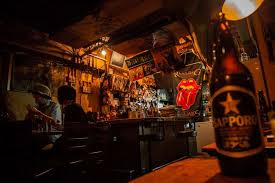
He has long greying hair and rotates through a collection of Rolling Stones T-shirts, something like twenty-eight of them. I have never seen him wear anything else. He smokes constantly, drinks Sapporo if he is drinking at all, and otherwise survives on black coffee.
Somehow he produces a full menu in a kitchen that appears to consist primarily of a Bunsen burner and sheer stubbornness.
Haku’s bar has rules. No Japanese music is the main one. The other rule is that the bar itself is reserved for singles. Groups can sit elsewhere. The bar is for individuals who have come out into the night alone.
But Haku’s real gift is music. He reads the room the way a card player reads a table.
If the crowd is German he might throw on Rammstein. If Scandinavians wander in the speakers might suddenly fill with black metal. Australians get The Saints. If I’m there he might put on My Morning Jacket. The world rotates through the speakers depending on who happens to be occupying the stools that night.
Simply and totally the original man.
Another citizen of the other city is Haru.
Haru manages the shisha lounge in eastern Gion, a part of town where the nightlife becomes a little more ambiguous. The streets there are full of micro-touts, men and women both, gently trying to guide passersby into Thai or Japanese dancer clubs. Small space heaters glow outside doorways and mama-sans smile from behind them like patient spiders.
I never go into those places, though the invitations are often persuasive.
Haru opens the shisha lounge most days at noon sharp. If she is not there, someone named B. or a long-haired young guy handles things until she arrives. She tends the charcoal, mixes my Malibu Milk, and quietly extends the session when the official time runs out.
She knows my habits well enough by now that when I head up the stairs she doesn’t assume I am leaving. She knows I am just stepping outside to smoke.
For a long time she existed in my mind simply as the shisha girl, one of the many figures who keep the other city functioning. But then one night I ran into her somewhere unexpected.
The place was Ishimaru Shoten, a tiny late-night bar down an alley just west of Pontocho in the heart of Kiyamachi. Outside the entrance hang bright red, green, and blue lamps that glow like a small carnival in the dark.
I first discovered the place at four in the morning on a very long night. I was broke that evening, absolutely skint, and there was a very aggressive Japanese guy at the bar who clearly believed the entire establishment belonged to him.
The bar woman, who is about forty-five and still hot as blazes, was batting her eyes at me with what seemed like professional enthusiasm. Meanwhile I realized with growing clarity that I did not actually have the money to pay for the large bottle of beer I had just ordered.
But men are predictable creatures.
I understood immediately that if I played my cards right the territorial guy would buy the drink for me. So I joked with him, gave him a friendly punch on the shoulder, made it clear I recognized him as the reigning emperor of the room. He razzed me a little but saw that I was no threat to his throne.
Sure enough, he covered the beer.
I stumbled home to the Royal Park Hotel on Sanjo Street as the sky was turning pale, crashing into bed around five-thirty in the morning.
Weeks later I returned to Ishimaru and found Haru sitting there.
I teased her gently about sometimes opening the shisha lounge five or ten minutes late when she bikes over from home. I suggested she must be hungover. She laughed, not the polite laugh people sometimes use for customers but a bright, real laugh.
She said she was happy to see me.
And that was when I learned her name. Haru.
We talked for a while. I drank a White Russian and ate dashi maki while she sipped something that might have been shochu or nihon-shu. I felt a strange rush of adrenaline the whole time, those goosebumps that run up both arms when the night suddenly opens into possibility.
Not necessarily romantic possibility. Just the larger sense that anything could happen.
Anything can come.
After twenty or thirty minutes she said goodnight and promised we would meet there again sometime. We did run into each other once more about a week and a half later, though the evening remained just as light and brief as the first.
But something had shifted.
She was no longer simply the shisha worker in my mental map of the city. She was Haru, a fellow traveler in the other city.
And that is the thing about the people who live their lives after midnight. They know parts of the city the rest of us never really see. They watch the celebrations and the arguments, the flirtations and the quiet breakdowns. They see who walks home alone and who finds someone to share the long dark streets.
Every city has two maps.
The one everyone uses during the day.
And the other one that only appears after midnight.
Dedication:
For the men and women of the night. Who keep the drinks coming and the plates spinning. It’s a rocky world, and you rock it baby.
Note: If you enjoyed this essay, you may also enjoy the two essays below, which also feature Kyoto and Osaka nightlife in all it’s beautiful glory.
Note: This is the second piece in our series “On Some Meetings and Close Encounters with Musicians.” You can find the first installment here.
The encounters described here span more than thirty years and several cities — from a first arena concert in Pullman, Washington in 1991 to small club shows in Cambridge, Osaka, and Kyoto over the decades that followed. As with many memories of live music, the exact setlists and dates blur, but the rooms themselves — the sounds, the atmosphere, the strange and fleeting meetings between artists and audiences — remain vivid. These sketches attempt to capture a few of those moments as they were experienced at the time.
Epigraph
No fears alone at night she’s sailing through the crowd
In her ears the phones are tight and the music’s playing loud
— Dire Straits, “Skateaway”
Live music produces strange meetings. Sometimes you meet the musicians themselves. More often you meet a moment — a room, a sound, a feeling that sticks with you for decades while entire years of ordinary life quietly disappear.
Here are a few such encounters.
I. Initiation
My first real concert was the On Every Street tour in 1991.
The band was Dire Straits, the venue was Pullman, Washington, and the company was the usual Spokane crew: Seth, Innes, Kelly.
I was the biggest fan in the car by far. The others liked the band well enough but I was the one who had studied the records, who knew the guitar parts, who was ready for the moment when the lights dropped and the first notes hit the arena. This was the On Every Street tour, which turned out to be their final record.
They played everything: Money for Nothing, Walk of Life, Sultans of Swing. It was a great show, and one of their last before retirement, though at the time I had no real way to judge such things. It was simply enormous — lights, volume, spectacle. I bought the black and blue tour shirt and wore it for five years.
At the time I thought concerts were supposed to be like that: huge, polished, and far away.
I would later learn otherwise.
II. Revelation
Several years later, during the Hamilton years, I saw Red House Painters at the Middle East in Cambridge.
I went with Ian. The room was small, maybe a few hundred people at most. Nothing about it resembled the arena in Pullman. And then, near the end of the set, Mark Kozelek began playing “Little Drummer Boy.” It lasted nine minutes. You could hear a pin drop in the room.
No spectacle. No lights. Just absolute concentration from everyone present. When the final notes faded the silence lingered for a moment before the applause came.
Afterward Ian and I drove back toward New York through the cold night with the windows cracked open, heaters flying out into the darkness, and Hell’s Ditch blasting through the car stereo to keep us awake.
That was the night I realized concerts could be something else entirely.
III. Chaos
Not every show produces reverence.
I once saw The Fall with Ian as well. The band’s leader, Mark E. Smith, seemed to be operating in his traditional mode of total hostility. The set was short — twenty-eight minutes by my estimate. Ian later checked the official record and insisted it was forty-three. Either way it felt brief and volatile. Smith barked into the microphone, glared at the band, and treated the entire enterprise with the air of someone barely tolerating the existence of the audience.
Which, to be fair, was exactly what many people had come to see.
IV. Theatre
The strangest performance I ever witnessed may have been Cat Power at Club Quattro in Osaka.
The evening began badly. An opening act — a woman in what appeared to be a fairy costume — sat at the piano and played for what felt like an eternity. Forty-five minutes at least. Perhaps longer. By the end of it the audience was openly confused.
Then Cat Power appeared.
Or rather she refused to appear in the conventional sense. Instead of remaining on the stage she wandered through the venue with a handheld microphone, singing and rapping while walking amongst the crowd, occasionally placing an arm around a patron or leaning against the bar.
At one point she came right up to where I was standing near the back rail and sang a line or two before drifting off again into the room.
The entire show felt less like a concert than a piece of improvised theatre.
V. Ritual
A few years later I saw Damo Suzuki at Club Metro in Kyoto. Damo had once fronted the legendary German band CAN, but this night bore no resemblance to those recordings. Nothing recognizable from the catalog appeared. And here he stood, just a few feet away from the audience with long black-and-grey hair flowing, bellowing and chanting over a constantly shifting improvisational band.
It was less a performance than a ritual.
Damo passed away not long ago. RIP and prayers up. I’m grateful I saw him when I did.
VI. Canada Night
Not all memorable shows are mystical.
Sometimes they’re simply loud.
One such evening occurred at Club Quattro in Osaka when Broken Social Scene and Death From Above 1979 came through town.
The Canadian ambassador was present and delivered a brief speech before the set explaining that Death From Above 1979 represented a fine example of Canadian enterprise because they were “only two men making so much noise.”
The room was packed with Canadian expats and the atmosphere was celebratory chaos. The ambassador was probably correct.
VII. Breakdown
Not every concert goes well.
I once saw Bonnie ‘Prince’ Billy at the small Kyoto venue Taku Taku. Something had clearly gone wrong with the lineup. The guitarist appeared to be brand new and could barely navigate the chords.
Will Oldham tried to push through but quickly grew frustrated and began openly calling the guitarist out from the stage. It was uncomfortable for everyone involved.
The show never recovered.
VIII. Redemption
Fortunately the story has a better ending.
Some years later I saw Bonnie “Prince” Billy again, this time at the beautiful Kyoto venue Urbanguild and everything worked great. Low benches and tables filled the room, Heartland beer bottles glowed green under the lights, and the band played a relaxed, confident set drawn mostly from the Bonnie “Prince” Billy catalog with a few Palace songs mixed in.
Opening the evening was an instrumental group called Bitchin Bajas whose sound reminded me faintly of early Phosphorescent if Phosphorescent had chosen to make instrumental records. After the show I found myself talking with three members of the band while they drank beer and ate fries. They were humble, friendly, and slightly surprised that anyone in Kyoto knew who they were. We talked for a while about touring and the constant challenge of trying to make a living as working musicians. Eventually the conversation drifted off and the room began to empty.
The music was over. The musicians were just people again, finishing their drinks and preparing to move on to the next city. And that, in the end, may be the most interesting encounter of all
Dedication
For live music fans everywhere. My true people. I love you baby.
Note: If you enjoyed this essay, you may also enjoy the essay below on the four time I met Yo La Tengo. Happy reading!
Note: Today I’m revisiting a travel vignette about hierarchy, ritual, and the strange ways institutions manufacture “events.” It features a Big Man, a flawless flunky, Jung on surrealist art, and a ceremonial poster board signing that may or may not have meant anything at all. A quiet question lingered long after the ceremony ended. As always, judge for yourself.
If you enjoy this piece, you may enjoy my analysis of the underground rapper and crypto-hacker, Razzlekhan. You can find it here.
Yeah, I met Lou Reed and Patty Smith
It didn’t make me feel different
Conor Oberst
I visited China a number of years ago with a highly ranked member of my university structure and a flunky. My own participation was last-minute as I was filling in for someone else. I guess in a way I was a flunky too. Certainly it was the big man’s show from start to finish.
We visited a number of schools and also met with a business guy who was working very hard to transact with our group something so complex that I never even began to grasp the shape of it despite sitting in multiple meetings around the matter.
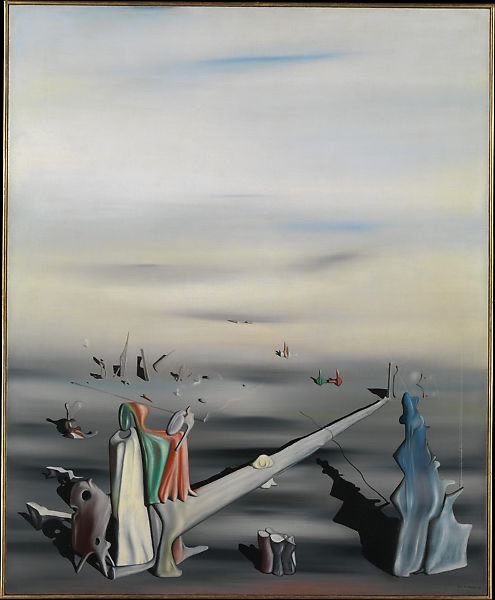
The trip was interesting for a number of reasons. The big man barely spoke to me for the first few days despite spending all day together. The schedule was brutal. I was reading Jung On Art on my phone as I was enrolled in on online course I never finished. Jung On Art is great and spends a lot of time on the surrealist painter Yves Tanguy. Finally the big man took a long look at me and said (in Japanese) “you read a lot, don’t you?” I confirmed this, and after that he spoke to me a little more.
The flunky was an archetype of the species. He handled the schedule, made the trains run on time. He did nothing else and deferred to the big man on absolutely every non-schedule related matter. My own strongest contribution to the proceedings was occupying the attention of a friend of the business man during an excruciatingly protracted whisky drinking session so that the business guy and the big man could talk turkey. I am not a great whisky drinker for some reason and making sensible small talk for three or four hours over whisky took a truly heroic effort.
The business guy had a kind of a house in a kind of a hotel, it was hard to say. A full staff was on hand to serve us a full course Chinese meal with white and red wine. This was before the whisky. It was a scene, all the way.
Anyway, all of that is context. I want to write about a specific incident that occurred when we visited one school. The principal who received us knew the big man and we were received by a group of about eight people. We got the school tour. Now, school tours are an occupational hazard in my line of work, and I have trained myself to be a durable recipient. But I don’t really like them. We went through the formalities, which predictably took forever. I daydreamed about Yves Tanguy and bed.
Toward the end of the tour we reached a wall with the school name or emblem on it. Here, the principal paused and asked the big man to write some Chinese characters on some poster board. This was to mark his visit, to consecrate it in a sense. The whole group fanned out into a kind of semi-circle and the big man went through a series of highly performative grimaces to index his deep thought. Or maybe he just didn’t know what to write. I certainly wouldn’t have. Finally he took the pen and with the pomposity of a South American dictator wrote a few characters. The message, to my recollection, was underwhelmingly anodyne. Basic. Or maybe it was gnomic and brilliant. In either case the audience made appropriately awed sounds. I murmured my own supposed appreciation–the role of the acolyte was there to be filled after all. The poster board was then displayed with a flourish on the wall.
At first blush I found the entire episode both deeply interesting and deeply narcissistic. However, the big man was invited to contribute some characters and he did so, so in that sense fair enough. Let’s zoom out a little before rushing to judgment.
You know how some restaurants and bars will have signed pictures of famous people that visited on their walls? Mickey Mantle, Bob Hope, Stallone, whatever. In these cases the visit of the celebrity was an event in the life of the establishment. It merited consecration across time. I understand this. But the big man was not a celebrity in any real sense. He was a university bureaucrat with a taste for acting like a big shot.
But maybe I’m seeing this all wrong. Because there was actually a hint of the classical in the occasion. A host had received an honored guest. The honored guest was asked to bestow words of wisdom and afforded space to do so. The whole performance was approached with apparent complete sincerity by all involved. I was probably the only one not acting in good faith. My feelings at the time were the same as they are now; on the one hand the whole thing was super pompous, on the other hand it had an old-world ceremony that I am not exactly against. An event should be eventful–my little motto–may at times create an unrealistically high bar for situations to rise to. Still, I have a nagging feeling that this visit was not of a sufficiently high caliber or general import to require consecration in kanji.
You know how in the old days a person would take a letter of introduction with them when visiting a new country and would receive an audience on the basis of this kind of letter? That’s probably an almost entirely lost art. When you presented someone with a letter of introduction, as I imagine it, you were then received. Your visit was authorized and elevated into a thing, an event. The eventification of aspects of life is important, even vital, however maybe we are going about the equation backwards. I go to see a lot of live music and at the end of the show the band will often gather at a table to sign merchandise and such. The opportunity to meet the band, if offered, is cool–I’m all behind it. However I myself often skip these lines, even if I love the band. This is because the chance to meet the band and have an experience of doing so is a built-in aspect of the entire evening and therefore pre-eventified so to speak. It’s still cool, but I’m not sure pre-eventified events are best positioned to be eventful. The true event takes place without being pre-planned. The true event emerges and cannot be structured. Most of the time when I see a supposed event transpire, an opening ceremony of some event for example that has been obviously rehearsed, I can barely suppress a yawn. In the immortal words of The Replacements, “color me impressed.”
The epigraph for this piece is from Conor Obrest’s 2016 song “Next of Kin.” It’s a jaded coda to a meeting that we might have supposed would have been eventful, and also a wry recognition that whatever happens to us we are always left with ourselves again. I saw a man sign a poster board. It didn’t make me feel different.
Note: If you enjoyed this piece, you may also enjoy “On the Centrality of the No Helmet Law.” Available below.
Note: This is the first chapter of my upcoming novel, The Adventures of the Thin Man and Andrea. You can read a later chapter about the Thin Man’s romance with Vivian in Rome here:
It’s predicted to rain on landing/ I predict we’ll have a drink
Paul Westerberg
Dateline Singapore: Late October
This little country, such an unlikely success story, such a strange winding of forces. The thin man has been on land for five weeks after his latest gig on the cruise ship, and though his stomach is still in limbo his sea legs have mostly subsided.
Now there is nothing more that the thin man wanted after washing up here earlier in the season then a long weekend. Say, five years. Five years in the hammock, five years frolicing with the lovely ladies at the bar. The occasional speedboat ride, a flyer or two over in Macau. Five years out of the swim of modern capitalism, if you can even call it that. Five years clean. That was the dream. Five weeks on land though and the thin man is looking for work, the money gone in a haze of long days and longer nights. Wine, women, song, and a speedboat ride or two will add up quick. C’est la vie partner. That’s what comes from burning holes up to heaven.
Still, the thin man has a few dollars in his pocket as he walks into a bar just outside of Chinatown. Halloween is approaching, and the proverbial Spooky Lady’s Sideshow is in full effect. The barmaids are Eyes and Baby, or is she Baby Blue? In any case, the thin man and Eyes make eyes, in an innocent way, so the story is told.
The thin man orders a Cognac and ambles over to the pool table where the nine ball is always on. Eyes sizes him up quick, guesses he can play a bit. A game is proposed, a game for two players.
But of course no game is really ever between two players alone. Baby’s watching—tough to tell her rooting interest. And, after Eyes breaks and a few balls fall, the bar as a whole starts tuning in to the frequencies of the game as the regulars make small talk and the travelers weak-tea passes at the local girls. Local girls are no push-over; sometimes folks get the wrong idea on that end. The thin man always did like the locals; heck, it’s part of the travelers’ creed. After all, everybody is a local somewhere. Certainly Eyes and Baby could take care of themselves.
Eyes missed and the thin man was able to sink a few easy balls before Eyes surged back, she’d been around more than she looked. She was an expert at drinking what the punter was drinking. That’s a key part of the art of the barmaid, an underrated profession at the best of times.
The game is nine ball, what else? Eight ball is for rookies, a southerners game. The thin man hails from the north; he knows a thing or two about sequencing. You see, the thin man had had a bit of a specialized role onboard the cruise ship where he had worked as a dealer in the casino. As a result, he also possesses some of the skills of a card shark, a mechanic. Sequencing goes with the territory of a mechanic, after all.
Mid-game and the thin man is beginning to fade a bit–the combination of Eyes’ eyes, and a cheeky Cognac or three is taking its toll. Eyes sinks the 8 and only the 9 ball is left. It’s a touch and go situation. The skeletons muse over the action with as much interest as they can muster from beyond the great blue veil. The couple on the rail stops sniffing whatever they are sniffing, and ask the thin man to join them for a round. No time for that. Cheeky Cognacs and beady cat eyes aside, a game is a game.
A couple of desultory shots bounce about as the players size each other up. Baby leans in; the skeletons whisper sweet somethings, even the bartender sneaks a peek. Everyone is getting paid, except the thin man. He is just there for the action.
Eyes edges the nine right up to the pocket, leaving the thin man a clean shot. He leans in from the left and drops it, silky smooth like. Baby claps and Eyes bats. Game over, though the thin man knows that Eyes could have had him the whole time. She was just being hospitable. A good host for a weary traveler.
The game over, the thin man’s thoughts turned to more practical considerations. He needs a place to stay, and though the nine ball had brought them all together, he didn’t think Eyes or Baby would necessarily take him in. He’d probably need to establish himself as a bit of a regular first before having a shot at any of that action. But the thin man is a gamer, constitutionally unable to categorize situations as problems. No problemo senor, no worries mate. He does, however, have a few issues, the first being he is unemployed and pretty much out of cash. So, he’s asked around, kept his ear to the wind. A fellow traveler there on the ship had turned him onto a broker of services of sorts, the kind of individual who specializes in assisting upstanding institutions with their shining mission statements and their CSR campaigns navigate the grey areas of competition and market position. He has the number for this broker in his pocket, and asks to use the bar phone to give him a call.
The broker picks up right away, saying “yeah, your buddy mentioned you might be looking for a little work. I think I can put something together.”
“That’s good,” says the thin man. “Any chance of a hotel for the night in the meantime?”
“Sure, said the broker. Head over to the 1887 in Chinatown. They’ll have a room in your name. What is it, by the way?”
“Let’s go with ‘Jack Bishop.'”
“That’ll work. I’ll meet you at breakfast at 8.”
The 1887 sounds incredible, thinks the thin man. Rock n’ roll.
New Note: I am republishing this piece for two reasons: First it’s been three years since I wrote it and it is one of my all time favorites. Second, as the title shows the politician Rahm Emmanuel makes a cameo and there is at least a possibility that he will run for President in 2028. This is a funny piece and it totally speaks for itself. I hope you like it.
Note: This is a piece about a guy called Whit. Over the past little while I’ve run into this guy in a couple of craft beer pubs in North and Central Kyoto. In a sense, it’s faithful to the original intention of thekyotokibbitzer—to check stuff out around the local area. Naturally, “local” is a highly fungible term, which is what makes it so excellent, but it feels good to get back to basics.
Interested readers may also want to revisit my earlier piece about my North Kyoto run-in with musician Damon Krukowski—currently a prominent critic of Spotify’s business practices, but formerly a dick to my face.
I met this guy called Whit at a Kyoto pub we’ll call T’s. T’s is owned and operated, naturally enough, by T. It’s a pretty nice place, although not everyone thinks T is a nice guy. He and I, though, rub along fine. T likes to wear sandals. So do I.
T’s seats about twenty-odd and lets people stand around without a chair, so it can get crowded. On the night I met Whit, though, it wasn’t. There was just me at the L-shaped corner near the entrance, Whit and three male friends at a table, a lone woman mid-bar, and a few other strays.
Whit and his buddies were winding things down, and before they paid, Whit sidled up to the lone woman.
“Genki desu ka?” he asked.
To understand what’s happening here, you need a little context on the phrase. Literally it means “are you cheerful?” but in practice it’s “how are you?” — a totally standard, everyday greeting. It is also, however, a classic Japanese pick-up line. Both the pickup artist and the garden-variety sleazeball deliver their “genki desu ka” with a little extra—an undertone, a wink, a leer.
This guy called Whit, I could see immediately, was leaning heavily into the leer.
I have no idea of how this guy called Whit would have fared with his approach if it had been allowed to develop because T himself came flying around the bar and snapped at Whit (in Japanese) “don’t talk to her, get away from her.” As a mere observer to the developing situation this seemed excessive, especially because T’s is the kind of place where fairly easy conversational congress between the sexes is not only tolerated but actually encouraged. T and his crew will proactively introduce men to women and women to men on the regular. Later in the evening, all sorts of events may transpire at T’s. So this was out of character for sure.
This guy called Whit was taken aback, and soft-pleaded with T to let him join the woman, however T was firm. “If you don’t go back to your table you will have to leave. If she comes to talk to you you can talk to her. Not before.” Again, I cannot stress enough how out of character this is for T’s, so naturally I was curious. I am not normally nosy, however when curious I can be. Whit took the L and slunk back to his table. His friends didn’t seem to have noticed the action, but I did, so I said to him, “hey man, that was pretty crazy. What did you do?” “Nothing,” said Whit, “I just wanted to talk to the lady.” “Yeah,” I said, “I’ve never seen T react that way.” “He just doesn’t like me,” said Whit, “maybe I’ll never come back here.”
Whit and his crew left shortly after and I asked T what was going on. “Whit always hits on women,” he explained, “I don’t like it.” “What about Philip?” I asked (“Philip” here being someone T and I both know), “Philip is always hitting on women too.” “Case by case,” said T, “case by case.” Case by case arguments are very hard to rebut as they index in advance their non-adherence to norms of “fairness” or “consistency.” Also, I knew nothing about Whit and was in no way invested in manning his corner. T and Whit have a history, I supposed, and T would not kick a customer out just because. Such was my first meeting with this guy called Whit.
Not long after this first meeting I was with a friend at a pub we will call K’s, which is in Central Kyoto. K’s is smaller than T’s, seating only about 8-10 inside with some flexible outdoor space as well. Unlike T’s, at K’s there is not much flirting and the like as the space just doesn’t really allow for it. I was there with a buddy and who should come in but this guy called Whit. Now I didn’t mention that at T’s Whit had an American accent. (I later learned he is from Philadelphia by way of San Fransciso.) However he rolled into K’s rocking a full-on British accent, and not a bad one at that. He was standing right next to me, and I did a double take. “That’s that guy called Whit,” I thought, “but it can’t be, Whit’s American.” I looked again. Definitely Whit.
So I asked him, “hey guy called Whit, what’s with the British accent?” He slipped back to his American accent, “oh yeah mate, that’s just something I do sometimes.” OK. We chatted a bit and it was clear that he didn’t recognize me. I reminded him of our meeting at T’s, and he recalled the incident. But I could tell he wouldn’t remember my name next time. He left K‘s after one beer.
My buddy hadn’t met this guy called Whit before, however I had already told him the story of his getting shit-canned at T’s. “That was the guy,” I told him, “the guy called Whit.” “What was with the British accent?”my buddy asked. “I don’t know, some kind of affectation. Maybe he lays it on when he tries to pick up women.” Just a guess on my part, but a pretty good one considering later events.
A few weeks later I was at a pub we will call M’s, also in North Kyoto with another friend we shall call “Philippe” in order to easily differentiate him from “Philip.” It was just before seven in the evening, when who should walk in but the guy called Whit with none other than the newly appointed United States Ambassador to Japan Rahm Emanuel and his wife Ann. They just strolled on in and it was clear that Whit was somehow chaperoning them. I stared over at Rahm Emanuel for a bit and then said “hey there Mr. Rahm Emanuel.” Rahm Emanuel (or just Rahm, as I like to call him) acknowledged his identity and he and I started chatting. At the same time Ann was chatting with old Philippe there at the bar. Before I said hello to Rahm I wondered what on earth he was doing with Whit. And then I thought well, I know Whit doesn’t have a job, he seems to frequent pubs all the time, probably he has some money somewhere, tech money or something. Maybe he’s some kind of VC and the Rahmster has gone out of his way to meet him in Kyoto. Implausible as this scenario seemed, I didn’t know what another explanation for this threesome could be. However, I was off-base.
Had this guy called Whit in fact been a prominent VC it would have added layers to my understanding of him for certain. So I asked him, “hey there guy called Whit, how do you know Rahm Emanuel?” “I just met him,” he replied, “across the street at L’s. We got to talking and I brought him over here.” (L’s is a cocktail bar I have never been too, which is 15 feet from K’s.) It turned out that Rahm and Ann were in Kyoto en route to Hiroshima where they were to visit the Hiroshima Peace Museum with none other than the Prime Minister of Japan. In the meantime here they were, hanging with Whit. Rahm explained the situation thusly: “here in Kyoto my minders let us off the leash so we can walk around freely. This would never happen in Tokyo, because we have security around us all the time.” He seemed genuinely happy to be minderless, and was as relaxed as could be at the bar. In no time he was dropping f-bombs, dapping up the waitresses, and asking me how to say things in Japanese. Rock and roll Rahm baby.
(As promised in the title, Rahm is only supposed to have a cameo in this story, however I have to recount our brief conversation about politics. After I introduced myself, Rahm asked me “are you on the team?” I understood him to mean was I a Democrat. I replied that I was basically on the team, but that I was kind of a left libertarian. “No such thing,” said Rahm. “Well then you’re looking at a unicorn baby,” said I.)
In any case, once I had gotten a bit of a feel for my new buddy Rahm I had to fill him in on something. “Hey Rahm, you know this guy called Whit likes to go into bars and put on a fake British accent?” Rahm didn’t miss a beat as he turned to Whit and, I swear, elbowed him in the ribs, saying “did that help you score buddy? Did you get across the finish line?” Rahm Emanuel, former chief of staff to President Obama, former Mayor of Chicago, and presently the honorable ambassador to Japan, had already grasped the essential nature of this guy called Whit. And he, for one anyway, had no issues with it.