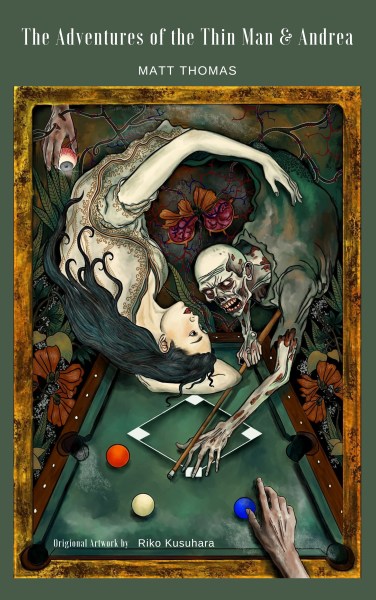
Some Everyday Catalyzed Emergencies

Note: The examples in this piece are drawn from moments in my own life where the structure I call a catalyzed emergency appeared in miniature.

What these moments share is not their subject matter but their pattern. A system—whether emotional, institutional, or social—exists in a temporary equilibrium. Then a relatively small catalyst activates tensions that were already present beneath the surface. Once activated, the situation accelerates and decisions that previously seemed distant are suddenly made in real time.

In each case, the catalytic moment itself was small: a candid remark during a conference break, a humorous but revealing line in a professional meeting, or a single sentence spoken in a social situation. Yet in each instance the effect was immediate. The atmosphere shifted, ambiguity collapsed, and the underlying structure of the situation suddenly became visible.

The personal examples described here are therefore not offered as dramatic events in themselves. Their significance lies in the way they illustrate, at the scale of everyday life, the same structural pattern that appears in larger historical crises.

Catalyzed emergencies, it turns out, are not rare occurrences reserved for moments of world history. They happen quietly and frequently in ordinary human experience.

Once you begin thinking about catalyzed emergencies, it becomes difficult not to see them everywhere.

Most of life proceeds in a kind of provisional calm. Conversations unfold along familiar paths. Institutions conduct their meetings, relationships drift through their usual rhythms, and the tensions that exist beneath the surface remain politely contained. Decisions are postponed. Conflicts are softened by habit. The system holds together because nothing has yet forced it to reveal its deeper structure.

Then something small happens.

A sentence is spoken a little too plainly.
A truth appears unexpectedly in the middle of a casual conversation.
Someone says something in a meeting that suddenly exposes the machinery of the institution.

The catalyst itself is often tiny compared to the shift that follows. Yet once it occurs, the atmosphere changes almost immediately. Decisions that once felt distant suddenly move into the present. The underlying structure—emotional, institutional, or relational—becomes visible.

Once you start noticing these moments, you realize they are everywhere.

I remember one such moment during a conference break with the young woman I call Isobel. We were talking in that loose, slightly intimate way people sometimes do between sessions, when the formal structure of the day has momentarily dissolved. The conversation drifted into unexpectedly personal territory, and at one point she mentioned something about her private life that was startlingly candid.

The remark itself was quiet and almost offhand. Nothing in the hallway changed. People were still pouring coffee, drifting between rooms, checking their schedules. The conference continued exactly as it had a few minutes before.

Yet internally something shifted very quickly.

A boundary that had previously existed only as an assumption was suddenly visible. The emotional geometry of the situation rearranged itself in an instant. It was one of those moments when the surface calm of an interaction suddenly reveals the deeper structure beneath it.

Looking back, it was a perfect example of a small catalyzed emergency. The remark itself did not create the tension that followed. It simply activated something that had already been present but unspoken.

Institutional life produces similar moments, though usually in a different register.

Years ago I attended a meeting where Steve Keegan, then responsible for development at the International Baccalaureate, delivered one of the most unintentionally perfect lines I have ever heard in a professional setting. Attempting to strike a tone of humility, he reassured the room that the organization should not think too highly of itself.

“We are not special,” he said.

Then, after a brief pause that only improved the effect, he added:

“Of course we are unique and special in many ways.”

The room erupted in laughter, not because anyone intended to mock him but because the remark revealed something everyone recognized instantly. Institutions often survive on carefully balanced narratives about themselves—humble yet exceptional, ordinary yet distinctive. When those narratives momentarily contradict themselves in public, the entire room suddenly becomes aware of the structure holding the organization together.

Again, the catalyst was small: a single sentence.

But in that moment the underlying psychology of the institution briefly revealed itself. Everyone in the room could see the gears turning.

The same pattern appears in more personal moments as well, sometimes with surprisingly decisive consequences.

I remember a night when a man was attempting to pick up Mariko. It was the sort of situation that unfolds quietly in bars and restaurants all over the world—nothing dramatic, just two people talking while someone else tries to determine what role they themselves are supposed to play in the unfolding scene.

For a while the equilibrium held. The conversation drifted, the man continued his efforts, and I watched the situation with the vague uncertainty that sometimes accompanies these moments. Was I a bystander? A friend? Something else?

Eventually I said something very simple.

“We’re together.”

That was it. A single sentence. A declaration that had not existed in explicit form until the moment it was spoken.

But the effect was immediate.

The conversation stopped. The geometry of the room rearranged itself instantly. What had previously been ambiguous became clear. The situation resolved itself within seconds.

Looking back, it was another catalyzed emergency. The sentence itself did not create the underlying possibility. That possibility had already been present in the emotional structure of the evening. What the sentence did was activate it, collapsing uncertainty into decision.

The remarkable thing about these moments is how small they often appear at the time. They do not arrive with the dramatic clarity of historical turning points. They slip quietly into the flow of ordinary life—a conversation during a break, a remark in a meeting, a sentence spoken in a bar.

Only later does the pattern become visible.

Most of life feels gradual while we are living it. Days follow one another in a steady rhythm. Institutions maintain their procedures. Relationships drift along familiar channels. The tensions that shape events accumulate quietly beneath the surface, rarely forcing themselves into view.

Then something small happens.

A remark.
A confession.
A declaration.

And suddenly the structure reveals itself.

The catalyst may be nothing more than a sentence spoken at exactly the right moment. But once the reaction begins, the system rarely returns to its previous state unchanged.

Note: This is Part III is our series on the concept of the “Catalyzed Emergency.” You can read the other two essays below.

In Defense of Conor Oberst

Note: This essay focuses on the songwriting of Conor Oberst and the broader arc of his work as a writer and performer. It does not attempt to settle every critical debate about his career or evaluate the many shifting narratives that have surrounded him over the years.

Instead, the argument here is simpler: when listeners return to the songs themselves — especially pieces like “Cape Canaveral,” “Easy/Lucky/Free,” and “I Didn’t Know What I Was In For” — the caricature of Oberst as merely an overwrought diarist becomes difficult to sustain. Whatever one thinks of the mythology around him, the writing continues to reward careful listening.

For more than twenty years now it has been fashionable to treat Conor Oberst as a kind of permanent adolescent: the patron saint of overwrought confession, the boy genius who mistook emotional intensity for wisdom and simply never grew out of it. Even listeners who admired the early records sometimes adopt a gentle condescension when talking about him now. Those songs were powerful, they say, but they belonged to a particular moment — a moment of youthful melodrama that serious listeners eventually leave behind.

The outline is familiar. Too many feelings. Too many words. Too much trembling urgency in the voice. Somewhere along the way Oberst became shorthand for the idea that emotional sincerity, taken too far, turns embarrassing.

But like many tidy cultural narratives, this one collapses as soon as you start listening carefully again.

The first thing worth remembering is that Oberst began writing and recording music at an age when most people are still learning how to articulate their own thoughts. The early Bright Eyes records captured something very specific: the internal weather of late adolescence and early adulthood. The confusion, the moral absolutism, the sudden swings between despair and hope. Critics often call this melodrama, but melodrama is sometimes just another word for emotional honesty before the world teaches you to disguise it.

What Oberst did during those years was document the process of becoming a person. The songs are full of doubt, self-contradiction, and grand declarations that may not survive contact with reality. But that is exactly how young consciousness works. It moves through extremes. It searches for certainty and then dismantles it. Listening to those records now is less like hearing a performance than like reading a diary written in real time while the author tries to understand himself.

The voice, which so many critics found grating, was central to that effect. Oberst sang as if the words were arriving at the exact moment he needed them. The wavering pitch, the occasional cracks, the sense of someone pushing language slightly faster than it could comfortably travel — all of that created the feeling of urgency. It sounded like a mind thinking out loud.

The strange thing about Oberst’s career is that this intensity became the very thing people later held against him. Emotional transparency, once celebrated as authenticity, gradually hardened into caricature. Listeners who had grown older began to treat the songs as artifacts from a younger self they preferred not to revisit. Oberst did not change enough for some critics, while for others he changed too much.

But the best way to understand his writing is to look closely at several songs that capture the full range of what he does. “Cape Canaveral,” from his 2008 solo record, is often cited by fans as one of his finest achievements, and for good reason. The song moves with a calm, reflective confidence, drifting through memory, regret, and travel before arriving at a quietly devastating insight: “Every time I try to pick up the pieces / Something shatters.” The writing has none of the frantic urgency critics associate with Oberst. Instead it feels mature, patient, almost philosophical — proof that his gift for emotional clarity did not disappear when he left his early twenties.

Another example arrives with “Easy/Lucky/Free,” one of the defining songs from Digital Ash in a Digital Urn. The track looks outward rather than inward, sketching a world where technology and surveillance gradually erode the illusion of personal freedom. The chorus lands with a mixture of dread and irony that feels more prophetic with every passing year. What might once have sounded like youthful paranoia now reads as a remarkably prescient meditation on the digital age.

And then there is “I Didn’t Know What I Was In For,” perhaps the most quietly devastating song of Oberst’s middle period. The track unfolds with almost conversational simplicity, recounting memories of youth, friendship, and the slow arrival of adult responsibility. By the time the final lines arrive — “You said that you hate my suffering / And you understood / And I said that I love you too” — the song has achieved something rare: a portrait of adulthood that feels honest without becoming cynical.

Taken together, these songs reveal the real architecture of Oberst’s songwriting. Beneath the reputation for emotional excess lies a writer deeply concerned with memory, time, and the fragile ways people try to make sense of their lives. His best work captures the moment when experience shifts from confusion into recognition — when a half-formed feeling finally finds the right words.

Another reason Oberst’s work continues to resonate is that he writes from inside experience rather than from a critical distance. Many songwriters polish their observations until the emotional edges disappear. Oberst tends to leave the edges intact. His songs preserve the awkwardness, the uncertainty, the half-formed thoughts that accompany real moments of reflection. The result is sometimes messy, occasionally excessive, but often uncannily recognizable.

This quality also explains why Oberst has remained so influential among younger songwriters. He helped create a space in indie music where vulnerability could coexist with literary ambition. The songs suggested that personal confession and careful craft were not mutually exclusive. For a generation of listeners trying to articulate their own emotional lives, that permission mattered.

None of this means that every Oberst record works equally well, or that every lyric survives scrutiny. A career built on openness will inevitably produce uneven moments. But the larger body of work tells a more interesting story than the caricature of a permanently anguished songwriter. It shows an artist who has spent decades documenting the slow evolution of a restless mind.

And perhaps that is the real reason Oberst continues to provoke such divided reactions. His songs refuse to adopt the protective distance that many listeners eventually develop toward their own past selves. Instead they remain exposed — still searching, still uncertain, still willing to ask questions that adulthood often teaches us to bury under routine.

In that sense the emotional intensity people once dismissed as youthful melodrama begins to look different. It becomes a record of someone refusing to abandon the difficult work of feeling deeply about the world. For listeners willing to meet him there, the songs offer something rare in modern music: the sound of a consciousness continuing to unfold, one uneasy thought at a time.

Note: This is the third piece in our series “In Defense Of.” Iy you enjoyed this essay, you may also enjoy the one on Mark Kozelek. You can access it below.

In Defense of Mark Kozelek

Note: This essay addresses the artistic approach of Mark Kozelek as a songwriter. It does not attempt to evaluate or adjudicate the various personal controversies that have circulated around him in recent years, many of which remain publicly disputed and complex.

The focus here is narrower: how Kozelek’s long-form, diaristic songwriting works as a musical method — particularly in songs like “Ali/Spinks II,” where ordinary details accumulate into something emotionally larger. Whatever one thinks of the artist as a person, the question of how the music itself functions remains worth examining on its own terms.

For several years now it has been fashionable to treat Mark Kozelek as something like an exhausted case: a brilliant songwriter who wandered too far into self-absorption, whose songs became too long, too diaristic, too willing to linger on the small debris of daily life. Even some longtime listeners have adopted the shorthand. Early records were masterpieces; later ones were indulgent. The verdict sounds tidy. But like most tidy verdicts in music, it collapses as soon as you start listening again.

The basic complaint about Kozelek’s later work is well known. The songs stretch past ten minutes. The lyrics catalog ordinary events: hotel rooms, meals, airports, old friends, television shows, half-remembered conversations. The narrator seems to be narrating his own day in real time, occasionally pausing to note a basketball score or a passing cloud of melancholy. To critics raised on the discipline of verse-chorus songwriting, this can sound like navel-gazing elevated to an art form.

But the strange thing about Kozelek’s music is that the minutiae are not actually the point. They are the atmosphere. His songs work less like traditional compositions and more like extended walks through consciousness. The grocery lists, the memories of old bands, the stray anecdotes about touring musicians — all of it forms the texture through which something else slowly emerges. A mood. A sense of time passing. The feeling of being a person moving through an ordinary day while carrying decades of memory.

The best way to understand this approach is to listen carefully to “Ali/Spinks II,” one of the central tracks from Benji. The song begins almost casually, recounting the death of Kozelek’s cousin and drifting through fragments of memory connected to that loss. There is no obvious structure, no chorus that arrives to organize the material. Instead the narrative moves the way memory moves: sideways, unpredictably, circling back on itself. The details accumulate slowly until the emotional core of the story becomes unavoidable. What begins as a series of seemingly unrelated observations eventually reveals itself as a meditation on grief, family history, and the strange ways tragedy ripples through ordinary life. The song is long, messy, and digressive — and it works precisely because of those qualities. “Ali/Spinks II” is not merely an example of Kozelek’s method; it is the test case. If the listener accepts the logic of that song, the entire later catalog suddenly makes sense.

This approach did not come out of nowhere. Kozelek has always been a writer drawn to the long arc of a song. Even in the early days of Red House Painters, the music moved at a patient pace, letting chords hang in the air while the lyrics circled around regret, nostalgia, and quiet observation. What changed later was not the impulse but the level of exposure. The lens moved closer. The songs stopped pretending to be about characters and admitted they were about the singer himself.

For some listeners that shift felt like a loss of mystery. But there is another way to hear it. Kozelek’s later records are essentially field recordings of a mind at work. They capture the strange mixture of memory, boredom, humor, irritation, and melancholy that makes up ordinary consciousness. Most songwriters edit this material down to the highlights. Kozelek leaves it mostly intact. The result is less like reading a poem and more like sitting beside someone during a long drive while they talk about whatever crosses their mind.

The famous outbursts that circulate online tend to obscure this. Kozelek has never been particularly careful about public performance of personality, and that roughness often dominates the narrative around him. When he released the song “War on Drugs: Suck My Dick,” a public feud with The War on Drugs instantly became the headline. The track was petty, funny, abrasive, and entirely unnecessary — which is to say it was perfectly consistent with the same impulsive candor that fuels his songwriting. Kozelek has never seemed particularly interested in polishing the public version of himself.

But the deeper argument about his music usually centers on the accusation of self-indulgence. Why should listeners care about the details of a songwriter’s daily routine? Why should a song wander through anecdotes about hotels, meals, or aging friends? Why should anyone sit through ten or twelve minutes of conversational narrative when a tight three-minute composition could deliver the emotional payload more efficiently?

Kozelek himself once answered that question in a line that perfectly captures his stubborn philosophy: he said he liked playing shows for “dudes in tennis shoes.” The phrase sounds casual, almost dismissive, but it carries a small manifesto inside it. He is not writing for critics parsing lyrical elegance or for industry tastemakers deciding what counts as proper songcraft. He is writing for ordinary listeners who recognize the shape of everyday life — the boredom, the odd digressions, the strange humor that creeps into conversation when people talk long enough.

In that sense Kozelek’s songs resemble a certain kind of late-night storytelling more than traditional music. Imagine someone sitting across the table recounting a memory that begins in one place, wanders through several unrelated details, circles back to a childhood story, and eventually lands somewhere unexpectedly moving. The emotional impact arrives not through compression but through accumulation. You spend time inside the story until its meaning quietly surfaces.

The length of the songs, which so many critics treat as evidence of indulgence, is actually central to the effect. Time itself becomes part of the composition. The listener settles into the rhythm of the narration. Small details begin to gather weight simply because they have been allowed to exist long enough. By the time the song ends, the ordinary events that seemed trivial at the beginning have become part of a larger emotional landscape.

This is not the only way to write songs, and it is certainly not the most efficient one. But efficiency has never been Kozelek’s artistic goal. His music belongs to a tradition of artists who treat the everyday as worthy of sustained attention. The diary becomes the canvas. The passing moment becomes the subject. Instead of distilling experience into a polished metaphor, the songwriter simply records the experience itself and trusts that meaning will accumulate over time.

If that approach sometimes borders on excess, it also produces moments that feel uncannily real. A stray observation about a friend can suddenly open into a meditation on aging. A casual mention of a hotel room can turn into a reflection on the strange loneliness of touring musicians. The emotional truth arrives sideways, hidden among the details of ordinary life.

Which brings us back to the central criticism: that the songs are too long, too detailed, too inward. All of that is true. But it may also be precisely why they matter. Kozelek’s music asks listeners to do something that modern culture rarely encourages anymore — to slow down, to sit with the flow of another person’s thoughts, to accept that meaning often appears gradually rather than in a neatly packaged chorus.

Not every listener will have patience for that. But for those willing to spend time inside the songs, the reward is a strangely intimate experience: the feeling of inhabiting someone else’s memory stream for a while. The tennis shoes crowd, in other words, may understand something that critics occasionally miss. Sometimes the most honest art does not arrive in the form of a perfectly shaped statement. Sometimes it arrives as a long conversation that refuses to end too quickly.

In Defense of Ryan Adams

Note: This essay is not an attempt to defend Ryan Adams the person. It’s an attempt to defend the continued seriousness of the music. The distinction matters, even if our cultural conversations sometimes pretend it doesn’t. Also, I fucking love Ryan Adams. He is the motherfucking man.

Epigraph:

“When the stars go blue.”
— Ryan Adams

For several years now it has been socially safer to treat Ryan Adams as a closed case: talented songwriter, personal flaws, cultural exile. The outline is familiar enough that most people no longer bother to revisit the work itself. But the strange thing about Adams is that the songs refuse to cooperate with the narrative. They remain stubbornly alive — hundreds of them scattered across albums, demos, and late-night recordings — carrying the same bruised intelligence that first made people pay attention twenty-five years ago. At some point the question stops being whether Ryan Adams is an admirable person. The real question becomes harder and less comfortable: what do we do with an artist whose flaws are obvious but whose music continues to tell the truth in ways very few writers can manage?

Part of the problem is that Ryan Adams belongs to an older model of songwriting — the kind where the emotional life of the artist is inseparable from the work. The songs are confessional without being literal, personal without being autobiographical in any simple way. From Heartbreaker on to today, Adams has always written like someone sitting in the wreckage of his own choices and trying to understand what just happened. That voice — raw, impulsive, often heartbroken, sometimes self-pitying, often painfully perceptive — was never tidy. It wasn’t supposed to be. The appeal of Adams at his best has always been that the songs arrive before the moral cleanup crew.

When the accusations against him surfaced in 2019, the cultural machinery moved quickly. Adams’s shows were cancelled for a while, he was dropped from projects, and reclassified overnight as an artist whose work had become morally contaminated. Some listeners stopped immediately. Others quietly kept listening but stopped talking about it in public. The silence that followed was oddly complete. In a culture that usually thrives on argument, the Ryan Adams conversation simply evaporated.

That disappearance is revealing. It suggests that many people were less interested in wrestling with the complexity of the situation than in resolving it as quickly as possible. Once the story had a clear villain, the cultural instinct was to move on.

But the songs remain.

Listen again to Come Pick Me Up, and you hear a man cataloguing his own emotional incompetence with surgical clarity. Oh My Sweet Carolina still carries that strange mixture of homesickness and resignation that only a handful of songwriters ever capture. Later work — Ashes & FirePrisoner, Chris, the better moments of the sprawling archive that followed — continues the same project: the slow documentation of a person trying, often unsuccessfully, to live with himself.

None of this absolves Adams of anything. It doesn’t erase the accounts of people who describe him as manipulative, volatile, or worse. If anything, the songs themselves suggest that those accounts are not entirely surprising. Adams has been writing about his own volatility for decades. The records are full of it — jealousy, insecurity, emotional chaos, the constant sense of someone struggling to regulate the intensity of his own personality.

What the songs also reveal, though, is a rare level of self-awareness about his own condition. Adams’ best work doesn’t present him as a romantic hero. It presents him as part of the problem.

And that distinction matters.

One of the stranger habits of contemporary cultural criticism is the belief that the value of a work of art should track the moral cleanliness of the person who made it. This is a comforting idea, but it collapses under the slightest historical pressure. Much of the art people still revere emerged from personalities that were messy, selfish, unstable, or worse. Songwriters, perhaps more than most artists, tend to write directly from the fault lines of their own lives.

If we demanded perfect character from every songwriter whose music we admire, the history of popular music would shrink dramatically.

The more interesting question is not whether Ryan Adams deserves redemption. That is not something critics or listeners are qualified to grant. The question is whether the songs themselves still carry meaning once the mythology surrounding the artist has been stripped away.

In Adams’ case, the answer seems to be yes.

The songs are still precise. The emotional details still land. Lines that once felt like romantic exaggeration now sound more like documentation — the sound of a man who understands, perhaps too late, the patterns that keep repeating in his life.

There is something oddly honest about that.

The best Ryan Adams songs have always sounded like dispatches from someone who knows he is partly responsible for the wreckage he is describing. They are not pleas for sympathy so much as attempts at recognition — moments where the singer steps outside himself long enough to see the pattern clearly.

That is why the music persists even when the cultural narrative surrounding it has hardened.

The songs were never about innocence. They were about self-knowledge.

And self-knowledge, even when it comes from flawed people, is still one of the things art is uniquely good at revealing.


Dedication

For Ryan, one of the five greatest songwriters ever and the motherfucking man. I love you baby.

Note: If you like this essay, you may like these others in the same “In Defense Of” series.

On Talent and Talent Spotting

This piece grew out of ordinary days at school rather than any single dramatic event. It’s about leadership as I’ve experienced it—imperfect, iterative, and learned mostly through miscalibration. The Bash & Pop line isn’t about suppression; it’s about timing. Talent is fragile. So is trust.

Epigraph

“Lick it shut before I lose my guts
Or I might rip it to tiny pieces.”

—Bash & Pop, Tiny Pieces

I.

You can tell within thirty seconds which young person is carrying voltage and which one is carrying rehearsal. At Rits Uji it happens once or twice a year: a student, or a recent graduate drifting back onto campus, unmistakably alive. It’s not polish. It’s not performance. It’s the high of being, for once, unedited. They don’t need to say much. You see it in the way they stand, in the way they occupy air without apology.

When that happens, the moment goes strangely timeless. I don’t feel older or younger—I feel outside of age entirely, the way I used to at the International Student Forum when a handful of kids ran circles around the adults simply because their energy was cleaner. That’s when I have to be careful. The instinct to spill truth rises fast, to say something too honest or too directional. I’ve gotten it wrong before—said too much, too soon, watched a young person recoil from a truth they weren’t ready to carry. That’s when the Bash & Pop line surfaces: seal it before instinct turns into damage.


II.

Youth talent isn’t just something you identify; it’s something you steward. And stewardship starts long before contracts, titles, or decisions about who someone is going to become. At Rits Uji my job is mostly invisible: CAS, Student Council, the quiet nemawashi that turns chaos into consensus. But the real work happens in smaller moments—when someone bright crosses your field of vision and you feel the spark you could either fan or overwhelm.

That’s the danger. Talent doesn’t need fireworks; it needs pacing. Recognition without collapse. Direction without hijacking momentum. My own instinct can run hot—I want to give the whole truth at once, to offer the map before they’ve even decided where they’re going. Leadership, for me, has meant learning restraint. Not caution. Respect for the shape that hasn’t formed yet.


III.

The flip side of youth talent is youth fragility. It’s just as easy to read. Today it was a judo kid—curled in the nurse center, eyes red, voice small—caught in the churn that forms when discipline starts to eclipse humanity. You can see when excellence becomes pressure, when identity narrows to a single verb.

That responsibility feels heavier. One wrong word—one too-direct truth—can land harder than anything they face on the mat. So I measured my voice. Offered steadiness instead of analysis. The temptation to diagnose, to explain the larger pattern, was there. But not every insight needs to be spoken in real time. Sometimes leadership means keeping the ink from running red.


IV.

Restraint has a cost. Not dramatic. Just a quiet pressure in the chest—the sense of holding back a sentence that arrives fully formed but can’t yet be given. That’s the part of leadership no training covers: seeing a young person clearly and deciding how much of that clarity they can carry.

You swallow the rest. Not because you doubt it, but because timing matters more than brilliance. The wrong truth, delivered too early, can fracture trust. The right truth, delivered at the right moment, steadies the ground under someone who is still learning how to stand.


V.

With my son, talent has never been about molding or steering. It’s the opposite. I want his spark to move in whatever direction it’s already leaning, and I want to run alongside for as long as he’ll let me. That’s the calibration I carry into school without meaning to—the belief that momentum matters more than mastery, that the job isn’t to sculpt but to notice and match pace without crowding.

Watching him grow taught me the discipline I try to practice at Rits Uji: let the young be young. Let the talent be wide before it is refined. When the moment grows too bright or too raw, when the truth wants to spill too quickly, the choice isn’t silence. It’s timing.


VI.

In the end, talent spotting is less about brilliance than about restraint. Not leading from the front, not pushing from behind, but matching rhythm long enough for someone to find their stride. Youth talent dazzles. Youth fragility aches. Somewhere in that overlap, leadership becomes atmospheric rather than performative.

They don’t need speeches or interventions or the full weight of truths learned the hard way. They need someone who can read the moment, steady the air, and resist tearing it open before its time. And if you’ve judged the moment correctly, they outrun you.

On the Song “Encounter at 3 AM”

Note: This piece sits at the intersection of music, memory, and atmosphere rather than narrative disclosure. It reflects on a late-night encounter whose emotional resonance exceeded its visible duration, while respecting the privacy of the people involved and the ambiguity that gives such moments their meaning.

The essay is less about what happened than about how certain hours alter perception — the thin, liminal spaces where experience feels lightly refracted and ordinary interaction carries unexpected depth. References to artists like Franz Wright, Clem Snide, and Steve Earle, function as interpretive companions rather than explanatory frameworks, illustrating how art often provides language for encounters that resist direct narration.

If the piece feels intentionally incomplete, that is by design. Some experiences are best preserved as atmospheres rather than stories — moments acknowledged without being fully claimed, interpreted without being resolved.

In that sense, this essay is not an account but a calibration: a quiet recognition that certain hours open briefly, rearrange something internal, and then close without explanation.

And that noticing, in itself, is enough.

A brief reflection on songs, hauntings, and the thin hour of the night

Epigraph
“All I wanted was a little money / All I needed was a week or two…”
— Steve Earle, What’s a Simple Man to Do? (2002)

I first learned the shape of this feeling not through Steve Earle, but through Clem Snide’s cover of Franz Wright — an artistic relay in which one voice carries another’s encounter across distance and time, transforming the original into something that feels simultaneously intimate and secondhand. That is often how hauntings arrive for me: sidelong, refracted, mediated by art before experience recognizes itself inside the echo.

A borrowed door into an original room.

And that is where the hour begins.

There exists a space late at night — or early in the morning, depending on temperament and life stage — when cognition thins and the world grows slightly porous. The clock reads 3 AM, but the number matters less than the condition: the hour when ordinary structures loosen their grip, when language quiets, when identity becomes less declarative and more receptive.

At that hour, the city changes character.

Sound carries differently.
Light softens into suggestion.
Distance feels compressed.
Time feels elastic.

Even familiar rooms acquire the faint strangeness of places visited in dreams. Furniture appears slightly displaced from its daytime certainty. Street sounds arrive as fragments rather than narratives. The mind, deprived of external reinforcement, becomes a receptive surface for impressions that would dissolve immediately under daylight scrutiny.

It is not mystical.
Not dangerous.
Not even especially dramatic.

Just thin.

I have had moments there — most of us have — when the boundary between witnessing and participating becomes ambiguous. One moment in particular remains lodged in memory like a quiet shoulder tap. There were real people involved, real conversation, real movement through space. And yet layered within the literal event was something harder to categorize: a presence that did not claim metaphysical authority but nonetheless altered the emotional pressure of the moment.

I cannot narrate specifics. Confidentiality holds the center, and the encounter was not fully mine to claim. But proximity alone can leave residue. Sometimes you do not own the story, yet the story alters you.

Earle’s character inhabits a world of visible stakes — border desperation, economic precarity, the sudden rearrangement of circumstance that forces moral improvisation. His question, What’s a simple man to do?, is less rhetorical than existential. It captures the sound of a human recognizing that the script he believed himself to be following has dissolved without warning.

Franz Wright’s terrain is quieter but no less destabilizing. His encounters are interior, structured around visitations that resist empirical verification yet exert undeniable psychological gravity. Wright’s presence is not law enforcement but the invisible: the sudden sense that one’s life has drifted subtly from its intended trajectory, that something unsummoned has stepped forward and is waiting for acknowledgment.

My hour lived somewhere between those poles.

Not danger.
Not mysticism.
A pressure change.

A moment when the ordinary surface of experience felt slightly displaced by depth — as if an unseen observer had entered the room and paused long enough for recognition without introduction. The encounter unfolded within the grammar of everyday interaction, yet its emotional register belonged to a different frequency.

Here is the calibration, because honesty matters more than narrative ownership:

I turned.

And what I saw was both literal and not literal at all. A person whose presence carried echoes beyond biography. A crossing of emotional currents that felt disproportionate to duration. A moment whose significance resided less in content than in atmosphere.

These encounters are rarely sustained. They appear, register, and dissolve before interpretation can fully assemble. But dissolution does not negate impact. Some experiences operate as quiet rearrangements — subtle shifts in perception that reveal themselves only through later reflection.

You do not leave with answers.
You leave with altered attention.

Music offers a framework for understanding this phenomenon. Covers, reinterpretations, and artistic relays mirror the structure of thin-hour encounters: one experience passing through another consciousness, reshaped without losing origin. Clem Snide’s refracted Wright, Wright’s visitation, Earle’s desperation — each functions as a mediated echo, a reminder that human experience rarely arrives unfiltered.

The encounter at 3 AM belongs to this lineage of mediation. It was not an event demanding explanation but an atmosphere demanding acknowledgment.

Afterward, the memory settles differently from ordinary recollection. It does not assert itself loudly or demand retelling. Instead, it persists as a quiet calibration tool — a reference point that subtly informs later perception. You find yourself recognizing similar atmospheric shifts more quickly, attuned to moments when reality thins and emotional depth approaches the surface.

Such experiences resist mythologizing not because they lack significance but because their significance depends on restraint. To narrate them too fully would distort their nature. They exist precisely in the space between explanation and silence.

You live with them quietly.

Without overclaiming.
Without dramatizing.
Without converting them into personal mythology.
Without pretending you earned, summoned, or deserved their arrival.

They came because certain hours open.

Most do not.

You do not chase these moments. Pursuit transforms them into performance. Instead, you cultivate a form of attention that allows recognition without grasping. When the next thin hour arrives — and it will, though unpredictably — the task is simply to remain receptive enough to notice.

The encounter does not require interpretation.
It requires witness.

And perhaps that is the deeper resonance linking Earle, Wright, and the thin-hour experience itself: each represents a moment when life’s ordinary narrative pauses just long enough to reveal underlying possibility. A reminder that identity is less fixed than assumed, that meaning often arrives indirectly, and that some of the most consequential experiences unfold without external spectacle.

They do not change your life in visible ways.
They change the way your life feels from within.

You return to ordinary routines — morning coffee, daylight conversations, the practicalities of schedule and obligation — carrying an unspoken awareness that certain hours remain portals rather than merely timestamps. The world resumes its solidity, but the memory of porosity lingers.

And so the encounter remains:

not a story,
not a revelation,
not a lesson,
but a quiet rearrangement.

A reminder that sometimes the world steps slightly closer without explanation, offering a glimpse of emotional depth that cannot be captured but can be carried.

You do not chase it.
You do not interpret it.
You do not claim it.

You simply remain awake enough to notice when the hour opens again.


Dedication
For the hour that opened.

Elodie and Matt: A Modern Fairy Tale

Note: This play is drawn from memory, but memory here is treated less as record than as atmosphere. Names, places, and events appear as they were experienced emotionally rather than documented factually, filtered through the language of myth, music, and personal symbolism. The characters onstage are not archetypes or allegories but autonomous individuals whose lives extend far beyond the frame of this story. What unfolds is therefore not a romance or confession, but a study in misreading, projection, and eventual integration — a modern fairy tale in which the magic lies not in possession or escape, but in recognition, gratitude, and the quiet act of returning home.

A memory play in five acts


ACT I — THE WAYFARER

Scene 1 — Registration Desk (Threshold)

Lights: institutional white → warm amber shift
Sound: conference murmur, distant piano

At rise:
The Gatekeeper behind a desk. A lanyard hangs like a charm.

MATT enters, hesitant.

GATEKEEPER
Name?

MATT
(offers badge request)

Stamp sound. Badge handed over.

CHORUS (soft, overlapping)
Arrival.
Conference.
Inn.
Story begins again.

NARRATOR-MATT (aside)
I thought I came to learn.

Badge becomes talisman. Lights dim.


Scene 2 — The Inn Common Room

Lights: warm tavern glow
Set shift: chairs, tea cups, quiet laughter

ELODIE enters naturally, in motion.

MATT watches.

NARRATOR-MATT
Voltage.

ELODIE (simple kindness)
Tea?

MATT
Thank you.

Beat. Shared glance. No claim.

CHORUS
House lady.
Innkeeper.
Muse.
No — person.

Blackout.


Scene 3 — “Sing for Your Supper”

Sound: faint guitar motif
CHORUS transforms room into fairy-tale inn

MATT sings a fragment (non-specific).

ELODIE listens but does not elevate the moment.

NARRATOR-MATT
Hospitality is not destiny.

Lights fade.


ACT II — THE HOT ZONE

Scene 1 — The Casino

Lights: green felt + rotating spot
Gatekeeper → Croupier

Chips placed.

CROUPIER
Place your bet.

MATT
Meaning.

ELODIE watches from edge.

CHORUS
Luck.
Chance.
Myth begins when odds are misread.

Chip falls. Lights snap.


Scene 2 — Triptych (Three Trips)

Lighting: three pulses
Sound: abstract tones

MATT (repeating softly)
Three trips.
No more trips.

CHORUS figures: genie, ghost, messenger

NARRATOR-MATT
Inspiration gone.

Silence. Pulse ends.


Scene 3 — Jungle Confrontation

Set: minimal green light + shadow
MATT facing ELODIE

MATT (listing options, fragmented)
Her.
Leave everything.
Frontman.
Practice.

ELODIE
No.

MATT
What is this?

ELODIE
Not your exorcism.

CHORUS
Brink.

Blackout.


ACT III — NAMING THE PATTERN

Scene 1 — “Needy Boys”

Lights: neutral white
Two chairs

MATT
You don’t like—

ELODIE
Don’t narrate me.

Beat.

NARRATOR-MATT
I was writing her.

Lights dim.


Scene 2 — Chapel

Sound: breath, no music
Set: empty bench

MATT sits. ELODIE across.

Silence.

CHORUS (whispered references)
Meaning.
Destiny.
Story.

NARRATOR-MATT
Room, not revelation.


Scene 3 — Pattern Recognition

Lighting: gentle fade across timeline

NARRATOR-MATT
Senior year.
Again.
Again.

ELODIE
Your pattern is yours.

MATT
I see it.

CHORUS
First choice.

Blackout.


ACT IV — RELEASE

Scene 1 — The Offer

Lights: dusk tone
Standing conversation

MATT
Part-time.
Scout.
Not jungle.

ELODIE
Boundaries are kindness.

Beat.


Scene 2 — The Pivot

Lights: warm home light overtakes jungle hue

MATT
Family.
Music.
Life.

CHORUS (trying to pull him back)
Myth.
Escape.
Hero.

MATT
No.

Silence holds.


Scene 3 — Chorus Dissolves

Lighting: references dim one by one
CHORUS removes masks

NARRATOR-MATT
The story stayed.
The spell lifted.

Blackout.


ACT V — OXFORD CODE

Scene 1 — Gesture

Lights: morning Oxford grey
Set: minimal street/bench

MATT and ELODIE share brief exchange

Object returned / phrase echoed / look held.

ELODIE
Take care.

MATT
You too.

Beat. No drama.


Scene 2 — Benediction (Chapel Revisited)

Lights: same chapel, calmer tone

NARRATOR-MATT
Gratitude.

Silence. Breath.


Scene 3 — Train

Sound: distant platform announcement
Gatekeeper → Conductor

CONDUCTOR
All aboard.

CHORUS (old ending attempts)
Run back.
Declare.
Confess.

MATT
No.

Boards train.

NARRATOR-MATT (final fragments)
The jungle is real.
The girl is real.
The story remains.

Lights fade with train sound.

Note: If you liked this play, you may also like On Transference in Artistic Collaboration. You can read it below.

On Touts and Micro-Touts: Japan Observations

Note: This piece collects observations gathered across decades of nights out in Japan — moments that, taken individually, felt minor but over time revealed a coherent social pattern. The essay is not intended as a warning against nightlife, nor as an indictment of any particular place or person. Rather, it is an attempt to understand the subtle choreography that unfolds in urban night economies, where invitation, performance, and commerce intersect in ways that are rarely dramatic but often instructive.

The distinction between macro-touts and micro-touts emerged gradually. It reflects less a rigid taxonomy than a traveler’s growing sensitivity to atmosphere, tone, and the shifting boundaries between hospitality and transaction. Most encounters described here were neither dangerous nor traumatic; they were moments of mild disorientation that ultimately sharpened perception and deepened appreciation for the social intelligence required to navigate unfamiliar environments.

Japan remains one of the safest and most generous countries in the world to explore at night. The experiences recounted here are offered not as cautionary tales but as small pieces of ethnography — reminders that every city contains micro-economies of possibility, and that learning to read their signals is part of the quiet education that travel provides.

If there is a broader lesson, it is simply this: nightlife is built on invitations, and the skill of the traveler lies not in accepting or rejecting them categorically, but in recognizing the scripts they carry and choosing, with awareness, when to participate.

Part I — Kumamoto, Japan, Summer 1997

「どこの社長ですか?」

I was twenty-three and new to Japan — not just geographically new, but existentially new, the kind of new that leaves you unable to distinguish between hospitality and performance, sincerity and choreography. At that age you carry a quiet belief that experience will organize itself around you, that invitations are destiny, and that uncertainty is merely the prelude to belonging.

Kumamoto summer did nothing to challenge this illusion. The humidity hung in the air like a second shirt, streets shimmering with heat that seemed less meteorological than emotional. I met a couple of guys at a bar — friendly in that easy, late-night way where language fragments are enough and tone carries meaning. Half English, half Japanese, and entirely good-natured, they asked if I wanted to join their baseball team. I said yes immediately, not because I had any intention of playing, but because at twenty-three you rarely decline the promise of future identity.

The baseball team never materialized. But the invitation served its purpose. It opened the bridge.

They told me they wanted to show me real Japan. A phrase that should always raise questions but rarely does when you’re young and curious. “We know a place,” they said, the universal preface to experiences that exist somewhere between revelation and mild financial education.

That is how I entered my first hostess club.

It was not the neon spectacle I might have imagined. No polished decadence, no velvet rope theatrics. Instead: low lighting, carpet that seemed older than the Heisei era, and furniture whose best days had passed quietly without ceremony. Yet the room possessed its own gravitational pull, created not by décor but by orbit — women rotating from table to table with practiced ease, their presence transforming a modest environment into something that felt improbably expensive.

Mama-san presided with the quiet authority of someone who understood both mathematics and psychology. Her hair lacquered into permanence, her gaze sharp as accounting software, she functioned as conductor of a carefully orchestrated social economy. The women, each moving with subtle intentionality, carried scripts composed of compliments, curiosity, and gentle physical proximity.

Whisky mizuwari arrived with ritual precision, poured slowly as if time itself were being measured in diluted amber. The drink tasted ordinary. The price did not.

I was not uncomfortable — only aware of my own lack of schema. A foreigner equipped with politeness but not context, seated inside a room where intimacy operated as currency and identity functioned as flexible fiction. The women laughed easily, touched my arm, leaned close enough to suggest familiarity without commitment.

I did not interpret this as romance. I interpreted it as welcome.

Then came the line — delivered with effortless certainty and a smile that contained neither irony nor doubt:

「どこの社長ですか?」
Which company are you president of?

Not if.
Which.

Because the hostess club does not deal in biography. It deals in possibility. Within its walls, the boundaries of self dissolve gently. You arrive as yourself but are encouraged to inhabit a more generous narrative: company president, successful entrepreneur, patron of refined pleasures, bearer of an inexhaustible wallet. Identity becomes costume, worn lightly for the duration of the evening.

I understood that markup existed. What I did not yet understand was the degree to which markup could inhabit fantasy.

The bill arrived — perhaps thirty thousand yen. Not ruinous, not outrageous, but enough to sting the uninitiated and sharpen awareness. Before embarrassment could surface or negotiation begin, the friends who had invited me paid without ceremony. A wink, a casual next time, and the implicit understanding that this particular version of me — baseball player, future regular, provisional shachō — would remain confined to that evening.

I left lighter, though not poorer.

Not scammed.
Initiated.

The lesson did not arrive as resentment but as clarity:

Flattery has a price.
Fantasy carries a tab.
Sometimes you do not pay it directly — but you still learn the cost.


Part II — Kyoto: Rub-a-Dub and Bar Colors

Rub-a-Dub felt like oxygen.

A basement reggae bar where the air seemed shared rather than owned, bodies pressed into temporary community, music operating less as entertainment than as connective tissue. Tommy, as always, orbiting the jukebox with missionary zeal, attempting to convert the room to his playlist while flirting with the bar girl in ways that were equal parts hopeful and theatrical.

I stood with a Red Stripe, jacket discarded somewhere behind me, already drifting toward the kind of night where White Russians become plausible and conversation loosens into anecdote. Sweat, laughter, strangers whose names evaporate but whose presence remains — the familiar ingredients of third-place belonging.

Two men approached. One Jamaican, ponytail, voice thick with authority that seemed rooted in lived reggae culture rather than performance. The other younger, bilingual, improvising rap verses that moved seamlessly between Japanese and English with real talent. Not novelty talent — actual fluency. Conversation flowed easily. Fifteen, twenty minutes of exchange that lowered the drawbridge of suspicion.

Then the invitation:

“Let’s go to Bar Colors.”

I had seen the sign before. A reggae logo, unobtrusive, upstairs somewhere near Kiyamachi. Nothing alarming, nothing clandestine. Just another bar in a district defined by possibility.

We followed.

Three floors up — a vertical ascent that subtly altered the power geometry. Rub-a-Dub’s crowded warmth replaced by a smaller room with thinner oxygen. No dance floor, just music and seating. I chose the seat nearest the door, an instinctive habit that rarely announces itself consciously but persists nonetheless. Tommy relaxed into the environment with characteristic ease, while the rapper transitioned seamlessly into microphone performance, his skill functioning as social anesthesia.

We ordered beers — two each. Six hundred yen apiece. Simple arithmetic, comforting in its predictability. Safety often disguises itself as math.

Then came the disruption.

The Jamaican leaned in, tone shifting just enough to register as discordant:

“Who will pay the bill?”

The question felt misplaced. The wrong person asking, the wrong moment, the wrong authority. I responded with obvious clarity: we would pay for our drinks. He shook his head dramatically and launched into a loud, performative argument with the bartender — defending us against an unseen injustice, positioning himself as ally.

The performance was transparent once recognized. Theater designed to manufacture gratitude. Gratitude designed to justify inflated cost.

This is how micro-predation operates in Kyoto: not through threat but choreography.

When the bill arrived, it totaled five thousand yen. Double expectation. Not devastating, merely disorienting. Enough to create tension between principle and convenience.

I stood — full height, voice calm:

“I know what you’re doing. It’s bullshit. We came here in good faith.”

No escalation. No anger. Just refusal to participate in the narrative assigned.

We paid — not capitulation but calculation. Peace sometimes costs less than confrontation. Exit achieved without drama, wallets lighter but awareness sharpened.

Not victims.
Not victors.
Just awake.

The deeper lesson was not financial but perceptual: danger rarely announces itself loudly in Kyoto. It appears as suggestion, invitation, relational choreography. You do not need to be taken to understand the mechanics of being taken.

Rub-a-Dub had offered warmth.
Bar Colors offered clarity.

Some nights you dance.
Some nights you pay to leave.


Part III — The Kiyamachi Ecology of Micro-Touts

If Kumamoto introduced fantasy and Bar Colors revealed choreography, Kiyamachi provided taxonomy.

Kyoto’s nightlife economy operates differently from more overt red-light districts. There is little aggressive solicitation, no carnival barking, no theatrical insistence. Instead, micro-signals populate liminal spaces: a man standing slightly too still near a stairwell, a laminated menu with vague promises, a bilingual conversation that begins casually and ends directionally.

The micro-tout does not sell forcefully. He offers possibility.

And possibility is harder to refuse.

Micro-touting thrives in moments of uncertainty — the pause between bars, the lull between conversations, the question of where the night continues. The invitation arrives not as proposition but as continuity.

“Just one drink.”
“I know a place.”
“Special price.”
“Members bar but I can get you in.”

The language is intentionally thin. Curiosity performs the heavy lifting.

Unlike macro-touting, where spectacle clarifies the transaction, micro-touting relies on relational ambiguity. Trust precedes the offer. Conversation establishes provisional safety. Only then does the invitation appear.

You are not pressured.
You are positioned.

And positioning is the mechanism.


Part IV — Macro-Touts and Micro-Touts: A Taxonomy

Macro-touts belong to visible red-light economies. Their pitches are explicit, directional, and theatrical. Customers understand the transactional nature immediately. Kabukicho hosts calling from sidewalks, Osaka promoters guiding tourists toward neon staircases — these figures operate through spectacle.

Micro-touts function differently.

They blend into ordinary social environments: musicians, patrons, casual acquaintances, language exchange partners. Their authority derives from relational proximity rather than territorial control. They do not sell a product but offer narrative continuation.

Macro-touting relies on volume.
Micro-touting relies on timing.

Macro-touting demands attention.
Micro-touting waits for uncertainty.

Japan’s cultural emphasis on politeness and conflict avoidance creates fertile ground for micro-touting. The customer hesitates to confront, the operator anticipates this, and civility becomes economic leverage.

The genius of micro-touting lies in its invisibility. It rarely crosses legal boundaries and seldom escalates into overt harm. Instead, it extracts modest margins through social choreography.

Not robbery.
Repositioning.


Part V — The Ethics of Almost

What remains from these encounters is not resentment but recognition.

Both Kumamoto and Kyoto experiences share structural similarities: voluntary participation in constructed realities. The hostess club invites fantasy; the micro-tout offers narrative continuation. In each case, the individual is not coerced but positioned within an unfolding script.

The moment of realization rarely arrives as crisis. It appears as subtle awareness — a bill exceeding expectation, a tonal shift, a fragment of choreography revealing itself as performance.

Travel rarely educates through catastrophe. More often, it educates through near-misses — the ethics of almost.

You almost believed.
You almost overpaid.
You almost escalated.
You almost became the character the room was preparing.

Micro-touts teach attention rather than fear.


Part VI — Return to the Street

Kiyamachi after midnight remains a pedestrian theater of extraordinary subtlety. Music spills from doorways, cigarettes glow like punctuation, laughter dissolves into river air. Within this ordinary magic, micro-touts continue their quiet labor — neither villains nor heroes, simply participants in the nocturnal economy of possibility.

Nightlife is built on invitations.

Some lead to connection.
Some to illusion.
Some to modest financial education.

But all reveal the architecture of the city that issues them.

Kumamoto taught me fantasy has a tab.
Kyoto taught me ambiguity has a margin.

Neither felt like loss.
Both felt like tuition.

Because travel, like nightlife, is rarely about destinations. It is about learning to read the scripts unfolding around you — and recognizing that sometimes the most instructive figures in any city are the ones whose invitations you decline with gratitude.

Part I — Kumamoto, Japan, Summer 1997

「どこの社長ですか?」

I was twenty-three and new to Japan — not just geographically new, but existentially new, the kind of new that leaves you unable to distinguish between hospitality and performance, sincerity and choreography. At that age you carry a quiet belief that experience will organize itself around you, that invitations are destiny, and that uncertainty is merely the prelude to belonging.

Kumamoto summer did nothing to challenge this illusion. The humidity hung in the air like a second shirt, streets shimmering with heat that seemed less meteorological than emotional. I met a couple of guys at a bar — friendly in that easy, late-night way where language fragments are enough and tone carries meaning. Half English, half Japanese, and entirely good-natured, they asked if I wanted to join their baseball team. I said yes immediately, not because I had any intention of playing, but because at twenty-three you rarely decline the promise of future identity.

The baseball team never materialized. But the invitation served its purpose. It opened the bridge.

They told me they wanted to show me real Japan. A phrase that should always raise questions but rarely does when you’re young and curious. “We know a place,” they said, the universal preface to experiences that exist somewhere between revelation and mild financial education.

That is how I entered my first hostess club.

It was not the neon spectacle I might have imagined. No polished decadence, no velvet rope theatrics. Instead: low lighting, carpet that seemed older than the Heisei era, and furniture whose best days had passed quietly without ceremony. Yet the room possessed its own gravitational pull, created not by décor but by orbit — women rotating from table to table with practiced ease, their presence transforming a modest environment into something that felt improbably expensive.

Mama-san presided with the quiet authority of someone who understood both mathematics and psychology. Her hair lacquered into permanence, her gaze sharp as accounting software, she functioned as conductor of a carefully orchestrated social economy. The women, each moving with subtle intentionality, carried scripts composed of compliments, curiosity, and gentle physical proximity.

Whisky mizuwari arrived with ritual precision, poured slowly as if time itself were being measured in diluted amber. The drink tasted ordinary. The price did not.

I was not uncomfortable — only aware of my own lack of schema. A foreigner equipped with politeness but not context, seated inside a room where intimacy operated as currency and identity functioned as flexible fiction. The women laughed easily, touched my arm, leaned close enough to suggest familiarity without commitment.

I did not interpret this as romance. I interpreted it as welcome.

Then came the line — delivered with effortless certainty and a smile that contained neither irony nor doubt:

「どこの社長ですか?」
Which company are you president of?

Not if.
Which.

Because the hostess club does not deal in biography. It deals in possibility. Within its walls, the boundaries of self dissolve gently. You arrive as yourself but are encouraged to inhabit a more generous narrative: company president, successful entrepreneur, patron of refined pleasures, bearer of an inexhaustible wallet. Identity becomes costume, worn lightly for the duration of the evening.

I understood that markup existed. What I did not yet understand was the degree to which markup could inhabit fantasy.

The bill arrived — perhaps thirty thousand yen. Not ruinous, not outrageous, but enough to sting the uninitiated and sharpen awareness. Before embarrassment could surface or negotiation begin, the friends who had invited me paid without ceremony. A wink, a casual next time, and the implicit understanding that this particular version of me — baseball player, future regular, provisional shachō — would remain confined to that evening.

I left lighter, though not poorer.

Not scammed.
Initiated.

The lesson did not arrive as resentment but as clarity:

Flattery has a price.
Fantasy carries a tab.
Sometimes you do not pay it directly — but you still learn the cost.


Part II — Kyoto: Rub-a-Dub and Bar Colors

Rub-a-Dub felt like oxygen.

A basement reggae bar where the air seemed shared rather than owned, bodies pressed into temporary community, music operating less as entertainment than as connective tissue. Tommy, as always, orbiting the jukebox with missionary zeal, attempting to convert the room to his playlist while flirting with the bar girl in ways that were equal parts hopeful and theatrical.

I stood with a Red Stripe, jacket discarded somewhere behind me, already drifting toward the kind of night where White Russians become plausible and conversation loosens into anecdote. Sweat, laughter, strangers whose names evaporate but whose presence remains — the familiar ingredients of third-place belonging.

Two men approached. One Jamaican, ponytail, voice thick with authority that seemed rooted in lived reggae culture rather than performance. The other younger, bilingual, improvising rap verses that moved seamlessly between Japanese and English with real talent. Not novelty talent — actual fluency. Conversation flowed easily. Fifteen, twenty minutes of exchange that lowered the drawbridge of suspicion.

Then the invitation:

“Let’s go to Bar Colors.”

I had seen the sign before. A reggae logo, unobtrusive, upstairs somewhere near Kiyamachi. Nothing alarming, nothing clandestine. Just another bar in a district defined by possibility.

We followed.

Three floors up — a vertical ascent that subtly altered the power geometry. Rub-a-Dub’s crowded warmth replaced by a smaller room with thinner oxygen. No dance floor, just music and seating. I chose the seat nearest the door, an instinctive habit that rarely announces itself consciously but persists nonetheless. Tommy relaxed into the environment with characteristic ease, while the rapper transitioned seamlessly into microphone performance, his skill functioning as social anesthesia.

We ordered beers — two each. Six hundred yen apiece. Simple arithmetic, comforting in its predictability. Safety often disguises itself as math.

Then came the disruption.

The Jamaican leaned in, tone shifting just enough to register as discordant:

“Who will pay the bill?”

The question felt misplaced. The wrong person asking, the wrong moment, the wrong authority. I responded with obvious clarity: we would pay for our drinks. He shook his head dramatically and launched into a loud, performative argument with the bartender — defending us against an unseen injustice, positioning himself as ally.

The performance was transparent once recognized. Theater designed to manufacture gratitude. Gratitude designed to justify inflated cost.

This is how micro-predation operates in Kyoto: not through threat but choreography.

When the bill arrived, it totaled five thousand yen. Double expectation. Not devastating, merely disorienting. Enough to create tension between principle and convenience.

I stood — full height, voice calm:

“I know what you’re doing. It’s bullshit. We came here in good faith.”

No escalation. No anger. Just refusal to participate in the narrative assigned.

We paid — not capitulation but calculation. Peace sometimes costs less than confrontation. Exit achieved without drama, wallets lighter but awareness sharpened.

Not victims.
Not victors.
Just awake.

The deeper lesson was not financial but perceptual: danger rarely announces itself loudly in Kyoto. It appears as suggestion, invitation, relational choreography. You do not need to be taken to understand the mechanics of being taken.

Rub-a-Dub had offered warmth.
Bar Colors offered clarity.

Some nights you dance.
Some nights you pay to leave.


Part III — The Kiyamachi Ecology of Micro-Touts

If Kumamoto introduced fantasy and Bar Colors revealed choreography, Kiyamachi provided taxonomy.

Kyoto’s nightlife economy operates differently from more overt red-light districts. There is little aggressive solicitation, no carnival barking, no theatrical insistence. Instead, micro-signals populate liminal spaces: a man standing slightly too still near a stairwell, a laminated menu with vague promises, a bilingual conversation that begins casually and ends directionally.

The micro-tout does not sell forcefully. He offers possibility.

And possibility is harder to refuse.

Micro-touting thrives in moments of uncertainty — the pause between bars, the lull between conversations, the question of where the night continues. The invitation arrives not as proposition but as continuity.

“Just one drink.”
“I know a place.”
“Special price.”
“Members bar but I can get you in.”

The language is intentionally thin. Curiosity performs the heavy lifting.

Unlike macro-touting, where spectacle clarifies the transaction, micro-touting relies on relational ambiguity. Trust precedes the offer. Conversation establishes provisional safety. Only then does the invitation appear.

You are not pressured.
You are positioned.

And positioning is the mechanism.


Part IV — Macro-Touts and Micro-Touts: A Taxonomy

Macro-touts belong to visible red-light economies. Their pitches are explicit, directional, and theatrical. Customers understand the transactional nature immediately. Kabukicho hosts calling from sidewalks, Osaka promoters guiding tourists toward neon staircases — these figures operate through spectacle.

Micro-touts function differently.

They blend into ordinary social environments: musicians, patrons, casual acquaintances, language exchange partners. Their authority derives from relational proximity rather than territorial control. They do not sell a product but offer narrative continuation.

Macro-touting relies on volume.
Micro-touting relies on timing.

Macro-touting demands attention.
Micro-touting waits for uncertainty.

Japan’s cultural emphasis on politeness and conflict avoidance creates fertile ground for micro-touting. The customer hesitates to confront, the operator anticipates this, and civility becomes economic leverage.

The genius of micro-touting lies in its invisibility. It rarely crosses legal boundaries and seldom escalates into overt harm. Instead, it extracts modest margins through social choreography.

Not robbery.
Repositioning.


Part V — The Ethics of Almost

What remains from these encounters is not resentment but recognition.

Both Kumamoto and Kyoto experiences share structural similarities: voluntary participation in constructed realities. The hostess club invites fantasy; the micro-tout offers narrative continuation. In each case, the individual is not coerced but positioned within an unfolding script.

The moment of realization rarely arrives as crisis. It appears as subtle awareness — a bill exceeding expectation, a tonal shift, a fragment of choreography revealing itself as performance.

Travel rarely educates through catastrophe. More often, it educates through near-misses — the ethics of almost.

You almost believed.
You almost overpaid.
You almost escalated.
You almost became the character the room was preparing.

Micro-touts teach attention rather than fear.


Part VI — Return to the Street

Kiyamachi after midnight remains a pedestrian theater of extraordinary subtlety. Music spills from doorways, cigarettes glow like punctuation, laughter dissolves into river air. Within this ordinary magic, micro-touts continue their quiet labor — neither villains nor heroes, simply participants in the nocturnal economy of possibility.

Nightlife is built on invitations.

Some lead to connection.
Some to illusion.
Some to modest financial education.

But all reveal the architecture of the city that issues them.

Kumamoto taught me fantasy has a tab.
Kyoto taught me ambiguity has a margin.

Neither felt like loss.
Both felt like tuition.

Because travel, like nightlife, is rarely about destinations. It is about learning to read the scripts unfolding around you — and recognizing that sometimes the most instructive figures in any city are the ones whose invitations you decline with gratitude.

Note: If you like this essay, you may like “Tuesday Kyoto Bar Crawl.” You can find it here.

Tuesday Kyoto Bar Crawl

Note: A Tuesday crawl in Kyoto carries a different texture from the weekend version: looser expectations, smaller crowds, conversations that wander rather than perform. The city feels slightly off-schedule, which is exactly what makes it fertile ground for observation, connection, and the quiet serendipity that defines third-place culture.

These midweek circuits are less about excess and more about continuity — checking in with familiar rooms, familiar faces, and the evolving micro-narratives that accumulate across bars, balconies, and late-night sidewalks. The crawl becomes a moving vantage point on the city’s emotional topography: moments of laughter, fragments of confession, the soft choreography of strangers becoming temporary companions.

In that sense, the Tuesday crawl isn’t a deviation from routine but a ritual of perspective. It reminds the wanderer that urban nightlife is not only spectacle but ecology — a network of spaces where stories intersect briefly before dissolving back into the Kyoto night.

For the crawler, the goal is simple: move lightly, notice everything, and leave each room exactly as it was found, carrying only the residue of atmosphere and the promise of return.

Epigraph
“Is there room enough for two / if I don’t have a point of view?”
— Tommy Stinson

Dedication
For the people who made a night by simply being themselves.


I. Umineko

Early evening began without urgency, the way a proper crawl should. Umineko held the kind of atmosphere that makes arrival feel less like an event and more like a gradual settling — low light, gentle conversation, bodies occupying space without demanding attention. Nothing theatrical, nothing curated for spectacle. Just people existing alongside one another, sharing a small pocket of warmth before the night found its pace.

I took a seat and allowed the room to reveal itself slowly. Watching first, speaking later. Listening without the pressure to respond. The posture was closer to observation than participation, not out of distance but out of respect for rhythm. A crawl does not begin with energy; it begins with calibration. I was not collecting stories yet, not assigning meaning or searching for narrative threads. I was tuning my frequency, aligning with the environment until the subtle shift in atmosphere signaled readiness.

When the bar moved from fullness toward thinning, the message was clear without needing articulation. Crawls are not forced forward by intention; they move according to instinct and current. I stepped back into the night air, carrying nothing but presence, following momentum without destination.


II. ING

ING felt like stepping into a room anchored by a still point. Haku stood behind the bar wearing a Rolling Stones shirt, perfectly unconcerned with audience or approval. His presence created an equilibrium that defined the space more than any décor or playlist could. I took the center seat — ideal angle, clear sound, good conversational acoustics — and ordered a Negroni, marking the transition from arrival into engagement.

A White Russian followed, not out of necessity but out of curiosity. Choice itself becomes part of the method on nights like these. Drinks are less about intoxication and more about pacing, punctuation marks in a narrative unfolding in real time.

Haku mentioned, almost casually, that Jimmy Cliff was not Rasta. The comment carried no agenda, only observation. I responded in kind. He played Cliff anyway, and the neutrality of the exchange underscored something important: truth in these spaces does not require resolution. Dead or alive, category or contradiction, the music persists independent of classification.

Later, Haku slipped into what could only be described as algorithm mode. The Grateful Dead followed Joy Division, which then dissolved into Blink-182. The sequence was unpredictable yet internally coherent, a playlist guided by instinct rather than performance. Bars like ING do not curate for approval; they curate for honesty. The expectation is not participation but presence.

Some bars ask for energy.
ING asks only that one remain authentic within its walls.

After a time, movement arrived not through boredom but through instinct. I finished my drink, nodded to Haku, and stepped back into the night once more.


III. Mafia Bar

The entrance to Mafia Bar announced itself through indifference: narrow doorway, plastic sheeting, a quiet DGAF energy that discouraged pretense. Inside, the dynamic was already established — Master, sub-bartender, and Satsuki forming a triangle of familiarity that neither required nor excluded me.

I ordered a gin and tonic, lit a clove cigarette, and allowed proximity to substitute for conversation. Master smoked and drank with the ease of long habit, while Satsuki vaped and scrolled through photos on his phone, their heads occasionally leaning close in shared amusement. The intimacy belonged to them; my role was to witness without intrusion.

A brief choreography unfolded when the sub-bartender excused himself for the bathroom. Another stepped in seamlessly, maintaining rhythm until the first returned moments later, laughing about his inability to hold it and wiping his hand absentmindedly on Satsuki’s jacket. Her gentle scolding carried affection rather than irritation. The moment passed as ordinary within their ecosystem, a reminder that interpretation is often unnecessary.

Three London men arrived — Dan, Joe, and another Joe — consultants and a commercial artist navigating unfamiliar territory. I recommended Concrete, a suggestion offered lightly but accepted gratefully. Participation, not intervention. Guidance without ownership.

I remained roughly thirty-five minutes, absorbing both atmosphere and lore. The story circulated quietly: the owner had once taken the fall for a crime he did not commit, serving twenty years in silence before emerging to receive this bar as recompense from the underworld that owed him. Whether factual or mythic mattered little. Stories gain legitimacy through repetition, and truth is often secondary to resonance.

I left on foot, crossing the river with the sense that each stop was less a destination than a waypoint.


IV. Stinboat

Arrival at 9:02 p.m., two minutes after opening, placed me inside a room still forming its identity for the night. Rickey stood behind the bar alongside the evening’s performer, both moving through preparatory gestures that transform an empty space into a living environment.

I asked about glasses I had left behind on Saturday. Rickey produced a pair, though not mine. The exchange felt inconsequential yet oddly grounding, a reminder that memory and objects rarely align perfectly.

A Negroni in hand, I settled into observation as the room awakened. A visitor from Kuwait approached with curiosity, asking whether a bunny show would occur. He mistook me for staff, and I redirected him gently toward Rickey. Ambiguity satisfied him enough to remain.

At 9:20, the room shifted from potential to presence. Nine guests entered — among them an older man with a younger girlfriend and a cluster of Japanese patrons whose arrival created density without chaos. I took the microphone early, choosing Common People as an opening statement. The performance landed not as a home run but as a solid triple, establishing footing without overreach. I became part of the environment rather than an observer at its edge.

The performer navigated the bar through a series of micro-interactions, brief pockets of attention resembling miniature dates, popcorn intimacy distributed evenly across the room. I followed with Honky Tonk Women, drawing visible delight from the older man and his partner.

Preparation for Tiny Dancer involved a brief retreat with headphones — aligning tempo, breath, and emotional landing. As I sang, activity continued around me, including a staged whipping performance in the back that unfolded without disrupting the song’s internal narrative. Presence required maintaining focus amid spectacle, allowing parallel realities to coexist without competition.

The evening progressed through pole performance, enthusiastic audience participation, and ritualized tipping. I followed established protocol, understanding that the moment belonged to the performer’s choreography rather than personal interpretation.

Later, I Fought the Law brought collaborative energy: the older man on drums, eye contact establishing tempo and trust, his girlfriend filming with increasing engagement. Rickey eventually joined on drums, a younger guitarist delivered a brief but intense solo, and a spontaneous vocalist in his mid-fifties erupted into a single song before departing. Applause and hoots carried communal warmth rather than performance judgment.

As the crowd thinned, what remained was intimacy without spectacle: Rickey, the performer, the older man and girlfriend, Sari, a couple, and myself. Fairytale of New York unfolded with Sari joining briefly before drifting into her own narrative with the older man. I continued singing, neutral observer and participant simultaneously.

The set concluded with Miley Cyrus, We Will Rock You, and finally Take It Easy — a closing song chosen less for nostalgia than for resolution. Afterward, physical exhaustion arrived cleanly, the kind that follows completion rather than depletion. Brief hugs, a playful belly rub offered as pure joy, and a ¥4500 bill that felt symbolically insufficient to measure the night’s experiential value.

Stinboat held the evening’s center of gravity, and I left without loose emotional threads.


V. Concrete Bar

The walk back across the river lasted roughly eight minutes, a transitional corridor between intensity and closure. Concrete greeted me with understated calm, a space designed less for spectacle and more for lingering conversation.

Leon from Wales occupied a stool, unfamiliar with the phrase “detox and retox.” I bought him a Cocalero anyway, and we spoke in the gentle cadence of end-of-night strangers — exchanging warmth rather than biography, presence rather than personal history. These conversations carry their own authenticity precisely because they resist permanence.

I sensed no need for additional experiences. The crawl had delivered what it intended.


VI. Taxi → Home

At 1:30 a.m., a taxi waited at the stand as if anticipating completion. There was no negotiation, no wandering, no hesitation. Just entry, transit, and the quiet satisfaction of closure.

Back home, I read half of Zach’s new piece in bed and texted immediate feedback. He prefers responses unfiltered and alive, preserving the energy of first impression before reflection cools interpretation.

Sleep followed naturally.

A crawl complete — not dramatic, not moralized, not engineered for narrative payoff. Simply observed, recorded, and experienced through presence. I did not judge the night, and the night did not demand judgment. I entered it, and in its quiet generosity, it allowed me to belong within it for a few hours before releasing me back into ordinary time.

Note: If you like this essay, you may also like “On Touts and Micro-Touts: Japan Observations.” You can find it here.

On Transference in Artistic Collaboration

I will lay laid open…
I do it ’cause I’m a family man…
With the beat in now…
And your chest came out
’Cause you weren’t too scared.

Big Red Machine — “Deep Green / Deep Dream”

There is transference.
There just is.

Matthew Thomas

I. — The Pull That Isn’t Personal

It’s real because it’s grounded.
It’s real because the adult self is the one in the room.

That sentence might sound simple, but it marks a fault line between two entirely different ways of collaborating. The younger version of me would have blurred this difference almost immediately — not out of desire in any straightforward sense, but out of hunger. Out of the impulse to turn recognition into destiny, resonance into narrative inevitability, voltage into myth.

In earlier years, artistic encounters carried an undertow of idealization. When someone appeared whose sensibility aligned, whose aesthetic instincts felt familiar yet surprising, whose presence produced that unmistakable flicker of creative electricity, the experience was difficult to contain inside ordinary frames. Recognition felt like revelation. Shared language felt like intimacy. Creative energy felt like evidence of something larger than collaboration — something fated, symbolic, charged with meaning beyond the work itself.

But time has taught me that this interpretive inflation is not depth. It is transference — not as pathology, but as architecture. A current running through collaboration that invites projection, narrative layering, and emotional over-interpretation. A dynamic that can produce beautiful work, but also confusion, distortion, and boundary collapse when left unexamined.

What has changed is not the presence of that current but my relationship to it.

The boundary is no longer defensive; it is intelligent.
It is not erected to keep the other person out but to keep the work alive.
It is the condition that allows collaboration to breathe without suffocating inside symbolic noise.

And the boundary itself is deceptively simple:

We stand side by side, not on top of each other’s meaning.

We remain in our own psyches.
We allow resonance without fusion.
We allow voltage without blur.
We allow openness without myth-making.

This distinction may appear subtle, but it carries enormous implications. It is the difference between collaboration as encounter and collaboration as reenactment. The difference between creative exchange and symbolic entanglement. The difference between working together and unconsciously attempting to resolve unfinished narratives through one another.

In this sense, transference is neither villain nor obstacle. It is part of the terrain — inevitable wherever humans meet in creative space. The danger lies not in its presence but in its invisibility.

History offers cautionary examples. Jung’s relationship with Sabina Spielrein, initially framed as therapeutic, evolved into a complex emotional and intellectual entanglement in which transference blurred professional boundaries and personal identities. Toni Wolff later entered Jung’s life as collaborator and intellectual partner, yet the triangular dynamic that formed illustrates how symbolic roles can quickly overtake relational clarity. None of these figures lacked insight or integrity; what they lacked was a boundary capable of containing the symbolic intensity generated by their shared work.

That boundary — the one Jung struggled to hold, the one Sabina never had the power to define, the one Toni inhabited with both strength and vulnerability — is precisely the boundary that matters in artistic collaboration. Not a line of separation but a line of differentiation, one that preserves psychological sovereignty while allowing creative permeability.

The collaboration that underlies this piece has tested that boundary in productive ways. The work carries voltage. The exchange of ideas, images, and aesthetic intuition generates moments of recognition that could easily be misinterpreted as evidence of deeper narrative convergence. The temptation toward symbolic overreach is real, as it always is when creative chemistry emerges unexpectedly.

But the boundary holds.

Not through suppression or distance, but through integration. Through the adult self’s capacity to remain present without narrativizing the encounter into something it is not. Through a commitment to form — not as rigidity, but as container. Through an understanding that artistic collaboration thrives when the symbolic field remains clear enough for the work to speak in its own voice.

Openness with form.
Exposure with spine.
Laid open, but not laid bare.

This is not restraint for its own sake. It is creative hygiene. It is the discipline that keeps collaboration from dissolving into projection, keeps admiration from mutating into idealization, keeps creative voltage from being mistaken for emotional destiny.

The boundary is not what limits the collaboration; it is what makes it possible.

And in that sense, the boundary is not a line between collaborators at all. It is a line that keeps the field clear so the work can keep happening.

This is how adults collaborate: with clarity, with shape, with mutual sovereignty intact, with symbolic noise turned down, with the quiet confidence that resonance need not imply fusion. The trio remains intact — internal voices aligned rather than fragmented — allowing openness without collapse and connection without reenactment.

Music has offered a parallel language for this dynamic. The Big Red Machine ethos — stepping forward without fear while remaining rooted in personal identity — models a form of creative openness that resists mythic inflation. The lines echo not as romantic declaration but as psychological instruction:

I will lay laid open…
I do it ’cause I’m a family man…
And your chest came out ’cause you weren’t too scared…

Openness is not the danger.
Losing oneself inside openness is.

This brings the piece to its quieter question, one that underlies all collaboration, all transference, all creative exchange:

Can I remain open without giving myself away?
Can I step into voltage without mistaking it for destiny?
Can I meet clarity without dissolving into it?
Can I collaborate without collapsing?
Can I inhabit a resonant field and still leave it as myself?

The answer, tentatively but firmly, is yes.

Not because discipline has replaced feeling, not because detachment has replaced intimacy, not because protection has replaced vulnerability, but because integration has replaced fragmentation. Because the internal architecture is stable enough to allow openness without fear. Because the dream that once blurred boundaries now functions as threshold rather than invitation. Because the symbolic layer — what I sometimes describe as the Draco grounding — operates not as mystical escape but as orientation, a reminder that identity persists across shifting relational fields.

Transference remains part of the architecture. It always will. A subtle undercurrent running beneath creative interaction, capable of enriching perception when acknowledged and distorting reality when ignored. The adult task is not to eliminate it but to refuse its authority as narrative director.

The adult self leads.
The trio leads.
The work leads.

And so the closing question emerges, less dramatic than the fears that once accompanied it, but more meaningful:

What does it mean to stay laid open and still stay mine?

That is the adult version of transference — not avoidance, not collapse, but clarity held with a steady hand.


Dedication

For the collaborators:
the drifters,
the drop-ins,
the ones who catch the tune mid-air and don’t flinch.

You keep the corners loose
and the truth a little crooked.
My kind of people.

Note: If you like this piece, you may also like “Elodie and Matt: A Modern Fairy Tale.” You can read it below.