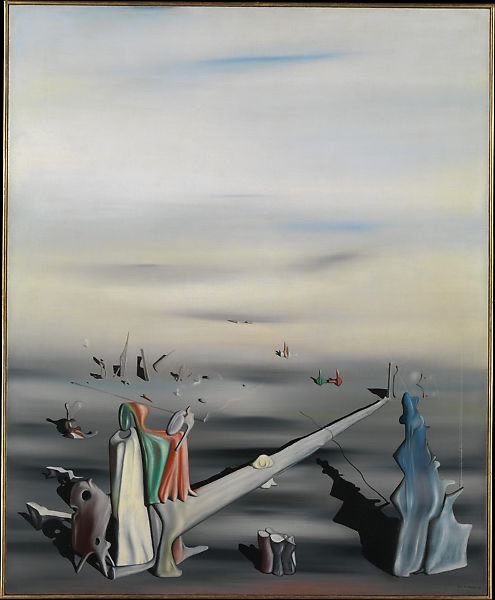
On Transference in Artistic Collaboration

I will lay laid open…
I do it ’cause I’m a family man…
With the beat in now…
And your chest came out
’Cause you weren’t too scared.

Big Red Machine — “Deep Green / Deep Dream”

There is transference.
There just is.

Matthew Thomas

I. — The Pull That Isn’t Personal

It’s real because it’s grounded.
It’s real because the adult self is the one in the room.

That sentence might sound simple, but it marks a fault line between two entirely different ways of collaborating. The younger version of me would have blurred this difference almost immediately — not out of desire in any straightforward sense, but out of hunger. Out of the impulse to turn recognition into destiny, resonance into narrative inevitability, voltage into myth.

In earlier years, artistic encounters carried an undertow of idealization. When someone appeared whose sensibility aligned, whose aesthetic instincts felt familiar yet surprising, whose presence produced that unmistakable flicker of creative electricity, the experience was difficult to contain inside ordinary frames. Recognition felt like revelation. Shared language felt like intimacy. Creative energy felt like evidence of something larger than collaboration — something fated, symbolic, charged with meaning beyond the work itself.

But time has taught me that this interpretive inflation is not depth. It is transference — not as pathology, but as architecture. A current running through collaboration that invites projection, narrative layering, and emotional over-interpretation. A dynamic that can produce beautiful work, but also confusion, distortion, and boundary collapse when left unexamined.

What has changed is not the presence of that current but my relationship to it.

The boundary is no longer defensive; it is intelligent.
It is not erected to keep the other person out but to keep the work alive.
It is the condition that allows collaboration to breathe without suffocating inside symbolic noise.

And the boundary itself is deceptively simple:

We stand side by side, not on top of each other’s meaning.

We remain in our own psyches.
We allow resonance without fusion.
We allow voltage without blur.
We allow openness without myth-making.

This distinction may appear subtle, but it carries enormous implications. It is the difference between collaboration as encounter and collaboration as reenactment. The difference between creative exchange and symbolic entanglement. The difference between working together and unconsciously attempting to resolve unfinished narratives through one another.

In this sense, transference is neither villain nor obstacle. It is part of the terrain — inevitable wherever humans meet in creative space. The danger lies not in its presence but in its invisibility.

History offers cautionary examples. Jung’s relationship with Sabina Spielrein, initially framed as therapeutic, evolved into a complex emotional and intellectual entanglement in which transference blurred professional boundaries and personal identities. Toni Wolff later entered Jung’s life as collaborator and intellectual partner, yet the triangular dynamic that formed illustrates how symbolic roles can quickly overtake relational clarity. None of these figures lacked insight or integrity; what they lacked was a boundary capable of containing the symbolic intensity generated by their shared work.

That boundary — the one Jung struggled to hold, the one Sabina never had the power to define, the one Toni inhabited with both strength and vulnerability — is precisely the boundary that matters in artistic collaboration. Not a line of separation but a line of differentiation, one that preserves psychological sovereignty while allowing creative permeability.

The collaboration that underlies this piece has tested that boundary in productive ways. The work carries voltage. The exchange of ideas, images, and aesthetic intuition generates moments of recognition that could easily be misinterpreted as evidence of deeper narrative convergence. The temptation toward symbolic overreach is real, as it always is when creative chemistry emerges unexpectedly.

But the boundary holds.

Not through suppression or distance, but through integration. Through the adult self’s capacity to remain present without narrativizing the encounter into something it is not. Through a commitment to form — not as rigidity, but as container. Through an understanding that artistic collaboration thrives when the symbolic field remains clear enough for the work to speak in its own voice.

Openness with form.
Exposure with spine.
Laid open, but not laid bare.

This is not restraint for its own sake. It is creative hygiene. It is the discipline that keeps collaboration from dissolving into projection, keeps admiration from mutating into idealization, keeps creative voltage from being mistaken for emotional destiny.

The boundary is not what limits the collaboration; it is what makes it possible.

And in that sense, the boundary is not a line between collaborators at all. It is a line that keeps the field clear so the work can keep happening.

This is how adults collaborate: with clarity, with shape, with mutual sovereignty intact, with symbolic noise turned down, with the quiet confidence that resonance need not imply fusion. The trio remains intact — internal voices aligned rather than fragmented — allowing openness without collapse and connection without reenactment.

Music has offered a parallel language for this dynamic. The Big Red Machine ethos — stepping forward without fear while remaining rooted in personal identity — models a form of creative openness that resists mythic inflation. The lines echo not as romantic declaration but as psychological instruction:

I will lay laid open…
I do it ’cause I’m a family man…
And your chest came out ’cause you weren’t too scared…

Openness is not the danger.
Losing oneself inside openness is.

This brings the piece to its quieter question, one that underlies all collaboration, all transference, all creative exchange:

Can I remain open without giving myself away?
Can I step into voltage without mistaking it for destiny?
Can I meet clarity without dissolving into it?
Can I collaborate without collapsing?
Can I inhabit a resonant field and still leave it as myself?

The answer, tentatively but firmly, is yes.

Not because discipline has replaced feeling, not because detachment has replaced intimacy, not because protection has replaced vulnerability, but because integration has replaced fragmentation. Because the internal architecture is stable enough to allow openness without fear. Because the dream that once blurred boundaries now functions as threshold rather than invitation. Because the symbolic layer — what I sometimes describe as the Draco grounding — operates not as mystical escape but as orientation, a reminder that identity persists across shifting relational fields.

Transference remains part of the architecture. It always will. A subtle undercurrent running beneath creative interaction, capable of enriching perception when acknowledged and distorting reality when ignored. The adult task is not to eliminate it but to refuse its authority as narrative director.

The adult self leads.
The trio leads.
The work leads.

And so the closing question emerges, less dramatic than the fears that once accompanied it, but more meaningful:

What does it mean to stay laid open and still stay mine?

That is the adult version of transference — not avoidance, not collapse, but clarity held with a steady hand.


Dedication

For the collaborators:
the drifters,
the drop-ins,
the ones who catch the tune mid-air and don’t flinch.

You keep the corners loose
and the truth a little crooked.
My kind of people.

Note: If you like this piece, you may also like “Elodie and Matt: A Modern Fairy Tale.” You can read it below.

On the Sarah Lawrence Kids: My Take

Contextual Note

This reflection is inspired by reporting on the case of Lawrence “Larry” Ray, whose actions at Sarah Lawrence College became the subject of extensive journalism and later criminal prosecution. Ray, the father of a student, embedded himself within a group of students and, over a period of years, exerted psychological and material control that culminated in multiple federal charges. In 2022, he was convicted in U.S. federal court on counts including racketeering conspiracy, extortion, forced labor, and sex trafficking, following testimony detailing patterns of manipulation, coercion, and abuse.

The essay above is not intended as investigative reporting or a comprehensive account of the case. Rather, it uses widely documented elements of the Sarah Lawrence story as a lens for examining broader dynamics of influence, consent, authority, and psychological boundary erosion. Readers interested in detailed factual accounts are encouraged to consult court records and major journalistic coverage of the case.

Epigraph
“I can’t force myself to say something
More than I can think of a thing to do
Any more than you can pull yourself out of nothing
When there is nothing forcing you to.”

— Bedhead, Extramundane

This isn’t really a story about sex, crime, or even a “cult” in the way headlines tend to frame it. It’s a story about how consent can be quietly eroded — not through force or spectacle, but through a gradual shift in tempo. An adult inserts himself into a group of bright, searching young people and begins, almost imperceptibly, to reorganize how they interpret their own experience. Nothing dramatic happens at first. There is conversation, attention, fluency in the language of care. The early moves feel supportive, even mentorship-like. And that is precisely why they work. By the time anything overtly troubling emerges, the conditions for real choice have already thinned out. The ground tilts before anyone recognizes that it’s moving.

The students drawn in aren’t naïve caricatures or damaged stereotypes. They’re thoughtful, introspective, and accustomed to treating their interior lives as material for reflection. That habit, usually a strength, becomes a vulnerability in the presence of someone adept at narrating other people’s feelings back to them. The dynamic isn’t driven primarily by charisma or intellectual brilliance. It’s driven by tempo. Boundaries aren’t crossed so much as softened. A late-night conversation becomes a pattern. A pattern becomes a shared framework. A framework becomes dependency. And when harm finally appears, it doesn’t feel like a clear rupture between “yes” and “no.” It feels like a choice being made inside a structure already built.

There is often a moment when the room shifts, but it rarely looks like a turning point. Someone says they’re exhausted, and exhaustion is reframed as a signal with hidden meaning. Confusion becomes resistance. Ordinary hesitation becomes evidence of deeper moral or psychological blockage. Each reframing lands with the texture of insight rather than coercion. Over time, reactions are no longer treated as self-authorizing; they become data awaiting interpretation by the person occupying the role of guide. The students aren’t agreeing with an authority figure so much as agreeing with a version of themselves that figure has begun to narrate. When narrative voice drifts outward like that, autonomy doesn’t vanish dramatically. It diffuses.

The difficulty in describing situations like this lies in the absence of clear theatrical markers. There is no singular moment of surrender, no obvious villain/victim tableau. The participants often experience themselves not as surrendering but as collaborating. They believe they are doing the work, gaining insight, moving toward growth. Particularly for intellectually curious students, the promise of self-understanding is compelling. When directives are framed as pathways to clarity, resistance can feel like failure rather than protection. The structure tightens without ever announcing itself as such.

What emerges from observing cases like this is less outrage than a kind of double vision. On one level, the mechanics appear familiar: authority built through interpretive fluency, dependence fostered through narrative control, legitimacy derived from proximity to vulnerability. On another level, the situation remains unsettling precisely because the openings are so ordinary. The dynamic does not depend on extraordinary charisma or theatrical manipulation. It depends on recognizable human needs: attention, guidance, belonging, the desire to make sense of one’s own experience. Intelligence does not necessarily protect against these forces; in certain contexts, it can deepen engagement with them.

That recognition invites a measure of humility. The distance between observer and participant is not always as large as hindsight suggests. What protects one person in a given moment may be temperament, timing, or simple circumstance rather than superior discernment. The impulse to locate safety in personal invulnerability can obscure the broader lesson: susceptibility is situational, and the pathways into these dynamics are rarely marked by obvious warning signs. Often they look like ordinary conversations extended just a little too far.

If the Bedhead lyric offers a frame, it is through its quiet attention to inertia. The line does not describe dramatic coercion but a subtler erosion of agency — the sensation of trying to act from a place that has already been partially displaced. “You can’t pull yourself out of nothing when there is nothing forcing you to” captures the paradox at the center of this story: the absence of overt pressure can itself become constraining. Consent may appear intact even as its underlying architecture shifts. The drift is gradual, almost ambient, and therefore difficult to name in real time.

Perhaps the most unsettling aspect is the ordinariness of the openings. The story is not about an extraordinary manipulator but about how easily authority can be constructed within familiar relational spaces, and how collaboration can feel indistinguishable from growth until perspective changes. The lesson, if there is one, is less about condemnation than awareness — a recognition of how narrative authority operates, how tempo shapes consent, and how autonomy can narrow without any single decisive moment marking its loss.

Dedication
For those who walked.
And for those who couldn’t.

Note: If you enjoyed this piece, you may also enjoy my other piece on educational institutions. You can read it here.

On My Week with Isobel (aka London Girl) Part III: Aftermath

Note: This is the third of a three part series. Part I is here and Part II is here.

Epigraph I:

Oh my sentimental fool

Lloyd Cole

Epigraph II:

Was the risk I sent to you received?

Metric

Leaving Oxford / Returning to Japan

I walked the five minutes back to the hotel after the bus pulled away. My wife was going on to visit friends in Germany and I would have about five days alone in Kyoto after I got back to Japan. At the hotel I couldn’t get back to sleep, so I said a small prayer to the angels asking for grace to get through the day, showered, packed my things, and waited for the 8 AM car pickup.

I did not rush. Packing became a deliberate act, almost ritualistic in its pacing. I folded shirts one at a time, placed my notebook carefully into my bag, slipped the Tintin postcard between pages so it would not bend. Sue Tompkins went in next, followed by the charger, the toothbrush, the small practical objects that restore a sense of order after emotional disturbance. The room itself was modest — functional, forgettable in most respects — yet it felt oddly expanded, as if some invisible event had occurred there despite the absence of anything outwardly dramatic. Something had shifted in me, and the room seemed to hold the echo of that shift.

At the desk, I laid everything out for a moment, not to organize but simply to gather myself. The Mendoza Line was no longer playing, but the music had already done its work. The emotional charge it helped ignite remained present, circulating quietly beneath the surface. There was nothing to heighten or prolong; the effect was already internalized.

Around eight, the hire car arrived. The driver was polite, efficient, the kind of professional whose calm competence creates a reassuring neutrality. He helped with my bag, and we exchanged small talk as we pulled into traffic — London housing costs, wages, the persistent difficulty young people face in trying to establish themselves. On the radio, a news segment discussed the rising number of homeless families and children across the UK. Normally, such stories register as troubling but abstract statistics. That morning, however, the report landed differently. I found myself thinking about untethered lives, about how fragile the structures that hold people together can be, and how sometimes the tether itself is the only thing preventing a deeper psychological unraveling.

Traffic was light, and we arrived at the airport mid-morning. Inside, I purchased a simple breakfast — fruit, yogurt, coffee — and found a seat removed from the main flow of travelers. Airports are environments of constant movement, but solitude can still be carved out within them if one chooses carefully. I opened my Kindle and downloaded volumes four through six of Anthony Powell’s A Dance to the Music of Time. It was not an act of escapism so much as orientation. I wanted narrative continuity, a long arc where identity unfolds gradually rather than collapsing under sudden pressure. Powell’s world offered lineage, structure, and a reassuring sense of temporal patience.

I texted Isobel. She responded almost immediately, and what followed was a long, bright thread of conversation carried across airport Wi-Fi. There was no sense of emotional comedown, no awkward reentry into ordinary distance — only continuation. The connection felt intact, natural, as if the meeting had established a channel that did not require reinforcement to remain open.

When boarding was called, the transition felt procedural rather than dramatic. The flight passed in a quiet blur of clouds, Molina songs, Powell’s prose, and intermittent thought. Beneath it all was a subtle ache under the ribs — not pain, not longing in any acute sense, but effect. A residual emotional state that did not demand resolution, only acknowledgment.

On the plane I read some Powell and listened to music. I remember playing “Two Suns in the Sunset” by Pink Floyd and being unexpectedly moved by it. I was in an emotional state — not overwhelmed, but open and exposed — and the flight passed quietly. I landed at Kansai Airport in the afternoon.

I landed in Japan first. My wife continued on to Germany to visit friends, and my son was in Australia on a school trip. I took the Haruka train back toward Kyoto. The wide seats and generous legroom made me feel welcomed back into my country of choice. Much as I had enjoyed England, I felt real relief in returning. There is a particular comfort in Japanese transit — the order, the space, the quiet efficiency — and my body recognized it immediately.

The house, when I entered it, was silent in a way that felt tangible. I carried that silence with unusual care, as if it were made of glass and might shatter if handled abruptly. Solitude is often restorative, but this solitude had an amplifying quality, heightening rather than settling internal experience.

That evening, I went to Takumiya, a pub in north central Kyoto. I ordered food and three craft beers and spoke casually with whoever happened to be nearby. Conversations were light, unstructured, yet I sensed an unusual responsiveness from people around me — as though I possessed a slightly elevated emotional voltage that others could detect without understanding its source. Even animals seemed to register it. Cats approached me with a familiarity that felt less coincidental than intuitive, as if some form of static had gathered on the soul.

I had no sense of impending crisis. No awareness that within three days I would walk into my principal’s office and offer my resignation

First Days Back

On my first full day back I did laundry and in the late afternoon went to Takumiya, a pub in north central Kyoto near Karasuma Oike. I don’t remember whether I texted or called Isobel that day, but I almost certainly did. At Takumiya I ordered sashimi and had a few craft beers from their rotating selection. I stayed longer than planned, talking lightly with whoever happened to be sitting nearby.

The next day was Tuesday and I went to work as scheduled. I checked the heat index readings as part of my summer administrative duties. Dr. Fox was on campus. Seeing him immediately shifted the emotional temperature of the day.

I have written elsewhere about my problems with Dr. Fox and I won’t revisit them in detail here. What matters for this story is that by that point I felt he had betrayed me and failed to show up when I most needed institutional support. Trust had already been damaged. Seeing him again after Oxford brought all of that to the surface at once.

We spoke briefly. Before I left, he asked me to come in the following day to help prepare a presentation he was scheduled to give to an alumni group. I had ghostwritten material for him many times before. Under normal circumstances I would have said yes without hesitation. This time I agreed anyway, even though I was already internally unstable and emotionally saturated.

It would not turn out well.

I returned to Takumiya each night that week. There was comfort in being present in public spaces while remaining largely anonymous. The balance allowed me to exist among others without the demands of deeper recognition. Meanwhile, at five in the evening Japan time — nine in the morning in London — Isobel and I spoke daily. The calls were not brief check-ins but sustained conversations lasting anywhere from thirty minutes to an hour and a half. Often she walked through a park while we spoke, and I imagined her surroundings as she described them, the geographical distance softened by conversational continuity.

During one of these calls, I told her that I wanted to write a book. Not about her specifically, but about the chain of experiences that led to meeting her and the clarity that encounter unexpectedly revealed. She understood immediately. More than that, she expressed a quiet appreciation for being part of that moment of ignition — not as subject matter but as catalyst.

At the same time, unresolved resentment toward Dr. Fox did not dissipate with distance. Instead, it sharpened. The baseball heatstroke issue lingered at the margins of thought, alongside a broader accumulation of professional frustrations: moments of perceived disrespect, ambiguous expectations, and a decade of service that increasingly felt like professionalism without true partnership. None of these tensions were new, but the emotional openness of the week amplified their weight. Background noise began to feel like pressure.

By Friday, when I walked into school, I was not consciously planning a decisive action, yet I sensed a degree of internal instability that made ordinary interactions feel precarious. When Dr. Fox called me into his office to request assistance with a presentation — a familiar pattern, a non-work day expectation framed as routine — the moment crystallized something that had been building long before Oxford. I resigned. The decision belonged to a larger narrative, but this story carries its immediate emotional context.

As the reality of resignation settled into my body, a quiet clarity followed. I knew I needed to speak with my wife. The conversation would not revolve around specifics — call durations, text counts, or the mechanics of connection — but around truth in its broader emotional sense.

She returned home Saturday night. With her presence, the house regained its weight: history, shared furniture, a past that possessed shape and gravity. We sat together without wine or any conversational buffer. The moment did not invite performance or gradual disclosure; it required directness.

“I quit,” I said. “And I met someone.”

She asked only one question.

“Did you sleep with her?”

“No.”

She nodded, her response quiet and measured.

“Okay. Have fun on the phone.”

Nothing fractured dramatically in that moment. There was no raised voice, no immediate emotional rupture. Yet something subtle shifted — an alteration not of structure but of atmosphere. The past remained intact, but the future carried a slightly different texture. Nothing broke, but nothing stayed exactly the same.

Saturday and Sunday

Saturday and Sunday arrived with a quietness that felt disproportionate to the events of the preceding week. For the first time in months, there was no alarm set for early administrative duties, no email requiring immediate response, no expectation of presence within the institutional rhythms that had long structured my days. I was off work — not merely for the weekend, but in a more consequential sense that I could not yet fully absorb. I would not return until 2022. The long-term ramifications of what had unfolded were already in motion, though at that moment they existed more as a distant horizon than as a lived reality whose contours could be clearly seen.

The weekend therefore carried a strange dual quality. On the surface, it resembled any other stretch of unstructured time: coffee in the morning, small household tasks, the slow pacing of hours unburdened by schedules. Beneath that surface, however, ran a persistent awareness that something fundamental had shifted. The scaffolding of daily life — work expectations, professional identity, habitual responsibilities — had loosened, and with its absence came both relief and a faint, almost disorienting spaciousness.

At five o’clock sharp Japan time, which was nine in the morning in the UK, I called Isobel. The timing became instinctive, a daily point of orientation that anchored the day before it fully began. She answered as she was waking, her voice carrying that soft mixture of sleep and recognition that collapses distance instantly. We picked up exactly where we had left off, as if conversation were a continuous thread rather than a sequence of separate exchanges. We talked and laughed easily, moving between subjects without effort — music, muses, love, the nature of intimacy, and the broader textures of life that surface when two people feel unexpectedly understood.

The calls possessed a quality that felt, at the time, almost transcendent. I experienced a heightened emotional state that bordered on euphoria, a sense of expansion difficult to articulate without risking exaggeration. There was an unmistakable feeling of being lifted beyond ordinary emotional gravity, as if the connection existed in a space slightly removed from daily constraint. For brief stretches, I felt powerful in a way that had little to do with control and everything to do with aliveness — the psychological equivalent of standing in clear light after months of muted color.

Yet even within that intensity, I carried a quiet awareness that such states are rarely sustainable. The experience felt too vivid, too precise in its timing, to belong to permanence. I understood, somewhere beneath the exhilaration, that what we were inhabiting was a moment granted rather than guaranteed. For the time being, however, there was a mutual permission to exist within that space without prematurely interrogating its future. We allowed the conversations to unfold fully, accepting their immediacy without insisting on outcome.

The rest of the weekend unfolded around those calls like a soft frame. I moved through ordinary activities — brief walks, small household routines, moments of shared quiet with my wife — with an undercurrent of emotional intensity that did not demand expression but remained unmistakably present. Silence felt less empty than suspended, as though the days themselves were pausing before the arrival of consequences not yet visible.

What remained most striking about that weekend was not any single event but the emotional totality it carried. The combination of resignation, solitude, reconnection, and emerging uncertainty produced a state that was both exhilarating and fragile. I was aware, even then, of the paradox inherent in the experience: the joy of discovery intertwined with the inevitability of complication, the brightness of connection shadowed by the knowledge of its precariousness.

That was the weekend. In its quiet span, I found myself inhabiting an emotional condition that was at once expansive and difficult, sustaining and destabilizing. I was, deeply and undeniably, in love — not in a settled or declarative sense, but in the raw, immediate way that accompanies sudden recognition. The feeling carried power and tenderness in equal measure, along with a subtle ache that suggested awareness of its limits even as it unfolded.

The Rest of September

The rest of September passed with a quality that is difficult to reconstruct in precise sequence. Days did not feel discrete or individually memorable; instead, they merged into a continuous emotional field in which time moved forward without the usual markers of routine. The absence of work removed one of the primary structures that normally segments experience, and without that scaffolding the month acquired a dreamlike texture. Moments were vivid while they occurred, yet quickly dissolved into the broader atmosphere of the period.

Isobel and I remained in frequent contact. We spoke most days and exchanged messages with a familiarity that no longer required initiation or explanation. The connection persisted, but the intensity that had defined the immediate aftermath of Oxford began, subtly, to dim. This was not a collapse or a dramatic withdrawal — rather, a gentle tapering, the natural adjustment that follows emotional peaks once they settle into the rhythm of distance and everyday life. The calls remained warm, often intimate, and still carried laughter and shared curiosity, but the sense of suspended transcendence that characterized the earlier weeks softened into something more ordinary.

My days were largely unstructured. Without professional obligations, I devoted time to my blog, experimenting with longer reflections and shorter fragments that attempted to capture the evolving emotional landscape. I also began broadcasting on Periscope, drawn to the immediacy of speaking into a space where audience and solitude coexist in curious balance. These activities did not replace work so much as fill the temporal vacuum it left behind, offering forms of expression that required presence without imposing rigid expectation.

Later in the month, I briefly reentered the professional sphere when I accompanied my senior students to a university fair at Canadian Academy. The experience felt almost surreal in its normalcy — a reminder of institutional rhythms that continued independently of my altered position within them. It was the only direct work engagement I undertook during that period, and its brevity reinforced the sense that September existed outside the usual professional narrative.

Toward the end of the month, I traveled for a significant assignment: serving as lead evaluator for the Diploma Programme at Western Academy of Beijing. The responsibility was substantial, and I approached it with an intention to perform at the level expected despite the internal shifts that characterized the preceding weeks. The visit, however, was complicated by dynamics within the evaluation team. The MYP leader’s preference for extended, often unfocused meetings created an atmosphere of fatigue, and Ashish, the Head from IB Singapore, lacked either the authority or inclination to redirect those discussions effectively. Evenings stretched late into the night. We ordered Indian food, reviewed documentation, and navigated the procedural demands of the evaluation with a professionalism that felt increasingly mechanical.

During one of those evenings, after the meetings had ended and the day’s formal responsibilities were complete, I called Isobel. We spoke at length, as had become our habit, but the conversation carried a different quality. She told me about a dream — one involving a fire and a cabin in the forest. In the dream, I was present. She mentioned that she had shared the dream with her therapist, a detail that suggested the experience held significance beyond casual narrative. Yet when I asked about it, she hesitated. She did not want to recount the dream in full. The partial disclosure introduced an ambiguity that I could not immediately interpret but nonetheless felt.

The moment did not register as conflict or withdrawal. There was no overt tension, no articulated concern. Yet something subtle shifted in the emotional atmosphere between us. The change was nearly imperceptible, detectable less through words than through absence — a slight alteration in tone, a new reticence where openness had previously been instinctive. It was not dramatic enough to prompt confrontation, but it carried the unmistakable sensation of movement beneath the surface.

As September drew to a close and October approached, our communication began to thin. Calls became less frequent, messages shorter, pauses between exchanges longer. The transition unfolded gradually, without a definitive turning point, but its trajectory felt clear. What had once been continuous conversation now required renewed initiation, and the ease that had defined our early exchanges gave way to a quieter, more tentative rhythm.

In retrospect, September stands as an interlude — a period suspended between ignition and resolution. The connection with Isobel remained meaningful and emotionally resonant, yet the conditions that had sustained its earlier intensity were shifting. October would bring both culmination and conclusion, the apex of the relationship’s emotional arc and, simultaneously, its quiet dissolution.

October

October arrived without ceremony, yet the emotional atmosphere surrounding it was markedly different from the suspended haze of September. I was not working at all during that month, and the absence of professional structure began to feel less like pause and more like rupture. Relations with my Principal, Dr. Fox, had deteriorated to an all-time low, and what had once been a strained but functional working relationship now carried open hostility.

We had two phone calls that month about university counseling, both of them angry and vitriolic. The topic itself — university advising — should have been procedural, collaborative, even routine. Instead, it became a flashpoint that exposed a deeper accumulation of mistrust and frustration. From my perspective, he was mishandling critical processes and creating unnecessary stress for students and staff alike, and I felt a growing sense of professional indignation that was difficult to contain. I shouted at him on the phone twice: once while walking along the river, my voice carrying across the water in a way that felt disproportionate to the setting, and once from a hotel bar in Osaka, where the contained intimacy of the space made the confrontation feel even more exposed. The bartenders glanced at me with a mixture of curiosity and quiet concern, clearly aware that they were witnessing a private eruption in a public place. Still, they allowed the moment to pass without interference, serving drinks and processing the bill with the practiced discretion that characterizes hospitality in Japan.

In mid-October, I traveled to Singapore for another IB training. This assignment positioned me as lead trainer for the Diploma Programme, with Duan Yorke serving as my deputy. Duan was excellent — steady, competent, and easy to work alongside — providing a professional counterbalance to the internal instability I carried with me. Yet despite the outward success of the training’s first day, something felt off internally. The emotional residue of the previous weeks, combined with the unresolved professional tensions, manifested as a quiet but unmistakable dissonance. On the second day, I found myself unable to maintain the expected level of engagement and withdrew temporarily to visit an esoteric healer. The visit itself belongs to another narrative thread, one that requires its own context, but its occurrence reflected the broader sense that I was searching for equilibrium in unconventional ways.

I returned and completed the training successfully, fulfilling my responsibilities with the professionalism the role demanded. Afterward, I remained in Singapore for an additional three days, using the time to decompress in a city that had long felt both familiar and emotionally neutral. The extended stay provided space for quiet reflection, casual wandering, and the gradual release of accumulated tension. Professionally, my obligations were minimal. I completed a handful of recommendation letters for early decision applicants — necessary work, given that our new counselor was struggling with the process — but beyond that, my professional identity remained largely suspended.

During this period, Isobel and I spoke only once. The call carried an unmistakable clarity: whatever had sustained the connection through September was no longer present. Whether the shift stemmed from the dream she had mentioned earlier, the simple realities of distance, or the natural fading that accompanies emotionally intense encounters, the result was the same. The spark had dissipated. What struck me most was the absence of dramatic heartbreak. I did not feel shattered or undone. Instead, I experienced a dull void — a quiet ache occupying the space where my love for her had briefly lived. It was less a wound than an absence, the emotional equivalent of a room that had been furnished and then emptied.

Singapore became the final location in which we spoke. After that call, the connection ended without formal closure, dissolving into silence rather than conflict.

When I returned to Japan, I settled back into writing and Periscoping with a renewed sense of creative urgency. Singapore itself had already played a role in that shift. In a billiards bar there, I drafted the first installment of The Thin Man, capturing fragments of narrative that would later expand into a larger project. The act of writing felt less like discipline and more like necessity — a way of metabolizing the preceding months and translating emotional experience into narrative form. Back in Japan, I continued this process through a series of essays that month, each exploring different facets of the transitional period.

October also introduced another unexpected connection. That month I met Mela, a woman from New York City in her thirties who was on medical leave from her work as a props assistant in film production. She was housesitting at the time and occupied her days in ways that mirrored my own state of suspended routine: scrolling Tinder, investigating potential matches with a mixture of curiosity and humor, and broadcasting extensively on Periscope. We connected easily, moving from initial interaction to Instagram texts and eventually long phone calls. Neither of us had pressing daily commitments, and the absence of structure created space for conversations that extended for hours — sometimes entire afternoons — ranging across music, film, personal history, and the broader philosophical questions that surface when time is abundant and emotional stakes feel low.

Months later, in December, I would meet her in person during a museum visit in Queens. The day unfolded quietly: exploring exhibits, browsing the bookstore, and sharing soup in the café. At one point, descending a staircase, she leaned into me in a way that felt intentional — a brief physical gesture that carried a hint of performative vulnerability. She said, “you saved me,” a remark delivered with ambiguity that allowed interpretation without demanding it. The moment marked the closest we came to flirtation, and even that remained understated, more symbolic than consequential.

Yet the defining emotional endpoint of October remained tied to Isobel. Singapore had been the final setting of our conversation, and with its conclusion, that chapter closed without spectacle. The month that began with professional conflict and emotional residue ended in creative ignition, quiet acceptance, and the emergence of new but less charged connections. October stood as both apex and dissolution — the culmination of an emotional arc that had begun in Oxford and the gentle fading that followed its brief, luminous peak.

Conclusion

Looking back on it now, the question that naturally arises is what, if anything, can be concluded from the experience. Memory has a way of smoothing edges while preserving emotional truths, and the passage of time introduces perspective without necessarily dissolving ambiguity. What remains is not a tidy narrative with a clear moral, but a series of impressions that continue to carry meaning long after the events themselves have receded.

Was I in love with Isobel? The answer, for me, is uncomplicated. Yes — absolutely. The feeling was immediate, powerful, and unmistakable in its emotional clarity. It was not rooted in fantasy or projection so much as in recognition: the sudden awareness that another person had seen and engaged parts of me that often remain peripheral or unarticulated. The connection possessed both intellectual and emotional intimacy, creating a sense of alignment that felt rare and therefore significant.

Whether she was in love with me is less certain. That question remains open, and perhaps necessarily so. Love does not always manifest symmetrically, nor does it require identical emotional timelines. What I do believe is that she was deeply drawn to me — enamored with qualities she named explicitly: my maturity, my openness, my willingness to explore symbolic and esoteric frameworks such as astrology, and what she described as my confirmed oddness. These were not superficial points of attraction but aspects of identity that shape how one moves through the world and forms connection. In response, she opened herself in ways that felt unprecedented in my experience with other women. The openness was emotional, conversational, and psychological, revealing vulnerabilities and reflections that suggested a level of trust both genuine and meaningful.

Yet that openness stopped short of the one dimension that often defines romantic relationships in conventional terms. Physical consummation never occurred. And still, I remain convinced that it might have — that the night of the red dress, that Wednesday evening suspended in quiet possibility, carried the potential for that final step had I not withdrawn. The decision to pull back was not rooted in lack of desire but in an instinctive recognition of complexity and consequence, a moment where restraint felt simultaneously protective and destabilizing.

At the beginning of this narrative, I wrote the line: “I did not sleep with her, so I had to quit my job.” On its surface, the statement reads as paradoxical or even absurd. Yet in a literal and emotional sense, it reflects the truth as I experienced it. Something that transpired between us disrupted my internal equilibrium in a way that extended far beyond the boundaries of romantic encounter. The experience did not create professional dissatisfaction where none existed; rather, it crystallized tensions that had long been present but insufficiently confronted. In the altered emotional state that followed Oxford, I could no longer compartmentalize or tolerate dynamics that had gradually eroded trust and professional fulfillment. The decision to resign emerged not as a reaction to Isobel but as a response made possible by the clarity her presence inadvertently catalyzed.

What, then, did Isobel have to do with that decision? It is a question without a definitive answer, and perhaps one that resists definitive resolution. Objectively, professional circumstances and romantic encounter belong to separate domains, each governed by distinct motivations and consequences. Yet subjective experience does not always honor such boundaries. In my mind and in my heart, the two remain inextricably linked. The emotional awakening precipitated by our connection illuminated aspects of my life that had grown untenable, accelerating a reckoning that might otherwise have unfolded more gradually.

In this sense, Isobel did not cause the decision but revealed the conditions that made it inevitable. The encounter functioned as catalyst rather than origin, exposing fractures already present and clarifying the need for change. The love I felt for her, whether reciprocated in equal measure or not, became intertwined with a broader transformation — one that encompassed identity, professional alignment, and creative direction.

Ultimately, the experience resists reduction to a singular meaning. It was neither tragedy nor triumph, neither mistake nor destiny. It was an encounter marked by intensity, ambiguity, and consequence, leaving behind a residue of insight rather than closure. If anything can be said with certainty, it is that the connection altered the trajectory of my life in subtle but enduring ways. The emotional truth of that alteration persists, even as the specifics of the relationship have receded into memory.

And perhaps that is the most accurate conclusion available: that some relationships are defined not by duration or outcome but by the clarity they introduce, the decisions they precipitate, and the self-recognition they make possible. In that sense, Isobel remains both part of my past and part of the internal landscape through which I continue to move — a presence whose significance lies less in what occurred than in what it revealed.

Coda

What remains, after the noise has faded and the chronology has settled into memory, is not regret but recognition. Isobel was never meant to be a permanent figure in my life; she was a moment of ignition, a flare that illuminated terrain I had been walking blindly for years. Loving her did not undo me — it clarified me. It revealed fault lines in my professional life, deepened my awareness of emotional possibility, and reminded me that connection can arrive without warning and depart without resolution while still altering everything that follows. Some encounters are not chapters but catalysts, and their power lies precisely in their brevity. I did not leave Oxford with a lover, but I left with a truth that could no longer be ignored, and that truth reshaped the decisions that defined the months and years ahead.

So the story does not end with loss but with transformation. The quiet house in Kyoto, the late-night calls across time zones, the resignation spoken into an office heavy with history, the essays written in the wake of confusion and clarity — all of it forms a single arc whose meaning resides not in permanence but in awakening. Isobel remains a presence not because of what we became, but because of what her existence made visible: that love, even when fleeting, carries the capacity to reorder a life. And in that sense, the experience stands complete. Not a tragedy, not a triumph, but a moment of rare and incandescent alignment — a brief crossing of paths that left behind warmth, ache, and an enduring knowledge that sometimes the most consequential relationships are the ones that arrive, burn bright, and quietly pass into memory while continuing to shape the person who remembers them.

Note: If you linked this piece, you may also like my short story Simona below.

On the Eventfulness of Pre-Eventified Incidents

Note: Today I’m revisiting a travel vignette about hierarchy, ritual, and the strange ways institutions manufacture “events.” It features a Big Man, a flawless flunky, Jung on surrealist art, and a ceremonial poster board signing that may or may not have meant anything at all. A quiet question lingered long after the ceremony ended. As always, judge for yourself.

If you enjoy this piece, you may enjoy my analysis of the underground rapper and crypto-hacker, Razzlekhan. You can find it here.

Yeah, I met Lou Reed and Patty Smith

It didn’t make me feel different

Conor Oberst

I visited China a number of years ago with a highly ranked member of my university structure and a flunky. My own participation was last-minute as I was filling in for someone else. I guess in a way I was a flunky too. Certainly it was the big man’s show from start to finish.

We visited a number of schools and also met with a business guy who was working very hard to transact with our group something so complex that I never even began to grasp the shape of it despite sitting in multiple meetings around the matter.

The trip was interesting for a number of reasons. The big man barely spoke to me for the first few days despite spending all day together. The schedule was brutal. I was reading Jung On Art on my phone as I was enrolled in on online course I never finished. Jung On Art is great and spends a lot of time on the surrealist painter Yves Tanguy. Finally the big man took a long look at me and said (in Japanese) “you read a lot, don’t you?” I confirmed this, and after that he spoke to me a little more.

The flunky was an archetype of the species. He handled the schedule, made the trains run on time. He did nothing else and deferred to the big man on absolutely every non-schedule related matter. My own strongest contribution to the proceedings was occupying the attention of a friend of the business man during an excruciatingly protracted whisky drinking session so that the business guy and the big man could talk turkey. I am not a great whisky drinker for some reason and making sensible small talk for three or four hours over whisky took a truly heroic effort.

The business guy had a kind of a house in a kind of a hotel, it was hard to say. A full staff was on hand to serve us a full course Chinese meal with white and red wine. This was before the whisky. It was a scene, all the way.

Anyway, all of that is context. I want to write about a specific incident that occurred when we visited one school. The principal who received us knew the big man and we were received by a group of about eight people. We got the school tour. Now, school tours are an occupational hazard in my line of work, and I have trained myself to be a durable recipient. But I don’t really like them. We went through the formalities, which predictably took forever. I daydreamed about Yves Tanguy and bed.

Toward the end of the tour we reached a wall with the school name or emblem on it. Here, the principal paused and asked the big man to write some Chinese characters on some poster board. This was to mark his visit, to consecrate it in a sense. The whole group fanned out into a kind of semi-circle and the big man went through a series of highly performative grimaces to index his deep thought. Or maybe he just didn’t know what to write. I certainly wouldn’t have. Finally he took the pen and with the pomposity of a South American dictator wrote a few characters. The message, to my recollection, was underwhelmingly anodyne. Basic. Or maybe it was gnomic and brilliant. In either case the audience made appropriately awed sounds. I murmured my own supposed appreciation–the role of the acolyte was there to be filled after all. The poster board was then displayed with a flourish on the wall.

At first blush I found the entire episode both deeply interesting and deeply narcissistic. However, the big man was invited to contribute some characters and he did so, so in that sense fair enough. Let’s zoom out a little before rushing to judgment.

You know how some restaurants and bars will have signed pictures of famous people that visited on their walls? Mickey Mantle, Bob Hope, Stallone, whatever. In these cases the visit of the celebrity was an event in the life of the establishment. It merited consecration across time. I understand this. But the big man was not a celebrity in any real sense. He was a university bureaucrat with a taste for acting like a big shot.

But maybe I’m seeing this all wrong. Because there was actually a hint of the classical in the occasion. A host had received an honored guest. The honored guest was asked to bestow words of wisdom and afforded space to do so. The whole performance was approached with apparent complete sincerity by all involved. I was probably the only one not acting in good faith. My feelings at the time were the same as they are now; on the one hand the whole thing was super pompous, on the other hand it had an old-world ceremony that I am not exactly against. An event should be eventful–my little motto–may at times create an unrealistically high bar for situations to rise to. Still, I have a nagging feeling that this visit was not of a sufficiently high caliber or general import to require consecration in kanji.

You know how in the old days a person would take a letter of introduction with them when visiting a new country and would receive an audience on the basis of this kind of letter? That’s probably an almost entirely lost art. When you presented someone with a letter of introduction, as I imagine it, you were then received. Your visit was authorized and elevated into a thing, an event. The eventification of aspects of life is important, even vital, however maybe we are going about the equation backwards. I go to see a lot of live music and at the end of the show the band will often gather at a table to sign merchandise and such. The opportunity to meet the band, if offered, is cool–I’m all behind it. However I myself often skip these lines, even if I love the band. This is because the chance to meet the band and have an experience of doing so is a built-in aspect of the entire evening and therefore pre-eventified so to speak. It’s still cool, but I’m not sure pre-eventified events are best positioned to be eventful. The true event takes place without being pre-planned. The true event emerges and cannot be structured. Most of the time when I see a supposed event transpire, an opening ceremony of some event for example that has been obviously rehearsed, I can barely suppress a yawn. In the immortal words of The Replacements, “color me impressed.”

The epigraph for this piece is from Conor Obrest’s 2016 song “Next of Kin.” It’s a jaded coda to a meeting that we might have supposed would have been eventful, and also a wry recognition that whatever happens to us we are always left with ourselves again. I saw a man sign a poster board. It didn’t make me feel different.

Note: If you enjoyed this piece, you may also enjoy “On the Centrality of the No Helmet Law.” Available below.

On the Centrality of the No Helmet Law

On My Week with Isobel (aka London Girl) Part II

Oh sister when I come to lie in your arms

Please don’t treat me like a stranger

Boy Dylan

Note: This is Part II of the series on my week with Isobel. Part I is here, and left off with my decision not to sleep with her, come what may.

PART II — Thursday → Saturday, Early Morning

Thursday

I woke up Thursday a little shook to be honest. Things had progressed so far, so fast, and although my feet seemed under me, it was hard to be sure. The fact that she had made a hard pass at me the day before was on my mind. In any case, we met by appointment in the morning . It went the same as before; we walked over to Pret again, but this time she ordered lightly and barely ate. As it turned out this was a sign of things to come. I finished my sandwich and coffee, and we walked back to campus, side by side, talking easily but underneath it something had shifted. We were no longer orbiting — we were a dyad, openly.

Back in the garden, same bench, same proximity. We weren’t spying on sessions anymore. We weren’t even pretending to. We talked all morning like our lives depended on it. And in a way, they did. We covered the history of thought, we recovered our careers, and I told her all about the various ups and downs I had had over the last several years at my school. We talked about astrology and she voiced some of her doubts. I told her I wasn’t a “believer” per se, but that the study fascinated me. We left it open.

After the morning break, we reconvened at a bench in the courtyard, this time in public. I was in a bit of a dilemma, you see my wife was scheduled to come to town that very night, and she would attend the dinner gala, the final dinner for the week. Somehow, I had to get ahead of this situation; I had to lower the temperature. So, I did what I often do in a difficult situation, I leaned on Dylan, specifically the quote from “Oh Sister” off of the album Desire.

I told her, “I feel like we should be like brother and sister.” Containment disguised as poetry. It was the best I could do. This took her aback a bit, and then I explained that my wife would be arriving, in a matter of six or seven hours. She didn’t say much, just took it in. She already knew I was married. She didn’t know my wife would be in Oxford. Whole different deal.

This revelation changed something in her body, and something in mine. We went to lunch — Indian again. Normally I ate fully, and she usually ate less, but that day we both pushed food around the plates. She couldn’t eat a bite; her appetite had totally shut down. Mine was not much better, and I picked at the curry to try to make it look decent. We paid and left. The epiphany of Tuesday had tipped into cognitive and bodily overload by Thursday.

During the afternoon, we talked as before but because the sessions were winding down I think we actually went to a session. I also browsed the bookstore, which was really cool. It was a big table in the common area and it was run by a bookseller who had his own astrology bookshop somewhere in the south. I had switched from the Mendoza Line to Dylan and was playing “Red River Shore” and “Mississippi” in addition to Oh Sister.

Evening arrived. My wife arrived at the hostel two minutes from campus. I went to meet her and walked her back to FAS. She met Isobel and Maddy before dinner — brief, surface-level. My wife complimented Isobel’s shoes. I could barely hold in a laugh for some reason. After all, she couldn’t have known what she was stepping into.

We ate in the dining hall — I sat with my wife and the one Japanese woman there, switching English and Japanese. Isobel sat elsewhere with Mystery and her daughter. There was a collection for the tutors — I took the box table to table, people applauding, giving money. My wife later said I was performing. Maybe I was. I was also alive.

After dinner my wife was tired from travel and wanted to sleep. I walked her to the hostel, kissed goodnight, then went back to the courtyard. Wine, tutors, Maddy, Isobel. A lighter night between us — more social, less fused — but the thread held. We probably stayed until one.

I slept well.


The finish line was visible.


Friday

We met again in the morning — Pret. This time she made a scene of helping me pick breakfast. My appetite returned. She still didn’t eat. We walked fifteen minutes to a large park, quiet, green, open.

She was struggling — not with me, but with everything. Engagement, career, identity, meaning. We sat on a bench. “Don’t sit too close to me,” she said.

“OK, how close is good?”

“Right here,” she said, indicating a space about one inch to her right. We talked about our situation–there was nothing else to talk about. We named it outright.

Then she got up and walked to a small arched bridge over a narrow river and said, She stood there for a bit, and then said in a loud declarative voice:“This is my bridge.”

I said, your bridge absolutely.

She stayed there a long time, twenty minutes maybe. I sat on a bench farther back. Eventually she came back to sit beside me — to my left again, shoulders touching. Then, she began to collapse onto me. Shoulders low, breath shallow. I half carried her back to campus. Ambulances and sirens on the street — not symbolic, actual. The world felt like an emergency. We moved slowly. It took almost 40 minutes.

At this same time, I was thinking, obviously. I came up with a name for what Isobel and I were experiencing. I called it the “catalyzed emergency,” just instinctively. I knew at once what I meant, and I also knew one day I would write this story.

We got back to campus and she went to look for Claire Martin, the tutor from day one. She ended up finding Claire, who was free, and Claire held space for her for ninety minutes. No charge. A private grace from a wonderful soul.

I went to the bookshop again. I talked to another Dylan fan and we had such a good chat that I pulled up Dylan’s Red River Shore and played it to him on my phone. He didn’t know it, but loved it. He did a moment chart on his phone and we talked about Dylan’s chart.

At the bookstore I met Melanie Reinhart, for the first time in person. Melanie was the first astrologer I reached out to in 2012 when I was first getting deep into the subject, and it was she who referred me to Darby Costello. So this was a fortunate meeting indeed.

We talked for nearly an hour about her childhood in Africa and her longing to return. I bought Sue Tompkins — Aspects in Astrology because Melanie said another author, who had a book on the charts of musicians, wasn’t a real astrologer. I couldn’t lose face in front of Melanie so I chose Tompkins, but although it’s a great book, I suspect the other one was more my speed.

Melanie asked me up to her room to help carry her bags down the three flights of strips. When we got to the room, she finished packing, and I carried her bags down from her third-floor suite and said goodbye at the gate.

Afterward I found Isobel again, near the entrance. She was steadier, post-Claire. We pushed through the crowd in the quad and slipped to the chapel to say goodbye privately. We spoke plainly — never forget, life-changing, go back to our lives. I told her I wanted to know her as an old woman. She agreed. We exchanged WhatsApp.

She left campus.

I said goodbye to Maddy later in the quad. I said goodbye to Jim, the dream tutor whose session Isobel and I attended and I left out of this story. “You’re a funny guy,” I said. “Takes one to know one,” he answered. The Exeter gate closed behind me, and I walked to the hotel my wife and I were to stay at alone.

My wife was in London at the Sherlock Holmes Museum. I wandered Exeter, then went to the Tolkien exhibition — letters to his children, original sketches, it was a really moving experience. Afterward a stationery shop — a single Tintin postcard. Dinner at the hotel restaurant — bouillabaisse and red wine. Then I texted Isobel. One message became a hundred.

I sent her “Leave the City” by Jason Molina and Red River Shore. She listened and cried. She said she wouldn’t go home to her fiancé that night — too flooded — she would stay at a hotel instead. We planned how we would keep in touch.

I slept next to my wife in a new bed, and in a new world.


Saturday, Early Morning

My wife had returned somewhat late from London and she was tired and slept early. She had an early flight, and a bus pickup 5:15 AM.

When the morning came I walked her to the stop. Street quiet, air washed and pale.

We hugged, kissed briefly, light and familiar, and she boarded the bus.

I stood there watching it pull away.
Not knowing yet what I had broken open.
Not knowing yet what I had kept intact.

On My Week with Isobel (aka London Girl) Part I

Subtitle: I didn’t sleep with her so I had to quit my job.

Mistakes were made tonight

The Mendoza Line

Note: This piece is about a single week in my life that reordered things for good. At a minimum it’s an interesting story; at maximum it is the hinge between two versions of myself. I do not pretend to be the hero of it, and I take full responsibility for everything contained here.

It begins with a dream I had in Bali at the very end of July 2018. I was the lead trainer for the IB Asia Pacific workshop leader and school visitor training — my first time in that role after five years of apprenticeship. At the same time I was working at Ritsumeikan Uji as shukan, a kind of junior administrator. By mid-2018 I was burnt out: long days, multiple roles stacked on top of one another, and, most of all, a boss I no longer trusted. I was scheduled to go to the Faculty of Astrological Studies (FAS) at Exeter College, Oxford at the end of August, and in the meantime I would attend John Innes’s wedding to his fiancee Kristi. All this occurred, and here is that dream.

PROLOGUE: DREAM I

7/29/2018:

The dream starts with an image of a large whisky bottle. The bottle is very fat and also ceremic. So in fact it looks nothing like a normal whisky bottle.  It is perhaps of Suntory brand. I know before I know that a story of some kind will unfold inside the bottle. I am reminded somehow of a ship inside a bottle.  Suddenly I am inside the bottle itself. There is a whole word here and all sorts of people in a cityscape. I come to understand that everyone lives in relative fear of a species or group of overlords. 

The overlords are both omni-present and also very distant. They rule by fear and have the power to rub out anyone at any time. Sort of. When a person is marked for removal their status is updated. Their status is displayed on a kind of glowing chip in their shoulder.  There are basically three types of statuses. First is “needing to have the life wrung out of them.”  There are marked people and their time is limited. Apparently they are political criminals, thought criminals. Oddly, even when marked these people continue to circulate and take part in oppositional activity. I never actually see one of them removed, although their actions do take on a greater sense of urgency. 

The second category is another worded status. This one is more ellitipcal and I forget the wording. Though safer than the  first, this is still a status to be avoided if possible. 

Third is a number.  A voice tells the city that statuses will be updated and that anything under 40000 is a safe score. I check my update with bated breath, fearing the dreaded worded status. My number is 49500.  Not bad I think—although not under 40000 this is perhaps for young people. 49500 seems reasonable for my age. 

Suddenly the view shifts and I can see into the bottle from the outside.  All of the people and various creatures and scrambling for the mouth of the body. The bottle begins to approach a wall into which is will soon merge. Here, the entrance to the bottle will be sealed. The I character in the dream is also scrambling for the exit although he doesn’t seem to stand much of a chance.  Creatures spill over one another and one baby creature somewhere between a human baby and a little mouse slips through the mouth of the bottle to the other side of the wall. The bottle snaps closed and I am once again staring at the large ceremony bottle from the beginning of the dream. I feel a sense of relief that the perfect creature has escaped. End of dream. 

This dream is about reincarnation. 

(The me on the treadmill does not survive. Dream group says whisky is a spirit which takes 50 years to mature.  That gives me a book deadline I guess-49.5 the book and the end of the provisional personality.)

PART I — Sunday → Wednesday

Sunday, late August 2018

I flew into London from Osaka and took a pre-arranged bus to Oxford, then walked to Exeter College. Check-in, dorm keys, linens. The halls smelled like old plaster and a little like soap — an old building. I carried my bag upstairs, opened the door to the room that would be mine for the week, and sat on the bed for a moment to locate myself. New country, new rhythm, no context yet.

I walked the campus — stone walls, grass cut low, shaded paths. The quad had that contained feeling of a place that already had its stories. I didn’t know I was about to enter one.

I went to dinner at a taco place just outside campus and had a beer or two. Back in the room I read a little astrology to warm up for the week and listened to the band The Mendoza Line. Little did I know they would end up playing a surprisingly large role in what followed.

Around 10 PM the fire alarm went off. Everyone in the building stumbled outside in pajamas and stood around talking for a few minutes. Odd, but fitting — a small communal disturbance to start the week off.


Monday

I woke up, showered and dressed and grabbed my notebook for the astrology sessions. At this time I was fully committed to attending sessions and making the most of them. Breakfast opened early and I liked that — fruit, eggs, strong coffee. The hall had a low hum, people still new to each other. I walked to the first seminar which was given by Ms. Claire Martin. Claire was in her 70s, and a very comforting presence. She’d been doing astrology forever and has a couple of books which are helpful. The seminar was on the first floor, window onto one of the gardens. The air had that mild, hopeful tone of a first session.

Claire spoke on the 1890s — fields of meaning, ectoplasm, etc. I offered something Jung-coded because that’s where my mind goes when the border between psyche and symbol starts to move. I didn’t know she was in the room yet, Isobel (not her real name), though she already was.

At one point Claire mentioned an Aries Moon. I said, simply, “I’m an Aries Moon.” Nothing loaded, nothing aimed. Lecture ended, chairs moved, and she came to me from the back of the room.

“I am an Aries Moon too.”

We walked to the next session together. That was it — no delay, no drift. We sat side-by-side for the rest of the day. Chatting between sessions, coffee break close but not touching, her chart in her bag. She showed me her own chart print-outs — hers and her fiancé’s — and we compared placements. Similarities everywhere.

Lunch in the dining hall. More sessions in the afternoon. Light talk, no electricity announced but already there. Monday night we ate with a group — tutors, a few new friends. We were beside each other the whole time, not hiding it. Later we drifted to the courtyard bar, opened wine bottles, and someone lit a cigarette. I hadn’t smoked more than a dozen cigarettes in sixteen years, but I took one with her, and then another. Not ceremony, more like instinct, more like inevitable.

We ended the night late. I walked back to the dorm alone and put on The Mendoza Line again. I already knew I was in trouble so in addition to “It’s a Long Line (But It Moves Quickly)” I was listening over and over again to “Mistakes Were Made” from which the epigraph comes. Sometimes you just know.


Tuesday

We had planned to have breakfast together, not at Exeter but at Pret, about an eight minute walk away. We both ate and she helped me pick my breakfast. We were acting like a couple already. We attended the morning sessions, seated right next to each other and then the day started to open. In the afternoon we did not attend sessions, instead we spent the time in one of the beautiful gardens. We sat close on the bench by the open window, listening to the session through the gap. I talked about muses and how I work best with one. She talked about photography, stalled career energy, her family, and Swiss-Russian split. Russian women, I reflected not for the first time, are a problem, and I knew deep down I was already in trouble.

Tuesday night the singer-songwriter Lucy Dacus was scheduled to play Oxford, and I had a ticket, but she canceled. Instead we went out for dinner, just the two of us, at an Indian restaurant near campus. We were already deep into our relationship, and everything came easy; I could feel it inside ten minutes. This was one of the best meals I have ever had for reasons bigger than taste. I told her about my two epiphanies, one when I was four years old and one when I was seventeen. The whole evening felt like a third epiphany.

Back at campus everyone was drinking in the courtyard again. There was Mystery and her daughter, tutors, people rotating. We stayed late, drank wine, smoked, and flirted like teenagers. I went to my room around 1:30 AM, playing The Mendoza Line over my headphones again. I was seeking their counsel, essentially, and they are a great band.


Wednesday

I woke up and this day we had breakfast at the dining hall. By this time, people were noticing us. Comments here and there, sideways smiles. Morning and lunch blurred into one long conversation — the garden, the bench, a little grass, nothing hidden. We were finishing each other’s thoughts, and I was in deeper than I had ever been. We didn’t attend much of anything. Afternoon break she went to change. I went back to my room and put on Mendoza Line with the full weight of obsession. She came back later and said, without shame, that she’d pleasured herself during the break — just stated it directly. This was a complication.

For dinner that night she changed again — a red dress, short but not careless. Stunning. Whispering at the table, touching lightly, laughing against each other. Everyone knew by then. After dinner was wine again, talking with the tutors, including the lovely Rod Chang and Mystery the long courtyard. I met Darby Costello in person for the first time. Darby is my astrologer and we had already had a number of phone consultations by this point. She was fully alive drinking wine, and talking like someone who knows how to hold a room. I was so happy that she was my astrologer. Isobel and I stayed late once more, and cleared the courtyard. Around two in the morning we parted, cheeks touched, no bedroom, no act.

Back in my room, lights low, I lay on the narrow bed with Mendoza Line in my ears. I knew exactly where I was standing:

I would keep going. I would see where this led. But I would not sleep with her. I couldn’t.

That was the shape. That was the decision. Wednesday ended on that line.

On My Seven Years Under Dr. Charles Fox

Give me weed, whites, and wine

— Little Feat


I. Arrival, Trust, and First Cracks (2012–2013)

Our former principal Shiozaki sensei retired at the end of the 2011–2012 school year. He left on time, at sixty, having overseen just one International School Festival (ISF), in February 2012, and then stepping away. His departure was orderly, expected, and clean.

Not long after, my colleague Tomoko Wano and I were called into the small room next to the IB office by Mr. Higashitani, who was my direct supervisor at the time. I was still DPC then, not yet formally on the administration, though much of my work already extended beyond that role.

Higashitani told us the next principal would be Charles Fox, a literature professor from Ritsumeikan University. Then, almost casually, he added that Fox would be taking the first two weeks of the April term off to travel to the Ogasawara Islands to help his son with a documentary film.

Higashitani paused. “Is this going to work with this guy?” he asked.

It was not really a question. The decision had already been made. Fox was close to the Chancellor, and with the IB programme growing, it had been decided that it was time for a foreign principal. The appointment carried symbolic weight.

Fox arrived in April 2012.

That first year, I saw him several times a week. I went to his office regularly with issues, proposals, and requests. He came less often to the IB office, but he was visible, present, and accessible. Compared to later years, he felt engaged.

We were still very much in a building phase. Questions were fundamental rather than cosmetic: whether to bring Economics online as an IB subject, how to structure growth, how to manage staffing, how to align IB operations with a larger Japanese institution that had not fully internalized what the IB actually demanded.

Fox was generally supportive. When I raised ideas, he rarely opposed them outright. But he almost always deferred decisions upward. In practice, that meant deferring to Higashitani occasionally, but increasingly to Vice Principal Nishikawa, who was locked in a long, escalating struggle with Higashitani for control of the soul of the school. That battle would define the institution for years.

Two small things I noticed early on.

The first was small but persistent. When Fox felt pressed, uncertain, or cornered, he would drop into a performative Texas drawl: “I’m just a good old boy…I don’t know…I’m new here…” Week one, maybe. Month one, even. But it went on for months. It began to feel less like humility and more like evasion.

The second was subtler. When Fox gave speeches—opening ceremonies, graduations, addresses to the IB community—he often began by explaining that he would speak in both English and Japanese, and why. “Today I will speak in both English and Japanese. There is a reason for that. The reason is that we are a bilingual school.” He would frame bilingualism as a principle rather than simply inhabiting it.

This bothered me in a way I couldn’t quite fully articulate. Later, I would understand it clearly: real bi-cultural schools don’t justify bilingualism. They operationalize it. They have bilingual admissions, bilingual HR support, bilingual communications, bilingual crisis protocols. We had none of those things. Bilingualism existed largely at the level of speech, not structure.

The first real test came with the February 2012 ISF.

Shiozaki had spearheaded the 2011 ISF, and it had been a success. Fox was enthusiastic about repeating it, but he largely stepped back and allowed me and my team to run it. The school green-lit the budget again, and I decided to push hard—to expand, improve, and professionalize the event.

We housed everyone at Ritsumeikan BKC: our students, overseas students, overseas chaperones, Tomoko, Hashizume from our office, and myself—around 150 people in total. Some seniors had smaller rooms, but most students were housed in large shared dorm rooms: one for boys, one for girls.

It was a mistake. An obvious one, in retrospect.

Alcohol made its way in. Boundaries failed. Tomoko and I were housed in another wing entirely, and we had effectively left the students unchaperoned overnight.

The next morning, seniors came to us immediately with a full report. We called Scott, the seniors’ homeroom teacher, at six in the morning. He drove to BKC right away.

We triaged. Scott and Tomoko lectured the seniors while I ran the open mic. We separated students where we had to, called the relevant parents. Tomoko warned me that if the school heard too much too fast, they might shut the entire event down. That felt impossible to me, so we managed carefully. We called Higashitani and Fox at school around nine. Higashitani came immediately. Fox did not. He came only for the opening and closing ceremonies.

The incident was handled. There was a discipline process. Several students were suspended at the very end of term. Fox signed off on the outcome.

But I was underwhelmed. The failure had been predictable, and leadership was thin where it mattered.

By the end of 2012, the IB programme moved from an effectively open budget to a fixed annual one. I was writing policy constantly, with Tomoko translating. Documents were often finalized hours before steering meetings. Higashitani scrambled to understand them and asked for revisions between noon and four every week.

It was exhausting for everyone.

In 2013, mostly to help Higashitani, I was promoted to shukan, the junior most position on the senior administration. That year, I had two dreams—one about a train line I couldn’t quite navigate, another about being pinned inside a roller coaster that led not to thrill but to scrutiny. At the time, I read them as anxiety dreams. Later, I would recognize them as early diagnostics.

II. Competence Without Authority (2014–2015)

2014

By 2014, the rhythms of my work were established.

OD was fully in place as DPC. I traveled extensively for IBEN and with Higashitani and Fox. We were deep in negotiations with KIS over a range of matters that required patience, translation, and careful calibration. Much of the work took place in airports, hotel lobbies, and conference rooms where decisions were floated, withdrawn, and reshaped.

The pace was familiar now. Demanding, but no longer novel.

That year, Fox, Tim Chanecka, and I traveled together to OACAC in Tampa. It was a routine professional trip in the way such things often are: panels, receptions, conversations that blurred together by the second evening. The work itself wasn’t remarkable. What stayed with me happened in transit.

On the flight from Tampa to Washington, D.C., a situation developed that required de-escalation. A man—angry, agitated, and self-certain—was fixated on another passenger he described as a “long-haired liberal.” The grievance was incoherent but intense. It carried the unmistakable energy of someone looking for permission to act.

I intervened.

Not dramatically. Not heroically. I spoke to him, listened long enough to drain the pressure, redirected the conversation, and kept things moving. The moment passed. The flight landed. Nothing happened.

I’ve written about that encounter elsewhere, in Good and Great Talkers, because it captures something I’ve learned over time: that institutions, like planes, often rely on informal actors to maintain order when formal authority is either absent or ill-suited to the moment.

That was 2014.

The work continued. The travel continued. The system functioned. And once again, responsibility lived in the spaces between roles, titles, and official scripts.

2015

From the outside, 2015 looked like continuity.

OD announced in July that he would be leaving, though his departure would stretch on quietly into the following year. In the meantime, the work continued much as before. I remained shukan. Meetings accumulated. Travel continued. IBEN assignments filled gaps in the calendar. We were still deep in negotiations with KIS and other external partners. Nothing felt broken.

At the same time, a new part-time role was added to support a sensitive function. The intent was reasonable. The arrangement informal. Oversight was assumed rather than specified. No one believed this was risky. There was no sense of urgency around it, no raised voices, no formal concern. It entered the system quietly and was treated as such.

That year, David Stubbs was promoted internally to DPC. At the time, it seemed like a good move. I supported it and gave my blessing. Continuity mattered, and internal promotions suggested stability. OD’s long exit thinned leadership gradually rather than dramatically, but again, nothing yet appeared out of order.

The IBEN work continued to provide a counterpoint. Most engagements went as expected. One did not.

It was a pre-authorization engagement with Eton House in China—one of those schools grafted onto an English name without a substantive institutional connection to it. From the beginning, the situation was fragile. The designated DPC, Georgina, was out of her depth. She tried, but early Skype calls revealed fundamental gaps in understanding. The Principal micro-managed aggressively while showing little grasp of IB philosophy or process. A capable Vice Principal carried most of the operational load.

On one scheduled Skype call, I arrived ten minutes late. It was my fault. By the time I logged on, they had already left. A complaint followed. I apologized.

Shortly afterward, Georgina took the unusual step of traveling to Kyoto to seek my guidance in person. We met at a restaurant. She explained that her situation was impossible. Money was tight. Every expenditure required approval from a board chair who was rarely present. I sympathized. I gave her everything I could—practical advice, institutional context, and clarity.

The process continued. I raised concerns about funding and received pushback, but the school agreed to give Georgina limited autonomy over small expenditures. Then a more serious issue surfaced: there was no class schedule. The school had an idea of offerings but no timetable. I told them plainly that this would result in a Matter to Be Addressed—the strongest possible language in a pre-authorization report.

The Principal and Georgina said producing a schedule was impossible. The Vice Principal stopped the conversation and said he could do it overnight. He did.

With a schedule in place, the authorization eventually went through. Georgina left, likely before teaching began. Later, the school complained about me to the IB. I heard about it unofficially and acknowledged that it had been a difficult assignment. The system absorbed the friction. Life moved on.

That summer, my psyche was working as hard as I was.

On August 15, 2015, I had a dream:

I am in college (probably) or at least in a position to have a dorm room. This room is shared and I have a second room which is mine alone and in another building. Whether or not I really should have the second room is not clear, and perhaps because of this I cherish the private room. I have had this kind of set up in dreams before. The private room is well apportioned and clean. I go in and out a few times, and then one time I enter the room next door by accident. My key opens the door and immediately I realize this is not my room. The room is sparse. I leave and enter my room.

There is a new bed in the room and some of my things have been moved around. There are at first two people, an African guy maybe in his early twenties and another guy. The second guy explains that the African has been assigned to this room and that he is a refugee from the genocide in Ghana. There doesn’t seem to be a lot I can say to this so I suggest some changes to the room layout that they had set up and we make the changes. I am not happy about having a roommate however realize that this feeling is selfish in the situation and resolve to make the best of it and welcome the newcomer.

However, when I turn around deeper in the room there are two more people, Americans, a guy and a girl, on the floor eating. They are beginning to generate some garbage which they are throwing on the floor. I bend down to pick up the garbage, smiling an apology that I like to keep things neat. I do not want them to be there and don’t know where they came from.

Back toward the door the African is sitting next to a man from Albania who is shooting heroin. He may be a Roma, which for some reason I know will make stopping him more difficult. Over and over, slowly and competently. This is not good and I start strategizing how to move him out of my room. He is talking and is charismatic, however I am anxious about what will happen if he keeps taking the drug and also anxious that my African roommate will become influenced by him and start using. The whole situation seems to be verging out of my control. I consider the alternative of just ditching the room.

I didn’t analyze the dream at the time. I didn’t need to. I kept working.

Nothing yet appeared out of order.

III. Peak Without Leadership (2016–Mid-2017)

2016

In 2016, the school appeared to be thriving.

The part-time counselor was fully embedded and doing the job as defined. There were no formal complaints, no escalations, no indications that anything was wrong. Looking back, there were clues—but they were faint, contextual, and easily explained away at the time. Nothing rose to the level of alarm.

For me, the year was defined by expansion elsewhere.

My IBEN work intensified significantly. By this point I was working closely with Gill Pressland, who had become the IBEN manager for Asia-Pacific and had effectively taken over my portfolio from Avi Nanda. Avi worked in a different section of the IB organization; Gill was IBEN proper. Around this time, the IB underwent a global restructuring, and IBEN—by extension Gill—emerged with considerably more influence.

Gill was a force. Decisive, demanding, and deeply competent.

Within three years of joining IBEN, I was promoted to Lead Educator for the International Baccalaureate, one of only a handful in the region. I worked frequently with Duan Yorke, and together we handled a large volume of Diploma Programme assignments. Through this work I came to know—directly or indirectly—hundreds of IB educators. My professional network widened rapidly, and my authority in those spaces was clear and functional.

The contrast with home was increasingly stark.

Back at Ritsumeikan Uji, the long-running struggle between Nishikawa and Higashitani finally resolved. Nishikawa won. Power consolidated decisively. From that point on, the school ran flat out, with virtually every decision flowing through him.

Nishikawa was a strong leader. He worked relentlessly. He also had too much to do, and some decisions became personalized by necessity rather than design. The system no longer absorbed pressure; it transmitted it downward.

By then, Fox had become largely ceremonial. Even his speeches were written elsewhere. He attended functions, delivered remarks, and fulfilled representational duties, but operational authority no longer resided with him in any meaningful way. He felt, increasingly, like an afterthought.

We held our final International School Festival in February 2016, closing out the prior academic cycle. After that, there was no budget for me to develop or run future iterations. The festival ended not with conflict, but with quiet disappearance.

Outside the school, my life continued to widen.

I was active in the global Enneagram community and attended at least one conference that year. I was also involved with the International Mental Health Professionals of Japan, and despite not being a trained counselor, I became vice-president of the organization—another example of being entrusted with responsibility in spaces where clarity and judgment mattered more than formal credentialing.

That year, my son entered Ritsumeikan Uji as a seventh grader.

This changed my vantage point. I became more attuned to the junior high school and the International Preparatory Stream. My son did well academically, but his cohort experienced social and behavioral turbulence. I stayed lightly involved, careful to avoid even the appearance of a conflict of interest. I watched more than I intervened.

The year ended smoothly. We graduated one of our largest IB cohorts to date. The programme was booming. Outcomes were strong. On paper, the institution was succeeding.

And yet, by the end of 2016, something essential had shifted.

2017 (Before the Break)

From the outside, 2017 looked like a peak year.

The programme was doing exceptionally well. Both the high school and junior high school streams were booming. Applications outpaced available spaces. We had decisively outperformed our nearest competitor, DISK — not marginally, but structurally — in outcomes, coherence, and momentum. Internally, this was understood. I had written about it. The data supported it.

There was no sense of institutional fragility. If anything, the opposite.

By this point, Fox had receded almost entirely into the background. He continued to fulfill ceremonial duties — speeches, appearances, the visible rhythms of a principal — and he looked the part. But operationally, he was absent. He took long lunches with the other vice principal (not Nishikawa), read the paper, and watched Texas Rangers games at work. From my vantage point, he had checked out.

What struck me was not his disengagement, but its invisibility. No one else seemed to register it. The institution continued to function smoothly enough that absence did not yet register as absence.

In practice, Nishikawa ran the school outright. Every meaningful decision flowed through him. This had been the case for some time, and by 2017 I had fully adapted to it. I took issues to him directly. He decided. The system was centralized, efficient, and under constant load.

I continued to travel extensively for the IB, working closely with Gill Pressland and handling a heavy slate of IBEN assignments. It would not have been inaccurate to say that I was holding two full-time roles simultaneously: one inside the school, one across the region. Both demanded attention. Both relied on judgment rather than formal authority.

And still, nothing appeared wrong.

The counselor role functioned as designed. There were no complaints, no escalations, no formal concerns. In hindsight, there were clues — small irregularities, moments that now read differently — but at the time they did not cohere. They were explainable. They were ignorable. They did not trigger alarms.

The system was succeeding. Leadership was diffuse but intact. Results were strong.

Which is precisely why what came next was so destabilizing.

IV. Rupture, Silence, Exit (Late 2017–2018)

The break arrived as confusion first.

Late one night in October 2017, I received a panicked call that made no sense. The next days revealed something far worse than anything we had imagined. Documentation removed ambiguity. The counselor was dismissed immediately and barred from further contact.

I issued the announcement myself—an error I recognize now.

In December, I learned she was still contacting students. Fox had promised to intervene directly if that happened. He did not. Partial measures followed.

January–April 2018 (V)

By January, our options were limited.

We hired a new university counselor, Nina, who had been working at an IB school in Nagoya. She eased into the role gradually. Tomoko and I did what we could to mentor her. She managed the relational aspects of the job reasonably well, but struggled with formal written communication in both English and Japanese. As a result, I remained deeply involved in university counseling.

The work continued.

When the new school year began in April, the pressure shifted.

A group of parents complained — not about outcomes, but about process. They argued that we had failed to protect the former counselor from what they described as an unreasonable parent, and questioned what was being done about university counseling more broadly.

I told Fox that we had already held a comprehensive meeting in January. All deadlines and procedures had been reviewed. There was no scheduled group meeting for April because nothing new needed to be communicated.

Fox said the parents needed reassurance and asked that we meet them anyway.

We did.

Fox and I drafted a set of twenty talking points together. They reiterated what had already been said in January. They clarified that families were free to work with external counselors, with one explicit exception. They also stated that the former counselor had agreed, as a condition of her departure, not to meet with students.

I read the talking points word for word.

The parents recorded the meeting. The recording was sent to the compliance department of the Ritsumeikan Trust, along with a request that Tomoko and I be dismissed.

At that point, the asymmetry was complete. I was constrained by institutional responsibility and confidentiality. The former counselor was not. Her version of events circulated freely. Mine could not.

I was formally notified of the complaint by Fox.

I was upset — not by the existence of a complaint, which I understood as an occupational risk — but by what it represented. I told him plainly that we had drafted the talking points together, that I had followed them exactly, and that I had repeatedly been placed on the front line at his request while he remained absent.

I told him that it was time for him to speak up for me.

He said there was nothing he could do. That the matter was now in the hands of compliance. That we would have to wait and see what happened.

That was the moment our relationship ended.

Not because of disagreement, but because of abdication.

What remained after that was procedural. Whatever trust had existed between us did not recover.

In late July, I served as lead trainer at a major IBEN engagement in Bali. It went extremely well. Whatever insecurity I had had about the IBEN role dissolved.

In August I went to John Innes’ wedding in the United States and after that I went to the Faculty of Astrological Studies (FAS) Summer School at Exeter College in Oxford. While there I met Isobel and everything just cracked open. Everything I had been carrying surfaced at once.

I returned to Japan and submitted a resignation letter to Fox stating plainly that I could not work under leadership that did not prioritize child safety. He buried it.

I stepped down in practice. I moved my desk. I stopped attending meetings. I began writing. This blog was born.

In October, early decision chaos erupted again. Fox ordered another teacher to verify deadlines already confirmed. I lost my temper—twice. It was the lowest point of my professional life.

After early admissions, I stopped counseling. In November, I stopped teaching. In December, I traveled to the U.S. and breathed again.

In February, I accepted a position at Ritsumeikan Suzaku. It wasn’t a teaching position, and I was not happy there, a story I’ll tell later.

The Fox era, for me, was over.


Coda and Reflection

Here’s the thing. I wanted to respect Dr. Fox. I really did.

He was my senpai—the one who came before. Like me, he arrived in Japan young and built a life here. I don’t know his full context. What was possible? What was unsayable? Those questions remain.

I don’t doubt that he cared or worked hard at times. But by 2016 at the latest, he was a man out of time. His mental map no longer matched the territory, and he did not do the work to update it.

Schools are living systems. Leadership requires vigilance, reflection, and relentless self-critique. Willingness is not readiness.

My hope—my prayer—is that when my own time comes, I do better than my senpai. That I reflect. That I adjust. That I remember the map is not the territory. And if I can’t, that I step aside.

That is the standard I now hold myself to.


Dedication: For all those who came before.

Note: If you enjoyed this piece you may also enjoy my piece on my former Principal, Dr. Fox. It touches on some of the same themes of institutional malpractice. You can read it here.

Keeganisms in the Wild: An Exploration

New Note: I’m republishing Keeganisms for colleagues and friends in the IB world. The piece grew out of my early years in international education, when I was trying to understand not just what we teach, but how adults actually grow, change, and make meaning inside institutions.

Readers interested in my time working at Ritsumeikan Uji and for the IB may also enjoy this piece on great and good talkers, and this one, a tougher piece, on being badly overworked in 2012.

This piece remains one of the clearest statements I’ve written about adult development, leadership, and the limits—and possibilities—of institutional life.

Finally, I am happy to report that the great Stephen Keegan is alive and well. Rock on, sir.

Note: This piece is a re-write of my very first piece of linguistic ethnography. For a fuller explanation of linguistic ethnography check out On “Dude” Usage. A “Keeganism” here is simply a notable phrase used by the former head of the IB Diploma Program for Asia-Pacific Stephen Keegan. Keegan was based out of the Singapore office, which was at the time one of three “hub” offices around the world.

Although fitting in with my other efforts at linguistic ethnography, in this piece I approach Keeganisms as if they are a rare species, like a certain kind of elusive salamander or something. If this little conceit if effective, as it hope it is, this is only because the Keeganisms under investigation are themselves so glorious.

Introduction:

When Stephen Keegan spoke, dozens listened. I was one of them. Darwin sailed around on the Beagle, ran across some turtles in the Galapagos, and his investigation of all that changed the world. While I don’t pretend that my little survey of Keeganisms will change the world, I would not be able to forgive myself if the species was simply lost to time.

Keeganisms were known to flourish between the years 2008-2013, in and around the greater Pacific Rim. Without being able to definitively establish the evolutionary arc of the species, naturalists suspect an increasingly florid progression over the years. For my own part, I was marginally aware of the species in 2008-2009, but did not realize the bounty that Keeganisms provided the scientific community until 2010. What follows is an analysis of some of the most common variants of the species as I was able to observe. All of these instances were found at IB events where Keegan was speaking in public.

Keeganism #1:

Here is Keegen in 2010 describing what the IB provides to its schools in the way of services: “We are not special. I mean, of course we are unique and special in many ways.”

Keegan is making the point that there is a consistency across high quality high school curricula and programs, and that the IB is not somehow in a wholly different category. The first sentence, “we are not special” is a bald statement to this effect. Keegan immediately realizes, however, that this is possibly an infelicitous soundbite, and qualifies with a politician’s cover “I mean, of course we are unique and special in many ways.”

Why is it a Keeganism? The classic form common to the first type of a true Keeganisms can be expressed as (A+D=A>D) where A (Affirmation)=a statement that shows an aspect of Keegan’s actual feelings or opinions about a given matter, and D (Denial)=a qualification which serves to qualify and reduce the sting of the truth-telling in A, but which does not fully counterbalance or neutralize the sentiment of A, thus A>D.

In this case, “I mean, of course we are unique and special in many ways,” gets Keegan off the hook for his heresy, however it is rather obviously a cliched cover (although one does appreciate the “in many ways.”) From a formal point of view, then, this is a classic Keeganism, perhaps the prototype; from a content point of view we can find better.

Keeganism #2:

And we did find better later that year or the next at a meeting of East Asian IB Diploma Coordinators. Here, Keegan is commenting on one of two commercially available software products which were competing for market share for IB schools at that time. “I am not promoting their product. I am promoting the concept of their product (….) They are the future. Of course the future will take many forms.

In this case Keegan has an opinion about which product if preferable, however in his capacity as an IB employee he cannot state this outright. Instead, he gives an extended tribute to one of the competing companies before making clear that he is “not promoting their product.” Likewise, when he catches himself saying that their product “is the future,” he hastens to make sure we understand that multivalent nature of said future. Thus, he is again “covered.”

“I am not promoting their product. I am promoting the concept of their product” is actually a structural reversal of the classic Keeganism, which reappears in “they are the future. Of course the future will take many forms.” In the first, Keegan’s true opinion comes second, the denial first. Matters are further complicated by the introduction of the word “concept.” While it may be the case that a concept at times can be a free floating entity, in this case Keegan’s semantic distinction is taken, as it is probably intended, with a large measure of salt. Thus again a key feature of the species–the “denial” is consistently underweighted as compared to the affirmation: D+A=D<A.

With Keegan’s statement about the future, the classic structure is back, with a twist. The sentence “of course the future will take many forms” is so nebulous, so frankly metaphysical in its lineaments, that it verges on absurdity. It is also highly arguable, as while it may be true that the characteristics of the future will vary from place to place, it is at least possible to argue that the future will take precisely the form it takes: not a plurality of forms, but exactly one. Of more direct relevance is the point that if the future will take many forms, and in only one of those forms are “they” that future, then why are they “the future” at all? Of course, this is precisely the genius of this particular Keeganism; the “denial” is so slippery that is dissolves almost entirely, assuming instead a purely formal aspect (f). A+D=A(f).

Keeganism #3:

Not all Keeganisms have such an overt affirmation/ denial or denial/ affirmation structure, however. Others slip their denial/ qualification into the body of the affirmation itself. For example: “This alternative is being described as a valid reliable assessment.”

This Keeganism came at an IB conference for the Asian region, Keegan is describing highly contentious changes to the IB Visual Arts curriculum, which at the time the IB was defending against continued protests from art teachers (a fractious bunch when agitated it turns out). An advanced degree in communication theory is not required in order to parse this Keeganism; simply put the addition of “is being described as” shifts the locus of affirmation to some distant body doing the describing and away from Keegan, who is instead stating an unimpeachable fact–somebody somewhere is describing the assessment as reliable. Nonetheless, Keegan is not entirely distancing himself from the affirmation. In fact, there is no counter-affirmation present here, simply a qualification that insulates Keegan from a bald statement of validity and reliability.

Keeganism #4:

Here is Keegan at his final public appearance in Japan before his resignation: “We are delighted to be part of a global organization with global requirements.

With this one, structurally we are in similar territory, but the valence differs. Keegan is describing some recent “rationalization” of IB services around the world, a change which would reduce some of the autonomy of the Asia Pacific regional office. In fact over the next few years the IB Asia Pacific office, and all of the “hub” offices, would be downgraded from essentially autonomous power centers with a Head of Office of their own to simply branches of the global organization with no clearly assigned leadership of their own. The acute listener will understand that Keegan’s loyalty is more to the region than the global organization; with some justice he feels that Asia-Pacific is the model region. This point has to be borne in mind when approaching this particular Keeganism.

On the face of it this is a fairly simple piece of sarcasm directed at the global infrastructure. However, there are a few complicating factors. First, Keegan uses the plural pronoun–thereby implicating his fellow presenter, and, perhaps, his entire regional office. Of course, the singular here would be far too “on the nose”; still, the “we” puts his colleagues in an interesting position. Second, the repetition of “global” here confers the style we have come to expect from a true Keeganism. Third, there is perhaps more ambiguity here than we might as first suspect. Keegan actually does understand the drive to standardize the regions and the need for global requirements, and he can explain this need in unironic terms. One suspects that an aspect of heart versus head is present here as well. In practice, however, on the communication front lines, Keegan has difficulty standing fully behind the ramifications of certain of these global requirements.

Here is where it gets tricky–the affection with which Keegan was held around the region was in large part a result of his ability to walk a very fine line between representing his employer and representing the region, its Diploma Coordinators, and its Heads of School. In order to sustain this somewhat ambiguous position, Keegan had to be able to ironize, even ridicule, the larger organization. However, were he to cross too far into irony or counter-statements he would risk losing credibility even as he gained affection. Keegan was aware of the bend of this curve, which is why his most overtly heretical affirmations were always immediately qualified. In essence, Keegan was excellent at “triangulating,” and in so doing, it could be argued, simply doing his job.

Keeganism(s) #5:

Then there are a set of statements that fit neither of the above types, but nonetheless qualify as Keeganisms on account of their peculiar word choice/ structure. As the following examples were all taken from a single presentation, one suspects that this category was in fact pretty capacious. Naturalists to this day do not entirely agree as to what counts as a true Keeganism, and there will always be a certain degree of controversy on this point. Here are a couple of examples of these disputed Keeganisms (IB Answers was a kind of help center which would answer stakeholders questions online or by phone):

“Will we be absolutely consistent in absolutely all areas? Absolutely not.”

“IB Answers has provided some answers. They specialize in answers, so it was easy to do.”

First, these enter the realm of possible Keeganisms on account of the repetition of a keyword across sentences. In the first instance, we can imagine the a more normal construction (e.g. a non-Keeganism): “Will we be absolutely consistent in all areas? Probably not.” The meaning here would be similar, however, the addition of the second “absolutely” moves us away from a mere admission of occasional inconsistency to something closer to a statement of purpose. Keegan is not simply stating that inconsistency will occur, he is celebrating it. I believe this to be a Keeganism.

As for the second, one has the suspicion that it may be a standard line, or at least to be making a repeat appearance. A minor area of controversy, of whispered side conversations among modern linguists, is to what extent all Keeganisms are original to their moment. While we have not in fact been able to prove the charge, a line like “they specialize in answers” does raise the antenna of the more conspiratorially minded among us.

Keeganism #6:

Here is Keegan again on IB Answers, which sometimes struggled to get their story straight: “You really have to have more effective answers. It’s a world that really has to be refined.”

The beauty of this Keeganism once again lies in the details. Were we to hear: “You really have to have more effective answers. It’s a process that really has to be refined,” this would account for nothing more than an honest admission of an area of the IB infrastructure that bears improvement. For anyone who knows Keegan, it would be completely unremarkable, as the steps by which an answer is generated through IB Answers are easily imagined as a process. But is IB Answers a “world”? One thinks of Tolkien, of the Wizard of Oz, of the books of Tintin–these are “worlds.” The construction is so odd, so specific, so suggestive of depths and complications unimagined and unimaginable to the listener, that we are swept up in the possibilities, and are once again in the presence of a genuine Keeganism.

Keeganism(s) #7:

“Global PD really has moved in a different way.”

“There is so much happening of a very intriguing nature around the world.”

In this final type of Keeganism we have the apparent qualifier which, under closer examination, turns out to be essentially contentless. After remaking on some recent changes to the IB’s professional development (PD) structure, Keegan’s “global PD really has moved in a different way” is possibly a compliment; however, the use of “different,” instead of any one of a large number of possible alternatives, “better,” “more effective,” “preferable,” etc., so obviously leaves the whole question open that we recognize a stealthy, if minor Keeganism. It is almost as if Keegan, so accustomed to hedging and jousting with language, finds himself here incapable of giving forth a bald, uninflected, statement of praise. From contextual clues we may be able to glean which way Keegan is leaning; on the face of it the sentence could mean absolutely anything.

As for, “there is so much happening of a very intriguing nature around the world,” but of course there is. There is so very much happening that we might almost be tempted to conclude that the future will take many forms.

Dedication: For Steve, thank you for your service.

On My Brother’s Mike’s Second Wedding

Epigraph

“All we need is just a little patience.”
— Guns N’ Roses


I. Leaving Anyway

The wedding was in June, which was just a little inconvenient for me. School was still in session, and I had to miss work to go. I remember wishing that it had been in August. But once I decided I was going, the resistance fell away. I locked it in, and then I was genuinely excited—mostly to see my family.

I hadn’t seen my mom, Mike, or Pat since January 2018, before COVID. I hadn’t seen my dad since October of that year. That mattered more to me than the logistics or the calendar. So my wife Sachie and I flew from Japan to Seattle, and my son Hugh flew in separately from New Zealand, via Auckland and Los Angeles.

We landed at Sea-Tac and cleared international arrivals quickly. We had a few hours before my parents arrived to pick us up. They had rented a van, partly because it was a three-day event and partly because they were making breakfast on the last morning, which required supplies. While we waited, Sachie and I sat in the only open area we could find outside arrivals. We both needed a cigarette, so we took turns—one of us watching the bags while the other smoked. We bought two Starbucks coffees, which cost sixteen dollars. I ordered an extra shot in each, not realizing the Americanos already contained doubles.

While we were there, a man nearby was clearly overdosing—probably fentanyl, maybe heroin. He was nodding, drooling. The police came first, then EMTs. They all knew him by name. Sylvester. After about an hour, they took him away on a stretcher. No one around reacted much. It felt routine. I was just sad, thinking about how much damage fentanyl has done in the U.S.

I texted my mom. They were running late. Hugh arrived through domestic customs and joined us. When my parents finally came, they looked good—just older, of course. We hugged and walked back through the airport to the van. My dad had forgotten where he’d parked it, so that took a while too.

Once we got moving, things settled. Sachie, Hugh, and I loaded into the van and drove north to Anacortes, about two and a half hours. It was mid-afternoon. Hugh slept most of the way. Conversation came easily. It felt natural, like time hadn’t broken anything, just stretched it.

We had an early dinner at a restaurant on the water in Anacortes. Pat and Sarah drove up from Portland with their three girls and joined us. John Innes and Kristi had been invited but were tired from the drive and didn’t come. I had raw oysters, another seafood dish, and a margarita. My dad ordered one beer and then told the server, “Please bring another one in exactly twelve minutes.” He always does this. He usually has two beers this way; that day he had a third later. I find the whole thing very funny.

I ordered a second drink—a Negroni, which wasn’t on the menu. The waitress said she thought the bartender could figure it out. It arrived with no ice. I considered sending it back but she was busy, so I let it go.

It was sunny. I sat in the sun so Sachie could have the shade. After dinner, Pat, Hugh, the two older girls, and I walked down over some stones to the water for a while. Then we went to a supermarket for beer, wine, and light provisions. I wasn’t sure how I’d sleep—I don’t always sleep well when traveling—so I bought a bottle of wine just in case.

We drove to the lodge where we were staying. It was really nice. Sachie, Hugh, and I had our own apartment. I took a walk behind the lodge to sneak a cigarette. Sachie probably found somewhere to smoke too, but I’m not sure.

Later that evening, we went down to Pat’s room for beers. The girls played on the lawn outside, and Pat chased them around until they were breathless and laughing. Watching him with them, I was struck again by what a great dad he is. I drank wine instead of beer—I was still dealing with a lingering COVID hangover and a newer gluten intolerance—and eventually drifted off and fell asleep on the couch.

That was the first night.


II. Crossing Over

In the morning, I woke first. No one else was up yet. Eventually my mom got up too, and we drove back to the supermarket for coffee. She bought me a pair of sunglasses—nothing fancy, just functional—and it was good to have time with her, talking at length. The coffee place sold Turkish coffee and tried to upsell me on baklava, which I regretted again not being able to eat because of gluten.

We all had breakfast later. It was underwhelming. I had yogurt. Around eleven, we drove out to the ferry terminal and got into a long line of cars. Sarah handed me one of those popular sparkling drinks in the U.S.—sweet, artificial—and I couldn’t finish it. The wrong kind of sweet.

On the ferry, I fell asleep. People were working on puzzles at tables. My parents stood outside because my mom has vertigo and gets dizzy. When we arrived at Friday Harbor, we went straight to the supermarket. There was no food at the camp except the rehearsal dinner and the wedding dinner, so I stocked up: hummus, corn chips—my mom handed me a huge bag of them—cheese, olives. I also had some soup at the market, which was excellent. I tried to get as much as I could because I knew options would be limited. I also bought wine.

The drive to the camp was supposed to be ten minutes, but the sign was tiny and we missed it. We overshot the turn and had to double back using Google Maps. We arrived mid-afternoon.

The camp was down a dirt road off the highway and much larger than I expected. There was a main lodge, a big lawn, a collection of cabins in different shapes and sizes, a barn where the wedding would be held, and a garden set up for the rehearsal dinner. We used metal push carts to haul our things from the parking lot to the cabins.

My parents were staying in the main lodge. Our cabin was about 150 meters away, next to Pat’s family. It was clean but very small: a tiny kitchen, a bedroom, a cramped closet you could barely move around in, a loft for Hugh, and a bathroom awkwardly placed between the kitchen and the bedroom. Kelly, his wife Courtney, and their kids Jacob and Ang were in another cabin. John and Kristi were nearby as well. Mason was staying in some kind of shared space. Between our cabin and Pat’s was a fire pit, and Sarah had already hung laundry over the chairs.

Smoking was allowed, but only at a few designated ashtrays—those tall black plastic ones on poles. The signs said that if you littered, the fine was one thousand dollars per cigarette butt.

I was a little concerned about whether the food I’d bought would last. I ate chips and hummus. Sachie went into the woods to smoke and put her cigarette butts on top of our garbage can. I told her about the rule and asked her to use the ashtray instead. She did.

Later, we gathered at the lodge. I brought wine. One of the camp staff asked if we wanted to hear the house rules. Mike said, “Lay them on us.” The rule was one open drink at a time in the lodge. It closed at ten, but we could use the nearby fire pits and deck afterward. I put my bottle of wine out of sight. Mike responded to the rule with a polite “Uh-huh, sure,” and I got the impression he had no intention of following it.

My dad, Hugh, and I drove back into town to pick up pizza for dinner. I ordered a cauliflower-crust pizza because of my gluten intolerance. We ordered too much—one pizza each plus one for my mom and Sachie—but that was fine. We ate, talked, and I drank wine. Mike, Colleen, and Felix were there. Colleen took Felix to bed. Later, Sachie asked me to go back to the cabin to get a bottle of white wine. I did, and we drank it. The rule wasn’t enforced. It was a relaxed evening.

That was also when I saw Eric Hillyard for the first time.


III. The FIRST NIGHT AND NEXT MORNING

Eric Hillyard is a character and a half. He’s one of Mike’s good friends from high school at Saint George’s, and one of only two people from that era who were there. The other was Dan Clarke—known as Jerry—who was officiating the wedding. Eric didn’t have a formal role. He didn’t need one.

I gave Eric a big hug when I saw him. I hadn’t seen him since high school. He razzes Mike like nobody else, but he was polite and warm with me and bowed to Sachie. He was drinking quite a bit. After ten, my parents went to bed, and Eric, Mike, and I gathered around the fire pit between the cabins.

Eric smoked a cigarette. I smoked two. We tossed them into the fire pit. Later, back at the cabin, it occurred to me that the cigarettes probably wouldn’t burn up completely. I was pretty cooked, but I walked back in the dark with my phone light, dug around in the ashes, found all three cigarette butts, and put them in the ashtray. I figured I’d just saved Mike and Colleen three thousand dollars.

Eric had told a joke that landed too close to home with Mike. Mike said it went too far. I got the impression this wasn’t the first time. It didn’t blow up, but it didn’t land well either.

I went to bed. Sachie and Hugh were already asleep. I slept fine.

The next morning I woke up first again. I ate more hummus and corn chips and went down to the lodge for coffee to see who was around. Free coffee was available. It was rehearsal day.

I don’t remember much of the day before the rehearsal itself. Earlier, when Hugh and I had gone into town on the pizza run, we’d stopped at a hardware store and bought a frisbee. Hugh played with the little kids—Colleen’s brother’s kids and others—on the lawn. I mostly hung around. Food was running low, and I was looking forward to dinner, which was scheduled for around five.

Before dinner there were family pictures, but before that something happened that I didn’t witness directly. Mike told me about it afterward.

They had hired a photographer, a makeup artist, and a band. All freelancers. The food was provided by the camp staff. Colleen was getting her makeup done and had asked for it to be light. Apparently it wasn’t. Mike saw it and said, “Babe, she pancaked you.” Colleen initially wanted to let it go, but they talked and then fired the makeup artist on the spot. Mike told me about it calmly and said that decision was kind of on him.

I didn’t judge it. What I found myself wondering was how much of her fee she got paid. I didn’t ask. I assumed she was paid for the day. The photographer had traveled a long way. I didn’t know whether the makeup artist was local. I hoped she was.

That evening, people gathered in the garden. Both sides of my family were there, along with Eric, Jerry, Mason, Kelly, John Innes, and others, as well as Colleen’s friends and family. The mood was good. But John was in bad shape.

By his own admission, John was pretty depressed. Both his parents had died, and something unresolved involving his father had happened before his death. He hadn’t been able to say goodbye properly. He’d had to have a few just to get ready to come to dinner and face people.

John and Kristi left early and Mason and I walked to the parking lot for a cigarette. There were ashtrays there, and I didn’t want to risk a fine. Colleen’s friends were smoking weed cigarettes back in the garden. Mason told me about a recent breakup that had been serious. He said he’d been immature for a long time and that the relationship and life had forced him to grow up. From his demeanor, it was clear that was true.

That night I also saw my Uncle Jeff’s third wife for the first time—she is from Mexico. Hugh talked with Jeff about his soccer influencer work. Jeff was impressed and invited Hugh to stay at his place in California anytime, for any length of time. Hugh was flattered and grateful.

Things wrapped up early. There was no repeat of the fire pit scene from the night before. I talked a lot with Amy, but mostly I was with Mason. Then we went back to the cabin and went to bed.


IV. DAN CLARKE/ BILL CLARKE DREAM

Wedding day morning felt like more of the same. I was low on cigarettes. I ate more corn chips and hummus from the seemingly endless bag and got coffee in the lodge and waited. Jerry was around. We talked. He’s had an interesting life—some wildness there—and I could see why Mike likes him so much.

Dan Clarke’s father is Bill Clarke, brother of Janet Mann and brother-in-law of Paul Mann. All Saint George’s power brokers. My dad and Bill Clarke were friendly once, but it went sideways. After that, my dad would complain about him endlessly in the car to my mom. Typical Ross behavior at the time, although I never understood the core issue

At some point that morning I thought about a dream I had years earlier, one that has stuck with me. I’m including it here as I wrote it at the time.

2/27/18:

Two intersecting and yet separate dreams about Bill Clark. These will take some unpacking.

I. I am with my father and someone else in a car on a rainy day. We are parked and Bill Clark is there. He looks like the real Bill Clark as I remember him, overweight and not too smooth. Bill Clark was an intermittent arch-enemy and then sometimes ally of my father at Saint George’s in the 90s. The encounter in the car is the culmination of several encounters with Bill in the dream and some of these have been just he and I. Bill is telling me through these encounters how much he admires our IB program and what I am doing with it. He stresses how important it is that I keep going. At the car, he does this again and looks a little desperate. Because he is so clearly sincere even my father who was his enemy gives him the space to say his piece. For my part, I am grateful for his kind words however the car kind of needs to get moving. I thank him from the window. I think he is about to get wet from the rain.

II. I am meeting with Bill Clark again, however a very different looking Bill Clark. Here he is trim with a wire grey beard cut short and a nice suit. He looks very distinguished and a little intimidating. This Bill Clark is also supportive however is much more firm with me. He tells me that I need to get on my hands and knees and beg and plead for resources. Somehow I get the image of a turtle on its back, open to the sky. This is the posture I need to adopt according to Bill. Nothing can be taken for granted and I have to beg. He is quite clear and I understand the wisdom in what he says.

Comment: This is a super interesting dream that bears unpacking. The two Bill Clarks are polar opposites and the second one is more regal and correct in every way. Why the former enemy of my father? This dream is so packed with symbolism.

Not long after that, it was time to shift gears and get ready for the ceremony.


V. The Ceremony

Before the ceremony began, I practiced rope-tying with Colleen’s brother and Pat. I hadn’t mentioned it earlier, but I had been enlisted to help tie Mike and Colleen’s hands together at the end of the ceremony. I was nervous. I had to go first, and as with the e. e. cummings poem years earlier at Mike’s first weeding, I had limited information. Mike told me it would be fine. Colleen’s brother Kevin and I made a joke of it together. Don’t fuck the whole wedding, bro. We got on well.

The rope was thin. There were several strands, intertwined.

Around four, people gathered again at the lodge. Only certain people had drinks. The rehearsal had gone smoothly. We had a clear walk-out order. My family walked out right after Mike and Colleen so I could be in the front row and step forward when it was my turn.

Everyone took their places. Jerry gave a classic, funny speech about being unprepared. Mike’s vows were sincere. Colleen received a huge round of applause when she walked out.

The ceremony was short. The moment came quickly. I stepped forward and did the tying. The ropes were longer than I expected and hung down toward the ground. I stumbled and nearly tripped over them, but I didn’t fall. Thank God.

The ceremony ended, and we moved directly into the barn for dinner.


VI. The WEDDING DINNER

Dinner started with oysters and a watermelon margarita, which I passed on. I drank red wine and hit it pretty hard. Dinner proper was pasta with sauce made by Colleen’s dad. I couldn’t eat it. I was hungry and ate oysters until there were literally none left. I got the last ones.

I spent some time standing outside with Kelly and his kids, Jacob and Ang. We talked. Inside, I sat with family. Hugh had the pasta and then went over to Colleen’s father to thank him for the sauce, which was a classy move.

After dinner, Kelly, Mason, Sachie, and I went out back for a cigarette. I was out and bummed one from Sachie, and it was the first time I’d ever seen Kelly smoke. I got to know Jacob, who was almost done with high school, and Ang, who was a couple of years younger.

I was wiped and left early. Sachie and Hugh came back later. Colleen’s dad gave a speech. My dad didn’t. Katie—my cousin through Amy—gave a great speech. Katie has Down syndrome, and everyone applauded.

That was the night.


VII. Dispersal

The next morning my parents were making breakfast, and the relatives who had stayed in town came back for it. My mom was prepping food. Amy brought gluten-free bagels. I had half a bagel, some fruit, and coffee and talked with people as they moved in and out. Breakfast was a performance, and it justified the van rental entirely.

We packed up and said goodbye to Mike, Colleen, and Felix. They were heading to a nearby island for a short honeymoon. From there, we drove first to the rental house where Pam and Steve were staying. I did laundry while everyone else went whale watching. I was keyed up about it—laundry had accumulated, and I don’t like traveling with dirty clothes. The door was left open, so I walked to the market for more soup and found my way back.

That evening we went back to the same pizza place. I had another cauliflower-crust pizza, a gluten-free beer that was just okay, and a glass of wine. I sat with Amy, her husband David, Sachie, Hugh, and Katie. I paid attention to Katie—she’s been developing early-onset dementia and I wanted to see how she was doing. My mom paid for dinner, which I appreciated.

We stayed at a hotel five minutes away that my parents had pre-booked. It was a large suite. Sachie and I took one room, my parents took the other, and Hugh slept on a cot in the living room. Hugh, my dad, and I played shuffleboard downstairs. I won. It was very relaxed. I had what was left of a small bottle of vodka, drank some, and poured the rest out.

The next morning we went to the ferry terminal. We ran into Jeff’s family again. My parents talked with them while Sachie, Hugh, and I got coffee and bought chocolates as omiyage. On the ferry back, a young naturalist gave a talk about whales. I listened and didn’t fall asleep this time.

Once we reached Anacortes, we drove the wrong way for about half an hour before my dad realized it. We turned around and headed toward Sea-Tac, staying near the airport. I was starving. We said goodbye to my parents. I cried a little. My mom did too.

At three in the afternoon we went straight to a steakhouse. I had steak, fries, and a Negroni. Hugh and Sachie ate as well. We sat in the regular dining section, not the bar, because Hugh was still twenty. We slept early.

The next morning we took a bus to the airport. Hugh left earlier, and Sachie went with him while I tried to sleep. At the airport, Sachie wanted to buy a specific bottle of whisky as a gift. The plane was already boarding. She ran off and made it back just in time. I was anxious, but she made it.

We flew back to Japan. I went back to work the next day and thanked everyone for covering for me while I was gone.


Dedication

For my family, with love and gratitude.

Note: If you enjoyed this piece, you may also enjoy the pieces below which also take up the topic of weddings.

https://thekyotokibbitzer.com/2025/11/28/on-gillian-welch-and-john-innes-wedding-with-a-cameo-from-two-jewish-revivalists-and-the-sabian-symbols/