On The Dubious Anna Delvey

Note: This essay reflects on the curious cultural figure of Anna Delvey, whose rise and fall in the New York art and social scene became one of the stranger morality plays of the late 2010s. Delvey—born Anna Sorokin in Russia—gained notoriety for presenting herself as a wealthy European heiress while attempting to secure loans and social capital for an ambitious but largely imaginary cultural venture known as the Anna Delvey Foundation.

The events described here draw on widely reported elements of the case: Delvey’s years moving through luxury hotels in Manhattan, her efforts to obtain financing for a private art and social club, the unraveling of her financial claims, and the now-famous trip to Dubai in which a friend—later a magazine writer documenting the experience—was left responsible for an enormous hotel bill after promised funds failed to appear.

The piece does not attempt investigative reporting. Instead, it approaches the story in a spirit of cultural anthropology. Cities like New York have always attracted individuals engaged in various forms of self-invention. The line between ambition, performance, exaggeration, and outright fraud can sometimes appear only after events have run their course. Delvey’s story is compelling partly because it dramatizes this thin boundary in unusually vivid form.

If the tone here sometimes drifts toward sympathy rather than condemnation, that is intentional. Many urban cultural scenes—especially art worlds—operate on the energy of strivers who are, in one way or another, attempting to become something slightly larger than their present circumstances allow. Most of them eventually succeed or quietly disappear. A very small number, like Delvey, collapse in public.

Their stories reveal something not only about themselves, but about the environments that briefly believed in them.

Epigraph

“For all the crazy people who can never get it right.”
— Drugstore


I. The Entrance

There is a certain kind of person who arrives in a city not merely to live there but to declare themselves into existence. Cities like New York attract them the way bright lights attract moths. They arrive with luggage, ideas, clothes that signal belonging, and an almost reckless confidence that the future will eventually arrange itself around their intentions.

Anna Delvey was one of these people.

When she appeared in the New York art scene, she seemed to possess the basic ingredients required for entry into that peculiar ecosystem: style, confidence, and an air of European mystery. She wore expensive-looking dresses and shoes. She wore aa lot of make up and had her hair done at expensive salons. She seemed for a while to ooze money. She spoke casually about ambitious cultural projects. She moved through hotels and restaurants as if she had always belonged to that world. In New York, that is often enough.

The city runs on confidence performances. Every ambitious young person who arrives there is, in some sense, performing the life they intend to have. The art world especially is full of people who are not yet what they claim to be but are working very hard to become it.

Delvey fit into that theater perfectly.


II. The Vision

The striking thing about Delvey was that she didn’t simply want to attend the art scene. She wanted to build something inside it. Her idea was the Anna Delvey Foundation: a kind of private cultural club and exhibition space in downtown Manhattan. It would combine gallery spaces, social rooms, events, artists, patrons, and the atmosphere of a private cultural salon. A place where the city’s creative and wealthy classes might gather.

The plan was grand. But it also had a strange plausibility. New York is full of institutions that began with the ambition of a single person who simply decided that something should exist and then spent years convincing others to believe in it.

Delvey spoke about the project with total conviction. She behaved like someone who already possessed the financial backing required to make such a thing happen. And because she behaved that way, many people assumed the money must exist somewhere.

This is one of the basic mechanics of social confidence. If someone carries themselves like a person whose financial arrangements have already been verified by someone else, most people will not ask too many questions.


III. Hotels

Hotels played a central role in the Delvey story.

Luxury hotels are perfect environments for people living inside ambitious performances. They operate on the assumption that their guests are legitimate. The bill will eventually be settled. The credit line exists somewhere. The guest’s presence itself is treated as evidence of solvency.

Delvey floated through some of New York’s most expensive hotels as if she were simply another wealthy European visitor temporarily residing there while arranging various cultural affairs. The lobbies, the restaurants, the rooms—all of it provided a stage set that reinforced the story she was telling.

Hotels also create a particular social atmosphere. Everyone is temporarily suspended between identities. People are traveling, negotiating, arriving, leaving. It is a place where someone can exist slightly outside the ordinary structures of verification.

For a while, the performance worked.


IV. The Father

Like many figures who construct elaborate new identities, Delvey carried with her a somewhat murky origin story.

She spoke of family wealth. Of connections. Of a background that seemed to hover somewhere between Russia and Germany, between modest beginnings and more glamorous narratives.

Her real childhood was more ambiguous. Her father had worked as a truck driver and later operated a heating and cooling business. It was a respectable, ordinary life. But it did not contain the European aristocratic wealth that sometimes appeared in Delvey’s stories.

This kind of ambiguity is not unusual among people attempting radical self-invention. The past becomes something flexible, something that can be rearranged slightly in order to support the person one intends to become.

In cities like New York, such reinvention is practically a tradition.


V. Dubai

The most extraordinary episode in the Delvey saga took place far from Manhattan, on a trip to Dubai. Delvey traveled there with a friend—a magazine writer who was documenting the glamorous world that Delvey seemed to inhabit. The trip was meant to be luxurious: private villas, elaborate dinners, the kind of extravagant travel that confirms a person’s social status.

For a few days everything unfolded according to the script. And then the bill arrived. The charges for the trip reached roughly $60,000. Delvey’s payment arrangements suddenly failed. The promised wire transfers did not appear. The hotel demanded settlement.

And the friend—the magazine writer who had been invited along for the ride—found herself responsible for the enormous bill. So Delvey left her there. Super bad business Anna baby.

It was a moment that perfectly captured the strange mechanics of confidence artistry. The performance works right up until the moment when reality insists on payment.

Someone, eventually, must pay the bill.


VI. Collapse

Once the financial machinery began to fail, the unraveling accelerated. Banks wanted documentation. Hotels wanted payment. Institutions that had briefly entertained the idea of supporting Delvey’s foundation began to ask more detailed questions about the supposed trust fund that would finance it.

The answers did not exist. The performance collapsed. Delvey was eventually arrested, tried, and convicted of fraud.


VII. The Strange Sympathy

And yet the Delvey story produced a strangely sympathetic public response. Perhaps it was because she had not simply been extracting money for luxury purchases. She had been trying, in her own improbable way, to create something. A cultural institution. A social space. A downtown hub for art and ambition.

The plan was impossible, but the ambition was recognizable. Many people—especially those drawn to cities like New York—understand the impulse to reinvent oneself, to construct a future through sheer force of belief. Delvey simply pushed that impulse far beyond the point where the arithmetic could sustain it.


VIII. Coda

In the end, the most interesting thing about Anna Delvey may not be that she fooled people. New York has always been full of people attempting improbable social performances. The interesting thing is that, for a moment, she came very close to building the life she imagined. And perhaps that is why stories like hers continue to fascinate us. They remind us that the line between visionary and impostor is often visible only in hindsight.

Dedication: For Anna baby (you’re hot BTW) and all the beautiful strivers out there. May your world-curated art spaces someday come true.

On George Santos (aka The Fabulous Kitara)

Note: This piece uses the figure of George Santos as a kind of cultural parable. The story of Santos—his improbable congressional run on Long Island, the famous unraveling of his résumé (including the legendary and totally outta control Baruch volleyball claim), the rapid collapse of political support from fellow New York Republicans, his eventual expulsion from Congress, and his strange second act as a Cameo celebrity—forms one of the more surreal public morality plays of recent American politics.

The apartment story that frames the essay is not meant as a literal equivalence. Kitara is not Santos, and roommates are not members of Congress. The comparison operates at the level of archetype: the charismatic figure who arrives full of sunshine, quickly becomes central to a small social world, and then—through one small but revealing detail—forces everyone around them to confront the uneasy coexistence of charm and opportunism.

The name “Kitara,” Santos’ drag name from back in Brazil where he if from (Santos is gay of course) is used here in the spirit of narrative shorthand rather than biography. Anyone who has lived with roommates long enough will recognize the basic situation. Shared apartments are small republics built on trust, improvisation, and the quiet hope that everyone involved is playing roughly the same game. Most of the time that hope is justified. Occasionally it is not.

If the tone of the piece drifts toward amusement, and even affection, rather than outrage, that is deliberate. Characters like Santos—and the occasional fabulous roommate—have a peculiar ability to provoke both exasperation and reluctant admiration. The performance can be infuriating. But it can also be oddly entertaining.

Such people rarely disappear completely. They simply move on to the next stage. Sometimes that stage is Congress. Sometimes it is Cameo (get that scratch Georgie baby!). And sometimes it is just the memory of a roommate who once seemed almost too good to be true.

Epigraph

“People seldom do what they believe in.
They just do what is convenient, then repent.”

— Bob Dylan


I. The Fabulous Roommate

Every apartment has its mythology.

The quiet one who never emerges from his room except to microwave things at strange hours. The earnest one who tries to establish chore charts that everyone pretends to follow for about ten days. The one who adopts pets with a confidence that suggests the rest of the household has already agreed to care for them.

And then, once in a while, there is the fabulous roommate. Kitara was that roommate.

She arrived with the sort of personality that immediately rearranges the emotional furniture of a place. Cheerful without being cloying. Social without being exhausting. Organized without being smug about it. She seemed to understand, instinctively, the delicate social contract of shared living: when to chat, when to disappear, when to clean something quietly so no one felt guilty.

Visitors loved her. Friends who came by would inevitably say some version of the same thing: “Your roommate is amazing.”

And she was. At least at first.

She was the sort of person who made the apartment feel like a small, cheerful republic. There were occasional dinners, occasional drinks, occasional pets that appeared temporarily in the orbit of the household. Nothing dramatic. Just the easy, slightly improvised domestic life that happens when a handful of semi-adults share a roof and try to keep the machinery of living running smoothly.

There are people who move through life like that—people who bring lightness with them. People who make small environments work better simply by being present. You think, when you meet someone like this: what a lucky break.


II. The Sunshine Personality

There is another category of person, however, that resembles the fabulous roommate from a distance. These people also arrive with sunshine. They are charming. They are energetic. They seem to know how to move through rooms with effortless confidence. They shake hands warmly. They remember names. They tell stories. They radiate the sort of friendliness that makes everyone feel briefly like a co-conspirator in something cheerful.

The difference is subtle, and it often takes time to notice. These are not merely charming people.

These are the performers. And, one of the most remarkable recent examples of this type in American public life was George Santos.

Santos appeared, seemingly out of nowhere, in the political ecosystem of Long Island. His run for Congress was, at least initially, improbable in the way that many modern political stories can be. The district had long been competitive, but his rise through the local Republican apparatus was unusually smooth. There was little serious opposition within the party. The campaign itself unfolded with the sort of confident momentum that often accompanies candidates who seem, at least on paper, to possess a compelling life story.

And what a life story it was.

Santos presented himself as the son of immigrants who had risen through the financial world, a man with an impressive résumé and a philanthropic sensibility. He spoke of professional success, cultural fluency, and various achievements that painted a portrait of upward mobility and cosmopolitan competence.

The voters of Long Island sent him to Congress. And then, almost immediately, the details began to unravel.


III. The Volleyball Player

The first cracks appeared through the ordinary mechanism of local journalism. Reporters from Long Island newspapers began to do what reporters traditionally do: verify things.

The résumé turned out to be an imaginative document. The professional history did not quite match reality. The educational claims were questionable. Various details that had seemed impressive during the campaign began to dissolve under scrutiny.

One of the most memorable revelations involved an oddly specific athletic claim. Santos had described himself as a standout volleyball player during his time at Baruch College. Not merely a participant, but something close to a star—someone whose record-setting performance had been part of his biography.

There was just one problem. Baruch College had no record of him playing volleyball. None at all. Outta control. The story collapsed on that small detail. It is often the small details that do that.

A résumé can contain many large claims, and those claims can hover in a kind of vague plausibility for a surprisingly long time. But one precise, checkable fact—the volleyball team roster, the game statistics, the athletic department archives—can puncture an entire narrative.

The reporters pulled the thread and the sweater unraveled.


IV. The Grifter Archetype

Once the unraveling began, it accelerated. Claims about employment at major financial firms proved dubious. Educational credentials evaporated. Personal history mutated in various directions depending on which previous statement one examined.

Soon the story had migrated from the political pages into the broader theater of American spectacle. Late-night comedians noticed. Cable news panels convened. Social media filled with the strange, almost baroque details of the saga. Members of his own party began to distance themselves.

Several Republican members of the New York congressional delegation—figures who had initially welcomed a new colleague—publicly called for him to resign as the scope of the fabrications became clear. The situation became untenable. The House of Representatives eventually voted to expel him, a rare and historically notable step.

It was a dramatic fall.

And yet even during the collapse, Santos retained something remarkable.

Charm.

He gave interviews. He sparred with reporters. He adopted, at times, an almost mischievous tone about the entire affair. There was a faint air of theatricality to the proceedings, as though the story had become a kind of performance art about the boundaries of credibility.

The grifter archetype has a peculiar resilience. Even when the illusion collapses, the performer often remains oddly entertaining.


V. The Apartment

Watching the Santos saga unfold, I found myself thinking more about Kitara.

Because the thing about grifters is not simply that they deceive.

It is that they charm.

They charm their way into rooms, into institutions, into social networks. They radiate warmth. They build small communities of goodwill around themselves. And for quite a while, everything feels perfectly normal.

Until one day something small happens. Something missing.

In the apartment it was GM’s silver. Not a vast treasure. Not an heirloom of historic significance. Just a small, familiar object that lived in a particular drawer and had always lived there.

One morning it was gone. The initial reaction in situations like this is always practical. Maybe you moved it. Maybe it fell behind something. Maybe someone borrowed it.

The mind runs through a series of benign explanations, each one slightly less convincing than the last.

And then a thought appears.

Quietly.

Oh shit.


VI. The Knowledge You Don’t Want

Roommate life operates on a fragile form of trust.

You share space. You share kitchens. Sometimes you share pets, groceries, furniture, phone bills, music, stories. The arrangement functions because everyone tacitly agrees not to test the boundaries of that trust too aggressively.

When something disappears, the entire structure trembles.

But there is another complication.

Sometimes you realize what probably happened. And you also realize that confirming it would destroy the social equilibrium of the apartment.

So you do a strange psychological maneuver.

You know. But you decide not to know.

Life continues.

The dishes are washed. Conversations occur. The roommate remains charming. The apartment continues to function as a small republic of semi-functional adults.

But a hairline crack now runs through the arrangement.


VII. The Fall

For Santos the crack widened into a canyon.

The congressional investigation intensified. Ethical questions multiplied. Party support evaporated. Eventually the House voted to expel him, ending one of the most surreal political tenures in recent memory.

Yet even after the fall, Santos demonstrated a familiar trait of the charismatic grifter.

He adapted. He appeared on podcasts. He commented on political scandals involving others. He expressed a certain moral indignation about the ethical lapses of fellow politicians—including members of his own party—sometimes with a tone that was almost hilariously sanctimonious given the circumstances.

The performer remained on stage. And then came the truly modern twist.

Santos joined Cameo. And he’s fucking great on it!

For a fee, he would record personalized video messages: birthday greetings, congratulations, small performances of his peculiar brand of post-scandal celebrity.

The internet, as it often does, embraced the absurdity.


VIII. The Cameo

At some point I watched a few of his videos.

There he was, smiling warmly into the camera, delivering a cheerful greeting to a stranger somewhere in America. The tone was friendly, relaxed, slightly mischievous.

And I laughed.

Because the performance was genuinely funny. The charm, infuriatingly, still worked. It reminded me of the old fable about the scorpion and the frog.

The scorpion asks for a ride across the river. The frog hesitates, noting that scorpions have a reputation for stinging frogs. The scorpion assures him that such a thing would be irrational; if he stung the frog mid-crossing, both of them would drown.

The frog agrees.

Halfway across the river the scorpion stings him.

“Why?” the frog asks as they sink.

“I can’t help it,” the scorpion replies. “It’s my nature.”

The scorpion cannot help himself.

But every now and then the scorpion also sends someone a birthday message on Cameo, smiling warmly and wishing them a fantastic year ahead.

And you find yourself laughing anyway.

The truth about characters like Santos—and perhaps about certain roommates—is that their charm is not an illusion.

It’s real.

The trouble is that it coexists quite comfortably with everything else.

Dedication:

For Kitara. May you make a fucking mint on Cameo and look totally gorgeous while doing it.

Note: If you enjoyed this story, you might also enjoy these other pieces about American grifters.

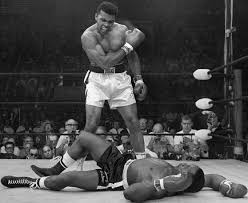
On Comebacks and Failed Comebacks IV: Muhammad Ali

Note: This essay is the third entry in the series “On Comebacks and Failed Comebacks.” The earlier pieces looked at very different kinds of returns: the moral vindication of Kofi Annan and the small, tactical in-game comebacks engineered by Joe Nash of the Seattle Seahawks.


The story of Muhammad Ali operates on a much larger stage. Ali’s exile from boxing after refusing the Vietnam draft and his eventual return to the championship ranks is one of the most famous comebacks in sports history. But the episode described here—the Los Angeles suicide rescue in 1981—is a smaller and stranger moment.


The event appears to have genuinely occurred, yet it also carries the faint aura of legend that often surrounds Ali’s public life. The champion arrives, speaks to a desperate man at a window, and the crisis resolves itself. It is almost too perfectly aligned with the myth of Muhammad Ali not to raise a few questions about performance, storytelling, and the way public figures sometimes inhabit the roles the world expects them to play.


In that sense the episode captures something essential about Ali’s comeback. By the time his boxing career entered its final chapters, he had become more than an athlete. He had become a figure whose life continually generated stories that felt larger than ordinary events.


Whether one treats the Los Angeles episode as simple heroism, public theater, or some mixture of the two, it remains a fascinating illustration of how Ali’s legend continued to grow long after the great fights were over.

Some comebacks are measured in championships.

Others are measured in stories.

The career of Muhammad Ali contains both. His return to boxing after the long exile of the late 1960s is one of the great sporting comebacks of the twentieth century. Stripped of his title for refusing induction into the Vietnam War, banned from the ring during what should have been his athletic prime, Ali eventually returned to reclaim the heavyweight championship and cement his place as the most famous boxer on earth.

But the Ali comeback is not just about boxing.

Long before the exile and the triumphant return, the story had already begun to take on mythic dimensions. In 1964 a young fighter from Louisville named Cassius Clay stunned the world by defeating Sonny Liston for the heavyweight title. Soon afterward he announced that Cassius Clay was a “slave name” and that he would henceforth be known as Muhammad Ali.

The change was shocking to much of the American public at the time. Ali aligned himself with the Nation of Islam, spoke openly about race and politics, and quickly became one of the most controversial athletes in the country.

Then came the draft.

In 1967 Ali refused induction into the U.S. Army during the Vietnam War. The consequences were immediate and severe. He was stripped of his heavyweight title, banned from boxing, and faced the possibility of prison. For several years the greatest fighter in the world was not allowed to step into the ring.

The exile transformed him.

When Ali eventually returned to boxing in the early 1970s, he was no longer merely a talented heavyweight with a flair for poetry and bravado. He had become something larger: a political figure, a symbol of resistance, a man whose name carried moral and cultural weight far beyond the sport.

The comeback fights that followed helped cement that transformation. In 1974 Ali traveled to Zaire to face George Foreman in the legendary The Rumble in the Jungle. Foreman was younger, stronger, and widely expected to win easily.

Instead Ali introduced the world to the “rope-a-dope,” leaning back against the ropes and absorbing Foreman’s punches until the younger champion exhausted himself. In the eighth round Ali knocked him out.

It was one of the great theatrical moments in sports history: the exiled champion returning to reclaim the crown.

But somewhere along the way Ali’s comeback had begun to operate on another level entirely.

He had become something more than a boxer. Part athlete, part moral figure, part living myth. And like all myths, the Ali story eventually began to generate episodes that feel almost too perfectly suited to the character.

One of the strangest of these occurred in Los Angeles in 1981.

A man was threatening to jump from the ledge of a ninth-floor building. Police had been negotiating for hours. Crowds gathered below, watching the terrible drama unfold at a distance.

Then Muhammad Ali arrived.

Accounts differ slightly in the details, but the basic outline is consistent. Ali spoke to the man from a nearby window, urging him not to jump. Eventually the man climbed back inside the building with Ali beside him. Photographs exist of the moment, and police officers later confirmed the story.

By all reasonable accounts, Ali helped save the man’s life.

And yet the story carries a faint aura of improbability.

Not because it didn’t happen—it clearly did—but because it feels so perfectly aligned with the Ali persona that one can’t help wondering about the role of performance in the moment.

Ali had always understood something most athletes do not: that being Muhammad Ali was itself a kind of public art.

From the beginning he blurred the line between competition and theater. The rhymes, the predictions, the playful insults directed at opponents—all of it was part of a larger performance. Ali didn’t simply fight boxers. He performed the role of the greatest boxer in the world.

By the early 1980s that role had evolved even further. Ali was no longer just the heavyweight champion. He had become a global cultural figure, a symbol of resilience after exile, a man whose public presence carried moral weight.

So when the story of the suicide rescue circulated, it seemed less like an unexpected episode and more like the natural continuation of the legend.

Of course Muhammad Ali would appear at the window.

Of course Muhammad Ali would talk the man down.

Of course the cameras would be there.

None of this means the moment was insincere. Ali may well have acted from genuine compassion. But it is also possible—one suspects just slightly—that he understood something about the scene as it unfolded: that the story would become another chapter in the larger narrative of Muhammad Ali.

If so, it was a brilliant instinct.

Because the image of the champion talking a desperate man back from the ledge captures something essential about the Ali comeback. After the long years of controversy and exile, Ali returned not merely as a boxer but as a figure people wanted to believe in.

The story may be small compared with the great fights—the Rumble in the Jungle, the Thrilla in Manila. Yet in its own strange way it may be just as revealing.

A champion reclaiming his title is impressive.

A champion stepping to a window and becoming, for a moment, exactly the hero the world expects him to be—that is something else entirely.

And Muhammad Ali, more than anyone, always understood the power of the moment.

On Comebacks and Failed Comebacks I: Kofi Annan

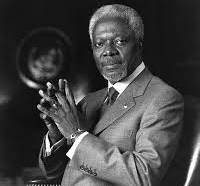
Note: This piece begins a small series I’m calling “On Comebacks and Failed Comebacks.” Political and public life are full of attempted returns. Leaders lose elections, wars, or moral arguments and then try to reclaim the stage. Most of these efforts fail. The moment has passed, the audience has moved on, and what once felt urgent has dissolved into what might be called moral fatigue. Yet every so often a different pattern appears. Occasionally someone loses the immediate battle but remains present long enough for history itself to shift. When that happens, what first looked like defeat begins to resemble something closer to a delayed victory. Kofi Annan provides a particularly interesting case. His opposition to the Iraq War did not stop the invasion, and at the time it appeared that the argument had been decisively lost. Yet as the years passed and the consequences of the war became clearer, the moral judgment he articulated gained increasing weight.
In that sense, the story of Annan’s career suggests a useful distinction: some comebacks succeed not because the player reclaims the moment, but because the argument itself eventually catches up with history. Future pieces in this series will look at other figures—some who managed remarkable returns, and others whose comebacks never quite arrived.

Political life especially produces them in abundance. A leader loses a battle—an election, a war, a moral argument—and disappears into the quiet margins where yesterday’s figures slowly fade. The public moves on. The moral urgency of the moment dissolves into what might be called moral fatigue. Outrage that once seemed unstoppable becomes background noise. A new crisis appears, and the world’s attention shifts.

Once this fatigue sets in, comebacks are difficult. The audience that once cared has already drifted elsewhere. The stage has changed. Most players who attempt to return find that the moment that once belonged to them has passed.

Yet every so often a different pattern appears.

Occasionally a figure loses the immediate battle but remains present long enough for the moral tide itself to turn. When that happens, what looked like defeat begins to resemble something else entirely.

Kofi Annan offers one of the most intriguing examples of this phenomenon.

In 2003 the United States and the United Kingdom invaded Iraq. The invasion was justified by a mixture of strategic arguments, intelligence claims, and moral rhetoric about tyranny and liberation. In Washington and London the momentum of the moment was overwhelming. The war was framed as both necessary and inevitable.

The United Nations, by contrast, found itself sidelined. Annan, then serving as Secretary-General, watched as the institution he led was bypassed by the coalition preparing for war. The moment belonged to the advocates of intervention—particularly the group of American policy thinkers who had spent years arguing for the removal of Saddam Hussein.

At the time, it was not at all clear who would ultimately win the argument. What was clear was that the United Nations had lost the immediate struggle for influence. The invasion proceeded without explicit UN authorization, and the diplomatic machinery that Annan represented appeared powerless to prevent it.

The moral emergency that had animated the debate quickly hardened into geopolitical reality.

Then, in September 2004, Annan said something remarkable. In a BBC interview he stated plainly that the invasion of Iraq was illegal under international law.

It was an extraordinary declaration. Rarely does a sitting Secretary-General of the United Nations describe the actions of the world’s most powerful government in such blunt terms. Yet the statement did not produce the dramatic reversal one might imagine. The war continued. Washington and London dismissed the criticism. The machinery of global politics moved forward largely unchanged.

In the short term, Annan had lost the battle.

And the personal toll of that moment appears to have been considerable. In his biography there is a striking image from this period: Annan alone in his darkened living room, unable for a time to rise from the floor. The room itself reportedly kept in near darkness. It was not exactly depression, at least not in the clinical sense, but something close to exhaustion after a prolonged moral struggle that had failed to alter events.

It is a haunting scene. One of the most powerful diplomats in the world sitting on the floor of a dark room, confronting the limits of his influence.

At that moment, the story of Kofi Annan could easily have ended as the story of a failed comeback. A leader who tried to reassert the moral authority of international law and found that the world had already moved on.

But history has a way of rearranging the meaning of certain moments.

As the years passed, the Iraq War came to be widely regarded as a profound strategic and humanitarian mistake. The claims that had justified the invasion collapsed. The war itself destabilized the region and reshaped global politics in ways that few of its original advocates had anticipated.

Gradually, the moral argument that Annan had made—quietly but firmly—became the prevailing historical judgment.

After leaving the United Nations, Annan did not retreat entirely from public life. Instead he reappeared in a different role as a member of The Elders, a group of former statesmen attempting to exert moral influence outside formal political structures.

It was a curious transformation. No longer the head of the UN, Annan had less formal power than he once possessed. Yet his voice now carried a different kind of authority—the authority of someone who had remained in the arena long enough for events to vindicate his judgment.

By the end of his life, the moral verdict on the Iraq War had shifted decisively. Few serious observers still defended the intervention with the confidence that characterized the early years of the conflict. The consensus had moved, slowly but unmistakably, toward the position Annan had articulated when it mattered least.

In this sense, his career offers an unusual example in the history of comebacks.

He lost the battle.
But he may have won the argument.

That distinction matters.

Most political figures attempt comebacks by trying to reclaim the exact moment they once dominated. They want the same stage, the same audience, the same authority. When the moment has passed, the comeback fails.

Annan’s story suggests a different possibility. Sometimes the moral argument itself continues moving through history long after the political battle appears settled. If a leader remains present long enough, the tide may eventually turn.

Which leads to a simple but revealing observation about great players in any arena.

A truly great player is never entirely out of the game.

The moment may pass. The audience may drift away. But if the underlying argument proves sound, history itself has a way of reopening the field.

And when it does, the comeback is already underway.

The Theory of Catalyzed Emergency

Note: The concept presented here emerged from a recurring observation: certain events appear to produce consequences vastly disproportionate to their scale. Assassinations, attacks, epidemics, or even seemingly minor encounters can trigger transformations that reshape entire systems. Yet these events rarely create the underlying crisis themselves. More often, they activate tensions that already exist beneath the surface of an apparently stable order.

The Theory of Catalyzed Emergency proposes that many systems operate in a state of provisional equilibrium that conceals latent instability. Political alliances, institutions, and social relationships often persist through the management or postponement of unresolved tensions. Under such conditions, relatively small incidents can function as catalysts, accelerating processes that were already structurally possible.

Historical examples illustrate the pattern. The Assassination of Archduke Franz Ferdinand triggered a general war within a European system already strained by militarization and alliance commitments. The September 11 attacks catalyzed geopolitical tensions that rapidly transformed global security policy. The emergence of HIV/AIDS likewise revealed vulnerabilities embedded in medical, social, and political institutions.

What these events share is structural rather than causal similarity: a relatively small catalyst activates latent instability, compresses decision time, and forces a system into crisis. The theory proposed here attempts to describe this recurring pattern.

A Structural Model of Crisis Activation

Abstract

This paper develops a formal framework termed the Theory of Catalyzed Emergency, which explains how large-scale transformations in social, political, and interpersonal systems often arise from relatively minor triggering events. Rather than treating these events as primary causes, the theory proposes that they function as catalysts that activate latent instabilities already present within complex systems. Once activated, these instabilities compress the temporal horizon of decision-making and produce what may be termed a decision emergency, in which actors must rapidly commit to positions that reveal underlying structural relationships. Historical cases—including the Assassination of Archduke Franz Ferdinand, the emergence of HIV/AIDS, the September 11 attacks, and the 2008 global financial crisis—demonstrate recurring patterns in which catalytic incidents transform latent structural tensions into overt crises. The model integrates insights from historical sociology, crisis theory, and complex systems analysis.


1. Introduction

Major historical transformations are frequently narrated through trigger events: assassinations, terrorist attacks, market collapses, or disease outbreaks. Yet these explanations often obscure the deeper structural conditions that render systems vulnerable to crisis.

The Theory of Catalyzed Emergency proposes that crises arise when pre-existing instabilities within complex systems are activated by catalytic events that dramatically accelerate underlying processes. The catalyst itself is rarely proportional to the transformation it produces. Rather, it functions as a structural ignition point, collapsing decision horizons and forcing actors to reveal latent alignments.

This perspective intersects with several intellectual traditions. The sociology of knowledge associated with Peter L. Berger and Thomas Luckmann highlights how social realities are actively maintained through everyday institutional practices. Similarly, the philosophy of history articulated by Walter Benjamin emphasizes moments in which historical time is suddenly ruptured, exposing underlying tensions previously masked by routine order.

The present framework seeks to formalize these insights by identifying the structural conditions under which catalytic events generate systemic crises.


2. Latent Instability

All complex systems contain internal tensions. Political alliances, economic networks, institutional hierarchies, and interpersonal relationships operate through temporary equilibria maintained by norms, expectations, and procedural delays.

Latent instability emerges when such systems exhibit:

  • unresolved structural contradictions
  • suppressed or deferred conflicts
  • asymmetrical power distributions
  • unresolved decision pathways

These tensions do not immediately produce crisis because systems possess mechanisms of equilibrium maintenance—diplomatic negotiation, bureaucratic inertia, cultural norms, or emotional restraint.

However, this equilibrium remains contingent rather than permanent.


3. Catalysts

A catalytic event is defined as a relatively small incident that dramatically accelerates the activation of pre-existing structural tensions.

Unlike direct causes, catalysts function through activation rather than creation. They do not introduce instability into the system; rather, they trigger the release of instability already embedded within it.

Historical examples illustrate this mechanism.


3.1 Geopolitical Catalysis

The Assassination of Archduke Franz Ferdinand is widely treated as the immediate cause of the First World War. Yet the European political system in 1914 was already characterized by rigid alliance structures, militarization, and nationalist tensions. The assassination catalyzed these conditions, triggering rapid mobilization across the alliance network.

Similarly, the September 11 attacks activated structural tensions surrounding transnational terrorism, Middle Eastern geopolitics, and global security policy, initiating a prolonged transformation of international relations.


3.2 Epidemiological Catalysis

The emergence of HIV/AIDS catalyzed profound transformations in public health, sexuality, and medical research. The virus interacted with pre-existing social and epidemiological structures—dense urban sexual networks, stigmatized communities, and fragmented health infrastructures—producing a global crisis that reshaped cultural and scientific discourse.


3.3 Economic Catalysis

The 2008 global financial crisis similarly illustrates catalytic activation. Years of accumulated financial risk within global credit markets were activated by the collapse of mortgage-backed securities, rapidly transforming localized financial instability into a systemic crisis.


4. Temporal Compression

A defining feature of catalyzed emergencies is temporal compression.

Before the catalytic event, systems operate under conditions of extended decision time, allowing actors to defer commitments. Once the catalyst occurs, however, the system enters a phase in which decisions must be made rapidly.

Actors suddenly confront binary choices:

  • mobilize or delay
  • intervene or abstain
  • acknowledge or suppress
  • cooperate or defect

The system thus enters what may be termed a decision emergency, in which the range of possible actions narrows dramatically.


5. Structural Revelation

Catalyzed emergencies perform an important epistemic function: they reveal the underlying structure of systems.

During periods of equilibrium, alliances and loyalties may remain ambiguous. Crisis moments force actors to declare positions, thereby exposing hidden relationships of power, ideology, or affinity.

In this sense, catalyzed emergencies serve as diagnostic events that illuminate structural features otherwise concealed by routine stability.


6. Formal Propositions of the Theory

The Theory of Catalyzed Emergency can be summarized through six formal propositions.

Proposition 1: Latent Instability

All complex social systems contain latent instabilities arising from unresolved structural tensions.

Proposition 2: Equilibrium Maintenance

Such systems maintain temporary stability through institutional norms, procedural delays, and conflict suppression.

Proposition 3: Catalytic Activation

A catalytic event activates latent instability when it triggers processes already embedded within the system.

Proposition 4: Disproportion

The magnitude of systemic transformation following a catalytic event is often disproportionate to the scale of the triggering event.

Proposition 5: Temporal Compression

Catalytic activation compresses the temporal horizon of decision-making, forcing actors into rapid commitments.

Proposition 6: Structural Revelation

During catalyzed emergencies, underlying structures of power, alliance, and vulnerability become visible through the actions taken by actors under pressure.


7. The Catalytic Cycle

The dynamics of catalyzed emergency can be represented as a cyclical process.

LATENT INSTABILITY

STRUCTURAL EQUILIBRIUM

CATALYTIC EVENT

TEMPORAL COMPRESSION

DECISION EMERGENCY

STRUCTURAL REVELATION

SYSTEM TRANSFORMATION

NEW EQUILIBRIUM

This cycle explains why many historical transformations appear both sudden and inevitable: the underlying tensions accumulate gradually, yet the catalytic moment that activates them may occur abruptly.


8. Scale Invariance

One of the most striking features of catalyzed emergency is scale invariance. The same structural pattern appears across multiple levels of social organization.

At the civilizational level, catalytic events may trigger wars, revolutions, or global crises.

At the institutional level, leadership changes or policy decisions may catalyze organizational transformation.

At the interpersonal level, seemingly minor encounters may activate latent emotional dynamics that permanently reshape relationships.

This cross-scale recurrence suggests that catalyzed emergency may represent a general structural property of complex adaptive systems.


9. Conclusion

The Theory of Catalyzed Emergency reframes the relationship between events and historical transformation. Rather than treating crises as the direct consequences of triggering incidents, the theory emphasizes the role of latent instability and catalytic activation in producing systemic change.

By identifying the structural conditions that make catalytic activation possible, the theory offers a more nuanced account of why certain events produce transformative consequences while others do not. In doing so, it highlights the importance of analyzing not only the catalysts themselves but also the underlying tensions that render systems susceptible to catalytic rupture.

Note: This essay is Part I of our series on the concept of the “Catalyzed Emergency.” You can read the other two essays below.

In Defense of Ryan Adams

Note: This essay is not an attempt to defend Ryan Adams the person. It’s an attempt to defend the continued seriousness of the music. The distinction matters, even if our cultural conversations sometimes pretend it doesn’t. Also, I fucking love Ryan Adams. He is the motherfucking man.

Epigraph:

“When the stars go blue.”
— Ryan Adams

For several years now it has been socially safer to treat Ryan Adams as a closed case: talented songwriter, personal flaws, cultural exile. The outline is familiar enough that most people no longer bother to revisit the work itself. But the strange thing about Adams is that the songs refuse to cooperate with the narrative. They remain stubbornly alive — hundreds of them scattered across albums, demos, and late-night recordings — carrying the same bruised intelligence that first made people pay attention twenty-five years ago. At some point the question stops being whether Ryan Adams is an admirable person. The real question becomes harder and less comfortable: what do we do with an artist whose flaws are obvious but whose music continues to tell the truth in ways very few writers can manage?

Part of the problem is that Ryan Adams belongs to an older model of songwriting — the kind where the emotional life of the artist is inseparable from the work. The songs are confessional without being literal, personal without being autobiographical in any simple way. From the early Whiskeytown albums, to his solo debut Heartbreaker, on to today, Adams has always written like someone sitting in the wreckage of his own choices and trying to understand what just happened. That voice — raw, impulsive, often heartbroken, sometimes self-pitying, often painfully perceptive — was never tidy. It wasn’t supposed to be. The appeal of Adams at his best has always been that the songs arrive before the moral cleanup crew.

When the accusations against him surfaced in 2019, the cultural machinery moved quickly. Adams’s shows were cancelled for a while, he was dropped from projects, and reclassified overnight as an artist whose work had become morally contaminated. Some listeners stopped listening immediately. Others quietly kept listening but stopped talking about it in public. The silence that followed was oddly complete. In a culture that usually thrives on argument, the Ryan Adams conversation simply evaporated.

That disappearance is revealing. It suggests that many people were less interested in wrestling with the complexity of the situation than in resolving it as quickly as possible. Once the story had a clear villain, the cultural instinct was to move on.

But the songs remain.

Listen again to Come Pick Me Up, and you hear a man cataloguing his own emotional incompetence with surgical clarity. Oh My Sweet Carolina still carries that strange mixture of homesickness and resignation that only a handful of songwriters ever capture. Later work — Ashes & FirePrisoner, Chris, the better moments of the sprawling archive that followed — continues the same project: the slow documentation of a person trying, often unsuccessfully, to live with himself.

None of this absolves Adams of anything. It doesn’t erase the accounts of people who describe him as manipulative, volatile, or worse. If anything, the songs themselves suggest that those accounts are not entirely surprising. Adams has been writing about his own volatility for decades. The records are full of it — jealousy, insecurity, emotional chaos, the constant sense of someone struggling to regulate the intensity of his own personality.

What the songs also reveal, though, is a rare level of self-awareness about his own condition. Adams’ best work doesn’t present him as a romantic hero. It presents him as part of the problem.

And that distinction matters.

One of the stranger habits of contemporary cultural criticism is the belief that the value of a work of art should track the moral cleanliness of the person who made it. This is a comforting idea, but it collapses under the slightest historical pressure. Much of the art people still revere emerged from personalities that were messy, selfish, unstable, or worse. Songwriters, perhaps more than most artists, tend to write directly from the fault lines of their own lives.

If we demanded perfect character from every songwriter whose music we admire, the history of popular music would shrink dramatically.

The more interesting question is not whether Ryan Adams deserves redemption. That is not something critics or listeners are qualified to grant. The question is whether the songs themselves still carry meaning once the mythology surrounding the artist has been stripped away.

In Adams’ case, the answer seems to be yes.

The songs are still precise. The emotional details still land. Lines that once felt like romantic exaggeration now sound more like documentation — the sound of a man who understands, perhaps too late, the patterns that keep repeating in his life.

There is something oddly honest about that.

The best Ryan Adams songs have always sounded like dispatches from someone who knows he is partly responsible for the wreckage he is describing. They are not pleas for sympathy so much as attempts at recognition — moments where the singer steps outside himself long enough to see the pattern clearly.

That is why the music persists even when the cultural narrative surrounding it has hardened.

The songs were never about innocence. They were about self-knowledge.

And self-knowledge, even when it comes from flawed people, is still one of the things art is uniquely good at revealing.


Dedication

For Ryan, one of the five greatest songwriters ever and the motherfucking man. I love you baby.

Note: If you like this essay, you may like these others in the same “In Defense Of” series.

On Transference in Artistic Collaboration

I will lay laid open…
I do it ’cause I’m a family man…
With the beat in now…
And your chest came out
’Cause you weren’t too scared.

Big Red Machine — “Deep Green / Deep Dream”

There is transference.
There just is.

Matthew Thomas

I. — The Pull That Isn’t Personal

It’s real because it’s grounded.
It’s real because the adult self is the one in the room.

That sentence might sound simple, but it marks a fault line between two entirely different ways of collaborating. The younger version of me would have blurred this difference almost immediately — not out of desire in any straightforward sense, but out of hunger. Out of the impulse to turn recognition into destiny, resonance into narrative inevitability, voltage into myth.

In earlier years, artistic encounters carried an undertow of idealization. When someone appeared whose sensibility aligned, whose aesthetic instincts felt familiar yet surprising, whose presence produced that unmistakable flicker of creative electricity, the experience was difficult to contain inside ordinary frames. Recognition felt like revelation. Shared language felt like intimacy. Creative energy felt like evidence of something larger than collaboration — something fated, symbolic, charged with meaning beyond the work itself.

But time has taught me that this interpretive inflation is not depth. It is transference — not as pathology, but as architecture. A current running through collaboration that invites projection, narrative layering, and emotional over-interpretation. A dynamic that can produce beautiful work, but also confusion, distortion, and boundary collapse when left unexamined.

What has changed is not the presence of that current but my relationship to it.

The boundary is no longer defensive; it is intelligent.
It is not erected to keep the other person out but to keep the work alive.
It is the condition that allows collaboration to breathe without suffocating inside symbolic noise.

And the boundary itself is deceptively simple:

We stand side by side, not on top of each other’s meaning.

We remain in our own psyches.
We allow resonance without fusion.
We allow voltage without blur.
We allow openness without myth-making.

This distinction may appear subtle, but it carries enormous implications. It is the difference between collaboration as encounter and collaboration as reenactment. The difference between creative exchange and symbolic entanglement. The difference between working together and unconsciously attempting to resolve unfinished narratives through one another.

In this sense, transference is neither villain nor obstacle. It is part of the terrain — inevitable wherever humans meet in creative space. The danger lies not in its presence but in its invisibility.

History offers cautionary examples. Jung’s relationship with Sabina Spielrein, initially framed as therapeutic, evolved into a complex emotional and intellectual entanglement in which transference blurred professional boundaries and personal identities. Toni Wolff later entered Jung’s life as collaborator and intellectual partner, yet the triangular dynamic that formed illustrates how symbolic roles can quickly overtake relational clarity. None of these figures lacked insight or integrity; what they lacked was a boundary capable of containing the symbolic intensity generated by their shared work.

That boundary — the one Jung struggled to hold, the one Sabina never had the power to define, the one Toni inhabited with both strength and vulnerability — is precisely the boundary that matters in artistic collaboration. Not a line of separation but a line of differentiation, one that preserves psychological sovereignty while allowing creative permeability.

The collaboration that underlies this piece has tested that boundary in productive ways. The work carries voltage. The exchange of ideas, images, and aesthetic intuition generates moments of recognition that could easily be misinterpreted as evidence of deeper narrative convergence. The temptation toward symbolic overreach is real, as it always is when creative chemistry emerges unexpectedly.

But the boundary holds.

Not through suppression or distance, but through integration. Through the adult self’s capacity to remain present without narrativizing the encounter into something it is not. Through a commitment to form — not as rigidity, but as container. Through an understanding that artistic collaboration thrives when the symbolic field remains clear enough for the work to speak in its own voice.

Openness with form.
Exposure with spine.
Laid open, but not laid bare.

This is not restraint for its own sake. It is creative hygiene. It is the discipline that keeps collaboration from dissolving into projection, keeps admiration from mutating into idealization, keeps creative voltage from being mistaken for emotional destiny.

The boundary is not what limits the collaboration; it is what makes it possible.

And in that sense, the boundary is not a line between collaborators at all. It is a line that keeps the field clear so the work can keep happening.

This is how adults collaborate: with clarity, with shape, with mutual sovereignty intact, with symbolic noise turned down, with the quiet confidence that resonance need not imply fusion. The trio remains intact — internal voices aligned rather than fragmented — allowing openness without collapse and connection without reenactment.

Music has offered a parallel language for this dynamic. The Big Red Machine ethos — stepping forward without fear while remaining rooted in personal identity — models a form of creative openness that resists mythic inflation. The lines echo not as romantic declaration but as psychological instruction:

I will lay laid open…
I do it ’cause I’m a family man…
And your chest came out ’cause you weren’t too scared…

Openness is not the danger.
Losing oneself inside openness is.

This brings the piece to its quieter question, one that underlies all collaboration, all transference, all creative exchange:

Can I remain open without giving myself away?
Can I step into voltage without mistaking it for destiny?
Can I meet clarity without dissolving into it?
Can I collaborate without collapsing?
Can I inhabit a resonant field and still leave it as myself?

The answer, tentatively but firmly, is yes.

Not because discipline has replaced feeling, not because detachment has replaced intimacy, not because protection has replaced vulnerability, but because integration has replaced fragmentation. Because the internal architecture is stable enough to allow openness without fear. Because the dream that once blurred boundaries now functions as threshold rather than invitation. Because the symbolic layer — what I sometimes describe as the Draco grounding — operates not as mystical escape but as orientation, a reminder that identity persists across shifting relational fields.

Transference remains part of the architecture. It always will. A subtle undercurrent running beneath creative interaction, capable of enriching perception when acknowledged and distorting reality when ignored. The adult task is not to eliminate it but to refuse its authority as narrative director.

The adult self leads.
The trio leads.
The work leads.

And so the closing question emerges, less dramatic than the fears that once accompanied it, but more meaningful:

What does it mean to stay laid open and still stay mine?

That is the adult version of transference — not avoidance, not collapse, but clarity held with a steady hand.


Dedication

For the collaborators:
the drifters,
the drop-ins,
the ones who catch the tune mid-air and don’t flinch.

You keep the corners loose
and the truth a little crooked.
My kind of people.

Note: If you like this piece, you may also like “Elodie and Matt: A Modern Fairy Tale.” You can read it below.

My Time At Northern Arizona University Interlude and Part V: Return to Japan and Year II Term I

Interlude — Return to Japan, Winter 1999

I flew back to Japan in early December ’99, eleven months after Flagstaff, twenty six years ago today.

My girlfriend — soon to be my wife — met me in Kumamoto and before we went anywhere near a city office we took a bus tour of Kyushu. One of those packaged trips where the landscape is real but the schedule isn’t — temples, viewpoints, souvenir shops engineered into the route because somebody is getting a cut. I’ve never liked bus tours. Too passive. Too commercial. A landscape you watch instead of inhabit.

The first night in the hotel we were intimate for the first time in a year. It was good enough — tentative, self-conscious on my part, like we were remembering choreography rather than improvising. It would all come back pretty quickly.

After the tour we stayed with her parents in Uto City — small house, tatami floors, her childhood bedroom upstairs. We shared a single futon where she had slept alone as a girl. I remember the narrowness of it, two adults lying in a past built for one. The walls thin, the air still, her parents downstairs, in their own world.

.We went to the city office the first week of December and signed the papers — no ceremony, no white dress, no crowd, just bureaucracy, and permanence I suppose. A moment small in appearance and enormous in consequence. One pen stroke and we weren’t dating across continents anymore — we were married.

I flew back to Arizona before the semester resumed. I was a married man. Small ring. Big life. My cold room waiting.

That was the hinge — Japan in winter, Flagstaff in spring, and me between two homes that I didn’t yet know they would trade places for good.

NAU Year Two — Term One

I flew back to Spokane that winter the same way I had the year before — no plan except back to NAU and see what I could do. The red Toyota pickup was waiting for me, still running, still mine, connecting Washington and Arizona. I drove south again — long highways, cheap motels, maps instead of GPS, how I knew what I was doing I have no idea.

Flagstaff was colder that winter, or maybe I had just forgotten what dry cold felt like. I didn’t keep the old room near campus, and I didn’t want to. I spent two nights in a budget hotel, stretching my graduate-tutor income across meals and rent in my head. Still — I was back, and that is what mattered.

A classmate pointed me toward a woman named Bev who had a room for rent. She lived twelve minutes from campus. She has a big house — divorce settlement money, and a shoo downtown that sold wood furniture she built by hand. The furniture was bad, and she told had sold exactly zero pieces. That alone told me she was operating on a different financial zone than the rest of us.

I moved in. My own room, my own bathroom, access to the kitchen, $700 a month. Not luxury, not struggle — just workable. I drove to campus every day, which meant less drinking, more structure. Only once did I drive home drunk, and it scared me enough to make sure it stayed a single incident. Mostly, I left the truck downtown and taxied home, or I didn’t drink at all.

Academically, the rhythm was set — Said, Ray Huang’s 1587, Braudel, Portelli, more Bourdieu when I could manage it. The hardest class was Bob Baron’s Marx seminar. Everything else felt manageable, maybe even easy when I had momentum. My friendship with Mandiola deepened that semester — sharper, closer, more real — the two outsiders orbiting the same department.

That was also when I noticed Sonia. First as a presence — around campus, then behind the counter at the organic market I could barely afford. The book van outside sold $1 paperbacks, and I bought more of those than groceries. We exchanged looks — recognition, curiosity — but nothing more. Later I realized she was an undergrad in the Post-War German History class I lectured in. That alone helped keep the boundary clean.

By late fall the loneliness was real. I was married, but alone. She missed me. I missed her. She was thriving at work — promoted to Head Nurse at 24 — and still, distance was beginning to feel like erosion rather than opportunity. So we made a plan:

So in the Fall of 2000 my wife would come to Flagstaff and take part-time English classes. We would be in the same place again.

Around that same time the last of my Hamilton debt — $17,000 — was paid off by her or by her mother. I’m still not certain which. Either way, relief arrived quietly. I would repay it not as a transaction but by building a life — covering everything from 2002 onward.

And that was the first term of year two. Cold roads, heavy reading, a quiet spark at the edge of ethics, and the decision that distance had served its purpose.

My wife would come next term.

My Time at Northern Arizona University Part II: The Other Graduate Students

Note: This is Part II of my series on my time at Northern Arizona University between 1999-2001. This post takes up the other graduate students in the History Department. Part I, Decision and Arrival, can be found here.

NAU — The Graduate Students

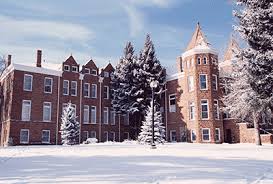
The History Building was located near the northeast of campus, and as I mentioned in Part I it was mere minutes for where I was staying in my first year of the program. There was one graduate office on the second floor — a narrow room with four aging computers, a stubborn printer, and more bodies than desks. Some students shared chairs. Some wrote standing up. You could hear arguments through the walls, even with the door closed. It wasn’t glamorous, but it was the whole ecosystem: every thesis, every grudge, every friendship, every theory, all pressed into what was a pretty small space.

Cindy

The center of the room was Cindy. Early thirties, beautiful, charming, half-brilliant and fully aware of her own gravity. She studied the Southwest like almost everyone else in the cohort, but she made scholarship look like a party you had to be invited to. Men tried. None succeeded. She never dated within the department, but she flirted like a form of cultural exchange — a compliment, a smirk, a dismissal, repeat.

A number of us would go bowling from time to time, and when I bowled a clean 200 one night (still my best score ever) she called me Zen — partly for Japan, partly for the way I moved through things without forcing them.

As mentioned, Cindy flirted lightly with all the single guys in the department, and she and Mandiola had a particular dynamic going on. More on that below.

Lance and Gretchen

Orbiting Cindy were Lance and Gretchen, a long-term unmarried couple renting a big place in the low hills behind campus. Lance was military reserve — rigid posture, some money behind him. Gretchen was smart and generous; they held Thanksgiving at their house and the whole department came. It was clear to me, however, that she lived in Cindy’s shadow a fair bit.

Their relationship read like a stable table with a crack underneath. They had been together for a while at that point, though I don’t believe it ultimately survived.

Dave Diamond, Patrick, and Gary

At the other end of the room sat three men who could fill a bar with argument, and did.

Dave Diamond — mid-fifties, blue-collar history etched into him. Fishing boats, oil platforms, mines. He smoked dope daily like other people drink coffee. His thesis was on one apple orchard. Not agriculture policy in general — one orchard. He traced labor, yield, frost, policy, immigration, machinery, exploitation and renewal through a single patch of earth. That was Diamond: narrow focus, infinite depth. He was grumpy in the best possible tradition, and as I’ll mention later hooked me up with a little green from time to time, and I liked him.

Patrick was about twenty-two, a conservative, and worshipped Ronald Reagan. He believed the free market solved more problems than it created. Diamond thought Reagan had gutted the working class and could give footnotes from memory. They shouted at each other constantly, sometimes in the office, more often over drinks— full volume, full conviction — then they would move on like nothing had happened. They weren’t enemies. They were the ongoing argument.

Gary stood between them philosophically but never took the middle. Libertarian, Western-minded, big on personal risk and responsibility. Motorcycle helmets should be optional, ICU bills be damned. A man should be free to crack his skull if he wants to. You couldn’t move him. His logic was dry and clean. I wrote about Gary and his helmet policy at length here, and here is an excerpt:

Later that year Gary’s brother, also a biker, died in a motorcycle accident on a New Mexico mountain. It was a sad day for the department and for Gary. His brother was a biker and a cop, and I happened to walk past the church where the funeral was being held. There were dudes in Hell’s Angels jackets and cops in dress uniform side by side. Gary came by the graduate student office a day or two later. Yeah, he said, a funeral like that is the only time you’ll see bikers and cops side by side. He talked about his brother and how much he loved his motorcycle. I offered my condolences, but then curiosity got the better of me, as per usual.

“Gary, I have to ask, was your brother wearing a helmet?”

“Of course not. He died like he lived, free.”

“Does the accident make you think any differently about helmet laws?”

“If anything, it makes me more opposed to them. The right to ride without a helmet is what makes a biker a biker. Without that, we have nothing. My brother would feel the same.”

The three of them — Diamond, Patrick, Gary — were a triangle of conflict that never quite resolved. I liked them all in different ways and they all added color to the department.

Scott Fritz

Then there was Scott Fritz — early thirties, soft-spoken, spaced-out, gentle. Loved Las Vegas with an almost devotional sincerity. Not for gambling. For cocktails at 3 a.m. in glass palaces of light. He was in line for a major scholarship until Mandiola took it out from under him. I’m not sure what Scott was studying, but probably the American Southwest as well.

Mandiola

Mandiola and I were the outsiders. Not Southwest scholars. He was studying semiotics. I was studying Asia, oral history, and collective memory.

He was born in Chile, raised in LA, carried two languages without ceremony. His mind was fast — too fast in many ways. He had been married, and at this time was seeing P., an English professor who was at NAU on sabbatical. I met her twice; once over pizza with other members of the department and once more. We didn’t like each other at all, which Mandiola found hysterical. That was him: always drawn to drama — either generating it or laughing at it.

He was the loudest voice in the room. His banter with Cindy dominated the grad office for weeks — compliments tangled with insults. It wasn’t romantic. It was force meeting force, and they both held their ground. I also wrote about becoming friends with Mandiola in my piece I Have a Crush on Katie Park of the Bad Moves; here is a little bit of that:

A good friendship, in my opinion, is one where no matter how long you and your friend have not hung out, if you see them it’s as if not a day has passed. With this sort of friend, I’ve found, there is between yourself and them something fundamental shared. It can be anything really. For example, I first met my good buddy when we were both in graduate school in Arizona, and at first I thought he was a total dick. He was loud, interrupted people constantly, and loved being the center of attention. One night we were drinking as a department and he started razzing me there on the street, just casually insulting me left and right. Suddenly I got where he was coming from. This was, in fact, his way of offering to be friends. Once I understood this, I began to give it right back to him. Called him every name in the book. And he ate it up. By the end of the night we were fast friends and have been ever since, because we share an understanding that our friendship is based, in part, on ripping on each other.

Me

I was twenty-four, newly returned from Japan, married but alone in Flagstaff. I ran most mornings, didn’t drink in my tiny freezing room, and wanted to get straight As. And I got them, with just one A- to keep me honest I guess.

Summary

  • Cindy had presence.
  • Lance and Gretchen had the house on the hill.
  • Fritz had Vegas dreams.
  • Patrick had Reagan.
  • Gary had principles made of stone.
  • Diamond had an orchard.

And Mandiola and I — for all our differences — were the sharpest minds in the room, and it is he that I would spend the most time with and remember the best.

My Time at Northern Arizona University Part I: Decision and Arrival

Dateline: Kumamoto, Japan. Fall of 1998.

I am living in a small apartment near downtown, tatami under my feet, a low loft overhead, the city moving quietly outside. I’d been teaching English conversation long enough to know I was going nowhere in that job. It wasn’t a crisis; it was a slow stalling-out. Good enough money, students I liked, but no real future. A life you could idle in forever.


Most nights I sat on the floor with a notebook, paging through information on American graduate programs. I wasn’t dreaming about tenure, an academic ladder, or a nameplate on some elite office door. I wasn’t trying to become a history professor at all. What I wanted was simpler and sharper: a way back to the U.S., a life I could actually live inside, and a path that might let the woman I loved come over later, maybe as a nurse, once her father’s condition — only after marriage — was met.

I emailed Tom Wilson, my old Asian History professor from Hamilton, and asked if he would write on my behalf. He agreed, and somewhere out in the system his recommendation went off to people who would never meet him. He also wrote back: don’t go to Northern Arizona; go to Chicago, my school. You can become a professor. It was kind and sincere and completely beside the point. He was thinking career. I was thinking oxygen.

The search itself was slow. I compared cities, programs, costs, climates. When I landed on Northern Arizona University and started looking at Flagstaff, it just felt right: high desert, pine trees, a small city you could walk, not a sprawl you endured. The history program was solid enough, and it wasn’t a teaching-credential track. It looked like a place where I could move forward, not just sideways.

When the offer came back, it was more than just admission. NAU gave me a scholarship and in-state tuition, even though I had never lived in Arizona. That got my attention. Schools don’t hand out cheaper rates to out-of-staters for fun. For whatever mix of reasons — Japan, Hamilton, Tom Wilson’s letter, my file on someone’s desk — they wanted me. That was enough.

I packed up my life in Kumamoto, said goodbye to Washington — my second English conversation school, not the state — and flew back to Spokane. From there I bought a red Toyota pickup for four thousand dollars from a teacher’s husband at St. George’s; he was a cop. It was almost all the money I had. I drove away with a truck, an acceptance, and not much else.


The road south was long and winter-empty. I followed a paper map through states I barely knew, slept in a couple of cheap motels under thin blankets, and kept going at first light. The truck held together. I did too.

Early January, I rolled into Flagstaff. Cold air, bright sky, nothing arranged. I had no housing lined up and almost no cash. I parked on campus, put on black trousers, a black turtleneck, and a black blazer, and walked straight into the History building like that was a normal thing to do.


Karen Powers, the chair, treated it as if it was. I told her I’d just arrived and had nowhere to stay. She didn’t flinch. A friend of hers, she said, had a room to rent a minute from campus, three minutes from the department. We walked over.


It was a small back bedroom, six hundred a month, a parking space in the yard, and a shared bathroom with the guy in the next room. No kitchen, no run of the house. Not ideal. But it was available, and it was there.

I took it on the spot. That same day, I moved in.