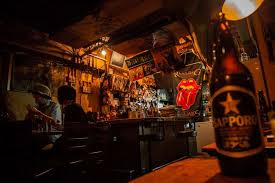
Scenes from Hamilton College I: Meeting Ian and Jake

New Note: It’s been a while since I last posted this piece, and I’m glad to bring it back here as a republication. “Hamilton I” remains one of my favorite entries on the Kyoto Kibbitzer—an early chapter built around friendship, music, and the strange, formative textures of freshman year, especially the central presence of my good friends Ian and Jake, who shaped so much of that time. It’s also one of the more widely read pieces on the site, which I appreciate. Re-reading it now, I’m struck by how much of what came later was already there in embryo: the scenes, the sounds, the late nights, and the people who mattered. As always, thanks for reading.

And I recall the moment
More distant than it seems
When five green queens
On a black bin bag
Meant all the world to me

The Pogues

I attended Hamilton College, and managed to graduate–possibly in linen. At Hamilton I was an English major, and intended to be from when I enrolled. This was a decent choice; however both Hamilton and English were kind of my father’s choices. I also managed to cobble together an Asian Studies minor through the good auspices of my advisor who checked out my credits and told me I could put that together. This was a good call on his part, and even though I kind of stumbled into it, The Asian Studies minor was my choice.

I was pretty unprepared for college. Before going I was asked to fill out a kind of questionnaire to help the college place me with roommates. One of the questions was, are you clean, messy, or in the middle. I chose in the middle, which was sort of a mistake because it turns out men are pigs, and I was cleaner than most. At the same time though it wasn’t a mistake because if I had selected clean I may not have met Ian and Jake. Jake was my roommate, and we lived in a quad. The other two roommates were Brian and Geoff, and although I had a relationship of a sort with both of them freshman year, we were not really on the same page. Jake and I were. Ian was our next door neighbor, and he roomed with Marc Campbell, and two other people. Ian, Jake, and Marc are still in my life.

My parents came with me to upstate New York, and before I moved into the dorm we stayed for a few days in a hotel near campus. I was kind of apprehensive, and spent the days listening to The Pogues and quietly stressing. But when I moved into the quad things were fine. This was mostly because of Jake.

Jake was a bit of a wild character. He was from either New York or Connecticut as I recall, and I think he came from decent money. When I visited his house later that year it was very patrician, for lack of a better word. His father seemed like a super old-school WASP patriarch, and his mother didn’t work I don’t believe. His younger brother held right-wing political views at the time, while Jake was a lefty. This was a point of serious disagreement between the brothers, but other than that the family seemed pretty solid. I believe that his brother has since switched his political views.

I didn’t meet Jake’s family until Thanksgiving however, and got to know him first in the context of the quad. We lived in a dorm called North, on the first floor right by the door. (My buddy John Innes, who joined me at Hamilton from our high school lived in the neighboring dorm Kirkland, and next to that was South.) The door to North would be locked at night, and other dorm folks would regularly misplace their key and crawl through our always open window. Jake and I rarely slept, and I got in the habit of staying up until about five AM. After that I would get a little sleep before first period English class. Then I would attend Geology class, which satisfied some kind of Science graduation credit. For English class I was alert and on top of it, although I was still hand-writing my papers, which changed once I got in the habit of using the computers in the library. English class was small, maybe 12-15 people, whereas Geology was huge and held in a lecture hall. I would go lay down in the back in the aisle and try and sleep. I ended up getting As in almost all my English classes, and a C- in Geology, which was deserved to an extent because of the sleeping. However, the main question on the final was brutal and pretty unfair, which was to draw a seismograph. Literally, draw one, which we had never studied and I did cram for the final. Brutal action. Somehow I still made the honor roll that year, and every year, because of my performance in the humanities.

Jake was an English major as well as far as I recall, I kind of forget, but he knew a lot of the teachers I knew. In any case, we did not bond primarily in the classroom, but in the dorm and then at “Sig,” the frat he was associated with and later pledged. Sig was the alternative frat. I hung out there a bit, but when pledge season started they kind of cracked down on non-pledges attending parties. For Halloween, Jake snuck me in early, and although that night I got a few looks I was good with Jake’s blessing. That night I wore all black with a turtleneck and a paper sign on my back saying “No future for you.” As in the Sex Pistols. I was talking with an older guy, an alum (there were always some alums that hung at the frat parties at Sig) at the party and he said something to the effect of “I like you, but I don’t like your shirt.” OK dude.

That was the same night I believe that inspired the following little ditty I later shared with Jake:

I pissed in the toilet

He pissed in the sink

He said I haven’t got a god above

I haven’t got a drink

Jake later took umbrage with the lines, not the sink part, which was and remains credible, but the god part. I think he is, or was, a believer. In any case, he’s my friend and won’t sue.

I appreciated Jake showing me the ropes at Sig and elsewhere. In the dorm we would play his music–he was into the classics, Beatles and Stones, Kinks, Bowie. We would sing “The Ballad of John and Yoko,” and “Come Together,” mostly the former over and over, no doubt to the annoyance of our roommates. Jake also liked The Pogues, and this made me think even more highly of him.

Jake smoked, Marlboro Reds, and I soon started smoking too, the same brand. This was not out of a desire to be a smoker, but rather as a way to keep my hands occupied and look busy at parties, where I had some difficulty mixing. I picked up, or invented, a little trick where I would fold up the flaps of a cigarette pack so they looked like a paper airplane, and then lob the cigs around the room, usually to any girl that wanted one. This got me some attention and some affection, and I kind of became known for the move. It didn’t get me laid, but at least it was something. Jake and I were fast friends, and hung out a lot in the early part of the year, before he began to branch out. Once he started pledging Sig though I saw less of him, naturally enough I guess.

By the time Jake started pledging, and even before, I was spending more time with Ian. Ian was from Boston and his father was a medical doctor. He lived in a nice house in the suburbs–both Jake and Ian had quite a bit more money than I, a common feature at Hamilton where pretty much everyone had money expect me. I was on a pretty decent scholarship, despite my not so impressive high school record, and could not have afforded the school without the scholarship. I visited Ian once or twice I believe in college, and then stayed with his family for a few months in the fall after college, but that’s a story for a future post.

Ian had a massive record collection in his quad, next door to mine as I have said. I liked Jake’s music, especially “Rebel Rebel,” “Come Dancing,” and The Stones, however his selection was somewhat limited. Ian’s was capacious. He was into bands like The Stone Roses, The Charlatans, Ride, and a bunch of other British bands I didn’t know at the time. But he was really into everything. I spent hours in Ian’s room soaking up his music, and my association with him kind of took over where Dyche Alsaker’s left off. I think it was Ian who also introduced me to Luna, who was coming up at the time and is still one of my favorite bands to this day. Later, in senior year I think, Ian and I had a radio show together and one night we got to play records all night long when a few other people canceled suddenly. I would play The Replacements and the Pogues, and Ian would play his music, but I was also getting deep into the 4AD label and bands like Big Star, This Mortal Coil, and a little known band called The Binsey Poplars (who I’m not sure were even on 4AD), named after a Hopkins poem. But my favorite around that time was Nick Drake, who was on Rykodisc.

Drake is now pretty well known, mostly on the back of his song “Pink Moon,” which was featured on a Volkswagen commercial, but back then he was not well known outside serious music circles. I loved his song “Rider on the Wheel,” and was an evangelist for him, telling all and sundry to listen. Most people didn’t, of course, but the whole move was just odd enough to get a little attention, which I was definitely seeking. (Another friend from that time John mentioned to me a few years ago that I would sit on the front steps of his frat in my trench coat and read a book. I don’t really remember this, but if it’s true it was for sure for attention.) I remember one evening Ian had a kind of band that was playing and I “opened” for them. My act was simply talking about Nick Drake, painting him as a forgotten genius, which he was, and pleading with the crowd to listen. It went over pretty well, like I said probably just because it was different.

Later on, mostly the next year I think, Ian and I went to a few shows in Boston, including The Red House Painters, The Fall, and Love Spit Love. Ian would drive, and blast The Pogues with the window down to stay awake on the way home. Before one of these shows we managed to source a little green, which was enjoyable. We would park, illegally, in some lot Ian knew. In the lot, there were rats.

Jake and I were sort of on the same level–both semi-degenerate English majors–but Ian I looked up to. He was definitely the leader in the friendship, although he must have seen something in me because we hung out a fair bit. Ian was also friends with Marc, but he was perhaps closer to another group of guys who lived in two adjacent quads on the third floor. This included John and a guy called Will. I would go up there too, and Will would ask “what Dead do you want to listen to?” I always went with Reckoning because I liked the country-folk sound and the song “It Must Have Been the Roses.” I liked the third floor guys too, especially John.

Next door to Jake and my quad was Adam and Basmo. Adam and Basmo (a nickname) were seniors who for some reason decided to stay in what was basically a freshman dorm. Adam was cool, but pretty grown up. Basmo was still a kid, and loved to get high. Loved to get high. Early on in the year he would come over and ask “anyone want to get stoned and session?” A session, it turned out, was you would smoke, put on The Beatles, and watch Bugs Bunny or something with the sound down. The idea was the music would synch up with the cartoon and it would be hysterical. It totally worked, although I just liked to listen to music and bullshit rather than session. Real heads will remember the session. (Jake told me that sadly Basmo later took his own life as a result of the worsening effects of ef. That was really too bad because Basmo was just a pure open-hearted soul.) So basically we would get stoned when we could, smoke Reds, and stay up all night and listen to music, which was a pretty decent life all in all. Jake and Ian took me in, and made the first part of freshman year so much better in all ways than it would have been if I hadn’t known them.

Dedication: For Ian and Jake, for seeing something in me, and helping make me a little somebody.

to be continued…

Note: If you liked this piece, you may other like the other pieces below in the Hamilton series.
On Subcultures and Scenes in Craig Finn’s “It’s Never Been a Fair Fight”

New Note: It has been a little while since I last posted this piece, and I’m glad to bring it back into view. It remains my very favorite essay on the Kyoto Kibbitzer, and has continued to circulate far beyond what I ever expected, with many hundreds of reads over time. In an entirely unscientific but pleasingly persistent corner of the internet, it still seems to rank #2 in search results for the term “Katie Park Bad Moves,” just behind Wikipedia, which is pretty cool. I have no idea what to make of that, but I’m not complaining.

The piece itself—on Craig Finn’s “It’s Never Been a Fair Fight”—has always felt to me like one of the most complete things I’ve written about music, scenes, and subcultures, and I’m grateful for the continued readership and responses it has received. Reposting here in full for anyone who missed it the first time around, or wants to revisit it.

Original Note: This piece is about an absolutely amazing song by Craig Finn called “It’s Never Been a Fair Fight” released in 2020 on All These Perfect Crosses from Partisan Records. We will also expand on the song’s theme, which is how subcultures (and “scenes”) operate. Finn is, in my opinion, the greatest lyricist working today (not the greatest living lyricist, that’s still Dylan). I’ve written about about Finn before here, and here.

Craig Finn himself has commented on this song and says that “It’s Never Been A Fair Fight”:

“Is about the extreme difficulty of staying true to the rigid rules of a subculture as you get older. The character in the song revisits an old peer and finds struggle and disappointment in the place he left behind.”

In this case, the narrator had been part of the punk/hardcore scene in the 1980’s and 1990’s, has left the scene, and reflects on his time there and what it meant as he meets his old friend—and we suppose former lover—Vanessa. I’m not sure I understand the entire chronology of the song, as it engages in some apparent time jumps that can be a little hard to follow. Overall however, it is pretty clear what the song is about.

The opening verse sees the narrator (let’s call him C., because while we will grant Finn the understanding as an artist that his characters are characters, in this case the song feels pretty autobiographical) checking in with Vanessa. The song opens in the present day.

Finn has C. meet her “right in front of her building,” Vanessa “vague in taste and drowning,” telling him she’s “got a new man…in a new band,” and “they’ve got a new sound.”

We get the impression that C. has been out of the scene for a while, while Vanessa is very much still in it: new man, new band, new sound, same old place. Vanessa’s man, we assume, is in a hardcore band, and I believe it is the case that Finn came up through the hardcore scene before forming his first band Lifter Puller. Lifter Puller is not a hardcore band, and I don’t know if Finn was actually in a hardcore band or just in the scene.

Then comes one of Finn’s perfect little deadpan truths. C. shrugs that “hardcore’s in the eye of the beholder,” a funny line for a number of reasons (it also reminds me of the classic David Berman line: “punk rock died when the first kid said / punk’s not dead.”) The humor hits because it’s both self-aware and scene-aware.

After C. recalls his “broken heart from 1989,” Finn pivots the timeline. The song shifts back—back to when C. was attending hardcore shows, hot and sweaty, elbows in his eyes. The chronology bends, but the emotional logic stays firm.

Vanessa says there are “threads that connect us,” and “flags and wars we should never accept.” Angelo’s off seeing “snakes in the smoke” from someone’s cigarette. And Ivan? He isn’t concerned at all — for him it’s mostly just about “what you wear to the show.” C. admits he “heard a song…on the radio” that he liked, which we can assume violates at least one of Vanessa’s unwritten rules.

Finn is an absolute master of sketching characters in just a line or two. Here, he uses a sort of pointillistic approach to introduce us to two additional members of the scene, Angelo and Ivan. With just a few short verses we already understand a great deal about “the scene.” Here is what we can deduce:

i) All four members of the scene have very differently valenced loyalties. Put another way, they want different things from it. Vanessa is a purist; for her being part of the scene is like being part of an tribe, an army, and we take her to be a fierce protector of the in-group/ out-group aspects that tend to arise in subcultures. Angelo, it seems, is a little out there; he’s seeing snakes in the cigarette smoke and probably not all that interested in the ultimate nature or meaning of the scene. Ivan likes the t-shirts and jeans, likes the look. He’s not a purist either. And C., well he likes a little pop music, an inclination we assume is strictly verboten for folks like Vanessa.

ii) Probably because of the differences in ideas and ideologies between the scene members, C. sees things coming to an end, both with the scene and between he and Vanessa. Here we are reminded of the difficulty of keeping any kind of group together, whether a scene, a band, or just a group of friends. Everyone knows the feeling of having a group of friends who tell each other they will be tight forever, however life doesn’t usually work that way. The best film about this dynamic is Whit Stillman’s Metropolitan, which depicts a young group of friends in Manhattan who come together and then slowly, but inevitably, come apart over the course of a winter. There is a great moment in Metropolitan where the main character, Tom, looks around and realizes the scene is dead. Where did it go? It was here one day, gone the next. Scenes are like that, and this is what Finn is writing about.

iii) The inherent differences between people which make keeping the scene together are also something that Finn celebrates to a certain extent I think. One of the most salient features of Finn’s writing is his compassion. Finn has compassion for Angelo and his snakes, Ivan and his jeans, and for Vanessa, in all of her rigidity. As of the time of the song we know for sure that Vanessa is still in the scene and C. is not. I guess that neither Angelo nor Ivan is still around, however if only one of them is my money’s on Angelo, if he’s still alive.

Through the course of my own life, I have been involved, for a shorter or longer time, with a variety of subcultures. One category of subculture that I have frequented is what we could broadly call “new age.” My explorations of this category have been reasonably extensive. Back in my early 20s, I was involved for about 4–5 months with a Tibetan Buddhist group back in Washington State. I would get up at 4 AM, drive an hour across town to a beautiful old house on the hill, and meditate with the folks there. This group also organized some outings, such as mountain hiking.

I enjoyed the group and the meditation. The group leader, a slightly older woman who was lovely, asked me to pay like 6 dollars for a little book with chants in it, which I did. There was a total cross-section of people in the group of different ages and backgrounds, and all in all I liked it there. However, I peeled off from the group after a time for reasons very similar to those discussed by Finn. There were two specific things that led to me leaving. The second I’ll discuss a little later. The first was one day I was chatting with one of the members on the street outside after meditation. He was telling me how his daughter used to play chess, however he would no longer allow her to do so because it was interfering with her studies of Tibetan Buddhism. “There’s just not enough time,” he told me.

I had talked with this guy before and he was a perfectly nice guy, but I didn’t agree with his approach. I felt, in fact, that it was bad action. Now, I understood that people joined the group for different reasons and had different levels of investment. I was not looking to become a Tibetan Buddhist or anything—I was just “checking it out.” To circle back to Finn, the valence gap between this fellow’s take on the subculture and my own was vast, and his entire approach turned me off. This was the first step in my deciding to leave.

The next three verses of “It’s Never Been a Fair Fight” see C. trying to keep the door open to Vanessa even as he edges out of the scene. He wants to meet her and if she agrees he will know that she like him feels that “punk is not a fair fight.” Finn doesn’t say, but I’m guessing Vanessa doesn’t show.

If things change quickly/ just remember I still love you/ and I’ll circle ’round the block tonight/ between 9 and 10 o’clock tonight

If you’re still standing here, I’ll take that as a sign/ that you agree it was a sucker punch/ punk is not a fair fight/ it’s never been a fair fight

We said there weren’t any rules/ but there were so many goddamn rules/ we said that they’d be cool/ but then there were so many goddamn rules

Verse VII is the hinge-point of the song and basically its thesis. Finn’s point is straightforward: the appeal of the scene is the potential for freedom, exploration, rebellion, however once inside the subculture C. finds himself increasingly hemmed in by the strictures of that culture and the requirements necessary to remain within it. The very thing that drew C. to the subculture (flight from an over-determined social reality) is that thing that ultimately drives him away. “It’s Never Been a Fair Fight,” appears in two versions on All These Perfect Crosses; the main version is horn driven and upbeat, and there is also an acoustic version. On the main version, Finn, realizing perhaps that the repeated line is a bit poetically unorthodox, spits out a laugh on the “then” in “but then there were so many goddamn rules,” and in the process underlines the centrality of the sentiment to the song as a whole. It’s a great verse, and one which tells us something fundamental about C.’s nature: he likes the action, and as such needs to be free to pursue it wherever it may be. Action is not limited to the Minneapolis hardcore scene, after all.

Read more

On Being Early to Shows

Note: Getting to shows early, I realized, isn’t really about beating the crowd but about entering the space before it hardens into an event—when the room is still provisional, the bartender relaxed, the band half-mythical figures moving casually through soundcheck, and the whole night feels less like a performance and more like something forming in real time; you notice the lighting before it matters, the empty floor that will later surge, the stray conversations, the merch table still untouched, and sometimes—if you’re lucky—the musicians themselves, unguarded and human, which subtly rewires the experience so that when the set finally begins you’re not just watching a show but inhabiting a continuum that started hours earlier, a private prelude that rewards patience, sharpens memory, and turns what could have been just another concert into a small, self-contained narrative of anticipation, proximity, and the quiet pleasure of being there before everything becomes official.

Epigraph
“There’s a thin line between a guy with a backstage pass /
and a guy walking around with his gut hanging out like a jackass.”

— Sun Kil Moon, “Ben’s My Friend”

I’ve always been fascinated by the green room. First of all, why green? They can’t all be green. Second, there’s the whole rider situation. The rider is where things get really interesting. I think it was Van Halen who had in their rider that all the brown M&Ms had to be removed from a bowl. This sounds totally bizarre, but the point was attention to detail. If the venue screws up the M&Ms, they might screw up something much more important, like stage rigging or pyrotechnics. The M&Ms were just a test.

Other riders go in different directions. Iggy Pop reportedly asked for things like a Bob Hope impersonator and other surreal odds and ends, more like performance art than hospitality. Meanwhile Beyoncé is famous for highly controlled riders: temperature, lighting, water, environment, everything calibrated. One approach is chaos, the other total control. Both happen in the green room, which most of us never see.

My first concert was Dire Straits in Pullman, Washington, in a big arena. I was nowhere near the green room, of course. Most of us aren’t. So the real question becomes: what happens before the show, if you’re not backstage?

One answer came when I saw They Might Be Giants in Spokane with my friend Kelly Rudd. Kelly told me his cousin was in the opening band. They got paid twenty bucks for the show. The whole band. Twenty dollars. Totally unbelievable. Outta fucking control. TMBG were already a pretty big indie band, “Birdhouse in Your Soul” had been a hit, and I liked “Istanbul (Not Constantinople)” quite a bit. But after hearing that story I never quite looked at them the same way. The green room fantasy took a hit. Backstage wasn’t glamorous. It was twenty bucks and a handshake.

Another time I went to see Cat Power at the old Club Quattro in Osaka. I got there early, of course, and there was an opener dressed like a fairy with fuzzy, messed-up hair who sat down at the piano and proceeded to play dirge after dirge for what felt like an hour. Solo piano can be great, but this was brutal. I honestly thought I might have to cap myself. At some point I checked my ticket just to make sure this wasn’t actually Chan Marshall. It wasn’t. Thank god.

Then Chan came on and instead of playing from the stage like other artists do, she wandered through the crowd with a wireless mic, half-rapping, half-singing, talking, improvising. It wasn’t really a concert. It was more like some kind of performance art happening. Totally outta control. If I’d come late I would have missed the whole bizarre prelude. Being early meant enduring the dirges but also getting the full weirdness of the night.

Another early-arriver adventure came when I saw Deerhunter at the Hostess Club Weekender. These shows started early and stacked openers all day long. I once saw Mogwai at one of these and had to leave after fifteen minutes because I was hungry, tired, faded, and they were boring the living shit out of me. It happens.

The Deerhunter show in Osaka was even more outta control. The headliner was scheduled for 7 PM, but there were something like six openers. One of them was Ivo Watts-Russell of 4AD, a legendary figure, but he droned on so long that by the time Deerhunter came on they only had about forty minutes. Bradford Cox introduced him with dripping sarcasm, emphasizing “LABEL BOSS,” clearly taking the piss because the band’s time had been cut. I ended up having to see them again months later in Nagoya to get the full set. That’s the risk of being early: sometimes the openers eat the show.

The flip side came when I saw The Hold Steady at the Brooklyn Bowl in December 2018. I arrived two hours early, ate a hamburger, and smoked up outside. That’s where I met Austin, a total Steadyhead. He knew everything: lineups, labels, deep cuts, all of it. We talked music, smoked, and waited. When doors opened we grabbed territory near the stage with the other early-arrivers, a semi-cliquey group of diehards.

Later, when Austin wanted to get back to the front for the encore, he told me to follow him. He moved through the crowd at a half jog and the people parted in front of him like he was Barry Sanders hitting holes. Seconds later we were hugging the stage. I knew then I was in the presence of greatness. I also knew he was my friend. I didn’t get the VIP meet and greet, but getting there early gave me something better.

My one true VIP experience came when I saw The Afghan Whigs in Amsterdam in 2017 at the Paradiso Amsterdam, a beautiful converted church. I arrived three hours early, met Greg Dulli and the band, took photos, bought merch, and watched soundcheck with maybe fifteen people. They played “Going to Town” acoustically, which was a revelation. Later they crushed the full electric set, ending with “Faded.” I paid fifty bucks for that meet and greet and it was completely worth it. Being early paid off directly.

Getting to shows early, then, is not really about the green room at all. The green room is a kind of fantasy—green walls, bowls of M&Ms, riders with impossible demands. Most of us never see it, and even when we do, it turns out to be smaller and more ordinary than imagined. And probably not even green. The real action happens in that strange in-between space before the show: the smoking area, the empty floor, the long wait while the openers drift on and off.

If you arrive early, you get all of it. You get the terrible fairy-piano dirges and the label boss who drones on too long. You get the moment of doubt when you check your ticket and wonder if this could possibly be the headliner. You get the rail territory battles and the cliquey early crew. You get the conversations with strangers who turn into temporary friends, like Austin, who parts the crowd like a halfback and gets you back to the stage in seconds. You get the soundcheck if you’re lucky, the acoustic revelation, the quiet before the storm.

Most of all, you get time. And time at a show is a funny thing. Once the lights go down, everything compresses. The band plays, the songs blur together, and before you know it the encore hits and everyone spills out into the night. But if you were there early, the show feels bigger. It has a beginning, a middle, and an end. You saw the room empty and then full. You watched the night assemble itself.

So while some people drift in late, grab a drink, and wait for the headliner, I’ve always preferred the long route. Get there early. Kill time. Smoke a cigarette. Talk to whoever’s around. Endure the openers, good or bad. Maybe you meet someone. Maybe you don’t. Maybe the band walks through the room. Maybe nothing happens at all. But every once in a while, if you’re lucky, something does. And that, in the end, is why I like to be early to shows.

Dedication:

For music lovers everywhere. You are my tribe baby.

The Adventures of the Thin Man and Andrea Available Now!

Well everyone, today is the day. My first novel, The Adventures of the Thin Man and Andrea is now available on Amazon and wherever books are sold.

This one took a while—written in fits and starts, in bars and hotel lobbies here in Kyoto—but it finally found its shape. More than anything, today I just want to thank all the readers of The Kyoto Kibbitzer, wherever you hail from; I’ve always thought of this as an ongoing conversation, and a lot of this book grew out of that exchange.

If you do pick it up, I hope you enjoy the ride—and if it lands for you, a quick review on Amazon would mean a great deal. Thank you, as always, for reading.

Matt

On it, Pete

Note: Some stories get better in the telling. This one doesn’t need to. It arrives fully formed—one line, perfectly placed—and has stayed that way ever since. I’ve told it for years and it still lands exactly the same. No embellishment required.

It’s September, 1989.

Two new teachers had just arrived at St. George’s School in Spokane, WA. These are Paul Hogan and Pete Aiken. Paul would go on to have a long and distinguished career, eventually becoming Principal of Jesuit High School in Portland—a major job, the kind that makes a life. I have no idea where Pete is today.

That night, my dad Ross invited them over to the house for dinner. It was one of those late-summer evenings that still carried a little warmth but hinted at the coming turn. Ross was out back at the grill, working over the barbecue with a beer in hand. The adults clustered nearby, talking, drinking, getting to know the new arrivals. There was that particular tone of adult conversation—half-professional, half-social, everyone just slightly aware of roles and impressions.

Out in the yard, it was just the three of us: Pat, Mike, and me. We were playing catch with a tennis ball. Nothing serious. Just throwing it around, loose, casual, the way kids do when the game isn’t really the point. At some point, either Mike or I made a bad throw. It sailed wide of Pat—too far, too high—and rolled past him.

A completely ordinary moment. The kind of thing that happens a hundred times in a backyard, in a summer, in a childhood.

Pat was six. He didn’t chase the ball. He didn’t complain. He didn’t turn to us. Instead, he turned—calmly, deliberately—and looked over at Pete Aiken, one of the brand-new teachers, a guest in our home, a man he had just met. And in a tone of quiet assurance, as if assigning responsibility in a meeting, he just said:

“On it, Pete.”

That was it. No smile. No wink. No awareness of what had just happened. The ball was recovered. The game went on. The adults kept talking. The evening continued. But something had shifted, just slightly, just enough.

Because in that moment, a six-year-old child had somehow crossed the boundary between worlds—between kids and adults, between play and work—and issued a line that did not belong to him, but fit him perfectly.

I don’t remember what happened next. I only remember that line. And I remember that we have been laughing about it ever since.


The On It Pete Blues (Pete’s POV)

I was new to the city, new shirt, new street,

Standing in a backyard trying hard to be discreet,

Ross on the grill and the talk running deep,

Just another first night—then I heard, “On it, Pete.”

I hadn’t been briefed, hadn’t learned the terrain,

Didn’t know the house or the shape of the game,

Just a beer in my hand, trying not to overreach,

Then a six-year-old turned and delegated to Pete.

Now I’ve worked in schools, I’ve handled my share,

Rooms full of noise, moments needing repair,

But nothing quite like that clean little feat—

Being calmly assigned by a kid in bare feet.

No panic, no pause, no doubt in his beat,

Just a glance and a nod—“On it, Pete.”

And the ball got found, and the night rolled on,

But I knew right then something strange had gone on—

In a yard full of voices, one line cut through the heat:

I wasn’t just visiting.

I was on it.

Pete.

Dedication:

For my brother Pat. And for Pete. Just get on it already baby.

Note: If you liked this story you may also like the stories below, which also cover my time at St. George’s High School.

On the Pre-Game (aka A Response to Neil Strauss’ The Game)

Note: This piece overlaps my three essays on my week with Isobel series (I–III), though it approaches that week from a different direction. Where those pieces follow the arc, this one lingers on the moment before it resolves—the pre-game, as I’ve come to understand it. It is also a direct response to the book The Game, by Neil Strauss. In what follows I don’t intend to rebut Strauss so much as correct what I see as a fundamental weakness in the subculture he dissects. The reader will judge whether I succeed.

Epigraph

“No one else could play that tune, you know it was up to me.”

— Bob Dylan, Up to Me


Part I: Ippei

I’m at Zaza, the club on Kiyamachi in Kyoto. It’s around 11 PM and just getting going. Zaza is a late night place. It doesn’t peak until well past midnight, and at this hour it’s still stretching, still finding its rhythm.

I’m there by myself, drinking a White Russian.

A Japanese guy comes up to me. He’s about fifty-five. No preamble, no easing into it. He introduces himself—let’s call him Ippei—and within seconds it’s on.

“See those two ladies over by the window,” he says. “Wanna help me pick them up?”

I’m intrigued. Not because I’m especially interested in the outcome, but because I’m a curious guy and I want to see what he’s doing.

“Ok,” I say. “What’s the play?”

He doesn’t hesitate.

“You’re my old friend from California. I haven’t seen you in twenty years. I just ran into you by chance here. Take it from there.”

That’s it. That’s the entire setup. Handed to me fully formed.

I ask him, just to check, “Is this going to work?”

He smiles, completely unbothered.

“Yeah,” he says. “I do this every night. Had a threesome last night.”

Well alright then.

We walk over. He starts talking immediately, in Japanese, smooth, fast, confident. “This is Matt, my best friend from California. Would you believe I just found him here?”

I met him five minutes ago.

It doesn’t matter.

In no time the two women are completely engaged. Smiling, leaning in, laughing. The story has landed. The reality has been accepted. They’re not being approached. They’ve been included.

And I’m there, but I’m not really there. I’m not trying to win anything. I’m not trying to escalate. I’m watching. Taking it in. The nightlife anthropologist, just observing the field.

After a while I step out to the balcony to smoke.

Twenty minutes pass.

When I come back down, he’s still there. Still going strong. Still inside the same story.

That’s when it clicks.

He didn’t need me.

He needed the role I filled.

He needed a premise.


Part II: Neil Strauss

Neil Strauss’ The game

That night at Zaza stuck with me, not because of what happened, but because of what it revealed.

There is a whole body of writing—call it a subculture, call it a system—that attempts to explain and formalize moments like that. The most famous version of it is The Game, by Neil Strauss, which I’ve read twice.

I want to be clear about something before I go any further.

I’m not anti–Neil Strauss. In fact, I respect him. He’s an elite investigator of subcultures, and I love subcultures. He embedded himself in a world, learned its language, mapped its hierarchies, and reported it out with real precision. That’s not easy to do. It’s a serious piece of work.

What follows is not a dismissal of Strauss.

It’s a response to what the game represents.

Because once you move from observing a system to adopting it, something changes.

At its core, the game assumes that attraction can be engineered. That with the right language, the right sequence, the right calibrated signals, you can break down a woman’s resistance and get to the desired outcome, which is of course bed.

It’s a kind of a linguistic technology and NLP at its worst. A system designed to move someone from one state to another.

And for me, that’s where I part ways.

For me The Game is a massive turnoff, because it flattens everything and kills any chance at romance.

It scripts what should be alive. It reduces seduction to a manual and turns something unpredictable into something repeatable. And in doing so, it drains it of the very thing that makes it worth pursuing in the first place.

There’s no space for real connection. No space for the unexpected. No space for the moment where something happens that neither person could have predicted. No space for the kind of encounter that might actually change your life.

And beyond that, it produces a life that I don’t want.

The guys in The Game end up living together in this kind of shared house—Mystery, Strauss, Courtney Love—surrounded by other guys, talking about women, thinking about women, analyzing women. It’s a sausage fest. And it’s not cool.

The Gamers think they’re players. I prefer to think of them as incel-adjacent. They’ve optimized the system, but they’ve lost the thing itself. They’ve mastered the game and stepped outside of life.


Part III: On Action

I’ve had a handful of sexual partners that I’ve gone all the way with. The precise number is under an NDA. I’ve made out with more. But I haven’t been especially active, at least not in the way the game would define it.

What I have done is, flirt with, connect with, and have crushes on dozens of women.

And the truth is, I enjoy it.

I actively enjoy the pre-game.

I enjoy getting close. The moment before something becomes something else. The tension. The ambiguity. The recognition that something might be there, and neither of you has named it yet.

The thrill of newness and the possibility of a spark. If it burns, great. If it flickers, that’s also good. For most men, the pre-game is a means to an end. For me, it’s the end.

And that’s the difference.


This doesn’t mean I’m not interested in action. I am. Very much so. In fact, I’m something of an action junkie. But I’m a highly specific kind of action junkie. Like Wittgenstein, who was said to have manufactured his own oxygen, I manufacture my own action.

I don’t chase it blindly. I don’t optimize for it. I don’t try to force it into existence through systems or scripts. I generate it. Selectively. Intentionally. And in moments where it actually means something.


Part III: Luna

I’m at Umineko with a friend—call him Mr. Editor. It’s early, maybe six in the evening. We’re mid-bar, having a beer, when I notice a woman sitting off to the side.

She’s stunning. And I HAVE to go talk to her. Not because I expect anything to happen. Not because I’ve calculated the odds. But because the moment demands it.

I tell Mr. Editor what I’m about to do. He nods. “Go for it,” he says. “I’ll watch.” I walk over and ask her name. She smiles. “Call me Luna.”

We speak in Japanese. The conversation flows. I bring everything I have to the moment—attention, presence, curiosity—and it lands. There’s a spark. Not forced. Not engineered. Just there.

We talk for a while. Long enough for the room to shift slightly around us. Eventually I ask for her Instagram. She gives it to me. I walk back to the bar and sit down next to Mr. Editor. I’m on Cloud 9. The next day, in the late afternoon, carefully timed, I send her a message but she doesn’t reply.

Failure? Not for the pre-gamer. Because the pre-gamer already got what he came for. The moment. The spark. The approach. The brief, electric possibility that something might happen. That was the action. That was the point. For the Strauss guys, the night ends when the text goes unanswered. For me, the night ended at the bar.


Up to this point, the pre-game is contained. Safe, even. A space where things can happen or not happen without consequence.

But sometimes it doesn’t stay that way.


Isobel Revisited:

I have written about my week with Isobel extensively elsewhere, however part of that story is relevant to what we are discussing here. I met her at the Faculty of Astrological Studies, held at Exter College, Oxford, in late August 2018. We spent the week together and I fell in love. But I didn’t sleep with her. My choice. What follows is a light re-write from my essay “On My Week with Isobel: Part II”:

Wednesday.

I wake up early and we have breakfast together in the dining hall. By this point, people are noticing us. Comments here and there, snickers, sideways smiles.

Morning and lunch blur into one long conversation—the garden, the bench, a little grass, nothing hidden. We’re finishing each other’s thoughts. I’m in deeper than I’ve ever been.

We don’t attend much of anything.

In the afternoon break she goes to change. I go back to my room and put on The Mendoza Line with the full weight of obsession. She comes back after and tells me, without shame, that she had pleasured herself during the break. Just fucking states it.

This is a complication.

That night she changes again. A red dress. Short, but not careless. Stunning. We sit at dinner whispering, touching lightly, laughing against each other. Everyone knows by now.

After dinner there’s wine again, talking with the tutors, the long courtyard. I meet Darby Costello in person for the first time. She’s fully alive, drinking wine, holding the room effortlessly. I’m so happy she’s my astrologer. But I’m elsewhere.

We stay late. Clear the courtyard. Around two in the morning we part. Cheeks touched. No bedroom. No act. No close. Back in my room, lights low, Mendoza Line still in my ears, I lie on the narrow bed and I know exactly where I am standing.

I will keep going. I will see where this leads. But I will not sleep with her. I can’t.

It’s not that I don’t want to. I do. Totally and much more. But I can see it. The complications. For her, for me. The chain of events that would follow. I’m old enough to see it coming. And I know, standing there in the courtyard, with the last of the wine and a cigarette burning down, that it’s on me.

I have to be the one to say no. That’s the shape. That’s the decision.

=====

Up to this point, the pre-game has been something I could enter and exit at will. A space I could step into, generate action, feel the spark, and leave intact.

With Ippei, the action was scripted. With Strauss, it was systematized. With Luna, it was self-contained.

But there’s another version of the pre-game, and it’s the one that matters most. The one where the moment doesn’t stay light. The one where it deepens. Where the spark doesn’t just flicker—it starts to take shape. And at that point, something shifts. Because now it’s not just about whether something will happen. It’s about whether it should.

This is where the line from Dylan starts to carry real weight. No one else could play that tune. There’s no system here. No script. No borrowed language. No Ippei handing you a premise. There is only the moment as it actually exists, and your ability to see it clearly.

And then the second part. It was up to me. Not to escalate. Not to optimize. But to decide. The game ends when something happens. The pre-game ends when you decide it should.

Dedication

For pre-gamers everywhere. May you get a little action tonight baby.

Note: If you liked this piece, you may also like the following pieces that also take up the themes of romance and seduction.

On My Early Years in the IB, 2008–2010

Note: This piece belongs to a loose series of reflections on my years working with the International Baccalaureate at Ritsumeikan Uji.

Over the years I have written about various moments and characters from that period — the improbable dinner conversations, the bureaucratic skirmishes, the strange coalition of personalities that somehow managed to build something durable inside a large Japanese school system. Pieces such as On the Eventification of Pre-Identified Incidents, Dr. Fox, and On Good and Great Talkers circle around that same institutional landscape from different angles.

This essay goes further back than those. It describes the early years when the program existed mostly on paper, when the staff could still fit around a single table, and when the whole project balanced uneasily between optimism and administrative chaos.

Looking back now, what strikes me most is not the difficulty of the work itself but the sheer improbability of the outcome. Programs like this often fail quietly long before authorization. The fact that ours did not is largely due to a small group of people who were willing, for a time, to push far harder than their job descriptions required.

This piece is my attempt to record that moment before memory smooths it into something simpler than it really was.

Epigraph

It’s like a visit to the moon

or to that other star

I guess you’ll go for nothing

if you really want to go that far.

— Leonard Cohen, Death of a Ladies’ Man


I. The Call-Up

In February 2008 I was called down to the principal’s office at Ritsumeikan Uji.

At that point I had been at the school for several years already. I had started part-time in 2002–03, moved to full-time shortly after, and by 2007 had landed on what I later called “the man under the bridge contract.” The bridge in question was a middleman arrangement run through a broker named Masaki Yasumoto, a classic education-world intermediary. These figures flourish in private school systems: part fixer, part recruiter, part relationship broker.

Masaki was a funny guy. We were friendly in those days. He invited me to his Christmas parties—cheap hotel buffet affairs—and occasionally took me out for yakiniku. I later fell out with him, but that belongs to another story. At the time we were on good terms.

Through Masaki’s bridge contract the school kept me on staff while avoiding a full tenured appointment.

So in February 2008 I was teaching SEL under Mary Walters and a handful of social studies classes. Business Management was still in my future. That morning Principal Kitamura and Vice-Principal Terada called me in. We sat on the little sofa chairs in the office. They pitched me the role of IB Diploma Programme Coordinator. At the time I knew almost nothing about the International Baccalaureate.

My entire knowledge base consisted of one fact: a school called Katoh Gakuen near Numazu had introduced IB in 1999. That information had come secondhand from Mr. Ogawa, our Head of High School. That was it. No workshops. No training. No background. Just the idea.

When they asked if I would take the job, I said yes—on one condition. I needed a sennin appointment when the bridge contract ended. Kitamura said we could revisit the matter in a year. Good enough. I went home and discussed it with my wife. The next day I accepted. I was 34 years old and this felt like my big break.

I was determined to make the most of it.


II. The Principals

When I first arrived at Ritsumeikan Uji in 2002 the principal was Kawasaki. I barely knew him.

He made speeches at opening ceremonies and graduations but I never interacted with him personally. The gossip around the school was that he was a major power broker in the wider Ritsumeikan system. The other rumor—less flattering—was that he hired office staff based largely on the attractiveness of their legs. Whether true or not, the administrative office at the time did indeed contain several strikingly good-looking employees.

In 2008 Kawasaki left the school and moved to a senior role at Ritsumeikan Suzaku. Later he attempted to become Chancellor of the entire university system. That campaign became a minor drama inside the organization. My immediate boss at the time, Dr. Fox, supported him, as did another senior administrator, Higashitani.

At one point Kawasaki’s campaign team came to Uji to gather support. In the meeting room one of the Suzaku representatives looked at me—sitting there in a suit—and said:“Dr. Fox, we are so happy to have your support.” Fox was about 65 years old at the time. I was 39. But apparently one foreigner looked like another. It was harmless and genuinely funny.

Kawasaki ultimately lost the election by a handful of votes and eventually left the Ritsumeikan system.


III. The Placeholder

Kawasaki’s successor at Uji was Kitamura. This appointment shocked everyone. Kitamura had been Head of the Junior High School and had relatively little senior administrative experience. Overnight he jumped several levels and became principal.

Only later did I learn the reason. Kitamura was essentially a placeholder. The real plan was for Shiozaki, a senior administrator who had been on extended medical leave, to return once his health recovered. Shiozaki was nearing retirement age and the system wanted him back in charge before he finished his career. Kitamura’s job was simply to keep the seat warm. It was brutal, but that’s the old Keichimeikan way. And to his credit, he did exactly that. He also gave me my big break.

Years later I saw him again at the Kyoto girls’ Ekiden race on Christmas Eve. He was wearing a worn sweater and looked slightly down on his luck. I didn’t exactly admire him as a leader. But I always felt compassion for him.

After all, he took the bullet for the squad.


IV. Hashizume

Another key figure in the early IB story was Hashizume. Hashizume occupied a strange position. Officially he was an office administrator. In practice he was the number two power in the building. All major financial decisions flowed through him. Every yen connected to the IB project passed through his hands.

His real passion, however, was American football. He coached the boys’ football team and took the job extremely seriously. Years later he left Uji entirely after being recruited by a major university program in Tokyo.

Dr. Higashitani, who despised him, called the hiring university “idiots and imbeciles” when he heard the news.

Hashizume was also a prodigious drinker. We went out drinking together exactly once. It started at ING, the little rock bar in Kiyamachi. Then we moved to several other bars. Then it was 3 AM. Then Hashizume started calling friends who owned additional bars and asking them to stay open. They agreed. By the time I finally staggered home it was about 4:30 in the morning.

The next day I was violently hungover. Pocari Sweat. Miso soup. Saltines. Nothing stayed down. By noon I was in the hospital on an IV. Hashizume, meanwhile, seemed perfectly fine.


V. VP Terada

The most important administrator in the entire early IB story was Vice-Principal Terada. Terada had spent fifteen years in the school as a homeroom teacher and grade leader before moving into administration. When the IB project began he became my direct ally.

Every Tuesday afternoon the school held the Steering Committee meeting. This was the arena where every IB proposal had to be approved.

My memos would go to Terada first. He rewrote them in polished Ritsumeikan bureaucratic Japanese and presented them to the committee. I usually stayed silent while Terada handled the negotiations.

One day I noticed something interesting. Whenever someone opposed one of our proposals—especially Ms. Ono, my great nemesis—Terada would cover his mouth with his hand and say something like: “That is a very good point. We will have to think about that.”

At first I believed him. Then one day after a meeting I confronted him in a small side room. He laughed. “No,” he said. “We are not thinking about it at all.”

He was simply letting the opposition save face. That was when I realized I could trust him completely.


VI. Pre-Authorization

Our pre-authorization visit came in May 2009. The visiting team included Steve Keegan from the IB regional office and Peter MacKenzie, principal of Hiroshima International School.

At that point we barely had a staff. It was essentially just me and Tim Chanecka, who was helping temporarily until we could hire more teachers. I had written almost all of the program policies myself—language policy, assessment policy, academic honesty—working largely alone.

The visit went reasonably well. At one point Keegan left the room and accidentally left his notebook open. I glanced down. The only thing written on the page was: “Stress in the school.”

Fair enough.

We passed pre-authorization.


VII. The Staff

By the time the authorization visit in May 2010 arrived we had assembled an actual team.

The core group looked like this:

  • Me — DPC, CAS, TOK, Business Management, and History
  • Scott Sim — English A and future homeroom teacher
  • Mike Gurnick— Mathematics, assessment, and scheduling
  • Tomoko Wano — Japanese A and translation powerhouse
  • Nick Sutton — Physics (part-time)
  • Oliver Manlick — Chemistry curriculum design
  • Ayako Kurokawa — Visual Arts

Ms. Wano in particular was indispensable. She attended every senior meeting, translated every document, and essentially kept the program alive during its early phase.

Without her we would not have survived.


VIII. The Dinners

During the authorization visit we hosted the visiting team for two dinners. The first night I chose a small izakaya near Kyoto Station. Mary Walters had warned me that it was “kind of a greasy spoon.” But when we arrived Peter MacKenzie looked around happily and said: “This is great. People usually take us to the fanciest restaurant in town to try and impress us.”

Score one for the hokke and the frosty mugs of beer.

The second dinner took place at Suzaku. Five of us attended: Shiozaki, Keegan, MacKenzie, a sharply dressed Suzaku administrator with a goatee, and me. At one point MacKenzie’s wine glass ran empty. There was no waiter nearby. So I stood up, walked around the table, and refilled his glass. When I sat down the Suzaku administrator gave me a small approving nod.

Another quiet point scored.


IX. The August Scare

The visit ended. Then we waited. Weeks passed. By mid-August there was still no decision. At the time I was in Oregon, visiting my family with Sachie and Hugh. Instead of relaxing I spent the vacation checking email obsessively.

Finally I contacted Keegan. A few days later he replied. There was a problem. Several of our teachers—including me—did not possess formal teaching licenses in our home countries.

I reminded him that we had discussed this already during the visit. The Kyoto Board of Education did not require Western-style teaching licenses. They evaluated subject knowledge based on transcripts and TESL credentials.

Keegan agreed. But Peter MacKenzie was raising objections.

So I pushed back. Politely—but firmly. The IB operates in over 120 countries. Mandatory teaching licenses are not a universal requirement.

Then I gathered examples from elite IB schools in the United States whose hiring requirements explicitly did not require teaching licenses. After that the objection disappeared.

Two weeks later the decision arrived. Ritsumeikan Uji was officially granted IB World School status. The certificate—signed by IB Director General Jeffrey Beard—was hung in the principal’s office.

After months of uncertainty, we finally exhaled.


X. Exhaustion

In truth, by that point I was completely spent.

That summer I had also attended the OACAC conference at Babson College as the school’s overseas college counselor. I had traveled, networked, presented, and worked almost nonstop. By the time authorization finally arrived I felt less triumphant than drained.

Not depressed. Just cooked.

The exhaustion lasted until about November 2010. After that I rallied. Because the next great milestone was coming. In April 2011 we would begin our first actual IB teaching.

But that is another story.


Dedication

For the whole team that carried our little IB program through authorization.

A million thank-yous.

And especially for Vice-Principal Terada. You’re the motherfucking GOAT baby!

Note: If you liked this piece you may like the pieces below which also discuss my time with the IB.

On the Long Cut: The COVID Years (2019–2022)

Note: This essay forms part of a longer series recounting my professional life in and around the International Baccalaureate program at Ritsumeikan Uji. It follows earlier pieces concerning the Dr. Fox years and the gradual evolution of the IB program there, and covers the period roughly from late 2018 through the early months of 2022.

The years described here coincided with the global COVID-19 pandemic, which disrupted institutions and routines in ways both large and small. The narrative therefore moves between several overlapping threads: my temporary assignment at the Suzaku campus, a prolonged period of leave and personal drift, the strange half-life of Kyoto’s bar culture during the pandemic years, and finally my gradual return to teaching and the IB program at Uji.

As with other pieces in this series, some names and identifying details have been adjusted or omitted where appropriate. The goal of the essay is not to settle institutional scores but to record the texture of a particular stretch of life—its confusions, absurdities, and small recoveries of purpose.

Readers encountering this piece independently may wish to consult earlier essays in the series, including those on the Dr. Fox period and related institutional episodes, for additional context.

Epigraph

“If you wanna take the long cut / we’ll get there eventually.”
— Uncle Tupelo


I. Return

On December 20, 2018, I landed at Kansai International Airport after a twenty-two-day music trip along the American East Coast. I had seen bands in New York, Boston, and Philadelphia, spent too much money, and generally had the time of my life. That journey has been written about elsewhere, so I won’t linger on it here. What matters for this story is simply that I came back to Japan exhilarated and somewhat unmoored.

The first thing I did upon landing was send an email to Dr. Fox. I told him that although I still carried some anger about how things had ended at Ritsumeikan Uji, I appreciated his help securing a temporary role for me at Suzaku beginning in March. Both statements were true. What I did not yet know was how miserable that position would become.

I had two months before the job began. They were among the freest weeks I had experienced in years.

I wrote constantly. I worked on the early sections of Thin Man: Singapore and drafted essays that would later become EventificationHelmet Laws, and On Zone Defense. I was about to begin the St. George’s School series. Periscope had faded from my life, partly because the platform had run its course and partly because a particular person who had made it interesting to me was no longer there.

I spent some time with Philip, though he was busy with his own life and his relationship with his wife seemed temporarily on the mend. Mostly I wandered between Tokyo and Kyoto, writing and drinking coffee and enjoying the strange luxury of being at loose ends.

In the third week of January I attended a Drunk Poets open mic in a small bar near Shibuya. I arrived absurdly early because I didn’t know the neighborhood. While waiting in the stairwell I met a woman who introduced herself using her poetry name. We talked for nearly an hour before the reading began. She was a veteran of the open-mic circuit and showed me how the evening worked. I read first after the break; she followed me.

It was a pleasant night. I had no idea at the time that the conversation we began that evening would extend, mostly by phone, for more than two years.


II. Suzaku

My assignment at Suzaku began on March 1, 2019.

There were no students.

Technically the building housed graduate programs, but they lived on lower floors and we might as well have been ships passing in the night. My office was on the fifth floor, a large open room filled with perhaps forty people: a mix of temporary teachers like myself and permanent administrative staff.

It was, in a word, dreary.

I commuted each morning to Karasuma Oike, walked down to the Suzaku campus, sat at my desk, and tried to look busy until five o’clock. Sometimes a consultant whose job seemed to consist mainly of visiting other campuses would take me on excursions to places like OIC or the original Ritsumeikan High School. These trips were well-intentioned but clarified nothing. No one quite knew why I was there, least of all me.

Within days I began to feel something I had never really experienced before: the creeping onset of depression. The problem was not that the work was difficult. It was that there was no work at all.

By April I had started leaving the office early. By May I was appearing only sporadically. The remarkable thing was that no one seemed to notice.


III. Drift

If I was not at Suzaku, where was I?

Mostly at home.

During the day I played chess online, usually on Chess.com or Lichess. I climbed to around 1250 on the former and somewhat higher on the latter, though the Lichess ratings were clearly inflated. My openings were solid, my middlegame acceptable, and my endgame play atrocious. I squandered many promising positions by failing to convert them.

I watched instructional streams from Levy Rozman and occasionally from Hikaru Nakamura, though Levy was the better teacher. His explanations were clear and energetic, and I learned a great deal.

When I wasn’t playing chess I listened to podcasts. The rotation included nearly every program produced by Bill Simmons and the broader Ringer network, followed by an increasingly large catalog of true-crime shows. What fascinated me most were disappearance cases—stories in which someone simply vanished and left investigators grasping for explanations.

Meanwhile the phone conversations that had begun in the stairwell in Shibuya continued. They were long conversations—sometimes five hours a day—covering everything from literature to relationships to increasingly elaborate stories about future plans and imagined fortunes. At first the exchanges were exciting; over time they became exhausting, though we kept talking.

In the evenings I left the apartment and walked to the bars near Karasuma Oike. Takumiya and its sister bar Takanoya became regular stops. Eventually I found myself most often at a tiny machiya bar called Before 9.


IV. Before 9

Before 9 was small even by Kyoto standards. Downstairs there was room for perhaps five or six people around the bar; upstairs another half dozen could sit beneath the original wooden beams of the converted house. Jazz or ambient music played quietly while large black-and-white films—Seven SamuraiCasablanca—were projected silently on the wall.

The bartender most nights was Miyuki.

Philip and I nicknamed her “the Ice Queen,” though not to her face. She could be sharp-tongued and intimidating, yet occasionally revealed flashes of warmth that suggested a softer personality underneath. Regulars were greeted with a curt “What do you want?” delivered with theatrical indifference.

She wore black almost exclusively and carried herself with the confidence of someone who knew exactly how striking she looked. I developed a mild crush on her, though it was clear from the beginning that the feeling would remain entirely one-sided.

During the pandemic the bar officially closed at eight in the evening, though the rule was treated with some creativity. One night two inspectors arrived precisely at closing time. Miyuki announced “last call” in an exaggerated voice, served them a beer they never drank, watched them leave, pulled down the shutters, and then reopened the bar for the regulars.

That was the culture for several years.


V. Leave

In October 2019 the situation at Suzaku was finally addressed. A supervisor called me in and gently suggested that it might be best if I took leave. I agreed immediately. Beginning in November I was officially on leave—a status that would last until October 2021.

Oddly, I felt relieved.


VI. The World Changes

Early in 2020 I read a brief news report about a virus outbreak in Wuhan. At first the story seemed distant and provisional. Within weeks it dominated every headline in the world.

The pandemic years blurred together. Bars closed early, then reopened, then closed again. Conversations moved onto phones and screens. Life contracted into smaller and smaller spaces.

Yet the routines I had developed continued: chess, podcasts, the evening walk to Oike, the occasional drink with Philip or Mackenzie.


VII. Return

In October 2021 an unexpected opportunity appeared.

Andy Meichtry needed to take extended leave after a family emergency. His timetable included several sections of a class called Academic Research in the International Program. VP Nishikawa, who had always been supportive of my return to IB, suggested that I fill the gap.

So I put the uniform back on and returned to Ritsumeikan Uji.

The first challenge was that no one could tell me what the Academic Research course actually entailed. The teacher who normally handled it was on extended medical leave, and the only materials available were a handful of PowerPoint slides sent without explanation.

In the spirit of William Ian Miller, I decided to fake it until I made it.

The students—seniors working on research projects related to the Sustainable Development Goals—were relaxed, good-natured, and only months from graduation. We muddled through together, and somehow two months passed quickly.


VIII. Administrative Comedy

During this period a new principal, Dr. Joseph Hicks, made an impression.

The IB morning briefing was designed to last three minutes and cover the day’s essential information. Dr. Hicks instead preferred to open with extended digressions on topics such as the reproductive habits of moles. After a week I suggested that perhaps the zoology lectures could be postponed. To his credit, he stopped immediately.

Later, during my annual teacher meeting—normally a brief conversation about contracts and responsibilities—he spent most of the time explaining the virtues of traditional Polish music.

I left better informed about Eastern European folk traditions but none the wiser about my job.


IX. Reinstatement

Administrative reshuffling followed later that year, and by January 2022 I was formally reinstated in the International Baccalaureate program.

My roles included IB1 head, CAS coordinator, and student council advisor, along with a single section of Higher Level Business Management.

After the drifting years, stepping back into a classroom felt like a jolt of electricity.

The students were lively and engaged, but one in particular stood out: Karin Sayama, whose enthusiasm for the course reminded me why I had chosen this profession in the first place. Watching her and her classmates rediscover the subject gave me a renewed sense of purpose.

For the first time in years I felt genuinely happy to be at work.

The long cut had taken its time.

But eventually it brought me home.


Dedication

For Karin.
With deep appreciation.

Note:

Craig Finn on Nightlife and Adult Relationships IV: Sixers

Note: This short reflection began simply as a reaction to hearing “Sixers” from The Price of Progress by The Hold Steady. Over time, however, it became clear that the song belongs to a larger lineage in Craig Finn’s writing: the quiet, observant songs about adult relationships that never quite come together.

Listeners familiar with Finn’s work will recognize echoes of earlier pieces such as “Spinners,” “Tangletown,” “Esther,” and especially “Jessamine,” where a brief encounter carries emotional weight far beyond its duration. What interests me most about these songs is not romance itself but the fragile moment where two people briefly imagine a connection that may or may not exist.

“Sixers” captures that moment with remarkable economy. Like many of Finn’s best narratives, the drama unfolds not through big revelations but through small gestures, passing observations, and the social physics of an evening that slowly runs out of momentum.

The song feels unmistakably rooted in the atmosphere of the pandemic and its aftermath—a period when many people were cautiously trying to reconnect with the world after long stretches of isolation. In that sense the characters in “Sixers” are not unusual figures but recognizable ones: two lonely people improvising a small pocket of companionship inside a quiet apartment building.

That the connection ultimately proves fleeting is not really the point. The attempt itself—the knock on the door, the drinks, the conversation—is what gives the evening its meaning.

I came to The Hold Steady a little late. Around 2016 I first heard “Constructive Summer” and “Sequestered in Memphis” from the 2008 album Stay Positive—probably through the Spotify algorithm, which occasionally earns its keep. That was the gateway. Even though I had missed the band’s original wave of excitement, I quickly made up for lost time and worked my way through the entire catalog.

A couple years later I went deeper and began listening seriously to the solo records by Craig Finn. That opened another rabbit hole. My early favorite was “Three Drinks,” but over time songs like “A Bathtub in the Kitchen” and “It’s Never Been a Fair Fight” began to feel like the real center of gravity in Finn’s songwriting. The solo records are quieter and more novelistic than the Hold Steady albums, and in some ways I’ve come to think they are even stronger.

Around that same time a music-obsessed friend I met at two Hold Steady shows at Brooklyn Bowl told me that if I really wanted to understand Finn’s writing I needed to go back further, to his earlier band Lifter Puller. He was right. Lifter Puller turned out to be a wilder and more manic version of the same storytelling instinct. The songs move faster, the rhymes pile up in breathless clusters, and the characters—people like Nightclub Dwight—feel sketchier and stranger than the ones who would later populate Hold Steady songs about figures like Charlemagne. Tracks like “Nice Nice” and the closing songs on Fiasco are still some of the most exhilarating music Finn ever made.

All of which is to say that Craig Finn has gradually become, for me, the greatest living songwriter—even if I still concede that the all-time crown belongs to Bob Dylan.


What makes Finn particularly fascinating is the emotional terrain he covers. Early Hold Steady songs often dealt with youthful chaos—parties, drugs, Catholic guilt, and the reckless mythology of young adulthood. But over time he has developed another genre that may be even more compelling: songs about messy adult relationships.

These songs usually revolve around people chasing the thrill of a connection even when they suspect, somewhere deep down, that the connection will probably be short-lived. The crush, the fling, the brief dalliance—these impulses are deeply wired into human psychology and deeply embedded in the culture and art we consume. Finn understands that instinct perfectly. His characters repeatedly pursue moments of intimacy that are intense, fleeting, and often slightly ill-advised.

You can hear that theme in songs like Spinners, Tangletown, Esther, and perhaps most perfectly Jessamine. What distinguishes Finn’s writing is the concision with which he captures these emotional situations. Few songwriters are better at compressing an entire relationship dynamic into a handful of lines. In that respect “Jessamine” may be his masterpiece: a small, perfectly observed sketch of longing, timing, and missed possibility.

It is within that lineage that the song “Sixers,” from the 2023 album The Price of Progress, finds its place.


The Price of Progress feels unmistakably like The Hold Steady’s COVID-era record. Finn has described the album as a set of narrative songs about people trying to survive modern life—navigating isolation, economic pressure, technological dependence, and the strange psychological residue of the pandemic years. While the previous album Open Door Policyhad largely been completed before the lockdowns, The Price of Progress was written in the wake of that disrupted period when people were cautiously trying to rebuild their social lives.

“Sixers” captures that atmosphere perfectly.

The entire story unfolds inside an apartment building where two strangers live stacked one above the other. Both are alone. Both are restless. Both are coping with their evenings through small chemical adjustments—beer, pills, and cocktails.

The woman downstairs begins the night with a six-pack from the store down the street and a prescription meant to help her focus her attention. The man upstairs has just returned from another steakhouse dinner with coworkers in asset management, a job that is, as Finn notes dryly, “as thrilling as you’d think.” The two have seen each other before at the mailbox, one of those semi-public urban spaces where strangers develop a faint familiarity without ever truly knowing each other.

The encounter begins with a pretext. She knocks on his door and tells him she thought she heard footsteps upstairs.

The truth, of course, is that she is simply lonely.

Like many Finn songs, the story unfolds in the semi-public spaces of urban life—apartment hallways, mailboxes, shared walls—places where strangers gradually become aware of each other without ever becoming fully connected. Finn has always had the instincts of an urban anthropologist, observing the small rituals and awkward encounters that define city living.

For a while the evening works. They talk about work and school. They discuss how the city has changed. They make drinks in the kitchen—he measures gin while she crushes pills on the counter. At one point he is “muddling the mint,” a beautifully precise detail that captures the strange domestic intimacy that can arise between two people who barely know each other. Soon they are dancing, sending out for takeout, and even sharing inside jokes.

For a few hours the night begins to resemble a small, improvised relationship.

And then comes the hinge of the entire song.

Sunrise into sundown, sending out for takeout, sharing inside jokes now
He finally tries to kiss her and she says that it’s not like that.

With that single line the entire evening collapses.

Everything that seemed like romantic chemistry turns out to have been a misread signal. The connection was real enough to sustain conversation, drinks, dancing, and jokes, but not the kind of connection he thought it was.

One of Finn’s recurring themes is the almost-relationship—encounters where two people briefly imagine a connection that never quite materializes. Songs like Jessamine, Spinners, and Tangletown inhabit that fragile territory. “Sixers” belongs squarely in that tradition.

Finn doesn’t dramatize the moment with an argument or confession. Instead he shows the social physics of awkwardness taking over: everything slows, the conversation falters, and the energy drains from the room.

The next gesture is even more telling.

She cleans off the countertop and says she should probably go.

It is a tiny domestic act, but it carries enormous emotional weight. Cleaning the counter becomes a way of resetting the scene, erasing the traces of the evening before leaving.

Like many Finn songs, “Sixers” tells its story through objects as much as through dialogue. The room fills with small details: the six-pack from the corner store, the pill bottle in the cupboard, the carefully mixed drinks, Sinatra on the stereo, and one quietly devastating observation about the apartment’s décor.

At one point she notices a Nagel poster hanging on the wall in a silver frame and thinks it looks kind of lame.

It’s a perfect Finn detail. In a single line we learn something about the guy’s taste, his slightly square professional aesthetic, and the quiet judgment forming in her mind even while the evening unfolds.

Months later she sees him again in the hallway. This time he is standing with his fiancée, whose name she can’t quite remember—Kelly or Katie.

The moment closes the loop of the story. Whatever possibility once existed between them has long since evaporated. The evening that once felt full of potential turns out to have been only a brief improvisation between two lonely people passing through the same building.

The song ends where it began, with footsteps.

But this time the sound isn’t real.

She thinks she hears footsteps
But now they’re not really there.

The knock on the door that began the story was an attempt at connection. The footsteps at the end are only the ghost of that attempt, echoing in the quiet of her apartment.

Like many of Finn’s best songs about adult relationships, “Sixers” isn’t about catastrophe. Nothing explodes. No one storms out. The drama is smaller and more recognizable than that.

It is simply about lonely people improvising connection in a time of trouble.

And sometimes getting it slightly wrong.

Note: If you like this essay, you may also like the essays below which also deal with the singer-songwriter Craig Finn and his band The Hold Steady.

On the Other City

Note: This piece grew out of a long fascination of mine with what might be called the “night economy” — the network of bartenders, servers, managers, taxi drivers, and late-shift workers who keep a city alive after most people have gone home. If the daytime city is governed by office hours and commuter rhythms, the nighttime city runs on a different clock entirely.

The two figures mentioned here, Haku and Haru, are part of that world in Kyoto. Haku runs the bar at ING and seems to operate on a schedule that would puzzle most daylight citizens, opening in the evening and closing well into the small hours while somehow producing food, music, and atmosphere in a space not much larger than a good-sized living room. Haru manages a shisha lounge in eastern Gion and moves easily between the daytime and nighttime rhythms of that neighborhood, which has its own distinct ecosystem of bars, touts, and late-night wanderers.

The small bar Ishimaru Shoten, tucked down an alley off Pontocho in the Kiyamachi district, serves in the essay as a kind of neutral ground — one of those places where the various inhabitants of the nocturnal city briefly cross paths once their shifts end.

The central idea is simple enough: most cities contain two cities. The first is the one that tourists and office workers see during the day. The second comes into view only after midnight, when the people who keep the lights on, the drinks pouring, and the plates spinning begin their own quieter rounds.

Epigraph:

Last night, I told a stranger all about you
They smiled patiently with disbelief
I always knew you would succeed no matter what you tried
And I know you did it all
In spite of me

Morphine, In Spite of Me


Most people believe a city goes to sleep around midnight. This is not true. Around that time a city simply changes populations.

The day city winds down: office workers, shopkeepers, commuters heading home, lights switching off floor by floor. But another population wakes up. The bartenders. The shisha managers. The taxi drivers. The people who work the strange hours when the streets are quieter but the human drama is often louder.

This is the other city.

If you spend enough nights wandering around it, you begin to recognize its citizens. They are the people who actually know how the place works after midnight.

One of them is Haku.

Haku runs the bar at ING. He opens around seven in the evening and closes somewhere between three and four in the morning. Prep starts around six. By the time the first customers wander in, the night has already begun for him.

He has long greying hair and rotates through a collection of Rolling Stones T-shirts, something like twenty-eight of them. I have never seen him wear anything else. He smokes constantly, drinks Sapporo if he is drinking at all, and otherwise survives on black coffee.

Somehow he produces a full menu in a kitchen that appears to consist primarily of a Bunsen burner and sheer stubbornness.

Haku’s bar has rules. No Japanese music is the main one. The other rule is that the bar itself is reserved for singles. Groups can sit elsewhere. The bar is for individuals who have come out into the night alone.

But Haku’s real gift is music. He reads the room the way a card player reads a table.

If the crowd is German he might throw on Rammstein. If Scandinavians wander in the speakers might suddenly fill with black metal. Australians get The Saints. If I’m there he might put on My Morning Jacket. The world rotates through the speakers depending on who happens to be occupying the stools that night.

Simply and totally the original man.

Another citizen of the other city is Haru.

Haru manages the shisha lounge in eastern Gion, a part of town where the nightlife becomes a little more ambiguous. The streets there are full of micro-touts, men and women both, gently trying to guide passersby into Thai or Japanese dancer clubs. Small space heaters glow outside doorways and mama-sans smile from behind them like patient spiders.

I never go into those places, though the invitations are often persuasive.

Haru opens the shisha lounge most days at noon sharp. If she is not there, someone named B. or a long-haired young guy handles things until she arrives. She tends the charcoal, mixes my Malibu Milk, and quietly extends the session when the official time runs out.

She knows my habits well enough by now that when I head up the stairs she doesn’t assume I am leaving. She knows I am just stepping outside to smoke.

For a long time she existed in my mind simply as the shisha girl, one of the many figures who keep the other city functioning. But then one night I ran into her somewhere unexpected.

The place was Ishimaru Shoten, a tiny late-night bar down an alley just west of Pontocho in the heart of Kiyamachi. Outside the entrance hang bright red, green, and blue lamps that glow like a small carnival in the dark.

I first discovered the place at four in the morning on a very long night. I was broke that evening, absolutely skint, and there was a very aggressive Japanese guy at the bar who clearly believed the entire establishment belonged to him.

The bar woman, who is about forty-five and still hot as blazes, was batting her eyes at me with what seemed like professional enthusiasm. Meanwhile I realized with growing clarity that I did not actually have the money to pay for the large bottle of beer I had just ordered.

But men are predictable creatures.

I understood immediately that if I played my cards right the territorial guy would buy the drink for me. So I joked with him, gave him a friendly punch on the shoulder, made it clear I recognized him as the reigning emperor of the room. He razzed me a little but saw that I was no threat to his throne.

Sure enough, he covered the beer.

I stumbled home to the Royal Park Hotel on Sanjo Street as the sky was turning pale, crashing into bed around five-thirty in the morning.

Weeks later I returned to Ishimaru and found Haru sitting there.

I teased her gently about sometimes opening the shisha lounge five or ten minutes late when she bikes over from home. I suggested she must be hungover. She laughed, not the polite laugh people sometimes use for customers but a bright, real laugh.

She said she was happy to see me.

And that was when I learned her name. Haru.

We talked for a while. I drank a White Russian and ate dashi maki while she sipped something that might have been shochu or nihon-shu. I felt a strange rush of adrenaline the whole time, those goosebumps that run up both arms when the night suddenly opens into possibility.

Not necessarily romantic possibility. Just the larger sense that anything could happen.

Anything can come.

After twenty or thirty minutes she said goodnight and promised we would meet there again sometime. We did run into each other once more about a week and a half later, though the evening remained just as light and brief as the first.

But something had shifted.

She was no longer simply the shisha worker in my mental map of the city. She was Haru, a fellow traveler in the other city.

And that is the thing about the people who live their lives after midnight. They know parts of the city the rest of us never really see. They watch the celebrations and the arguments, the flirtations and the quiet breakdowns. They see who walks home alone and who finds someone to share the long dark streets.

Every city has two maps.

The one everyone uses during the day.

And the other one that only appears after midnight.

Dedication:

For the men and women of the night. Who keep the drinks coming and the plates spinning. It’s a rocky world, and you rock it baby.

Note: If you enjoyed this essay, you may also enjoy the two essays below, which also feature Kyoto and Osaka nightlife in all it’s beautiful glory.