The Most Insane People of All Time: #3 Elizabeth Holmes (aka You’re Outta Control!)

Epigraph: 

“This is the dawning of the age of Aquarius…”

— Aquarius/Let the Sunshine In, The 5th Dimension

Elizabeth Holmes emerges in Silicon Valley with the full prodigy package: Stanford dropout, world-changing ambition, and a carefully constructed persona. She leans hard into the comparison with Steve Jobs — black turtlenecks, minimalist language, intense seriousness — and presents herself as the young visionary who will revolutionize medicine. The pitch behind Theranos is irresistible: hundreds of diagnostic tests from a single finger prick. Investors, politicians, and media figures line up. The board fills with heavyweight names including George Shultz, and the company’s valuation soars to roughly $9 billion. Holmes becomes, on paper, the youngest self-made female billionaire. It’s classic Silicon Valley moonshot energy — bold claims, secrecy, and belief outrunning reality.

The problem, as insiders begin to realize, is that the technology doesn’t work at all. Engineers and lab staff struggle to produce reliable results, while Holmes and her partner Ramesh Balwani continue presenting the system as revolutionary. The company begins quietly using conventional lab equipment while maintaining the illusion. Whistleblowers emerge, including Shultz’s own grandson, who raises concerns at significant personal cost. The leadership circles the wagons. Meanwhile, John Carreyrou of The Wall Street Journal begins investigating, encountering secrecy, evasive answers, and mounting contradictions. His reporting — later expanded into the book Bad Blood — becomes the turning point. The narrative collapses, regulators move in, partnerships evaporate, and the once-mythic startup implodes.

Legal consequences follow. Holmes and Balwani are charged with fraud, and after a long, high-profile trial she is convicted on multiple counts. She delays reporting to prison after becoming pregnant, later giving birth with partner Billy Evans. Eventually she begins serving her sentence in a minimum-security federal facility. Even there, the mythology lingers — supporters, critics, and observers debating whether she was a calculating fraud, a true believer, or some combination of both. The arc is striking: Stanford prodigy, Jobs imitation, $9 billion valuation, total collapse, and prison. Less chaotic than John McAfee, less creepy than Keith Raniere, but still unmistakably outta control — a billion-dollar story built on belief, performance, and a technology that never worked.

Steve Jobs represents the template Elizabeth Holmes tried to emulate. Jobs cultivated a minimalist aesthetic, black turtlenecks, product mystique, and a “reality distortion field” that persuaded investors, employees, and customers to believe in things before they fully existed. But the crucial difference is that Jobs ultimately delivered. From the original Macintosh launch in 1984 to the iPod in 2001 and the iPhone in 2007, Apple shipped real, transformative products. Jobs bent reality rhetorically, not technically; Holmes attempted to bend reality where physics and chemistry refused. The comparison highlights both the ambition and the failure — she borrowed the style, but not the substance.

Bernie Madoff represents the classic institutional fraud parallel. A former NASDAQ chairman, Madoff operated a decades-long Ponzi scheme through Bernard L. Madoff Investment Securities, promising steady returns that attracted elite clients, charities, and feeder funds. By the mid-2000s, billions were under management, including investments tied to major institutions and wealthy families. In December 2008, amid the financial crisis, Madoff confessed to his sons, was arrested, and the scheme collapsed, revealing losses estimated at roughly $65 billion in paper value. The deception persisted largely through reputation and trust — investors assumed competence because of his stature. Holmes operated similarly: prestigious board members, high-profile endorsements, and a narrative of inevitability masked a system that didn’t work. Like Madoff, she benefited from credibility cascading downward — once enough influential people believed, the illusion sustained itself.

Sam Bankman-Fried provides the modern startup-era comparison. Bankman-Fried founded the cryptocurrency exchange FTX in 2019, and within a few years it was valued at around $32 billion. He cultivated a quirky, disheveled persona and promoted “effective altruism,” pledging to donate vast sums to global causes. FTX attracted major investors including venture firms and high-profile endorsements, while its sister trading firm Alameda Research operated closely behind the scenes. In November 2022, liquidity concerns triggered a rapid collapse, revealing commingled funds and massive shortfalls. Bankman-Fried was arrested in December 2022 and later convicted in 2023 on fraud and conspiracy charges. The arc mirrors Holmes: meteoric rise, media fascination, complexity masking weakness, and sudden implosion once scrutiny arrived. Where Jobs built something real and Madoff ran a traditional financial fraud, Bankman-Fried and Holmes sit in the same modern category — startup mythology outrunning reality.

In the end, the most astonishing thing about Elizabeth Holmes is not just the scale of the deception but the audacity of it. How, exactly, did she think she was going to get away with it? Blood testing is not social media. It’s not software. It’s chemistry, biology, physics — things that eventually either work or don’t. Yet she and Ramesh Balwani kept pushing forward, covering, deflecting, and doubling down as the gap between claim and reality widened. That’s the outta-control element: the belief that charisma, secrecy, and prestige could override science indefinitely. At some point, the story had to collapse. But like many figures in this series, Holmes seems to have inhabited a gray zone between calculation and belief — part fraud, part self-hypnosis — which made the whole thing both more dangerous and more surreal.

Then there’s the broader cultural context, including the willingness of powerful people to buy in. Even Barack Obama publicly embraced the Theranos narrative early on, holding Holmes up as a symbol of innovation and entrepreneurial promise. Chump. In retrospect, it’s striking how easily the image worked: the black turtleneck, the calm intensity, the world-changing pitch. Smart people — very smart people — saw what they wanted to see. It’s a reminder that charisma plus narrative can override skepticism, especially when wrapped in Silicon Valley optimism. The episode becomes a cautionary tale: will future founders learn from this, or will the same hubris reappear in new forms? The myth of the visionary is powerful, and the temptation to believe in it hasn’t gone away.

The quiet hero of the story, meanwhile, remains the Theranos whistleblower — George Shultz’s grandson — who raised concerns when doing so meant alienating family, risking his career, and standing against a multibillion-dollar narrative. He saw that the technology didn’t work, said so, and held his ground. In a story dominated by hype, status, and belief, that kind of stubborn insistence on reality stands out. Holmes’s rise is outta control, her fall inevitable, but the ending belongs to the people who refused to play along.

Note: If you liked this piece, you may also like the other ones in out “You’re Outta Control” series.

When the Taxi Driver Loses the Plot

Note: This poem is a reconstruction. The original version appeared briefly on my first blog, Classical Sympathies, sometime around 2010, and like many things from that early site it was eventually lost in the digital shuffle. What remains here is an attempt to recreate the spirit of the piece from memory.

The poem itself is a mash-up of two real taxi rides that somehow fused together in recollection. One took place in Adelaide, Australia, during a ride from a hotel to the airport where the driver became thoroughly disoriented and began looping through unfamiliar streets. The other occurred years later in Kyoto, somewhere north of Sanjo, when a similarly confused driver managed to transform a short ride into a wandering tour of the nighttime grid.

Over time the two rides merged in memory into a single universal experience: the moment when a passenger realizes that the person holding the wheel may no longer fully know where he is going.

The result is presented here, perhaps a little mythologized, as a small recovered relic from the early days of the archive — a lost classic of the wandering taxi ride.

The haunted sweating taxi driver
took another right,
the meter ticking bravely
in the middle of the night.

The city slid past sideways
in a crooked grid of light,
and every turn he promised
somehow made the journey slight.

The haunted sweating taxi driver
muttered to the wheel,
as if the streets were hiding
some essential missing deal.

A restaurant we’d passed before
returned into my sight,
which meant the haunted driver
had again chosen wrong from right.

The haunted sweating taxi driver
took another right,
and wiped his brow dramatically
beneath the yellow light.

Now when your taxi driver loses the plot
this could go on all night,
because the man who holds the wheel
is captain of your flight.

You sit behind his kingdom
like a mildly troubled guest,
while every wrong decision
slowly multiplies the rest.

The haunted sweating taxi driver
leans forward in his seat,
as though the road might whisper
some confession through the street.

The meter ticks its steady hymn
to time and mortal plight,
while hostage to the haunted man
who’s searching for the right.

The haunted sweating taxi driver
takes yet another right,
and somewhere in the city
dawn prepares its quiet light.

But we remain in orbit
of his navigational blight—

for when your taxi driver loses the plot
this could go on all night.

Note: If you like this poem, you may also like the poems linked below. Happy reading!

On Comebacks and Failed Comebacks V: Rod Blagojevich

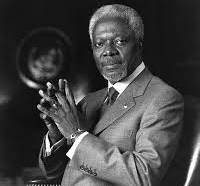
Note: This essay concludes the small series “On Comebacks and Failed Comebacks.” The earlier pieces explored several very different kinds of returns: the moral vindication of Kofi Annan, the sly tactical persistence of Joe Nash of the Seattle Seahawks, the tragic artistic authenticity of Amy Winehouse, and the mythic public legend surrounding Muhammad Ali.


The story of Rod Blagojevich introduces a different category altogether: the shameless comeback.

Unlike the other figures in the series, Blagojevich’s return to public life does not depend on moral vindication, heroic persistence, or cultural myth. Instead it illustrates something more peculiar about contemporary politics and media. In an age of fragmented audiences and constant attention cycles, a disgraced figure may sometimes reappear simply by refusing to leave the stage.

Whether one sees Blagojevich’s re-emergence as comic, absurd, or oddly instructive, it provides a fitting final example for the series. Not every comeback is admirable, but each one reveals something about the strange ways public life allows stories to continue.

Not all comebacks are noble.

Some are heroic, like the moral vindication of Kofi Annan. Some are tactical, like the sly fourth-quarter returns engineered by Joe Nash of the Seattle Seahawks. Some exist somewhere between tragedy and authenticity, like the brief blazing career of Amy Winehouse. And some, like the legend of Muhammad Ali, grow into something close to myth.

But there is another type of comeback altogether.

The shameless comeback.

For that, it is difficult to find a more perfect case than Rod Blagojevich, the former governor of Illinois whose political career once appeared to have ended in spectacular disgrace.

The original scandal is by now familiar. In 2008 federal investigators revealed that Blagojevich had been recorded on FBI wiretaps discussing how he might profit from appointing a replacement to the U.S. Senate seat vacated by President-elect Barack Obama. The recordings were devastating. In one of the most memorable lines in modern American political scandal, Blagojevich described the Senate seat as something valuable that he was reluctant to give away for nothing.

The fallout was swift. Blagojevich was impeached and removed from office by the Illinois legislature. Later he was convicted on multiple corruption charges and sentenced to federal prison. For most politicians, this sequence would represent the end of the story.

Disgrace. Prison. Silence.

But American public life has always contained another possibility: the comeback powered not by redemption but by spectacle.

Even before his imprisonment, Blagojevich seemed instinctively drawn toward the theatrical dimension of his situation. He appeared on television talk shows, launched media interviews, and treated the unfolding scandal almost as if it were a strange kind of reality program in which he remained the central character.

His appearance on The Celebrity Apprentice, hosted by Donald Trump, felt less like an attempt to restore dignity than a recognition that modern politics and entertainment had already merged.

Then came the commutation.

In 2020 Trump commuted Blagojevich’s prison sentence, releasing him after several years behind bars. The decision itself was controversial, but the effect was unmistakable: the stage was suddenly open again.

And Blagojevich, to his credit—or perhaps to his creditlessness—walked right back onto it.

The most striking feature of his post-prison public life has been the absence of embarrassment. Many disgraced politicians attempt some form of contrition when they re-enter the public conversation. Apologies are issued. Lessons are discussed. A tone of humility is adopted.

Blagojevich chose a different path.

Instead he embraced a kind of shameless persistence, appearing in conservative media outlets, repositioning himself politically, and speaking about his case with the tone of someone who believes the whole episode was misunderstood or exaggerated. The ideological shift from Democrat to Republican was particularly striking, not because party changes are unheard of but because in Blagojevich’s case it seemed less like a conversion than a strategic recalibration.

It was, in other words, a comeback powered by the modern media ecosystem.

In an earlier era, a corruption scandal of this magnitude might have consigned a politician to permanent obscurity. But the fragmented media landscape of the twenty-first century offers a different possibility. There is always another audience somewhere, another platform, another narrative waiting to be constructed.

Blagojevich appears to understand this instinctively.

Which is why his story belongs in a series about comebacks, even if the comeback itself is of a peculiar variety. Unlike the moral return of Annan or the mythic return of Ali, Blagojevich’s version depends less on redemption than on endurance.

The secret of the shameless comeback is simple.

You refuse to leave the stage.

You keep talking. You keep appearing. You keep telling your version of the story until, slowly but inevitably, the scandal itself begins to blur into just another chapter in the larger spectacle of American politics.

In that sense Rod Blagojevich may represent a distinctly modern form of comeback: not heroic, not tragic, but theatrical.

And in the strange carnival of contemporary public life, theatrical persistence can sometimes be enough.

On Comebacks and Failed Comebacks III: Amy Winehouse

Note: This short piece reflects on the strange artistic tension that defined the career of Amy Winehouse: the way her extraordinary authenticity as a singer seemed inseparable from the personal instability that surrounded her life.

Winehouse’s music—especially the songs on Back to Black—felt at once timeless and painfully immediate. The sound drew deeply from earlier traditions of soul and rhythm and blues, yet the emotional directness of the lyrics was unmistakably modern. Few artists have managed to sound so rooted in musical history while simultaneously feeling so exposed to the present moment.

The song Rehab stands as the clearest example of this tension. Its humor, defiance, and vulnerability all exist in the same breath, making it one of the most distinctive pop recordings of the twenty-first century.

Like many listeners, I remember the late-2000s period—particularly around the Glastonbury era—when Winehouse was both an enormous star and visibly struggling. Watching those performances could feel uneasy, yet the brilliance of the voice was undeniable. The same intensity that made the music so compelling also made her career difficult to sustain.

This piece is simply an attempt to think about that paradox: how authenticity and self-destruction can sometimes become intertwined in the lives of great artists.

There are many great singers, but very few voices that feel instantly definitional—voices that seem to arrive already carrying an entire world inside them.

Amy Winehouse was one of those voices.

By the time her second album, Back to Black, exploded in the mid-2000s, it already felt as though she had stepped fully formed out of some earlier musical era. The sound was unmistakably rooted in Motown and 1960s soul, yet the lyrics were brutally modern—messy, confessional, sometimes almost painfully direct.

Winehouse didn’t just sing about heartbreak and addiction. She sang about them as if the audience had wandered into the middle of a private argument she was having with herself.

That tension—between authentic confession and visible self-destruction—became the defining element of her career.

You could hear it most clearly in Rehab, which remains one of the most distinctive pop songs of the twenty-first century. The song is catchy, almost playful on the surface, driven by a swinging brass section that feels lifted from a lost Stax session.

But the lyrics are something else entirely.

They tried to make me go to rehab / I said no, no, no.

It’s funny. It’s defiant. It’s also deeply unsettling, because the listener quickly realizes that the singer is not playing a character. The refusal at the center of the song is real.

In that sense “Rehab” became more than a hit single. It became a kind of thesis statement for the strange artistic space Winehouse occupied. The same vulnerability that gave her music its emotional power also exposed the raw nerves of her life to public view.

You could feel that tension during the years when she was both at the height of her fame and visibly unraveling.

The Glastonbury era captured this perfectly. Winehouse had become a massive international star, yet her stage presence could swing wildly from moment to moment. One minute she would be commanding the crowd with that huge, smoky voice; the next she might appear distracted, fragile, or physically unsteady.

Watching those performances could be oddly uncomfortable. The audience was witnessing genuine brilliance, but it often felt as though the brilliance was emerging from a life that was spinning out of control.

And yet the authenticity of the music was inseparable from that volatility.

Winehouse sang as if every lyric had been torn directly out of lived experience. There was no polite distance between the artist and the material. When she sang about jealousy, addiction, or heartbreak, it sounded less like performance and more like confession.

That quality made her music electrifying. It also made her career precarious.

Pop music has always had a complicated relationship with self-destructive artists. Audiences are drawn to performers who seem emotionally transparent, but the same intensity that produces great art can also be difficult to sustain under the glare of fame.

Winehouse lived inside that contradiction.

The tabloids followed her relentlessly. Every public misstep, every argument, every sign of physical decline became part of a growing media narrative. The spectacle sometimes threatened to overwhelm the music itself.

Yet when she stepped to the microphone and began to sing, the spectacle vanished.

What remained was that extraordinary voice: raw, soulful, and oddly timeless, as if it had traveled forward from another musical generation. In a pop landscape often dominated by carefully engineered personas, Winehouse sounded startlingly real.

That authenticity is why her work still resonates long after her death in 2011.

Many talented singers release successful albums. Only a handful manage to create songs that feel permanently etched into the culture. “Rehab” is one of those songs. The moment those opening horns start, the listener knows exactly what world they are entering.

It is the world of Amy Winehouse: funny, defiant, wounded, brilliant.

A place where honesty and self-destruction were never quite separable—and where the truth of the music was powerful enough to survive them both.

Note:

On Comebacks and Failed Comebacks I: Kofi Annan

Note: This piece begins a small series I’m calling “On Comebacks and Failed Comebacks.” Political and public life are full of attempted returns. Leaders lose elections, wars, or moral arguments and then try to reclaim the stage. Most of these efforts fail. The moment has passed, the audience has moved on, and what once felt urgent has dissolved into what might be called moral fatigue. Yet every so often a different pattern appears. Occasionally someone loses the immediate battle but remains present long enough for history itself to shift. When that happens, what first looked like defeat begins to resemble something closer to a delayed victory. Kofi Annan provides a particularly interesting case. His opposition to the Iraq War did not stop the invasion, and at the time it appeared that the argument had been decisively lost. Yet as the years passed and the consequences of the war became clearer, the moral judgment he articulated gained increasing weight.
In that sense, the story of Annan’s career suggests a useful distinction: some comebacks succeed not because the player reclaims the moment, but because the argument itself eventually catches up with history. Future pieces in this series will look at other figures—some who managed remarkable returns, and others whose comebacks never quite arrived.

Political life especially produces them in abundance. A leader loses a battle—an election, a war, a moral argument—and disappears into the quiet margins where yesterday’s figures slowly fade. The public moves on. The moral urgency of the moment dissolves into what might be called moral fatigue. Outrage that once seemed unstoppable becomes background noise. A new crisis appears, and the world’s attention shifts.

Once this fatigue sets in, comebacks are difficult. The audience that once cared has already drifted elsewhere. The stage has changed. Most players who attempt to return find that the moment that once belonged to them has passed.

Yet every so often a different pattern appears.

Occasionally a figure loses the immediate battle but remains present long enough for the moral tide itself to turn. When that happens, what looked like defeat begins to resemble something else entirely.

Kofi Annan offers one of the most intriguing examples of this phenomenon.

In 2003 the United States and the United Kingdom invaded Iraq. The invasion was justified by a mixture of strategic arguments, intelligence claims, and moral rhetoric about tyranny and liberation. In Washington and London the momentum of the moment was overwhelming. The war was framed as both necessary and inevitable.

The United Nations, by contrast, found itself sidelined. Annan, then serving as Secretary-General, watched as the institution he led was bypassed by the coalition preparing for war. The moment belonged to the advocates of intervention—particularly the group of American policy thinkers who had spent years arguing for the removal of Saddam Hussein.

At the time, it was not at all clear who would ultimately win the argument. What was clear was that the United Nations had lost the immediate struggle for influence. The invasion proceeded without explicit UN authorization, and the diplomatic machinery that Annan represented appeared powerless to prevent it.

The moral emergency that had animated the debate quickly hardened into geopolitical reality.

Then, in September 2004, Annan said something remarkable. In a BBC interview he stated plainly that the invasion of Iraq was illegal under international law.

It was an extraordinary declaration. Rarely does a sitting Secretary-General of the United Nations describe the actions of the world’s most powerful government in such blunt terms. Yet the statement did not produce the dramatic reversal one might imagine. The war continued. Washington and London dismissed the criticism. The machinery of global politics moved forward largely unchanged.

In the short term, Annan had lost the battle.

And the personal toll of that moment appears to have been considerable. In his biography there is a striking image from this period: Annan alone in his darkened living room, unable for a time to rise from the floor. The room itself reportedly kept in near darkness. It was not exactly depression, at least not in the clinical sense, but something close to exhaustion after a prolonged moral struggle that had failed to alter events.

It is a haunting scene. One of the most powerful diplomats in the world sitting on the floor of a dark room, confronting the limits of his influence.

At that moment, the story of Kofi Annan could easily have ended as the story of a failed comeback. A leader who tried to reassert the moral authority of international law and found that the world had already moved on.

But history has a way of rearranging the meaning of certain moments.

As the years passed, the Iraq War came to be widely regarded as a profound strategic and humanitarian mistake. The claims that had justified the invasion collapsed. The war itself destabilized the region and reshaped global politics in ways that few of its original advocates had anticipated.

Gradually, the moral argument that Annan had made—quietly but firmly—became the prevailing historical judgment.

After leaving the United Nations, Annan did not retreat entirely from public life. Instead he reappeared in a different role as a member of The Elders, a group of former statesmen attempting to exert moral influence outside formal political structures.

It was a curious transformation. No longer the head of the UN, Annan had less formal power than he once possessed. Yet his voice now carried a different kind of authority—the authority of someone who had remained in the arena long enough for events to vindicate his judgment.

By the end of his life, the moral verdict on the Iraq War had shifted decisively. Few serious observers still defended the intervention with the confidence that characterized the early years of the conflict. The consensus had moved, slowly but unmistakably, toward the position Annan had articulated when it mattered least.

In this sense, his career offers an unusual example in the history of comebacks.

He lost the battle.
But he may have won the argument.

That distinction matters.

Most political figures attempt comebacks by trying to reclaim the exact moment they once dominated. They want the same stage, the same audience, the same authority. When the moment has passed, the comeback fails.

Annan’s story suggests a different possibility. Sometimes the moral argument itself continues moving through history long after the political battle appears settled. If a leader remains present long enough, the tide may eventually turn.

Which leads to a simple but revealing observation about great players in any arena.

A truly great player is never entirely out of the game.

The moment may pass. The audience may drift away. But if the underlying argument proves sound, history itself has a way of reopening the field.

And when it does, the comeback is already underway.

In Defense of Mayo Thompson

Note: This essay reflects on the artistic approach of Mayo Thompson and the work of Red Krayola, particularly the band’s deliberate challenge to conventional ideas of musical skill. The famous observation that Thompson plays the guitar “badly, on purpose,” often cited in critical discussions of the group’s work — including later reassessments of records such as Malefactor, Ade — captures something essential about that approach.

The phrase can sound dismissive at first, but it also points toward a deeper artistic intention. From the late-1960s underground scene through later recordings, Red Krayola consistently treated rock music less as a polished craft than as an open field for experimentation. Imperfection, disruption, and instability were not accidents but part of the aesthetic design.

Whatever one ultimately makes of the results, Thompson’s work continues to raise an interesting question: how much of what we call musical “skill” is simply a set of habits that artists occasionally need to break.

There are certain musicians whose reputations survive largely through footnotes. They appear in the histories. Critics cite them as influences. Other artists speak their names with reverence. Yet relatively few listeners spend their evenings actually playing the records.

Mayo Thompson, the guiding figure behind Red Krayola, occupies precisely that strange territory. His band is frequently described as “important,” “experimental,” or “avant-garde,” words that often function as polite signals that the music itself may not be especially enjoyable. Red Krayola records circulate through the culture like curious artifacts — admired, studied, but approached cautiously.

And the most famous criticism of Thompson’s musicianship captures the problem perfectly.

A critic once observed that Thompson plays the guitar “badly, on purpose.”

The line, often repeated in retrospective discussions of Red Krayola’s music, originally surfaced in commentary surrounding the band’s 1989 record Malefactor, Ade. Whether in a Pitchfork reassessment or earlier critical recollection, the phrase stuck because it seemed to summarize the entire aesthetic in five devastating words.

Badly. On purpose.

For many listeners the sentence reads like a dismissal. But read another way, it becomes the most accurate description of Thompson’s artistic method ever written.

Because the key word in that sentence is not badly.

It is purpose.

From the beginning, Red Krayola treated rock music not as a set of rules to master but as a field of possibilities to disrupt. When the band first appeared in the late 1960s, rock was rapidly developing its own conventions — tighter songwriting, increasingly polished production, guitar virtuosity becoming a badge of seriousness. Thompson responded by moving in the opposite direction.

Instead of improving technique, he destabilized it.

Instead of polishing songs, he dismantled them.

Instead of reassuring the audience, he occasionally seemed to provoke it.

To understand this impulse, it helps to remember the strange cultural environment out of which Red Krayola emerged. The late-1960s underground was full of what might loosely be called the freak scene — a loose constellation of psychedelic bands, communal happenings, and avant-leaning musicians who were less interested in building careers than in testing the boundaries of sound itself. In Texas, where Red Krayola formed, that scene intersected with the surreal humor and anarchic spirit of the local counterculture. Musicians were experimenting with noise, collective improvisation, and absurd theatrical gestures long before those practices acquired respectable academic labels.

Red Krayola fit naturally into that environment. Early performances sometimes resembled happenings more than concerts. Songs dissolved into noise. Improvised ensembles wandered across the stage. Audience expectations were occasionally disrupted on purpose. It was not chaos exactly — more like a deliberate challenge to the idea that a rock performance had to behave in a predictable way.

Thompson understood something fundamental about rock music that many technically superior players missed. The genre had always contained a certain productive roughness — a willingness to accept imperfection as part of its expressive vocabulary. Chuck Berry’s guitar was not elegant in the classical sense. Early garage bands could barely tune their instruments. Punk would later turn this roughness into a formal principle.

Red Krayola pushed that principle further than almost anyone else.

By “playing badly on purpose,” Thompson exposed the hidden assumptions behind musical skill. What does it actually mean to play well? To hit the expected notes? To follow the established structure of a genre? To demonstrate control over the instrument?

Or might it mean something else entirely: the ability to reshape the instrument so that it produces new kinds of thought?

Listen carefully to Red Krayola’s recordings and the supposed incompetence begins to look suspiciously intentional. The guitar lines wobble, fragment, and reassemble themselves in unexpected patterns. Rhythms appear and disappear. Melodies emerge briefly before dissolving into something stranger. The music behaves less like a traditional composition and more like an argument unfolding in real time.

The phrase “avant-rock” is often used to describe this territory, but the label can make the music sound colder than it actually is. Beneath the disruption lies a restless curiosity about what rock music could become if freed from its habits. Thompson’s playing does not reject the guitar so much as treat it like a tool for questioning the very idea of guitar playing.

Which brings us back to that famous line of criticism.

“Playing the guitar badly, on purpose.”

For some listeners the sentence still reads as an indictment. But for others it begins to sound like a manifesto. What if the deliberate abandonment of technical mastery allows a musician to explore new expressive territory? What if awkwardness becomes a form of freedom?

The history of experimental music is filled with similar gestures. Artists deliberately violate the rules of their medium in order to discover what lies beyond them. Painters distort perspective. Writers abandon traditional narrative structure. Filmmakers fracture chronology. Thompson simply applied the same logic to the electric guitar.

And the results, while sometimes difficult, have proven surprisingly durable. Decades after Red Krayola’s earliest recordings, the band’s influence can be heard echoing through the strange corners of indie rock, post-punk, and experimental pop. Musicians who grew up absorbing Thompson’s restless attitude toward form learned an important lesson: rock music does not have to choose between intellect and instinct. It can contain both.

Thompson himself has often downplayed his role in the process, describing music as merely a “means to an end.” That humility is part of the puzzle. The work was never about demonstrating personal virtuosity. It was about using the medium of rock music as a way of thinking — testing ideas about sound, structure, and audience expectation.

Which explains why Red Krayola’s catalog continues to feel oddly alive. The records are not polished monuments to technical achievement. They are documents of exploration, full of wrong turns, strange detours, and flashes of accidental beauty.

In a culture that often equates artistic success with increasing refinement, Mayo Thompson chose the opposite path. He embraced awkwardness, instability, and deliberate imperfection as creative tools.

And if that occasionally meant playing the guitar badly — well, that too was part of the design.

Badly, perhaps.

But never accidentally.

In Defense of Conor Oberst

Note: This essay focuses on the songwriting of Conor Oberst and the broader arc of his work as a writer and performer. It does not attempt to settle every critical debate about his career or evaluate the many shifting narratives that have surrounded him over the years.

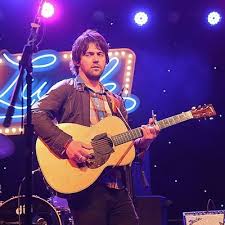
Instead, the argument here is simpler: when listeners return to the songs themselves — especially pieces like “Cape Canaveral,” “Easy/Lucky/Free,” and “I Didn’t Know What I Was In For” — the caricature of Oberst as merely an overwrought diarist becomes difficult to sustain. Whatever one thinks of the mythology around him, the writing continues to reward careful listening.

For more than twenty years now it has been fashionable to treat Conor Oberst as a kind of permanent adolescent: the patron saint of overwrought confession, the boy genius who mistook emotional intensity for wisdom and simply never grew out of it. Even listeners who admired the early records sometimes adopt a gentle condescension when talking about him now. Those songs were powerful, they say, but they belonged to a particular moment — a moment of youthful melodrama that serious listeners eventually leave behind.

The outline is familiar. Too many feelings. Too many words. Too much trembling urgency in the voice. Somewhere along the way Oberst became shorthand for the idea that emotional sincerity, taken too far, turns embarrassing.

But like many tidy cultural narratives, this one collapses as soon as you start listening carefully again.

The first thing worth remembering is that Oberst began writing and recording music at an age when most people are still learning how to articulate their own thoughts. The early Bright Eyes records captured something very specific: the internal weather of late adolescence and early adulthood. The confusion, the moral absolutism, the sudden swings between despair and hope. Critics often call this melodrama, but melodrama is sometimes just another word for emotional honesty before the world teaches you to disguise it.

What Oberst did during those years was document the process of becoming a person. The songs are full of doubt, self-contradiction, and grand declarations that may not survive contact with reality. But that is exactly how young consciousness works. It moves through extremes. It searches for certainty and then dismantles it. Listening to those records now is less like hearing a performance than like reading a diary written in real time while the author tries to understand himself.

The voice, which so many critics found grating, was central to that effect. Oberst sang as if the words were arriving at the exact moment he needed them. The wavering pitch, the occasional cracks, the sense of someone pushing language slightly faster than it could comfortably travel — all of that created the feeling of urgency. It sounded like a mind thinking out loud.

The strange thing about Oberst’s career is that this intensity became the very thing people later held against him. Emotional transparency, once celebrated as authenticity, gradually hardened into caricature. Listeners who had grown older began to treat the songs as artifacts from a younger self they preferred not to revisit. Oberst did not change enough for some critics, while for others he changed too much.

But the best way to understand his writing is to look closely at several songs that capture the full range of what he does. “Cape Canaveral,” from his 2008 solo record, is often cited by fans as one of his finest achievements, and for good reason. The song moves with a calm, reflective confidence, drifting through memory, regret, and travel before arriving at a quietly devastating insight: “Every time I try to pick up the pieces / Something shatters.” The writing has none of the frantic urgency critics associate with Oberst. Instead it feels mature, patient, almost philosophical — proof that his gift for emotional clarity did not disappear when he left his early twenties.

Another example arrives with “Easy/Lucky/Free,” one of the defining songs from Digital Ash in a Digital Urn. The track looks outward rather than inward, sketching a world where technology and surveillance gradually erode the illusion of personal freedom. The chorus lands with a mixture of dread and irony that feels more prophetic with every passing year. What might once have sounded like youthful paranoia now reads as a remarkably prescient meditation on the digital age.

And then there is “I Didn’t Know What I Was In For,” perhaps the most quietly devastating song of Oberst’s middle period. The track unfolds with almost conversational simplicity, recounting memories of youth, friendship, and the slow arrival of adult responsibility. By the time the final lines arrive — “You said that you hate my suffering / And you understood / And I said that I love you too” — the song has achieved something rare: a portrait of adulthood that feels honest without becoming cynical.

Taken together, these songs reveal the real architecture of Oberst’s songwriting. Beneath the reputation for emotional excess lies a writer deeply concerned with memory, time, and the fragile ways people try to make sense of their lives. His best work captures the moment when experience shifts from confusion into recognition — when a half-formed feeling finally finds the right words.

Another reason Oberst’s work continues to resonate is that he writes from inside experience rather than from a critical distance. Many songwriters polish their observations until the emotional edges disappear. Oberst tends to leave the edges intact. His songs preserve the awkwardness, the uncertainty, the half-formed thoughts that accompany real moments of reflection. The result is sometimes messy, occasionally excessive, but often uncannily recognizable.

This quality also explains why Oberst has remained so influential among younger songwriters. He helped create a space in indie music where vulnerability could coexist with literary ambition. The songs suggested that personal confession and careful craft were not mutually exclusive. For a generation of listeners trying to articulate their own emotional lives, that permission mattered.

None of this means that every Oberst record works equally well, or that every lyric survives scrutiny. A career built on openness will inevitably produce uneven moments. But the larger body of work tells a more interesting story than the caricature of a permanently anguished songwriter. It shows an artist who has spent decades documenting the slow evolution of a restless mind.

And perhaps that is the real reason Oberst continues to provoke such divided reactions. His songs refuse to adopt the protective distance that many listeners eventually develop toward their own past selves. Instead they remain exposed — still searching, still uncertain, still willing to ask questions that adulthood often teaches us to bury under routine.

In that sense the emotional intensity people once dismissed as youthful melodrama begins to look different. It becomes a record of someone refusing to abandon the difficult work of feeling deeply about the world. For listeners willing to meet him there, the songs offer something rare in modern music: the sound of a consciousness continuing to unfold, one uneasy thought at a time.

Note: This is the third piece in our series “In Defense Of.” Iy you enjoyed this essay, you may also enjoy the one on Mark Kozelek. You can access it below.

In Defense of Mark Kozelek

Note: This essay addresses the artistic approach of Mark Kozelek as a songwriter. It does not attempt to evaluate or adjudicate the various personal controversies that have circulated around him in recent years, many of which remain publicly disputed and complex.

The focus here is narrower: how Kozelek’s long-form, diaristic songwriting works as a musical method — particularly in songs like “Ali/Spinks II,” where ordinary details accumulate into something emotionally larger. Whatever one thinks of the artist as a person, the question of how the music itself functions remains worth examining on its own terms.

For several years now it has been fashionable to treat Mark Kozelek as something like an exhausted case: a brilliant songwriter who wandered too far into self-absorption, whose songs became too long, too diaristic, too willing to linger on the small debris of daily life. Even some longtime listeners have adopted the shorthand. Early records were masterpieces; later ones were indulgent. The verdict sounds tidy. But like most tidy verdicts in music, it collapses as soon as you start listening again.

The basic complaint about Kozelek’s later work is well known. The songs stretch past ten minutes. The lyrics catalog ordinary events: hotel rooms, meals, airports, old friends, television shows, half-remembered conversations. The narrator seems to be narrating his own day in real time, occasionally pausing to note a basketball score or a passing cloud of melancholy. To critics raised on the discipline of verse-chorus songwriting, this can sound like navel-gazing elevated to an art form.

But the strange thing about Kozelek’s music is that the minutiae are not actually the point. They are the atmosphere. His songs work less like traditional compositions and more like extended walks through consciousness. The grocery lists, the memories of old bands, the stray anecdotes about touring musicians — all of it forms the texture through which something else slowly emerges. A mood. A sense of time passing. The feeling of being a person moving through an ordinary day while carrying decades of memory.

The best way to understand this approach is to listen carefully to “Ali/Spinks II,” one of the central tracks from Benji. The song begins almost casually, recounting the death of Kozelek’s cousin and drifting through fragments of memory connected to that loss. There is no obvious structure, no chorus that arrives to organize the material. Instead the narrative moves the way memory moves: sideways, unpredictably, circling back on itself. The details accumulate slowly until the emotional core of the story becomes unavoidable. What begins as a series of seemingly unrelated observations eventually reveals itself as a meditation on grief, family history, and the strange ways tragedy ripples through ordinary life. The song is long, messy, and digressive — and it works precisely because of those qualities. “Ali/Spinks II” is not merely an example of Kozelek’s method; it is the test case. If the listener accepts the logic of that song, the entire later catalog suddenly makes sense.

This approach did not come out of nowhere. Kozelek has always been a writer drawn to the long arc of a song. Even in the early days of Red House Painters, the music moved at a patient pace, letting chords hang in the air while the lyrics circled around regret, nostalgia, and quiet observation. What changed later was not the impulse but the level of exposure. The lens moved closer. The songs stopped pretending to be about characters and admitted they were about the singer himself.

For some listeners that shift felt like a loss of mystery. But there is another way to hear it. Kozelek’s later records are essentially field recordings of a mind at work. They capture the strange mixture of memory, boredom, humor, irritation, and melancholy that makes up ordinary consciousness. Most songwriters edit this material down to the highlights. Kozelek leaves it mostly intact. The result is less like reading a poem and more like sitting beside someone during a long drive while they talk about whatever crosses their mind.

The famous outbursts that circulate online tend to obscure this. Kozelek has never been particularly careful about public performance of personality, and that roughness often dominates the narrative around him. When he released the song “War on Drugs: Suck My Dick,” a public feud with The War on Drugs instantly became the headline. The track was petty, funny, abrasive, and entirely unnecessary — which is to say it was perfectly consistent with the same impulsive candor that fuels his songwriting. Kozelek has never seemed particularly interested in polishing the public version of himself.

But the deeper argument about his music usually centers on the accusation of self-indulgence. Why should listeners care about the details of a songwriter’s daily routine? Why should a song wander through anecdotes about hotels, meals, or aging friends? Why should anyone sit through ten or twelve minutes of conversational narrative when a tight three-minute composition could deliver the emotional payload more efficiently?

Kozelek himself once answered that question in a line that perfectly captures his stubborn philosophy: he said he liked playing shows for “dudes in tennis shoes.” The phrase sounds casual, almost dismissive, but it carries a small manifesto inside it. He is not writing for critics parsing lyrical elegance or for industry tastemakers deciding what counts as proper songcraft. He is writing for ordinary listeners who recognize the shape of everyday life — the boredom, the odd digressions, the strange humor that creeps into conversation when people talk long enough.

In that sense Kozelek’s songs resemble a certain kind of late-night storytelling more than traditional music. Imagine someone sitting across the table recounting a memory that begins in one place, wanders through several unrelated details, circles back to a childhood story, and eventually lands somewhere unexpectedly moving. The emotional impact arrives not through compression but through accumulation. You spend time inside the story until its meaning quietly surfaces.

The length of the songs, which so many critics treat as evidence of indulgence, is actually central to the effect. Time itself becomes part of the composition. The listener settles into the rhythm of the narration. Small details begin to gather weight simply because they have been allowed to exist long enough. By the time the song ends, the ordinary events that seemed trivial at the beginning have become part of a larger emotional landscape.

This is not the only way to write songs, and it is certainly not the most efficient one. But efficiency has never been Kozelek’s artistic goal. His music belongs to a tradition of artists who treat the everyday as worthy of sustained attention. The diary becomes the canvas. The passing moment becomes the subject. Instead of distilling experience into a polished metaphor, the songwriter simply records the experience itself and trusts that meaning will accumulate over time.

If that approach sometimes borders on excess, it also produces moments that feel uncannily real. A stray observation about a friend can suddenly open into a meditation on aging. A casual mention of a hotel room can turn into a reflection on the strange loneliness of touring musicians. The emotional truth arrives sideways, hidden among the details of ordinary life.

Which brings us back to the central criticism: that the songs are too long, too detailed, too inward. All of that is true. But it may also be precisely why they matter. Kozelek’s music asks listeners to do something that modern culture rarely encourages anymore — to slow down, to sit with the flow of another person’s thoughts, to accept that meaning often appears gradually rather than in a neatly packaged chorus.

Not every listener will have patience for that. But for those willing to spend time inside the songs, the reward is a strangely intimate experience: the feeling of inhabiting someone else’s memory stream for a while. The tennis shoes crowd, in other words, may understand something that critics occasionally miss. Sometimes the most honest art does not arrive in the form of a perfectly shaped statement. Sometimes it arrives as a long conversation that refuses to end too quickly.

On Staying in Business Hotels (Featuring a Little 9-ball)

A hotel room: the same cell in a different city — clean towels, a window, and the sense of being contained but cared for

Mark Sandman, refracted

A haunted hotel room, unblessed, charged with static; objects shifting on their own.

The Church, refracted

New Note: On the kibbitzer (two b’s there Mr. Auto-Correct baby), I am re-printing certain select pieces for a little while while I work on another writing project. Today I am re-printing this piece on hotels. This piece has gone through several iterations over time, it is in fact probably my most heavily edited piece, and concerns the experience of staying at business hotels. In a way this is perhaps my very best piece in that it is one of only three that survive from my first blog Classical Sympathies, which I started in 2008, right around the time I began working to build the IB Course at our school. Of course given later (and earlier) events, this was no coincidence. Essentially, the blogs were, for lack of a better phrase “trauma blogs,” or, to put it more positively, recovery blogs. I like that–let’s stick with it. So this piece was about finding safety, physical and psychological, in a hotel room, while at the same time knowing, paradoxically, that hotels, especially fancy ones, are sometimes, or even often, the target of violence for various reasons.

Note: I have stayed in a number of such hotels over the years and engaged deeply with the room-space in each case. At this point, I am prepared to say that I am “good at” staying in hotels (an absurd claim that I advance nonetheless), and feel authorized to advance some notes toward a general hotel theory. Facility as a hotel guest though not exactly a marketable skill, has yielded some insights about the general, perhaps archetypal, nature of the modern hotel stay. Despite at this point considerable experience in the field, I continue to find the hotel experience at once comforting and bizarre, and hotel rooms, when properly apportioned, womb-like and exercising a specific and fascinating gravity. Also, the first draft of this piece was completed when Larry King was still alive.

This piece also mentions my “fugue state,” and it is true that as a PTSD response to childhood sexual abuse I would sometimes, more than once for sure, slip into a kind of state of taking automatic actions which I recall, but only somewhat. During these states I would arrange and re-arrange the room, the things in my bag, etc. in a way to place little reminders to myself in the future. It is a little hard to explain, however once again psychologically literate folks will follow along.

Finally, in my opinion, this is a pretty funny piece. Not as funny as Mason Anderson but still not bad. And it advances the absurd, yet still somehow defensible, position that I am “good at” staying in hotels. I hope you enjoy it.

Part I:

The TV was turned to CNN, which was focused on violence somewhere. I could not tell where. The experts in their suits and hairsprayed hair presented the conflict as if conflict was inevitable. They agreed it was happening now and could be prevented, but at the same time at the conclusion of the piece they smiled politely and signed off as if the violence was also occurring in a land so distant it might as well be the past.

Emily Maloney

I have stayed in quite a number of business hotels, in quite a number of countries. This piece provides, in essence, a sort of “psychograph” of the business hotel experience. Three features of business hotels that we may want to consider are: i) like airports, all business hotels share a single ethos, an un-pindownable character that feels, wherever one happens to be geographically speaking, of a piece; ii) the effect of the television offerings, in particular CNN International, on the business traveler, is one of overwhelming relaxation, bordering on complacency and even numbness; iii) as a corollary to i), it is far easier to enumerate how business hotels resemble one another than to lay out any salient differences.

Oddly, minor local variations only seem to further reinforce a central sameness. Checking into an 11th floor room at a classic example of the species, for instance the Numzau Tokyu Hotel, half an hour south of Tokyo, Japan, one is affected at once by that strangely pleasant fugue state, a state of mind almost exactly halfway between bliss and malaise, attendant on “business” hotels. Once inside a business hotel, especially those neither top-of-the-line nor quite down-and-out, one is confronted with a kind of disembodied space which seems at once connected to a global network of similar hotels (accomplished in part through the simultaneously soothing and hypnotizing effect of CNN International) and disconnected from the local environment. The traveler is sucked into global weirdness through a combination of the flat, post-political window of CNN, the persistent low hum of the air conditioner, and the anodyne staleness, almost spartan, quality of the decor.

Oddly, any “artwork” or decorative flourishes that a hotel room may possess only serves to further a sense of featurelessness; the art in question being almost exclusively of the most banal nature–bland seascapes, abstracts denuded of all edge or verve, and those odd non-paintings that, try as you might, you forget the second you exit your room. One has to remind oneself that a business trip means that there is work to be done–the TV, the slight high resulting from contact with the bowing attendants, the men in black, and the blushing young lady who carries your bag, the knowledge that your company is footing the bill–all this lulls you into a kind of sleep of the spirit.

Turning on the TV, you feel that you could spend years, lifetimes even, staring at CNN’s Larry King (the long-dessicated one), the post-racial female anchors who bring that special Code 46 feel of the non-overt future, or the exquisitely paralyzing “World Weather,” before awakening in another age, the Rip Van Winkle of the travel world. When CNN finally wears out its welcome, one’s choices of pay channels open up the fascinating worlds of…golf (the Golf Channel), silicone starlets (the Playboy Channel), intimate acts in close-up (the “adult channel”), and, most fittingly, drama set in outer space (the Battlstar Galatica channel). This profile of options, golf, softcore, hardcore, and outer space, the result, presumably, of reams of data on the tastes of business travelers like me, the mobile working male, I want to find depressing, but the menu has something beautifully efficient about it. Not wanting to get sucked into the anesthesizing vortex of any of these choices, I have to force myself to rise from the supine contemplation of the only-vaguely Chinese news anchor and move on with the day.

My senses are momentarily quickened by a report of an attack on a hotel in Pakistan: a horrific assault which has taken place at a Marriott in Islamabad. Oddly, the reality of this event quickly fades, and what Richard Todd calls the “non-ness” of the Marriott up the road strangely becomes the non-ness of violence–the attack in Islamabad conveys, through the lens of the CNN International, not exactly shock, but a continuing and deepening sense of global weirdness only slightly tinged by fear resting on the realization that as a business traveler in exactly this kind of hotel, I am the target. Oddly, this realization is not as disturbing as it ought to be: my fugue state is such that I am more in, more of, Islamabad than Numazu, but not wholly there either. Instead, I am poised somewhere between Islamabad and Battlestar Galactica, cavorting with post-racial android news anchors who bring me news of a planet this 11th floor, air-conditioned bubble of a non-space has left far behind.

Part II:

In part II of this essay will we delve a little deeper into the business hotel experience using as a lens “J.G. Ballard: Conversations.” Ballard probably needs no introduction, but for those who have yet to fall until his influence, he is the author of “Empire of the Sun” and “Crash” who wrote dozens of fantastic semi-Sci Fi short stories in the late 1950s and through the 1960s including “Prima Belladonna,” Thirteen to Centaurus,” and “The Terminal Beach.” Ballard novels, in my opinion, are not as uniformly satisfying as his short stories; at novel length his “obsessions,” beach resorts, empty swimming pools, gated communities, plastic surgery, car crashes, the interplay of sexuality and technology, tend to wear a little thin.

In “Conversations,” Ballard offers the following defense of his insularity and thematic repetition: “I think the values of bourgeois society by and large have triumphed. We’re living in a world where people at the age of 22 and 23 are thinking about their mortgages. It is a fact, and there’s nothing much on can do about it, except cultivate one’s obsessions and one’s own imagination” (144), but this approach works better in his short stories (which Ballard has not written for nearly two decades now), where his limited set of concerns are reflected and replayed through a panoply of settings and situations such that he resembles a virtuoso musician building off of certain stable base elements to create endless riffs and improvisations.

As a boy, Ballard was, famously, incarcerated in a Japanese prison camp in Shanghai, and this formative experience informs both his autobiographical “Empire of the Sun” and his short stories. But instead of literal prisons with externally imposed walls and limitations, Ballard’s characters seem over and over again to be immured within prisons of their own creation. Story after story features some variation on one of two related themes; scientists careening off on private quests that eventually destroy them or people seemingly sequestered or restrained who turn out to be acting in psychic complicity with their imprisonment. Ballard himself admits to the centrality of the prison experience in “Conversations” when Mark Pauline asks him “Writing Empire of the Sun hasn’t helped you forget those horrible years in the camp” and Ballard responds “But I’ve been writing about it all the time–I just wrote about it in disguise” (138).

“J.G. Ballard: Conversations” was overseen by one V. Vale, who, to all appearances, is a full-fledged Ballard maniac, and contains a number of Vale’s telephone conversations with Ballard and other Ballardians including the composer Graeme Revell and Ballard archivist, David Pringle. Ballard has a lot to say about that particular semi-reality fugue state described in my earlier post. As noted above, Ballard has a special fascination with self-imposed psychic incarceration: “I have a nightmare vision of a gated community of extremely expensive houses inside a larger gated community. It’s bizarre” (72). Ballard is also concerned with the dual themes of self-immurement and the mind-meld that occurs between the individual and their media systems. These two themes may not seem to be obviously related, but after reading 300 pages of Ballard on the telephone, all of his particular obsessions do seem intertwined, and connect with my experience of staying in business hotels. Take for example Ballard on why Surrealism no longer obtains:

“Classical surrealism, beginning after the First World War, made a very clear distinction between the outer world of reality {…} and the inner world of imagination {…} But after the Second World War, particularly as the media landscape developed enormously–thanks to television, mass advertising and the whole consumer goods landscape–the distinction between our reality and inner fantasy began to break down {…} This means that it’s very difficult to maintain the dichotomy, that contrast that the Surrealists required {…} As I’ve said before, in the last 20 years if you stop somebody in the street and ask the time, you might look at a watch with Mickey Mouse on the dial {…} It cuts the ground from under classical Surrealism” (166).

When viewing CNN International at a business hotel, I realize, pace Ballard, that the world as reflected does have aspects of the surreal, especially in the consummately inoffensive manner in which it presents horrific international incidents interlaced with “the exquisitely paralyzing World Weather” and 9-ball tournaments from Bangkok replayed several times a day. This approach effectively colonizes my own imagination by rendering the unthreatening creepy and and the unbearable passe.

The oddest thing about CNN International is that the news itself is actually not all that bad. Real news about real, important, global events, comes across the airwaves, but it gets somehow stripped on much of its impact through the presentation. Ballard in 1991: “We get the Newzak all the time. It’s been homogenized, trivialized, and there’s too much filler added to smooth it down so that it comes out like paste from a tube” (178). It’s not that the news isn’t there, it’s just that, pace Ballard, there is no room for either surrealism or real impact. Ballard explains that the Dali/ Bunuel films (Un chien andalou and L’ Âge d’or), so shocking at the time, would not work today: “The sight of people dragging dead donkeys through a dining room would {seem to be} some sort of advertising stunt–a beer commercial” (166). Here is David Pringle on why Ballard is not a Marxist:

“Ballard, being a good Freudian, is much more interested in the individual’s–yours and mine–collusion with what’s going on, our secret wishes, that in the idea of conspiracy–that there are conspiratorial entities out there trying to ‘get us’ {…} Ballard asks, ‘What are you out to do to yourself? What are you own darkest wishes? What are we all doing to ourselves collectively?'” (226).

Ballard also writes “I accept the Surrealist formula: the need to place the logic of the visible at the service of the invisible, to remake the world around us by the power of one’s imagination, which after all is all we’ve got. I mean, the central nervous system is faced with a world of Mariott hotels and ex-actors turned world leaders, dangerous medicines and you name it. The individual central nervous system can only attempt to make sense of this” (276).

Eventually, if she has even the slightest modicum of self-awareness, the business traveler comes face to face with Ballard’s question: “‘What are you out to do to yourself? What are you own darkest wishes? What are we all doing to ourselves collectively?’ This is because the enervating lassitudinal comfort of your standard Mariott is, in the worst possible sense, addictive. When you begin to run down the list of hotel features: airport pickup, bowing attendants, elevators, room service, air conditioning, permanently locked windows, security barrier, ubiquitous carpeting, fresh towels and soap, overpriced but almost appetizing meals, pool and hot tub, 9-ball on a loop, world weather, all these items add up to a simulacrum of a total existence that very quickly begins to edge out the rest of the world–there is no need to leave the compound and submission to the soft tyranny of over-priced conveniences sets in almost immediately.

At the same time, CNN International allows the illusion of connectedness while in fact only furthering one’s suspension in the high-rise ether of the business hotel complex. “One has the illusion you’ve seen a place in fact when you haven’t seen it at all. All you’ve seen are the airports and the hotels” (288). Ballard here hints at something I have long felt to be the case: all airports actually belong to a single country, and the vast majority of business hotels likewise sit uneasily within their supposed national confines; they are more like each other than they are like the buildings or community around them. The overpriced airport hotel in Tokyo resembles nothing so much as the overpriced airport hotel in Vancouver, which in turn is the kissing cousin of the airport hotel in Beijing, etc. Here again, local differences only seem to accentuate a basic central identicalness.

Ballard again: “People use mental formulas that they’ve learned from TV. Even in ordinary conversation, if you’re talking to the mechanic at the garage about whether you need new tires for your car, you and he probably talk in a way that his equivalent thirty years ago would never have done. You use–not catch phrases but verbal formulas. Suddenly you realize you’re hearing echoes of some public-information, accident-prevention commercial. It’s uncanny” (83).

(Ballard has the strange habit of ending thought after thought with “It’s bizarre;” “It’s strange;” “It’s uncanny”–this verbal tick serves as a running indicator of the way that Ballard sees the world and helps explain how, over the course of a novel, he can focus on a certain object, a tennis machine for example, or swimming pool, with such relentless obsessed focus that the formerly normal becomes invested with a kind of pathological creepiness that entirely transcends simplistic one-to-one correlative symbolism.)

Ballard’s central point here hints again at the colonizing power of certain ideas and turns of phrases which seep into our everyday speech, tempered only by feeble attempts to ironize. Thus, when in the course of normal conversation one refers to a storm as “an extreme climatological event,” to a sign as “singage,” or to a car crash as “a simultaenous intersection of vehicular components” the use of such terms, although masked with a patina of apparently self-knowing irony is still, in its own way, perfectly sincere. Here, submission to the linguistic idiocy of corporate non-speak marries submission to the blissful “non-ness” of the business hotel, a paradise of our own collective fantasy where the towels are always clean, the windows are always closed, and 9-ball is always on.

Dedication: For the APA chain. I know it’s kind of a cult, but man are they reasonable, conveniently located, and comfy.

Works Cited:

J.G. Ballard, J.G. Ballard: Conversations, ed. V. Vale (San Francisco: RE/Search Publications, 2005).

Emily Maloney, from an essay in an early-2000s political anthology (exact source lost to time)

On “Shortcuts” and “Backways”

Some folks swear by one fighter, others by a different guitarist or a different singer; tastes split and recombine in funny ways. I’ve always had room for all of them.

Mark Kozelek, refracted

New Note: For the time being, the Kibbitzer will be in reprint mode. There are a few reasons for this, the primary being I am working on a new writing project which is a little longer term and will take up most of my time for the foreseeable future. So, I will try to reprint only those pieces that seem of the moment we are in any given day or week. The first of these is this short, but for me very meaningful, piece on shortcuts and back ways. Sometimes the shortest pieces say the most, you know.

This piece is basically about ways to get somewhere, specifically some of the potential traps of shortcuts, and the charms of back ways. I believe the piece pretty much speaks for itself however I will say I have made some medium big life moves recently, and when you do do that it is important to stay alert and minimize mistakes. Shortcuts get you there quicker, but they can be a little dicey. I think, generally speaking, shortcuts are not so scary, the fear, such as it is, is mostly in your head. As for back ways, at all the houses I can remember my parents living at there is the “normal way” and the “backway.” I suspect my parents of being a little sneaky in this respect; I believe they intentionally chose places based to live on this basis. But that’s just my theory.

The epigraph for this piece features the two guitarists for Judas Priest, Glenn Tipton and K.K. Downing. Kozelek is a big music fan, like most musicians, and appreciates both men unlike some. I am not a huge Priest fan, however my friends in high school were, and we would drive around with the Priest blaring. I like “Turning Circles” from 1981’s Point of Entry (track 4 of 11 by the way, batting cleanup), and I have no opinion on the guitarist issue. Both are fine with me.

There are a lot of items in the world. Two of those items are “shortcuts” and “backways.”

Shortcuts and backways are far from identical, however I posit that they belong in the same general category. What is this category? Well, they are both alternative paths to an intended destination. In other words, they are minor (perhaps) but still important navigational options. And, both have unique, and in my opinion potentially attractive, features.

I like both shortcuts and backways. However other folks may well like one and not the other. This is because in a certain sense shortcuts and backways are opposites, or at least on different ends of a continuum. Shortcuts take less time, clearly, and backways usually take more time. The midpoint of this continuum I guess would be “the normal way,” or just “the way.” A lot of folks will just take the normal way because it’s normal. Or, they may not even be aware of a shortcut or a backway. Sometimes we have to scout around a bit to find these items.

What might a shortcut look like in practice? Could be jumping a fence, maybe an alleyway, a tunnel, perhaps cutting through someone’s backyard. Could be a path through the trees on a ski slope, or a secret set of stairs in a mansion (the servants’ stairs perhaps). I would suggest, just float, the hypothesis that shortcuts always, or at least almost always, have a degree of real or perceived danger or risk to them. Alleyways are known to harbor RATS. Paths through the trees may have BUMPS and EXPOSED ROOTS. Sneaking through a backyard, we may encounter AN IRATE PROPERTY OWNER with a BIG FAT GUN. Even the servants’ stairs may have GHOSTS, DARK SECRETS, or even ECTOPLASM floating about. When you take a shortcut it’s best to be a bit on your guard.

What about backways? What do these look like? Here we are in slightly more complex waters. A short cut, as mentioned above, when executed properly, takes less time. That’s kind of the point. But while backways often take more time, they need not. In other words, it’s not definitional. Indeed, if there is a normal way and a backway to your home from your work, for example, you may time the two routes and find they are in fact fairly similar. However, the backway is likely to feel longer. This is because the backway, and I believe this to be more definitional, is more scenic. And scenery (scenicness?), being absorbing, can sort of mentally slow us down. Is that right? I’m not sure, but it’s in the neighborhood of right.

After all, what is a backway really “back” of? I mean, a backway doesn’t like automatically lead to a “back door” or anything. Also, we don’t call the normal way the “frontway,” now do we? It’s just the way. Therefore, the backway is back of the way. In other words, again, it’s kind of minor, less populated, or in some other way odd. That’s why it’s the backway.

Now, an interesting difference between a shortcut and a backway is that a shortcut is not only applicable when navigating physical space, but is also applicable when navigating all other kinds of spaces. You can find shortcuts in decision making, in writing, in computer coding, in all types of places. According to Mr. Google a shortcut is:

1. an alternative route that is shorter than the one usually taken.

2. an accelerated way of doing or achieving something.

You see what I mean. On the other hand a backway is mostly applicable to physical space. Mr. Google in fact simply defines backway as “a back alley.” But Mr. Google is way off here. As outlined above, I don’t even think a back alley is a backway per se. I think it’s a subset of shortcut. Mr. Google needs to re-examine the situation. Mr. Google needs to read this blog. Nonetheless, we don’t generally refer to “a backway to a decision,” we might instead say we took a longer time (time not space), or used an unconventional method to reach a conclusion (process not space). Therefore, “shortcut” as a term is much more capacious than “backway.”

That’s about it on shortcuts and backways. Like Mr. Kozelek, I like ‘em all.

Dedication: For Julian Jaynes.