In Defense of Mayo Thompson

Note: This essay reflects on the artistic approach of Mayo Thompson and the work of Red Krayola, particularly the band’s deliberate challenge to conventional ideas of musical skill. The famous observation that Thompson plays the guitar “badly, on purpose,” often cited in critical discussions of the group’s work — including later reassessments of records such as Malefactor, Ade — captures something essential about that approach.

The phrase can sound dismissive at first, but it also points toward a deeper artistic intention. From the late-1960s underground scene through later recordings, Red Krayola consistently treated rock music less as a polished craft than as an open field for experimentation. Imperfection, disruption, and instability were not accidents but part of the aesthetic design.

Whatever one ultimately makes of the results, Thompson’s work continues to raise an interesting question: how much of what we call musical “skill” is simply a set of habits that artists occasionally need to break.

There are certain musicians whose reputations survive largely through footnotes. They appear in the histories. Critics cite them as influences. Other artists speak their names with reverence. Yet relatively few listeners spend their evenings actually playing the records.

Mayo Thompson, the guiding figure behind Red Krayola, occupies precisely that strange territory. His band is frequently described as “important,” “experimental,” or “avant-garde,” words that often function as polite signals that the music itself may not be especially enjoyable. Red Krayola records circulate through the culture like curious artifacts — admired, studied, but approached cautiously.

And the most famous criticism of Thompson’s musicianship captures the problem perfectly.

A critic once observed that Thompson plays the guitar “badly, on purpose.”

The line, often repeated in retrospective discussions of Red Krayola’s music, originally surfaced in commentary surrounding the band’s 1989 record Malefactor, Ade. Whether in a Pitchfork reassessment or earlier critical recollection, the phrase stuck because it seemed to summarize the entire aesthetic in five devastating words.

Badly. On purpose.

For many listeners the sentence reads like a dismissal. But read another way, it becomes the most accurate description of Thompson’s artistic method ever written.

Because the key word in that sentence is not badly.

It is purpose.

From the beginning, Red Krayola treated rock music not as a set of rules to master but as a field of possibilities to disrupt. When the band first appeared in the late 1960s, rock was rapidly developing its own conventions — tighter songwriting, increasingly polished production, guitar virtuosity becoming a badge of seriousness. Thompson responded by moving in the opposite direction.

Instead of improving technique, he destabilized it.

Instead of polishing songs, he dismantled them.

Instead of reassuring the audience, he occasionally seemed to provoke it.

To understand this impulse, it helps to remember the strange cultural environment out of which Red Krayola emerged. The late-1960s underground was full of what might loosely be called the freak scene — a loose constellation of psychedelic bands, communal happenings, and avant-leaning musicians who were less interested in building careers than in testing the boundaries of sound itself. In Texas, where Red Krayola formed, that scene intersected with the surreal humor and anarchic spirit of the local counterculture. Musicians were experimenting with noise, collective improvisation, and absurd theatrical gestures long before those practices acquired respectable academic labels.

Red Krayola fit naturally into that environment. Early performances sometimes resembled happenings more than concerts. Songs dissolved into noise. Improvised ensembles wandered across the stage. Audience expectations were occasionally disrupted on purpose. It was not chaos exactly — more like a deliberate challenge to the idea that a rock performance had to behave in a predictable way.

Thompson understood something fundamental about rock music that many technically superior players missed. The genre had always contained a certain productive roughness — a willingness to accept imperfection as part of its expressive vocabulary. Chuck Berry’s guitar was not elegant in the classical sense. Early garage bands could barely tune their instruments. Punk would later turn this roughness into a formal principle.

Red Krayola pushed that principle further than almost anyone else.

By “playing badly on purpose,” Thompson exposed the hidden assumptions behind musical skill. What does it actually mean to play well? To hit the expected notes? To follow the established structure of a genre? To demonstrate control over the instrument?

Or might it mean something else entirely: the ability to reshape the instrument so that it produces new kinds of thought?

Listen carefully to Red Krayola’s recordings and the supposed incompetence begins to look suspiciously intentional. The guitar lines wobble, fragment, and reassemble themselves in unexpected patterns. Rhythms appear and disappear. Melodies emerge briefly before dissolving into something stranger. The music behaves less like a traditional composition and more like an argument unfolding in real time.

The phrase “avant-rock” is often used to describe this territory, but the label can make the music sound colder than it actually is. Beneath the disruption lies a restless curiosity about what rock music could become if freed from its habits. Thompson’s playing does not reject the guitar so much as treat it like a tool for questioning the very idea of guitar playing.

Which brings us back to that famous line of criticism.

“Playing the guitar badly, on purpose.”

For some listeners the sentence still reads as an indictment. But for others it begins to sound like a manifesto. What if the deliberate abandonment of technical mastery allows a musician to explore new expressive territory? What if awkwardness becomes a form of freedom?

The history of experimental music is filled with similar gestures. Artists deliberately violate the rules of their medium in order to discover what lies beyond them. Painters distort perspective. Writers abandon traditional narrative structure. Filmmakers fracture chronology. Thompson simply applied the same logic to the electric guitar.

And the results, while sometimes difficult, have proven surprisingly durable. Decades after Red Krayola’s earliest recordings, the band’s influence can be heard echoing through the strange corners of indie rock, post-punk, and experimental pop. Musicians who grew up absorbing Thompson’s restless attitude toward form learned an important lesson: rock music does not have to choose between intellect and instinct. It can contain both.

Thompson himself has often downplayed his role in the process, describing music as merely a “means to an end.” That humility is part of the puzzle. The work was never about demonstrating personal virtuosity. It was about using the medium of rock music as a way of thinking — testing ideas about sound, structure, and audience expectation.

Which explains why Red Krayola’s catalog continues to feel oddly alive. The records are not polished monuments to technical achievement. They are documents of exploration, full of wrong turns, strange detours, and flashes of accidental beauty.

In a culture that often equates artistic success with increasing refinement, Mayo Thompson chose the opposite path. He embraced awkwardness, instability, and deliberate imperfection as creative tools.

And if that occasionally meant playing the guitar badly — well, that too was part of the design.

Badly, perhaps.

But never accidentally.

In Defense of Conor Oberst

Note: This essay focuses on the songwriting of Conor Oberst and the broader arc of his work as a writer and performer. It does not attempt to settle every critical debate about his career or evaluate the many shifting narratives that have surrounded him over the years.

Instead, the argument here is simpler: when listeners return to the songs themselves — especially pieces like “Cape Canaveral,” “Easy/Lucky/Free,” and “I Didn’t Know What I Was In For” — the caricature of Oberst as merely an overwrought diarist becomes difficult to sustain. Whatever one thinks of the mythology around him, the writing continues to reward careful listening.

For more than twenty years now it has been fashionable to treat Conor Oberst as a kind of permanent adolescent: the patron saint of overwrought confession, the boy genius who mistook emotional intensity for wisdom and simply never grew out of it. Even listeners who admired the early records sometimes adopt a gentle condescension when talking about him now. Those songs were powerful, they say, but they belonged to a particular moment — a moment of youthful melodrama that serious listeners eventually leave behind.

The outline is familiar. Too many feelings. Too many words. Too much trembling urgency in the voice. Somewhere along the way Oberst became shorthand for the idea that emotional sincerity, taken too far, turns embarrassing.

But like many tidy cultural narratives, this one collapses as soon as you start listening carefully again.

The first thing worth remembering is that Oberst began writing and recording music at an age when most people are still learning how to articulate their own thoughts. The early Bright Eyes records captured something very specific: the internal weather of late adolescence and early adulthood. The confusion, the moral absolutism, the sudden swings between despair and hope. Critics often call this melodrama, but melodrama is sometimes just another word for emotional honesty before the world teaches you to disguise it.

What Oberst did during those years was document the process of becoming a person. The songs are full of doubt, self-contradiction, and grand declarations that may not survive contact with reality. But that is exactly how young consciousness works. It moves through extremes. It searches for certainty and then dismantles it. Listening to those records now is less like hearing a performance than like reading a diary written in real time while the author tries to understand himself.

The voice, which so many critics found grating, was central to that effect. Oberst sang as if the words were arriving at the exact moment he needed them. The wavering pitch, the occasional cracks, the sense of someone pushing language slightly faster than it could comfortably travel — all of that created the feeling of urgency. It sounded like a mind thinking out loud.

The strange thing about Oberst’s career is that this intensity became the very thing people later held against him. Emotional transparency, once celebrated as authenticity, gradually hardened into caricature. Listeners who had grown older began to treat the songs as artifacts from a younger self they preferred not to revisit. Oberst did not change enough for some critics, while for others he changed too much.

But the best way to understand his writing is to look closely at several songs that capture the full range of what he does. “Cape Canaveral,” from his 2008 solo record, is often cited by fans as one of his finest achievements, and for good reason. The song moves with a calm, reflective confidence, drifting through memory, regret, and travel before arriving at a quietly devastating insight: “Every time I try to pick up the pieces / Something shatters.” The writing has none of the frantic urgency critics associate with Oberst. Instead it feels mature, patient, almost philosophical — proof that his gift for emotional clarity did not disappear when he left his early twenties.

Another example arrives with “Easy/Lucky/Free,” one of the defining songs from Digital Ash in a Digital Urn. The track looks outward rather than inward, sketching a world where technology and surveillance gradually erode the illusion of personal freedom. The chorus lands with a mixture of dread and irony that feels more prophetic with every passing year. What might once have sounded like youthful paranoia now reads as a remarkably prescient meditation on the digital age.

And then there is “I Didn’t Know What I Was In For,” perhaps the most quietly devastating song of Oberst’s middle period. The track unfolds with almost conversational simplicity, recounting memories of youth, friendship, and the slow arrival of adult responsibility. By the time the final lines arrive — “You said that you hate my suffering / And you understood / And I said that I love you too” — the song has achieved something rare: a portrait of adulthood that feels honest without becoming cynical.

Taken together, these songs reveal the real architecture of Oberst’s songwriting. Beneath the reputation for emotional excess lies a writer deeply concerned with memory, time, and the fragile ways people try to make sense of their lives. His best work captures the moment when experience shifts from confusion into recognition — when a half-formed feeling finally finds the right words.

Another reason Oberst’s work continues to resonate is that he writes from inside experience rather than from a critical distance. Many songwriters polish their observations until the emotional edges disappear. Oberst tends to leave the edges intact. His songs preserve the awkwardness, the uncertainty, the half-formed thoughts that accompany real moments of reflection. The result is sometimes messy, occasionally excessive, but often uncannily recognizable.

This quality also explains why Oberst has remained so influential among younger songwriters. He helped create a space in indie music where vulnerability could coexist with literary ambition. The songs suggested that personal confession and careful craft were not mutually exclusive. For a generation of listeners trying to articulate their own emotional lives, that permission mattered.

None of this means that every Oberst record works equally well, or that every lyric survives scrutiny. A career built on openness will inevitably produce uneven moments. But the larger body of work tells a more interesting story than the caricature of a permanently anguished songwriter. It shows an artist who has spent decades documenting the slow evolution of a restless mind.

And perhaps that is the real reason Oberst continues to provoke such divided reactions. His songs refuse to adopt the protective distance that many listeners eventually develop toward their own past selves. Instead they remain exposed — still searching, still uncertain, still willing to ask questions that adulthood often teaches us to bury under routine.

In that sense the emotional intensity people once dismissed as youthful melodrama begins to look different. It becomes a record of someone refusing to abandon the difficult work of feeling deeply about the world. For listeners willing to meet him there, the songs offer something rare in modern music: the sound of a consciousness continuing to unfold, one uneasy thought at a time.

Note: This is the third piece in our series “In Defense Of.” Iy you enjoyed this essay, you may also enjoy the one on Mark Kozelek. You can access it below.

In Defense of Mark Kozelek

Note: This essay addresses the artistic approach of Mark Kozelek as a songwriter. It does not attempt to evaluate or adjudicate the various personal controversies that have circulated around him in recent years, many of which remain publicly disputed and complex.

The focus here is narrower: how Kozelek’s long-form, diaristic songwriting works as a musical method — particularly in songs like “Ali/Spinks II,” where ordinary details accumulate into something emotionally larger. Whatever one thinks of the artist as a person, the question of how the music itself functions remains worth examining on its own terms.

For several years now it has been fashionable to treat Mark Kozelek as something like an exhausted case: a brilliant songwriter who wandered too far into self-absorption, whose songs became too long, too diaristic, too willing to linger on the small debris of daily life. Even some longtime listeners have adopted the shorthand. Early records were masterpieces; later ones were indulgent. The verdict sounds tidy. But like most tidy verdicts in music, it collapses as soon as you start listening again.

The basic complaint about Kozelek’s later work is well known. The songs stretch past ten minutes. The lyrics catalog ordinary events: hotel rooms, meals, airports, old friends, television shows, half-remembered conversations. The narrator seems to be narrating his own day in real time, occasionally pausing to note a basketball score or a passing cloud of melancholy. To critics raised on the discipline of verse-chorus songwriting, this can sound like navel-gazing elevated to an art form.

But the strange thing about Kozelek’s music is that the minutiae are not actually the point. They are the atmosphere. His songs work less like traditional compositions and more like extended walks through consciousness. The grocery lists, the memories of old bands, the stray anecdotes about touring musicians — all of it forms the texture through which something else slowly emerges. A mood. A sense of time passing. The feeling of being a person moving through an ordinary day while carrying decades of memory.

The best way to understand this approach is to listen carefully to “Ali/Spinks II,” one of the central tracks from Benji. The song begins almost casually, recounting the death of Kozelek’s cousin and drifting through fragments of memory connected to that loss. There is no obvious structure, no chorus that arrives to organize the material. Instead the narrative moves the way memory moves: sideways, unpredictably, circling back on itself. The details accumulate slowly until the emotional core of the story becomes unavoidable. What begins as a series of seemingly unrelated observations eventually reveals itself as a meditation on grief, family history, and the strange ways tragedy ripples through ordinary life. The song is long, messy, and digressive — and it works precisely because of those qualities. “Ali/Spinks II” is not merely an example of Kozelek’s method; it is the test case. If the listener accepts the logic of that song, the entire later catalog suddenly makes sense.

This approach did not come out of nowhere. Kozelek has always been a writer drawn to the long arc of a song. Even in the early days of Red House Painters, the music moved at a patient pace, letting chords hang in the air while the lyrics circled around regret, nostalgia, and quiet observation. What changed later was not the impulse but the level of exposure. The lens moved closer. The songs stopped pretending to be about characters and admitted they were about the singer himself.

For some listeners that shift felt like a loss of mystery. But there is another way to hear it. Kozelek’s later records are essentially field recordings of a mind at work. They capture the strange mixture of memory, boredom, humor, irritation, and melancholy that makes up ordinary consciousness. Most songwriters edit this material down to the highlights. Kozelek leaves it mostly intact. The result is less like reading a poem and more like sitting beside someone during a long drive while they talk about whatever crosses their mind.

The famous outbursts that circulate online tend to obscure this. Kozelek has never been particularly careful about public performance of personality, and that roughness often dominates the narrative around him. When he released the song “War on Drugs: Suck My Dick,” a public feud with The War on Drugs instantly became the headline. The track was petty, funny, abrasive, and entirely unnecessary — which is to say it was perfectly consistent with the same impulsive candor that fuels his songwriting. Kozelek has never seemed particularly interested in polishing the public version of himself.

But the deeper argument about his music usually centers on the accusation of self-indulgence. Why should listeners care about the details of a songwriter’s daily routine? Why should a song wander through anecdotes about hotels, meals, or aging friends? Why should anyone sit through ten or twelve minutes of conversational narrative when a tight three-minute composition could deliver the emotional payload more efficiently?

Kozelek himself once answered that question in a line that perfectly captures his stubborn philosophy: he said he liked playing shows for “dudes in tennis shoes.” The phrase sounds casual, almost dismissive, but it carries a small manifesto inside it. He is not writing for critics parsing lyrical elegance or for industry tastemakers deciding what counts as proper songcraft. He is writing for ordinary listeners who recognize the shape of everyday life — the boredom, the odd digressions, the strange humor that creeps into conversation when people talk long enough.

In that sense Kozelek’s songs resemble a certain kind of late-night storytelling more than traditional music. Imagine someone sitting across the table recounting a memory that begins in one place, wanders through several unrelated details, circles back to a childhood story, and eventually lands somewhere unexpectedly moving. The emotional impact arrives not through compression but through accumulation. You spend time inside the story until its meaning quietly surfaces.

The length of the songs, which so many critics treat as evidence of indulgence, is actually central to the effect. Time itself becomes part of the composition. The listener settles into the rhythm of the narration. Small details begin to gather weight simply because they have been allowed to exist long enough. By the time the song ends, the ordinary events that seemed trivial at the beginning have become part of a larger emotional landscape.

This is not the only way to write songs, and it is certainly not the most efficient one. But efficiency has never been Kozelek’s artistic goal. His music belongs to a tradition of artists who treat the everyday as worthy of sustained attention. The diary becomes the canvas. The passing moment becomes the subject. Instead of distilling experience into a polished metaphor, the songwriter simply records the experience itself and trusts that meaning will accumulate over time.

If that approach sometimes borders on excess, it also produces moments that feel uncannily real. A stray observation about a friend can suddenly open into a meditation on aging. A casual mention of a hotel room can turn into a reflection on the strange loneliness of touring musicians. The emotional truth arrives sideways, hidden among the details of ordinary life.

Which brings us back to the central criticism: that the songs are too long, too detailed, too inward. All of that is true. But it may also be precisely why they matter. Kozelek’s music asks listeners to do something that modern culture rarely encourages anymore — to slow down, to sit with the flow of another person’s thoughts, to accept that meaning often appears gradually rather than in a neatly packaged chorus.

Not every listener will have patience for that. But for those willing to spend time inside the songs, the reward is a strangely intimate experience: the feeling of inhabiting someone else’s memory stream for a while. The tennis shoes crowd, in other words, may understand something that critics occasionally miss. Sometimes the most honest art does not arrive in the form of a perfectly shaped statement. Sometimes it arrives as a long conversation that refuses to end too quickly.

On Staying in Business Hotels (Featuring a Little 9-ball)

A hotel room: the same cell in a different city — clean towels, a window, and the sense of being contained but cared for

Mark Sandman, refracted

A haunted hotel room, unblessed, charged with static; objects shifting on their own.

The Church, refracted

New Note: On the kibbitzer (two b’s there Mr. Auto-Correct baby), I am re-printing certain select pieces for a little while while I work on another writing project. Today I am re-printing this piece on hotels. This piece has gone through several iterations over time, it is in fact probably my most heavily edited piece, and concerns the experience of staying at business hotels. In a way this is perhaps my very best piece in that it is one of only three that survive from my first blog Classical Sympathies, which I started in 2008, right around the time I began working to build the IB Course at our school. Of course given later (and earlier) events, this was no coincidence. Essentially, the blogs were, for lack of a better phrase “trauma blogs,” or, to put it more positively, recovery blogs. I like that–let’s stick with it. So this piece was about finding safety, physical and psychological, in a hotel room, while at the same time knowing, paradoxically, that hotels, especially fancy ones, are sometimes, or even often, the target of violence for various reasons.

Note: I have stayed in a number of such hotels over the years and engaged deeply with the room-space in each case. At this point, I am prepared to say that I am “good at” staying in hotels (an absurd claim that I advance nonetheless), and feel authorized to advance some notes toward a general hotel theory. Facility as a hotel guest though not exactly a marketable skill, has yielded some insights about the general, perhaps archetypal, nature of the modern hotel stay. Despite at this point considerable experience in the field, I continue to find the hotel experience at once comforting and bizarre, and hotel rooms, when properly apportioned, womb-like and exercising a specific and fascinating gravity. Also, the first draft of this piece was completed when Larry King was still alive.

This piece also mentions my “fugue state,” and it is true that as a PTSD response to childhood sexual abuse I would sometimes, more than once for sure, slip into a kind of state of taking automatic actions which I recall, but only somewhat. During these states I would arrange and re-arrange the room, the things in my bag, etc. in a way to place little reminders to myself in the future. It is a little hard to explain, however once again psychologically literate folks will follow along.

Finally, in my opinion, this is a pretty funny piece. Not as funny as Mason Anderson but still not bad. And it advances the absurd, yet still somehow defensible, position that I am “good at” staying in hotels. I hope you enjoy it.

Part I:

The TV was turned to CNN, which was focused on violence somewhere. I could not tell where. The experts in their suits and hairsprayed hair presented the conflict as if conflict was inevitable. They agreed it was happening now and could be prevented, but at the same time at the conclusion of the piece they smiled politely and signed off as if the violence was also occurring in a land so distant it might as well be the past.

Emily Maloney

I have stayed in quite a number of business hotels, in quite a number of countries. This piece provides, in essence, a sort of “psychograph” of the business hotel experience. Three features of business hotels that we may want to consider are: i) like airports, all business hotels share a single ethos, an un-pindownable character that feels, wherever one happens to be geographically speaking, of a piece; ii) the effect of the television offerings, in particular CNN International, on the business traveler, is one of overwhelming relaxation, bordering on complacency and even numbness; iii) as a corollary to i), it is far easier to enumerate how business hotels resemble one another than to lay out any salient differences.

Oddly, minor local variations only seem to further reinforce a central sameness. Checking into an 11th floor room at a classic example of the species, for instance the Numzau Tokyu Hotel, half an hour south of Tokyo, Japan, one is affected at once by that strangely pleasant fugue state, a state of mind almost exactly halfway between bliss and malaise, attendant on “business” hotels. Once inside a business hotel, especially those neither top-of-the-line nor quite down-and-out, one is confronted with a kind of disembodied space which seems at once connected to a global network of similar hotels (accomplished in part through the simultaneously soothing and hypnotizing effect of CNN International) and disconnected from the local environment. The traveler is sucked into global weirdness through a combination of the flat, post-political window of CNN, the persistent low hum of the air conditioner, and the anodyne staleness, almost spartan, quality of the decor.

Oddly, any “artwork” or decorative flourishes that a hotel room may possess only serves to further a sense of featurelessness; the art in question being almost exclusively of the most banal nature–bland seascapes, abstracts denuded of all edge or verve, and those odd non-paintings that, try as you might, you forget the second you exit your room. One has to remind oneself that a business trip means that there is work to be done–the TV, the slight high resulting from contact with the bowing attendants, the men in black, and the blushing young lady who carries your bag, the knowledge that your company is footing the bill–all this lulls you into a kind of sleep of the spirit.

Turning on the TV, you feel that you could spend years, lifetimes even, staring at CNN’s Larry King (the long-dessicated one), the post-racial female anchors who bring that special Code 46 feel of the non-overt future, or the exquisitely paralyzing “World Weather,” before awakening in another age, the Rip Van Winkle of the travel world. When CNN finally wears out its welcome, one’s choices of pay channels open up the fascinating worlds of…golf (the Golf Channel), silicone starlets (the Playboy Channel), intimate acts in close-up (the “adult channel”), and, most fittingly, drama set in outer space (the Battlstar Galatica channel). This profile of options, golf, softcore, hardcore, and outer space, the result, presumably, of reams of data on the tastes of business travelers like me, the mobile working male, I want to find depressing, but the menu has something beautifully efficient about it. Not wanting to get sucked into the anesthesizing vortex of any of these choices, I have to force myself to rise from the supine contemplation of the only-vaguely Chinese news anchor and move on with the day.

My senses are momentarily quickened by a report of an attack on a hotel in Pakistan: a horrific assault which has taken place at a Marriott in Islamabad. Oddly, the reality of this event quickly fades, and what Richard Todd calls the “non-ness” of the Marriott up the road strangely becomes the non-ness of violence–the attack in Islamabad conveys, through the lens of the CNN International, not exactly shock, but a continuing and deepening sense of global weirdness only slightly tinged by fear resting on the realization that as a business traveler in exactly this kind of hotel, I am the target. Oddly, this realization is not as disturbing as it ought to be: my fugue state is such that I am more in, more of, Islamabad than Numazu, but not wholly there either. Instead, I am poised somewhere between Islamabad and Battlestar Galactica, cavorting with post-racial android news anchors who bring me news of a planet this 11th floor, air-conditioned bubble of a non-space has left far behind.

Part II:

In part II of this essay will we delve a little deeper into the business hotel experience using as a lens “J.G. Ballard: Conversations.” Ballard probably needs no introduction, but for those who have yet to fall until his influence, he is the author of “Empire of the Sun” and “Crash” who wrote dozens of fantastic semi-Sci Fi short stories in the late 1950s and through the 1960s including “Prima Belladonna,” Thirteen to Centaurus,” and “The Terminal Beach.” Ballard novels, in my opinion, are not as uniformly satisfying as his short stories; at novel length his “obsessions,” beach resorts, empty swimming pools, gated communities, plastic surgery, car crashes, the interplay of sexuality and technology, tend to wear a little thin.

In “Conversations,” Ballard offers the following defense of his insularity and thematic repetition: “I think the values of bourgeois society by and large have triumphed. We’re living in a world where people at the age of 22 and 23 are thinking about their mortgages. It is a fact, and there’s nothing much on can do about it, except cultivate one’s obsessions and one’s own imagination” (144), but this approach works better in his short stories (which Ballard has not written for nearly two decades now), where his limited set of concerns are reflected and replayed through a panoply of settings and situations such that he resembles a virtuoso musician building off of certain stable base elements to create endless riffs and improvisations.

As a boy, Ballard was, famously, incarcerated in a Japanese prison camp in Shanghai, and this formative experience informs both his autobiographical “Empire of the Sun” and his short stories. But instead of literal prisons with externally imposed walls and limitations, Ballard’s characters seem over and over again to be immured within prisons of their own creation. Story after story features some variation on one of two related themes; scientists careening off on private quests that eventually destroy them or people seemingly sequestered or restrained who turn out to be acting in psychic complicity with their imprisonment. Ballard himself admits to the centrality of the prison experience in “Conversations” when Mark Pauline asks him “Writing Empire of the Sun hasn’t helped you forget those horrible years in the camp” and Ballard responds “But I’ve been writing about it all the time–I just wrote about it in disguise” (138).

“J.G. Ballard: Conversations” was overseen by one V. Vale, who, to all appearances, is a full-fledged Ballard maniac, and contains a number of Vale’s telephone conversations with Ballard and other Ballardians including the composer Graeme Revell and Ballard archivist, David Pringle. Ballard has a lot to say about that particular semi-reality fugue state described in my earlier post. As noted above, Ballard has a special fascination with self-imposed psychic incarceration: “I have a nightmare vision of a gated community of extremely expensive houses inside a larger gated community. It’s bizarre” (72). Ballard is also concerned with the dual themes of self-immurement and the mind-meld that occurs between the individual and their media systems. These two themes may not seem to be obviously related, but after reading 300 pages of Ballard on the telephone, all of his particular obsessions do seem intertwined, and connect with my experience of staying in business hotels. Take for example Ballard on why Surrealism no longer obtains:

“Classical surrealism, beginning after the First World War, made a very clear distinction between the outer world of reality {…} and the inner world of imagination {…} But after the Second World War, particularly as the media landscape developed enormously–thanks to television, mass advertising and the whole consumer goods landscape–the distinction between our reality and inner fantasy began to break down {…} This means that it’s very difficult to maintain the dichotomy, that contrast that the Surrealists required {…} As I’ve said before, in the last 20 years if you stop somebody in the street and ask the time, you might look at a watch with Mickey Mouse on the dial {…} It cuts the ground from under classical Surrealism” (166).

When viewing CNN International at a business hotel, I realize, pace Ballard, that the world as reflected does have aspects of the surreal, especially in the consummately inoffensive manner in which it presents horrific international incidents interlaced with “the exquisitely paralyzing World Weather” and 9-ball tournaments from Bangkok replayed several times a day. This approach effectively colonizes my own imagination by rendering the unthreatening creepy and and the unbearable passe.

The oddest thing about CNN International is that the news itself is actually not all that bad. Real news about real, important, global events, comes across the airwaves, but it gets somehow stripped on much of its impact through the presentation. Ballard in 1991: “We get the Newzak all the time. It’s been homogenized, trivialized, and there’s too much filler added to smooth it down so that it comes out like paste from a tube” (178). It’s not that the news isn’t there, it’s just that, pace Ballard, there is no room for either surrealism or real impact. Ballard explains that the Dali/ Bunuel films (Un chien andalou and L’ Âge d’or), so shocking at the time, would not work today: “The sight of people dragging dead donkeys through a dining room would {seem to be} some sort of advertising stunt–a beer commercial” (166). Here is David Pringle on why Ballard is not a Marxist:

“Ballard, being a good Freudian, is much more interested in the individual’s–yours and mine–collusion with what’s going on, our secret wishes, that in the idea of conspiracy–that there are conspiratorial entities out there trying to ‘get us’ {…} Ballard asks, ‘What are you out to do to yourself? What are you own darkest wishes? What are we all doing to ourselves collectively?'” (226).

Ballard also writes “I accept the Surrealist formula: the need to place the logic of the visible at the service of the invisible, to remake the world around us by the power of one’s imagination, which after all is all we’ve got. I mean, the central nervous system is faced with a world of Mariott hotels and ex-actors turned world leaders, dangerous medicines and you name it. The individual central nervous system can only attempt to make sense of this” (276).

Eventually, if she has even the slightest modicum of self-awareness, the business traveler comes face to face with Ballard’s question: “‘What are you out to do to yourself? What are you own darkest wishes? What are we all doing to ourselves collectively?’ This is because the enervating lassitudinal comfort of your standard Mariott is, in the worst possible sense, addictive. When you begin to run down the list of hotel features: airport pickup, bowing attendants, elevators, room service, air conditioning, permanently locked windows, security barrier, ubiquitous carpeting, fresh towels and soap, overpriced but almost appetizing meals, pool and hot tub, 9-ball on a loop, world weather, all these items add up to a simulacrum of a total existence that very quickly begins to edge out the rest of the world–there is no need to leave the compound and submission to the soft tyranny of over-priced conveniences sets in almost immediately.

At the same time, CNN International allows the illusion of connectedness while in fact only furthering one’s suspension in the high-rise ether of the business hotel complex. “One has the illusion you’ve seen a place in fact when you haven’t seen it at all. All you’ve seen are the airports and the hotels” (288). Ballard here hints at something I have long felt to be the case: all airports actually belong to a single country, and the vast majority of business hotels likewise sit uneasily within their supposed national confines; they are more like each other than they are like the buildings or community around them. The overpriced airport hotel in Tokyo resembles nothing so much as the overpriced airport hotel in Vancouver, which in turn is the kissing cousin of the airport hotel in Beijing, etc. Here again, local differences only seem to accentuate a basic central identicalness.

Ballard again: “People use mental formulas that they’ve learned from TV. Even in ordinary conversation, if you’re talking to the mechanic at the garage about whether you need new tires for your car, you and he probably talk in a way that his equivalent thirty years ago would never have done. You use–not catch phrases but verbal formulas. Suddenly you realize you’re hearing echoes of some public-information, accident-prevention commercial. It’s uncanny” (83).

(Ballard has the strange habit of ending thought after thought with “It’s bizarre;” “It’s strange;” “It’s uncanny”–this verbal tick serves as a running indicator of the way that Ballard sees the world and helps explain how, over the course of a novel, he can focus on a certain object, a tennis machine for example, or swimming pool, with such relentless obsessed focus that the formerly normal becomes invested with a kind of pathological creepiness that entirely transcends simplistic one-to-one correlative symbolism.)

Ballard’s central point here hints again at the colonizing power of certain ideas and turns of phrases which seep into our everyday speech, tempered only by feeble attempts to ironize. Thus, when in the course of normal conversation one refers to a storm as “an extreme climatological event,” to a sign as “singage,” or to a car crash as “a simultaenous intersection of vehicular components” the use of such terms, although masked with a patina of apparently self-knowing irony is still, in its own way, perfectly sincere. Here, submission to the linguistic idiocy of corporate non-speak marries submission to the blissful “non-ness” of the business hotel, a paradise of our own collective fantasy where the towels are always clean, the windows are always closed, and 9-ball is always on.

Dedication: For the APA chain. I know it’s kind of a cult, but man are they reasonable, conveniently located, and comfy.

Works Cited:

J.G. Ballard, J.G. Ballard: Conversations, ed. V. Vale (San Francisco: RE/Search Publications, 2005).

Emily Maloney, from an essay in an early-2000s political anthology (exact source lost to time)

On “Shortcuts” and “Backways”

Some folks swear by one fighter, others by a different guitarist or a different singer; tastes split and recombine in funny ways. I’ve always had room for all of them.

Mark Kozelek, refracted

New Note: For the time being, the Kibbitzer will be in reprint mode. There are a few reasons for this, the primary being I am working on a new writing project which is a little longer term and will take up most of my time for the foreseeable future. So, I will try to reprint only those pieces that seem of the moment we are in any given day or week. The first of these is this short, but for me very meaningful, piece on shortcuts and back ways. Sometimes the shortest pieces say the most, you know.

This piece is basically about ways to get somewhere, specifically some of the potential traps of shortcuts, and the charms of back ways. I believe the piece pretty much speaks for itself however I will say I have made some medium big life moves recently, and when you do do that it is important to stay alert and minimize mistakes. Shortcuts get you there quicker, but they can be a little dicey. I think, generally speaking, shortcuts are not so scary, the fear, such as it is, is mostly in your head. As for back ways, at all the houses I can remember my parents living at there is the “normal way” and the “backway.” I suspect my parents of being a little sneaky in this respect; I believe they intentionally chose places based to live on this basis. But that’s just my theory.

The epigraph for this piece features the two guitarists for Judas Priest, Glenn Tipton and K.K. Downing. Kozelek is a big music fan, like most musicians, and appreciates both men unlike some. I am not a huge Priest fan, however my friends in high school were, and we would drive around with the Priest blaring. I like “Turning Circles” from 1981’s Point of Entry (track 4 of 11 by the way, batting cleanup), and I have no opinion on the guitarist issue. Both are fine with me.

There are a lot of items in the world. Two of those items are “shortcuts” and “backways.”

Shortcuts and backways are far from identical, however I posit that they belong in the same general category. What is this category? Well, they are both alternative paths to an intended destination. In other words, they are minor (perhaps) but still important navigational options. And, both have unique, and in my opinion potentially attractive, features.

I like both shortcuts and backways. However other folks may well like one and not the other. This is because in a certain sense shortcuts and backways are opposites, or at least on different ends of a continuum. Shortcuts take less time, clearly, and backways usually take more time. The midpoint of this continuum I guess would be “the normal way,” or just “the way.” A lot of folks will just take the normal way because it’s normal. Or, they may not even be aware of a shortcut or a backway. Sometimes we have to scout around a bit to find these items.

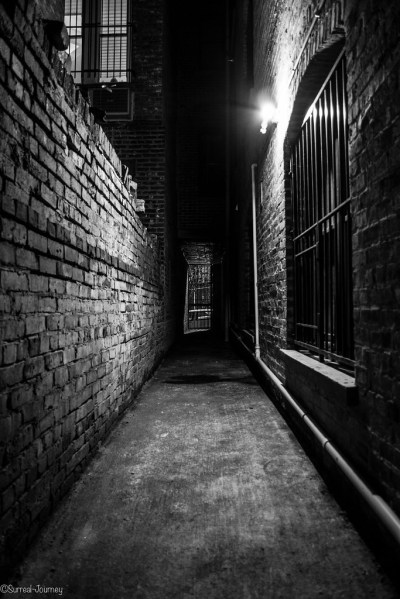
What might a shortcut look like in practice? Could be jumping a fence, maybe an alleyway, a tunnel, perhaps cutting through someone’s backyard. Could be a path through the trees on a ski slope, or a secret set of stairs in a mansion (the servants’ stairs perhaps). I would suggest, just float, the hypothesis that shortcuts always, or at least almost always, have a degree of real or perceived danger or risk to them. Alleyways are known to harbor RATS. Paths through the trees may have BUMPS and EXPOSED ROOTS. Sneaking through a backyard, we may encounter AN IRATE PROPERTY OWNER with a BIG FAT GUN. Even the servants’ stairs may have GHOSTS, DARK SECRETS, or even ECTOPLASM floating about. When you take a shortcut it’s best to be a bit on your guard.

What about backways? What do these look like? Here we are in slightly more complex waters. A short cut, as mentioned above, when executed properly, takes less time. That’s kind of the point. But while backways often take more time, they need not. In other words, it’s not definitional. Indeed, if there is a normal way and a backway to your home from your work, for example, you may time the two routes and find they are in fact fairly similar. However, the backway is likely to feel longer. This is because the backway, and I believe this to be more definitional, is more scenic. And scenery (scenicness?), being absorbing, can sort of mentally slow us down. Is that right? I’m not sure, but it’s in the neighborhood of right.

After all, what is a backway really “back” of? I mean, a backway doesn’t like automatically lead to a “back door” or anything. Also, we don’t call the normal way the “frontway,” now do we? It’s just the way. Therefore, the backway is back of the way. In other words, again, it’s kind of minor, less populated, or in some other way odd. That’s why it’s the backway.

Now, an interesting difference between a shortcut and a backway is that a shortcut is not only applicable when navigating physical space, but is also applicable when navigating all other kinds of spaces. You can find shortcuts in decision making, in writing, in computer coding, in all types of places. According to Mr. Google a shortcut is:

1. an alternative route that is shorter than the one usually taken.

2. an accelerated way of doing or achieving something.

You see what I mean. On the other hand a backway is mostly applicable to physical space. Mr. Google in fact simply defines backway as “a back alley.” But Mr. Google is way off here. As outlined above, I don’t even think a back alley is a backway per se. I think it’s a subset of shortcut. Mr. Google needs to re-examine the situation. Mr. Google needs to read this blog. Nonetheless, we don’t generally refer to “a backway to a decision,” we might instead say we took a longer time (time not space), or used an unconventional method to reach a conclusion (process not space). Therefore, “shortcut” as a term is much more capacious than “backway.”

That’s about it on shortcuts and backways. Like Mr. Kozelek, I like ‘em all.

Dedication: For Julian Jaynes.

Breakdown: The Stage Banter of Matthew Houck and Dean Wareham

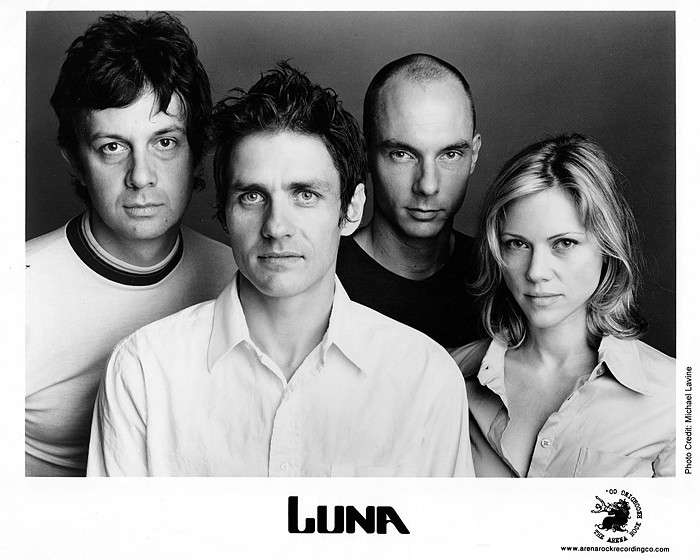
After the rousing success of our first breakdown here on the kibbitzer, we have doubled down on the form.  Here we will be exploring two incidences of stage banter by musicians captured on live albums.  We will look at Matthew Houck from Phosphorescent introducing his band, and Dean Wareham from Luna riffing with a French audience.  Phosphorescent and Luna are two of our most beloved bands, and the proto-thesis of this piece is that through their stage banter we can see into the core of what makes Matthew and Dean who they are as artists and entertainers, and in so doing discover anew what makes them great.  Stage banter, in short, may be the royal road to stylistic explication.

That all sounds pretty good, though we aren’t actually going to start with stage banter. Instead, we will take a quick stroll through the archives, back to 2009 when we published a little piece on our first blog, Classical Sympathies called “Curtis John Tucker Had a Lot to Do With It.”  Around this time, I was interested in artistic communities, artistic communes really, I guess.  My Dinner with Andre was a huge influence.

Around that time I was also listening to a bit of Giant Sand.  Giant Sand is an ever-evolving group of musicians around the enigmatic Howe Gelb, a shape-shifting Southwest troubadour who makes a lot of music, some of which is really good.  On the record Cover Magazine, the Sand covers a Kris Kristofferson song called “The Pilgrim (Chapter 33)“.  It is this song that the Curtis John Tucker piece took up.

The themes that occupy a Gemini through life, though certainly never stable, do have a certain macro-coherence.  Such is it with stage banter—our current focus calls back to this little piece on Giant Sand.  What follows then is a re-write of the original piece as an introduction to our main topic.


Re-write of “Curtis John Tucker Had a Lot to Do With It;” original version July, 2009.

On Nothing Left to Lose, a Kris Kristofferson tribute album, and later collected on Giant Sand’s Cover Magazine Howe Gelb covers the song “The Pilgrim (Chapter 33).”  You may know the song; it goes:

he’s a poet/ he’s a picker/ he’s a prophet/ he’s a pusher/ he’s a pilgrim and a preacher and a problem when he’s stoned/ he’s a walking contradiction/ partly fact and partly fiction/ taking every wrong direction on his lonely way back home.

Yeah, you know the one.

It’s a good song, and Gelb turns in a sound version.  But it’s his spoken introduction that really peaks my interest.  On Kristofferson’s original he name-checks a number of folks who “had something to do with” the genesis of the song.  Gelb repeats the original name-checks, slightly out of order, before listing a set of artists that he, Gelb, learned the song for:

Well, I guess when Kris wrote this song he wrote it for Chris Gantry–he started out doing it though by–ended up writing it for Dennis Hopper, Johnny Cash, Norman Norbert, Funky Donny Fritts, Billy Swan, Paul Seibel, Bobby Neuwirth, Jerry Jeff Walker.  Ramblin’ Jack Eliot had a lot to do with it.

Me I ended up learning this song for Vic Chesnutt, Jason Lytle, Evan Dando, Polly Jean, Paula Jean, Patsy Jean, Juliana, Victoria, Bobby Neuwirth, Bobby Plant.  Curtis John Tucker had a lot to do with it.

The alliterative Bobbys and the matching of Ramblin’ Jack Eliot and Curtis John Tucker make this speech into a mini-poem of sorts, and we know many of the protagonists.  Hopper and Cash of course; Jerry Jeff Walker and Ramblin’ Jack Eliot are folk singers, older than Kristofferson; Bobby Neuwirth is a folk singer, multimedia artist, and Dylan confidant in Don’t Look Back,  Funky Donny Fritts is a session keyboardist, and I believe Norman Norbert and Billy Swan were session musicians as well.  Paul Seibel was also a folksinger–I don’t know him; maybe you do.  Kris’ meaning is pretty clear—a song like The Pilgrim doesn’t come from nowhere, and the folksingers he learned from are portals back in time to an earlier tradition to which he generously pays tribute.

Not being myself a 70’s session musician completist I did have to look up a few of the names.  The Gelb names are more familiar, expect one.  Vic Chesnutt, Jason Lytle and Victoria (Williams) are folk singers (or were, as sadly Chesnutt has passed).  Evan Dando, Juliana Hatfield, and P.J. Harvey are/were alt-rock superstars.  Bobby Plant would be Robert Plant of Led Zeppelin fame, Bobby Neuwirth is Bobby Neuwirth.

But here’s the point, after listening to Kristofferson and Gelb name-check Funky Donny and Curtis John, I feel an affinity for them–were I to bump into Funky Donny in an airport bar or lounge his presence would resonate with an essential familiarity.  Even if I didn’t know precisely that it was he, I would recognize immediately that he was indeed funky, not to mention a serious problem when he’s stoned.  And Curtis John Tucker, well, his role is still opaque to me, but he clearly had a lot to do with it.

What both singers hint at in their evocation of the circumstances surrounding the creation of a song is the presence of community behind the music.  Behind or beside every Kristofferson is a Norman Norbert, behind every Dylan a Bobby Neuwirth, every Gelb a Curtis John Tucker.  In 2009 I wrote that “this thought fills me with a little jealously and a little sadness; I’m not at all sure that such communities of practice are as common as they once were; (there is) something about the atomisation of human affairs in the first world in the 21st century means that the idea of an artistic community where minor but still vital players such as Norman Norbert is no longer viable.” Today, although this statement still rings somewhat true, things appear rather different to me.  It seems that at least two things are occurring: first the internet has evolved such that any artistically minded person can find a niche community(s) that fits their style, and live with a foot in this community.  The second is that an apparently opposite, and actually concomitant, vitalisation of local community is underway all over the world, and a vitalised local community by necessity contains a vitalised local artistic scene.

Whatever the case, the humanity and camaraderie inherent in the spoken introductions to The Pilgrim remind us that artistic communities are vital in the creation of lasting artistic production–Neuwirth may not have been essential to Dylan’s art in the mid-60’s, but he was instrumental to its vitality; Kristofferson wrote “The Pilgrim” but it wouldn’t have been as good without Paul Seibel.  And as for Curtis John Tucker, well he had a lot to do with it.


On the spoken introduction of the band Phosphorescent by Matthew Houck between the songs “Joe Tex, These Taming Blues” and  “Los Angeles,” from Live at the Music Hall.

On side two of Phosphorescent’s majestic 2015 live album Live from the Music Hall, the band plays a song from their 2005 album Aw Come Aw Wry, called “Joe Tex, These Taming Blues.”  Houck’s early Phosphorescent albums are interesting–they are more ambient and keening than his mature work and some of the songs are really long.  Joe Tex is one of the better early songs, and Houck puts a little something special into the first couple lines on the live version: 

Is it ever gonna not be so hard to see you around/ or am I really really really really gonna have to really gonna have to really have to leave town

Houck is a master at harnessing the power of repetition—here each “really” takes on its own character and valance.  The band gives an excellent performance, which goes for about 4 minutes.  It is apparently the second last song of the night, because at the end of the song Houck moves to introduce the band.  Here he goes, as the band chugs on behind him:

Brooklyn, that’s Scott Stapleton playing that piano right there…

The first “Brooklyn” is loaded with import–Houck is going to drop some wisdom on the folks tonight.  Stapleton plays a few understatedly beautiful lilting keys and…

Brooklyn, that’s David Torch playing that percussion right there…

Torch gives a little maracas shake, right on time, as Houck establishes the rhythm and flow of the introductions.  The basic elements include a “Brooklyn,” which shifts in valance a little each time, and the band member playing “that (instrument),” “right there.”

Brooklyn, this is Rustin Bragaw playing that bass guitar right there…

A slight shift in the pattern–probably Rustin is standing next to Houck.  Bragaw drops a couple of notes on his funky bass and on we go–naturally, the bassist gets the lowest key introduction.

Brooklyn, Christopher Showtime Marine playing those drums right there…

Houck reaches for a higher register here, both on the slightly more breathless and rushed “Brooklyn” and an uptone delivery of Marine’s nickname.  Another shift in the pattern–Marine has a moniker.  Showtime delivers a healthy drum piece and…

Brooklyn, the trigger finger Ricky…Ray…Jackson playing that guitar and that pedal steel right there, come on…

We’re getting there.  The crowd is excited for this one; the pedal steel player is clearly a star.  Houck pauses a beat on each name, “Ricky…Ray…Jackson, come on,” and the come on is both an entreaty to the crowd and also a general “come on can you believe this guy!” from the lead singer.  Pedal steel is no joke.  Also, Ricky Ray’s nickname comes before the name–he is in fact the trigger finger here tonight, his birth name is just data.

The trigger finger plays a couple of high notes and…

Brooklyn, last but certainly not least, the best looking one in the group, Joe Help, playing those keyboards right there, come on.

No fuss around the two-syllable “Joe Help,” which Houck delivers as if it was one word.  Joe Help and Joe Tex, good looking guys that’s all.

I can’t tell you what a pleasure this has been y’all. Thank you for being here. Hope you come back again.  We’re going to play one more song; thank you guys so much again.  This is a song called Los Angeles; this is how it goes.

And the band plays a stunning closer.

=====

So what’s going on here?  On the one hand, Houck is just introducing the band like any other bandleader might.  However there are layers to what he is doing that are really interesting.  First, the introductions take up a good 2 minutes 20 seconds, more than a third of the 6:13 running time of the track.  Second, the whole thing is a mini-performance in and of itself.  It has an introduction, momentum, a high point at “the trigger finger Ricky Ray Jackson,” and a come down in the clipped, humorous Joe Help introduction.  Houck is doing a little “bit,” where each introduction, although seemingly quite similar, is actually it’s own piece, with his own special kind of appreciation for each band member. Read more