On John Innes, the Fabulist (with cameos from Bruce Innes and Hunter S. Thompson)

John Innes is a high school English teacher in Oregon. He works at a Catholic School there where he also coaches basketball, and probably does some other stuff. His players call him “Coach Innes,” and I think they respect him. And this is reasonable enough. Innes is a good coach, and good teacher, and most of the time a pretty good guy. He used to be a good golfer, but I think he lost it. Too much water on the elbow, can’t control the slice. But teachers show one side of themselves in the classroom and another outside of it. What John Innes has kept hidden from his students and players is that he is big old fabulist.

I know this because Innes, probably to fill the time when his lesson plans peter out or something, is known to tell stories to his students about the days when he and I were in high school and university together. And these stories are all completely bonkers. Innes will tell his students a story about me throwing people into the Little Spokane river back in high school. But I would never do that. I mean the Little Spokane is cold, and what kind of person would toss a fellow student into a cold river just because? Also, to get to the Little Spokane, which ran by our school, you had to cross a super long bridge. I’m not dragging some chick or dude across a super long bridge just to get them wet. Doesn’t make sense. I don’t know where Innes gets this stuff. It’s totally ridiculous. Innes is big old fabulist.

In another of his little “stories,” Innes claims that during university at Hamilton College I snuck into the chapel there on campus and climbed up into the bell tower. Now, there might have been a chapel at Hamilton, sure. There might have been a lot of things. Hamilton has some pretty old buildings, and it’s not impossible that a chapel would have some kind of bells in it. But I’m not gonna go climbing up there. Innes fancies himself a “literature” teacher, and maybe he’s mixing in some part of a Dorothy Sayers plot or something. Also, Innes may be extrapolating from the notion that I generally may attempt to access certain spaces that might seem “off limits.” That’s possible. I mean, if I see a “Members Only” sign on the door of a club, I’m gonna think “hey there pal, I’m a member. In fact, I’m a permanent member baby” and I’m gonna go right on in. I have also noticed that in buildings where there may be some public spaces and some private or closed spaces, if you are dressed nicely, as I can, and are pretty tall, as I am, you can sometimes just wander wherever and people will, by and large, just let you, especially if you wear some kind of lanyard around your neck. But this doesn’t mean I’m going to go poking around a bunch of bells. It’s totally ridiculous. Innes is a big fabulist, and he needs to get over it.

Innes tells another story about me graduating from university in linen. What’s he even talking about? I mean, I did graduate and have a piece of paper somewhere I think, but linen? What a bizarre thing to say. And for that matter, what if I did? Linen is a cloth, clothes are made from cloth, I was presumably clothed at graduation. So what? I think what may be going on here is that the water from his elbow is migrating up to his brain. I want to give him the benefit of the doubt, and what I do recall is that I wore a little purple flower in my hair at graduation and some dude from the newspaper took a picture of me and this ran somewhere. Innes may have remembered the flower thing and then imagined a whole bunch of other nonsense around it. Linen. It’s totally ridiculous. His fables are just getting out of control.

So Innes apparently thinks it’s funny to spin a bunch of nonsense about me. I don’t know exactly why he does this, but he may come by his mendacity honestly, so to speak. Innes has a father called Bruce Innes. Bruce Innes is a Canadian, and a pretty interesting guy. He used to be in a band called The Original Caste, and they had a hit called “One Tin Soldier.” The song is still pretty well known to a certain generation, which is cool. That band split and Bruce Innes must have drifted around blowing his money for a while, cause he ended up in Spokane in the late 80s, which is when I met the fabulist John Innes. I went to Bruce Innes’ house sometimes in order to crush John Innes at a video game called “R.B.I. Baseball.” I don’t play a lot of video games, but it doesn’t matter. I crushed John Innes at Sega Hockey a few years later as well and he whined about it for weeks. Guy has water on the elbow from way back.

Anyway, Bruce Innes’ Spokane house was pretty large and had a fully soundproofed music studio in the basement. I’d never seen anything like this and assumed that he must have some serious cash. But I don’t think this was actually the case. Like I said, I think Bruce Innes had spent most of his money from his music heyday by this time. My brother Mike, who remembers some stuff and forgets other stuff, told me recently that Bruce Innes made his living around this time by writing jingles for an audio and video store in town called Huppins. I don’t remember anything about this, but it’s too specific not to be at least a little bit true. It can’t all have been Huppins though, right? He must have done other stuff. Bruce Innes ended up leaving Spokane and moving to Sun Valley where he became the go to guy to play music sets at rich people’s parties. Then he moved to Oregon. I don’t know where he lives now. So yeah, he’s had an interesting life.

Back in the days when Bruce Innes was high on the hog with his music royalties he ran around with some famous folks. He met Leonard Cohen, and told me one time that Cohen was a total dick. Leonard Cohen is a legend of course, and is now remembered best as a genial older statesman, but this doesn’t preclude the possibility that back in the 70’s he may have been a dick. Doesn’t preclude it at all. Mr. Google says that Bruce Innes also knew Joni Mitchell. More well known though is Bruce Innes’ association with the writer Hunter S. Thompson. Most people of a certain age will remember Thompson, the “gonzo” inheritor of Hemingway and a pretty major figure in American literary history. Thompson wrote Fear and Loathing on the Campaign Trail ’72, in which he relates a funny anecdote of bonding over college football with President Richard Nixon in the back of a car sometime, despite the fact that Thompson hated Nixon. Thompson also wrote Fear and Loathing in Las Vegas, which I also have read. This is the book that the Terry Gilliam movie is based on, the one where Benicio DelToro plays Thompson’s sidekick and always advises him “as your lawyer…,” a phrase that has entered popular culture and is still widely used.

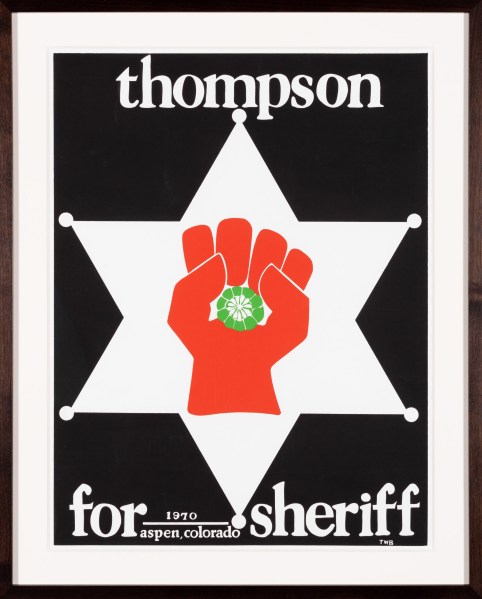
This is also the book that features Bruce Innes and some story about a monkey. I’m not sure if this next part is in Las Vegas or not, and in fact I think it isn’t, but another story is that Thompson and Bruce Innes were hanging out in Colorado somewhere and decided they would run for political office on the same ticket. Thompson would run for sheriff and Bruce Innes would run for something else. Now, Thompson’s run for sheriff is a well known piece of his mythos, and he did actually have a platform under the umbrella of “Freak Power,” but I imagine that whatever this run really entailed, Thompson exaggerated it pretty dramatically in later telling. I’ve heard Bruce Innes talk about this as well, and he makes it sound like the two of them were actually aspiring politicians for a time. But I don’t believe it. I’ll bet you what happened was these two guys were hanging out and getting stoned, and thought it would be funny if they “ran” for office. They probably got a poster or two made and hung them up around town, told all their friends about it as a lark, and talked a bunch of BS for a while. Bruce Innes is a great guy, but I think he and Thompson are kind of full of it. So like I say, John Innes probably comes by it honestly.

Whatever the source of John Innes’ struggles with the truth, one time after he had told some of his usual whoppers about me, one of his students found these stories interesting and wrote me a request for more information. He actually wrote it in verse, which was pretty creative, so I wrote him back in the same style on a flight out of Adelaide. The poem basically attempts to correct the record that the fabulist John Innes so regularly distorts. It also touches on some of the lowlights of my college career, including my fondness for writing excuses for students who needed extensions, the fact that I sported a tan trench coat for much of my first year, and my inability to get a steady girlfriend. John Innes, the fabulist, is referred to as “J.I.” in the poem. In the interest of having some of my “b-sides” back in print, I am re-posting this guy in its original form. It’s called “An Open Book,” and I gotta say, it’s still pretty good.

“An Open Book”

Not really in the mood
but you’ll think me quite rude
if I don’t make a reply
around me on the plane
folks eat, are entertained
no one’s writing save I

So I’ll take a look back
to days at the dog track
where I ended up by mistake
thought we could beat the odds
just silly teenage sods
there was no money to make

I know not if J.I.
has spun a pack of lies
concerning my personhood
Yes, I wrote poems for girls
who told me they were pearls
ah–but they weren’t any good

About a cold river,
and the rest of his quiver
of myths and exaggerations
well if someone was shoved
it was done out of love
or congratulations

So to upstate New York
in a trench coat–what a dork
but the world took pity
the life there was fine
but naught was on the line
should have gone to the city

I did two things quite well,
needing something to sell
I wrote brilliant excuses
‘bout ridiculous capers,
couldn’t finish my papers
I claimed aces, held deuces

My second great skill
is one I hold still
I fell for crazy ladies
locals, Russians, and Turks
they all drove me berserk
with a boatload of maybes

Four years in the dorms
and countless reforms
led to little of note
I left sans a sob
a plan or a job
and without my trench coat

Dedication: For John Innes, the fabulist. You know I won that Sega game, but I confess I may have tried to get up in that bell tower. So let’s call it a tie there baby.

Postscript: Since this piece was first published, Bruce Innes has sadly passed away, I believe in Vermont. As I said in the piece, Bruce had a fascinating life, and he was also a genuinely sweet guy. I really liked him. RIP Bruce, maybe you can win an election or two up there in heaven.

Note: If you enjoyed this piece, you may also enjoy “An Open Book,” also about the character known as John Innes. You can find that here.

On a small run-in with Damon of Damon and Naomi in a Kyoto Basement (aka “A Minor Incident, aka A Dis-Track”)

What follows is a true story.  Or, in the words of Damon K., formerly of Galaxie 500 and presently of Damon and Naomi, “Here are the dirty facts.”

It was sometime in the first decade of the 21st century.  I was minding my own business in my fair adopted city of Kyoto.  You see, I live in North Kyoto and unless I have good reason, prefer to stay in orb of the north-central part of the city.  The south is for business, the east for the occasional mountain jaunt, and the west too wild and forbidding for a humble man such as myself.  Mostly, I just try to stay north of Shijo Dori (positively 4th street, so to speak).  That’s my zone.

As with any excellent locality, there is plenty to explore in North Kyoto.  One place that the locals know is Cafe Independants–a cafe with a small bar which from time to time hosts shows.  Cafe Independants is located in a basement with exposed white pipes and stone walls.  It’s hip if you’re into that kind of thing, certainly not trendy though.  And, it features a kick-ass pair of staircases that are worlds into themselves.  I have enjoyed those staircases many a time my own self.


I have had the pleasure of seeing the great Bill Callahan open for the immaculate harpist Joanna Newsom there when Ms. Newson was just breaking through.  Callahan was the bigger name, and his generosity in opening for her was striking.  That was a great night.  I may have even smoked a rare cigarette.  I also saw my mate Darren Hannah play bass there with a bow.  That was something–and the dude executed a beauty of a bow toss at the end of the show.  A bow toss for a bassist is like a mic drop for an MC.  Show’s over folks.  So you see, I’d had some nights there.

The Cafe runs an open kitchen which serves right through gigs and back in the day also had a record shop open in the back.  It’s a small place, seating maybe 35 on a good day, and when a show is on people tend to pack around the big pole in the center and squeeze into communal tables.  Smoking is allowed.  The Cafe, at the best of times, is not a quiet place.  This is to be borne in mind with what followed.

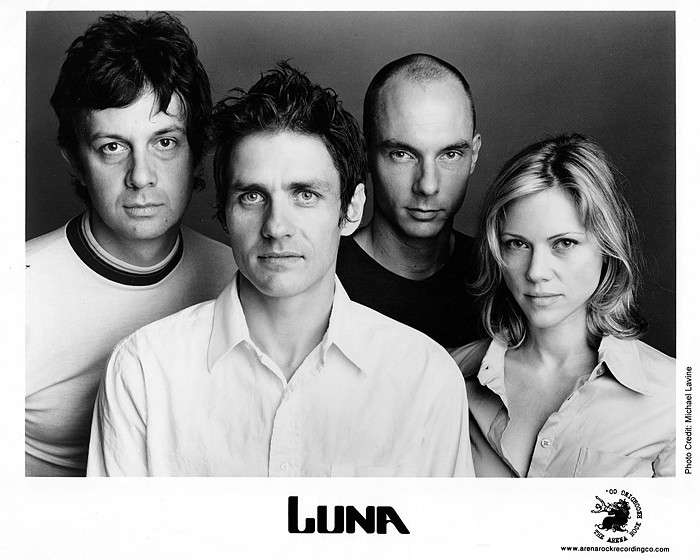
So one evening I had secured tickets to see Damon and Naomi play.  Damon and Naomi were members of the late 80s/ early 90’s band Galaxie 500 with Dean Wareham.  The band didn’t really know what it was doing at first, like many a band before, and kind of stumbled into near-greatness before Wareham walked and started Luna, the world’s greatest band.  Wareham details the reasons behind the break-up in his memoir Black Postcards.  Poe is supposed to have said that any man who tells the simple truth of his life would write a masterpiece.  Wareham gets pretty close to following Poe’s dictum.

The ending of Galaxie 500 came about, according to Wareham, essentially because Wareham was tired of being treated like a child by the other two, a long-time couple.  I think he wanted his own band, and wanted to chill a little.  From Black Postcards:

Traveling is stressful.  And with Damon tour-managing, it seemed like every hotel check-in, every seat assignment, and every rental car was a problem.  Damon would argue about what floor his room was on.  He would get annoyed if he didn’t get the seat he wanted on the flight.  I shouldn’t have let this bother me.  I should have minded my own business.  But traveling together highlights your differences.

At one show in late 1990, a techie shone a spotlight on Dean as he stepped downstage for a solo.  This seems to have been the breaking point.  Black Postcards again:

Damon: “In retrospect I notice that Dean chose the L.A. show to launch this new trick, when the audience was full of music industry people.  We hadn’t had any spotlights in Columbus or Dallas!”

Dean in his contemporaneous tour diary: “Damon said he doesn’t like me walking in front of his drum kit–it throws him off.  I didn’t tell him to go f*** himself.”

Things were rough, and Dean split in 1991.  (Wareham quotes a Damon interview saying “Here are the dirty facts!  What happened was simply that Dean quit, more or less out of the blue, on the telephone one day.”  Ah oui, les sales faits.)  Galaxie 500 is still an interesting band and has a handful of great songs.  Then, Damon and Naomi formed their own group, named eponymously.  They are pretty good.  I like “This Car Climbed Mount Washington,” from More Sad Hits, and the whole record Playback Singers is strong.  Still, they are a far cry from Galaxie, much less Luna.

Nevertheless, I was excited to hear they were coming to little old North Kyoto in fact to play the Independants.  I showed up early with a friend and we had a few drinks, as you do.  There were 30 or 40 people there, as normal.  People were chatting, eating, smoking, and a local warm-up act started preparing on stage.  Actually, there is no stage at the Cafe, just floor space.  The show, from my point of view, HAD NOT STARTED.  Additionally, I WAS BEHIND THE POLE.  I wish at this time to stipulate this very clearly in light of what followed.  I also wish to stipulate that no-one is a bigger fan of the idea of the local warm up act than my good self.  Nobody.  By god, I remember seeing the Tenniscoats, a much beloved Japanese band that you won’t have heard of, open up in Kyoto for someone, Bonnie Prince Billy maybe, and saw the great Saya Ueno play in her barefeet.  I even tweeted about it, for Christ’s sake.  I support the local art community with a whole heart.  And no blasted interloper will tell me otherwise.

Anyway, on the night in question I will admit I was talking to my buddy while the local artist was getting set up.  And yes, she may have said something into the microphone.  I don’t really know.  Because before I could do anything, here comes Damon K. bounding across the room, right in my face, and shushed me.  “Don’t speak when the ARTIST is talking,” he hissed.  Right…in…my…face.

Now, the human mind is a remarkable deal.  When Damon shushed me, two simulataneous and equally strong thoughts came into my head.  The first was, “wow, Damon from Galaxie 500 just shushed me.  Cool.”  The second was, “dude, f******** you!  This is my city you pompous SOB, the show HAS NOT STARTED, there is a room full of chattering people, and you are going to lecture me about the ARTIST.”

What did I do next, you will ask.  Well, in my mind I like to think I produced a gesture equivalent to Dave Moss’s finger flips in Glengarry Glen Ross.  The moment comes when the little men in the sales office are on the other end of a berating passing for “motivation” when just for a moment, Moss takes the upper hand.

Or, I may have stared dumbly at the guy.  One of the other.

On the Velvet Underground’s Live at Max’s Kansas City, the future poet and songwriter Jim Carroll famously “ruins” the recording of “Sweet Jane” by asking for “a double Pernod.”  You can find reference to this minor incident in works as scholarly as The Encyclopedia of Popular Music, published by Oxford Press.

“Excuse me can I have a Pernod, get me a Pernod’. Poet and author Jim Carroll’s boorish demands for a bloody Pernod ruined (this) illegal cassette taping.”  Well, let’s look at the (dirty) facts.  The fact is that Carrol’s so-called boorish demands are almost entirely heard between songs when the band is tuning.  On Sweet Jane, for example, Reed finishes the song and then we hear:

“Oh yeah, I wrote it, but it’s pretty new, yeah.  Did you get the Pernod?  You had to get the, you had to go to the downstairs floor.”

Sure, he is a little lit.  Sure he is close to the mic.  But the song is over.  There is downtime.  The man is thirsty.  The recording is “ILLEGAL.”  Now I ask you, is this “ruining” the song?  Only if you are an actual prat.  Otherwise, this is called local color.  Guess what Damon, buddy?  I’m a local.  This is my city.  I’m colorful.  And I’ll take my bloody Pernod whenever I goddamn well feel like it.

Works Cited/ Referenced:

Damon and Naomi,  More Sad Hits.

Damon and Naomi, Playback Singers.

Glengarry Glen Ross.  Directed by James Foley.  Written by David Mamet.

Oxford Reference, “Velvet Underground–Live at Max’s Kansas City.” http://www.oxfordreference.com/view/10.1093/acref/9780195313734.001.0001/acref-9780195313734-e-89759.  Retrieved 9/20/2018.

The Velvet Underground, Live at Max’s Kansas City.

Style Note:

The style of this piece is deeply indebted to Eric Ambler’s The Intercom Conspiracy.  Inspiration from this master of form is acknowledged, with deep gratitude.

Breakdown: The Stage Banter of Matthew Houck and Dean Wareham

After the rousing success of our first breakdown here on the kibbitzer, we have doubled down on the form.  Here we will be exploring two incidences of stage banter by musicians captured on live albums.  We will look at Matthew Houck from Phosphorescent introducing his band, and Dean Wareham from Luna riffing with a French audience.  Phosphorescent and Luna are two of our most beloved bands, and the proto-thesis of this piece is that through their stage banter we can see into the core of what makes Matthew and Dean who they are as artists and entertainers, and in so doing discover anew what makes them great.  Stage banter, in short, may be the royal road to stylistic explication.

That all sounds pretty good, though we aren’t actually going to start with stage banter. Instead, we will take a quick stroll through the archives, back to 2009 when we published a little piece on our first blog, Classical Sympathies called “Curtis John Tucker Had a Lot to Do With It.”  Around this time, I was interested in artistic communities, artistic communes really, I guess.  My Dinner with Andre was a huge influence.

Around that time I was also listening to a bit of Giant Sand.  Giant Sand is an ever-evolving group of musicians around the enigmatic Howe Gelb, a shape-shifting Southwest troubadour who makes a lot of music, some of which is really good.  On the record Cover Magazine, the Sand covers a Kris Kristofferson song called “The Pilgrim (Chapter 33)“.  It is this song that the Curtis John Tucker piece took up.

The themes that occupy a Gemini through life, though certainly never stable, do have a certain macro-coherence.  Such is it with stage banter—our current focus calls back to this little piece on Giant Sand.  What follows then is a re-write of the original piece as an introduction to our main topic.


Re-write of “Curtis John Tucker Had a Lot to Do With It;” original version July, 2009.

On Nothing Left to Lose, a Kris Kristofferson tribute album, and later collected on Giant Sand’s Cover Magazine Howe Gelb covers the song “The Pilgrim (Chapter 33).”  You may know the song; it goes:

he’s a poet/ he’s a picker/ he’s a prophet/ he’s a pusher/ he’s a pilgrim and a preacher and a problem when he’s stoned/ he’s a walking contradiction/ partly fact and partly fiction/ taking every wrong direction on his lonely way back home.

Yeah, you know the one.

It’s a good song, and Gelb turns in a sound version.  But it’s his spoken introduction that really peaks my interest.  On Kristofferson’s original he name-checks a number of folks who “had something to do with” the genesis of the song.  Gelb repeats the original name-checks, slightly out of order, before listing a set of artists that he, Gelb, learned the song for:

Well, I guess when Kris wrote this song he wrote it for Chris Gantry–he started out doing it though by–ended up writing it for Dennis Hopper, Johnny Cash, Norman Norbert, Funky Donny Fritts, Billy Swan, Paul Seibel, Bobby Neuwirth, Jerry Jeff Walker.  Ramblin’ Jack Eliot had a lot to do with it.

Me I ended up learning this song for Vic Chesnutt, Jason Lytle, Evan Dando, Polly Jean, Paula Jean, Patsy Jean, Juliana, Victoria, Bobby Neuwirth, Bobby Plant.  Curtis John Tucker had a lot to do with it.

The alliterative Bobbys and the matching of Ramblin’ Jack Eliot and Curtis John Tucker make this speech into a mini-poem of sorts, and we know many of the protagonists.  Hopper and Cash of course; Jerry Jeff Walker and Ramblin’ Jack Eliot are folk singers, older than Kristofferson; Bobby Neuwirth is a folk singer, multimedia artist, and Dylan confidant in Don’t Look Back,  Funky Donny Fritts is a session keyboardist, and I believe Norman Norbert and Billy Swan were session musicians as well.  Paul Seibel was also a folksinger–I don’t know him; maybe you do.  Kris’ meaning is pretty clear—a song like The Pilgrim doesn’t come from nowhere, and the folksingers he learned from are portals back in time to an earlier tradition to which he generously pays tribute.

Not being myself a 70’s session musician completist I did have to look up a few of the names.  The Gelb names are more familiar, expect one.  Vic Chesnutt, Jason Lytle and Victoria (Williams) are folk singers (or were, as sadly Chesnutt has passed).  Evan Dando, Juliana Hatfield, and P.J. Harvey are/were alt-rock superstars.  Bobby Plant would be Robert Plant of Led Zeppelin fame, Bobby Neuwirth is Bobby Neuwirth.

But here’s the point, after listening to Kristofferson and Gelb name-check Funky Donny and Curtis John, I feel an affinity for them–were I to bump into Funky Donny in an airport bar or lounge his presence would resonate with an essential familiarity.  Even if I didn’t know precisely that it was he, I would recognize immediately that he was indeed funky, not to mention a serious problem when he’s stoned.  And Curtis John Tucker, well, his role is still opaque to me, but he clearly had a lot to do with it.

What both singers hint at in their evocation of the circumstances surrounding the creation of a song is the presence of community behind the music.  Behind or beside every Kristofferson is a Norman Norbert, behind every Dylan a Bobby Neuwirth, every Gelb a Curtis John Tucker.  In 2009 I wrote that “this thought fills me with a little jealously and a little sadness; I’m not at all sure that such communities of practice are as common as they once were; (there is) something about the atomisation of human affairs in the first world in the 21st century means that the idea of an artistic community where minor but still vital players such as Norman Norbert is no longer viable.” Today, although this statement still rings somewhat true, things appear rather different to me.  It seems that at least two things are occurring: first the internet has evolved such that any artistically minded person can find a niche community(s) that fits their style, and live with a foot in this community.  The second is that an apparently opposite, and actually concomitant, vitalisation of local community is underway all over the world, and a vitalised local community by necessity contains a vitalised local artistic scene.

Whatever the case, the humanity and camaraderie inherent in the spoken introductions to The Pilgrim remind us that artistic communities are vital in the creation of lasting artistic production–Neuwirth may not have been essential to Dylan’s art in the mid-60’s, but he was instrumental to its vitality; Kristofferson wrote “The Pilgrim” but it wouldn’t have been as good without Paul Seibel.  And as for Curtis John Tucker, well he had a lot to do with it.


On the spoken introduction of the band Phosphorescent by Matthew Houck between the songs “Joe Tex, These Taming Blues” and  “Los Angeles,” from Live at the Music Hall.

On side two of Phosphorescent’s majestic 2015 live album Live from the Music Hall, the band plays a song from their 2005 album Aw Come Aw Wry, called “Joe Tex, These Taming Blues.”  Houck’s early Phosphorescent albums are interesting–they are more ambient and keening than his mature work and some of the songs are really long.  Joe Tex is one of the better early songs, and Houck puts a little something special into the first couple lines on the live version: 

Is it ever gonna not be so hard to see you around/ or am I really really really really gonna have to really gonna have to really have to leave town

Houck is a master at harnessing the power of repetition—here each “really” takes on its own character and valance.  The band gives an excellent performance, which goes for about 4 minutes.  It is apparently the second last song of the night, because at the end of the song Houck moves to introduce the band.  Here he goes, as the band chugs on behind him:

Brooklyn, that’s Scott Stapleton playing that piano right there…

The first “Brooklyn” is loaded with import–Houck is going to drop some wisdom on the folks tonight.  Stapleton plays a few understatedly beautiful lilting keys and…

Brooklyn, that’s David Torch playing that percussion right there…

Torch gives a little maracas shake, right on time, as Houck establishes the rhythm and flow of the introductions.  The basic elements include a “Brooklyn,” which shifts in valance a little each time, and the band member playing “that (instrument),” “right there.”

Brooklyn, this is Rustin Bragaw playing that bass guitar right there…

A slight shift in the pattern–probably Rustin is standing next to Houck.  Bragaw drops a couple of notes on his funky bass and on we go–naturally, the bassist gets the lowest key introduction.

Brooklyn, Christopher Showtime Marine playing those drums right there…

Houck reaches for a higher register here, both on the slightly more breathless and rushed “Brooklyn” and an uptone delivery of Marine’s nickname.  Another shift in the pattern–Marine has a moniker.  Showtime delivers a healthy drum piece and…

Brooklyn, the trigger finger Ricky…Ray…Jackson playing that guitar and that pedal steel right there, come on…

We’re getting there.  The crowd is excited for this one; the pedal steel player is clearly a star.  Houck pauses a beat on each name, “Ricky…Ray…Jackson, come on,” and the come on is both an entreaty to the crowd and also a general “come on can you believe this guy!” from the lead singer.  Pedal steel is no joke.  Also, Ricky Ray’s nickname comes before the name–he is in fact the trigger finger here tonight, his birth name is just data.

The trigger finger plays a couple of high notes and…

Brooklyn, last but certainly not least, the best looking one in the group, Joe Help, playing those keyboards right there, come on.

No fuss around the two-syllable “Joe Help,” which Houck delivers as if it was one word.  Joe Help and Joe Tex, good looking guys that’s all.

I can’t tell you what a pleasure this has been y’all. Thank you for being here. Hope you come back again.  We’re going to play one more song; thank you guys so much again.  This is a song called Los Angeles; this is how it goes.

And the band plays a stunning closer.

=====

So what’s going on here?  On the one hand, Houck is just introducing the band like any other bandleader might.  However there are layers to what he is doing that are really interesting.  First, the introductions take up a good 2 minutes 20 seconds, more than a third of the 6:13 running time of the track.  Second, the whole thing is a mini-performance in and of itself.  It has an introduction, momentum, a high point at “the trigger finger Ricky Ray Jackson,” and a come down in the clipped, humorous Joe Help introduction.  Houck is doing a little “bit,” where each introduction, although seemingly quite similar, is actually it’s own piece, with his own special kind of appreciation for each band member. Read more