I Have a Crush on Katie Park From Bad Moves

Could you read between the lines
Or was it just so obvious?

Bad Moves

New Note: This is an older piece, however I am re-releasing it here. I recently shared a longer piece about some aspects of my life, including, quite centrally, music, so this seemed like a good time.

As with anyone’s story, there are layers to mine. One pretty big layer is when in 2018 I traveled to New York/ Brooklyn, Boston, Philadelphia, and Washington D.C. to see the band Phosphorescent. I saw Phosphorescent four times total on their C’est La Vis tour and they were amazing. I bought a sweatshirt from the merch table and the merch gal told Matthew Houck, the lead singer, about me because I told her I’d come all the way from Japan to see the band. He came down from the stage and gave me a big bearhug, not once but twice at two of the shows. He knew I was going through it, and I needed a hug. He’d been through it too, big time, before and when he was writing Muchacho a few years prior.

As I was seeing Phosphorescent I also took the opportunity to see a few other bands. I saw Yo La Tengo twice at the Borwey Ballroom, Jay Som in Boston, and most memorably The Hold Steady twice at the Brooklyn Bowl where they were playing a three night set. The opener for The Hold Steady was a band called Bad Moves. I had never heard of this band, however, and I don’t say this lightly, they put on a better show than The Hold Steady. Now an opener should try to do just this, to “steal the show,” so to speak. A Bad Moves stole it big time. I was enraptured by their lead singer Katie Park, and met her at the merch table which she was running, which is recounted below. My friend I met at the shows, Austin, pushed me to check out their album Tell No One in depth, which I did, and I loved it. On the train from Washington D.C. back to New York I wrote the first version of this piece, which has been fairly extensively edited since then. This is my sneaky favorite piece, maybe not my best, but you can be the judge. Here it is:

I love live music. More than that, I love live music fans, and music fans in general. This piece is basically about being a music fan, and was inspired when I saw the band Bad Moves open for The Hold Steady in 2018 at the Brooklyn Bowl. They were touring on the back of their first full length, Tell No One. While at the Bad Moves/ Hold Steady show a music geek introduced me to a band called Swearin’. Swearin’ has been around a little longer than Bad Moves, and in 2018 had released Fall Into the Sun. The two bands don’t really sound all that much alike (Bad Moves is basically “Power Pop” and Swearin’ is basically “Indie”) but they write somewhat similarly about matters of love and friendship.

Let’s play a game that we live in a world where a record by a band like Bad Moves or Swearin’ would produce radio hits. I want to live in that world. Or maybe I don’t; maybe it’s better for everyone that bands like these stay a little more on the DL. Let’s first take a look at Fall Into the Sun. (Swearin’s frontwoman is Allison Crutchfield, and the band is mostly her baby.) My pick for the single would be the lead off track, “Big Change.” 

The song opens with this soft-spoken reminiscence — basement shows, empty cans, old romances, long nights of half-drunken idealism. Crutchfield sketches a friendship held together by music, chaos, and the sense that they’d accidentally stumbled into their own mutant little world.

I really like what Crutchfield does here. She is basically writing about a friendship solidified over a shared love of music. Now, I know a lot of people. I also have some friends. When you ask an adult, “How many real friends do you have?” the number will vary widely. A lot of people will say “four or five,” something like that. People in general have surprisingly few real friends. I have ten or fifteen, maybe more, but am only in regular contact with about half that number. A good friendship, in my opinion, is one where no matter how long you and your friend have not hung out, if you see them it’s as if not a day has passed. With this sort of friend, I’ve found, there is between yourself and them something fundamental shared. It can be anything really. For example, I first met my good buddy when we were both in graduate school in Arizona, and at first I thought he was a total dick. He was loud, interrupted people constantly, and loved being the center of attention. One night we were drinking as a department and he started razzing me there on the street, just casually insulting me left and right. Suddenly I got where he was coming from. This was, in fact, his way of offering to be friends. Once I understood this, I began to give it right back to him. Called him every name in the book. And he ate it up. By the end of the night we were fast friends and have been ever since, because we share an understanding that our friendship is based, in part, on ripping on each other. Music, obviously, is another great basis for a friendship.

When Crutchfield sings “no art degree, no conservatory/ just Katie and me,” I’m reminded of the refrain from Don DiLillo’s Underworld: “who’s better than us.” If they can do it, why not us? Fuck ’em. That’s what attitude looks like kids–take notes.

So “Big Change” is my single from Fall Into the Sun. (“My single” here just means the song I would choose as the single. For some records, the single is super obvious, while for other records it’s debatable. Bands and producers, in my opinion, do not always get this right.) A good record will tend to have at least two singles; three is a bonus.

For Fall Into the Sun’s second single I’ll go with “Grow into a Ghost.” It opens with a chugging guitar riff with an almost Krautrock drum line. The song is a perfect 3:10–in and out. Do you know anything about lost love? Swearin’ does.

Midway through the record, she writes to an old love with that drifting, half-in-the-desert melancholy she does so well — remembering who she’d been before they met, watching someone fade into absence until they feel more like a ghost than a memory.

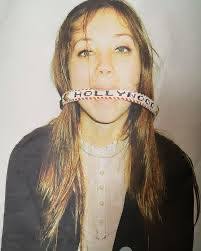
Swearin’ is good, but Bad Moves is better. And the star of Bad Moves is the exquisite Katie Park. (I know they are a collective, but my world is my world baby.) Before their show Katie was at the merch table selling…magic eye! That she made by hand. And what did it say? The magic eye said “Bad Moves.” Obviously. I checked it out and chatted for a few minutes with Katie, trying to play it cool. It was the highlight of my year. 20 minutes later she and the band were on stage, crushing it.

The single here is pretty easy. It’s “Crushed Out.” The band released “Crushed Out,” “Spirit FM” and “Cool Generator” as the singles, all of which are excellent. Maybe “Spirit FM” is catchier than “Crushed Out”? Possible. But “Crushed Out” has more lasting power in my opinion. “Crushed Out” is about exactly what it sounds like. It has a basically perfect power pop structure with a killer hook, a classic bridge, and a theme at once super obvious and super deep–the power of a crush.

The whole song is a tumble of infatuation — that feeling where you can’t focus, can’t think straight, and every look or scribbled message feels like it should be obvious to the other person. It captures the power-pop rush of a crush so clearly it almost stings.

Baby, if you are crush-prone that power never goes away. Bad Moves knows this–it’s kind of what the record is about. Crushing out that way can be pretty obvious–do you think I’m crushing out on Katie at all? Nah, this is just a piece of music appreciation.

Cool Generator is my second favorite song on the album, but my “sneaky favorite” is “Missing You.” A sneaky favorite is just what it sounds like: it’s that song that may fly under most people’s radar but that you have a special soft spot for. My all time sneaky favorite song is “Three Drinks” by Craig Finn of the aforementioned Hold Steady. “Three Drinks” shows up on Finn’s 2016 EP Newmyer’s Roof. It’s nearly acoustic, unlike most Hold Steady songs, and sounds just a little bit country. Three Drinks is about a woman (most great songs are) who may have been a child star once upon a time, and is now a drinker. It is an example of a certain type of song that Finn is amazing at, the deeply empathetic look at adult relationships in all of their gloriously flawed complexity. In this sense, Three Drinks fits in with “Spinners” from The Hold Steady’s 2014’s Teeth Dreams, “Tangletown” from Finn’s 2017 solo record We All Want the Same Things, and “Esther” a Hold Steady single from 2018. Finn’s writing on Three Drinks and Tangletown is at its absolute apex. 

“Three Drinks” delivers Finn at peak empathy. A woman with a messy past drifts through a hotel lobby filled with minor disasters, trying to hold herself together until that magic window — the hour between the third drink and the one that tips the night over the edge. Finn nails that space between fear and transcendence where people feel briefly holy.

The refrain focuses on that magic hour between drinks 3 and 4, when matters begin to move from the slightly anxious first stage of the evening to something entirely other:

So anyway, my sneaky favorite on Tell No One is “Missing You.” The song starts like the others, high-speed power pop, and after two verses switches to a near-spoken word breakdown of the tug-of-war between a crush and the expectations of the world around. Guess which wins?

“Missing You” turns into a spoken-word confession halfway through: the push-and-pull between what the world tells you not to do and the crush that keeps winning anyway. It’s simple rhyming, almost naive, but devastatingly effective.

I officially support these sentiments. .

So that’s my sneaky favorite –doesn’t mean it’s better than “Crushed Out” (it isn’t) it’s just a little sneaky. I’m all about sneaky babes and sneaky favorites, on all levels.

In addition to the Magic Eye, Bad Moves also engage in a little publishing. A little literature. Specifically they publish a pamphlet called “The Virtues of Wearing White.”

Chatting with Katie, she acknowledged more than a passing familiarity with the literature of the Jehovah Witnesses. I love Witness literature. Both Witness and Bad Moves publications have a real “it’s gonna be a bright, bright sunshiny day” vibe. If you know me this is not a secret, but I’m a hardcore closet New Ager. There, secret’s out. I’ve messed around with all kinds of New Age action. Once I attended a Kabbala meetup in Manhattan. There were some hardcore New Agers there too, seriously. Those folks were not in the closet at all. Shining eyes, whatever color they are wearing. Me, I like black because it’s easier to launder, but Bad Moves have me thinking. (One other publication you should take a look at if you are into this kind of thing is the Christian Science Monitor. It’s a serious piece of literature. God is great baby, god is great.)

When I was younger my parents had a friend called Tom Hutchinson, who, predictably, went by “Hutch.” Hutch owned a boutique coffee shop there in town and I drove a delivery van for him for a bit. But that’s another story. Anyway, Hutch was a weird guy and he hated the Witnesses. It was one of his favorite topics. He’d call them the “Witlesses,” and say: “When they come to my house I turn the hose on ’em.” People thought this was pretty funny, but I was not that into Hutch’s attitude to the Witnesses. I mean, he didn’t want anyone trying to convert him on his property, which is fair; however, I felt, and still feel, that if someone wants to come to my door, give me a little literature, and talk about how god loves me I’m gonna let them. I genuinely like the Witnesses. They seem like lovely people. Read more

On a run-in with Damon Krukowski in a Kyoto Basement

New Note: I am republishing this piece with a new note because I just finished a full piece on the breakup of the band Galaxie 500 which is mentioned in this piece on two of the three members of that band, Damon Krukowski and Naomi Yang. In addition, I wanted to add a few comments on how the venue of the gig I attended around 2006, Cafe Independents in Kyoto, has changed since that time. I have also slightly edited the title of this piece.

This is one of my favorite pieces in a sense because it was early in the life of my blog and it focussed on Kyoto. The original intention of this blog was to document my explorations of Kyoto, however it has evolved in several different directions since then. So this is sort of “bringing it all back home.” As for Cafe Independents, it is still the same place, however they no longer allow smoking and I don’t know that they have live gigs anymore. The food is kind of the same but dinner specifically has been upgraded and has also become more expensive. It’s still a decent place for lunch, or a dinner date, and one of the sets of stairs is still intact but I think the other one is blocked off or something. In any case, while I have dropped in on occasion recently, I don’t frequent the place as much as I used to. There are a few other, and better, live houses in Kyoto, specifically Urbanguild, which I will write about at another time. If you are stumbling on this one for the first time I do hope you enjoy it.

What follows is a true story.  Or, in the words of Damon Krukowski, formerly of Galaxie 500 and presently of Damon and Naomi, “here are the dirty facts.”

It was sometime in the first decade of the 21st century.  I was minding my own business in my fair adopted city of Kyoto.  You see, I live in North Kyoto and unless I have good reason, prefer to stay in orb of the north-central part of the city.  The south is for business, the east for the occasional mountain jaunt, and the west too wild and forbidding for a humble man such as myself.  Mostly, I just try to stay north of Shijo Dori (positively 4th street, so to speak).  That’s my zone.

As with any excellent locality, there is plenty to explore in North Kyoto.  One place that the locals know is Cafe Independants–a cafe with a small bar which from time to time hosts shows.  Cafe Independants is located in a basement with exposed white pipes and stone walls.  It’s hip if you’re into that kind of thing, certainly not trendy though.  And, it features a kick-ass pair of sneaky staircases that are worlds into themselves.  I have enjoyed those staircases many a time my own self.

I have had the pleasure of seeing the great Bill Callahan open for the immaculate harpist Joanna Newsom there when Newsom was just breaking through.  Callahan was the bigger name, and his generosity in opening for her was striking.  That was a great night.  I may have even smoked a rare cigarette.  I also saw my mate Darren Hannah play bass there with a bow.  That was something–and the dude executed a beauty of a bow toss at the end of the show.  A bow toss for a bassist is like a mic drop for an MC.  Show’s over folks.  So you see, I’d had some nights there.

The Cafe runs an open kitchen which serves right through gigs and back in the day also had a record shop open in the back.  It’s a small place, seating maybe 35 on a good day, and when a show is on people tend to pack around the big pole in the center and squeeze into communal tables.  Smoking is allowed.  The Cafe, at the best of times, is not a quiet place.  This is to be borne in mind with what followed.

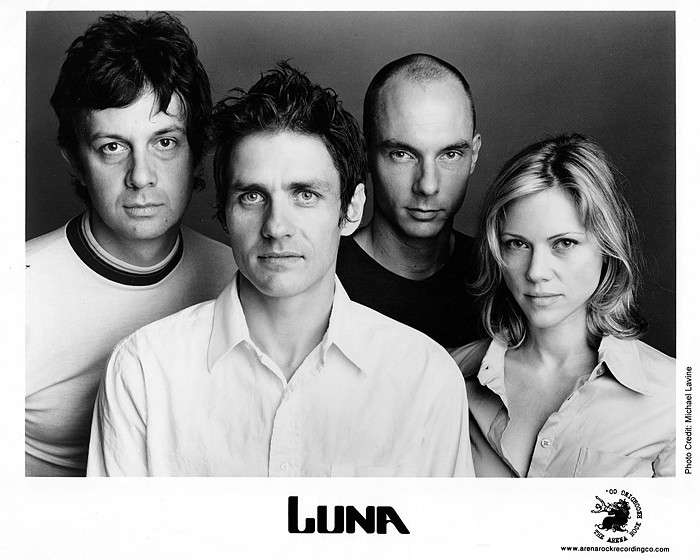
So one evening I had secured tickets to see Damon and Naomi play.  Damon and Naomi were members of the late 80s/ early 90’s band Galaxie 500 with Dean Wareham.  The band didn’t really know what it was doing at first, like many a band before, and kind of stumbled into near-greatness before Wareham walked and started Luna, the world’s greatest band.  Wareham details the reasons behind the break-up in his memoir Black Postcards.  Poe is supposed to have said that any man who tells the simple truth of his life would write a masterpiece.  Wareham gets pretty close to following Poe’s dictum.

The ending of Galaxie 500 came about, according to Wareham, essentially because Wareham was tired of being treated like a child by the other two, a long-time couple.  I think he wanted his own band, and wanted to chill a little.  From Black Postcards:

Traveling is stressful.  And with Damon tour-managing, it seemed like every hotel check-in, every seat assignment, and every rental car was a problem.  Damon would argue about what floor his room was on.  He would get annoyed if he didn’t get the seat he wanted on the flight.  I shouldn’t have let this bother me.  I should have minded my own business.  But traveling together highlights your differences.

At one show in late 1990, a techie shone a spotlight on Dean as he stepped downstage for a solo.  This seems to have been the breaking point.  Black Postcards again:

Damon: “In retrospect I notice that Dean chose the L.A. show to launch this new trick, when the audience was full of music industry people.  We hadn’t had any spotlights in Columbus or Dallas!”

Dean in his contemporaneous tour diary: “Damon said he doesn’t like me walking in front of his drum kit–it throws him off.  I didn’t tell him to go f*** himself.”

Things were rough, and Dean split in 1991.  (Wareham quotes a Damon interview saying “Here are the dirty facts!  What happened was simply that Dean quit, more or less out of the blue, on the telephone one day.”  Ah oui, les sales faits.)  Galaxie 500 is still an interesting band and has a handful of great songs.  Then, Damon and Naomi formed their own group, named eponymously.  They are pretty good.  I like “This Car Climbed Mount Washington,” from More Sad Hits, and the whole record Playback Singers is strong.  Still, they are a far cry from Galaxie, much less Luna.

Nevertheless, I was excited to hear they were coming to little old North Kyoto in fact to play the Independants.  I showed up early with a friend and we had a few drinks, as you do.  There were 30 or 40 people there, as normal.  People were chatting, eating, smoking, and a local warm-up act started preparing on stage.  Actually, there is no stage at the Cafe, just floor space.  The show, from my point of view, HAD NOT STARTED.  Additionally, I WAS BEHIND THE POLE.  I wish at this time to stipulate this very clearly in light of what followed.  I also wish to stipulate that no-one is a bigger fan of the idea of the local warm up act than my good self.  Nobody.  By god, I remember seeing the Tenniscoats, a much beloved Japanese band that you won’t have heard of, open up in Kyoto for someone, Bonnie Prince Billy maybe, and saw the great Saya Ueno play in her barefeet.  I support the local art community with a whole heart.  And no blasted interloper will tell me otherwise.

Anyway, on the night in question I will admit I was talking to my buddy while the local artist was getting set up.  And yes, she may have said something into the microphone.  I don’t really know.  Because before I could do anything, here comes Damon bounding across the room, right in my face, and shushed me.  “Don’t speak when the ARTIST is talking,” he hissed.  Right…in…my…face.

Now, the human mind is a remarkable deal.  When Damon shushed me, two simulataneous and equally strong thoughts came into my head.  The first was, “wow, Damon from Galaxie 500 just shushed me.  Cool.”  The second was, “dude, fuck you!  This is my city you pompous SOB, the show HAS NOT STARTED, there is a room full of chattering people, and you are going to lecture me about the ARTIST.”

What did I do next, you will ask? Well, in my mind I like to think I produced a gesture equivalent to Dave Moss’s finger flips in Glengarry Glen Ross, the single best fuck you even put on screen. Or, I may have stared dumbly at the guy.  One or the other.

On the Velvet Underground’s Live at Max’s Kansas City, the future poet and songwriter Jim Carroll famously “ruins” the recording of “Sweet Jane” by asking for a double Pernod. You can find reference to this incident in works as scholarly as The Encyclopedia of Popular Music, published by Oxford Press: “‘Excuse me can I have a Pernod, get me a Pernod’. Poet and author Jim Carroll’s boorish demands for a bloody Pernod ruined (this) illegal cassette taping.”

Well, let’s look at the (dirty) facts.  Carroll’s supposedly boorish demands are almost entirely heard between songs when the band is tuning.  He doesn’t know that the show is being taped. On Sweet Jane, for example, Reed finishes the song and then we hear Carroll:

“Oh yeah, I wrote it, but it’s pretty new, yeah.  Did you get the Pernod?  You had to get the, you had to go to the downstairs floor.”

Sure, he is a little lit.  Sure he is close to the mic.  But the song is over.  There is downtime.  The man is thirsty.  The recording is “illegal.”  Now I ask you, is this “ruining” the song?  Only if you are an honest to god prat.  Otherwise, this is called local color.  Guess what Damon, buddy?  I’m a local.  This is my city.  I’m colorful.  And I’ll take my bloody Pernod whenever I goddamn well feel like it.

Stylistic Note: The style of this piece is deeply indebted to Eric Ambler’s The Intercom Conspiracy.  Inspiration from this master of form is acknowledged, with deep gratitude.

On Craig Finn’s “A Bathtub in the Kitchen”

I. Opening Notes

This is my third piece dealing with the songwriter Craig Finn. I wrote at length about his song “It’s Never Been a Fair Fight,” and a little more in my piece on Katie Park and The Bad Moves. Although my primary allegiance will always be to Dylan, if I am totally honest Finn is my favorite songwriter. Dylan is a transcendent force, world-historical, and therefore also sort of unapproachable. Finn is down-to-earth—I can imagine having a drink or three with Finn, whereas Dylan would probably have his hoodie up.

So, for the record: my favorite band is Luna, my favorite songwriter is Craig Finn, and the greatest is Dylan. My three favorite Finn songs are “It’s Never Been a Fair Fight,” “A Bathtub in the Kitchen,” and “Killer Parties.” This post takes a close look at “A Bathtub in the Kitchen,” with the aim of explicating both the song and Finn’s delivery.


II. Premise and Setup

“A Bathtub in the Kitchen” is track three on Craig Finn’s 2019 album I Need a New War, released by Partisan Records. For my money, it is not only the standout track on the record, but one of the three greatest songs of my all-time favorite songwriter. The song is ostensibly about an old friend of the narrator (I will refer to him as C.) called Francis, but it’s also about trying to make it in the big city, and about moving on from the past. Making it—or not making it—in the big city is a classic Finn theme.


III. Verse One — The Accident and the Past

The song opens with a report of an accident. The nature of the event is unspecified, but my best guess is an overdose.

The lightning clarity typical of Finn is all over these four lines. We learn that C. and Francis have a relationship shaded by deception, that they still move in overlapping circles, and that both originally came from somewhere else. The final line delivers one of those Finn-isms that cut both ways: city transplants trying to recreate a tiny town, while C. himself is still entangled in the very past he’s trying to escape.


IV. Verse Two — Money, Health, and Elegance

By the second part of the verse it seems Francis has recovered somewhat, and C. has met with him again.

Finn’s concision is astonishing. In eight lines we understand the dynamic completely: C. has money he could give, but knows it’s probably enabling; Francis is perhaps an addict, though neither man states it. We also glimpse Francis in better days—The Parkside, elegant companions, a life C. once aspired toward. And already C. is trying, gently, to pass responsibility to someone else.

This touches something universal: the friend who needs more than we can sustainably give. Or the times we’ve been that friend ourselves.


V. The Chorus — Youth, Longing, and New York

The chorus arrives, one of Finn’s most moving and beautiful. His voice rises on I was drinking, I was dancing, packed with emotion.

This is a flashback to young C. in New York—broke, naive, crashing on Francis’s couch. Finn underlines C.’s passivity three times: waiting, hoping, desperate for New York to ask me out. That phrasing is brilliant. It captures the essential vulnerability of arriving in New York with dreams, no plan, and a subway map.

The memory sends me to my own first visit to New York. Stepping out of the station at 42nd Street into the noise, I felt the shock of sensation—an energy I still feel every time I return. I’ve been to many great cities—Tokyo, London, Singapore, Amsterdam, Melbourne, Hong Kong, Kuala Lumpur—but there is nowhere like New York.

And in a city like that, it can be nearly impossible to get your footing. Everyone is already in motion. Finn evokes that perfectly.


VI. Verse Three — Present-Day Francis

Back to the present:

Francis has been in New York for twenty-three years, and C. nearly as long, since he knows the number by heart. The “bathtub in the kitchen” signals the classic New York starter apartment—a detail so iconic it becomes the song’s title. Francis still goes to the roof for better reception. Phones get disconnected. Life is fraying. C. registers all of this without overt judgment, but with distance. A sense of “there but for the grace of God go I.”


VII. Chorus Reprise — Guilt and Gratitude

The chorus returns with slight changes—“doing things I shouldn’t”—and doubled gratitude: Francis let me crash out on his couch. Repetition becomes confession.

My father read my “Fair Fight” draft and, not knowing anything about Craig Finn, immediately said he sensed a strong midwestern Catholic vibe. He was spot-on. Finn grew up Catholic in Minnesota; guilt, forgiveness, and redemption run through almost everything he writes.

There is also a phenomenal YouTube video of Finn performing this at the Murmrr Theatre, and during the post-chorus especially the performance takes on a spiritual intensity you can’t miss.


VIII. Post-Chorus — The Confession

The lines:

I can’t keep saying thank you, Francis…

These cut two ways. C. is saying:

  1. The couch surfing was long ago, and he has done what he can.
  2. And simultaneously: I’m not the person who can save you.

The confession is directed at Francis—but maybe just as much at himself.


IX. Verse Four — The Old Ropes and the New Distance

The final verse returns briefly to the past: Francis teaching C. how to navigate New York nightlife—befriend bartenders, tip big on the first round. These are the rules of the game. C. remembers them vividly.

Then we snap to the present: Francis’s job rumors, his terrible landlord, the $200 that will “help him breathe a bit easy.” And the repeated question: Francis, do you even have a plan? C. has given him money, but not much, and not with much faith. The trust between them has frayed into obligation.


X. Outro — The Spiritual Release

The outro repeats the confession. Again, it’s worth watching the Murmrr Theatre live version to feel how Finn leans into this. It becomes a kind of secular prayer, a release and a resignation all at once.


XI. Closing Thoughts

“A Bathtub in the Kitchen” is about youth and aging, about friendship and how it lasts and decays, about guilt and human selfishness in the face of real need. More than anything, it captures what it feels like to try to survive in New York.

I think this song, like “It’s Never Been a Fair Fight,” is more personal for Finn than some of his strictly narrative pieces. The narrator here has “made it.” Finn himself is an immigrant to New York, from Minnesota, and has sampled deeply from the nightlife he writes about. Few songwriters have chronicled nightlife with more range, consistency, or compassion.

Even if C. can’t keep saying thank you, I can. This song moves me in ways I’ve tried to describe here but still can’t fully encompass.

On the Stage Banter of Matthew Houck and Dean Wareham

Introduction:

This post takes up the subject of stage banter with the hopes of gaining a window into what makes a great artist great. Before we get to stage banter, however, I want to look at Howe Gelb’s spoken introduction to Giant Sand’s cover of “The Pilgrim (Chapter 33).” Stage banter and spoken introductions are, clearly, related animals.

Gelb is the lead singer of the band Giant Sand, and the cover in question first appeared on Nothing Left to Lose, a Kris Kristofferson tribute album. The song was later collected on Giant Sand’s album Cover Magazine. You may know the song–it goes:

he’s a poet/ he’s a picker/ he’s a prophet/ he’s a pusher/ he’s a pilgrim and a preacher and a problem when he’s stoned/ he’s a walking contradiction/ partly fact and partly fiction/ taking every wrong direction on his lonely way back home.

It’s a good song, and Gelb turns in a sound version. But it’s his spoken introduction that really peaks my interest. On Kristofferson’s original he name-checks a number of folks who “had something to do with” the genesis of the song. Gelb repeats the original name-checks, slightly out of order, before listing a set of artists that he, Gelb, learned the song for:

Well, I guess when Kris wrote this song he wrote it for Chris Gantry-he started out doing it though by-ended up writing it for Dennis Hopper, Johnny Cash, Norman Norbert, Funky Donny Fritts, Billy Swan, Paul Seibel, Bobby Neuwirth, Jerry Jeff Walker. Ramblin’ Jack Eliot had a lot to do with it. Me I ended up learning this song for Vic Chesnutt, Jason Lytle, Evan Dando, Polly Jean, Paula Jean, Patsy Jean, Juliana, Victoria, Bobby Neuwirth, Bobby Plant. Curtis John Tucker had a lot to do with it.

The alliterative Bobbys and the matching of Ramblin’ Jack Eliot and Curtis John Tucker make this speech into a mini-poem of sorts, and we know many of the protagonists. Hopper and Cash of course; Jerry Jeff Walker and Ramblin’ Jack Eliot are folk singers, older than Kristofferson; Bobby Neuwirth is a folk singer, multimedia artist, and Dylan confidant in Don’t Look Back. Funky Donny Fritts is a session keyboardist, and I believe Norman Norbert and Billy Swan were session musicians as well. Paul Seibel was also a folksinger-I don’t know him; maybe you do. Kris’ meaning is pretty clear-a song like The Pilgrim doesn’t come from nowhere, and the folksingers he learned from are portals back in time to an earlier tradition to which he generously pays tribute.

Not being myself a 70’s session musician completist I did have to look up a few of the names. The Gelb names are more familiar, expect one. Vic Chesnutt, Jason Lytle and Victoria (Williams) are folk singers (or were, as sadly Chesnutt has passed). Evan Dando, Juliana Hatfield, and P.J. Harvey are/were alt-rock superstars. Bobby Plant would be Robert Plant of Led Zeppelin fame, Bobby Neuwirth is Bobby Neuwirth.

But here’s the point, after listening to Kristofferson and Gelb name-check Funky Donny and Curtis John, I feel an affinity for them-were I to bump into Funky Donny in an airport bar or lounge his presence would resonate with an essential familiarity. Even if I didn’t know precisely that it was he, I would recognize immediately that he was indeed funky, not to mention a serious problem when he’s stoned. And Curtis John Tucker, well, his role is still opaque to me, but he clearly had a lot to do with it.

What both singers hint at in their evocation of the circumstances surrounding the creation of a song is the presence of community behind the music. Behind or beside every Kristofferson is a Norman Norbert, behind every an a Bobby Neuwirth, every Gelb a Curtis John Tucker.

The humanity and camaraderie inherent in the spoken introductions to The Pilgrim remind us that artistic communities are vital in the creation of lasting artistic production–Neuwirth may not have been essential to Dylan’s art in the mid-60’s, but he was instrumental to its vitality; Kristofferson wrote “The Pilgrim” but it wouldn’t have been as good without Paul Seibel. And as for Curtis John Tucker, well he had a lot to do with it.

On the Spoken Introduction of the Band Members of Phosphorescent by Matthew Houck on Live at the Music Hall

On side two of Phosphorescent’s majestic 2015 live album Live from the Music Hall, the band plays a song from their 2005 album Aw Come Aw Wry, called “Joe Tex, These Taming Blues.” Houck’s early Phosphorescent albums are interesting–they are more ambient and keening than his mature work and some of the songs are really long.  Joe Tex is one of the better early songs, and Houck puts a little something special into the first couple lines on the live version: 

Is it ever gonna not be so hard to see you around/ or am I really really really really gonna have to really gonna have to really have to leave town

Houck is a master at harnessing the power of repetition—here each “really” takes on its own character and valance.  The band gives an excellent performance, which goes for about 4 minutes. It is apparently the second last song of the night, because at the end of the song Houck moves to introduce the band. Here he goes, as the band chugs on behind him:

Brooklyn, that’s Scott Stapleton playing that piano right there…

The first “Brooklyn” is loaded with import–Houck is going to drop some wisdom on the folks tonight. Stapleton plays a few understatedly beautiful lilting keys and…

Brooklyn, that’s David Torch playing that percussion right there…

Torch gives a little maracas shake, right on time, as Houck establishes the rhythm and flow of the introductions. The basic elements include a “Brooklyn,” which shifts in valance a little each time, and the band member playing “that (instrument),” “right there.”

Brooklyn, this is Rustin Bragaw playing that bass guitar right there…

A slight shift in the pattern–probably Rustin is standing next to Houck. Bragaw drops a couple of notes on his funky bass and on we go–naturally, the bassist gets the lowest key introduction.

Brooklyn, Christopher Showtime Marine playing those drums right there…

Houck reaches for a higher register here, both on the slightly more breathless and rushed “Brooklyn” and an uptone delivery of Marine’s nickname. Another shift in the pattern–Marine has a moniker. Showtime delivers a healthy drum piece and…

Brooklyn, the trigger finger Ricky…Ray…Jackson playing that guitar and that pedal steel right there, come on…

We’re getting there. The crowd is excited for this one; the pedal steel player is clearly a star. Houck pauses a beat on each name, “Ricky…Ray…Jackson, come on,” and the come on is both an entreaty to the crowd and also a general “come on can you believe this guy!” from the lead singer. Pedal steel is no joke. Also, Ricky Ray’s nickname comes before the name–he is in fact the trigger finger here tonight, his birth name is just data.

The trigger finger plays a couple of high notes and…

Brooklyn, last but certainly not least, the best looking one in the group, Joe Help, playing those keyboards right there, come on.

No fuss around the two-syllable “Joe Help,” which Houck delivers as if it was one word. Joe Help and Joe Tex, good looking guys that’s all.

I can’t tell you what a pleasure this has been y’all. Thank you for being here. Hope you come back again.  We’re going to play one more song; thank you guys so much again.  This is a song called Los Angeles; this is how it goes.

And the band plays a stunning closer.

Read more

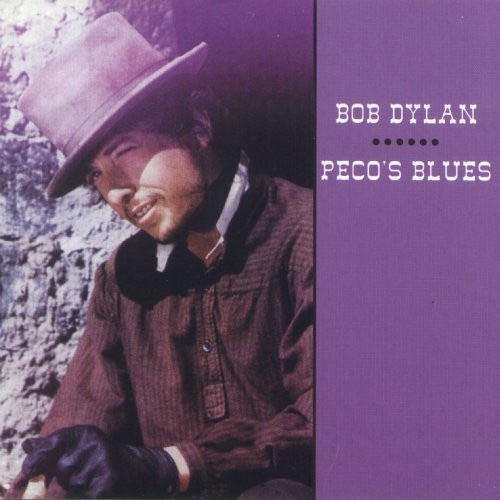
On the Between-Song Patter on the Bob Dylan Bootleg Record “Peco’s Blues”

Introduction

Behind any work of art, pretty much, there is some kind of “process.” The scope and complexity of this process differs across art forms, of course. The writer’s process is rather different than that of, let’s say, the magician David Copperfield. I find all artistic processes fascinating, and am drawn specifically to what happens “backstage.” Backstage is a world unto itself.

In the early 1970’s, the film director Sam Peckinpah was making a film called Pat Garrett and Billy the Kid, and he asked Bob Dylan to do the soundtrack. He also offered him a small role in the movie, a character called Alias. Dylan hadn’t really done a soundtrack before, nonetheless he headed down to Mexico to work on the film with Peckinpah. Pat Garrett and Billy the Kid the film is ok; it’s not my favorite Peckinpah by any means. (That is reserved for Bring Me the Head of Alfredo Garcia, with the one and only Warren Oates in the lead role. Oates around this time also starred in the film Cockfighter, which features the greatest rejected tagline of any film even “he came into town with his cock in his hands and what he did with it was illegal in 48 states.”) The Pat Garrett soundtrack in many ways transcends the film, mostly because this is where we are first introduced to “Knockin’ on Heaven’s Door,” which would go on to become one of Dylan’s best known songs, and is a really good soundtrack overall, however I am more interested in an extended set of outtakes from the sessions which are collected on a bootleg record called Peco’s Blues. Peco’s Blues features a number of alternate versions of the best known songs on the soundtrack, including Heaven’s Door and “Billy,” however the most interesting part of Peco’s Blues for me is the black and forth patter between Dylan, his sound engineer Chuck, and his band. This patter, I suggest, opens a fascinating and unique window into Dylan’s working methods and general approach to art. In what follows we will look at each incident of patter or conversation in the order they occur. All of the instances occur within the first 20 minutes of the nearly 70 minute recording as Dylan, his band, and the engineer endeavor to get on the same musical page.

Patter at the End of “Billy 2,” around the 7:34 Mark:

Dylan (D) wraps up a lengthy take of Billy 2 and asks his engineer Chuck (C):

D: Was that any good?

C: Pretty good Bob. What happened was was you hit the mic twice when you were moving around out there and we had a couple of clunks on it.

D: That’s too bad (…) Shit, I wish Sam was here. He’d know what to do.

C: That mic’s just a little more sensitive than the Sennheiser’s and I’m getting a little…

D: That’s too, uh…that’s…

C: And I’m getting a little puff of wind sometimes when you get real close to it when you sing.

D: That’s too sensitive.

C: Let me move it back a little for you Bob.

D: I think we must have got it though Chuck.

C: (with what sounds like a pencil in his mouth) Oh I recorded it, darn tootin’. I had a little puff from your voice once and you knocked the mic twice.

D: Well that might have been alls that we need.

C: You wanna, you wanna hear a playback on it?

D: Yeah, I would.

Comment:

We see right away here that Dylan is the boss and that the engineer is walking on eggshells a little bit. This is made clear by Dylan’s reference to “Sam,” who he obviously thinks is a better engineer than Chuck. We have more than a little sympathy for Chuck, as it wasn’t he that knocked the mic and he is trying his best to give Dylan the relevant information.

I love how Dylan here, while implicitly criticizing Chuck, also picks up on Chuck’s framing of the microphone situation and agrees that “that’s too sensitive.” However, the relative sensitivity of the mic is not Dylan’s main concern. Dylan, famously, likes to work fast. For some of his records that has been a positive, on these the sound and performances come across as organic and coordinated, like all of the players grasped their roles and just ran with them. On other records, Dylan’s preference for speed let’s him down, and songs, and especially the production, can feel rushed, even a little sloppy. Dylan famously warred with Uber-producer Daniel Lanois, who had produced U2 and Peter Gabriel among others before Dylan asked him to produce 1989’s Oh Mercy. Oh Mercy sounds great and was Dylan’s “comeback” album after a mixed, to say the least, mid 80’s period, however Lanois’ sonic fingerprints are all over it. Too much so for Dylan, who wanted a faster, looser approach. Lanois is no pushover, and held his own with Dylan. We get the sense that Chuck is no Lanois.

So, despite the knocks on the mic and the puff of wind, Dylan is going to be fine with using this version on the record. Chuck, of course, is going to want Dylan to play it again. Chuck, or someone, would win this one because the extended take of Billy 2 here is not the one used on the final album. The little tussle between Dylan and Chuck ends in a draw as they agree to listen to the playback.

Patter at the Beginning of “Turkey,” around the 8:40 Mark:

D: Hey Roger, when I stop, when I stop, you stop. I’ll do something else and you figure it out. So it might go like this (Dylan starts playing and the band fills in a little hesitantly behind him).

D: Say Chuck, Chuck?

C: Yeah

D: Let’s take this down and mark it under, uh, Turkey…We got a buzz in the amp.

C: I’m not picking it up.

D: OK come on now.

The band plays on the instrumental Turkey for about a minute before Dylan stops.

D: OK, this is under Turkey.

Dylan begins again, and this time the band fills in much better, the song sounding fuller and tighter in all ways.

Comment:

This is in my opinion the most illuminating of Dylan’s comments and gives us a window into his way of working throughout his career. As mentioned above, Dylan works fast and expects his musicians to do the same. Thus he instructs Roger that when he Dylan stops, Roger is to stop, Dylan will “do something else” and Roger needs to “figure it out.” Dylan’s instructions may not sound very fair to poor Roger, but I think they actually are. A musical team is in this case not unlike a sports team, say a basketball team, where even if an offense is running a designed play or “set,” players need to figure out what’s going on and adjust their own position and movements constantly and on the fly. There is no playbook, not set of absolute rules about how to accomplish this any more than there is a set of rules about how to follow Dylan musically. The musician, like the athlete, just has to work by feel, take in all the information around him or her, and figure it out. If they can, they will keep their job; if not, not.

Patter at the Beginning of “Billy Surrenders,” around the 18:10 Mark:

D: Let’s see now. You know, you know what we want when Billy starts (laughs) this guy Jerry Fielding’s gonna go nuts man when he hears this (laughs). You know what we want when like Pat Garrett comes down from the hills right, and all these guys come out like one by one. And Billy comes out, he’s almost standing in a circle you know, so like (indistinct) one by one and then there’s like a big pause and he stops and there’s silence. You know those big organ notes, those scary things (hums organ notes) (laughs). Can you get behind that? (Dylan and the band laughing.)

Comment:

The recording of the Pat Garrett soundtrack was pretty complicated, in large part because Jerry Fielding, Peckinpah’s usual composer, was relegated to a supporting role and apparently resented it. Accounts differ as to whether Fielding quit, walked off set (and maybe came back), actually did try to advise Dylan as requested, or some combination of the above, however the history of the film makes clear that there was friction. Dylan is clearly aware of the tension with Fielding, and makes a joke about it in a place where it doesn’t even seem relevant. Dylan seems to almost revel in the conflict, setting up Fielding to his band as a “suit” who is not in the field so to speak, and who Dylan enjoys winding up with his musical choices. Whatever the exact situation with Fielding was, the issue is clearly a live one at the time of recording.

My sense is that Dylan is mostly talking to his band here, as there are a number of people in the background laughing along with Dylan through this monologue. Despite his reputation for playing fast and loose most of the time, Dylan shows a pretty good grasp of particular scenes in the film and clearly knows what he wants. The “big organ notes” he mentions do indeed feature on the soundtrack, however maybe not to the extent Dylan wanted. I have to laugh at the very 1970’s question “can you get behind that?”

Conclusion

Overall, Peco’s Blues provides a fascinating window into Dylan’s working methods and expectations for his crew. Of course not every musician works this way; many will give much more precise instructions I am sure, and in the era of computer aided music Dylan’s approach on Pat Garrett is certainly a old-fashioned one. But I like it. It is absolutely worth listening to the entirety of Peco’s Blues to get a sense of Dylan’s working methods as well as how a band, here playing together live and recorded live, “figures itself out” and gets from sketch to finished product. I am myself not a musician but a writer, and the writing process, although never exactly easy, is perhaps a little less complex, mostly because most writers write by themselves, with an editor or editing team looking over the work at a later date. There is nothing in writing quite like “I’ll do something else and you figure it out,” and it is the shifting, quicksilver like nature of Dylan’s approach to music making here that continues to interest me and draw me in.

On John Innes, the Fabulist (with cameos from Bruce Innes and Hunter S. Thompson)

John Innes is a high school English teacher in Oregon. He works at a Catholic School there where he also coaches basketball, and probably does some other stuff. His players call him “Coach Innes,” and I think they respect him. And this is reasonable enough. Innes is a good coach, and good teacher, and most of the time a pretty good guy. He used to be a good golfer, but I think he lost it. Too much water on the elbow, can’t control the slice. But teachers show one side of themselves in the classroom and another outside of it. What John Innes has kept hidden from his students and players is that he is big old fabulist.

I know this because Innes, probably to fill the time when his lesson plans peter out or something, is known to tell stories to his students about the days when he and I were in high school and university together. And these stories are all completely bonkers. Innes will tell his students a story about me throwing people into the Little Spokane river back in high school. But I would never do that. I mean the Little Spokane is cold, and what kind of person would toss a fellow student into a cold river just because? Also, to get to the Little Spokane, which ran by our school, you had to cross a super long bridge. I’m not dragging some chick or dude across a super long bridge just to get them wet. Doesn’t make sense. I don’t know where Innes gets this stuff. It’s totally ridiculous. Innes is big old fabulist.

In another of his little “stories,” Innes claims that during university at Hamilton College I snuck into the chapel there on campus and climbed up into the bell tower. Now, there might have been a chapel at Hamilton, sure. There might have been a lot of things. Hamilton has some pretty old buildings, and it’s not impossible that a chapel would have some kind of bells in it. But I’m not gonna go climbing up there. Innes fancies himself a “literature” teacher, and maybe he’s mixing in some part of a Dorothy Sayers plot or something. Also, Innes may be extrapolating from the notion that I generally may attempt to access certain spaces that might seem “off limits.” That’s possible. I mean, if I see a “Members Only” sign on the door of a club, I’m gonna think “hey there pal, I’m a member. In fact, I’m a permanent member baby” and I’m gonna go right on in. I have also noticed that in buildings where there may be some public spaces and some private or closed spaces, if you are dressed nicely, as I can, and are pretty tall, as I am, you can sometimes just wander wherever and people will, by and large, just let you, especially if you wear some kind of lanyard around your neck. But this doesn’t mean I’m going to go poking around a bunch of bells. It’s totally ridiculous. Innes is a big fabulist, and he needs to get over it.

Innes tells another story about me graduating from university in linen. What’s he even talking about? I mean, I did graduate and have a piece of paper somewhere I think, but linen? What a bizarre thing to say. And for that matter, what if I did? Linen is a cloth, clothes are made from cloth, I was presumably clothed at graduation. So what? I think what may be going on here is that the water from his elbow is migrating up to his brain. I want to give him the benefit of the doubt, and what I do recall is that I wore a little purple flower in my hair at graduation and some dude from the newspaper took a picture of me and this ran somewhere. Innes may have remembered the flower thing and then imagined a whole bunch of other nonsense around it. Linen. It’s totally ridiculous. His fables are just getting out of control.

So Innes apparently thinks it’s funny to spin a bunch of nonsense about me. I don’t know exactly why he does this, but he may come by his mendacity honestly, so to speak. Innes has a father called Bruce Innes. Bruce Innes is a Canadian, and a pretty interesting guy. He used to be in a band called The Original Caste, and they had a hit called “One Tin Soldier.” The song is still pretty well known to a certain generation, which is cool. That band split and Bruce Innes must have drifted around blowing his money for a while, cause he ended up in Spokane in the late 80s, which is when I met the fabulist John Innes. I went to Bruce Innes’ house sometimes in order to crush John Innes at a video game called “R.B.I. Baseball.” I don’t play a lot of video games, but it doesn’t matter. I crushed John Innes at Sega Hockey a few years later as well and he whined about it for weeks. Guy has water on the elbow from way back.

Anyway, Bruce Innes’ Spokane house was pretty large and had a fully soundproofed music studio in the basement. I’d never seen anything like this and assumed that he must have some serious cash. But I don’t think this was actually the case. Like I said, I think Bruce Innes had spent most of his money from his music heyday by this time. My brother Mike, who remembers some stuff and forgets other stuff, told me recently that Bruce Innes made his living around this time by writing jingles for an audio and video store in town called Huppins. I don’t remember anything about this, but it’s too specific not to be at least a little bit true. It can’t all have been Huppins though, right? He must have done other stuff. Bruce Innes ended up leaving Spokane and moving to Sun Valley where he became the go to guy to play music sets at rich people’s parties. Then he moved to Oregon. I don’t know where he lives now. So yeah, he’s had an interesting life.

Back in the days when Bruce Innes was high on the hog with his music royalties he ran around with some famous folks. He met Leonard Cohen, and told me one time that Cohen was a total dick. Leonard Cohen is a legend of course, and is now remembered best as a genial older statesman, but this doesn’t preclude the possibility that back in the 70’s he may have been a dick. Doesn’t preclude it at all. Mr. Google says that Bruce Innes also knew Joni Mitchell. More well known though is Bruce Innes’ association with the writer Hunter S. Thompson. Most people of a certain age will remember Thompson, the “gonzo” inheritor of Hemingway and a pretty major figure in American literary history. Thompson wrote Fear and Loathing on the Campaign Trail ’72, in which he relates a funny anecdote of bonding over college football with President Richard Nixon in the back of a car sometime, despite the fact that Thompson hated Nixon. Thompson also wrote Fear and Loathing in Las Vegas, which I also have read. This is the book that the Terry Gilliam movie is based on, the one where Benicio DelToro plays Thompson’s sidekick and always advises him “as your lawyer…,” a phrase that has entered popular culture and is still widely used.

This is also the book that features Bruce Innes and some story about a monkey. I’m not sure if this next part is in Las Vegas or not, and in fact I think it isn’t, but another story is that Thompson and Bruce Innes were hanging out in Colorado somewhere and decided they would run for political office on the same ticket. Thompson would run for sheriff and Bruce Innes would run for something else. Now, Thompson’s run for sheriff is a well known piece of his mythos, and he did actually have a platform under the umbrella of “Freak Power,” but I imagine that whatever this run really entailed, Thompson exaggerated it pretty dramatically in later telling. I’ve heard Bruce Innes talk about this as well, and he makes it sound like the two of them were actually aspiring politicians for a time. But I don’t believe it. I’ll bet you what happened was these two guys were hanging out and getting stoned, and thought it would be funny if they “ran” for office. They probably got a poster or two made and hung them up around town, told all their friends about it as a lark, and talked a bunch of BS for a while. Bruce Innes is a great guy, but I think he and Thompson are kind of full of it. So like I say, John Innes probably comes by it honestly.

Whatever the source of John Innes’ struggles with the truth, one time after he had told some of his usual whoppers about me, one of his students found these stories interesting and wrote me a request for more information. He actually wrote it in verse, which was pretty creative, so I wrote him back in the same style on a flight out of Adelaide. The poem basically attempts to correct the record that the fabulist John Innes so regularly distorts. It also touches on some of the lowlights of my college career, including my fondness for writing excuses for students who needed extensions, the fact that I sported a tan trench coat for much of my first year, and my inability to get a steady girlfriend. John Innes, the fabulist, is referred to as “J.I.” in the poem. In the interest of having some of my “b-sides” back in print, I am re-posting this guy in its original form. It’s called “An Open Book,” and I gotta say, it’s still pretty good.

“An Open Book”

Not really in the mood
but you’ll think me quite rude
if I don’t make a reply
around me on the plane
folks eat, are entertained
no one’s writing save I

So I’ll take a look back
to days at the dog track
where I ended up by mistake
thought we could beat the odds
just silly teenage sods
there was no money to make

I know not if J.I.
has spun a pack of lies
concerning my personhood
Yes, I wrote poems for girls
who told me they were pearls
ah–but they weren’t any good

About a cold river,
and the rest of his quiver
of myths and exaggerations
well if someone was shoved
it was done out of love
or congratulations

So to upstate New York
in a trench coat–what a dork
but the world took pity
the life there was fine
but naught was on the line
should have gone to the city

I did two things quite well,
needing something to sell
I wrote brilliant excuses
‘bout ridiculous capers,
couldn’t finish my papers
I claimed aces, held deuces

My second great skill
is one I hold still
I fell for crazy ladies
locals, Russians, and Turks
they all drove me berserk
with a boatload of maybes

Four years in the dorms
and countless reforms
led to little of note
I left sans a sob
a plan or a job
and without my trench coat

Dedication: For John Innes, the fabulist. You know I won that Sega game, but I confess I may have tried to get up in that bell tower. So let’s call it a tie there baby.

Postscript: Since this piece was first published, Bruce Innes has sadly passed away, I believe in Vermont. As I said in the piece, Bruce had a fascinating life, and he was also a genuinely sweet guy. I really liked him. RIP Bruce, maybe you can win an election or two up there in heaven.

Note: If you enjoyed this piece, you may also enjoy “An Open Book,” also about the character known as John Innes. You can find that here.

An Open Book

Today on the kyotokibbitzer we are continuing with our excavation of the poetry on our first blog. As stated, we didn’t really know what we were doing when the blog kicked off, however one way or another some interested, and perhaps interesting, folks came around and contributed to the action. On of these was young Micheal Lyon, who I hear is still alive and kicking. Good on ya’ Mike.
A student in the English class of one John Innes, Mr. Lyon heard some stories in which I was included and these appear to have struck a chord. We wish to state, without equivocation, that all these stories are pure fiction. The purest.
Nonetheless, there is, as they say, perhaps “something of the spirit” in M. Lyon’s salvo and my subsequent response. In the interest of having our b-sides in print we are re-publishing the original piece in its entirety here. It’s an oldie, and a goodie.
Here’s the original:
Editor’s Note: For reasons passing understanding, one M. Lyon has decided that Mr. Thomas is a fit subject for a project in romanticization. To his great credit, he sent me a request for information in verse. I have posted his request and my response.
“M. Lyon‘s Project”
M. Lyon
Pt. I
I heard a legend of a man,
a man who was quite great.
He is the focal point of my master plan,
and the reason i’ve cleaned my academic slate.
I once heard he lived in a closet for a year;
only appearing at 4.
This mere fact made my purpose clear,
I must write fiction until I simply can write no more.
Pt.II
Yet there is a barrier in my path:
simple lack of facts.
I need to know some info,
on a thing about your high school days.
I’ve abandoned my pattern,
and probably my meter,
but who gives a crap,
I’m just trying to get some facts.
Did you ever toss a man in a river?
perhaps on his birthday?
In freezing cold Washington,
on a Thursday? Tuesday? Maybe never?
Who’s to say?
All I know is this:
A story is brewing,
about a man who graduated in linen.
The story will forever go incomplete,
if I cannot muster some details.
About your senior year of high school.

Note: This is my response to Mr. Lyon’s project.

“An Open Book”
M.S. Thomas


Not really in the mood
but you’ll think me quite rude
if I don’t make a reply
around me on the plane
folks eat, are entertained
no one’s writing save I

So I’ll take a look back
to days at the dog track
where I ended up by mistake
thought we could beat the odds
just silly teenage sods
there was no money to make

I know not if J.I.
has spun a pack of lies
concerning my personhood
Yes, I wrote poems for girls
who told me they were pearls
ah–but they weren’t any good

About a cold river,
+ the rest of his quiver
of myths and exaggerations
Well…if someone was shoved
it was done out of love
or of congratulations

So to upstate New York
in a trenchcoat–what a dork
but the world took pity
the life there was fine
but naught was on the line
should have gone to the city

I did two things quite well,
needing something to sell
I wrote brilliant excuses
‘bout ridiculous capers,
couldn’t finish my papers
I claimed aces, held dueces

My second great skill
is one I hold still
I fell for crazy ladies
locals, Russians, and Turks
they all drove me beserk
with a boatload of maybes

Four years in the dorms
and countless reforms
led to little of note
I left sans a sob
a plan or a job
and without my trenchcoat

~~~~~~~~~~ ~~~~~~~~~~

Here was M. Lyon’s response to my response to his project.

~~~~~~~~~~ ~~~~~~~~~~
“M. Lyon‘s Project, II”

M. Lyon

Response in verse was fantastic,
Incredible more, considering location.
In magnitude drastic,
Oregon’s response was enthusiastic.
Wish you had heard J.I’s oration.
Romantic advice taken directly to thy heart.

I write frivolously, igniting amino acids,
All amounting to a considerable summation.
Good? Maybe; hopefully: a classic,
Yet my aims are not so bombastic.
Not all well in our nation,
Swine Flu! Kill it with some marital arts.

“Part about Local Girl” a bit spastic,
managing moments victim of inflation.
She was local, yet smart and sarcastic;
Her views on Hamiltonians* iconoclastic;
At least she provided momentary fixation,
But those girls were sour as stale tarts.

* M.T. and J.I. both attended Hamilton College in the state of New York.

FIN

On a small run-in with Damon of Damon and Naomi in a Kyoto Basement (Alternate Title: “A Minor Incident, aka A Dis-Track”)

What follows is a true story.  Or, in the words of Damon K., formerly of Galaxie 500 and presently of Damon and Naomi, “Here are the dirty facts.”

It was sometime in the first decade of the 21st century.  I was minding my own business in my fair adopted city of Kyoto.  You see, I live in North Kyoto and unless I have good reason, prefer to stay in orb of the north-central part of the city.  The south is for business, the east for the occasional mountain jaunt, and the west too wild and forbidding for a humble man such as myself.  Mostly, I just try to stay north of Shijo Dori (positively 4th street, so to speak).  That’s my zone.

As with any excellent locality, there is plenty to explore in North Kyoto.  One place that the locals know is Cafe Independants–a cafe with a small bar which from time to time hosts shows.  Cafe Independants is located in a basement with exposed white pipes and stone walls.  It’s hip if you’re into that kind of thing, certainly not trendy though.  And, it features a kick-ass pair of staircases that are worlds into themselves.  I have enjoyed those staircases many a time my own self.


I have had the pleasure of seeing the great Bill Callahan open for the immaculate harpist Joanna Newsom there when Ms. Newson was just breaking through.  Callahan was the bigger name, and his generosity in opening for her was striking.  That was a great night.  I may have even smoked a rare cigarette.  I also saw my mate Darren Hannah play bass there with a bow.  That was something–and the dude executed a beauty of a bow toss at the end of the show.  A bow toss for a bassist is like a mic drop for an MC.  Show’s over folks.  So you see, I’d had some nights there.

The Cafe runs an open kitchen which serves right through gigs and back in the day also had a record shop open in the back.  It’s a small place, seating maybe 35 on a good day, and when a show is on people tend to pack around the big pole in the center and squeeze into communal tables.  Smoking is allowed.  The Cafe, at the best of times, is not a quiet place.  This is to be borne in mind with what followed.

So one evening I had secured tickets to see Damon and Naomi play.  Damon and Naomi were members of the late 80s/ early 90’s band Galaxie 500 with Dean Wareham.  The band didn’t really know what it was doing at first, like many a band before, and kind of stumbled into near-greatness before Wareham walked and started Luna, the world’s greatest band.  Wareham details the reasons behind the break-up in his memoir Black Postcards.  Poe is supposed to have said that any man who tells the simple truth of his life would write a masterpiece.  Wareham gets pretty close to following Poe’s dictum.

The ending of Galaxie 500 came about, according to Wareham, essentially because Wareham was tired of being treated like a child by the other two, a long-time couple.  I think he wanted his own band, and wanted to chill a little.  From Black Postcards:

Traveling is stressful.  And with Damon tour-managing, it seemed like every hotel check-in, every seat assignment, and every rental car was a problem.  Damon would argue about what floor his room was on.  He would get annoyed if he didn’t get the seat he wanted on the flight.  I shouldn’t have let this bother me.  I should have minded my own business.  But traveling together highlights your differences.

At one show in late 1990, a techie shone a spotlight on Dean as he stepped downstage for a solo.  This seems to have been the breaking point.  Black Postcards again:

Damon: “In retrospect I notice that Dean chose the L.A. show to launch this new trick, when the audience was full of music industry people.  We hadn’t had any spotlights in Columbus or Dallas!”

Dean in his contemporaneous tour diary: “Damon said he doesn’t like me walking in front of his drum kit–it throws him off.  I didn’t tell him to go f*** himself.”

Things were rough, and Dean split in 1991.  (Wareham quotes a Damon interview saying “Here are the dirty facts!  What happened was simply that Dean quit, more or less out of the blue, on the telephone one day.”  Ah oui, les sales faits.)  Galaxie 500 is still an interesting band and has a handful of great songs.  Then, Damon and Naomi formed their own group, named eponymously.  They are pretty good.  I like “This Car Climbed Mount Washington,” from More Sad Hits, and the whole record Playback Singers is strong.  Still, they are a far cry from Galaxie, much less Luna.

Nevertheless, I was excited to hear they were coming to little old North Kyoto in fact to play the Independants.  I showed up early with a friend and we had a few drinks, as you do.  There were 30 or 40 people there, as normal.  People were chatting, eating, smoking, and a local warm-up act started preparing on stage.  Actually, there is no stage at the Cafe, just floor space.  The show, from my point of view, HAD NOT STARTED.  Additionally, I WAS BEHIND THE POLE.  I wish at this time to stipulate this very clearly in light of what followed.  I also wish to stipulate that no-one is a bigger fan of the idea of the local warm up act than my good self.  Nobody.  By god, I remember seeing the Tenniscoats, a much beloved Japanese band that you won’t have heard of, open up in Kyoto for someone, Bonnie Prince Billy maybe, and saw the great Saya Ueno play in her barefeet.  I even tweeted about it, for Christ’s sake.  I support the local art community with a whole heart.  And no blasted interloper will tell me otherwise.

Anyway, on the night in question I will admit I was talking to my buddy while the local artist was getting set up.  And yes, she may have said something into the microphone.  I don’t really know.  Because before I could do anything, here comes Damon K. bounding across the room, right in my face, and shushed me.  “Don’t speak when the ARTIST is talking,” he hissed.  Right…in…my…face.

Now, the human mind is a remarkable deal.  When Damon shushed me, two simulataneous and equally strong thoughts came into my head.  The first was, “wow, Damon from Galaxie 500 just shushed me.  Cool.”  The second was, “dude, f******** you!  This is my city you pompous SOB, the show HAS NOT STARTED, there is a room full of chattering people, and you are going to lecture me about the ARTIST.”

What did I do next, you will ask.  Well, in my mind I like to think I produced a gesture equivalent to Dave Moss’s finger flips in Glengarry Glen Ross.  The moment comes at around 2:26~2:28–the little men in the sales office are on the other end of a berating passing for “motivation” when just for a moment, Moss takes the upper hand.  See below:


Or, I may have stared dumbly at the guy.  One of the other.

On the Velvet Underground’s Live at Max’s Kansas City, the future poet and songwriter Jim Carroll famously “ruins” the recording of “Sweet Jane” by asking for “a double Pernod.”  You can find reference to this minor incident in works as scholarly as The Encyclopedia of Popular Music, published by Oxford Press.

“Excuse me can I have a Pernod, get me a Pernod’. Poet and author Jim Carroll’s boorish demands for a bloody Pernod ruined (this) illegal cassette taping.”  Well, let’s look at the (dirty) facts.  The fact is that Carrol’s so-called boorish demands are almost entirely heard between songs when the band is tuning.  On Sweet Jane, for example, Reed finishes the song and then we hear:

“Oh yeah, I wrote it, but it’s pretty new, yeah.  Did you get the Pernod?  You had to get the, you had to go to the downstairs floor.”

Sure, he is a little lit.  Sure he is close to the mic.  But the song is over.  There is downtime.  The man is thirsty.  The recording is “ILLEGAL.”  Now I ask you, is this “ruining” the song?  Only if you are an actual prat.  Otherwise, this is called local color.  Guess what Damon, buddy?  I’m a local.  This is my city.  I’m colorful.  And I’ll take my bloody Pernod whenever I goddamn well feel like it.

Works Cited/ Referenced:

Damon and Naomi,  More Sad Hits.

Damon and Naomi, Playback Singers.

Glengarry Glen Ross.  Directed by James Foley.  Written by David Mamet.

Oxford Reference, “Velvet Underground–Live at Max’s Kansas City.” http://www.oxfordreference.com/view/10.1093/acref/9780195313734.001.0001/acref-9780195313734-e-89759.  Retrieved 9/20/2018.

The Velvet Underground, Live at Max’s Kansas City.

Style Note:

The style of this piece is deeply indebted to Eric Ambler’s The Intercom Conspiracy.  Inspiration from this master of form is acknowledged, with deep gratitude.

Breakdown: The Stage Banter of Matthew Houck and Dean Wareham

After the rousing success of our first breakdown here on the kibbitzer, we have doubled down on the form.  Here we will be exploring two incidences of stage banter by musicians captured on live albums.  We will look at Matthew Houck from Phosphorescent introducing his band, and Dean Wareham from Luna riffing with a French audience.  Phosphorescent and Luna are two of our most beloved bands, and the proto-thesis of this piece is that through their stage banter we can see into the core of what makes Matthew and Dean who they are as artists and entertainers, and in so doing discover anew what makes them great.  Stage banter, in short, may be the royal road to stylistic explication.

That all sounds pretty good, though we aren’t actually going to start with stage banter. Instead, we will take a quick stroll through the archives, back to 2009 when we published a little piece on our first blog, Classical Sympathies called “Curtis John Tucker Had a Lot to Do With It.”  Around this time, I was interested in artistic communities, artistic communes really, I guess.  My Dinner with Andre was a huge influence.

Around that time I was also listening to a bit of Giant Sand.  Giant Sand is an ever-evolving group of musicians around the enigmatic Howe Gelb, a shape-shifting Southwest troubadour who makes a lot of music, some of which is really good.  On the record Cover Magazine, the Sand covers a Kris Kristofferson song called “The Pilgrim (Chapter 33)“.  It is this song that the Curtis John Tucker piece took up.

The themes that occupy a Gemini through life, though certainly never stable, do have a certain macro-coherence.  Such is it with stage banter—our current focus calls back to this little piece on Giant Sand.  What follows then is a re-write of the original piece as an introduction to our main topic.


Re-write of “Curtis John Tucker Had a Lot to Do With It;” original version July, 2009.

On Nothing Left to Lose, a Kris Kristofferson tribute album, and later collected on Giant Sand’s Cover Magazine Howe Gelb covers the song “The Pilgrim (Chapter 33).”  You may know the song; it goes:

he’s a poet/ he’s a picker/ he’s a prophet/ he’s a pusher/ he’s a pilgrim and a preacher and a problem when he’s stoned/ he’s a walking contradiction/ partly fact and partly fiction/ taking every wrong direction on his lonely way back home.

Yeah, you know the one.

It’s a good song, and Gelb turns in a sound version.  But it’s his spoken introduction that really peaks my interest.  On Kristofferson’s original he name-checks a number of folks who “had something to do with” the genesis of the song.  Gelb repeats the original name-checks, slightly out of order, before listing a set of artists that he, Gelb, learned the song for:

Well, I guess when Kris wrote this song he wrote it for Chris Gantry–he started out doing it though by–ended up writing it for Dennis Hopper, Johnny Cash, Norman Norbert, Funky Donny Fritts, Billy Swan, Paul Seibel, Bobby Neuwirth, Jerry Jeff Walker.  Ramblin’ Jack Eliot had a lot to do with it.

Me I ended up learning this song for Vic Chesnutt, Jason Lytle, Evan Dando, Polly Jean, Paula Jean, Patsy Jean, Juliana, Victoria, Bobby Neuwirth, Bobby Plant.  Curtis John Tucker had a lot to do with it.

The alliterative Bobbys and the matching of Ramblin’ Jack Eliot and Curtis John Tucker make this speech into a mini-poem of sorts, and we know many of the protagonists.  Hopper and Cash of course; Jerry Jeff Walker and Ramblin’ Jack Eliot are folk singers, older than Kristofferson; Bobby Neuwirth is a folk singer, multimedia artist, and Dylan confidant in Don’t Look Back,  Funky Donny Fritts is a session keyboardist, and I believe Norman Norbert and Billy Swan were session musicians as well.  Paul Seibel was also a folksinger–I don’t know him; maybe you do.  Kris’ meaning is pretty clear—a song like The Pilgrim doesn’t come from nowhere, and the folksingers he learned from are portals back in time to an earlier tradition to which he generously pays tribute.

Not being myself a 70’s session musician completist I did have to look up a few of the names.  The Gelb names are more familiar, expect one.  Vic Chesnutt, Jason Lytle and Victoria (Williams) are folk singers (or were, as sadly Chesnutt has passed).  Evan Dando, Juliana Hatfield, and P.J. Harvey are/were alt-rock superstars.  Bobby Plant would be Robert Plant of Led Zeppelin fame, Bobby Neuwirth is Bobby Neuwirth.

But here’s the point, after listening to Kristofferson and Gelb name-check Funky Donny and Curtis John, I feel an affinity for them–were I to bump into Funky Donny in an airport bar or lounge his presence would resonate with an essential familiarity.  Even if I didn’t know precisely that it was he, I would recognize immediately that he was indeed funky, not to mention a serious problem when he’s stoned.  And Curtis John Tucker, well, his role is still opaque to me, but he clearly had a lot to do with it.

What both singers hint at in their evocation of the circumstances surrounding the creation of a song is the presence of community behind the music.  Behind or beside every Kristofferson is a Norman Norbert, behind every Dylan a Bobby Neuwirth, every Gelb a Curtis John Tucker.  In 2009 I wrote that “this thought fills me with a little jealously and a little sadness; I’m not at all sure that such communities of practice are as common as they once were; (there is) something about the atomisation of human affairs in the first world in the 21st century means that the idea of an artistic community where minor but still vital players such as Norman Norbert is no longer viable.” Today, although this statement still rings somewhat true, things appear rather different to me.  It seems that at least two things are occurring: first the internet has evolved such that any artistically minded person can find a niche community(s) that fits their style, and live with a foot in this community.  The second is that an apparently opposite, and actually concomitant, vitalisation of local community is underway all over the world, and a vitalised local community by necessity contains a vitalised local artistic scene.

Whatever the case, the humanity and camaraderie inherent in the spoken introductions to The Pilgrim remind us that artistic communities are vital in the creation of lasting artistic production–Neuwirth may not have been essential to Dylan’s art in the mid-60’s, but he was instrumental to its vitality; Kristofferson wrote “The Pilgrim” but it wouldn’t have been as good without Paul Seibel.  And as for Curtis John Tucker, well he had a lot to do with it.


On the spoken introduction of the band Phosphorescent by Matthew Houck between the songs “Joe Tex, These Taming Blues” and  “Los Angeles,” from Live at the Music Hall.

On side two of Phosphorescent’s majestic 2015 live album Live from the Music Hall, the band plays a song from their 2005 album Aw Come Aw Wry, called “Joe Tex, These Taming Blues.”  Houck’s early Phosphorescent albums are interesting–they are more ambient and keening than his mature work and some of the songs are really long.  Joe Tex is one of the better early songs, and Houck puts a little something special into the first couple lines on the live version: 

Is it ever gonna not be so hard to see you around/ or am I really really really really gonna have to really gonna have to really have to leave town

Houck is a master at harnessing the power of repetition—here each “really” takes on its own character and valance.  The band gives an excellent performance, which goes for about 4 minutes.  It is apparently the second last song of the night, because at the end of the song Houck moves to introduce the band.  Here he goes, as the band chugs on behind him:

Brooklyn, that’s Scott Stapleton playing that piano right there…

The first “Brooklyn” is loaded with import–Houck is going to drop some wisdom on the folks tonight.  Stapleton plays a few understatedly beautiful lilting keys and…

Brooklyn, that’s David Torch playing that percussion right there…

Torch gives a little maracas shake, right on time, as Houck establishes the rhythm and flow of the introductions.  The basic elements include a “Brooklyn,” which shifts in valance a little each time, and the band member playing “that (instrument),” “right there.”

Brooklyn, this is Rustin Bragaw playing that bass guitar right there…

A slight shift in the pattern–probably Rustin is standing next to Houck.  Bragaw drops a couple of notes on his funky bass and on we go–naturally, the bassist gets the lowest key introduction.

Brooklyn, Christopher Showtime Marine playing those drums right there…

Houck reaches for a higher register here, both on the slightly more breathless and rushed “Brooklyn” and an uptone delivery of Marine’s nickname.  Another shift in the pattern–Marine has a moniker.  Showtime delivers a healthy drum piece and…

Brooklyn, the trigger finger Ricky…Ray…Jackson playing that guitar and that pedal steel right there, come on…

We’re getting there.  The crowd is excited for this one; the pedal steel player is clearly a star.  Houck pauses a beat on each name, “Ricky…Ray…Jackson, come on,” and the come on is both an entreaty to the crowd and also a general “come on can you believe this guy!” from the lead singer.  Pedal steel is no joke.  Also, Ricky Ray’s nickname comes before the name–he is in fact the trigger finger here tonight, his birth name is just data.

The trigger finger plays a couple of high notes and…

Brooklyn, last but certainly not least, the best looking one in the group, Joe Help, playing those keyboards right there, come on.

No fuss around the two-syllable “Joe Help,” which Houck delivers as if it was one word.  Joe Help and Joe Tex, good looking guys that’s all.

I can’t tell you what a pleasure this has been y’all. Thank you for being here. Hope you come back again.  We’re going to play one more song; thank you guys so much again.  This is a song called Los Angeles; this is how it goes.

And the band plays a stunning closer.

=====

So what’s going on here?  On the one hand, Houck is just introducing the band like any other bandleader might.  However there are layers to what he is doing that are really interesting.  First, the introductions take up a good 2 minutes 20 seconds, more than a third of the 6:13 running time of the track.  Second, the whole thing is a mini-performance in and of itself.  It has an introduction, momentum, a high point at “the trigger finger Ricky Ray Jackson,” and a come down in the clipped, humorous Joe Help introduction.  Houck is doing a little “bit,” where each introduction, although seemingly quite similar, is actually it’s own piece, with his own special kind of appreciation for each band member. Read more